
Trade Shows and B2B Channels for Carpet and Rug Exporters from India
By Saurabh Mittal, Founder, Altus Exports
A practical guide to trade shows and B2B channels for Indian carpet and rug exporters — Domotex Hannover, India Carpet Expo (CEPC), Ambiente, Heimtextil flooring-adjacent halls, regional US home shows, and Alibaba/B2B marketplaces for rugs. Covers knotted vs tufted booth assortments, follow-up systems, fair–digital integration, market size, export statistics, pricing, MOQ, packaging, certifications, country opportunities, checklists, and Altus Exports frameworks. Not a full export-process guide.
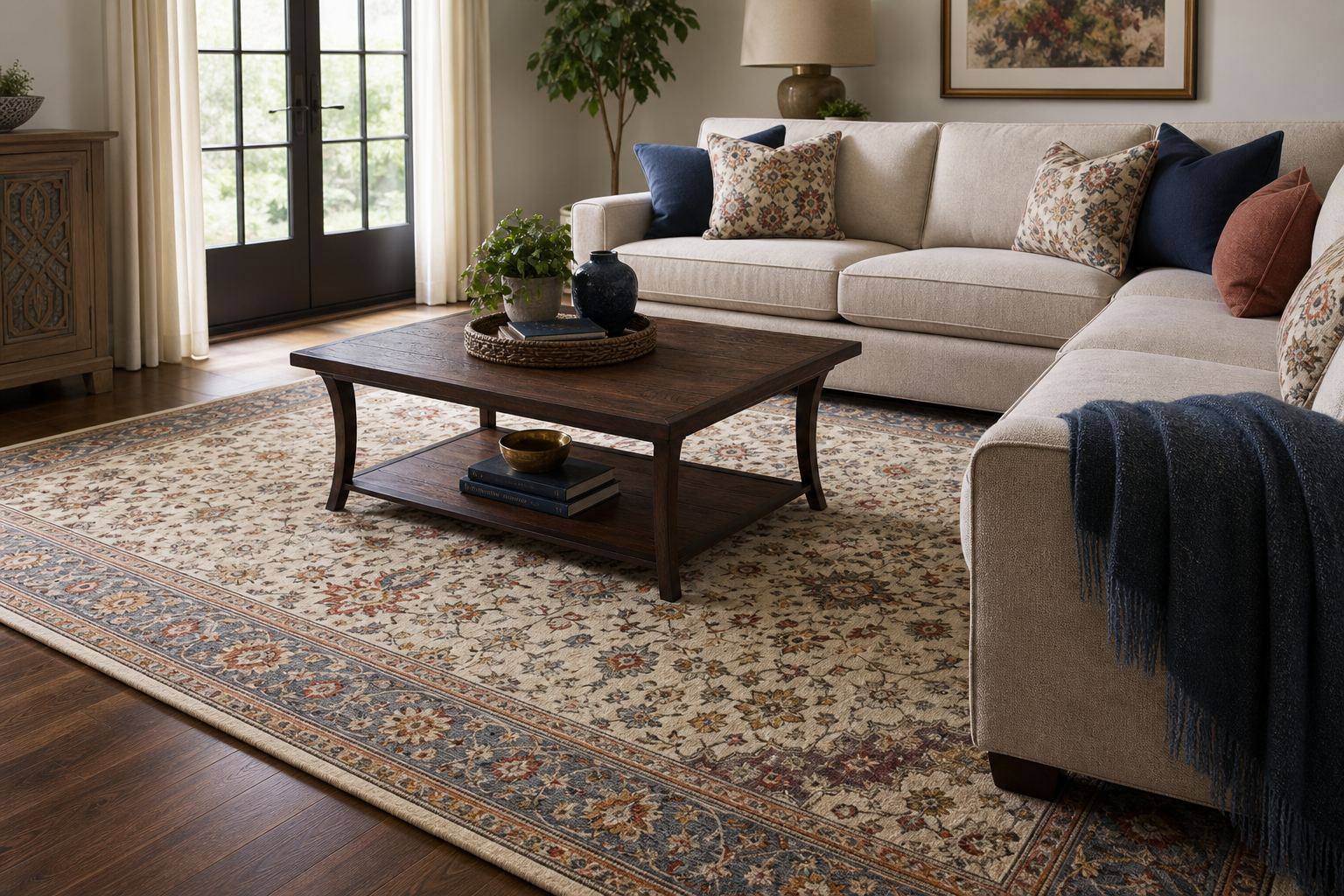
Trade shows still open doors in handmade and hand-tufted floor coverings — but only when knot-density cards, pile-height gauges, fibre hangtags, and follow-up discipline are ready before the first buyer walks up to the booth. Too many Bhadohi, Kashmir, Jaipur, Agra, and Panipat exhibitors spend months preparing loom production and almost no time preparing the conversation that converts a Domotex or India Carpet Expo visitor into a signed purchase order.
B2B marketplaces add a different kind of value: top-of-funnel rug leads that arrive with far less context than a fair conversation and need the same qualification rigor before anyone quotes a square-foot price. Alibaba and related B2B inquiries range from serious US and European importers testing a second Indian supplier to price-shopping browsers who will never place a container order — and treating every inquiry the same way wastes sample budget and loom capacity on the wrong prospects.
This guide covers trade shows and B2B channels for carpet and rug exporters from India — Domotex Hannover, India Carpet Expo under CEPC, Ambiente and Heimtextil flooring-adjacent opportunities, regional US home shows, marketplace tactics for rugs, how to prepare knotted versus tufted booth assortments, follow-up systems, and how to integrate fairs with LinkedIn and trade-data outreach. It is not a full export-process guide; for registrations, HS 5701–5705 workflow, and first-shipment steps, see How to Export Carpets and Rugs from India. Pair fair planning with CEPC Registration Benefits for Carpet Exporters.
Key Takeaways
Summary Box
Executive Summary
Summary Box
Indian carpet and rug exporters win international programmes when visibility and process discipline travel together. Domotex Hannover concentrates global floor-covering buyers — retailers, specialty rug importers, wholesalers, and hospitality procurement — into a few high-intensity days. India Carpet Expo, organised in the CEPC ecosystem, brings international buyers into India's handmade carpet belt with lower travel cost for MSMEs and strong council matchmaking. Ambiente and Heimtextil add design-led and home-textile buyer overlap; regional US home shows connect exhibitors to North American retail calendars; Alibaba and peer B2B marketplaces extend discovery year-round.
This article emphasises channel strategy over export registration mechanics. You will find market context, trade statistics, product and manufacturing notes framed for booth readiness, pricing and MOQ discipline for fair quoting, packaging and container realities that buyers ask about at the booth, certifications to display, country priorities for travel budget, sourcing and mistake checklists, future channel trends, and buyer/exporter/compliance gates. The commercial goal is clear: turn fair conversations and marketplace inquiries into sealed-sample programmes and repeat containers — not a stack of unread follow-up emails.
Altus Exports supports manufacturers and international buyers as a merchant exporter and global sourcing partner when carpet programmes need one accountable relationship across fair follow-up, sampling, QC, and documentation.
Market Size & Industry Overview
Key Statistics
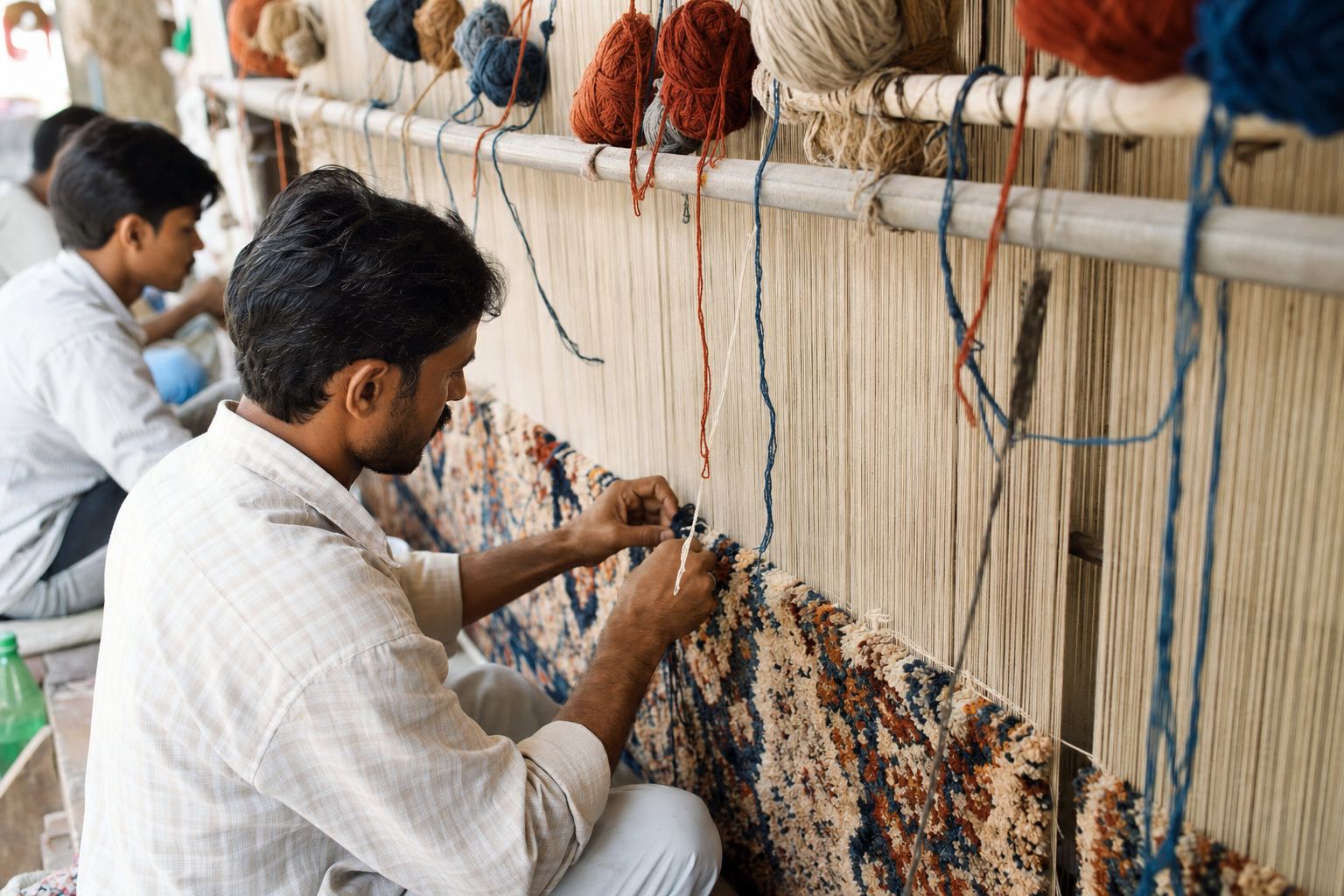
India remains one of the world's leading handmade carpet origins. Industry narratives aligned with IBEF and CEPC commonly place India at roughly forty percent of world handmade carpet exports, with an estimated eighty-five to ninety percent of domestic production destined for overseas markets. More than two million artisans participate across knotting, weaving, tufting, washing, and finishing — depth that underpins both premium hand-knotted pieces and scalable hand-tufted programmes.
For trade-show planning, cluster specialisation matters more than national averages. Buyers walking Domotex or India Carpet Expo expect a coherent story: Bhadohi–Mirzapur for hand-knotted and dhurrie programmes with wash-house depth; Kashmir for fine handmade positioning; Jaipur and Agra for design-led and tufted assortments; Panipat for hand-tufted volume suited to retailer calendars. Exhibitors who map booth SKUs to the cluster that can reproduce them consistently convert faster than those who claim every construction from one workshop.
CEPC, founded in 1982 under the Ministry of Textiles, anchors organised exhibition access, RCMC pathways, and buyer-facing credibility. Membership does not replace knot-density honesty or packing discipline, but it shortens vendor questionnaires that fair leads send within days of meeting you. Read the dedicated CEPC registration guide before budgeting pavilion space.
Carpet clusters and trade-show relevance (indicative).
Swipe →
Data table — swipe horizontally on small screens
| Cluster | Typical Strength | Best Fair Fit | Booth Story Cue |
|---|---|---|---|
| Bhadohi–Mirzapur | Hand-knotted, dhurries, wash & finish | India Carpet Expo; Domotex handmade halls | Density honesty + finishing depth |
| Kashmir | Fine handmade knotted carpets | Domotex premium; design-led Ambiente buyers | GI-linked craft + long lead-time clarity |
| Jaipur / Agra | Design-led woven and tufted | Domotex; US home shows; Heimtextil-adjacent | Design calendar + private-label speed |
| Panipat | Hand-tufted volume programmes | Domotex volume; Alibaba discovery | Pile height + MOQ and replenishment |
Export Statistics & Import Statistics
Key Statistics
FY25 figures commonly cited from IBEF and industry sources show India carpet exports at about USD 1.54 billion, up from about USD 1.39 billion in FY24. The United States remains the dominant destination at roughly USD 921 million (~59%), followed by Germany (~USD 91.7 million) and the United Kingdom (~USD 65.4 million). Those shares should shape travel and follow-up priority: US retail and specialty importers dominate value; German and UK buyers reward certification and specification discipline.
Trade-show ROI improves when you align exhibition choice with where value already concentrates. Domotex draws the global floor-covering buyer set that serves US and European import channels. India Carpet Expo concentrates buyers already committed to Indian handmade supply. US regional home shows shorten the path to North American category managers who may not travel to Hannover every year. Marketplace spend should track the same geography — list English-language rug catalogues aimed at US and EU importers rather than scattering effort across every Alibaba inquiry language.
Indicative Indian carpet export destinations and channel implications (FY25-aligned).
Swipe →
Data table — swipe horizontally on small screens
| Market | Indicative Share / Value | Primary Buyer Type | Best-Fit Channel |
|---|---|---|---|
| USA | ~USD 921M (~59%) | Retailers, specialty rug importers, e-commerce | Domotex; US home shows; trade data; Alibaba |
| Germany | ~USD 91.7M | Distributors, department stores, specialty | Domotex; Ambiente; CEPC missions |
| United Kingdom | ~USD 65.4M | Retail chains, online-first brands | Domotex; LinkedIn; trade data |
| UAE & GCC | Growing mid-tier | Distributors, hospitality procurement | Regional visits; marketplaces; Domotex |
| Australia / others | Selective programmes | Retail and specialty importers | Trade data; LinkedIn; selective fairs |
Why Trade Shows Still Matter for Carpet and Rug Exporters
Floor coverings remain a category where buyers want to touch pile, judge hand, and compare colour under hall lighting before committing serious volume. A US specialty importer evaluating a Bhadohi knotted line wants to feel the face, count knots on a visible swatch, and compare pile height against a tufted alternative side by side — none of which a product photo or a video call replicates well. Trade shows compress that evaluation into a single afternoon that would otherwise take weeks of sample shipping.
Face-to-face conversation also surfaces requirements that never appear in a written RFQ — a German buyer mentioning GoodWeave scope before shelf approval, or a US distributor explaining carton weight caps for automated warehouse sorting. These details shape production and documentation planning in ways cold email rarely captures with the same clarity.
That said, trade shows are expensive relative to most MSME marketing budgets, and return depends entirely on preparation. Exhibitors who arrive with a tight knotted-versus-tufted story, pre-booked meetings, and a 72-hour follow-up system consistently outperform exhibitors who bring their entire catalogue and hope the booth sells itself.
Exhibition and B2B Channel Map
Prioritise floor-covering and CEPC-linked exhibitions over generic multi-category fairs where carpets get lost among unrelated merchandise. Booth success depends on a tight SKU story — not fifty nearly identical rugs that make it harder for a buyer to understand what you specialise in.
Primary channels for carpet and rug exporters.
Swipe →
Data table — swipe horizontally on small screens
| Channel | Best For | What to Bring | Follow-up Window |
|---|---|---|---|
| Domotex Hannover | Global retailers, specialty importers, wholesalers | Knotted + tufted hero SKUs, KPSI cards, MOQ sheet | Within 72 hours |
| India Carpet Expo (CEPC) | Handmade-focused international buyers | Cluster story, CEPC credentials, sample range | Within 72 hours |
| Ambiente Frankfurt | Lifestyle and design-led home buyers | Design narrative, fibre/sustainability evidence | Within 72 hours |
| Heimtextil (flooring-adjacent) | Home-textile buyers overlapping soft floors | Complementary rug lines, certification pack | Within 72 hours |
| US regional home shows | US retail chains, e-commerce brands | Hero SKUs + private-label capability sheet | Same week as meeting |
| Alibaba / B2B marketplaces | Discovery and private-label rug leads | Spec sheets, factory video, paid sample offer | Qualify before free samples |
| LinkedIn + trade data | Category buyers and repeat HS 57 importers | One-page SKU PDF with lead times | 2–3 touch sequence |
Domotex Hannover
Domotex is the single highest-intent global venue for carpet and rug exporters. Attendees arrive specifically to source floor coverings — hand-knotted, hand-tufted, machine-made, and related soft floors — which means conversation quality is higher than at general gift or home décor fairs. Indian exhibitors with honest density claims, clear fibre disclosure, and social-compliance readiness draw disproportionate attention against competing origins.
Register early enough to secure booth position near complementary handmade or tufted halls, and use organiser matchmaking to pre-book buyer meetings. A pre-booked twenty-minute slot with an importer who has already reviewed your catalogue online converts far better than hoping the right person stops in a hall with thousands of exhibitors.
India Carpet Expo (CEPC)
India Carpet Expo is the flagship India-based event for handmade carpets and rugs under the CEPC ecosystem. It offers high buyer density for Indian handmade supply at lower travel cost for MSMEs than a solo Domotex booth, often with council-facilitated introductions and pavilion structures. It is especially strong for Bhadohi–Mirzapur and Kashmir exhibitors building or deepening relationships with buyers already committed to Indian origin.
Treat India Carpet Expo with the same preparation discipline as Domotex: hero SKUs, KPSI cards, lead capture that records construction and volume interest, and 48–72 hour follow-up. Council membership and RCMC readiness should be current before you invite serious vendor onboarding after the fair.
Ambiente and Heimtextil — flooring-adjacent opportunities
Ambiente Frankfurt attracts lifestyle and home buyers who value design narrative and sustainability alongside specification. It is a strong secondary fair for design-led rug assortments and gift-adjacent small rugs, but it is not a full Domotex substitute when your core business is commercial knotted or tufted floor coverings.
Heimtextil is primarily a home and contract textile fair. Flooring-adjacent buyers — those sourcing soft floors alongside bedding and soft furnishings — do appear, and Indian exhibitors with complementary rug lines and certification stories can generate useful conversations. Prioritise Heimtextil when your assortment overlaps home-textile programmes; prioritise Domotex when rugs are the hero category.
Regional US home shows
Regional and market-week US home shows connect exhibitors with North American retail and e-commerce buyers on their own sourcing calendar. These formats reward private-label capability, fast follow-up quotes, and clear labelling readiness for US fibre and care rules. Bundle several buyer visits into one destination trip whenever calendars allow — travel cost amortises better across multiple meetings than a single cold booth day.
Fair and Buyer-Meeting Calendar
Build your annual travel and exhibition budget around this calendar rather than committing fair-by-fair as invitations arrive. Confirm exact current dates with Domotex organisers, CEPC, and US market hosts before booking travel — exhibition weeks shift between editions.
Indicative annual calendar for carpet and rug channel planning.
Swipe →
Data table — swipe horizontally on small screens
| Event | Typical Timing | Location | Primary Focus |
|---|---|---|---|
| Domotex Hannover | January (confirm each edition) | Hannover, Germany | Global floor coverings — knotted, tufted, related |
| Heimtextil Frankfurt | January | Frankfurt, Germany | Home textiles; flooring-adjacent soft floors |
| Ambiente Frankfurt | February | Frankfurt, Germany | Home, lifestyle, design-led décor |
| India Carpet Expo | Per CEPC calendar (often winter/spring window) | India (CEPC ecosystem) | Handmade carpets and rugs; council matchmaking |
| US regional home / rug market weeks | Seasonal market calendars | Various US cities | US retail and e-commerce buyer meetings |
| CEPC buyer-seller meets / MAI missions | Rolling calendar | Domestic and overseas | Council-facilitated introductions |
Product Categories
Summary Box
Booth assortments should mirror how international buyers shop floor coverings — by construction and programme role — not by every SKU your warehouse can pull. Keep the story to knotted, woven (kilim/dhurrie), and tufted heroes, with felt or specialty only if that is a true strength.
For category depth beyond booth strategy, see Top Carpet and Rug Products Exported from India. At the fair, depth means three to five reproducible heroes — not a museum of one-off showpieces you cannot remake.
Product categories for fair display and marketplace listings (HS Chapter 57).
Swipe →
Data table — swipe horizontally on small screens
| Category | HS Cue | Fair Display Role | Buyer Question to Expect |
|---|---|---|---|
| Hand-knotted carpets & rugs | 5701 | Premium hero; density story | KPSI method, lead time, GI claims |
| Woven kilims / dhurries | 5702 | Design and colour-block story | Colourfastness, size tolerance |
| Hand-tufted rugs | 5703 | Volume / replenishment hero | Pile height, backing, MOQ |
| Felt / other textile floors | 5704 / 5705 | Specialty niche only if true capacity | Thickness, density, finish |
Manufacturing Overview
Export Tip
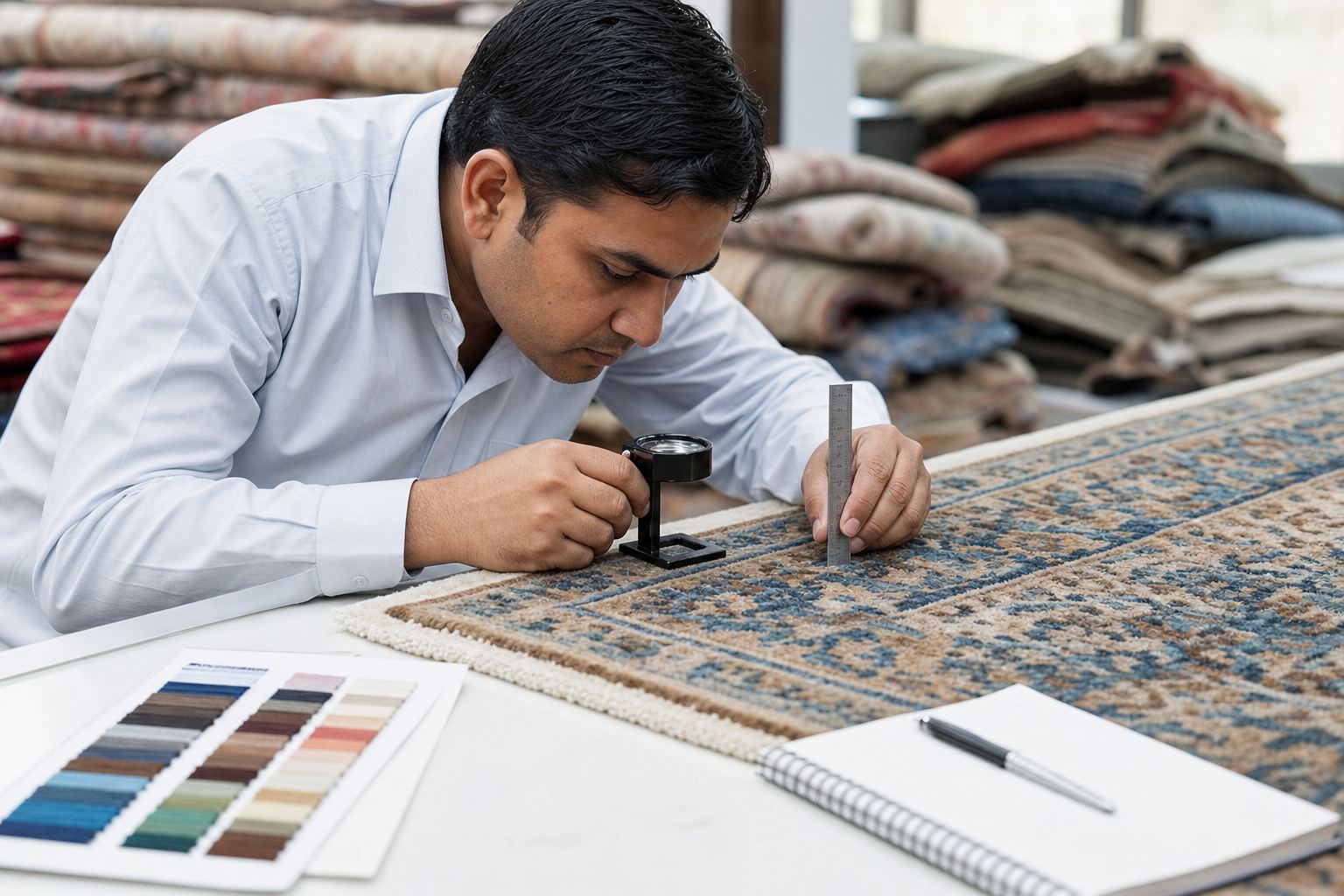
Manufacturing context at a trade show is about proving reproducibility. Buyers do not need a full loom lecture; they need confidence that the sample on the table can be repeated across looms, wash houses, and finishing lines without uncontrolled density or shade drift. Export houses that coordinate loom owners and wash houses under one QC plan convert fair interest faster than trading offices that cannot name the producing units.
Hand-knotted programmes live or die on density honesty and finishing consistency. Tufted programmes live or die on pile-height gauges, backing adhesion, and edge finish. Kilims and dhurries live or die on colour-block accuracy and size tolerance. Bring the checkpoint tools to the booth — countable swatches, gauges, hangtags — so the conversation is evidence-based from minute one.
Construction checkpoints to demonstrate at the booth.
Swipe →
Data table — swipe horizontally on small screens
| Construction | Process Cue | Booth Evidence | Indicative Lead-Time Band |
|---|---|---|---|
| Hand-knotted | Vertical loom knotting | KPSI photo + countable swatch | Often several months by size/density |
| Kilim / dhurrie | Handloom weaving | Colourway card + size sheet | Weeks to a few months |
| Hand-tufted | Tufting frame + backing | Pile-height gauge + backing note | Often shorter than fine knotting |
Preparing Booth Assortments: Knotted vs Tufted
The single highest-leverage booth decision is whether your hero story is knotted, tufted, or a deliberately paired contrast. Buyers walking Domotex make snap judgments; a focused, well-labelled display signals specialisation faster than a crowded table of every construction you have ever made.
Knotted hero display
- Visible KPSI or equivalent density card with method stated
- Sealed counter-sample policy explained in one sentence
- Lead-time band that includes wash, finish, and packing — not only knotting days
Display one commercial-density wool knotted piece, one finer or GI-linked flagship if that is authentic capacity, and one small accent size that travels easily as a leave-behind sample conversation. Label each with fibre content, countable density, pile height, size, and realistic lead time. Never print a marketing density higher than the countable sample.
Tufted hero display
- Pile-height gauge demonstration on the face sample
- Backing and edge-finish notes buyers can photograph
- MOQ and replenishment lead-time sheet for programme planning
Display one retail volume line, one design-led or carved accent, and one private-label capability example (blank or lightly branded) so buyers see replenishment economics. Emphasise pile-height consistency, backing type, and MOQ breaks. Tufted programmes often win the first trial order at a fair because lead times and piece counts fit retailer calendars better than fine knotting.
Leave-behind materials
A one-page price and MOQ sheet beats a generic company brochure. Add a QR code to a full catalogue PDF and your carpet product or company page. Capture what each visitor asked for — construction, sizes, certifications, volume — in a lead app or sheet the same day.
Pricing Analysis
Buyer Tip
Fair quoting discipline protects margin and trust. Quote directional FOB bands by construction at the booth only when the buyer has named sizes, fibre, and approximate volume. Avoid finalising firm container pricing on the spot for anything beyond a sample or very small trial — propose a written quote within 72 hours once you confirm yarn and finishing costs.
Indicative FOB bands for fair conversations (directional only; USD; India origin).
Swipe →
Data table — swipe horizontally on small screens
| Construction / Tier | Indicative FOB Basis | Fair Quoting Caution |
|---|---|---|
| Hand-tufted wool (standard retail sizes) | Lower–mid USD per sq. ft / piece | Confirm pile height and backing before firming |
| Handloom kilim / dhurrie | Lower–mid band by size | Colour count and finishing move price |
| Hand-knotted wool (commercial density) | Mid–upper band by sq. ft | Never inflate KPSI to win a booth comparison |
| Fine hand-knotted / silk accents | Premium band | State lead time before price to set expectations |
| Certified social-compliance lines | Premium to uncertified equivalent | Bring certificate scope covering producing units |
MOQ Analysis
Buyer Tip
State MOQs clearly on leave-behinds and marketplace listings. Hand-tufted retail programmes may accept trial quantities in the tens of pieces per size/colour; fine hand-knotted pieces are constrained by loom-months as much as piece count. Buyers requesting mixed sizes across many SKUs should expect higher MOQs or longer lead times — say so at the booth before enthusiasm turns into an impossible PO.
Typical MOQ bands for fair and marketplace negotiations (indicative).
Swipe →
Data table — swipe horizontally on small screens
| Product Type | Typical MOQ Guidance | Fair Conversation Note |
|---|---|---|
| Stock hand-tufted designs | Often tens of pieces per size/colour | Best first-trial path after Domotex |
| Custom tufted private label | Higher piece counts per colourway | Dye and backing setup drive MOQ |
| Kilim / dhurrie programmes | Design- and colour-dependent | Lock colourways before loom allocation |
| Hand-knotted commercial | Smaller piece counts, long lead times | Explain loom-months, not only piece MOQ |
| Fine / silk-accent knotted | Low piece count, high value | Sample deposit and staged payments common |
Packaging Standards
Export Tip
- Individual poly wrap with hangtag and care/fibre labels
- Roll packing with pile protected per buyer instruction
- Master cartons or bales with humidity-aware outer layers where needed
- Photograph approved packing and reuse it as the lot standard
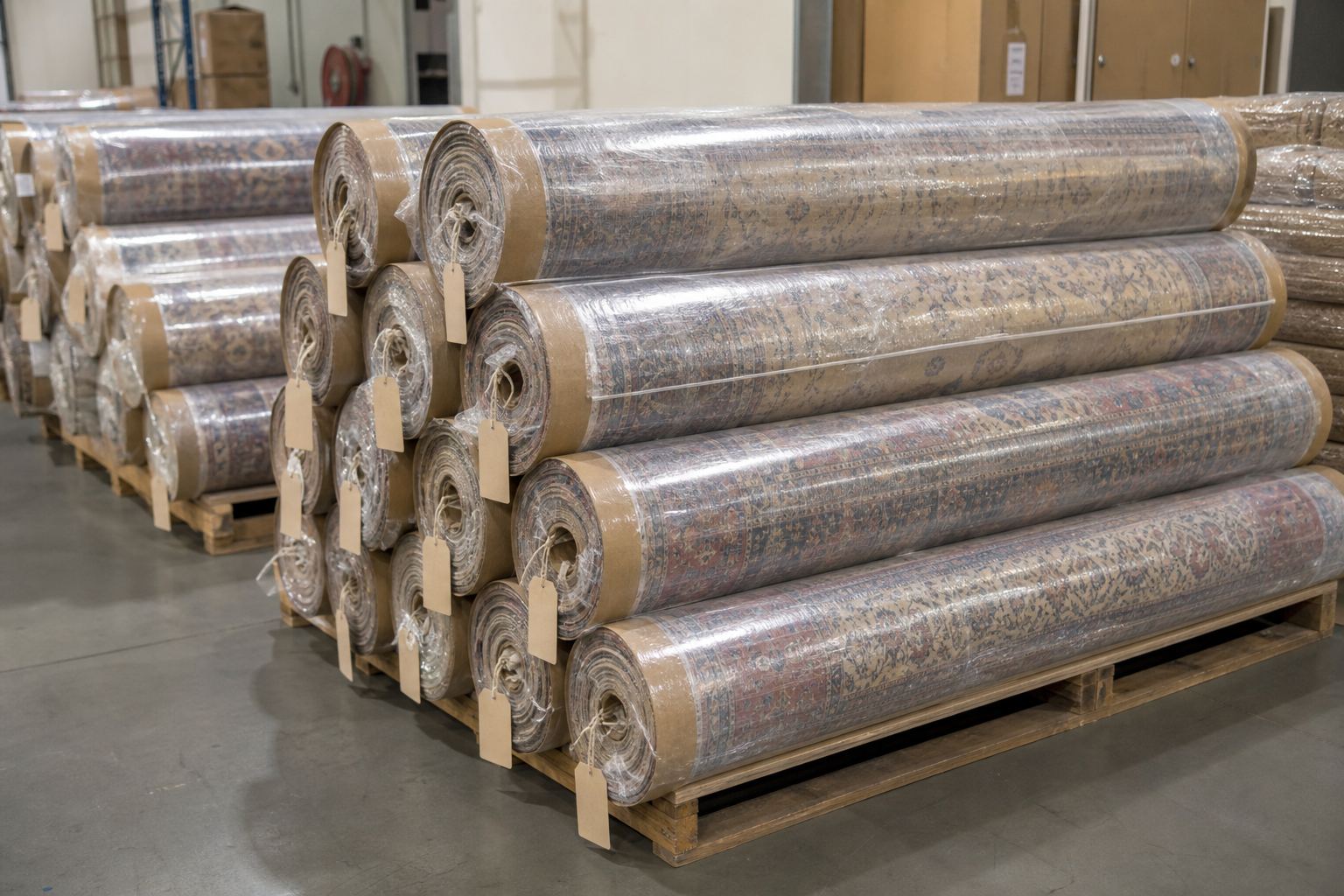
Buyers at floor-covering fairs ask about packaging early because pile compression and moisture damage are common claim triggers. Be ready to describe — and preferably photograph — individual poly wrapping, edge protection, moisture-aware barriers for humid ocean routes, clear SKU/roll IDs, and fibre/care hangtags. LCL trials that follow fair samples need upgraded inner protection because they are handled more often than FCL loads.
Approve a packing SOP during sampling and show that SOP at follow-up calls. Damaged pile or missing labels create retailer chargebacks that erase the margin on an entire trial container that began with a promising Domotex conversation.
Container Loading Details
Export Tip
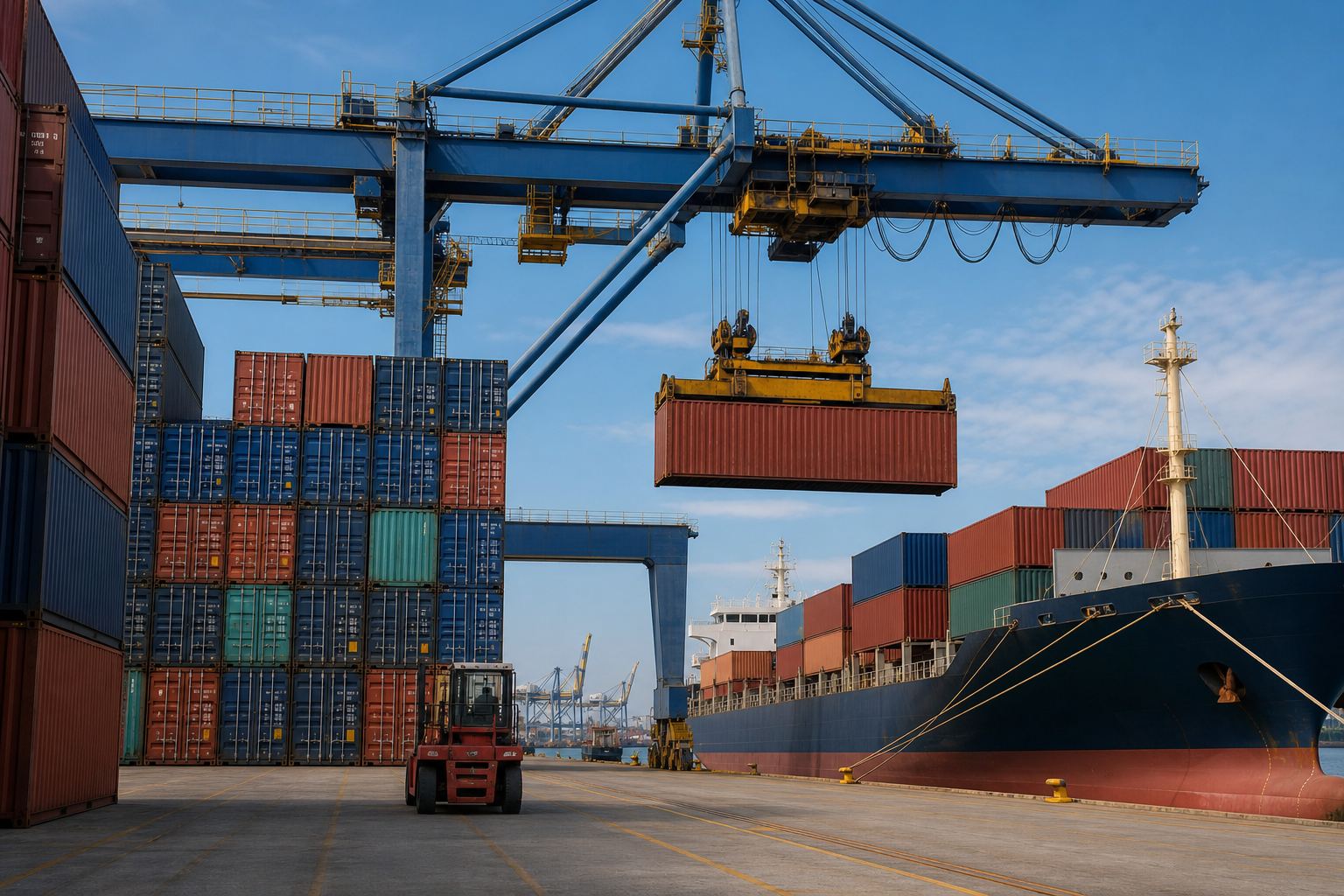
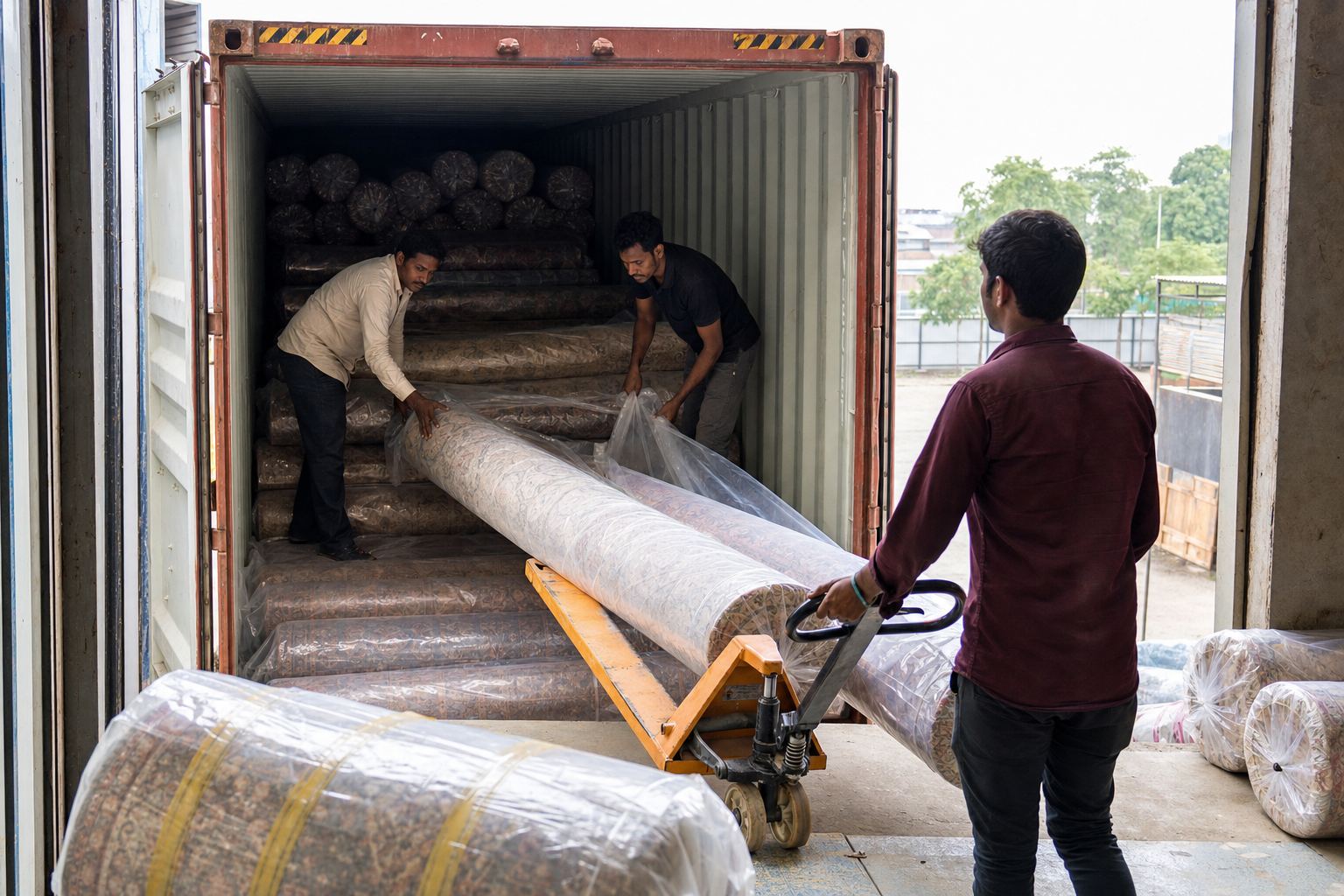
Fair conversations often jump from sample to "can you fill a container?" Have a simple load-plan narrative ready: how knotted rolls versus tufted cartons mix, approximate pieces or square footage per 20-foot and 40-foot container for your hero sizes, and how you prevent crush on bottom tiers. Mixed knotted and tufted loads need SKU-separated packing lists so destination warehouses can receive without chaos.
Container talking points for booth and follow-up quotes.
Swipe →
Data table — swipe horizontally on small screens
| Topic | What Buyers Want to Hear | Exporter Proof |
|---|---|---|
| Mix loads | Knotted rolls + tufted cartons planned, not improvised | Sample load plan PDF |
| Crush protection | Bottom-tier strategy and edge guards | Packing photos from prior FCL |
| Identification | Roll/piece IDs match packing list | Label mock-ups at booth |
| Moisture | Desiccants / barriers on humid routes | SOP note in quote pack |
Shipping Methods
Export Tip
Most commercial carpet programmes move by sea freight under FOB Indian load port or CIF destination port. At the booth, state your preferred Incoterm clearly and print it on every follow-up quote with named port, currency, and validity date. Many first-order disputes after fairs are not about rug quality — they are about a buyer who assumed CIF while the exporter calculated FOB.
Air freight is occasionally used for urgent samples or small high-value knotted pieces after a fair; it is rarely economical for commercial tufted volume. Offer air-sample options in the 72-hour follow-up when a buyer asks for speed, and keep ocean as the default for trial LCL/FCL.
Certifications
Compliance Notes
Certification readiness at the booth shortens the path from conversation to vendor onboarding. US and European programmes frequently ask about GoodWeave or comparable child-labour-free credentials. OEKO-TEX or equivalent chemical testing may be requested where fibre and finishes apply. ISO 9001 helps larger importer questionnaires. GI-linked origin claims help only when geography and paperwork support them.
Certifications and credentials to display or reference at carpet fairs.
Swipe →
Data table — swipe horizontally on small screens
| Credential | Why Buyers Ask | Booth / Follow-up Action |
|---|---|---|
| CEPC membership / RCMC | Organised exporter identity | Carry membership proof; link in leave-behind |
| IEC | Legal export capacity | Confirm on vendor forms post-fair |
| GoodWeave / social compliance | US/EU retailer onboarding | Show scope covering producing units |
| OEKO-TEX / chemical tests | EU chemical diligence | Attach reports for relevant SKUs |
| ISO 9001 | Process credibility | Include in digital follow-up pack |
| GI marks (where licensed) | Origin authenticity | Only claim what you can document |
Buyer Requirements
Buyer Requirements
- Honest construction and fibre disclosure matching hangtags
- Density or pile-height method stated and sample-locked
- Size tolerances compatible with retail planograms
- Destination labelling (fibre, care, origin) ready for US/EU/UK
- Social-compliance evidence in scope for actual producing units
- Packing SOP and PSI access agreed before bulk production
- Payment structure and Incoterm printed on the quote
Fair and marketplace buyers converge on a familiar requirement set even when constructions differ. Expect written RFQs after the show that restate construction, fibre, density or pile height, sizes, colourways, labelling, social compliance, Incoterms, and PSI rights. Exporters who already captured these details at the booth write better quotes and waste fewer sample cycles.
B2B Marketplaces: Alibaba and Rug Discovery Channels
Alibaba and related B2B marketplaces generate steady inquiries for hand-tufted volume lines and private-label rug programmes, especially from distributors comparing multiple Indian suppliers before a factory visit or Domotex meeting. The channel's strength is reach; its weakness is mixed buyer seriousness. Treat marketplace leads as top-of-funnel inputs into the same CRM as fair cards.
Respond with specifications, not slogans
Answer construction, fibre, density or pile height, MOQ, and lead time — not a generic "leading exporters of quality carpets" message. Buyers evaluating multiple suppliers notice which responses engage the actual question. Avoid racing to the bottom on knotted square-foot pricing in public chat threads; public floor prices undermine every subsequent negotiation.
Move serious buyers to verification quickly
When an inquiry shows specificity — GoodWeave questions, PSI process, video audit requests — move off marketplace chat into structured qualification. Share CEPC and IEC credentials, offer a video loom/wash-house walkthrough, and propose a paid sample against credit on a future order. Unwillingness to pay a modest sample fee usually predicts unwillingness to place a meaningful container order.
Integrating Fairs with Digital Outreach
- Log fair and marketplace leads into one CRM with construction and volume fields
- Pre-book Domotex meetings using trade-data and LinkedIn before travel
- Send SKU-specific follow-up within 72 hours — never a generic thank-you only
- Second touch at day 10 and day 21 if the buyer has not responded
- Measure stage conversion: conversation → sample → PO → repeat
Exhibitors who convert best treat Domotex, India Carpet Expo, US shows, Alibaba, LinkedIn, and trade-data prospecting as feeds into one pipeline. The sequence is simple and hard to execute consistently: lead enters CRM the same day, personalised follow-up within 72 hours, paid or credited sample offer, formal quote, PSI and documentation discussion, then order.
Trade data for HS Chapter 57 importers lets you pre-book Domotex meetings with companies already importing carpets from India or competing origins. LinkedIn outreach to rug category buyers works when the first message references a specific construction or a fair meeting request — not a generic exporter blast. Pair this guide with How to Find International Buyers for Carpets and Rugs for outbound tactics that run year-round.
The 72-Hour Follow-Up Rule
Export Tip
Most fair and marketplace rug leads die from slow response, not weak products. A buyer who spoke with your team at Domotex is evaluating multiple origins in the same window — and the supplier who follows up first with a relevant, specific response usually wins disproportionate attention.
Build follow-up into the fair workflow before you need it. A message that references the exact construction, density, or private-label question raised at the booth signals the process discipline buyers are testing when they evaluate a new Indian carpet relationship.
Country-wise Opportunities
Market Snapshot
Align fair travel and marketplace language with destination opportunity — not every country deserves equal booth investment. Cross-reference Best Countries for Indian Carpet and Rug Exports before locking the annual calendar.
Country priorities for carpet fair and B2B effort.
Swipe →
Data table — swipe horizontally on small screens
| Country / Region | Opportunity Cue | Preferred Channel Mix |
|---|---|---|
| United States | Largest value share; labelling & social compliance critical | Domotex + US home shows + trade data + Alibaba |
| Germany | Quality-led EU gateway; Domotex home advantage | Domotex + Ambiente + CEPC missions |
| United Kingdom | Retail and online-first rug programmes | Domotex + LinkedIn + trade data |
| UAE & GCC | Distributor and hospitality demand | Regional visits + marketplaces + Domotex |
| Australia | Selective specialty and retail programmes | Trade data + LinkedIn; selective fairs |
Case Study: A Bhadohi Exporter Turns Domotex into a Repeat US Programme
Challenge: A Bhadohi hand-knotted manufacturer had exhibited at multi-category domestic fairs for two years with high foot traffic and almost no follow-through into orders. Lead capture was a stack of unsorted business cards; density claims on hangtags were inconsistent with countable samples.
Approach: Ahead of Domotex Hannover, the team narrowed the booth to three heroes — a commercial-density wool knotted line, a finer flagship with documented density, and a complementary hand-tufted replenishment SKU from a vetted partner cluster — each with KPSI or pile-height cards. Meetings were pre-booked with US specialty importers identified via trade data.
Lead capture: Every conversation logged construction interest, size range, certification questions, and volume cues the same day. One US importer stood out for asking detailed GoodWeave scope questions and requesting a sealed sample with countable density photos.
Follow-up: Within 48 hours the exporter sent a SKU sheet, MOQ pricing, realistic lead times including wash and finish, and a paid sample proposal creditable against a future order. The importer paid for the sample — a seriousness filter the exporter used to prioritise capacity.
Results: Sample approved in five weeks. A trial LCL followed with PSI and reconciled documents. A larger repeat order landed within two seasons. The same three-SKU booth logic and 48-hour follow-up were reused at India Carpet Expo with consistent conversion.
Lessons: Narrow assortment, density honesty, pre-booked meetings, and fast specific follow-up outperform catalogue-and-hope. Process depth for the eventual shipment lives in the carpet export documentation checklist and the how-to-export pillar.
Sourcing Checklist
Checklist
Use this sourcing checklist when international buyers evaluate Indian carpet suppliers after a fair or marketplace introduction — and when exporters self-audit before Domotex.
Common Buyer Mistakes
Common Mistakes Box
- Choosing suppliers on booth beauty alone — Solution: require countable density/pile evidence and producing-unit photos.
- Accepting inflated KPSI claims — Solution: photograph countable areas and write the method into the sample approval.
- Skipping paid samples after Domotex — Solution: use credited sample fees to filter tyre-kickers.
- Mixing ten custom colourways on a first trial — Solution: start with two to three colourways and expandable MOQs.
- Ignoring Incoterm clarity in fair notes — Solution: confirm FOB/CIF and port in the 72-hour quote.
- Treating Alibaba prices as Domotex-equivalent — Solution: re-quote after specification lock; public chat prices are not contracts.
- No PSI on the first container — Solution: book inspection before stuffing, especially after fair-sourced POs.
- Overlooking labelling for US/EU retail — Solution: attach fibre/care/origin requirements to the RFQ immediately after the fair.
Buyers and exporters both lose money when fair energy outruns process. Watch for these recurring mistakes.
Common exhibitor mistakes
- Bringing the entire catalogue instead of knotted/tufted heroes
- No lead capture beyond business cards
- Quoting firm knotted pricing publicly without volume context
- Slow follow-up after Domotex or India Carpet Expo
- Measuring success by foot traffic instead of sample-to-order conversion
- Spreading budget across too many weak multi-category fairs
Future Market Trends
Key Statistics
Floor-covering discovery is shifting toward hybrid journeys: buyers still need tactile evaluation at Domotex or India Carpet Expo, then complete diligence through digital document rooms, video audits, and AI-assisted supplier shortlists. Exporters with clear, citable specification pages and certification PDFs will surface more often in buyer research between fairs.
Sustainability and social-compliance evidence will keep rising as a booth differentiator, especially for US and EU retail. Traceability stories that name clusters and producing units outperform vague "handmade with love" signage. Design-led small rugs and outdoor-adjacent soft floors may gain share at Ambiente and US home shows, while commercial knotted and tufted programmes remain Domotex's core.
MSMEs that combine one well-prepared flagship fair, CEPC channels, disciplined marketplace qualification, and year-round trade-data outreach will outcompete exhibitors who only appear at fairs without a digital follow-through system.
Buyer Checklist + Exporter Checklist + Compliance Checklist
Checklist
Compliance Notes
Use the three checklists below as gates after any fair or marketplace conversion. A shipment should not sail — and a serious sample programme should not start — until buyer, exporter, and compliance owners have each cleared their list.
Buyer checklist
Exporter checklist
Compliance checklist
ROI Reality Check
A trade show pays back when it yields two or three qualified programme buyers — not fifty business cards. Budget honestly for booth fees, travel, sample freight to the venue, display materials, and post-fair follow-up staff time. MSMEs often get better ROI from one well-prepared Domotex or India Carpet Expo appearance plus merchant-exporter introductions and outbound prospecting than from spreading a thin budget across every invitation on the calendar.
Working with Altus Exports on Buyer Development
Altus Exports supports carpet and rug manufacturers with buyer qualification, sample coordination, and documentation alongside fair and marketplace lead generation — helping MSMEs convert Domotex, India Carpet Expo, and Alibaba conversations into verified repeat programmes. We help separate serious floor-covering buyers from browsers early so loom and sample budget go toward leads most likely to convert.
For manufacturers without the travel budget to exhibit at every relevant fair, we introduce verified international buyers directly, combining trade-data prospecting with merchant-exporter relationships. Explore merchant exporter services or our global sourcing partner offering to see how this fits your growth plan.
Conclusion
Trade shows and B2B channels both work for carpet and rug exporters — but only for exporters who prepare a focused knotted-versus-tufted product story, qualify leads before quoting, and follow up within days rather than weeks. Domotex Hannover, India Carpet Expo, Ambiente and Heimtextil adjacency, US home shows, and disciplined Alibaba use form a channel system, not a list of disconnected events.
Combine exhibition presence with marketplace qualification and structured digital outreach into one pipeline, and measure everything by conversion to qualified programme buyers. That is the difference between a fair budget that pays for itself and one that produces a stack of business cards and little else.
Exhibitors and importers who need post-fair sampling, construction-locked quotes, and shipment discipline can work with Altus Exports after Domotex or India Carpet Expo. Continue via contact, merchant exporter services, or global sourcing partner in India.