
Sustainable & Handwoven Carpet Export Opportunities from India
By Saurabh Mittal, Founder, Altus Exports
A practical export guide to sustainable and handwoven carpet opportunities from India — why US and EU buyers pay premiums for documented hand-knotted and handwoven rugs, how ESG questionnaires and GoodWeave child-labor-free programmes shape vendor approval, what eco dye houses and traceable wool actually prove, how artisan cluster and Fair Trade-style programmes support livelihoods claims, when recycled PET outdoor rugs fit a sustainability assortment, and how to price and document every claim without greenwashing. Includes IBEF market context, eight-plus tables, checklists, and guidance from Altus Exports.
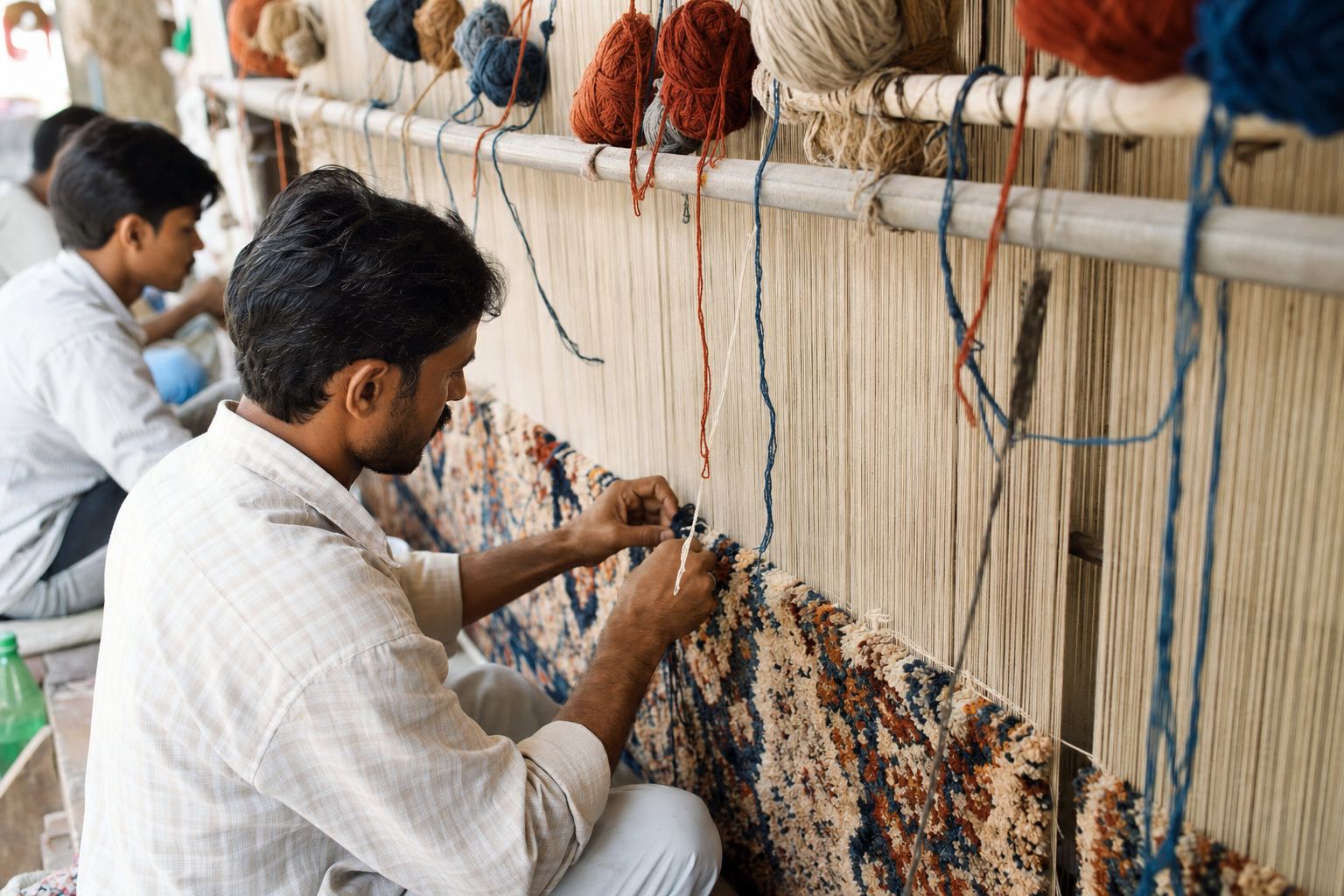
Premium floor-covering buyers in the United States, Germany, and the United Kingdom have rewritten what "handmade" means on a purchase order. Knot density and pile height still matter — but so do answers to ESG questionnaires: Is the wool traceable to a named region or cooperative? Which dye house processed the yarn, and under what chemical profile? Does a GoodWeave or comparable child-labor-free programme cover the producing loom sheds? Can you evidence artisan wages, cluster livelihood programmes, or Fair Trade-style premiums without inventing a story at Domotex week? Sustainable and handwoven carpet export opportunities from India now sit at the intersection of craft excellence and documented responsibility — and that intersection is where demand premiums actually stick.
India remains one of the world's leading handmade carpet origins. Industry and IBEF-aligned figures place carpet exports near USD 1.54 billion in FY25 (up from about USD 1.39 billion in FY24), with the USA alone taking roughly USD 921 million — about fifty-nine percent of export value — followed by Germany and the UK as major quality-led markets. Those numbers are market context, not the sustainability thesis. The thesis is simpler: hand-knotted, handwoven, and carefully finished rugs already carry emotional and design value; when exporters add credible eco dyes, traceable wool, recycled PET outdoor constructions where relevant, and child-labor-free plus livelihood documentation, buyers pay more and renew faster — provided every claim survives an audit.
This guide focuses exclusively on carpets and rugs — handwoven, hand-knotted, eco-dyed, traceable-wool, and selected recycled PET outdoor lines — plus GoodWeave programmes, artisan livelihoods, and Fair Trade-style cluster models. It explains how to price sustainability into FOB, how to answer ESG questionnaires without marketing fluff, and how to document claims from yarn intake through packing. Pair it with How to Export Carpets and Rugs from India for the full process sequence and CEPC Registration Benefits for Carpet Exporters for institutional credibility. Altus Exports supports manufacturers and buyers as a merchant exporter and global sourcing partner when sustainable carpet programmes need one accountable export relationship.
Key Takeaways
Summary Box
Executive Summary
Summary Box
Sustainable handwoven and hand-knotted carpet exports from India are a documentation-and-pricing discipline wrapped around artisan production. Buyers already know India can deliver craft; what they increasingly buy is confidence that the carpet was made without child labor, with responsible chemistry, and with a fiber story that can be reconstructed if a retailer sustainability team asks for it six months after delivery.
The commercial path is clear: choose constructions you can reproduce (hand-knotted, handwoven flatweave/kilim/dhurrie, selected hand-tufted lines with honest labeling), map each SKU to the sustainability claims it can actually support, align GoodWeave or equivalent social compliance where US/EU retail requires it, work with eco-capable dye houses, lock wool or yarn provenance where you claim it, price the full cost stack into FOB, and ship with a document pack that matches the hangtag. Recycled PET outdoor rugs can sit alongside heritage wool programmes when buyers want a complementary outdoor or easy-care sustainability story — still under HS Chapter 57 floor coverings, still carpet-specific.
This article stays inside carpets and rugs. It does not treat other home-textile categories. Process basics — IEC, CEPC, HS 5701–5705, packing, PSI — are assumed from the process pillar and referenced, not re-litigated. The focus here is premiums, ESG questionnaires, traceability, eco dyes, artisan programmes, and how to price and document sustainable carpets so the tenth container is as defensible as the first sample.
Market Size & Industry Overview
Key Statistics
- FY25 exports
- ~USD 1.54B (IBEF / industry)
- USA share
- ~59% (~USD 921M)
- Handmade orientation
- ~40% of world handmade carpet exports
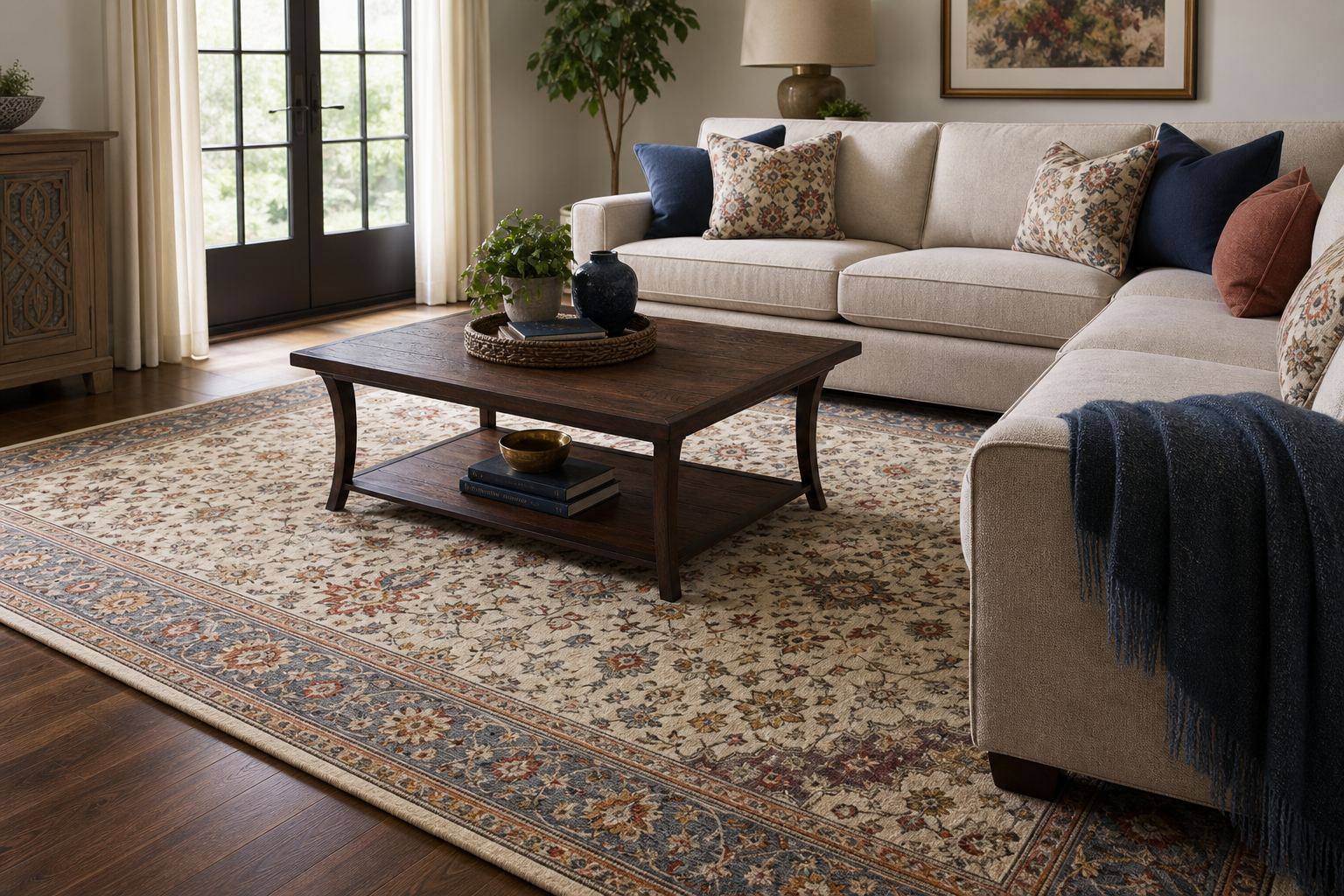
According to figures commonly cited from Indian trade and industry sources aligned with IBEF and CEPC reporting, India's carpet exports reached approximately USD 1.54 billion in FY25, up from about USD 1.39 billion in FY24. The United States accounted for roughly USD 921 million — about fifty-nine percent of export value — with Germany near USD 91.7 million and the United Kingdom near USD 65.4 million. India is also widely described as supplying around forty percent of world handmade carpet exports, with an estimated eighty-five to ninety percent of domestic production oriented to overseas markets and more than two million artisans participating across related crafts.
Those headline numbers explain why sustainability investment is commercially rational: the largest buyers by value — especially US retailers, wholesalers, and e-commerce private-label programmes — are also the buyers most likely to attach ESG questionnaires, child-labor-free expectations, and chemical compliance requests to vendor onboarding. Germany and the UK amplify chemical and social scrutiny. Sustainability does not create a separate export market; it filters who wins preferred-supplier status inside the existing USD 1.54 billion demand base.
Use the statistics to prioritize compliance investment, not to inflate every brochure claim. A Bhadohi loom shed that can ship one documented, GoodWeave-covered, eco-dyed hand-knotted programme on time will outcompete a larger undocumented assortment when a US sustainability team is the gatekeeper.
India carpet exports — market context only (FY24–FY25; IBEF / industry sources).
Swipe →
Data table — swipe horizontally on small screens
| Metric | Value | Sustainability implication |
|---|---|---|
| India carpet exports FY25 | USD 1.54 billion | Large demand base where ESG filters increasingly decide preferred suppliers |
| India carpet exports FY24 | USD 1.39 billion | Prior-year baseline; growth favors documented programmes |
| USA (FY25) | USD 921 million (~59%) | Primary market for GoodWeave and retailer ESG questionnaires |
| Germany (FY25) | USD 91.7 million | Strong chemical compliance and social-audit expectations |
| UK (FY25) | USD 65.4 million | Retail vendor scorecards on labor, chemistry, and packaging |
| World handmade share | ~40% | Handwoven/hand-knotted origin story is India's structural edge |
| Artisan base | 2M+ (industry / CEPC narratives) | Livelihood and cluster programmes are commercially relevant claims |
Product Categories / Variants
Summary Box
When US and EU floor-covering buyers say sustainable, they rarely mean a vague green mood. They mean a checkable bundle: child-labor-free production evidence for handmade programmes, responsible dye chemistry, fiber content honesty, and — for premium handwoven or hand-knotted lines — a provenance story that can be audited at the cluster or cooperative level. Handwoven premium adds a second layer: construction integrity (true hand-knotted or handwoven process), knot-density honesty, and artisan livelihood narratives that do not contradict wage and working-hour records.
Performance still comes first. A beautifully documented eco-dyed rug that misstates KPSI, compresses in transit, or ships with shade variation across a size run will not renew — sustainability is an additional filter after construction QC, not a substitute for it. Exporters who lead with ESG language while failing basic pile-height consistency lose credibility on both fronts at once.
Expectations also differ by channel. Specialty rug importers and design trade often prioritize craft authenticity and GoodWeave coverage. Big-box and e-commerce private label may accept hand-tufted or flatweave constructions with clearer chemical and packaging requirements. Outdoor and patio assortments increasingly ask for recycled PET or solution-dyed synthetic stories. Match claim intensity to channel; do not paste a Kashmir fine-knot narrative onto a volume outdoor PET SKU.
Comparison table
Swipe →
Data table — swipe horizontally on small screens
| Buyer expectation | What it actually requires | Where it matters most |
|---|---|---|
| Child-labor-free handmade production | GoodWeave or equivalent programme covering named producing units | US retail, EU specialty, Domotex-facing programmes |
| Responsible dye chemistry | Eco / low-impact dye house records + restricted-substance tests where required | EU, UK, premium US private label |
| Traceable wool / yarn | Named region, cooperative, or lot records linked to finished SKUs | Hand-knotted and handwoven wool programmes |
| Artisan livelihood / Fair Trade-style premiums | Documented wage practices, cluster programmes, or certified Fair Trade pathways | Premium EU/US storytelling channels |
| Recycled content (outdoor rugs) | Verified recycled PET feedstock claims with composition honesty | Outdoor, patio, easy-care assortments |
| Honest construction labeling | Hand-knotted vs handwoven vs hand-tufted correctly stated | All markets — greenwashing risk if blurred |
Export Statistics
Key Statistics
Demand premiums for sustainable and handwoven carpets exist because buyers can defend higher retail prices — and lower reputational risk — when documentation is real. A hand-knotted wool rug with GoodWeave coverage, eco-dye lot records, and named cluster provenance supports specialty retail margins that a generic "handmade India" label cannot. The premium is not automatic; it is earned when the exporter prices certification and audit costs into FOB and the buyer can see what those costs buy.
Indicative commercial experience across programmes suggests documented sustainable or ethical-handmade wool rugs often support FOB uplifts in the range of roughly fifteen to forty percent versus comparable undocumented constructions of similar density and size — wider for fine Kashmir-grade hand-knotted pieces with full social and dye documentation, narrower for volume flatweaves with only chemical testing. These bands are programme experience, not a published official index; fiber mix, knot density, size assortment, and certification scope move the number.
The fastest way to erase a premium is to absorb audit and livelihood costs into conventional carpet pricing because a sales team fears losing the deal. Buyers in premium US and German channels already model higher FOB for verified product. Present the cost stack transparently: social-compliance fees, eco-dye premiums, traceability administration, and any Fair Trade-style artisan premium — then hold the line.
Indicative FOB premium bands for carpet programmes — illustrative, not an official price index.
Swipe →
Data table — swipe horizontally on small screens
| Programme tier | Typical claim set | Indicative FOB uplift vs undocumented peer | Notes |
|---|---|---|---|
| Conventional handmade (baseline) | Construction QC only | Baseline | Still requires honest KPSI and fiber labels |
| Chemical / eco-dye documented | Eco dye house + RSL/test evidence | Approx. 10–20% | Common EU entry credential |
| GoodWeave / child-labor-free covered | Named units under programme | Approx. 15–30% | Often gating for US specialty retail |
| Traceable wool + eco dye + social | Lot-level wool + dye + labor docs | Approx. 20–40% | Strongest handwoven premium story |
| Fair Trade-style / livelihood premium | Documented artisan premium or certified pathway | Highest storytelling tier | Requires programme discipline, not slogans |
| Recycled PET outdoor | Verified recycled content + durability specs | Channel-dependent | Complementary SKU, different buyer brief |
Import Statistics
Key Statistics
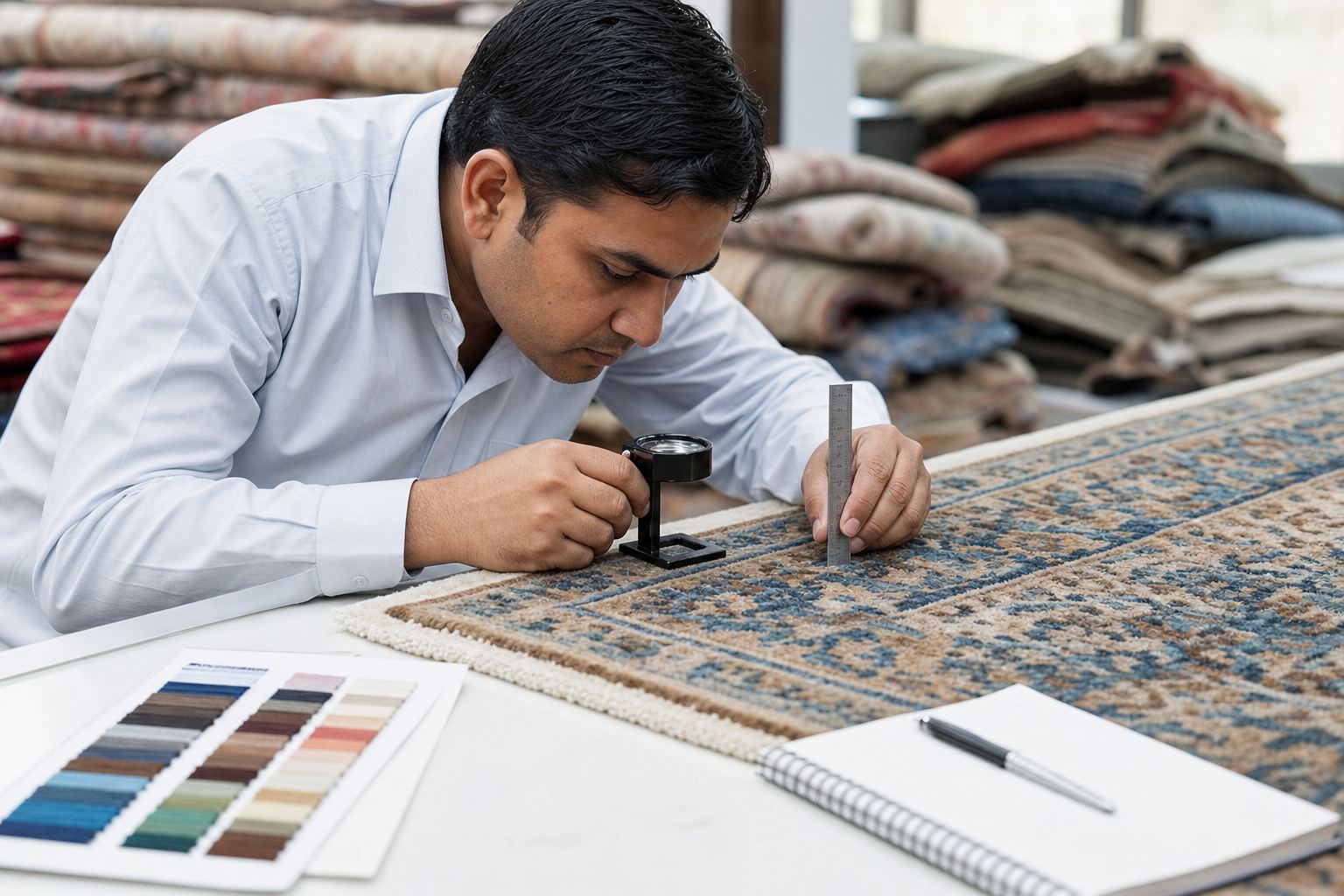
ESG questionnaires from US retailers, European buying groups, and hospitality procurement teams have become an early filter in carpet vendor approval. Typical modules cover labor (child labor, forced labor, wages, working hours), environment (wastewater from washing and dyeing, chemical inventories, energy), and product claims (fiber origin, recycled content, construction method). Incomplete or vague answers often stop the conversation before samples are reviewed.
Answer at SKU or programme level, not with a single company-wide green paragraph. A Kashmir fine hand-knotted line may be GoodWeave-covered with eco-dyed wool; a Panipat outdoor PET runner may carry recycled-content documentation and different chemical tests. State clearly which producing units, dye houses, and wash facilities apply to which purchase order. Attach certificate PDFs whose scope matches the loom sheds named on the commercial invoice — a certificate for a different workshop is worse than no certificate.
Build an internal questionnaire response pack once per season: current social-compliance certificates, dye-house declarations, wool or yarn provenance summaries, wastewater or effluent notes where available, packaging material disclosures, and a one-page claim matrix mapping each SKU to allowed hangtag language. Update validity dates before Domotex, India Carpet Expo, or major RFQ seasons — expired certificates read as carelessness even when production is ethical.
Comparison table
Swipe →
Data table — swipe horizontally on small screens
| ESG questionnaire theme | Typical buyer ask | Exporter evidence to attach |
|---|---|---|
| Child labor / forced labor | Which looms are covered by GoodWeave or equivalent? | Valid certificate + list of covered producing units |
| Wages and working hours | How are artisan payments recorded? | Wage records summary, cooperative or cluster programme notes |
| Chemicals and dyes | Restricted substances; dye house controls | Dye lot logs, MSDS/RSL tests, eco dye house declaration |
| Fiber / wool origin | Can you trace wool or yarn lots? | Purchase records, region/cooperative IDs, lot-to-SKU map |
| Wastewater / washing | How is carpet wash effluent handled? | Wash-house notes, treatment description where applicable |
| Packaging | Plastic content and recyclability | Pack SOP with materials list and right-sizing photos |
| Claim accuracy | Who approves hangtag language? | Internal claim matrix signed against certificates |
Manufacturing Overview
Export Tip
Traceability in carpets means reconstructing which wool or yarn lot, dye lot, and loom group produced a finished piece or roll — not publishing a romantic map of India. For hand-knotted and handwoven wool programmes, buyers increasingly ask whether wool is Indian, New Zealand, or blended; whether it is sourced through a named cooperative or trader; and whether lot numbers on yarn bags link to production tickets on the loom.
Practically, maintain a simple chain: yarn intake record (supplier, lot, fiber declaration), dye-house job card (recipe, lot out), loom allocation sheet (which carpets consumed which dyed yarn), and finished-goods tag linking the commercial invoice line to that chain. A disciplined spreadsheet plus retained yarn swatches is enough for most specialty importers; elaborate blockchain claims without lot discipline impress nobody during an audit.
Cotton-warp or cotton-weft constructions used in dhurries and some flatweaves may involve fiber certifications when buyers specifically request them for the cotton component — treat those as fiber-relevant carpet claims only, and never borrow bed-linen marketing language into a rug hangtag. Silk and viscose accents need honest composition percentages; overstating wool content to sound more "natural" is a trust failure.
Comparison table
Swipe →
Data table — swipe horizontally on small screens
| Traceability layer | Record to keep | Common failure mode |
|---|---|---|
| Fiber intake | Supplier invoice + lot ID + fiber % | Mixing lots without new lot codes |
| Dyeing | Dye job card + recipe + eco/RSL notes | Re-dyeing without updating lot IDs |
| Loom / weaving | Allocation of yarn lots to carpet IDs | Hero samples using different yarn than bulk |
| Finishing / wash | Wash-house batch linked to carpet IDs | Undocumented chemical finishes after wash |
| Export packing | Invoice line ↔ carpet/roll IDs | Hangtag claims broader than lot evidence |
Certifications
Compliance Notes
"Eco-dyed" is one of the most overused phrases in carpet marketing and one of the easiest to make real. Eco dye houses typically mean controlled dye chemistry, better process documentation, reduced hazardous inputs relative to uncontrolled backyard dyeing, and the ability to support restricted-substance testing when EU or US buyers require it. They do not automatically mean plant-only natural dyes — natural dye programmes exist and can be powerful for premium storytelling, but they need separate process control for shade repeatability.
Work with dye houses that issue job cards your QC team can file, that accept buyer RSL (restricted substance list) frameworks, and that will not substitute recipes mid-programme without written notice. For handwoven and hand-knotted wool, shade continuity across size runs is both a quality and a sustainability issue: remakes from shade failure waste yarn, water, and artisan time.
When OEKO-TEX or equivalent textile testing is requested, confirm scope: yarn, finished carpet, or both. Chemical safety credentials complement — they do not replace — GoodWeave social credentials. Buyers expect exporters to know the difference and to state which certificate covers which claim.
Comparison table
Swipe →
Data table — swipe horizontally on small screens
| Dye approach | Best fit | Documentation buyers expect | Commercial note |
|---|---|---|---|
| Controlled eco / low-impact synthetic dyes | Most retail handwoven & tufted programmes | Job cards, RSL tests, dye-house declaration | Best shade repeatability for assortments |
| Natural / plant-based dyes | Premium heritage and design-trade pieces | Process notes, shade-tolerance agreement | Higher artistry, tighter QC on repeatability |
| Solution-dyed recycled PET | Outdoor / patio rugs | Feedstock declaration + colorfastness data | Different chemistry story than wool eco dye |
| Uncontrolled informal dyeing | Avoid for export programmes | Usually none that survives audit | High RSL and shade risk |
Buyer Requirements
Buyer Requirements
For handmade carpets destined to US and many European specialty channels, social compliance is not optional marketing. GoodWeave (and comparable child-labor-free / ethical production programmes recognized by buyers) addresses the historical risk of child labor in carpet weaving supply chains. Coverage must include the actual producing units named on your orders — a certificate that does not list the loom sheds used for a PO does not protect the claim.
Artisan livelihood narratives go further than "no child labor." Fair Trade-style programmes, cooperative pricing, cluster training funds, and documented wage practices help premium buyers tell a positive story: skilled adults earning from hand-knotted and handwoven work across Bhadohi-Mirzapur, Kashmir, Jaipur, and related belts. Keep livelihood claims quantitative where possible (programme enrollment, training hours, premium paid) and avoid inventing village folklore that cannot be verified on a factory visit.
CEPC membership and GI-linked origin marks (such as Bhadohi Handmade Carpet, Mirzapur Dhurrie, or Kashmir Handmade Carpet) strengthen institutional and geographic authenticity when production geography matches the claim — but they are not substitutes for child-labor-free certification. Use each credential for what it actually proves.
Comparison table
Swipe →
Data table — swipe horizontally on small screens
| Credential / programme | What it proves | What it does not prove |
|---|---|---|
| GoodWeave / child-labor-free programme | Named units monitored against child-labor standards | Fiber organic status or dye chemistry |
| Fair Trade-style certification | Agreed livelihood and premium rules under the scheme | Knot density honesty or shade QC |
| Private cluster livelihood programme | Documented local investment and practices you can evidence | Third-party certification unless separately audited |
| CEPC membership | Organised export identity in the carpet council system | Social or chemical compliance by itself |
| GI origin claim | Geographic authenticity when rules are met | Labor or eco-dye credentials |
GoodWeave and equivalent coverage
Map every export SKU to covered producing units before printing child-labor-free language on hangtags or websites. Renewals and scope changes should trigger a claim-matrix update. If a subcontractor loom is used for overflow, either bring it under programme coverage or exclude it from certified claims — quiet subcontracting is a classic audit failure.
Fair Trade-style and cluster livelihood programmes
Where a formal Fair Trade certification pathway exists for your supply model, follow its labeling rules precisely. Where you run a private cluster livelihood programme (training, health camps, education support, wage premiums), document budgets and beneficiaries rather than relying on brochure photography. Buyers increasingly distinguish certified claims from unverified CSR storytelling.
Artisan cluster programmes as commercial assets
Cluster programmes that stabilize yarn supply, share wash-house best practices, and train finishers reduce quality variance — which is itself a sustainability outcome by cutting remakes. Position these programmes as operational infrastructure with social co-benefits, not as charity theater.
MOQ Analysis
Buyer Tip
Recycled PET outdoor rugs matter because many US and European floor-covering assortments now split indoor heritage handmade from outdoor easy-care. Recycled polyester yarns from PET feedstock support a circular-materials story with strong colorfastness and weather performance when construction and backing are engineered for outdoor use. They are relevant to a sustainability carpet programme — they are not a replacement for handwoven wool narratives.
Label recycled content honestly (percentage, feedstock type where claimed), keep construction labels accurate (often machine-made or specialized outdoor constructions rather than hand-knotted), and maintain separate ESG answers so buyers never confuse a PET patio rug with a Bhadohi hand-knotted wool piece. Chemical and flammability or performance tests follow the buyer's outdoor category brief.
Commercially, recycled PET outdoor lines can open doors with mass and e-commerce buyers who may later add handwoven indoor programmes from the same exporter relationship — provided you never blur the two stories on a single hangtag.
Comparison table
Swipe →
Data table — swipe horizontally on small screens
| Attribute | Handwoven / hand-knotted wool | Recycled PET outdoor |
|---|---|---|
| Primary sustainability story | Artisan livelihoods, child-labor-free, eco dyes, traceable wool | Recycled content, durability, outdoor performance |
| Typical buyer channel | Specialty, design trade, premium retail | Mass, e-commerce, patio/outdoor |
| Social credential emphasis | GoodWeave / Fair Trade-style | Factory labor audits as applicable; not a handmade child-labor narrative |
| Key risk if blurred | Greenwashing handmade claims | False handmade or wool implications |
Pricing Analysis
Buyer Tip
Build dual costing for every programme: conventional or undocumented handmade FOB versus sustainable documented FOB. The second stack should include social-compliance membership and audit costs allocated per square foot or per piece, eco-dye premiums, traceability administration time, any Fair Trade-style artisan premium, extra QC sampling, and certificate courier or portal fees. If that stack is invisible in your quote, your margin will fund the buyer's ESG scorecard.
Present premiums as line logic, not apology. Premium US and German buyers expect to pay more for GoodWeave-covered, eco-dyed, traceable-wool hand-knotted goods. What they reject is vague "eco" pricing with no certificate list. Attach a one-page cost rationale when helpful: "FOB includes GoodWeave coverage for listed units, eco dye house processing, and lot-level wool traceability administration."
HS classification remains Chapter 57 (5701 knotted, 5702 woven, 5703 tufted, 5704 felt, 5705 other). Sustainability credentials do not create a separate customs heading or automatic duty reduction. Clarify early that the premium is commercial and compliance-driven, not a tariff benefit.
Indicative pricing building blocks for sustainable carpet FOB (illustrative).
Swipe →
Data table — swipe horizontally on small screens
| Cost element | Why it appears in FOB | Pricing tip |
|---|---|---|
| Base construction (knotting/weaving/tufting) | Craft and materials | Keep honest KPSI; do not inflate to justify premium |
| Wool / yarn grade | Fiber quality and provenance | Traceable lots may cost more — show the difference |
| Eco dye house processing | Controlled chemistry and documentation | Quote separately from uncontrolled dye baselines |
| Social compliance (GoodWeave etc.) | Programme fees and audit readiness | Allocate across annual certified volume |
| Livelihood / Fair Trade-style premium | Artisan payment uplift | Only include when actually paid and documented |
| QC + documentation overhead | Lot mapping, certificate packs | Small per-piece add that prevents claim failures |
| Packaging upgrades | Reduced plastic / better protection | Validate protection first, then sustainability |
Packaging Standards
Export Tip
Documentation turns sustainability from a pitch into a shipment. At minimum, retain social-compliance certificates with producing-unit lists, dye-house declarations and lot records, fiber purchase evidence for traceable-wool claims, any Fair Trade-style or cluster programme summaries, restricted-substance or OEKO-TEX-type reports when contractually required, and an internal claim matrix. Link commercial invoice lines to carpet or roll IDs that map back to those files.
Share draft certificate packs with the buyer's compliance team during onboarding, not after the vessel sails. For repeat programmes, version the claim matrix each season so expired scopes cannot silently remain on hangtags. Photograph packing configurations that support reduced-plastic claims so warehouse teams do not "improve" packs with forbidden materials.
Comparison table
Swipe →
Data table — swipe horizontally on small screens
| Document | Issued / owned by | What it proves for carpets |
|---|---|---|
| GoodWeave / equivalent certificate | Programme / certifier | Child-labor-free coverage for named units |
| Producing-unit list | Exporter + programme | Which loom sheds the claim actually covers |
| Dye-house job cards + RSL tests | Dye house / lab | Controlled chemistry for yarn lots used |
| Wool / yarn lot records | Exporter / spinner / trader | Traceability for fiber claims |
| Fair Trade / livelihood evidence | Certifier or exporter programme file | Premium or livelihood claims |
| Recycled PET declarations | Yarn supplier + exporter | Recycled content for outdoor SKUs |
| Claim matrix | Exporter | Allowed hangtag language per SKU |
| Commercial invoice + packing list | Exporter | Links shipped IDs to the documented programme |
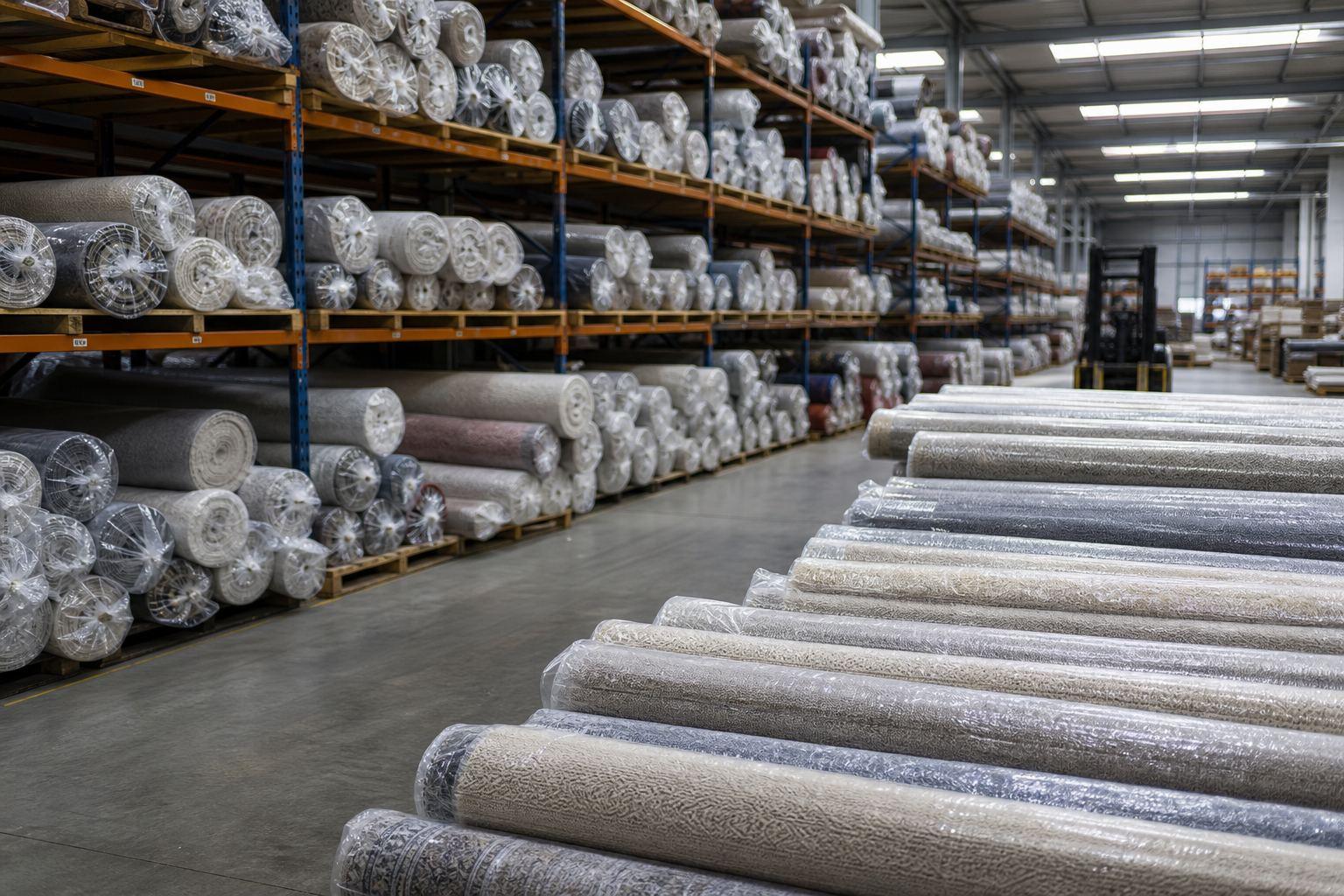
Container Loading Details
Export Tip
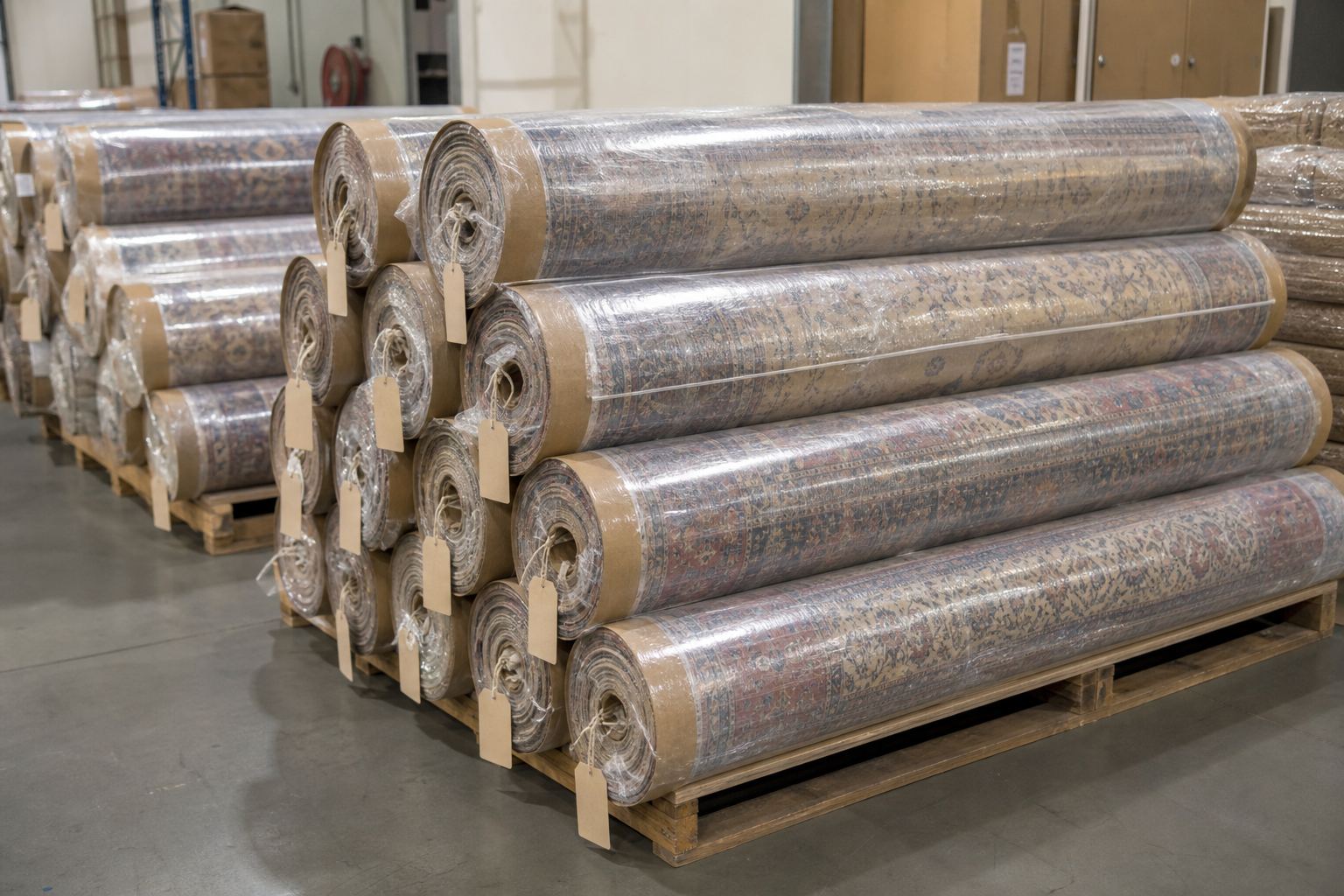
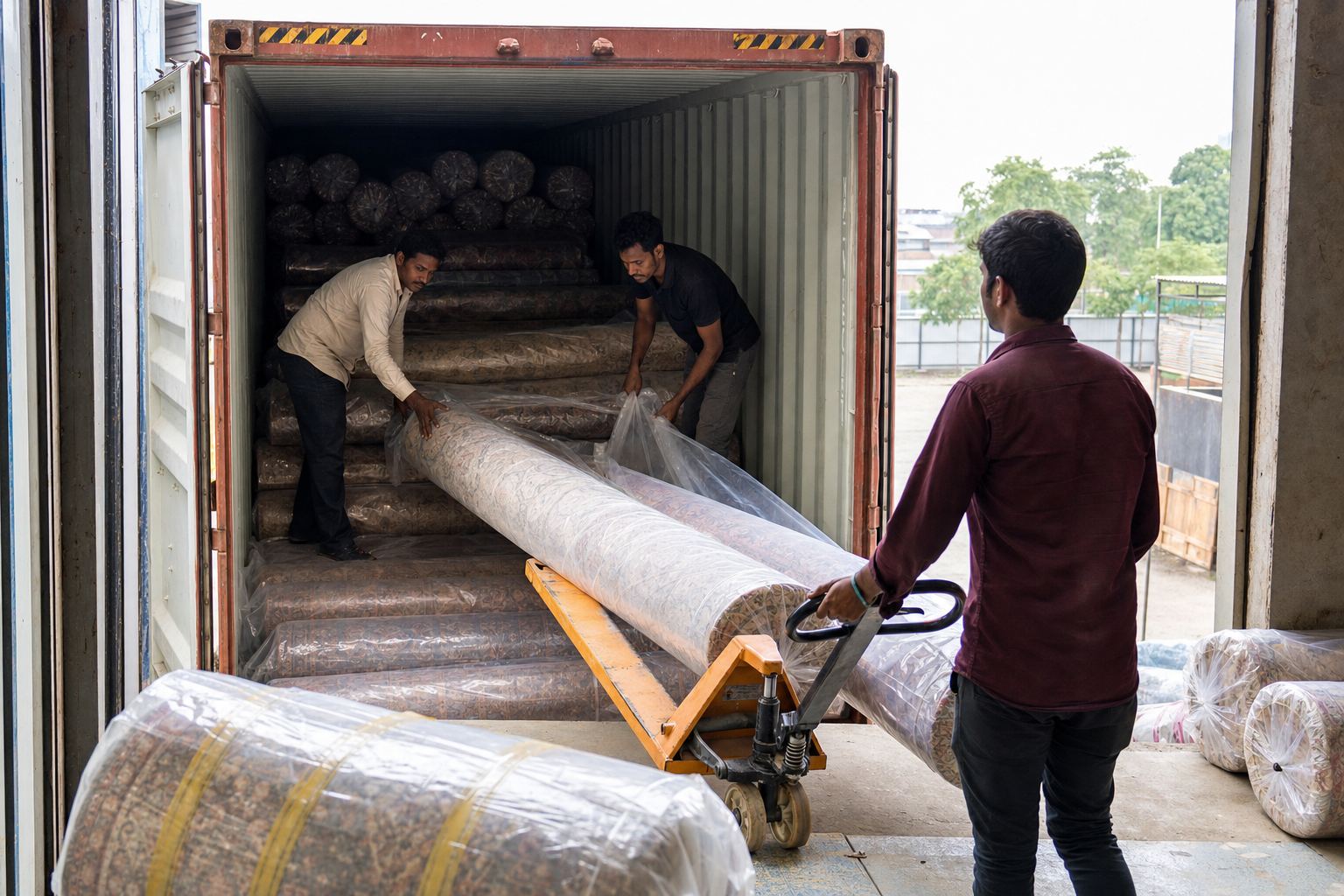
Sustainable and handwoven carpet programmes still load like any commercial rug shipment: rolled pieces poly-wrapped, edge-protected where needed, and stowed so lower tiers are not crushed. Premium hand-knotted lots often ship in fewer pieces per container than high-volume tufted assortments because roll diameters and cartonisation differ. Plan stuffing diagrams before cutoff, photograph loaded containers, and keep SKU IDs readable for destination receiving — buyers who paid a documentation premium will not accept anonymous damaged rolls.
Directional container planning for sustainable carpet programmes
Swipe →
Data table — swipe horizontally on small screens
| Load type | Typical use | Planning note |
|---|---|---|
| 20' FCL | Trial or mixed premium knotted lots | Lower cube; protect high-value rolls |
| 40' FCL / HQ | Repeat retail or wholesale programmes | Optimise roll diameter vs piece count |
| LCL | Samples and first small lots | Higher handling risk — pack harder |
| Mixed SKU stuffing | Handwoven + recycled PET assortments | Separate tiers; label by programme |
Shipping Methods
Export Tip
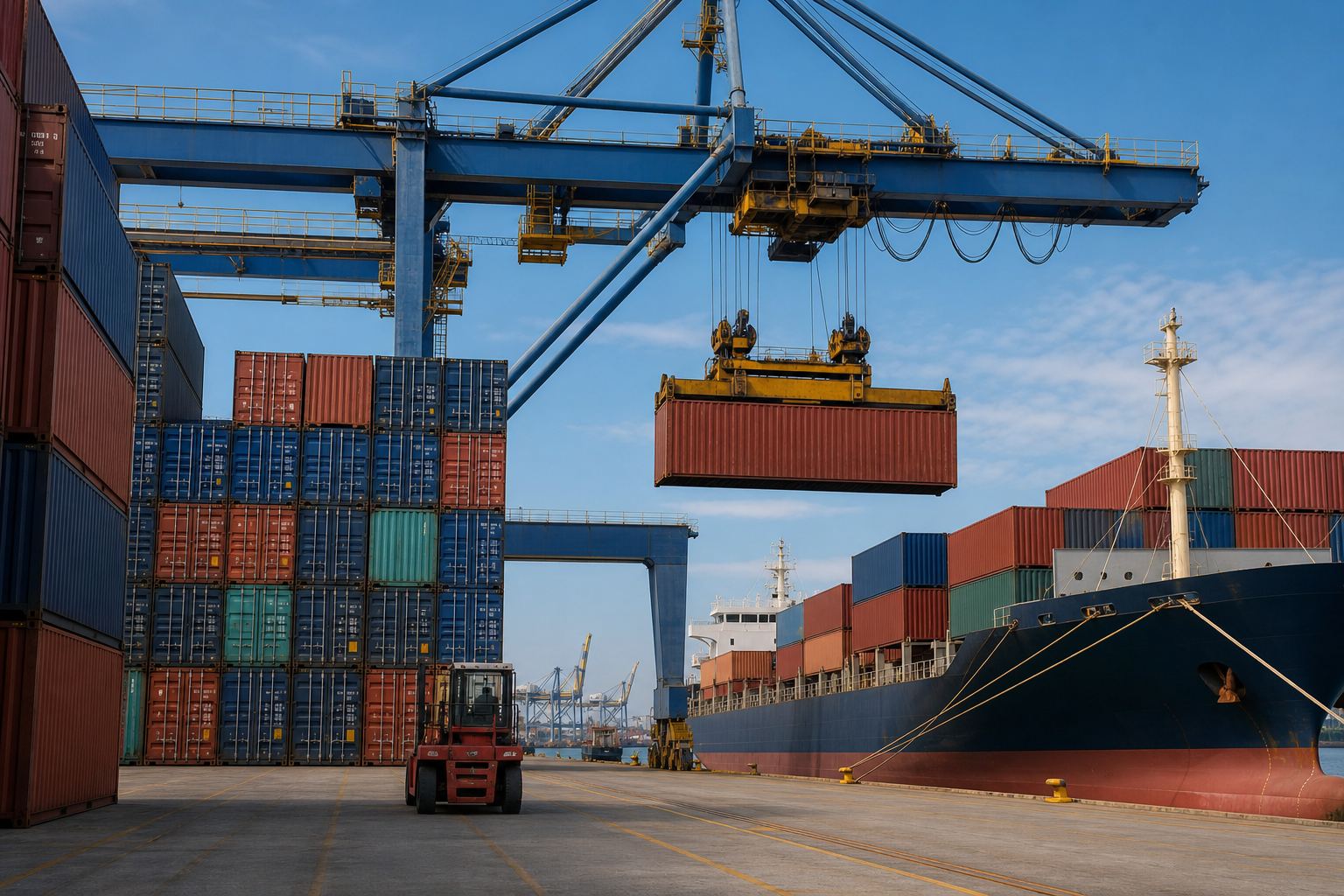
Sea freight under FOB Indian load port or CIF destination remains the default for commercial sustainable carpet programmes. Air freight is for sealed samples, urgent replacements, and small high-value silk or fine-knot lots. Mundra and Nhava Sheva are the primary deep-sea gateways for northern carpet-belt cargo. Agree Incoterms in writing before production locks yarn lots — changing from FOB to DDP after weaving starts is a common margin trap for MSMEs new to ESG programmes.
Shipping choices for documented carpet programmes
Swipe →
Data table — swipe horizontally on small screens
| Method | Best for | Watch-outs |
|---|---|---|
| Sea FCL FOB | Repeat commercial programmes | Buyer controls main carriage and insurance |
| Sea FCL CIF | Buyers wanting landed simplicity | Price freight and insurance accurately |
| Sea LCL | Trials and mixed small lots | More handling; stronger packing needed |
| Air freight | Samples and urgent replacements | Costly; reserve for high-value small lots |
Country-wise Opportunities
Market Snapshot
Demand intensity follows the same geography as India's overall carpet exports, with sustainability filters strongest where retail ESG programmes are mature.
Comparison table
Swipe →
Data table — swipe horizontally on small screens
| Market | Sustainability emphasis | Priority credentials |
|---|---|---|
| USA | Child-labor-free + labeling + outdoor recycled lines | GoodWeave, fiber honesty, PET declarations |
| Germany / EU | Chemicals + social + traceability | Eco dye/RSL, social audits, wool lot evidence |
| UK | Retail scorecards on labor and packaging | Social docs + packaging disclosure |
| Australia | Premium handmade authenticity | Construction honesty + selective social docs |
| UAE / Gulf | Craft and design first; ESG rising selectively | Honest labeling; add social docs for global retailers |
United States
As the dominant destination by value (~59% in FY25 context), the USA sets expectations for GoodWeave coverage, truthful fiber labeling, and increasingly for recycled outdoor assortments alongside handmade indoor rugs. Specialty importers and e-commerce private label both matter; answer ESG modules early.
Germany and wider EU
German and wider EU buyers emphasize chemical compliance, accurate construction labeling, and social audits. Domotex remains a primary discovery channel for documented sustainable handmade programmes. Traceable wool and eco dye evidence travel well in this market.
United Kingdom
UK retail and trade channels combine design interest in handwoven aesthetics with packaging and chemical scrutiny. Vendor scorecards often ask labor and packaging questions in the same onboarding pack.
Australia, UAE, and secondary markets
Australia supports premium handmade stories with freight-aware packing discipline. UAE and some Gulf programmes value craft and design; formal GoodWeave demand varies by retailer but chemical honesty and construction accuracy still matter. Use secondary markets to diversify, not to dilute documentation standards on US/EU programmes.
Common Buyer Mistakes
Common Mistakes Box
- Printing GoodWeave or child-labor-free language for units outside certificate scope — Solution: map every PO to covered loom sheds before hangtags are printed.
- Calling every construction "handwoven" when some SKUs are hand-tufted or outdoor PET — Solution: use precise construction terms on every label.
- Claiming eco dyes without dye-house lot records — Solution: file job cards and RSL evidence per programme.
- Traceable-wool storytelling without lot-to-SKU mapping — Solution: maintain a simple intake-to-loom spreadsheet.
- Absorbing audit and livelihood costs into conventional FOB — Solution: dual-cost and quote the premium explicitly.
- Mixing recycled PET outdoor claims into handmade wool narratives — Solution: separate claim matrices and separate marketing pages.
- Letting certificates expire mid-season unnoticed — Solution: calendar renewals before fair and RFQ peaks.
- Quiet overflow subcontracting to uncovered looms — Solution: cover, disclose, or exclude from certified claims.
- Overstating Fair Trade-style premiums that were never paid — Solution: claim only documented payments or certified scheme rules.
- Treating CEPC or GI marks as social-compliance substitutes — Solution: use each credential for what it proves.
- Skipping construction QC because the ESG pack looks strong — Solution: keep KPSI, pile height, and shade gates mandatory.
- Answering ESG questionnaires with marketing essays instead of attachments — Solution: lead with certificates and a claim matrix.
Most failures are predictable. Avoid these patterns:
Sourcing Checklist
Checklist
Challenge: A Bhadohi-based exporter supplying hand-knotted and flatweave wool rugs to a growing US specialty retailer received a formal ESG questionnaire covering child labor, dye chemistry, wool origin, and packaging — none of which had been organized into a single response pack before.
Approach: The exporter enrolled eligible loom sheds under a GoodWeave child-labor-free programme, switched critical colorways to an eco-capable dye house with job-card discipline, and built a lot-level wool intake log linked to loom tickets. Outdoor recycled PET SKUs in the same commercial relationship were documented separately with recycled-content declarations so handmade claims would not be diluted.
Documentation build: A one-page claim matrix listed each SKU, allowed hangtag phrases, certificate IDs, producing units, and dye-house references. Certificate PDFs and producing-unit lists were stored for same-week retrieval. Packaging SOPs were photographed with reduced-plastic options validated for pile protection on humid ocean routes.
Buyer response: The retailer's compliance review cleared the handmade wool programme on first resubmission. The outdoor PET line was accepted as a complementary assortment with its own recycled-content file. FOB for the documented hand-knotted line settled roughly twenty-five to thirty percent above the exporter's prior undocumented peer constructions of similar density, after social and dye costs were priced in.
Results: The account moved from seasonal trials to a standing reorder programme. The same response pack shortened onboarding with a second US wholesaler introduced through Domotex follow-up. Lessons learned: separate claim matrices for handmade wool versus outdoor PET, never subcontract certified overflow quietly, and treat ESG attachments as production deliverables with the same dignity as sealed samples.
Future Market Trends
Key Statistics
Through 2030, expect ESG questionnaires to tighten from onboarding checkboxes toward ongoing evidence requests tied to retailer sustainability reporting. Exporters who already maintain lot-level dye and fiber records will adapt faster than those who scramble for certificates only when an RFQ arrives.
Handwoven and hand-knotted premiums should remain resilient where artisanship is real and documented; recycled PET outdoor demand should continue as a parallel track. Chemical transparency and wastewater narratives around wash houses will likely gain weight in EU scorecards. Across all trends, knot-density honesty and lead-time reliability remain the floor — sustainability credentials are the differentiator layered carefully on top.
Buyer Checklist + Exporter Checklist + Compliance Checklist
Checklist
Compliance Notes
Use the three checklists below before you ship any GoodWeave-covered, eco-dye, or recycled-content carpet programme. Clear buyer, exporter, and compliance gates — including claim-matrix and certificate scope — before cargo cutoff.
Sustainable carpet shipment gate — quick status board.
Swipe →
Data table — swipe horizontally on small screens
| Gate | Owner | Pass criterion |
|---|---|---|
| Claim matrix signed | Exporter compliance | Every SKU has allowed phrases + certificate IDs |
| Social scope check | Exporter + programme | PO units ⊆ certificate producing-unit list |
| Dye lot filed | QC / dye house | Job card IDs match yarn used on looms |
| Sample seal | Buyer + exporter | Written approval of construction and color |
| Document pack | Exporter + CHA | Invoice, packing list, certificates reconciled |
| Pack SOP | Warehouse | Photos match reduced-plastic / protection standard |
Buyer checklist
Exporter checklist
Compliance checklist
Conclusion
Sustainable and handwoven carpet export opportunities from India are real inside a large demand base — about USD 1.54 billion in FY25 export context, with the USA still the primary value destination — but they reward exporters who treat sustainability as documentation and pricing discipline, not as fair-week vocabulary. GoodWeave child-labor-free coverage, eco dye house records, traceable wool lots, artisan livelihood or Fair Trade-style evidence, and honest recycled PET outdoor claims (kept separate from handmade wool stories) together build the profile that US, German, and UK buyers now expect during ESG onboarding.
The path forward is practical: map each carpet SKU to the claims it can prove, price those proofs into FOB, answer questionnaires with attachments, and refuse hangtag language your producing units cannot support. Construction QC — knot density, pile height, shade, size — remains non-negotiable. Sustainability credentials open premium doors; they never replace loom craftsmanship or clean shipping documents.
Manufacturers pricing ethical-handmade premiums and buyers auditing Indian carpet ESG packs can partner with Altus Exports to align certificates, claim matrices, and first-shipment QC. Reach us through contact, merchant exporter services, or global sourcing partner in India.