
How to Find International Buyers for Indian Cricket Bats
By Saurabh Mittal, Founder, Altus Exports
How Indian cricket bat manufacturers and MSMEs find genuine international buyers — trade data prospecting, LinkedIn outreach, SGEPC events, B2B marketplaces, academy and retail channels, and buyer verification steps. Build a qualified pipeline without wasting samples, with frameworks from Altus Exports.
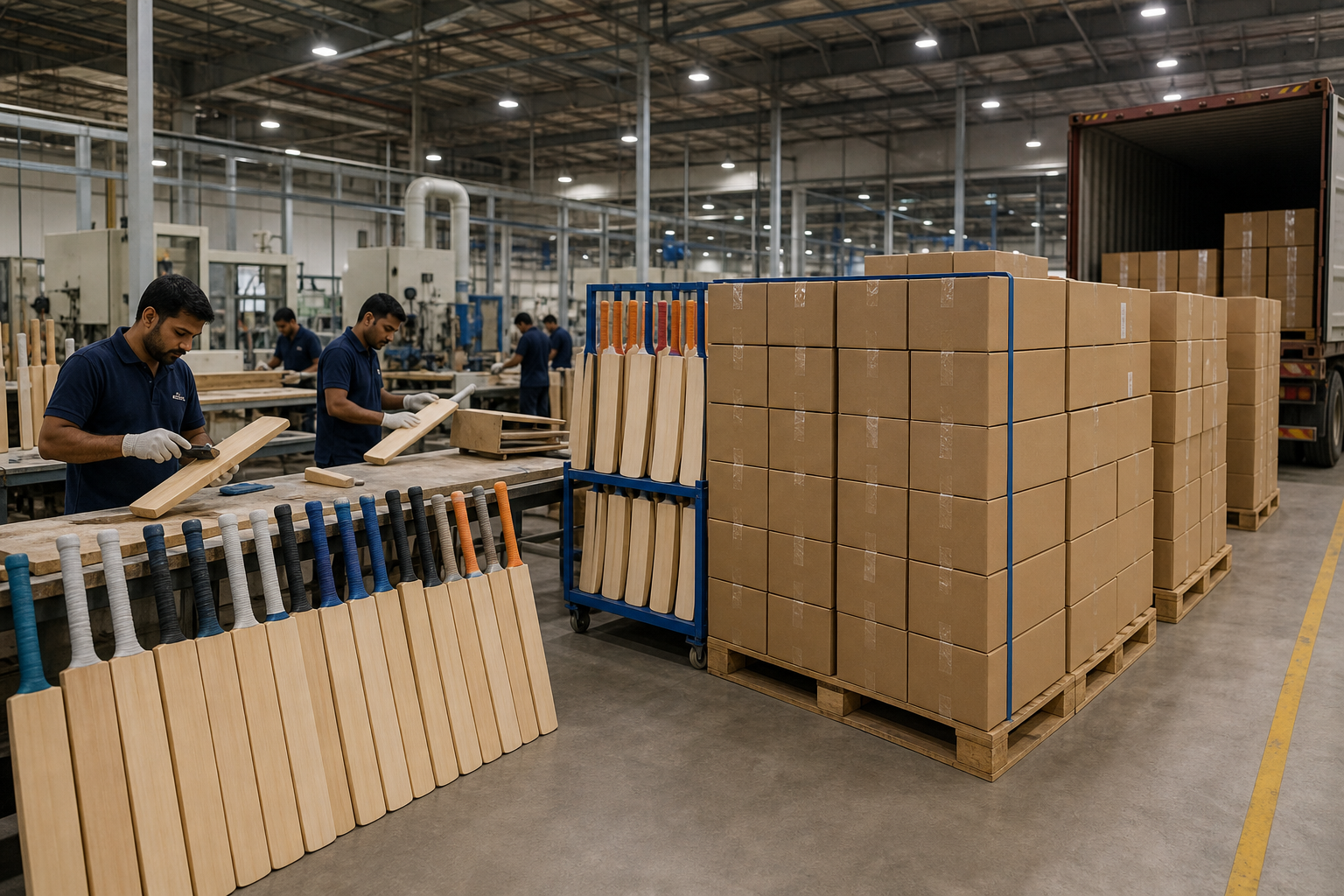
Every Meerut and Jalandhar bat manufacturer eventually asks the same question: where are the real buyers, and how do I reach them without burning months on sample tourists? Finding international buyers for cricket bats is not a mass-email problem. It is a targeting problem — identifying importers, retailers, academies, distributors, and brand owners who already move cricket equipment (or adjacent sports goods) into the UK, Australia, UAE, South Africa, the USA, and associate cricket nations, then earning their attention with credible willow grading, MCC Law 5 compliance, and packaging discipline instead of a generic "we are exporters" pitch.
The good news for Indian manufacturers is that the buyer universe is smaller and more identifiable than most first-time exporters assume. Cricket equipment import is a concentrated trade: a finite set of specialty retailers, sports hypermarkets, academy procurement bodies, e-commerce private-label brands, and national board suppliers account for most container-scale demand. That concentration means a manufacturer with the right SKU, honest grading, and a disciplined outreach process can build a working pipeline in weeks — not years — once they stop relying on directory spam and start using trade data, SGEPC channels, LinkedIn, and B2B portals as a coordinated system rather than isolated tactics.
This guide walks through that full buyer-discovery system: mapping who actually buys Indian cricket bats, prospecting with import trade data, writing outreach that gets replies, working SGEPC fairs and sports goods exhibitions, using B2B marketplaces without wasting samples, and — critically — qualifying every lead before you spend money on courier samples or production slots. Manufacturers evaluating their own cricket bat export readiness will find this guide complements the production and compliance side with the commercial side: how to actually fill the order book once your bats are export-ready.
Key Takeaways
Summary Box
- Finding international buyers for cricket bats works best as a portfolio of channels — trade data, LinkedIn, SGEPC fairs, and B2B portals — not a single tactic run in isolation.
- Import trade data reveals which overseas consignees already buy cricket bats or adjacent sports goods, letting you prioritise warm prospects over cold directory names.
- LinkedIn outreach converts when messages cite willow grade, MOQ, and lead time; generic exporter introductions are routinely ignored by category buyers.
- SGEPC-linked fairs and sports goods exhibitions remain high-intent venues, but only when you follow up within 72 hours with a priced SKU sheet.
- Buyer qualification — company registration, order realism, sample fees — protects margin and manufacturing capacity from unpaid sample cycles and sample tourists.
- Manufacturers without an overseas sales team accelerate buyer access through a merchant exporter in India who already holds verified retailer and distributor relationships.
Why Buyer Discovery Is Different for Cricket Bats
Export Tip
Cricket bat buyers are not a generic retail audience. The category sits at the intersection of sporting goods wholesale, specialty retail, and institutional procurement — school sports departments, county cricket associations, and national federations buy alongside private-label e-commerce brands and independent pro shops. That mix means a single outreach template rarely works across markets: a UK independent retailer responds to willow grade and finish photos, a UAE sports hypermarket responds to price ladders and replenishment speed, and a US league supplier responds to CPSIA-aware junior ranges and durability claims.
The category is also smaller and more traceable than commodity sports equipment. Cricket is played competitively in roughly a dozen major markets and casually across a wider diaspora footprint, which means the realistic buyer universe for any single Indian manufacturer is often a few hundred qualified accounts globally rather than tens of thousands. That is an advantage for prospecting discipline: you can build a complete, ranked target list rather than drowning in low-intent contacts, and you can afford to research each account before reaching out.
Because the buyer pool is finite, reputation travels fast. A manufacturer who ships grade-inflated bats or misses a promised lead time gets flagged in retailer and distributor circles quickly, while one who ships exactly what was sampled earns referrals into adjacent markets. Buyer discovery for cricket bats is therefore not just about volume of outreach — it is about building a track record that compounds across SGEPC fairs, LinkedIn networks, and B2B portal reviews.
Comparison table
Swipe →
Data table — swipe horizontally on small screens
| Buyer Type | What They Care About Most | Typical First Order |
|---|---|---|
| Specialty pro shops (UK, Australia, SA) | Willow grade honesty, cosmetics, MCC Law 5 | Small LCL trial, 50–150 bats |
| Sports hypermarkets / distributors (UAE, GCC) | Price ladder, replenishment speed, mixed grades | Larger LCL or part-FCL, 300–800 bats |
| Academy / school / university procurement | Durability, junior sizing, budget compliance | Seasonal bulk tender, 200–1,000+ bats |
| E-commerce / private-label brand owners | Custom branding, consistent QC, MOQ flexibility | Pilot run, 100–300 bats with reorder option |
| National boards / league suppliers (associate nations) | Durable mid-price construction, dependable lead time | Programme contract, recurring seasonal orders |
| Merchant exporters / sourcing partners | Verified supplier credentials, documentation discipline | Consolidated multi-buyer programme |

Mapping the Global Buyer Landscape for Cricket Bats
Before writing a single outreach message, build a channel map of who actually buys cricket bats internationally. Most manufacturers underestimate how many distinct buyer types exist beyond "retailers" — and each type needs a different pitch, sample policy, and payment structure.
Specialty cricket retailers and pro shops
Independent cricket specialists in the UK, Australia, and South Africa are often the most demanding but highest-margin channel. They scrutinise willow grain count, pick-up feel, edge profile, and MCC Law 5 compliance closely, and many already stock English willow sourced through Indian pressing units. Winning this channel requires graded sample sets, honest grade labelling, and photography that shows face, edge, spine, and toe under consistent lighting.
Sports hypermarkets and distributors
UAE and GCC sports hypermarkets, along with regional distributors in South Africa and associate nations, move higher volumes across a wider grade ladder — from tennis-ball and tape-ball bats through mid-grade Kashmir and English willow. These buyers prioritise consistent replenishment, competitive price bands, and Arabic or destination-market labelling where required, and they often consolidate seasonal buys across multiple SKUs in one purchase order.
Academy, school, and university procurement
Institutional buyers — school sports departments, university clubs, and academy programmes — typically run tender or budget-cycle purchasing with strict durability and junior-sizing requirements. These buyers reward manufacturers who can document handle integrity and weight consistency across large batches, since a single lot of underperforming junior bats damages a supplier relationship built over multiple seasons.
E-commerce and private-label brand owners
Direct-to-consumer cricket brands in the UK, USA, and Australia increasingly source private-label bats from Indian OEM units, applying their own branding to consistent construction platforms. These buyers care most about repeatable QC, MOQ flexibility for pilot runs, and a manufacturer's willingness to support custom profiles, stickers, and packaging inserts without compromising core dimensional compliance.
National boards and league suppliers in associate nations
Cricket boards and league suppliers in Ireland, the Netherlands, Nepal, Caribbean nations, and similar associate markets often need durable mid-price bats for domestic competitions rather than premium cosmetics. These relationships tend to become multi-year programme contracts once a manufacturer proves consistent lead times and construction quality across several seasons.
Merchant exporters and sourcing partners
Manufacturers without export licences, English-language sales capacity, or the bandwidth to manage documentation can reach many of the buyer types above through a merchant exporter who already maintains verified relationships. This channel trades a share of margin for faster market access and reduced compliance risk — a reasonable trade for MSMEs still building direct export muscle. See find manufacturers in India for how Altus Exports structures this matching.
Trade Data Prospecting: Finding Buyers Who Already Import
- Pull consignee records for your HS code across UK, Australia, UAE, South Africa, and USA import data
- Rank prospects by shipment frequency and estimated annual volume, not just company size
- Cross-check consignee names against active retailer/distributor directories and LinkedIn to confirm they are still operating
- Flag importers already buying from Pakistan, England, or other willow-processing origins as warm switch-in prospects
- Segment your target list by buyer type (retailer, distributor, academy, brand owner) before writing outreach
- Refresh trade data quarterly — importer activity shifts with seasons, sponsorship deals, and distribution changes
Import trade data is the single highest-leverage tool for cricket bat buyer discovery, because it shows you exactly who is already importing bats or closely adjacent sports goods — not who might theoretically be interested. HS-code and consignee-level shipment records reveal the importer's name, approximate volumes, frequency, and often the exporting country of origin, letting you separate active, repeat importers from one-off buyers who placed a single trial order years ago.
Start by pulling shipment records for your product's HS code into your target markets — the UK, Australia, UAE, South Africa, the USA, and relevant associate nations. Rank consignees by shipment frequency and estimated volume, then cross-reference names against public retailer directories, sports goods distributor lists, and LinkedIn company pages to confirm they are still active and roughly the right size for your production capacity. A distributor importing forty containers a year is the wrong first target for a manufacturer who can only fill one LCL consolidation; a specialty retailer importing a few hundred bats twice a year may be exactly right.
Trade data also tells you who is buying from your competing origins — Pakistan, England, or other willow-processing countries — which is often a faster route to a first order than chasing importers with no cricket bat history at all. A buyer already paying for English willow bats from a UK presser is a warmer prospect for an Indian manufacturer offering comparable grade at a lower FOB than a buyer with zero cricket equipment import history. Pair this category-specific approach with our broader framework on how trade data helps find export buyers for the full prospecting methodology.
LinkedIn Outreach That Actually Converts
LinkedIn is where cricket bat buyer discovery either compounds or dies, depending on message quality. Category buyers, assortment managers, and wholesale owners receive a constant stream of generic "we are a leading manufacturer of sporting goods" messages and ignore nearly all of them. What earns a reply is specificity: willow grade, MOQ, weight tolerance, lead time, and — where relevant — MCC Law 5 compliance and packaging standard, delivered in three or four sentences with a clear next step.
Build your prospect list from trade data consignee names, SGEPC fair attendee lists, competitor retailer pages (who supplies them?), and cricket association sponsor directories. Search LinkedIn for job titles like buyer, category manager, procurement lead, and merchandising manager at those companies, and verify the person is still in role before sending a message. A well-targeted list of thirty real decision-makers outperforms a scraped list of three hundred generic contacts.
Sequence your outreach: an initial message referencing something specific about their business (a product line they carry, a market they serve), a short follow-up with your SKU sheet and price indication after five to seven days of silence, and a final light-touch message referencing an upcoming SGEPC fair or trade show where you could meet in person. Stop after three touches — repeated unsolicited messages damage your reputation in a buyer pool small enough that word travels.
What to include in your first message
- Your cluster (Meerut or Jalandhar) and core willow grades offered
- One relevant detail about their business showing you researched them
- A clear, low-commitment next step — a SKU sheet, not an immediate sales pitch
What to avoid
- Generic "leading exporter of sporting goods" openers with no product specificity
- Attaching large PDFs or catalogues before the buyer has expressed interest
- Following up more than three times without a response
SGEPC Fairs and In-Person Buyer Meetings
- Register with SGEPC before the fair season to access exhibitor listings and buyer directories
- Bring graded, individually labelled samples with weight cards — not an unsorted assortment
- Prepare a printed price list with clear MOQ breaks for at least three order sizes
- Capture leads with a simple form: company, market, product interest, estimated volume
- Follow up within 72 hours with a personalised message referencing the specific booth conversation
Sports Goods Export Promotion Council (SGEPC) membership and its linked fairs remain one of the highest-conversion channels for cricket bat manufacturers, because buyers who travel to a sports goods exhibition are pre-qualified by intent — they came specifically to source. SGEPC registration itself also signals category seriousness during buyer onboarding, well before any fair conversation begins; see SGEPC registration benefits for exporters for the full credibility and market-access case.
Prepare for fairs the way you would prepare for a final sales pitch, not a casual meet-and-greet. Bring a focused booth assortment across your core grades, individually labelled with weight and grade, a printed price list with clear MOQ breaks, and a one-page capability sheet covering cluster, lead time, and packaging standard. Buyers form an impression in the first ninety seconds at a booth — disorganised samples or vague pricing lose leads to the next stall.
The single biggest driver of fair ROI is follow-up speed. Most exhibitors collect business cards and follow up two or three weeks later, by which point the buyer has already moved on to a competitor who replied within days. Commit to sending a personalised follow-up — referencing the specific SKUs discussed at the booth — within 72 hours, attaching a priced sheet and proposed sample terms. Fair leads that go cold from slow follow-up are rarely a product problem; they are a process problem.
B2B Portals and Digital Marketplaces
- Keep portal listings specific — grades, weight bands, MOQ, and lead time, not generic descriptions
- Respond to every inquiry with a short qualifying question before sending detailed pricing
- Flag and deprioritise inquiries requesting free samples with no volume or market information
- Cross-check portal inquiry company names against trade data and LinkedIn before investing time
- Use portals as a top-of-funnel filter feeding into the same CRM as your other channels
B2B portals are useful for discovery and inbound inquiry volume, but they should never be your only buyer-finding engine. Listings on major sourcing platforms generate a wide funnel of inquiries — many from unqualified buyers requesting free samples or unrealistic pricing — alongside a smaller number of genuine importers doing structured supplier comparison. Treat portal inquiries as a filtering exercise, not a sales pipeline, and route every serious lead through the same qualification steps you would apply to a trade-data or LinkedIn prospect.
To get more signal from B2B portals, keep your listing narrow and specific rather than generic: list actual willow grades, weight ranges, MOQ, and lead time rather than "all types of cricket bats available." Respond to inquiries with a qualifying question before sending pricing — annual volume estimate, target market, and current supplier (if any) — so you spend detailed quoting time only on buyers who answer with specifics. Buyers who avoid basic questions about their own business are rarely worth further sample investment.
Qualifying Buyers Before You Sample
Every sample kit costs real money — willow, cane, finishing labour, packaging, and international courier charges add up quickly across a busy quarter. Manufacturers who sample every inbound inquiry without qualification end up subsidising sample tourists: contacts who collect free samples from a dozen manufacturers, compare them casually, and never place an order. Qualification is not about being difficult with genuine buyers — it is about protecting production capacity for buyers who are actually ready to purchase.
A structured qualification sequence takes ten minutes and saves weeks of wasted sample cycles. Confirm the company is a real legal entity with a verifiable registration, website, or retail storefront. Ask for an estimated annual bat volume and the specific grades or price points they target — vague answers are a warning sign. Move to a paid courier sample only after this initial exchange, and require staged payment terms (advance plus balance against shipping document) on the first bulk order rather than open credit for an unproven relationship.
Signals of a genuine buyer
- Verifiable company registration and an active website, storefront, or marketplace listing
- Specific answers about target grades, volume, and current or previous suppliers
- Willingness to pay for courier samples once initial interest is confirmed
- Clear market and channel — retailer, distributor, academy, or brand — rather than vague "import everything" language
Warning signs of a sample tourist
- Requests for a large, varied assortment of free samples before any real conversation
- No verifiable business presence and reluctance to share basic company information
- Pressure for extremely fast turnaround with no willingness to discuss payment terms
- Generic, copy-paste inquiries sent identically to many suppliers with no follow-up questions
Sample Strategy and Negotiation That Protects Margin
Once a buyer clears qualification, sample strategy determines whether the relationship converts profitably or drains margin before the first bulk order. Charge for courier samples beyond an initial low-cost or symbol-priced starter kit, and credit the sample cost against the first purchase order to remove price objections while still covering your direct cost. Ship exactly the grade and specification you intend to produce at scale — never send a hand-finished showpiece that your production line cannot replicate consistently across a hundred-bat batch.
Negotiate price and terms around programme economics, not the smallest possible first order. A buyer who wants forty units at rock-bottom pricing with no forecast is a different commercial proposition than one committing to a seasonal reorder pattern even at a modest opening volume. Where possible, agree a price ladder tied to volume tiers up front, so the buyer sees a clear incentive to grow order size rather than renegotiating from scratch every season.
Common Mistakes When Prospecting for Cricket Bat Buyers
Common Mistakes Box
- Mass-emailing generic exporter introductions — Solution: build a researched, ranked target list from trade data and LinkedIn before any outreach.
- Sampling every inbound inquiry — Solution: qualify company legitimacy and volume intent before shipping a single bat.
- Using one pitch across all buyer types — Solution: tailor the message to retailer, distributor, academy, or brand-owner priorities.
- Ignoring trade data on competing origins — Solution: prioritise importers already buying comparable bats from Pakistan or England.
- Slow follow-up after fairs — Solution: respond within 72 hours with a priced sheet referencing the specific conversation.
- Overpromising lead times to win a first order — Solution: quote realistic timelines including curing, pressing, and packaging.
- Inflating willow grade in outreach messaging — Solution: describe grades honestly; buyers who feel misled do not reorder.
- Treating B2B portals as the only channel — Solution: run trade data, LinkedIn, and SGEPC channels in parallel.
- No CRM or tracking discipline — Solution: log every prospect with next-action dates across all channels in one place.
- Accepting open credit terms with unproven buyers — Solution: staged payment on first orders regardless of buyer size claims.
- Giving up after one unanswered message — Solution: run a short, respectful three-touch sequence before moving on.
- Chasing the largest headline market instead of the best-fit buyer — Solution: match outreach to your proven grade and capacity, not market size alone.
Most failed buyer-discovery efforts trace back to a handful of repeatable mistakes. Avoid these patterns:
Case Study: From Trade Data to a Repeat FCL Programme
Background: A Meerut-based manufacturer pressing Grade 2 English willow and Kashmir willow club bats had exported occasionally through a trading house but never built a direct buyer pipeline. Bulk domestic orders were steady, but export revenue was inconsistent and reactive.
Approach: The manufacturer pulled import trade data for cricket bat HS codes into the UK, UAE, and South Africa, ranking consignees by shipment frequency. Twelve mid-sized distributors and specialty retailers already importing from Pakistan or England were shortlisted as warm prospects, alongside a parallel LinkedIn campaign targeting category buyers at those same companies with grade-specific, MOQ-specific messages.
Buyer response and qualification: Of forty outreach messages sent across six weeks, nine buyers responded with specific volume and grade interest. Five were qualified as genuine — verified companies with clear channel and forecast — and offered paid courier samples. Two declined to pay for samples and were deprioritised without further investment.
Sample and negotiation: A UAE sports hypermarket and a South African regional distributor both approved samples within three weeks and requested trial orders. Pricing was structured on a volume ladder, with staged payment (40% advance, 60% against B/L copy) agreed for both first orders given no prior trading history.
Results: Both trial LCL shipments cleared without documentation issues. The UAE hypermarket reordered within four months at double the initial volume; the South African distributor moved to a seasonal programme contract covering two willow grades. Combined, the two relationships now account for a majority of the manufacturer's export revenue, sourced entirely from a single trade-data-driven prospecting cycle.
Lessons learned: A narrow, researched target list outperformed broad directory outreach by a wide margin, and qualifying buyers before sampling protected both cash and production capacity for the accounts that actually converted. For the compliance and production groundwork behind these shipments, see how to export cricket bats from India.
Future Outlook: How Cricket Bat Buyer Discovery Is Changing
Export Tip
Through 2030, buyer discovery for Indian cricket bat exporters will keep shifting toward data-driven targeting and away from broad-spectrum outreach. Trade data platforms are becoming more granular and accessible to MSMEs, letting even small manufacturers identify active importers with the same precision that large trading houses have used for years. Manufacturers who invest in reading and acting on this data — rather than treating it as a one-time research exercise — will consistently out-prospect competitors relying on directories and cold portal listings alone.
Digital-first buyer behaviour is also accelerating. LinkedIn and specialised sports-goods B2B communities are increasingly where category buyers do initial supplier screening before ever attending a fair, which raises the value of a clean digital presence — SKU-specific content, transparent grading explanations, and responsive messaging. At the same time, SGEPC fairs and in-person meetings remain important for larger programme decisions, particularly for academy and national-board procurement where relationship trust still matters more than a website.
Buyer expectations around traceability and compliance will keep rising alongside discovery channels. Retailers in the UK and Australia are asking more pointed questions about willow origin, REACH-aware grips, and sustainable packaging during vendor onboarding — a trend covered in depth in sustainable cricket bat export opportunities. Manufacturers who pair sharper buyer targeting with credible compliance answers will convert a higher share of the qualified leads their prospecting generates.
Conclusion
- Next step for manufacturers: Share your willow grades, production capacity, and target markets with Altus Exports for a buyer-readiness review.
- Next step for buyers: Send your volume forecast, grade requirements, and destination market — we match verified Indian cricket bat manufacturers and coordinate sampling and shipment.
- Explore the Altus Exports cricket bat programme and global sourcing partner services to choose the right partnership model.
- Review how to export cricket bats from India for the full production, compliance, and documentation sequence.
- Compare destinations in Best Countries to Export Indian Cricket Bats in 2026 before locking your primary market.
- Match your assortment to demand with Top Cricket Bat Products Exported from India and Most Demanded Indian Cricket Bats by Country.
- Build institutional credibility with SGEPC Registration Benefits for Exporters and plan your calendar with Trade Shows for Cricket Bat Exporters.
- Complete your paperwork readiness using the Cricket Bat Export Documentation Checklist.
- Buyers sourcing into India should read Source Cricket Bats Directly from India: Buyer Playbook.
- For prospecting methodology beyond cricket bats, see how trade data helps find export buyers and how to find international buyers without attending trade shows.
Finding international buyers for cricket bats is a solvable, systematic problem once you stop treating it as a numbers game. The buyer universe for cricket equipment is finite and identifiable through import trade data, and it responds to specific, well-researched outreach far better than generic exporter introductions. Combine trade data prospecting, targeted LinkedIn messaging, SGEPC fair participation, and disciplined B2B portal use, and qualify every lead before committing production time and sample budget.
The manufacturers who build durable export revenue are not the ones who chase every inbound inquiry — they are the ones who rank prospects, tailor their pitch to buyer type, protect their sample budget with real qualification, and deliver exactly what the approved sample promised on every subsequent order. If you are ready to build that pipeline, start with a focused target list this quarter and let your process discipline do the rest of the selling.