
Most Demanded Indian Cricket Bats by Country: A Market-by-Market Buyer Guide
By Saurabh Mittal, Founder, Altus Exports
A country-by-country demand guide for Indian cricket bat exports — English willow vs Kashmir willow preferences, junior and Harrow sizing, tape-ball and tennis-ball demand, retail vs academy channels, pricing bands, and trend notes for the UK, Australia, UAE and GCC, the USA, South Africa, and ICC associate cricket nations. Includes an assortment-matrix framework, a distributor case study, and Saurabh Mittal's insight on reading demand correctly, from Altus Exports.

Global cricket bat demand is not uniform, and treating it as one homogeneous export market is one of the fastest ways for an Indian manufacturer or exporter to misallocate production capacity. A Grade 1 English willow bat that sells confidently through a Surrey pro shop may be entirely the wrong hero SKU for a Dubai sports hypermarket, and a durable mid-price Kashmir willow bat that moves fast in an associate cricket nation may sit unsold in a premium UK retail assortment. Cricket is played and consumed differently across roughly a dozen serious import markets, and willow type, sizing, channel structure, and price sensitivity all shift accordingly.
This guide breaks down the most demanded Indian cricket bats by country — covering the UK, Australia, the UAE and wider GCC, the United States, South Africa, and the ICC associate and developing cricket nations — so manufacturers, exporters, and international buyers can align assortment planning to real channel needs instead of guessing from aggregate export statistics. Willow preference, sizing runs, packaging expectations, and retail versus academy-channel dynamics all get their own treatment for each market.
It closes with a practical assortment-matrix framework you can apply to your own top SKUs, a distributor case study showing how one exporter adapted a single production line across three very different markets, and answers to the demand-planning questions Indian cricket bat exporters ask most often. For category-level detail on the bats themselves, pair this guide with top cricket bat products exported from India and best countries for Indian cricket bat exports.
Key Takeaways
Summary Box
- Cricket bat demand varies sharply by country — willow type, sizing, price band, and retail channel all shift market to market, so a single assortment rarely fits every destination.
- The UK and Australia favour premium English willow and structured junior/academy programmes; the UAE and USA favour Kashmir willow volume and tape-ball/tennis-ball demand; South Africa spans the full grade ladder.
- Associate and developing cricket nations (Ireland, Netherlands, Nepal, Caribbean nations, and similar) prioritise durable mid-price bats over cosmetic perfection.
- Retail and academy channels behave differently within the same country — a UK pro shop and a UK school supplier want different sizing runs and price points from the same origin factory.
- Sustainability and traceable willow sourcing are rising purchase criteria in the UK, Australia, and parts of Europe, less so in fast-moving value markets like the UAE and associate nations.
- Build a market-by-SKU assortment matrix — primary channel, willow type, size run, packaging, MOQ, and target FOB — before committing production capacity to any single country.
Why Cricket Bat Demand Varies So Much by Country
Three structural factors explain most of the variation in country-level cricket bat demand: how the sport is organised locally (professional and club structures versus recreational and diaspora leagues), pitch and playing conditions (which shape preferred bat weight and profile), and retail channel maturity (organised pro-shop and academy procurement versus hypermarket and e-commerce volume selling). A country with deep club cricket infrastructure and cool, slow pitches — the UK is the clearest example — develops very different buyer expectations than a country where cricket is played mainly through expatriate and school leagues on fast, harder surfaces.
Willow economics compound this variation further. English willow supply is naturally limited and priced accordingly, which pushes it toward markets willing to pay a premium for playing feel and prestige — traditionally cricket's founding nations and affluent club structures. Kashmir willow's lower cost and higher volume availability makes it the default choice for markets prioritising participation numbers and price accessibility over marginal performance gains, including large expatriate and school-age populations across the Gulf and parts of North America.
Exporters who understand this split early avoid a common and costly mistake: shipping a premium English willow assortment into a volume-driven, price-sensitive market, or shipping value Kashmir willow bats into a market whose retail buyers expect cosmetic perfection and grain-count transparency. Matching willow strategy to market character is the single highest-leverage demand-planning decision covered in this guide.
Comparison table
Swipe →
Data table — swipe horizontally on small screens
| Country / Region | Most Demanded Products | Primary Channels | Buyer Priorities |
|---|---|---|---|
| United Kingdom | English willow Grade 1/1+, Harrow/junior | Pro shops, independents, academies | Grain cosmetics, MCC Law 5, sustainability |
| Australia | Mid-premium English willow, juniors | Club suppliers, DTC, academies | Lightweight profiles, weight consistency |
| UAE & GCC | Kashmir willow, tennis-ball/tape-ball | Hypermarkets, schools, leagues | Replenishment speed, value ladder |
| United States | Value Kashmir, CPSIA-aware juniors, OEM | Leagues, e-commerce, universities | Durability, youth safety, branding |
| South Africa | Mixed English and Kashmir grades | Retail distributors, development programmes | Full grade ladder, clear labelling |
| Associate nations | Mid-grade English, durable Kashmir | Boards, league suppliers, academies | Handle durability, mid-price reliability |
Australia — Lightweight Profiles and Deep Club Cricket Infrastructure
- Primary willow demand: Mid-premium English willow, balanced and lightweight profiles
- Key channels: Online cricket specialists, club and grade cricket retail, junior representative pathways
- Sizing priority: Strong junior ranges alongside adult profiles; growing women's cricket sizing needs
- Rising trend: Fast reorder cycles rewarding consistent stock availability over broad but inconsistent catalogues
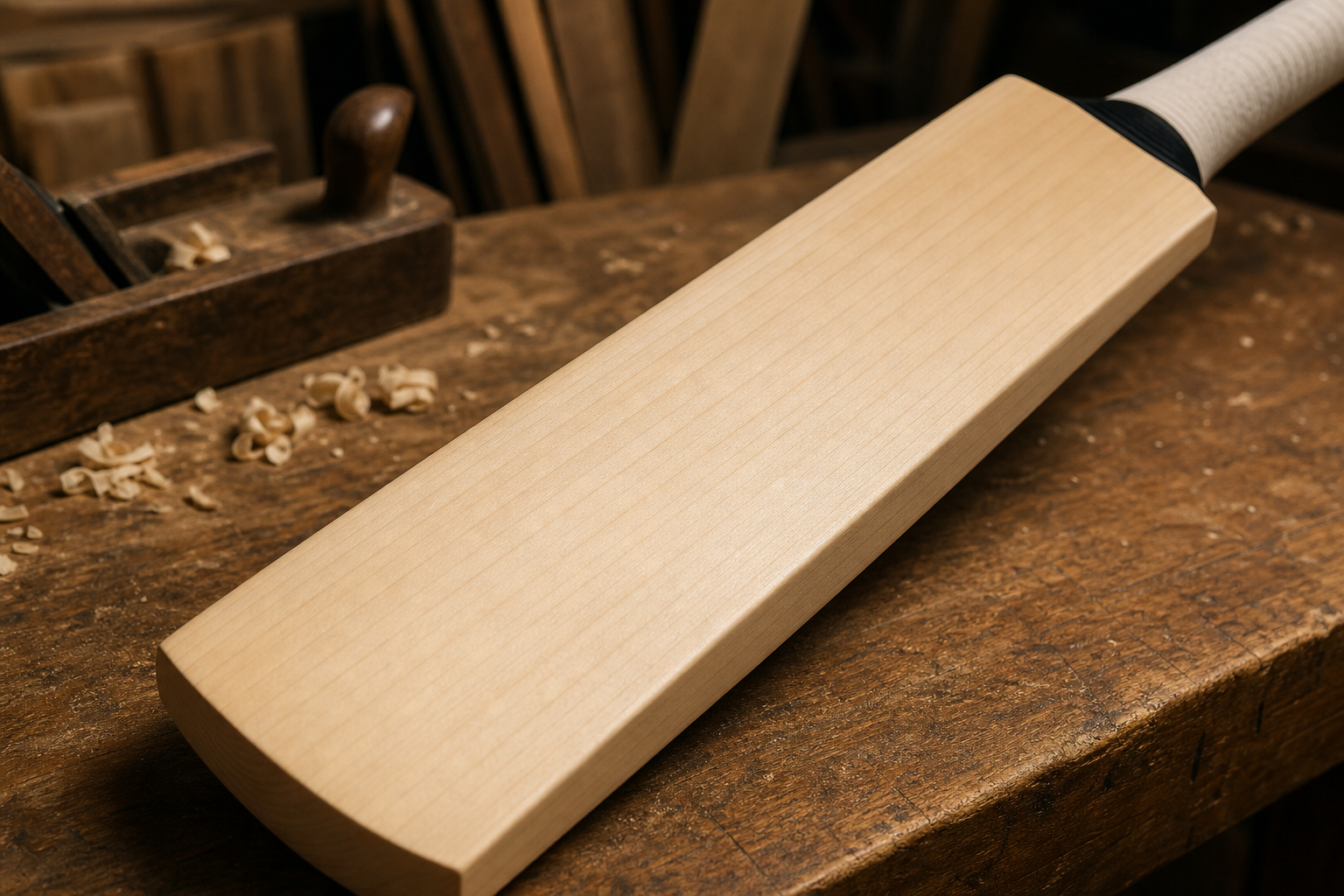
Australian conditions — fast, bouncy pitches and a national playing style built around attacking strokeplay — shape a clear profile preference: balanced, often lighter-pick-up bats that favour bat speed over sheer mass. Club and grade cricket structures run deep across Australian states, creating steady volume demand well beyond the professional tier, and women's cricket growth has added a meaningfully sized new demand segment for well-sized, well-balanced bats rather than scaled-down men's profiles.
Online cricket specialists are a particularly important channel in the Australian market, and they tend to reorder fast-selling SKUs quickly once a profile proves popular in-market. This rewards exporters who can maintain consistent stock availability and quick replenishment lead times over those offering a wider but less consistently available catalogue. Mid-premium English willow performs well across this channel, supported by strong junior ranges feeding school and junior representative cricket pathways.
Freight and lead-time planning matter more for Australia than for closer markets — exporters should factor longer transit windows into replenishment commitments made to Australian online retailers, since a popular SKU going out of stock during peak playing season can cost a distributor an entire selling window.
UAE and GCC — Kashmir Volume and Tape-Ball Demand
- Primary willow demand: Kashmir willow club, recreational, and tape-ball/tennis-ball bats
- Key channels: Sports hypermarkets, league suppliers, school and workplace tournament organisers
- Sizing priority: Broad school-age sizing runs alongside adult recreational sizes
- Rising trend: Branded packaging and Arabic labelling improving shelf sell-through in retail chains
The UAE and wider GCC region present a fundamentally different demand profile from the UK and Australia. Large expatriate South Asian populations drive participation through school leagues, workplace tournaments, and informal tape-ball and tennis-ball cricket, creating high-volume demand for Kashmir willow bats priced for accessibility rather than premium cosmetics. Formal club and school cricket exists alongside this informal layer, but volume in the region skews heavily toward value-oriented recreational play.
Branded retail packaging and Arabic-language labelling meaningfully improve sell-through in GCC sports hypermarkets and league supplier channels, since buyers in this market are often comparing shelf-ready presentation across multiple origin countries competing on similar price points. Speed and reliable replenishment consistently outperform ultra-premium grain counts for the majority of GCC accounts — a factory that can restock a fast-moving Kashmir willow SKU within weeks beats a factory offering marginally better cosmetics with a longer lead time.
Tape-ball and tennis-ball bats — lighter, more durable constructions designed for informal and semi-formal recreational cricket — represent a demand category almost unique in scale to this region and other South Asian diaspora markets, and exporters who dismiss this segment as "not real cricket bat trade" are ignoring a substantial and steadily growing volume opportunity.
United States — A Growth Market Led by Value and Youth
- Primary willow demand: Value-oriented Kashmir willow, growing specialty English willow niche
- Key channels: League organisers, university and college club programmes, Amazon and online marketplace sellers, diaspora specialty stores
- Sizing priority: Durable youth and junior bats supporting fast-growing participation numbers
- Rising trend: Youth compliance awareness (CPSIA-relevant considerations) alongside overall market growth
Cricket in the United States is at an earlier stage of infrastructure development than the UK, Australia, or the Gulf, but growth momentum is real — driven by South Asian diaspora communities, expanding college and university club programmes, and rising general sports interest following high-profile international cricket events hosted in the country. League organisers, university programmes, and Amazon-led online sellers currently favour durable, competitively priced value bats over premium English willow, since the buyer base is still building participation numbers rather than chasing marginal performance gains.
Junior and youth demand carries specific compliance considerations in the US market — buyers and sellers active in youth-facing retail channels should be aware of CPSIA (Consumer Product Safety Improvement Act) considerations relevant to children's sporting goods, and exporters supplying junior bats into US retail should confirm current compliance expectations with their buyer or import partner before shipping.
Specialty cricket stores serving established diaspora communities do carry English willow premium niches, and this segment is growing as disposable income and cricket-specific retail infrastructure expand in cricket-dense metro areas. But the dominant near-term opportunity for Indian exporters remains value-led Kashmir willow volume feeding league and youth participation growth, with premium English willow positioned as a smaller, higher-margin complementary line rather than the primary volume driver.
South Africa — Demand Across the Full Grade Ladder
- Primary willow demand: Full range — Kashmir willow through premium English willow, often in mixed distributor cartons
- Key channels: Retail chains, club and school procurement, grassroots development programmes
- Sizing priority: Broad adult and junior sizing supporting both retail and development-programme buyers
- Rising trend: Clear grade labelling to help retail staff serve a wide customer income range confidently
South Africa's cricket culture spans a genuinely full spectrum — from elite professional and franchise cricket at the top, through well-organised club and school structures, to grassroots development programmes actively working to widen participation across communities. This breadth translates into demand across the entire grade ladder, from Kashmir willow value bats through mid-tier English willow to premium Grade 1 profiles, often within the same distributor's overall catalogue.
Distributors serving the South African market frequently want mixed cartons spanning several grades and price points rather than single-SKU container programmes, since their retail and development-programme customers themselves span a wide income and skill range. Clear grade labelling matters particularly here — retail staff advising customers across such a broad price range benefit from unambiguous grade and price-point signalling that helps them match product to customer need quickly.
Development programme procurement — equipment supplied to grassroots and township cricket initiatives — represents a demand segment worth understanding separately from retail, since durability and cost-per-unit often outweigh cosmetic grading criteria entirely in this channel, similar in character to associate-nation demand described below.

Associate and Developing Cricket Nations — Durable, Mid-Price Heroes
- Primary willow demand: Durable mid-price Kashmir and lower-tier English willow bats built for longevity
- Key channels: National cricket board procurement, academy and development programmes, domestic league suppliers
- Sizing priority: Reliable adult and junior sizing supporting growing domestic league and school structures
- Rising trend: Growing procurement sophistication as ICC-supported development programmes formalise equipment standards
Ireland, the Netherlands, Nepal, several Caribbean cricket boards, Canada, and a growing group of ICC associate members represent a demand category defined less by grade sophistication and more by dependable durability at a mid-price point. These markets are typically expanding domestic league structures and academy programmes with real budget constraints, and procurement decisions favour bats that survive a full playing season of club and school use over bats optimised for premium cosmetics or marginal performance edge.
Handle durability, splice integrity, and honest weight and grade representation consistently outperform cosmetic perfection in buyer feedback from these markets. A distributor supplying a national development programme cares considerably more about a bat surviving 40 innings of school-level play without splice failure than about grain count aesthetics that a professional-tier buyer would scrutinise closely.
This segment is frequently underserved by exporters chasing premium UK and Australian business, which creates a real opportunity for manufacturers willing to engineer specifically for durability-first buyers rather than treating associate-nation orders as an afterthought assortment built from whatever inventory did not sell into premium markets.
Building a Country-Specific Assortment Matrix
Market Snapshot
Once you understand how demand differs across your target markets, translate that understanding into an operating tool rather than leaving it as background knowledge. Build a market matrix for your top 10 SKUs covering primary channel, willow type, size run, packaging specification, MOQ, and target FOB for each country you are actively selling into or evaluating.
What to include in your matrix
- Primary channel per market — pro shop, hypermarket, academy procurement, online marketplace, or development programme
- Willow type and grade matched to that market's price sensitivity and cosmetic expectations
- Size run reflecting the market's junior, Harrow, and adult sizing conventions
- Packaging specification — branded retail-ready packaging for the UAE and USA, protective sleeve/tube packing for premium UK and Australian listings
- MOQ and lead time realistic for that market's typical order cadence and replenishment expectations
- Target FOB benchmarked against what that market's price band can actually support, not a single blended price across all destinations
Using the matrix to guide production planning
Once built, use the matrix to sequence production runs — grouping SKUs by willow type and grade across multiple market orders where possible improves willow utilisation efficiency, since English willow clefts in particular are a scarcer input than Kashmir willow. Revisit the matrix at least twice a year, since sizing trends, packaging expectations, and price sensitivity in fast-growing markets like the USA and associate nations shift meaningfully faster than in mature markets like the UK.
Common Mistakes Exporters Make Reading Country Demand
Common Mistakes Box
- Shipping the same assortment to every market — Solution: build the country-specific matrix above before committing production capacity to any destination.
- Treating the UAE and USA as premium markets like the UK — Solution: prioritise value-oriented Kashmir willow and packaging for these volume-driven, price-sensitive channels.
- Ignoring tape-ball and tennis-ball demand as "not real cricket" — Solution: treat this as a substantial, steadily growing volume category, particularly for GCC and diaspora markets.
- Underestimating associate-nation demand for durability over cosmetics — Solution: engineer a dedicated durable, mid-price line rather than exporting leftover premium-market inventory.
- Missing junior sizing precision for UK and Australian school/academy buyers — Solution: maintain exact Harrow and age-graded sizing runs, not approximate "small" categories.
- Overlooking sustainability messaging for UK and Australian premium listings — Solution: document traceable willow sourcing where genuinely available; buyers increasingly ask.
- Failing to plan for Australia's longer freight lead times — Solution: build replenishment buffers into stock planning for this market specifically.
- Ignoring CPSIA-relevant considerations for US youth bat sales — Solution: confirm current compliance expectations with buyers before shipping junior SKUs into US retail.
Case Study: One Production Line, Three Very Different Markets
Challenge: A Meerut exporter running a single English and Kashmir willow production line wanted to expand beyond its existing UK client into Australia and the UAE without duplicating factory infrastructure, but initial outreach using its standard UK-facing catalogue generated weak interest from prospective buyers in both new markets.
Diagnosis: Working with a merchant exporter, the manufacturer realised its catalogue was implicitly built around UK sizing conventions, premium cosmetic positioning, and pricing that assumed a UK-level price tolerance — none of which matched Australian club-cricket volume expectations or UAE tape-ball and hypermarket retail dynamics.
Approach: The exporter built three distinct SKU presentations from the same underlying production capability — a mid-premium, lightweight-profile English willow line marketed specifically to Australian online cricket specialists; a Kashmir willow tape-ball and school-size range with Arabic-inclusive branded packaging for UAE hypermarket distributors; and its existing premium English willow Grade 1 line retained unchanged for its established UK buyer.
Results: Within two selling seasons, the manufacturer had active repeat orders across all three markets from a single factory footprint, with the UAE line becoming the highest-volume of the three despite carrying the lowest per-unit FOB, and the Australian line achieving the fastest reorder cadence due to the online specialist channel's rapid restock behaviour.
Lessons learned: The underlying manufacturing capability did not need to change — the market-facing presentation, sizing, packaging, and pricing did. Exporters evaluating similar multi-market expansion should read find international buyers for cricket bats and best countries for Indian cricket bat exports alongside this guide.
Future Outlook: How Country Demand Will Shift Through 2030
The United States and other emerging cricket markets are likely to see the fastest structural growth in absolute demand through 2030, driven by continued diaspora-led participation and rising visibility following major international cricket events hosted domestically. Exporters positioning early in these markets with value-appropriate assortments stand to benefit disproportionately as infrastructure and retail channels formalise.
In mature markets — the UK and Australia particularly — sustainability and traceability claims will likely move from differentiator to baseline expectation for premium English willow listings, mirroring trends already visible in adjacent lifestyle and sporting goods categories. Associate and developing cricket nations will likely see procurement processes formalise further as ICC-supported development programmes mature, rewarding exporters who have already built durability-first product lines and relationships in these markets ahead of that formalisation.
Conclusion
- Next step for manufacturers: Share your current SKU range and target markets with Altus Exports for an assortment-fit review across country demand profiles.
- Next step for buyers: Send your market, channel, and price-band requirements — we match verified Indian cricket bat exporters to the right willow type and sizing for your demand profile.
- Continue with top cricket bat products exported from India for a category-by-category breakdown of the bats behind this demand.
- Sequence market entry using best countries for Indian cricket bat exports before committing to a primary destination.
- Review how to export cricket bats from India for the full manufacturer export process.
- Buyers sourcing into these markets should read source cricket bats directly from India for supplier verification guidance.
- Build pipeline with how to find international buyers for Indian cricket bats and plan fair attendance via trade shows for cricket bat exporters.
- Strengthen credibility with SGEPC registration benefits for exporters and explore sustainable cricket bat export opportunities for premium UK and Australian listings.
- Keep paperwork clean with the cricket bat export documentation checklist for every country-specific shipment.
The most demanded Indian cricket bats by country vary enough that a one-size-fits-all export assortment leaves real revenue on the table in every market it touches. The UK and Australia reward premium English willow and precise junior sizing; the UAE and USA reward Kashmir willow value and volume with strong packaging; South Africa spans the full grade ladder; and associate nations reward durability over cosmetics. Building a country-specific assortment matrix — rather than exporting the same catalogue everywhere — is the difference between steady repeat orders and a scattered, underperforming export book.
If you are planning your next production cycle or export push, map your top SKUs against the country demand profiles in this guide before committing capacity. International buyers and manufacturers can also work with Altus Exports on cricket bat sourcing and assortment planning tailored to your target markets.