How to Export Herbal Extracts from India: Complete B2B Guide
By Saurabh Mittal, Founder, Altus Exports
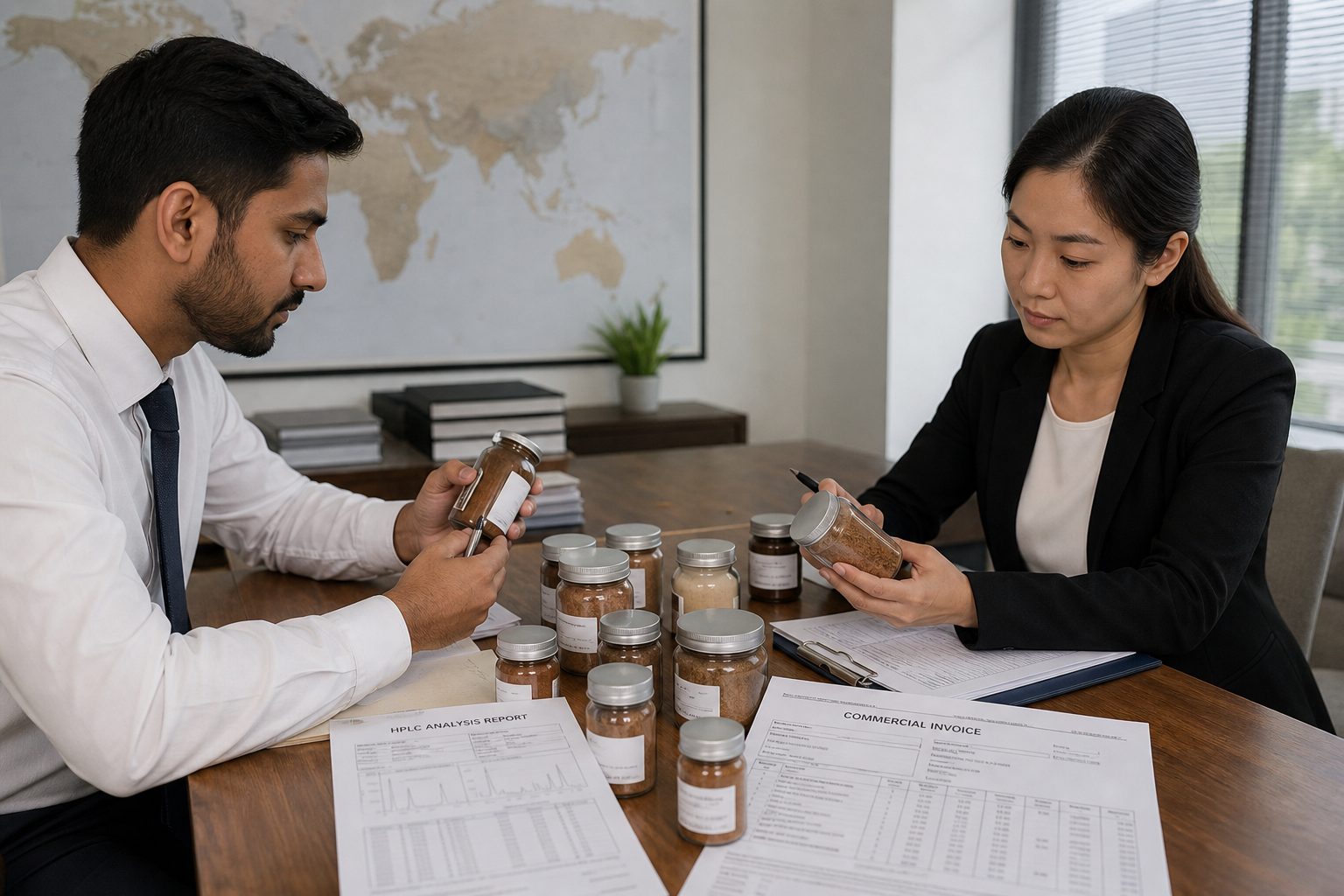
A complete operational guide on how to export herbal extracts from India — covering IEC and AYUSH registration, FSSAI licensing, HS code 1302.19 classification, HPLC-standardized quality documentation, 25 kg HDPE drum packaging, FCL and LCL logistics from Nhava Sheva, Mundra, and Chennai, WHO-GMP and organic NPOP/USDA certifications, finding international buyers in the USA, EU, UK, Japan, and the Middle East, and documentation that clears destination customs. Includes step-by-step export process, pricing analysis by botanical, MOQ frameworks, country market opportunities, and expert insights from Altus Exports.
Global demand for botanical extracts continues to expand across nutraceuticals, functional foods, cosmetics, and pharmaceutical-adjacent uses. Published market-size estimates diverge by methodology — use them as directional context, not audited trade statistics. India remains a structural origin for medicinal botanicals and standardized extracts, with deep clusters in Telangana, Madhya Pradesh, Gujarat, Karnataka, and related belts.
Indian herbal extract export sits at the intersection of IEC (DGFT), AYUSH and FSSAI pathways, WHO-GMP expectations, and destination rules (FDA/DSHEA, EU food-supplement and Novel Food nuances, Halal for GCC). HPLC Certificates of Analysis for markers such as withanolides, curcuminoids, boswellic acids/AKBA, and bacosides are non-negotiable for serious buyers.
This guide walks the full sequence Altus Exports uses as merchant exporter and global sourcing partner: registrations, sourcing, testing, 25 kg drum packaging, FCL logistics from Nhava Sheva/Mundra/Chennai, documentation, and buyer discovery — so first shipments clear and repeat orders stick.
Key Takeaways
Summary Box
Executive Summary
Summary Box
Exporting herbal extracts from India is specification-led: buyers purchase HPLC markers, solvent profiles, and documentation packs — not generic herbal powder. Sequence IEC, AYUSH/FSSAI credentials, WHO-GMP-aligned manufacturing, lot testing, drum packaging, and destination compliance before aggressive outreach.
This guide serves international buyers, importers, distributors, wholesalers, retail chains, and procurement teams — and Indian manufacturers using a merchant-exporter model. Sibling posts cover SKU ranking, country selection, demand mapping, buyer discovery, and documentation depth.
Global Herbal Extract Market: Size and Industry Overview
- Biodiversity — commercial depth across ashwagandha, curcumin, boswellia, bacopa, amla, shatavari, triphala, tulsi, ginger, gymnema, moringa, and more.
- Manufacturing clusters — Hyderabad, Indore/Neemuch, Ahmedabad, Bangalore with extraction and spray-drying capacity.
- Cost competitiveness — often attractive landed cost when quality systems are proven.
- Ayurvedic heritage — origin storytelling that supports premium wellness positioning.
- Institutional support — AYUSH quality and export-promotion frameworks that strengthen credential packs.
The global herbal extract market covers standardized botanical powders, liquid extracts, oleoresins, and concentrated actives. Mid-2020s analyst totals often fall roughly in the USD 30–45 billion range, but definitions diverge — treat single headline figures as directional, not audited trade statistics.
Growth is driven by preventive health demand, functional foods and beverages, and pharmaceutical interest in plant-derived bioactives. Buyer channels split across pharma, nutraceuticals, food ingredients, cosmetics, and Ayurvedic finished-goods makers — each with different certification priorities and MOQs.
Global Herbal Extract Market: Segment Overview (directional)
Swipe →
Data table — swipe horizontally on small screens
| Segment | Estimated Market Size (USD) | Key Growth Driver | India's Export Role |
|---|---|---|---|
| Dietary Supplements & Nutraceuticals | Largest demand channel (directional) | Preventive health adoption in USA, EU, Japan | Ashwagandha, curcumin, boswellia frequently requested |
| Pharmaceutical Botanicals | High-spec niche (directional) | Drug discovery; botanical API sourcing | WHO-GMP facilities in Hyderabad serve pharma buyers |
| Food & Beverage Ingredients | Growing channel (directional) | Functional food trend; clean-label demands | Turmeric, ginger, amla, tulsi extracts |
| Cosmetics & Personal Care | Growing channel (directional) | Natural beauty trend; anti-ageing actives | Neem, amla, shatavari, brahmi extracts |
| Ayurvedic Export Products | Broader than HS 130219 alone | Global Ayurveda wellness positioning | Confirm whether finished goods or extracts |
| Total Market (all segments) | ~USD 30–45B directional (varies) | Multi-driver convergence | India share claims vary by definition — verify |
India's Herbal Extract Export Statistics
India's herbal extract exports have grown consistently over the past decade, driven by rising global demand for standardized botanical ingredients, aggressive marketing by Indian extract manufacturers at international trade fairs (SupplySide West, Vitafoods Europe, Fi Europe), and growing international recognition of Indian Ayurvedic ingredients in the USA, EU, Japan, and Australian supplement markets. Products exported under HS 1302.19 and adjacent codes include ashwagandha root and leaf extract, standardized turmeric/curcumin extract, boswellia serrata resin extract, bacopa monnieri extract, amla fruit extract, shatavari root extract, triphala blend extract, tulsi leaf extract, ginger rhizome extract, gymnema sylvestre extract, moringa leaf extract, neem leaf extract, bitter melon (karela) extract, and coleus forskohlii root extract. The broader Indian AYUSH/herbal products export basket (extracts plus formulations and related botanicals, depending on the published series) has been reported in Ministry/DGCI&S communications in the high-hundreds of millions USD in recent fiscal years — confirm the exact product basket before citing a single figure. Separately, HS 130219 extract exports were about USD 540 million in CY 2024 in annual export value and is growing.
Ashwagandha extract commands the highest global brand recognition among Indian botanicals, with multiple patented extract formats (KSM-66, Sensoril, Shoden) originating from Indian manufacturers and sold globally by supplement brands in the USA, Germany, UK, Japan, and Australia. Curcumin — the primary active curcuminoid from turmeric — is India's highest-volume botanical active ingredient export, consumed by food companies, supplement brands, pharmaceutical researchers, and cosmetics manufacturers across every major market. Boswellia serrata extract, particularly AKBA-enriched formats for joint health applications, has seen sustained growth from European and North American sports nutrition and joint care supplement brands. These three botanicals alone account for a significant proportion of India's pharmaceutical and nutraceutical botanical export revenue.
India competes with China, Germany (botanical extract processing), and Latin American herbal origins in global extract markets. The differentiation advantage for India is authenticity: ashwagandha, boswellia, bacopa, shatavari, and triphala are not grown or traditionally processed anywhere else at equivalent scale and quality. For these categories, India is the only meaningful global source. For adaptogens and Ayurvedic ingredients specifically, India's botanical heritage creates a narrative that drives retail premium pricing that no other origin can access.
India Herbal Extract Export Overview (Indicative, 2025–2026)
Swipe →
Data table — swipe horizontally on small screens
| Category | Key Botanicals | Primary Ports | Key Destination Markets | Growth Trend |
|---|---|---|---|---|
| Standardized Powdered Extracts | Ashwagandha, Curcumin, Boswellia, Bacopa | Nhava Sheva, Chennai, Mundra | USA, Germany, Netherlands, UK | Strong upward |
| Liquid Extracts & Tinctures | Tulsi, Ginger, Amla, Neem | Nhava Sheva, Mumbai Air | Middle East, EU, UK, Australia | Moderate growth |
| Ayurvedic Herb Powders (extract grade) | Triphala, Shatavari, Brahmi, Moringa | Mundra, Chennai | USA, Germany, UAE, Japan | Growing |
| CO2/Supercritical Extracts | Ginger, Turmeric, Black Pepper | Nhava Sheva, Bangalore Air | EU (pharma), USA, Japan | Niche but premium |
| Specialty Adaptogens | Ashwagandha (patented formats), Bacopa, Shatavari | Nhava Sheva | USA, UK, Australia, Germany | Rapid growth |
| Oleoresins | Turmeric oleoresin, Ginger oleoresin | Chennai, Nhava Sheva | Food industry: USA, EU, Gulf | Stable, volume-driven |
Global Import Demand: Who Is Buying Indian Herbal Extracts
The United States is the world's largest dietary supplement market and the single most important destination for Indian herbal extract exports by value. American supplement brands — from mass-market retailers to premium functional wellness companies — purchase ashwagandha extract (KSM-66 and equivalent standardized formats), curcumin 95% and BCM-95/Bioperine-enhanced formats, boswellia extract with AKBA, bacopa extract, and a growing range of Ayurvedic adaptogens for finished capsule, tablet, gummy, and functional beverage formulations. FDA regulations under the Dietary Supplement Health and Education Act (DSHEA) do not require pre-market approval but mandate GMP compliance (21 CFR Part 111), accurate label claims, and supplier qualification documentation. USA buyers increasingly demand third-party testing, heavy metal limits below Proposition 65 (California) levels, and supplier audits.
Germany, the Netherlands, and the UK serve as the primary European gateways for Indian herbal extracts. Germany's mature natural health supplement market and pharmaceutical-grade expectations mean that German buyers are among the most demanding quality partners globally — but also among the highest-paying for certified, tested, documented Indian extract supply. The Netherlands functions as a European distribution hub: large ingredient importers in Amsterdam and Rotterdam purchase Indian extracts in container quantities and redistribute to supplement manufacturers across the EU. Post-Brexit UK has its own food supplement regulations broadly aligned with EU standards but administered separately. EU Novel Food regulations affect some exotic extracts — exporters must confirm whether their specific extract and application falls under novel food requirements, traditional use exemptions, or established botanical categories.
Japan is a high-value, low-volume market for Indian herbal extracts where quality standards are exacting but prices are premium. Japanese buyers seek well-documented, clean-label botanical extracts for functional food, dietary supplement (Tokuho or voluntary standard categories), and cosmetics applications. Australia's TGA (Therapeutic Goods Administration) regulates complementary medicines with rigorous GMP and ingredient listing requirements — Australian buyers require TGA-acceptable COAs, specific heavy metal limits, and often, evidence of traditional use. Gulf markets (UAE, Saudi Arabia, Bahrain) import herbal extracts primarily for Unani and Ayurvedic product manufacturing, traditional medicine retail, and cosmetics, with Halal certification increasingly required.
Top Import Markets for Indian Herbal Extracts: Demand Profiles
Swipe →
Data table — swipe horizontally on small screens
| Market | Primary Extract Categories | Key Regulatory Framework | Certification Priority | Price Tier |
|---|---|---|---|---|
| USA | Ashwagandha, Curcumin, Boswellia, Bacopa, Adaptogens | DSHEA; 21 CFR Part 111 GMP | WHO-GMP or NSF GMP; Prop 65 compliant | High; premium for patented extracts |
| Germany | Curcumin, Boswellia, Ashwagandha, Ginger, Adaptogens | EU Food Supplements Directive; BFARM | WHO-GMP; EU Organic; Heavy metals per EU limits | Highest; pharmaceutical-grade expectations |
| Netherlands | Curcumin, Ashwagandha, Bacopa, Specialty adaptogens | EU regulations; NVWA oversight | WHO-GMP; EU Organic; Pesticide MRLs | High; distribution hub pricing |
| UK | Ashwagandha, Curcumin, Boswellia, Amla, Tulsi | MHRA (traditional herbal); FSA (food supplements) | AYUSH or WHO-GMP; UK Organic | High |
| Japan | Curcumin (food use), Ashwagandha, Ginger, Moringa | JHFA; Ministry of Health standards | ISO 22000; heavy metals per JAS; low pesticide MRL | Premium; very strict quality |
| Australia | Ashwagandha, Curcumin, Boswellia, Bacopa | TGA Complementary Medicines; ARTG | TGA-acceptable GMP; specific HM limits | Premium |
| UAE / Gulf | Shatavari, Triphala, Brahmi, Amla, Tulsi, Neem | Halal certification; local ministry standards | Halal; GMP; FSSAI export health certificate | Mid to high |
| South Korea | Curcumin, Ashwagandha, Ginger extract | Ministry of Food and Drug Safety (MFDS) | WHO-GMP; Korean-specific COA language | Mid-high |
Herbal Extract Product Categories and Specification Types
Understanding herbal extract specification types is foundational for any export conversation. The global industry primarily distinguishes between ratio extracts and standardized (marker-based) extracts, with a third category of supercritical/CO2 extracts commanding a separate premium segment. Ratio extracts — described as 4:1, 5:1, 10:1, or 20:1 — indicate that a given quantity of dried plant material was used to produce one unit of extract. A 10:1 ashwagandha root extract means ten kilograms of dried ashwagandha root were processed to yield one kilogram of extract powder. Ratio extracts do not guarantee specific active compound concentrations because raw material quality varies by crop, growing region, harvest timing, and processing. They are primarily used by Ayurvedic product manufacturers and traditional medicine practitioners who work within classical botanical frameworks.
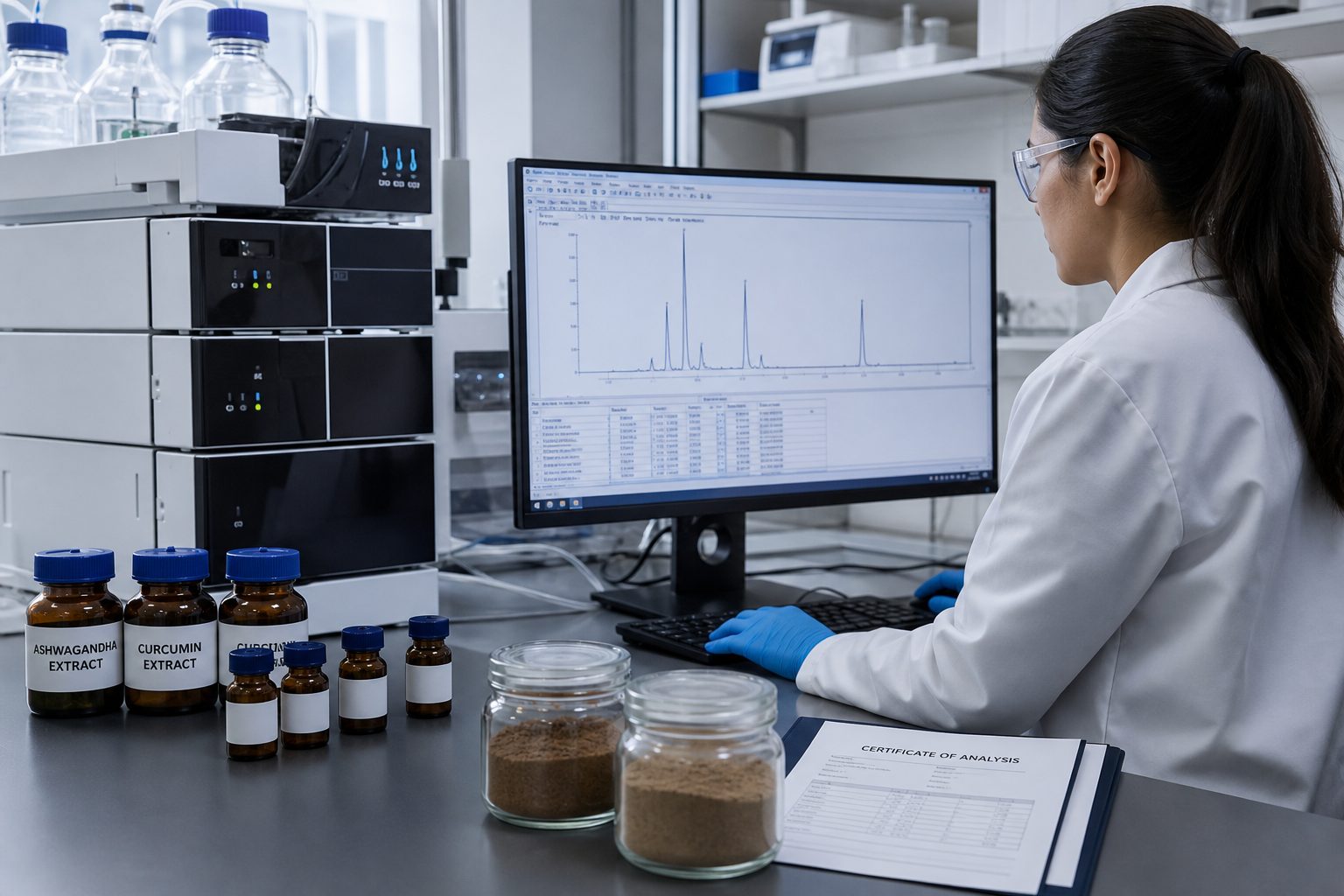
Standardized or HPLC-standardized extracts guarantee minimum concentrations of specific marker compounds as measured and certified by HPLC (High Performance Liquid Chromatography) analysis. The COA (Certificate of Analysis) for an HPLC-standardized ashwagandha extract specifies a minimum 5% withanolides by HPLC; a standardized curcumin extract specifies 95% total curcuminoids by HPLC; a boswellia extract specifies minimum AKBA (Acetyl-11-keto-beta-Boswellic Acid) percentage. This standardization approach is what pharmaceutical buyers, supplement brand formulators, and clinical researchers require — it ensures batch-to-batch consistency and enables label claims backed by analytical evidence. Supercritical CO2 extracts represent a premium, solvent-free extraction method that preserves thermolabile volatile compounds and produces extremely pure, concentrated preparations suited to pharmaceutical and premium supplement applications. These are produced by a smaller number of specialized facilities and command two to four times the price of equivalent standardized dry extracts.
Extract forms also matter for logistics and formulation: spray-dried powders are free-flowing, easy to encapsulate, and stable for long shelf-life; agglomerated powders have improved dispersibility; dry extracts (without excipients) are the most concentrated but may require excipients (maltodextrin, silicon dioxide) for processing. Liquid extracts are perishable, require refrigeration or specific preservative systems, and carry higher freight costs. Oleoresins are viscous, concentrated preparations primarily used in food manufacturing. Each form has distinct packaging, labelling, storage, and documentation requirements that must be addressed in the export specification sheet before pricing or shipment booking.
Herbal Extract Types and Key Specification Parameters
Swipe →
Data table — swipe horizontally on small screens
| Extract Type | Description | Key Buyers | COA Parameter | Price Premium vs. Ratio |
|---|---|---|---|---|
| Ratio Extract (4:1 to 20:1) | Concentration ratio; no marker guarantee | Ayurvedic manufacturers, traditional medicine | Ratio only; basic identity tests | Baseline pricing |
| Standardized Dry Extract (HPLC) | Guaranteed marker% by HPLC; spray-dried powder | Supplement brands, pharma, food industry | Active compound % by HPLC; ID; HM; micro | 1.5x–3x ratio pricing |
| Water Extract (aqueous) | Water-soluble phytochemicals; no solvents | Clean-label supplement brands; food use | Polysaccharides or marker % by UV/HPLC | 1.2x–2x ratio pricing |
| Supercritical CO2 Extract | Solvent-free; lipophilic fraction; very concentrated | Pharmaceutical; premium nutraceutical | Marker % by HPLC; no solvent residue | 3x–6x ratio pricing |
| Liquid Extract / Tincture | Solvent + water base; perishable; varied concentration | Herbal medicine; Ayurvedic dispensaries | Ratio or % marker; microbial limits | Freight cost elevated; moderate margin |
| Oleoresin | Resinous concentrate; high pigment/volatile content | Food manufacturers; cosmetics; flavor | Curcuminoids % (turmeric); volatile oil % (ginger) | Volume pricing; formulation premium |
Manufacturing Clusters and Extraction Technology
India's herbal extract manufacturing is geographically concentrated in five primary clusters, each with distinct botanical specializations, extraction capabilities, and regulatory certification profiles. Understanding which cluster aligns with your target botanical and buyer quality requirements is essential for effective supplier sourcing.
Hyderabad and Telangana Cluster
Hyderabad is India's most prominent pharmaceutical and nutraceutical hub, hosting hundreds of WHO-GMP certified facilities ranging from large integrated drug companies to specialized botanical extract manufacturers. The city's pharmaceutical industry infrastructure — analytical laboratories, regulatory affairs professionals, GMP auditors, and export logistics networks — supports world-class extract production. Telangana and neighboring Andhra Pradesh supply significant quantities of ashwagandha root, turmeric rhizome, and other botanicals to the cluster's processing units. Several of India's globally recognized ashwagandha extract brands and curcumin extract manufacturers are headquartered in or around Hyderabad. Buyers requiring pharmaceutical-grade WHO-GMP certified ashwagandha, curcumin, or boswellia standardized extract should prioritize manufacturer evaluation in this cluster.
Indore and Madhya Pradesh Cluster
Madhya Pradesh — particularly Indore, Bhopal, and the surrounding agricultural belt — is India's largest medicinal plant growing and trading hub. Neemuch, a district in western MP, is the country's most important market for dried medicinal herbs and raw botanicals, serving as the price discovery and aggregation point for ashwagandha root, shatavari root, triphala components (haritaki, bibhitaki, amla), brahmi, and dozens of other medicinal herbs. Extract manufacturers in Indore and MP benefit from proximity to raw material supply, lower procurement costs, and an established network of botanical trading houses. Manufacturing ranges from traditional solvent extraction operations to modern spray-drying and standardization facilities serving international buyers.
Ahmedabad and Gujarat Cluster
Gujarat hosts a significant chemical and pharmaceutical manufacturing base, with Ahmedabad and Vadodara anchoring AYUSH-GMP and WHO-GMP certified herbal extract production. Gujarat-based manufacturers tend to specialize in extract standardization, excipient-free dry extract production, and value-added formulations. The state's proximity to Mundra port — one of India's most efficient container ports — makes it attractive for export-oriented manufacturers shipping to Middle East, European, and North American markets. Gujarat also hosts several NPOP-certified organic herbal extract producers, positioning it well for the growing global demand for certified organic botanical ingredients.
Bangalore and Karnataka Cluster
Bangalore and Karnataka have a distinct extract manufacturing profile centered on high-value botanical actives and supercritical CO2 extraction. Karnataka is a leading source of cardamom, pepper, and certain medicinal plants. The Bangalore cluster hosts sophisticated analytical and R&D infrastructure, and several manufacturers specializing in proprietary or clinically studied extract formats are based here. Karnataka also supplies moringa from the southern growing belt, and Bangalore-area manufacturers serve premium supplement brands with specialized extract formulations.
Extraction Technologies Used in Indian Facilities
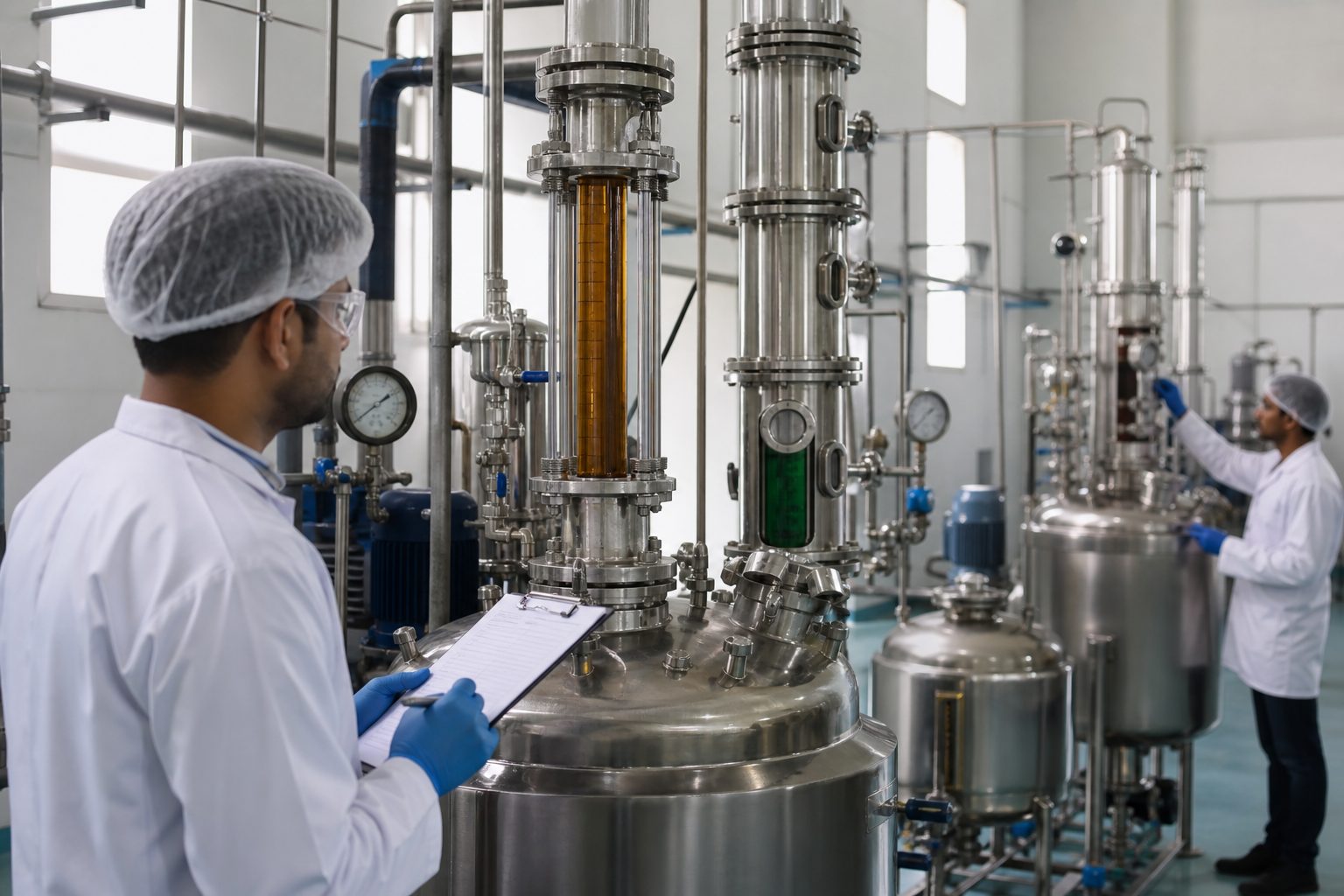
The primary extraction methods employed in Indian herbal extract manufacturing are: solvent extraction using food-grade or pharmaceutical-grade ethanol, methanol, or acetone for lipophilic actives (curcuminoids, withanolides, boswellic acids); water extraction for hydrophilic polysaccharides, glycosides, and alkaloids; hydroalcoholic extraction combining water and ethanol for broad-spectrum phytochemical yield; spray drying to convert liquid extract into stable, free-flowing powder using carrier agents such as maltodextrin, silicon dioxide, or acacia gum; and supercritical CO2 extraction for thermolabile volatiles and lipophilic concentrates requiring solvent-free output. Downstream processing includes vacuum evaporation to concentrate liquid extracts, drum drying for heat-stable products, and fluid bed drying for granulation of powders to improve dispersibility. Quality manufacturers validate extraction efficiency, solvent residue limits (following ICH Q3C for pharmaceutical applications), and active compound retention at each processing stage.
Pricing Analysis: FOB Ranges for Indian Herbal Extracts
Buyer Tip
Herbal extract pricing is highly variable and is primarily determined by botanical identity, active compound standardization percentage, extraction method, raw material procurement cost (which fluctuates with crop yields, rainfall, and growing region), certification stack (organic, WHO-GMP, Kosher, Halal adding cost layers), packaging format, and order volume. FOB pricing quoted by Indian manufacturers represents the cost structure at origin port — buyers must add ocean freight, marine insurance, destination customs duties, inland delivery, and any local testing or re-inspection costs to calculate landed cost. The following indicative FOB ranges are directional for commercial planning purposes; actual quotes will depend on specification, lot size, manufacturing location, and market conditions at time of order.
Ashwagandha extract pricing varies most dramatically by withanolide percentage, sourcing of root versus leaf, and whether the extract is produced from organically certified raw material. The 5% withanolides standard is the global commercial benchmark; premium standardized formats (7–10% withanolides; patented concentration processes) command significantly higher prices. Curcumin 95% is the highest-volume botanical active ingredient export from India and therefore has the most competitive and transparent pricing structure — it is effectively a commodity at the 95% curcuminoid specification level, with differentiation coming from bioavailability enhancement technology (BCM-95, Bioperine complexes, nano-curcumin, phytosome forms) that command premium pricing. Boswellia extract pricing is driven by AKBA percentage — standard resin extracts with 5–10% AKBA are broadly available; high-AKBA formats (30–65% AKBA) represent a smaller, more specialized, and more expensive category.
Indicative FOB Price Ranges for Indian Herbal Extracts (2025–2026)
Swipe →
Data table — swipe horizontally on small screens
| Botanical | Specification | Indicative FOB Range (USD/kg) | Key Price Driver |
|---|---|---|---|
| Ashwagandha Extract | 5% Withanolides, HPLC, spray-dried | USD 25–55/kg | Withanolide %; organic cert; root vs leaf |
| Ashwagandha Extract | 10% Withanolides, HPLC, premium | USD 80–140/kg | High withanolide; extraction efficiency |
| Curcumin Extract | 95% Curcuminoids, HPLC | USD 18–35/kg | Crop yield; raw turmeric price |
| Curcumin (BCM-95/Enhanced) | Bioavailability-enhanced format | USD 55–120/kg | Proprietary technology; licensing |
| Boswellia Serrata Extract | 65% Total Boswellic Acids, 10% AKBA | USD 20–40/kg | Resin quality; AKBA % |
| Boswellia (High-AKBA) | 30–65% AKBA enriched | USD 60–130/kg | AKBA fractionation cost |
| Bacopa Monnieri Extract | 50% Bacosides, HPLC | USD 30–65/kg | Raw material scarcity; extraction yield |
| Amla Extract | 40–80% Tannins or Vitamin C equiv. | USD 15–30/kg | Tannin spec; organic cert |
| Shatavari Extract | 20:1 or 30% Saponins | USD 20–45/kg | Root quality; saponin spec |
| Triphala Extract | Blend; total tannins 40%+ | USD 12–25/kg | Component quality balance |
| Tulsi (Holy Basil) Extract | Ursolic acid 2–5% or 10:1 ratio | USD 15–28/kg | Specification level |
| Ginger Extract | 5% Gingerols, HPLC | USD 22–48/kg | Gingerol %; fresh vs dry root |
| Gymnema Sylvestre Extract | 75% Gymnemic Acids, HPLC | USD 35–70/kg | Gymnemic acid %; yield |
| Moringa Leaf Extract | Isothiocyanates or polyphenols | USD 18–38/kg | Organic cert; spec level |
MOQ Analysis: From Trial Orders to Full Container Programs
Buyer Tip
Minimum order quantities for herbal extracts reflect the practical economics of extraction processing batch sizes, laboratory testing costs (which must be amortized per lot regardless of quantity), and packaging commitments. Most Indian extract manufacturers will not process custom specification batches below 25 kg because the fixed laboratory analysis cost — HPLC, identity testing, heavy metals, microbial panels — runs to USD 300–700 per lot and represents an unworkable cost ratio on smaller quantities. Many manufacturers set commercial trial MOQs at 50–100 kg, which allows meaningful quality evaluation without committing to a full commercial batch. For standardized extracts from established manufacturers with existing stock, spot orders of 25–50 kg may be possible at standard pricing; custom specifications will nearly always require 100 kg minimum.
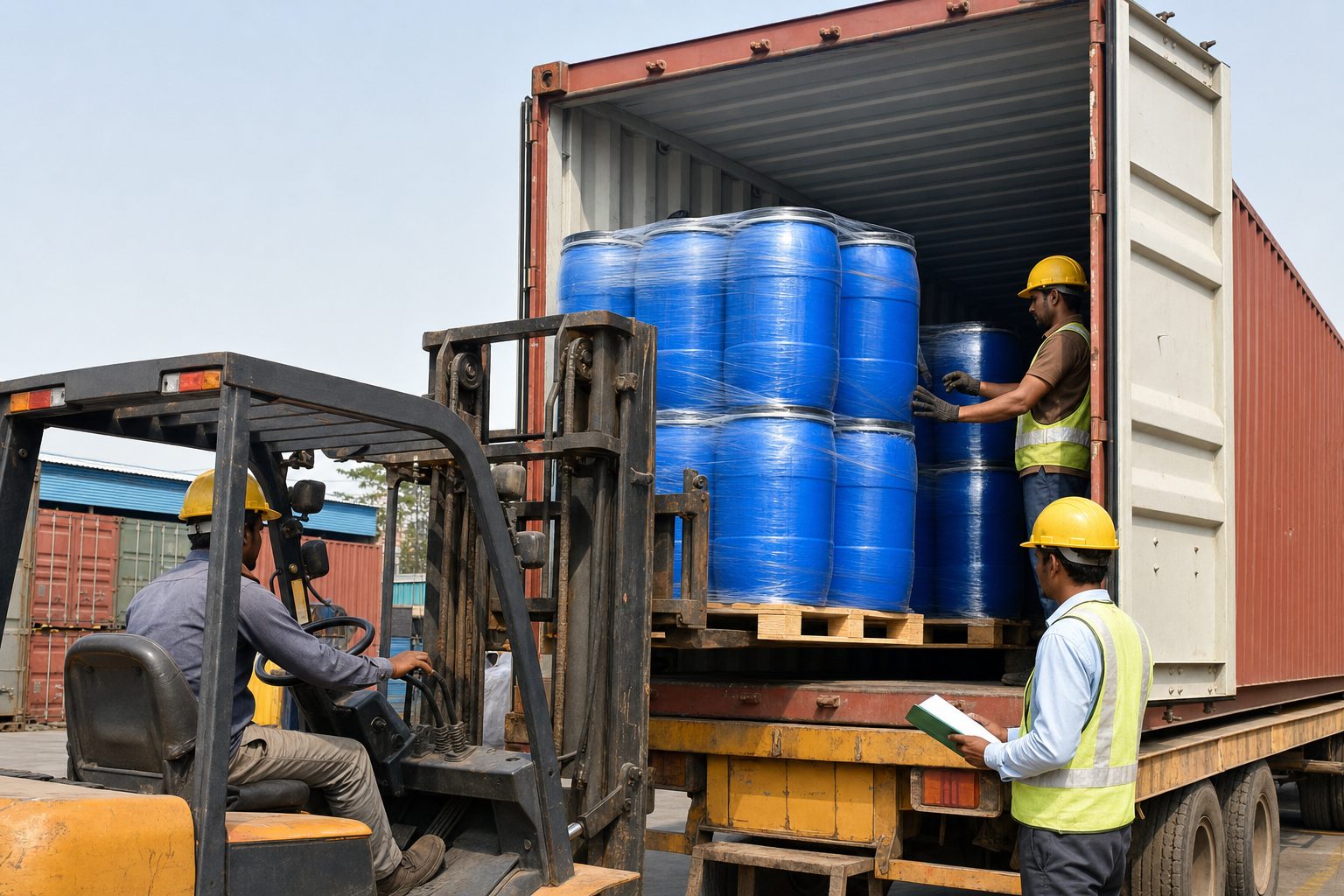
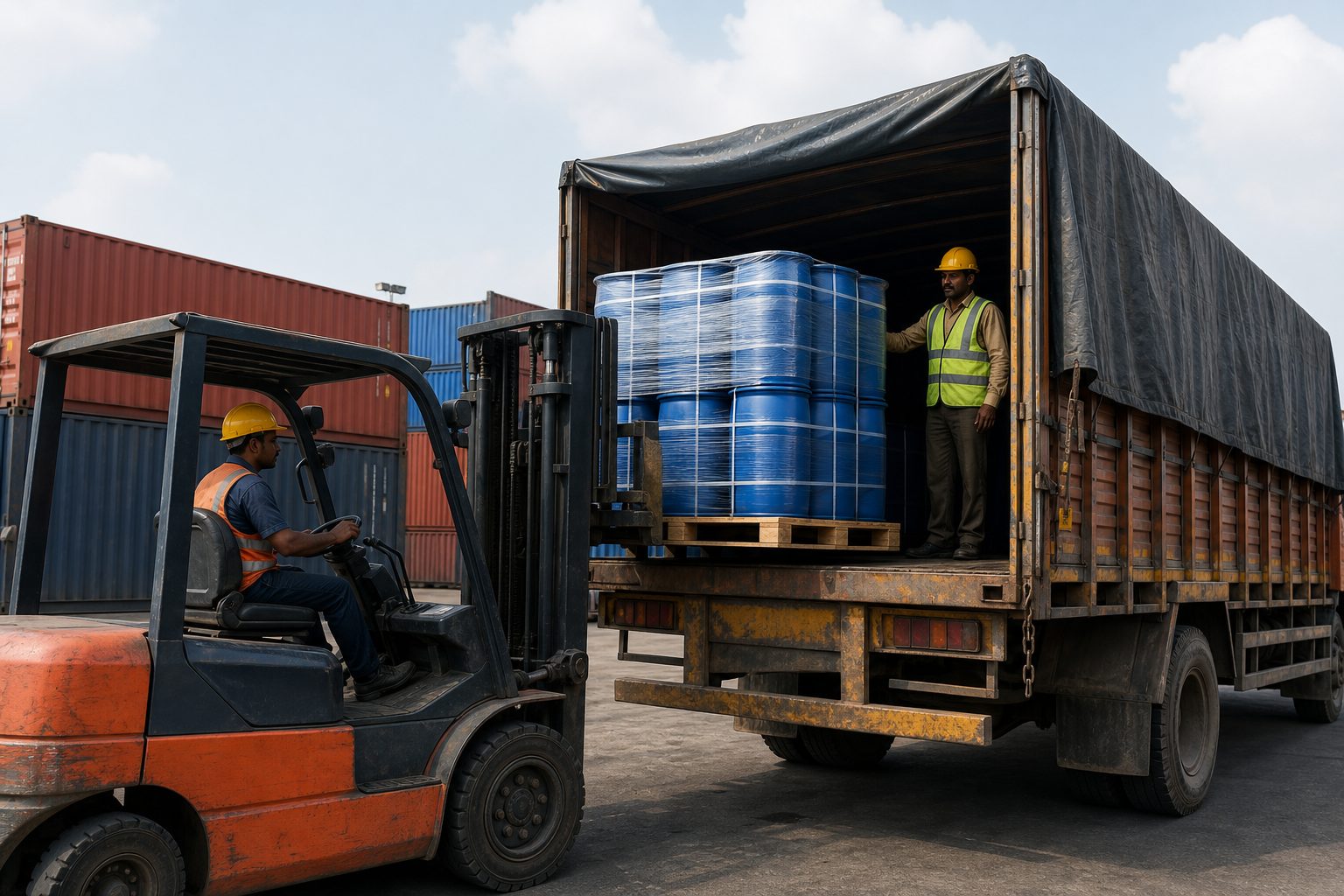
Full commercial programs move in pallet quantities of 200–500 kg per botanical per shipment, enabling efficient LCL or FCL container loading. A 20-foot FCL typically loads on the order of about 8–15 metric tonnes of herbal extract powder in 25 kg HDPE drums (roughly 320–600 drums), depending on bulk density, palletization, and drum dimensions — always confirm stow with the freight forwarder. FCL economics suit multi-botanical distributors and larger single-SKU programmes (e.g., curcumin 95% or ashwagandha). Buyers building branded supplement programs should project 12-month consumption requirements before first container booking to establish supply continuity arrangements — ashwagandha extract supply, for example, fluctuates with Indian agricultural seasons and the major harvest windows, creating periodic tightening that affects smaller buyers without forward purchasing agreements.
MOQ Guidelines for Indian Herbal Extract Programs
Swipe →
Data table — swipe horizontally on small screens
| Order Type | Typical MOQ | Shipment Mode | Best For |
|---|---|---|---|
| Sample for evaluation | 50–200 grams (courier) | Air courier (DHL, FedEx) | Initial quality and formulation testing |
| Pre-commercial trial lot | 25–50 kg | Air freight or LCL sea | Pilot production and regulatory documentation |
| Commercial trial order | 100–200 kg | LCL sea (consolidation) | First purchase order; market entry |
| Pallet program | 400–500 kg (typically 20 x 25 kg drums per pallet) | LCL or partial FCL | Established repeat programs |
| FCL per botanical | 5–10 MT (200–400 x 25 kg drums) | 20-foot FCL from Nhava Sheva/Mundra/Chennai | High-volume single botanical programs |
| Multi-botanical FCL | Combined ~8–15 MT mixed extracts (confirm stow) | 20-foot FCL, mixed pallets | Ingredient distributors; multi-SKU buyers |
Packaging Standards for Herbal Extract Export
Export Tip
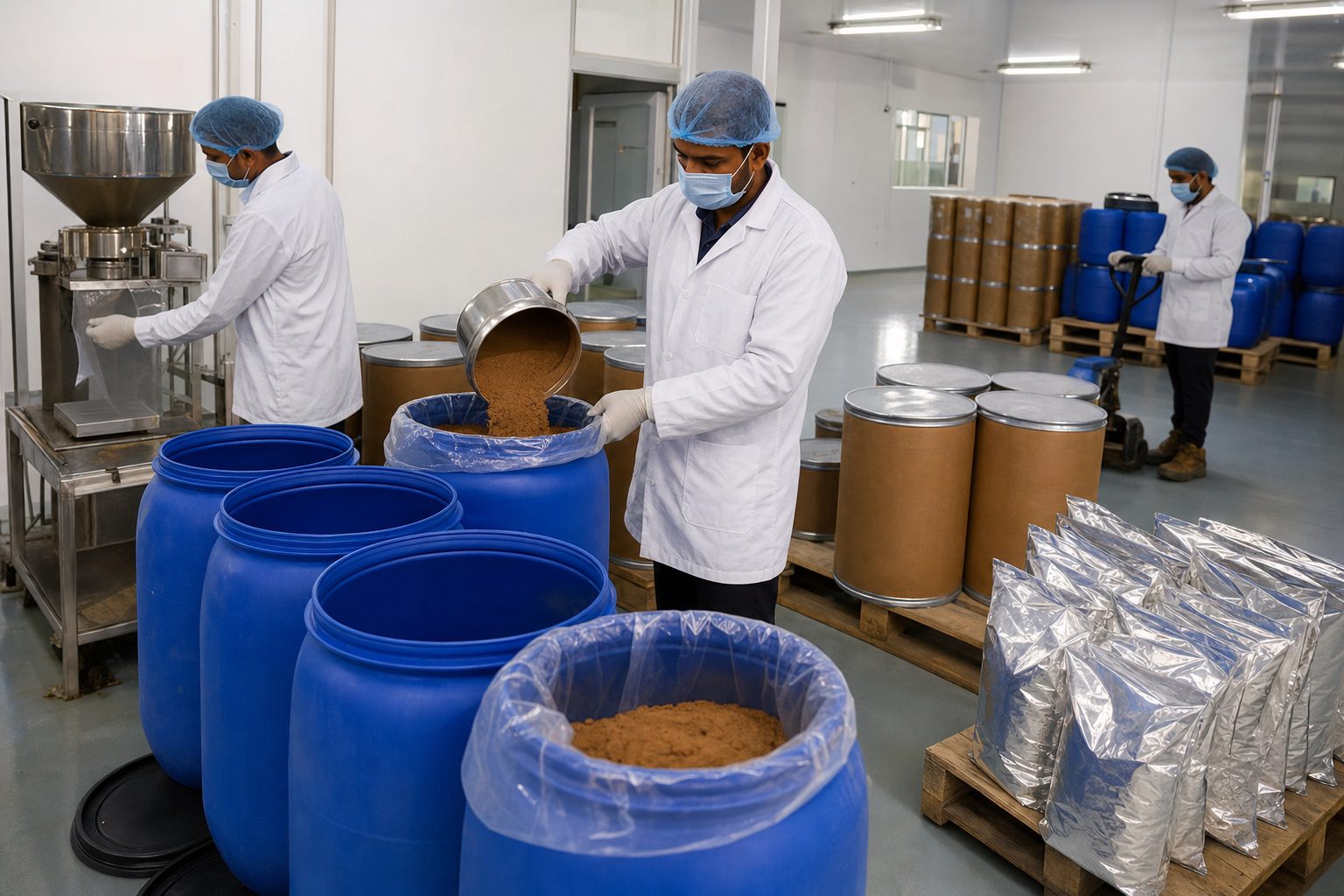
Packaging for herbal extract export is governed by moisture sensitivity (most spray-dried powders are hygroscopic and degrade rapidly without adequate moisture barrier packaging), light sensitivity (many active compounds — curcuminoids, withanolides — are photolabile and degrade under UV light), oxygen sensitivity (oxidation affects potency and colour of many extracts), contamination risk during handling and transit, and destination regulatory requirements for material safety and labelling. The global industry standard for commercial herbal extract export is the 25 kg HDPE drum with double polyethylene inner liner, aluminium foil inner bag, or triple-layer laminate inner bag, sealed with a tamper-evident closure.
Fibre (cardboard) drums with aluminium foil liners and double PE inner bags are also widely used for extracts that are less hygroscopic or where the manufacturer's cost structure favours this format. For premium, pharmaceutical-grade, or light-sensitive extracts — particularly curcumin and some alkaloid-rich extracts — aluminium foil bags inside opaque HDPE or fibre drums provide the required barrier properties. Retail-format extract pouches (1 kg, 5 kg, 10 kg resealable aluminium foil zip-lock bags) are available for smaller buyers and trial orders. All primary and secondary packaging must be food-grade and pharmaceutically acceptable; container materials must not leach plasticizers, heavy metals, or odour compounds into the product. Drum labelling must include product name with botanical Latin name, batch number, manufacturing date, expiry date, net weight, country of origin, manufacturer name and licence number, FSSAI or AYUSH registration number, storage instructions, and handling precautions.
Packaging Formats for Herbal Extract Export
Swipe →
Data table — swipe horizontally on small screens
| Packaging Format | Typical Net Weight | Inner Barrier | Best For | Key Requirement |
|---|---|---|---|---|
| 25 kg HDPE drum + double PE liner | 25 kg | Double PE inner bag | Standard spray-dried extracts | Food-grade HDPE; tamper-evident lid |
| 25 kg fibre drum + Al foil liner | 25 kg | Aluminium foil inner bag | Moisture and light-sensitive extracts | Sealed foil; food-grade drum |
| 25 kg HDPE drum + Al foil bag | 25 kg | Aluminium foil bag | Pharmaceutical/light-sensitive extracts (curcumin) | Multi-barrier; UN-rated for hazardous if applicable |
| 1–5 kg Al foil zip-lock bags | 1–5 kg | Multi-layer laminate | Trial orders; retail ingredient packs | Resealable; label compliance |
| Bulk fibre bags (jumbo) | 50–100 kg | Inner PE liner | Low-sensitivity bulk botanicals (rarely used for standardized) | Not recommended for HPLC-std extracts |
| Glass jars (retail-grade) | 100 g–1 kg | Amber glass + inert seal | Liquid extracts; specialty oleoresins | Sealed, labelled per destination regulations |
Container Loading Details for Herbal Extract FCL Shipments
Export Tip
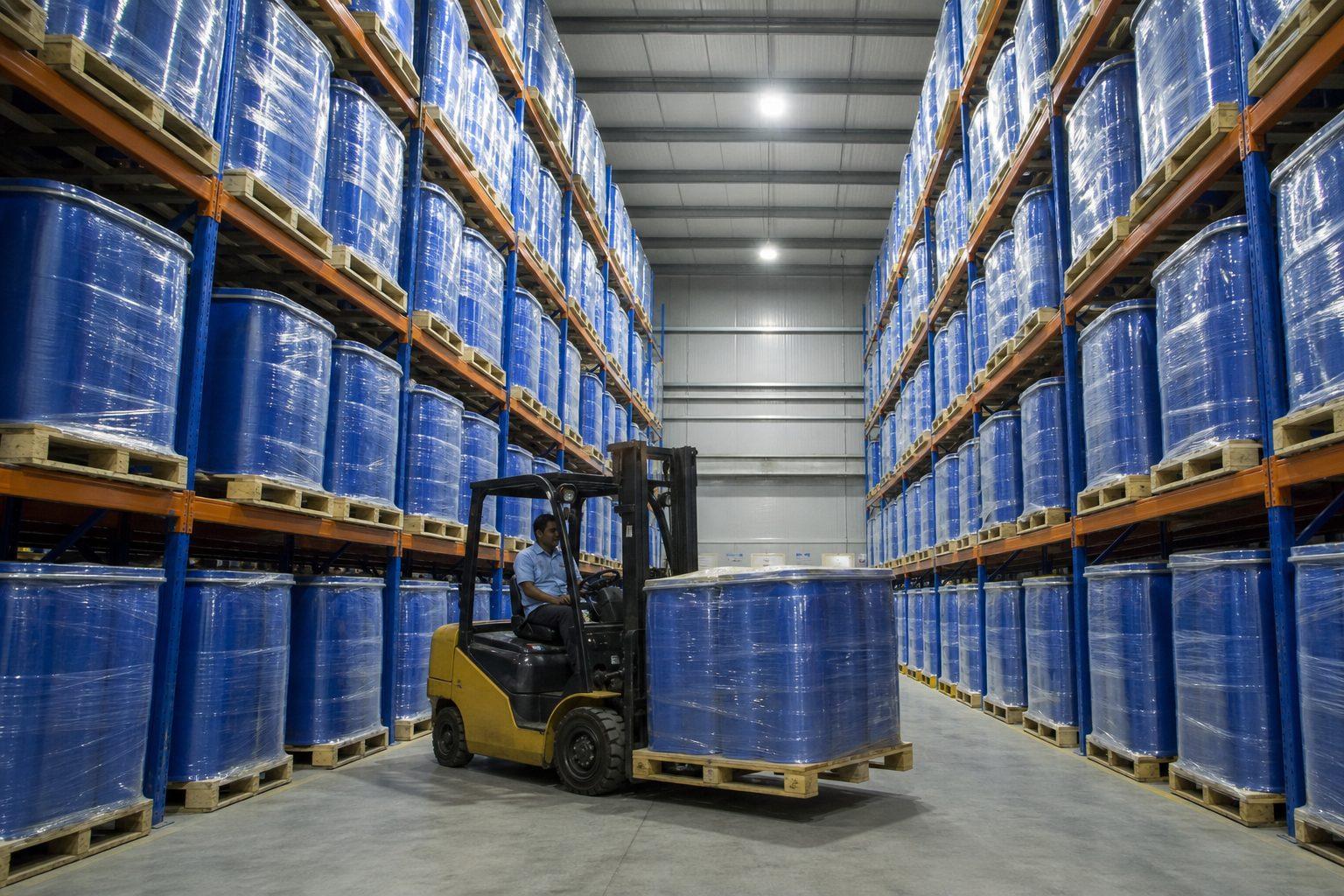
Efficient container loading maximizes freight cost-per-kilogram economics and ensures product integrity during the ocean transit of typically 14–35 days to major destination ports. Spray-dried herbal extract powders in 25 kg HDPE drums are relatively dense — most powders have a bulk density of 0.35–0.65 g/cm3, making them significantly lighter than their volume suggests. A 20-foot FCL can typically accommodate about 320–600 drums of 25 kg extract (about 8–15 metric tonnes), depending on bulk density, drum dimensions, pallet stacking height, and cube utilization. A 40-foot FCL often carries roughly 1.6–2× the payload of a well-stowed 20ft for the same packaging system, but exact MT must be engineered with the forwarder — do not assume a simple doubling.
Drums are typically palletized on standard 1200 x 1000 mm or 1100 x 1100 mm pallets, with 4 drums per pallet layer and 3–4 layers per pallet depending on drum height and stacking stability. Pallet wrapping with stretch film protects drums from condensation, handling damage, and unit separation during transit. Desiccant sachets (silica gel) placed inside each drum or between drums and the container wall help control humidity during ocean transit — particularly important for hygroscopic powders transiting tropical or humid ocean routes. Temperature control (reefer containers) is not typically required for dry spray-dried powders with moisture content below 5%, but is sometimes specified for oleoresins, liquid extracts, or extracts with high hygroscopicity.
Container Loading Reference: Herbal Extract FCL Programs
Swipe →
Data table — swipe horizontally on small screens
| Container Type | Drums (25 kg) per FCL | Net Weight per FCL | Pallet Configuration | Notes |
|---|---|---|---|---|
| 20-foot standard dry container | 400–600 drums | 10–15 metric tonnes | 10–15 pallets (4 drums/layer, 3–4 layers) | Verify stacking strength; desiccants inside |
| 40-foot standard dry container | 800–1,200 drums | 20–30 metric tonnes | 20–30 pallets | Weight limit may restrict before cube fills |
| 20-foot high-cube container | 440–660 drums | 11–16.5 metric tonnes | 11–16 pallets | Extra headroom for taller pallet stacks |
| LCL consolidation | 1–80 drums | 25 kg–2 metric tonnes | Single or part pallet | Cost-effective for trial and pallet quantities |
| Reefer container (optional) | Similar to dry FCL | Same net weight | Same pallet config | Use for oleoresins, liquid extracts, high-hygroscopic powders in tropical transit |
Shipping Methods: Sea Freight, Air Freight, and Courier for Samples
Export Tip
The primary commercial shipment mode for herbal extracts is sea freight in FCL or LCL containers from Indian ports. Nhava Sheva (Jawaharlal Nehru Port, Mumbai) is India's largest and most internationally connected container port, offering the widest choice of shipping lines, vessel frequencies, and competitive rates to North America, Europe, Japan, Australia, and Middle East. Mundra port (Gujarat) has become increasingly important for extract exporters in the Ahmedabad and Gujarat cluster, with strong direct connections to Middle East and European ports. Chennai serves southern India processors and provides efficient connections to Southeast Asian and Australian markets.
Air freight is used almost exclusively for samples, trials, and urgent small shipments where time sensitivity justifies the substantially higher cost. Courier services (DHL, FedEx, UPS) deliver 200-gram to 20-kg samples to buyers in the USA, EU, and Japan within 3–5 working days. Commercial air freight (IATA-regulated, via airway bill) handles larger urgent consignments of 20–200 kg when formulation timelines or buyer deadlines cannot accommodate 25–35 day ocean transit. Some pharmaceutical-grade extract samples are sent under dry-ice or temperature-controlled conditions by air when specified by the buyer's quality protocol. Note that courier and air freight for botanical extract samples require proper customs documentation — commercial invoice, packing list, and a certificate of origin — to clear destination customs as imports rather than prohibited goods; some botanicals classified as controlled substances in certain markets may require specific import permits regardless of shipment mode.
Shipping Method Comparison for Indian Herbal Extract Export
Swipe →
Data table — swipe horizontally on small screens
| Mode | Transit Time | Typical Use | Cost Index | Key Consideration |
|---|---|---|---|---|
| Sea FCL (20-ft, Nhava Sheva) | 21–35 days to Europe; 18–28 days to USA | Full commercial container programs | Lowest per-kg cost | Minimum 10–15 MT to justify full FCL economics |
| Sea FCL (20-ft, Mundra) | 22–30 days to Europe; 18–26 days to USA/Gulf | Gujarat cluster exporters | Slightly competitive to EU/Gulf vs. NSEW | Strong to Middle East destinations |
| Sea LCL (consolidation, NSEW) | 25–40 days door to door | Trial and pallet-level commercial orders | Moderate per-kg; handling charges apply | CFS consolidation delays; document alignment critical |
| Air freight (Mumbai/Delhi/Hyderabad airport) | 3–7 days to most global destinations | Urgent small commercial consignments (20–200 kg) | 4–6x sea freight per kg | Time-sensitive or pharma-grade requirements |
| Courier (DHL/FedEx) | 2–5 business days globally | Samples: 50 grams to 5 kg | Highest per-kg cost (irrelevant for samples) | Correct documentation; botanical import permit if required at destination |
| Reefer sea FCL (when required) | Same transit as dry; booking more complex | Liquid extracts, oleoresins, high-hygroscopic | 10–20% premium over dry FCL rate | Specify temperature range in booking; validate container calibration |
Certifications and Regulatory Compliance for Herbal Extract Export
Compliance Notes
Certifications for herbal extract export are not administrative box-ticking — they are the quality infrastructure that allows Indian extracts to enter pharmaceutical supply chains, retail supplement shelves, and food manufacturing programmes in regulated markets. The certification stack required varies by destination market, buyer type, and application. A pharmaceutical buyer in Germany requires a different certification package than a food ingredient buyer in the UAE or a supplement brand in Australia. Planning your certification investment around your target market and buyer segment is therefore a strategic decision, not a blanket compliance exercise.
AYUSH-GMP certification from India's Ministry of AYUSH is the baseline GMP certification for Ayurvedic, Unani, Siddha, and herbal product manufacturers in India. It is recognized in many Asian and Gulf markets. WHO-GMP certification — assessed against the World Health Organization's good manufacturing practices guidelines — is the more internationally recognized standard and is required or strongly preferred by pharmaceutical buyers in Europe, North America, Japan, and Australia. ISO 22000 (food safety management system) certification applies to extract manufacturers operating in the food ingredient chain. HACCP (Hazard Analysis Critical Control Points) certification demonstrates systematic food safety hazard management. FSSAI licensing is required for any extract manufacturer supplying food-chain buyers and for filing Indian export documentation.
Organic certification creates significant market value for extractors who can source from certified organic raw material. India's NPOP (National Programme for Organic Production) certification — issued via APEDA-accredited certification bodies — may support organic export claims where destination recognition, control-body arrangements, and transaction certificates are in place. Do not assume automatic, blanket EU Organic marketing rights from NPOP alone: confirm the current EU organic import pathway, recognised control body, and Certificate of Inspection requirements for the specific extract and shipment. USDA NOP certification is additionally required for the USA organic claim. Halal certification is essential for Gulf, MENA, and Southeast Asian markets — most reputable extract manufacturers seek Halal certification from recognized bodies such as IFANCA (USA), ESMA (UAE), or HDC (Malaysia). Kosher certification from recognized bodies (OU Kosher, Kof-K) opens US, European, and Israeli kosher supply chains. Heavy metal testing compliance (lead, arsenic, cadmium, mercury below California Prop 65 limits or EU limits depending on destination) and pesticide MRL (Maximum Residue Level) compliance complete the quality documentation stack that international buyers require.
Certification Requirements by Market for Indian Herbal Extract Export
Swipe →
Data table — swipe horizontally on small screens
| Certification | Issuing Body | Required For | Markets | Key Value |
|---|---|---|---|---|
| IEC (Import Export Code) | DGFT, Government of India | All exporters — mandatory for shipping bill | All markets | Enables export filing |
| AYUSH-GMP Certificate | Ministry of AYUSH (state licensing authority) | Ayurvedic/herbal product manufacturers | India; Gulf; Asia | Baseline GMP recognition for herbal |
| WHO-GMP Certificate | State FDA + WHO audit framework | Pharmaceutical and premium supplement buyers | USA, EU, Japan, Australia, UK | Highest GMP recognition globally |
| FSSAI Central Licence | Food Safety and Standards Authority of India | All food-chain extract manufacturers | All food-use markets | Mandatory for Indian food export |
| ISO 22000 / HACCP | Third-party certification bodies (SGS, Bureau Veritas) | Food ingredient buyers | EU, USA, Japan | Food safety management system |
| NPOP Organic (EU equivalent) | APEDA-accredited certification body | Organic extract manufacturers | EU markets; EU-India agreement | EU Organic claim without separate EU cert |
| USDA NOP Organic | USDA-accredited certifier in India | USA organic supplement market | USA | USDA Organic label claim |
| Halal Certification | IFANCA, ESMA, JAKIM, HDC, etc. | Gulf, MENA, SE Asia buyers | UAE, Saudi, Malaysia, Indonesia | Mandatory for Gulf/MENA market entry |
| Kosher Certification | OU Kosher, Kof-K, Star-K | USA, Israel, European kosher buyers | USA, EU, Israel | Opens kosher supply chains |
| HPLC COA (per-lot) | In-house or third-party accredited lab | Every buyer — not a certification but a document | All markets | Active compound % verification per batch |
Buyer Requirements and Quality Expectations by Market
Buyer Requirements
Buyer requirements for Indian herbal extracts vary significantly by geography, application, and buyer sophistication. Understanding these differences allows exporters to prioritize their quality investment and documentation correctly, and allows buyers to communicate requirements precisely enough to avoid receiving non-compliant samples.
USA Supplement Brand Requirements
USA supplement brands operating under DSHEA and FDA 21 CFR Part 111 GMP requirements mandate that their ingredient suppliers demonstrate current GMP compliance — either through their own FDA GMP inspection record, a recognized third-party GMP audit (NSF, NPA, Eurofins), or a WHO-GMP certificate. Per-lot HPLC COA is standard. California Proposition 65 heavy metal limits (0.5 µg/day for lead as threshold for most supplements) translate into extract-level lead limits well below EU limits, making Prop 65 compliance testing an additional non-negotiable for USA-market supply. Pesticide MRL compliance to US EPA standards, moisture content limits, microbial testing (total plate count, yeast and mould, Salmonella, E. coli, Staphylococcus aureus) per USP or equivalent, and identity confirmation (botanical macro- and micro-identification, TLC or DNA fingerprinting for high-value botanicals) complete the typical USA buyer COA panel.
EU (Germany, Netherlands, UK) Buyer Requirements
European buyers apply EU food safety MRL limits for pesticide residues — which are among the world's most stringent and involve hundreds of individual pesticide compounds. EU heavy metal limits (EC 1881/2006 and subsequent updates) are well-defined but often less strict than California Prop 65 on a per-extract basis. EU Novel Food regulations require that any extract not previously consumed to a significant degree in the EU before May 1997 must obtain Novel Food authorization before it can be sold as a food supplement ingredient — buyers in Germany, Netherlands, and UK should verify their specific extract and application against the EU Novel Food catalogue maintained by EFSA. EFSA (European Food Safety Authority) botanical monographs are the reference for traditional use claims across EU markets. German buyers in particular conduct supplier audits before first commercial order — an on-site WHO-GMP audit visit or third-party GMP certificate is frequently required.
Japan Buyer Requirements
Japan combines strict regulatory oversight with premium pricing and demanding quality standards. Japanese buyers require ultra-low pesticide residue levels — often below EU MRLs — and very strict microbial limits. Documentation must be precise, in English or Japanese as specified by the buyer, and lot-coded consistently throughout. Many Japanese herbal ingredient buyers additionally require stability data (accelerated and real-time) and specific solubility and flowability data for formulation compatibility assessment. Certificate of Origin from recognized Indian authorities (FIEO or Chamber of Commerce) is usually required. Japanese functional food applications require specific documentation different from dietary supplement pathways.
Australia and Gulf Buyer Requirements
Australia's TGA (Therapeutic Goods Administration) regulates complementary medicine ingredients with specific listed ingredient requirements — buyers should confirm that their target extract appears on the TGA Permitted Ingredients list with the correct specifications. TGA-compliant GMP is required for the Australian complement supply chain. Gulf buyers (UAE, Saudi, Kuwait, Bahrain) primarily require Halal certification from recognized bodies, FSSAI health certificate, and standard COA. Saudi SFDA (Saudi Food and Drug Authority) has specific botanical supplement registration requirements that buyers must navigate. Kuwait, Bahrain, and other GCC markets follow broadly similar frameworks.
Country-wise Market Opportunities for Indian Herbal Extracts
Market Snapshot
Each major export destination for Indian herbal extracts has distinct botanical demand patterns, certification requirements, price sensitivity, and growth trajectory. The USA and Germany represent the highest-value opportunities but also the most demanding compliance requirements. Gulf markets offer volume opportunities for Ayurvedic and traditional herbal products with simpler certification pathways. Japan represents the premium opportunity for exporters willing to invest in documentation precision and ultra-clean quality systems. Australia and South Korea are rapidly growing markets with strong receptivity to Indian adaptogens and Ayurvedic botanicals.
Country-wise Herbal Extract Export Opportunities from India
Swipe →
Data table — swipe horizontally on small screens
| Country | Top Botanicals in Demand | Market Entry Certification | Volume Potential | Price Opportunity | Key Entry Strategy |
|---|---|---|---|---|---|
| USA | Ashwagandha, Curcumin, Boswellia, Bacopa, Moringa | WHO-GMP + Prop 65 + third-party GMP audit | Very large (USD 8–15B supplement market) | High; USD 25–140/kg depending on botanical | Target branded supplement companies; trade shows (SupplySide West) |
| Germany | Curcumin, Boswellia, Ashwagandha, Ginger, Bacopa | WHO-GMP; EU Organic for organic claims; EFSA review | Large; EU gateway market | Highest globally; pharma-grade commands top price | Long buyer development; supplier audit expected |
| Netherlands | Ashwagandha, Curcumin, Adaptogens, Amla | WHO-GMP; EU compliance | Large distribution hub; multiply by EU redistribution | High | Target ingredient distributors; Vitafoods Europe |
| UK | Ashwagandha, Curcumin, Tulsi, Moringa, Amla | AYUSH or WHO-GMP; UK Organic | Significant; independent health food retail strong | High; organic commands premium | Health food shows; direct brand sales |
| Japan | Curcumin (food), Ashwagandha (growing), Ginger, Moringa | ISO 22000; ultra-low pesticide residues; JHFA | Moderate volume; very high unit price | Premium pricing achievable | Specialist importer relationships; long-term trust development |
| Australia | Ashwagandha, Curcumin, Boswellia, Bacopa | TGA-acceptable GMP; TGA listed ingredients | Growing; strong complementary medicine market | High | Listed ingredient compliance check first |
| UAE / Gulf | Shatavari, Triphala, Brahmi, Amla, Tulsi, Moringa | Halal certification; FSSAI health cert | Moderate-large; Unani and Ayurvedic product mfg | Mid-range | Unani/Ayurvedic manufacturer partnerships; Gulfood |
| South Korea | Curcumin, Ashwagandha, Ginger, Bacopa | MFDS compliance; WHO-GMP preferred | Growing; K-wellness trend driving demand | Mid-high | MFDS registration support; Kotra-facilitated |
| Canada | Ashwagandha, Curcumin, Bacopa, Moringa | Health Canada NHP; GMP compliance | Significant NHP (natural health product) market | High | NHP product licence pathway; USA-adjacent supply chain |
Step-by-Step Export Process for Herbal Extracts from India
Export Tip
The following ten steps represent the complete operational sequence for first-time and growing herbal extract exporters. Follow the sequence; attempts to shortcut registrations, laboratory testing, or documentation alignment will create compliance failures that are far more expensive than the time saved.
Step 1: Obtain Import Export Code (IEC) from DGFT
An IEC is mandatory for filing shipping bills and claiming export benefits. Apply online at the DGFT portal (dgft.gov.in) with PAN, bank account details, and address documents consistent with your GST registration. Most clean applications complete within 2–5 working days. The IEC must be kept updated — an inactive or detail-mismatched IEC prevents shipping bill filing.
Step 2: Obtain AYUSH-GMP or WHO-GMP Certification
For pharmaceutical and nutraceutical extract buyers, GMP certification is non-negotiable. AYUSH-GMP is issued by the state licensing authority under the AYUSH Ministry and is the starting point for Indian herbal manufacturers. WHO-GMP involves a more rigorous audit process and is typically required for USA, EU, Japan, and Australian pharmaceutical-grade buyers. Begin GMP certification well before buyer outreach — audit scheduling, corrective action, and certificate issuance can take 6–12 months for first-time applicants. Existing facilities with FSSAI manufacturing licences should map their current systems against GMP requirements before application.
Step 3: Obtain FSSAI Central Licence
Any extract manufacturer supplying food-chain buyers — supplement brands, food manufacturers, cosmetics ingredient buyers — requires a valid FSSAI central licence covering the manufacturing premises. FSSAI licensing aligns production to Indian food safety standards and is required for FSSAI-issued health certificates that accompany export consignments.
Step 4: Develop Specification Sheets and COA Templates
Before approaching buyers, develop complete specification sheets for each botanical SKU: botanical name (Latin and common), plant part (root, leaf, fruit, resin, rhizome), extraction method, standardization marker and minimum percentage by HPLC, excipients if any (maltodextrin, silicon dioxide percentages), appearance and colour, solubility, moisture content limit, heavy metal limits, pesticide residue panel, microbial limits, shelf life, and packaging details. COA templates should be developed in parallel, showing all tested parameters with methods and specifications. This documentation defines your product for buyers and prevents ambiguous specifications from creating post-shipment disputes.
Step 5: Establish Accredited Laboratory Testing Protocols
Set up testing relationships with NABL-accredited or internationally accredited (ISO 17025) analytical laboratories for HPLC active compound assay, identity testing (TLC, HPTLC, or DNA fingerprinting for high-value botanicals), heavy metal analysis (ICP-MS), pesticide residue multi-panel testing, microbial testing, and moisture testing. Per-lot testing protocols must be documented and consistently applied. Buyers who receive inconsistent COA formats or lot numbers that do not match invoices will immediately question your quality management system.
Step 6: Build Your Buyer Pipeline
Target buyer outreach channels include international botanical ingredient trade shows (SupplySide West in Las Vegas, Vitafoods Europe in Geneva, Fi Europe in Frankfurt, Natural & Organic Products Europe in London, Health Ingredients Japan in Tokyo), import trade data analysis under HS 1302.19 to identify active importers in target markets, LinkedIn outreach to procurement managers and ingredient buyers at supplement brands and food manufacturers, AYUSH Export Promotion Council events, and India Trade Promotion Organisation (ITPO) buyer-seller programmes. Lead every outreach with a specification sheet and COA — not a marketing brochure. Buyers who receive verifiable quality documentation in the first contact are far more likely to request samples than those receiving generic company presentations. For a structured approach, see how to find international buyers for herbal extracts.
Step 7: Manage Sample Logistics and Evaluation
Send samples via DHL or FedEx with a commercial invoice declaring accurate value, HS 1302 classification, and description matching the COA. Include a comprehensive sample information package: COA, specification sheet, GMP certificate, FSSAI licence copy, and a cover letter explaining the sample contents and requesting evaluation feedback. Turnaround most evaluation samples within 5–7 working days of buyer request. Follow up within 2 weeks of delivery to confirm receipt, sample condition, and evaluation status. Professional sample management converts evaluation samples to trial purchase orders.
Step 8: Prepare Export Documentation for Commercial Shipments
Commercial herbal extract export documentation includes: commercial invoice with HS 1302.19 classification; packing list with drum serial numbers, net and gross weights; shipping bill (IEC mandatory); bill of lading or airway bill; Certificate of Origin from Chamber of Commerce or FIEO; FSSAI health certificate for food products; lot-specific COA from accredited lab; GMP certificate copy; and where applicable, organic transaction certificate (NPOP/USDA), Halal certificate, or Kosher certificate covering the specific lot. Align all documents to the same lot numbers — drum serial numbers on the packing list must match COA lot numbers and GMP certificate scope. For the complete documentation checklist, see herbal extract export documentation checklist.
Step 9: Coordinate with Freight Forwarder and CHA
Appoint a freight forwarder experienced in botanical and pharmaceutical ingredient exports from your load port (Nhava Sheva, Mundra, or Chennai). The forwarder should understand HS 1302.19 classification, GMP documentation requirements for pharmaceutical shipments, and any destination-port-specific requirements. Your Customs House Agent (CHA) files the shipping bill and coordinates port-level documentation. Brief the CHA with complete packing list, invoice, and all supporting certificates at least 48 hours before cargo gate-in at the container freight station (CFS). Confirm Incoterms with your buyer — FOB (Free On Board) is standard for first-time herbal extract export programs; CIF or CFR may be preferred by buyers who want a single freight-inclusive quote.
Step 10: Post-Shipment Follow-up and Buyer Relationship Management
Share tracking information and pre-alert documentation (COA, invoice, packing list, B/L copy, all certificates) with your buyer within 24 hours of vessel departure. Buyers who receive complete pre-alert documentation promptly can arrange customs brokers, import permits, and port delivery without delays. Follow up within 5 days of estimated delivery to confirm receipt and product condition. Solicit feedback on any quality parameters that the buyer's incoming inspection may reveal — early feedback enables quality improvement that strengthens the relationship for repeat orders. Maintain lot-specific records for all shipped batches for a minimum of three years to support any recall, quality inquiry, or regulatory audit at origin.
Sourcing Checklist for International Buyers
Checklist
Buyer, Exporter, and Compliance Checklists
Checklist
Compliance Notes
Common Buyer Mistakes When Importing Herbal Extracts from India
Common Mistakes Box
Herbal extract trade has a relatively high incidence of first-time buyer mistakes, many of which are preventable with correct upfront specification and supplier vetting. The following are the most frequently encountered errors, their consequences, and the specific steps that eliminate them.
Common Buyer Mistakes in Indian Herbal Extract Sourcing
Swipe →
Data table — swipe horizontally on small screens
| Mistake | Consequence | How to Avoid |
|---|---|---|
| Ordering by botanical name only, no specification | Receiving ratio extract when HPLC-standardized was needed; no label claim possible | Always specify marker compound %, extraction method, and form before quoting |
| Not verifying GMP certificate currency | Receiving product from non-GMP facility; non-compliant with USA or EU buyer requirement | Download and verify GMP certificate directly; check issue and expiry dates |
| Accepting generic COA not lot-specific | Cannot link quality data to specific shipment; rejection risk at destination inspection | Require lot-specific COA with batch number matching invoice and packing list |
| Ignoring Prop 65 heavy metal limits for USA market | Product fails third-party testing; recall risk; FTC/FDA enforcement risk | Specify lead/arsenic/cadmium/mercury limits aligned to Prop 65 in COA requirement |
| Not confirming Novel Food status before EU purchase | Extract may be prohibited as food supplement in EU without authorization | Cross-reference EU Novel Food catalogue; consult regulatory expert if any doubt |
| Paying 100% upfront to unverified supplier | No recourse for quality failures or non-shipment; financial loss | Use 30% advance, 70% against documents; verify supplier via Altus Exports verification |
| Ordering sample only from stock, then ordering production lot | Production lot fails to match sample specification; quality gap surprises buyer | Order trial commercial lot (25–100 kg) before full FCL commitment |
| Ignoring shelf life and packaging validation | Product degrades in transit or at destination warehousing; costly write-offs | Require 24-month shelf life from production; validate HDPE drum barrier for transit conditions |
Future Market Trends in Indian Herbal Extract Export
Key Statistics
The herbal extract export market is in a sustained structural growth phase driven by several converging trends: the mainstreaming of preventive healthcare and self-medication in high-income markets, the growth of Ayurveda and traditional medicine systems as credible global wellness frameworks, the expansion of functional food and beverage categories incorporating botanical actives, and the pharmaceutical industry's growing use of plant-derived active compounds in both conventional drug formulations and nutraceutical-pharma hybrid products. Indian exporters who invest correctly in quality systems, certification, and market development today will be disproportionately positioned to capture the growth of the next 5–8 years.
Clinical evidence is increasingly driving extract value: ashwagandha, curcumin, boswellia, and bacopa all have substantial published clinical trial literature that supports consumer confidence and enables evidence-based marketing claims by supplement brands in the USA, EU, and Japan. Extracts produced by manufacturers who participated in or can reference clinical studies command significant premium over commodity equivalents. Sustainability and supply chain transparency are emerging as purchase criteria in European markets — buyers increasingly seek documentation of botanical sourcing traceability, farmer support programmes, and environmental impact of extraction operations. Organic certification growth is outpacing conventional market growth in Europe and the USA, creating structural advantage for NPOP/USDA-certified Indian extract manufacturers.
Future Trends in Indian Herbal Extract Export (2026–2034)
Swipe →
Data table — swipe horizontally on small screens
| Trend | Impact on Indian Exporters | Preparation Strategy |
|---|---|---|
| Ashwagandha global adaptogens boom | Largest growth opportunity; premium for clinical-study extracts | Invest in 5%+ withanolide standardization; reference published clinical data |
| Curcumin bioavailability innovation | Enhanced-bioavailability formats command 3x–6x commodity curcumin price | Partner with or license bioavailability technology; offer BCM-95, phytosome, nano-curcumin formats |
| EU Novel Food expansion scrutiny | Some new extracts will require authorization; documentation burden increasing | Pre-clear extract status before European market entry; build regulatory dossiers |
| Organic extract demand surge | NPOP/USDA organic extracts commanding 40–80% price premiums | Invest in organic certification for ashwagandha, amla, tulsi, moringa supply chains |
| Clinical substantiation requirements | Buyers increasingly demand study references or third-party efficacy documentation | Commission or co-fund clinical studies; partner with CROs doing Ayurvedic ingredient research |
| Supply chain traceability technology | Blockchain and QR traceability demanded by premium EU and USA buyers | Implement batch-to-farm traceability documentation; partner with digital traceability platforms |
| Sustainability certification | Rainforest Alliance, Fair Trade, Sustainable Herbs becoming differentiators | Map sustainable sourcing practices; pursue applicable third-party sustainability audit |
| Personalized nutrition supplement growth | Niche botanical combinations for specific health targets growing rapidly | Develop combination extract products targeting joint health, cognitive, stress, immunity categories |
Conclusion: Build Your Herbal Extract Export Programme with Altus Exports
- Explore top herbal extract products exported from India for botanical-by-botanical ranking, marker specs, and FOB pricing.
- Find the right destination for your botanical with best countries for Indian herbal extract exports.
- Understand buyer-specific demand with most demanded Indian herbal extracts by country.
- Complete your certification knowledge with AYUSH and FSSAI registration benefits for herbal extract exporters.
- Get the full documentation checklist at herbal extract export documentation checklist.
- Find certified organic botanical opportunities at organic standardized herbal extract export opportunities.
- Expand your buyer pipeline with how to find international buyers for herbal extracts and trade shows for herbal extract exporters.
- Source directly with how to source herbal extracts directly from India.
- Browse herbal-ayurvedic-products industry overview and merchant exporter services from India for programme support.
- Contact Altus Exports global sourcing partner services to begin a verified herbal extract sourcing conversation for your next programme.
How to export herbal extracts from India — done correctly — follows a clear sequence that begins not with buyer outreach but with regulatory preparedness, quality system investment, and specification-grade product documentation. India's structural advantages in herbal extract export — botanical diversity, growing WHO-GMP certified manufacturing infrastructure, competitive landed cost, Ayurvedic knowledge heritage, and expanding certified organic supply chains — are real and durable. Exporters who build on these foundations with rigorous HPLC standardization, current GMP certification, precise per-lot COA documentation, and professional export logistics are positioned to access the world's fastest-growing wellness ingredient markets at premium price points.
International buyers sourcing herbal extracts from India benefit most from working with verified, documentation-complete manufacturers or through merchant exporter intermediaries who have already conducted supplier qualification, quality system assessment, and document alignment checks. The herbal extract market rewards verified quality — buyers who build long-term relationships with certified Indian extract suppliers consistently outperform those who chase the lowest per-kilogram quote from unverified sources.
Altus Exports operates as a merchant exporter and global sourcing partner for herbal and Ayurvedic products from India, offering buyer access to verified WHO-GMP and AYUSH-GMP certified extract manufacturers with complete documentation support, custom specification negotiation, sample coordination, and end-to-end export logistics from Indian ports to international destinations.