
Organic & Standardized Herbal Extract Export Opportunities
By Saurabh Mittal, Founder, Altus Exports
Organic certification (NPOP, USDA, EU) and HPLC standardization are no longer optional for premium herbal extract export markets. This guide covers the full premium architecture — from farm-level organic transition through extraction, segregation, and clean-label positioning — and the pricing uplift that justifies every step of the investment.
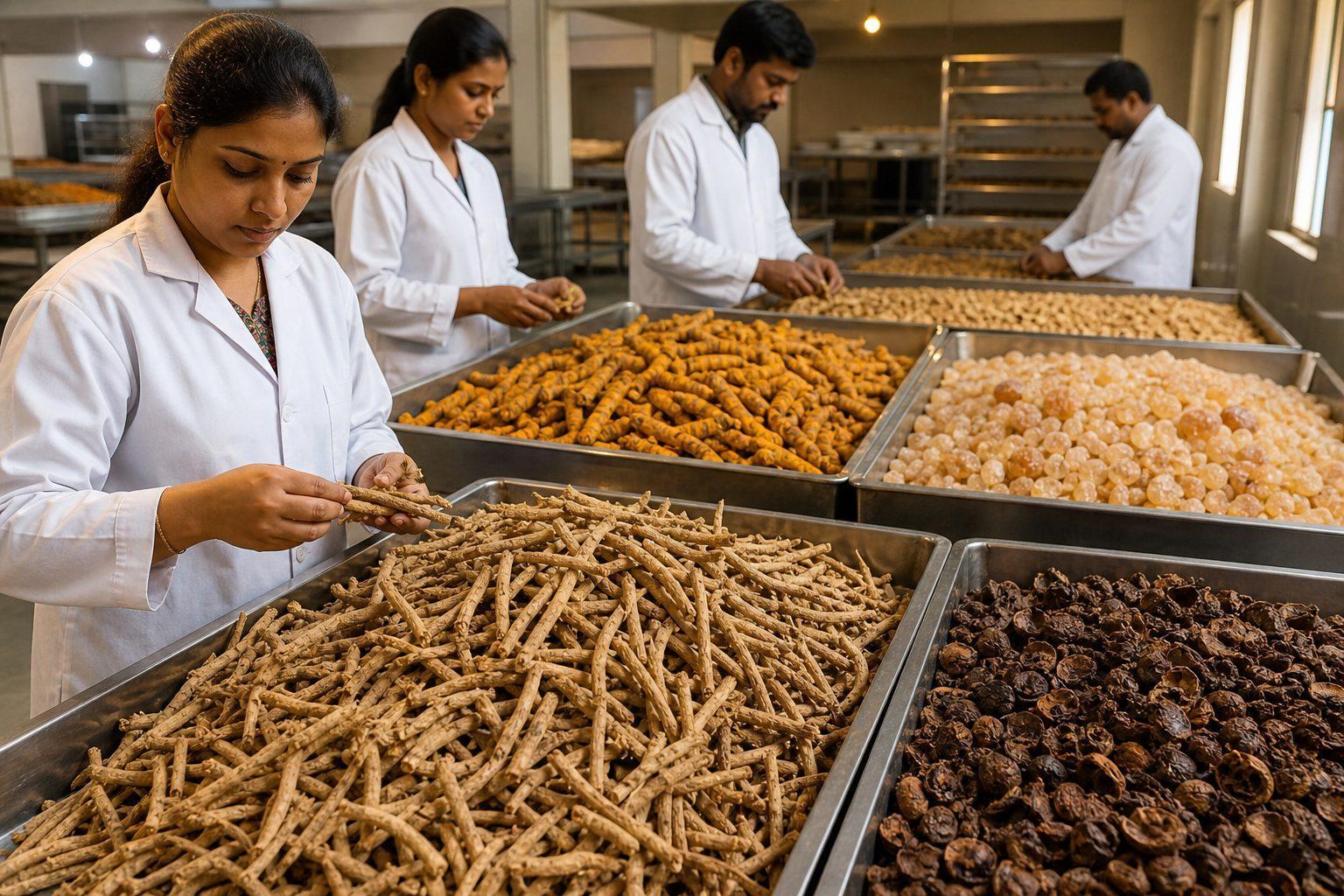
Two parallel premium architectures are transforming the Indian herbal extract export market: organic certification and analytical standardization. For decades, the herbal extract trade ran on descriptive labels — 'ashwagandha root extract,' 'curcumin extract' — without rigorous verification of what the label actually meant in terms of bioactive content, agricultural input history, or traceability. That era is ending. International buyers in the United States, European Union, Japan, and Australia now mandate certificates that prove what they are buying — and pay materially more for the extracts that carry them.
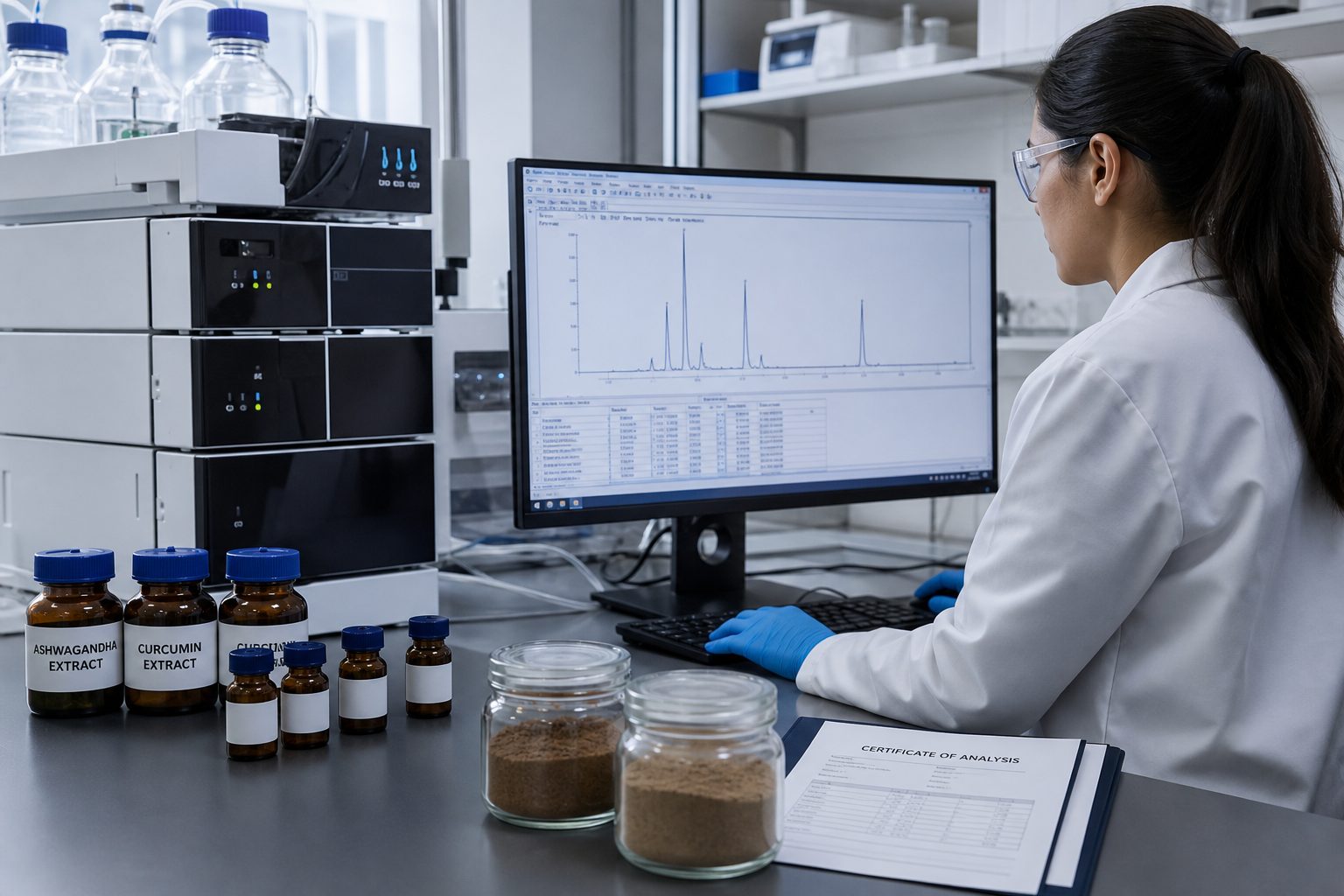
Organic certification under NPOP (India's National Programme for Organic Production), USDA NOP (National Organic Program), and EU Organic regulation provides documented evidence that the agricultural raw material was grown without synthetic pesticides, herbicides, or chemical fertilisers, and that the extraction process used only permitted solvents and processing aids. HPLC standardization provides documented evidence that the specific bioactive marker compound — withanolides in ashwagandha, curcuminoids in turmeric, boswellic acids in boswellia, bacosides in bacopa — is present at the stated concentration, verified by a specific analytical method that cannot be gamed by adulterating material.
Together, organic certification and HPLC standardization define the premium tier of the Indian herbal extract export market. This guide covers the full investment case: what each certification requires, what the price premium looks like across products and markets, how batch segregation and chain of custody work in practice, how clean-label positioning translates organic and standardized credentials into commercial advantage for downstream brands, and how Altus Exports enables access to this premium market as a certified merchant exporter and global sourcing partner. For the buyer acquisition framework — how to find and qualify the buyers who pay these premiums — see our companion guide on how to find international buyers for herbal extracts.
Key Takeaways
Summary Box
Executive Summary
Summary Box
The organic herbal extract segment is growing at approximately 12–14 percent annually, outpacing the 8–9 percent growth of the conventional extract market. Standardized extracts with verified HPLC data are growing at 10–12 percent in export value terms as buyers in regulated markets shift away from commodity botanical material. The combined premium tier — organic AND HPLC-standardized — represents the fastest-growing and highest-margin segment of India's herbal extract export portfolio, yet fewer than 15 percent of Indian extraction units hold both organic certification and HPLC-verified standardization capability simultaneously.
This gap between market opportunity and supply-side capability is precisely the strategic opening for Indian manufacturers and their export partners. The certification and infrastructure investment required to enter the organic-standardized premium tier is real — organic farm network development, extraction process audit, segregated production lines, certified laboratory infrastructure — but the pricing uplift of 90–150 percent above conventional UV-tested grades generates return on that investment within 18–36 months for a manufacturer with annual export volumes above USD 500,000. This guide provides the information needed to make that investment with clarity: what is required, what it costs, what the premium is, and how to position organic-standardized extracts to the international buyers who will pay for them.
India's herbal extract manufacturing base is anchored in five clusters: Hyderabad and Telangana (largest HPLC-capable hub), Indore and Madhya Pradesh (ashwagandha and boswellia supply corridors), Neemuch in Rajasthan (boswellia resin trading), Ahmedabad and Gujarat (WHO-GMP pharmaceutical-grade infrastructure), and Bangalore and Karnataka (southern botanicals, growing organic networks). Export routes move through Nhava Sheva, Mundra, and Chennai under HS 1302 classifications.
Market Size & Industry Overview
Key Statistics
The global organic herbal extract market was valued at approximately USD 2.8 billion in 2025, representing roughly 28 percent of the total herbal extract market by value but only approximately 12–15 percent by volume — reflecting the significant price premium organic extracts command. The US and Europe together account for approximately 70 percent of organic herbal extract demand. India's contribution to global organic herbal raw material is estimated at 30–40 percent of volume but only 18–22 percent of organic extract value, indicating a major opportunity for value addition through certified extraction.
The standardized extract sub-segment is larger: nearly 60 percent of herbal extracts sold into supplement, nutraceutical, and pharmaceutical channels globally carry some form of analytical standardization claim. However, quality of those claims varies enormously — from rigorous HPLC-verified multi-compound profiles to simple UV single-wavelength readings providing much weaker assurance. FDA cGMP Part 111 requirements for dietary supplement potency verification, and increasingly sophisticated buyer specifications, are driving the industry toward HPLC as the non-negotiable minimum standard for regulated market access.
The five primary herbal extract export clusters in India each have distinct organic infrastructure development states. Hyderabad has the broadest HPLC capability and access to organic turmeric farms in Andhra Pradesh. Indore connects to organic ashwagandha networks in Madhya Pradesh and Rajasthan. Neemuch links boswellia forest-origin harvest to Indore and Ahmedabad extraction units. Ahmedabad's pharmaceutical belt offers WHO-GMP manufacturing for pharmaceutical-channel buyers. Bangalore's bio-resource access includes organic holy basil, moringa, and niche southern Ayurvedic herbs.
Table 1 — Organic vs. Conventional Herbal Extract Market Comparison (2025)
Swipe →
Data table — swipe horizontally on small screens
| Parameter | Organic Segment | Conventional Segment | Growth Differential |
|---|---|---|---|
| Global market value (2025) | USD 2.8 billion | USD 7.0 billion | Organic growing 1.5–2× faster |
| Volume share | 12–15% of total | 85–88% of total | Volume gap closing slowly |
| Value share | ~28% of total | ~72% of total | Price premium drives disproportionate value share |
| India's market share by value | 18–22% | 22–28% | India under-indexed — significant opportunity |
| Primary demand markets | US 42%, EU 28%, Other 30% | US 28%, EU 22%, Other 50% | Premium markets concentrate organic demand |
| CAGR (2025–2032) | 12–14% | 7–9% | Organic growing at +3–5% CAGR differential |
| Price premium vs. conventional UV | +90–150% | Baseline | Most pronounced in amla, bacopa, curcumin |
Understanding Organic Certification: NPOP, USDA NOP, and EU Organic
Three organic certification systems govern the vast majority of organic herbal extract trade: India's NPOP, the USDA NOP, and the EU's organic regulation framework. Each has distinct requirements and different equivalence recognition relationships that determine which markets each certification unlocks without additional certification investment.
NPOP — India's National Programme for Organic Production
NPOP is India's government-mandated organic certification system, administered by APEDA under the Ministry of Commerce. For herbal extract exporters, NPOP has two critical layers: the organic farm certification (certifying raw material was grown under NPOP-compliant conditions — prohibited substances list, organic matter management, no synthetic pesticides or herbicides) and the processor/exporter certification (certifying the extraction process did not contaminate the organic material). Both layers must be in place before an extract can be marketed as organic under NPOP.
NPOP equivalence with EU Organic is recognized under a bilateral India-EU agreement — NPOP-certified products can be exported to and sold as organic in the EU without requiring separate EU Organic certification. This equivalence does not extend to the US NOP system; NPOP certification alone is insufficient for the US organic market. Separate USDA NOP certification from a USDA-accredited certifying agent is required for any US organic labelling claim.
USDA NOP — National Organic Program
USDA NOP is administered by the Agricultural Marketing Service and is required for any product labelled 'organic' sold in the United States, including herbal extract ingredients for dietary supplements, food, and personal care products. NOP certification for Indian suppliers requires a USDA-accredited certifying agent operating in India — major accredited certifiers include OneCert International, Indocert, LACON India, and Control Union.
The NOP certification process involves a documented Organic System Plan covering: input materials (fertilizers, pest management, extraction solvents), land history (three-year transition for previously conventional farmland), and crop and facility inspection. For extract processors sourcing from certified farms, chain of custody documentation from farm through finished extract is mandatory. NOP inspections are annual. Under NOP, herbal extract ingredients can carry the 'certified organic' claim on ingredient specifications and buyer documentation.
EU Organic Regulation 2018/848
EU Organic certification follows Regulation 2018/848 and covers organic crop production, conversion periods, processing standards, and mandatory EU organic logo labelling on pre-packaged products. For Indian exporters, EU market access via NPOP equivalence still requires annual inspection by an EU-authorized control body such as Ecocert, IMO, Naturland, or Bioagricert. From 2022, EU-bound organic shipments must be accompanied by an electronic Certificate of Inspection (COI) filed through the TRACES platform before goods leave India. Failure to have a correctly filed TRACES COI causes EU customs holds regardless of product quality.
Dual Certification Strategy
Table 2 — Organic Certification Equivalence Matrix for Indian Herbal Exporters
Swipe →
Data table — swipe horizontally on small screens
| Certification Held | EU Market | US Market | Japan | Australia | GCC |
|---|---|---|---|---|---|
| NPOP only | Accepted (equivalence) | Not accepted (NOP required) | Limited | Not auto-accepted | Accepted with docs |
| USDA NOP only | Not accepted | Accepted | Not accepted | Not auto-accepted | Accepted |
| NPOP + USDA NOP | Accepted | Accepted | Partial | Not auto-accepted | Accepted |
| NPOP + NOP + JAS | Accepted | Accepted | Accepted | Not auto-accepted | Accepted |
| NPOP + NOP + ACO | Accepted | Accepted | Limited | Accepted | Accepted |
| EU Organic (direct cert) | Accepted | Not accepted | Limited | Not auto-accepted | Accepted |
The most efficient approach for exporters targeting both the US and EU organic markets is dual certification: NPOP + USDA NOP. NPOP equivalence covers the EU; NOP covers the US. The incremental cost of NOP certification for an exporter already holding NPOP is modest — USD 2,000–6,000 annually — because the underlying standards are largely aligned. For Japan (JAS standard) and Australia (ACO standard), separate certification is required as neither has automatic equivalence with NPOP.
Batch Segregation and Identity Preservation
Organic certification is not a factory-wide status — it is a lot-specific, batch-specific designation requiring documented separation from non-organic material at every stage from farm through finished extract. Batch segregation and identity preservation are the operational disciplines that make organic certification meaningful. They are also the most common area where Indian herbal extract facilities fall short during certification audits.
Farm-Level Identity Preservation
Each organic extract lot must trace to documented farm lots including: farm name and NPOP/NOP certification number, certified area, crop variety, sowing and harvest dates, input use records confirming no prohibited substances, yield data, and transport records to the processing facility. Where multiple certified farms contribute to a single extraction batch, a consolidated farm pool lot record with cross-referenced documentation is required. Certified farms must be physically separated from non-certified operations during harvest and post-harvest storage — commingling of certified and non-certified material, even accidentally, invalidates the organic status of the entire affected lot.
Processing and Extraction Segregation
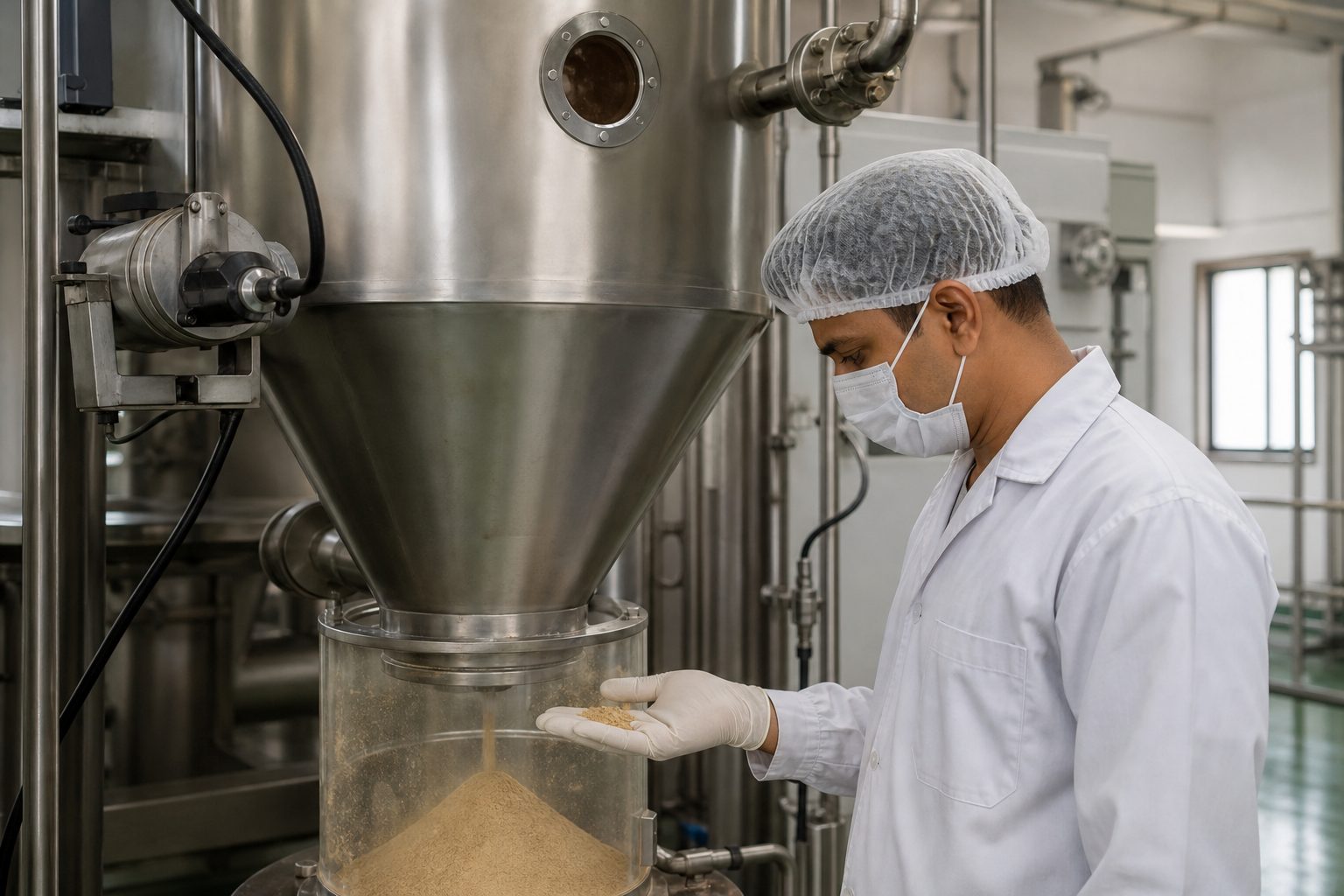
At the extraction facility, organic production requires either dedicated equipment (separate extraction vessels, dryers, mills, and packaging lines) or validated cleaning protocols demonstrating carry-forward of conventional material into organic product is below the analytical detection limit. Most certifying bodies require documented cleaning SOPs, completion records, and periodic verification testing of equipment rinse samples.
Solvent selection is restricted under all major organic standards. Permitted solvents: water, food-grade ethanol, carbon dioxide (supercritical CO2). Not permitted: hexane, acetone, chlorinated solvents. This restriction shapes product development — bacopa water extract, curcumin ethanol extract, and amla water extract lend naturally to organic production. Some boswellia resin extracts conventionally produced with hexane require process reformulation for organic-certified grades.
Chain of Custody and Transaction Certificates
Each organic extract lot carries a unique lot number traceable from finished extract through processing records back to certified farm lots. The complete chain of custody documentation set includes: farm-level organic certificates, transaction certificates (TCs) for each commercial transaction, processing lot records linking raw material to finished extract lots with yield data, HPLC COA tied to the specific lot number, and export documentation.
Transaction certificates (TCs) are documents issued by the certifying body for each commercial transaction of certified organic product. TCs verify that the specific quantity in that transaction was within the seller's certified organic scope at the time of sale — providing lot-level verification beyond the general annual certificate. TCs are required for all EU organic supply chain movements and are standard practice in the US NOP system. Buyers should require a TC for every organic lot purchased, referencing the specific lot number and quantity matching the commercial invoice.
Export Statistics for Organic Herbal Extracts
Key Statistics
Organic herbal extract exports from India under HS 1302 grew approximately 18–22 percent in value terms between 2023 and 2025, significantly outpacing conventional extract export growth of 8–10 percent. The US absorbs approximately 45 percent of India's organic herbal extract export value, followed by Germany and the Netherlands at approximately 30 percent combined. Japan and Australia together account for 10–12 percent with strong growth trajectories as organic supplement markets in both countries mature rapidly.
Table 5 — India Organic Herbal Extract Exports by Destination (Estimated FY 2025–26)
Swipe →
Data table — swipe horizontally on small screens
| Destination | Organic Export Value (USD M) | YoY Growth | Top Organic Products |
|---|---|---|---|
| United States | 85–110 | +22% | Organic ashwagandha, organic curcumin |
| Germany | 35–48 | +18% | Organic boswellia, organic curcumin |
| Netherlands | 22–32 | +20% | Organic ashwagandha, organic amla |
| Japan | 18–25 | +25% | Organic curcumin, organic bacopa |
| Australia | 12–18 | +28% | Organic ashwagandha, organic curcumin |
| United Kingdom | 14–20 | +19% | Organic ashwagandha, organic bacopa |
| France | 12–18 | +15% | Organic amla, organic curcumin |
| Canada | 10–15 | +21% | Organic ashwagandha, organic curcumin |
| Rest of World | 28–40 | +15% | Mixed organic portfolio |
Import Statistics: What Organic Buyers Are Paying
Key Statistics
US customs data for HS 1302 organic herbal extract imports shows organic-certified extracts commanding average declared values of USD 38–65/kg versus USD 22–35/kg for conventional HPLC-standardized grades — a 65–90% average premium at the declared import value level. The most pronounced premium is for organic ashwagandha: declared import values for certified organic grades average USD 42–75/kg versus USD 22–38/kg for conventional HPLC-standardized material.
EU import data similarly shows organic-certified Indian extract imports growing faster than conventional, with Germany, Netherlands, and France as primary EU entry markets. EU buyers tend to place larger per-shipment volumes than US buyers — quarterly lots of 500–2,000 kg per product versus US buyers' typical 200–500 kg quarterly lots — reflecting the EU's larger-scale industrial nutraceutical and pharmaceutical manufacturing sector. The combination of larger lot sizes and higher premiums makes EU organic buyers particularly commercially valuable relationships for Indian certified organic herbal extract exporters.
Product Categories: Organic-Standardized Opportunity Assessment
Summary Box
Table 6 — Organic-Standardized Opportunity by Herbal Extract Category
Swipe →
Data table — swipe horizontally on small screens
| Extract | Organic Farm Availability | HPLC Complexity | Premium Potential | Primary Organic Buyer Segment |
|---|---|---|---|---|
| Ashwagandha | High (Rajasthan, MP organic farms) | Moderate (withanolide isomers) | 91–133% vs. conv. UV | US supplement brands, EU nootropic brands |
| Curcumin | High (AP/Telangana organic turmeric) | Moderate (3 curcuminoid compounds) | 94–150% vs. conv. UV | US/EU supplement, pharma, cosmetics |
| Boswellia | Moderate (forest-origin wild-harvest organic) | High (multiple boswellic acid isomers) | 90–107% vs. conv. UV | EU/JP pharma, joint health brands |
| Bacopa | Moderate (cultivated; organic transition available) | Moderate (bacosides A+B) | 100–150% vs. conv. UV | US nootropic, children's nutrition |
| Amla | High (UP/MP organic amla cultivation) | Moderate (tannins, ellagic acid) | 150–192% vs. conv. UV | EU cosmetics, US supplement brands |
| Piperine | Moderate (Kerala organic black pepper) | Low (single compound) | 88–100% vs. conv. UV | Pharma, bioavailability enhancement formulations |
| Triphala blend | High (three-fruit organic supply available) | Low (total tannin assay) | 70–100% vs. conv. UV | Ayurvedic brands, gut health supplement segment |
Manufacturing Overview for Certified Organic-Standardized Extracts
Export Tip
The extraction clusters best positioned for organic-standardized production combine access to organized organic farming networks with in-house analytical laboratory infrastructure. Hyderabad has both: access to organic turmeric farms in Andhra Pradesh and established NABL-accredited laboratories for HPLC testing across major herbal extract marker compounds. Indore has strong organic ashwagandha connectivity in Madhya Pradesh and Rajasthan with growing in-house HPLC capability. Ahmedabad's pharmaceutical-grade infrastructure provides the cleanest WHO-GMP manufacturing environment for pharmaceutical-channel extract buyers requiring the combination of manufacturing quality certification with organic-certified raw material sourcing.
Table 7 — Manufacturing Stage Requirements for Organic-Standardized Extract Production
Swipe →
Data table — swipe horizontally on small screens
| Stage | Key Activity | Certification Requirement | Quality Control Check |
|---|---|---|---|
| Raw material sourcing | Organic farm network contracting | NPOP farm certificates, transaction records per lot | Visual inspection, moisture, identity test |
| Raw material intake | Weighing, organic lot tagging, quarantine | Lot traceability record initiated, farm origin documented | Pesticide screen, heavy metals pre-screen |
| Pre-extraction preparation | Cleaning, size reduction, drying | Organic-dedicated or validated-cleaned equipment | Moisture content, sieve analysis, visual quality |
| Extraction | Solvent extraction — water or food-grade ethanol only | Permitted solvent only, segregated extraction vessel | Yield monitoring, in-process concentration check |
| Concentration/evaporation | Solvent removal, spray drying or freeze drying | Organic-compatible process aids only | Residual solvent, moisture, water activity |
| Standardization/QC | HPLC testing, standardization to target marker % | HPLC COA linked to specific production lot number | HPLC marker, moisture, bulk density, heavy metals |
| Final QC release | Full analytical panel before release | HPLC, heavy metals, microbiology, pesticide screen | All parameters confirmed within specification |
| Packaging | HDPE drum fill, seal, organic label | Certifier name, cert number, lot number on each drum label | Net weight, label accuracy, seal integrity |
| Documentation | TC application, export docs, TRACES COI for EU | Transaction certificate from certifier before shipment | Document completeness, lot number cross-reference |
Clean-Label Positioning: Translating Credentials into Commercial Advantage
Clean-label is a consumer-driven trend with measurable commercial implications for herbal extract buyers and their Indian exporters. A clean-label product uses ingredients consumers recognize, trust as natural, and evaluate as safely produced. Organic certification and HPLC standardization are not just internal quality credentials — they are marketing assets that downstream brands use to command premium retail placement, higher shelf prices, and customer loyalty.
Organic Claims and Retail Access
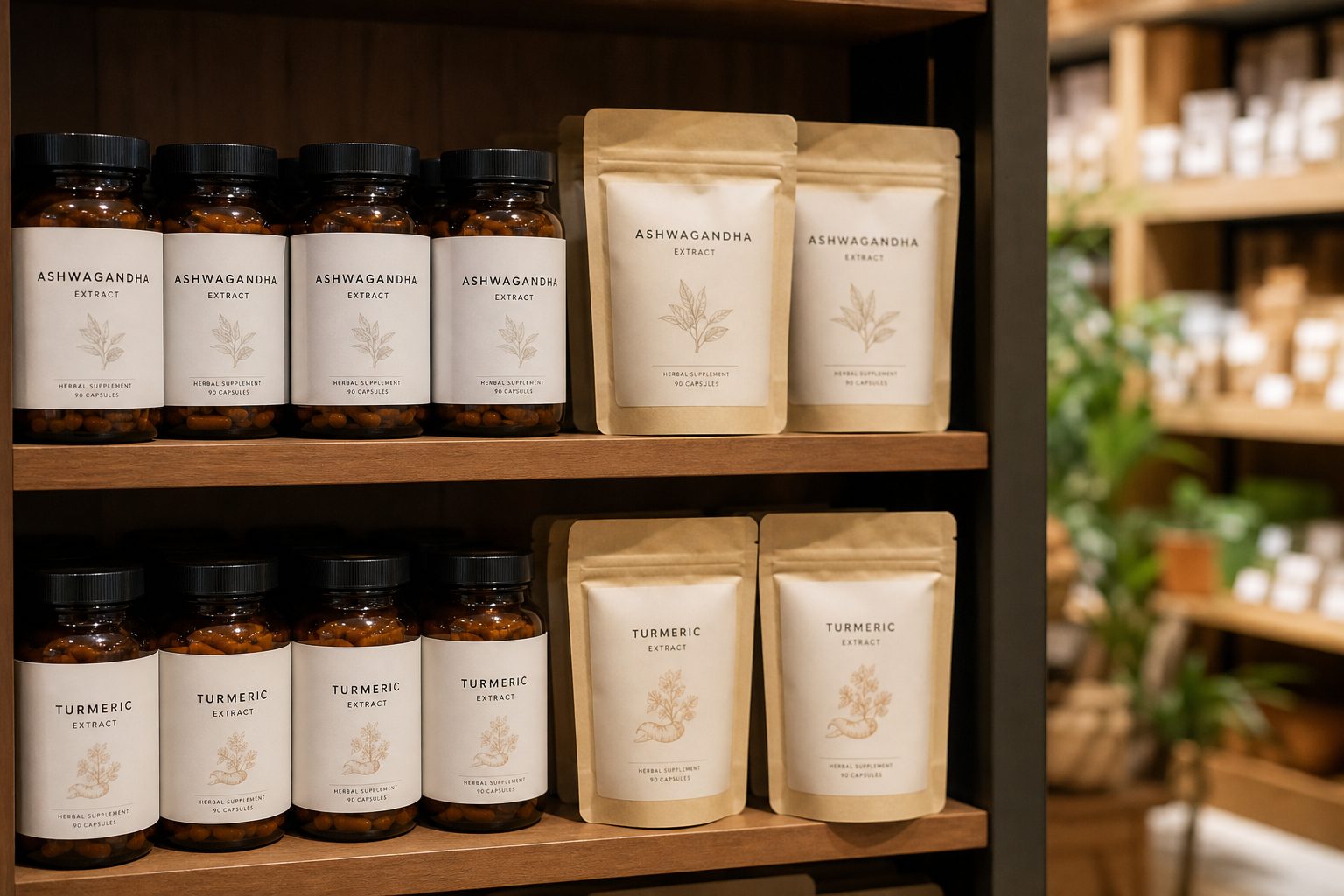
An organic-certified herbal extract enables downstream brands to make commercially valuable claims: 'Certified Organic' (USDA seal in the US), '100% Organic Ashwagandha' (ingredient declaration panel), 'Made with Organic Herbs' (product positioning for multi-ingredient products), and promotional language including 'No synthetic pesticides,' 'Chemical-free cultivation,' and 'Natural farming heritage.' In the US natural retail channel — Whole Foods Market, Natural Grocers, independent co-ops — organic certification of key ingredients is effectively a listing requirement for premium supplement positioning.
This retail access implication gives brands a direct commercial incentive — beyond quality preference — to source organic-certified ashwagandha or curcumin. A supplement ingredient that enables USD 5 more in retail price per bottle justifies significantly more at the ingredient cost per dose, creating willingness-to-pay that goes beyond simple cost differential analysis into the brand's revenue model and retail distribution strategy.
HPLC Standardization in Brand Marketing
HPLC-verified standardization translates to brand marketing in two primary ways: dose confidence claims and ingredient quality differentiation. A brand using 300 mg ashwagandha extract standardized to 5% withanolides by HPLC can communicate: 'Each capsule delivers 15 mg of verified withanolides — the compounds studied for adaptogenic effect in peer-reviewed clinical research.' This precision is impossible with UV-tested material where actual withanolide delivery varies between batches.
Trademarked standardized ingredient forms — KSM-66 Ashwagandha, BCM-95 Curcumin, Sensoril Ashwagandha, ApresFlex Boswellia — demonstrate how HPLC standardization backed by clinical documentation creates brand-within-brand equity for ingredient suppliers. Indian extractors who develop validated, standardized processes with clinical substantiation can build proprietary branded ingredient identities that command durable premiums beyond commodity organic extract pricing.
Solvent Transparency and Process Claims
Beyond organic and HPLC credentials, premium buyers are requesting extraction solvent disclosure and 'alcohol-free' or 'water-extracted' claims for specific applications. Bacopa 'water-extracted' commands a premium over ethanol-extracted grades in children's nutrition and functional beverage markets. Curcumin processed without hexane is preferred for natural channel products. Transparent extraction process information is becoming a standard clean-label expectation from buyers conducting formulation audits.
MOQ Analysis for Organic Herbal Extract Orders
Buyer Tip
Minimum order quantities for organic-certified herbal extracts carry a structural premium over conventional grades because organic batch production incurs fixed costs — farm network coordination, equipment cleaning validation, transaction certificate processing — independent of batch size. Understanding the MOQ structure allows buyers to plan trial programs appropriately and allows exporters to price organic grades without cross-subsidizing from conventional production.
Table 8 — MOQ Guide for Organic Herbal Extract Orders
Swipe →
Data table — swipe horizontally on small screens
| Order Type | MOQ (Organic Grade) | MOQ (Conventional HPLC) | Premium on MOQ | Notes |
|---|---|---|---|---|
| Standard commercial order | 100–250 kg per extract line | 50–100 kg per line | +50–100% higher | Organic batch segregation adds minimum viable lot size |
| Trial / qualification order | 50–100 kg | 25–50 kg | +50–100% | Minimum covers batch processing and TC coordination cost |
| Sample (pre-trial) | 50–200 g | 50–200 g | No quantity difference | TC documentation added; no MOQ increase for samples |
| Annual contract (multi-lot) | 500–2,000 kg/year total | 250–1,000 kg/year | Compression with volume commitment | Annual contracts allow smaller individual lot frequency |
| Via merchant exporter (Altus model) | 25–50 kg per product | 25 kg per product | Minimal premium | Consolidation across buyers reduces organic MOQ barrier |
| Pharmaceutical-grade organic | 200–500 kg | 100–250 kg | +100% | WHO-GMP + organic combination raises batch overhead |
Packaging Standards for Organic-Standardized Exports
Export Tip
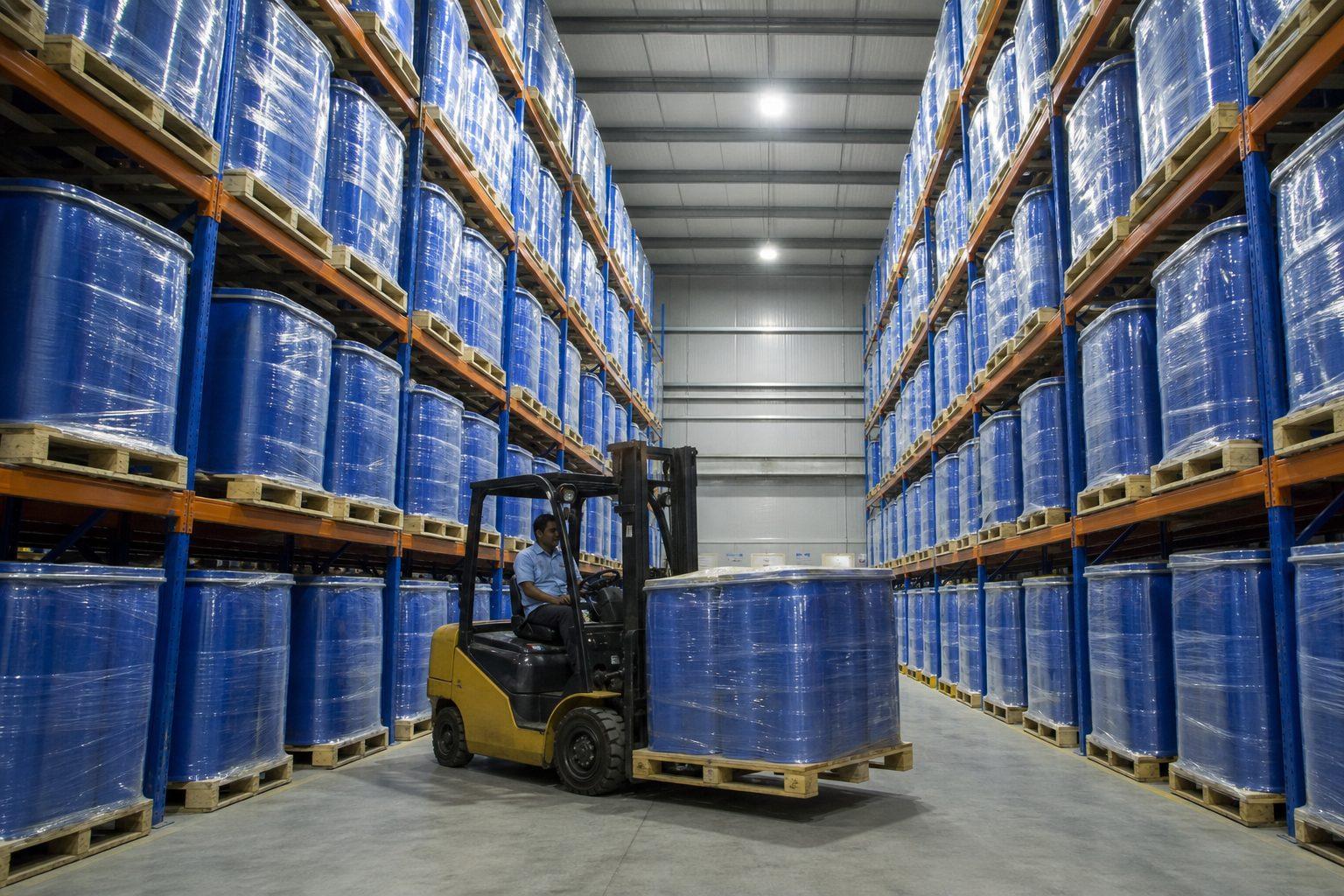
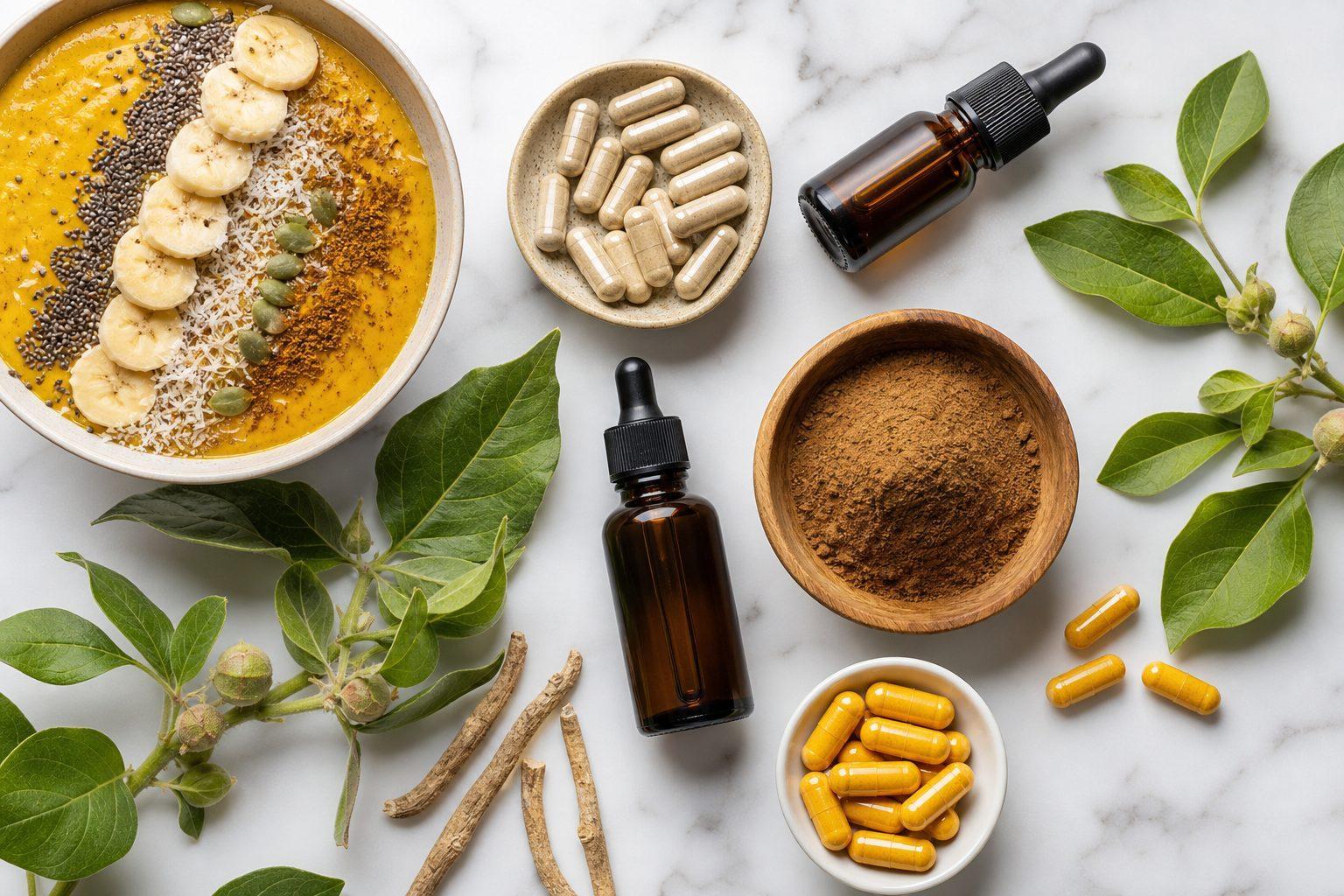
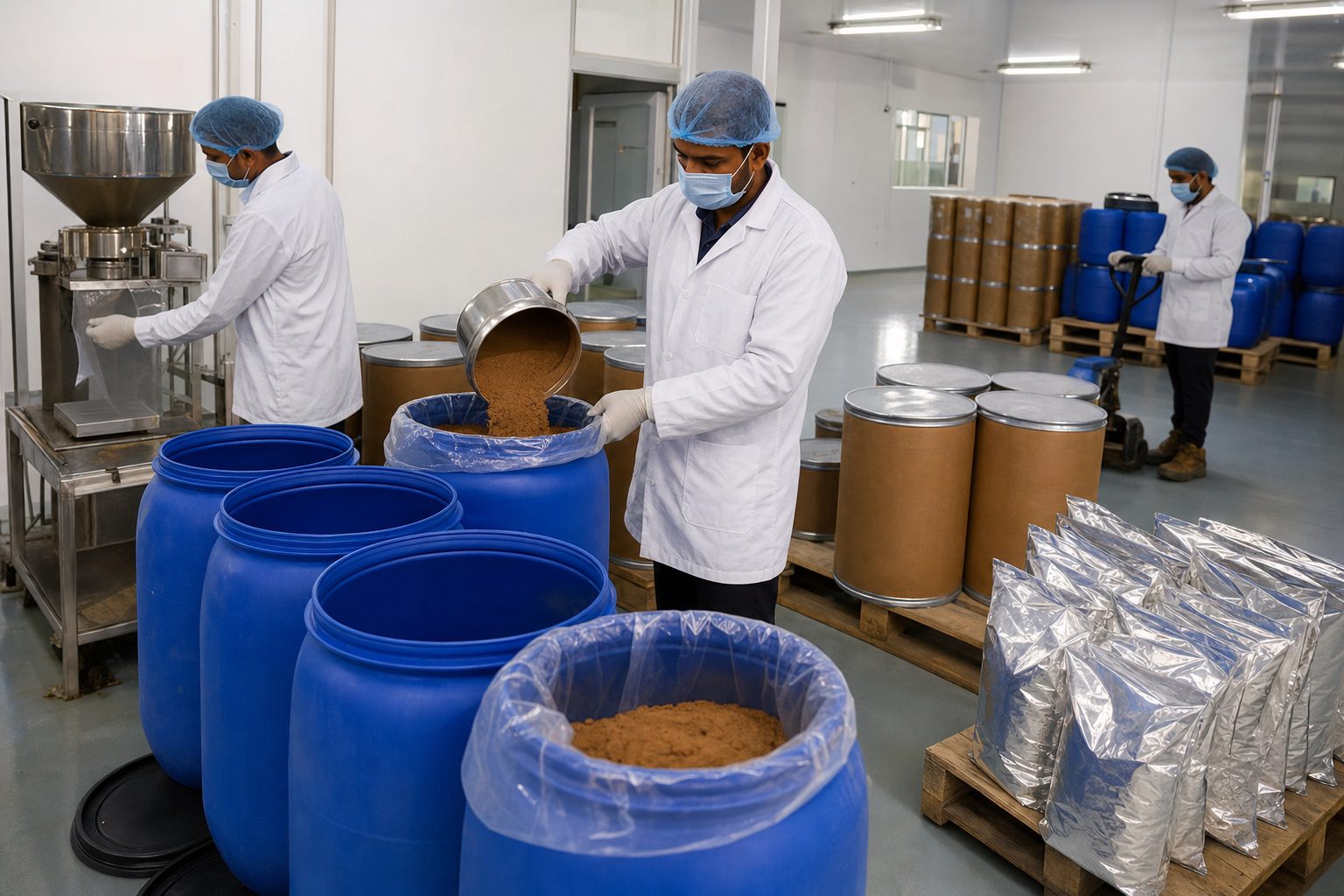
Standard export packaging uses 25 kg HDPE drums with double PE inner liner, heat-sealed with a silica gel desiccant. For photosensitive extracts — curcumin degrades under UV exposure, with marker content reduction of 5–15% possible over a standard sea freight transit without light protection — aluminium-foil-lined inner bags are essential. For hygroscopic extracts (amla, triphala, high-bacoside bacopa), nitrogen-flushed packaging minimizes moisture absorption and oxidation during transit and storage. Recyclable outer packaging is increasingly preferred by sustainability-positioned buyers as a differentiating factor when comparing otherwise equivalent certified suppliers.
Container Loading and Shipping Methods
Export Tip
Organic-standardized extracts ship in HDPE drums in 20-foot or 40-foot dry containers via Nhava Sheva, Mundra, or Chennai — the same physical infrastructure as conventional extracts, with additional documentation requirements. A 20-foot FCL accommodates approximately 800 drums (20,000 kg net). A 40-foot FCL accommodates approximately 1,600 drums (40,000 kg net). Most organic extract shipments move as LCL consolidations or partial FCL loads, as typical organic orders of 100–500 kg per extract line across five to eight products add up to a partial container load.
For EU-bound organic shipments, the TRACES electronic Certificate of Inspection must be prepared and endorsed before goods depart India — adding 3–7 working days to the pre-shipment documentation timeline. Transit times from Nhava Sheva to major European ports (Hamburg, Rotterdam) run 22–30 days by sea; from Mundra to UAE ports, 7–10 days; from Chennai to Japanese ports, 18–22 days. Air freight via Hyderabad or Bangalore airports handles high-value specialty organic extracts for pharmaceutical buyers and urgent restocking at 8–12x the sea freight cost for 3–5 day transit times.
Certifications Required for Organic-Standardized Herbal Export
Compliance Notes
Table 9 — Full Certification Stack for Organic-Standardized Herbal Extract Exports
Swipe →
Data table — swipe horizontally on small screens
| Certification | Type | Market Access Unlocked | Annual Cost (USD) | Timeline to Obtain |
|---|---|---|---|---|
| NPOP | Mandatory for organic claim in India / EU equivalence | EU market organic access | 3,000–8,000 | 3–6 months initial |
| USDA NOP | Required for US organic labelling | US organic supplement and food market | 5,000–12,000 | 3–9 months initial |
| AYUSH GMP | Regulatory baseline for herbal exports | All markets — foundational requirement | 1,500–4,000 | 2–4 months |
| WHO-GMP | Pharmaceutical manufacturing quality standard | Pharma buyers in Japan, EU, Australia | 8,000–25,000 | 6–12 months |
| FSSAI | Indian food safety compliance | All food-grade ingredient buyers globally | 500–2,000 | 1–3 months |
| ISO 22000 / FSSC 22000 | Food safety management system | EU food brands, retail supplement buyers | 5,000–12,000 | 6–12 months |
| Non-GMO declaration/verification | Natural channel prerequisite (US) | US natural retail supplement channel | 1,000–4,000 | 1–3 months |
| HALAL | Islamic market access | GCC, Malaysia, Indonesia supplement markets | 1,500–4,000 | 2–4 months |
| NABL / ISO 17025 (in-house lab) | Laboratory quality accreditation | Pharmaceutical buyers requiring method validation | 8,000–15,000 | 6–18 months |
| JAS (Japan Organic Standard) | Japan organic labelling requirement | Japanese organic supplement and food market | 5,000–12,000 | 6–12 months |
Country-wise Buyer Opportunities for Organic-Standardized Extracts
Market Snapshot
United States — Premium Supplement and Natural Retail
The US organic dietary supplement market is the world's largest organic herbal extract destination, absorbing approximately 42–45 percent of India's organic herbal export value. USDA NOP certification is mandatory for organic label claims. FDA cGMP Part 111 documentation is required for all herbal ingredient suppliers. California buyers need Proposition 65 heavy metals test data specifically for lead and cadmium. US buyers in the premium natural channel — Whole Foods Market, Natural Grocers, Amazon premium supplement category — are the highest-value targets for organic-standardized Indian herbal extracts. US contract manufacturers (Lonza, Capsugel, Robinson Pharma) building organic supplement lines for brand clients are typically the fastest-to-qualify buyer type given their active production mandates and established quality evaluation systems.
European Union — Organic Regulation, Novel Food, and Cosmetics Channel
The EU organic herbal extract market accepts NPOP-certified Indian product under the bilateral equivalence agreement, with TRACES COI documentation for each shipment. Novel Food regulation is the primary additional complication: ashwagandha is under Novel Food review in the EU as of 2025, requiring EU buyers to verify current authorization status before purchasing for food or food supplement use. Curcumin, boswellia, bacopa, and amla have established EU history of use. The EU cosmetics sector under Regulation 1223/2009 is a growing secondary market for organic plant actives (amla, bacopa, curcumin) not subject to Novel Food regulation — making it an important alternative channel alongside food supplements for organic ashwagandha extract while its Novel Food status remains under review.
Japan — JAS Organic and MHLW Standards
Japan requires JAS organic certification for organic labelling claims, with no automatic equivalence to NPOP or USDA NOP. The Japanese premium supplement market for organic Indian herbs is growing, particularly for organic ashwagandha and organic curcumin as global adaptogen and anti-inflammatory ingredient categories reach mainstream Japanese consumers. Japanese Kampo-medicine buyers requiring Japanese Pharmacopoeia (JP) standard COA parameters represent a separately demanding buyer segment willing to pay the highest global prices for verified-quality Indian botanical material, combining the organic premium with pharmaceutical-grade documentation requirements.
Australia — ACO and TGA Requirements
Australia's TGA-listed complementary medicines market requires ACO (Australian Certified Organic) certification or case-by-case TGA acceptance for organic herbal supplement ingredients. TGA-GMP certification for the Indian manufacturer is increasingly expected for pharmaceutical-channel buyers. The Australian organic supplement market is small by global standards but sophisticated and consistently reordering — buyers provide stable, high-premium relationships once established, with quarterly order cadence and above-average price tolerance for certified quality products.
Gulf Cooperation Council — HALAL and WHO-GMP
The GCC market for organic herbal extracts is growing, driven by increasing health supplement consumption in UAE, Saudi Arabia, and Kuwait. HALAL certification is required for Muslim-market positioning. WHO-GMP certification is valued by GCC health authority importers. NPOP organic certification is generally accepted by GCC buyers for organic-positioned products, without the equivalence complexities of the US or Japan markets. UAE's Dubai serves as the primary re-export hub for broader Middle East and North Africa distribution of organic herbal extract products.
Sourcing Checklist for Organic Herbal Extract Importers
Checklist
Buyer Checklist
Checklist
Exporter Checklist
Checklist
Compliance Checklist
Checklist
Compliance Notes
Common Buyer Mistakes with Organic and Standardized Extracts
Common Mistakes Box
Future Market Trends in Organic and Standardized Herbal Extracts
Key Statistics
The organic-standardized herbal extract market is undergoing structural transformation across five intersecting trends that will reshape competitive positioning through 2032 and beyond.
Digital traceability is transitioning from differentiator to entry requirement. Farm-to-extract digital traceability — QR codes linking to verifiable farm records, processing parameters, and analytical results — is now expected by leading US natural channel brands and EU organic supplement companies. Exporters with cloud-based or blockchain-anchored traceability systems will qualify as approved suppliers for transparency-sensitive procurement programmes; those relying on paper documentation chains will be progressively deprioritized in supplier audits as digital verification becomes the standard expectation.
Bioavailability-enhanced organic forms represent the next premium pricing tier. Standard 95% organic curcumin is experiencing premium compression as more manufacturers gain organic status. The next differentiation frontier is organic bioavailability-enhanced forms: organic phospholipid-curcumin complexes, organic self-emulsifying delivery systems, and organic nanoemulsion ashwagandha. These forms combine the organic credential with clinically meaningful bioavailability improvement, enabling price points significantly above commodity organic extract pricing and providing brands with research-backed performance differentiation.
Regenerative organic certification is emerging as the tier above standard organic. The US Regenerative Organic Certified (ROC) standard covers soil health, biodiversity, animal welfare, and farmer livelihood criteria beyond the pesticide-absence focus of conventional organic standards. Indian herbal extract supply chains with documented regenerative practices — cover cropping, composting, water conservation, fair-trade farmer compensation — will access this next premium tier as consumer awareness builds in US and EU supplement markets from 2027 onward.
Regulatory tightening across markets rewards investment in compliance infrastructure. EU Farm to Fork is progressively lowering MRL limits for pesticide residues in botanical ingredients. US FDA increased herbal ingredient adulteration scrutiny is intensifying testing and documentation requirements. Japan's MHLW is expanding COA parameters for imported herbal extracts. Each tightening eliminates lower-quality suppliers from premium market access, concentrating buyer demand among a smaller number of fully certified, analytically capable exporters — directly rewarding the certification and infrastructure investments outlined in this guide.
EU Corporate Sustainability Reporting Directive (CSRD) compliance is creating a new supply chain qualification dimension. Large European supplement and personal care brands required to document Scope 3 emissions and social sustainability metrics throughout their supply chains are embedding Indian ingredient supply chain carbon footprint data, fair-trade farmer compensation records, and biodiversity impact assessments into supplier qualification criteria. Indian herbal extract exporters who build this reporting capability proactively will access sustainability-driven procurement programmes before competitors who wait for the requirement to be formally enforced.
Expert Insights
Expert Insight Box
On the Future of India's Premium Herbal Extract Supply Chain
Conclusion
The organic-standardized herbal extract export opportunity is one of the most clearly defined premium market opportunities in India's agricultural export landscape. The investment required — organic farm network development, NPOP and NOP certification, HPLC laboratory infrastructure, segregated processing, and documentation discipline — is real and non-trivial. But the return — 90–150% price premium over conventional UV-tested material, access to the most loyal and highest-value buyer segments in the US and EU markets, and competitive protection from the 85 percent of Indian extractors who have not made these investments — justifies that investment comprehensively for manufacturers with a medium-term export development commitment.
Altus Exports enables access to the organic-standardized premium export tier as a certified merchant exporter and global sourcing partner. Whether you are an international buyer seeking verified organic HPLC-standardized ashwagandha, curcumin, boswellia, bacopa, or amla for a supplement or pharmaceutical programme, or an Indian manufacturer seeking to access the premium buyer segments that these certifications unlock, Altus provides the commercial, documentation, and quality interface that bridges India's manufacturing capability with international market requirements.
Explore our complete herbal extract resource library: How to Export Herbal Extracts from India, Top Herbal Extract Products Exported from India, Best Countries for Indian Herbal Extract Exports, Source Herbal Extracts Directly from India, AYUSH & FSSAI Registration Benefits for Herbal Extract Exporters, Most Demanded Indian Herbal Extracts by Country, How to Find International Buyers for Herbal Extracts, Herbal Extract Export Documentation Checklist, and Trade Shows for Herbal Extract Exporters.
Contact Altus Exports to discuss your organic herbal extract sourcing requirements, request a certified supplier introduction, or explore how our merchant exporter model accelerates your access to India's premium herbal extract supply base.