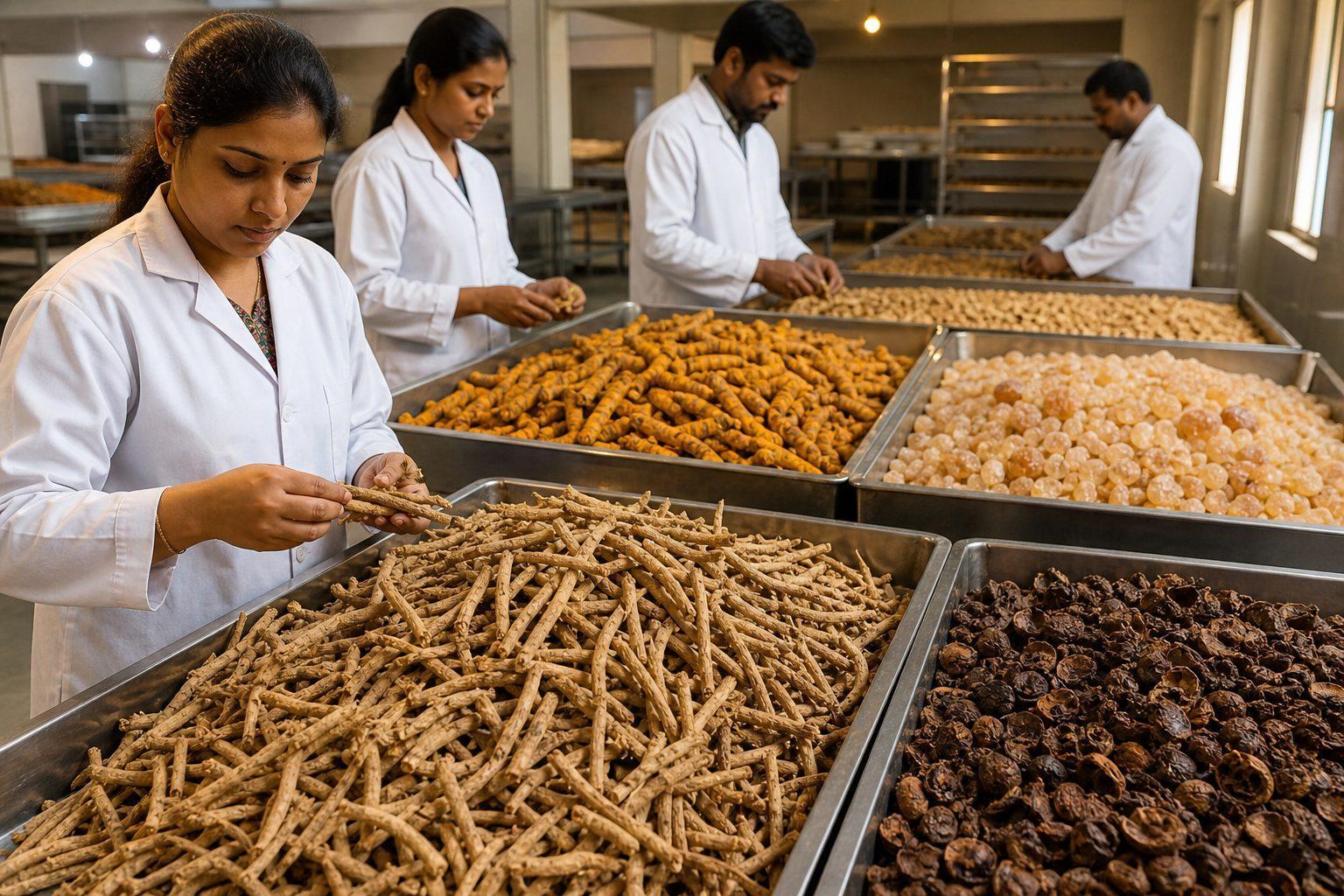
Most Demanded Indian Herbal Extracts by Country: What Buyers Want Where
By Saurabh Mittal, Founder, Altus Exports
Destination demand map for Indian herbal extracts — botanical, marker, and certification preferences by country for exporters and international buyers.
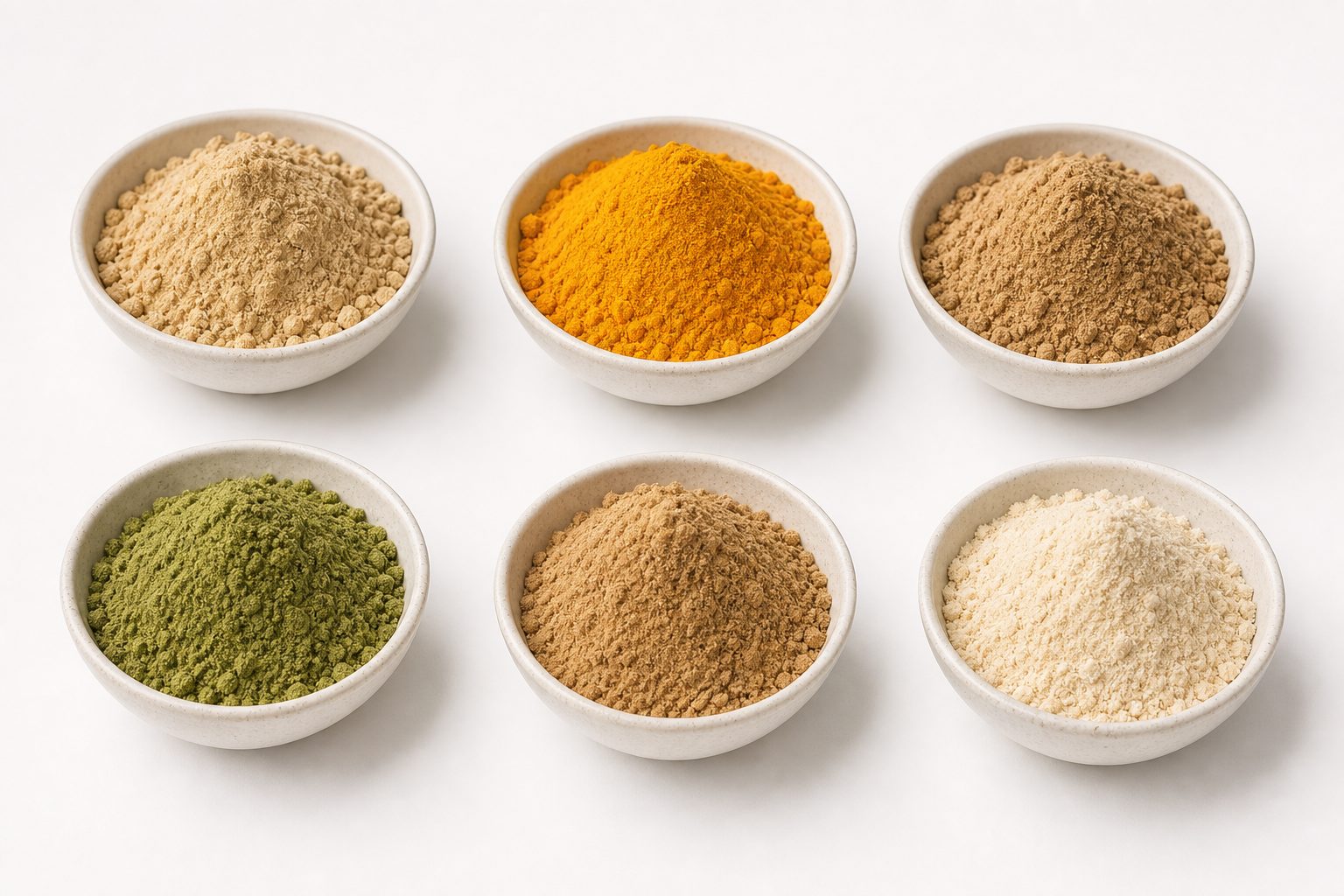
The demand for Indian herbal extracts is not uniform across borders. A buyer in the United States purchasing ashwagandha extract specifies 5% withanolides, requires WHO-GMP documentation, and expects pesticide screening per USP standards. A buyer in Germany purchasing the same botanical often wants 2.5% withanolides with EU Novel Food authorization evidence and EU MRL pesticide panel. A buyer in Dubai may prioritize AYUSH documentation, Halal certification, and FOB Nhava Sheva cost-competitiveness over specification depth. Each market wants something different from the same plant.
This demand map focuses exclusively on the product-to-country fit dimension of Indian herbal extract trade under HS code 1302 — which botanical, which marker level, which certification, and which quality attribute each major destination market prioritizes. It is not a market selection guide (see sibling cluster articles for export process and documentation) nor an SKU ranking exercise. It is the intelligence framework that allows an Indian herbal extract exporter or an international buyer sourcing from India to understand precisely what each market segment wants and why.
Altus Exports has built sourcing programs for herbal extract buyers across North America, Europe, the Middle East, Oceania, and Asia. The demand patterns documented here emerge from direct buyer qualification conversations, purchase order specifications, and shipment documentation reviews across Hyderabad, Indore, and Neemuch cluster manufacturer programs. Use this map to configure your extract basket for the markets you serve — and to identify adjacency opportunities where your certified manufacturing capacity intersects with unsatisfied destination demand.
Readers who need the foundational credential and registration logic behind AYUSH, FSSAI, and WHO-GMP requirements referenced in this demand map should consult the sibling article on AYUSH and FSSAI registration benefits. Readers who need the full export process — documentation workflows, container logistics, and FOB execution — should consult the how-to export cluster article. This article is your demand intelligence reference.
Key Takeaways
Summary Box
- USA buyers prioritize ashwagandha (5% withanolides), curcumin (95%), boswellia (65% boswellic acids), and bacopa (20-40% bacosides) with WHO-GMP and USP-standard COA.
- EU buyers are among the strongest demand centers for organic-certified botanicals (ashwagandha, turmeric, ginger, and others), and Novel Food / national rules can be a market-access gate for certain extract forms and use levels.
- UK buyers have EU-equivalent regulatory standards post-Brexit with distinct MHRA traditional herbal registration pathways for Ayurvedic ingredients.
- GCC (UAE, Saudi Arabia) buyers are the fastest-growing market for AYUSH-documented, Halal-certified Indian herbal extracts in nutraceutical and cosmetic categories.
- Japan demands ultra-low pesticide residue levels — among the world's strictest — making clean-cultivation source plants essential for Japan-program extracts.
- Australia applies TGA GMP equivalent requirements for herbal medicines; market demand is strong for complementary medicine-positioned botanicals.
- China is the largest single destination by volume for Indian herbal raw material but increasingly demanding processed standardized extracts over raw powder.
- Altus Exports maps buyer demand to certified Indian cluster manufacturers and coordinates HS 1302 export document packs for each destination market.
Executive Summary: Global Herbal Extract Demand Landscape
India's HS 130219 exports totaled about USD 540 million in calendar year 2024 (WITS/UN Comtrade), with the United States the largest destination by value (~USD 296 million, ≈55%). Among other top destinations were Korea, Germany, Italy, Japan, Australia, China, UAE, France, and the UK. GCC demand (led by UAE) is commercially important for Halal/AYUSH-positioned programmes, but growth-rate claims should be validated against current Comtrade/DGCI&S series rather than treated as fixed forecasts.
The product mix demanded varies significantly by market. USA demand is concentrated in high-standardization extracts (5% withanolides, 95% curcuminoids, 65% boswellic acids) where HPLC verification is baseline and WHO-GMP is mandatory for tier-1 buyers. EU demand increasingly shifts toward organic-certified botanical ingredients with traceability documentation, driven by the EU Green Deal agricultural policy direction and consumer sustainability preferences. GCC demand is growing fastest in the mid-standardization tier (2.5% withanolides, standard curcumin) where AYUSH and Halal certification carry more weight than organic credentials.
The most commercially significant demand insight from Altus Exports' client work is that the same botanical (e.g., ashwagandha from the Neemuch/MP belt) can span a wide FOB band depending on marker %, HPLC vs UV methods, WHO-GMP documentation, organic status, and destination specs — often from low-teens USD/kg for lightly documented ratio powders to several times that for premium HPLC/organic grades. Market selection and specification depth drive programme profitability more than marginal manufacturing cost cuts alone. Always requote.
Indian Herbal Extract Export Demand by Region (2025-26 Estimate)
Swipe →
Data table — swipe horizontally on small screens
| Region / Country | Est. Share of India HE Exports | Top Demanded Botanicals | Primary Channel |
|---|---|---|---|
| USA | 28–32% | Ashwagandha, Curcumin, Boswellia, Bacopa | Supplement brands, private label |
| EU-27 (Germany, Netherlands, France) | 22–25% | Organic ashwagandha, Boswellia, Ginger, Moringa | Ingredient distributors, THMP licensees |
| UK | 5–7% | Ashwagandha, Turmeric, Bacopa, Amla | Health food brands, traditional herbal |
| GCC (UAE, KSA, Kuwait) | 8–12% | Ashwagandha, Curcumin, Shatavari, Guduchi | Nutraceutical retail, pharma intermediary |
| Australia / NZ | 3–5% | Ashwagandha, Boswellia, Turmeric, Bacopa | TGA-listed complement medicines |
| Japan | 3–4% | Turmeric, Ginger, Moringa, Amla | Health food, beverage, cosmetic |
| China | 8–10% | Ashwagandha raw, Boswellia resin, Turmeric | TCM ingredient, bulk commodity |
| Canada | 2–3% | Ashwagandha, Bacopa, Boswellia, Ginger | NHP-licensed supplement brands |
| Other Asia (Singapore, Korea) | 3–5% | Turmeric, Moringa, Ashwagandha | Functional food, cosmetic |
| Other (Africa, LatAm) | 2–4% | Moringa, Turmeric, Neem | Bulk commodity, local pharma |
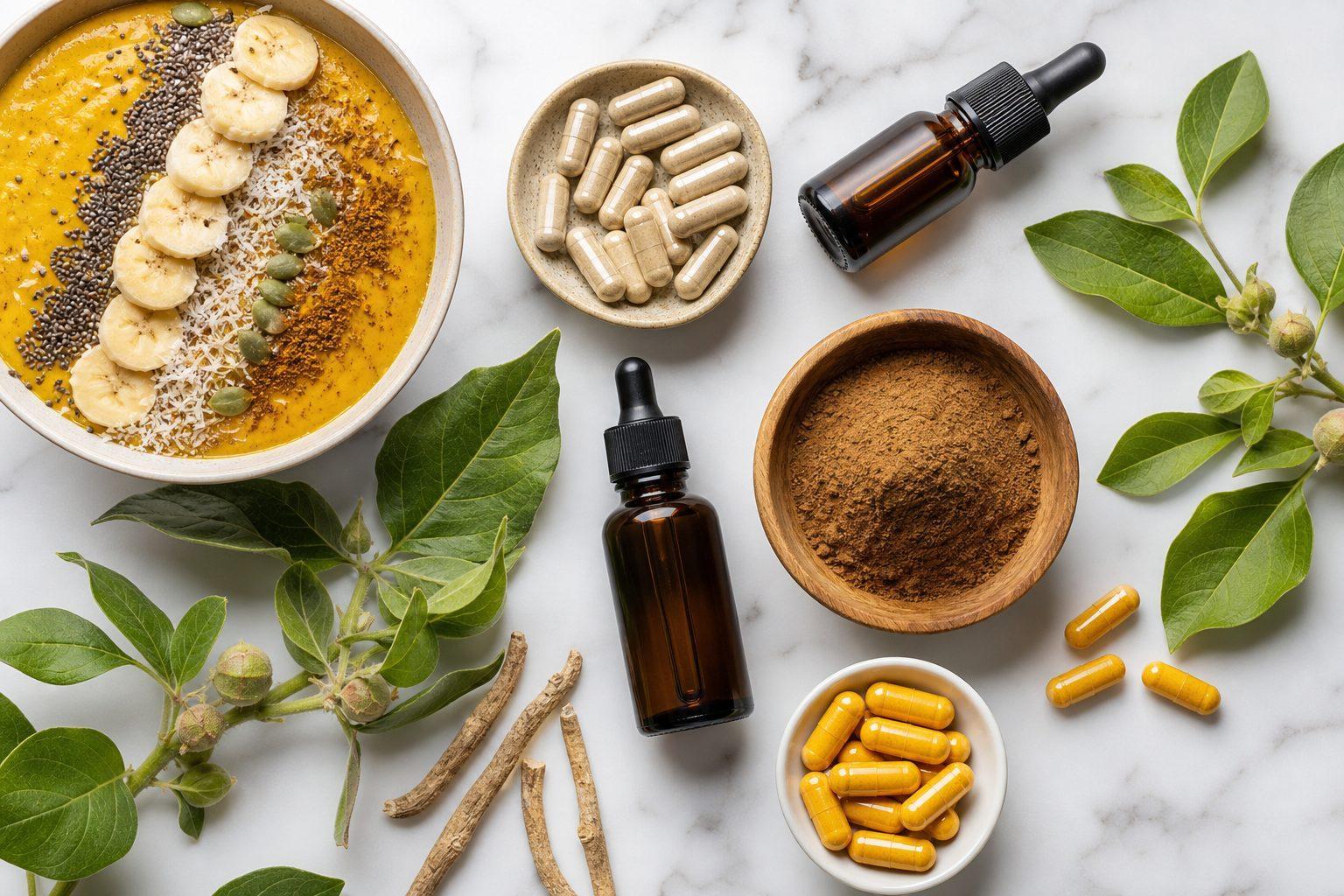
United States: The High-Standardization Demand Leader
The United States is the most lucrative and most demanding market for Indian herbal extract exporters. US supplement brands operate under FDA 21 CFR Part 111 cGMP requirements and face increasing FTC scrutiny on structure-function claims — both of which drive demand for high-HPLC-verified, WHO-GMP certified botanical ingredients where documentation depth matches label claim specificity.
The US natural products market (SPINS, NBJ data) shows ashwagandha as the fastest-growing botanical ingredient by retail dollar value for the fourth consecutive year through 2025, driven by consumer interest in stress adaptation and athletic recovery positioning. Curcumin maintains the highest aggregate supplement sales volume among Indian-origin extracts. Boswellia is accelerating in joint health and sports nutrition categories. Bacopa monnieri has seen 35% year-on-year growth in cognitive health supplements.
USA Demand Map: Botanical × Marker × Certification
USA Buyer Specifications for Key Indian Herbal Extracts
Swipe →
Data table — swipe horizontally on small screens
| Botanical | Market Positioning | Preferred Marker Level | Certification Required | Testing Standard |
|---|---|---|---|---|
| Ashwagandha (KSM-66 / Sensoril / standard) | Stress, sleep, athletic performance | 5% withanolides (KSM-66); 10% (Sensoril) | WHO-GMP; USP Verified or NSF preferred | USP heavy metals, pesticide <561> |
| Curcumin 95% (from turmeric) | Anti-inflammatory, joint, cognitive | 95% curcuminoids by HPLC | WHO-GMP; Non-GMO Verified | USP method; EU-equivalent for EU-facing brands |
| Boswellia serrata | Joint health, gut, sports nutrition | 65% boswellic acids; AKBA 10%+ | WHO-GMP; Organic preferred for natural brands | Heavy metals per USP; microbial panel |
| Bacopa monnieri | Cognitive health, memory, anxiety | 20% bacosides (standard); 40-50% premium | WHO-GMP; Ayush-licensed preferred | Bacoside A+B HPLC; heavy metals per USP |
| Garcinia cambogia | Weight management | 50–60% HCA | WHO-GMP | HCA assay per AOAC; heavy metals |
| Moringa (Moringa oleifera) | Superfood, protein, micronutrient | Leaf extract; 4:1 std | Organic preferred; WHO-GMP | Microbial panel; pesticide screen |
| Fenugreek (Trigonella foenum-graecum) | Athletic performance, testosterone, blood sugar | 50% saponins or 40% 4-HI | WHO-GMP; NSF Sport for sports brands | Saponin HPLC or 4-HI HPLC-MS |
| Ashwagandha root powder (non-extract) | Entry-level positioning | Withanolide 1.5–2.5% HPLC confirmed | USDA Organic for premium | Heavy metals, microbial, pesticide |
USA Market Nuances and Channel Dynamics
US supplement brands purchasing Indian herbal extracts segment into three procurement archetypes. Tier 1 brands (Nature's Way, Garden of Life, Jarrow Formulas, MegaFood) require full WHO-GMP documentation, on-site or desktop audits, allergen statements, identity testing by botanical authentication (HPLC fingerprinting or DNA bar-coding), and proprietary extract validation data. These buyers pay the highest prices and offer the most stable long-term programs.
Tier 2 brands (private label contract manufacturers, mid-size supplement brands) require WHO-GMP COA, HPLC-verified markers, heavy metals and pesticide panel, and basic facility documentation. They represent the largest volume segment by shipment count. Tier 3 buyers (emerging brands, Amazon private labels, supplement startup programs) may accept lower documentation depth but face increasing pressure from e-commerce platform clean-label requirements.
Branded extract formats — KSM-66 (Ixoreal Biomed), Sensoril (Natreon), BioPerine (Sabinsa) — command 30-80% premiums over standard extract grades in the US market, representing a significant commercial opportunity for Indian manufacturers who can build proprietary clinical-data-backed extract programs. Altus Exports sources both branded and standard extract grades for US buyers.
European Union: Organic, Novel Food, and THMP Demand Dynamics
The EU is the most regulatory-complex destination market for Indian herbal extract exporters and simultaneously the highest-premium market for certified, organic, and traceable botanical ingredients. Germany leads EU imports of Indian herbal extracts — Boswellia in particular originates significantly from Indian suppliers — followed by Netherlands (as a port of entry and re-distribution hub), France, Italy, and Poland.
EU herbal extract demand is structured around three regulatory frameworks that Indian exporters must understand: the Traditional Herbal Medicinal Products Directive (THMP, 2004/24/EC), the Novel Food Regulation (2015/2283), and the EU Organic Regulation (2018/848). The framework that applies depends on whether the buyer is a THMP licensee, a food ingredient importer, or an organic-certified natural products brand — and the applicable framework determines what documentation package is needed from Indian origin.
EU Novel Food Status: The Market Access Gate
Under EU Novel Food Regulation (EU) 2015/2283, botanicals/extracts without a demonstrated history of significant food use in the EU before 15 May 1997 may require Novel Food authorisation for food uses. Status is preparation-specific and the Commission catalogue is non-binding orientation. Ashwagandha, bacopa, Tinospora (guduchi), and other Indian botanicals can face member-state restrictions or Novel Food questions depending on plant part, extract type, and use level — verify before marketing claims.
EU buyers purchasing Indian herbal extracts for novel food applications must either hold their own Novel Food authorization, source from a supplier whose extract is covered by an existing authorization, or operate under a market where the extract has not triggered enforcement. Exporters should never assume EU buyers are aware of their sourcing obligations — proactively documenting botanical identity and extract concentration helps EU buyers assess their regulatory position.
Ashwagandha's EU position is nuanced and member-state/preparation-dependent: some traditional forms/uses are treated differently from concentrated extracts, and safety scrutiny has increased. There is no simple one-line 'conditional Novel Food authorization in 2023 unlocked the market' rule that covers all ashwagandha extract grades. Bacopa and other botanicals likewise require case-by-case Novel Food / national assessment. Track the EU Novel Food status catalogue and buyer counsel quarterly.
EU Demand Map: Botanical × Marker × Certification
EU Buyer Specifications for Key Indian Herbal Extracts
Swipe →
Data table — swipe horizontally on small screens
| Botanical | EU Market Positioning | Preferred Grade | Certification Requirement | Critical Testing |
|---|---|---|---|---|
| Ashwagandha (Withania somnifera) | Stress, adaptogen, cognitive | 2.5% withanolides; Organic preferred | EU Organic (2018/848); WHO-GMP; Novel Food ref. | EU MRL pesticide screen; heavy metals per EC 629/2008 |
| Boswellia serrata | Joint health, anti-inflammatory | 65–70% boswellic acids | WHO-GMP; AYUSH license | Heavy metals; aflatoxin (B1+total); EU MRL |
| Turmeric / Curcumin 95% | Anti-inflammatory, functional food | 95% curcuminoids; Organic | EU Organic; Non-GMO EU | EU MRL (curcumin is E100 food color — dual classification) |
| Ginger (Zingiber officinale) | Digestive health, functional beverage | 5% gingerols or 4:1 extract | EU Organic highly preferred | Aflatoxin; pesticide EU MRL |
| Moringa (Moringa oleifera) | Superfood, protein supplement | Leaf extract, 4:1 std | EU Organic, Fair Trade preferred | Microbial; pesticide EU MRL |
| Fenugreek (Trigonella foenum-graecum) | Blood sugar, women's health | 50% saponins | EU Organic for premium market | EU MRL; heavy metals |
| Bacopa monnieri | Cognitive, memory | 20% bacosides | WHO-GMP; Novel Food position | Heavy metals per EC 629; Novel Food authorization check |
| Amla (Phyllanthus emblica) | Vitamin C, antioxidant, cosmetic | 40% tannins or standardized VC | EU Organic, Fair Trade | Heavy metals, pesticide EU MRL |
EU Organic Premium: Supply-Constrained Opportunity
Organic-certified Indian herbal extracts command 30-55% premiums in EU natural product channels. The limiting factor is upstream: certified organic cultivation of ashwagandha, fenugreek, and ginger in India is growing but remains supply-constrained relative to conventional. Organic certification follows EU Regulation 2018/848 with conversion periods of 2-3 years for agricultural land — making current certified organic supply a reflection of investment decisions made in 2022-2023.
German ingredient distributors and French supplement brands sourcing organic-certified Indian botanicals report difficulty in consistent supply at specified marker levels — a combination problem of organic yield variability and standardization processing. Indian manufacturers who have established certified organic supply chains from MP and Rajasthan cultivation zones with integrated standardized extraction at WHO-GMP facilities are in the strongest commercial position for EU programs through 2028.
Altus Exports can source EU Organic certified ashwagandha, turmeric, ginger, and fenugreek extracts from verified Hyderabad and Indore cluster manufacturers for EU programs where organic certification documentation (EU Organic Certificate, operator transaction certificates) is required.
United Kingdom: Post-Brexit MHRA Pathways and Market Demand
The UK herbal extract market post-Brexit operates under MHRA (Medicines and Healthcare products Regulatory Agency) regulation for herbal medicines and traditional herbal registrations (THR), and under FSA (Food Standards Agency) for food ingredient and nutraceutical applications. UK buyers reference EU-equivalent standards in many cases but must comply with UK-specific frameworks that have diverged in some details from EU regulations.
UK demand for Indian herbal extracts concentrates in ashwagandha (stress and wellbeing), turmeric/curcumin (anti-inflammatory, joint, beauty), bacopa (cognitive, brain health), amla (hair care, Ayurvedic beauty), and moringa (superfood, plant-based nutrition). The Ayurvedic and South Asian traditional medicine market in the UK is culturally robust, creating demand for AYUSH-documented traditional formulation ingredients alongside mainstream supplement channels.
UK Demand Map: Key Indian Herbal Extracts
Swipe →
Data table — swipe horizontally on small screens
| Botanical | UK Channel | Preferred Spec | Documentation Priority |
|---|---|---|---|
| Ashwagandha (Withania somnifera) | H&B retail, online DTC | 2.5–5% withanolides | WHO-GMP COA, MHRA THR reference if applicable |
| Turmeric / Curcumin | Mainstream retail, functional food | 95% curcuminoids | EU-equivalent MRL, non-GMO |
| Bacopa monnieri | Cognitive health, premium supplement | 20% bacosides | WHO-GMP COA, NABL lab |
| Amla (Phyllanthus emblica) | Hair care, Ayurvedic beauty, supplement | 40% tannins or 2500 mg vit C eq | AYUSH license, WHO-GMP, COSMOS for cosmetic use |
| Moringa oleifera | Superfood, DTC, plant-based | 4:1 leaf extract | Organic certification preferred, microbial panel |
| Ashwagandha root powder | Ayurvedic traditional retail | Min. 1.5% withanolides confirmed | AYUSH license, heavy metals UK standard |
| Shatavari (Asparagus racemosus) | Women's health, Ayurvedic | 20% saponins | AYUSH license, MHRA THR ingredient |
| Triphala blend | Digestive, Ayurvedic traditional | Standardized by tannin content | AYUSH, traditional medicine heritage documentation |
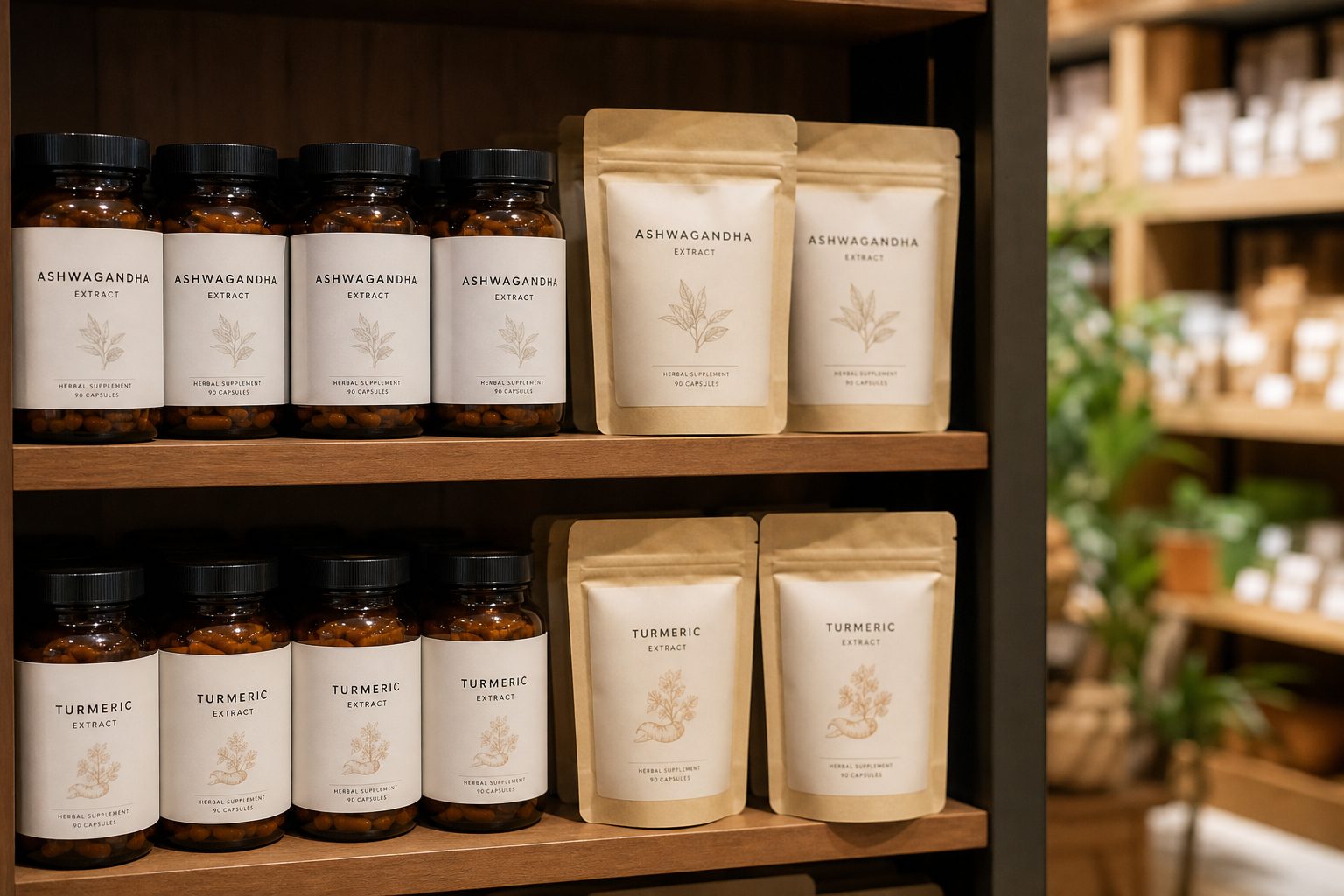
GCC Markets (UAE, Saudi Arabia, Kuwait, Qatar): The Fastest-Growing Region
The Gulf Cooperation Council markets collectively represent the fastest-growing destination for Indian herbal extracts, with growth driven by UAE (Dubai/Abu Dhabi) and Saudi Arabia. Consumer demand for natural wellness products in GCC markets has accelerated post-COVID, aligning with Vision 2030 health sector priorities in Saudi Arabia and the UAE's positioning as a regional nutraceutical trade hub serving broader MENA demand.
Indian herbal extracts have a culturally embedded market in GCC due to the large South Asian diaspora (estimated 6.5 million Indians in UAE and Saudi Arabia combined) and the traditional integration of Ayurvedic products in South Asian household health practices. This diaspora demand creates a base for Ayurvedic-positioned products that mainstream GCC supplement retail is increasingly incorporating into broader product ranges.
Halal certification is the most important single certification requirement for GCC market access for herbal extracts — extraction solvents must be Halal-compliant (no porcine-derived excipients, no ethanol above food-grade Halal threshold or specifically Halal-certified extraction), and Halal certification body recognition by GCC authorities is essential. ESMA (UAE), SABER (Saudi) and GSO conformity pathways apply for regulated supplement categories.
GCC Demand Map: Key Indian Herbal Extracts and Buyer Profiles
Swipe →
Data table — swipe horizontally on small screens
| Botanical | GCC Market Application | Preferred Spec | Key Certifications | Price Tier |
|---|---|---|---|---|
| Ashwagandha (Withania somnifera) | Nutraceutical retail, men's health | 2.5–5% withanolides | AYUSH, Halal, FSSAI | Mid-premium (USD 22–38/kg) |
| Curcumin 95% / Turmeric extract | Anti-inflammatory, joint, wellness | 95% curcuminoids | FSSAI, Halal, WHO-GMP | Mid-tier (USD 45–65/kg) |
| Boswellia serrata | Joint health, traditional herbal | 65% boswellic acids | AYUSH, Halal | Mid-premium |
| Moringa oleifera | Superfood, women's wellness | Leaf extract 4:1 | Organic preferred, Halal | Entry-mid |
| Shatavari (Asparagus racemosus) | Women's health, fertility | 20% saponins | AYUSH, Halal | Mid-tier |
| Guduchi / Giloy (Tinospora cordifolia) | Immunity, post-COVID wellness | 0.5% alkaloids | AYUSH, Halal | Entry-mid |
| Fenugreek (Trigonella foenum-graecum) | Blood sugar, men's health | 50% saponins | AYUSH, Halal | Entry |
| Amla (Phyllanthus emblica) | Hair care, immunity, antioxidant | 40% tannins | AYUSH, Halal, COSMOS for beauty | Entry-mid |
| Neem (Azadirachta indica) | Pharma intermediate, cosmetic | 3% azadirachtin or 1% nimbidin | WHO-GMP, FSSAI, Halal confirm | Entry |
| Brahmi (Bacopa monnieri) | Cognitive health, children's wellness | 20% bacosides | AYUSH, Halal | Mid-tier |
Japan: Ultra-Low Residue and Functional Food Demand
Japan is the most stringent residue-standards market for Indian herbal extract exporters and simultaneously one of the most valuable specialty destinations for high-purity botanical ingredients in functional food, beverage, and cosmetic applications. Japan's Positive List System for pesticide residues, implemented in 2006 and continuously updated, applies a 0.01 ppm default maximum for any pesticide not specifically listed — more restrictive than the EU's already-strict framework for many compounds.
Japanese buyers do not primarily purchase herbal extracts through the supplement channel in the Indian sense. The dominant application categories are functional foods (Foods for Specified Health Uses — FOSHU, or Foods with Function Claims — FFC), premium beverage ingredients (turmeric beverages, ginger tonics, moringa teas), and cosmetic actives (turmeric, amla, neem, ashwagandha for anti-aging and skin brightening applications).
Indian herbal extract exporters supplying Japan must invest in clean-cultivation sourcing — preferably from cultivation zones where pesticide usage is documented and verifiable — and multi-residue pesticide screening per Japan Positive List using LC-MS/MS and GC-MS/MS with >400 compound scope. Manufacturers in the Hyderabad cluster who have established Japan-specific testing protocols are the primary qualified suppliers for Japan-bound programs.
Japan Demand Map: Key Indian Herbal Extracts
Swipe →
Data table — swipe horizontally on small screens
| Botanical | Japan Application | Preferred Spec | Critical Requirement |
|---|---|---|---|
| Turmeric (Curcuma longa) | Functional beverage, food coloring, health food | 95% curcuminoids or water-soluble | Japan Positive List pesticide screen; no EU E100 complexity for food |
| Ginger (Zingiber officinale) | Functional beverage, digestive food | 5% gingerols or spray-dried | Ultra-clean pesticide; Japan residue list compliance |
| Moringa oleifera | Supplement, functional food, tea | Leaf extract 4:1 or powder | Microbial (Japan food standards); pesticide Positive List |
| Amla (Phyllanthus emblica) | Cosmetic active, supplement | 40% tannins or standardized C | Heavy metals Japan pharmacopoeia; pesticide Positive List |
| Ashwagandha (Withania somnifera) | Health food, FFC claim | 2.5% withanolides | FFC regulatory submission support; Positive List pesticide |
| Neem extract (Azadirachta indica) | Cosmetic, dental health | Clarified extract for cosmetic use | Cosmetic safety assessment Japan standard; heavy metals |
| Tulsi / Holy Basil (Ocimum sanctum) | Functional tea, adaptogen | 2.5% ursolic acid or standardized | Pesticide Positive List; Japan food labeling compliance |
Australia and New Zealand: TGA-Aligned Complementary Medicine Demand
Australia is the most mature complementary and alternative medicine market in Asia-Pacific, with TGA (Therapeutic Goods Administration) regulating listed complementary medicines through the Australian Register of Therapeutic Goods (ARTG). Indian herbal extract exporters supplying Australian buyers typically supply ingredient-level material for Australian-licensed complementary medicine manufacturers rather than finished products — a distinction that shapes the documentation requirements.
Australian buyers require suppliers to demonstrate GMP equivalent to TGA GMP (as per PIC/S Guide to GMP). WHO-GMP certification from an accredited body is broadly accepted as TGA GMP equivalent for overseas ingredient suppliers. AYUSH licensing provides supporting documentation for traditional Ayurvedic ingredient provenance claims used in complementary medicine product dossiers.
The Australian natural health market shows strong consumer demand for ashwagandha (stress, sleep, hormonal balance positioning), boswellia (joint support), turmeric/curcumin (anti-inflammatory), and bacopa (memory, children's cognitive function). New Zealand buyers follow TGA-aligned regulatory patterns through Medsafe and import compliance frameworks.
Australia / New Zealand Demand Map
Swipe →
Data table — swipe horizontally on small screens
| Botanical | Market Positioning | Grade Preferred | Certification Priority |
|---|---|---|---|
| Ashwagandha | Stress, sleep, hormonal health | 5% withanolides; KSM-66 preferred | WHO-GMP (TGA equivalent), AYUSH license |
| Boswellia serrata | Joint support, listed medicine | 65% boswellic acids | WHO-GMP (TGA equiv), AYUSH |
| Curcumin 95% | Anti-inflammatory, TGA-listed ingredient | 95% curcuminoids | WHO-GMP, non-GMO |
| Bacopa monnieri | Memory, cognitive health, children's supplement | 20% bacosides | WHO-GMP, AYUSH |
| Ginger (Zingiber officinale) | Digestive, nausea, listed medicine | 5% gingerols | WHO-GMP, Organic preferred |
| Shatavari (Asparagus racemosus) | Women's health, Ayurvedic traditional | 20% saponins | AYUSH license, WHO-GMP |
| Turmeric (powder + extract) | Functional food, listed medicine | 5% curcuminoids (powder); 95% (extract) | Organic preferred, WHO-GMP |
China: Volume Market Shifting Toward Standardized Extracts
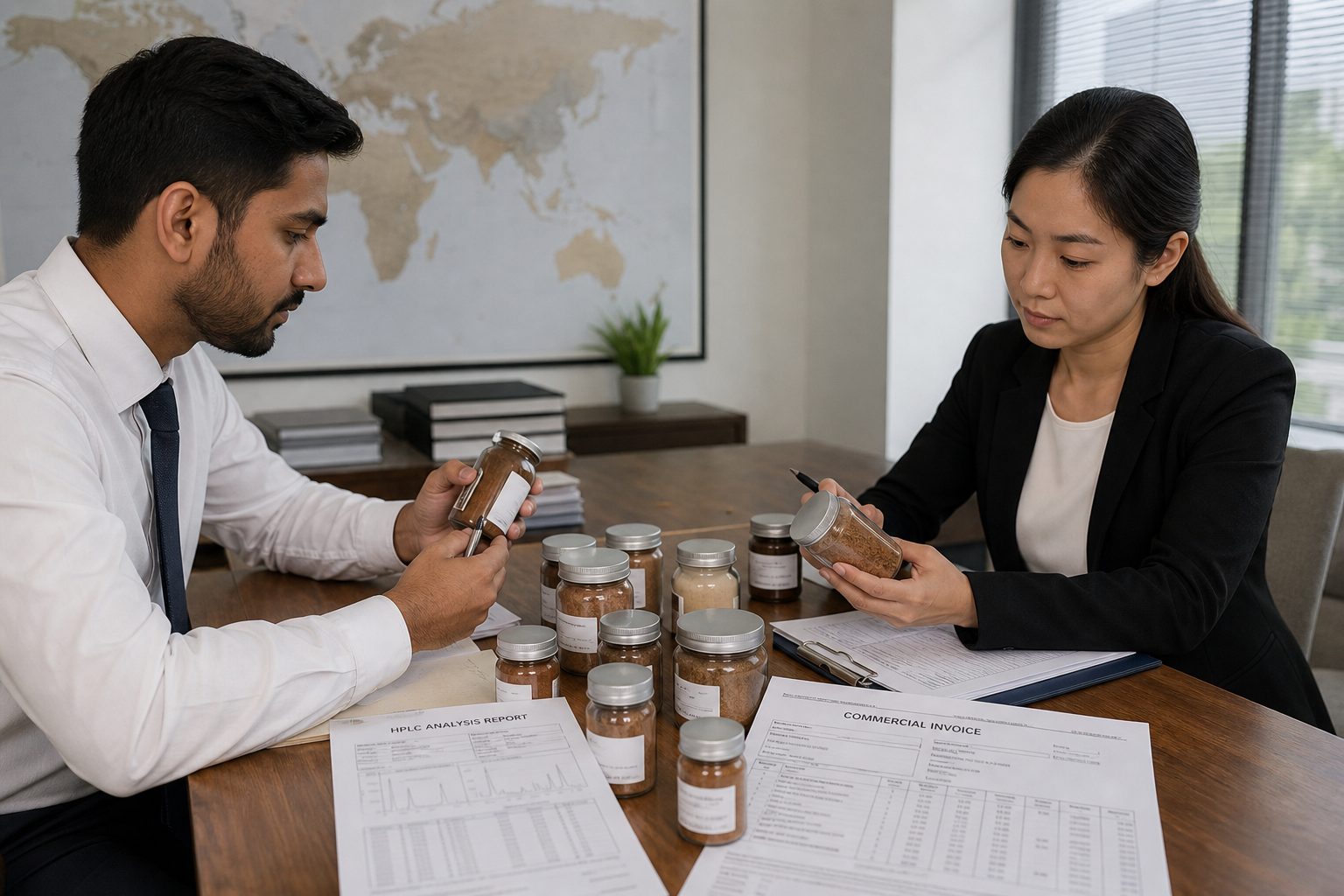
China is historically the largest single-country destination for Indian herbal raw materials — particularly ashwagandha roots, boswellia resin, and turmeric rhizomes purchased for Traditional Chinese Medicine (TCM) ingredient processing and re-export as standardized extracts. As China's own extraction processing capacity has matured, demand has partially shifted from raw material to standardized extract supply, creating a different commercial opportunity for Indian exporters with extraction capability.
Indian-origin ashwagandha extract is imported by Chinese nutraceutical brands and contract manufacturers who incorporate it into finished supplement products for domestic Chinese health food market (Blue Cap regulation framework) and for re-export. Chinese buyers prioritize price-competitive supply with basic COA documentation — HPLC-verified marker content, heavy metals, microbial — without necessarily requiring WHO-GMP or AYUSH licensing in the way US and EU buyers do.
The strategic implication for Indian herbal extract exporters: China is a volume market accessible with basic quality documentation, but not a premium market. Margins are tighter than US or EU, and price pressure is strong due to competition from both Indian commodity exporters and Chinese domestic processing. Programs for China work best when they leverage cost-competitive bulk supply, fast logistics through Nhava Sheva to Chinese ports (Shanghai, Ningbo), and consistent purity specifications.
China Demand Profile: Indian Herbal Extracts
Swipe →
Data table — swipe horizontally on small screens
| Botanical | Chinese Application | Preferred Form | Commercial Dynamics |
|---|---|---|---|
| Ashwagandha root extract | Health food, sports nutrition, re-export | 2.5% withanolides — competitive grade | Price-sensitive; HPLC COA required; WHO-GMP not always mandatory |
| Boswellia resin / extract | TCM adjacent, joint health | Raw resin or 65% boswellic acids | Raw material supply still significant |
| Turmeric / Curcumin | Health food, food coloring, cosmetic | 95% curcuminoids | High competition from Chinese domestic processors |
| Moringa oleifera | Health food, export ingredient | Leaf powder or extract | Organic supply preferred for re-export positioning |
| Bacopa monnieri | Cognitive supplement emerging | 20% bacosides | Growing demand; documentation improving |
| Neem (Azadirachta indica) | Agricultural, pharmaceutical intermediate | Technical grade or pharma grade | B2B industrial rather than consumer supplement |
Canada: NHP Framework and Growing Supplement Demand
Canada's natural health product (NHP) market is regulated by Health Canada under the Natural Health Products Regulations (NHPR). Indian herbal extract importers in Canada must hold Site Licenses and Product Licenses (NHP numbers) for finished products incorporating herbal extract ingredients. As ingredient suppliers to Canadian licensees, Indian exporters must provide documentation aligned to NHP compendial monographs — primarily the British Herbal Pharmacopoeia, the United States Pharmacopeia/National Formulary, or accepted alternative references.
Canadian NHP demand mirrors US demand in botanical preference — ashwagandha, boswellia, bacopa, curcumin — but with additional documentation requirements around Health Canada product monograph alignment and site license referencing. WHO-GMP certification is the most directly useful credential for Canadian buyer qualification, as Health Canada's Site License framework requires GMP compliance evidence from ingredient manufacturing sites.
The French-Canadian market adds bilingual labeling requirements for finished products but does not change ingredient sourcing documentation at the extract level.
Emerging Markets: Southeast Asia, South Korea, and MENA
Southeast Asian markets — Singapore, Malaysia, Thailand, Indonesia, Philippines — represent growing demand for Indian herbal extracts in functional food, cosmetic, and nutraceutical applications. Singapore (HSA regulation), Malaysia (NPRA), and Thailand (FDA Thailand) each have distinct registration frameworks for health products incorporating herbal ingredients. Singapore HSA is generally the most streamlined, making it a preferred first-entry market for Indian herbal extract exporters building Southeast Asian distribution.
South Korea's health functional food (HFF) regulation under MFDS (Ministry of Food and Drug Safety) governs functional ingredient approval — several Indian botanicals, including turmeric/curcumin and ginger, have MFDS HFF approval as functional ingredients. South Korean cosmetic demand for Indian botanicals — particularly amla, neem, turmeric, and ashwagandha — is growing significantly in K-beauty natural ingredient positioning.
MENA markets outside GCC — Egypt, Jordan, Morocco, Iran (limited), Turkey — represent emerging demand for Indian herbal extracts with varying regulatory sophistication. Turkish buyers import Indian ashwagandha and boswellia for supplement formulation; Egyptian buyers import moringa and turmeric for food ingredient applications. Documentation requirements in these markets are generally less stringent than GCC, EU, or US, but health certificate and FSSAI documentation are routinely required at customs.
Emerging Market Demand Summary
Swipe →
Data table — swipe horizontally on small screens
| Market | Top Botanicals Demanded | Regulatory Framework | Key Documentation |
|---|---|---|---|
| Singapore | Turmeric, Ashwagandha, Moringa | HSA Complementary Medicine | WHO-GMP, COA, COO |
| Malaysia | Turmeric, Moringa, Ginger | NPRA registration | GMP, COA, Halal (for Muslim market) |
| South Korea | Turmeric, Amla, Ashwagandha, Neem | MFDS HFF / Cosmetic | MFDS recognized GMP, COA |
| Turkey | Ashwagandha, Boswellia, Turmeric | TITCK supplement regulation | WHO-GMP, COA, FSSAI |
| Egypt | Moringa, Turmeric, Ginger | Egyptian Drug Authority (EDA) | Health cert, COA, FSSAI, Halal |
| South Africa | Moringa, Turmeric, Ashwagandha | SAHPRA (for medicines) | WHO-GMP, COA, COO |
Country-Wise Botanical Demand Heat Map
Market Snapshot
The following heat map summarizes demand intensity by country and botanical, based on import volume estimates, buyer inquiry frequency, and price realization data from Altus Exports' herbal extract sourcing programs. High (H) indicates strong commercial demand with established buyer programs; Medium (M) indicates growing or emerging demand; Low (L) indicates niche or limited demand.
Demand Intensity Heat Map: Indian Herbal Extracts by Country
Swipe →
Data table — swipe horizontally on small screens
| Botanical | USA | Germany/EU | UK | UAE/GCC | Japan | Australia | China | Canada |
|---|---|---|---|---|---|---|---|---|
| Ashwagandha (5% withanolides) | H | H | H | H | M | H | M | H |
| Curcumin 95% | H | H | H | H | H | H | H | H |
| Boswellia 65% | H | H | M | M | L | H | M | M |
| Bacopa 20–40% | H | M | H | M | M | H | L | M |
| Garcinia 60% HCA | M | L | M | M | L | L | M | M |
| Moringa 4:1 | M | H | H | M | M | M | M | L |
| Fenugreek 50% saponins | M | M | M | H | L | M | L | M |
| Amla 40% tannins | L | M | H | M | M | L | L | L |
| Ginger 5% gingerols | M | H | M | M | H | M | M | M |
| Shatavari 20% saponins | L | M | M | H | L | M | L | L |
| Guduchi / Giloy | L | L | M | H | L | L | L | L |
| Tulsi / Holy Basil | M | M | M | M | H | L | L | L |
| Neem extract | L | M | M | M | M | L | M | L |
Export Statistics: India Herbal Extract Trade Flows
Key Statistics
India's HS 130219 trade shows a high-value extract-oriented pattern (2024: ~USD 540 million on ~18.9 thousand MT ≈ average unit value near USD 28–29/kg across the mixed basket). Unit values vary sharply by destination and product mix; do not cite a precise multi-year '22% unit-value rise' without a published DGCI&S series for the exact basket you are measuring.
Top HS 130219 destinations by value in CY 2024 included the United States, Korea, Germany, Italy, Japan, Australia, China, UAE, France, and the UK (WITS/UN Comtrade). The US alone was about half of India's HS 130219 export value; EU member states are collectively important but should be summed carefully rather than approximated as a fixed 'US–Germany–Netherlands = 42%' axis.
India HS 130219 Export Value by Destination (CY 2024, WITS/UN Comtrade)
Swipe →
Data table — swipe horizontally on small screens
| Destination | Export Value (USD mn) | Qty (MT approx.) | Notes for buyers |
|---|---|---|---|
| World | 539.8 | 18,857 | Total India HS 130219 exports |
| United States | 296.1 | 4,646 | Largest destination by value (~55%) |
| Korea, Rep. | 43.9 | 4,504 | Second by value; high volume |
| Germany | 24.5 | 1,246 | Key EU pharmaceutical/nutra gateway |
| Italy | 18.8 | 528 | EU ingredient demand |
| Japan | 17.2 | 382 | High documentation intensity |
| Australia | 16.5 | 292 | Natural health / supplement channel |
| China | 12.3 | 388 | Competitive bulk/ingredient flows |
| United Arab Emirates | 9.5 | 165 | GCC hub / re-export potential |
| France | 9.2 | 121 | EU food/supplement channels |
| United Kingdom | 8.0 | 1,247 | Post-Brexit separate compliance path |
Import Statistics: What Each Country Buys and From Where
Key Statistics
From the destination country's perspective, India competes with China (as a botanical extract source country), Eastern European suppliers (for certain botanicals), and domestic botanical processors in EU and US. India's competitive advantage is raw material proximity, cost efficiency, cluster manufacturing scale, and the Ayurvedic botanical heritage that provides differentiation in traditional herbal positioning.
Germany imports of Indian herbal extracts are predominantly through ingredient distribution channels — Intermed, Martin Bauer, Frutarom (IFF Nourish) — who qualify Indian manufacturer supply and distribute to finished product brands. US imports flow through direct manufacturer relationships with branded supplement companies and through ingredient distributors including Sabinsa, Natreon, and IXOREAL (all India-origin extract specialists with US operations).
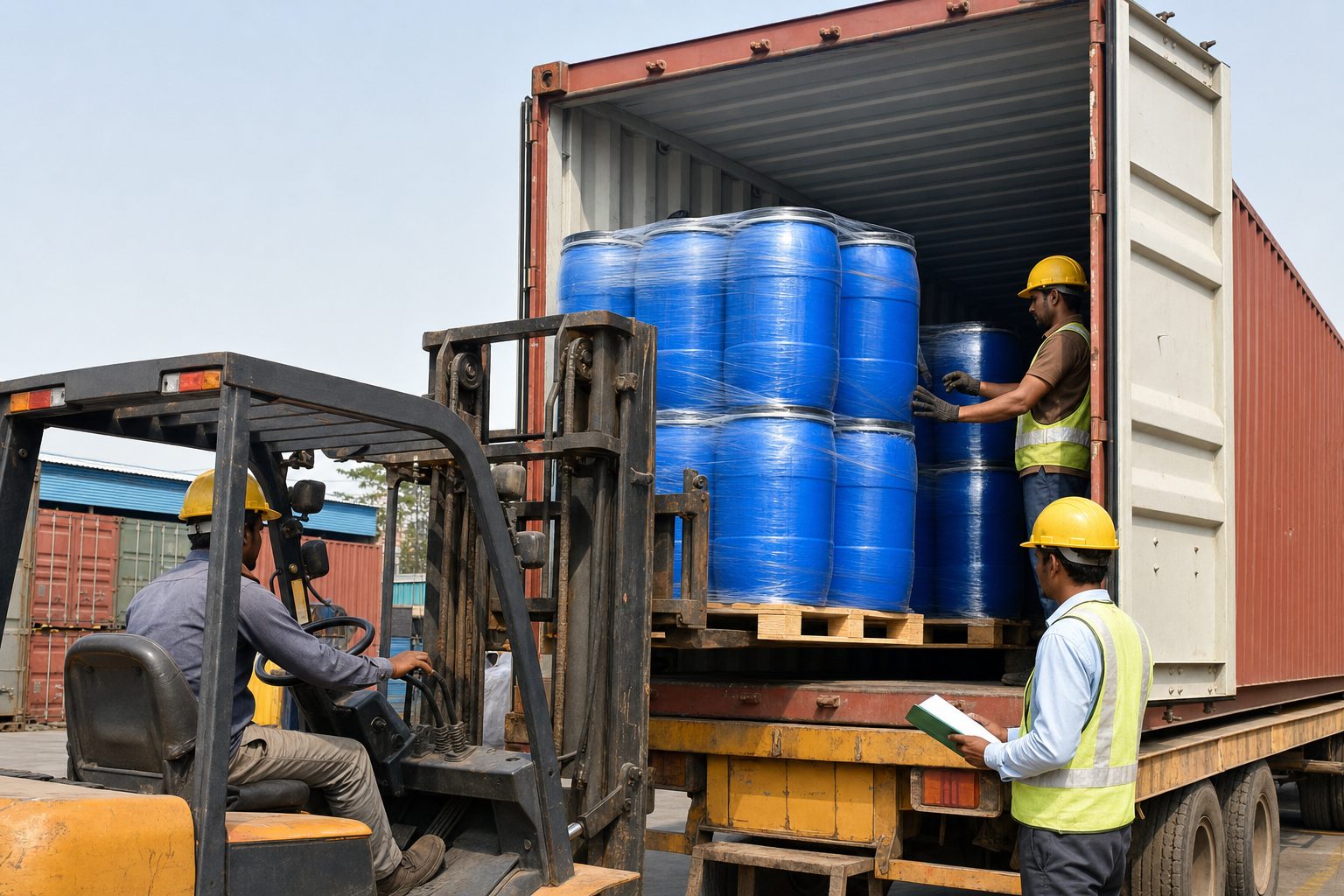
GCC import channels are distributor-led, with UAE serving as the MENA regional hub. Dubai-based ingredient distributors source from India via Nhava Sheva / Mundra, clear through Jebel Ali Port, and redistribute to Saudi Arabia, Kuwait, Qatar, Bahrain, Oman, and broader MENA. This channel structure means GCC buyers often require FOB or CIF Jebel Ali pricing rather than FOB India pricing for landed cost calculation.
Sourcing Checklist: Country-Specific Extract Basket Configuration
Checklist
Common Buyer Mistakes in Country-Specific Herbal Extract Sourcing
Common Mistakes Box
Future Demand Trends by Country: 2026–2028
USA demand is forecast to grow in precision herbal extract positioning — buyers moving beyond generic 2.5% withanolides toward clinically validated, proprietary-study-backed extract formats (KSM-66, Sensoril-equivalent clinical data). Traceability and supply chain transparency will be buyer requirements for the top supplement retail channel by 2027-2028.
EU demand will be shaped by Novel Food authorization outcomes — positive ashwagandha authorization (already conditionally granted) will unlock significant growth; Bacopa authorization (pending) represents the next major EU market expansion opportunity for Indian herbal extract exporters. EU Organic demand will continue to outpace conventional supply, sustaining organic price premiums through 2028.
GCC markets will see increasing formalization — Saudi Vision 2030 healthcare regulatory development, UAE MOHAP nutraceutical regulations — that will raise documentation requirements closer to international standards. Early-mover Indian exporters who build AYUSH + WHO-GMP + Halal certified programs before 2027 will benefit from incumbent supplier relationships when regulatory enforcement tightens.
Japan's health food market will continue to grow in functional beverage and cosmetic active applications, creating steady demand for ultra-clean Indian botanicals. The key supply chain investment is clean-cultivation sourcing with full pesticide documentation — not a 6-month project.
Emerging markets in South Korea, Singapore, and MENA will converge on EU-adjacent regulatory frameworks over 2026-2030, driven by trade agreement harmonization and multinational brand requirements. Indian exporters who build documentation capability for EU and Japan standards are structurally positioned for these markets as they tighten.
Herbal Extract Market Growth Forecast by Country (2026–2028)
Swipe →
Data table — swipe horizontally on small screens
| Market | Growth Driver | Forecast CAGR 2026-28 | Top Emerging Botanicals |
|---|---|---|---|
| USA | Clinical validation, precision botanicals | 8–10% | Ashwagandha (branded), Bacopa, Berberine |
| EU | Organic, Novel Food authorization | 7–9% | Organic Ashwagandha, Moringa, Tulsi |
| UK | Post-Brexit natural health growth | 6–8% | Ashwagandha, Amla, Shatavari |
| GCC | Vision 2030, nutraceutical retail | 16–20% | Ashwagandha, Guduchi, Shatavari |
| Japan | Functional food, K-beauty spillover | 8–11% | Turmeric (water-soluble), Neem cosmetic, Tulsi |
| Australia | Complementary medicine market growth | 9–12% | Ashwagandha, Bacopa, Ginger |
| South Korea | K-beauty natural actives | 12–15% | Amla, Turmeric, Neem, Ashwagandha |
| Singapore/SEA | Regional health food hub growth | 10–13% | Moringa, Turmeric, Ashwagandha |
Expert Insights: Configuring Demand-Driven Export Programs
Expert Insight Box
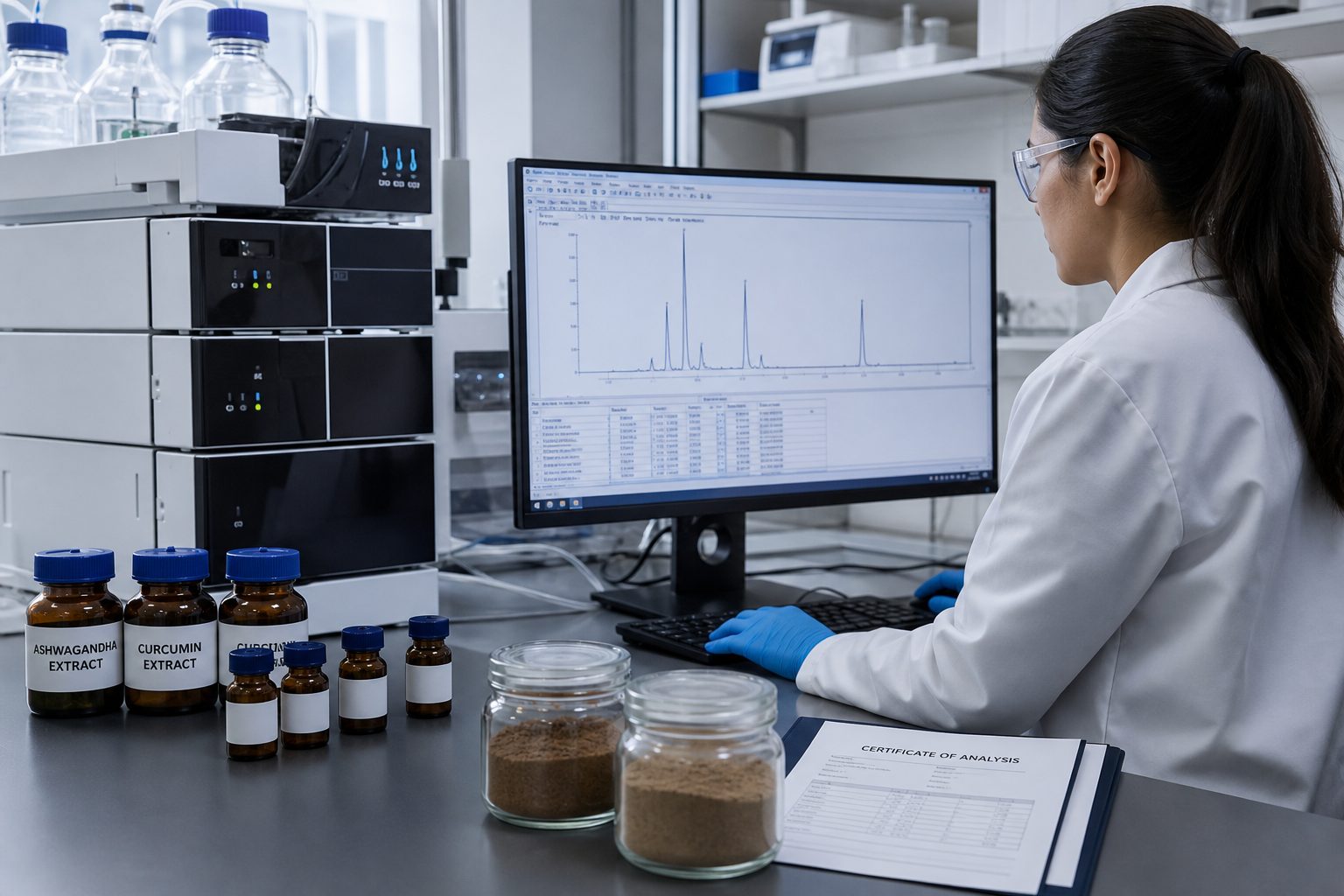
The commercial logic of demand mapping is not theoretical — it drives purchasing order decisions, pre-qualification meetings, and pricing negotiations in every buyer conversation. An Indian herbal extract exporter who enters a US buyer meeting knowing that 5% withanolides is the target, WHO-GMP is the threshold, and USP heavy metals is the testing standard closes qualification faster than one who presents a generic catalog. Demand intelligence converts first conversations into committed programs.
Altus Exports uses destination demand profiles to configure buyer introductions — matching buyers in Germany who specify organic ashwagandha with Hyderabad manufacturers who have EU Organic supply chains, or connecting UAE buyers who need Halal-certified curcumin with Indore processors who hold recognized Halal certificates. The matching precision reduces qualification cycle time and increases first-order success rates.
How Altus Exports Executes Country-Specific Herbal Extract Programs
Altus Exports functions as merchant exporter and global sourcing partner for international herbal extract programs under HS code 1302. For buyers, Altus sources from verified WHO-GMP certified manufacturers in Hyderabad, Indore, and Neemuch clusters, configures document packages to destination market standards, and appears as exporter of record on FOB Nhava Sheva or Mundra shipments. For exporters, Altus provides access to qualified international buyers and manages the commercial and compliance interface of each export program.
Country-specific program support includes: botanical specification matching to destination buyer requirements, COA and certification documentation aligned to US FDA, EU MRL, UK FSA, GCC SFDA, Japan Positive List, or TGA standards as applicable, Halal certification verification for GCC programs, EU Organic certificate coordination for EU programs, and WHO-GMP certificate verification for all regulated market programs.
Buyers share the destination country, target botanical, preferred marker level, annual volume estimate, and certification checklist — Altus responds with verified manufacturer options, COA samples from the most recent batch, and FOB pricing from confirmed cluster manufacturers. Exporters seeking buyer introduction for their certified herbal extract range share their product catalog with certification documentation — Altus reviews against active buyer demand programs and identifies fit opportunities.
Conclusion: Demand Intelligence as Export Strategy
The most profitable herbal extract export programs are not built on the broadest product range or the lowest price — they are built on precise alignment between what a specific destination market wants and what a certified Indian manufacturer can consistently supply with the right documentation. This demand map is a working tool for that alignment exercise.
USA buyers want high-standardization, WHO-GMP certified extracts with NABL COA and USP-standard testing. EU buyers want organic, traceable, Novel Food-compliant botanical ingredients. GCC buyers want Halal certified, AYUSH-documented extracts for a rapidly growing wellness market. Japan wants ultra-clean, Positive List-compliant ingredients from verifiable cultivation origins. Each market has a profile, and the Indian herbal extract sector has the botanical depth, manufacturing capacity, and — increasingly — the certification infrastructure to serve all of them.
The exporters and manufacturers who invest in country-specific demand intelligence, configure their certified extract programs accordingly, and execute through accountable export relationships like Altus Exports are building sustainable, premium-market businesses. Those who approach every market with the same commodity catalog at the same price will remain in price competition with exporters from wherever the next low-cost source country emerges.
Contact Altus Exports with your destination country, target botanical, and program volume to receive a demand-matched supplier configuration and an aligned export execution plan for your herbal extract program.
Related guides: Best Countries for Indian Herbal Extract Exports, How to Export Herbal Extracts from India, AYUSH & FSSAI Registration Benefits, and Find International Buyers for Herbal Extracts. Also see Herbal & Ayurvedic Products and Global Sourcing Partner India.