
How to Export Tea from India: Complete Guide for Beginners
By Saurabh Mittal, Founder, Altus Exports
A step-by-step operational guide to exporting tea from India — registration, Tea Board licensing, FSSAI compliance, grading, packing, documentation, and shipment, with pricing, MOQ, and compliance tables for first-time exporters.
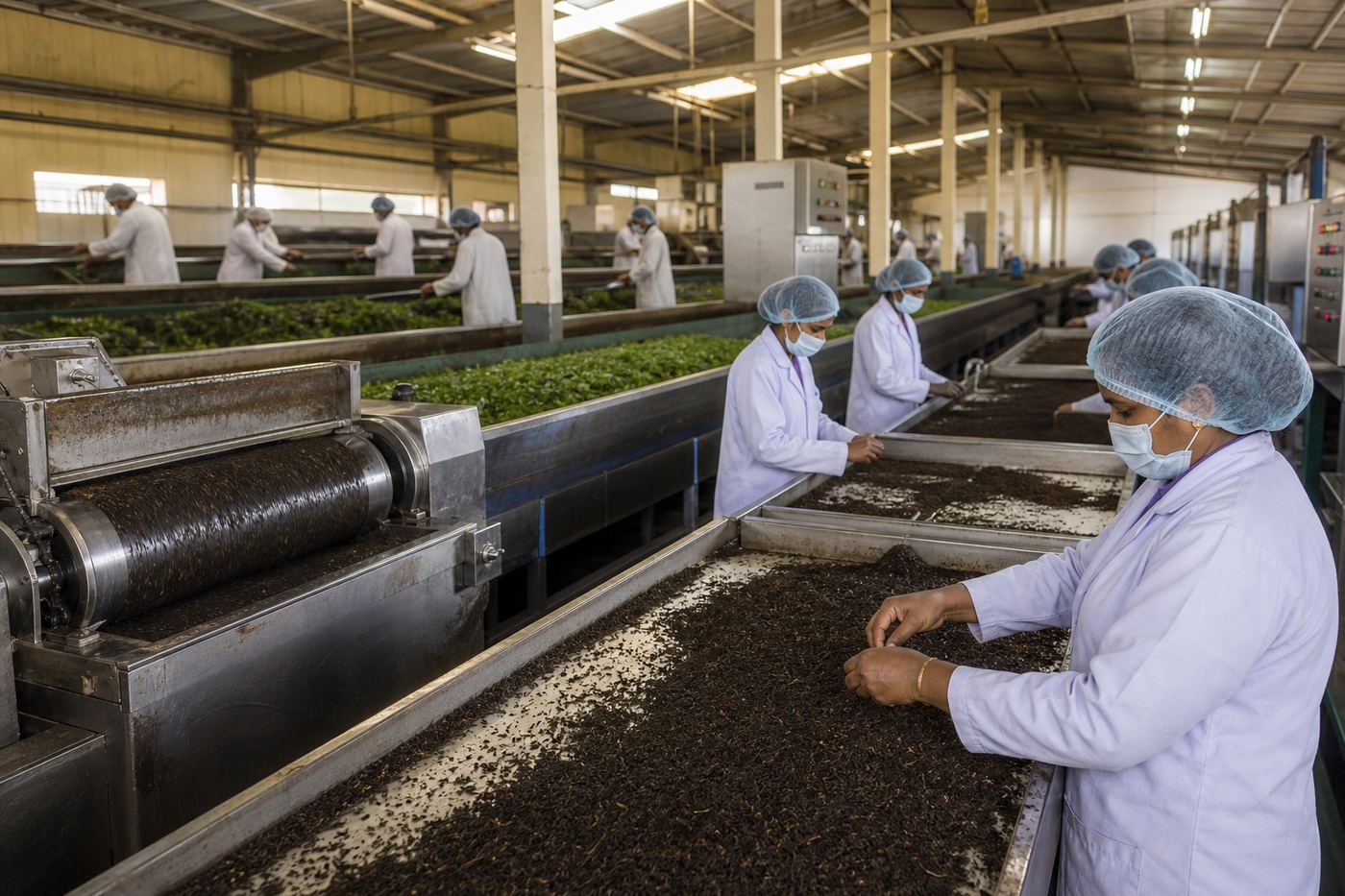
India is the world's second-largest tea producer, and exporting tea from India involves a defined sequence: business registration, an Import Export Code (IEC), a Tea Board of India exporter licence, FSSAI food business registration, grading and cupping, packing to buyer specification, export documentation, and shipment through a customs-cleared port. Skipping or rushing any one of these steps is the single biggest cause of delayed first shipments for new exporters.
This guide is a step-by-step operational walkthrough for first-time and early-stage tea exporters — not a product catalogue and not a country-selection guide. If you need the product assortment (Assam CTC, Darjeeling flushes, Nilgiri, green tea, specialty grades), see Top Tea Products Exported from India. If you are deciding which export market to prioritise, see Best Countries for Indian Tea Exports. International buyers evaluating Indian tea suppliers should read How to Source Tea Directly from India alongside this guide.
India exports tea under HS code 0902, with black tea accounting for roughly 96% of export volume — FY25 tea exports were valued at more than US$900 million. Black tea from Assam and South India moves largely as CTC (Cut, Tear, Curl) grades to the Middle East, Russia, and CIS markets, while orthodox and Darjeeling GI-origin tea serves premium channels in the UK, Germany, and the USA. Altus Exports works as a merchant exporter in India and global sourcing partner coordinating tea export programmes end to end — this guide reflects that operational experience.
Key Takeaways
Summary Box
Executive Summary
Summary Box
Exporting tea from India is a regulated, multi-step process built around four pillars: legal export eligibility (IEC), category licensing (Tea Board of India and FSSAI), physical product readiness (grading, cupping, packing), and documentation that satisfies both Indian customs and the destination country's import rules. New exporters who treat these as sequential milestones — rather than a checklist to complete the week before sailing — consistently ship faster and face fewer customs holds.
This guide walks through each step in the order a first-time exporter should complete it: registration and licensing, sourcing or producing export-grade tea, sampling and buyer approval, bulk packing, documentation, customs clearance, freight booking, and post-shipment compliance. Along the way, it covers indicative pricing by grade, MOQ expectations, packaging standards, container loading benchmarks, and the certifications buyers most often ask about.
Whether you are an estate owner adding an export channel, a trader consolidating tea for international buyers, or a first-time entrepreneur entering the category, the sequence below applies. The depth of documentation and compliance work scales with destination market — a container to Iraq and a pallet to Germany carry different certificate burdens — but the underlying process is the same.
Market Size and Industry Overview
Key Statistics
India produces roughly 1.3–1.4 billion kg of tea annually and is the world's second-largest producer after China, with Assam, South India (Nilgiri, Kerala, Tamil Nadu), and Darjeeling/Dooars/Terai in West Bengal accounting for the bulk of output. Of this, only a fraction — typically 10–12% — is exported, with the remainder consumed domestically, making India both a production giant and a comparatively modest exporter relative to total output.
Export volume has held in a broadly stable band over recent years, with value more sensitive to currency movement, auction price cycles, and destination demand shifts than to production volume itself. FY25 export value crossing US$900 million reflects both steady CTC volume to the Middle East and CIS cluster and firmer realisations on orthodox and Darjeeling shipments to premium markets.
For a first-time exporter, the practical implication is this: India's scale as a producer does not guarantee export access. Export-grade tea must meet cupping, moisture, and documentation standards distinct from domestic-market tea, and the registration steps in this guide exist precisely to enforce that distinction at the border.
India Tea Industry Snapshot (Indicative)
Swipe →
Data table — swipe horizontally on small screens
| Dimension | Approximate Figure | Relevance to New Exporters |
|---|---|---|
| Global production rank | 2nd largest producer | Deep domestic supply base, but export share is a minority of output |
| Annual production | ~1.3–1.4 billion kg | Most tea is consumed domestically; export-grade selection matters |
| FY25 export value | US$900 million+ | Confirms export demand remains healthy despite domestic consumption scale |
| Black tea share of exports | ~96% | CTC and orthodox black tea dominate; green tea is a smaller specialty segment |
| HS classification | HS 0902 (0902 10/20 green, 0902 30/40 black) | Correct HS code is required on every shipping bill and invoice |
| Primary growing regions | Assam, Darjeeling, Nilgiri, Dooars, Terai, Kangra | Region affects grading, GI eligibility, and buyer expectations |
| Regulatory body | Tea Board of India | Exporter licence from Tea Board is mandatory before export |
| Major export ports | Kolkata/Haldia, Cochin, Nhava Sheva | Port choice depends on origin estate location and destination lane |
Export Statistics
Key Statistics
Tea Board of India publishes export statistics by volume, value, and destination on a monthly and annual basis — the primary reference for new exporters benchmarking realistic price and volume expectations. India's exports have consistently reached more than forty countries, though a handful of markets absorb the majority of volume.
Black tea's roughly 96% share of export volume reflects both the scale of Assam and South India CTC production and sustained demand from the Middle East, Russia, and CIS markets, where strong-brewing CTC grades are preferred. Green tea and specialty/flavoured tea make up the remaining volume, serving smaller but often higher-margin niches.
Indicative Export Composition by Tea Type
Swipe →
Data table — swipe horizontally on small screens
| Tea Type | Approx. Export Share (Volume) | Typical HS Sub-heading | Primary Destinations |
|---|---|---|---|
| Black tea (CTC + orthodox) | ~96% | 0902 30 (≤3 kg pack) / 0902 40 (>3 kg pack) | UAE, Iraq, Russia, Iran, UK, USA |
| Green tea | ~2–3% | 0902 10 (≤3 kg pack) / 0902 20 (>3 kg pack) | Morocco-linked trade, CIS, USA, Germany |
| Flavoured / instant tea | ~1–2% | Classified within 0902 by form and pack weight | USA, UK, UAE retail, Russia |
Import Statistics: Reading Destination Demand
Key Statistics
New exporters often study only India's export data. Reading the destination side — what each country imports under HS 0902, from which origins, and at what average unit value — reveals whether a market is a commodity volume opportunity or a specialty niche before you commit production capacity to it.
UAE functions largely as a re-export and distribution hub for Iraq, Afghanistan, and wider CIS and African markets rather than a terminal consumption market, which changes how a first-time exporter should read its import volume. Germany and the UK, by contrast, import primarily for direct specialty and blending consumption, with tighter residue and quality documentation expectations attached to nearly every consignment.
Import Demand Signals by Destination (Indicative)
Swipe →
Data table — swipe horizontally on small screens
| Destination | Import Role | Typical Grade Demand | Documentation Emphasis |
|---|---|---|---|
| UAE | Re-export / distribution hub | CTC BOP, BOPSM, blended grades | FSSAI-aligned quality docs, standard food import permits |
| Iraq | Direct + UAE-transit consumption | Strong CTC (PD, PF, BOP) | Moisture limits, clean-cup verification, CIF terms common |
| Russia / CIS | Direct consumption + flavoured tea retail | CTC BP/BOP, flavoured blends | Labelling in local language, technical regulation alignment |
| USA | Foodservice commodity + specialty retail | CTC for foodservice; Darjeeling/Nilgiri for specialty | FDA-aligned food safety documentation |
| Iran | Direct consumption via intermediaries | CTC blends, orthodox for premium segment | Documentation via established trade corridors |
| UK | Direct specialty and blending consumption | Darjeeling, Assam orthodox | Origin traceability, GI verification for Darjeeling claims |
| Germany | Specialty, organic, and Fairtrade retail | Darjeeling organic, Assam orthodox, certified CTC | Pesticide residue documentation, organic certification |
Product Categories Exported from India
Summary Box
This guide focuses on process, not product depth — see Top Tea Products Exported from India for a full grade-by-grade comparison. In brief, new exporters should understand that the product category chosen determines which steps in this guide carry the most weight: commodity CTC leans heavily on packaging and container-loading efficiency, while orthodox and Darjeeling lean heavily on grading, cupping, and certification.
Broad Product Categories (Overview)
Swipe →
Data table — swipe horizontally on small screens
| Category | Representative Grades | Primary Origin | Export Orientation |
|---|---|---|---|
| CTC black tea | BP, BOP, BOPSM, PD, PF, Dust | Assam, South India | Volume export to Middle East, CIS |
| Orthodox black tea | OP, FOP, GFOP, TGFOP | Assam, Darjeeling, Nilgiri | Specialty export to UK, Germany, USA |
| Darjeeling (GI origin) | First flush, second flush, autumnal | Darjeeling district | Premium export, GI-protected |
| Green tea | Chunmee-type, specialty green | Darjeeling, Nilgiri, Assam (limited) | Niche export, CIS and specialty retail |
The Complete Tea Export Process from India: Step by Step
Export Tip
This is the operational core of the guide. Each step below builds on the one before it — attempting to skip ahead (for example, packing before grading, or booking freight before documents are ready) is the most common reason first shipments slip their sailing date.
Step 1: Business and Regulatory Registration
Before sourcing a single kilogram of export-grade tea, complete the registrations that make your business legally eligible to export from India. These four registrations form the non-negotiable foundation of every tea export shipment.
Register Your Business Entity and PAN
Register your business as a sole proprietorship, partnership, LLP, or private limited company, and obtain a Permanent Account Number (PAN) if you do not already have one. Your business structure determines liability exposure and banking arrangements for receiving export proceeds — most first-time exporters start as a proprietorship or private limited company.
Obtain an Import Export Code (IEC) from DGFT
Apply for an IEC through the DGFT (Directorate General of Foreign Trade) online portal using your PAN and bank account details. The IEC is a mandatory ten-digit code that appears on every shipping bill and customs record for your exports — no legal export shipment can be filed without one.
Apply for a Tea Board of India Exporter Licence
Register as an exporter with the Tea Board of India, the statutory body regulating tea production, quality, and export from India. Tea Board registration is category-specific and mandatory: it confirms your eligibility to export tea, links your shipments to Tea Board reporting, and is often referenced by buyers verifying supplier legitimacy. See Tea Board Registration Benefits for Exporters for the full registration process and advantages.
Secure an FSSAI Food Business Licence
Tea is a food product, so an FSSAI (Food Safety and Standards Authority of India) licence is required for processing, packing, and exporting it. Depending on your scale, you may need a state or central FSSAI licence — export-oriented units typically require central licensing. FSSAI compliance underpins the health and quality declarations that appear on your export documentation.
Step 2: Source or Produce Export-Grade Tea
With registrations in place, secure your tea supply. Export-grade sourcing differs from domestic sourcing in one critical respect: buyers expect grade consistency, batch traceability, and moisture control that casual domestic trade does not always demand.
Estate Sourcing, Auction Purchase, or Private Sale
You can source tea directly from estates (common for exporters with estate relationships or their own gardens), through auction centres such as Kolkata, Guwahati, Coonoor, and Siliguri, or via private sale agreements with bought-leaf factories. Auction purchase offers price transparency and standardised grading; direct estate relationships offer supply consistency and, for Darjeeling, GI traceability that buyers increasingly ask for in writing.
Grading and Quality Benchmarking
Confirm the grade nomenclature (BP, BOP, BOPSM, PD, PF, Dust for CTC; OP, FOP, GFOP, TGFOP for orthodox) matches what your target buyer expects, and request tasting samples and cupping notes before committing to bulk quantities. Grade mismatches — sending Dust when a buyer expects BOPSM — are among the most common causes of rejected consignments at destination.
Step 3: Sampling, Cupping, and Buyer Approval
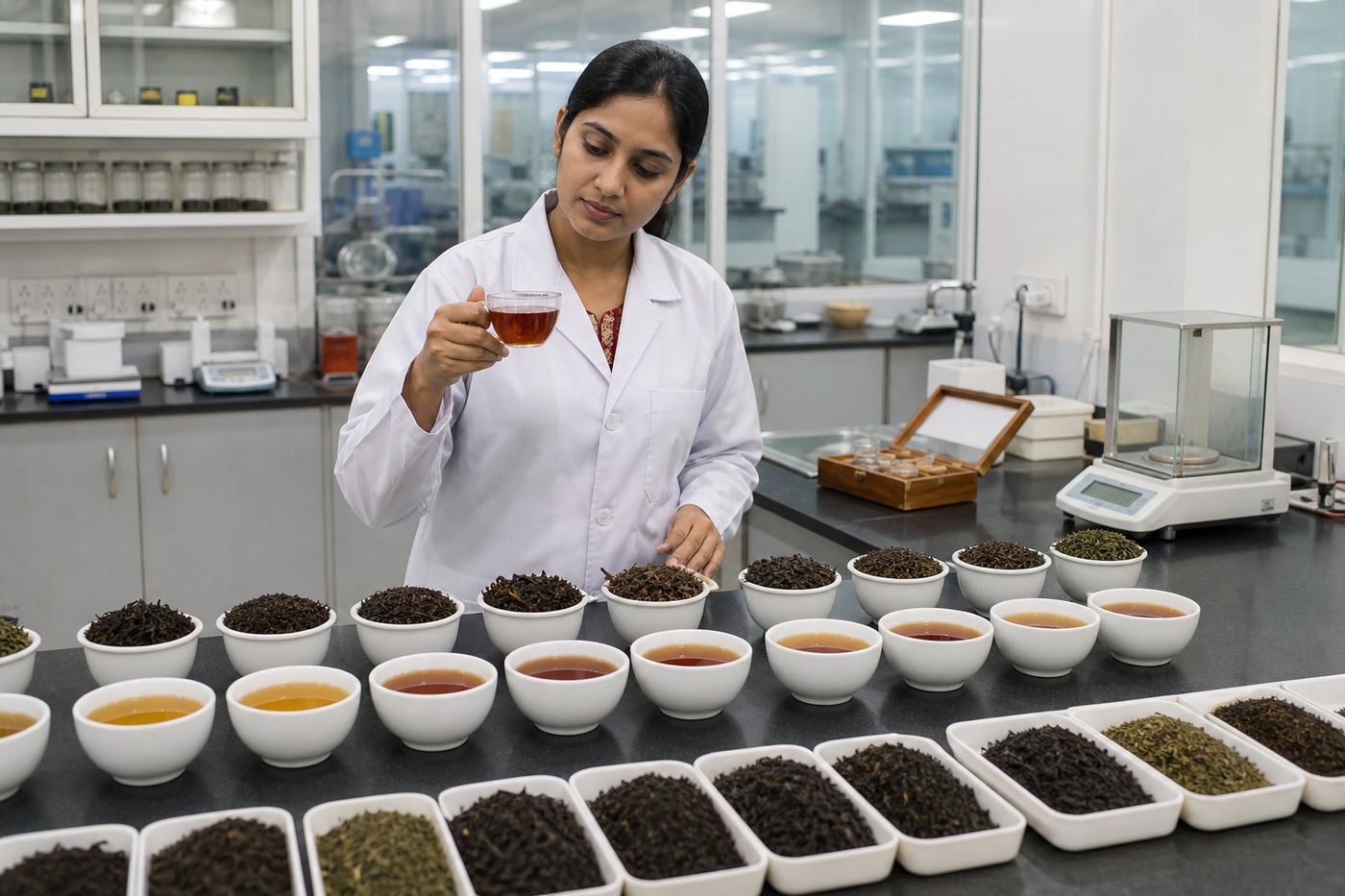
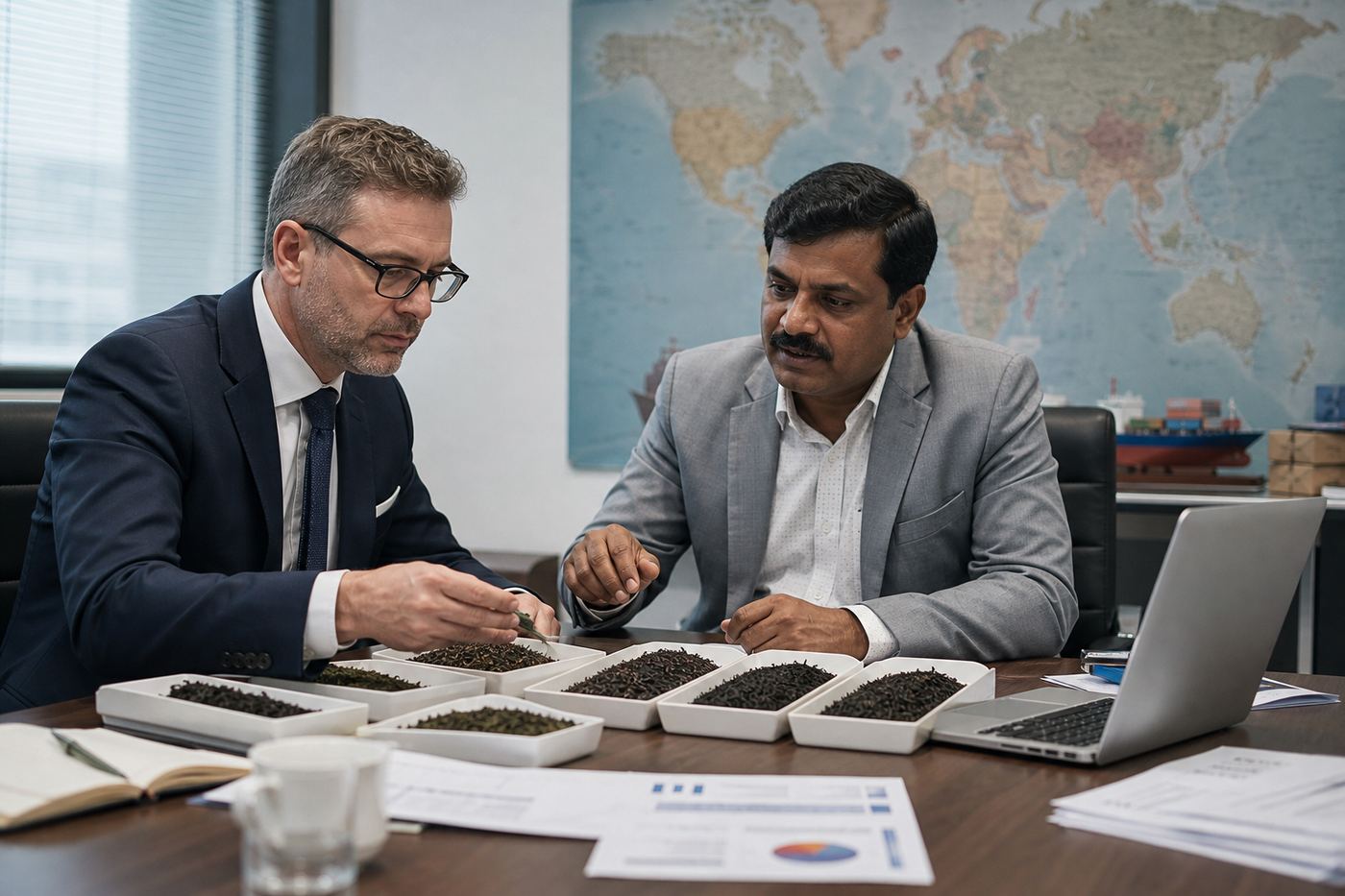
Send physical samples to your buyer before committing to bulk production or purchase. Cupping evaluation — assessing liquor colour, briskness, strength, and aroma — is standard practice in tea trade and should be documented in writing, with an agreed reference sample retained by both parties.
For commodity CTC destined for Middle East or CIS markets, cupping typically confirms colour and strength for strong-brew preferences. For orthodox and Darjeeling destined for UK, German, or US specialty buyers, cupping is more exacting — flush timing, muscatel character, and estate reputation all factor into approval. Never proceed to bulk packing without a signed sample approval on file.
Step 4: Bulk Procurement and Packing
Once samples are approved, place your bulk procurement order (or complete your own processing run) and move into packing. Packing format should be agreed with your buyer before production, not decided at the packing house on the day of loading.
Packaging Formats for Different Buyers
Commodity bulk shipments typically use multiwall paper sacks with polyethylene liners, in 25–60 kg units. Premium orthodox and Darjeeling shipments often move in foil-lined chests or vacuum-sealed multi-ply bags to protect aroma. Retail-ready programmes require tea bags or retail tins matching the buyer's branding specification, agreed in advance with sample approval.
Container Stuffing and Palletisation
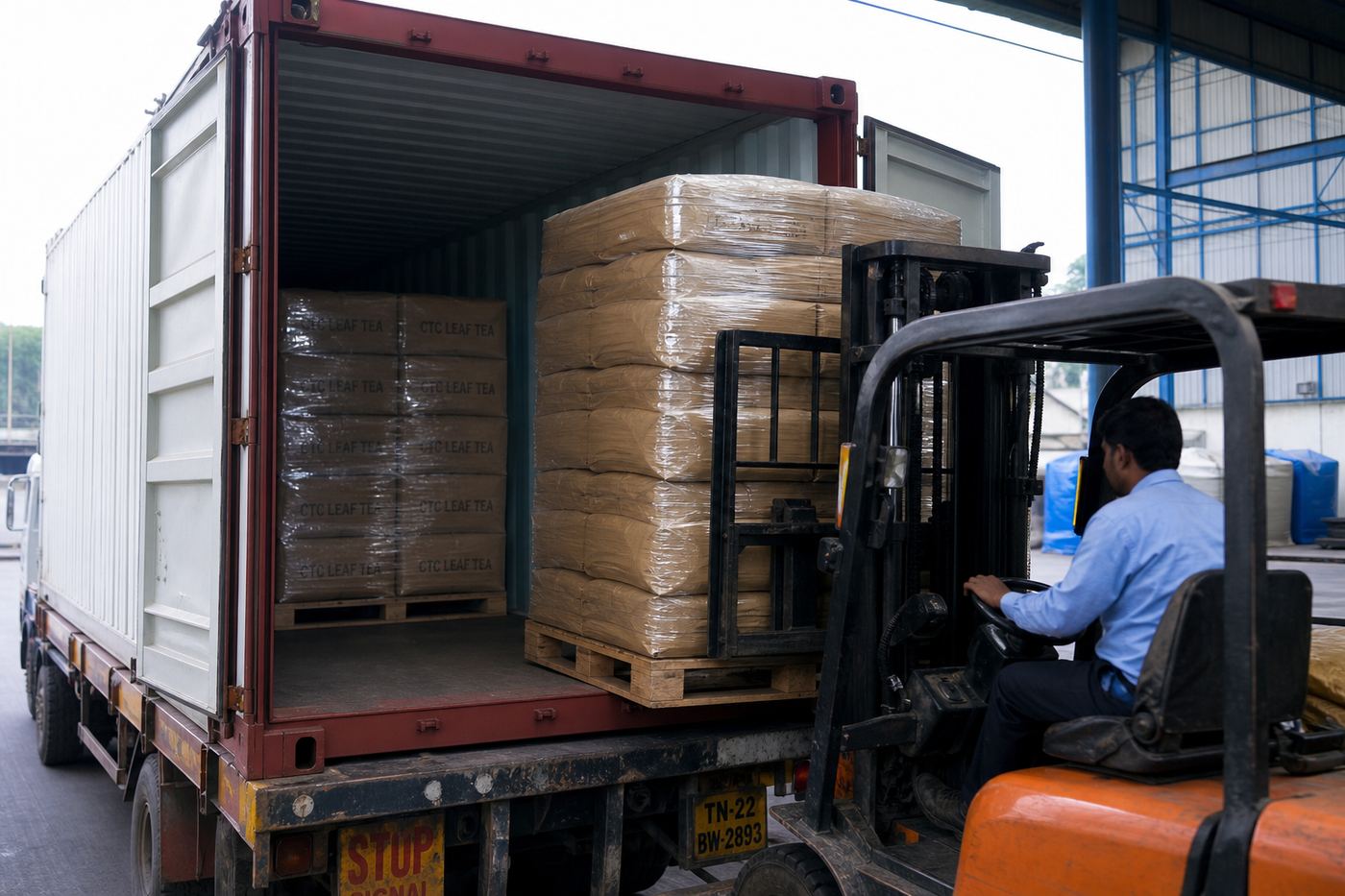
Palletise cartons or sacks for efficient container loading and easier destination unloading, and confirm weight distribution complies with container and destination handling limits. Line containers appropriately to control humidity — tea is highly moisture-sensitive, and condensation inside a poorly prepared container is a preventable cause of quality loss in transit.
Step 5: Export Documentation
Documentation should be prepared in parallel with packing, not after. Every document must agree with every other document — quantity, weight, and description mismatches between the invoice, packing list, and bill of lading are the leading cause of customs delays worldwide, independent of product quality.
Core Shipping Documents
Prepare a commercial invoice, packing list, bill of lading (or air waybill for air shipments), and export shipping bill filed through ICEGATE. See the Tea Export Documentation Checklist for a complete line-by-line breakdown of each document and common errors to avoid.
Certificates of Origin and Phytosanitary/Health Certificates
Obtain a certificate of origin from your local chamber of commerce, and a phytosanitary or health certificate where the destination market requires it for agricultural food products. Certificates should be applied for as soon as bulk production is confirmed — not after cartons are already palletised, since certificate issuance rarely happens same-day on request.
Step 6: Customs Clearance and Shipping Bill Filing
File your export shipping bill through ICEGATE, either directly (if you hold the necessary registrations) or through a Customs House Agent (CHA), who will coordinate with customs on your behalf. Your CHA should cross-check that the shipping bill's product description and HS code mirror your commercial invoice exactly before filing.
Customs will verify your IEC, Tea Board registration, and shipment documents against the declared consignment. Errors here — an HS code that does not match actual product composition, for instance — are corrected far more easily before the shipping bill is filed than after.
Step 7: Freight Booking and Shipment
Book freight through a forwarder aligned with your chosen incoterm — FOB is standard for most Indian tea exports, with the buyer arranging main carriage from the load port. Confirm the sailing schedule against your certificate validity windows; a certificate that expires before the vessel's expected arrival date invalidates otherwise correct paperwork.
Load ports for tea typically include Kolkata/Haldia (closest to Assam and Darjeeling/Dooars/Terai gardens), Cochin (serving South India/Nilgiri origin), and Nhava Sheva (a major container gateway for consolidated shipments). Port selection should minimise inland haul distance from your packing location while matching your buyer's preferred discharge port routing.
Step 8: Payment Realisation and Post-Shipment Compliance
After shipment, submit your export documents to your bank for payment realisation under the agreed terms — advance payment, letter of credit, or documentary collection are all common for tea trade, depending on buyer relationship maturity. Retain copies of all shipping documents for RBI/FEMA compliance and for GST/duty drawback claims where applicable.
First-time exporters should reconcile invoice value against actual foreign exchange realised and confirm the transaction is reported correctly to your bank within the required timeline. Building this habit from your first shipment prevents compliance backlogs as your export volume scales.
Manufacturing Overview: From Green Leaf to Export-Ready Tea
Export Tip
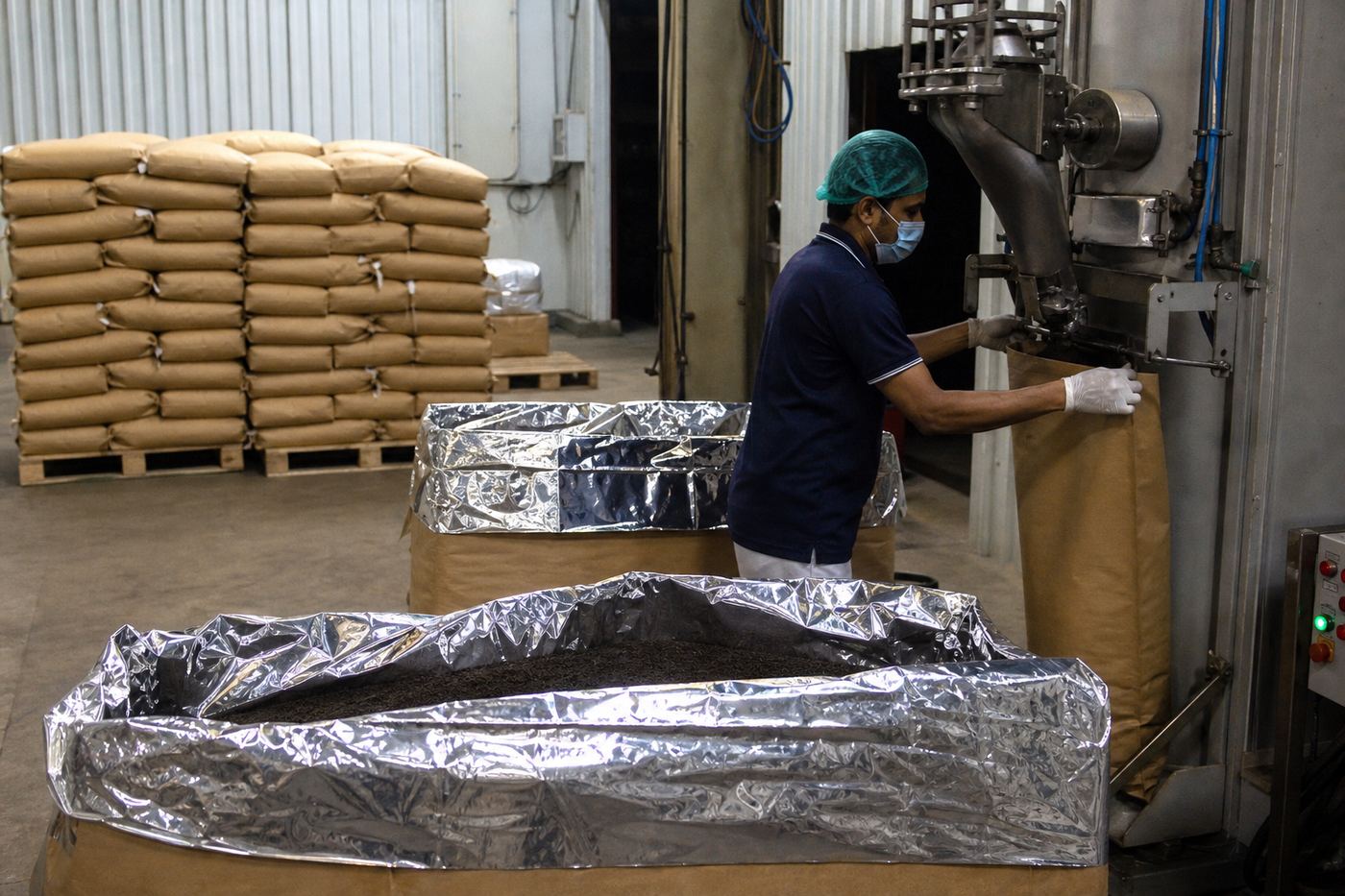
Understanding how tea is processed helps exporters evaluate supplier quality and explain product characteristics to buyers. Whether sourcing from an estate's own factory or a bought-leaf processing unit, the core stages are the same across CTC and orthodox manufacture, differing mainly in the rolling stage.
Plucking and Withering
Fresh leaf is plucked (typically two leaves and a bud for finer grades) and spread in withering troughs where controlled airflow reduces moisture content by roughly 65–70%, softening the leaf for processing. Withering time and airflow control directly influence the final cup character and are closely monitored by estate quality staff.
Rolling: CTC vs Orthodox
In CTC processing, withered leaf passes through Cut-Tear-Curl rollers that produce small, dense granules ideal for strong, fast-brewing liquor favoured in Middle East and CIS markets. In orthodox processing, leaf is rolled more gently to preserve whole or twisted leaf structure, producing the nuanced flavour profiles valued by UK, German, and Japanese specialty buyers. This single processing choice is the primary fork determining which export markets a batch will suit.
Fermentation (Oxidation)
Rolled leaf ferments (oxidises) under controlled humidity and temperature for a defined period, developing the colour, strength, and aroma characteristic of black tea. Under-fermentation produces greenish, thin liquor; over-fermentation produces flat, dull cups — both are graded down and command lower export prices.
Drying and Sorting/Grading
Fermented leaf is dried (fired) to arrest oxidation and reduce moisture to export-stable levels, typically below 7%. Dried tea is then sorted by particle size and appearance into export grades — BP, BOP, BOPSM, PD, PF, and Dust for CTC; OP, FOP, GFOP, and TGFOP for orthodox — before moving to the packing stage described in Step 4 of the export process above.
Pricing Analysis: Indicative FOB Benchmarks by Grade
Buyer Tip
Tea pricing follows auction cycles, currency movement, and destination willingness to pay — the figures below are indicative FOB ranges to help new exporters build realistic quotations, not fixed prices. Always validate current pricing against recent Kolkata, Guwahati, or Coonoor auction data before quoting a buyer.
Indicative FOB Price Ranges by Grade (USD/kg)
Swipe →
Data table — swipe horizontally on small screens
| Grade / Category | Indicative FOB Range (USD/kg) | Primary Destinations | Key Price Driver |
|---|---|---|---|
| CTC Dust / PD / PF | $1.80–$2.80 | Iraq, Libya, domestic blenders | Lowest-grade pricing; strong cup for karak-style brewing |
| CTC BP | $2.00–$3.00 | UAE, Russia, Egypt | Volume pricing; auction timing sensitive |
| CTC BOP / BOPSM | $2.20–$3.50 | UAE, Iraq, Iran | Blend consistency; colour and briskness |
| Orthodox OP (Assam) | $4.00–$7.00 | UK, Germany, USA | Whole-leaf appearance; cup character |
| Nilgiri Specialty | $3.50–$10.00 | UK, USA, Germany | Clean cup; organic potential |
| Darjeeling Second Flush | $8.00–$25.00 | UK, Germany, USA | Muscatel character; estate reputation |
| Darjeeling First Flush | $10.00–$35.00+ | UK, Germany, Japan, USA | GI origin; flush timing; scarcity |
| Organic Certified (CTC or orthodox) | $3.50–$5.50+ | Germany, USA, UK | Certification premium of roughly 30–50% |
MOQ Analysis
Buyer Tip
Minimum order quantity expectations vary sharply by grade and buyer type. New exporters should quote realistic MOQs rather than accepting unrealistically small trial orders that make packing and freight uneconomical, or unrealistically large first orders that overextend an unproven relationship.
Typical MOQ by Grade and Order Stage
Swipe →
Data table — swipe horizontally on small screens
| Grade / Category | Trial Order MOQ | Standard Programme MOQ | Notes |
|---|---|---|---|
| Commodity CTC (bulk) | 5 MT | 1 x 20ft FCL (~10–12 MT) or larger | 20-foot FCL is the standard commercial unit for CTC |
| Premium orthodox | 500 kg–1 MT | 2–5 MT per shipment | Trial lots often air-freighted for freshness |
| Darjeeling (GI origin) | 200–500 kg | 1–2 MT per flush order | Flush-specific timing constrains volume per order |
| Retail-ready (tea bags, tins) | 500 kg–1 MT finished product | Scales with retail programme size | Packaging lead time adds to minimum viable order |
Packaging Standards for Tea Export
Export Tip
Packaging protects tea from moisture, contamination, and aroma loss during transit, and must match the buyer's downstream use — a re-packer expects different packaging from a retail brand launching a finished SKU.
Standard Export Packaging Formats
Swipe →
Data table — swipe horizontally on small screens
| Packaging Format | Typical Unit Size | Common Use Case | Key Requirement |
|---|---|---|---|
| Multiwall paper sacks (with PE liner) | 25–60 kg | Bulk CTC for re-packing or industrial blending | Moisture barrier liner is essential |
| Foil-lined chests | 20–40 kg | Premium orthodox and Darjeeling preserving aroma | Foil integrity checked before sealing |
| Vacuum-sealed multi-ply bags | 5–25 kg | Specialty orthodox trial and premium lots | Vacuum seal integrity tested before dispatch |
| Tea bags (finished retail format) | Per SKU specification | Retail and foodservice branded programmes | Filter paper compliance and machine calibration |
| Retail tins / pouches | 100 g–1 kg | Direct-to-shelf retail and gifting | Label compliance for destination market |
Container Loading Details
Export Tip
Container loading efficiency directly affects per-unit freight cost. Tea's low bulk density compared to many agricultural commodities means containers are often volume-constrained before they are weight-constrained, especially for lighter CTC grades and loose-packed orthodox.
Indicative Container Loading Benchmarks
Swipe →
Data table — swipe horizontally on small screens
| Container Type | Approx. Net Tea Weight | Approx. Sack/Carton Count | Notes |
|---|---|---|---|
| 20-foot FCL | ~10–12 MT (bulk CTC in sacks) | ~200–240 sacks (50 kg each) | Standard unit for Middle East and CIS commodity orders |
| 40-foot FCL | ~20–24 MT (bulk CTC in sacks) | ~400–480 sacks (50 kg each) | Used for larger established programmes |
| 20-foot FCL (orthodox chests) | ~6–9 MT (lower bulk density) | Varies by chest size | Orthodox and Darjeeling often volume-out before weighing out |
| LCL consolidation | 200 kg–5 MT | Palletised cartons | Common for premium trial orders and specialty buyers |
Shipping Methods
Export Tip
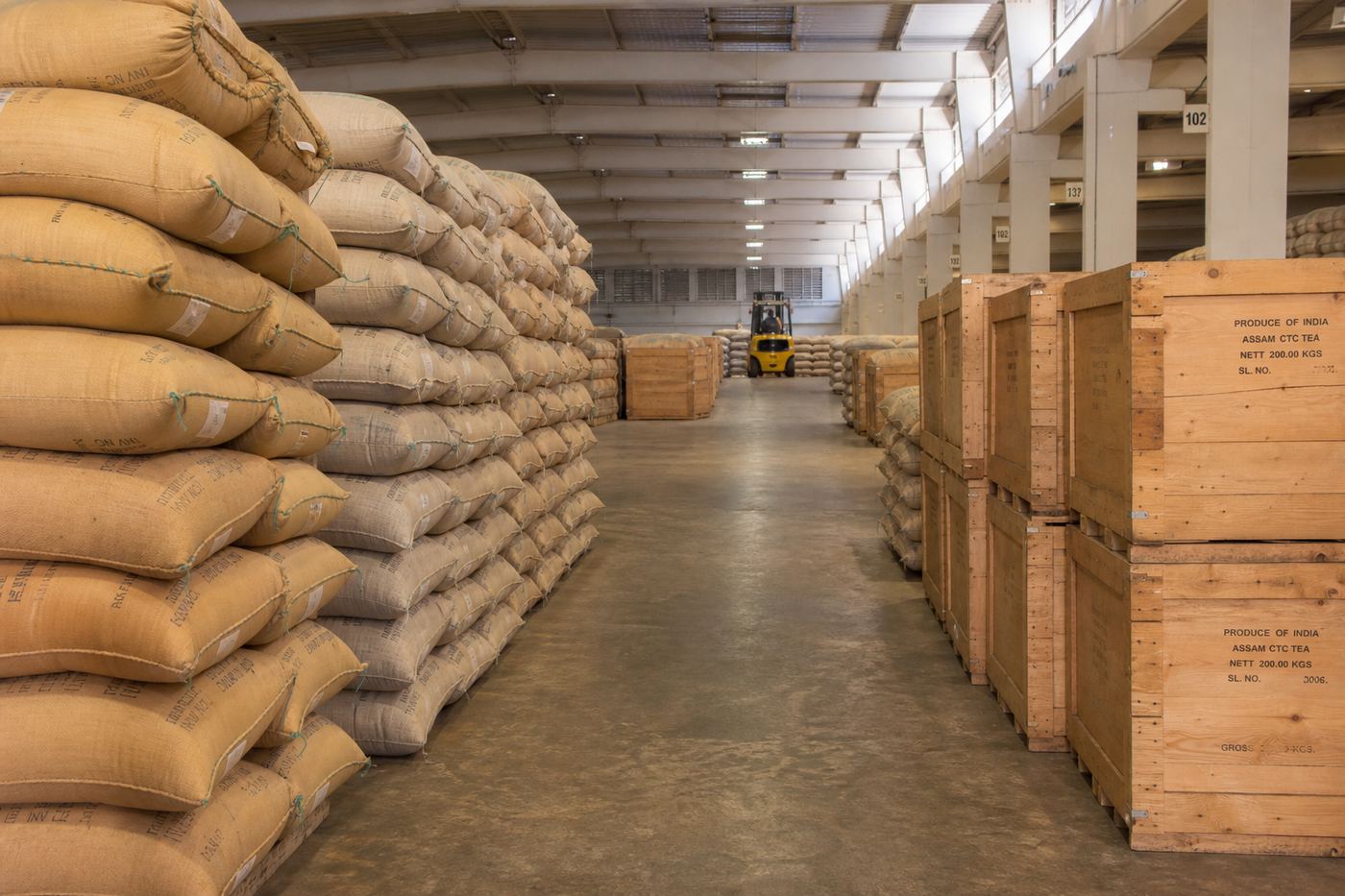
Sea freight is the dominant shipping method for tea export from India, chosen for its cost efficiency on the bulk volumes that commodity CTC programmes require. Full container load (FCL) is standard for established buyers; less-than-container-load (LCL) consolidation suits smaller specialty and trial orders where a full container is not yet justified.
Air freight is used selectively — most often for premium Darjeeling first-flush samples or small specialty lots where freshness and speed to market outweigh the higher per-kilogram freight cost. Kolkata/Haldia serves Assam, Darjeeling, Dooars, and Terai origin flows most directly; Cochin serves South India and Nilgiri origin tea; Nhava Sheva offers broad container availability and consolidation options for exporters shipping from multiple origin regions.
Certifications and Registrations
Compliance Notes
Beyond the mandatory IEC, Tea Board licence, and FSSAI registration covered in Step 1, additional certifications unlock specific market segments and buyer trust — some are legally required for certain claims, others are commercially expected even when not mandated.
Certifications Relevant to Tea Export
Swipe →
Data table — swipe horizontally on small screens
| Certification / Registration | Mandatory or Optional | Relevance |
|---|---|---|
| Tea Board of India exporter licence | Mandatory | Legal prerequisite for exporting tea from India |
| FSSAI food business licence | Mandatory | Required for processing and exporting a food product |
| NPOP / organic certification | Optional (required for organic claims) | Unlocks German, US, and UK organic retail channels |
| Darjeeling GI certification | Mandatory for GI-origin claims | Legally required to label tea as Darjeeling-origin |
| ISO 3720 | Optional, commercially expected | International black tea quality specification benchmark |
| Rainforest Alliance certification | Optional | Relevant for UK/EU buyers with sustainability sourcing policies |
Buyer Requirements Before Placing a First Order
Buyer Requirements
- Valid IEC and current Tea Board of India exporter registration, verifiable on request
- Cupping samples with consistent liquor, colour, and aroma across multiple batches
- Clear moisture and quality specifications, with test reports available for review
- Defined packaging options matching the buyer's downstream use (bulk, retail-ready, or private label)
- Realistic MOQ and lead-time commitments aligned to actual production capacity
International buyers evaluating a new Indian tea exporter typically look for verifiable registration (IEC, Tea Board licence), a track record of cupping-consistent samples, clear packaging specifications, and a documented sample-to-bulk sign-off process. First-time exporters should be ready to answer these questions before outreach, not after a buyer asks.
Country-wise Opportunities
Market Snapshot
This process guide covers only a brief country overview — for detailed market-by-market entry strategy, see Best Countries for Indian Tea Exports and Most Demanded Indian Tea by Country.
Priority Export Destinations (Overview)
Swipe →
Data table — swipe horizontally on small screens
| Country | Grade Fit | Entry Note |
|---|---|---|
| UAE | CTC BOP/BOPSM, blended grades | Re-export hub; build relationships with established traders |
| Iraq | Strong CTC (PD, PF, BOP) | CIF terms common; cupping for karak-style strength |
| Russia | CTC BP/BOP, flavoured blends | Payment corridor complexity; work with experienced partners |
| USA | CTC for foodservice; Darjeeling/Nilgiri for specialty | Split strategy needed across commodity and specialty segments |
| Iran | CTC blends, orthodox for premium segment | Route through established intermediaries |
| UK | Darjeeling, Assam orthodox | Estate traceability and GI documentation expected |
| Germany | Organic Darjeeling, certified CTC | Pesticide MRL compliance is the primary gatekeeper |
| China | Premium orthodox, GI Darjeeling | Niche only; GACC registration required |
Sourcing Checklist for International Buyers
Checklist
Exporter Checklist Before First Shipment
Checklist
Compliance Checklist
Checklist
Compliance Notes
Common Buyer Mistakes When Importing Tea from India
Common Mistakes Box
First-time buyers and first-time exporters make predictable mistakes that a structured process, like the one in this guide, is designed to prevent. Recognising these patterns early saves both sides significant cost.
Future Market Trends
Key Statistics
Three trends are shaping Indian tea export over the coming years: growing buyer demand for organic and Fairtrade certification, particularly from German and US specialty channels; increased scrutiny of pesticide residue limits in EU and Japanese markets, pushing estate-level integrated pest management up the priority list; and steady growth in specialty and single-origin retail demand in the USA, which rewards traceability and estate-level storytelling over commodity pricing alone.
Exporters who invest early in documentation discipline, certification readiness, and grade-consistent cupping will be positioned to serve both the stable commodity CTC markets and the growing premium specialty segment, rather than being confined to whichever market happens to be easiest to enter first.
Conclusion
- Next: explore product depth in Top Tea Products Exported from India.
- Choosing a market: see Best Countries for Indian Tea Exports and Most Demanded Indian Tea by Country.
- Documentation deep dive: Tea Export Documentation Checklist.
- Registration detail: Tea Board Registration Benefits for Exporters.
- Buyer-side sourcing: How to Source Tea Directly from India and Find International Buyers for Tea.
- Specialty and organic opportunity: Organic & Specialty Tea Export Opportunities from India.
- Trade show planning: Trade Shows for Tea Exporters.
- Browse agriculture & food products for related industry context.
Exporting tea from India follows a defined, learnable sequence: register your business and obtain an IEC, secure Tea Board of India and FSSAI licensing, source or produce export-grade tea, complete sampling and cupping approval, pack to specification, prepare documentation in parallel with production, clear customs, book freight, and manage post-shipment compliance. Each step reduces risk for the next — exporters who follow the sequence in order consistently ship faster and with fewer disputes than those who compress steps to save time.
Altus Exports supports Indian tea exporters and international buyers as a merchant exporter in India and global sourcing partner, coordinating supplier verification, documentation, and shipment under one accountable relationship. Explore our export products from India and product sourcing company services, or connect with us through find manufacturers in India for verified tea supply.