
How to Source Tea Directly from India: Importer & Buyer Playbook
By Saurabh Mittal, Founder, Altus Exports
A practical importer and buyer playbook on how to source tea directly from India — from defining specifications and issuing RFQs to supplier verification, sampling and cupping, trial orders, quality control, Incoterms negotiation, and shipment coordination. Written for tea importers, distributors, wholesalers, retail chains, and private-label buyers in the UAE, Iraq, UK, Germany, USA, Russia, and Iran who want reliable Indian Assam CTC, Darjeeling orthodox, and Nilgiri specialty supply with lower procurement risk. Includes supplier checklists, MOQ guidance, common buyer mistakes, and a German specialty importer case study from Altus Exports.
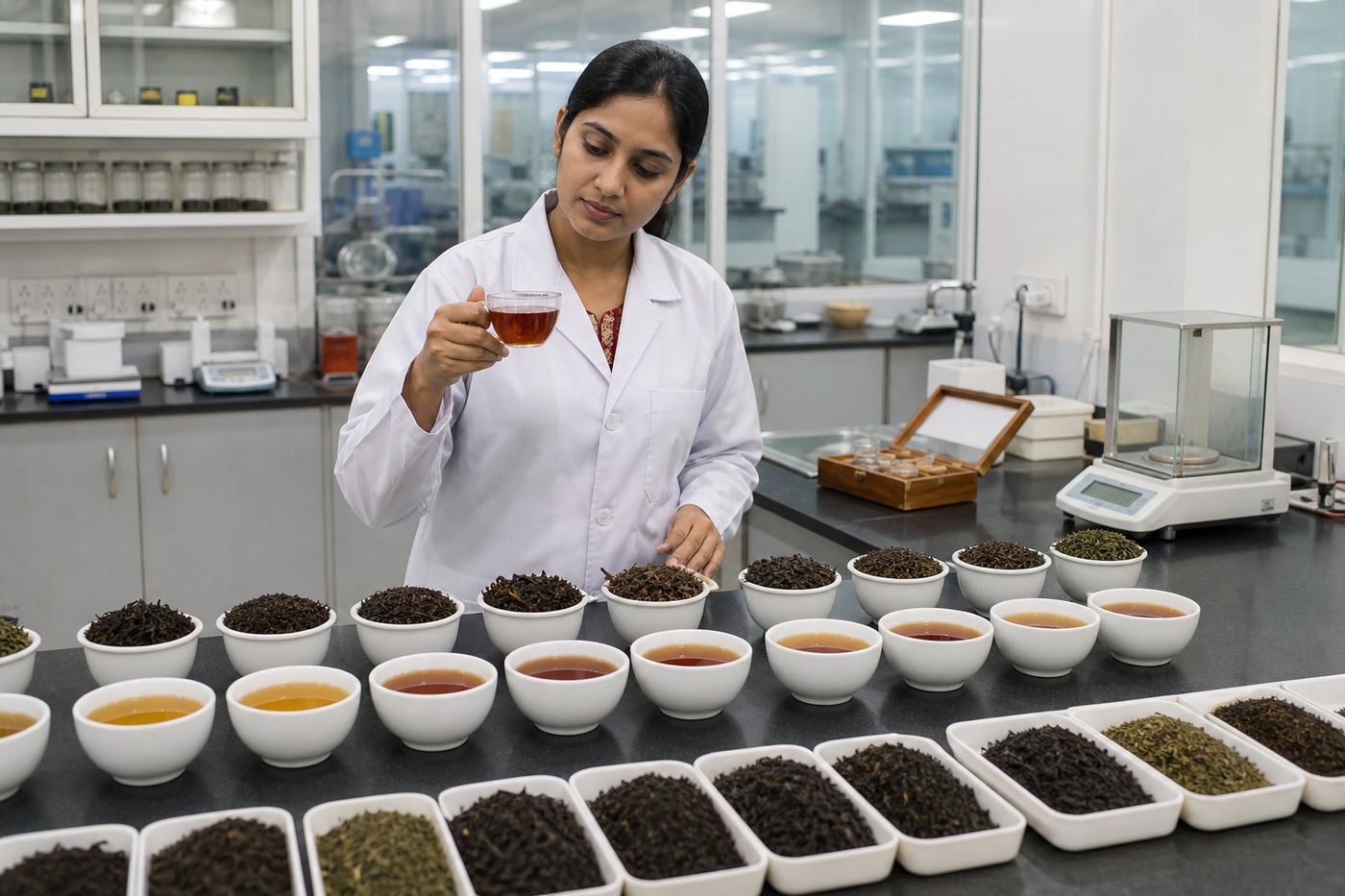
International buyers source tea from India for three structural reasons: production scale that no single origin except China can match, product diversity spanning commodity CTC to GI-protected Darjeeling orthodox, and competitive FOB pricing across both conventional and certified organic grades. Assam CTC drives Middle East and CIS karak and bag-tea programmes. Darjeeling first and second flush teas anchor UK and German specialty shelves. Nilgiri and Kangra orthodox supply clean-cup alternatives for US and European premium retail. For buyers who need volume, variety, and price flexibility under one sourcing geography, India is a rational primary or co-primary origin.
Yet buyers who attempt to source tea directly from India without a structured procurement process encounter predictable failures: samples that do not match bulk lots, exporters who cannot produce Tea Board registration, moisture readings above 7% causing mould in transit, pesticide MRL violations at EU port-of-entry, or Darjeeling claims without GI verification. India's tea export sector includes highly professional estate companies and merchant exporters alongside operators who cannot sustain international quality discipline. The difference between a successful India sourcing programme and a rejected container is buyer-side due diligence — not luck.
This guide is written for tea importers, wholesale distributors, retail chain procurement teams, private-label brands, foodservice suppliers, and blenders in the UAE, Iraq, UK, Germany, USA, Russia, Iran, and other active Indian tea import markets. It explains how to define specifications, issue RFQs, verify suppliers, manage cupping and trial orders, negotiate Incoterms, and coordinate QC — from the buyer's side. It is not an exporter registration how-to. For market selection intelligence, see Best Countries for Indian Tea Exports. For product depth, see Top Tea Products Exported from India. Altus Exports operates as a global sourcing partner in India and merchant exporter for buyers who want one accountable counterparty across multiple grades and origins.
Key Takeaways
Summary Box
- To source tea directly from India, define specifications completely — grade, origin, cupping profile, moisture, MRL requirements, packaging, MOQ, and Incoterms — before issuing RFQs.
- Verify Tea Board export licence, FSSAI registration, IEC, and export track record before any payment or trial order.
- Cupping is non-negotiable: evaluate samples against your market's taste profile, not the supplier's marketing description.
- Trial orders (200 kg–2 MT specialty; 5–10 MT commodity) should precede container-scale programmes.
- Incoterms from the buyer side: FOB for freight control; CIF when supplier has proven freight rates; avoid DDP until relationship is mature.
- Multi-origin programmes (Assam CTC + Darjeeling orthodox + Nilgiri) are often safer through a merchant exporter than fragmented direct-estate management.
- Altus Exports supports agriculture & food products sourcing with supplier verification, cupping coordination, QC alignment, and export documentation.
Market Overview: Why Buyers Source Indian Tea
India produced over 1.3 billion kilograms of tea in recent seasons and exported approximately 255–280 million kilograms in recent calendar years to more than 25 countries. Black tea accounts for roughly 96% of exports, with Assam and South India CTC supplying the volume backbone for Middle East, CIS, and North African markets. Orthodox and specialty grades from Darjeeling, Nilgiri, Assam, and Kangra serve UK, European, US, and Japanese premium channels.
Buyers source from India when they need: (1) volume CTC at competitive FOB prices for karak, bag tea, or foodservice programmes; (2) authentic Darjeeling with Tea Board GI protection for specialty retail; (3) organic and Fairtrade certified supply from established Indian estates; (4) blend components for English Breakfast, Earl Grey bases, and masala chai programmes; or (5) origin diversification away from Kenya or Sri Lanka during auction price spikes or supply disruptions.
India's institutional export framework — Tea Board registration, FSSAI food safety, Kolkata/Guwahati/Coonoor auction infrastructure, and APEDA-adjacent food export protocols — provides a credible foundation. The buyer's task is identifying which operators within that ecosystem meet your specific quality, documentation, and volume requirements.
Comparison table
Swipe →
Data table — swipe horizontally on small screens
| Buyer Type | Typical Indian Products | Priority Origins | Key Procurement Focus |
|---|---|---|---|
| Middle East importer / re-exporter | Assam CTC BOP/BOPSM, South India CTC | Assam, Kerala, Tamil Nadu | Cupping strength; price vs Kenya; container consistency |
| Iraqi karak blender | Strong CTC PD/PF/BOP blends | Assam | Colour, malty character, briskness; CIF terms |
| UK specialty importer | Darjeeling FTGFOP, Assam TGFOP | Darjeeling, Assam | GI verification; flush timing; estate traceability |
| German organic retailer | Darjeeling organic, Assam orthodox organic | Darjeeling, Assam, Nilgiri | EU Organic cert; pesticide MRL panels |
| US foodservice / RTD | CTC commodity, iced-tea suitable grades | Assam, South India | Consistent bulk quality; FDA compliance |
| US specialty / e-commerce | Darjeeling, Nilgiri, single-estate orthodox | Darjeeling, Nilgiri | Estate story; cupping nuance; retail packaging path |
| Russian distributor | CTC black, flavoured blends | Assam, blended at Indian units | Blend customization; labelling; payment corridor |
| Private-label supermarket | CTC or orthodox per positioning | Varies | Packaging specs; certification; programme pricing |
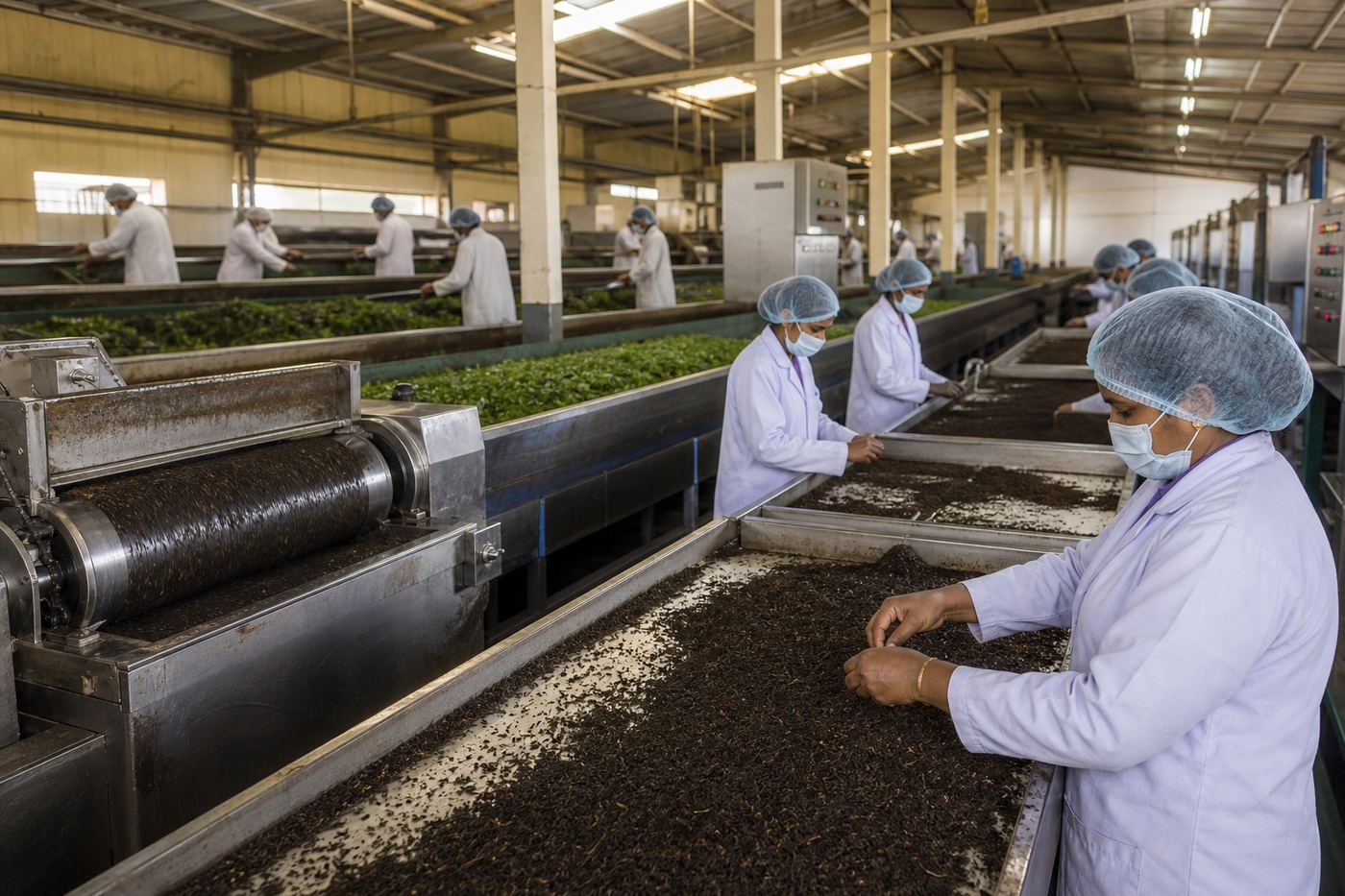
Product Overview: Grades, Origins, and What to Specify in Your RFQ
Export Tip
Summary Box
The most common buyer-side failure in Indian tea sourcing is an incomplete specification. Indian suppliers receive hundreds of vague enquiries — 'need good quality tea, best price' — and respond with whatever is in stock. Precision in your RFQ attracts professional exporters and filters out brokers who cannot meet defined standards.
Comparison table
Swipe →
Data table — swipe horizontally on small screens
| Specification Field | What to Define | Example |
|---|---|---|
| Product type | CTC vs orthodox vs green | Assam CTC BOPSM, orthodox whole leaf |
| Origin | Region and estate if specialty | Assam (general) or Darjeeling Singbulli estate |
| Grade | Indian grading nomenclature | BOPSM, TGFOP1, FTGFOP1 |
| HS code | For customs and contract | 0902 40 (bulk black tea) |
| Cupping profile | Your market's taste requirements | Strong, malty, bright colour, 3-min brew at 95°C |
| Moisture max | Critical for transit quality | ≤ 7% (commodity); ≤ 5% (premium orthodox) |
| Pesticide MRL | Destination-market compliance | EU Regulation 396/2005 full panel |
| Packaging | Bag size, liner, carton spec | 30 kg PP bag with foil liner, 30 kg net per carton |
| Volume | Trial and programme quantity | Trial 5 MT; programme 40 MT/quarter |
| Certification | If required | EU Organic, Fairtrade, Rainforest Alliance, Halal |
| Incoterms | Risk and cost allocation | FOB Kolkata or CIF Umm Qasr |
CTC Grades Buyers Should Know
- BP (Broken Pekoe) — larger CTC particles; balanced strength and cup.
- BOP (Broken Orange Pekoe) — workhorse grade for Middle East and CIS blending.
- BOPSM (BOP Special Mesh) — popular in UAE and Iraq for colour and body.
- PD (Pekoe Dust) — fine particles; strong, quick infusion for karak.
- PF (Pekoe Fannings) — bag-tea and quick-brew applications.
- Dust / Fanning — lowest grade pricing; industrial and karak blending.
Orthodox Grades Buyers Should Know
- OP (Orange Pekoe) — standard whole-leaf orthodox; UK and EU specialty baseline.
- FOP (Flowery Orange Pekoe) — tips visible; premium appearance.
- TGFOP (Tippy Golden Flowery Orange Pekoe) — Assam and Darjeeling premium.
- FTGFOP1 (Finest Tippy Golden Flowery Orange Pekoe, Grade 1) — Darjeeling first flush flagship.
- STGFOP1 — super tippy premium; highest Darjeeling pricing tier.
Origin Profiles for Buyer Specifications
Assam teas deliver malty, full-bodied character — the benchmark for CTC commodity and strong orthodox. Darjeeling teas offer muscatel, floral, and astringent profiles unique to the Himalayan foothills GI zone. Nilgiri teas from Tamil Nadu provide clean, bright cups popular in US and EU specialty. South India CTC from Kerala and Tamil Nadu competes with Assam on price with a slightly different cup profile. Specify origin in your RFQ when cup character matters; accept 'Indian CTC' only when price is the sole criterion.
Understanding the Indian Tea Supply Chain (Buyer Perspective)
Buyers who understand supply chain nodes negotiate better, verify more effectively, and choose the right counterparty type for their programme scale.
Comparison table
Swipe →
Data table — swipe horizontally on small screens
| Supply Chain Node | Role | Buyer Implication |
|---|---|---|
| Tea estates | Grow, process, and pack own leaf (especially orthodox) | Best for specialty traceability; verify estate Tea Board licence |
| Bought-leaf factories | Process leaf purchased from small growers | Quality varies; require cupping per lot |
| Auction buyers / blenders | Purchase at Kolkata, Guwahati, Coonoor auctions; blend and export | Best for commodity CTC; confirm auction lot traceability |
| Merchant exporters | Source from multiple estates/auctions; manage export documentation | Best for multi-grade programmes; single accountable counterparty |
| Broker agents | Connect buyers and sellers; may not hold export licence | Verify who holds Tea Board licence and receives payment |
| Packers / private-label units | Repack bulk into retail formats | Confirm FSSAI licence; packaging compliance for your market |
Step-by-Step: How to Source Tea Directly from India
Export Tip
The following procurement sequence is the workflow Altus Exports recommends for international buyers entering or restructuring Indian tea supply. Adapt step durations to your category — specialty orthodox moves slower than commodity CTC.
Step 1: Define Your Specification Document
Create a one-page specification sheet covering every field in the Product Overview table above. Include destination country, intended use (karak, bag tea, loose retail, blending component), and your cupping benchmark — ideally referencing a current supplier's profile you want to match or exceed. Attach your packaging specification if you require specific bag sizes, liners, or carton markings.
Step 2: Build a Supplier Long List
Identify 8–15 potential suppliers through: Tea Board registered exporter list, trade show contacts (Gulfood, London Tea Fair, World Tea Expo — see Trade Shows for Tea Exporters), import shipment data under HS 0902, industry referrals, B2B platforms, and global sourcing partners like Altus Exports. For commodity buyers, include auction houses and established merchant exporters. For specialty buyers, include estate companies with direct export licences.
Step 3: Issue a Structured RFQ
- Request FOB price in USD per kg at stated packaging specification.
- Request CIF price only if you want supplier-arranged freight — compare against your own forwarder rates.
- Ask for Tea Board export licence number and FSSAI licence number in the RFQ response.
- Ask for three reference buyers in your region (or adjacent markets) with contact permission.
- Specify sample quantity needed (250 g–1 kg per grade) and who pays courier cost.
Send your specification document to the long list with a standard RFQ template requesting: unit price (FOB and/or CIF), MOQ, lead time, sample availability, certifications held, export history to your market, payment terms, and Tea Board licence number. Set a response deadline (typically 10–14 business days). RFQs that specify cupping requirements — 'sample must score minimum 32/50 on our internal cupping sheet' — filter unqualified responders quickly.
Step 4: Supplier Verification and Due Diligence
- Verify Tea Board export registration at teaboard.gov.in — licence must be active.
- Verify FSSAI licence status and that the processing/packing address matches the exporter's declared facility.
- Confirm IEC (Import Export Code) via DGFT records or request copy.
- Request last three shipping bills or bill of lading copies for shipments to your region.
- Check reference buyers — one phone call reveals more than ten email exchanges.
- For Darjeeling: verify Tea Board GI certification for the specific estate.
- For organic: verify certification body, scope, and validity period.
- Cross-check exporter name against import data — do they actually ship, or only quote?
Before sampling, verify the top five RFQ responders through documentary and reference checks. This step eliminates operators who quote attractively but cannot execute.
Step 5: Sampling and Professional Cupping
- Cup at standard ratio: 2.8 g leaf per 150 ml water at 95–100°C for black tea.
- Score on appearance, aroma, liquor colour, body, briskness, character, and aftertaste.
- For CTC: prioritise liquor colour, strength, briskness, and malty character.
- For orthodox: prioritise leaf appearance, aroma complexity, and cup nuance.
- Run moisture check on sample if possible — above 7% signals transit risk.
- Request pesticide residue panel on specialty samples destined for EU/USA if supplier claims compliance.
- Cup minimum three suppliers side-by-side — relative ranking matters more than absolute scores.
Request pre-shipment samples from your shortlisted suppliers — not retain samples from prior seasons. Samples should be cupped using ISO 3103 / professional cupping protocol at your facility or an independent tea taster. Evaluate against your market's taste profile, not generic quality labels.
Step 6: Trial Order
Place a trial order with your top one or two cupping winners. Trial size: 5–10 MT (one partial container or consolidated LCL) for commodity CTC; 200 kg–2 MT for specialty orthodox. Trial orders should specify that bulk lot must cup within agreed tolerance of approved sample. Include a quality claim clause: if bulk cups outside tolerance, replacement or refund at supplier cost.
Step 7: Pre-Shipment Quality Control
- Request pre-shipment sample from the actual bulk lot — not a fresh sample from a different batch.
- Verify moisture content on export lot (certificate from recognised lab).
- For EU/USA: request multi-residue pesticide test on the export lot batch.
- Inspect packaging integrity: PP bag sealing, carton strength, pallet strapping.
- Verify lot numbers on invoice, packing list, and quality certificates match.
- For Darjeeling: confirm GI certificate covers the specific lot and flush.
For trial and programme orders, implement pre-shipment QC before cargo sails. Options range from supplier-provided cupping report and moisture certificate (minimum for commodity) to independent third-party inspection (recommended for specialty and EU-bound shipments).
Step 8: Shipping, Customs, and Receipt
Coordinate with your customs broker before cargo sails. Confirm HS 0902 classification, certificate of origin, phytosanitary requirements (if applicable for your country), and health/food safety certificates. On receipt, cup a representative sample from the landed container before accepting — document any deviation from trial quality immediately.
Step 9: Programme Scaling and Supplier Review
Convert successful trial suppliers into quarterly or annual programme contracts with defined volume, pricing mechanism (fixed or auction-indexed), quality tolerances, and payment terms. Review supplier performance every six months on: cupping consistency, documentation accuracy, lead time reliability, and communication responsiveness. Maintain a backup supplier for every programme grade.
Trade Statistics and Import Data for Buyer Intelligence
Key Statistics
Buyers who understand India's export patterns negotiate from strength. India exports approximately 200–230 million kg of tea annually, with the UAE, Iraq, Russia, USA, UK, Iran, and Germany among the leading destinations. Black tea under HS 0902 40 (bulk packages > 3 kg) dominates. Import data from your country under HS 0902 reveals total market size, India's share vs Kenya and Sri Lanka, and average unit values that signal commodity vs specialty positioning.
Use ITC Trade Map, national customs statistics, or subscription trade data platforms to answer: How much tea does my country import annually? What is India's share? Is India's share growing or declining? What is the average CIF unit value — and does it align with the grade I am sourcing? A market importing bulk tea at $2.50/kg CIF average is a commodity game. A market at $12/kg CIF average rewards specialty investment.
Cross-reference with Best Countries for Indian Tea Exports and Most Demanded Indian Tea by Country for demand-grade alignment specific to your market.
Comparison table
Swipe →
Data table — swipe horizontally on small screens
| Data Source | What It Tells Buyers | How to Use It |
|---|---|---|
| Tea Board export statistics | India-side volumes by country and grade | Validate supplier claims about export experience |
| ITC Trade Map (HS 0902) | Destination import volumes and origin shares | Size your market opportunity; benchmark India's position |
| Import shipment records | Named importers and their Indian suppliers | Identify competitors' supply chains; find active exporters |
| Kolkata/Guwahati auction reports | Indian domestic price benchmarks | Evaluate whether supplier FOB quotes are reasonable |
| Mombasa auction reports | Kenyan CTC benchmark prices | Negotiate Middle East CTC pricing with data |
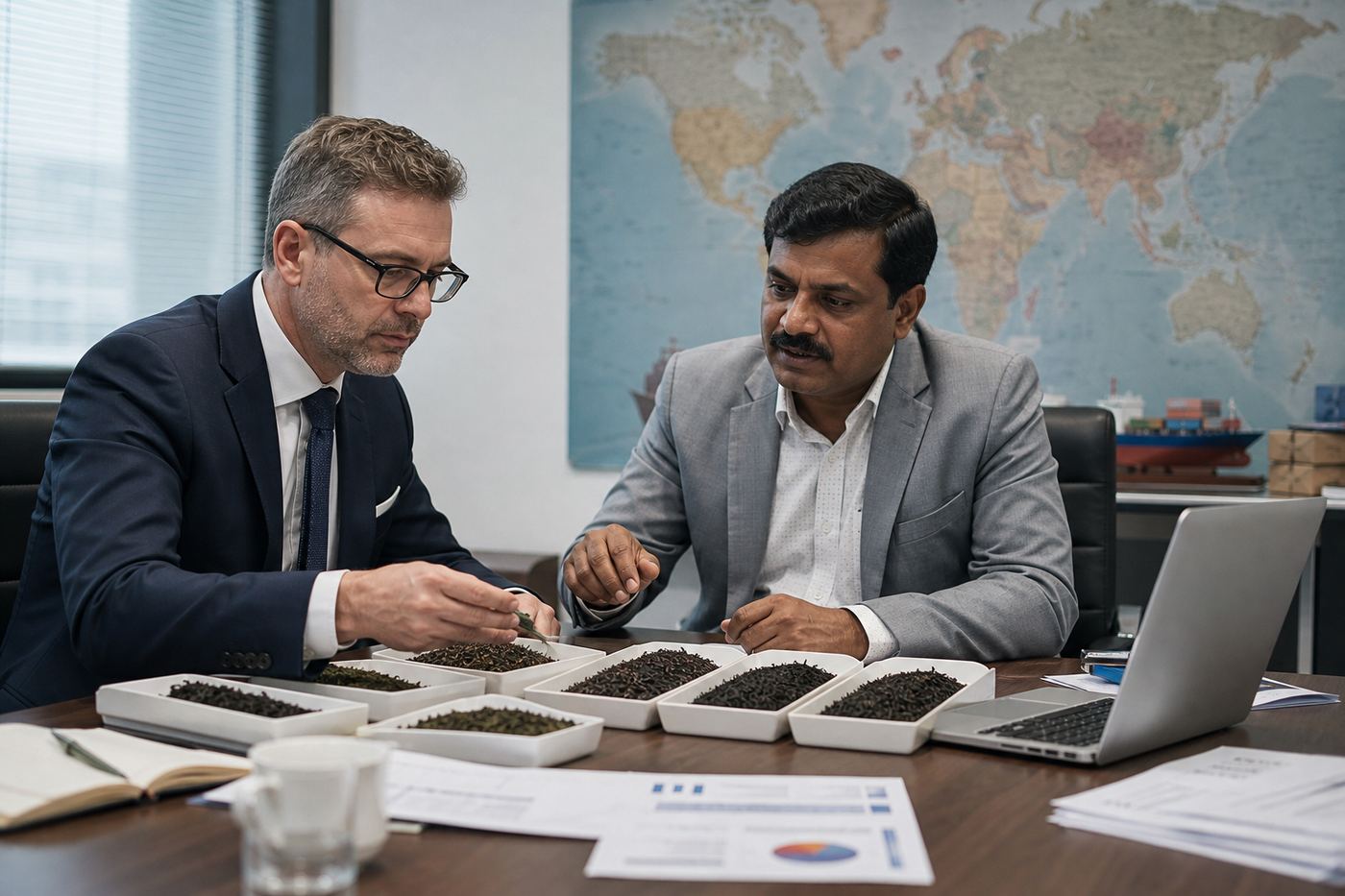
Pricing Analysis: What Buyers Should Pay and How to Negotiate
Buyer Tip
Indian tea FOB pricing follows auction cycles, grade, origin, certification, and order size. Buyers who benchmark against auction data and competing origin pricing avoid overpaying — and avoid underpaying to the point where suppliers cut quality.
Comparison table
Swipe →
Data table — swipe horizontally on small screens
| Category | Indicative FOB Range (USD/kg) | Price Drivers | Negotiation Leverage |
|---|---|---|---|
| Assam CTC BOP/BOPSM | $2.20–$3.50 | Auction cycle; order volume; cupping score | Kenyan Mombasa auction comparison; programme commitment |
| South India CTC | $2.00–$3.20 | Similar to Assam; slight cup difference | Volume commitment; multi-container annual contract |
| CTC PD/PF/Dust | $1.80–$2.80 | Lowest grade; blend component | Blend specification flexibility; larger MOQ |
| Assam Orthodox OP/TGFOP | $4.00–$8.00 | Leaf appearance; estate reputation | Annual programme; flush-specific commitment |
| Darjeeling First Flush | $10.00–$35.00+ | Estate; flush; GI authenticity | Pre-season commitment; exclusive estate relationship |
| Darjeeling Second Flush | $8.00–$25.00 | Muscatel character; estate name | Early booking before flush harvest |
| Nilgiri Specialty | $3.50–$10.00 | Organic status; grade | Multi-year programme offer |
| Organic Certified (any type) | +30–60% over conventional | Certification cost; audit compliance | Long-term contract absorbing cert costs |
Incoterms from the Buyer's Side
FOB (Free on Board): Buyer arranges and pays ocean freight, insurance, and destination charges. Best when you have established freight forwarder relationships and want cost transparency. Standard for UK, German, and US specialty buyers.
CIF (Cost, Insurance, Freight): Supplier quotes all-in landed price to your port. Best for Iraqi, Iranian, and some Russian buyers who prefer single-price quotes. Always compare CIF against your own FOB + freight calculation — suppliers sometimes embed freight margins of 5–15%.
EXW (Ex Works): Buyer collects from Indian factory/warehouse. Rare in tea export; only for buyers with India logistics capability.
DDP (Delivered Duty Paid): Supplier delivers to your door including import duties. Avoid for first relationships — import duty complexity across markets makes this risky for both parties.
Payment Terms: Buyer Risk Management
- First order: 30–50% advance, balance against bill of lading copy — or LC at sight.
- Trial order: LC at sight preferred over advance for unknown suppliers.
- Programme orders (established relationship): 20–30% advance, balance Net 30 against BL.
- Never pay 100% advance to an unverified supplier — the most common first-time buyer mistake.
- LC at sight through a recognised bank is the standard risk-balanced instrument for tea trade.
MOQ, Packaging, Shipping, and Lead Times
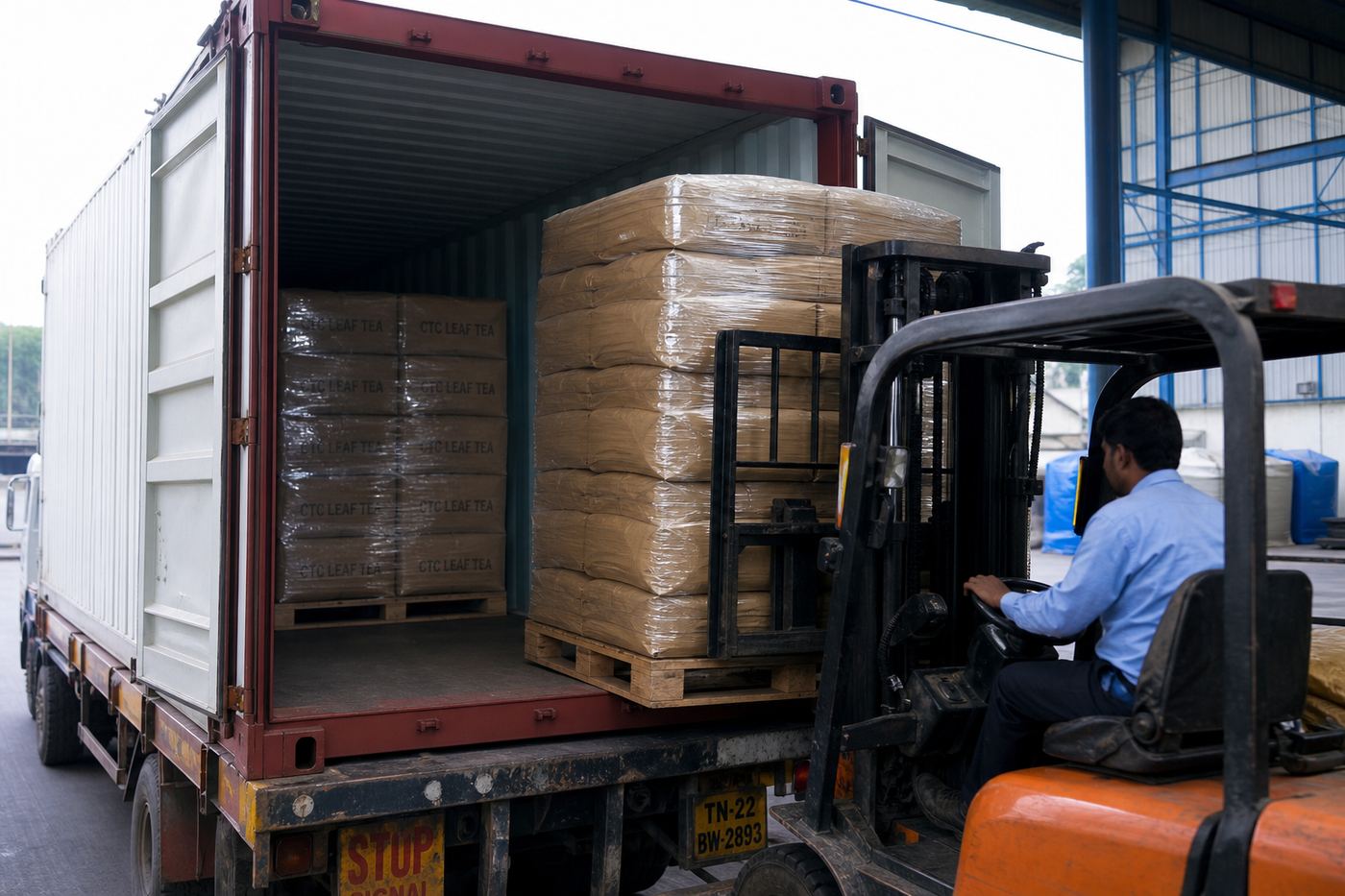
Buyers should specify packaging requirements in the RFQ — not discover carton specifications after production. Standard Indian export packaging (30 kg PP bags in printed or blank cartons, palletised with stretch wrap) is acceptable for most commodity buyers. UK and EU retail-path buyers may require food-grade certified packaging materials, specific carton dimensions for warehouse automation, or eventually retail-ready pouches — plan this upgrade path in your sourcing timeline.
Comparison table
Swipe →
Data table — swipe horizontally on small screens
| Parameter | Commodity CTC | Specialty Orthodox |
|---|---|---|
| Trial MOQ | 5–10 MT | 200 kg–2 MT |
| Programme MOQ | 20-foot FCL (10–12 MT) | 5 MT+ per flush/order |
| Packaging | 30 or 60 kg PP bags, foil liner, corrugated cartons | Multi-ply kraft or vacuum pouches; estate-branded if required |
| Container | 20-foot FCL standard; 40-foot for large programmes | Air freight for urgent Darjeeling first flush trials |
| Lead time (order to sail) | 3–6 weeks | 4–8 weeks (flush-dependent) |
| Transit (India to UAE) | 18–22 days | 18–22 days |
| Transit (India to UK/EU) | 25–35 days | 25–35 days |
| Transit (India to US East Coast) | 28–38 days | 28–38 days |
| Moisture standard | ≤ 7% | ≤ 5–7% depending on grade |
Certifications, Duties, and Compliance Notes for Buyers
Compliance Notes
Compliance requirements vary sharply by destination. Buyers must specify certification needs in RFQs and verify certificates independently — not rely on supplier claims.
Comparison table
Swipe →
Data table — swipe horizontally on small screens
| Destination | Key Compliance Requirements | Buyer Action |
|---|---|---|
| UAE / Iraq / Iran | Halal-friendly processing; standard food import permits; moisture and cleanliness | Request Halal cert if retail-facing; standard QC sufficient for commodity |
| UK | UK FSA; pesticide MRL; accurate origin labelling; Darjeeling GI if claimed | Request UK MRL panel on specialty lots; verify GI certificates |
| Germany / EU | EU Regulation 396/2005 MRL; EU Organic if claimed; packaging (PPWR) | Mandatory multi-residue testing; verify EU Organic cert validity |
| USA | FDA food facility registration for supplier; FSMA; EPA pesticide tolerances | Confirm supplier FDA registration; request US MRL panel for specialty |
| Russia / EAEU | EAEU technical regulations; Russian-language labelling | Work with import broker; confirm EAEU conformity |
| Japan | Strictest MRL globally; positive list system | Only source from estates with documented IPM; full residue panel per lot |
Import Duties: General Guidance
Tea import duties vary by country and trade agreement. Many tea-importing countries apply zero or low MFN tariffs on HS 0902 black tea in bulk — but preferential agreements, excise taxes, and VAT/GST apply at different stages. UK, EU, and US buyers should confirm current duty rates with their customs broker rather than relying on generalised figures. India's bilateral trade agreements may provide preferential rates to specific partners — request certificate of origin in the appropriate format (GSP, SAFTA, or bilateral) if applicable to your country.
Country-wise Sourcing Notes for Buyers
Market Snapshot
- UAE buyers: Source Assam and South India CTC; benchmark against Kenyan prices; build relationships with 2–3 exporters for supply security; re-export programmes need consistent cupping batch-to-batch.
- Iraqi buyers: Specify strong, malty, high-colour CTC blends; cupping panel should include karak preparation (extended boil with milk); CIF terms standard.
- UK buyers: Source Darjeeling by estate and flush; verify GI; English Breakfast blends need consistent Assam orthodox component; plan for Rainforest Alliance or Fairtrade if retail-facing.
- German buyers: Prioritise certified organic supply; pesticide MRL testing is non-negotiable; plan for German-language retail packaging in programme phase two.
- US buyers: Split sourcing — CTC for foodservice from Assam; specialty Darjeeling/Nilgiri for retail; confirm FDA registration of supplier facility.
- Russian buyers: Confirm payment corridor with supplier before ordering; flavoured tea blends can be sourced from Indian packing units.
Your sourcing strategy should align with your market's product expectations. The following notes complement Best Countries for Indian Tea Exports from the buyer's perspective.
Challenges & Solutions: Buyer-Side Risk Matrix
Comparison table
Swipe →
Data table — swipe horizontally on small screens
| Challenge | Impact | Solution |
|---|---|---|
| Sample-to-bulk quality gap | Container does not match approved sample | Pre-shipment cupping of actual lot; quality claim clause in contract |
| Unverified exporter | Payment loss or no shipment | Tea Board and FSSAI verification before any payment |
| Moisture above 7% | Mould, quality degradation in transit | Moisture certificate per lot; desiccant for long routes |
| Pesticide MRL failure (EU/USA) | Consignment rejection at port | Require lot-specific residue panel from recognised lab |
| Fake Darjeeling origin | Legal liability; brand damage | Verify Tea Board GI certificate per estate per flush |
| Documentation mismatch | Customs hold; demurrage charges | Request draft documents pre-sailing; broker review |
| Payment dispute | Stalled supply relationship | LC at sight for trials; clear payment milestones in contract |
| Single-supplier dependency | Supply disruption | Qualify backup supplier for every programme grade |
| Packaging damage in transit | Product loss; mould ingress | Specify carton and pallet standards; marine insurance |
| Currency fluctuation on fixed-price contract | Margin erosion for buyer or supplier | Index pricing to auction averages; 90-day price validity |
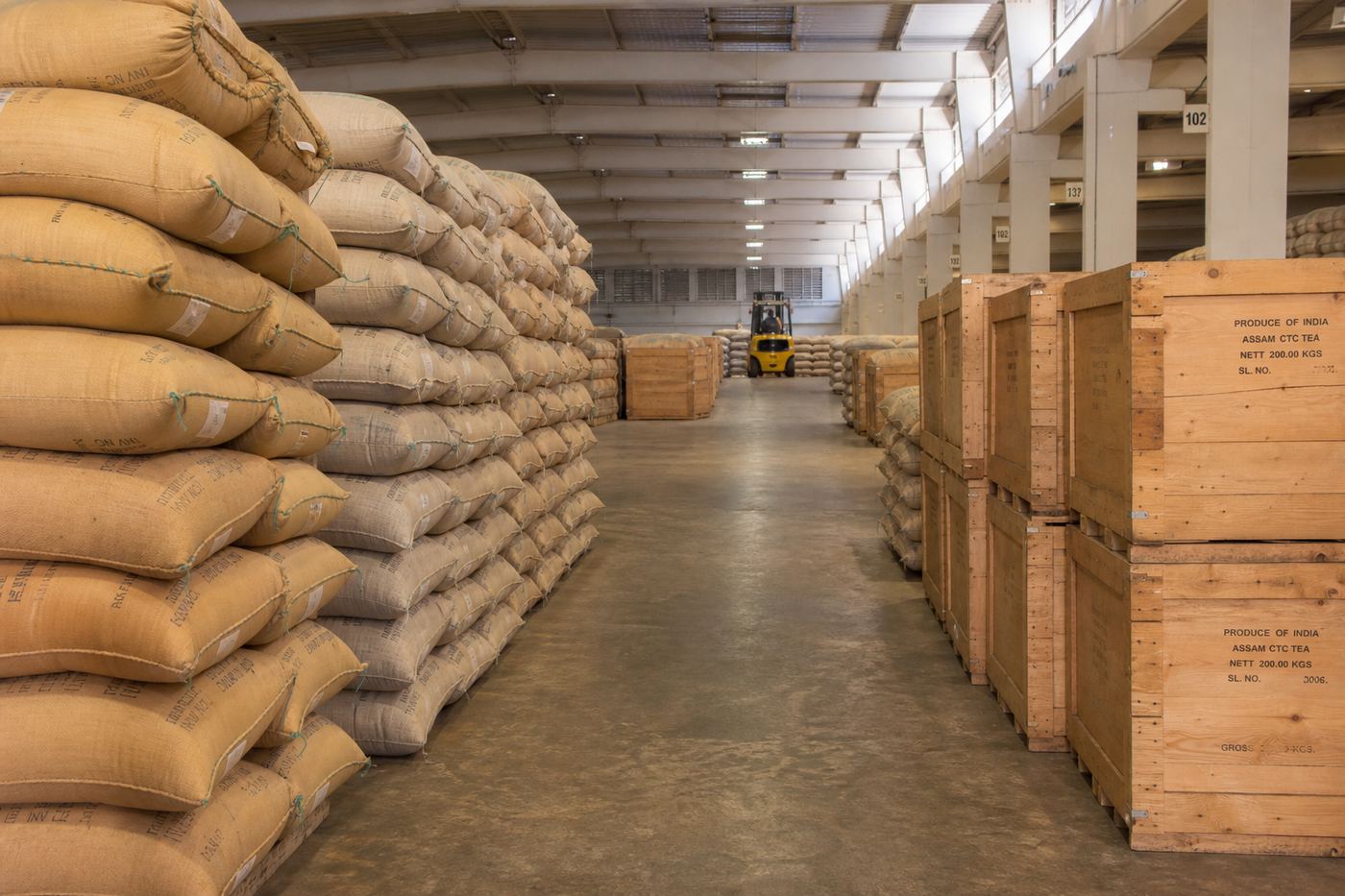
Common Buyer Mistakes When Sourcing Indian Tea
Common Mistakes Box
- Vague RFQ without grade, origin, or cupping specification — Solution: Use the specification template in this guide for every enquiry.
- Paying 100% advance to an unverified supplier — Solution: LC at sight or maximum 30% advance with balance against BL.
- Cupping only one sample without side-by-side comparison — Solution: Cup minimum three suppliers per grade before trial order.
- Skipping Tea Board and FSSAI verification — Solution: Documentary check before sampling, not after trial failure.
- Accepting retain samples instead of lot-specific pre-shipment samples — Solution: Contract clause requiring bulk-lot sample approval before sailing.
- Ignoring moisture readings — Solution: Require moisture certificate ≤ 7% on every shipment.
- Sourcing Darjeeling without GI verification — Solution: Demand Tea Board GI certificate matching estate and flush.
- Choosing supplier on lowest FOB alone — Solution: Weight cupping score, consistency history, and documentation reliability equal to price.
- No trial order before container commitment — Solution: 5–10 MT trial for commodity; 200 kg–2 MT for specialty.
- Managing multi-origin supply without coordination — Solution: Use a merchant exporter or product sourcing company for multi-grade programmes.
- Not specifying Incoterms clearly — Solution: State FOB port or CIF destination port explicitly in RFQ and contract.
- Failing to plan packaging upgrade path — Solution: Discuss retail packaging capability in RFQ even if first order is bulk.
Case Study: German Specialty Importer Building an India Darjeeling Programme
Challenge: A Hamburg-based specialty tea importer serving 120 organic food retail doors in Germany and Austria wanted to add authentic Darjeeling first and second flush teas to its range. Existing Sri Lankan supply was reliable but lacked the Darjeeling muscatel character their buyers requested. Direct outreach to three Darjeeling estates produced promising samples but inconsistent communication, unclear export licensing, and no EU Organic certification on two of three estates.
Approach: The importer engaged Altus Exports as a global sourcing partner to structure the procurement programme. Altus issued a formal RFQ to six Tea Board-licensed exporters with verified EU Organic Darjeeling supply, specifying FTGFOP1 and TGFOP grades, EU Regulation 396/2005 MRL compliance, moisture ≤ 5.5%, and FOB Kolkata pricing for 500 kg trial lots per flush.
Verification and cupping: Three responders passed documentary verification. Samples were air-freighted to Hamburg and cupped by the importer's in-house tea master using a 50-point scoring sheet. Two suppliers cupped within 3 points of each other on second flush; one first flush sample from the Makaibari supply chain scored highest on muscatel character. Pre-shipment pesticide panels were commissioned before trial orders.
Trial and scale: Two 500 kg trial shipments (first flush and second flush) were executed FOB Kolkata with LC at sight. Pre-shipment cupping confirmed bulk matched approved samples. EU import clearance was uneventful — MRL panel showed all compounds well within EU limits. The importer converted to a 4 MT annual programme across two flushes with index-linked pricing to Darjeeling auction averages plus a fixed processing premium.
Results: German retail doors accepted the Darjeeling range at €18–€32 per 100 g retail, delivering 42% gross margin for the importer. Supply consistency across two flush cycles built enough confidence to add Nilgiri organic OP from the same sourcing partner in year two. Total India sourcing grew to 8 MT annually across three grades through one counterparty.
Lessons learned: Specialty India sourcing succeeds when buyers invest in specification precision, documentary verification, and structured trial protocols — not when they chase the lowest FOB from the first estate that responds on email. A product sourcing company in India compresses the verification timeline without removing buyer control over cupping decisions.
Expert Insights: Procurement Principles from Altus Exports
Expert Insight Box
Altus Exports structures buyer procurement programmes around four principles: specification before search (define what you need before contacting suppliers), verification before payment (documentary and reference checks precede any funds transfer), cupping before scaling (trial orders confirm bulk consistency), and programme before spot (annual relationships outperform transaction-by-transaction sourcing on price, quality, and reliability).
For commodity CTC buyers in the UAE and Iraq, the highest-impact intervention is usually cupping alignment — ensuring the Indian supplier's BOPSM or PD grade matches your karak or blend profile consistently across containers. For UK and German specialty buyers, the highest-impact intervention is certification and MRL verification — ensuring EU Organic, Fairtrade, or GI documentation is valid before the first euro is transferred.
Buyers who attempt to source three origins (Assam CTC, Darjeeling orthodox, Nilgiri green) from three separate estates directly often spend more on coordination, QC, and documentation than they save on FOB price. A merchant exporter model consolidates these under one invoice, one quality framework, and one documentation set — reducing buyer overhead while preserving cupping approval rights on every grade.
Executive Summary
Summary Box
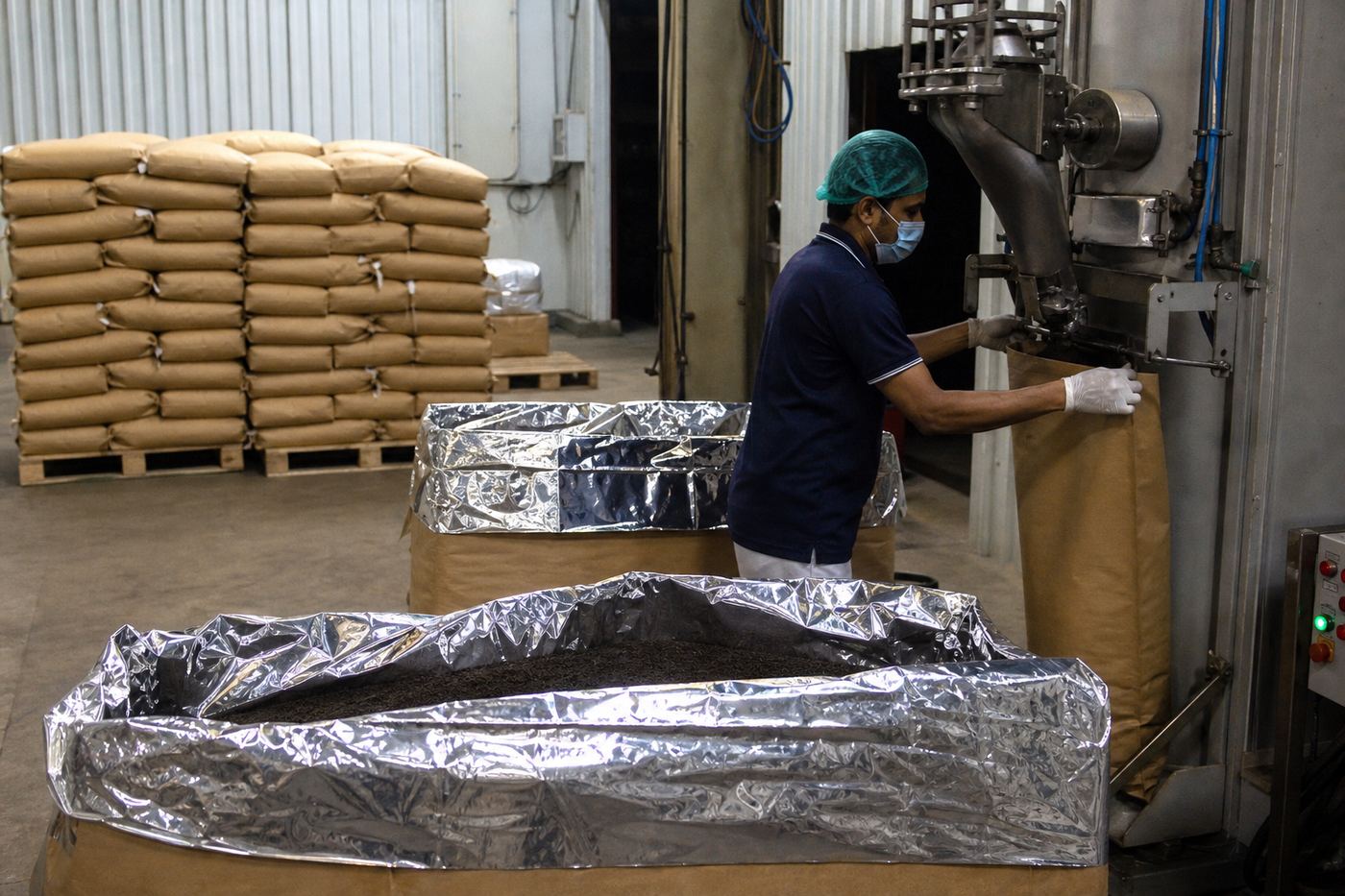
This importer playbook is for overseas buyers, distributors, and retail chains sourcing Assam, Darjeeling, or Nilgiri tea directly from India. Use the verification and cupping sections before you negotiate FOB or scale beyond a trial lot.
India remains a top global tea origin at roughly 255–280 million kg exported annually. Buyers who specify manufacture method, garden mark, and COA discipline capture that supply base with far fewer quality disputes than catalogue-only sourcing.
Buyer Requirements
Buyer Requirements
- Grade and manufacture method stated on every quote (CTC/orthodox + grade letters).
- Cupping approval recorded against a sealed sample retained by both parties.
- Destination compliance notes (residues, Halal, organic, GI) agreed before production.
- Payment terms and inspection windows written into the proforma.
Before you fund a trial container, require Tea Board exporter licence copies, FSSAI, grade-matched cupping samples retained by both sides, lot COA, packaging barrier specs, and an Incoterm sheet with MOQ and lead time.
Sourcing Checklist
Checklist
- Written spec: origin, CTC vs orthodox, grade, pack, Incoterm, HS 0902 sub-heading.
- Verify Tea Board exporter licence and FSSAI independently.
- Approve cupping sample and lot COA before scaling volume.
- Confirm packaging standard, MOQ stage, and lead time in writing.
- Model landed cost (freight, duty, brokerage) — not FOB alone.
Run this verification checklist before releasing a purchase order to an Indian tea supplier. It sequences RFQ specs, Tea Board checks, cupping approval, and document expectations so first lots do not fail on paperwork.
Exporter Checklist
Checklist
- IEC, GST, FSSAI, and Tea Board exporter licence are current.
- Grade sheet, cupping protocol, and pack format are locked.
- Lot COA template matches invoice and packing-list fields.
- Port, stuffing plan, and Incoterm are confirmed with the CHA/forwarder.
- Buyer claim window and rejection terms are agreed before sailing.
Exporters and merchant partners should clear this readiness list before outreach or first stuffing. It reduces document mismatches and cupping disputes on the first FCL.
Compliance Checklist
Checklist
Compliance Notes
- Tea Board exporter licence covers the exporting entity for HS 0902.
- Correct 0902.10/20 (green) or 0902.30/40 (black) by pack weight.
- Organic/GI claims have lot-linked certificates before packing completes.
- Destination residue, Halal, or label rules are reflected in the document pack.
- Lot numbers match across invoice, packing list, COA, and cartons/sacks.
Scan this compliance box before filing the shipping bill. Tea has its own statutory pathway — do not reuse APEDA or Spices Board credential assumptions.
Conclusion
- Importers: Start with the specification template and RFQ process in this guide before contacting suppliers.
- Review Best Countries for Indian Tea Exports for market-grade alignment and Top Tea Products Exported from India for product depth.
- Use Tea Export Documentation Checklist to understand what documents your supplier must provide.
- Explore Find International Buyers for Tea if you are building a two-way trade relationship.
- For organic and specialty positioning, see Organic & Specialty Tea Export Opportunities from India.
- Contact Altus via export products from India to initiate a structured sourcing engagement.
Sourcing tea directly from India is one of the highest-opportunity procurement decisions a tea importer, distributor, or retail buyer can make — if the process is structured. Define specifications precisely. Issue RFQs to verified Tea Board-licensed exporters. Cup samples against your market's taste profile. Execute trial orders with quality claim clauses. Implement pre-shipment QC. Negotiate Incoterms and payment terms that balance risk. Scale through programmes, not spot deals.
India's tea supply — from Assam CTC powering Middle East karak culture to Darjeeling first flush gracing European specialty shelves — rewards buyers who engage as quality partners. Altus Exports supports international buyers through global sourcing partner, merchant exporter, and product sourcing company services across the agriculture & food products category. Share your grade requirements, volume, destination market, and certification needs — we match verified Indian supply and coordinate the procurement workflow end to end.