
Most Demanded Indian Tea by Country: Grades Buyers Actually Order
By Saurabh Mittal, Founder, Altus Exports
A demand intelligence guide to the most demanded Indian tea by country — comparing what grades, leaf types, and certifications buyers actually order in the UAE, Iraq, Russia, USA, Iran, UK, Germany, and China. Understand which Assam CTC grades (BP, BPS, PD, Dust), Darjeeling orthodox flush lines, Nilgiri BOP, and green tea formats win in each destination, and how to adapt product, packaging, and documentation for maximum export success. Includes per-country demand tables, a UAE–Germany grade adaptation case study, 2026 preference shifts, and Altus Exports advisory context.
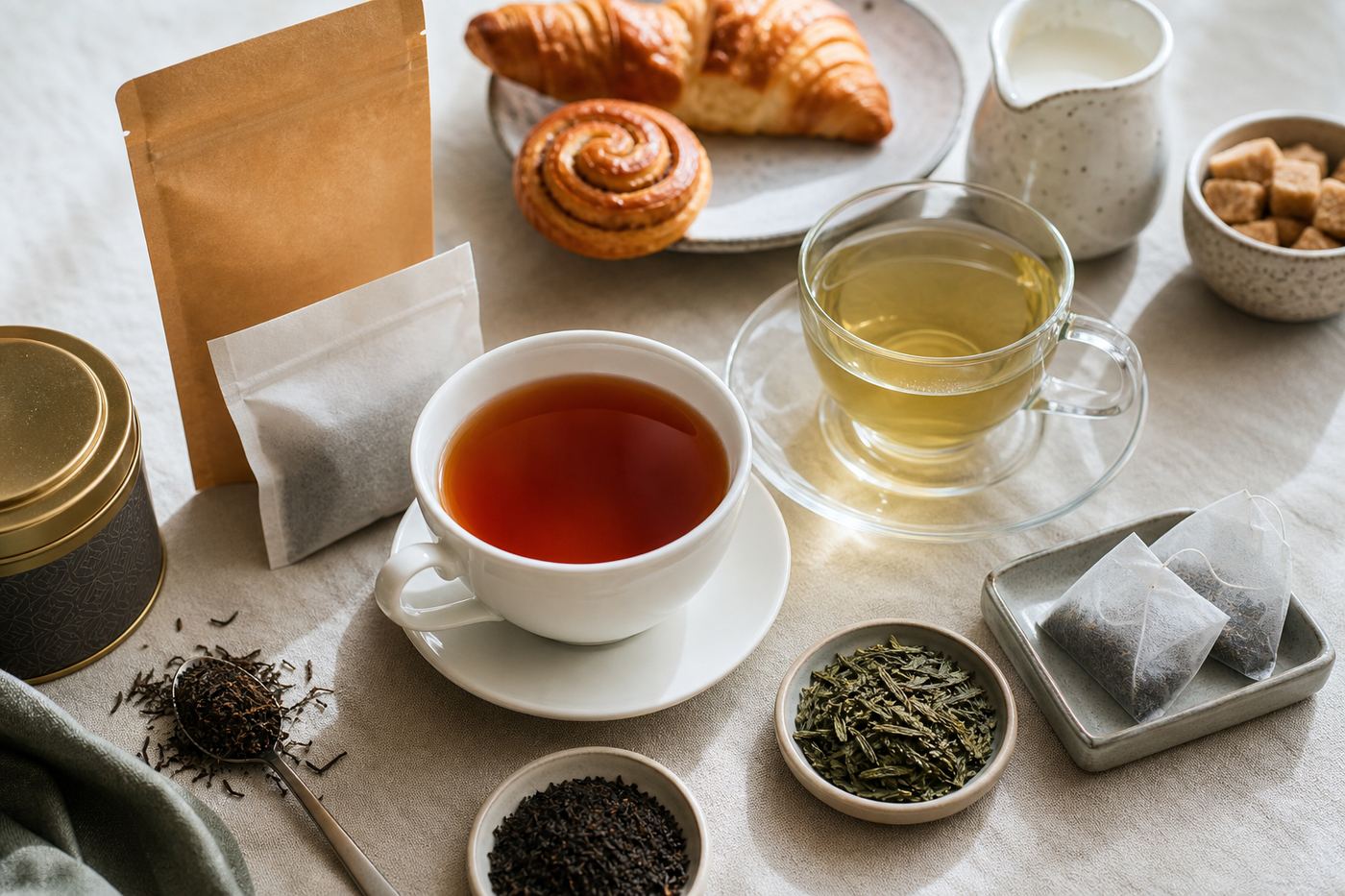
Not all international tea buyers order the same grades. A Dubai distributor sourcing Assam CTC BP with bright coppery liquor for karak chai has entirely different specifications from a Berlin specialty retailer seeking Darjeeling first-flush FTGFOP with muscatel character and EU Organic certification, or a Moscow trader buying BPS and PD grades for value-conscious bulk blending. India's competitive advantage — unmatched CTC scale, GI-protected Darjeeling, bright Nilgiri orthodox, and emerging organic lines — is most commercially valuable when exporters understand which grades each destination actually purchases and why.
India exports more than 200 million kg of tea annually under HS Chapter 0902, with black tea dominating approximately 96% of volume. Assam CTC grades (BP, BPS, PD, Dust) supply Gulf, CIS, and Iranian markets. Darjeeling orthodox (FTGFOP, TGFOP, SFTGFOP) commands premium positioning in UK, German, and Japanese specialty channels. Nilgiri orthodox BOP and green tea serve Gulf premium retail and North American wellness segments. Each grade carries different liquor colour, strength, briskness, and particle size parameters that determine whether it passes buyer cupping or fails specification.
This guide maps the most demanded Indian tea by country in 2026 — translating grade preferences, leaf types, certification requirements, and buyer behaviour into practical product, packaging, and go-to-market guidance. This is a demand profile reference, not a market selection framework; for choosing which countries to enter first, see best countries for Indian tea exports. Use alongside top tea products exported from India and how to export tea from India. Validate demand signals with Tea Board export statistics, DGFT trade data, ITC Trade Map HS 0902 analysis, and direct buyer conversations.
Key Takeaways
Summary Box
- Most demanded Indian tea by country varies sharply: Assam CTC BP and BPS dominate Gulf and CIS volume; Darjeeling FTGFOP commands EU and UK premium; Nilgiri BOP bridges commodity and specialty.
- UAE buyers order bright, malty Assam CTC in 30–60 kg PP sacks — MOQ typically 10–20 MT FCL; FOB Kolkata US$2.80–4.20/kg for BP grade.
- Russia and CIS buyers prioritise BPS and BP with strong liquor colour; Iranian and Iraqi buyers add PD and Dust grades at value price points.
- USA buyers source CTC for RTD/iced tea (BP, BPS) and Darjeeling/Nilgiri specialty for premium retail; EU MRL panels increasingly requested.
- UK and Germany demand Darjeeling orthodox (FTGFOP, TGFOP) and Assam orthodox BOP with EU MRL compliance and Darjeeling GI certificates.
- Tea Board exporter registration, FSSAI compliance, and lot-specific cupping certificates are baseline buyer requirements across developed-market channels in 2026.
- Altus Exports aligns agriculture & food products tea sourcing with per-country grade demand intelligence for buyers and Indian exporters.
Market Overview
Global tea import demand splits into three commercial streams: commodity CTC for chai, blending, and RTD applications; orthodox whole-leaf and broken grades for premium retail and specialty food; and green tea for wellness and Japanese-style consumption. Indian exporters can supply all three — but the grade, certification, and packaging investment required differs significantly. Commodity CTC buyers in the UAE and Russia prioritise liquor colour, strength, briskness, and FOB price. Specialty buyers in Germany and the UK pay premiums for Darjeeling muscatel, Nilgiri fragrance, and organic certification with EU MRL-clean residue panels.
India's 2026 export demand profile reflects structural patterns: Gulf and CIS remain volume anchors for Assam CTC; Iran and Iraq sustain value CTC demand; the USA grows as both a CTC commodity destination (RTD tea manufacturing) and a specialty market (Darjeeling and Nilgiri private label); UK and Germany anchor European orthodox and GI demand; China imports limited Indian orthodox for blending. Competing origins shape grade expectations — Kenyan CTC sets the liquor colour benchmark in Africa and CIS; Sri Lankan orthodox sets the premium reference in EU retail; Indian exporters win by matching grade specs with documentation reliability.
Understanding per-country grade demand prevents the most common exporter mistake: offering the same auction catalogue grade to every buyer. Grade-market fit is the foundation of repeat orders. Exporters who map factory output to destination specifications build contract supply; exporters who ship whatever is cheapest at auction this week build one-off transactions.
Product Overview: Grades Buyers Name in Purchase Orders
Summary Box
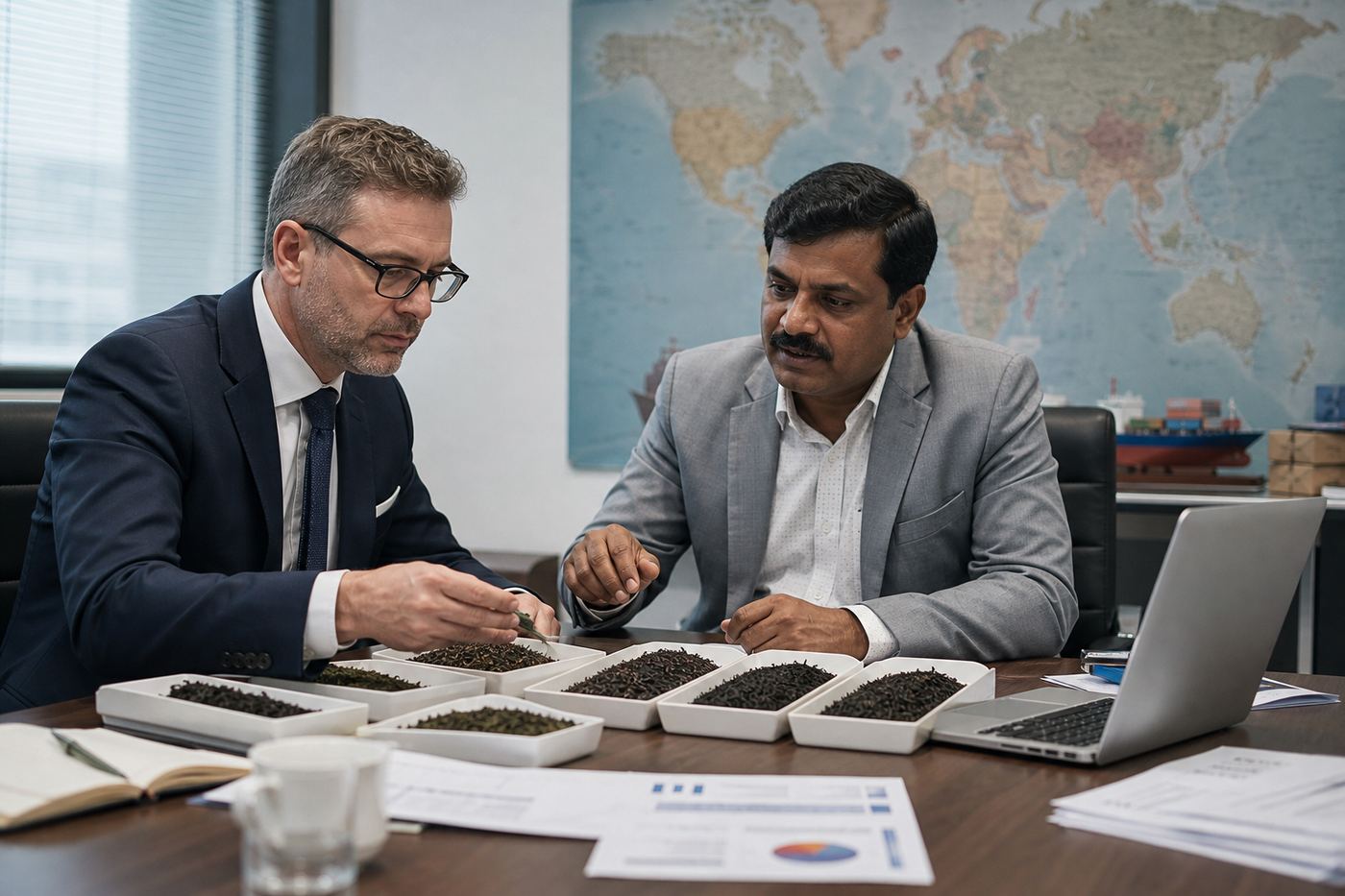
Purchase orders from international buyers reference grade nomenclature, not generic product descriptions. Exporters must translate factory output into the grade language buyers use.
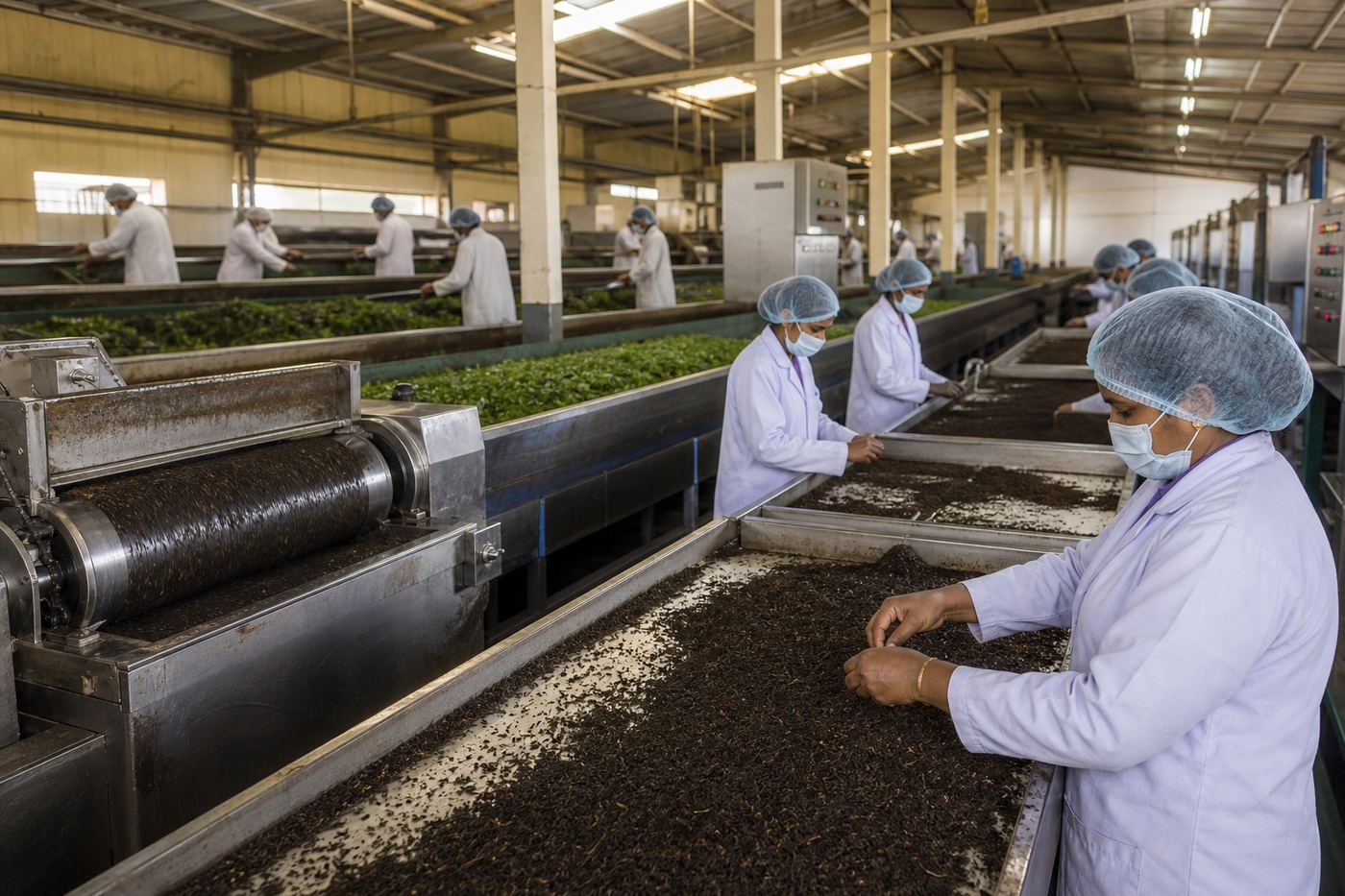
CTC grades are defined by particle size and cupping character: BP (Broken Pekoe) — bold particles, strong liquor, bright colour; BPS (Broken Pekoe Souchong) — slightly smaller particles, good strength; PD (Pekoe Dust) — fine particles for quick extraction; Dust grades (PD1, PD2, Dust) — finest particles for tea bags and value blends. Orthodox grades follow leaf style: OP (Orange Pekoe), BOP (Broken Orange Pekoe), TGFOP (Tippy Golden Flowery Orange Pekoe), FTGFOP (Finest Tippy Golden Flowery Orange Pekoe). Darjeeling adds flush designations: first flush (spring, floral, muscatel), second flush (summer, fuller body), autumnal (late season, mature character).
HS classification under Chapter 0902 applies uniformly: bulk CTC and orthodox in 30–60 kg sacks typically file under 090240; retail packs ≤3 kg under 090230 (black) or 090210 (green). Grade nomenclature appears on commercial invoices and quality certificates — not on HS codes. Correct grade-to-HC alignment on documents prevents customs queries.
Comparison table
Swipe →
Data table — swipe horizontally on small screens
| Grade Family | Particle / Leaf Style | Liquor Profile | Primary Buyer Channels |
|---|---|---|---|
| CTC BP | Bold broken particles | Strong, bright, malty | Gulf chai, CIS blending |
| CTC BPS | Medium broken particles | Good strength, bright | Gulf, Russia, Iraq |
| CTC PD / Dust | Fine particles | Quick colour, strong | Tea bags, value blends, Iran |
| Orthodox BOP | Broken leaf | Balanced, aromatic | UK blenders, EU bulk |
| Darjeeling FTGFOP | Tippy whole leaf | Muscatel, floral | EU/UK/Japan specialty retail |
| Nilgiri BOP | High-grown broken | Bright, fragrant | Gulf premium, USA specialty |
| Green tea (Nilgiri/Kangra) | Rolled or pan-fired | Grassy, clean | USA wellness, China blend |
Export Process: Matching Grades to Destination Requirements
Export Tip
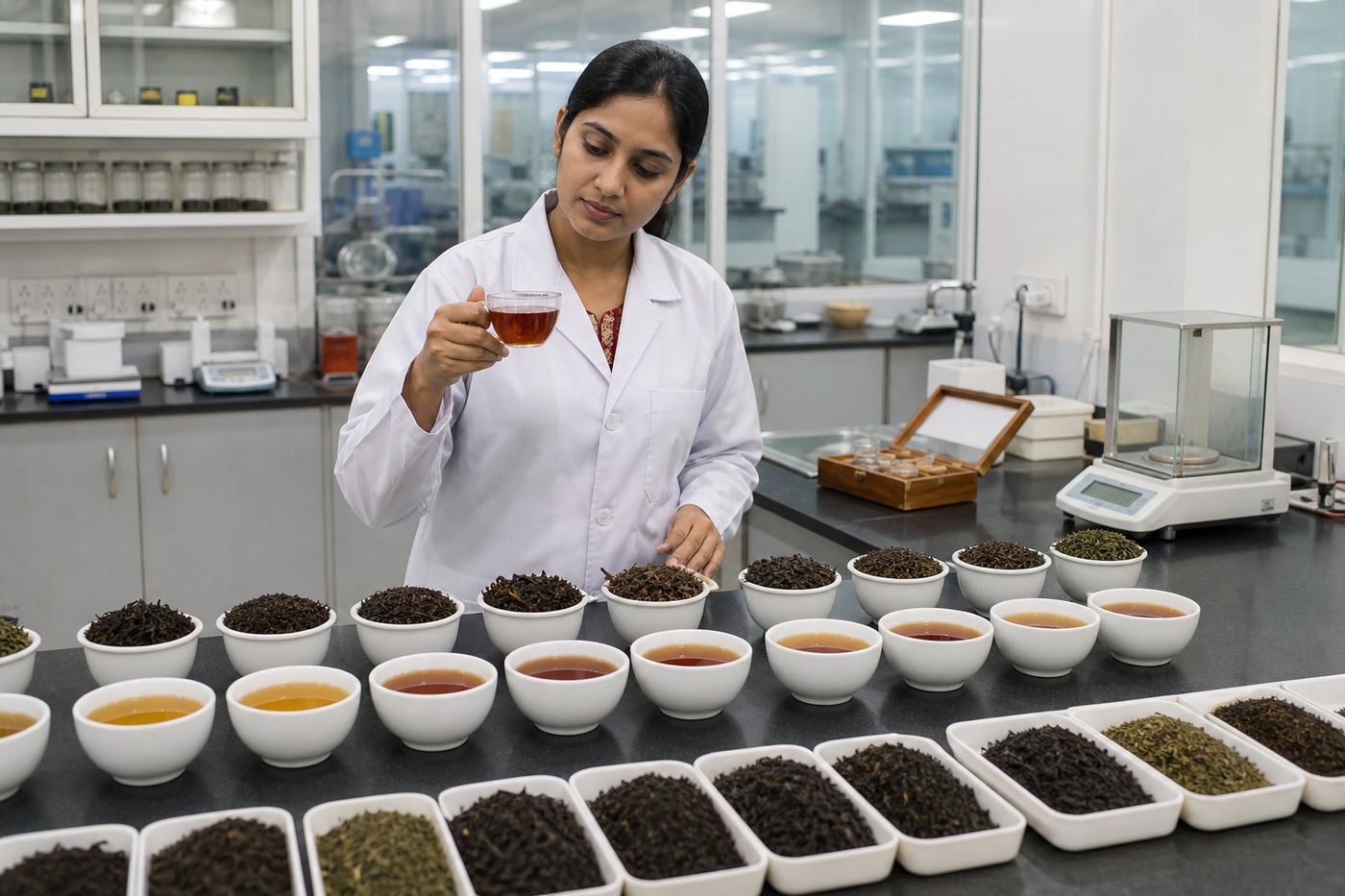
Translating demand profiles into export execution requires a grade-first workflow: identify destination grade demand, procure or manufacture to cupping specification, validate with professional tasters' evaluation, pack in destination-appropriate format, and align documentation to lot-specific quality records.
Step 1: Map Buyer Grade Specification
Request written cupping specifications: liquor colour (bright coppery, deep amber), strength (strong, medium, light), briskness (good, fair), character (malty, floral, muscatel), particle size (BP, BPS, PD), and moisture maximum (typically 5%). Premium buyers add residue compound lists and organic certification requirements.
Step 2: Source or Blend to Specification
Procure through Kolkata or Coonoor auction with catalogue numbers recorded, or contract directly with Assam/Darjeeling/Nilgiri factories. Blending multiple factory lots to achieve consistent cupping is standard for CTC export programmes. Single-estate Darjeeling GI lots require Tea Board origin certificates.
Step 3: Pre-Shipment Cupping and Testing
Professional cupping evaluation per consignment lot. Moisture testing (3–5% for black tea). EU-bound and premium-market tea: pesticide residue panel at NABL-accredited laboratory aligned to destination MRL limits. Issue lot-specific quality certificate referencing cupping scores.
Step 4: Pack, Document, and Ship
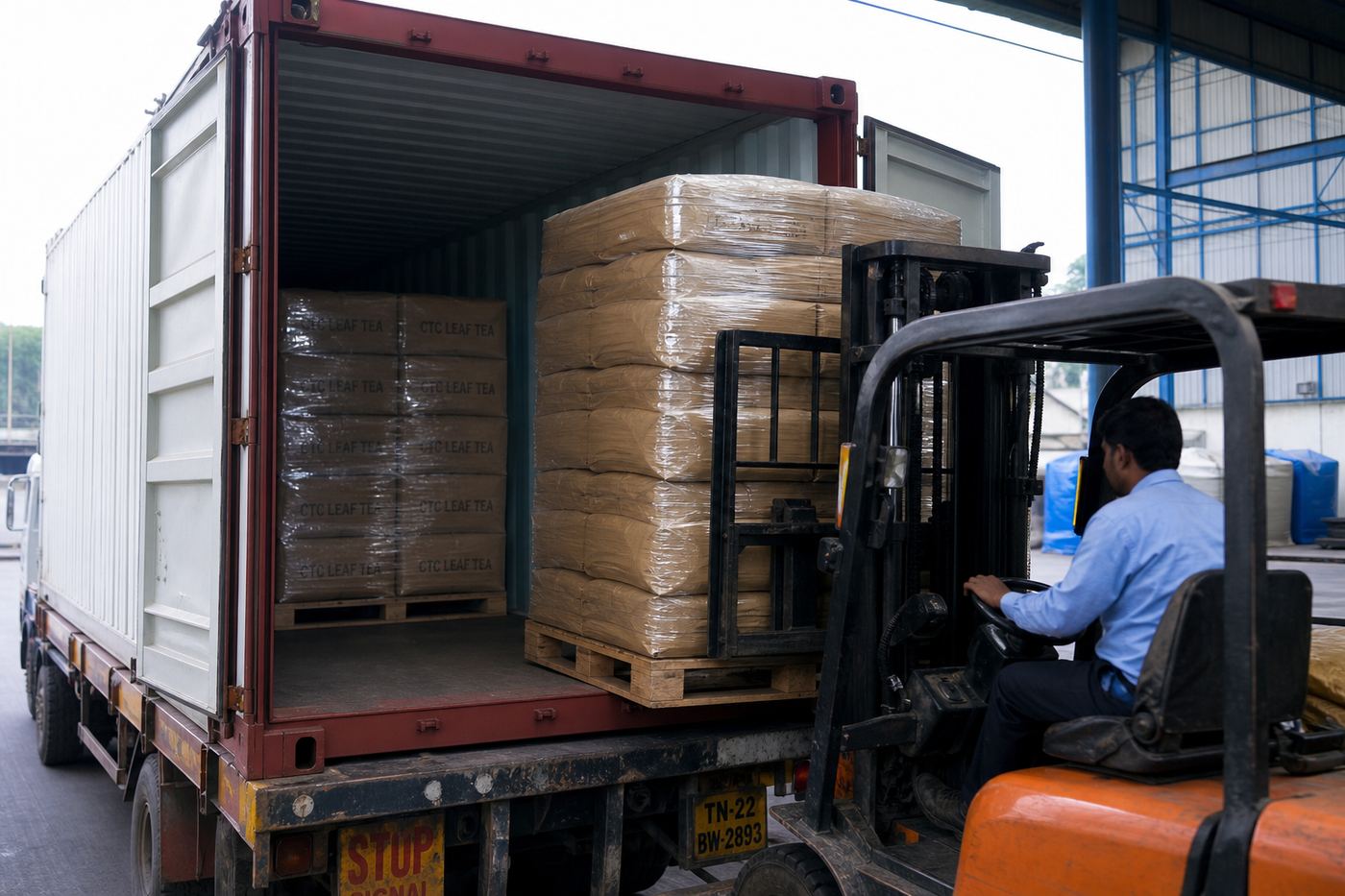
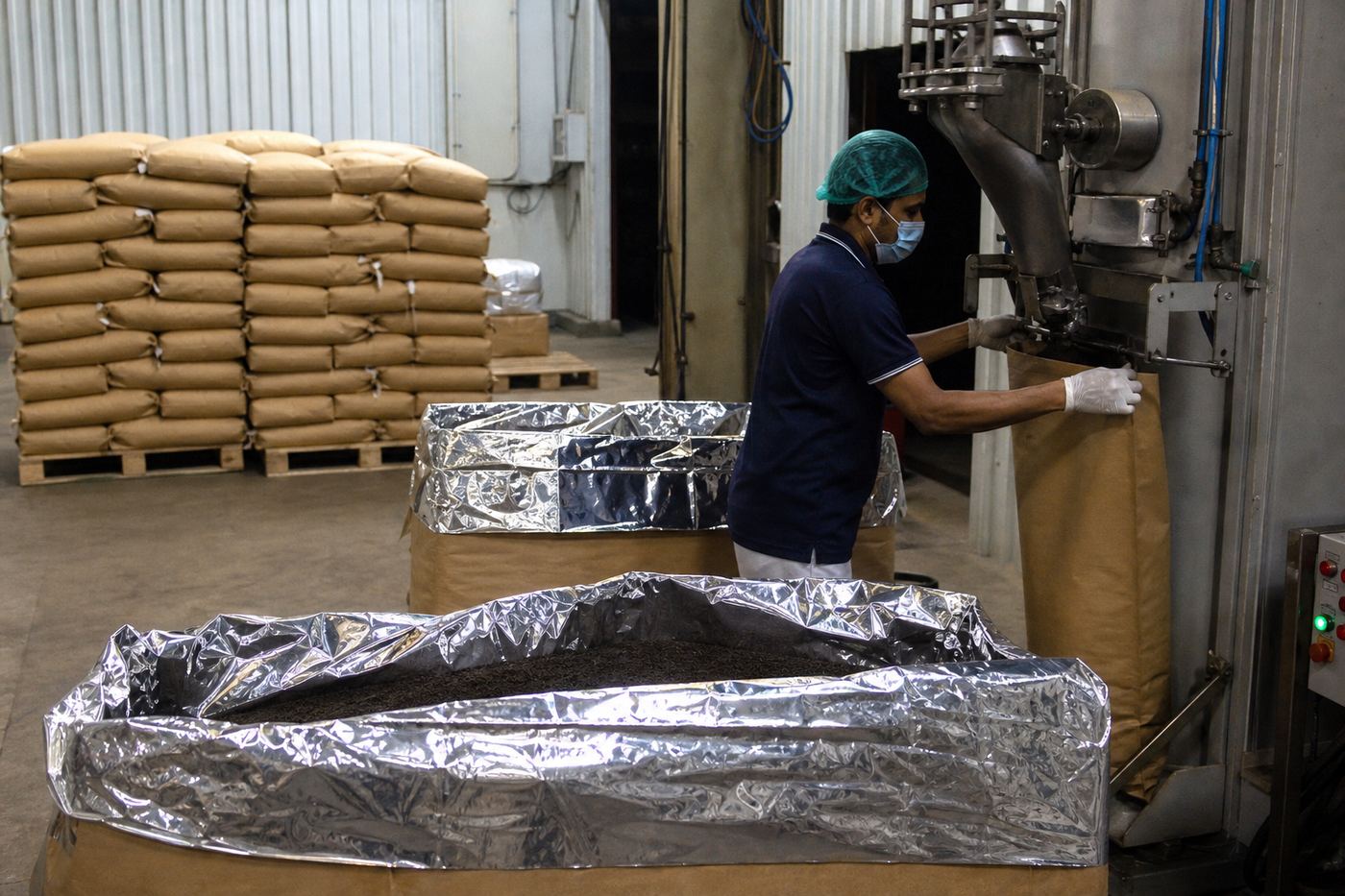
Pack in 30–60 kg food-grade PP sacks or multi-ply paper sacks; palletise for FCL. MOQ: 10–20 MT for commodity CTC; 500 kg–2 MT for orthodox trials. Incoterms: FOB Kolkata (Assam/Darjeeling), FOB Cochin (South India). Documentation per tea export documentation checklist.
Trade Statistics
Key Statistics
India exported about 255–280 million kg of tea in calendar years 2024–2025 (Tea Board), with FY25 export value about US$830–924 million depending on source (DGCIS/IBEF). Black tea under HS 090240 accounts for the vast majority. Assam contributes the largest export volume share; Darjeeling and Nilgiri contribute disproportionate value share relative to volume.
Destination-wise statistics from the Tea Board confirm UAE, Russia, Iran, Iraq, USA, UK, and Germany as consistently top importers of Indian tea by volume or value. Month-to-month auction prices at Kolkata for CTC BP typically range ₹180–280/kg (ex-estate equivalent), translating to FOB export pricing of US$2.50–4.50/kg depending on grade, season, and freight economics.
Grade-level trade data is less granular in public statistics than country-level data — but auction catalogue analysis by grade tier (BP vs Dust) and buyer import patterns under HS 0902 confirm the demand profiles in this guide. Exporters should supplement Board statistics with direct buyer specification sheets and ITC Trade Map destination import flows.
Comparison table
Swipe →
Data table — swipe horizontally on small screens
| Export Indicator | 2025–2026 Range | Grade Implication |
|---|---|---|
| Total export volume | ~255–280 million kg (recent calendar years) | CTC dominates ~85%+ of kg |
| Black tea export share | ~96% | Orthodox/green are value niches |
| UAE import share of Indian tea | Largest single country (volume) | CTC BP, BPS primary |
| Kolkata auction BP price | ₹180–280/kg | Sets Gulf FOB floor |
| Darjeeling FTGFOP 1st flush | ₹1,200–3,500+/kg | EU/UK premium ceiling |
Import Data Analysis
Import data analysis under HS 0902 reveals which Indian grades flow to which destinations — and where growth is accelerating. UAE import data consistently shows Indian origin as the largest or second-largest tea source, with Assam CTC grades dominating bill-of-lading descriptions referencing BP and BPS particle categories. Russian import data shows Indian tea competing with Kenyan and Sri Lankan CTC on liquor colour benchmarks, with Indian malty Assam preferred in many blend programmes.
Iranian and Iraqi import patterns emphasise value CTC — PD and Dust grades appear frequently alongside BP in commodity shipments. US import data under HS 0902 shows growing Indian tea entries for both bulk CTC (RTD manufacturing inputs) and packaged specialty (Darjeeling and Nilgiri in retail HS 090230 subheadings). UK and German import data show orthodox and Darjeeling lines increasing in value terms even as CTC commodity volume plateaus.
Exporters should run ITC Trade Map queries for HS 090240 (bulk black) and HS 090230 (retail black) by destination country quarterly. Pair import data with auction grade price spreads to identify where Indian grade offerings are competitively positioned versus Kenyan BP or Sri Lankan orthodox equivalents.
Most Demanded Indian Tea in the UAE and Gulf Region
Market Snapshot
- Top grades ordered: CTC BP, BPS (volume); Nilgiri BOP (premium retail)
- Liquor spec: Bright coppery, strong, good briskness, malty Assam character
- Format: 30–60 kg PP sacks; FCL from Kolkata
- MOQ: 10–20 MT commodity; 2–5 MT premium orthodox trial
- FOB range: US$2.80–4.20/kg (CTC BP); US$5.00–8.00/kg (Nilgiri BOP)
- Certs: Tea Board registration, FSSAI, halal (retail), cupping COA per lot
The UAE is India's largest single-country tea export destination by volume in most years. Gulf consumption culture — karak chai, cardamom-spiced tea, institutional food service — drives demand for bold Assam CTC with bright coppery liquor and strong malty character. Buyers name BP and BPS grades most frequently in purchase orders; PD appears in value blend programmes.
Packaging: 30–60 kg food-grade polypropylene sacks, palletised and stretch-wrapped for 20-foot FCL loading at Jebel Ali. MOQ: 10–20 MT. Incoterms: FOB Kolkata or CFR Jebel Ali. Pricing: Assam CTC BP FOB Kolkata typically US$2.80–4.20/kg depending on auction cycle. Certifications: Tea Board exporter registration, FSSAI, certificate of origin, quality certificate with cupping report. Halal certification required for retail-packed tea entering UAE supermarket channels.
Saudi Arabia, Kuwait, Qatar, and Bahrain mirror UAE grade preferences with local variations — Saudi institutional buyers add Dust grades for economical food-service supply. Ramadan and Eid periods intensify procurement; approach Gulf buyers 60–90 days before Ramadan for volume planning.
Most Demanded Indian Tea in Iraq and Iran
Market Snapshot
- Top grades ordered: CTC BP, BPS, PD, Dust
- Liquor spec: Strong, dark, full-bodied; briskness secondary to strength
- Format: 30–60 kg sacks; FCL
- MOQ: 10–20 MT
- FOB range: US$2.50–3.80/kg (PD/Dust); US$2.80–4.00/kg (BP)
- Incoterms: FOB Kolkata, CFR destination port
Iraq and Iran are substantial CTC markets with deep cultural tea consumption and price sensitivity in many channels. Buyers order Assam CTC grades emphasising strong liquor and dark colour — BP and BPS for mainstream supply, PD and Dust for economical blends and quick-extraction applications.
Iranian buyers often specify colour intensity and strength over briskness finesse. Iraqi distributors source through Dubai and direct Kolkata shipments. Payment and logistics structures vary — documentary credit and CFR Bandar Abbas / Umm Qasr terms are common. FOB Kolkata pricing for PD/Dust grades may fall US$2.50–3.50/kg — below BP tier.
Documentation: Tea Board registration, commercial invoice with grade detail, certificate of origin, quality certificate. Residue testing is less frequently mandated than EU markets but is increasing for retail-packed lines. MOQ: 10–20 MT for direct container programmes.
Most Demanded Indian Tea in Russia and the CIS
Market Snapshot
- Top grades ordered: CTC BP, BPS, Dust (tea bags)
- Liquor spec: Bright, strong, malty; colour benchmarked against Kenyan CTC
- Format: 30–60 kg PP sacks; FCL
- MOQ: 15–20 MT
- FOB range: US$2.70–4.00/kg (BP)
- Watch-out: Cupping consistency across lots — Russian buyers switch origins on grade drift
Russia and CIS countries (Kazakhstan, Uzbekistan, Ukraine) import significant Indian CTC volumes, with Assam BP and BPS grades competing against Kenyan origin on liquor colour and price. Russian buyers cup rigorously — they know Kenyan brightness benchmarks and expect Indian Assam to deliver comparable or superior malty character.
Grade demand: BP and BPS lead; Dust for tea bag manufacturing and value retail. Some orthodox BOP enters specialty Moscow and St. Petersburg retail, but volume is overwhelmingly CTC. Packaging: 30–60 kg sacks, FCL via Russian Far East or European ports depending on routing. MOQ: 15–20 MT typical.
FOB Kolkata US$2.70–4.00/kg for BP grade. Certifications: Tea Board registration, phytosanitary certificate, certificate of origin, quality certificate with cupping scores. Residue panels increasingly requested for retail-packed tea entering Russian food safety channels.
Most Demanded Indian Tea in the USA
Market Snapshot
- CTC grades: BP, BPS for RTD/iced tea manufacturing
- Specialty grades: Darjeeling FTGFOP, Nilgiri BOP, Kangra green
- CTC MOQ: 15–20 MT; specialty MOQ: 500 kg–2 MT
- FOB range: US$2.80–4.00/kg (CTC); US$8–25+/kg (Darjeeling FTGFOP)
- Formats: Bulk sacks (CTC); retail cartons 100–250 g (specialty)
- Certs: Tea Board, FSSAI, NOP organic (organic channel), cupping COA
US demand for Indian tea spans two distinct grade tiers: commodity CTC for RTD (ready-to-drink) tea, iced tea, and food-service manufacturing; and specialty orthodox (Darjeeling FTGFOP, Nilgiri BOP) for premium natural food and private-label retail.
CTC buyers name BP and BPS grades for beverage manufacturing — liquor strength and colour stability through processing matter more than origin story. MOQ: 15–20 MT FCL. FOB Kolkata or Cochin US$2.80–4.00/kg. Specialty buyers order Darjeeling first-flush FTGFOP or Nilgiri BOP in 500 kg–2 MT trials at US$8.00–25.00+/kg FOB, with retail packs under HS 090230 for private-label programmes.
Certifications: Tea Board registration, FSSAI, FDA food facility alignment (buyer-dependent), residue test reports for pesticide panels (EU-style panels increasingly adopted by US natural food brands). Organic: USDA NOP certification for organic channel — NPOP alone insufficient for USDA Organic label claims.
Most Demanded Indian Tea in the UK
Market Snapshot
- Blender grades: CTC BP, BPS; orthodox BOP
- Specialty grades: Darjeeling FTGFOP, TGFOP (1st and 2nd flush)
- Liquor spec (CTC): Bright, strong, malty; (Darjeeling): muscatel, floral
- MOQ: 10–20 MT (CTC); 250 kg–1 MT (Darjeeling)
- Certs: Tea Board, GI origin certificate (Darjeeling), UK residue panel
UK buyers import Indian tea across the full grade spectrum: Assam CTC for mainstream blending, Assam and Nilgiri orthodox BOP for premium blends, and Darjeeling FTGFOP/TGFOP for single-origin specialty retail. Post-Brexit UK food safety regulations retain EU MRL frameworks as a baseline for residue compliance.
Major UK blenders name Assam CTC BP and BPS in bulk contracts alongside Kenyan origin. Specialty retailers and premium supermarkets seek Darjeeling first and second flush with Tea Board GI origin certificates. MOQ: 10–20 MT for CTC contracts; 250 kg–1 MT for Darjeeling specialty trials.
FOB pricing: CTC BP US$3.00–4.20/kg FOB Kolkata; Darjeeling FTGFOP US$12–35/kg depending on flush and estate. UK Organic certification (via UKAS-approved CAB) required for organic retail — separate from EU Organic post-Brexit. Packaging: bulk sacks for blenders; retail tins and cartons for specialty.
Most Demanded Indian Tea in Germany and the EU
Market Snapshot
- Top grades: Darjeeling FTGFOP, TGFOP; Nilgiri BOP; Assam orthodox BOP
- Limited CTC: PD/BP for industrial blenders only
- EU MRL residue panel: mandatory; anthraquinone, bifenthrin among watched compounds
- Organic: EU Organic or NPOP with EU equivalence
- MOQ: 500 kg–2 MT specialty; 5–10 MT orthodox bulk
- FOB range: US$8–45/kg depending on grade and organic status
Germany is Europe's largest tea-importing market and the strictest on pesticide MRL compliance under EU Regulation 396/2005. German buyers ordering Indian tea fall into two camps: bulk CTC and orthodox importers supplying EU redistribution networks (Netherlands gateway role), and specialty organic retailers seeking Darjeeling and Nilgiri with EU Organic (EU 2018/848) certification.
Grade demand: Darjeeling FTGFOP and TGFOP with GI certificates for specialty; Assam orthodox BOP for blending; limited CTC for industrial applications. Dust and PD grades are less prominent than Gulf markets. Residue testing against 200+ compound EU MRL panels is mandatory before first shipment and often per lot thereafter.
FOB pricing: Darjeeling organic FTGFOP US$18–45/kg; Nilgiri organic BOP US$8–14/kg. MOQ: 500 kg–2 MT for specialty; 5–10 MT for orthodox bulk. Incoterms: FOB Kolkata, CIF Hamburg. Packaging: food-grade sacks with pallet ISPM-15 compliance for EU entry.
Most Demanded Indian Tea in China
Market Snapshot
- Top grades: Darjeeling FTGFOP (gift), Nilgiri/Kangra green tea, Assam orthodox BOP
- Volume: Niche relative to Gulf/CIS
- MOQ: 500 kg–5 MT
- Positioning: Origin novelty, gift, blending component
- Certs: Tea Board, phytosanitary, GACC import registration (buyer-led)
China is the world's largest tea producer and exporter, but also imports limited Indian orthodox and green tea for blending, gift markets, and specialty food channels. Indian tea enters China as a complement to domestic production — not a commodity competitor.
Grade demand: Darjeeling orthodox (gift positioning), Nilgiri and Kangra green tea, select Assam orthodox BOP. Volume is modest relative to Gulf and CIS markets. MOQ: 500 kg–5 MT. Pricing: premium to domestic Chinese tea on origin novelty. Certifications: phytosanitary certificate, Tea Board registration, Chinese import registration (buyer-coordinated GACC requirements).
Country-wise Opportunities: Grade-Market Fit Summary
Market Snapshot
Comparison table
Swipe →
Data table — swipe horizontally on small screens
| Country | Top Grades Ordered | Preferred Format | Key Certifications | Demand Level | FOB Range (US$/kg) | Growth |
|---|---|---|---|---|---|---|
| UAE | CTC BP, BPS; Nilgiri BOP | 30–60 kg PP sacks | Tea Board, FSSAI, halal (retail) | Very High | $2.80–8.00 | Stable–High |
| Iraq | CTC BP, BPS, PD, Dust | 30–60 kg sacks | Tea Board, COO, cupping COA | High | $2.50–4.00 | Stable |
| Iran | CTC BP, PD, Dust | 30–60 kg sacks | Tea Board, COO | High | $2.50–3.80 | Stable |
| Russia | CTC BP, BPS, Dust | 30–60 kg sacks | Tea Board, phytosanitary | High | $2.70–4.00 | Medium–High |
| USA | CTC BP/BPS; Darjeeling FTGFOP | Bulk sacks; retail cartons | Tea Board, FSSAI, NOP (organic) | High | $2.80–25+ | High (specialty) |
| UK | CTC BP; Darjeeling FTGFOP | Bulk sacks; retail tins | Tea Board, GI cert, UK residue | High | $3.00–35 | Medium–High |
| Germany | Darjeeling FTGFOP; Nilgiri BOP | Food-grade sacks; retail | EU Organic, EU MRL panel, GI | Medium–High | $8–45 | High (organic) |
| China | Darjeeling FTGFOP; green tea | Gift packs; bulk sacks | Tea Board, phytosanitary, GACC | Medium | $10–40+ | Medium |
Pricing Analysis by Grade and Destination
Buyer Tip
Pricing varies more by grade and certification than by country alone. Assam CTC BP FOB Kolkata auctions at US$2.50–4.50/kg across the crop year — Gulf buyers pay the upper half when liquor colour is exceptional; Iranian PD buyers pay the lower half. Darjeeling first-flush FTGFOP ranges US$15–45/kg FOB depending on estate reputation and flush quality — German specialty buyers pay premiums 30–60% above Kolkata auction base for verified GI lots with EU Organic status.
Freight economics matter: FOB Kolkata to Jebel Ali adds US$0.08–0.15/kg; to Hamburg US$0.20–0.35/kg. CIF pricing must include marine insurance and destination port charges. Exporters quoting FOB without modelling freight mislead buyers comparing CIF offers from Kenyan exporters.
Organic certification adds US$0.50–1.50/kg amortised cost but unlocks 30–60% price premium in EU and North American specialty channels. Darjeeling GI certification is not a price premium per se but a market access requirement — without it, the Darjeeling price tier is legally unavailable.
Comparison table
Swipe →
Data table — swipe horizontally on small screens
| Grade | Gulf FOB | CIS FOB | USA/EU Specialty FOB | Typical MOQ |
|---|---|---|---|---|
| CTC BP | $2.80–4.20/kg | $2.70–4.00/kg | N/A (commodity) | 10–20 MT |
| CTC PD/Dust | $2.50–3.50/kg | $2.50–3.40/kg | N/A | 10–20 MT |
| Orthodox BOP | $4.50–7.00/kg | $4.00–6.50/kg | $6.00–12.00/kg | 2–10 MT |
| Darjeeling FTGFOP | N/A | N/A | $15–45/kg | 500 kg–2 MT |
| Nilgiri green bulk | $3.50–6.00/kg | N/A | $5.00–10.00/kg | 2–10 MT |
Challenges & Solutions
- Shipping the wrong grade to a market — Solution: map buyer PO grade names to factory output before procurement.
- Cupping drift across lots — Solution: professional tasters' evaluation per consignment; blend to specification.
- Offering Darjeeling without GI certificate — Solution: Tea Board GI origin documentation per estate lot.
- EU-bound tea without MRL panel — Solution: NABL-accredited 200+ compound testing before quoting Germany.
- Moisture above 5% — Solution: re-dry before packing; record on quality certificate.
- Jute sack odour contamination — Solution: use PP sacks for Gulf and EU markets; avoid jute for premium lines.
- Identical pricing for BP and Dust — Solution: tier pricing by grade particle size and liquor score.
- Ignoring Gulf Ramadan procurement calendar — Solution: confirm availability 60–90 days before Ramadan.
- Mixing CTC and orthodox in one container without segregation — Solution: separate lots, separate sack markings, separate COAs.
- HS code mismatch (090230 vs 090240) — Solution: match subheading to actual unit pack weight.
- No Tea Board registration on documentation — Solution: complete registration before first buyer inquiry.
- Generic 'Indian tea' marketing without grade specs — Solution: lead every buyer conversation with grade name and cupping data.
Case Study: Adapting Grade Assortment for UAE CTC and German Darjeeling Buyers
Business goal: A Kolkata merchant exporter wanted to serve both a Dubai CTC distributor (15 MT monthly BP) and a Hamburg specialty retailer (200 kg Darjeeling first-flush FTGFOP) from the same operational base without grade cross-contamination.
UAE programme: Procured Assam CTC BP through Kolkata auction with pre-shipment cupping confirming bright coppery liquor, strong strength, good briskness. Moisture 4.0%. Packed in 60 kg PP sacks, 250 sacks per 15 MT shipment. FOB Kolkata US$3.45/kg. Documents: Tea Board registration, cupping COA, certificate of origin. Six-month contract.
Germany programme: Sourced Darjeeling first-flush FTGFOP from a verified GI estate with Tea Board origin certificate. EU MRL residue panel: all compounds within limits. NPOP organic certification. Packed in 25 kg food-grade paper sacks inside cartons. MOQ 200 kg trial. FOB Kolkata US$28/kg. CIF Hamburg quoted at US$31.20/kg.
Operational separation: Separate warehouse bays, separate sack marking systems, separate quality certificate templates, separate document files. No shared blending equipment between CTC and orthodox lines.
Results: UAE buyer renewed contract at increased volume. German retailer placed 500 kg second order after trial cupping confirmed muscatel character. Combined revenue per kg averaged significantly above single-channel CTC-only operation.
Lessons learned: Grade-market fit requires operational separation, not just commercial targeting. One exporter can serve commodity and premium channels simultaneously with disciplined segregation.
Expert Insights from Saurabh Mittal
Expert Insight Box
Most demanded Indian tea by country is a grade story, not a country story. Within the UAE, BP and BPS buyers operate in different price tiers with different cupping floors. Within Germany, a Darjeeling FTGFOP buyer and an Assam orthodox BOP blender have nothing in common except their insistence on residue compliance.
Exporters who build grade-specific export programmes — one cupping template per grade tier, one documentation pack per destination compliance culture — outperform exporters who rotate auction lots based on weekly price alone. The auction is a procurement tool; the buyer's grade specification is the product definition.
Altus Exports helps international buyers and Indian exporters align grade selection, certification, packaging, and documentation with per-country demand profiles. Share your target destination and grade requirements for a demand-fit sourcing review.
Conclusion
- Action: Share your target destination and grade requirements with Altus Exports for a demand-fit sourcing review.
- Explore agriculture & food products, merchant exporter, export products from India, global sourcing partner, and product sourcing company India partnership models.
- Continue with how to export tea from India, top tea products exported from India, best countries for Indian tea exports, Tea Board registration benefits, find international buyers for tea, source tea directly from India, tea export documentation checklist, trade shows for tea exporters, and organic and specialty tea export opportunities.
The most demanded Indian tea by country in 2026 maps to specific grades: Assam CTC BP and BPS for UAE, Iraq, Iran, and Russia; PD and Dust for value channels in Iran and Iraq; Darjeeling FTGFOP and TGFOP for UK and German specialty; Nilgiri BOP and green tea for Gulf premium and North American wellness; limited Darjeeling and green orthodox for China gift and blending.
Exporters should prioritise three actions: (1) identify the grade names and cupping specifications your target destination buyers actually order; (2) build factory or auction procurement to match those specs consistently across lots; (3) prepare destination-appropriate documentation — Tea Board registration, GI certificates for Darjeeling, EU MRL panels for Germany, halal for Gulf retail. Altus Exports can help both international buyers sourcing Indian tea and Indian exporters aligning grade output with destination demand.