
Organic and Specialty Tea Export Opportunities from India
By Saurabh Mittal, Founder, Altus Exports
A certification-first guide to organic and specialty tea export from India — NPOP, USDA NOP, and EU Organic pathways, Darjeeling GI authenticity, single-estate traceability, and the premiums available on white, oolong, and specialty orthodox grades. Written for gardens, estates, and merchant exporters building a premium programme rather than a commodity CTC volume business, with margin modelling, country demand mapping, and a Darjeeling organic case study from Altus Exports.
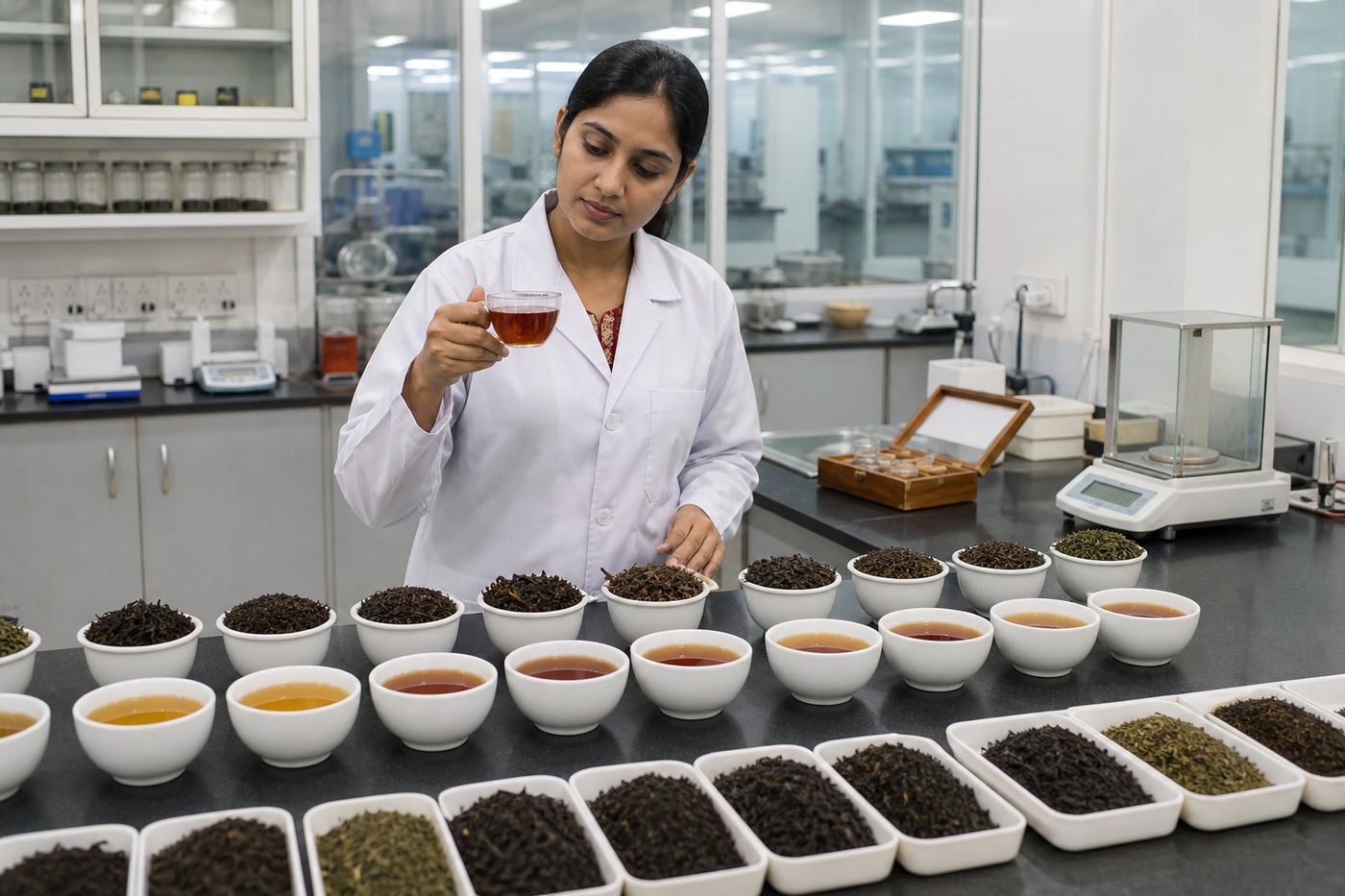
Global buyers are rewriting tea assortments around origin authenticity, estate traceability, and certified organic credentials — and India sits at the centre of that shift for Darjeeling GI orthodox, single-estate Assam and Nilgiri, and emerging white and oolong categories. This is deliberately not a commodity CTC volume guide. It is written for gardens, estates, and merchant exporters who want to build (or evaluate) a premium programme where certification, garden-mark traceability, and cupping discipline — not liquor strength per kilogram — determine the price.
India produces tea from an extraordinary range of origins that few countries can match at comparable scale: Darjeeling's GI-protected Himalayan orthodox, Assam's bold orthodox and emerging specialty grades, Nilgiri's fragrant whole-leaf teas, and select estate programmes producing green, white, and oolong styles. Pair that origin diversity with growing NPOP-certified organic garden coverage, Tea Board export facilitation, and the estate-mark traceability that specialty buyers require, and organic tea export from India becomes both a real and a defensible premium position against commodity competition.
This guide covers certification pathways, product categories, manufacturing method, traceability expectations, pricing and margin modelling, country-wise demand, and the checklists that keep a specialty programme buyer-ready. Pair it with find international buyers for tea, top tea products exported from India, and how to export tea from India. Always verify current certifier and equivalence requirements before making claims to buyers — scheme rules are periodically updated.
Key Takeaways
Summary Box
- Organic and specialty tea export from India is a premium category driven by consumer authenticity demand, retailer sustainability commitments, and stricter global organic import standards — not a volume play.
- India's specialty portfolio — Darjeeling GI orthodox, single-estate Assam and Nilgiri, white and oolong — creates origin stories few competing origins can replicate at comparable price points.
- NPOP, USDA Organic, and EU Organic are the three core certification pathways; Darjeeling GI protection requires Tea Board licensing and authentic garden-origin documentation.
- Traceability from garden to carton — estate marks, flush records, organic transaction certificates — is baseline for specialty buyers, not a differentiator.
- Margins in certified organic and estate specialty tea can substantially exceed commodity CTC economics when certification, packing, and testing costs are priced correctly into FOB.
- Altus Exports supports Indian tea exporters and international buyers building certified organic and specialty programmes through agriculture & food products sourcing.
Executive Summary
Summary Box
The commercial case for organic and specialty tea export from India rests on three converging facts: Darjeeling GI is one of the most recognised specialty tea origins in the world, India's organic garden base is expanding under NPOP, and Western retail assortments are structurally shifting toward traceable, certified, single-origin tea even as commodity CTC competes on price alone. Exporters who invest in certification infrastructure — NPOP or USDA NOP, EU Organic where required, Darjeeling GI documentation, and lot-specific cupping and residue evidence — access a buyer tier that pays multiples of commodity FOB for the same tonnage of leaf.
The catch is that this premium is not automatic. Buyers in Germany, the USA, the UK, and Japan will not accept an unsupported organic claim or an undocumented Darjeeling label — they audit certificates, request transaction documents, and verify estate marks before the first purchase order. This guide sets out exactly what to certify, how to price certification into FOB transparently, and which country markets reward which specific specialty category, so gardens and merchant exporters can plan a 12–24 month programme with realistic milestones rather than treating "organic" and "specialty" as marketing adjectives.
Market Size & Industry Overview
Key Statistics
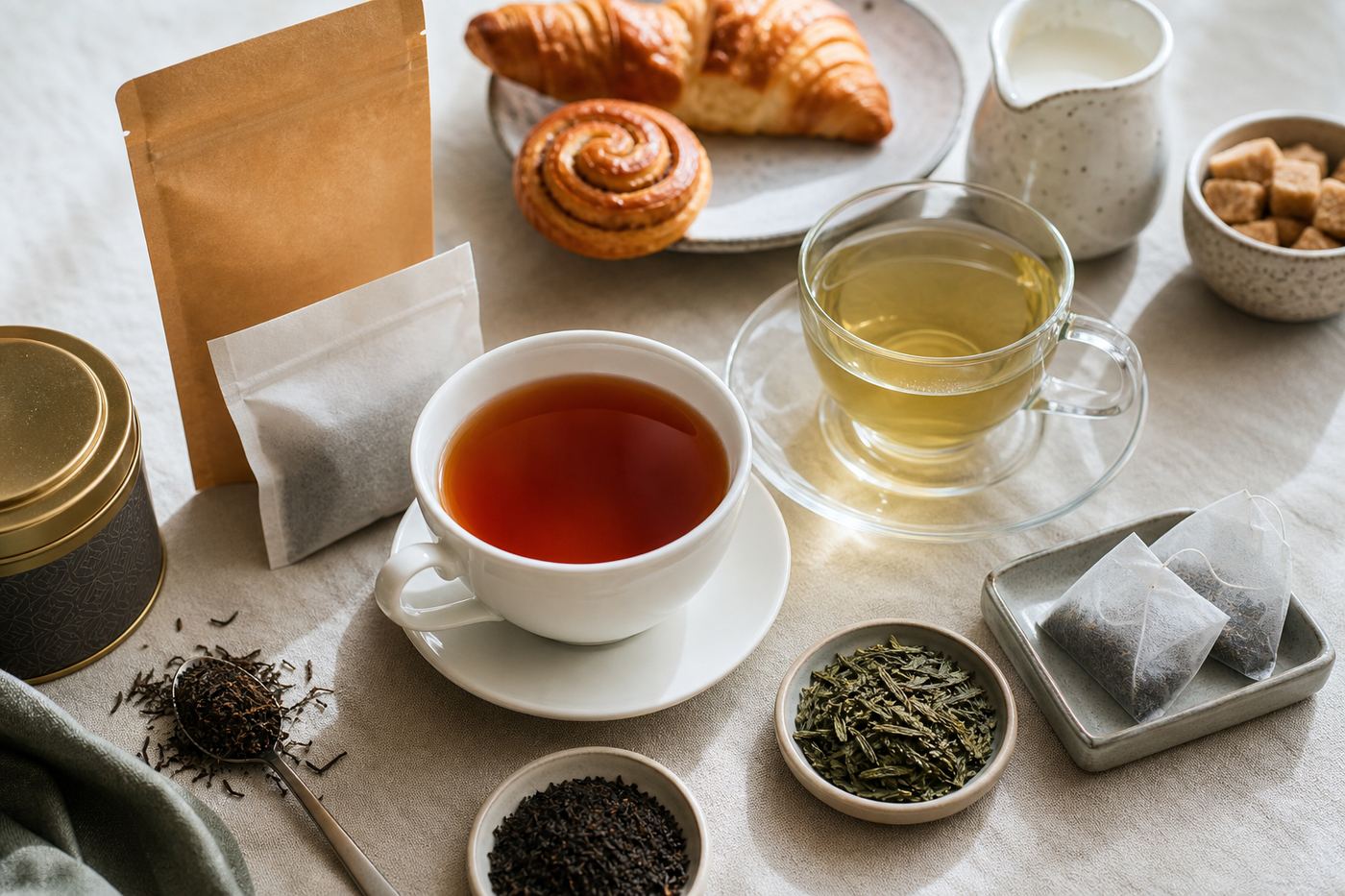
The global tea market splits into two commercial realities: commodity bulk CTC traded on liquor strength and price per kilogram, and specialty/premium tea traded on origin, cup character, certification, and brand story. While India dominates commodity export volumes to the Middle East and Russia, the fastest margin growth for Indian exporters lies in specialty orthodox, single-estate, organic-certified, and GI-authenticated supply to Western Europe, North America, Japan, and Australasia.
India exported approximately 255–280 million kilograms of tea in calendar years 2024–2025 out of about 1.30–1.37 billion kilograms produced — and within that export base, specialty and organic lines remain a smaller share by volume but a fast-growing share by value. Market data from Tea Board export statistics and specialty trade publications consistently show rising import values for organic and certified tea in Germany, the UK, and the USA, even as commodity volumes face price competition from Kenya and Vietnam. India's Darjeeling GI — one of the world's most recognised tea origins — and its expanding organic garden base provide structural advantages that commodity origins cannot replicate.
The commercial implication for exporters is strategic positioning: commodity CTC programmes compete on efficiency and liquor consistency; organic and specialty programmes compete on authenticity infrastructure — certifications, estate traceability, cupping stability, and packaging quality. Attempting to sell specialty tea without that infrastructure produces price-sensitive inquiries that never convert to repeat orders.
Comparison table
Swipe →
Data table — swipe horizontally on small screens
| Market Segment | Growth Profile | India's Competitive Position | Key Requirement |
|---|---|---|---|
| Specialty orthodox retail | Strong through 2030 | Darjeeling, Nilgiri, Assam estate teas | GI authenticity, cupping consistency |
| Organic certified retail | Structural growth | NPOP gardens in Darjeeling, Assam, Nilgiri | NPOP / EU Organic / USDA NOP |
| Single-estate / garden mark | Premium niche expansion | Named Darjeeling and Assam estates | Estate traceability, flush documentation |
| White / oolong specialty | Emerging premium | Select Darjeeling, Nilgiri, South India estates | Processing expertise, low volume allocation |
| Private label organic | Growing in USA/EU | Organic orthodox and green grades | Label compliance, MOQ feasibility |
Export Statistics: Where Specialty Value Concentrates
Key Statistics
India's tea exports remain majority commodity CTC to Russia, UAE, Iran, and Iraq by volume, but specialty and organic tea represent a growing share of export value as gardens invest in certification and estate branding. Darjeeling tea exports — inherently specialty — average significantly higher FOB per kilogram than Assam CTC. Organic-certified tea commands additional premiums of 30–80% over conventional orthodox in EU and USA specialty channels when certification is genuine and transaction certificates accompany each shipment.
Germany, the UK, the USA, and Japan are the highest-value destinations for specialty and organic Indian tea on a per-kilogram basis. Tracking Tea Board export statistics by category, rather than aggregate export volume, is the correct way to size the specialty opportunity — aggregate figures are dominated by commodity CTC and understate how much value concentrates in the smaller specialty tier.
Comparison table
Swipe →
Data table — swipe horizontally on small screens
| Export Category | Approx. Volume Share | Value Share Trend | Primary Destinations |
|---|---|---|---|
| Commodity Assam CTC | Majority of export volume | Stable to competitive | Russia, UAE, Iran, Iraq |
| Blended orthodox | Moderate volume | Stable | UK, Germany, Poland |
| Darjeeling orthodox | Smaller volume, high value | Growing premium | Germany, Japan, USA, UK |
| Organic certified | Small but rising | Strong growth | Germany, USA, UK, Netherlands |
| Green / white / oolong specialty | Niche volume | High margin | USA, Japan, Germany, Australia |
Product Categories: Organic, Specialty, and GI-Protected Indian Teas
Summary Box
Understanding which products belong in premium export programmes — and which remain commodity — is the first product decision. Organic tea export from India centres on orthodox whole-leaf and broken-leaf grades from certified gardens, not on undifferentiated CTC dust sold with an organic label claim unsupported by certification.
Darjeeling orthodox — grades from SFTGFOP through FTGFOP and TGFOP — remains the flagship specialty category, with first flush (spring) and second flush (summer) commanding distinct buyer profiles and price premiums. Authentic Darjeeling requires GI compliance, Tea Board exporter licensing, and garden-origin documentation; counterfeit blending is a known market risk that legitimate exporters must address proactively. Assam orthodox and specialty grades offer bold cup profiles for specialty blenders and single-origin retail lines. Nilgiri orthodox provides fragrant, balanced character for premium blended and estate programmes.
Beyond traditional black orthodox, Indian estates increasingly produce green tea, white tea (silver tips and similar hand-processed grades), and oolong styles — primarily for Japan-influenced specialty markets, USA D2C brands, and European fine-tea retailers. These categories are lower volume but significantly higher margin per kilogram. Organic certification applies across all processing styles when garden and factory operations meet NPOP standards.
Comparison table
Swipe →
Data table — swipe horizontally on small screens
| Product Category | Primary Origins | Typical Grades | HS 0902 | Premium Factor |
|---|---|---|---|---|
| Darjeeling GI orthodox black | Darjeeling district estates | FTGFOP, TGFOP, SFTGFOP | 0902.30 | GI authenticity, flush, estate mark |
| Assam specialty orthodox | Upper Assam estates | FBOP, bespoke whole-leaf | 0902.30 | Bold liquor, estate identity |
| Nilgiri specialty orthodox | Tamil Nadu highlands | BOP, OP, estate lots | 0902.30 | Fragrance, clean cup |
| Organic orthodox (all origins) | Certified gardens | Grade-specific | 0902.30 / 0902.40 | NPOP / EU Organic / USDA NOP |
| Darjeeling green | Darjeeling estates | Leaf grades, needle styles | 0902.10 / 0902.20 | Origin + processing method |
| White / silver tips | Darjeeling, Nilgiri, Assam select | Hand-picked tips | 0902.10 / 0902.30 | Rarity, labour-intensive harvest |
| Oolong specialty | Select South India / Darjeeling | Semi-oxidised styles | 0902.40 | Niche buyer education required |
| Single-estate private label | Any named estate | Buyer-specified | 0902.30 | Garden mark, traceability, packaging |
What Is Organic and Specialty Tea in Export Terms?
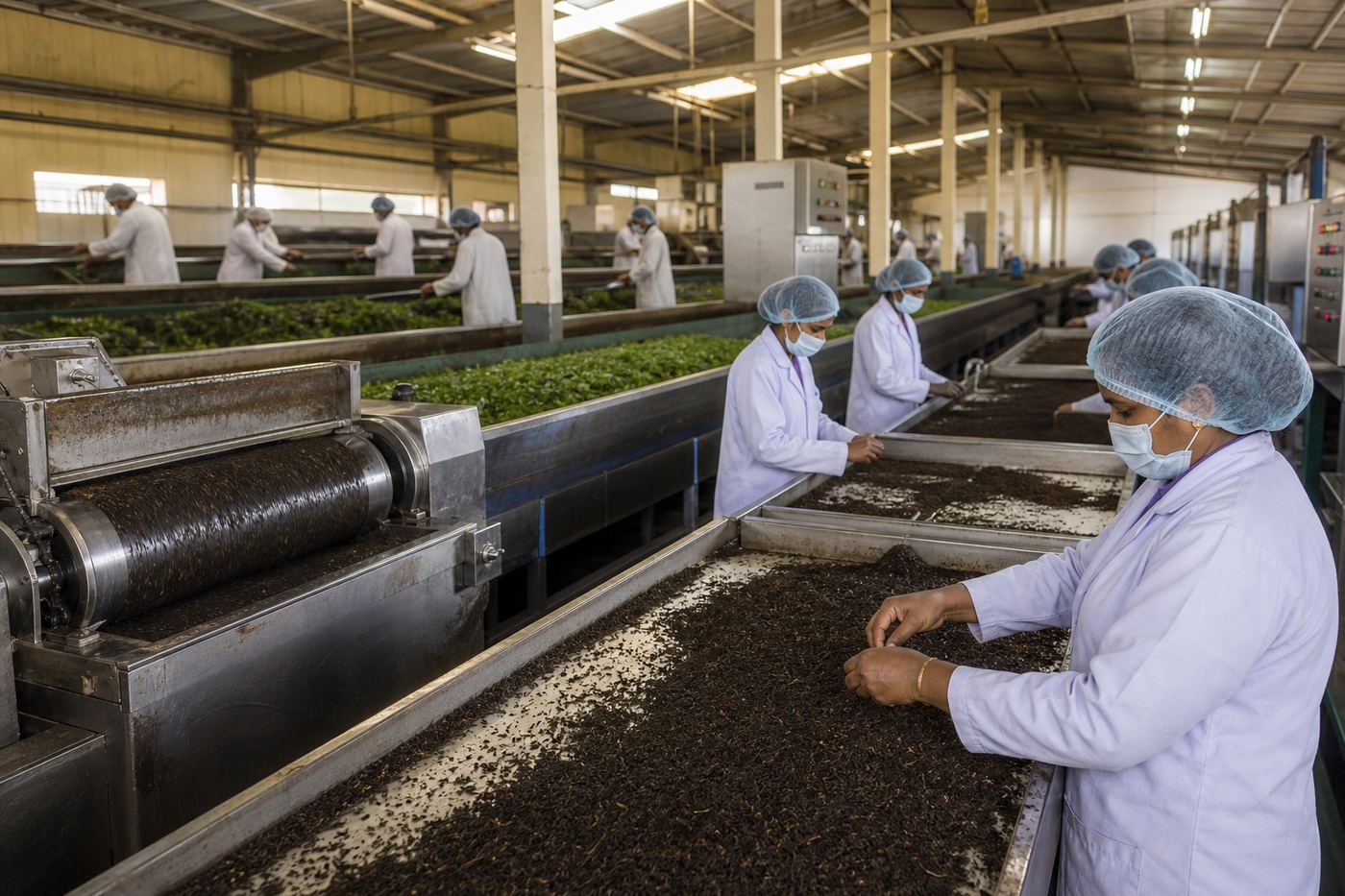
Organic tea in commercial export context is tea produced from gardens certified under a recognised organic standard — India's NPOP (National Programme for Organic Production) administered through APEDA-recognised certifiers — where synthetic pesticides, herbicides, and prohibited inputs are excluded from cultivation and processing, and chain-of-custody is audited annually. Certification scope must cover the garden and the processing facility, not merely the final packed product. An unverified organic claim in the EU or USA can trigger customs holds, retailer delisting, and regulatory action.
Specialty tea in export terms encompasses orthodox whole-leaf and broken-leaf grades, single-estate offerings, flush-specific lots, and non-standard processing styles where cup character and origin story drive purchase decisions rather than liquor strength per unit price alone. GI-protected Darjeeling tea is a specialty sub-category with legal origin requirements — only tea produced in the designated Darjeeling region meeting GI rules may bear the Darjeeling name in legitimate export trade. The critical distinction for exporters is the difference between claiming premium origin and proving it: a Darjeeling label without GI compliance is a legal liability, an organic label without NPOP or equivalent certification is a regulatory risk, and a single-estate claim without garden-mark traceability is a buyer-trust failure. Build the proof system before the sales narrative.
Certifications: NPOP, USDA Organic, EU Organic, and Darjeeling GI
Compliance Notes
Certification choice must be driven by target export market and product claim. The wrong certification for the destination market creates compliance rejections that damage buyer relationships.
NPOP — National Programme for Organic Production
NPOP is India's national organic standard, recognised by the EU and Switzerland for equivalence on most organic products. It covers garden cultivation practices, prohibition of synthetic inputs, processing-facility standards, and chain-of-custody from garden to exporter. Accredited certifiers such as INDOCERT, LACON, IMO, ECOCERT India, and OneCert Asia conduct annual inspections and issue organic certificates. NPOP is the foundation for organic tea export claims from India — without it, no other organic claim is supportable for Indian-origin tea.
USDA National Organic Program (NOP)
USDA NOP certification is required for organic label claims on tea sold in the USA retail market. Exporters targeting the USA organic channel typically need NOP-accredited certification alongside or aligned with NPOP. USA import buyers seeing NOP on the certificate remove a significant compliance risk they would otherwise carry, which is why NOP is often a shortlist gate for US specialty and organic distributors.
EU Organic Regulation
For EU market organic claims, NPOP equivalence recognition means an NPOP certificate issued by an APEDA-recognised certifier is generally accepted for import — but exporters should verify current equivalence status and any product-specific restrictions with their EU importer. EU Organic certification through an EU-accredited body operating in India provides the strongest compliance confidence for German, Dutch, French, and Scandinavian retail programmes, where the EU Organic logo requirement means the full certification chain must be maintained through the importer of record.
Darjeeling GI Protection
Darjeeling tea holds Geographical Indication protection in India and internationally through bilateral recognition frameworks. Authentic Darjeeling export requires tea produced in the designated geographic region, processed and packed under Tea Board oversight, and traded by Tea Board-licensed exporters. GI compliance is not optional for legitimate Darjeeling positioning — buyers in Germany, Japan, and the USA increasingly verify garden marks and GI documentation during vendor approval, because counterfeit Darjeeling blending is a known industry problem that legitimate estates need to actively counter with paperwork.
Rainforest Alliance, Fair Trade, and Additional Standards
Rainforest Alliance certification addresses sustainable farming and social practices and is recognised by major retail chains in Europe and North America. Fair Trade certification documents minimum price and community premium structures for worker and smallholder programmes. Neither replaces organic certification, but both add commercial value in retailer ESG sourcing and mission-driven specialty brands, at the cost of additional administrative burden at the garden level.
Certification Comparison Table
Comparison table
Swipe →
Data table — swipe horizontally on small screens
| Certification / Protection | Primary Market | What It Covers | Typical Timeline | Approximate Annual Cost Range |
|---|---|---|---|---|
| NPOP Organic | India base + EU equivalence + general organic claims | Garden, processing, chain of custody | 2–3 years conversion + annual audit | ₹80,000–₹4,00,000 depending on garden size and certifier |
| USDA NOP | USA organic retail and food service | Garden, processing, NOP system plan | 2–3 years conversion + annual audit | $3,000–$12,000 approximate |
| EU Organic | EU retail and private label | Same principles, EU-accredited certifier | 2–3 years conversion + annual audit | €2,000–€8,000 approximate |
| Darjeeling GI | Global specialty Darjeeling positioning | Geographic origin, Tea Board licensing | Ongoing compliance; estate registration | Included in Tea Board / garden compliance costs |
| Rainforest Alliance | EU, USA retail chains | Sustainable farming, social criteria | 12–24 months + annual audit | Varies by garden scale |
| Fair Trade | EU, USA, Canada premium retail | Minimum price, community premium | 12–18 months setup + annual audit | Varies by programme and scale |
Traceability and Buyer Expectations in Specialty Tea Export
Specialty tea buyers — unlike commodity CTC blenders — purchase traceability as part of the product. Estate mark on invoice, packing list, and carton labels must match the garden that produced the tea. Flush and harvest date documentation matters for Darjeeling programmes. Organic buyers expect transaction certificates linking the shipped lot to certified garden batches. Cupping reports demonstrating lot consistency support repeat-order confidence.
Packaging expectations are equally specific: foil-lined cartons or pouches to preserve aroma, nitrogen flushing for delicate green and white teas, batch codes linking to COA, and retail labels meeting destination food-labelling regulations. Private-label buyers add artwork approval, barcode compliance, and shelf-life validation to the traceability stack. Exporters who treat traceability as a commercial asset — sharing garden profiles, certification copies, and cupping data proactively — convert specialty buyers faster than those who reveal documentation only after purchase order issuance.
Comparison table
Swipe →
Data table — swipe horizontally on small screens
| Traceability Element | Specialty Buyer Expectation | Failure Consequence |
|---|---|---|
| Estate mark / garden name | Consistent across invoice, COA, carton | Vendor delisting, authenticity dispute |
| Darjeeling GI compliance | Verifiable GI documentation | Legal liability, buyer rejection |
| Organic transaction certificate | Per-shipment lot linkage | Customs hold, retailer delisting |
| Flush / harvest date | Documented for seasonal teas | Loss of seasonal premium pricing |
| Cupping report | Lot-specific liquor profile | Repeat order failure |
| Pesticide residue panel | Within destination MRL | Consignment rejection (especially Japan) |
| Batch code system | Links pack to production lot | Recall and claim risk |
MOQ, Packaging, Container Loading, and Shipping for Specialty Programmes
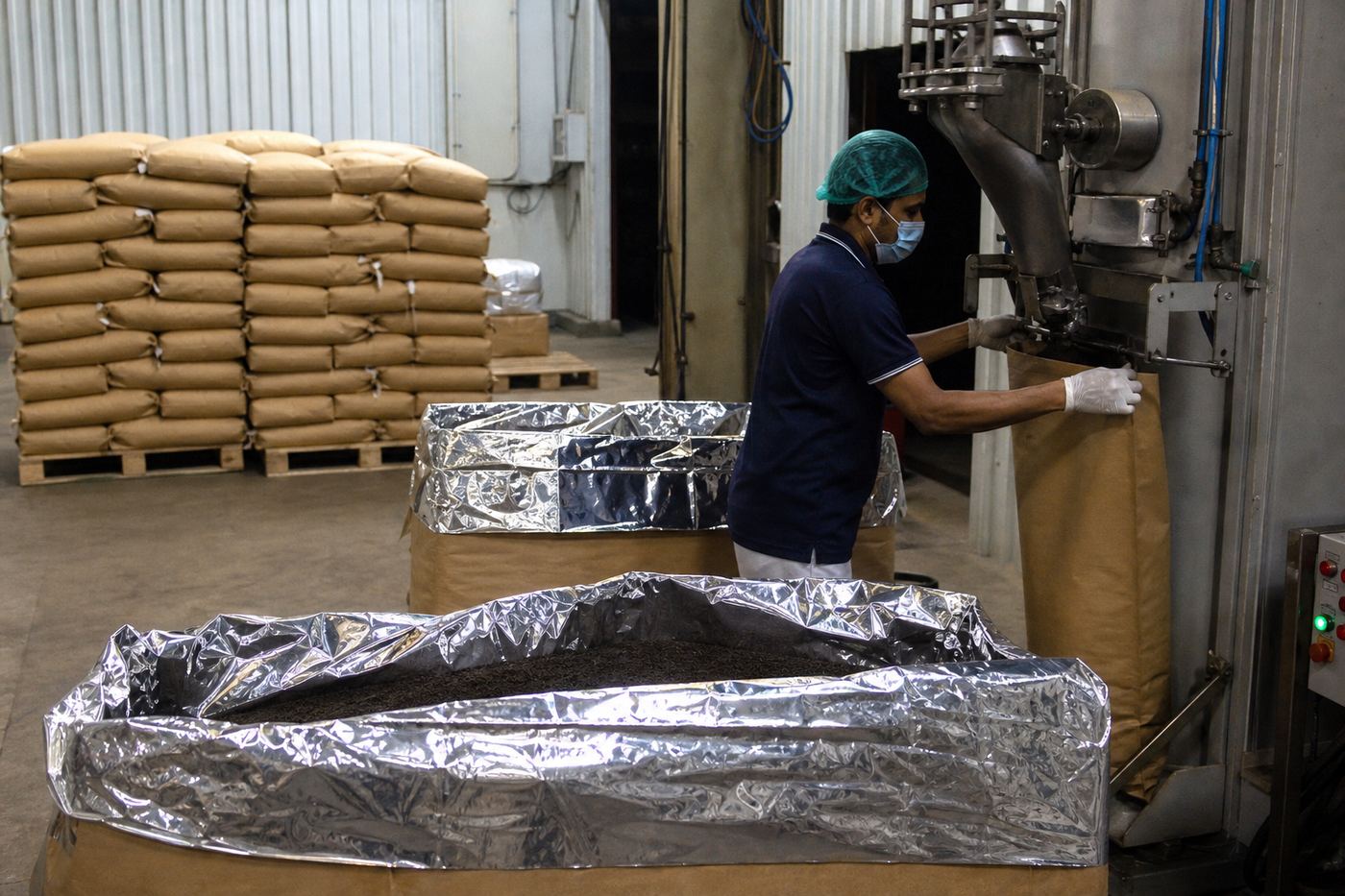
Specialty and organic logistics differ meaningfully from commodity CTC — smaller lots, more delicate packaging, and tighter chain-of-custody requirements shape every decision from MOQ to freight mode.
MOQ
MOQ for specialty orthodox typically ranges from 500 kg to 5 MT per grade or lot — significantly smaller than commodity CTC. Some estates accept 100–250 kg trial allocations for premium first-flush Darjeeling. Private-label retail MOQ depends on SKU and packaging format, often 3,000–10,000 units.
Packaging
Foil-lined multi-ply cartons and traditional wooden chests are standard for premium orthodox. Nitrogen-flushed pouches protect delicate green and white teas. Organic-certified tea requires handling segregation that maintains chain-of-custody integrity throughout packing. Commodity multiwall sacks are inappropriate for premium specialty positioning and damage buyer perception on arrival.
Container Loading
Specialty lots rarely fill a container alone; LCL consolidation with compatible SKUs is common. Cartons are palletised with additional care for foil-lined and chest packaging to prevent crushing. Desiccant and humidity control matter more here than in bulk CTC loading, since delicate leaf styles are more susceptible to moisture ingress during transit.
Shipping
FOB Kolkata or Cochin is standard for sea freight bulk specialty; CIF or DAP suits established retail buyers who want landed-price simplicity. Air freight is common for urgent first-flush Darjeeling allocations to USA and Japan buyers who need product on shelf within a tight seasonal window, despite the higher per-kilogram freight cost.
Buyer Requirements for Organic and Specialty Programmes
Buyer Requirements
Specialty buyers evaluate suppliers on four dimensions before placing trial orders: grading integrity, certification and traceability readiness, communication reliability, and supply continuity across seasons. Price enters the conversation only after these filters pass — leading with a discount before documentation is ready signals the opposite of what a premium buyer wants to see.
Comparison table
Swipe →
Data table — swipe horizontally on small screens
| Process Step | Specialty / Organic Requirement | Commodity CTC Baseline |
|---|---|---|
| Garden sourcing | Certified organic garden or verified estate mark | Auction or bulk contract sourcing |
| Quality approval | Cupping against buyer spec; flush documentation | Liquor strength and mesh consistency |
| Packaging | Foil-lined cartons, chests, retail formats | Multiwall sacks 30–50 kg |
| Certification docs | NPOP / NOP / EU Organic transaction certificate per lot | Standard COA only |
| Origin claims | GI documentation for Darjeeling; estate mark on invoice | Origin statement only |
| MOQ | 500 kg–5 MT typical | 5–50+ MT |
| Incoterms | FOB, CIF, DAP depending on buyer | FOB, CFR predominantly |
Country-wise Opportunities for Organic and Specialty Tea
Market Snapshot
Premium tea demand intensity and certification requirements differ significantly by destination. Match your programme investment to the requirements and margins of your primary target market.
Germany and EU
Germany is the EU's largest specialty and organic tea market and the primary gateway for continental distribution. NPOP-EU equivalence eases organic import documentation, but EU Organic logo requirements mean the full certification chain must be maintained through the importer of record. German specialty buyers conduct thorough due diligence — cupping evaluation, pesticide panels, organic transaction certificate verification, and Darjeeling GI authenticity checks are standard before vendor approval. Biofach (Nuremberg) is the flagship sourcing event for certified organic tea buyers across the EU.
USA and Canada
The USA specialty tea market has expanded through D2C brands, specialty tea shops, natural food retail, and premium supermarket ranges. USDA NOP certification is required for organic label claims. World Tea Expo concentrates specialty buyer density. Darjeeling first flush and single-estate Assam programmes attract USA buyers seeking differentiated origin stories. Canada follows similar organic and specialty patterns with CFIA import requirements.
UK
The UK combines deep tea culture with a growing specialty and organic segment beyond commodity blends. Post-Brexit import regulations operate independently of EU frameworks, though organic standards remain aligned in substance. UK specialty retailers and premium supermarket organic ranges seek documented Indian origin tea with estate marks and certification, and packaging quality and labelling accuracy are scrutinised at border inspection.
Japan
Japan is a high-value import market with sophisticated buyer expectations on purity, pesticide residue profiles, and cup character. Japanese MRL standards are among the world's strictest — compliance testing before first shipment is essential. Darjeeling orthodox and Indian green teas have premium positioning in Japanese specialty channels, though relationship-building cycles are long and quality consistency across multiple shipments is the real conversion factor.
Australia, New Zealand, and Gulf Premium Retail
Australia's specialty and organic food import channels are growing, with biosecurity-strict import documentation; nitrogen flushing and foil barriers matter more given freight distance. Beyond commodity CTC volume, Dubai and Abu Dhabi host growing premium retail and hospitality segments seeking Darjeeling, estate Assam, and organic teas for luxury hotel programmes and high-end grocery, where Halal-compliant handling matters for retail-ready formats.
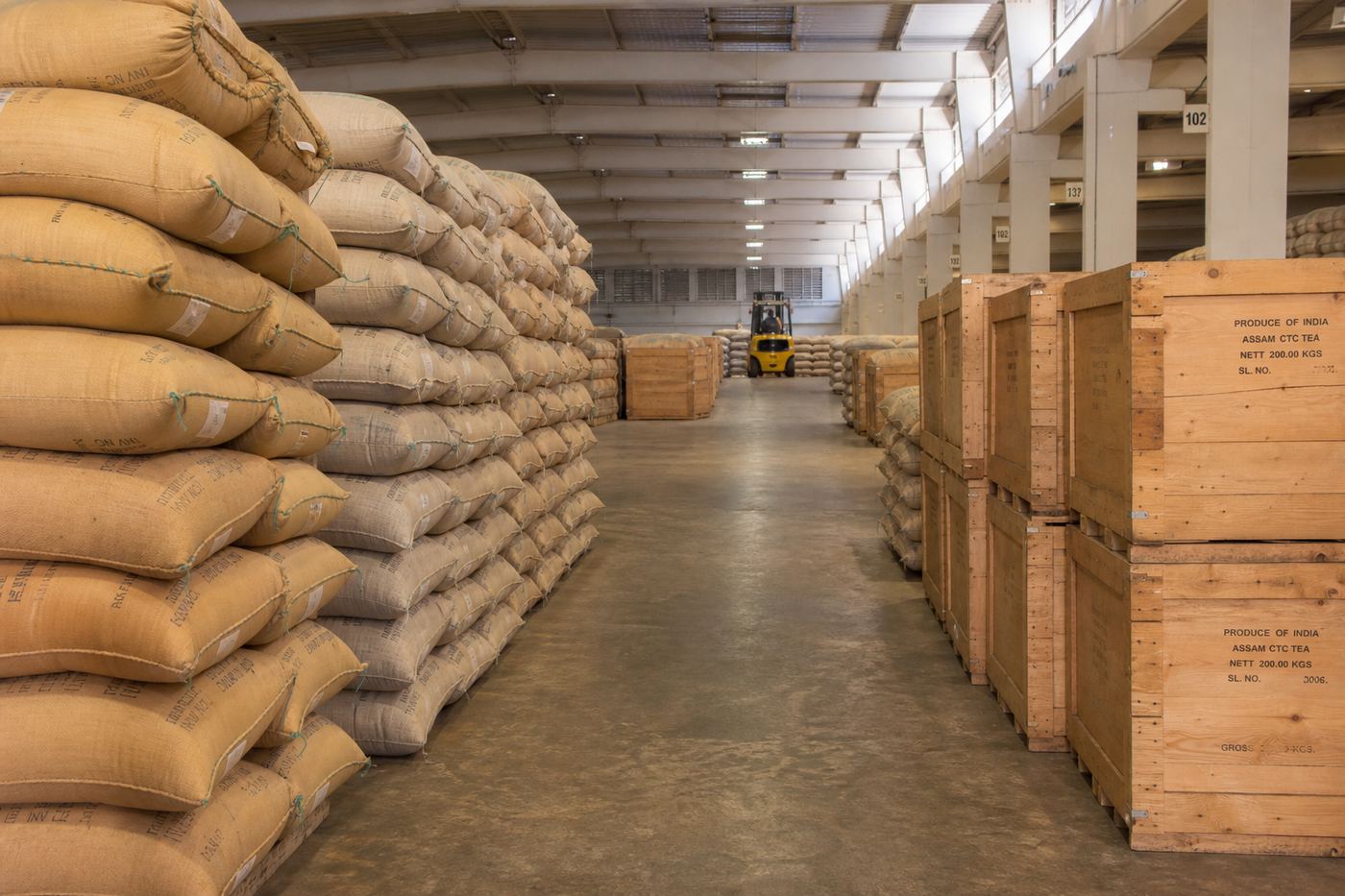
Sourcing, Exporter, and Compliance Checklists
Checklist
Compliance Notes
Three short checklists keep an organic and specialty programme buyer-ready — one for buyers sourcing Indian specialty tea, one for exporters building the programme, and one for compliance evidence.
Sourcing Checklist (for Buyers)
- Certification requested by exact name (NPOP, USDA NOP, EU Organic) rather than a generic "organic" request.
- Estate mark and flush date requested on invoice, COA, and carton label before the first sample.
- Cupping sample requested from the actual lot intended for shipment, not a retained reference sample.
- Pesticide residue panel requested for the destination market's specific MRL requirements.
- GI documentation requested for any SKU sold under the Darjeeling name.
Exporter Checklist (for Gardens and Estates)
- NPOP certification current, with certifier and scope covering both garden and processing facility.
- Tea Board exporter licence and, where applicable, Darjeeling GI registration current for the estate.
- Evidence pack prepared before outreach: garden profile, certification copies, COA template, cupping report format.
- Premium packaging specifications (foil-lined cartons, chests, nitrogen flush) engineered before first shipment.
- Flush allocation calendar documented and communicated honestly to avoid over-promising seasonal volume.
Compliance Checklist
- Organic transaction certificate issued per shipment, matching the exact lot and batch shipped.
- EU Organic logo claims verified against full chain-of-custody certification, including the importer of record.
- Darjeeling GI certificate matched to the specific estate and flush stated on shipping documents.
- Pesticide residue panel completed and within destination MRL before booking freight for EU, UK, USA, or Japan.
- Retail label compliance reviewed for the specific destination market before print run commitment.
Common Buyer Mistakes in Organic and Specialty Tea Sourcing
Common Mistakes Box
- Accepting an "organic" claim without checking the specific certification name and scope — Solution: request the certificate and verify certifier accreditation directly.
- Assuming NPOP automatically satisfies USA organic retail claims — Solution: confirm USDA NOP is separately in place before quoting USA organic pricing.
- Buying Darjeeling-labelled tea without GI verification — Solution: request Tea Board origin documentation matched to the specific estate and flush.
- Approving a retained or season-average sample instead of a lot-specific cupping sample — Solution: always request the sample from the actual shipping lot.
- Underestimating small-lot packing costs in specialty pricing — Solution: ask for packing costs itemised separately from the base FOB.
- Ignoring flush allocation limits and expecting year-round first-flush supply — Solution: plan purchase orders around the estate's documented flush calendar.
- Skipping a destination-specific pesticide residue panel — Solution: require panel results matched to your market's MRL before shipment booking.
Future Trends for Organic and Specialty Indian Tea Through 2030
Through 2030, EU organic import targets, USA specialty tea market expansion, and Japanese premium import growth will sustain demand for certified and estate-origin Indian tea. GI protection enforcement for Darjeeling is likely to strengthen as international recognition expands. Digital product passports and blockchain-linked traceability will move from pilot to expectation for larger EU retail programmes, meaning estates that build digital lot records now will face less retrofit cost later.
India-specific dynamics include growing NPOP certification coverage in Darjeeling, Assam, and Nilgiri gardens; Tea Board promotion of value-added and specialty export; rising laboratory capacity for pesticide-residue testing; and increasing direct estate-to-importer relationships bypassing opaque broker chains. The opportunity gap between India's specialty potential and its current certified export volume remains wide — early movers who invest in certification infrastructure now will compound advantage as standards harden.
Case Study: Darjeeling Organic Estate Programme Securing a German Specialty Buyer
Background: A Darjeeling-based estate garden with NPOP organic certification and Tea Board exporter licensing produced first-flush and second-flush orthodox grades but had limited direct international buyer access — selling primarily through domestic auction and one intermittent broker relationship.
Market opportunity identification: Import pattern research and Biofach exhibitor research identified 18 German and Dutch specialty tea importers with active organic categories. LinkedIn prospecting found procurement contacts at six of these importers.
Programme positioning: A one-page organic estate summary covered NPOP certificate details, EU equivalence status, Darjeeling GI compliance, estate mark and garden elevation profile, first-flush and second-flush cupping notes, packaging options, and a flush allocation calendar.
Sampling and due diligence: Dispatched paid certified sample kits — first flush FTGFOP, second flush TGFOP, each with full COA, NPOP transaction certificate copy, GI documentation, and cupping report — to five buyers. Two buyers requested expanded pesticide panels for Germany-specific MRL compliance, with results provided within two weeks.
Trial order and results: A first 800 kg second-flush organic TGFOP shipment moved to Hamburg in foil-lined 5 kg cartons, with pre-shipment cupping shared before Bill of Lading issuance. Quality was accepted without dispute. A repeat first-flush allocation order followed for the next spring, and a second German specialty buyer was onboarded using the same evidence pack. FOB achieved was more than triple the estate's prior broker-mediated conventional orthodox pricing.
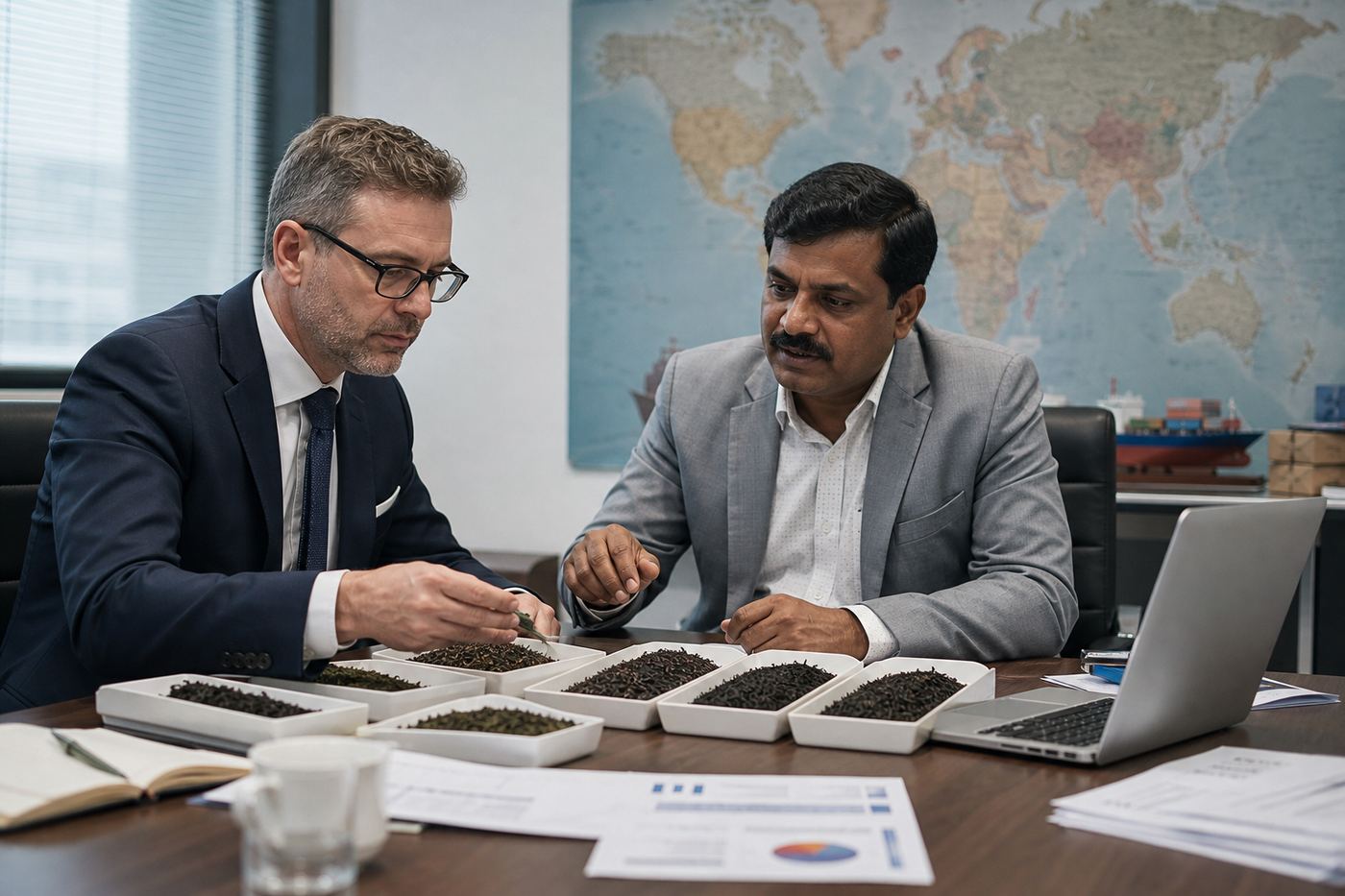
Lessons learned: GI and organic documentation proactivity was the decisive trust factor. Certification-first investment before sales outreach was the correct sequencing — leading with price would have produced the same generic response the estate had received from brokers for years.
Conclusion
- Next step: identify your primary estate or garden partner and begin NPOP certifier engagement; build GI and estate-mark documentation for Darjeeling programmes.
- Read find international buyers for tea, source tea directly from India, tea export documentation checklist, Tea Board registration benefits for exporters, and trade shows for tea exporters.
- Also explore top tea products exported from India, best countries for Indian tea exports, most demanded Indian tea by country, and how to export tea from India.
- Explore merchant exporter, export products from India, global sourcing partner India, and agriculture & food products industry.
- International buyers should share origin requirements, certification needs, and volume for a practical organic or specialty sourcing discussion with Altus Exports.
Organic and specialty tea export from India represents one of the most defensible premium positions in Indian agricultural export — when certification, traceability, and cupping infrastructure match the quality of the underlying gardens. Darjeeling GI, single-estate Assam and Nilgiri orthodox, and certified organic programmes give exporters origin stories that are genuinely rare at global scale, and margins in certified specialty programmes substantially exceed commodity CTC economics when certification costs are priced correctly into FOB.
Actionable recommendations: select your primary origin and certification pathway, engage an NPOP-accredited certifier immediately if organic positioning is the target, build your evidence pack before buyer outreach, and target EU organic or USA specialty channels with full documentation readiness. Altus Exports supports international buyers and Indian tea exporters building organic and specialty programmes that deliver on every claim from garden to shipment.