
Most Demanded Indian Wooden Handicrafts by Country (2026)
By Saurabh Mittal, Founder, Altus Exports
A market intelligence guide mapping the most demanded Indian wooden handicrafts by country — comparing species, finish, pack format, and certification requirements across the USA, Germany, the Netherlands, France, the UK, the UAE, Australia, and Canada. Understand exactly what buyers in each market want from Saharanpur, Jodhpur, Channapatna, and Kashmir supply, and how to adapt species selection, finishing, and documentation to win orders. Includes a full country × species × finish × certification demand matrix, pricing, MOQ, container loading, and Altus Exports advisory context.
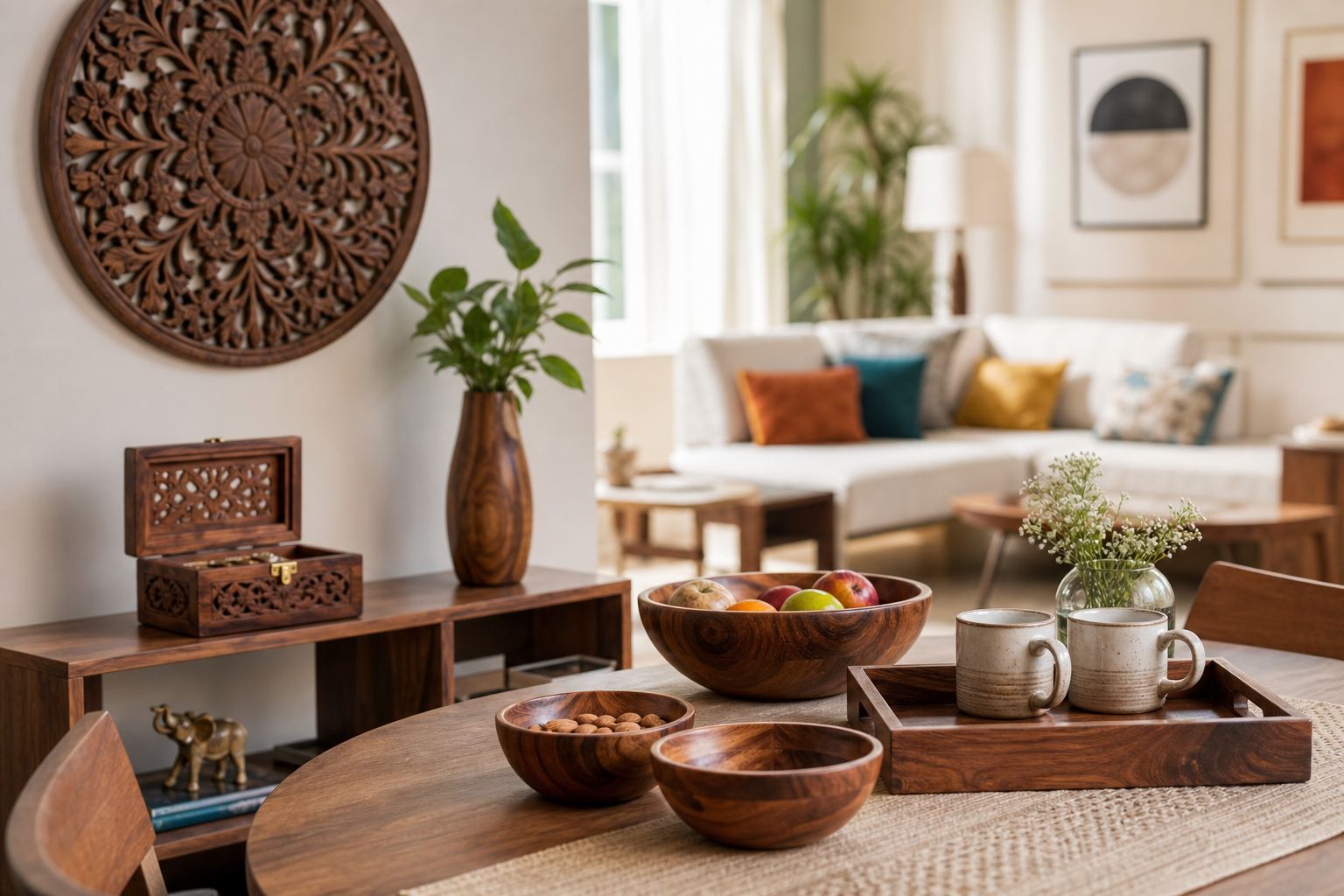
Not every international wooden handicraft buyer wants the same thing. A US home-décor retailer sourcing sheesham trays with a clean, contemporary finish for a big-box seasonal set has entirely different requirements from a German sustainability-focused importer seeking FSC-certified, reclaimed-wood bowls, or a UAE hospitality distributor buying bulk mango-wood décor for hotel fit-outs alongside a premium walnut-carved gifting line. India's structural advantage — deep craft traditions concentrated in Saharanpur, Jodhpur, Channapatna, and Kashmir, feeding EPCH woodwares exports of Rs 8,524.74 crore / US$1,008.04 million in FY 2024-25 — only converts into repeat export orders when exporters understand exactly which species, finish, and certification each market rewards.
India's wooden handicraft production is concentrated in four distinct clusters: Saharanpur (Uttar Pradesh) for carved and inlaid sheesham and mango-wood décor; Jodhpur (Rajasthan) for mango-wood and reclaimed-wood furniture accessories with distressed and whitewash finishes; Channapatna (Karnataka) for lacquered wooden toys in lightweight local wood; and Kashmir for intricately carved walnut-wood panels, boxes, and furniture inlays. Export classification runs primarily under HS 4420 (inlaid wood, caskets, ornaments), HS 4419 (wooden tableware and kitchenware), HS 4421 (other wood articles), HS 4414 (wooden frames), and HS 9403 for furniture-accessory crossover items.
This guide maps the most demanded Indian wooden handicrafts by country in 2026, translating species, finish, and certification preferences into practical guidance for exporters and international buyers across the USA, Germany, the Netherlands, France, the UK, the UAE, Australia, and Canada. Use it alongside top wooden handicraft products exported from India, best countries for Indian wooden handicraft exports, and how to export wooden handicrafts from India. Validate demand signals with EPCH market intelligence, DGFT trade data under HS 4420/4419/4421/4414, and direct buyer conversations before committing production or certification investment.
Key Takeaways
Summary Box
- Most demanded Indian wooden handicrafts by country vary sharply by species, finish, and certification — not just by price.
- The USA and Canada lead demand for sheesham and mango-wood trays and bowls in contemporary finishes for home-décor retail and private label.
- Germany, the Netherlands, and France form the EU's FSC/EUDR-conscious tier, rewarding certified and reclaimed-wood sourcing at meaningful premiums.
- The UK favours heritage-style carved pieces alongside contemporary décor, while the UAE runs a dual bulk-and-premium-gifting demand pattern for hospitality and retail.
- Australia is an earlier-stage but growing natural-material décor market with strong biosecurity and import-compliance expectations.
- Altus Exports aligns handicrafts & lifestyle products sourcing with per-country species, finish, and certification intelligence for buyers and Indian exporters.
Executive Summary
Summary Box
Wooden handicrafts have grown from regional craft traditions in Saharanpur, Jodhpur, Channapatna, and Kashmir into an internationally traded home-décor and gifting category, with EPCH woodwares exports at Rs 8,524.74 crore / US$1,008.04 million in FY 2024-25. But 'demand' for Indian wooden handicrafts is not a single number — it splits sharply by species (sheesham, mango wood, teak, acacia, pine, reclaimed wood, walnut), finish (carved, inlaid, lacquered, distressed, natural-oil), pack format (bulk cartons versus retail-ready sets), and certification (baseline EPCH/IEC versus FSC/EUDR premium) — and each destination market weights these variables differently. Sheesham (Dalbergia sissoo) programmes also require CITES/Vriksh awareness before quoting.
This guide builds a practical country × species × finish × certification demand matrix across the USA, Germany, the Netherlands, France, the UK, the UAE, Australia, and Canada, alongside the market context exporters need to act on it: size and statistics overview, product categories, manufacturing, export process, pricing, MOQ, packaging, container loading, shipping, certifications, buyer requirements, sourcing and compliance checklists, common buyer mistakes, and future trends through 2030.

Market Size & Industry Overview
Key Statistics
Global demand for Indian wooden handicrafts has grown as home décor, tabletop, and sustainable-lifestyle retail across North America, Europe, and Australia added carved trays, bowls, boxes, and furniture accessories to core and seasonal assortments. EPCH woodwares exports of Rs 8,524.74 crore / US$1,008.04 million in FY 2024-25 reflects demand anchored by the USA, Germany, the Netherlands, France, the UK, the UAE, Australia, and Canada, sourced overwhelmingly from four specialised clusters rather than large centralised factories.
Each cluster's craft specialisation directly shapes which markets it serves best: Saharanpur's carving and inlay work suits both contemporary and heritage-style décor buyers; Jodhpur's distressed and whitewash mango-wood finishes align closely with US and UK farmhouse and rustic-décor trends; Channapatna's lacquered toys serve a distinct children's-product and novelty-gift niche; and Kashmir's walnut carving occupies a premium tier that resonates most with design-forward European and Gulf gifting buyers.
Why Demand Varies So Much by Country
Four variables explain almost all of the difference in what buyers want across markets: species selection (sheesham and walnut command premium positioning; mango wood, acacia, and pine serve volume-driven retail; reclaimed wood serves sustainability-focused buyers); finish complexity (carved and inlaid work versus plain-sanded or lacquered pieces); certification depth (baseline EPCH/IEC versus FSC/EUDR-documented premium); and channel type (home-décor retail behaves very differently from hospitality bulk-procurement or boutique gifting).
Buyers who have received inconsistent finish quality or under-documented shipments in the past apply much stricter scrutiny to new Indian suppliers, regardless of quoted FOB price. Matching your current craft specialisation and certification status to the market that actually rewards it — rather than chasing every inquiry with the same catalogue — is the single highest-leverage decision a wooden handicraft exporter can make.
Export Statistics
Key Statistics
India's wooden handicraft exports are classified primarily under HS 4420 (wood marquetry, inlaid wood, caskets and ornaments), HS 4419 (wooden tableware and kitchenware), HS 4421 (other articles of wood), and HS 4414 (wooden frames), with furniture-accessory crossover items sometimes falling under HS 9403. EPCH woodwares exports stood at Rs 8,524.74 crore / US$1,008.04 million in FY 2024-25, with the USA, Germany, the UK, and the Netherlands historically anchoring demand alongside consistent secondary demand from France, the UAE, Australia, and Canada. Exporters should verify current figures via EPCH trade statistics, DGFT export dashboards, and ITC Trade Map before committing capacity.
Comparison table
Swipe →
Data table — swipe horizontally on small screens
| Metric | Country/SKU Pattern | Notes |
|---|---|---|
| India's wood/wood-products export value | ~US$1.008 billion, FY24-25 (EPCH-linked, directional) | Base figure the country × species demand matrix below builds on |
| SKU concentration by value | Trays/bowls (HS 4419) dominate USA, UK, and Canadian demand; boxes/caskets (HS 4420) skew toward UAE and boutique EU retail | Confirm the current split via DGFT/ICEGATE before committing production capacity |
| Fastest-growing demand pattern | FSC/EUDR-aligned SKUs across Germany, Netherlands, and France | See the country × species × finish matrix below for which species this favours |
| Species/finish spread by destination | USA and Canada favour sheesham/mango contemporary finishes; UK and boutique EU favour carved, heritage-style finishes | Directional only; validate per SKU with EPCH trade intelligence |
Import Statistics
Key Statistics
Import patterns diverge clearly by market maturity and channel. The USA shows the largest volume across home-décor retail, gift shops, and private-label e-commerce. Germany, the Netherlands, and France form Europe's most certification-conscious tier, with growing demand for FSC-linked and reclaimed-wood sourcing. The UK blends heritage-style carved-décor demand with contemporary retail. The UAE combines large bulk hospitality/retail procurement with a distinct premium-gifting segment. Australia is earlier-stage but growing steadily through natural-material home décor retail, and Canada broadly mirrors US demand patterns at a smaller scale.
Comparison table
Swipe →
Data table — swipe horizontally on small screens
| Country | Import Growth Driver | Typical Species/Finish Imported |
|---|---|---|
| USA | Home décor and gift retail, e-commerce private label | Sheesham/mango wood, contemporary and carved finishes |
| Germany | Sustainability-conscious décor, design retail | FSC-certified sheesham/teak, reclaimed wood |
| Netherlands | European distribution hub, design retail | Mango wood/acacia, clean contemporary finishes |
| France | Boutique and artisanal home décor retail | Carved sheesham, design-led reclaimed-wood pieces |
| UK | Home décor retail, heritage-style carved pieces | Sheesham/mango wood, carved and inlaid finishes |
| UAE | Hospitality fit-outs, retail, gifting | Mango wood bulk; walnut/sheesham premium gifting |
| Australia | Natural-material home décor retail | Acacia/mango wood, plain and lightly carved finishes |
| Canada | Home décor retail, mainstream and diaspora | Similar to USA at smaller scale |
Product Categories
Summary Box
- Wooden trays and bowls (HS 4419) — the dominant retail-ready export format across nearly every market in this guide
- Carved décor and wall art — sheesham and mango-wood panels and figurines, strongest in USA, UK, and heritage-style buyers
- Boxes and ornamental caskets (HS 4420) — inlaid and carved storage/gifting pieces, strong in UAE and boutique European retail
- Furniture accessories (HS 9403 crossover) — mango-wood and reclaimed-wood stools and accent pieces, strongest in USA/UK rustic-décor trends
- Lacquered wooden toys — Channapatna's niche category, primarily children's-product and novelty-gift buyers
- Walnut-wood carved panels and boxes — Kashmir's premium tier, strongest fit for Germany, France, and UAE gifting buyers
Species and finish are the two variables buyers care about most, and both differ meaningfully by market — a full product breakdown lives in top wooden handicraft products exported from India.
Manufacturing Overview
Export Tip
Wooden handicraft manufacturing capability varies meaningfully by cluster, and that variation is the biggest driver of which export markets a given workshop can realistically serve. Saharanpur's carving and inlay workshops can serve both contemporary and heritage-style buyers given their versatility across sheesham and mango wood. Jodhpur's furniture-accessory units, with strong distressed and whitewash finishing capability, align closely with US and UK farmhouse-décor demand. Channapatna's lacquering specialists serve a narrower but distinct toy/novelty niche. Kashmir's walnut carvers occupy a premium tier that commands the strongest pricing but requires the most patient, relationship-driven buyer development given lower production volumes per workshop.
Most Demanded Indian Wooden Handicrafts in the USA
Market Snapshot
- Preferred species: Sheesham and mango wood; growing reclaimed-wood interest
- Preferred finish: Contemporary clean finishes for mainstream retail; carved/inlaid for heritage-style boutique retail
- Certifications expected: EPCH RCMC, IEC, Lacey Act species/origin declaration
- Watch-out: US retail buyers are consistency-sensitive on colour matching across a multi-piece set
- Channel tip: FSC-certified reclaimed-wood décor commands a meaningful premium in US sustainability-focused retail
The USA is the largest destination for Indian wooden handicrafts, driven by home-décor retail chains, specialty gift shops, and e-commerce private-label brands. US buyers overwhelmingly prefer sheesham and mango-wood trays, bowls, and small furniture accessories in contemporary finishes, alongside a steady heritage-style segment favouring carved and inlaid pieces. Reclaimed-wood décor is a fast-growing niche within US sustainability-conscious retail.
Most Demanded Indian Wooden Handicrafts in Germany
Market Snapshot
- Preferred species: FSC-certified sheesham/teak; reclaimed wood
- Preferred finish: Clean, design-forward contemporary finishes
- Certifications expected: FSC chain-of-custody, EUDR due-diligence documentation, EPCH RCMC
- Watch-out: Incomplete or unsubstantiated FSC/reclaimed-wood claims cause immediate buyer sourcing suspension
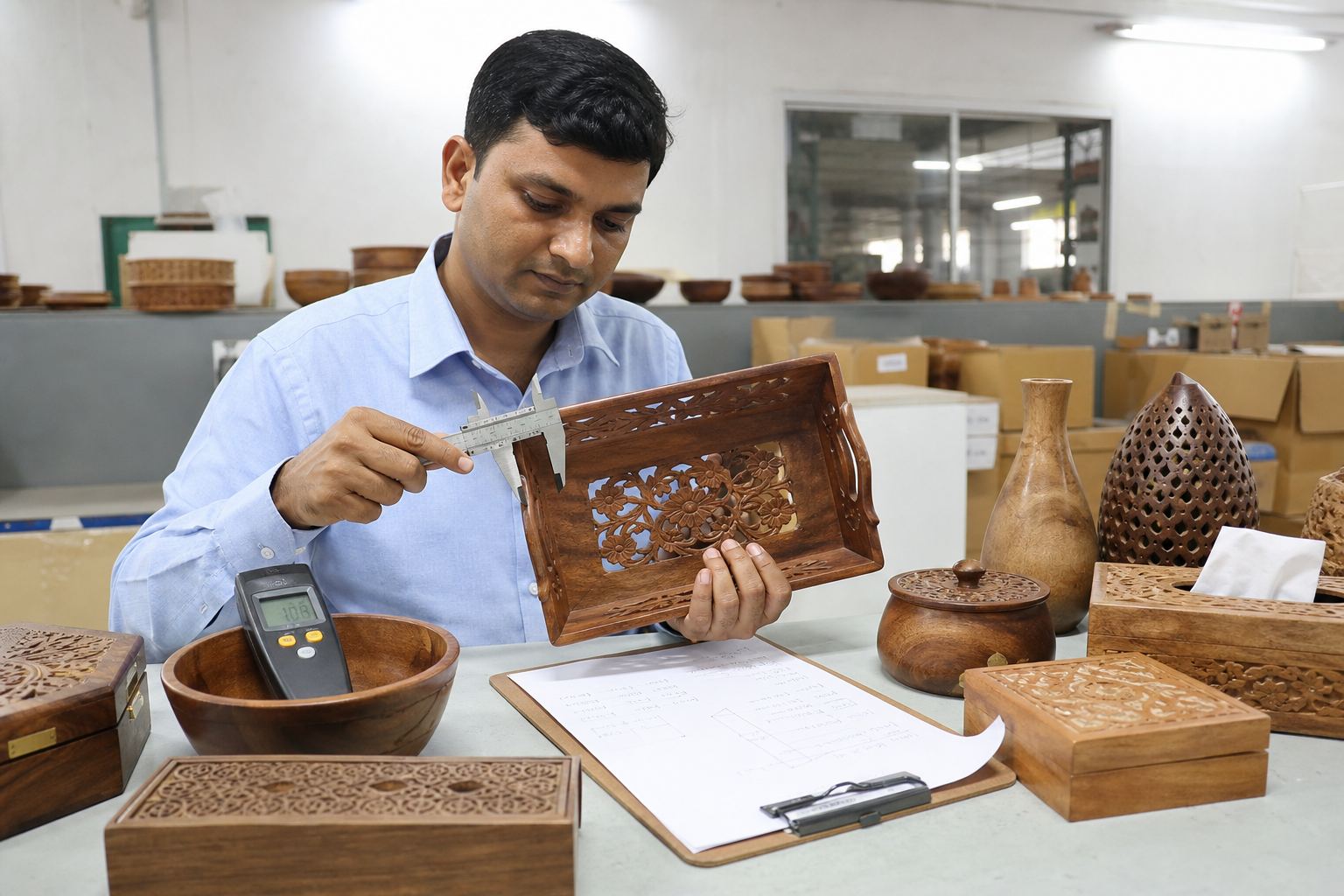
Germany is the most certification-intensive market in this comparison and rewards exporters who can substantiate FSC chain-of-custody and EUDR due-diligence documentation. German home-décor and design retailers seek certified sheesham, teak, and reclaimed-wood pieces with full traceability from timber source to export lot. The commercial reward is meaningful — certified, well-documented wood décor can command a substantial premium in German specialty retail — but unsubstantiated sustainability claims are penalised with immediate sourcing suspension.
Most Demanded Indian Wooden Handicrafts in the Netherlands
Market Snapshot
- Preferred species: Mango wood, acacia; growing sheesham interest
- Preferred finish: Clean contemporary finishes suited to Scandinavian-influenced European design trends
- Certifications expected: EUDR due-diligence documentation, EPCH RCMC
- Channel tip: Dutch distribution partners are a practical entry point for reaching wider EU retail
The Netherlands functions both as a direct retail market and as a European distribution hub, importing mango-wood and acacia décor in contemporary finishes for onward EU distribution as well as domestic design-forward retail. Dutch buyers are pragmatic about certification relative to Germany — EUDR compliance is expected for EU-bound goods, but the intensity of FSC-specific marketing claims is lower than in the German premium tier.
Most Demanded Indian Wooden Handicrafts in France
Market Snapshot
- Preferred species: Sheesham, reclaimed wood
- Preferred finish: Carved, design-led pieces with a clear craft-origin story
- Certifications expected: EUDR documentation, EPCH RCMC; FSC adds credibility for premium boutique retail
- Channel tip: Curated, story-driven product ranges outperform broad undifferentiated catalogues with French boutique buyers
French demand concentrates in boutique and artisanal home-décor retail, where design storytelling and craft provenance matter as much as price. French buyers respond well to carved sheesham pieces and reclaimed-wood décor with a clear artisan-origin narrative, and boutique retailers often prefer smaller, curated product ranges over large undifferentiated catalogues.
Most Demanded Indian Wooden Handicrafts in the UK
Market Snapshot
- Preferred species: Sheesham, mango wood
- Preferred finish: Carved and inlaid heritage-style pieces alongside contemporary décor
- Certifications expected: EPCH RCMC, IEC; FSC documentation for the growing sustainability tier
- Channel tip: UK online home-décor retail and D2C brands are an accessible entry point for premium-finished pieces
UK demand blends heritage-style carved décor with contemporary home-décor retail, showing particular strength in sheesham and mango-wood carved boxes, trays, and wall art. UK buyers generally want consistent finish quality and post-Brexit import documentation handled separately from EU-bound shipments. Reclaimed and FSC-linked wood is gaining traction as UK sustainability-conscious retail grows, though the category is earlier-stage than in Germany.
Most Demanded Indian Wooden Handicrafts in the UAE and Gulf
Market Snapshot
- Preferred species: Mango wood (bulk); walnut/sheesham (premium gifting)
- Preferred finish: Simple, durable finishes for hospitality bulk; carved/inlaid for gifting
- Certifications expected: EPCH RCMC, IEC; clean documentation for hospitality-fit-out procurement
- Seasonal tip: Festive and corporate gifting procurement begins well ahead of the season — confirm availability and pricing early
The UAE runs a distinct dual demand pattern for Indian wooden handicrafts: bulk mango-wood décor for hospitality fit-outs and mainstream retail, where price and reliable supply matter most, and a premium walnut-wood or sheesham gifting tier for boxes and carved pieces, especially around festive and corporate gifting seasons. Exporters who can serve both tiers with clearly differentiated product lines capture more of the UAE's total opportunity than those offering a single undifferentiated range.
Most Demanded Indian Wooden Handicrafts in Australia
Market Snapshot
- Preferred species: Acacia, mango wood
- Preferred finish: Plain to lightly carved contemporary finishes
- Certifications expected: EPCH RCMC, IEC, biosecurity/import compliance documentation
- Channel tip: Position as a novel, natural-material décor category rather than competing purely on price against established local products
Australia is an earlier-stage but fast-growing market for Indian wooden handicrafts, driven by expanding natural-material home-décor retail interest. Import volumes remain smaller than the USA or UK, but buyers show a strong preference for acacia and mango-wood pieces with credible quality documentation, given Australia's stringent biosecurity and import-compliance framework (Australian Border Force). Simple, well-finished retail formats perform best in this compliance-conscious, early-stage market.
Most Demanded Indian Wooden Handicrafts in Canada
Market Snapshot
- Preferred species: Sheesham, mango wood
- Preferred finish: Contemporary and lightly carved, matching US retail formats
- Certifications expected: EPCH RCMC, IEC; CFIA-compliant documentation for direct Canadian import
- Channel tip: Diaspora and gift-retail distributors are an accessible entry point before pursuing mainstream retail listings
Canadian demand closely mirrors the USA, with home-décor retail and diaspora grocery-adjacent gift retail both driving steady import growth. Canadian buyers request sheesham and mango-wood trays, bowls, and décor pieces in formats similar to the US catalogue, often sourcing through established US or direct-import channels. Bilingual (English/French) labelling awareness is a practical differentiator for exporters targeting Canadian retail directly.
Country × Species × Finish × Certification Demand Matrix
Use this directional comparison to prioritise species selection, finishing investment, and certification effort by target market. Validate with EPCH intelligence, DGFT HS 4420/4419/4421/4414 trade data, and direct buyer conversations — demand levels reflect commercial intensity for typical Indian wooden handicraft exporters in 2026, not a guarantee that every species/finish combination will find buyers in every listed country.
Comparison table
Swipe →
Data table — swipe horizontally on small screens
| Country | Preferred Species | Preferred Finish | Key Certifications | Demand | Price Sensitivity | Growth |
|---|---|---|---|---|---|---|
| USA | Sheesham, mango wood, reclaimed wood | Contemporary; carved/inlaid for heritage tier | EPCH, IEC, Lacey Act | Very High | Medium | High |
| Germany | FSC-certified sheesham/teak, reclaimed wood | Clean, design-forward | FSC, EUDR, EPCH | High | Low–Medium | High |
| Netherlands | Mango wood, acacia, sheesham | Contemporary, Scandinavian-influenced | EUDR, EPCH | High | Medium | High |
| France | Sheesham, reclaimed wood | Carved, design-led with craft narrative | EUDR, EPCH; FSC for premium | Medium–High | Low–Medium | Medium–High |
| UK | Sheesham, mango wood | Carved/inlaid heritage; contemporary | EPCH, IEC; FSC growing | High | Medium | High |
| UAE | Mango wood (bulk); walnut/sheesham (gifting) | Simple/durable; carved/inlaid for gifting | EPCH, IEC | Very High | Medium–High | High |
| Australia | Acacia, mango wood | Plain to lightly carved | EPCH, IEC, biosecurity compliance | Medium–High | Low–Medium | Medium–High |
| Canada | Sheesham, mango wood | Contemporary; lightly carved | EPCH, IEC, CFIA-compliant docs | High | Medium | High |
Export Process
Export Tip
Regardless of destination, the export sequence stays consistent while the specification details change by market: IEC and EPCH registration; buyer discovery matched to your cluster's craft specialisation; sample dispatch with species, finish, and dimension specifications; price negotiation and purchase order; procurement/production scheduling with cluster workshops; pre-shipment QC against the destination-specific finish and moisture requirement; export packing in the format that market expects; customs documentation; port booking and loading; and final documentation handover. See how to export wooden handicrafts from India for the full operational walkthrough.
Pricing Analysis
Buyer Tip
Pricing follows species and finish complexity closely across all markets, with country-specific certification and packaging costs layered on top. Standard wooden trays run USD 2–12 FOB depending on size, species, and finish, while carved and finished wooden bowls run USD 5–25 depending on size, species, and detailing. The premium tier — sheesham, walnut, or FSC-certified reclaimed wood with carved or inlaid finishing — is what unlocks Germany's specialty retail channel and the top end of US/UK heritage-style private label.
Comparison table
Swipe →
Data table — swipe horizontally on small screens
| Product / Format | Typical FOB Price (USD) | Markets Where This Wins |
|---|---|---|
| Wooden trays (pine/mango wood, plain) | 2–5 | UAE bulk hospitality, Australia entry-level retail |
| Wooden trays (sheesham/teak, carved/inlaid) | 5–12 | USA, UK, France heritage/boutique retail |
| Wooden bowls (mango wood/acacia, plain) | 5–12 | USA, Netherlands, Canada mainstream retail |
| Wooden bowls (sheesham/walnut, carved) | 12–25 | Germany specialty retail, UAE/France premium gifting |
| FSC-certified reclaimed-wood décor | Add 10–20% over comparable new-wood item | Germany, Netherlands, US sustainability-focused retail |
MOQ Analysis
Buyer Tip
MOQ expectations differ by market maturity. US, UK, and Australian retail/private-label buyers typically start with small samples before committing to trial orders; UAE and hospitality buyers with regular reorder cycles may move faster to bulk trial volumes given established bulk demand patterns.
Comparison table
Swipe →
Data table — swipe horizontally on small screens
| Buyer Stage | Typical MOQ | Common in Markets |
|---|---|---|
| Sample evaluation | 5–20 units per SKU | USA, UK, Australia, Germany |
| Trial order | 200–500 units | All markets before scaling |
| Standing reorder | 500–2,000 units | UAE, Canada, USA (private label) |
| FCL programme | 1 x 20ft or 40ft container | UAE (hospitality), USA (private label) |
Packaging Standards
Export Tip
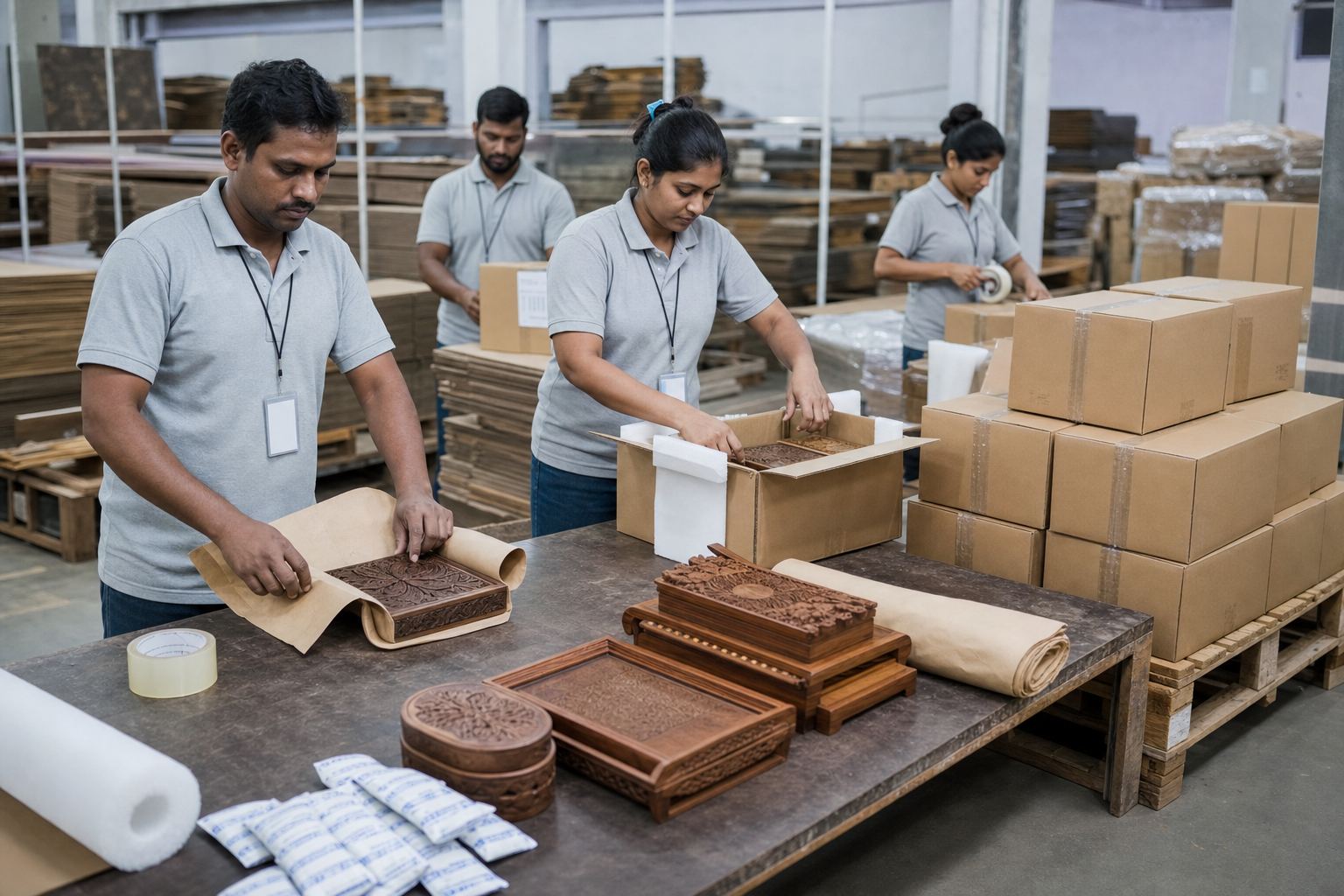
Packaging format is one of the clearest market differentiators in this guide. Bulk export packs (cartons with corner guards and moisture-absorbing sachets) serve UAE hospitality procurement and reprocessing buyers everywhere. Retail-ready branded sleeves and kraft boxes dominate USA, UK, Canada, and the Netherlands. Premium gifting formats matter specifically for UAE festive/corporate gifting cycles and German/French specialty retail presentation, where unboxing experience influences purchase decisions.
Comparison table
Swipe →
Data table — swipe horizontally on small screens
| Format | Typical Packing Approach | Primary Markets |
|---|---|---|
| Bulk export cartons | Nested/stacked with interleaving paper, moisture sachets | UAE hospitality, Australia, reprocessors |
| Retail-ready branded sleeves/boxes | Individual sleeve or kraft box per unit | USA, UK, Canada, Netherlands |
| Premium/gifting packs | Rigid gift box with foam or fabric lining | UAE (festive/corporate), Germany, France specialty retail |
Container Loading Details
Export Tip
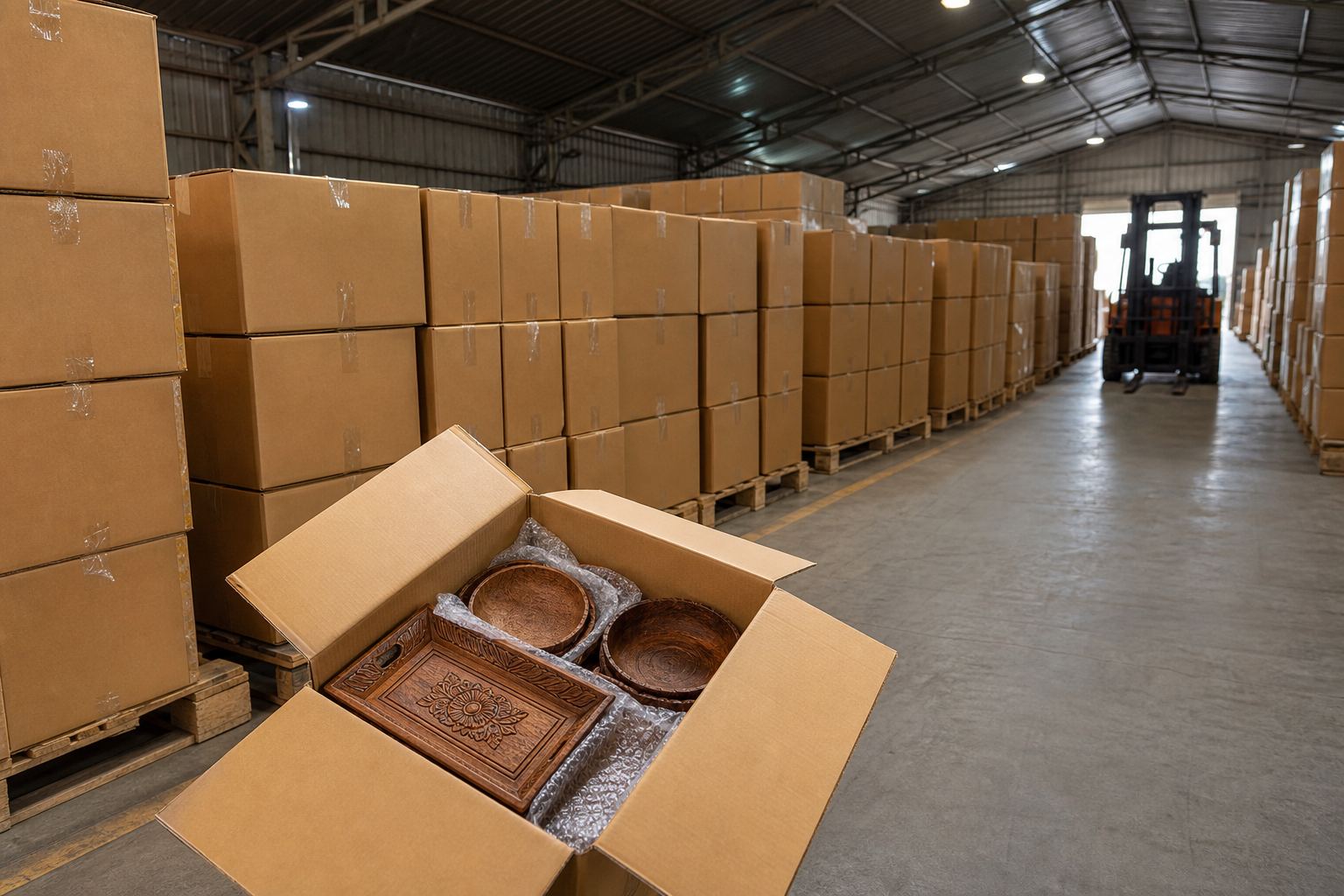
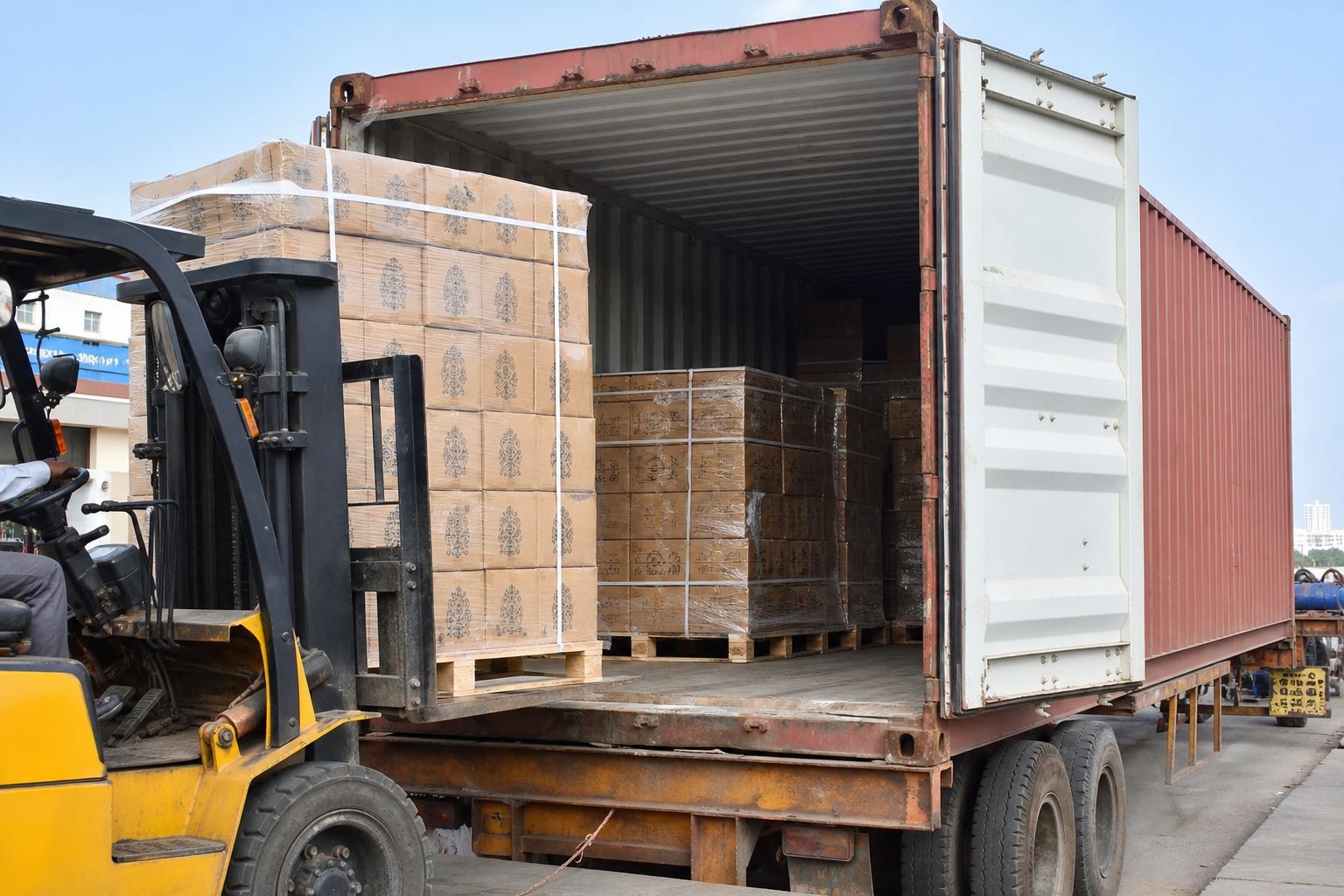
Pack format, not just product shape, is what actually drives container economics across the eight markets in this guide — the same carved tray loads very differently in a UAE bulk hospitality carton than in a branded US retail-ready box. Match your production and carton plan to the format your target country actually buys, then confirm exact stuffing plans with your freight forwarder for that specific format.
Container yield by demand format and destination
Swipe →
Data table — swipe horizontally on small screens
| Pack Format | Countries Where This Format Dominates | Approximate Container Yield |
|---|---|---|
| Bulk nested cartons (décor/tableware) | UAE hospitality, Australia entry-level retail | ~800–1,500 cartons per 20ft FCL; ~1,700–3,000 per 40ft FCL, cube-dependent |
| Retail-ready branded units | USA, UK, Canada, Netherlands | Fewer cartons per container than bulk nesting once branded packaging bulk is factored in |
| Premium gifting sets | UAE festive/corporate cycles, Germany/France specialty retail | Lowest units per container of the three formats given rigid gift-box volume |
| Furniture-accessory mix | USA, Germany, UAE, Australia (HS 9403 crossover demand) | ~150–300 pieces per 20ft FCL; ~320–650 per 40ft FCL, size-dependent |
Shipping Methods
Export Tip
Sea freight (FCL/LCL) via Nhava Sheva or Mundra serves all eight markets in this guide under FOB, CFR, or CIF terms, typically staged through ICD Delhi for inland customs clearance ahead of gateway-port shipment. Lead time tracks pack format as much as destination: bulk-format orders bound for UAE hospitality or Australian entry-level retail (roughly 10–21 days once production is confirmed) move fastest, retail-ready branded formats for the USA, UK, and Canada add packaging-line time on top of a typical 3–5 week production-to-ship window, and premium gifting sets for UAE festive cycles or German/French specialty retail need the longest run-up — often 6–10 weeks — given rigid-box sourcing and finishing detail. Air freight stays reserved for urgent premium samples or small reorder top-ups.
Certifications
Compliance Notes
Certification depth is the clearest signal of market sophistication in this comparison. EPCH RCMC and IEC form the baseline every market expects. Beyond that floor, requirements diverge sharply: Germany, the Netherlands, and the premium French/US tier increasingly require FSC chain-of-custody and EUDR due-diligence documentation; the USA requires Lacey Act species/origin declarations; Australia requires biosecurity/import compliance documentation; and the UAE's bulk hospitality tier is comparatively lighter on certification depth while still expecting clean baseline documentation.
Comparison table
Swipe →
Data table — swipe horizontally on small screens
| Certification/Registration | Baseline or Premium | Markets Where It Matters Most |
|---|---|---|
| IEC + GST | Baseline | All markets |
| EPCH RCMC | Baseline | All markets |
| Lacey Act declaration | Baseline for destination | USA |
| EUDR due-diligence documentation | Baseline for destination | Germany, Netherlands, France (EU) |
| FSC chain-of-custody certification | Premium | Germany, Netherlands, France, US/UK sustainability tier |
| Biosecurity/import compliance documentation | Baseline for destination | Australia |
Buyer Requirements
Buyer Requirements
Across every market, buyers expect species and finish samples with clear specifications, lot-to-lot consistency, and a clean institutional credential set presented upfront. What changes by market is the depth beyond that baseline: US/UK/Canadian retail buyers add private-label packaging customisation requests; German/Dutch/French buyers add FSC and EUDR documentation; UAE buyers add dual bulk-and-gifting format flexibility; and Australian buyers add biosecurity compliance as a top priority alongside quality.
Country-wise Opportunities
Market Snapshot
Beyond the species/finish/certification matrix above, exporters should weigh entry difficulty against growth potential when choosing where to focus first. For the institutional-credential side of this decision — specifically EPCH registration and IHGF Delhi Fair access — see EPCH registration benefits for wooden handicraft exporters.
Comparison table
Swipe →
Data table — swipe horizontally on small screens
| Country | Entry Difficulty | Growth Outlook | Best Fit For |
|---|---|---|---|
| USA | Medium (consistency bar) | High | Workshops with versatile species range and private-label capability |
| Germany | High (certification intensive) | High | Exporters with FSC/EUDR certification investment capacity |
| Netherlands | Medium (EUDR documentation) | High | Exporters seeking an EU distribution-hub entry point |
| France | Medium–High (design/story expectations) | Medium–High | Boutique-suited workshops with strong craft narrative |
| UK | Medium (post-Brexit documentation) | High | Exporters strong in carved/inlaid heritage-style pieces |
| UAE | Low–Medium (fast-moving buyers) | High | Exporters who can run both bulk and premium-gifting lines |
| Australia | Medium–High (biosecurity compliance) | Medium–High | Exporters with strong documentation discipline |
| Canada | Medium (similar to USA) | High | Exporters already serving the USA seeking channel diversification |
Sourcing Checklist for Buyers and Exporters
Checklist
Buyer Checklist
- Specify species, finish type, and dimensions in every RFQ
- Confirm pack format (bulk vs retail) and labelling compatibility with your destination market
- Ask for EPCH RCMC and IEC evidence before sending a sample-evaluation fee or deposit
- For FSC or reclaimed-wood claims, request the certificate number and issuing body — do not accept unverified claims
- Align MOQ and lead time expectations with the exporter's actual production and finishing capacity
Exporter Checklist
- Map your cluster's craft specialisation honestly against the country matrix before quoting a new market
- Maintain separate documentation packs for baseline (EPCH/IEC) versus premium (FSC/EUDR) buyers
- Invest in FSC certification before targeting the German, Dutch, or French premium tiers
- Prepare tiered pricing by species and finish so buyers can select against their specific price point
- Respond to specification and sample requests within 24–48 hours across every market
Compliance Checklist
Checklist
Compliance Notes
Comparison table
Swipe →
Data table — swipe horizontally on small screens
| Compliance Item | Status Check | Owner |
|---|---|---|
| IEC + GST | Valid and consistent across documents | Export desk |
| EPCH RCMC | Current and renewed annually | Export desk |
| Pre-shipment QC | Species, finish, moisture, and dimensions documented | QC team |
| Destination labelling | Country of origin and material declaration per market | Packaging team |
| FSC/EUDR documentation (where applicable) | Certificate current and matched to the specific lot | Quality/compliance |
| Lacey Act declaration (US-bound) | Species/origin declaration accurate and current | Export desk |
Common Buyer Mistakes
Common Mistakes Box
- Assuming the species/finish combination that works in one market (e.g., UAE bulk mango wood) will satisfy a US or German premium buyer without adaptation.
- Requesting carved, inlaid specifications while only budgeting for plain-finish bulk pricing.
- Not confirming whether an 'FSC-certified' or 'reclaimed wood' claim has a verifiable certificate behind it.
- Underestimating post-Brexit UK documentation differences from EU-bound shipments.
- Ignoring festive and corporate gifting seasonal timing when sourcing for UAE gifting formats.
- Skipping sample evaluation before a bulk order and discovering finish inconsistency only on arrival.
Challenges & Solutions
Comparison table
Swipe →
Data table — swipe horizontally on small screens
| Challenge | Impact | Solution |
|---|---|---|
| Species/finish requirements differ sharply by market | Wasted quotes and mismatched inquiries | Map current craft specialisation to the country matrix before outreach |
| Certification-intensive markets (Germany, Netherlands, France) | Slower market entry, higher upfront cost | Sequence FSC/EUDR certification deliberately, targeting these markets after baseline markets are stable |
| Irregular product shapes | Container cube becomes the binding constraint | Optimise carton/pallet dimensions per pack format with freight forwarder input |
| Seasonal demand spikes (UAE gifting) | Short procurement windows with high stakes | Confirm gifting-format availability and pricing well ahead of the season |
| Post-Brexit UK documentation differences | Customs delays if EU-style documents are reused | Prepare UK-specific documentation separate from EU-bound shipments |
Future Market Trends
Key Statistics
Through 2030, demand differentiation by country is likely to deepen rather than converge. The USA, UK, and Canadian retail will keep pushing toward reclaimed-wood and FSC-certified sourcing as the category matures beyond commodity décor. Germany, the Netherlands, and France will continue rewarding EUDR-compliant, traceable sourcing as a competitive prerequisite rather than an optional premium. The UAE will likely sustain its dual bulk-and-gifting demand pattern, and Australia will grow steadily as biosecurity-compliant supply becomes more available.
Exporters who invest now in FSC certification pathways, EUDR-ready documentation, and destination-specific finishing will be positioned to serve the full spread of this matrix by 2030, rather than being confined to the lowest-certification, price-competitive segment of the global wooden handicraft trade.
Expert Insights
Expert Insight Box
A pattern that shows up repeatedly across buyer conversations: exporters who lead with 'we make everything in every wood' struggle to close premium orders, while exporters who lead with a specific, well-documented species-and-finish specialisation close faster — even at a higher price point — because buyers trust depth over breadth when quality consistency is the primary concern.
The second pattern worth noting is how quickly EU buyer expectations are shifting. What was a nice-to-have FSC claim two years ago is becoming closer to a baseline requirement for Germany, the Netherlands, and France as EUDR enforcement timelines firm up — exporters who start building certified supply chains now will have a meaningful head start over competitors who wait until it becomes mandatory.
Conclusion
- Action: Share your current species range, certifications, and target markets with Altus Exports for a demand-fit sourcing review.
- Explore handicrafts & lifestyle products, textiles & home furnishings, merchant exporter, export products from India, global sourcing partner, and product sourcing company partnership models.
- Continue with how to export wooden handicrafts from India, top wooden handicraft products exported from India, best countries for Indian wooden handicraft exports, EPCH registration benefits for wooden handicraft exporters, find international buyers for wooden handicrafts, source wooden handicrafts directly from India, the wooden handicraft export documentation checklist, sustainable and FSC wooden handicraft export opportunities, and trade shows and B2B marketplaces for wooden handicraft exporters.
The most demanded Indian wooden handicrafts by country in 2026 depend on species, finish, and certification depth as much as on price: the USA, UK, and Canada reward versatile, consistency-driven sheesham and mango-wood supply; Germany, the Netherlands, and France reward FSC/EUDR-documented, traceable sourcing; the UAE rewards a dual bulk-and-gifting strategy; and Australia rewards documentation discipline in a compliance-conscious, early-stage market.
Exporters should prioritise three actions: (1) map current craft specialisation and species range honestly against the country matrix in this guide; (2) choose one or two markets that match that capability rather than pursuing every destination simultaneously; (3) sequence certification investment (FSC, EUDR documentation) toward the specific premium market it unlocks. Altus Exports can help both international buyers sourcing Indian wooden handicrafts and Indian exporters aligning species, certification, and documentation with destination demand.