
Best Countries for Indian Essential Oil Exports
By Saurabh Mittal, Founder, Altus Exports
A market-selection guide to the best countries for Indian essential oil exports in 2026 — comparing the USA, Germany, France, UK, UAE, Japan, China, Singapore, Australia, and the Netherlands on import demand, duties, IFRA/REACH compliance, pricing, and entry strategy for exporters of mentha, citrus, and specialty oils.

India is one of the world's largest producers and exporters of essential oils, anchored by an unmatched position in mentha (cornmint) oil out of the Uttar Pradesh mentha belt, alongside meaningful volumes of citrus, eucalyptus, lemongrass, citronella, palmarosa, clove, and specialty aromatic oils grown across South India, the Himalayan foothills, and the Northeast. Export success, however, is not distributed evenly across destination countries — the United States, Germany, France, the United Kingdom, the UAE, Japan, China, Singapore, Australia, and the Netherlands absorb the large majority of Indian essential oil export value, but each market rewards a different oil type, purity standard, price band, and compliance posture.
This guide answers a specific question for Indian essential oil exporters, distillers, aggregators, and export consultants: what are the best countries for Indian essential oil exports in 2026, and how should you prioritise among them? It is a market-selection playbook, not a rewrite of the full export process or a catalogue of every oil India produces. For operational export steps, see How to Export Essential Oils from India. For product variety depth, see Top Essential Oil Products Exported from India.
India exports essential oils primarily under HS heading 3301 — essential oils of citrus fruit (3301.12/13/19), mint oils (3301.24 peppermint, 3301.25 other mints including cornmint), and other essential oils (3301.29, covering lemongrass, citronella, palmarosa, eucalyptus, clove, cedarwood, and dozens more), with resinoids and concentrates classified under 3301.30 and 3301.90. Mentha oil from the Barabanki-centred Uttar Pradesh belt dominates export volume and gives India global price-setting influence in that single category, while lemongrass, citronella, and palmarosa from South India, and jasmine and spice-derived oils from Kerala and Karnataka, serve premium flavour, fragrance, and aromatherapy channels.
Altus Exports works as a merchant exporter in India and global sourcing partner connecting verified Indian essential oil supply with destination-market buyers — this analysis reflects field intelligence from those programmes.
Key Takeaways
Summary Box
Executive Summary
Summary Box
Choosing which country to prioritise is arguably the highest-leverage decision an Indian essential oil exporter makes — higher than packaging optimisation, higher than freight negotiation, and higher than trade-show attendance. This guide builds a repeatable market-selection framework rather than treating destination choice as an afterthought to production planning.
The analysis below walks through India's overall essential oil trade position, export and import statistics by destination, product-market fit across the major oil categories, detailed profiles of the ten priority countries, pricing and logistics benchmarks by lane, and the certifications each market expects. It closes with a scoring framework exporters can reapply annually as trade data shifts.
Buyers reading this guide from the import side should pair it with Source Essential Oils Directly from India: Buyer's Playbook for procurement workflow, and exporters should pair it with How to Export Essential Oils from India for the operational sequence once a market is chosen.
Market Size & Industry Overview
Key Statistics
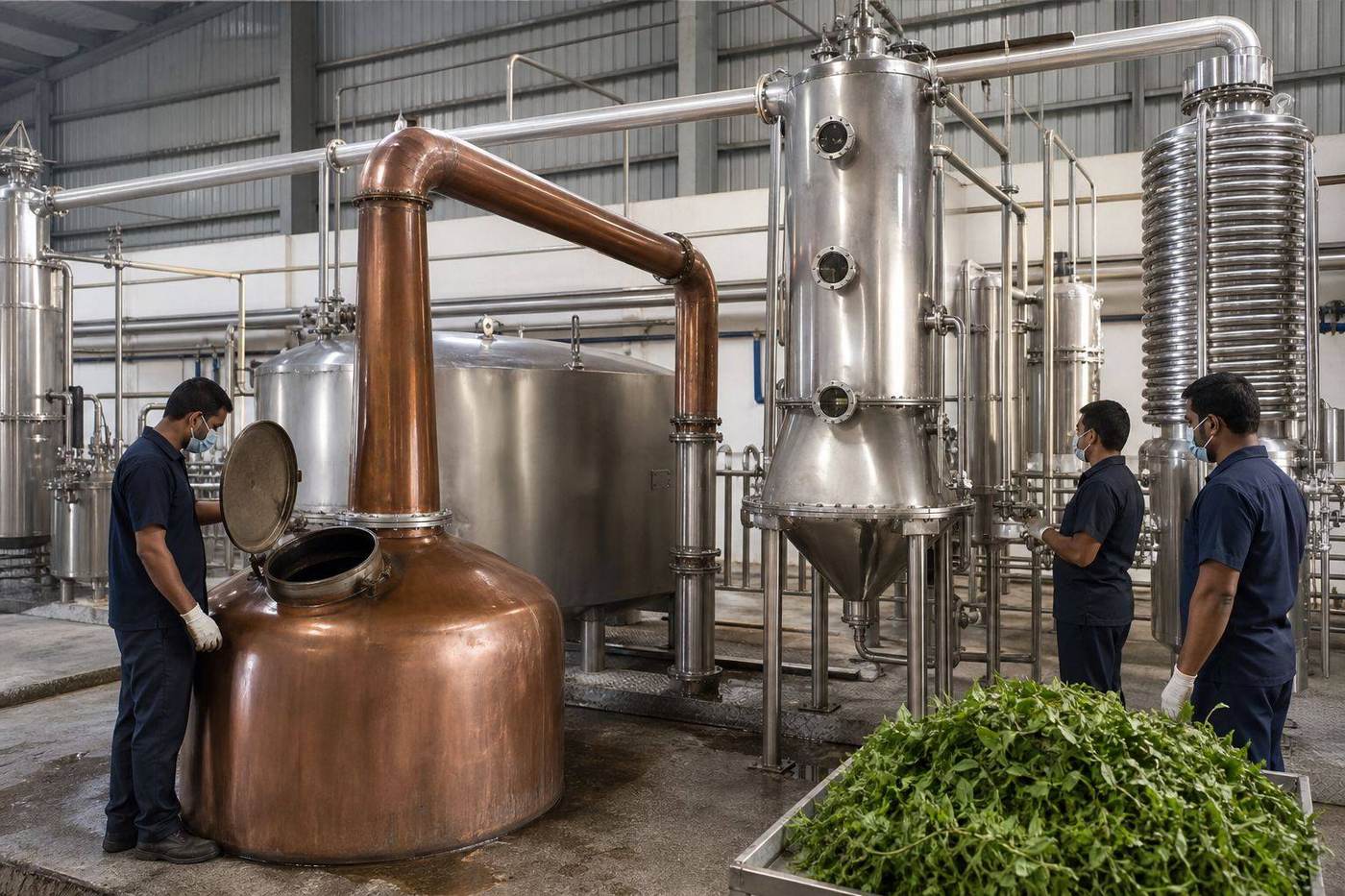
Global demand for essential oils continues to grow at a mid-to-high single-digit annual rate, driven by flavour and fragrance industry consumption, personal care and cosmetics reformulation toward natural ingredients, aromatherapy and wellness retail expansion, and pharmaceutical and oral-care demand for menthol-derived compounds. India competes primarily with China, Indonesia, Brazil, Egypt, Sri Lanka, and Madagascar depending on oil type, but rarely head-to-head across the full category. India's structural export advantage rests on globally dominant mentha (cornmint) oil volume from the Uttar Pradesh belt, competitive citrus and eucalyptus supply, a strong South Indian base for lemongrass, citronella, and palmarosa, and a distinctive specialty segment — jasmine, spice-derived oils, and heritage sandalwood — that commands premium positioning with few true substitutes.
India Essential Oil Industry Snapshot for Market Selection (Indicative)
Swipe →
Data table — swipe horizontally on small screens
| Dimension | 2026 Snapshot | Strategic Implication |
|---|---|---|
| HS classification | 3301 — citrus (3301.12/13/19), mint (3301.24/25), other (3301.29), resinoids/concentrates (3301.30/90) | Classify correctly for customs and buyer RFQs |
| Global standing in mentha oil | India is the world's largest producer and exporter of cornmint (Mentha arvensis) oil | Volume markets (USA, China, EU) absorb mentha; specialty is a margin play elsewhere |
| Key production belts | Uttar Pradesh mentha belt (Barabanki, Chandausi, Sambhal, Rampur); South India lemongrass/citronella/palmarosa; Kerala/Karnataka jasmine and spice oils | Match origin capability to destination buyer expectations |
| Top destinations (typical) | USA, Germany, France, UK, UAE, Japan, China, Singapore, Australia, Netherlands | Validate quarterly via DGCIS/Chemexcil export bulletins |
| Regulatory body | Chemexcil (Chemicals and Allied Products Export Promotion Council) RCMC mandatory for export | See Chemexcil/FSSAI registration guide for the full process |
| Load ports | Nhava Sheva, Mundra, Chennai, Kolkata | Port choice affects transit days and certificate timing |
A Market-Selection Scoring Framework
Altus Exports evaluates destination markets for Indian essential oil clients using a weighted scoring model across five dimensions: product-grade fit (30%), import demand trend (20%), pricing and margin potential (20%), compliance burden (15%), and payment/logistics reliability (15%). Markets scoring above roughly 70 out of 100 enter the active pursuit list; markets below 50 are deprioritised regardless of anecdotal buyer interest.
Mentha vs Specialty Oils: The Market Selection Fork
Mentha (cornmint) oil and its fractions — menthol crystal feedstock, dementholised oil, and dementholised/fractionated mentha oil blends — represent India's single largest essential oil export category by volume, and buyers in the USA, China, Germany, and parts of the EU absorb this volume for flavour, oral care, and pharmaceutical manufacturing. Specialty and aromatic oils — lemongrass, citronella, palmarosa, eucalyptus, clove, cedarwood, vetiver, and heritage sandalwood (DGFT Restricted; export under licence) — serve fragrance houses, aromatherapy brands, and niche perfumery in France, Japan, the UK, and the specialty segment of the USA at meaningfully higher per-kilogram value. If your distillation capacity is mentha-focused, prioritise the USA, China, and Germany's flavour-and-pharma segment; if it spans South Indian aromatics or jasmine/spice oils, prioritise France, Japan, the UK, and the USA's natural personal-care channel.
Export Statistics
Key Statistics
Chemexcil and the Directorate General of Commercial Intelligence and Statistics (DGCIS) publish export statistics by volume, value, and destination periodically — the primary reference for new exporters benchmarking realistic price and volume expectations. Indicative recent-year data put India's HS 3301 essential oil export value in the range of several hundred million US dollars annually, with mentha oil and its derivatives contributing the largest single share of volume, and the USA, Germany, China, the Netherlands, and the UAE among the largest destinations by value.
Indicative Destination Shares for Indian Essential Oil Exports (directional; reconfirm with Chemexcil / DGCIS)
Swipe →
Data table — swipe horizontally on small screens
| Destination Cluster | Approx. Share (recent official summaries) | 5-Year Trend | Primary Indian Grades |
|---|---|---|---|
| USA | Top destination by value | Stable to growing, wellness-led | Mentha oil, peppermint, eucalyptus, lemongrass, orange |
| Germany | ~10–14% | Stable, flavour/fragrance-processing-led | Mentha, citronella, eucalyptus, specialty aromatics |
| China | Significant, mentha-feedstock-led | Volatile, price-sensitive | Crude and dementholised mentha oil |
| Netherlands (Rotterdam hub) | ~6–9% | Stable, trading/distribution-led | Mentha, citrus, broad-basket aromatics |
| UAE | ~5–7% | Growing / re-export | Mentha, citronella, palmarosa, perfumery bases |
| France | Smaller but value-led | Stable specialty demand | Jasmine absolute, sandalwood, geranium, spice oils |
| UK / Japan / Australia / Singapore | Combined mid-single digits | Stable to growing specialty and re-export demand | Mentha, lemongrass, citronella, eucalyptus, tea-tree alternatives |
Import Statistics
Key Statistics
Export market selection improves dramatically when Indian exporters analyse import data from the buyer's side — not only Chemexcil export statistics. Import data reveals total market size, competitor origin share, oil-type preferences, and growth trajectories that export data alone cannot show, and it reveals whether a market is a commodity volume opportunity or a specialty niche before distillation capacity is committed to it.
Top Importing Countries for Indian Essential Oils: Demand Signals
Swipe →
Data table — swipe horizontally on small screens
| Country | Import Volume Signal | India's Position | Data-Driven Action |
|---|---|---|---|
| USA | Largest global essential oil import market; flavour, fragrance, wellness, and personal care demand | India is a top-tier mentha, eucalyptus, and lemongrass origin | Split strategy: commodity mentha/citrus vs specialty aromatherapy retail |
| Germany | Major EU flavour/fragrance reprocessing and organic-personal-care import segment | India strong in mentha and growing in organic-certified aromatics | Confirm EU importer/Only Representative REACH coverage (≥1 t/yr) and organic docs before approaching German buyers |
| China | Substantial crude mentha oil import for domestic menthol crystal manufacturing | India competes with Chinese domestic mentha but is a key feedstock supplier | Price-track against Chinese domestic mentha harvest; expect large-tender buying |
| Netherlands | Rotterdam re-distribution hub for the wider EU essential oil trade | India supplies broad-basket volume through Dutch traders | Build relationships with Rotterdam-based distributors and blenders |
| UAE | Re-export hub plus regional perfumery and wellness demand | India is an established supplier alongside other origins | Leverage Jebel Ali free-zone re-export advantages |
| France | Concentrated luxury perfumery and specialty aromatherapy import demand | India niche for jasmine, sandalwood, and spice-derived oils | Invest in traceability, purity documentation, and allergen labelling |
| Japan | Premium quality-conscious import market; menthol and high-purity aromatics | India recognised for mentha and consistent GC-MS-documented lots | Invest in repeat-lot purity consistency and long-term relationship building |
Product Categories and Variants
Summary Box
Understanding product-market fit is the foundation of country selection. India produces essential oils across a wide category spectrum, but destination markets cluster around distinct product expectations. Sending the wrong oil type or purity grade to the wrong country ends relationships before they begin. See Top Essential Oil Products Exported from India for full category-by-category depth; this section covers only what is needed for market selection.
Essential Oil Categories and Destination Fit
Swipe →
Data table — swipe horizontally on small screens
| Product Category | Key Origins | Primary Buyers | Best-Fit Destinations | Typical FOB Range (USD/kg, indicative) |
|---|---|---|---|---|
| Mentha (cornmint) oil and fractions | Uttar Pradesh belt (Barabanki, Chandausi, Sambhal) | Flavour houses, oral care, pharma, menthol crystal manufacturers | USA, China, Germany, Netherlands | $10–$18 |
| Citrus oils (orange, lemon) | Processing units near citrus-growing regions | Beverage, flavour, cleaning-product manufacturers | USA, Netherlands, Germany | $4–$10 |
| Lemongrass, citronella, palmarosa | South India (Tamil Nadu, Kerala, Karnataka) | Fragrance houses, insect-repellent and wellness brands | USA, UK, Australia, UAE | $8–$45 (palmarosa at the higher end) |
| Eucalyptus, clove, cedarwood | South and Central India, Northeast | Pharma, oral care, aromatherapy, incense industries | USA, UAE, Australia | $6–$18 |
| Jasmine, geranium, spice-derived oils/absolutes | Kerala, Karnataka | Luxury perfumery, high-end personal care | France, Japan, USA specialty | $150–$5,000+ (absolutes command extreme premiums) |
| Sandalwood oil (heritage, restricted supply) | Karnataka (Mysore heritage; supply tightly regulated) | Luxury perfumery, religious/ceremonial use, premium cosmetics | France, Japan, UAE, USA specialty | $600–$1,500+ |
Packaging and MOQ Expectations by Market Tier
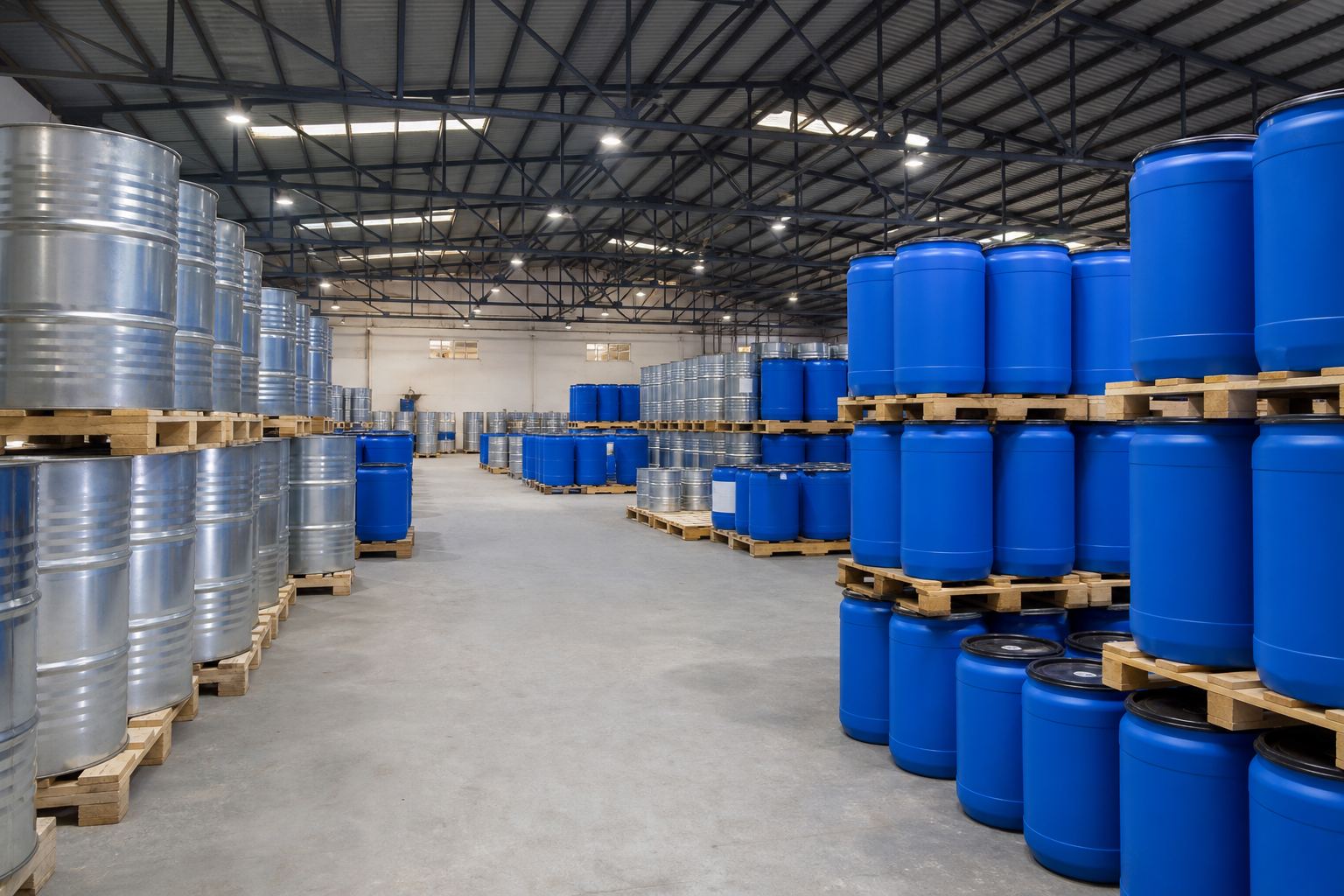
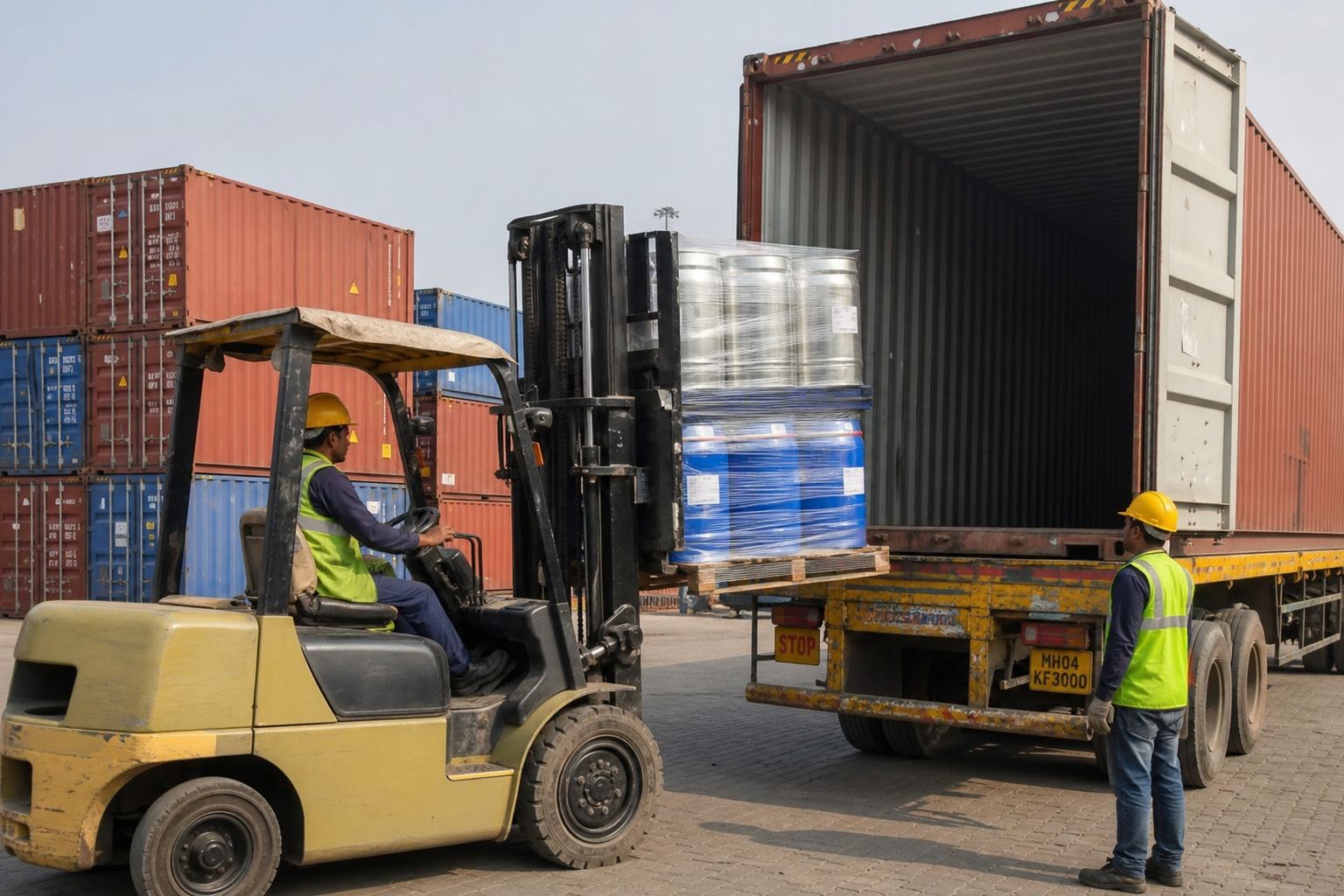
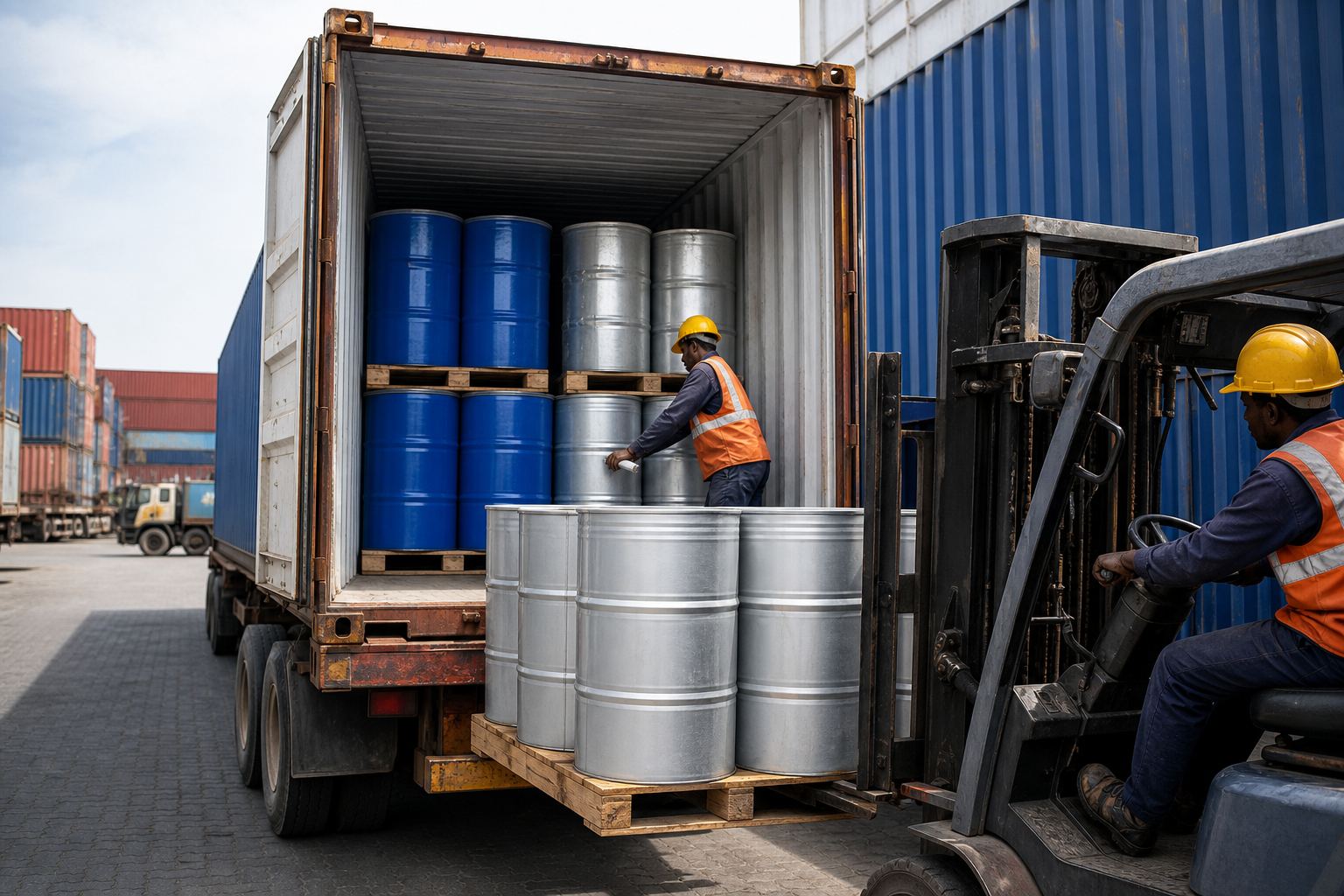
Commodity mentha and citrus oils typically ship in 25 kg, 50 kg, or 180 kg mild-steel or HDPE-lined drums, palletised for container loading. Standard MOQ for a new exporter relationship is a partial or full 20-foot container (drums), or a minimum 200–500 kg trial for established buyers. Specialty aromatics such as jasmine absolute, sandalwood, or vetiver may ship in nitrogen-flushed tins as small as 1 kg or 5 kg given their high per-kilogram value, with trial orders starting at 100 g–1 kg for evaluation.
Manufacturing Overview
Export Tip
Destination markets expect different production methods and purity documentation, and matching supply capability to that expectation is part of market selection, not an afterthought.
Mentha Distillation for the USA, China, and Germany
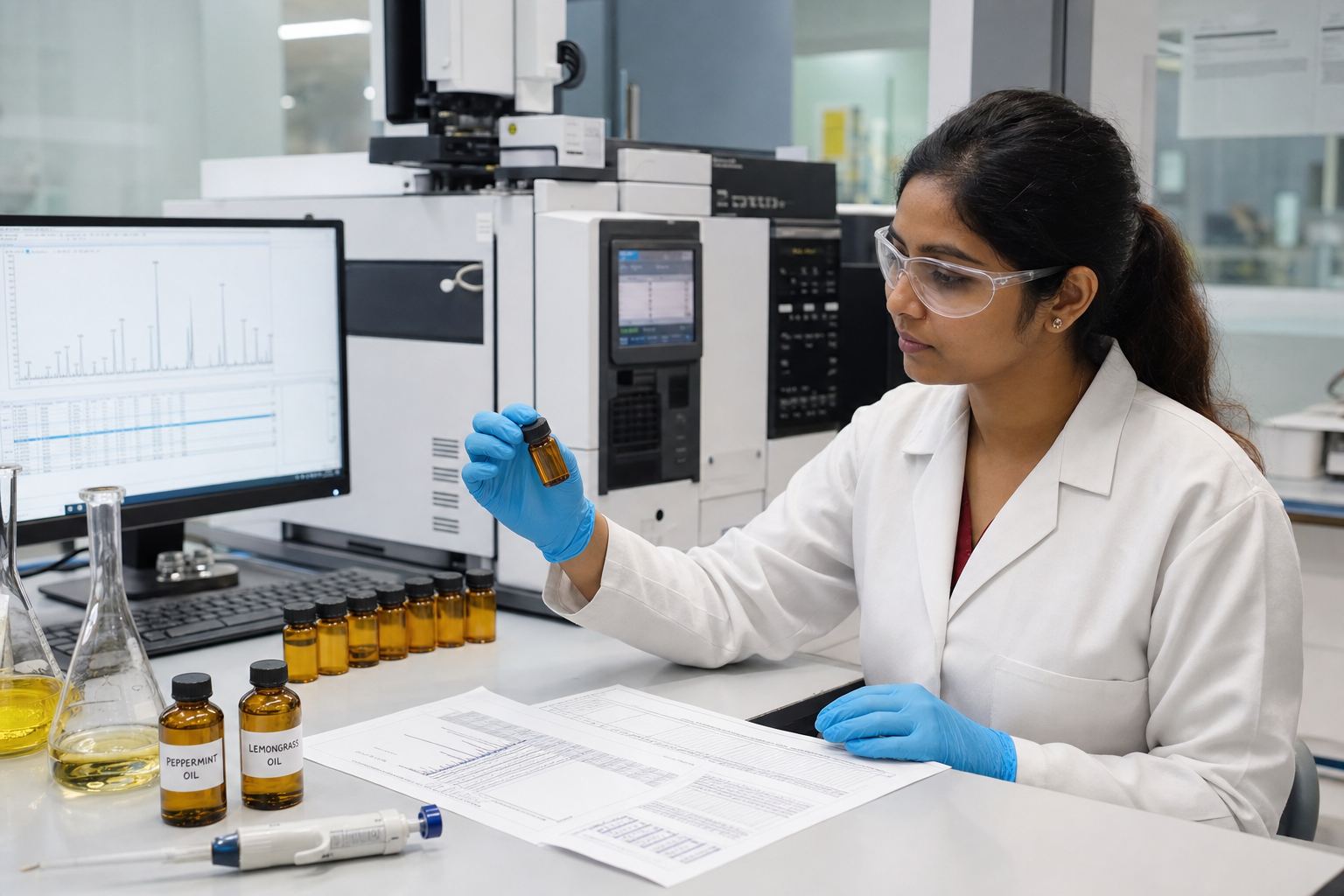
Mentha oil is steam-distilled from harvested cornmint leaf across the Uttar Pradesh belt around Barabanki, Chandausi, and Sambhal, then fractionated into dementholised oil, menthol crystal, and other cuts depending on buyer specification. This is the safest volume entry point for exporters approaching the USA, China, and Germany's flavour and pharmaceutical segments, since India's mentha supply chain is the most mature and price-competitive in the world.
Steam Distillation of South Indian Aromatics for the USA, UK, and Australia
Lemongrass, citronella, and palmarosa are steam-distilled from grasses grown across Tamil Nadu, Kerala, and Karnataka, delivering the volume aromatic supply that fragrance houses and wellness brands in the USA, UK, and Australia specify for insect-repellent, cleaning-product, and aromatherapy formulations.
Absolute and Concrete Extraction for France and Japan
Jasmine and select spice-derived oils from Kerala and Karnataka require solvent extraction into concrete and absolute forms rather than simple steam distillation — a processing investment that is a prerequisite for entering the French and Japanese luxury perfumery segment and cannot be substituted with standard distillation shortcuts.
Sandalwood: Heritage Supply Under Restriction
Sandalwood oil from Karnataka's Mysore heritage stock is subject to tight domestic harvesting and export controls given depleted natural stands, meaning supply volume is structurally limited regardless of buyer demand — a constraint exporters must communicate honestly to French, Japanese, UAE, and US specialty buyers rather than overcommitting volume that cannot be legally sourced.
Pricing Analysis
Buyer Tip
Essential oil export pricing follows crop-year yield, currency movement, global menthol demand cycles, and destination-specific willingness to pay. Mentha oil prices in particular can swing sharply year to year with UP belt yield — treat FOB bands as planning ranges and reconfirm against current Chemexcil/market bulletins before quoting. Indian essential oil FOB prices are typically quoted from Nhava Sheva, Mundra, Chennai, or Kolkata for bulk shipments.
FOB Price Benchmarks by Category and Destination Fit (Indicative)
Swipe →
Data table — swipe horizontally on small screens
| Category | Indicative FOB (USD/kg) | Primary Destinations | Margin Driver |
|---|---|---|---|
| Mentha (cornmint) oil, crude | $10–$16 | USA, China, Germany, Netherlands | Volume pricing; UP belt yield sensitivity; global menthol demand |
| Dementholised mentha oil / dementholised/fractionated mentha oil blends | $14–$22 | USA, Germany, Japan | Fractionation and purity specification |
| Citrus oils (orange, lemon) | $4–$10 | USA, Netherlands, Germany | Byproduct economics of citrus processing; consistent supply |
| Lemongrass, citronella | $8–$16 | USA, UK, Australia, UAE | Yield per harvest cycle; distillation efficiency |
| Palmarosa, geranium | $30–$60 | France, USA specialty, UAE | Niche cultivation area; fragrance-house demand |
| Jasmine absolute / spice-derived absolutes | $150–$5,000+ | France, Japan, USA specialty | Extraction yield; flower-to-oil ratio; brand storytelling |
| Sandalwood oil (heritage supply) | $600–$1,500+ | France, Japan, UAE, USA specialty | Scarcity; heritage sourcing controls; buyer following |
Incoterms and Landed Cost by Market
FOB is the dominant incoterm for Indian essential oil exporters selling to US, German, and Dutch buyers who arrange freight. CIF and CFR are preferred by some UAE and Chinese buyers who want a single landed-cost quote. Exporters quoting CIF must model ocean freight and marine insurance into the price, and confirm whether the specific oil is classified as a Dangerous Goods (flammable) cargo requiring UN-approved packaging and additional freight surcharges.
MOQ Analysis
Buyer Tip
MOQ realism differs by destination as much as by product — established German and Dutch trading relationships accept smaller consolidated lots than a first-time French or Japanese specialty buyer will typically commit to for an unproven origin.
Typical MOQ by Destination Market Tier
Swipe →
Data table — swipe horizontally on small screens
| Market Tier | Trial Order MOQ | Standard Programme MOQ | Representative Countries |
|---|---|---|---|
| Commodity mentha / citrus volume | 200–500 kg | 1 x 20ft FCL (drums) | USA, China, Germany, Netherlands |
| Aromatic / re-export blending | 200 kg | 1 x 20ft FCL | UAE, Singapore |
| Specialty / organic aromatics | 25–100 kg | 500 kg–1 MT per shipment | UK, Australia, USA specialty |
| Luxury perfumery absolutes / sandalwood | 100 g–1 kg | Scales with heritage supply availability | France, Japan |
Packaging Standards
Export Tip
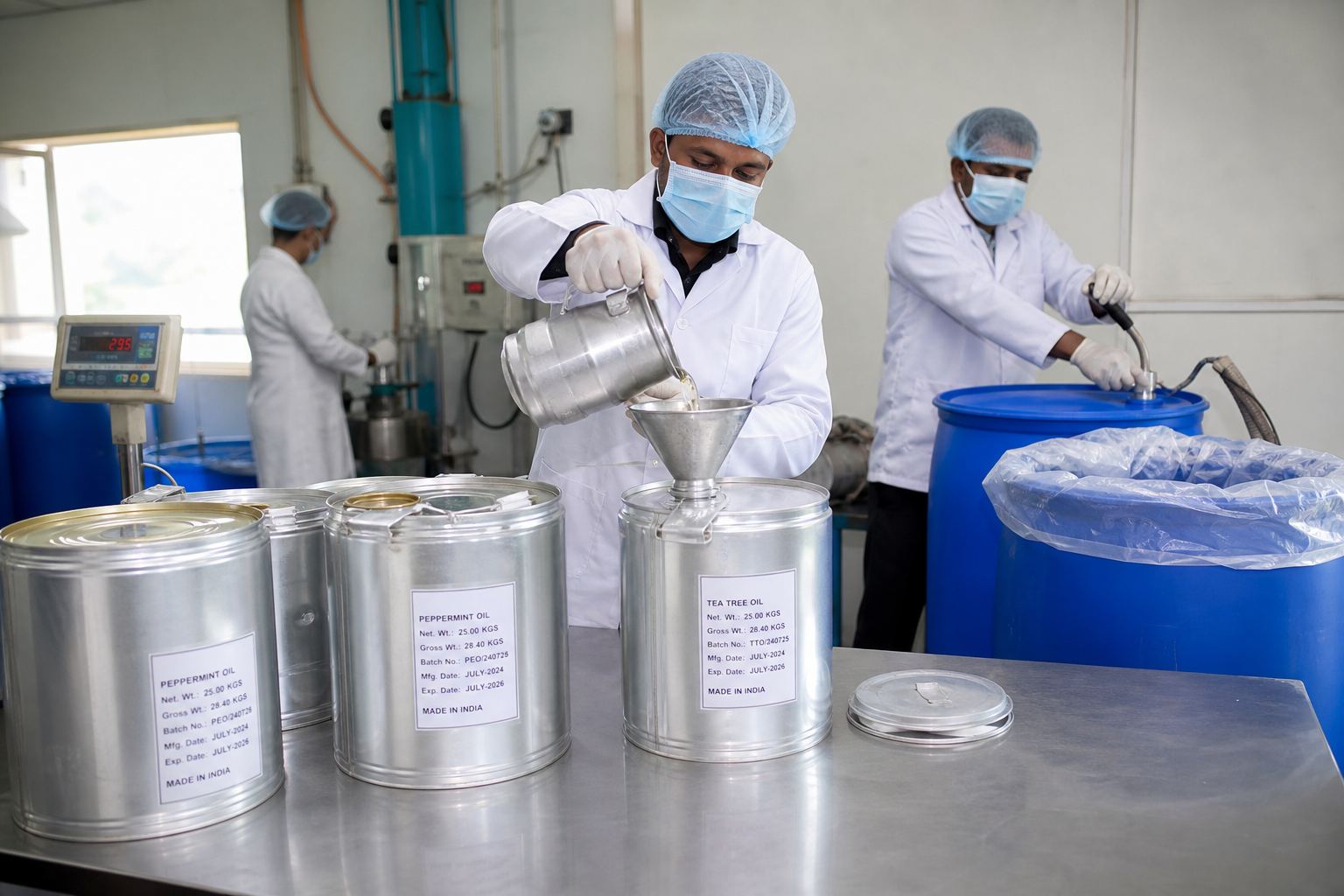
Packaging expectations shift with market tier — commodity flavour and fragrance buyers accept standard bulk drum formats, while specialty and luxury buyers expect nitrogen-flushed small-format packaging with lot-level traceability labelling.
Packaging Standards by Destination Market Tier
Swipe →
Data table — swipe horizontally on small screens
| Market Tier | Standard Packaging | Unit Size | Key Requirement |
|---|---|---|---|
| Commodity volume (USA, China, Germany, Netherlands) | Mild-steel or HDPE-lined drums, UN-approved for flammable oils | 25 kg / 50 kg / 180 kg | Leak-proof sealing; correct Dangerous Goods classification |
| Re-export / blending (UAE, Singapore) | Drums with consistent net weight for onward distribution | 25 kg / 50 kg | Consistent fill weight and batch documentation |
| Specialty / aromatherapy (UK, Australia, USA specialty) | Nitrogen-flushed tins or amber glass for small trial lots | 1–25 kg | Lot-level GC-MS documentation and traceability labelling |
| Luxury perfumery (France, Japan) | Nitrogen-flushed aluminium tins, sealed and coded | 100 g–5 kg | Oxidation protection and authenticity documentation |
Container Loading Details
Export Tip
Container loading benchmarks vary meaningfully by drum size and oil density, and Dangerous Goods classification on flammable oils affects stowage and documentation regardless of destination.
Indicative Container Loading Benchmarks by Format
Swipe →
Data table — swipe horizontally on small screens
| Container Type | Approx. Net Weight | Approx. Drum/Unit Count | Common Destinations |
|---|---|---|---|
| 20-foot FCL (180 kg drums) | ~14–16 MT | ~80–90 drums | USA, Germany, Netherlands commodity mentha/citrus orders |
| 20-foot FCL (50 kg drums) | about 12–16 MT (indicative) | ~300–340 drums | China, UAE bulk aromatic orders |
| LCL consolidation (25 kg drums) | 500 kg–5 MT | Palletised drums | UK, Australia, USA specialty trial orders |
| Air freight / courier (small tins) | 1–50 kg | Nitrogen-flushed tins | France, Japan luxury perfumery and absolute trial lots |
Shipping Methods
Export Tip
Market selection and logistics economics are inseparable for essential oil export. A destination that offers strong demand but prohibitive freight costs, Dangerous Goods surcharges, or extended transit times erodes FOB margin before the buyer opens the drum. Indian essential oils ship primarily from Nhava Sheva, Mundra, Chennai, and Kolkata, with FOB the dominant incoterm and CIF/CFR used by some UAE and Chinese buyers.
Indicative Logistics Benchmarks by Destination
Swipe →
Data table — swipe horizontally on small screens
| Destination | Primary Indian Load Port | Transit Time | Logistics Note |
|---|---|---|---|
| USA (East/West Coast) | Nhava Sheva / Mundra | 25–40 days | ISF filing required 24 hours before loading; confirm Dangerous Goods class |
| Germany (Hamburg/Bremerhaven) | Nhava Sheva / Mundra | 28–35 days | EU customs clearance at entry port; REACH documentation timing matters |
| France (Marseille/Le Havre) | Nhava Sheva | 28–36 days | Small high-value lots often move by air for time-sensitive perfumery orders |
| UK (Southampton/Felixstowe) | Nhava Sheva / Mundra | 26–34 days | Post-Brexit documentation differs in detail from EU requirements |
| UAE (Jebel Ali) | Nhava Sheva / Mundra | 10–15 days | Shortest major lane; high sailing frequency; free-zone re-export advantage |
| Japan (Yokohama/Kobe) | Chennai / Nhava Sheva | 20–28 days | Plan for strict purity and GC-MS documentation review at entry |
| China (Shanghai/Qingdao) | Chennai / Kolkata | 12–20 days | Large mentha tenders; confirm payment terms and quality-claim protocol |
| Netherlands (Rotterdam) | Nhava Sheva / Mundra | 26–34 days | Europe's primary re-distribution hub; confirm onward routing with buyer |
| Australia (Melbourne/Sydney) | Chennai / Nhava Sheva | 22–30 days | Strict biosecurity review; confirm AQIS import permit requirements |
| Singapore | Chennai / Nhava Sheva | 14–20 days | Regional trading hub; efficient for ASEAN re-export consolidation |
Certifications
Compliance Notes
All Indian essential oil exporters need Chemexcil RCMC registration regardless of destination, and food or flavour-grade oils additionally require FSSAI compliance. Beyond these foundations, certification requirements diverge sharply by market and by end-use.
Certification Relevance by Destination Market
Swipe →
Data table — swipe horizontally on small screens
| Certification | USA / Germany / Netherlands | France / Japan / UK | UAE / China / Singapore / Australia |
|---|---|---|---|
| Chemexcil RCMC | Mandatory | Mandatory | Mandatory |
| FSSAI (for food/flavour-grade oils) | Mandatory where applicable | Mandatory where applicable | Mandatory where applicable |
| IFRA conformity (fragrance use) | Effectively required for fragrance-industry buyers | Effectively required, especially France perfumery | Increasingly requested |
| REACH (EU importer/OR) | N/A (Germany/Netherlands: mandatory) | N/A (France: mandatory as EU) | N/A |
| GC-MS Certificate of Analysis | Standard buyer requirement | Standard, often mandatory pre-shipment | Standard for premium and re-export buyers |
| Organic (NOP/EU Organic) | Rewarded in US/German natural retail | Occasional in UK specialty | Rare |
Buyer Requirements
Buyer Requirements
- Botanical name, origin region, and extraction method stated on every quote (steam-distilled, cold-pressed, or solvent-extracted absolute)
- GC-MS Certificate of Analysis matched against a sealed reference sample retained by both parties
- Destination compliance notes (IFRA, REACH, allergen labelling, organic) agreed before production begins
- Payment terms and inspection windows written into the proforma before shipment
- Realistic lead-time commitments that reflect the destination's typical transit window and Dangerous Goods documentation
Destination buyers differ on purity, allergen, and organic testing, but almost all still ask for Chemexcil RCMC proof, FSSAI documentation where relevant, sealed reference samples, GC-MS Certificates of Analysis, and written FOB or CFR terms with MOQ before committing to programme volume.
Country-wise Opportunities
Market Snapshot
The following profiles cover the ten priority destinations for Indian essential oil exporters in 2026. Validate pricing, payment terms, and regulatory requirements with current trade data and your buyer contacts before committing distillation capacity to any single market.
United States of America
- Demand profile
- Flavour/fragrance and pharma-grade mentha volume; large and growing wellness/aromatherapy retail segment
- Preferred grades
- Mentha oil and fractions, eucalyptus, lemongrass, orange, organic-certified specialty oils
- Pricing band
- $10–$18/kg commodity mentha; $30–$150+/kg specialty and organic aromatics
- Entry strategy
- Split outreach between flavour-house/pharma buyers for mentha volume and wellness brands for specialty retail
The USA is India's largest essential oil export destination by value, driven by flavour and fragrance manufacturing, personal care reformulation toward natural ingredients, and one of the world's largest aromatherapy and wellness retail sectors. It is a dual-market opportunity: commodity mentha and citrus for industrial use, and a fast-growing specialty segment for lemongrass, eucalyptus, and organic-certified oils sold through wellness brands and e-commerce.
Germany
- Demand profile
- Large flavour/fragrance reprocessing volume; growing organic natural-cosmetics segment
- Preferred grades
- Mentha oil, citronella, eucalyptus, organic-certified specialty aromatics
- Pricing band
- $10–$16/kg mentha; organic premium 20–40% over conventional on specialty lines
- Entry strategy
- Confirm EU importer/Only Representative REACH coverage (≥1 t/yr) and organic docs; partner with an EU import broker for first shipments
Germany is Europe's flavour and fragrance reprocessing hub, home to major global fragrance houses, and also a gateway to Austria, Switzerland, and the Netherlands. German buyers enforce strict REACH and IFRA compliance and maintain a strong organic-certified natural cosmetics channel, making it a certification-heavy but premium-rewarding market for mentha volume and organic aromatics.
France
- Demand profile
- Luxury perfumery and specialty aromatherapy; low tolerance for undocumented purity claims
- Preferred grades
- Jasmine absolute, sandalwood oil, geranium, palmarosa, spice-derived oils
- Pricing band
- $30–$60/kg palmarosa/geranium; $150–$5,000+/kg absolutes and sandalwood
- Entry strategy
- Build relationships with 2–3 established perfumery houses; invest in GC-MS documentation and allergen compliance from day one
France, centred on the Grasse perfumery tradition, is the world's most demanding luxury fragrance market. French buyers pay meaningful premiums for jasmine absolute, sandalwood, geranium, and spice-derived oils with impeccable purity documentation, but expect allergen labelling compliance and often multi-year relationship-building before committing to programme volume.
United Kingdom
- Demand profile
- Aromatherapy and natural wellness retail; growing organic and ethically sourced segment
- Preferred grades
- Lemongrass, eucalyptus, citronella, organic-certified specialty aromatics
- Pricing band
- $8–$16/kg lemongrass/citronella; premium tiers for organic and traceable lots
- Entry strategy
- Target wellness and natural-cosmetics brands directly; confirm UK-specific labelling and organic certification separately from EU
The UK hosts one of Europe's most developed aromatherapy and natural wellness retail sectors, with strong demand for lemongrass, eucalyptus, citronella, and organic-certified oils sold through specialty retail and e-commerce brands. Post-Brexit documentation requirements differ in detail from EU rules even when they appear similar, so confirm current UK-specific requirements separately.
United Arab Emirates
- Demand profile
- Re-export trading, regional perfumery blending, and growing spa/wellness tourism demand
- Preferred grades
- Mentha, citronella, palmarosa, perfumery base oils
- Pricing band
- $8–$16/kg volume aromatics; $30–$100+/kg premium blending oils
- Entry strategy
- Build relationships with 3–5 established re-exporters and regional perfumery houses; leverage free-zone re-export advantages
The UAE functions partly as a re-export hub serving wider Gulf and African demand, and partly as a direct perfumery and wellness market shaped by a deep regional attar and oud culture that overlaps naturally with essential oil blending. Indian exporters selling into Dubai and Jebel Ali access distribution networks that direct sales to each end-market cannot replicate quickly.
Japan
- Demand profile
- Premium mentha/menthol demand for oral care and pharma; specialty aromatherapy retail
- Preferred grades
- High-purity mentha oil, eucalyptus, select specialty aromatics
- Pricing band
- $12–$20/kg mentha; $30–$150+/kg specialty aromatics
- Entry strategy
- Build traceable, GC-MS-documented relationships gradually; consider a specialty importer intermediary for first entry
Japan is a quality-conscious premium market with exacting purity and consistency expectations, strong menthol demand for oral care, confectionery, and pharmaceutical use, and a well-established specialty aromatherapy retail culture. Indian mentha oil and high-purity aromatics have a dedicated following among Japanese buyers, but repeat-lot documentation and traceability expectations are exacting.
China
- Demand profile
- Large-volume crude mentha oil imports feeding domestic menthol crystal manufacturing
- Preferred grades
- Crude and dementholised mentha oil
- Pricing band
- $10–$16/kg, closely tracking global menthol demand cycles
- Entry strategy
- Work with experienced merchant exporters managing large-tender programmes; track pricing against Chinese domestic mentha harvest
China is a major buyer of Indian crude mentha oil as feedstock for its own large-scale menthol crystal manufacturing sector — a nuance that surprises exporters who assume China only competes with India on mentha rather than importing it. Chinese buyers typically transact on large-volume tenders with strong price sensitivity and expect consistent quality across shipments.
Singapore
- Demand profile
- Regional trading and re-export hub; blending operations serving ASEAN markets
- Preferred grades
- Mentha, citronella, lemongrass, broad-basket aromatics
- Pricing band
- $8–$18/kg depending on category, closely aligned with regional distribution economics
- Entry strategy
- Partner with established Singapore-based traders for ASEAN-wide reach rather than pursuing each country bilaterally
Singapore functions primarily as a regional trading and re-export hub for essential oils moving into Malaysia, Indonesia, Vietnam, and the wider ASEAN bloc. Free-trade-zone efficiencies and established regional flavour and fragrance blending operations make it an efficient entry point for exporters seeking Southeast Asian distribution without managing multiple bilateral relationships.
Australia
- Demand profile
- Wellness, aromatherapy, and natural cleaning-product retail; growing spa/wellness tourism demand
- Preferred grades
- Eucalyptus, lemongrass, mentha, citronella
- Pricing band
- $8–$18/kg for volume aromatics; premium tiers for organic-certified lots
- Entry strategy
- Confirm AQIS import permit requirements early; build relationships with wellness and natural personal-care distributors
Australia's wellness and natural personal-care market has strong demand for essential oils that complement or substitute for domestic tea-tree oil in aromatherapy and cleaning-product formulations, but strict biosecurity and quarantine review under AQIS import permits requires careful documentation planning.
Netherlands
- Demand profile
- Trading and re-distribution hub for the wider EU essential oil trade
- Preferred grades
- Mentha, citrus oils, broad-basket aromatics
- Pricing band
- $8–$16/kg for volume categories, closely tracking EU distribution economics
- Entry strategy
- Build relationships with 2–3 established Rotterdam-based traders; confirm REACH compliance before first shipment
The Netherlands, anchored by the port of Rotterdam, functions as Europe's primary re-distribution and logistics hub for essential oils entering the wider EU. Dutch traders and blending operations buy broad-basket volume — mentha, citrus, and general aromatics — for onward distribution across the continent, making the market a high-efficiency entry point for exporters targeting EU-wide reach.
Expert Insight: Reading Markets, Not Just Country Codes
Expert Insight Box
Sourcing Checklist
Checklist
Buyer Checklist
Checklist
Exporter Checklist
Checklist
Compliance Checklist
Checklist
Compliance Notes
Common Buyer Mistakes
Common Mistakes Box
Most first-shipment essential oil export failures are market-selection failures, not distillation failures. Avoid the patterns below before you fund samples or containers in a new country.
Expert Insight: The Cost of a Bad Market-Product Match
Expert Insight Box
The most expensive mistake in essential oil export is not a bad drum, it is a bad market-product match discovered after the container arrives. We recommend spending two weeks on market selection and purity-documentation alignment before spending two months on buyer emails. For a typical Uttar Pradesh mentha exporter with modest monthly capacity, our 2026 recommendation is: primary destination — the USA or Germany, for programme stability and established flavour/fragrance relationships; secondary — China's feedstock tenders as a volume diversification lane; exploratory — a French or Japanese specialty entry only where a genuine high-purity or absolute-grade supply exists, not commodity mentha repackaged with a specialty label.
Future Market Trends
Key Statistics
Through 2030, Indian essential oil export destination mix will be shaped by sustained US and German flavour-and-fragrance demand, European sustainability and traceability rules raising the documentation bar for Germany and France, Chinese menthol demand cycles continuing to drive large mentha tenders, and growing wellness-retail expansion in the USA, UK, and Australia rewarding organic-certified and traceable specialty oils with premium tiers that commodity mentha cannot access.
The USA will likely remain India's largest export destination by value, but margin pressure from Chinese and Indonesian competing supply in select categories will intensify — exporters who differentiate on purity consistency and documentation reliability will retain share; those competing only on spot price will lose ground. Singapore and other regional trading hubs represent a long-term efficiency opportunity for ASEAN reach, not a volume replacement for established US and European relationships.

Conclusion
- Next: for the full step-by-step export process, see How to Export Essential Oils from India.
- Product depth: Top Essential Oil Products Exported from India and Most Demanded Indian Essential Oils by Country.
- Buyer-side sourcing: Source Essential Oils Directly from India: Buyer's Playbook and Find International Buyers for Essential Oils.
- Documentation and registration: Essential Oil Export Documentation Checklist and Chemexcil/FSSAI Registration Benefits for Essential Oil Exporters.
- Specialty positioning: Organic & Therapeutic Essential Oil Export Opportunities and Trade Shows for Essential Oil Exporters.
- Browse herbal & ayurvedic products for related industry context.
The best countries for Indian essential oil exports in 2026 are the USA, Germany, France, the UK, the UAE, Japan, China, Singapore, Australia, and the Netherlands, but not for every exporter and not with every oil type. Commodity mentha and citrus belong in US, German, Chinese, and Dutch volume markets where consistency and price competitiveness win. Specialty aromatics, absolutes, and heritage sandalwood belong in French, Japanese, and US specialty channels where purity documentation and origin storytelling convert to premium FOB.
Altus Exports helps Indian essential oil exporters shortlist and enter the right markets, and helps international buyers source verified Indian essential oil supply, as a merchant exporter in India and global sourcing partner. Explore export products from India, product sourcing company services, or find manufacturers in India for market-matched supplier introductions.