
Organic & Therapeutic-Grade Essential Oil Export Opportunities from India
By Saurabh Mittal, Founder, Altus Exports
How Indian essential oil exporters capture premium export value through NPOP, USDA Organic, and EU Organic certification, therapeutic-grade GC purity standards, IFRA compliance, and clean-beauty positioning — with pricing premiums, segregation requirements, and buyer segments that pay more than commodity mentha for certified lemongrass, eucalyptus, sandalwood, and spice-derived HS 3301 oils.
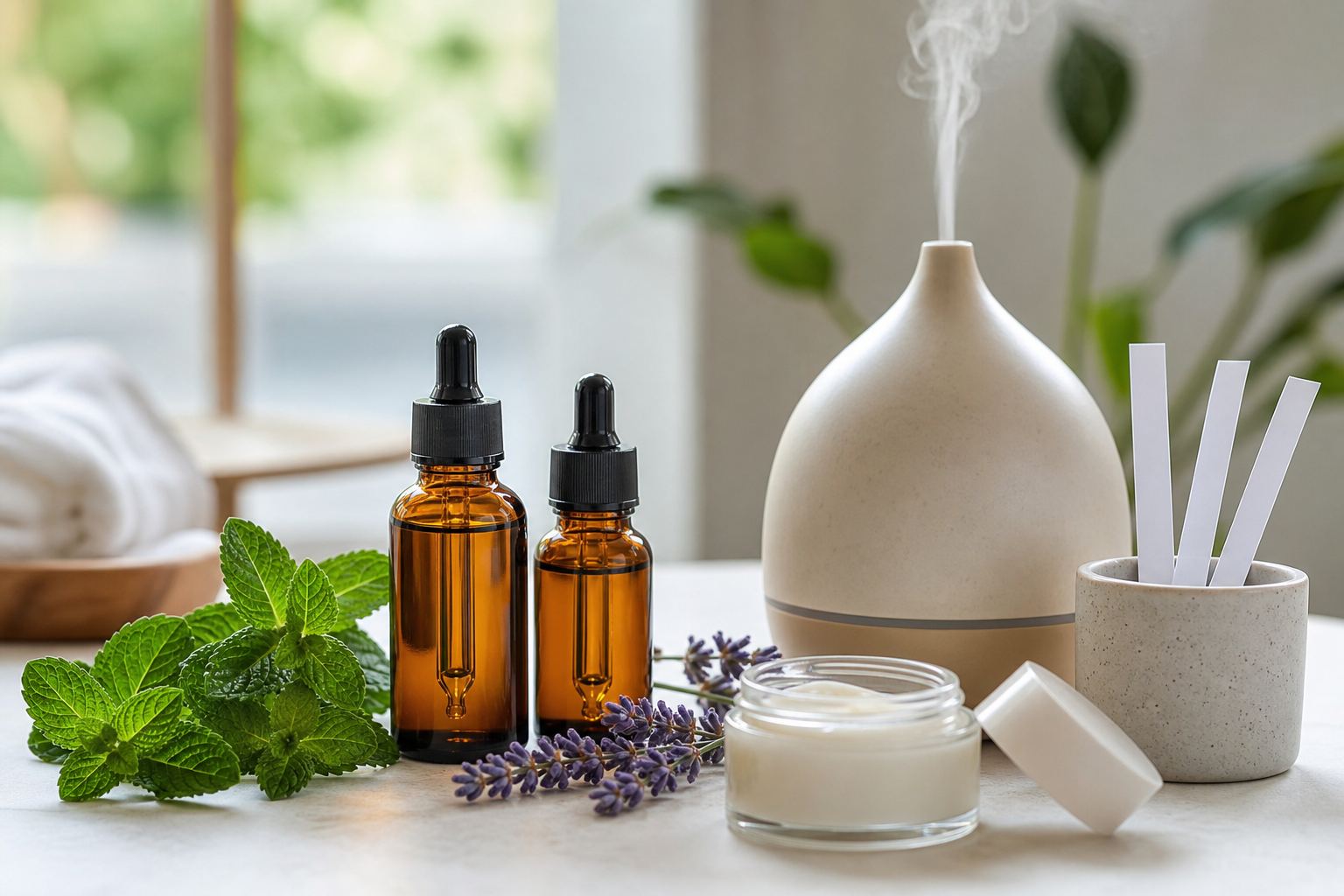
Commodity mentha oil from the Uttar Pradesh belt competes primarily on volume and menthol content by GC-MS — a market where Indian exporters hold structural advantage but face thin margins and intense price competition from synthetic menthol substitutes and buyer bargaining power in China and other volume markets. Premium export value in HS 3301 trade increasingly sits elsewhere: certified organic lemongrass and eucalyptus for clean-beauty brands, therapeutic-grade basil and vetiver for aromatherapy and wellness retail, IFRA-documented palmarosa and citronella for cosmetics formulators, and traceable sandalwood and jasmine absolute for fine fragrance houses willing to pay multiples of commodity-oil pricing for documented purity and sustainability.
This guide covers the premium positioning layer of Indian essential oil export — NPOP (India's National Programme for Organic Production), USDA Organic, and EU Organic certification pathways; therapeutic-grade and high-purity GC standards; IFRA compliance for fragrance and cosmetics use; clean-label and clean-beauty market premiums; and the operational requirements (farm segregation, distillation traceability, certified packing lines) that separate credible premium suppliers from exporters who add an organic label to conventional oil without certification infrastructure.
Altus Exports operates as a merchant exporter and global sourcing partner for essential oils from India, connecting international buyers seeking certified organic and therapeutic-grade oils with verified distillers who maintain legitimate NPOP/USDA/EU Organic certification chains. This guide reflects the premium positioning frameworks we use with clean-beauty brands, aromatherapy distributors, and fine fragrance buyers — and how Indian exporters can move up the value chain beyond commodity mentha.
Key Takeaways
Summary Box
Executive Summary
Summary Box
Indian essential oil exporters face a strategic choice: compete in commodity mentha at volume-driven, price-sensitive margins, or invest in organic certification, therapeutic-grade quality infrastructure, and clean-beauty market positioning to capture premium export value in lemongrass, eucalyptus, basil, vetiver, palmarosa, sandalwood, and spice-derived oils. The premium path requires higher upfront investment in certification, segregation, and testing — but delivers sustainably higher FOB pricing, stickier buyer relationships, and access to buyer segments (clean-beauty brands, aromatherapy retail, fine fragrance) that commodity suppliers cannot reach.
This article does not repeat the full export process or documentation checklist covered in companion guides. It focuses on premium positioning: which certifications matter, what therapeutic-grade means in practice, how clean-beauty premiums compare to commodity mentha pricing, and what operational infrastructure credible premium suppliers must demonstrate. For export operations, see how to export essential oils from India. For buyer discovery, see find international buyers for essential oils.
Market Size & Industry Overview
Key Statistics
The global shift toward clean-label, natural, and organic personal care products is expanding demand for certified organic essential oils beyond traditional flavor and fragrance channels into direct-to-consumer wellness retail, spa and hospitality supply, and premium cosmetics formulation. This segment values documented organic certification, pesticide-residue testing, and GC-MS purity parameters more than absolute lowest FOB price — creating a structurally different buyer relationship than commodity mentha procurement.
India's organic essential oil production base is growing but remains a fraction of total HS 3301 export volume. NPOP-certified organic cultivation of lemongrass, citronella, eucalyptus, basil, and spice crops exists in Tamil Nadu, Kerala, Karnataka, and select UP organic mentha plots — but certified organic distillation and packing capacity is the binding constraint, not organic farm acreage alone. Buyers who source certified organic oils need chain-of-custody documentation from certified farm through certified distillation to certified packing — a requirement that eliminates most conventional distillers who lack segregation infrastructure.
Therapeutic-grade positioning occupies a related but distinct premium tier: oils meeting tighter GC-MS purity specifications, lower residual solvent thresholds (particularly for absolutes), and consistent batch-to-batch marker compound profiles for aromatherapy and wellness applications. Therapeutic-grade does not require organic certification but demands rigorous testing documentation that conventional commodity suppliers often lack.
Premium Essential Oil Market Segments and Value Positioning
Swipe →
Data table — swipe horizontally on small screens
| Segment | Certification Demand | Price Premium vs Conventional | Primary Indian Oils | Key Buyer Type |
|---|---|---|---|---|
| Clean-beauty cosmetics | NPOP/USDA/EU Organic + IFRA | 20–40% | Lemongrass, eucalyptus, palmarosa, basil | Premium cosmetics brands, D2C skincare |
| Aromatherapy & wellness retail | Organic preferred; therapeutic-grade GC purity | 15–30% | Eucalyptus, basil, vetiver, lemongrass | Wellness brands, spa distributors, retail chains |
| Organic food flavoring | NPOP/USDA/EU Organic + FSSAI | 15–25% | Organic mentha, spice oils | Organic food and beverage brands |
| Fine fragrance (traceable) | Sustainability docs + GC-MS; organic optional | Premium multiples | Sandalwood, jasmine absolute, vetiver | Fine fragrance houses, luxury cosmetics |
| Commodity mentha (conventional) | GC-MS menthol %; FSSAI if food use | Baseline — thin margins | Mentha/cornmint, peppermint | Flavor houses, oral care, confectionery |
Export Statistics
Key Statistics
India's total HS 3301 exports are dominated by conventional mentha oil volume from the UP belt — a category where organic-certified supply remains a small but growing fraction. DGCI&S data does not always isolate organic-certified essential oil exports as a separate line item, making precise organic export volume statistics difficult to cite; however, industry estimates suggest certified organic essential oil exports from India represent well under 10% of total HS 3301 export value, concentrated in lemongrass, eucalyptus, basil, and select spice oils rather than mint.
Premium oil categories — jasmine absolute, sandalwood, vetiver — contribute disproportionate export value relative to volume. A single kilogram of sandalwood oil at USD 1,500–3,500+ FOB can equal the value of hundreds of kilograms of conventional mentha oil. Exporters pursuing premium positioning should measure success in export value per kilogram and buyer retention, not container volume alone.
Export growth in the premium segment is driven by clean-beauty brand launches in the USA and EU, expanding aromatherapy retail distribution, and fine fragrance house demand for traceable sandalwood and jasmine with documented santalol profiles and sustainable sourcing evidence.
India Essential Oil Export: Conventional vs Premium Value Contribution
Swipe →
Data table — swipe horizontally on small screens
| Category | Volume Share (Indicative) | Value Share (Indicative) | Premium Potential | Certification Path |
|---|---|---|---|---|
| Conventional mentha/mint | 60–70% of volume | 40–50% of value | Low — commodity pricing | GC-MS; FSSAI if food use |
| Conventional grass & herb oils | 20–25% of volume | 20–25% of value | Moderate — organic upgrade path | NPOP/USDA/EU Organic |
| Certified organic oils | Under 5% of volume | 5–10% of value | High — growing segment | NPOP + USDA/EU equivalence |
| Premium absolutes & woods | Under 2% of volume | 15–25% of value | Very high — scarcity-driven | GC-MS; traceability; sustainability docs |
| Therapeutic-grade positioned | 5–8% of volume | 8–12% of value | High — wellness retail growth | GC-MS purity; pesticide-residue testing |
Import Statistics
Key Statistics
The United States is the largest import market for certified organic essential oils globally, driven by USDA Organic labeling requirements for products sold as organic in the USA and by a large clean-beauty and aromatherapy retail sector that treats organic certification as a baseline expectation. EU markets — Germany, France, UK — follow closely, with EU Organic regulation governing products sold as organic in the European Union.
Japan imports smaller volumes of premium essential oils but at the highest unit prices, with buyers expecting precise GC-MS documentation and batch consistency for sandalwood, jasmine absolute, and therapeutic-grade eucalyptus. UAE and Saudi Arabia premium cosmetics and perfumery sectors increasingly request organic and Halal-adjacent assurance for personal care formulations.
Import demand for certified organic essential oils is growing faster than conventional HS 3301 import growth in North America and Western Europe — a trend that rewards Indian exporters who invest in certification infrastructure early rather than attempting to retrofit organic claims onto conventional supply chains after buyer demand materializes.
Premium Essential Oil Import Markets: Organic and Therapeutic Demand
Swipe →
Data table — swipe horizontally on small screens
| Market | Organic Certification Required | Therapeutic-Grade Demand | Premium Oil Focus | Entry Barrier |
|---|---|---|---|---|
| USA | USDA Organic for organic-labeled products | High — aromatherapy retail | Organic lemongrass, eucalyptus, basil | USDA Organic chain-of-custody verification |
| Germany / EU | EU Organic (Reg. 2018/848) | Moderate — cosmetics and wellness | Organic palmarosa, citronella, vetiver | REACH + EU Organic + IFRA |
| UK | UK Organic equivalent post-Brexit | High — clean-beauty brands | Organic grass and herb oils | UK organic + GC-MS documentation |
| Japan | Organic preferred; not always mandatory | High — consistency focus | Sandalwood, jasmine, eucalyptus | Precise GC-MS; lot consistency |
| UAE / Gulf | Increasing organic interest | Moderate — premium cosmetics | Sandalwood, jasmine, organic grass oils | GC-MS + Halal-adjacent assurance |
| Australia | NASAA/USDA/EU Organic recognized | Growing — wellness retail | Organic eucalyptus, palmarosa | Organic certification + TGA-adjacent expectations |
Product Categories / Variants
Summary Box
Not every essential oil category supports premium positioning equally. Commodity mentha operates on volume and menthol % — organic mentha exists but competes in a market where conventional supply dominates pricing benchmarks. The strongest premium opportunities concentrate in aromatic grass oils (organic lemongrass, citronella, palmarosa), herb oils (therapeutic-grade eucalyptus, basil, vetiver), spice-derived oils (organic black pepper, cardamom, ginger), and scarcity-driven premium oils (traceable sandalwood, jasmine absolute).
For detailed oil-by-oil specifications and conventional FOB pricing, see top essential oil products exported from India. This section maps which categories support organic and therapeutic-grade premium positioning.
Essential Oil Categories: Premium Positioning Potential
Swipe →
Data table — swipe horizontally on small screens
| Category | Representative Oils | Organic Certification Fit | Therapeutic-Grade Fit | Premium Buyer Segment |
|---|---|---|---|---|
| Mint-type oils | Mentha, peppermint, spearmint | Moderate — organic mentha plots exist | Low — commodity market | Organic food flavoring only |
| Aromatic grass oils | Lemongrass, citronella, palmarosa | High — organic cultivation established | High — aromatherapy and cosmetics | Clean-beauty, wellness retail |
| Herb & leaf oils | Basil, eucalyptus, davana | High — organic herb cultivation | Very high — aromatherapy core oils | Wellness brands, spa supply |
| Floral absolutes | Jasmine absolute | Moderate — organic solvent extraction rare | High — fine fragrance purity | Fine fragrance houses |
| Heritage woods | Sandalwood oil | Moderate — plantation traceability | High — santalol purity | Luxury fragrance, premium cosmetics |
| Spice-derived oils | Black pepper, cardamom, ginger, turmeric | High — organic spice farming | Moderate — flavor and wellness | Organic food brands, wellness |
Manufacturing Overview
Export Tip
Premium essential oil manufacturing requires more than conventional steam distillation — it requires certified organic infrastructure, segregation protocols, and testing capability that conventional distilleries in commodity clusters often lack.
NPOP-Certified Organic Distillation
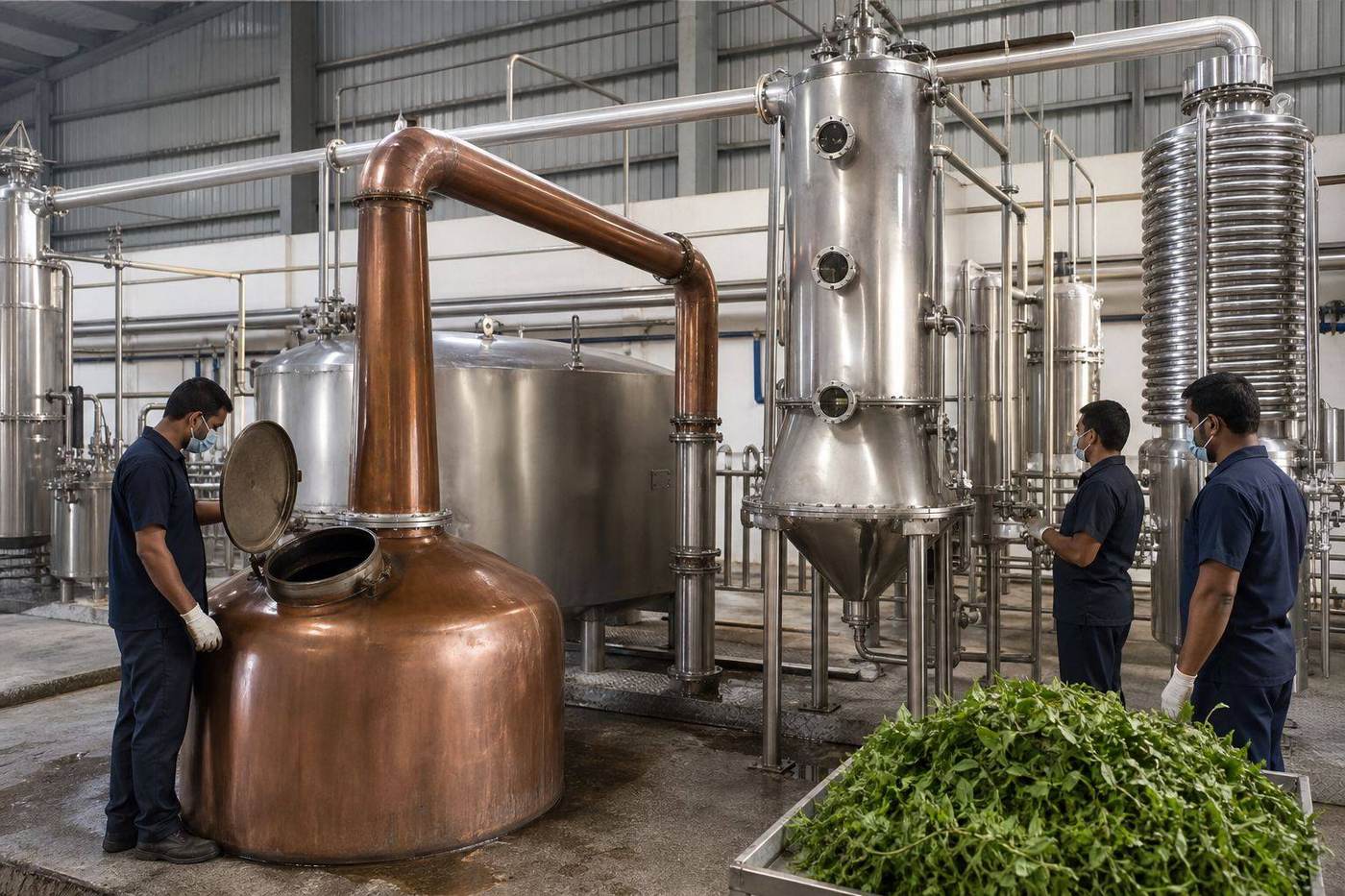
India's National Programme for Organic Production (NPOP), administered by APEDA, provides the domestic organic certification framework. NPOP-certified farms growing lemongrass, citronella, eucalyptus, basil, and spice crops must feed distillation units that maintain organic chain-of-custody: dedicated organic distillation runs or verified cleaning protocols between conventional and organic batches, NPOP-certified packing premises, and transaction certificates linking each export lot to certified organic origin.
USDA Organic equivalence allows NPOP-certified Indian organic essential oils to be sold as organic in the United States when the certification body is USDA-recognized. EU Organic equivalence (under Regulation 2018/848) allows sale as organic in the European Union under similar mutual-recognition arrangements. Exporters must verify their specific certification body's international equivalence status before marketing oils as organic in destination markets.
Therapeutic-Grade Quality Infrastructure
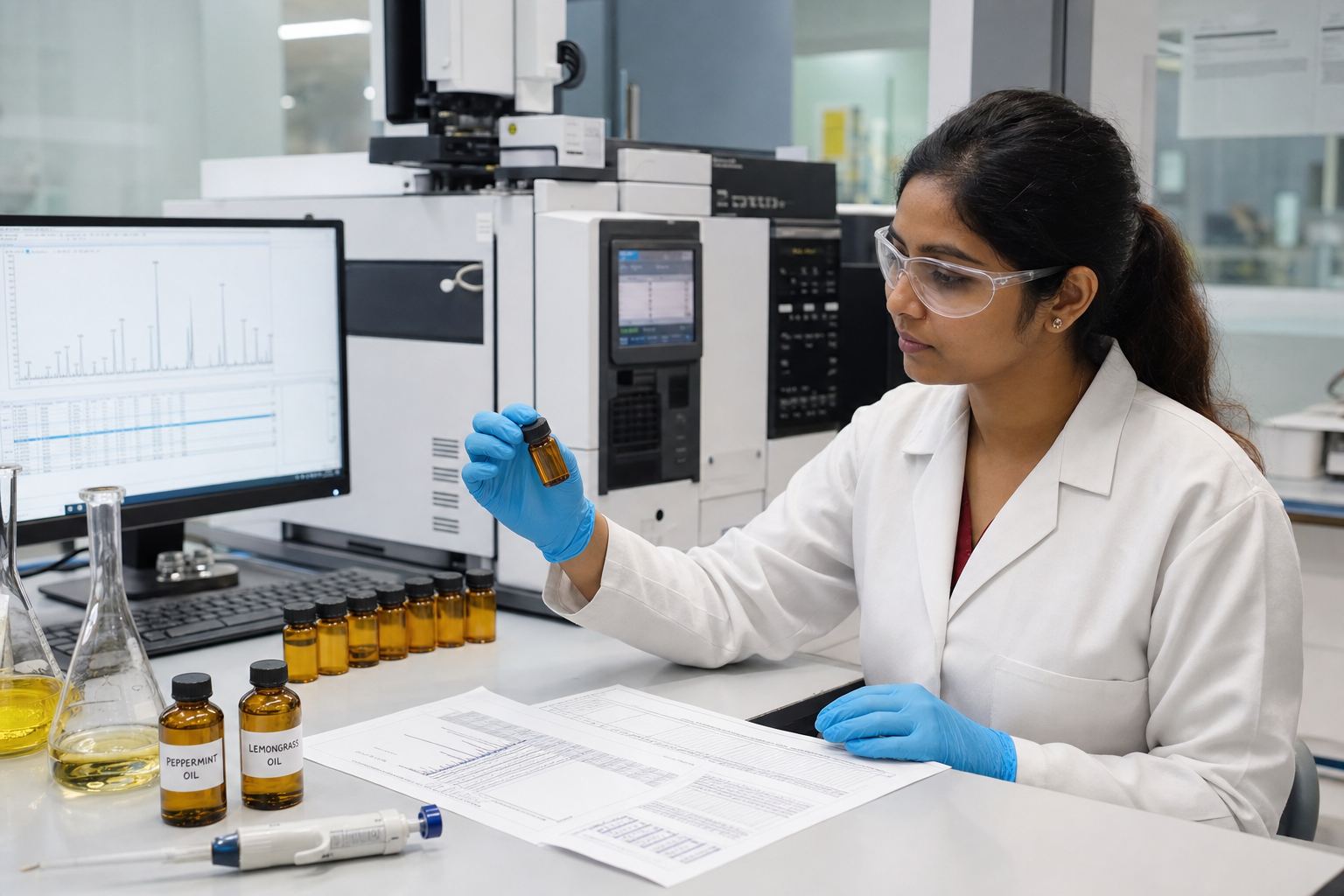
Therapeutic-grade positioning requires in-house or contracted GC-MS testing on every lot with tighter purity parameters than commodity grading: lower tolerance for non-characteristic compounds, pesticide-residue testing below buyer-specified thresholds, and consistent marker compound profiles across consecutive lots. Distilleries serving therapeutic-grade buyers typically maintain NABL-accredited laboratory relationships and standardize COA templates that include both GC-MS chromatograms and pesticide-residue panels.
Segregation and Chain-of-Custody
The most common failure in premium positioning is claiming organic or therapeutic-grade status without operational segregation. Credible premium suppliers maintain documented separation between conventional and organic raw material storage, distillation scheduling, and packing lines. Chain-of-custody documentation — from NPOP-certified farm through distillation batch record to export drum label — is what organic-certification auditors and sophisticated buyers verify during supplier qualification.
Premium Oil Production Clusters
Organic lemongrass and citronella distillation concentrates in Tamil Nadu and Andhra Pradesh, where organic aromatic grass cultivation has expanded over the past decade. Organic spice-oil distillation in Kerala and Karnataka leverages existing organic spice farming infrastructure. Sandalwood and jasmine absolute premium production remains in Karnataka and Tamil Nadu, where traceability and sustainability documentation are increasingly required alongside GC-MS purity profiles.
Pricing Analysis
Buyer Tip
Premium pricing in essential oils is driven by certification stack, GC-MS purity parameters, scarcity, and buyer segment — not merely by botanical identity. Conventional lemongrass oil at USD 10–20/kg FOB becomes USD 14–28/kg with NPOP/USDA Organic certification in clean-beauty procurement. Conventional eucalyptus at USD 8–18/kg gains 15–30% premium with organic and therapeutic-grade documentation for aromatherapy retail.
The comparison with commodity mentha is instructive: conventional mentha/cornmint at USD 12–22/kg FOB operates on thin margins where a USD 1–2/kg price difference wins or loses container programs. Premium organic lemongrass at USD 20–28/kg delivers higher absolute margin per kilogram even at lower volume. Sandalwood and jasmine absolute at USD 1,500–6,000+/kg operate in an entirely different pricing universe driven by santalol % and olfactory profile, not certification alone.
Premium vs Conventional FOB Pricing: Indian Essential Oils (2025–2026)
Swipe →
Data table — swipe horizontally on small screens
| Oil | Conventional FOB (USD/kg) | Organic Certified FOB (USD/kg) | Premium Driver | Typical Buyer |
|---|---|---|---|---|
| Lemongrass Oil | USD 10–20/kg | USD 14–28/kg | NPOP/USDA/EU Organic; citral % | Clean-beauty, wellness retail |
| Citronella Oil | USD 8–16/kg | USD 11–22/kg | Organic cert; citronellal % | Natural insect-repellent brands |
| Eucalyptus Oil | USD 8–18/kg | USD 11–24/kg | Organic + therapeutic-grade cineole % | Aromatherapy, spa, OTC-adjacent |
| Palmarosa Oil | USD 30–55/kg | USD 38–70/kg | Organic; geraniol %; IFRA | Premium cosmetics, fragrance |
| Basil Oil | USD 25–50/kg | USD 32–65/kg | Organic; chemotype consistency | Aromatherapy, wellness |
| Vetiver Oil | USD 120–250/kg | USD 150–320/kg | Aging profile; organic; purity | Fine fragrance, premium wellness |
| Mentha/Cornmint (organic) | USD 12–22/kg | USD 16–30/kg | NPOP organic; menthol % | Organic food flavoring |
| Sandalwood Oil | USD 1,500–3,500+/kg | USD 1,800–4,000+/kg | Santalol %; traceability; sustainability | Luxury fragrance, premium cosmetics |
| Jasmine Absolute | USD 3,000–6,000+/kg | USD 3,500–7,000+/kg | Olfactory profile; solvent-residue limits | Fine fragrance houses |
MOQ Analysis
Buyer Tip
Premium essential oil MOQs differ from commodity patterns. Clean-beauty brands and aromatherapy distributors often start with 5–25 kg trial lots of certified organic oil — smaller than commodity mentha trial volumes but at significantly higher per-kilogram pricing. Established premium programs scale to 50–500 kg per lot for organic grass and herb oils, and to 0.5–5 kg for sandalwood and jasmine absolute.
Organic certification costs (annual inspection, transaction certificates per lot) create a minimum viable volume threshold: exporting 10 kg of certified organic lemongrass may not cover certification overhead, while a 100 kg program to a clean-beauty brand with annual renewal justifies the investment. Exporters should model premium MOQ economics including certification cost per kilogram before entering the segment.
MOQ Guidelines for Premium Essential Oil Programs
Swipe →
Data table — swipe horizontally on small screens
| Order Type | Typical MOQ | Applicable Oils | Premium Pricing Note |
|---|---|---|---|
| Organic evaluation sample | 50–200 g | All certified organic oils | Sample cost higher; include organic transaction certificate |
| Therapeutic-grade sample | 50–200 g | Eucalyptus, basil, vetiver | Include pesticide-residue panel with GC-MS COA |
| Trial lot — organic grass/herb | 5–25 kg | Lemongrass, eucalyptus, basil, palmarosa | 15–35% premium over conventional trial pricing |
| Commercial — organic program | 50–500 kg | Certified organic grass and herb oils | Annual renewal contracts common in clean-beauty |
| Commercial — premium woods/absolutes | 0.5–5 kg | Sandalwood, jasmine absolute | Gram-level pricing; scarcity constraints |
| Private-label organic blend | 100–500 kg | Multi-oil organic blends for wellness brands | Custom formulation; IFRA compliance per blend |
Packaging Standards
Export Tip
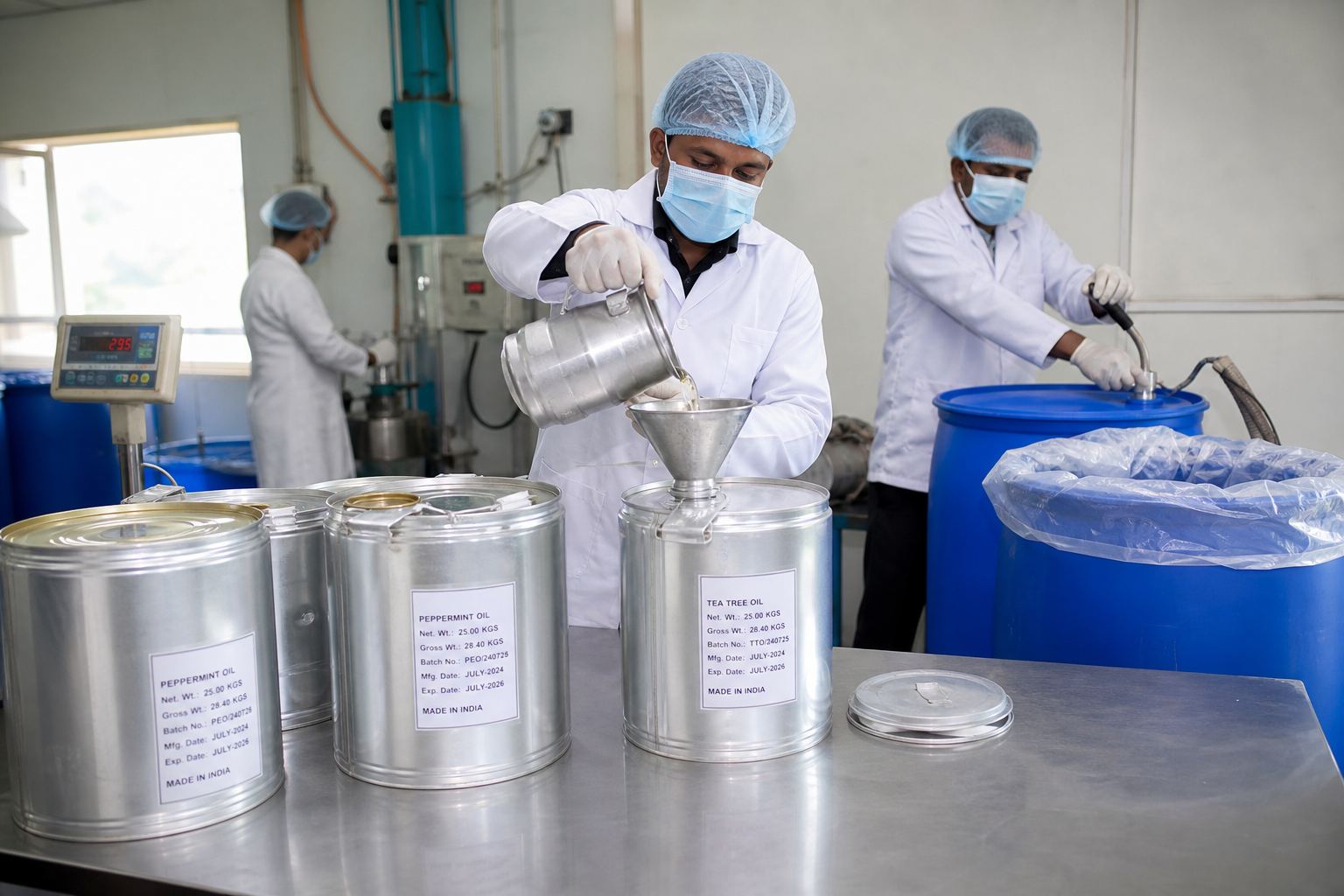
Premium essential oil packaging must protect organic and therapeutic-grade integrity through transit — and must itself comply with organic handling requirements. Organic-certified oils should be packed on NPOP-certified packing premises using food-grade or epoxy-lined drums that have been cleaned and verified free of conventional-oil residue when shared lines are used.
Amber glass bottles remain standard for premium samples and small-lot shipments to clean-beauty brands. Nitrogen blanketing is expected for oxidation-sensitive organic oils. Labels for organic-certified export must include the certification body's name and logo per NPOP/USDA/EU Organic labeling rules — not merely the word "organic" without certification reference.
Packaging Standards for Premium Essential Oil Export
Swipe →
Data table — swipe horizontally on small screens
| Format | Net Weight | Premium Requirement | Organic Compliance Note |
|---|---|---|---|
| Aluminium drum (organic line) | 25–50 kg | NPOP-certified packing premises | Transaction certificate per lot |
| Amber glass bottle | 10–100 ml | Light protection for premium retail | Organic label with cert body name/logo |
| HDPE drum (food-grade) | 25 kg | Organic spice and herb oils | Verified cleaning between conventional/organic |
| Nitrogen-blanketed drum | 25–50 kg | Oxidation-sensitive organic oils | Preserves certified organic integrity in transit |
| Epoxy-lined drum | 180 kg | Large organic commercial programs | Lining integrity verified for organic compliance |
| Retail-ready amber bottles | 5–15 ml | Private-label clean-beauty programs | IFRA-compliant labeling; organic cert on label |
Container Loading Details
Export Tip
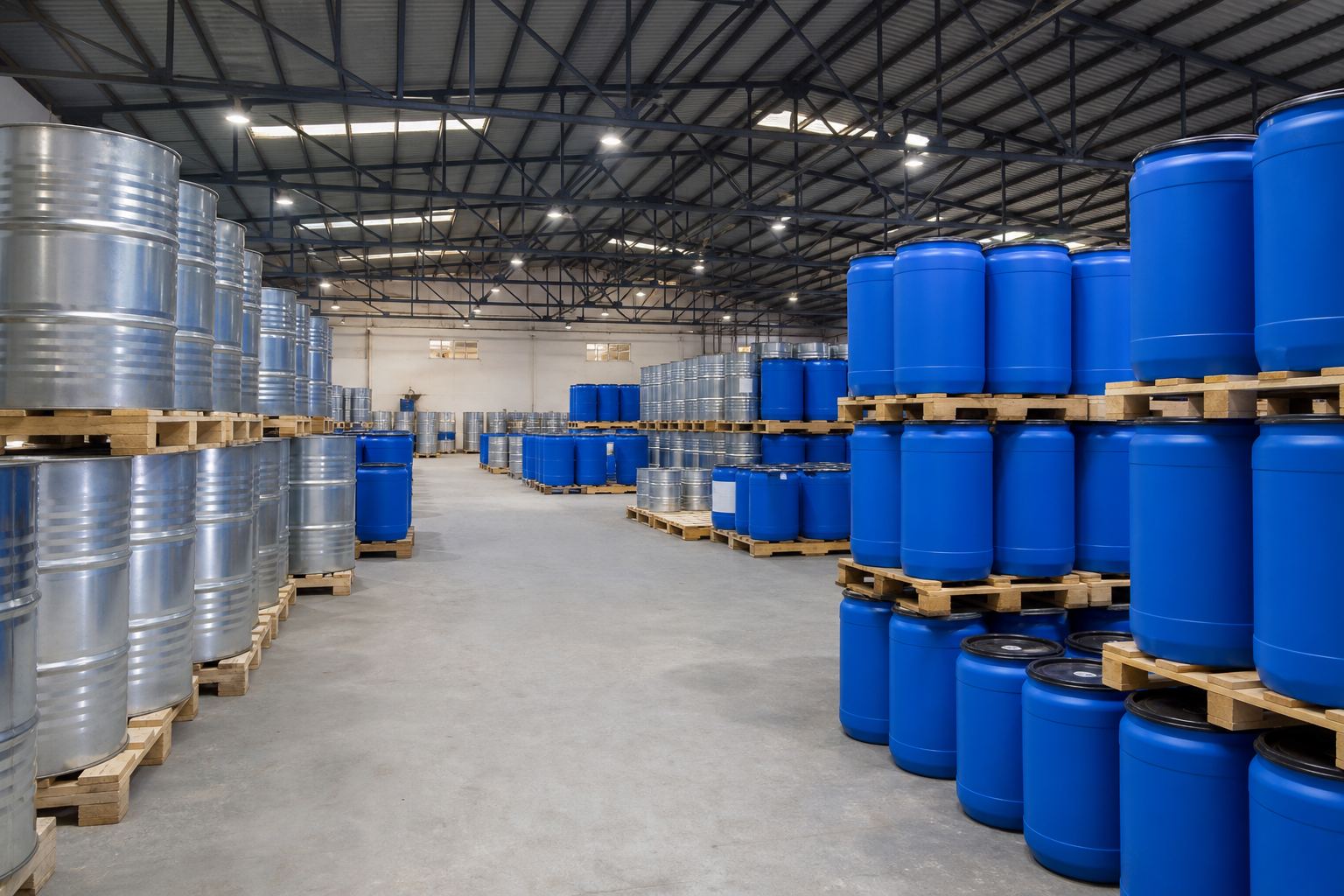
Premium essential oil shipments are more often air-freighted or shipped LCL than conventional commodity mentha, which moves in multi-MT FCL containers. A 100 kg organic lemongrass program to a USA clean-beauty brand typically ships LCL or air rather than waiting for FCL consolidation — because the value per kilogram justifies freight cost and because buyers want shorter lead times for premium retail launches.
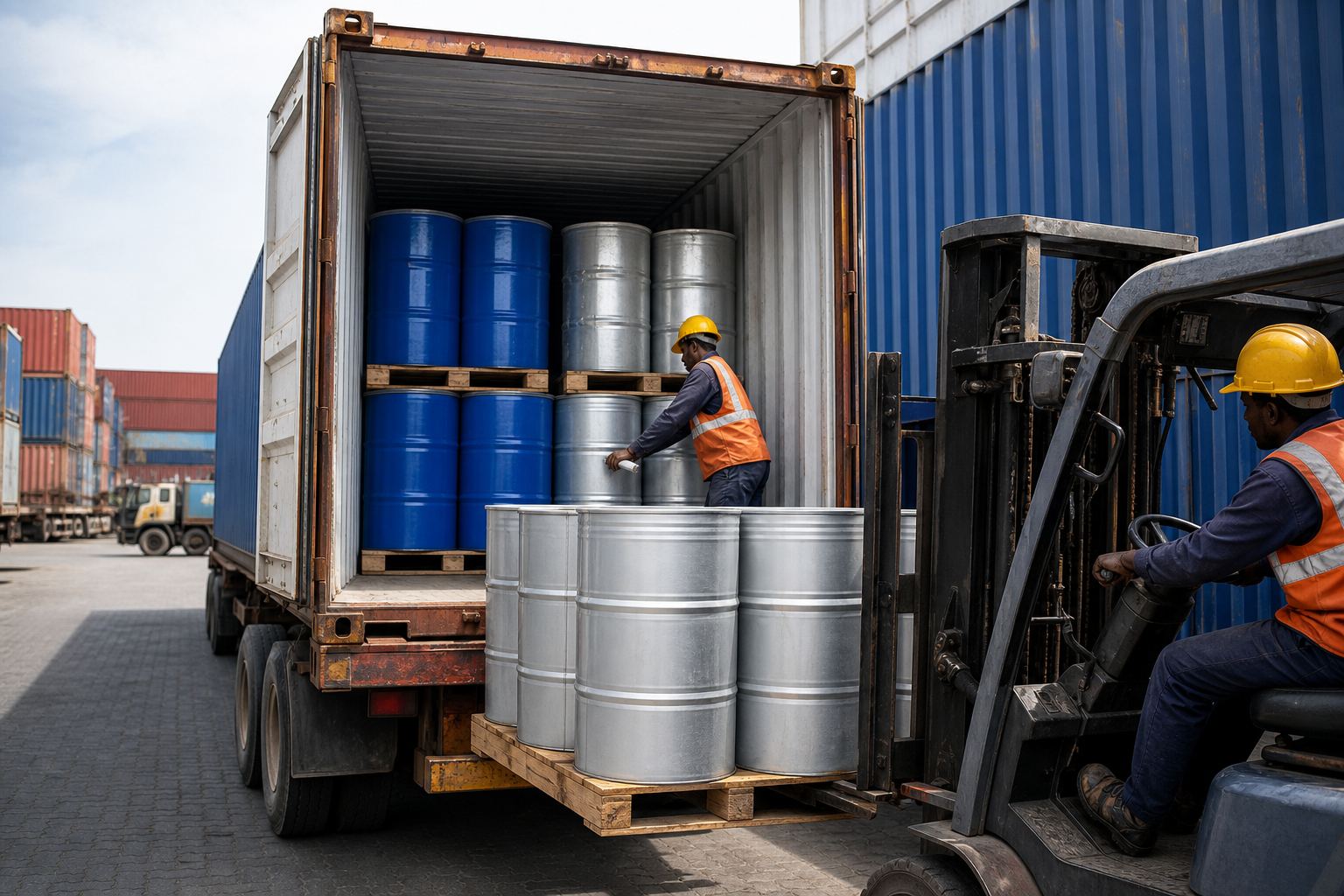
When premium oils do move FCL, segregation requirements continue: organic-certified drums must not be loaded alongside conventional oil drums in the same container unless the buyer explicitly accepts mixed loading — which clean-beauty and organic food buyers typically do not.
Container and Shipment Configuration for Premium Oils
Swipe →
Data table — swipe horizontally on small screens
| Shipment Type | Typical Volume | Premium Oils | Handling Note |
|---|---|---|---|
| Air freight (organic trial) | 5–25 kg | Organic lemongrass, eucalyptus, basil | Secured; temperature-stable routing |
| LCL (organic commercial) | 50–500 kg | Certified organic grass and herb oils | No conventional oil co-loading |
| FCL (large organic program) | 2–8 MT | Established organic lemongrass/citronella programs | Dedicated organic container preferred |
| Air freight (premium absolute) | 0.5–5 kg | Jasmine absolute, sandalwood | High-value insurance; secured crating |
| Courier (premium sample) | 50–200 g | Organic and therapeutic-grade samples | Amber glass; organic transaction certificate enclosed |
Shipping Methods
Export Tip
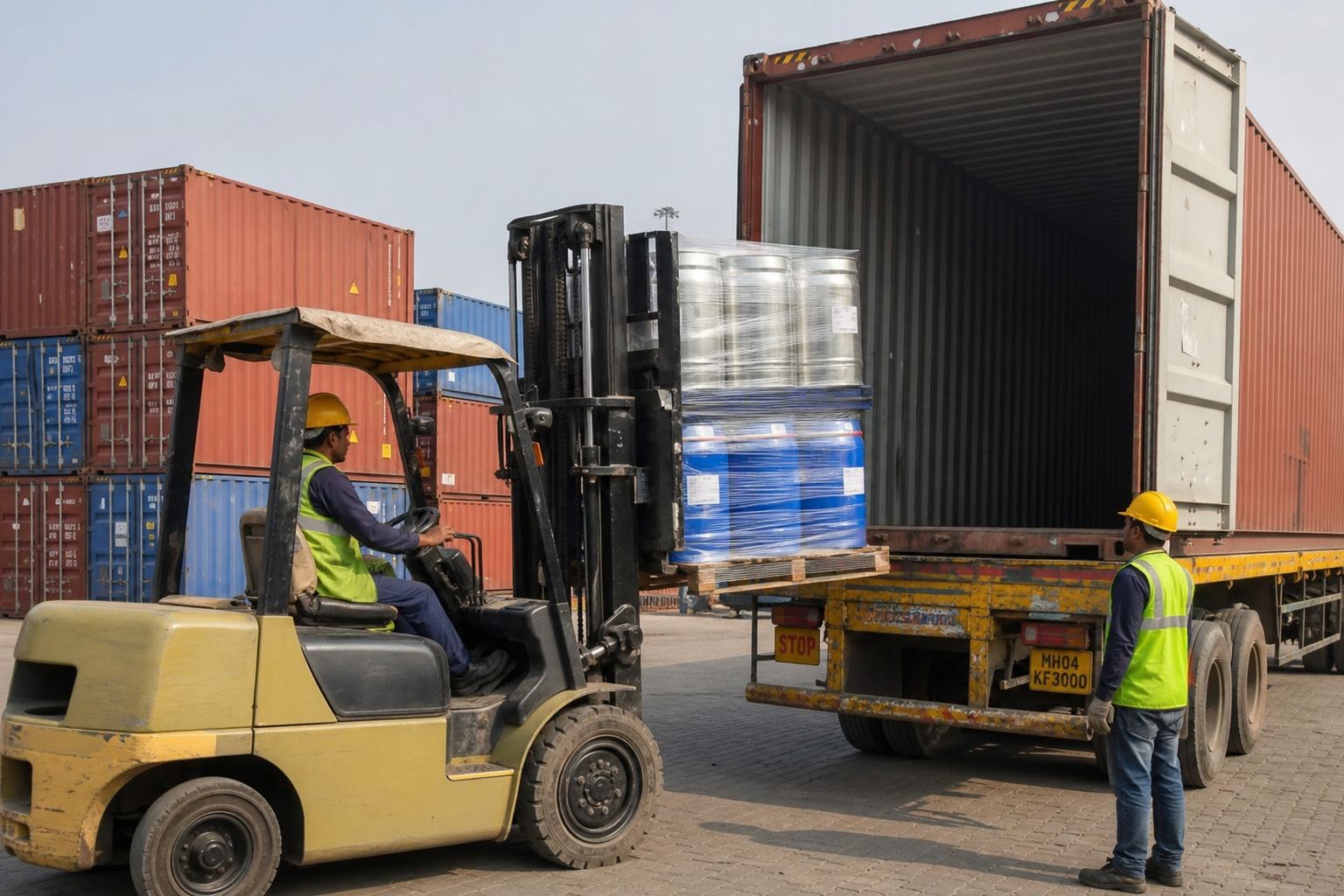
Premium essential oil shipping prioritizes integrity over lowest freight cost. Organic and therapeutic-grade oils degrade with heat and light exposure — routing that minimizes transit time and avoids prolonged port holds matters more than for commodity mentha moving in bulk FCL.
Chennai and Nhava Sheva serve southern and western organic oil producers shipping to USA and EU clean-beauty buyers. Air freight is standard for premium samples and first commercial lots under 50 kg. Established organic programs may shift to LCL or FCL sea freight once buyer relationship and volume justify longer transit.
Shipping Methods for Premium Essential Oil Export
Swipe →
Data table — swipe horizontally on small screens
| Mode | Typical Premium Use | Transit Time | Integrity Requirement |
|---|---|---|---|
| Air freight | Organic trial and commercial lots under 50 kg | 3–7 days | Cool, dark, upright; minimal handling |
| Sea LCL | Organic commercial 50–500 kg | 18–35 days | No co-loading with conventional oils |
| Sea FCL (dedicated organic) | Large organic grass-oil programs | 18–35 days | Organic chain-of-custody maintained through port |
| Courier | Premium samples with certification docs | 2–5 business days | Amber glass; transaction certificate included |
Certifications
Compliance Notes
Premium essential oil export requires a layered certification stack: organic certification (NPOP, USDA Organic, EU Organic) for clean-beauty and organic food buyers; therapeutic-grade GC-MS and pesticide-residue testing for aromatherapy and wellness buyers; IFRA compliance for fragrance and cosmetics formulation; REACH for EU market entry; and FSSAI for food-grade organic oils.
Buyers paying organic premiums verify the certification chain — not just the COA. Transaction certificates issued by the NPOP-accredited certification body for each export lot are the document that links a specific drum to certified organic origin. Without transaction certificates, an organic label claim fails buyer audit.
Certification Stack for Premium Essential Oil Export
Swipe →
Data table — swipe horizontally on small screens
| Certification | Issuing Body | Premium Segment | Buyer Verification Method |
|---|---|---|---|
| NPOP Organic | APEDA-accredited certification body | All organic-labeled export | Transaction certificate per lot; annual audit |
| USDA Organic | USDA-recognized certifier (often same body as NPOP) | USA organic-labeled products | USDA Organic seal; certifier name on label |
| EU Organic (Reg. 2018/848) | EU-recognized certifier | EU organic-labeled products | EU Organic logo; certifier code on label |
| GC-MS COA (therapeutic-grade) | NABL-accredited laboratory | Aromatherapy, wellness, cosmetics | Chromatogram review; marker compound ranges |
| Pesticide-residue panel | Accredited food/chemical laboratory | Organic and therapeutic-grade buyers | Residue limits below buyer threshold |
| IFRA Compliance Statement | Self-declared against IFRA standards | Fragrance and cosmetics formulation | Restricted constituent check per oil |
| REACH SDS / OR coverage | EU REACH framework | EU market entry (≥1 t/yr via importer or Only Representative) | SDS + confirm who holds registration |
| FSSAI Licence + Health Certificate | FSSAI, Government of India | Organic food-grade oils | Export health certificate per shipment |
Buyer Requirements
Buyer Requirements
Premium essential oil buyers impose qualification requirements beyond conventional GC-MS COA — and understanding these before market entry prevents costly certification misinvestment.
Clean-Beauty Brand Requirements
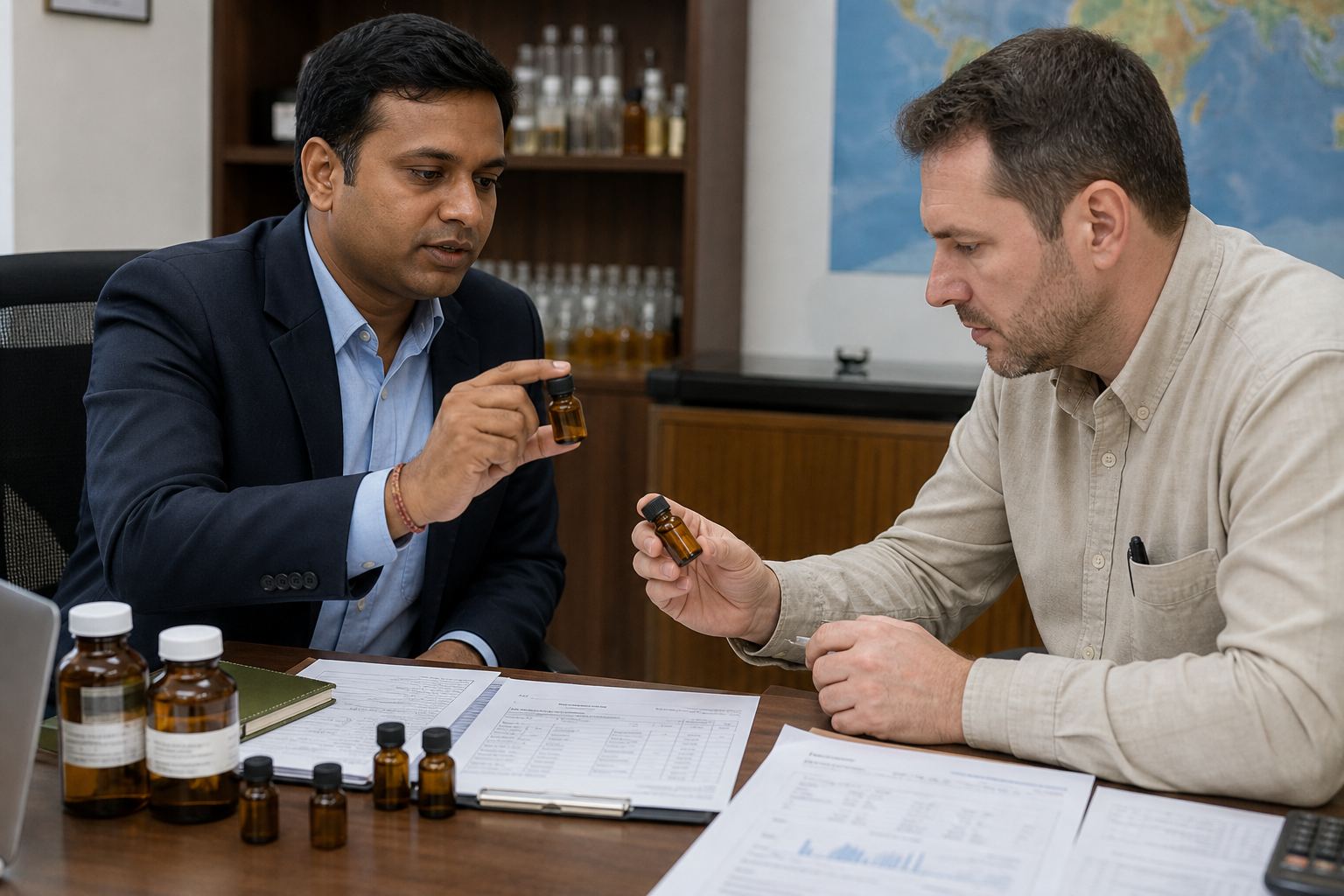
Clean-beauty and premium cosmetics brands sourcing organic essential oils for formulation require: valid NPOP/USDA/EU Organic certification with transaction certificates per lot; GC-MS COA with marker compound ranges; pesticide-residue testing below specified thresholds (often stricter than conventional food limits); IFRA compliance statement for leave-on cosmetic products; REACH documentation for EU-formulated products; and supplier audit capability (remote or on-site) confirming distillation segregation and packing-line organic compliance.
Aromatherapy and Wellness Retail Requirements
Aromatherapy distributors and wellness retail brands prioritize therapeutic-grade GC-MS purity — consistent marker compound profiles, low batch-to-batch variability, and pesticide-residue panels — over organic certification in some cases, though organic positioning is increasingly expected in premium retail shelves. USA buyers may require compliance with FDA cosmetic ingredient labeling rules; EU buyers require EU cosmetics regulation compliance for finished products using the oil.
Organic Food Flavoring Requirements
Organic food and beverage brands sourcing organic mentha or spice oils for flavoring require NPOP/USDA/EU Organic certification, FSSAI export health certification, and food-grade GC-MS documentation. The organic certification must cover the entire chain from farm through distillation to packing — not farm-only certification with conventional distillation.
Fine Fragrance Traceability Requirements
Fine fragrance houses sourcing sandalwood, jasmine absolute, and vetiver for premium formulations increasingly require sustainability and traceability documentation alongside GC-MS purity profiles. Sandalwood buyers want plantation-origin evidence and santalol % consistency. Jasmine absolute buyers want solvent-residue limits and olfactory profile consistency across lots.
Country-wise Opportunities
Market Snapshot
Premium essential oil export opportunities concentrate in markets with strong clean-beauty retail infrastructure, organic labeling regulation, and aromatherapy consumer demand — not necessarily in markets with the highest total HS 3301 import volume.
Country-wise Premium Essential Oil Export Opportunities
Swipe →
Data table — swipe horizontally on small screens
| Country/Region | Premium Oil Demand | Certification Required | Price Opportunity | Entry Strategy |
|---|---|---|---|---|
| USA | Organic lemongrass, eucalyptus, basil; therapeutic-grade wellness oils | USDA Organic; GC-MS; IFRA | Highest organic premium globally | Clean-beauty trade shows; Vitafoods; distributor partnerships |
| Germany / EU | Organic palmarosa, citronella, vetiver; IFRA cosmetics | EU Organic; REACH; IFRA | High; strictest documentation | In-Cosmetics; organic certifier introductions |
| UK | Organic grass and herb oils for clean-beauty brands | UK Organic; GC-MS; IFRA | High; growing clean-beauty market | UK beauty trade events; LinkedIn clean-beauty brands |
| Japan | Sandalwood, jasmine absolute, premium eucalyptus | GC-MS precision; traceability | Premium unit pricing | Specialist importer relationships |
| UAE / Gulf | Premium sandalwood, organic grass oils for luxury cosmetics | GC-MS; Halal-adjacent; organic growing | Mid to high | Beautyworld Middle East; luxury cosmetics brands |
| Australia | Organic eucalyptus, wellness oils | NASAA/USDA/EU Organic recognized | Growing premium segment | Wellness retail distributor networks |
Sourcing Checklist
Checklist
International buyers sourcing certified organic or therapeutic-grade essential oils from India should verify each of the following before placing a premium-priced order.
Buyer, Exporter, and Compliance Checklists
Checklist
Compliance Notes
Common Buyer Mistakes
Common Mistakes Box
Both buyers and exporters make recurring mistakes in premium essential oil sourcing that destroy trust and waste certification investment.
Common Mistakes in Premium Essential Oil Sourcing
Swipe →
Data table — swipe horizontally on small screens
| Mistake | Consequence | How to Avoid |
|---|---|---|
| Paying organic premium without transaction certificate | Receiving conventional oil with organic label — brand reputation damage | Require lot-specific transaction certificate before payment |
| Accepting farm-only organic cert without distillation cert | Oil distilled on conventional equipment — organic claim invalid | Verify entire chain: farm, distillation, packing |
| Treating therapeutic-grade as marketing label only | Oil fails pesticide-residue or purity audit at destination | Define therapeutic-grade parameters in writing with GC-MS ranges |
| Ignoring IFRA for organic cosmetics oils | Formulation rejected by EU/USA cosmetics compliance | Request IFRA statement alongside organic certification |
| Comparing organic premium to commodity mentha pricing | Unrealistic price expectations kill premium negotiations | Benchmark against international organic oil pricing, not mentha |
| Skipping pesticide-residue testing for organic oils | Organic cert does not guarantee residue compliance for all buyers | Include residue panel in COA for every organic lot |
| Assuming all Indian distillers can produce certified organic oil | Production from non-certified premises invalidates organic claim | Audit distillation and packing certification before ordering |
Future Market Trends
Key Statistics
Clean-beauty and clean-label regulation is tightening globally, expanding the addressable market for certified organic essential oils from India. EU Organic Regulation 2018/848 and USDA Organic enforcement both increase audit scrutiny on imported organic ingredients — favoring Indian exporters with robust chain-of-custody documentation over those with paper-only certification.
Therapeutic-grade and high-purity GC-MS specification is becoming the baseline expectation in aromatherapy retail, not a premium upsell. Clinical and consumer interest in specific marker compounds — cineole in eucalyptus, citral in lemongrass, santalol in sandalwood — is pushing buyers toward tighter chromatographic specification and away from generic botanical-name purchasing.
Sustainability and traceability documentation for sandalwood and wildcrafted oils is evolving from niche fine-fragrance requirement to mainstream premium cosmetics expectation. Indian exporters who invest in plantation-to-drum traceability for sandalwood and organic farm-to-drum traceability for grass oils will capture disproportionate premium value over the next decade.
Future Trends in Premium Essential Oil Export (2026–2034)
Swipe →
Data table — swipe horizontally on small screens
| Trend | Impact on Indian Premium Exporters | Preparation Strategy |
|---|---|---|
| Clean-beauty regulation tightening (EU, USA) | Organic certification verification intensifies at import | Invest in audit-ready chain-of-custody documentation |
| Therapeutic-grade as baseline in aromatherapy retail | GC-MS purity and residue testing become mandatory, not optional | Standardize therapeutic-grade COA templates per oil |
| Sustainability traceability for premium woods | Sandalwood and vetiver need plantation/origin documentation | Build traceability from cultivation through distillation |
| IFRA updates for cosmetics formulation | Restricted constituent limits change; compliance must be current | Monitor IFRA amendments; update compliance statements annually |
| Premium segment growth outpacing commodity mentha | Margin opportunity shifts to certified organic and therapeutic oils | Diversify production capability beyond conventional mentha |
Conclusion
- Export operations: how to export essential oils from India.
- Buyer discovery: find international buyers for essential oils.
- Product depth: top essential oil products exported from India.
- Destination markets: best countries for Indian essential oil exports.
- Country demand map: most demanded Indian essential oils by country.
- Registration credentials: Chemexcil and FSSAI registration benefits for essential oil exporters.
- Documentation: essential oil export documentation checklist.
- Trade shows: trade shows for essential oil exporters.
- Contact Altus Exports global sourcing partner services or product sourcing company in India for certified organic essential oil programs.
Organic and therapeutic-grade essential oil export from India represents the highest-margin, most defensible positioning in HS 3301 trade — but only for exporters who invest in genuine NPOP/USDA/EU Organic certification infrastructure, therapeutic-grade GC-MS and pesticide-residue testing, IFRA compliance, and chain-of-custody documentation from certified farm through distillation to export drum. Commodity mentha will continue to dominate export volume, but premium value concentrates in certified organic lemongrass, eucalyptus, basil, and palmarosa for clean-beauty brands; therapeutic-grade herb oils for aromatherapy and wellness retail; and traceable sandalwood and jasmine absolute for fine fragrance.
International buyers paying organic premiums have sophisticated verification capability — transaction certificates, pesticide-residue panels, distillation segregation audits, and IFRA compliance reviews are standard qualification steps, not exceptional requests. Exporters who treat premium positioning as a marketing layer over conventional production will fail buyer audit and damage Indian supplier reputation in premium segments.
Altus Exports operates as a merchant exporter and global sourcing partner for essential oils from India, connecting clean-beauty brands, aromatherapy distributors, and fine fragrance buyers with verified distillers maintaining legitimate organic certification and therapeutic-grade testing infrastructure — managing certification verification, sample coordination, and export logistics for premium HS 3301 programs.