
Top Essential Oil Products Exported from India
By Saurabh Mittal, Founder, Altus Exports
Discover the top essential oil products exported from India — ranked by global commercial demand with GC-MS marker specifications, indicative FOB pricing, MOQ by SKU, and country-by-country buyer demand. This guide covers mentha, peppermint, spearmint, lemongrass, citronella, palmarosa, basil, jasmine absolute, sandalwood, vetiver, eucalyptus, and spice-derived oils, with production clusters, importing-country appetite, certification pathways, and applications across the USA, EU, Middle East, and Japan.
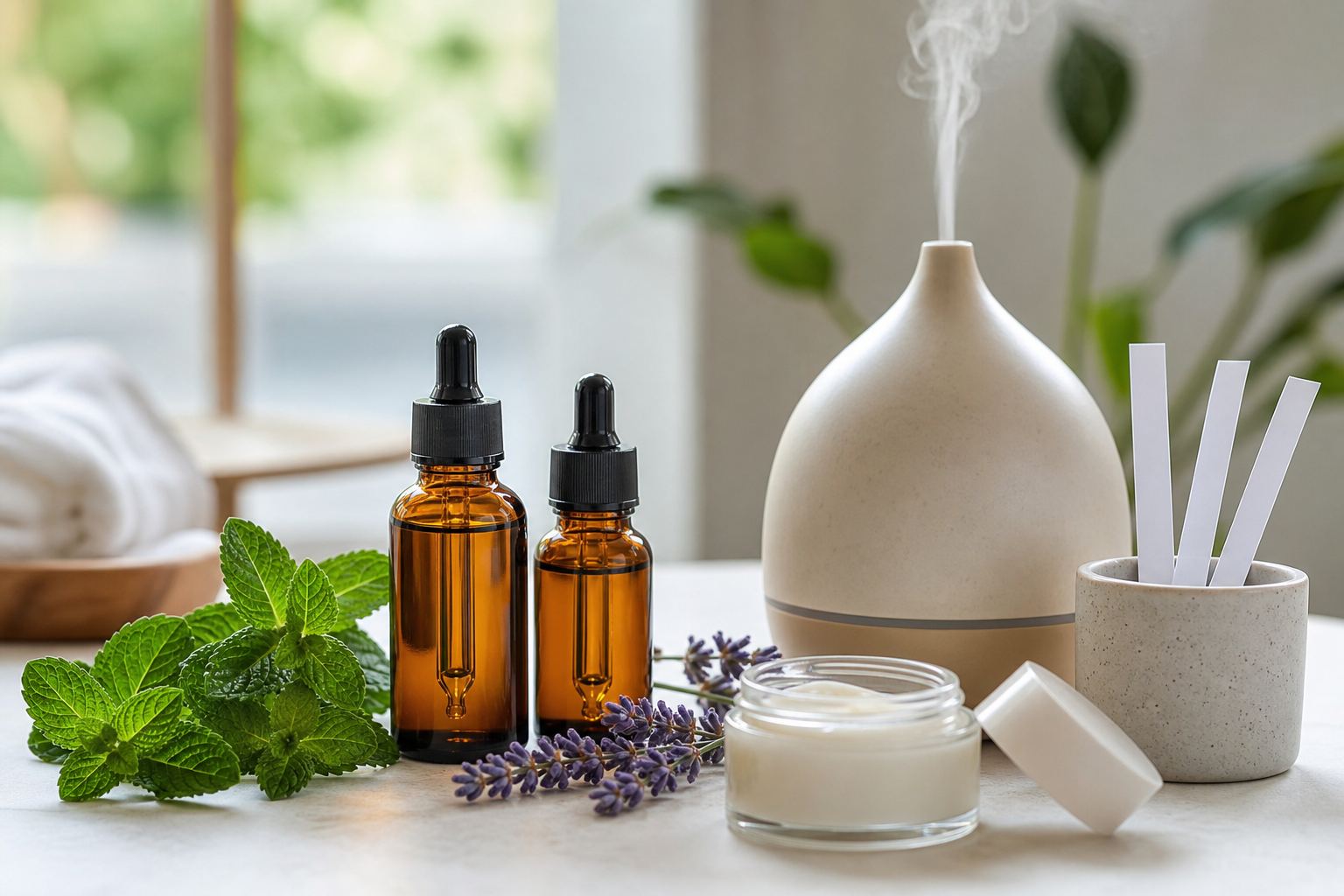
India occupies a position in global essential oil trade that few competing origins can replicate: it is simultaneously the world's leading producer of mentha (cornmint) oil, a major supplier of aromatic grass oils like lemongrass and citronella, home to spice-growing regions that yield high-value black pepper, cardamom, ginger, and turmeric oils, and the custodian of centuries-old jasmine absolute and sandalwood oil traditions. Understanding which oils India excels in, what their correct GC-MS specifications look like, and which markets want them most is the foundation of any intelligent essential oil sourcing or export strategy.
This guide is organized around product assortment rather than export process — it is a buyer's and exporter's reference to the specific SKUs, specifications, and pricing that define India's essential oil basket under HS 3301. For the complete registration-to-shipment process — IEC, Chemexcil RCMC, FSSAI, GC-MS testing setup, packaging, and logistics — pair this article with our companion guide, how to export essential oils from India.
Whether you are a flavor house evaluating mentha derivatives, a fragrance lab sourcing lemongrass or palmarosa, a wellness brand building an aromatherapy range around eucalyptus and basil, a luxury perfumer seeking jasmine absolute or sandalwood, or an Indian exporter deciding which oils to develop as flagship export products, this guide ranks the most commercially significant essential oil products exported from India with the specification detail that serious buyers require.
Key Takeaways
Summary Box
Executive Summary
Summary Box
India's essential oil export basket spans four commercial tiers: high-volume commodity oils (mentha, cornmint) that trade on menthol content and crop yield; mid-tier aromatic grass and herb oils (lemongrass, citronella, palmarosa, basil, eucalyptus) that serve fragrance, personal care, and household product formulation; premium spice-derived oils (black pepper, cardamom, ginger, turmeric, celery seed) that serve flavor and pharmaceutical-adjacent buyers; and ultra-premium heritage products (jasmine absolute, sandalwood, vetiver) priced by rarity and craft rather than volume.
This guide serves flavor and fragrance buyers, cosmetics and personal care formulators, wellness and aromatherapy brands, distributors, and procurement teams evaluating Indian essential oil SKUs, as well as Indian producers and exporters deciding where to focus quality and certification investment. Companion posts cover the export process, country ranking, direct sourcing, registration benefits, and documentation depth — linked throughout and in the conclusion.
Market Size & Industry Overview
Key Statistics
The global essential oils market spans flavor and fragrance manufacturing, cosmetics and personal care, aromatherapy and wellness retail, household and industrial products, and pharmaceutical-adjacent formulation. Published market-size estimates vary by methodology and by whether absolutes, oleoresins, and carrier-oil blends are included in the scope — treat headline figures as directional rather than audited trade statistics, and confirm scope before citing a specific number to a buyer or investor.
India's product depth is what differentiates it from single-category competing origins. Sri Lanka and Indonesia compete strongly in citronella; China competes in select spice-adjacent oils; Bulgaria and France lead in rose and lavender; but no other origin combines world-leading mentha/cornmint volume with a credible fine-fragrance jasmine absolute and sandalwood tradition, a large aromatic grass belt, and a spice-growing base capable of yielding food-grade black pepper, cardamom, ginger, and turmeric oils — all from a single sourcing country.
Global Essential Oils Market: Segment Overview by Indian Product Fit (directional)
Swipe →
Data table — swipe horizontally on small screens
| Segment | Demand Driver | India's Leading Products in Segment | Price Tier |
|---|---|---|---|
| Flavor & Food Ingredients | Mint confectionery, oral care, beverages | Mentha/cornmint, peppermint, spearmint oils | Commodity to mid |
| Fine Fragrance | Perfumery, luxury cosmetics | Jasmine absolute, sandalwood, vetiver | Ultra-premium |
| Personal Care & Household | Soaps, cosmetics, insect repellents | Lemongrass, citronella, palmarosa | Mid |
| Aromatherapy & Wellness | Diffusers, massage oils, spa products | Eucalyptus, basil, lemongrass | Mid |
| Flavor & Pharma-adjacent | Functional foods, topical formulations | Black pepper, cardamom, ginger, turmeric, celery seed | Mid to high |
Export Statistics
Key Statistics
Mentha-type oils under HS 3301.24/3301.25 represent India's largest single essential oil export category by volume, sourced almost entirely from the Uttar Pradesh mentha belt. HS 3301.29 captures the bulk of India's remaining oil exports — lemongrass, citronella, palmarosa, eucalyptus, basil, vetiver, sandalwood, and spice-derived oils — while HS 3301.30 covers concretes and absolutes, principally jasmine absolute, one of India's smallest-volume but highest-value-per-kilogram essential oil export categories.
Export growth has tracked rising global demand for natural flavoring and fragrance ingredients, expanding aromatherapy retail in North America and Europe, and steady confectionery, oral-care, and pharmaceutical-adjacent demand for mint and spice oils. Mentha oil export volumes fluctuate meaningfully year to year with Uttar Pradesh crop yield, which is sensitive to monsoon timing and farmer acreage decisions — buyers should factor this seasonality into procurement planning for mint-type SKUs specifically, while aromatic grass and spice oil supply is generally more stable year to year.
India Essential Oil Export Performance by Product (Indicative, 2025–2026)
Swipe →
Data table — swipe horizontally on small screens
| Product | Relative Export Volume | Primary Production Belt | Growth Trend |
|---|---|---|---|
| Mentha/Cornmint Oil | Highest of all HS 3301 exports from India | Uttar Pradesh (Barabanki, Rampur, Badaun, Sambhal) | Stable to growing; yield-dependent |
| Lemongrass Oil | High | Tamil Nadu, Andhra Pradesh | Growing steadily |
| Citronella Oil | Moderate to high | Tamil Nadu, Andhra Pradesh | Stable; competes with Sri Lanka, China |
| Palmarosa Oil | Moderate | Tamil Nadu, Karnataka | Growing; niche premium demand |
| Eucalyptus Oil | Moderate | Karnataka, Kerala, Tamil Nadu | Growing with aromatherapy demand |
| Sandalwood Oil | Low volume, very high value | Karnataka (Mysore belt) | Constrained supply; premium growth |
| Jasmine Absolute | Low volume, highest value per kg | Karnataka, Tamil Nadu | Steady; fine fragrance demand |
| Spice-derived Oils | Moderate | Kerala, Karnataka | Growing with flavor industry demand |
Import Statistics
Key Statistics
The United States imports Indian essential oils across nearly every category — mentha derivatives for flavor and pharmaceutical-adjacent use, lemongrass and eucalyptus for aromatherapy and wellness retail, and sandalwood for premium personal care and fine fragrance. China is a significant buyer of Indian mentha/cornmint oil specifically, feeding its own menthol and pharmaceutical-adjacent processing industries. Germany and France anchor European demand for jasmine absolute, lemongrass, citronella, and mint oils, with REACH and IFRA compliance as standard entry expectations.
The Middle East (UAE, Saudi Arabia) is a major destination for sandalwood oil and jasmine absolute given the regional perfumery tradition, alongside steady demand for spice-derived oils. Japan imports smaller volumes of premium oils — sandalwood, jasmine absolute, eucalyptus — at high unit prices, with buyers expecting precise, consistent GC-MS documentation across every lot.
Top Import Markets by Indian Essential Oil Product
Swipe →
Data table — swipe horizontally on small screens
| Market | Leading Indian Products Imported | Key Regulatory Framework | Price Tier |
|---|---|---|---|
| USA | Mentha derivatives, lemongrass, eucalyptus, sandalwood | FDA (food/flavor use); general consumer safety rules | Mid to high; premium for sandalwood/jasmine |
| China | Mentha/cornmint oil | Chinese customs classification rules | Mid; volume-driven |
| Germany / France | Jasmine absolute, lemongrass, citronella, mint oils | REACH; IFRA; EU cosmetics regulation | High; strictest documentation expectations |
| UAE / Saudi Arabia | Sandalwood, jasmine absolute, spice oils | Local ministry standards; Halal-adjacent expectations | Mid to high |
| Japan | Sandalwood, jasmine absolute, eucalyptus | Strict quality and consistency expectations | Premium; highest unit prices for specialty oils |
Product Categories / Variants
Summary Box
The following ranking reflects global commercial demand, India's relative production strength, and buying-market depth in 2026. Products are grouped by commercial tier — commodity, mid-tier, and premium — to help buyers calibrate price and MOQ expectations before requesting quotes.
India's Top Essential Oil Exports: Ranked by Commercial Tier and Significance (2026)
Swipe →
Data table — swipe horizontally on small screens
| Rank | Essential Oil | Botanical Source | Standard GC-MS Marker | Primary Application | Leading Export Markets |
|---|---|---|---|---|---|
| 1 | Mentha/Cornmint Oil | Mentha arvensis | Menthol content by GC | Flavor, oral care, confectionery | USA, China, EU, Middle East |
| 2 | Peppermint Oil | Mentha piperita | Menthol, menthone ratios by GC-MS | Flavor, aromatherapy, pharma-adjacent | USA, EU, Middle East |
| 3 | Lemongrass Oil | Cymbopogon flexuosus | Citral % by GC-MS | Fragrance, personal care, household products | USA, EU, Japan, Middle East |
| 4 | Citronella Oil | Cymbopogon winterianus | Citronellal/geraniol % by GC-MS | Insect repellents, household products, fragrance | USA, EU, Middle East |
| 5 | Palmarosa Oil | Cymbopogon martini | Geraniol % by GC-MS | Fine fragrance, cosmetics, soap perfumery | EU, USA, Middle East |
| 6 | Spearmint Oil | Mentha spicata | Carvone % by GC-MS | Flavor, confectionery, oral care | USA, EU |
| 7 | Basil Oil | Ocimum basilicum | Methyl chavicol/linalool % by GC-MS | Fragrance, wellness, food flavoring | USA, EU, Middle East |
| 8 | Eucalyptus Oil | Eucalyptus globulus | Cineole % by GC-MS | Aromatherapy, pharma-adjacent, household products | USA, EU, Australia |
| 9 | Spice-derived Oils | Black pepper, cardamom, ginger, turmeric, celery seed | Marker compound % (varies by oil) | Flavor, pharma-adjacent, food industry | USA, EU, Japan, Middle East |
| 10 | Vetiver Oil | Chrysopogon zizanioides | Vetiverol content; aging profile | Fine fragrance, aromatherapy | France, USA, Middle East |
| 11 | Jasmine Absolute | Jasminum grandiflorum / sambac | Olfactory profile; solvent-extraction grade | Fine fragrance, luxury perfumery | France, USA, Middle East |
| 12 | Sandalwood Oil | Santalum album | Santalol % by GC-MS | Fine fragrance, luxury cosmetics, incense | USA, EU, Middle East, Japan |
Manufacturing Overview
Export Tip
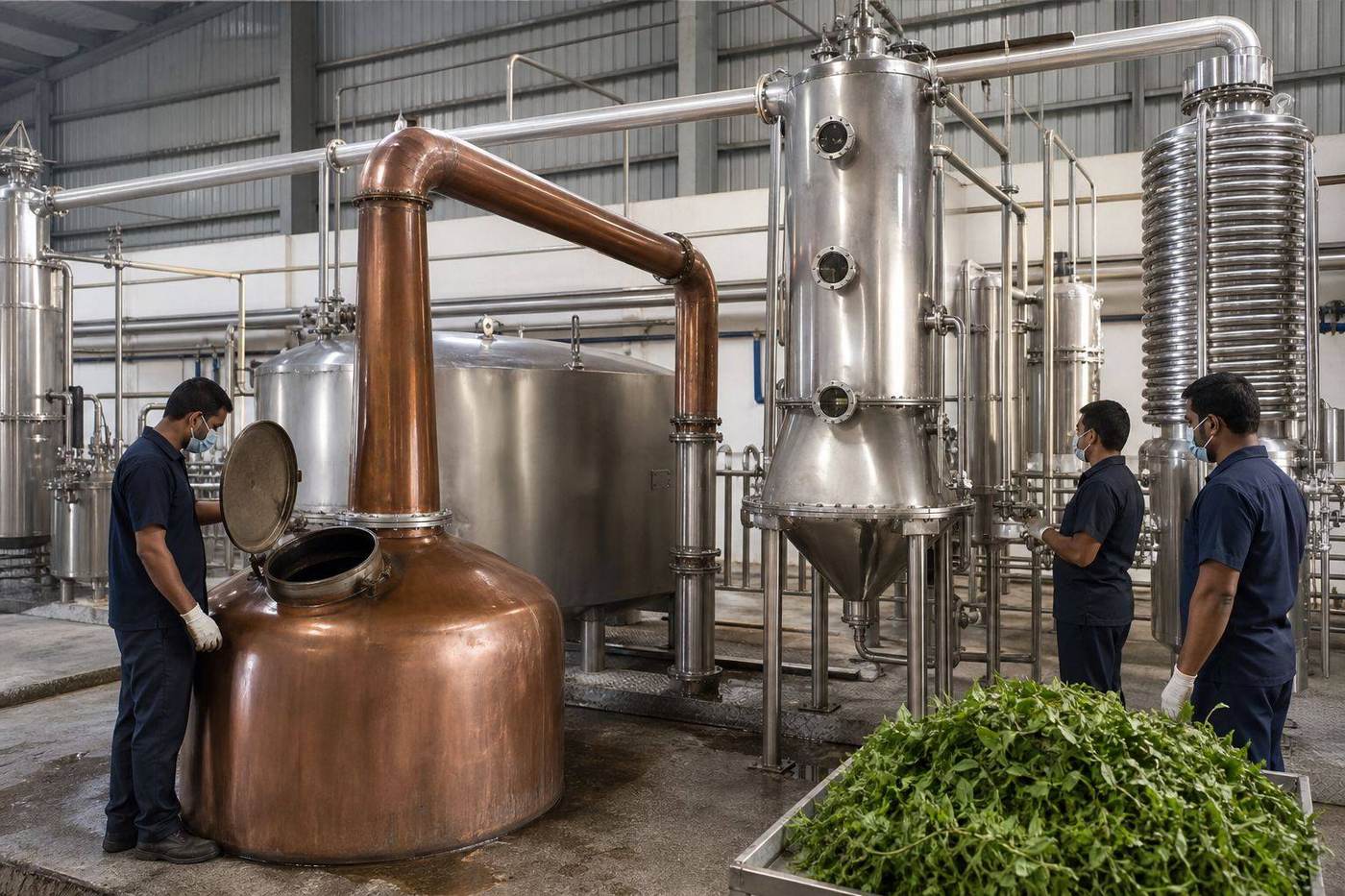
India's essential oil production is geographically concentrated by botanical, and understanding which cluster feeds which SKU is essential for sourcing decisions. The Uttar Pradesh mentha belt (Barabanki, Rampur, Badaun, Sambhal) is dedicated almost entirely to mint-type oils. Tamil Nadu and Andhra Pradesh host the largest lemongrass, citronella, and palmarosa growing and distillation acreage. Kerala and Karnataka combine spice cultivation with jasmine growing, feeding both spice-oil distilleries and jasmine concrete/absolute extraction units. Mysore, in Karnataka, carries India's sandalwood oil heritage. For the full registration and process sequence behind these clusters, see how to export essential oils from India.
Extraction method varies meaningfully by SKU and affects both price and shelf life: mint, grass, herb, and spice oils are produced almost exclusively by steam distillation; jasmine is produced by solvent extraction into concrete, followed by alcohol washing to yield absolute; and sandalwood is produced by steam or, for premium grades, hydro-distillation of aged heartwood. Buyers should understand which method applies to their target SKU, since it affects both the expected GC-MS profile and the realistic MOQ.
Production Cluster Reference by Essential Oil Product
Swipe →
Data table — swipe horizontally on small screens
| Product | Primary Cluster | Extraction Method | Typical Lead Time from Order to Dispatch |
|---|---|---|---|
| Mentha/Cornmint, Peppermint, Spearmint | Uttar Pradesh (Barabanki, Rampur, Badaun, Sambhal) | Steam distillation | 1–3 weeks (ex-stock common) |
| Lemongrass, Citronella, Palmarosa | Tamil Nadu, Andhra Pradesh | Steam distillation | 2–4 weeks |
| Basil, Eucalyptus | Karnataka, Kerala, Tamil Nadu | Steam distillation | 2–4 weeks |
| Black Pepper, Cardamom, Ginger, Turmeric, Celery Seed | Kerala, Karnataka | Steam distillation | 3–6 weeks (seasonal raw material) |
| Vetiver | Tamil Nadu (root-based) | Steam distillation (extended duration) | 4–8 weeks (root aging affects yield) |
| Jasmine Absolute | Karnataka, Tamil Nadu | Solvent extraction (concrete then absolute) | 4–8 weeks; harvest-season dependent |
| Sandalwood Oil | Karnataka (Mysore belt) | Steam or hydro-distillation of aged heartwood | Variable; supply-constrained |
SKU-by-SKU Product Deep Dive
The following profiles cover India's most commercially significant essential oil products in detail — specification, application, pricing tier, and country demand — so buyers can move directly from this guide to a specification-ready RFQ.
Mentha (Cornmint) Oil and Peppermint Oil
- Botanical Source
- Mentha arvensis (cornmint); Mentha piperita (peppermint)
- Key GC-MS Marker
- Menthol %; menthone, isomenthone ratios
- Indicative FOB
- USD 12–22/kg (cornmint); USD 18–30/kg (peppermint)
- Typical MOQ
- 200 kg–1 MT+ commercial; 100 g–1 kg samples
- Leading Markets
- USA, China, EU, Middle East
Mentha oil, distilled from Mentha arvensis (cornmint), is India's highest-volume essential oil export and the product most responsible for India's global leadership position in this category. Crude mentha oil is fractionated into various derivative products, including menthol crystals and dementholized oil, serving oral care, confectionery, pharmaceutical-adjacent, and flavor industry buyers worldwide. Peppermint oil, from Mentha piperita, is a related but distinct product with its own menthol/menthone GC-MS profile, commanding a price premium over standard cornmint oil and serving aromatherapy and premium flavor applications in addition to confectionery.
Both oils are graded primarily on menthol content by gas chromatography, with buyers specifying acceptable ranges depending on end use — oral care and confectionery buyers often want higher menthol content for cooling sensation, while some pharmaceutical-adjacent buyers require tighter, narrower specification bands.
Spearmint Oil
- Botanical Source
- Mentha spicata
- Key GC-MS Marker
- Carvone %
- Indicative FOB
- USD 20–35/kg
- Typical MOQ
- 25–180 kg trial; 200 kg+ commercial
- Leading Markets
- USA, EU
Spearmint oil, distilled from Mentha spicata, is graded primarily on carvone content by GC-MS and is distinct from menthol-dominant mint oils in both aroma profile and application — it serves confectionery, oral care, and food flavoring buyers who want a sweeter, less cooling mint character than peppermint or cornmint oil. Indian spearmint oil supply is smaller in volume than mentha/cornmint but benefits from the same UP-belt distillation infrastructure and export logistics.
Lemongrass Oil and Citronella Oil
- Botanical Source
- Cymbopogon flexuosus (lemongrass); C. winterianus (citronella)
- Key GC-MS Marker
- Citral % (lemongrass); citronellal/geraniol % (citronella)
- Indicative FOB
- USD 10–20/kg (lemongrass); USD 8–16/kg (citronella)
- Typical MOQ
- 25–180 kg trial; 200 kg+ commercial
- Leading Markets
- USA, EU, Japan, Middle East
Lemongrass oil, distilled from Cymbopogon flexuosus, is graded on citral content by GC-MS and is one of India's most versatile mid-tier export oils, serving fragrance, personal care, household product, and aromatherapy buyers simultaneously. Citronella oil, from Cymbopogon winterianus, is graded on citronellal and geraniol content and is closely associated with insect repellent and household product applications, though it also serves fragrance and personal care formulation. Both oils are produced in the same Tamil Nadu and Andhra Pradesh belt and compete internationally with Sri Lankan and Chinese production, making consistent GC-MS documentation and reliable supply continuity important differentiators for Indian exporters.
Palmarosa Oil
- Botanical Source
- Cymbopogon martini
- Key GC-MS Marker
- Geraniol %
- Indicative FOB
- USD 30–55/kg
- Typical MOQ
- 25–100 kg trial; 200 kg+ commercial
- Leading Markets
- EU, USA, Middle East
Palmarosa oil, distilled from Cymbopogon martini, is graded on geraniol content by GC-MS and occupies a niche premium position among aromatic grass oils — its rose-like aroma profile makes it valuable in fine fragrance and soap perfumery, commanding meaningfully higher pricing than lemongrass or citronella despite coming from a related grass genus. Indian production is concentrated in Tamil Nadu and parts of Karnataka, with volumes smaller than lemongrass but steady premium demand from fragrance houses seeking a natural rose-adjacent note at lower cost than true rose oil.
Basil Oil (Ocimum)
- Botanical Source
- Ocimum basilicum (chemotype varies)
- Key GC-MS Marker
- Methyl chavicol % or linalool % (chemotype-dependent)
- Indicative FOB
- USD 25–50/kg
- Typical MOQ
- 25–100 kg trial
- Leading Markets
- USA, EU, Middle East
Basil oil, distilled from Ocimum basilicum and related chemotypes, is graded on methyl chavicol (estragole) or linalool content by GC-MS depending on the specific chemotype grown and the buyer's intended application — methyl chavicol chemotypes suit certain flavor and fragrance uses, while linalool-dominant chemotypes are preferred for wellness and aromatherapy applications. Buyers should always confirm which chemotype a supplier is offering, since the two profiles are not interchangeable despite sharing the same botanical name.
Eucalyptus Oil
- Botanical Source
- Eucalyptus globulus
- Key GC-MS Marker
- Cineole (1,8-cineole) %
- Indicative FOB
- USD 8–18/kg
- Typical MOQ
- 25–180 kg trial; 200 kg+ commercial
- Leading Markets
- USA, EU, Australia
Eucalyptus oil, primarily from Eucalyptus globulus grown or naturalized in parts of Karnataka, Kerala, and Tamil Nadu, is graded on cineole (1,8-cineole) content by GC-MS. It is a versatile mid-tier oil serving aromatherapy, pharmaceutical-adjacent, and household product buyers, benefiting from broad global brand recognition and straightforward specification requirements compared to more chemically complex oils.
Vetiver Oil
- Botanical Source
- Chrysopogon zizanioides
- Key GC-MS Marker
- Vetiverol content; aging/distillation profile
- Indicative FOB
- USD 120–250/kg
- Typical MOQ
- 1–25 kg trial
- Leading Markets
- France, USA, Middle East
Vetiver oil, distilled from the roots of Chrysopogon zizanioides, is a distinctive fine-fragrance oil valued for its deep, earthy, woody aroma profile that improves with distillation duration and root aging. Vetiver is technically demanding to produce well — longer distillation times and mature root stock both affect yield and quality — which keeps supply comparatively limited and pricing at a meaningful premium over the aromatic grass oils, despite vetiver being botanically related to the same grass family.
Jasmine Absolute
- Botanical Source
- Jasminum grandiflorum / Jasminum sambac
- Extraction Method
- Solvent extraction (concrete, then absolute)
- Indicative FOB
- USD 3,000–6,000+/kg (grade-dependent)
- Typical MOQ
- 0.5–5 kg trial
- Leading Markets
- France, USA, Middle East
Jasmine absolute, extracted from Jasminum grandiflorum or Jasminum sambac flowers through solvent extraction into concrete followed by alcohol washing, is one of India's highest-value-per-kilogram essential oil exports. Flower-to-absolute yield ratios are extremely low, requiring large volumes of hand-picked flowers to produce a single kilogram of absolute, which explains gram-level pricing in premium grades. Buyers in fine fragrance houses evaluate jasmine absolute primarily by olfactory profile alongside standard identity and purity testing rather than a single dominant GC-MS marker, given the complexity of jasmine's aroma chemistry.
Sandalwood Oil
- Botanical Source
- Santalum album
- Key GC-MS Marker
- Santalol %
- Indicative FOB
- USD 1,500–3,500+/kg (age and grade-dependent)
- Typical MOQ
- 0.1–5 kg trial
- Leading Markets
- USA, EU, Middle East, Japan
Sandalwood oil, distilled from the heartwood of aged Santalum album trees primarily in the Mysore belt of Karnataka, is graded on santalol content by GC-MS and remains one of India's most prestigious essential oil exports. Historical over-harvesting of wild trees has constrained supply and shifted much of current production toward cultivated plantations, which require decades to mature — a structural supply constraint that keeps sandalwood among the highest-priced oils in the Indian export basket and makes supply-chain transparency an increasingly important buyer requirement.
Spice-Derived Oils: Black Pepper, Cardamom, Ginger, Turmeric, Celery Seed
- Botanical Sources
- Piper nigrum, Elettaria cardamomum, Zingiber officinale, Curcuma longa, Apium graveolens
- Key GC-MS Markers
- Varies by oil — beta-caryophyllene, cineole, zingiberene, turmerone, limonene
- Indicative FOB
- USD 60–200/kg (varies by oil and yield)
- Typical MOQ
- 10–50 kg trial; seasonal raw material
- Leading Markets
- USA, EU, Japan, Middle East
India's spice-growing base in Kerala and Karnataka supports a distinct category of steam-distilled spice essential oils that serve flavor, pharmaceutical-adjacent, and functional food buyers. Black pepper oil is graded on piperine-adjacent volatile profile and beta-caryophyllene content; cardamom oil on 1,8-cineole and terpinyl acetate content; ginger oil on zingiberene and gingerol-adjacent volatile markers; turmeric oil on turmerone content; and celery seed oil on limonene and sedanolide content. Most spice-oil buyers require FSSAI food-grade documentation given the ingestible end use of many applications.
Pricing Analysis
Buyer Tip
Essential oil pricing across India's product basket spans nearly three orders of magnitude — from roughly USD 8/kg for citronella to several thousand dollars per kilogram for premium jasmine absolute and sandalwood. This spread reflects raw material abundance and extraction efficiency at one end and extreme rarity, low extraction yield, and craft-level production at the other. Buyers new to the category should benchmark any quote against the marker-compound specification behind it — a lemongrass oil quoted at the top of its range should show correspondingly higher citral content, not simply reflect a supplier's arbitrary pricing.
Seasonal and crop-driven price movement is most pronounced for mentha-type oils, which are an annual crop sensitive to UP monsoon timing and acreage decisions, and for spice-derived oils, which track underlying spice commodity price cycles. Jasmine absolute and sandalwood pricing is driven less by annual seasonality and more by structural supply constraints — flower-to-absolute yield ratios for jasmine, and tree maturation timelines for sandalwood — that do not respond quickly to demand increases.
FOB Pricing Reference Across India's Top Essential Oil Exports (Indicative, 2025–2026)
Swipe →
Data table — swipe horizontally on small screens
| Product | Key Specification | Indicative FOB Range (USD/kg) | Primary Price Driver |
|---|---|---|---|
| Mentha/Cornmint Oil | Menthol % by GC | USD 12–22 | UP crop yield; global menthol demand |
| Peppermint Oil | Menthol/menthone ratios | USD 18–30 | Distillation quality; menthol % |
| Spearmint Oil | Carvone % | USD 20–35 | Carvone concentration; supply availability |
| Lemongrass Oil | Citral % | USD 10–20 | Citral content; crop volume |
| Citronella Oil | Citronellal/geraniol % | USD 8–16 | Yield; competing origins |
| Palmarosa Oil | Geraniol % | USD 30–55 | Geraniol %; niche production volume |
| Basil Oil | Methyl chavicol/linalool % | USD 25–50 | Chemotype; extraction consistency |
| Eucalyptus Oil | Cineole % | USD 8–18 | Cineole content; leaf yield |
| Spice-derived Oils | Marker compound % (varies) | USD 60–200 | Spice price cycles; extraction efficiency |
| Vetiver Oil | Vetiverol/aging profile | USD 120–250 | Root age; distillation duration |
| Jasmine Absolute | Olfactory profile; extraction grade | USD 3,000–6,000+ | Flower-to-absolute yield ratio; harvest season |
| Sandalwood Oil | Santalol % | USD 1,500–3,500+ | Tree age; santalol %; supply scarcity |
Expert Insight: Matching Product Tier to Buyer Sophistication
Expert Insight Box
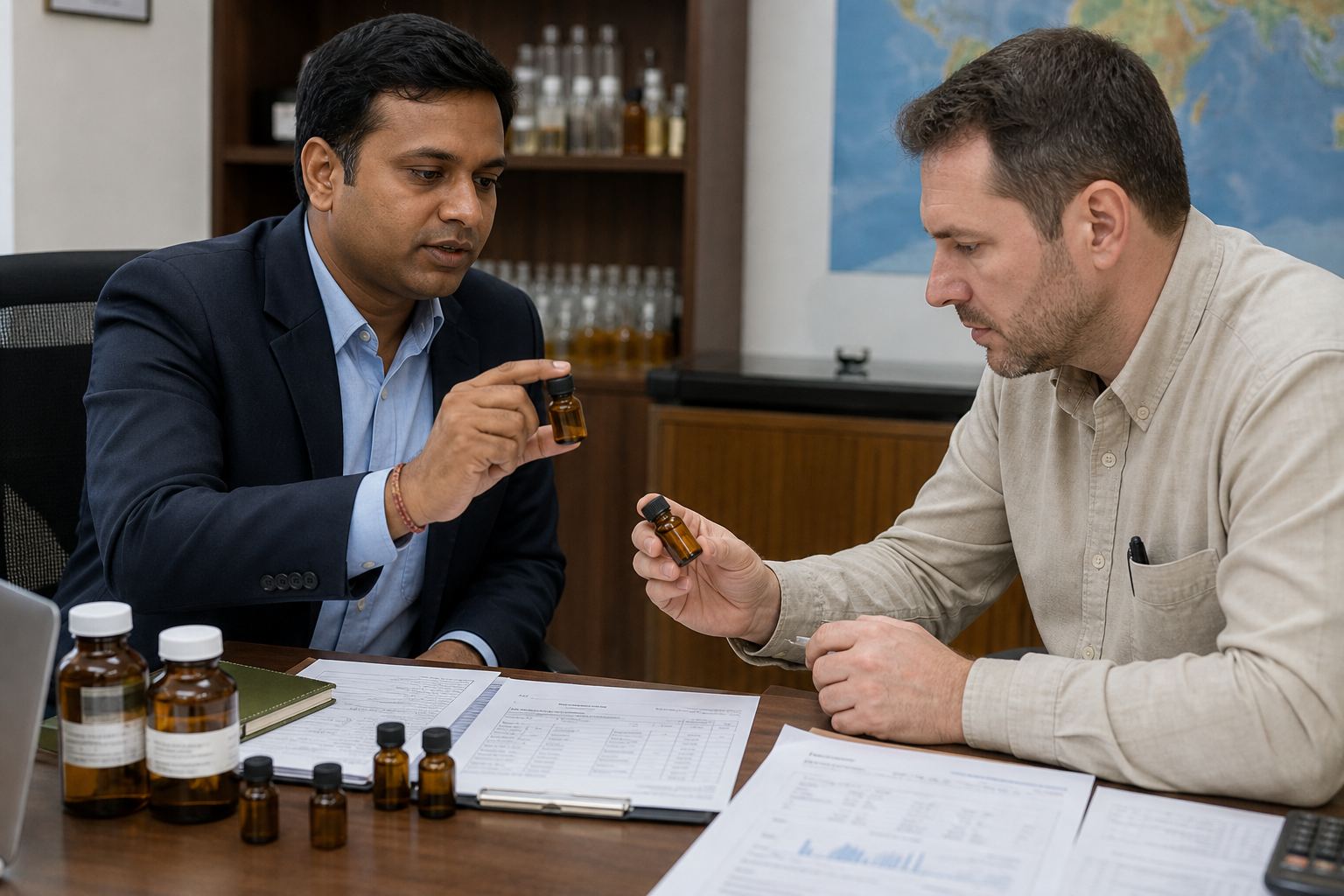
Saurabh Mittal, Founder of Altus Exports, advises new-to-category buyers to start their Indian essential oil sourcing with mid-tier products — lemongrass, eucalyptus, or citronella — before moving to premium SKUs like jasmine absolute or sandalwood. Mid-tier oils have more forgiving MOQ economics, wider manufacturer choice, and a shorter learning curve for evaluating GC-MS documentation, which builds sourcing competence before a buyer commits significant capital to gram-priced premium oils.
He also notes that buyers frequently misjudge premium-oil economics on a first inquiry: a jasmine absolute or sandalwood quote that looks expensive per kilogram is often quite reasonable per unit of finished fragrance formulation, since these oils are used in small percentages within a blend. Comparing premium essential oils to commodity oils on a simple per-kilogram basis, without accounting for use-rate in the final application, leads buyers to reject perfectly fair quotes.
MOQ Analysis
Buyer Tip
MOQ structures across India's essential oil basket scale inversely with rarity. High-volume commodity oils like mentha benefit from continuous distillation capacity in the UP belt, allowing commercial orders from 200 kg to 1 metric tonne or more. Mid-tier aromatic grass and herb oils typically see trial MOQs of 25–180 kg, reflecting batch distillation economics without the extreme rarity constraints of premium oils. Spice-derived oils often carry seasonal raw material constraints tied to the underlying spice harvest calendar, affecting both MOQ and lead time.
Premium oils occupy a fundamentally different MOQ structure: jasmine absolute and sandalwood are frequently transacted in gram-to-kilogram quantities given their price per unit and constrained annual production volume, while vetiver sits between the mid-tier and premium categories with trial MOQs typically in the low double-digit kilogram range.
MOQ Guidelines by Essential Oil Product
Swipe →
Data table — swipe horizontally on small screens
| Product | Evaluation Sample | Trial MOQ | Typical Commercial Order |
|---|---|---|---|
| Mentha/Cornmint, Peppermint, Spearmint | 100 g–1 kg | 25–180 kg | 200 kg–1 MT+ |
| Lemongrass, Citronella, Palmarosa, Basil, Eucalyptus | 100 g–1 kg | 25–180 kg | 200 kg–1 MT (mid-volume oils) |
| Spice-derived Oils (Black Pepper, Cardamom, Ginger, Turmeric, Celery Seed) | 100 g–500 g | 10–50 kg | 50–500 kg (seasonal raw material) |
| Vetiver Oil | 50–100 g | 1–25 kg | 25–100 kg |
| Jasmine Absolute | 10–50 g | 0.5–5 kg | 5–25 kg (limited annual supply) |
| Sandalwood Oil | 10–50 g | 0.1–5 kg | 5–50 kg (supply-constrained) |
Packaging Standards
Export Tip
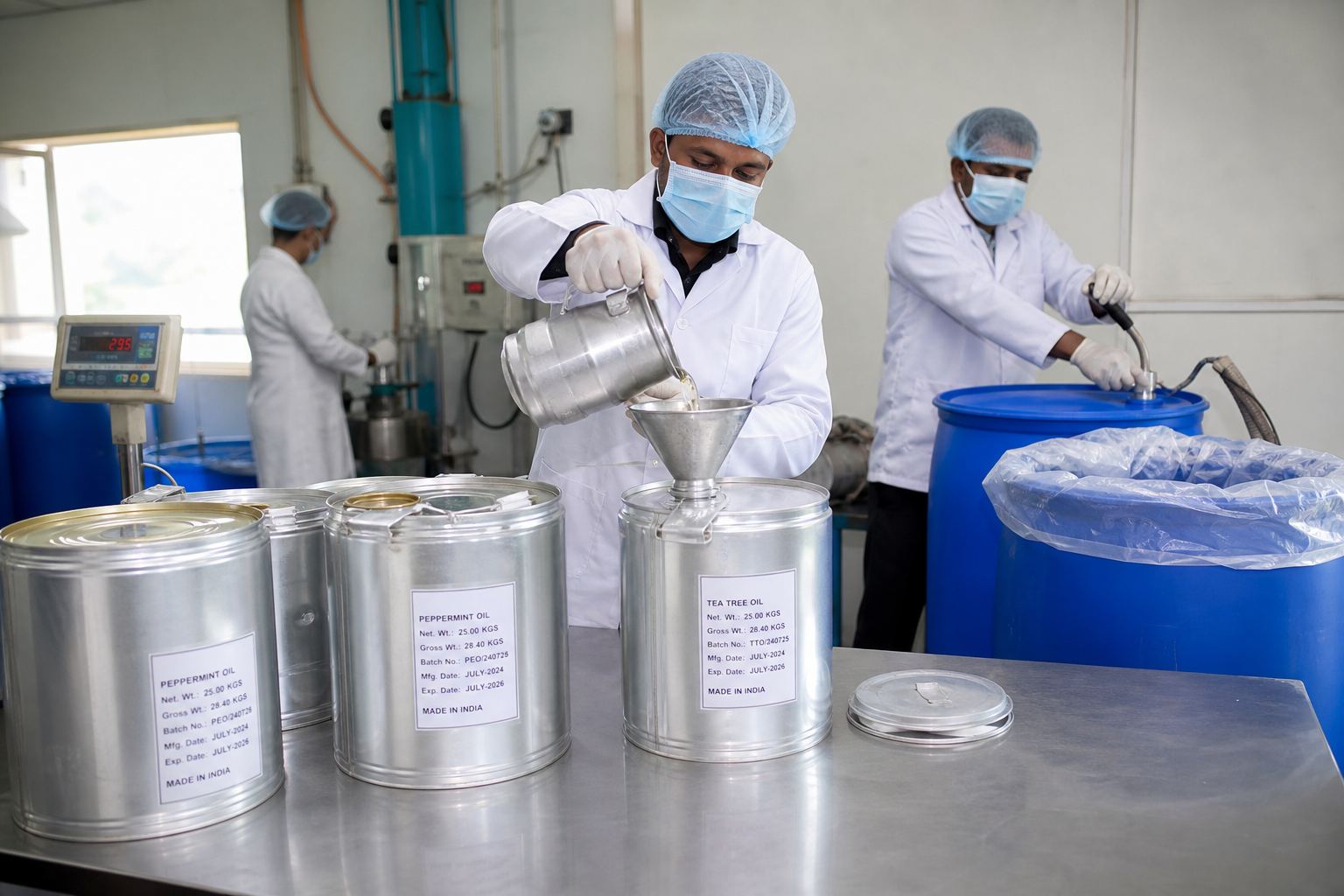
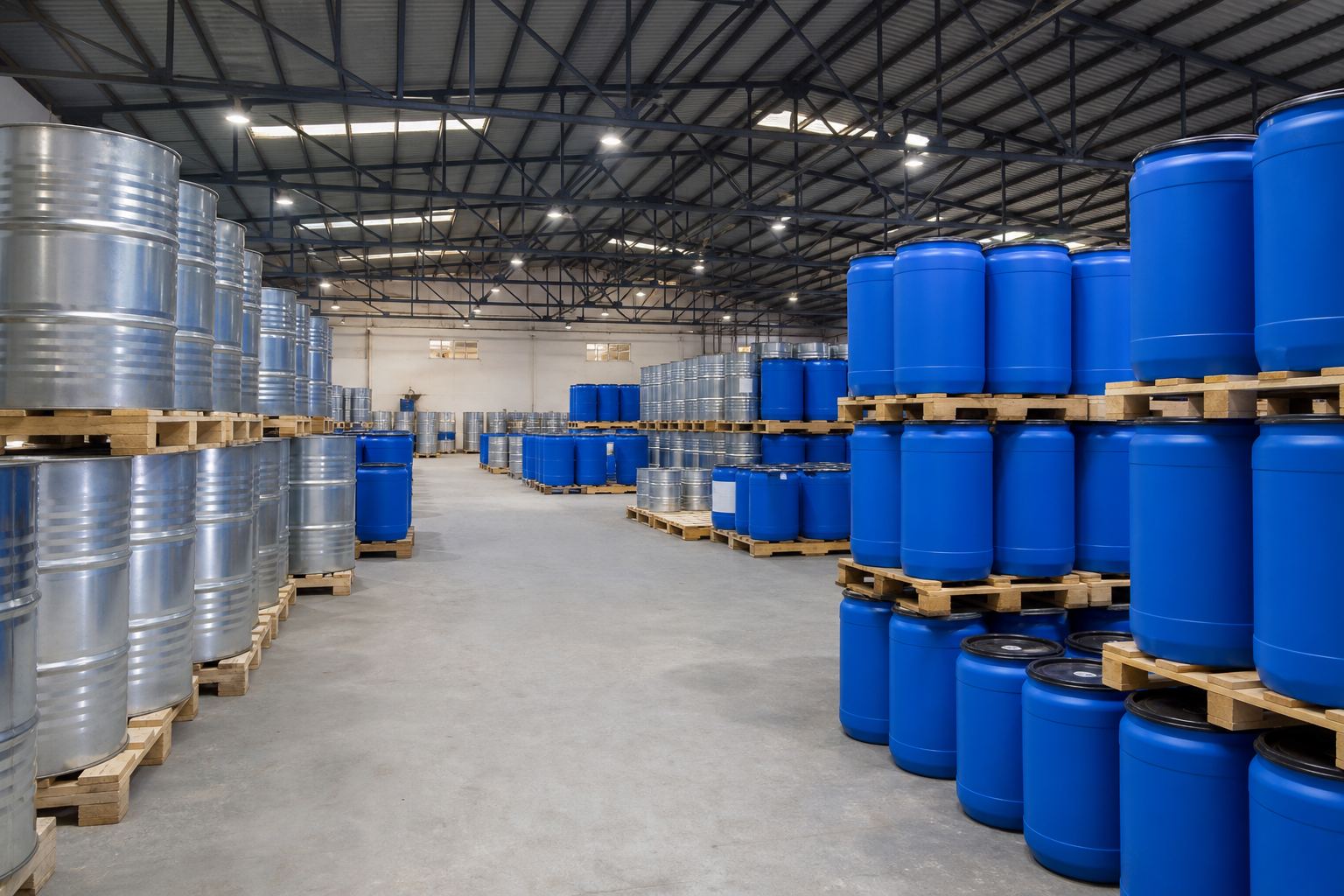
Packaging choice tracks product tier and chemical sensitivity across India's essential oil basket. High-volume commodity and mid-tier oils — mentha, lemongrass, citronella, eucalyptus — export in 25 kg, 50 kg, or 180 kg aluminium, galvanized iron (GI), HDPE, or epoxy-lined mild-steel drums, chosen for chemical compatibility with the specific oil. Corrosive or high-terpene oils require epoxy-lined or non-reactive containers to prevent contamination that would otherwise show up as an unexpected peak on the buyer's incoming GC-MS test.
Premium oils use correspondingly smaller, higher-protection packaging: jasmine absolute and sandalwood are typically packed in amber glass bottles or small lacquered tins even at commercial quantities, given their gram-to-kilogram order sizes and extreme value density, which makes drum-scale packaging both unnecessary and impractical. Nitrogen blanketing is used across tiers for oxidation-sensitive oils, and all packaging — regardless of size — must be labelled with botanical name, batch number, distillation or extraction date, net weight, and country of origin.
Packaging Formats by Essential Oil Product Tier
Swipe →
Data table — swipe horizontally on small screens
| Product Tier | Standard Packaging | Typical Net Weight | Key Requirement |
|---|---|---|---|
| Commodity (mentha, cornmint) | Aluminium or GI drum | 25 kg, 50 kg, 180 kg | Tamper-evident seal; batch labelling |
| Mid-tier (lemongrass, citronella, palmarosa, basil, eucalyptus) | Aluminium, HDPE, or epoxy-lined drum | 25 kg, 50 kg | Chemical-compatibility check per oil |
| Spice-derived oils | HDPE or epoxy-lined drum | 25 kg, 50 kg | Food-grade packaging for FSSAI-linked shipments |
| Vetiver | Aluminium drum or amber glass jerry | 5–25 kg | Protect from light and oxidation |
| Jasmine absolute | Amber glass bottle or lacquered tin | 10 g–5 kg | Light-blocking; tight-sealing closure |
| Sandalwood oil | Amber glass bottle or small aluminium tin | 10 g–5 kg | Light-blocking; verify authenticity seal |
Container Loading Details
Export Tip
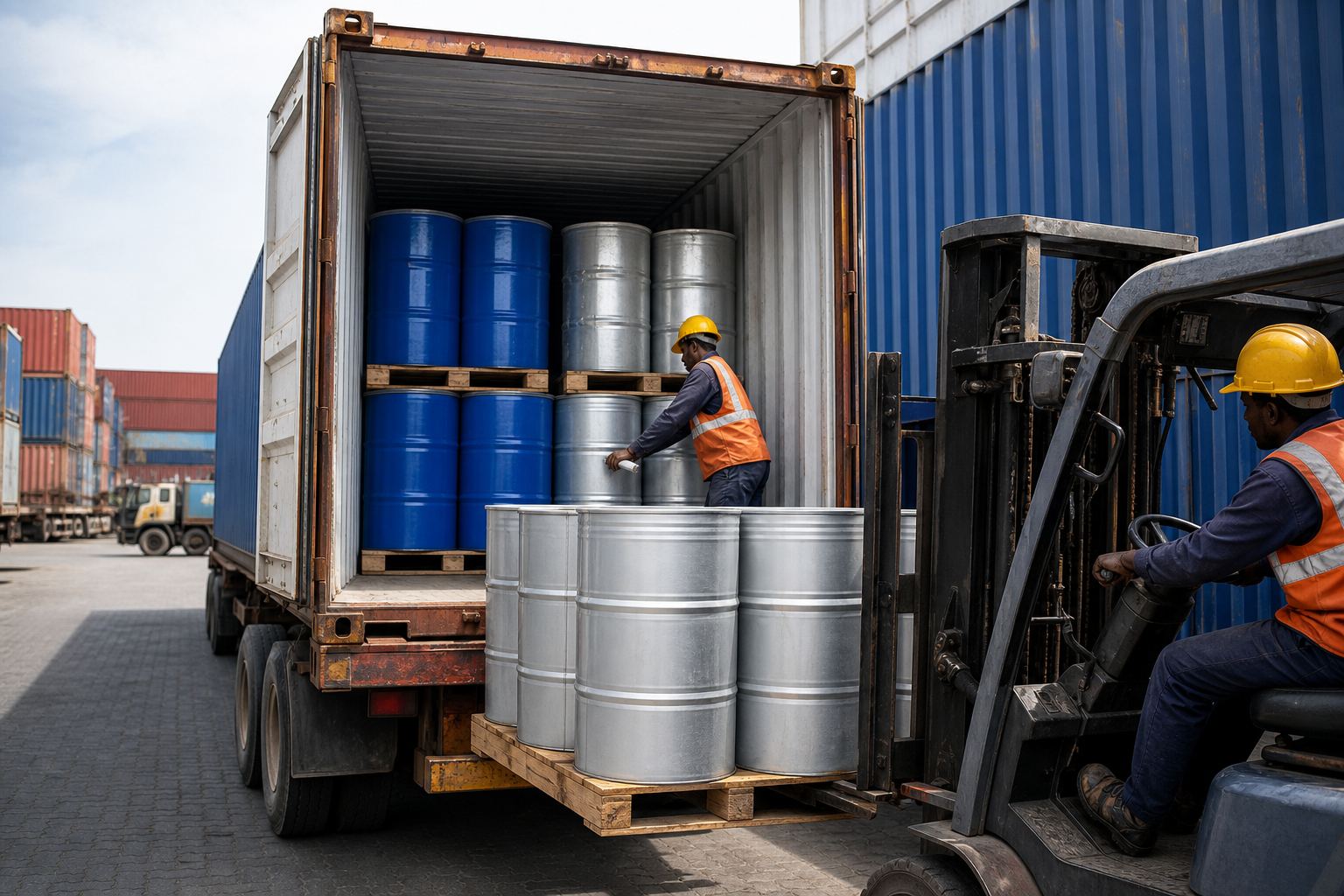
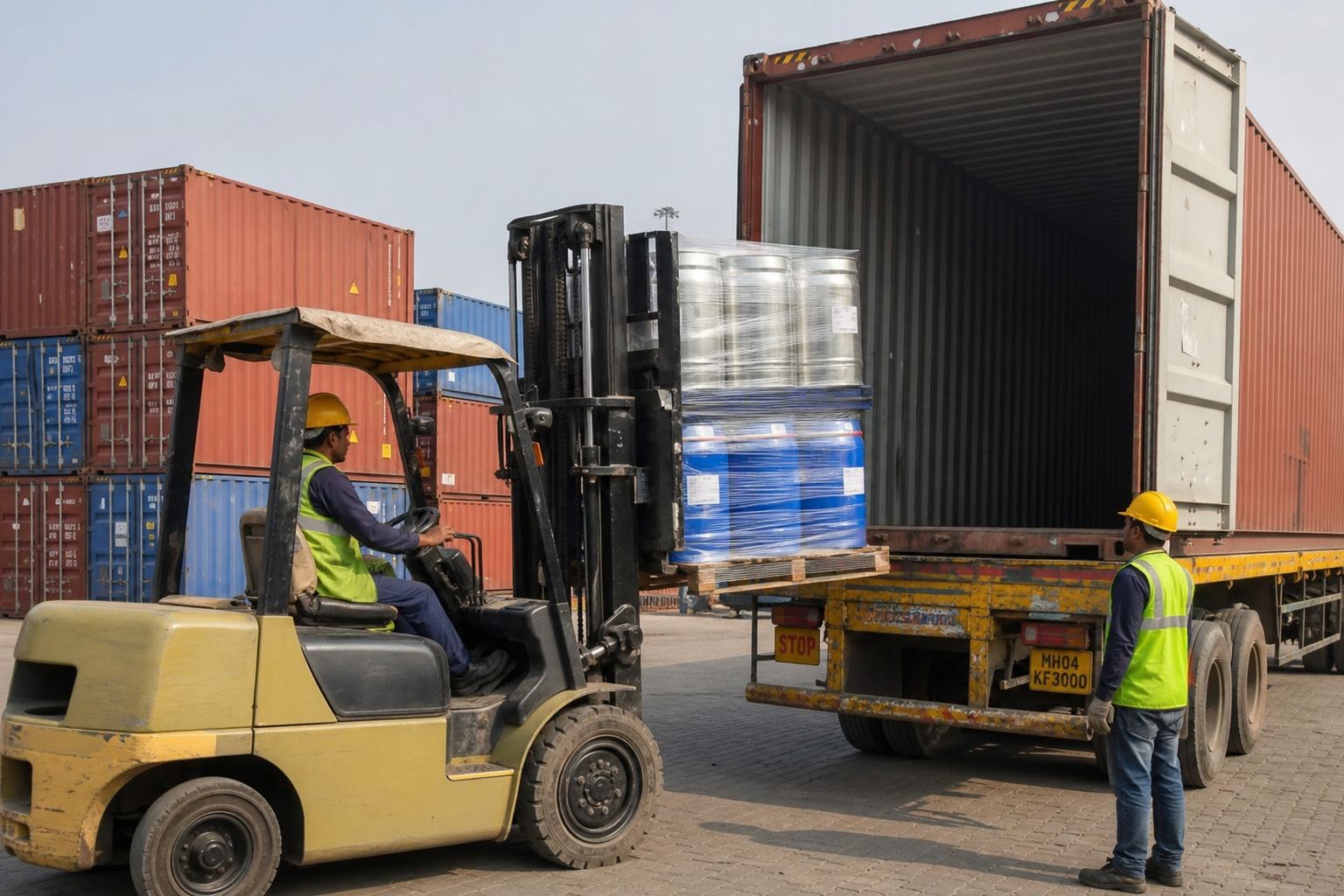
Container loading economics differ sharply between commodity/mid-tier drummed oils and premium gram-priced oils. For mentha, lemongrass, citronella, and similar drummed products, a 20-foot FCL is typically weight-limited rather than cube-limited — actual payload depends on drum density and packaging format, and should always be confirmed with the freight forwarder rather than assumed from a standard drum count. Drums are palletized upright with stretch-wrap securing and must remain upright throughout transit to avoid seal failure and oxidation exposure.
Jasmine absolute and sandalwood, by contrast, almost never fill even a fraction of a container on their own given their gram-to-kilogram order sizes — these premium oils typically ship as secured, insured air-freight parcels or as a small component within a mixed-cargo consolidation rather than as standalone FCL or LCL bookings.
Container and Shipment-Unit Reference by Product Tier
Swipe →
Data table — swipe horizontally on small screens
| Product Tier | Typical Shipment Unit | Loading Note |
|---|---|---|
| Mentha/Cornmint and other high-volume oils | 20ft/40ft FCL (weight-limited) | Palletized upright; confirm exact MT with forwarder |
| Mid-tier aromatic grass and herb oils | LCL or partial FCL | Palletized upright; consolidation common for trial-to-mid volumes |
| Spice-derived oils | LCL or air freight for smaller lots | Food-grade handling if FSSAI-linked shipment |
| Vetiver | LCL or air freight | Small pallet or secured carton; upright |
| Jasmine absolute, Sandalwood | Secured air-freight parcel | Insured; rarely justifies FCL/LCL booking alone |
Shipping Methods
Export Tip
Sea freight in FCL or LCL containers remains the standard mode for India's higher-volume essential oil exports — mentha, lemongrass, citronella, eucalyptus, and spice-derived oils — moving through Nhava Sheva, Mundra, Chennai, and Kolkata depending on production cluster and destination market. These shipments should be kept cool, dark, upright, and sealed throughout transit, since heat and prolonged light exposure both degrade the GC-MS profile that buyers approved at sample stage.
Air freight is the default mode for premium, low-volume oils — jasmine absolute, sandalwood, and vetiver — where value density easily justifies the cost premium over sea freight, and where buyers in fine fragrance houses are often working against tight formulation deadlines that a multi-week ocean transit cannot accommodate. Courier services handle sample shipments across every product tier, typically in amber glass bottles with correct customs documentation.
Shipping Method by Essential Oil Product
Swipe →
Data table — swipe horizontally on small screens
| Product | Typical Shipping Mode | Transit Consideration |
|---|---|---|
| Mentha, Lemongrass, Citronella, Eucalyptus | Sea FCL/LCL | 18–30 days depending on destination; keep upright, cool, dark |
| Spice-derived oils | Sea LCL or air for smaller lots | Food-grade handling if FSSAI-linked |
| Vetiver | Air freight or sea LCL | Secure crating; insurance recommended |
| Jasmine absolute, Sandalwood | Air freight (secured, insured) | 3–7 days; value density justifies air cost |
| Samples (all products) | Courier | 2–5 business days; amber glass, correct paperwork |
Certifications
Compliance Notes
Certification requirements vary by product and application, but a consistent baseline applies across India's essential oil export basket. IEC from DGFT is mandatory for all exporters. Chemexcil RCMC is the sector registration for essential oils generally. FSSAI licensing applies specifically to oils destined for food, flavor, or ingestible use — mentha derivatives, spearmint, spice-derived oils, and some basil applications most commonly fall into this category.
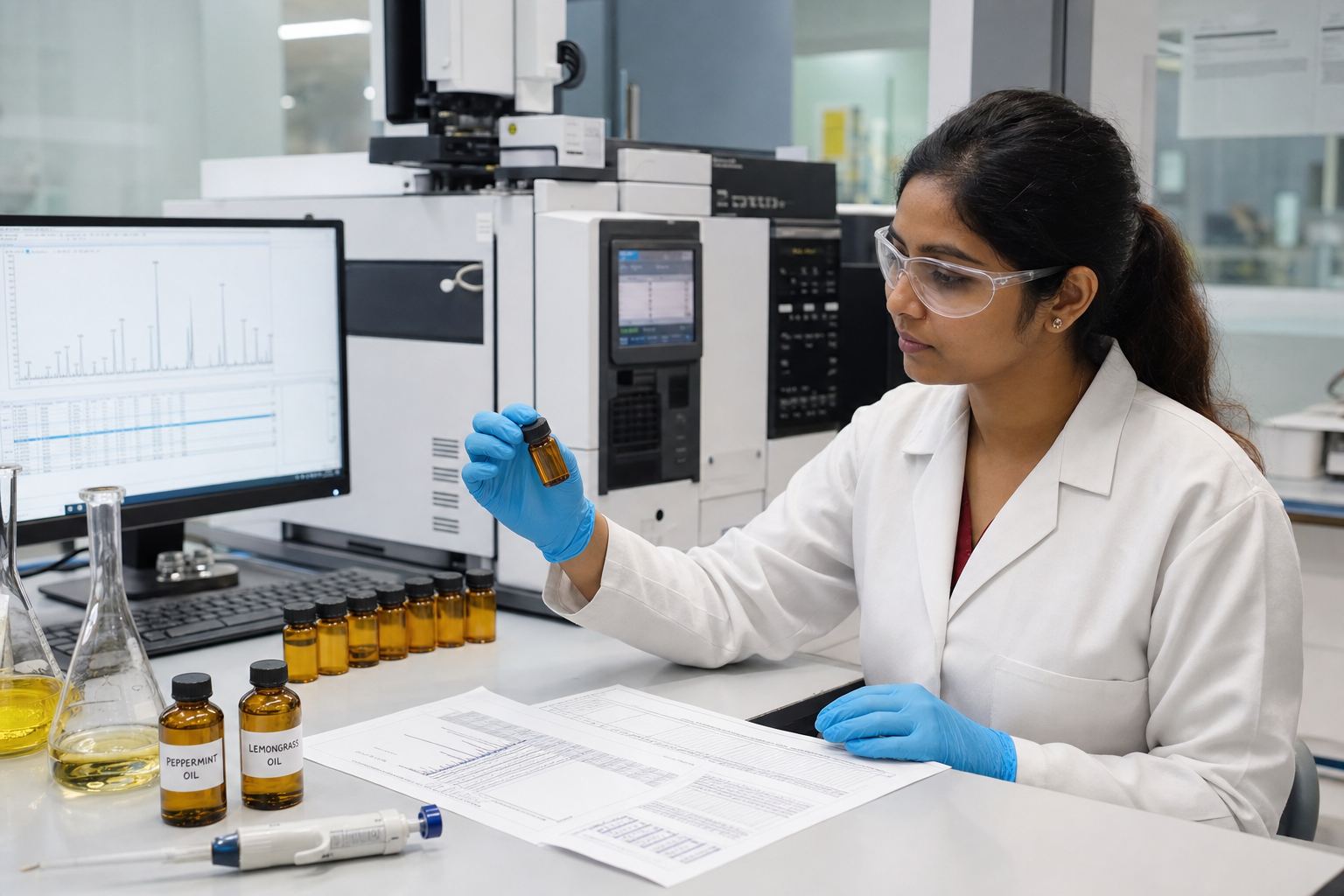
IFRA compliance is most relevant to fragrance-use products — lemongrass, citronella, palmarosa, jasmine absolute, sandalwood, and vetiver — where buyers expect suppliers to confirm alignment with current restricted-constituent and use-level standards. REACH registration or a REACH-compliant safety data sheet applies to any EU-bound shipment regardless of product or end use. And a lot-specific GC-MS Certificate of Analysis is the universal quality document that every serious buyer requires, regardless of which of these formal certifications apply to a given SKU.
Certification Relevance by Essential Oil Product
Swipe →
Data table — swipe horizontally on small screens
| Product | FSSAI Relevance | IFRA Relevance | REACH Relevance (EU-bound) | GC-MS COA |
|---|---|---|---|---|
| Mentha, Peppermint, Spearmint | High (food/flavor use) | Moderate (some fragrance use) | Mandatory if EU-bound | Always required |
| Lemongrass, Citronella, Palmarosa | Low | High (fragrance/personal care use) | Mandatory if EU-bound | Always required |
| Basil, Eucalyptus | Moderate | Moderate | Mandatory if EU-bound | Always required |
| Spice-derived oils | High (food/flavor use) | Low | Mandatory if EU-bound | Always required |
| Vetiver, Jasmine Absolute, Sandalwood | Low | High (fine fragrance use) | Mandatory if EU-bound | Always required |
Buyer Requirements
Buyer Requirements
Buyer expectations vary by product tier as much as by geography. Commodity and mid-tier oil buyers focus heavily on price consistency and supply continuity alongside standard GC-MS documentation, while premium-oil buyers place a much higher weight on olfactory quality, provenance, and long-term supply relationship stability given how few qualified suppliers exist for jasmine absolute and sandalwood at the grades they require.
Flavor and Food-Ingredient Buyers
Flavor houses and food manufacturers buying mentha derivatives, spearmint, and spice-derived oils require FSSAI export health certification, consistent GC-MS specification, and often request supply continuity commitments given how flavor formulations are locked into finished product recipes that cannot easily tolerate ingredient substitution.
Fragrance and Personal Care Buyers
Fragrance houses and personal care manufacturers buying lemongrass, citronella, palmarosa, jasmine absolute, sandalwood, and vetiver require IFRA compliance statements, GC-MS or olfactory-profile documentation as appropriate to the product, and — for EU-bound shipments — REACH-compliant safety data sheets.
Wellness and Aromatherapy Buyers
Wellness brands buying eucalyptus, lemongrass, and basil for aromatherapy applications typically request GC-MS COA and increasingly ask for organic or wildcrafted sourcing documentation to support premium retail positioning, alongside smaller, retail-ready trial quantities than industrial flavor or fragrance buyers.
Middle East Perfumery and Personal Care Buyers
Gulf buyers purchasing sandalwood and jasmine absolute for perfumery, alongside spice-derived oils for personal care and flavor applications, generally require GC-MS COA and increasingly request Halal-adjacent assurance for cosmetic-use products, with somewhat lighter overall documentation friction than EU buyers.
Country-wise Opportunities
Market Snapshot
Country opportunity in Indian essential oils is highly product-specific rather than uniform across the whole basket. The USA and China anchor mentha derivative demand; Germany and France lead fine fragrance demand for jasmine absolute, lemongrass, citronella, and palmarosa; the Middle East drives sandalwood and spice-oil demand; and Japan represents a smaller-volume, premium-price opportunity concentrated on sandalwood, jasmine absolute, and eucalyptus.
Country-wise Essential Oil Export Opportunities by Product
Swipe →
Data table — swipe horizontally on small screens
| Country/Region | Top Products in Demand | Certification Priority | Entry Strategy |
|---|---|---|---|
| USA | Mentha derivatives, lemongrass, eucalyptus, sandalwood | GC-MS COA; IFRA; FSSAI if food use | Flavor/fragrance trade shows; import trade data prospecting |
| China | Mentha/cornmint oil | GC-MS COA; standard customs documentation | Direct trade relationships; menthol-processing buyers |
| Germany / France | Jasmine absolute, lemongrass, citronella, palmarosa, mint oils | REACH; IFRA; GC-MS COA | Fragrance industry buyer relationships; long qualification cycle |
| UAE / Saudi Arabia | Sandalwood, jasmine absolute, spice oils | GC-MS COA; Halal-adjacent assurance | Perfumery and personal care manufacturer partnerships |
| Japan | Sandalwood, jasmine absolute, eucalyptus | GC-MS COA; precise lot documentation | Specialist importer relationships; long-term trust building |
Sourcing Checklist
Checklist
Use this checklist to move from product research to a specification-ready RFQ for any oil covered in this guide.
Buyer, Exporter, and Compliance Checklists
Checklist
Compliance Notes
Common Buyer Mistakes
Common Mistakes Box
Product-level mistakes in Indian essential oil sourcing tend to cluster around treating chemically distinct SKUs as interchangeable or misjudging price-tier economics.
Common Buyer Mistakes by Essential Oil Product Category
Swipe →
Data table — swipe horizontally on small screens
| Mistake | Consequence | How to Avoid |
|---|---|---|
| Confusing mentha/cornmint oil with true peppermint oil | Receiving a different menthol/menthone profile than expected for the application | Specify the exact botanical species, not just 'mint oil' |
| Not specifying basil chemotype | Receiving methyl chavicol-dominant oil when linalool-dominant was needed, or vice versa | Request the chemotype and GC-MS profile before ordering |
| Comparing jasmine absolute or sandalwood price per kilogram to commodity oils | Rejecting fair premium-oil quotes without accounting for low use-rate in finished formulations | Evaluate premium oils on a per-use-rate cost basis, not raw per-kilogram price |
| Assuming citronella and lemongrass are interchangeable | Wrong aroma and functional profile delivered to end formulation | Confirm citral (lemongrass) vs. citronellal/geraniol (citronella) marker requirement |
| Ordering sandalwood without provenance documentation | Risk of purchasing oil from unsustainably sourced or misrepresented wood | Request sourcing documentation and verify supplier reputation independently |
| Underestimating seasonal lead time for spice-derived oils | Missed production windows tied to spice harvest calendars | Plan orders around the relevant spice harvest season, not on-demand |
Expert Insight: Building a Multi-SKU Essential Oil Program
Expert Insight Box
Saurabh Mittal notes that buyers who eventually build the most resilient Indian essential oil supply programs rarely rely on a single SKU or a single supplier. Diversifying across a mid-tier commodity oil, a fragrance-grade grass oil, and one premium SKU spreads both supply risk and price-cycle exposure, since mentha-type oils, aromatic grasses, and premium heritage oils each respond to different seasonal and structural supply dynamics.
He also recommends that buyers scaling a multi-SKU program work with one accountable sourcing partner across the different production clusters — UP for mint, Tamil Nadu/Andhra Pradesh for grasses, Kerala/Karnataka for spice oils and jasmine, Mysore for sandalwood — rather than negotiating separately with distillers in each region, since consolidated documentation and logistics coordination materially reduce the operational overhead of a multi-product basket.
Future Market Trends
Key Statistics
Demand for natural flavor and fragrance ingredients continues to displace synthetic alternatives across FMCG categories, benefiting India's mint, grass, and spice oil exports broadly. Aromatherapy and wellness retail growth in North America and Europe is expanding demand for eucalyptus, lemongrass, and basil beyond traditional flavor and fragrance channels into direct-to-consumer wellness products, often in smaller, retail-ready packaging formats than industrial buyers typically request.
For premium oils, sustainability and traceability expectations are rising fastest around sandalwood, where buyers increasingly want documented evidence of legal, sustainable sourcing given the category's history of over-harvesting. Jasmine absolute demand remains anchored in fine fragrance houses with relatively stable, quality-driven purchasing patterns less sensitive to broader consumer trend cycles than mid-tier wellness oils.
Future Trends by Essential Oil Product Category (2026–2034)
Swipe →
Data table — swipe horizontally on small screens
| Trend | Products Most Affected | Strategic Response for Indian Exporters |
|---|---|---|
| Natural flavor/fragrance substitution for synthetics | Mentha, lemongrass, citronella, spice oils | Invest in consistent GC-MS documentation and supply continuity |
| Aromatheropy/wellness retail growth | Eucalyptus, lemongrass, basil | Develop retail-ready packaging and smaller commercial lot capability |
| Sustainability scrutiny for heritage woods | Sandalwood | Build and document sustainable, traceable sourcing chains |
| Tighter marker-compound specification by buyers | All GC-MS-graded oils | Strengthen in-house or partner GC-MS testing infrastructure |
| Stable premium demand for fine fragrance absolutes | Jasmine absolute, vetiver | Maintain olfactory grading consistency and supply relationships |
Conclusion
- Master the export process at how to export essential oils from India — IEC, Chemexcil RCMC, FSSAI, HS 3301, GC-MS testing, packaging, and logistics.
- Find the right destination for your oil with best countries for Indian essential oil exports.
- Source directly with how to source essential oils directly from India.
- Build certification advantage with Chemexcil and FSSAI registration benefits for essential oil exporters.
- Prepare documentation with essential oil export documentation checklist.
- Explore herbal-ayurvedic-products industry overview for broader Ayurvedic and botanical export context.
- Contact merchant exporter services or global sourcing partner services to begin your essential oil program with Altus Exports.
India's essential oil portfolio — spanning the world-leading mentha and cornmint category, versatile mid-tier aromatic grass and herb oils, high-value spice-derived oils, and the premium heritage tier of jasmine absolute and sandalwood — represents one of the most comprehensive single-origin essential oil sourcing opportunities available to international buyers. No competing origin matches India's combination of mentha volume leadership, aromatic grass depth, spice-growing base, and fine-fragrance heritage products within a single country.
Buyers who build lasting advantage from Indian essential oil sourcing are those who match their specification and documentation rigor to the product tier — GC-MS discipline for commodity and mid-tier oils, olfactory and provenance discipline for premium oils — and who work with verified distillers or a merchant exporter who has already conducted supplier qualification across the relevant production cluster.
Altus Exports supports international buyers with verified sourcing across India's primary essential oil clusters — the UP mentha belt, the Tamil Nadu/Andhra Pradesh aromatic grass region, the Kerala/Karnataka spice-and-jasmine cluster, and Mysore sandalwood producers — providing specification-matched supplier access, GC-MS COA verification, sample coordination, and end-to-end export logistics from Indian ports to international destinations.