
Essential Oil Export Documentation Checklist
By Saurabh Mittal, Founder, Altus Exports
A document-by-document operational checklist for exporting essential oils from India under HS 3301 — commercial invoice, packing list, shipping bill, bill of lading, Certificate of Origin, lot-specific GC-MS COA, Safety Data Sheet, IFRA and REACH extras, FSSAI health certificate for food-grade oils, and the exporter workflow that keeps mentha, lemongrass, jasmine, and spice oils clearing customs without delay.

Exporting essential oils from India is less about finding a buyer who likes the aroma and more about assembling a document pack that survives Indian customs filing, ocean carrier scrutiny, and destination-market compliance review on the same lot number. Under HS 3301 — covering peppermint and mint oils (3301.24/3301.25), other essential oils such as lemongrass, citronella, palmarosa, eucalyptus, basil, vetiver, sandalwood, and spice-derived oils (3301.29), and concretes/absolutes including jasmine (3301.30) — a single missing field on the commercial invoice or a GC-MS Certificate of Analysis that does not match the packing list batch can stall a shipment that took weeks to distill, drum, and book.
This article is a document-by-document operations checklist, not a repeat of the full export process or country ranking guides already published in the essential oils cluster. It walks through each paper and digital record an Indian exporter, merchant exporter, or international buyer should expect on a compliant HS 3301 shipment: commercial invoice, packing list, shipping bill, bill of lading or airway bill, Certificate of Origin, lot-specific GC-MS COA, Safety Data Sheet (SDS), IFRA and REACH extras where applicable, FSSAI export health certificate for food/flavor-grade oils, and the post-shipment pre-alert workflow that prevents import-side surprises.
Altus Exports operates as a merchant exporter and global sourcing partner for essential oils from India, aligning document packs to buyer segment — fragrance house, flavor house, wellness brand, or industrial formulator — before drums leave the distillery. Use this checklist alongside how to export essential oils from India for registration sequencing and Chemexcil and FSSAI registration benefits for credential context.
Key Takeaways
Summary Box
Executive Summary
Summary Box
Essential oil export documentation sits at the intersection of Indian export law, carrier requirements, and buyer-segment compliance. An exporter with valid IEC and Chemexcil RCMC can still lose a shipment's commercial value if the commercial invoice declares HS 3301.29 while the shipping bill lists a different eight-digit line, or if the GC-MS COA references batch EO-2026-0412 while the packing list lists batch EO-2026-0413. This guide sequences each document in the order it is typically prepared, reviewed, and transmitted — from internal QC release through CHA filing, carrier handoff, and buyer pre-alert.
The document pack for a standard drummed essential oil export typically includes eight core records plus two to four conditional extras. Core records: commercial invoice, packing list, shipping bill (filed via ICEGATE), bill of lading or airway bill, Certificate of Origin, lot-specific GC-MS COA, and exporter IEC/Chemexcil references on letterhead where buyers request them. Conditional extras: Safety Data Sheet (SDS), IFRA compliance statement (fragrance use), REACH registration reference or Only Representative letter (EU), FSSAI export health certificate (food/flavor grade), phytosanitary certificate (when destination or product triggers plant-health rules), and insurance certificate when shipping CIF.
Master Document Checklist: Essential Oil Export (HS 3301)
Swipe →
Data table — swipe horizontally on small screens
| Document | Prepared By | When Required | Must Match On |
|---|---|---|---|
| Commercial invoice | Exporter | Every shipment | PO, HS code, batch, weights, value |
| Packing list | Exporter/packer | Every shipment | Invoice batch, drum serials, net/gross weights |
| Shipping bill | CHA via ICEGATE | Before port gate-in | Invoice HS code, qty, value, IEC |
| Bill of lading / AWB | Carrier/forwarder | At shipment | Package count, gross weight, consignee |
| Certificate of Origin | Chamber/FIEO | Most international buyers | Invoice description, HS, origin |
| GC-MS COA (+ chromatogram) | Lab/distiller | Every commercial lot | Batch on invoice and drums |
| SDS (GHS) | Exporter/manufacturer | EU; increasingly global | Product identity, REACH refs if EU |
| IFRA statement | Exporter | Fragrance/cosmetic end use | COA lot, application category |
| FSSAI health certificate | FSSAI-authorised process | Food/flavor-grade oils | Same premises as production |
| Insurance certificate | Insurer/broker | CIF and some CIP terms | Invoice value, cargo description |
Commercial Invoice: What Must Appear Line by Line
The commercial invoice is the legal sale record customs uses to assess value and the buyer's accounts payable team uses to release payment. For essential oils, every field must be precise because HS 3301 subheadings differ materially in duty treatment and buyer qualification. Exporter legal name, address, IEC, and GSTIN; buyer legal name and full delivery address; invoice number and date; purchase order reference; payment terms and Incoterm (FOB Nhava Sheva, CIF Hamburg, etc.); product description with botanical name and common name; correct eight-digit HS/ITC code; quantity in kilograms (net and, where required, gross); unit price and total value in agreed currency; country of origin (India); batch/lot number matching drums and COA; and signature or digital authorization.
Avoid generic descriptions like 'essential oil' without botanical identity — 'Mentha arvensis (cornmint) essential oil, steam distilled, menthol 68–72% by GC-MS' is the level of specificity serious flavor and fragrance buyers expect on the invoice itself, not only on the COA. For jasmine absolute or sandalwood, include extraction method (solvent extraction for absolute) because HS 3301.30 applies to concretes and absolutes, not all floral products.
Packing List: Drum-Level Traceability
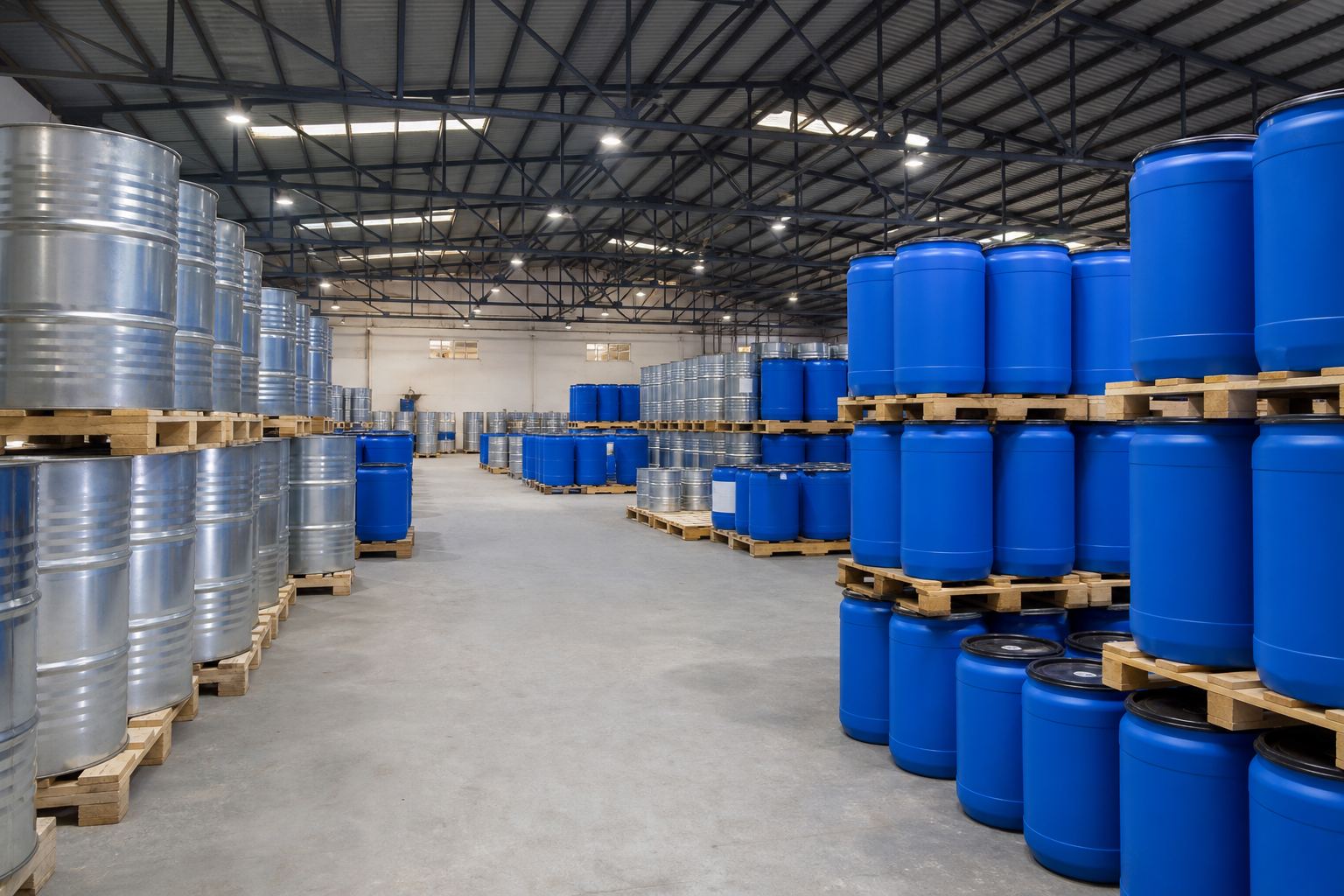
The packing list translates invoice totals into physical units — typically 25 kg, 50 kg, or 180 kg aluminium, GI, HDPE, or epoxy-lined drums. List each drum serial number, batch number, net weight per drum, gross weight per drum, total package count, dimensions if requested, and marks/numbers matching container stow plans. Upright orientation and 'keep cool, away from sunlight' handling notes belong on the packing list and on outer drum labels for carrier and warehouse staff.
When a shipment mixes batches — uncommon but possible in LCL consolidation — each drum row must show its own batch and COA reference. Buyers reject ambiguous packing lists that show one batch on the invoice but multiple unreferenced batches on the packing list.
Shipping Bill: Indian Customs Filing Record
The shipping bill is filed electronically via ICEGATE by your Customs House Agent (CHA) before cargo gate-in at port. It must mirror the commercial invoice on exporter IEC, buyer name, HS code, quantity, value, and port of loading. Essential oil exporters should confirm the CHA understands HS 3301 subheading selection — misclassification at filing triggers examination delays and can complicate the buyer's import entry. Attach or reference supporting documents per customs requirements: invoice, packing list, COA summary, and any scheme notifications if claiming export benefits under RoDTEP or other Foreign Trade Policy provisions applicable to your product line.
Bill of Lading or Airway Bill: Carrier Contract of Carriage
Ocean shipments receive a bill of lading (original or telex release/eBL per agreed terms); air shipments receive an airway bill. The transport document must show shipper, consignee, notify party, port of loading, port of discharge, container number (FCL) or consolidation reference (LCL), package count, gross weight, and goods description consistent with — but not more vague than — the invoice. Essential oils are generally non-IMDG for many grades but confirm flash point and UN classification with your freight forwarder; if any line is classified as dangerous goods, the B/L and packing declaration must reflect it.
Certificate of Origin: Preferential and Non-Preferential
A Certificate of Origin confirms Indian origin for the buyer's duty assessment. Non-preferential COO from an authorized chamber (FIEO, local export promotion council, or designated agency) is standard. If shipping under a trade agreement where India receives preferential treatment — verify current FTAs and rules of origin with your chamber before claiming preferential COO. The COO product description, HS code, and batch reference must align with the invoice; chambers reject applications with inconsistent descriptions.
GC-MS Certificate of Analysis: The Quality Passport
The GC-MS COA is not a customs document in most markets but is the buyer's primary acceptance criterion. It must be lot-specific, issued by an in-house or NABL-accredited laboratory, and report botanical name, batch number, distillation or production date, key marker compounds with percentages (menthol for mentha, citral for lemongrass, geraniol for palmarosa, santalol for sandalwood, etc.), physical parameters (specific gravity, refractive index, optical rotation where relevant), and authorized signatory. Attach the chromatogram PDF when buyers request it — many fragrance houses archive chromatograms for reformulation traceability.
Safety Data Sheet (SDS) and IFRA/REACH Extras
The SDS (GHS-aligned) describes hazard classification, handling, storage, and emergency measures. EU buyers require REACH-compliant SDS referencing registration status or importer Only Representative arrangements. USA buyers increasingly request SDS even for natural products. IFRA compliance statements confirm restricted constituent limits for fragrance applications — provide when the buyer's end use is perfumery, cosmetics, or household fragrance, not for pure flavor-only programs unless dual-use is declared.
REACH 'extras' may include composition disclosure to support UVCB substance classification, LOA references, or a letter from the EU importer's Only Representative — the Indian exporter typically supplies full compositional data and SDS; formal REACH registration is often on the importer side but must be pre-agreed before production.

Market Size & Industry Overview
Key Statistics
India's essential oil export trade under HS 3301 spans high-volume commodity mint oils from the Uttar Pradesh belt, aromatic grass oils from Tamil Nadu and Andhra Pradesh, spice-derived oils from Kerala and Karnataka, and premium absolutes and woods including jasmine and sandalwood. Published market-size figures for 'essential oils' vary by whether absolutes, oleoresins, and carrier oils are included — treat headline numbers as directional and confirm scope before citing in buyer communications.
Documentation intensity scales with buyer segment, not just destination. A mentha oil shipment to a Chinese menthol processor may clear with invoice, packing list, transport document, COO, and GC-MS COA. The same oil bound for a German flavor house adds REACH SDS, compositional disclosure, and potentially FSSAI health certification. A jasmine absolute shipment to a French fragrance house adds IFRA alignment and chromatogram archival expectations. Exporters who maintain document templates per buyer segment reduce last-minute scrambling that causes missed sailing cutoffs.
Essential Oil Export Segments and Documentation Intensity
Swipe →
Data table — swipe horizontally on small screens
| Segment | Representative Oils | Core Docs | Typical Extras |
|---|---|---|---|
| Bulk flavor/commodity | Mentha, spearmint, peppermint | Invoice, PL, SB, B/L, COO, GC-MS | FSSAI health cert, SDS |
| Fragrance/cosmetic | Jasmine absolute, sandalwood, vetiver | Core set + GC-MS chromatogram | IFRA statement, SDS, REACH data |
| Wellness/aromatherapy | Lemongrass, eucalyptus, basil | Core set + GC-MS | SDS; organic cert if claimed |
| Industrial/repellent | Citronella, citronella fractions | Core set + GC-MS | SDS, REACH for EU |
| Spice/flavor specialty | Black pepper, cardamom, ginger oils | Core set + GC-MS | FSSAI, negative-list compound notes |
Export Statistics
Key Statistics
India's HS 3301 export basket is led by mint-type oils from Uttar Pradesh, with DGCI&S and industry estimates placing India as the world's largest mentha/cornmint supplier by volume. Other essential oils under 3301.29 — lemongrass, citronella, palmarosa, eucalyptus, basil, vetiver, sandalwood, and spice-derived lines — contribute a smaller but growing share as natural fragrance and flavor substitution accelerates in North America and Europe.
Export documentation error rates are not published officially, but CHAs and merchant exporters consistently report that HS misclassification, weight discrepancies between packing list and shipping bill, and COA batch mismatches account for the majority of avoidable export-side delays in the essential oil category — all document problems, not product quality problems.
India Essential Oil Export Overview by Category (Indicative)
Swipe →
Data table — swipe horizontally on small screens
| Category | Key Oils | Primary Cluster | Typical Load Ports |
|---|---|---|---|
| Mint-type (mainly 3301.25; piperita 3301.24) | Mentha arvensis, peppermint, spearmint | Uttar Pradesh (arvensis) | Kolkata, Nhava Sheva |
| Aromatic grasses (3301.29) | Lemongrass, citronella, palmarosa | Tamil Nadu, Andhra Pradesh | Chennai, Kolkata |
| Spice-derived (3301.29) | Pepper, cardamom, ginger, turmeric | Kerala, Karnataka | Kochi, Chennai |
| Absolutes (3301.30) | Jasmine absolute | Karnataka, Tamil Nadu | Chennai |
| Heritage woods (3301.29) | Sandalwood | Karnataka (Mysore) | Chennai, Nhava Sheva |
Import Statistics
Key Statistics
Major importers of Indian essential oils — the United States, Germany, France, China, UAE, Japan, and Malaysia — each apply different document review depth at customs and at buyer QC. US FDA does not pre-approve fragrance raw materials but flavor uses trigger food-additive documentation expectations. EU REACH places compositional and SDS burden on importers, who push requirements upstream to Indian exporters. Japan prioritizes lot consistency and chromatogram precision over volume.
Import statistics matter to documentation planning because destination volume correlates with buyer sophistication: high-volume US and EU flavor and fragrance houses standardize supplier document packs and reject exporters who cannot deliver the same format every lot.
Import Market Document Expectations for Indian Essential Oils
Swipe →
Data table — swipe horizontally on small screens
| Market | Primary Oils | Mandatory Buyer Docs | Common Extras |
|---|---|---|---|
| USA | Mentha, lemongrass, eucalyptus | Invoice, PL, B/L, COO, GC-MS | SDS, IFRA (fragrance), FSSAI (food) |
| Germany / EU | Mint, grass oils, jasmine | Full core set + SDS | REACH data, IFRA, compositional disclosure |
| China | Mentha/cornmint | Core set + GC-MS | Chinese label/data if requested |
| UAE / GCC | Sandalwood, jasmine, spice oils | Core set + GC-MS | SDS, Halal-adjacent assurances |
| Japan | Sandalwood, jasmine, eucalyptus | Core set + detailed GC-MS | Strict batch traceability, chromatogram archive |

Product Categories / Variants
Summary Box
HS 3301 classification must be confirmed at the eight-digit level for each SKU before the first invoice is issued. Peppermint oil (3301.24), other mint oils including cornmint and spearmint (3301.25), other essential oils (3301.29), and concretes/absolutes (3301.30) carry different statistical and duty profiles. Document descriptions should use botanical names and extraction methods that support the declared subheading.
For product-by-product specification depth — marker compounds, FOB ranges, and buyer-market fit — see top essential oil products exported from India. This checklist applies across all HS 3301 variants; adjust FSSAI, IFRA, and organic attachments based on the specific oil and declared end use.
HS 3301 Product Lines and Invoice Description Requirements
Swipe →
Data table — swipe horizontally on small screens
| HS Subheading | Products | Invoice Must State | COA Marker Examples |
|---|---|---|---|
| 3301.24 | Peppermint oil | Mentha piperita, steam distilled | Menthol, menthone ratios |
| 3301.25 | Cornmint, spearmint | Mentha arvensis or spicata | Menthol %, carvone % |
| 3301.29 | Lemongrass, citronella, sandalwood, spice oils | Botanical name, plant part, method | Citral, citronellal, santalol, piperine |
| 3301.30 | Jasmine absolute, concretes | Extraction method, botanical | Olfactory grade + key constituents |
Manufacturing Overview
Export Tip
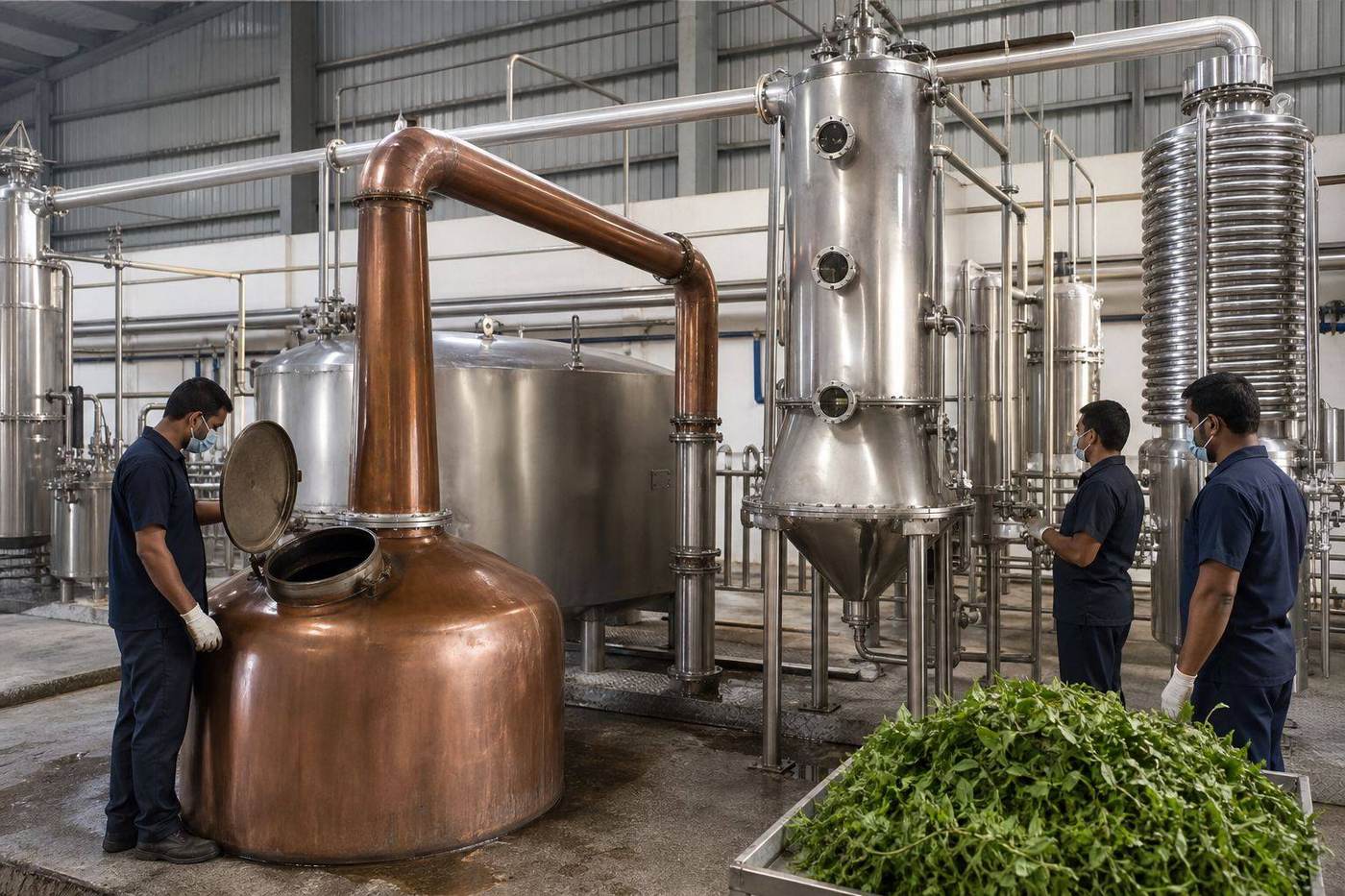
Document issuance follows manufacturing flow. Primary distillers in the UP mentha belt produce crude oil; secondary processors standardize, test, and pack export drums with batch numbers that must flow unchanged onto the GC-MS COA, drum labels, packing list, and invoice. Kannauj and southern clusters follow the same rule: the batch assigned at QC release is the batch every downstream document references.
Exporters using toll-distillation or third-party packing must secure document rights — COA issuance authority, SDS authorship, and FSSAI premises alignment — before shipment. A merchant exporter like Altus Exports consolidates these threads so international buyers receive one coherent document pack regardless of how many upstream units touched the lot.
Pricing Analysis
Buyer Tip
Documentation does not directly set FOB price, but incomplete document capability forces discounting or lost orders. Exporters who cannot issue REACH-aligned SDS or lot-specific GC-MS COA on every shipment are typically excluded from EU fragrance and US flavor house approved supplier lists — regardless of competitive raw oil pricing.
Budget for document-related costs: GC-MS testing per lot (USD 80–300+ depending on lab and panel), chamber COO fees, CHA filing charges, FSSAI health certificate processing, and translation/notarization when destination brokers require it. These belong in landed-cost planning alongside freight and insurance.
Indicative FOB Price Ranges and Documentation Overhead (2025–2026)
Swipe →
Data table — swipe horizontally on small screens
| Oil Category | FOB Range (USD/kg) | Typical COA Cost/Lot | Extra Doc Burden |
|---|---|---|---|
| Mentha/cornmint | USD 12–22 | USD 80–150 | FSSAI if food use |
| Lemongrass/citronella | USD 8–20 | USD 80–150 | SDS standard |
| Palmarosa/basil | USD 25–55 | USD 100–200 | IFRA if fragrance |
| Jasmine absolute | USD 3,000–6,000+ | USD 200–500 | IFRA + chromatogram archive |
| Sandalwood (DGFT Restricted) | USD 1,500–3,500+ | USD 150–400 | Export licence + IFRA + traceability |
Expert Insight: Documents Are the Product
Expert Insight Box
Saurabh Mittal advises exporters to treat the document pack as part of the product specification, not administrative overhead after the drums are sealed. Buyers who receive a clean GC-MS COA but an invoice with a vague description or a packing list that does not list drum serials still reject the shipment — because their internal traceability systems cannot ingest the lot.
MOQ Analysis
Buyer Tip
Documentation cost is largely fixed per lot, not per kilogram — a 25 kg trial drum and a 5 MT FCL require the same GC-MS COA, shipping bill, and COO workflow. That makes document discipline especially important on small trial lots where paperwork errors erase margin entirely.
Sample shipments (100 g–1 kg via courier) need proforma or commercial invoice, packing list, COA, and often a simplified SDS for customs — omitting courier paperwork is a common reason samples sit in destination customs for days.
MOQ and Documentation Load by Order Type
Swipe →
Data table — swipe horizontally on small screens
| Order Type | Typical Volume | Document Set | Notes |
|---|---|---|---|
| Courier sample | 100 g–1 kg | Invoice, PL, COA, SDS summary | Declare value correctly for customs |
| Trial drum | 25–180 kg | Full export set minus some extras | Pre-agree IFRA/REACH before trial |
| LCL commercial | 1–5 drums | Full core + segment extras | Weight match critical for CFS |
| FCL commercial | 5–15 MT | Full core + all buyer extras | Single batch preferred for simplicity |
Packaging Standards
Export Tip
Packaging information must appear consistently on drum labels, packing list, and SDS Section 14 transport notes. Material type — aluminium, GI, HDPE, epoxy-lined steel — matters for chemical compatibility and should be stated when buyers archive supplier specs. Nitrogen-blanketed drums should note inert headspace on the packing list so receiving warehouses do not open drums unnecessarily for inspection.
Packaging Formats and Label/Document Fields
Swipe →
Data table — swipe horizontally on small screens
| Format | Net Weight | Label Must Show | Packing List Field |
|---|---|---|---|
| Aluminium drum | 25–180 kg | Botanical, batch, net wt, origin | Drum serial, batch, net/gross |
| GI drum | 25–180 kg | Same + handling icons | Material type noted |
| HDPE drum | 25–50 kg | Food-grade mark if flavor use | Compatibility note |
| Amber glass | 10 ml–1 kg | Batch, botanical, mfg date | Bottle count, cushioned packing |
| Nitrogen blanketed | Any drum type | N2 blanket warning | Storage instruction cross-ref SDS |
Container Loading Details
Export Tip
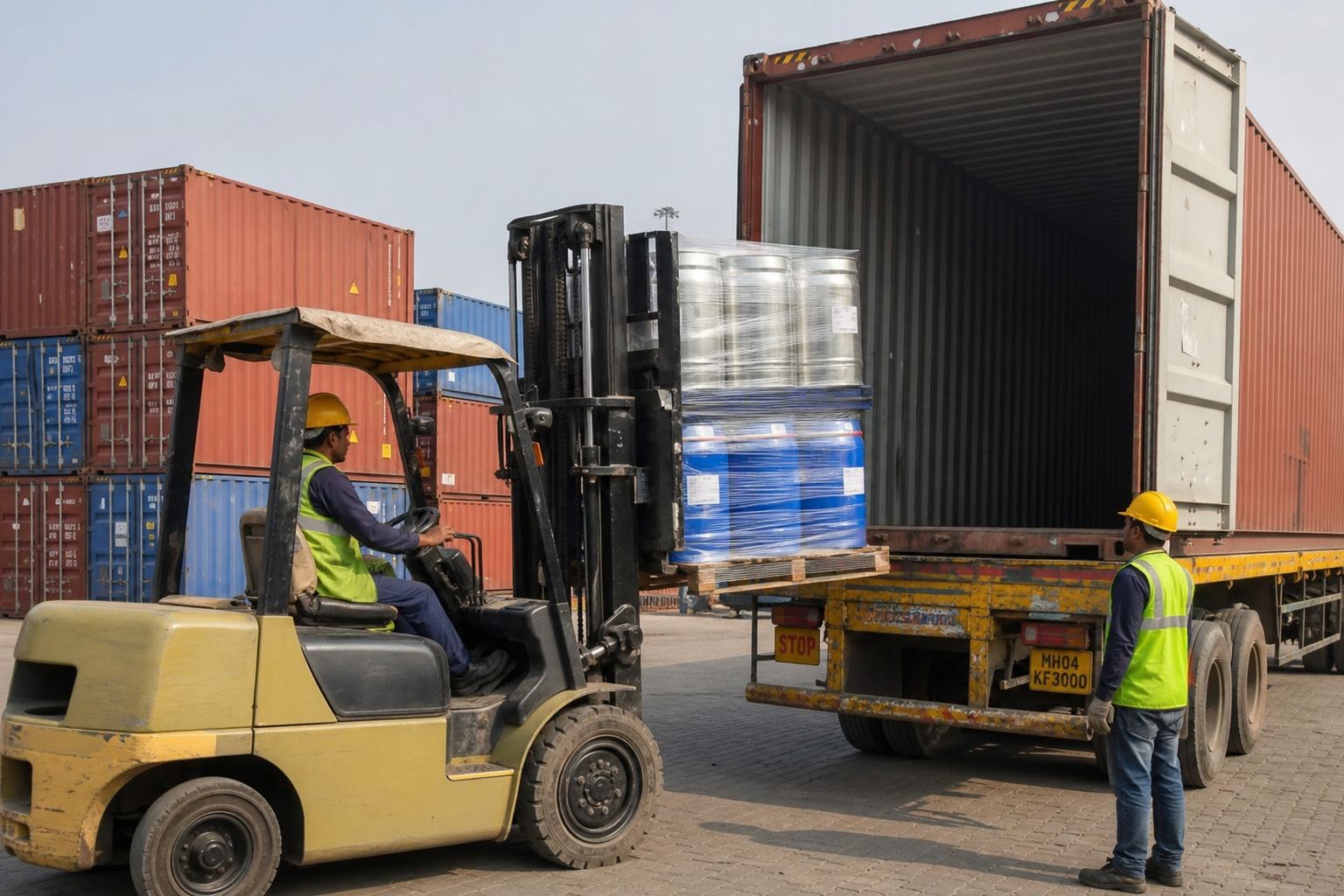
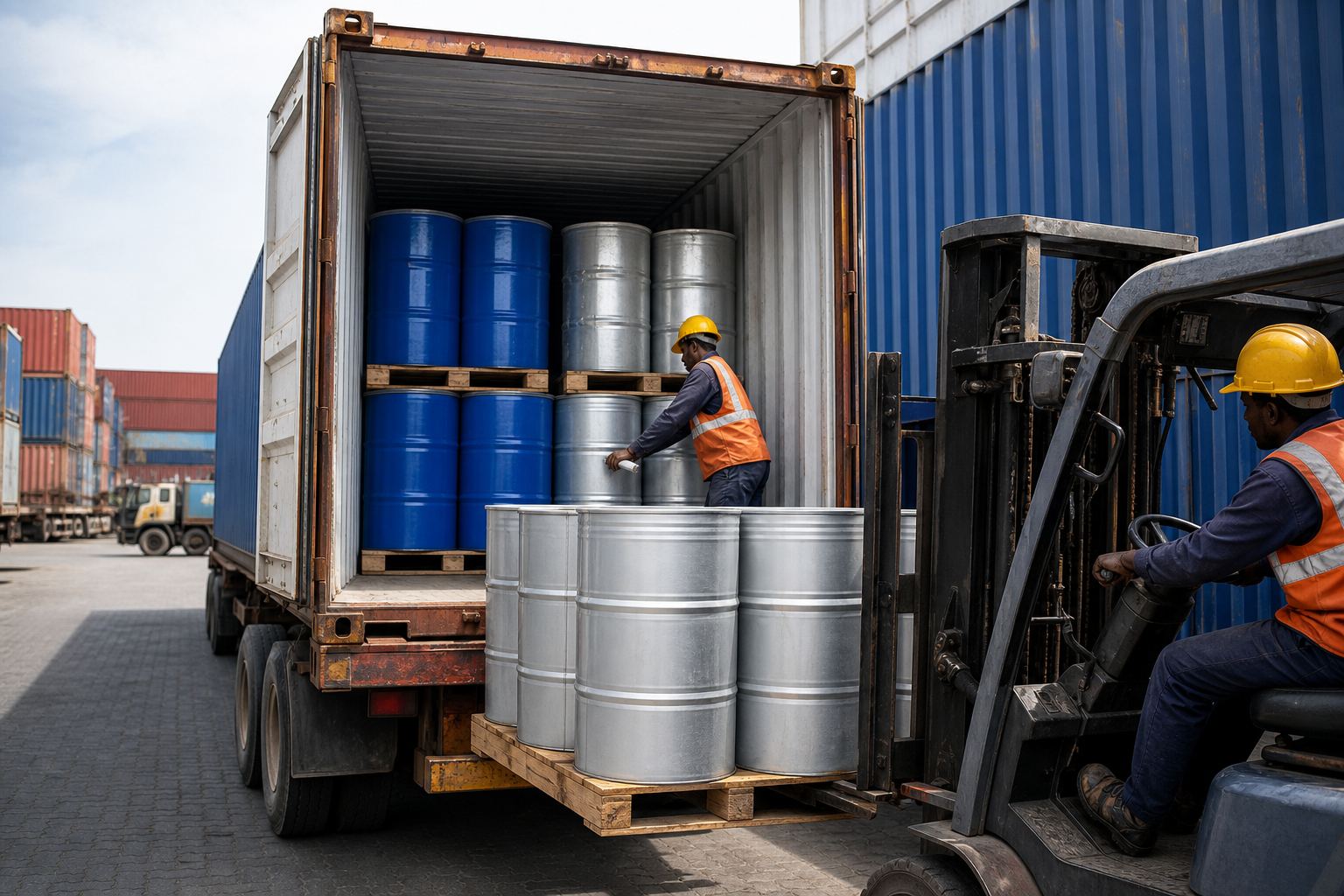
The packing list and B/L gross weight must reflect actual weighed drums — estimating weights causes customs examination and buyer QC rejection. For FCL programs, attach a container loading plan or stowage sketch when buyers request it; list container seal numbers on the packing list and pre-alert email.
Container Loading Documentation Checklist
Swipe →
Data table — swipe horizontally on small screens
| Container Mode | Documents at Loading | Weight Verification | Post-Load Action |
|---|---|---|---|
| 20ft FCL | Invoice, PL, COA copy for CHA | Weigh each drum; sum to PL | Seal number on PL and B/L |
| 40ft FCL | Same | Confirm payload limit with forwarder | Photos if buyer requires |
| LCL | PL with CFS address | CFS weighbridge ticket | Confirm CFS receipt docs |
| Air freight | AWB draft review | Scale weight on PL | SDS with air waybill |
Shipping Methods
Export Tip
Sea FCL and LCL from Nhava Sheva, Mundra, Chennai, and Kolkata dominate commercial essential oil export. Document transmission follows mode: original B/L collections require invoice and COA before release; telex release/eBL speeds payment against documents. Air freight for premium oils needs AWB, full SDS, and insurance certificate aligned to declared value.
Shipping Mode and Document Transmission Timeline
Swipe →
Data table — swipe horizontally on small screens
| Mode | Transport Doc | Send to Buyer | Originals vs Electronic |
|---|---|---|---|
| Sea FCL | Bill of lading | Pre-alert within 24h of sailing | eBL or courier originals |
| Sea LCL | House B/L | Pre-alert + CFS details | Usually house B/L via forwarder |
| Air | AWB | Same day as departure | AWB electronic standard |
| Courier sample | Courier AWB + invoice | Tracking + PDF COA same day | All electronic except customs |
Certifications
Compliance Notes
Registrations enable document issuance — without IEC, no shipping bill; without FSSAI-licensed premises for food-grade oils, no health certificate; without Chemexcil RCMC, many buyers question exporter credibility. Certifications referenced on documents must be current; expired RCMC or FSSAI numbers on invoice footers trigger buyer compliance audits.
Certifications Mapped to Export Documents
Swipe →
Data table — swipe horizontally on small screens
| Credential | Appears On | Buyer Segment | Renewal Risk |
|---|---|---|---|
| IEC | Invoice footer, shipping bill | All | Annual verification with DGFT |
| Chemexcil RCMC | Invoice, buyer qual forms | All | Membership renewal |
| FSSAI licence | Health certificate, invoice | Food/flavor | Premises inspection cycle |
| GC-MS COA | Standalone; referenced on invoice | All serious buyers | Per lot — no renewal |
| IFRA statement | Standalone letter | Fragrance/cosmetic | Update when IFRA standards revise |
| REACH SDS | SDS Section 1–16 | EU | Importer OR coordination |
Buyer Requirements
Buyer Requirements
USA flavor buyers require FSSAI export health certificate and GC-MS with food-relevant marker specs. EU buyers require REACH SDS and compositional support. Fragrance houses globally require IFRA alignment and chromatogram retention. Middle East buyers increasingly request SDS and Halal-adjacent manufacturing declarations. Document the buyer's required pack in the PO acknowledgment before production — see most demanded Indian essential oils by country for market-specific demand context.
Document Pack by Buyer Type
Flavor house: core export set + FSSAI health certificate + GC-MS with food-grade marker panel + SDS. Fragrance house: core set + IFRA + GC-MS chromatogram + SDS + REACH extras for EU. Wellness brand: core set + GC-MS + SDS; organic certificate if marketed. Industrial formulator: core set + GC-MS commodity spec + SDS with transport data.
Country-wise Opportunities
Market Snapshot
Match document investment to destination — full REACH and IFRA pack for Germany and France; FSSAI-forward pack for USA flavor programs; leaner core set for China mentha bulk with GC-MS mandatory. See best countries for Indian essential oil exports for market selection; this checklist executes the paperwork once the destination is chosen.
Country-wise Documentation Priority Matrix
Swipe →
Data table — swipe horizontally on small screens
| Destination | Non-Negotiable Docs | Often Requested | Skip at Your Risk |
|---|---|---|---|
| USA | GC-MS, invoice, PL, B/L, COO | FSSAI (food), IFRA (fragrance), SDS | SDS — increasingly default |
| EU-27 | GC-MS, SDS, REACH support | IFRA, compositional UVCB data | REACH — EU importer/OR registration gap (≥1 t/yr) |
| China | GC-MS, core customs set | Chinese spec translations | Batch traceability |
| UAE | GC-MS, core set | SDS, Halal-adjacent statements | COO for re-export buyers |
| Japan | GC-MS + chromatogram | Detailed batch history | Vague invoice descriptions |
Sourcing Checklist
Checklist
Before placing an order, international buyers should confirm the supplier can deliver the full document pack for their segment — not just a sample COA. Request a redacted prior shipment document set (invoice, PL, COA, SDS) during qualification.
Common Buyer Mistakes
Common Mistakes Box
Buyers often assume the exporter will 'handle documentation' without specifying IFRA, REACH, or FSSAI needs in the PO — then reject shipments that meet generic export standards but not segment standards. Importers who do not review GC-MS before bulk payment discover chromatogram mismatches at destination with limited recourse.
Common Documentation Mistakes
Swipe →
Data table — swipe horizontally on small screens
| Mistake | Consequence | Prevention |
|---|---|---|
| PO silent on IFRA/REACH/FSSAI | Missing extras; customs or QC hold | List required docs in PO and acknowledgment |
| Accepting COA without batch match | Lot traceability failure | Match batch to drum labels before payment |
| Ignoring SDS until EU arrival | REACH clearance delay | Require SDS at sample stage for EU |
| Assuming verbal HS code | Duty misassessment at import | Confirm eight-digit code in writing |
| No pre-alert workflow | Demurrage while broker waits for docs | Contract 24h pre-alert in PO |
| Paying against docs not reviewed | Payment for non-compliant pack | Use LC or escrow with doc checklist |
Future Market Trends
Key Statistics
Digital trade documentation — eBL, electronic COO, and API-linked COA verification — is accelerating in essential oils as flavor and fragrance houses integrate supplier portals. Exporters still using inconsistent PDF templates per shipment will lose qualification against suppliers with standardized document APIs.
Tighter IFRA and EU allergen disclosure rules push more compositional detail onto SDS and COA attachments. Sustainability and traceability certificates are appearing as optional extras that premium buyers convert into mandatory requirements within two to three qualification cycles.
Documentation Trends 2026–2030
Swipe →
Data table — swipe horizontally on small screens
| Trend | Impact on Exporters | Action |
|---|---|---|
| eBL adoption | Faster payment release | Register with carrier eBL platforms |
| Supplier portal COA upload | Standardized data fields | Template COA to buyer spec |
| Stronger REACH enforcement | Full compositional ranges required | Pre-build SDS with UVCB data |
| IFRA standard updates | Revised compliance letters needed | Track IFRA amendments quarterly |
| Traceability QR on drums | Batch-linked digital COA | Pilot serial-to-COA linking |
Expert Insight: Pre-Shipment Cross-Check
Expert Insight Box
Saurabh Mittal runs a four-way match before every Altus Exports essential oil shipment leaves the packhouse: invoice batch and weights, packing list drum serials, GC-MS COA lot number, and shipping bill HS code and quantity. Any divergence stops the truck to port — not because Indian customs always catches it, but because EU and US buyers always do.

Conclusion
- Process sequence: how to export essential oils from India.
- Product specs: top essential oil products exported from India.
- Market selection: best countries for Indian essential oil exports.
- Direct sourcing: source essential oils directly from India.
- Registrations: Chemexcil and FSSAI registration benefits.
- Demand by country: most demanded Indian essential oils by country.
- Buyer prospecting: find international buyers for essential oils.
- Trade show leads: trade shows and B2B marketplaces for essential oil exporters.
- Contact Altus Exports to align your next HS 3301 document pack before production.
Essential oil export under HS 3301 succeeds or stalls on documentation alignment — commercial invoice, packing list, shipping bill, bill of lading, Certificate of Origin, lot-specific GC-MS COA, SDS, and the IFRA, REACH, and FSSAI extras your buyer segment requires. Treat batch numbers as sacred, HS subheadings as legally binding, and pre-alert timing as part of delivery performance.
International buyers sourcing from India should qualify suppliers on document capability, not only oil price. Indian exporters and distillers should build templates per buyer segment now, before the next mentha season or jasmine harvest compresses production timelines. Altus Exports manages end-to-end document packs for essential oil programs — from GC-MS verification through CHA filing and buyer pre-alert — as part of merchant exporter and global sourcing partner services.