
Best Countries for Indian Incense Stick (Agarbatti) Exports
By Saurabh Mittal, Founder, Altus Exports
Market selection guide for Indian incense stick (agarbatti) exporters — ranking USA, UAE, Nigeria, Iraq, Spain, Malaysia, Chile, and the UK plus LatAm, EU, and Africa corridors on WITS 2024 HS 330741 demand, duty treatment, freight lanes, and compliance burden (~US$147.6M India exports).

Choosing where to send your first — or next — incense stick container from India is a duty, freight-corridor, and compliance-burden decision, not a map-pinning exercise. The United States, United Arab Emirates, Nigeria, Iraq, Spain, Malaysia, Chile, and the United Kingdom absorbed the largest shares of India HS 330741 export value in 2024, yet each corridor rewards a different readiness stack: IFRA and Prop 65 diligence for US retail, Halal and bilingual labelling for Gulf and Middle East programmes, volume charcoal and masala reliability for West Africa, and REACH/SVHC awareness for EU entry through Spain and related member-state ports. Treat every destination as a landed-cost and document problem before you treat it as a demand story.
WITS/UN Comtrade directional data for India HS 330741 (agarbatti and other odoriferous preparations which operate by burning) in 2024 shows roughly US$147.6M and about 40,884 MT exported worldwide. Leading partners by value were the United States (~US$21.2M), UAE (~US$7.7M), Nigeria (~US$7.0M), Iraq (~US$5.7M), Spain (~US$5.6M), Malaysia (~US$5.5M), Chile (~US$5.4M), and the United Kingdom (~US$5.4M), followed by Argentina, Brazil, Netherlands, Mexico, South Africa, France, Australia, and others. Label all figures directional and re-verify via DGCI&S, ITC Trade Map, or paid customs extracts before quoting buyers or building board decks.
This post owns destination ranking, duties, freight corridors, and compliance-burden comparison for Indian agarbatti programmes under India ITC-HS 33074100 / WITS HS 330741. It does not own the per-country SKU preference matrix — see Most Demanded Indian Incense Sticks (Agarbatti) by Country — or lead-generation tactics, which live in How to Find International Buyers for Incense Sticks (Agarbatti). For the end-to-end export process once a market is chosen, use the pillar How to Export Incense Sticks (Agarbatti) from India. Altus Exports supports market-entry sequencing as a global sourcing partner in India for manufacturers and international procurement teams.
Key Takeaways
Summary Box
Executive Summary
Summary Box
Market selection for Indian incense stick (agarbatti) exports combines WITS-verified partner rankings with corridor economics. The eight largest 2024 destinations by India-origin value — USA, UAE, Nigeria, Iraq, Spain, Malaysia, Chile, and the UK — sit inside three broader lanes: Americas (USA plus LatAm via Chile, Argentina, Brazil, Mexico), Middle East and Africa (UAE, Iraq, Nigeria, Saudi Arabia, South Africa), and Europe plus ASEAN (Spain, UK, Netherlands, France, Germany, Malaysia, Australia).
India's supply base in Mysuru–Bengaluru, Tamil Nadu–Puducherry, Gujarat–Mumbai, and Delhi-NCR can serve all three lanes, but the compliance tax differs. Volume charcoal-dipped and masala programmes clear Africa and parts of LatAm with strong packing and competitive FOB. Premium herbal, sandalwood, and private-label hex-box programmes need IFRA notes, SDS discipline, and tighter fragrance segregation before US and EU retail buyers scale orders.
This guide ranks destinations for entry sequencing, compares directional duty and freight burden, and maps manufacturing readiness to corridor choice. Pair it with Natural, Herbal & Eco-Friendly Incense Stick Export Opportunities when your margin thesis is specialty rather than commodity dipped sticks.
Market Size & Industry Overview
Key Statistics
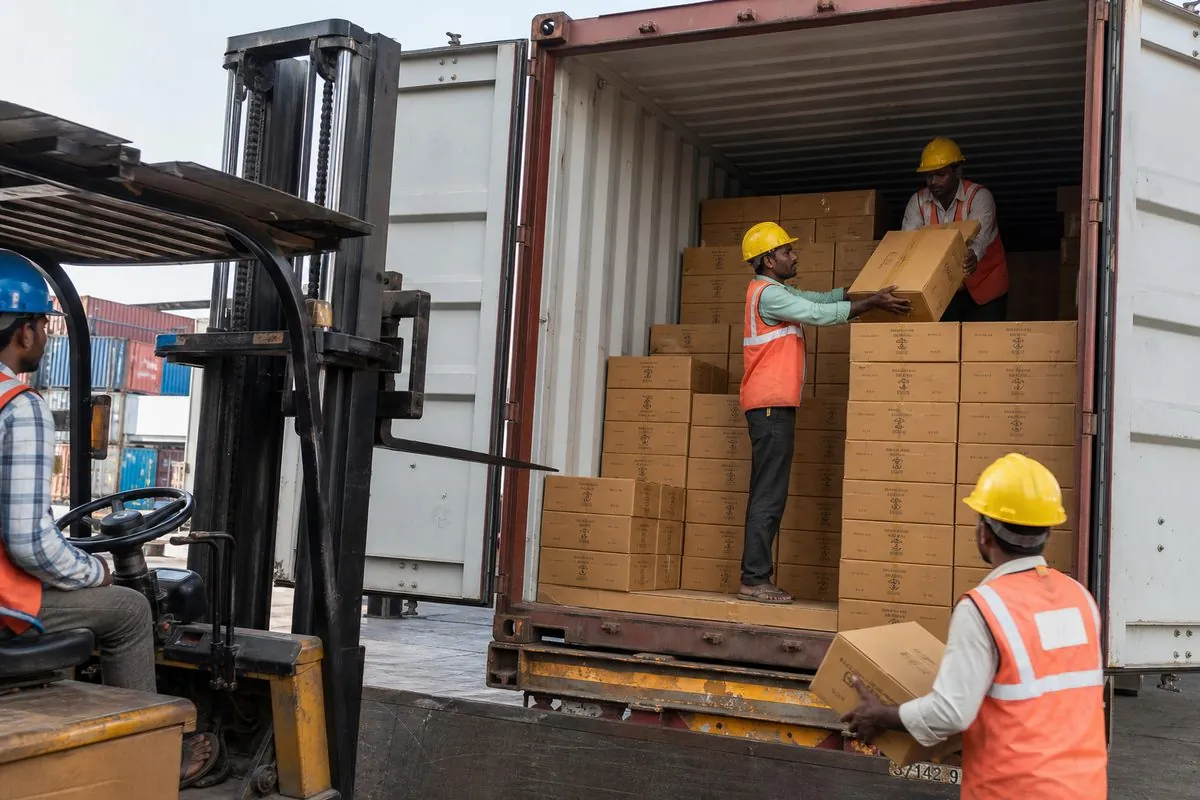
India is a structurally important supplier of masala, perfume-dipped charcoal, herbal, dhoop, and cone formats under HS 330741. WITS/UN Comtrade records India HS 330741 exports at roughly US$147.6M and ~40,884 MT in 2024, while India imported only about US$0.63M (~726 MT) on the same line — chiefly from Vietnam — confirming a large net-export position. Destination choice on that footprint materially changes working capital, document cost, and fragrance-oil exposure; a single rejected FCL over scent cross-contamination or HS misdeclaration can erase a quarter's margin. Do not invent multi-origin global market-size totals without a documented Comtrade aggregation.
Demand is multi-channel: ethnic grocery and ritual retail, modern-trade wellness and home fragrance, mosque and temple-linked wholesale, Latin American household fragrance habits, and private-label programmes for big-box or e-commerce brands. Cluster geography matters for market selection because Mysuru–Bengaluru masala depth, Tamil Nadu dipped volume, Gujarat private-label packing, and Kannauj attar inputs each map to different destination price points.
India incense stick (agarbatti) industry snapshot for market selection (directional)
Swipe →
Data table — swipe horizontally on small screens
| Dimension | 2024–2026 Snapshot | Strategic Implication |
|---|---|---|
| HS classification | India 33074100 / WITS 330741 (burning); contrast 33074900 (non-burning) | File the burning line for true agarbatti; avoid forced 33074900 or 33079090 misroutes |
| WITS 2024 India exports | ~US$147.6M / ~40,884 MT | Use for ranking scale, not as a contract figure — re-verify annually |
| Top partners by value | USA, UAE, Nigeria, Iraq, Spain, Malaysia, Chile, UK | Build tiered entry: volume corridors first, compliance-heavy retail second |
| Primary clusters | Mysuru–Bengaluru; TN–Puducherry; Gujarat–Mumbai; Delhi-NCR; Kannauj inputs | Match factory capability to corridor grade before quoting FOB |
| Trade council | Chemexcil (Basic Chemicals, Cosmetics & Dyes EPC) | RCMC supports credibility and fair access for Chapter 33 programmes |
| Load ports | Nhava Sheva, Mundra, Chennai, Tuticorin (+ ICD consolidation) | Port choice changes transit days into Americas, Africa, EU, and ASEAN |
A market-selection scoring framework
Altus Exports scores incense destinations on five weights: import demand signal from WITS partner value (25%), freight corridor reliability and transit days (20%), duty and preferential-treatment clarity (15%), compliance and labelling burden (25%), and payment / claim-risk profile (15%). Markets scoring high on demand but low on compliance readiness for your current document stack should be secondary, not first containers. Re-score annually when Comtrade partner ranks and fragrance-oil costs move.
Volume corridors versus retail-compliance corridors
Volume corridors (Nigeria, Chile, parts of UAE wholesale, Iraq wholesale) reward consistent burn time, crush-resistant packing, and competitive USD/kg FOB on dipped and mid masala sticks. Retail-compliance corridors (USA specialty/modern trade, UK natural retail, Spain as EU entry) reward IFRA-aligned fragrance notes, SDS availability, cleaner herbal positioning, and private-label art discipline. Exporters who force a single SKU list into both corridor types usually lose margin on claims or lose bids on price.
Export Statistics
Key Statistics
Use India-origin WITS HS 330741 partner rankings before committing FCL capacity. In 2024 the United States led by a wide margin at roughly US$21.2M, followed by a tight mid-tier band from UAE (~US$7.7M) through Nigeria, Iraq, Spain, Malaysia, Chile, and the UK (each roughly US$5.4–7.0M). Second-wave partners — Argentina, Brazil, Netherlands, Mexico, South Africa, France, Australia, Saudi Arabia, Canada, Germany — matter for diversification once the first two corridors are stable.
Trade Statistics / Import Data Analysis note: export partner value is not the same as total destination market size. A country can import large agarbatti volumes from multiple origins while India holds only a slice; conversely, India may dominate a corridor where total market size is modest. Always pair India export ranks with destination import statistics before calling a market saturated or open.
Country ranking only works when every shipping bill sits on the same burning line. Plan India 33074100 with your CHA so commercial descriptions, fragrance form, and packing match the burning heading — keep non-burning sprays and plugs on contrast lines so partner league tables stay comparable.
Directional India HS 330741 export partners by value, 2024 (WITS/UN Comtrade)
Swipe →
Data table — swipe horizontally on small screens
| Rank | Partner | Directional Export Value | Corridor Role |
|---|---|---|---|
| 1 | United States | ~US$21.2M | Largest value; retail + ethnic + wellness mix |
| 2 | United Arab Emirates | ~US$7.7M | Local demand + GCC / Africa re-export hub |
| 3 | Nigeria | ~US$7.0M | West Africa volume wholesale corridor |
| 4 | Iraq | ~US$5.7M | Middle East ritual / household volume |
| 5 | Spain | ~US$5.6M | EU entry and Iberian distribution |
| 6 | Malaysia | ~US$5.5M | ASEAN ritual + modern retail |
| 7 | Chile | ~US$5.4M | LatAm household fragrance gateway |
| 8 | United Kingdom | ~US$5.4M | UK retail / ethnic / natural wellness |
| — | World total (India exports) | ~US$147.6M / ~40,884 MT | Re-verify before contracts |
Import Statistics
Key Statistics
Start with India's own import position for context: WITS/UN Comtrade 2024 records India HS 330741 imports at only ~US$0.63M / ~726 MT (chiefly Vietnam), versus ~US$147.6M / ~40,884 MT of India exports — India is a large net exporter, so market selection is about destination demand and compliance burden, not Indian import gaps.
Import Statistics and Import Data Analysis for destination markets reveal buyer type, seasonal peaks, and whether India faces price competition from other Asian origins. US and UK importers often split between ethnic distributors and wellness/modern-trade buyers; UAE and Malaysia combine local consumption with re-export; Nigeria and Iraq lean wholesale and open-market distribution; Spain and Chile frequently act as regional distribution platforms for EU and Southern Cone neighbours respectively.
When modelling opportunity, read destination import data for HS 330741 (or local CN/HTS equivalents) alongside India's export partner value. For US planning, USITC HTS 3307.41.00.00 publishes a general (MFN) duty field of 2.4% — verify live, including preferential and Chapter 99 overlays. A rising destination import total with flat India share can signal room to compete on packing quality, lead time, or private-label capability — without inventing demand or duty percentages that do not exist.
Directional import demand profile by destination market (India-origin lens)
Swipe →
Data table — swipe horizontally on small screens
| Market | Import / Demand Signal | Primary Buyer Type | India Positioning Cue |
|---|---|---|---|
| United States | Largest India-origin value; multi-channel | Ethnic distributors, wellness brands, online sellers | Document-ready packs; IFRA/Prop 65 diligence where claims apply |
| UAE | Strong India share; hub + local | Wholesalers, hypermarkets, re-exporters | Halal-ready docs; Arabic/English labelling for retail |
| Nigeria | High volume absorption | Open-market wholesalers, importers | Crush-safe packing; payment-term discipline |
| Iraq | Steady ritual/household pull | Wholesale traders, regional distributors | Competitive FOB; durable master cartons |
| Spain | EU gateway demand | EU importers, Iberian distributors | REACH/SVHC awareness; IFRA notes for retail |
| Malaysia | ASEAN ritual + retail | Ethnic wholesalers, modern trade | FTA preference check; fragrance labelling rules |
| Chile | LatAm household fragrance | Importers serving Southern Cone | Spanish labelling; moisture control on long haul |
| United Kingdom | Ethnic + natural wellness | Importers, natural retailers, online brands | Post-Brexit UK rules; cleaner herbal SKUs for premium |
Product Categories / Variants
Summary Box
For market selection — not a full SKU catalogue — map stick families to corridor economics. Economy perfume-dipped charcoal sticks and mid masala lines usually open Nigeria, Iraq, Chile, and UAE wholesale faster. Herbal/natural, bamboo-less dhoop, cones, and premium sandalwood/oud private-label hex boxes belong in USA, UK, Spain/EU, and selective Malaysia modern-trade programmes once SDS and fragrance documentation exist. Full product taxonomy lives in Top Incense Stick (Agarbatti) Products Exported from India; country × fragrance matrices belong to the demand post.
Incense stick category fit for destination market selection (not SKU demand matrix)
Swipe →
Data table — swipe horizontally on small screens
| Category | Indicative FOB Band | Best Entry Corridors | Compliance Weight |
|---|---|---|---|
| Perfume-dipped charcoal sticks | ~US$0.8–2.5/kg | Nigeria, Iraq, Chile, UAE wholesale | Low–medium (packing + labelling) |
| Masala (hand-rolled) sticks | ~US$2.5–6/kg | USA ethnic, UAE, Malaysia, UK ethnic | Medium (burn-test consistency) |
| Herbal / natural sticks | ~US$4–10/kg | USA wellness, UK, Spain/EU | High (IFRA/REACH notes, claim control) |
| Bamboo-less dhoop / cones | Varies by pack density | USA, UK, UAE specialty, Malaysia | Medium–high (format + SDS) |
| Premium sandalwood / oud / PL retail | Higher; often per hex/carton | USA, UK, UAE, selective EU | High (art, exclusivity, fragrance load) |
Why category fit belongs in ranking — not after booking
Exporters who pick Chile or Nigeria first with only premium sandalwood capacity, or who chase USA retail with only unlabelled poly-bundle dipped stock, create avoidable sample failures. Rank destinations against the stick families your mapped factories can burn-test and pack this quarter.

Manufacturing Overview
Export Tip
Market entry succeeds when FOB quotes reflect real cluster cost and burn-test capacity. Mysuru–Bengaluru dominates branded and masala programmes; Tamil Nadu–Puducherry supports volume dipped and masala export packing; Gujarat–Mumbai consolidates private-label and merchant programmes; Delhi-NCR supports ethnic wholesale assortments; Kannauj supplies attar inputs for premium lines. Corridor logistics plus grade fit beat generic lowest-FOB market chasing.
Manufacturing honesty prevents choosing a destination whose buyers need IFRA-ready herbal SKUs when your factories only run economy dipped charcoal at scale — or the reverse, quoting Africa volume tenders with premium sandalwood lead times.
Cluster readiness for Americas programmes
USA and Chile-bound programmes need fragrance segregation, moisture barriers, and pallet discipline for long ocean legs. Factories that already export hex boxes to ethnic US distributors are better first partners than purely domestic wholesale rollers unfamiliar with master-carton crush tests.
Cluster readiness for Middle East and Africa programmes
UAE, Iraq, and Nigeria programmes emphasise volume consistency, Halal documentation where retailers require it, and master cartons that survive multi-hop trucking after discharge. Tamil Nadu and Gujarat packing lines often fit these lanes when payment terms are structured carefully.
Cluster readiness for EU, UK, and ASEAN programmes
EU/UK and ASEAN retail corridors now screen exporters on ingredient transparency as much as fragrance throw. Prioritise Mysuru masala or herbal factories that already issue SDS/IFRA packs and archive burn-test lots — Chemexcil-aligned desks shorten buyer KYC when Spain, UK, or Malaysia importers audit the file.
Pricing Analysis
Buyer Tip
Use directional FOB bands for landed-cost modelling by destination — fragrance oil and bamboo costs move, so index quote validity to a short window. Economy dipped sticks open price-sensitive Africa and LatAm tenders; mid masala supports ethnic retail in USA, UK, UAE, and Malaysia; herbal and premium private-label justify US/EU compliance investment only when the buyer pays for documentation depth.
Landed cost — not FOB — decides whether USA or Chile is more attractive on a given month. Model ocean freight, destination duty, terminal handling, inland delivery, and any retest or relabel fees before comparing corridors.
Directional FOB pricing bands for incense sticks (agarbatti) by grade
Swipe →
Data table — swipe horizontally on small screens
| Grade / Format | Directional FOB | Primary Destination Fit | Notes |
|---|---|---|---|
| Economy perfume-dipped | ~US$0.8–2.5/kg | Nigeria, Iraq, Chile, UAE wholesale | Volume pricing; packing strength critical |
| Mid masala | ~US$2.5–6/kg | USA ethnic, UAE, Malaysia, UK ethnic | Burn-time consistency drives repeats |
| Herbal / natural | ~US$4–10/kg | USA wellness, UK, Spain/EU | Documentation premium expected |
| Premium sandalwood / oud / PL hex | Higher; often per pack/carton | USA, UK, UAE, selective EU | Art + fragrance exclusivity priced in |
Incoterms and landed-cost posture by corridor
FOB Nhava Sheva, Mundra, Chennai, or Tuticorin is standard for experienced US, UK, and EU importers who control freight. CFR/CIF suits some UAE, Nigeria, Iraq, and LatAm buyers who want a single landed quote. DDP remains selective for mature retail distributor programmes only — do not offer DDP into unfamiliar duty regimes without a local broker model.
MOQ Analysis
Buyer Tip
MOQ realism differs by destination as much as by stick type. Nigeria and Chile wholesalers often move faster on multi-MT mixed fragrance lots; USA and UK private-label buyers may start with hex-box trials then scale. Never promise FCL density without confirming hex versus bulk poly stow with your forwarder.
Typical MOQ tiers for incense stick market-entry programmes
Swipe →
Data table — swipe horizontally on small screens
| Stage | Typical MOQ | Purpose | Common Corridors |
|---|---|---|---|
| Burn-test samples | 1–5 kg or 50–200 hex boxes | Fragrance throw, burn time, ash QC | All new destinations |
| Trial order | 200–1,000 kg or 1–5 cartons/SKU | Channel test and label proof | USA, UK, Spain, Malaysia retail |
| Wholesale programme | 1–5 MT | First commercial sea shipment | UAE, Nigeria, Iraq, Chile |
| FCL programme | Planned by pack density | Repeat distributor programmes | All scale corridors |
Packaging Standards
Export Tip
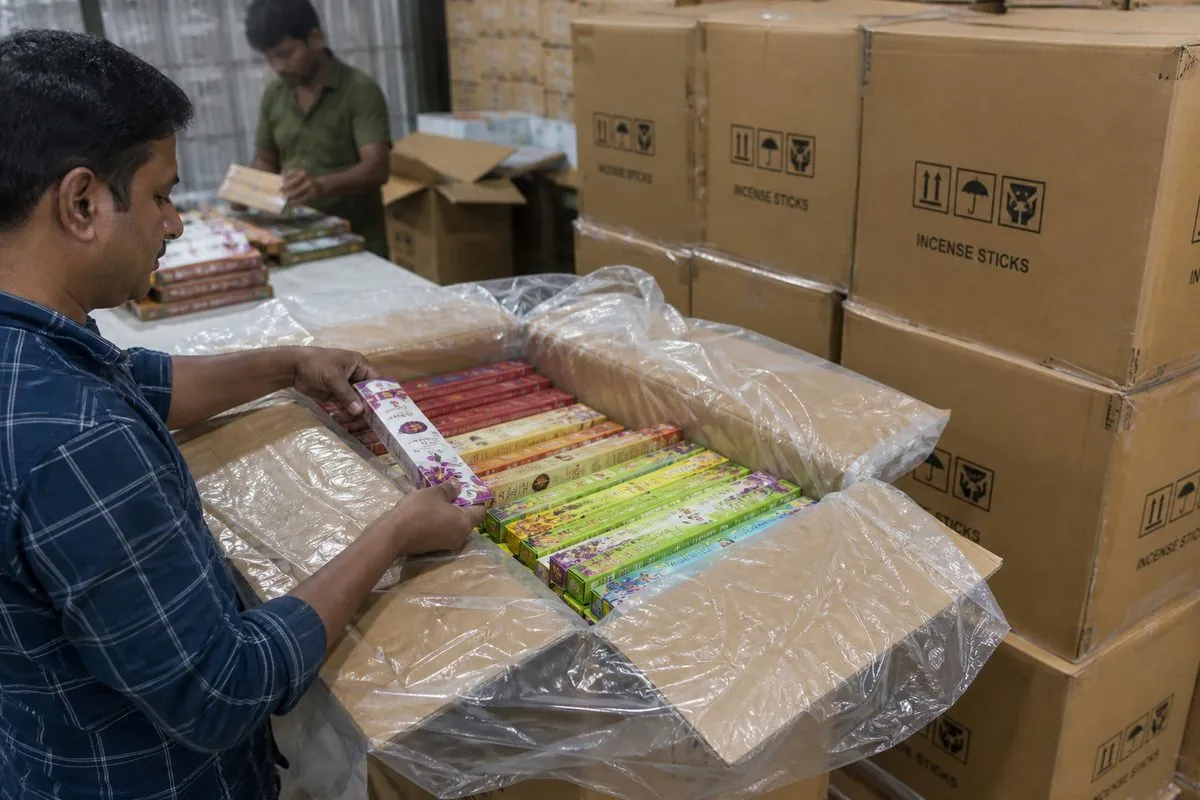
Packaging is a market-selection variable because long-haul LatAm and US West Coast legs punish weak moisture barriers, while Africa open-market handling punishes soft master cartons. Inner hex/rectangle boxes or pouches, fragrance-segregated master cartons, pallet stretch-wrap, and clear batch marking are baseline for every ranked destination.
Retail corridors (USA, UK, Spain, Malaysia modern trade) need shelf-ready art and bilingual or destination-language panels where mandated. Wholesale corridors tolerate simpler packs if crush and scent cross-contamination controls remain strict.
Packaging standards by destination market tier
Swipe →
Data table — swipe horizontally on small screens
| Market Tier | Inner Pack | Master Pack | Key Requirement |
|---|---|---|---|
| Volume wholesale (Nigeria, Iraq, Chile) | Hex/rectangle or poly bundles | Strong corrugated + moisture barrier | Crush resistance; clear lot IDs |
| Hub + retail (UAE, Malaysia) | Retail hex / pouches | Fragrance-segregated cartons | Halal/label readiness where required |
| US / UK retail & wellness | Shelf-ready hex boxes | Palletised, scent-isolated | Claim-safe labelling; SDS available |
| EU via Spain / related ports | Retail or distributor packs | Moisture-safe FCL stow | REACH/SVHC statements when mandated |
Container Loading Details
Export Tip
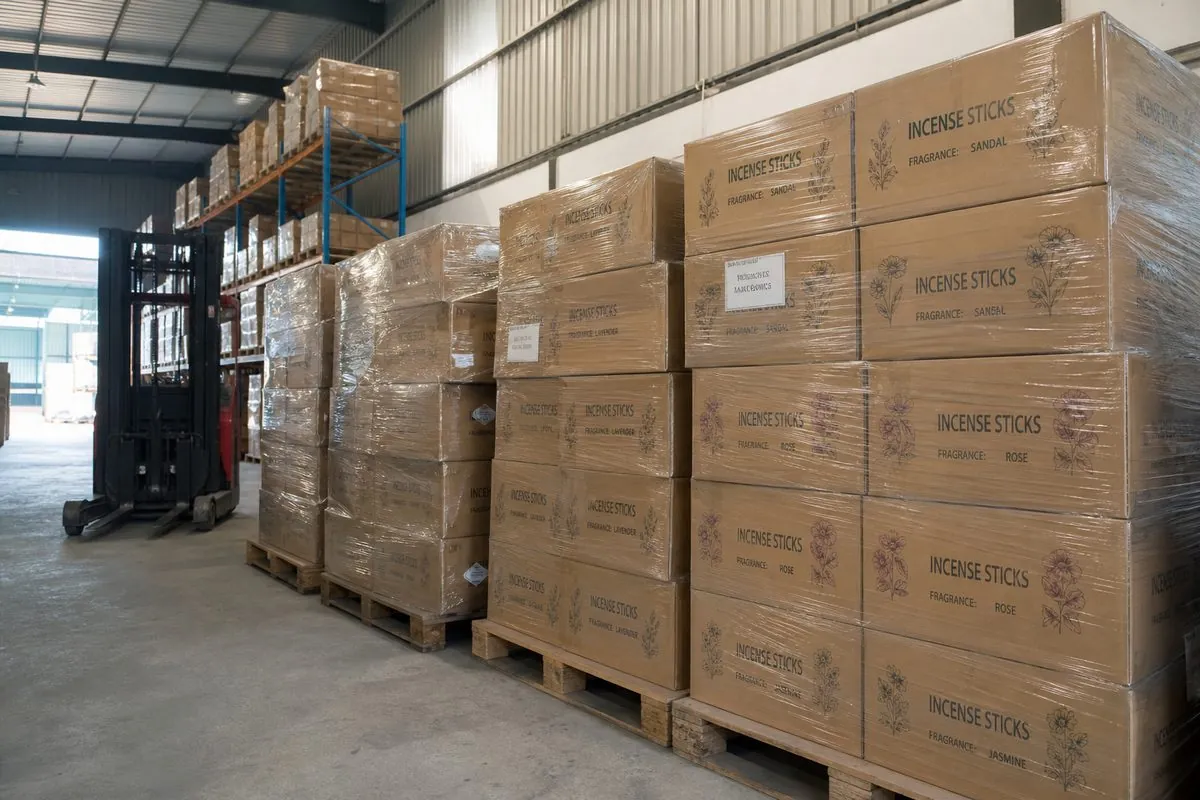
Agarbatti FCL planning is pack-density driven. Hex-box programmes cube out before they weigh out more often than bulk poly bundles. Confirm stow patterns, pallet vs floor-loaded preference, and fragrance segregation aisles with the forwarder before promising a buyer a mixed-SKU container into USA or Chile.
Indicative container loading notes for incense stick exports
Swipe →
Data table — swipe horizontally on small screens
| Load Pattern | Planning Note | Common Destinations | Risk to Manage |
|---|---|---|---|
| 20ft FCL hex-box heavy | Cube-constrained; confirm carton count | USA, UK, Spain, Malaysia retail | Crush and scent bleed between fragrances |
| 20ft FCL mixed wholesale | Higher kg possible with poly/bulk inners | Nigeria, Iraq, UAE wholesale | Moisture and rough handling after discharge |
| 40ft FCL distributor programmes | Use when multi-SKU assortments justify | USA, Chile, UAE hub | Segregation complexity; longer stuffing time |
| LCL / air samples | Samples and urgent retail top-ups | All corridors for trials | Cost per kg; humidity on long LCL |
Shipping Methods
Export Tip
Freight corridor reliability is half of market ranking. UAE and Malaysia enjoy shorter India sailings than US East Coast or Chile; Nigeria and Iraq require careful carrier and payment planning; Spain and UK offer frequent Europe services from Nhava Sheva and Mundra with Chennai/Tuticorin options for South India factories. Lead times: samples 7–14 days; stock fragrances 2–4 weeks; custom/private-label 4–8 weeks — festive calendars (Navratri, Diwali, Christmas, Ramadan) can extend production before the vessel even sails.
Indicative logistics benchmarks by incense export destination
Swipe →
Data table — swipe horizontally on small screens
| Destination | Primary Indian Load Ports | Transit Band (ocean) | Logistics Note |
|---|---|---|---|
| USA | Nhava Sheva / Mundra | ~25–40 days | ISF/AMS discipline; longer West Coast legs |
| UAE (Jebel Ali) | Nhava Sheva / Mundra | ~10–18 days | High sailing frequency; hub re-export |
| Nigeria | Nhava Sheva / Mundra | ~20–35 days | Port congestion buffers; strong cartons |
| Iraq (via regional gateways) | Nhava Sheva / Mundra | Varies by routing | Confirm final delivery corridor early |
| Spain | Nhava Sheva / Mundra | ~22–32 days | EU clearance docs ready at arrival |
| Malaysia | Chennai / Tuticorin / Nhava Sheva | ~10–20 days | ASEAN schedule density helps trials |
| Chile | Nhava Sheva / Mundra | ~35–50 days | Long haul — moisture control non-negotiable |
| United Kingdom | Nhava Sheva / Mundra | ~22–32 days | UK customs pack separate from EU assumptions |
Certifications
Compliance Notes
Certification burden is a primary ranking variable. Chemexcil RCMC and standard export documents apply across destinations; Halal matters more for UAE, Iraq, Malaysia, and selected Africa retail; IFRA guidance notes and SDS matter more for USA, UK, and EU; REACH/SVHC statements appear when EU buyers mandate them; vegan/charcoal-free claims must be substantiated for natural programmes.
Certification and document relevance by destination cluster
Swipe →
Data table — swipe horizontally on small screens
| Document / Cert | USA / UK | Spain / EU | UAE / Iraq / Malaysia | Nigeria / Chile |
|---|---|---|---|---|
| Chemexcil RCMC | Strongly expected | Strongly expected | Strongly expected | Helpful |
| Commercial invoice / PL / B/L | Mandatory | Mandatory | Mandatory | Mandatory |
| Certificate of Origin | As required | As required / FTA | As required / FTA | As required |
| SDS / MSDS (fragrance) | Often required | Often required | Increasing | Buyer-dependent |
| IFRA notes | Retail programmes | Retail programmes | Selective | Rare |
| REACH / SVHC statements | N/A (UK separate) | When mandated | N/A | N/A |
| Halal certificate | Selective ethnic | Selective | Frequently requested | Selective |
| Burn-test / QC report | Best practice | Best practice | Best practice | Best practice |
Buyer Requirements
Buyer Requirements
- Written spec: stick type, fragrance family, stick count, burn-time target, pack, Incoterm, HS line
- Sealed burn-test samples retained by both parties with lot/batch IDs
- Destination compliance notes (IFRA, Halal, REACH, labelling language) agreed before production art
- Payment terms and claim windows written into the proforma before stuffing
- Realistic lead times that include festive capacity peaks and ocean transit for the chosen corridor
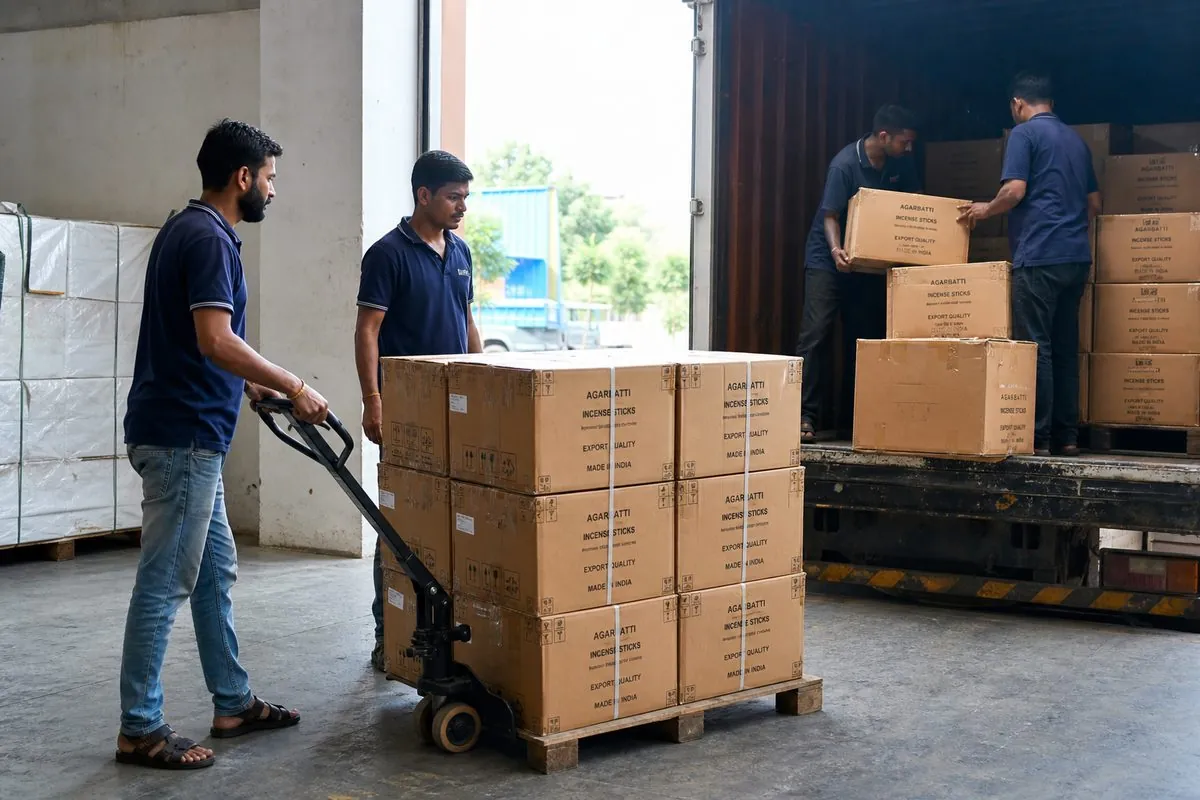
Corridor ranking does not replace a buyer brief. Every serious market still needs written fragrance specs, stick count and burn-time targets, pack format, Incoterm, HS 33074100 alignment, and sample retention — then add destination extras (US Prop 65 / claim review, UAE Arabic panels, Chile Spanish labels, Spain REACH) before you accept the proforma.
Country-wise Opportunities
Market Snapshot
The profiles below rank corridor fit for Indian incense stick exporters using WITS 2024 value signals plus duty, freight, and compliance burden. For preferred fragrances and pack formats by country, use Most Demanded Indian Incense Sticks (Agarbatti) by Country — this section stays on market-entry economics.
Country opportunity ranking matrix for Indian agarbatti exports (directional)
Swipe →
Data table — swipe horizontally on small screens
| Country | WITS 2024 India Value | Duty / Preference Cue | Compliance Burden | Entry Priority Cue |
|---|---|---|---|---|
| United States | ~US$21.2M | Confirm live USITC HTS Ch.33 line | High for retail claims | Tier 1 value; Tier 2 if docs weak |
| United Arab Emirates | ~US$7.7M | GCC schedules; confirm preference | Medium (Halal/label) | Tier 1 hub + local |
| Nigeria | ~US$7.0M | Confirm ECOWAS/bilateral context | Low–medium | Tier 1 volume cash-flow |
| Iraq | ~US$5.7M | Confirm destination schedule | Low–medium | Tier 1–2 volume |
| Spain | ~US$5.6M | EU TARIC / preferences | High (REACH/IFRA) | Tier 2 EU gateway |
| Malaysia | ~US$5.5M | ASEAN FTA check | Medium | Tier 1 ASEAN |
| Chile | ~US$5.4M | Confirm bilateral/Mercosur context | Medium (labelling) | Tier 1 LatAm gateway |
| United Kingdom | ~US$5.4M | UK tariff schedule post-Brexit | Medium–high | Tier 1–2 retail/ethnic |
United States of America
- Demand signal
- Largest India-origin value; multi-channel retail and ethnic wholesale
- Burden focus
- HTS diligence, IFRA notes for retail, claim-safe labelling
- Entry cue
- Strong once documentation stack is ready; expensive if it is not
The USA is India's largest HS 330741 partner by value (~US$21.2M directional in 2024). It mixes ethnic grocery distribution, online sellers, and wellness/home-fragrance brands. USITC HTS 3307.41.00.00 publishes a general (MFN) duty field of 2.4% — confirm live USITC HTS including preferential and Chapter 99 overlays before quoting landed cost; FDA/CPSIA context can appear when buyers market consumer products with specific claims. Prop 65 and fragrance claim review raise compliance burden versus Africa or LatAm volume lanes. Enter with burn-tested packs and clear SDS rather than lowest FOB alone.
United Arab Emirates
- Demand signal
- Hub + local; strong India share
- Burden focus
- Halal, bilingual labels, competitive FOB
- Entry cue
- Tier 1 for exporters with Gulf-ready document packs
UAE (~US$7.7M) combines domestic demand with Jebel Ali re-export into wider GCC and African networks. Halal documentation and Arabic/English retail labelling often matter for modern trade. Short transit from western Indian ports improves sample-to-FCL velocity. Treat UAE as both an end market and a hub — confirm whether the consignee is local retail or onward re-export before locking pack language.
Nigeria
- Demand signal
- High volume wholesale absorption
- Burden focus
- Packing durability; payment and claim terms
- Entry cue
- Tier 1 cash-flow market when credit risk is controlled
Nigeria (~US$7.0M) is a flagship West Africa volume corridor for charcoal-dipped and masala sticks. Compliance burden is lower on fragrance dossiers than US/EU retail, but payment-term discipline, carton strength, and vessel reliability decide whether programmes repeat. Confirm ECOWAS or bilateral preference assumptions with the buyer's broker — never assume zero duty from memory.
Iraq
- Demand signal
- Steady Middle East volume
- Burden focus
- Logistics routing; packing strength
- Entry cue
- Tier 1–2 volume alongside UAE
Iraq (~US$5.7M) sustains ritual and household wholesale demand. Routing and final-delivery clarity matter as much as FOB. Durable master cartons, simple strong fragrances, and transparent Incoterms outperform complex private-label art on first entry. Validate destination duty and any preferential certificates before trial PO.
Spain
- Demand signal
- EU entry + Iberian distribution
- Burden focus
- REACH/SVHC, IFRA, EU labelling
- Entry cue
- Tier 2 after volume corridors fund the doc stack
Spain (~US$5.6M) functions as a meaningful EU gateway for Indian agarbatti. TARIC duty confirmation, REACH/SVHC importer obligations where fragrance substances apply, and IFRA guidance for retail programmes raise the compliance bar. Once documentation is solid, Iberian distributors can open wider EU reach — but do not treat Spain as a low-document Africa analogue.
Malaysia
- Demand signal
- ASEAN ritual + retail
- Burden focus
- FTA docs; Halal where retail requires
- Entry cue
- Tier 1 ASEAN diversification
Malaysia (~US$5.5M) blends ritual, ethnic wholesale, and modern retail inside ASEAN. Confirm ASEAN FTA preferential claims and local fragrance labelling rules before promising duty savings on the proforma. Shorter sailings from South India ports support faster trial cycles than LatAm lanes.
Chile
- Demand signal
- LatAm household fragrance gateway
- Burden focus
- Long-haul packing; Spanish labels
- Entry cue
- Tier 1 LatAm when factories already export hex FCL
Chile (~US$5.4M) is a standout LatAm gateway for Indian incense, with Argentina, Brazil, and Mexico as related corridor extensions in the broader Americas strategy. Long ocean transit makes moisture barriers and scent segregation mandatory. Spanish-language labelling expectations should be scoped at sampling, not after arrival.
United Kingdom
- Demand signal
- Ethnic + natural wellness mix
- Burden focus
- UK-specific rules; IFRA for premium retail
- Entry cue
- Tier 1–2 depending on herbal vs commodity mix
The UK (~US$5.4M) combines ethnic retail with natural/wellness positioning. Post-Brexit, do not copy-paste EU document assumptions — confirm UK tariff and labelling rules separately even when they look similar to EU practice. Herbal and cleaner-burn stories perform when substantiated; commodity dipped still moves in ethnic wholesale.
LatAm, EU, and Africa corridor extensions
Beyond the top eight, sequence Argentina, Brazil, and Mexico after Chile when Spanish/Portuguese labelling and long-haul packing are proven. Netherlands, France, and Germany extend Spain/UK European strategy for distributors who already clear REACH-aware shipments. South Africa, Saudi Arabia, and Canada offer diversification once payment and document workflows are stable. Keep these as second-wave markets so year-one teams are not drowning in eight simultaneous compliance calendars.
Export Process
Export Tip
Once a destination ranks into your active list, the market-entry process is: lock corridor and stick family → burn-test samples → confirm duty with destination broker → align Chemexcil/CHA HS line → proforma with Incoterm and claim window → production and fragrance-segregated packing → shipping bill on 33074100 → ocean booking on the ranked lane → arrival docs and buyer QC. Full operational depth sits in the pillar guide; here the process is framed as a ranking gate — do not book Nigeria payment terms with a USA retail document stack, or vice versa.
Duty verification gate before proforma
Require a written duty memo from the buyer's broker on the exact HTS/CN/local line for burning incense preparations. Preferential claims (ASEAN, bilateral, or other) only count when origin paperwork matches the agreement rules. Wrong duty assumptions are the fastest way to win a PO on FOB and lose it on landed cost.
Compliance stack gate before art approval
Halal, IFRA notes, SDS, and bilingual labels must be decided before private-label plates are made. Changing compliance mid-artwork destroys lead time on USA, UK, UAE, and Spain programmes.
Freight and festive calendar gate
Align PO dates with Navratri, Diwali, Christmas, and Ramadan capacity. A Chile or USA sailing that misses a seasonal window can idle inventory longer than a UAE short-sea miss.
Sourcing Checklist
Checklist

Buyer Checklist
Checklist
Exporter Checklist
Checklist
Common Buyer Mistakes
Common Mistakes Box
Most first-shipment incense failures that look like quality problems are actually market-selection problems. Avoid the patterns below before you fund samples into a new country.
Future Market Trends
Key Statistics
Through the late 2020s, Indian agarbatti destination mix will keep featuring the USA as the largest value anchor, with UAE and Malaysia reinforcing Gulf–ASEAN hub roles, Nigeria and Iraq sustaining Africa–Middle East volume, and Chile anchoring LatAm household fragrance growth alongside Argentina, Brazil, and Mexico. Spain and the UK will remain the documentation gateways into European retail for herbal and private-label programmes.
Expect tighter fragrance compliance questions in US/EU retail, continued Halal expectations in Gulf and parts of ASEAN/Africa, and more buyer requests for charcoal-free or vegan substantiation in wellness channels — opportunities covered in depth in the natural/eco cluster post. Exporters who treat corridors as separate P&Ls will outlast those who run one global price list.
Challenges & Solutions
- Challenge: wrong first market for your document stack — Solution: sequence Nigeria/Chile/UAE wholesale before USA/EU retail if IFRA/SDS are incomplete
- Challenge: duty assumption errors — Solution: live HTS/TARIC/local schedule check per destination before proforma
- Challenge: scent cross-contamination on mixed FCL — Solution: segregation protocols and buyer-approved stow plans, especially USA/Chile long haul
- Challenge: festive capacity crush — Solution: book custom/PL programmes 4–8+ weeks out; do not promise Diwali production for Christmas retail without buffer
- Challenge: hub vs end-market confusion (UAE) — Solution: write final destination and label language into the PO
- Challenge: HS misdeclaration risk — Solution: CHA confirmation that burning sticks stay on 33074100, not 33074900
Scaling incense exports across ranked countries creates recurring operational challenges. Address them as corridor design problems.
Compliance Checklist
Checklist
Compliance Notes
Sources
- WITS / UN Comtrade — India exports HS 330741 by partner, 2024
- WITS / UN Comtrade — India imports HS 330741 by partner, 2024
- UN Comtrade Database (Comtrade Plus)
- ITC Trade Map
- DGFT (India) — IEC / Foreign Trade Policy portal
- ICEGATE — Indian Customs EDI
- India CBIC — Customs Tariff / notifications
- Exim Guru — ITC-HS 33074100 Agarbatti (policy Free)
- Chemexcil India — Basic Chemicals, Cosmetics & Dyes EPC (Panel III Cosmetics, Soaps, Toiletries & Essential Oils)
- IFRA — International Fragrance Association
- USITC Harmonized Tariff Schedule — search 3307.41
- USITC HTS Chapter 33 PDF archive (historical reference)
- European Commission TARIC consultation
- ECHA — REACH / SVHC guidance
- ICC Incoterms® rules
- Altus Exports — Contact
All sources accessed for factual audit 2026-08-01. Prefer primary government, council, and multilateral trade databases when citing figures in contracts or buyer presentations. Trade totals below are WITS/UN Comtrade directional figures — re-verify via DGCI&S / ITC Trade Map before contracts.
WITS partner rankings and duty notes change annually — re-run Comtrade and destination tariff lookups before market-entry budgets for incense sticks.
Conclusion
- Process pillar: How to Export Incense Sticks (Agarbatti) from India
- SKU demand by country: Most Demanded Indian Incense Sticks by Country
- Buyer prospecting: Find International Buyers for Incense Sticks
- Specialty margin: Natural, Herbal & Eco-Friendly Incense Export Opportunities
The best countries for Indian incense stick (agarbatti) exports in practical ranking terms are the United States, UAE, Nigeria, Iraq, Spain, Malaysia, Chile, and the United Kingdom — the WITS 2024 value leaders under HS 330741 — supported by LatAm, EU, and Africa corridor extensions. They are not interchangeable. Volume corridors reward packing strength and payment discipline; retail-compliance corridors reward IFRA, SDS, Halal, and labelling readiness. Sequence entry so cash-flow markets fund the documentation stack for harder gateways.
Altus Exports helps Indian manufacturers and international buyers shortlist corridors, burn-test factory lots, and move FCL programmes as a merchant exporter in India and global sourcing partner. Explore export products from India, product sourcing company India, or contact Altus Exports to plan your next market.