
Chemexcil Registration Benefits for Incense Stick (Agarbatti) Exporters
By Saurabh Mittal, Founder, Altus Exports
Why Chemexcil RCMC registration matters for incense stick (agarbatti) exporters under HS 33074100 — application steps, membership benefits, trade-fair access, renewal discipline, and how council credentials strengthen buyer due diligence for Indian burning odoriferous preparations.
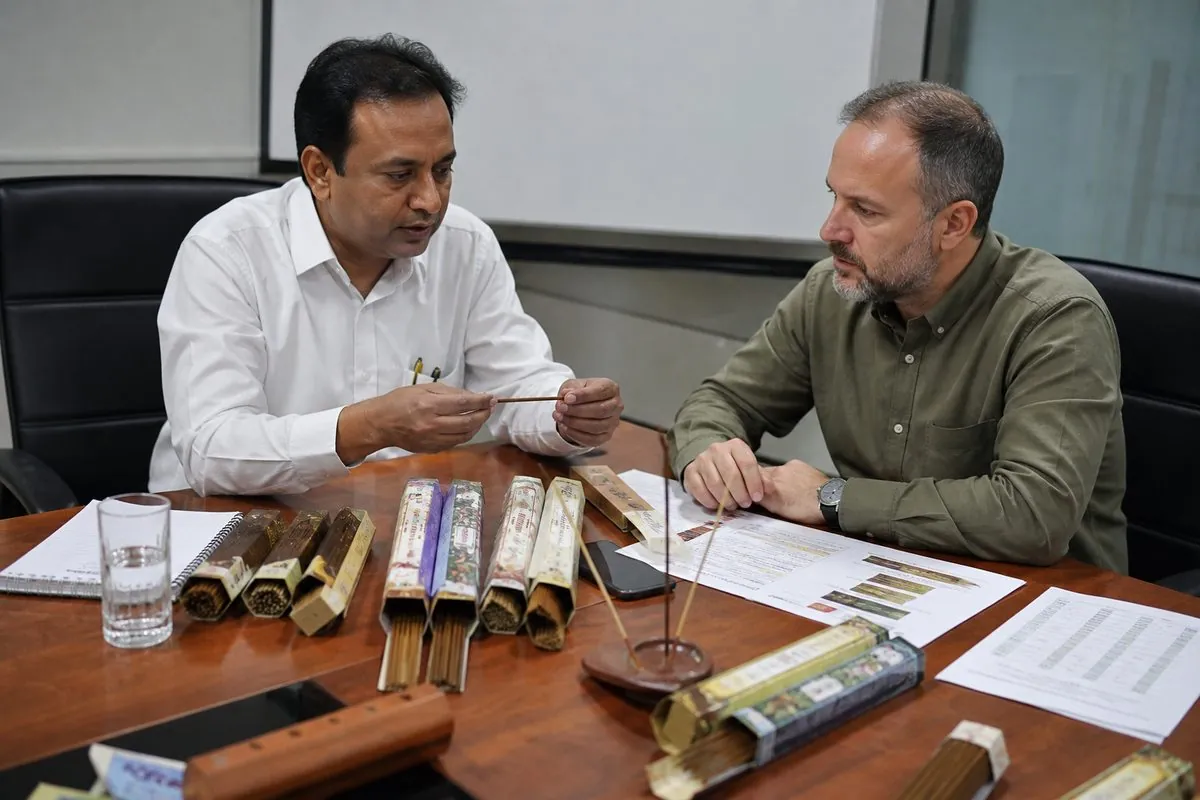
Chemexcil registration is the council credential that separates organised incense stick (agarbatti) exporters from ad-hoc traders in the eyes of international buyers — and in practice, it unlocks fair participation, buyer directories, market intelligence, and the Registration-cum-Membership Certificate (RCMC) that procurement teams archive during vendor onboarding. For burning odoriferous preparations classified under India HS 33074100 (WITS/HS6 330741), Chemexcil sits alongside the Import Export Code as the baseline export-readiness stack that ethnic retailers, wellness distributors, and lifestyle importers check before issuing trial purchase orders.
This guide explains what Chemexcil registration actually delivers for agarbatti exporters: why membership matters under Chapter 33, how to apply and renew RCMC, which benefits map to incense programmes, how fair access accelerates buyer meetings, and how council proof improves credibility without replacing lot-level burn-test quality evidence. Directional WITS 2024 India HS 330741 exports totalled roughly US$147.6M and ~40,884 MT — a category where council-backed introductions and current RCMC proof can shorten sales cycles for new exporters entering USA, UAE, Nigeria, Spain, Malaysia, Chile, and UK corridors.
This article owns the Chemexcil / RCMC application, benefits, fair access, and ongoing compliance use for agarbatti exporters. It does not replace the field-by-field shipment document pack in our incense stick export documentation checklist, nor the natural, herbal, and eco technical pathways covered in natural herbal eco-friendly incense stick export opportunities. For the end-to-end export workflow that RCMC supports, see How to Export Incense Sticks (Agarbatti) from India. Altus Exports operates as a merchant exporter coordinating Chemexcil-aligned agarbatti programmes for Indian factories and international buyers.
Key Takeaways
Summary Box
Executive Summary
Summary Box
Chemexcil RCMC is the export-promotion credential incense stick exporters use alongside IEC to pass buyer KYC, access cosmetics and personal-care trade events, and signal sector registration for HS 330741 agarbatti programmes.
RCMC supports promotion and credibility — it does not replace burn-test reports, packing standards, or destination compliance layers such as IFRA notes, REACH/SVHC statements, or Halal certificates where buyers mandate them.
This guide maps application steps, renewal discipline, fair access, benefits by export activity, and how council membership fits the agarbatti operating system from Mysuru–Bengaluru and Tamil Nadu corridors through Nhava Sheva, Mundra, Chennai, and Tuticorin.
Exporters who treat Chemexcil as a calendar-managed sales credential — not a one-time PDF — convert fair meetings and directory inquiries into sample kits and trial cartons more reliably than traders who chase membership only after a buyer asks.

Market Size & Industry Overview
Key Statistics
India's incense stick industry is a mature Chapter 33 export category with deep manufacturing clusters, retail pack formats, and multi-corridor demand spanning ritual, ethnic grocery, wellness, yoga, and modern home fragrance. Directional WITS/UN Comtrade data for India HS 330741 in 2024 shows roughly US$147.6 million and 40,884 metric tons of burning odoriferous preparations — a scale large enough that organised exporters compete on credentials, fragrance consistency, and delivery reliability as much as on unit price.
Supply concentrates in the Mysuru–Bengaluru masala corridor, Tamil Nadu–Puducherry dipped and masala programmes, Gujarat–Mumbai private-label consolidation, Delhi-NCR ethnic wholesale, and Kannauj-linked attar inputs for premium lines. Chemexcil membership does not invent that capacity; it credentials the export house that commercialises it for overseas buyers who cannot visit every rolling unit before first PO.
Chemexcil — the Basic Chemicals, Cosmetics & Dyes Export Promotion Council — covers cosmetics, toiletries, and related Chapter 33 odoriferous preparations including agarbatti. For incense exporters, the commercial question is not whether India can produce sticks, but whether the exporter can prove organised council affiliation, renew RCMC on time, and show up at fairs with burn-tested samples under a consistent HS narrative.
Why council affiliation matters in a fragmented stick market
Agarbatti manufacturing is fragmented across thousands of units and merchant consolidators. Buyers therefore use institutional signals — IEC, Chemexcil RCMC, written fragrance specs, and retained burn-test lots — to filter suppliers before investing in private-label art or multi-SKU programmes.
Council membership is especially valuable for MSMEs and new merchant exporters who lack a decade of BL history. RCMC plus fair participation creates a verifiable path into importer conversations that cold email alone rarely opens.
What this post owns versus sibling cluster articles
Own here: Chemexcil application logic, RCMC benefits, renewal, fair access, and buyer-credibility use for HS 330741 exporters.
Defer elsewhere: full document field checklists, natural/eco claim engineering, country ranking methodology, and SKU catalog depth — link those posts contextually rather than duplicating them.
Export Statistics
Key Statistics
Export statistics matter for Chemexcil members because council product scope, fair targeting, and buyer outreach should align with where India already ships HS 330741 value. Treat the figures below as directional planning context from WITS/UN Comtrade 2024 — re-verify with DGCI&S, ITC Trade Map, or paid customs extracts before citing in contracts or fair ROI decks.
Chemexcil-registered exporters should map RCMC product lists to the same commercial description their CHA files on shipping bills: India 33074100 for burning agarbatti and related burning preparations. Do not force sticks into 33074900 (other odoriferous preparations, non-burning) or miscellaneous toilet preparations without CHA confirmation.
Trade Statistics Snapshot for HS 330741
Directional India HS 330741 export snapshot (WITS/UN Comtrade, 2024)
Swipe →
Data table — swipe horizontally on small screens
| Metric | Directional figure | Chemexcil relevance |
|---|---|---|
| World export value | ~US$147.6M | Scale justifies council fair investment and directory listing |
| World export quantity | ~40,884 MT | Volume corridor for FCL planning after RCMC-ready vendor approval |
| Primary HS (India) | 33074100 | Align RCMC product list and shipping-bill line with CHA |
| WITS HS6 | 330741 | Use for trade-data prospecting and buyer targeting |
| Governing council | Chemexcil | RCMC + fair access for Chapter 33 odoriferous preparations |
| Leading partners (value) | USA, UAE, Nigeria, Iraq, Spain, Malaysia, Chile, UK | Prioritise fair outreach and sample kits by corridor |
India's 2024 HS 330741 export profile shows a diversified destination mix rather than a single-country dependency. The United States leads by value, followed by Gulf, African, European, ASEAN, and Latin American partners — each with different pack, fragrance, and compliance expectations that Chemexcil fair calendars and market briefs can help members prioritise.
Partner value context for council outreach
Leading 2024 partners by value include United States (~US$21.2M), United Arab Emirates (~US$7.7M), Nigeria (~US$7.0M), Iraq (~US$5.7M), Spain (~US$5.6M), Malaysia (~US$5.5M), Chile (~US$5.4M), and United Kingdom (~US$5.4M), followed by Argentina, Brazil, Netherlands, Mexico, South Africa, France, Australia, and others. Chemexcil members should treat these ranks as a prospecting heat map, not a guarantee of easy entry.
Import Statistics
Key Statistics
Import statistics — viewed from destination markets importing Indian HS 330741 — help Chemexcil members decide which fairs, directories, and sample programmes deserve budget. The same corridors that absorb Indian export value typically show recurring importer demand for masala sticks, perfume-dipped charcoal sticks, and retail hex packs.
Chemexcil market intelligence briefs complement Comtrade partner tables: council notices explain policy or fair shifts that raw import totals will not surface. Combine both before locking annual fair registration and private-label capacity.
Import Data Analysis by Corridor
Directional import-corridor implications for Chemexcil members
Swipe →
Data table — swipe horizontally on small screens
| Destination corridor | Import demand signal | Credential / compliance focus | Chemexcil use case |
|---|---|---|---|
| United States | Largest India HS 330741 value partner (~US$21.2M) | Vendor KYC, SDS, Prop 65 awareness where claims apply | RCMC in vendor file + lifestyle fair meetings |
| UAE / Gulf | Strong re-export and ethnic retail pull (~US$7.7M UAE) | Halal, Arabic/English labelling | Council directories + Gulf buyer meets |
| Nigeria / Africa | Volume charcoal and masala programmes (~US$7.0M Nigeria) | Competitive FOB, reliable lead times | Fair samples geared to wholesale hex/bulk packs |
| Spain / EU | Spain ~US$5.6M; EU adds REACH/IFRA scrutiny | REACH/SVHC statements, IFRA notes when retail-mandated | EU personal-care / gift fair targeting |
| Malaysia / ASEAN | Malaysia ~US$5.5M ritual and retail mix | FTA preference checks, local labelling | ASEAN buyer lists via council channels |
| Chile / LatAm | Chile ~US$5.4M; Argentina/Brazil also active | Spanish/Portuguese labelling readiness | Directory outreach + sample courier plans |
| United Kingdom | ~US$5.4M wellness and ethnic retail | Post-Brexit duty and labelling confirmation | UK importer KYC packs with current RCMC |
USA and UK/EU importers often weight IFRA-aligned fragrance notes, SDS availability, and retail labelling. UAE and broader Gulf programmes frequently request Halal documentation and bilingual packing. Nigeria and other African markets absorb volume charcoal and masala sticks with strong price and lead-time sensitivity. Spain, Malaysia, Chile, and Latin American partners mix ritual and retail formats — confirm language and duty preferences before quoting.
Use import-side patterns to brief Chemexcil fair meetings: bring corridor-specific sample kits rather than a single generic fragrance tray. Council access gets you the meeting; import-aware preparation converts the meeting.
Product Categories / Variants
Summary Box
Chemexcil registration is product-scope aware: your RCMC and membership profile should describe the incense families you actually export, not a vague 'cosmetics' line that confuses buyers during due diligence. This section maps common agarbatti variants to how council membership is used commercially — without owning the full SKU catalog depth of the products cluster article.
When you add new stick types — for example private-label sandalwood hex programmes or bamboo-less dhoop — update Chemexcil product declarations so fair listings and buyer questionnaires match your website and shipping descriptions.
Agarbatti variants mapped to Chemexcil membership use (not a full SKU catalog)
Swipe →
Data table — swipe horizontally on small screens
| Variant family | Typical HS planning line | How Chemexcil helps | Buyer credibility note |
|---|---|---|---|
| Masala (hand-rolled) sticks | 33074100 | Fair demos and directory discovery for branded masala | Pair RCMC with burn-time and ash QC notes |
| Perfume-dipped charcoal sticks | 33074100 | Volume-buyer introductions via council events | Disclose fragrance oil handling docs when requested |
| Herbal / natural sticks | 33074100 | Positioning at lifestyle and wellness fairs | Do not over-claim organic/eco without substantiation (see specialty post) |
| Bamboo-less dhoop sticks | 33074100 | Differentiate in council product lists | Clarify extrusion format in commercial invoice description |
| Incense cones | 33074100 | Include in membership product basket if exported | Pack crush protection evidence reassures importers |
| Premium sandalwood / oud / floral lines | 33074100 | Target premium retail buyers at Chemexcil-linked shows | IFRA notes often requested for EU/US retail |
| Private-label retail hex / pouch programmes | 33074100 | Credibility during brand-owner vendor audits | RCMC + art/spec control reduces onboarding friction |
HS contrast lines Chemexcil members must not blur
Keep burning sticks on 33074100. Use 33074900 only for non-burning odoriferous preparations when that is truly the product. Avoid dumping true agarbatti into miscellaneous toilet/perfumery residuals. Accessory holders (e.g., wooden stands) are separate HS families and are not the stick itself — see décor guidance only when mixed containers include holders.
Manufacturing Overview
Export Tip
Chemexcil-registered agarbatti exporters typically source from the same manufacturing map every serious buyer already knows: Mysuru–Bengaluru for masala depth, Tamil Nadu–Puducherry for volume dipped and masala packing, Gujarat–Mumbai for private-label consolidation, Delhi-NCR for ethnic wholesale, and Kannauj for attar-linked premium inputs. RCMC credentials the export entity; factory process control and burn-test discipline credential the lot.
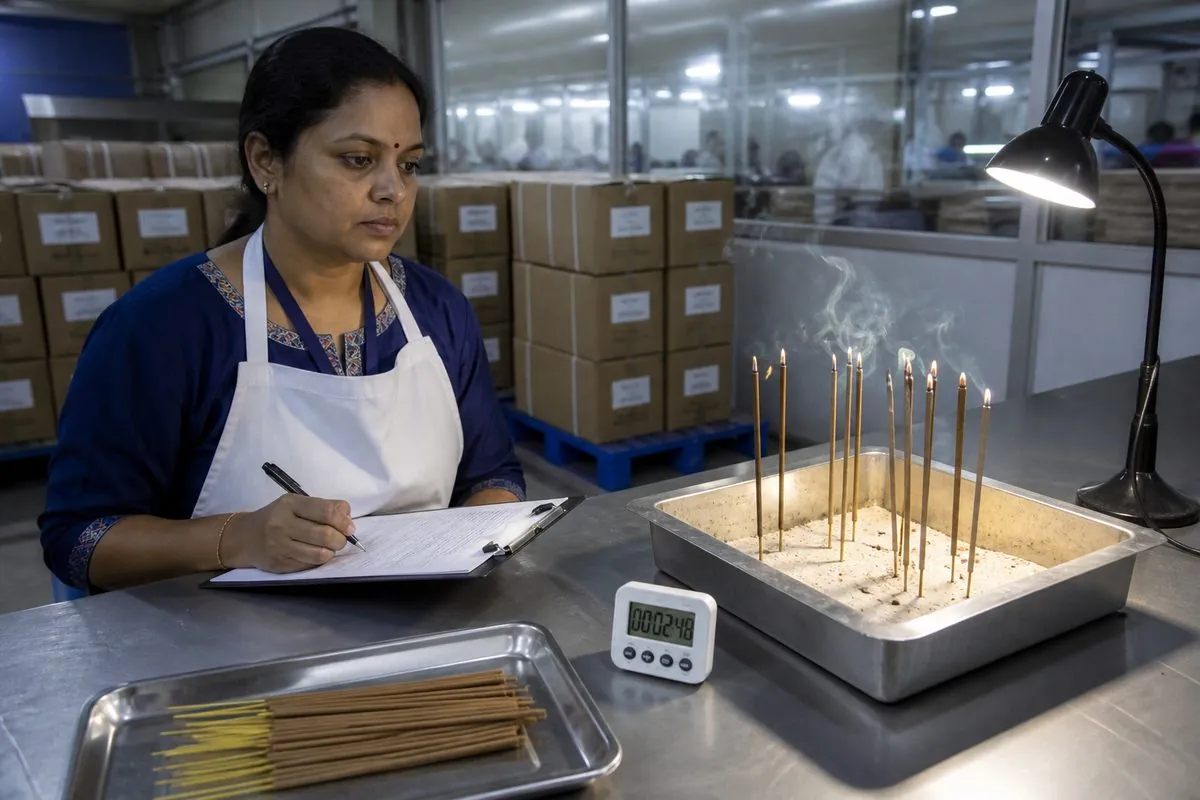
Council membership does not inspect rolling lines or fragrance kitchens. Buyers still audit stick count accuracy, fragrance throw, burn time, ash behaviour, moisture protection, and fragrance segregation in the warehouse. Pair RCMC with factory visits or third-party inspection when importers require vendor approval beyond paperwork.
Merchant exporters using Chemexcil credentials must still maintain lot identity from packing hall to master carton — membership cannot repair mixed-fragrance cartons or undocumented reformulations mid-programme.
Cluster readiness before fair season
Book sample production 7–14 days ahead of Chemexcil or council-linked events. Stock fragrances typically need 2–4 weeks after PO; custom private-label art often needs 4–8 weeks. Festive calendars (Navratri, Diwali, Christmas, Ramadan-linked demand) can extend factory queues — renew RCMC and reserve capacity early.
Pricing Analysis
Buyer Tip
Chemexcil membership does not set FOB prices, but council-connected buyers expect transparent pricing mechanics: named Indian port, stick type, pack format, and whether document or private-label art fees are included. Quote in USD per kg or per carton depending on retail versus bulk programmes.
Directional FOB planning bands (confirm on quote date): economy perfume-dipped sticks roughly US$0.8–2.5/kg; mid masala about US$2.5–6/kg; herbal/natural about US$4–10/kg; premium sandalwood/oud and private-label retail packs higher and often quoted per hex box or carton. Fragrance oil and bamboo stick costs move — never treat bands as contracts.
Directional FOB bands for Chemexcil-facing agarbatti quotes
Swipe →
Data table — swipe horizontally on small screens
| Grade / programme | Directional FOB | Quote unit | Chemexcil buyer expectation |
|---|---|---|---|
| Economy perfume-dipped sticks | ~US$0.8–2.5/kg | USD/kg FOB port | Clear fragrance family + stick count per pack |
| Mid masala sticks | ~US$2.5–6/kg | USD/kg or carton | Burn-test notes attached to quote |
| Herbal / natural sticks | ~US$4–10/kg | USD/kg or carton | Honest claim language; no unsubstantiated eco claims |
| Premium sandalwood / oud / PL retail | Higher; programme-specific | Often USD/hex or carton | IFRA/SDS readiness for EU/US retail buyers |
| Incense cones / dhoop assortments | Varies by format | USD/carton common | Pack crush and moisture notes in offer |
Pricing hygiene for council introductions
When Chemexcil directories or fair leads request quotes, send a one-page offer with Incoterm (usually FOB Nhava Sheva, Mundra, Chennai, or Tuticorin), validity dates, MOQ, lead time, and RCMC/IEC company name matching the invoice entity. Fragmented emails with mismatched legal names slow buyer approval even when the stick price is competitive.
MOQ Analysis
Buyer Tip
MOQ tiers for Chemexcil-originated programmes follow commercial practice, not statutory council limits. Sample kits open fair conversations; trial cartons prove logistics; wholesale and FCL volumes follow after fragrance approval.
Typical practice: samples 1–5 kg or 50–200 hex boxes; trial 200–1,000 kg or 1–5 cartons per SKU; wholesale 1–5 MT; FCL planned by pack density (hex boxes versus bulk poly bundles). Private-label art programmes may require higher unit MOQs per fragrance.
Directional MOQ tiers for Chemexcil-linked agarbatti deals
Swipe →
Data table — swipe horizontally on small screens
| Stage | Typical MOQ | Purpose | Council context |
|---|---|---|---|
| Fair / sample kit | 1–5 kg or 50–200 hex boxes | Burn-test and fragrance shortlist | Bring kits to Chemexcil-linked fairs |
| Trial order | 200–1,000 kg or 1–5 cartons/SKU | Logistics and QC validation | Attach current RCMC to vendor portal |
| Wholesale programme | 1–5 MT | Repeat distributor replenishment | Keep membership valid across seasons |
| FCL programme | By pack density; confirm with forwarder | Container economics after SKU lock | Renewal must not lapse mid-programme |
Packaging Standards
Export Tip
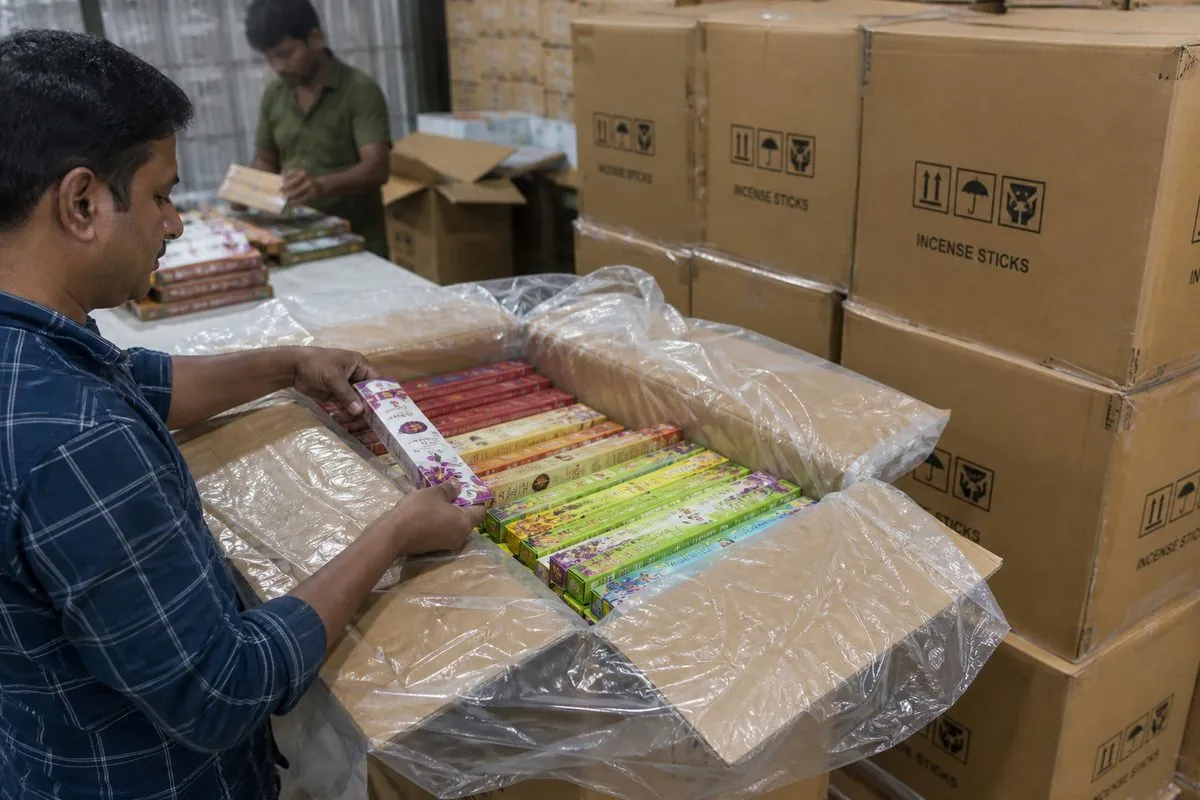
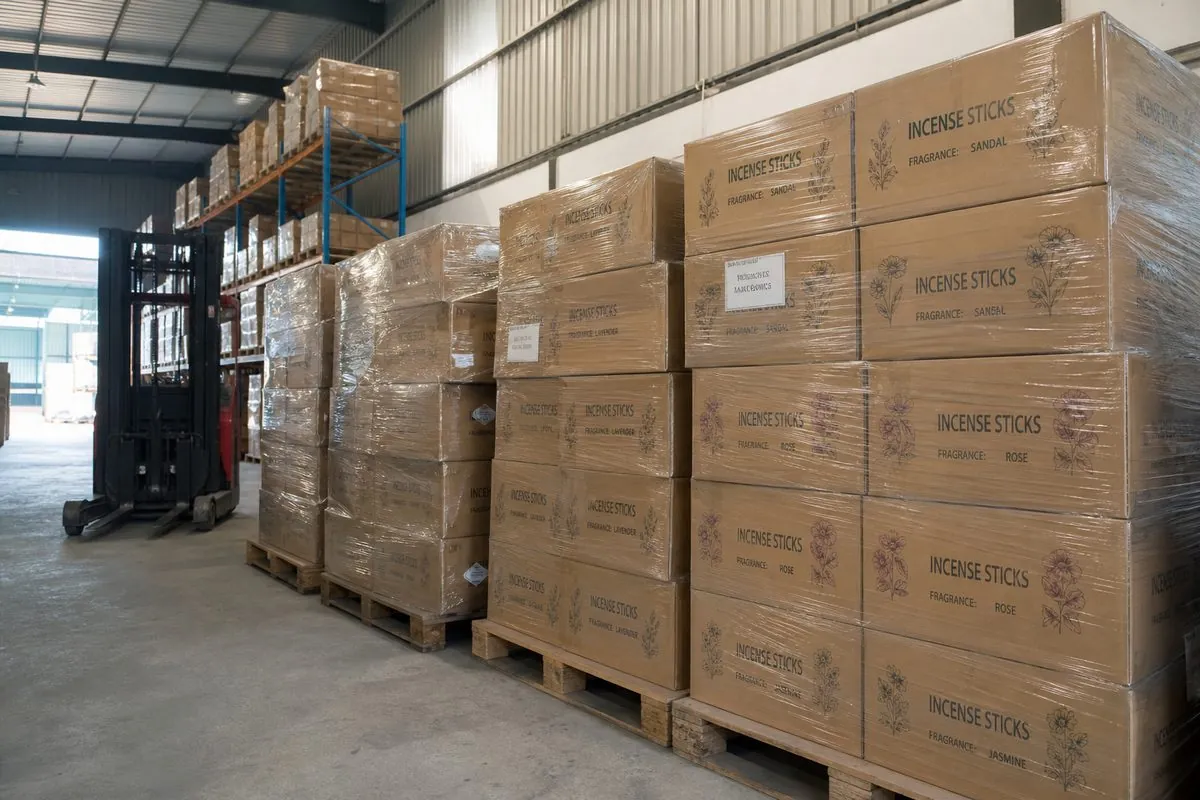
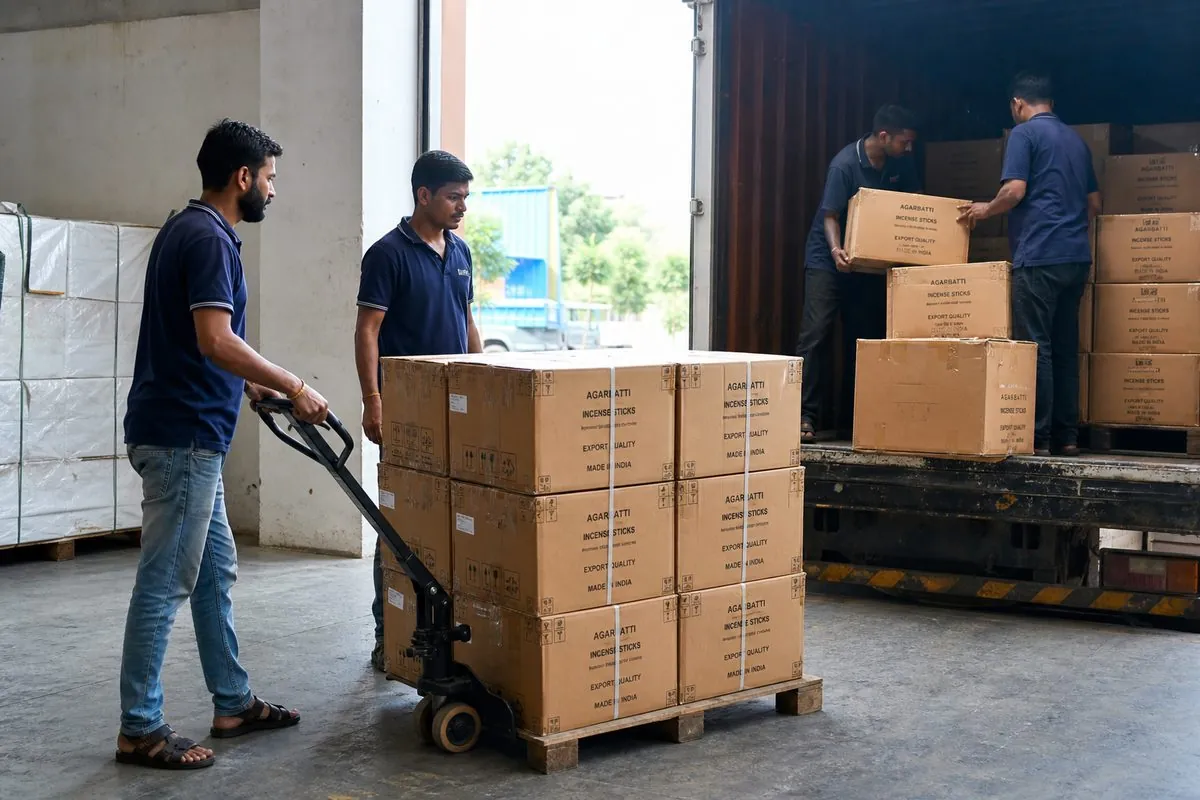
Chemexcil credibility collapses quickly if samples and commercial packs arrive crushed or scent-contaminated. Standard export practice uses inner hex or rectangle boxes, pouches, or sleeves; corrugated master cartons with moisture barrier; fragrance segregation; and pallet stretch-wrap. Mark fragrance name, stick count, net weight, batch/lot ID, country of origin, and handling icons.
Council fairs are where buyers first touch your pack — treat booth samples as brand evidence, not leftovers. Align fair pack artwork with the product names on your Chemexcil profile and website.
Packaging standards relevant to Chemexcil-facing programmes
Swipe →
Data table — swipe horizontally on small screens
| Pack element | Typical configuration | Why buyers care | Exporter action |
|---|---|---|---|
| Inner retail pack | Hex / rectangle box or pouch | Shelf presentation and stick protection | Match fair samples to sellable pack |
| Master carton | Corrugated + moisture barrier | Ocean transit integrity | Lot marks match packing list |
| Fragrance segregation | Separate cartons / sealed liners | Prevents scent cross-contamination | Warehouse SOPs before stuffing |
| Palletisation | Stretch-wrap, crush-aware stack | Reduces damaged hex claims | Photo-document load for disputes |
| Marking | Fragrance, count, batch, origin | Traceability and customs clarity | Consistent with commercial invoice |
Container Loading Details
Export Tip
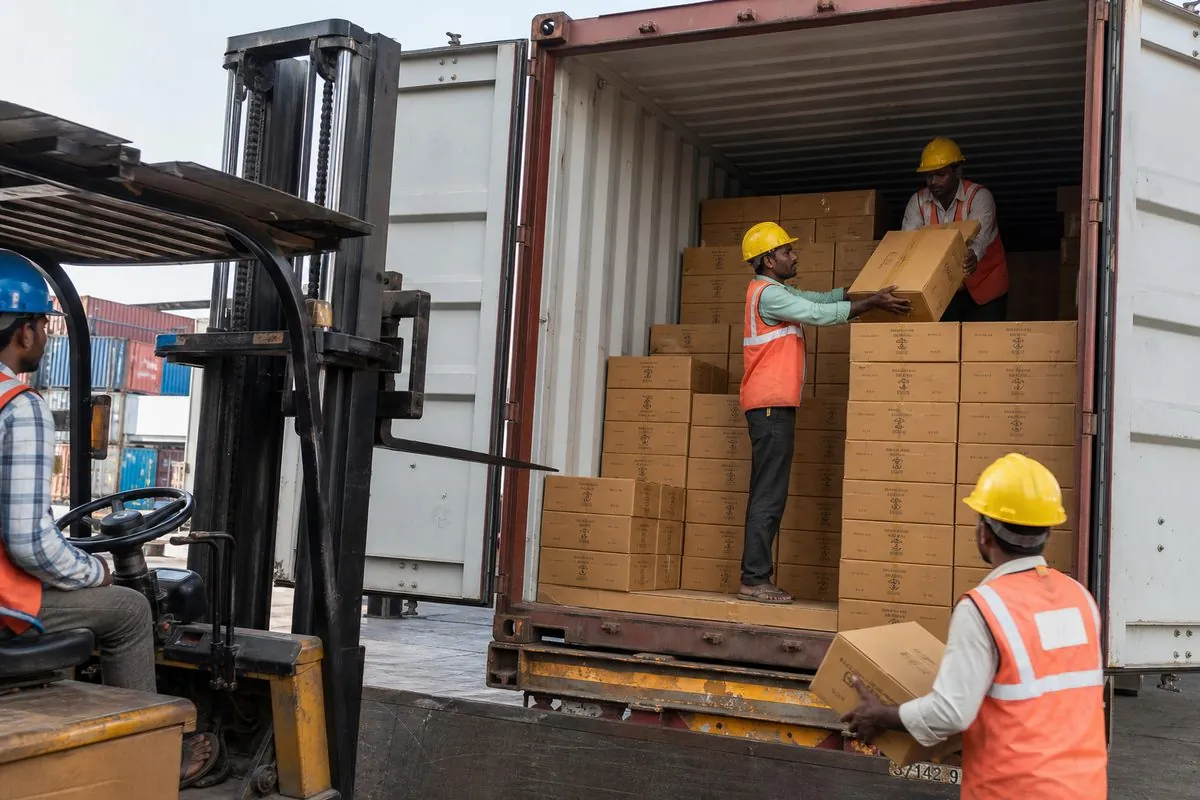
After Chemexcil introductions convert to orders, container loading becomes the operational proof of professionalism. Agarbatti FCL plans must protect crush-sensitive hex boxes, maintain fragrance segregation, and reconcile carton counts with the packing list before CHA filing.
Ports commonly used: Nhava Sheva, Mundra, Chennai, Tuticorin, with Bengaluru ICD consolidation where applicable. Confirm stow patterns with your forwarder — hex retail density differs sharply from bulk poly bundles.
Container loading checklist items for agarbatti FCLs
Swipe →
Data table — swipe horizontally on small screens
| Loading factor | Practice note | Risk if ignored | Link to Chemexcil programmes |
|---|---|---|---|
| Carton crush protection | Avoid over-stacking soft hex boxes | Broken packs and claim deductions | Fair-won retail buyers notice pack damage first |
| Fragrance segregation | Do not mix strong scents in open cartons | Cross-contamination disputes | Private-label programmes are unforgiving |
| Moisture control | Dry staging + barrier cartons | Soggy boxes, weak burn | Damages repeat orders from council leads |
| Lot identity | Batch IDs visible on masters | Traceability failure | Buyer audits after fair onboarding |
| Payload planning | Density by pack format | Underutilised FCL cost | Quote accurately after sample approval |
| Photo / tally record | Stuffing photos + carton tally | Harder claim defence | Protects reputation with new Chemexcil contacts |
Shipping Methods
Export Tip
Chemexcil-originated sample kits often move by courier or air parcel; commercial volumes move as LCL or FCL ocean freight under EXW, FOB, CFR/CIF, and selective DDP for mature retail programmes. Name the port and Incoterm on every offer that follows a council introduction.
Lead-time discipline matters after fair season: samples in 7–14 days, stock fragrances in 2–4 weeks, custom/private-label in 4–8 weeks. Do not promise fair-booth delivery dates your packing hall cannot meet — missed first shipments after Chemexcil meetings destroy trust faster than a slightly higher FOB.
Incoterms Chemexcil buyers commonly request
- EXW factory / warehouse (Mysuru, Bengaluru, TN, Gujarat) for experienced importers
- FOB Nhava Sheva / Mundra / Chennai / Tuticorin as the default commercial term
- CFR / CIF major destination ports when buyers want freight bundled
- DDP only for selected mature retail distributor programmes
Certifications
Compliance Notes
Chemexcil RCMC and IEC are baseline export credentials. They sit beside — not above — lot quality and destination compliance documents. Never tell a buyer that RCMC 'certifies' sandalwood content or herbal purity; that confuses membership with product certification and fails sophisticated audits.
Credentials and certificates around Chemexcil agarbatti programmes
Swipe →
Data table — swipe horizontally on small screens
| Credential | What it proves | Does not prove | When buyers ask |
|---|---|---|---|
| Chemexcil RCMC | Council membership / sector registration | Fragrance quality or GMP | Vendor onboarding, fairs, KYC |
| IEC (DGFT) | Legal export identity | Product performance | Every shipping bill / buyer file |
| Burn-test / QC report | Lot burn time, ash, throw | Council membership | First order and claims |
| SDS / MSDS | Fragrance compound handling info | Export promotion status | EU/US and many retail programmes |
| IFRA conformity notes | Fragrance usage guidance alignment | RCMC validity | Premium EU/US retail |
| REACH / SVHC statements | Substance communication for EU | Fair access rights | EU importer mandates |
| Halal certificate | Faith-aligned process claims | Chemexcil membership | Selected Middle East / Africa programmes |
| Certificate of Origin | Origin for preference / buyer file | Council directory listing | Customs and FTA claims |
| ISO 9001 / GMP (if verified) | Plant quality system claims | HS classification | Multinational vendor audits |
Buyer Requirements
Buyer Requirements
Buyers introduced through Chemexcil channels typically request: company profile, IEC copy, current RCMC, product list with HS 330741 scope, fragrance and stick-type specs, sample kit, indicative FOB, MOQ, lead time, packaging photos, and — where relevant — SDS, IFRA notes, Halal, or REACH statements.
Importers sourcing via the source incense sticks directly from India playbook will also ask for factory references, burn-test methods, and retained sample policies. Have a single indexed PDF credential pack ready before fair season rather than sending fragmented WhatsApp images.
What Chemexcil-aware buyers check first
- Legal name consistency across IEC, RCMC, GST, and bank documents
- RCMC validity dates covering the proposed shipment window
- Product scope that actually lists agarbatti / burning preparations
- Sample-to-spec match after burn test
- Willingness to share SDS and destination compliance docs early
Country-wise Opportunities
Market Snapshot
Country opportunity for Chemexcil members is less about inventing new demand and more about matching council fair calendars and directories to corridors that already import Indian HS 330741. Use the table below as a membership-action map — for deeper destination ranking methodology see best countries for Indian incense stick exports, and for SKU-by-country demand detail see most demanded Indian incense sticks by country.
Chemexcil-oriented country opportunity map for agarbatti exporters
Swipe →
Data table — swipe horizontally on small screens
| Country / region | Demand angle | Chemexcil action | Credential focus |
|---|---|---|---|
| United States | Largest value partner; wellness + ethnic retail | Lifestyle fair meetings; directory follow-up | RCMC + SDS + clear retail claims |
| United Arab Emirates | Hub and local ethnic/modern trade | Gulf buyer meets via council channels | Halal + bilingual pack readiness |
| Nigeria | Volume wholesale sticks | Price-ready sample kits at fairs | Reliable lead time + RCMC KYC |
| Iraq | Ritual and household fragrance volume | Targeted outreach from council lists | Sturdy packing + origin docs |
| Spain | EU retail and gift channels | EU-facing Chemexcil fair presence | IFRA/REACH readiness |
| Malaysia | Ritual + retail ASEAN demand | ASEAN buyer directories | Labelling + FTA checks |
| Chile | LatAm retail absorption | Spanish-language offer sheets | Pack durability for long voyages |
| United Kingdom | Wellness and ethnic grocery | UK importer KYC packs | Current RCMC on vendor portal |
| Brazil / Mexico / South Africa | Secondary growth partners | Selective fair ROI after core corridors | Payment-term and COA discipline |
Export Process
Export Tip
For Chemexcil-focused exporters, the 'export process' angle is the membership and credibility operating system that sits under the broader shipment workflow. Use the steps below to become RCMC-ready; use the pillar guide for Incoterms, ports, and end-to-end execution detail.
Chemexcil application document checklist (typical)
Swipe →
Data table — swipe horizontally on small screens
| Document / input | Purpose | Common failure mode |
|---|---|---|
| IEC | DGFT export identity | Inactive or mismatched entity name |
| GST certificate | Tax identity alignment | Different trade name vs IEC |
| PAN / entity constitution docs | Legal existence | Missing partnership/company papers |
| Bank details / cancelled cheque | Financial KYC | Account name mismatch |
| Product list (agarbatti / HS 330741) | Council scope | Vague 'general chemicals' description |
| Export profile / turnover info | Membership category | Incomplete or inconsistent figures |
| Application fee remittance proof | Processing trigger | Wrong fee slab or missing UTR |
Step 1: Secure IEC, GST, and bank AD readiness
Obtain and activate IEC via DGFT, ensure GST registration matches the export entity, and align bank AD code details. Chemexcil applications stall when IEC or bank particulars are incomplete or inconsistent.
Step 2: Confirm Chemexcil product-list fit for agarbatti
Verify with Chemexcil and your CHA that burning incense sticks under HS 33074100 belong on the Chemexcil RCMC route for your entity and product basket. Do not assume another council covers finished agarbatti without confirmation.
Step 3: Apply for Chemexcil membership / RCMC
Submit membership application with IEC, GST, PAN, entity documents, bank details, export profile, and a product list that explicitly covers agarbatti / odoriferous preparations which operate by burning. Processing timelines vary with completeness — apply before fair registration deadlines.
Step 4: Archive digital RCMC and sync legal names
Store PDF RCMC with membership number and validity dates. Ensure company name and address match IEC exactly. Upload the same pack to buyer vendor portals used after council introductions.
Step 5: Use fair access and directories with sample discipline
Register for Chemexcil-backed or council-linked events early. Prepare corridor-specific sample kits, burn-test cards, and FOB sheets. See trade shows and B2B marketplaces for incense stick exporters for fair ROI tactics without duplicating that playbook here.
Step 6: Convert leads into trial orders under consistent HS filing
When POs arrive, keep commercial descriptions aligned with RCMC scope and CHA-confirmed 33074100 filing. Attach current RCMC to the buyer credential file; attach burn-test and packing evidence to the quality file. For document field detail, use the documentation checklist.
Step 7: Renew before peak season
Treat renewal as a sixty-day calendar event ahead of Diwali/Christmas/Ramadan shipping peaks and major fair registrations. Lapsed RCMC mid-negotiation is an avoidable credibility failure.
Sourcing Checklist
Checklist
Buyer Checklist
Checklist
Exporter Checklist
Checklist
Common Buyer Mistakes
Common Mistakes Box
Future Market Trends
Key Statistics
Chemexcil's role for agarbatti exporters is shifting from pure certificate issuance toward continuous digital vendor onboarding. Importers increasingly want machine-readable credential packs — current RCMC, IEC, SDS links, and spec sheets — uploaded to portals before humans review fragrance. Exporters who renew on time and keep product lists tidy will clear those portals faster.
Fair calendars continue to cluster around lifestyle, gift, personal-care, and ethnic wholesale seasons. Align RCMC validity, sample production, and private-label capacity with those peaks rather than treating membership as an annual surprise invoice.
Trade-data transparency under HS 330741 also raises the bar: buyers can see India ship nearly US$148M into diversified markets, so they expect exporters to behave like organised Chapter 33 suppliers — council membership included — not informal carton traders.
Where council membership intersects rising compliance expectations
Expect more requests for SDS, IFRA notes, and substance statements on retail-bound sticks even when RCMC is perfect. Membership opens the door; compliance packs keep the programme alive after the first trial. Keep natural/eco claim engineering in the specialty cluster article — here, the trend is simply that council-credible exporters are asked for cleaner documentation stacks sooner.
Challenges & Solutions
- Challenge: Unclear whether Chemexcil covers agarbatti — Solution: Confirm product-list fit with Chemexcil and CHA against HS 33074100 before applying.
- Challenge: Application delayed by name mismatches — Solution: Reconcile IEC, GST, bank, and entity documents before submission.
- Challenge: RCMC confused with quality certification — Solution: Train sales to present burn-test QC as the quality proof and RCMC as membership proof.
- Challenge: Fair access lost after lapse — Solution: Calendar renewals sixty days out; block fair registration until membership is current.
- Challenge: Buyer pauses mid-contract for expired RCMC — Solution: Include RCMC validity on internal shipment checklists beside lot IDs.
- Challenge: Product list outdated after SKU expansion — Solution: Update council declarations when adding cones, dhoop, or PL lines.
- Challenge: Fair leads go cold — Solution: Send corridor-specific quotes within 48 hours with credential PDF attached.
- Challenge: HS misdeclaration risk — Solution: Let CHA lock 33074100 vs 33074900; keep commercial descriptions consistent with RCMC scope.
Scaling Chemexcil-backed incense exports involves administrative, commercial, and operational friction. The table of challenges below focuses on membership and credibility issues this post owns — not every factory or freight problem in the pillar guide.
Challenge–solution detail for new MSME exporters
New MSMEs often underinvest in sample discipline after obtaining RCMC, then wonder why council directory inquiries do not convert. Membership gets attention; burn-tested, well-packed samples and clear FOB sheets convert attention into POs. Budget for kits and courier costs in the same quarter you pay membership fees.
Compliance Checklist
Checklist
Compliance Notes
Sources
- WITS / UN Comtrade — India exports HS 330741 by partner, 2024
- WITS / UN Comtrade — India imports HS 330741 by partner, 2024
- UN Comtrade Database (Comtrade Plus)
- ITC Trade Map
- DGFT (India) — IEC / Foreign Trade Policy portal
- ICEGATE — Indian Customs EDI
- India CBIC — Customs Tariff / notifications
- Exim Guru — ITC-HS 33074100 Agarbatti (policy Free)
- Chemexcil India — Basic Chemicals, Cosmetics & Dyes EPC (Panel III Cosmetics, Soaps, Toiletries & Essential Oils)
- IFRA — International Fragrance Association
- USITC Harmonized Tariff Schedule — search 3307.41
- USITC HTS Chapter 33 PDF archive (historical reference)
- European Commission TARIC consultation
- ECHA — REACH / SVHC guidance
- ICC Incoterms® rules
- Altus Exports — Contact
All sources accessed for factual audit 2026-08-01. Prefer primary government, council, and multilateral trade databases when citing figures in contracts or buyer presentations. Trade totals below are WITS/UN Comtrade directional figures — re-verify via DGCI&S / ITC Trade Map before contracts.
Chemexcil RCMC requirements and fair calendars update — confirm current council circulars before membership or renewal applications for agarbatti exporters.

Conclusion
Chemexcil registration for incense stick exporters is the practical credibility layer that sits beside IEC for HS 330741 agarbatti programmes. RCMC unlocks fair access, directory visibility, and buyer KYC confidence — provided you renew on time, keep product lists accurate, and never confuse membership with burn-test quality proof.
Use council channels to open doors in the USA, UAE, Nigeria, Spain, Malaysia, Chile, UK, and other active corridors, then execute with disciplined packing, correct HS filing, and transparent FOB offers. For shipment paperwork detail, continue with the documentation checklist; for fair conversion tactics, see trade shows and B2B marketplaces; for importer-side verification, use the sourcing playbook; and for end-to-end logistics, return to how to export incense sticks from India.
Altus Exports helps manufacturers and international buyers run Chemexcil-aligned incense stick programmes — verified factory lots, burn-tested fragrance specs, membership-ready credential packs, and FCL booking from inquiry to shipment. Contact Altus Exports to discuss RCMC-ready agarbatti export or import support, or explore our export products from India and product sourcing company India services.