
Trade Shows and B2B Marketplaces for Incense Stick (Agarbatti) Exporters
By Saurabh Mittal, Founder, Altus Exports
Channel and events playbook for incense stick (agarbatti) exporters — Chemexcil fairs, Ambiente Frankfurt, ASD Market Week, NY NOW, Maison & Objet lifestyle halls, selective Gulfood fragrance adjacency, plus Alibaba and IndiaMART marketplace conversion — with burn-test sample kits, hex-box booth prep, and post-fair ROI discipline under HS 33074100.
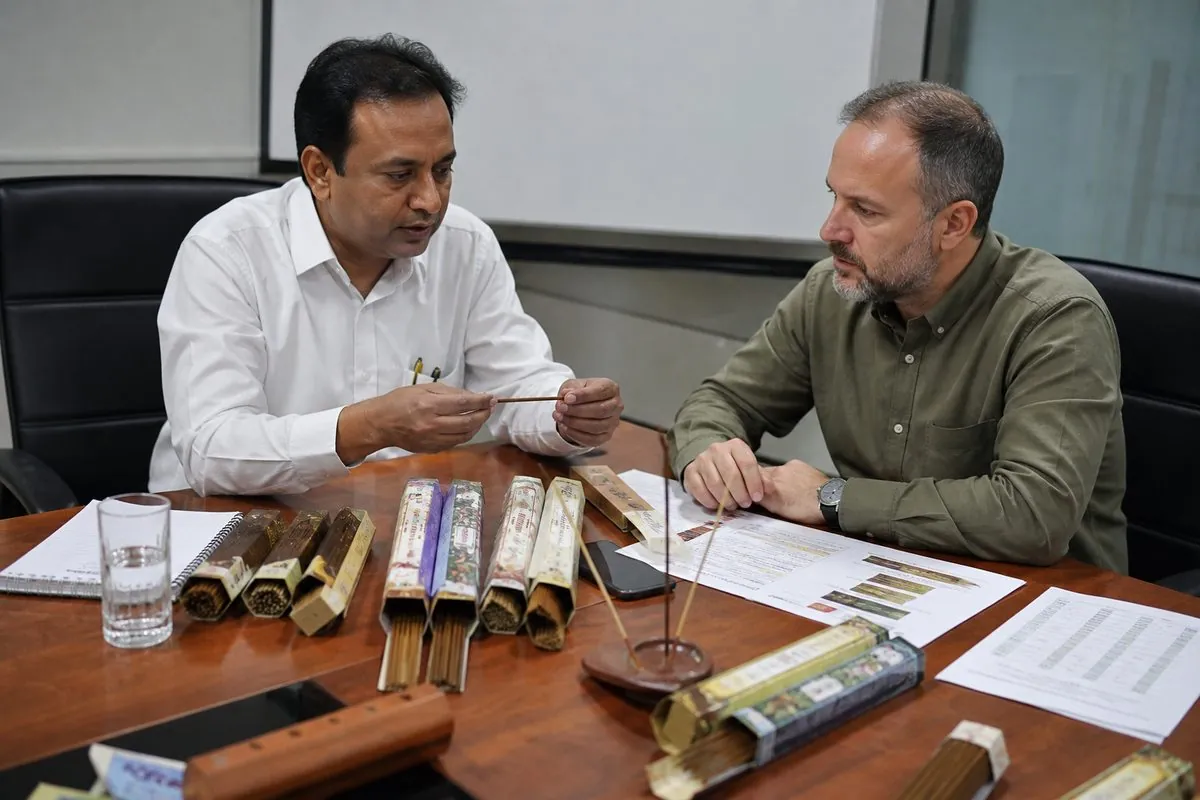
Trade shows and B2B marketplaces remain among the highest-leverage channels for Indian incense stick (agarbatti) exporters to meet qualified international buyers — but only when approached with burn-tested fragrance samples, retail-ready hex boxes, Chemexcil credentials, and a clear MOQ story rather than a generic fragrance catalogue and a business card. Chemexcil-backed cosmetics and personal-care fairs, lifestyle and gift expos such as Ambiente Frankfurt, ASD Market Week, NY NOW, and Maison & Objet, and year-round listings on Alibaba and IndiaMART each serve different buyer segments and conversion timelines for burning odoriferous preparations under India HS 33074100 (WITS/HS6 330741).
This guide owns the channel and events angle: fair selection by buyer corridor, booth ROI measurement, sample-kit preparation that pairs burn samples with hex-box presentation, and marketplace playbooks that convert RFQs into trial cartons. It does not replace the end-to-end export process in How to Export Incense Sticks (Agarbatti) from India or the SKU-level pricing and pack catalogues owned by Top Incense Stick (Agarbatti) Products Exported from India. Directional WITS 2024 figures show India HS 330741 exports at roughly US$147.6M and ~40,884 MT — a category where one well-prepared trade-show season can establish lifestyle, ethnic-retail, and wellness distributor relationships that sustain programmes for years.
For structured prospecting beyond event leads, see How to Find International Buyers for Incense Sticks (Agarbatti). For council credentials that unlock many Chemexcil fair slots, see Chemexcil Registration Benefits for Incense Stick (Agarbatti) Exporters. For destination ranking that should inform which overseas fair you book, see Best Countries for Indian Incense Stick (Agarbatti) Exports. Altus Exports supports fair follow-up, burn-test sample coordination, and FCL execution after qualified meetings.
Key Takeaways
Summary Box
Executive Summary
Summary Box
Trade shows and B2B marketplaces accelerate incense stick buyer meetings — Chemexcil fairs, Ambiente, ASD Market Week, NY NOW, Maison & Objet, selective Gulfood adjacency, Alibaba, and IndiaMART each serve different segments and conversion timelines for HS 330741 programmes.
ROI is measured in burn-tested sample kits dispatched and trial hex-box cartons booked within 90 days, not booth traffic — fragrance-labelled presentation and 14-day follow-up discipline drive outcomes.
This channel guide maps event selection, sample-kit preparation, marketplace playbooks, and post-fair buyer development without restating the full export-process pillar or SKU pricing catalogues owned elsewhere in the cluster.
Exporters who treat fairs as the start of a CRM pipeline — with Chemexcil RCMC current, Mysuru–Bengaluru or Tamil Nadu supply mapped, and hex boxes ready for photography — outperform traders who rely on walk-in traffic alone.
Market Size & Industry Overview
Key Statistics
India's incense stick industry is a mature Chapter 33 export category with deep rolling capacity, retail hex-box culture, and multi-corridor demand across ritual, ethnic grocery, yoga and wellness, and modern home fragrance. Directional WITS/UN Comtrade data for India HS 330741 in 2024 shows roughly US$147.6 million and 40,884 metric tons of burning odoriferous preparations — scale large enough that organised exporters compete on credentials, fragrance consistency, and channel presence as much as on unit price.
Supply concentrates in the Mysuru–Bengaluru masala corridor, Tamil Nadu–Puducherry dipped and masala programmes, Gujarat–Mumbai private-label consolidation, Delhi-NCR ethnic wholesale, and Kannauj-linked attar inputs for premium lines. Trade shows do not invent that capacity; they put burn-tested sticks and hex boxes in front of buyers who cannot visit every rolling unit before first PO.
The commercial question for this post is channel fit: which fair attracts US gift-trade buyers versus Gulf ethnic distributors versus European lifestyle importers, and which marketplace listings convert without destroying margin on unqualified RFQs. Pair event calendars with destination intelligence from the best countries guide so booth investment follows real import corridors.
Why fairs still matter in a digital incense market
Incense is a sensory category. Buyers smell burn character, inspect ash, and judge hex-box print quality in ways a PDF cannot replace. Physical fairs compress that evaluation into minutes; digital marketplaces then extend discovery year-round for buyers who already know the fragrance family they want.
Chemexcil membership and RCMC proof often sit behind council-backed fair participation. For membership mechanics, see the Chemexcil registration guide rather than treating this post as the RCMC how-to.
What this post owns versus sibling cluster articles
Own here: fair selection, booth ROI, burn-sample and hex-box kit prep, Alibaba/IndiaMART playbooks, and post-fair conversion discipline for HS 330741 exporters.
Defer elsewhere: end-to-end IEC-to-FCL process, full SKU and pricing catalogues, country ranking methodology, and document field checklists — link those posts rather than duplicating them.
Export Statistics
Key Statistics
Fair prospects and marketplace buyers often ask for India's HS 330741 export scale before they commit meeting time. Treat the figures below as directional planning context from WITS/UN Comtrade 2024 — re-verify with DGCI&S, ITC Trade Map, or paid customs extracts before citing in fair ROI decks or buyer presentations.
Booth literature and marketplace HS fields should quote India 33074100 for burning agarbatti. Contrast 33074900 (non-burning odoriferous preparations) only as a classification boundary so buyers and customs brokers do not misroute stick programmes.
Trade Statistics Snapshot for Fair Planning
Directional India HS 330741 export snapshot for channel planning (WITS/UN Comtrade, 2024)
Swipe →
Data table — swipe horizontally on small screens
| Metric | Directional figure | Channel relevance |
|---|---|---|
| World export value | ~US$147.6M | Justifies Chemexcil and lifestyle fair investment |
| World export quantity | ~40,884 MT | Volume corridor for post-fair FCL planning |
| Primary HS (India) | 33074100 | Print on booth cards and marketplace listings |
| WITS HS6 | 330741 | Use for trade-data prospecting before outreach |
| Governing council | Chemexcil | RCMC + council fair access for Chapter 33 |
| Leading partners (value) | USA, UAE, Nigeria, Iraq, Spain, Malaysia, Chile, UK | Match fair geography and sample kits to corridors |
India's 2024 HS 330741 export profile is diversified across Americas, Gulf, Africa, Europe, ASEAN, and Latin America. Use partner ranks to decide whether your next booth should emphasise US gift-trade hex boxes, Gulf Halal-ready ethnic packs, or European natural/herbal claims.
Partner value context for booth targeting
Leading 2024 partners by value include United States (~US$21.2M), United Arab Emirates (~US$7.7M), Nigeria (~US$7.0M), Iraq (~US$5.7M), Spain (~US$5.6M), Malaysia (~US$5.5M), Chile (~US$5.4M), and United Kingdom (~US$5.4M), followed by Argentina, Brazil, Netherlands, Mexico, South Africa, France, Australia, and others. Pre-book meetings with importers already active in these corridors rather than relying only on walk-in traffic.
Import Statistics
Key Statistics
Import-side demand at destination markets shapes which overseas fairs repay travel cost. US gift and wellness buyers cluster at NY NOW and ASD Market Week; European lifestyle importers walk Ambiente and Maison & Objet; Gulf distributors may appear at Chemexcil outbound programmes and selected food or gift adjacencies such as Gulfood when fragrance or ethnic gift sets sit in their assortment.
Honest booth talk acknowledges that destination markets also source from other Asian origins. Differentiate with Indian masala depth, private-label hex-box capability, trial MOQ flexibility, and Chemexcil credentials — not with overstated origin monopoly claims.
Import Data Analysis by Corridor
Directional import demand profile by destination (channel planning)
Swipe →
Data table — swipe horizontally on small screens
| Market | Directional demand profile | Primary buyer type at fairs / marketplaces |
|---|---|---|
| United States | Largest recorded India HS 330741 value partner (~US$21.2M, 2024) | Gift trade, ethnic grocery, yoga/wellness, private-label retailers |
| United Arab Emirates | Gulf hub and re-export adjacency (~US$7.7M) | Ethnic distributors, modern trade, fragrance gift packers |
| Nigeria | High-volume charcoal and masala stick demand (~US$7.0M) | Wholesale importers, ethnic retail consolidators |
| Spain / UK / Netherlands / France / Germany | EU lifestyle and natural-positioned programmes | Home fragrance importers, eco retail, specialty wellness |
| Malaysia | ASEAN ritual and retail incense (~US$5.5M) | Ethnic wholesalers, modern trade buyers |
| Chile / Argentina / Brazil / Mexico | Latin American volume and retail growth corridors | Distributors seeking Spanish/Portuguese-ready packs |
| South Africa / Saudi Arabia / Australia / Canada | Secondary but active India partners | Regional wholesalers and specialty retailers |
Use the table below as a fair-targeting heat map: match the buyer type you expect on the floor to the corridor's import behaviour, then stock sample kits accordingly (economy dipped volume versus herbal/natural versus premium sandalwood/oud hex boxes).
Product Categories / Variants
Summary Box
Fair and marketplace assortments succeed when exhibitors curate by buyer channel — not when they dump every fragrance in the factory onto one crowded table. This section owns the channel-facing variant lens: which stick types belong in a Chemexcil booth kit versus a Maison & Objet lifestyle presentation versus an Alibaba volume listing.
For full SKU engineering, fragrance families, and pack-format catalogues, use the products exported guide. Here, focus on what buyers expect to see, smell, and photograph at events.
Channel-ready incense variants for booths and listings
Incense variants mapped to trade-show and marketplace channels
Swipe →
Data table — swipe horizontally on small screens
| Variant | Best channel fit | Booth / listing presentation cue |
|---|---|---|
| Perfume-dipped charcoal sticks | Chemexcil fairs, Alibaba volume RFQs, ASD value aisles | Economy hex or pouch; clear stick-count and fragrance name |
| Masala (hand-rolled) sticks | Ambiente, NY NOW, ethnic retail buyers | Premium hex box; burn-time note; origin cluster story |
| Herbal / natural sticks | Maison & Objet, EU lifestyle, wellness buyers | Clean-burn claims only if substantiated; IFRA notes ready |
| Bamboo-less dhoop sticks | Specialty wellness and ritual assortments | Explain form factor; avoid confusing with bamboo-core sticks |
| Incense cones | Gift sets and lifestyle add-on SKUs | Show with hex or gift sleeve; do not bury under stick-only display |
| Premium sandalwood / oud / floral / spice | Private-label meetings at NY NOW / Maison & Objet | Retail art mock-ups; per-box quote language where needed |
| Private-label hex programmes | All fairs with scheduled retailer meetings | Blank/white-box samples plus print-ready art examples |
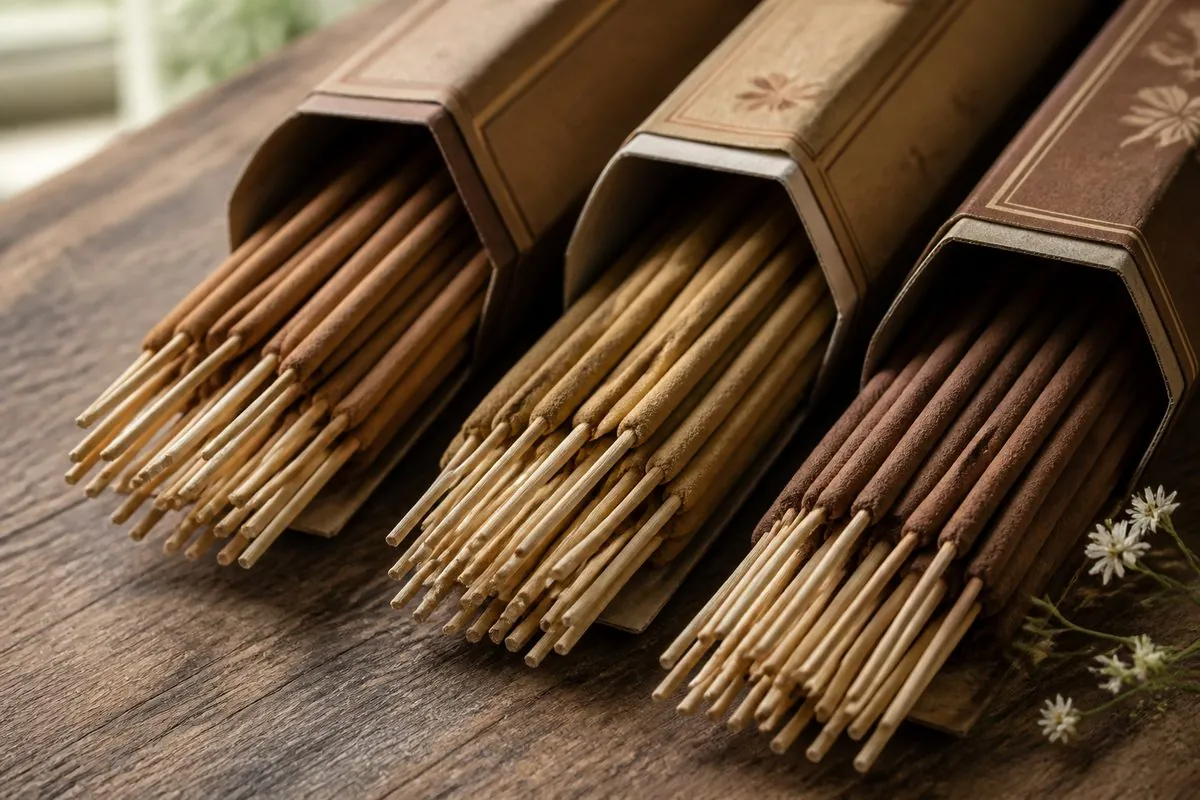
Build a hero set of six to twelve SKUs with clear fragrance labels. Over-assortment at a booth confuses gift buyers; under-assortment loses volume wholesalers who need dipped economy plus one masala hero.
HS contrast lines booth staff must not blur
Burning agarbatti and related burning preparations stay on 33074100. Non-burning room-fragrance forms belong on the contrast line 33074900. Accessory holders are separate HS families and should not be sold as the stick classification on marketplace titles.

Manufacturing Overview
Export Tip
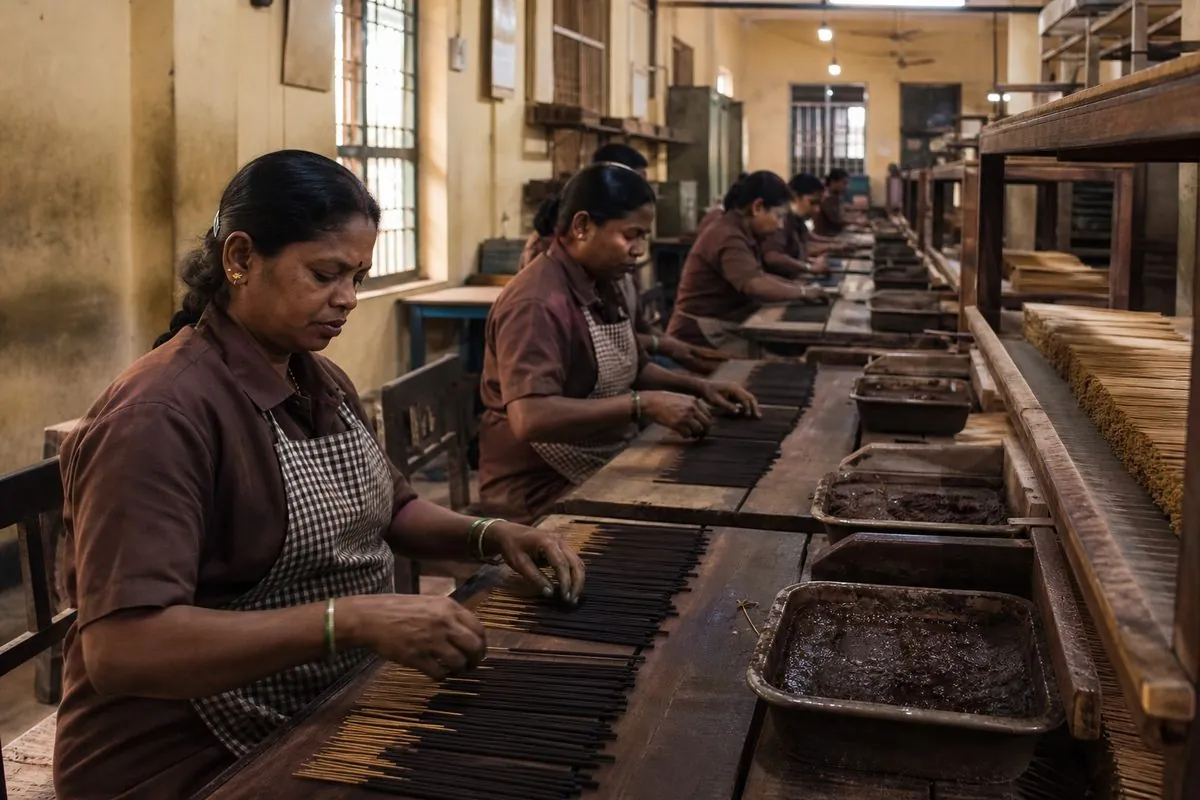
Fair conversations improve when exhibitors can map samples to real production — Mysuru–Bengaluru masala rolling, Tamil Nadu dipped programmes, Gujarat–Mumbai private-label packing — without inventing mill names they cannot introduce after the show.
Buyers ask which corridor supplies the sticks they just burned. Honest cluster mapping after the fair sustains trial orders; vague “pan-India” answers erode trust before MOQ discussion begins.
Manufacturing literacy at the booth separates serious agarbatti exporters from catalogue traders who cannot explain burn time, ash behaviour, or fragrance load.
Cluster readiness before fair season
Lock sample lots from the factories you will actually ship from. Do not burn a Mysuru masala sample at Ambiente and then quote a different fragrance load from an unverified unit two weeks later.
Align festive calendars — Navratri, Diwali, Christmas, Ramadan — with fair follow-up so custom private-label art does not collide with peak factory congestion.
Pricing Analysis
Buyer Tip
This section covers fair-quoting hygiene, not a full SKU price catalogue. Directional FOB bands help booth staff stay consistent when buyers compare multiple Indian exhibitors on the same aisle; lot-specific quotes still require a dated offer after the show.
Fair quotes should state validity date, Incoterm (usually FOB named Indian port), and whether the figure is per kg, per hex box, or per master carton. Expired static FOB undermines post-show follow-up when fragrance oil and bamboo stick costs have moved.
Directional bands for booth consistency
Directional FOB planning bands for fair conversations (not a binding price list)
Swipe →
Data table — swipe horizontally on small screens
| Programme type | Directional FOB cue | Fair tip |
|---|---|---|
| Economy perfume-dipped sticks | ~US$0.8–2.5/kg | Lead with stick count and MOQ clarity for volume buyers |
| Mid masala sticks | ~US$2.5–6/kg | Show hex box; explain burn character vs dipped |
| Herbal / natural sticks | ~US$4–10/kg | Bring claim substantiation for EU/US lifestyle buyers |
| Premium sandalwood / oud / PL retail | Higher; often per hex box or carton | Private-label meetings need art + per-pack language |
Use planning bands only — confirm every commercial quote on the offer date. Premium private-label retail packs are often quoted per hex box or carton rather than only per kg.
Pricing hygiene after the fair
Recap verbal ranges in a written offer within 14 days. Reference the sample lot ID the buyer smelled. Link full process Incoterms detail to the export pillar rather than debating every Incoterm variant on the booth floor.
MOQ Analysis
Buyer Tip
Post-fair trial MOQs convert meetings into shipments. Exhibitors who insist on full FCL before any trial hex cartons lose qualified specialty retailers and first-time importers who still need burn validation in their warehouse.
State MOQ ladders on booth literature and marketplace listings so buyers can photograph or screenshot realistic next steps.
Directional MOQ tiers for fair and marketplace incense programmes
Swipe →
Data table — swipe horizontally on small screens
| Stage | Typical MOQ | Channel purpose |
|---|---|---|
| Burn-test sample kits | 1–5 kg or 50–200 hex boxes | Post-fair / RFQ evaluation; fragrance and ash checks |
| Trial order | 200–1,000 kg or 1–5 cartons per SKU | First commercial proof after fair meeting |
| Wholesale programme | 1–5 MT | Repeat distributor and ethnic wholesale flows |
| FCL programmes | Planned by pack density (hex vs bulk bundles) | Confirm stow with forwarder before promising payload |
Packaging Standards
Export Tip
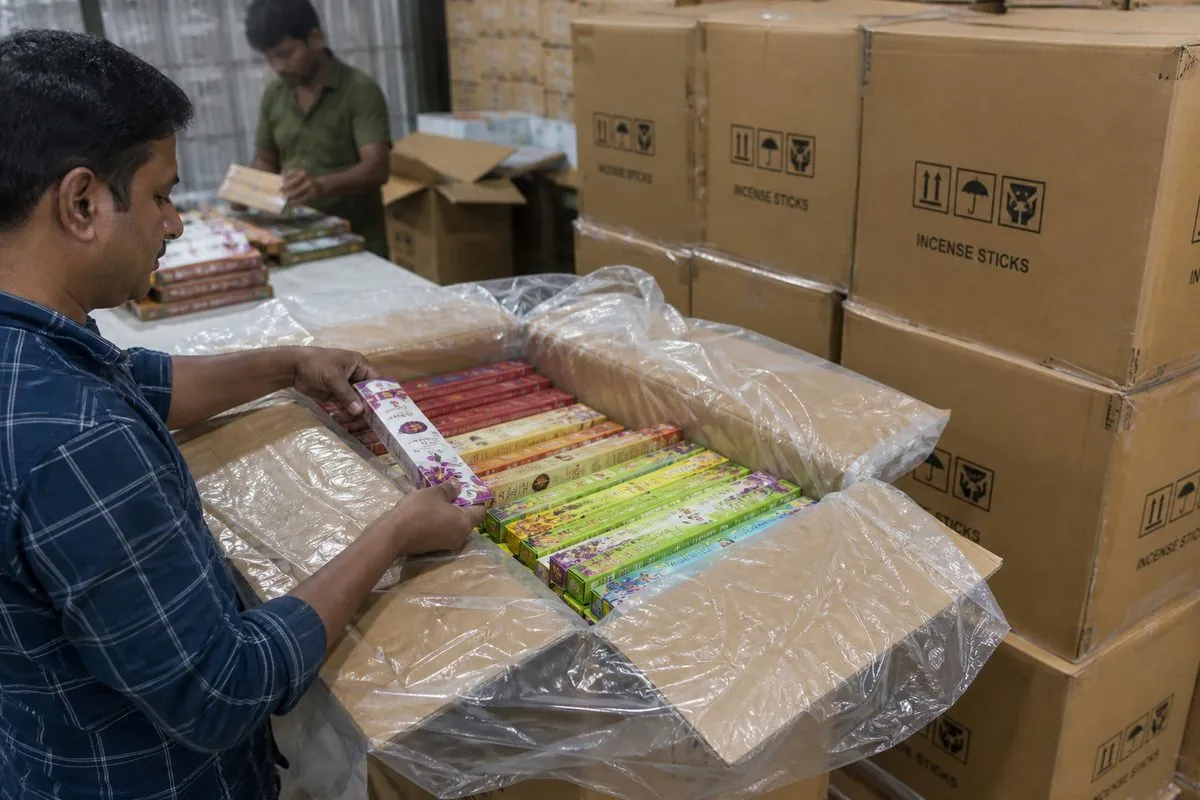
Booth sample kits should show the hex boxes, pouches, and master-carton marks buyers will see on commercial shipments — not loose unmarked sticks in a plastic tray that never appears in export packing.
Fragrance segregation matters on the booth as much as in the warehouse. Cross-contaminated sample sets destroy trust when a buyer smells sandalwood on a floral SKU label.
Packaging elements to demonstrate at fairs and on marketplace photos
Swipe →
Data table — swipe horizontally on small screens
| Element | Typical configuration | Channel note |
|---|---|---|
| Inner retail pack | Hex boxes, rectangle boxes, pouches, cellophane sleeves | Hero visual for Ambiente / NY NOW / Maison & Objet |
| Master carton | Corrugated cartons with moisture barrier | Show photo or empty carton mark sheet at Chemexcil booths |
| Marking | Fragrance name, stick count, net weight, batch/lot, origin | Buyers photograph labels for vendor files |
| Protection | Fragrance segregation, crush resistance, pallet stretch-wrap | Explain scent cross-contamination controls in meetings |
| Sample kit outer | Sealed, labelled kits for courier after the fair | Match booth lot ID to courier sample lot ID |
Container Loading Details
Export Tip
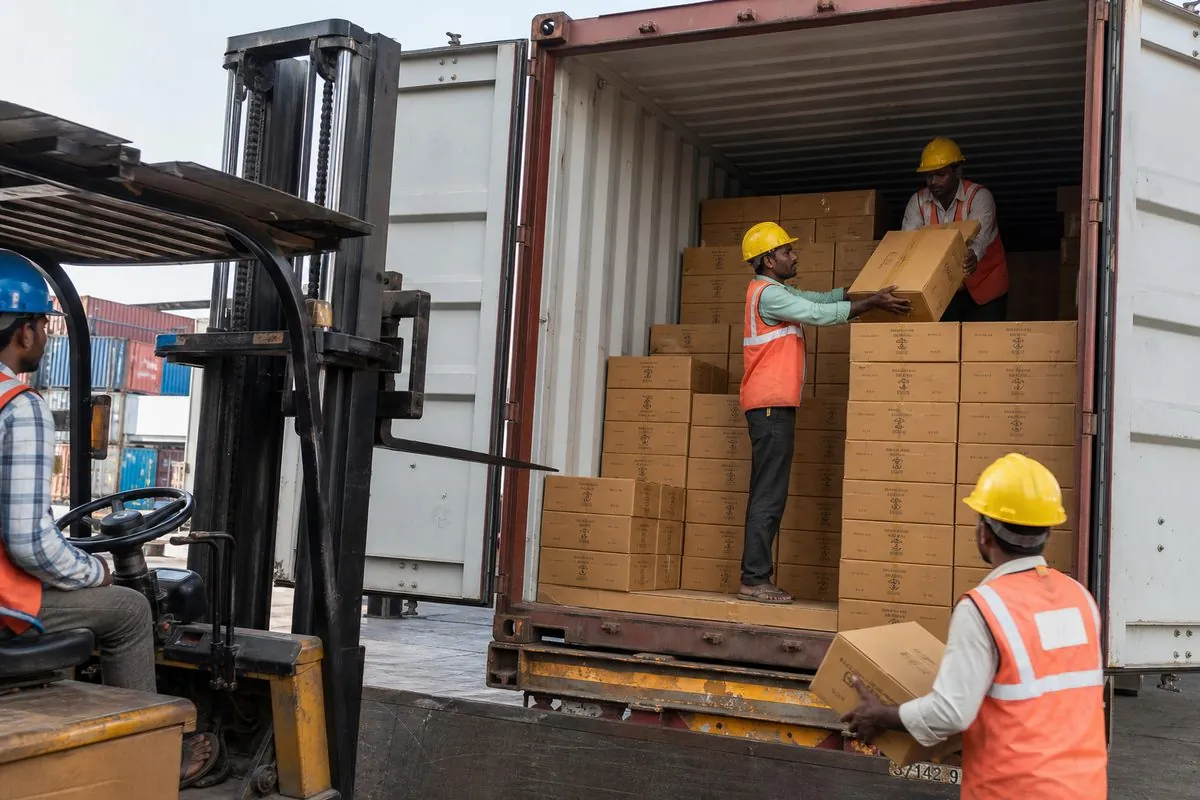
Fair commitments often move from trial cartons to FCL. Booth staff should speak in honest pack-density language — hex-box programmes load differently from bulk poly bundles — and defer exact payload confirmation to the forwarder rather than inventing MT figures on the spot.
Directional container loading cues for post-fair incense programmes
Swipe →
Data table — swipe horizontally on small screens
| Mode | Loading consideration | When buyers ask at fairs |
|---|---|---|
| 20-foot FCL | Payload depends on hex vs bulk density; verify stow plan | Standard first commercial ocean programme after trial |
| 40-foot FCL / HC | Higher volume for established distributor mixes | Multi-SKU fragrance programmes with segregation plan |
| LCL | Suitable for trial cartons below FCL threshold | New fair relationships testing 1–5 cartons per SKU |
| Air / express | Burn-test sample kits and urgent retail launches | 7–14 day sample promise after fair or marketplace RFQ |
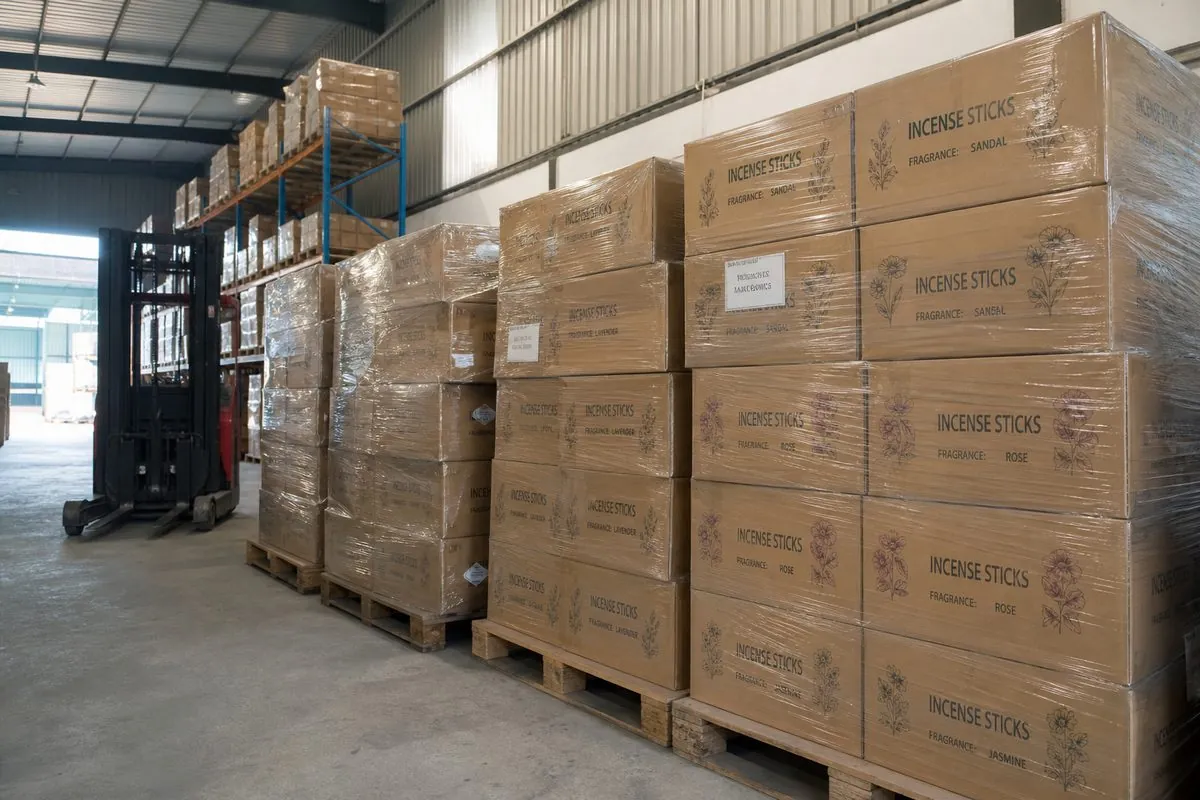
| Palletisation | Stretch-wrapped, fragrance-segregated pallets | Buyers with forklift DC receiving prefer pallet talk |
Shipping Methods
Export Tip
- Samples: air/express typically 7–14 days for burn-test kits
- Stock fragrance trials: often 2–4 weeks after PO confirmation
- Custom / private-label: commonly 4–8+ weeks — say so at the booth
- Incoterms buyers mention: EXW, FOB named port, CFR/CIF; DDP selective for mature retail programmes
- Festive peaks can extend lead times — book follow-up production early after strong fair interest
Channel conversations usually need a simple shipping story: samples by air or express, trials by LCL or small ocean lots, programmes by FCL from Nhava Sheva, Mundra, Chennai, Tuticorin, or Bengaluru ICD consolidation as applicable.
Incoterms language that keeps fair quotes clean
Default fair literature to FOB named Indian port unless the buyer explicitly runs a DDP programme. Mixing EXW factory chat with CIF destination promises in the same verbal quote creates disputes during post-fair paperwork.
Certifications
Compliance Notes
Credential packs travel with sample kits. Buyers at lifestyle fairs increasingly ask for SDS/MSDS, IFRA notes, REACH/SVHC statements, and Halal certificates before they approve a trial hex programme — even when the conversation started with fragrance throw alone.
Certification and document cues for incense fair and marketplace kits
Swipe →
Data table — swipe horizontally on small screens
| Document / claim | When buyers ask | Booth action |
|---|---|---|
| Chemexcil RCMC + IEC summary | Almost every organised importer | One-pager in every leave-behind folder |
| SDS / MSDS | Fragrance compounds; EU/US retail programmes | Print current sheets matching sample fragrance |
| IFRA conformity notes | Premium EU/US lifestyle buyers | Ready for herbal/natural and fine-fragrance lines |
| REACH / SVHC statements | EU-mandated vendor forms | Do not claim if not prepared — schedule post-fair |
| Halal certificate | Selected Middle East / Africa programmes | Bring for Gulf-facing Chemexcil or Gulfood adjacency |
| Burn-test / QC report | Serious private-label and wholesale trials | Lot ID matching the sticks burned at the booth |
| Vegan / charcoal-free declarations | Specialty natural programmes only | Substantiate or omit — never improvise claims |
| Certificate of Origin (commercial stage) | Post-fair shipment, not usually day-one booth | Explain COO process; do not fake a specimen COO |
Buyer Requirements
Buyer Requirements
Buyers who stop at incense booths or open marketplace RFQs typically request burn samples, written fragrance and stick-type specs, pack photos, FOB ranges with validity, Chemexcil/IEC proof, and a realistic MOQ path to trial cartons.
Lifestyle buyers add retail art expectations and claim substantiation. Volume ethnic wholesalers prioritise price bands, stick count consistency, and repeat fragrance match across lots.
What fair-aware incense buyers check first
- Fragrance identity matching the labelled hex box
- Burn time, ash behaviour, and smoke character notes
- HS 33074100 classification clarity
- Sample-to-production lot continuity promise
- MOQ and lead time honesty for private-label art
- Destination compliance readiness (IFRA, Halal, REACH as applicable)
Country-wise Opportunities
Market Snapshot
Match fair geography to destination rows. NY NOW and ASD skew United States; Ambiente and Maison & Objet skew Europe; Chemexcil programmes mix international buyers including Gulf and Africa; Alibaba and IndiaMART pull global RFQs that still need corridor-specific qualification.
This table is a channel-to-country map, not a full market-ranking methodology — use the best countries and demand by country posts for deeper destination analysis.
Fair and marketplace opportunities by destination corridor (incense)
Swipe →
Data table — swipe horizontally on small screens
| Country / region | Highest-leverage channel cue | Sample-kit emphasis | Opportunity note |
|---|---|---|---|
| United States | NY NOW, ASD Market Week, Alibaba follow-up | Retail hex boxes, wellness and ethnic mixes | Largest India value partner — schedule meetings before travel |
| United Arab Emirates / GCC | Chemexcil outbound; selective Gulfood gift/fragrance adjacency | Halal-ready packs, Arabic/English label talk | Hub and re-export potential for ethnic and modern trade |
| Nigeria / West Africa | Chemexcil fairs + marketplace volume RFQs | Economy dipped and masala volume SKUs | Lead with MOQ clarity and repeat fragrance match |
| Spain / UK / EU | Ambiente Frankfurt, Maison & Objet | Herbal/natural, IFRA notes, clean hex presentation | Lifestyle buyers test claims early — bring substantiation |
| Malaysia / ASEAN | Chemexcil + IndiaMART/Alibaba | Ritual and retail stick mixes | Confirm labelling expectations in follow-up quotes |
| Chile / LatAm | Marketplace + Chemexcil introductions | Spanish-ready retail packs where possible | Strong India flow — plan LCL trials before FCL promises |
| Australia / Canada / South Africa | NY NOW adjacency / Chemexcil / digital | Specialty and ethnic retail hex lines | Smaller but serious programmes — trial carton friendly |
Export Process
Export Tip
Owned here is the fair-to-PO conversion process — not the full IEC-to-shipping-bill pillar. Use these steps to turn booth and marketplace interest into burn-tested trials without inventing a second export manual.
Fair-to-PO process milestones for incense exporters
Swipe →
Data table — swipe horizontally on small screens
| Milestone | Owner | Target timing |
|---|---|---|
| Fair shortlist and budget | Export sales lead | 90–120 days before event |
| Sample lot freeze and kit packing | Factory + merchant exporter | 21–30 days before event |
| Meeting schedule | Sales / Chemexcil outreach | 14–21 days before event |
| On-floor CRM capture | Booth staff | Same day as meeting |
| Digital recap + quote | Sales | Within 48 hours of close |
| Burn-sample courier | Operations | Within 7–14 days |
| Trial PO negotiation | Sales + buyer | Within 30–90 days |
Step 1: Choose fairs by corridor and buyer type
Build an annual calendar: Chemexcil-backed events for Chapter 33 credibility; Ambiente for European gift and home fragrance; NY NOW and ASD Market Week for US wholesale; Maison & Objet for design-led lifestyle; Gulfood only when gift or fragrance adjacency is intentional.
Step 2: Confirm Chemexcil RCMC and legal-name consistency
Renew RCMC before booth applications. Keep company names identical across IEC, GST, bank AD code, and council records. Membership how-to lives in the Chemexcil post.
Step 3: Build burn-sample and hex-box kits
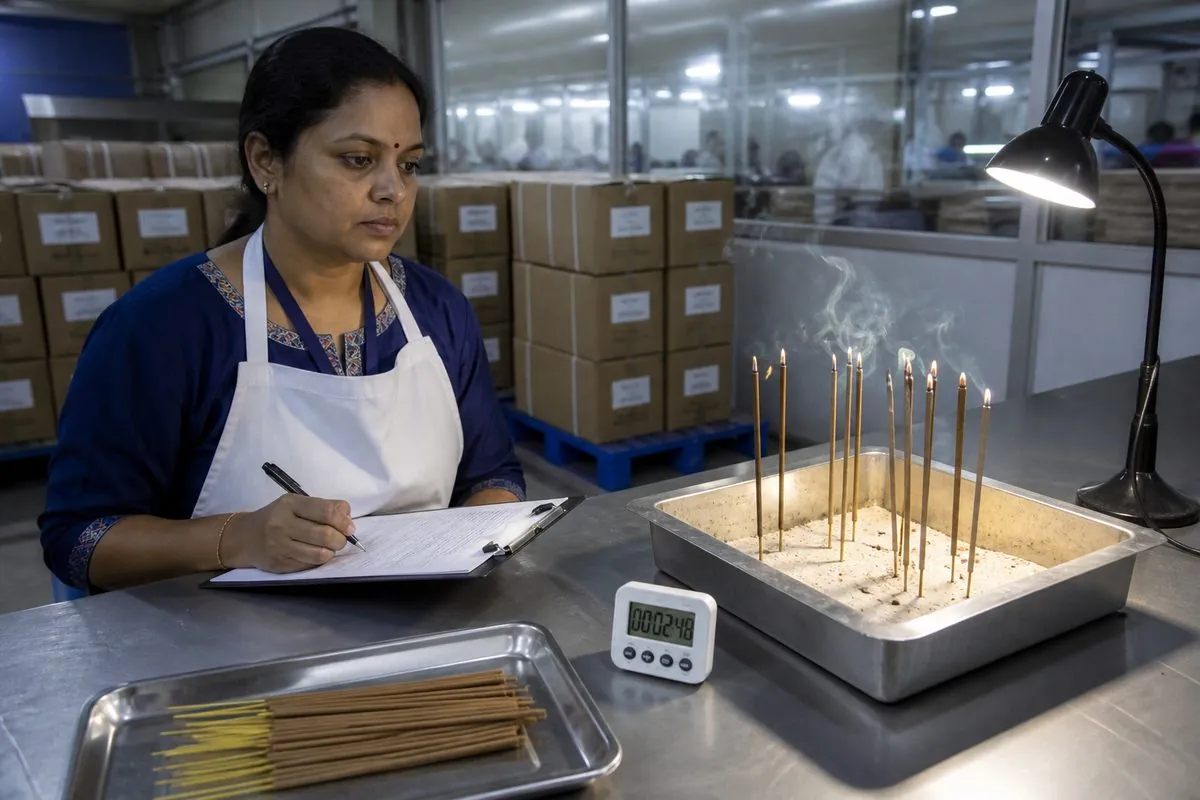
Select hero SKUs, label fragrance names, print burn-time and ash notes, add SDS/IFRA/Halal sheets as required, and pack sealed kits for on-booth use plus post-fair courier dispatch.
Step 4: Pre-book meetings — do not rely on walk-ins alone
Use prior CRM, Chemexcil directories, and HS 330741 trade-data targets from the find buyers guide to schedule appointments before travel.
Step 5: Capture CRM fields on the floor
Record buyer company, destination, fragrance interest, pack format, MOQ expectation, compliance asks, and sample-lot ID burned. Photograph business cards and booth notes the same day.
Step 6: Follow up within 14 days with matching lots
Send sample kits, written FOB with validity, and credential PDFs that match what was discussed. Forty-eight-hour digital recap emails win attention before courier samples arrive.
Step 7: Convert trials, then hand off to export operations
Once trial cartons are approved, execute documentation and shipping through your standard operating system — see the pillar process guide and documentation checklist rather than reinventing CHA filing at the booth.
Sourcing Checklist
Checklist
Buyer Checklist
Checklist
Exporter Checklist
Checklist
Common Buyer Mistakes
Common Mistakes Box
Future Market Trends
Key Statistics
Hybrid fair seasons blend in-person burn tests with virtual follow-up rooms. Exporters who digitise fragrance specs, hex-box dielines, and SDS within 48 hours of an event win more trial cartons than those who wait three weeks to email a generic catalogue.
Lifestyle and wellness buyers continue to pull herbal, natural, and private-label programmes into Ambiente and Maison & Objet conversations, while volume ethnic wholesale still rewards Chemexcil and marketplace discipline on dipped and masala economy lines.
Marketplace platforms remain high-noise channels; AI-assisted RFQ spam is rising. Human qualification — destination, pack format, MOQ, compliance — matters more than ever for incense exporters protecting sample budgets.
Where channel strategy meets rising compliance expectations
Expect more booth questions on IFRA, REACH/SVHC, and Halal even from buyers who previously asked only about stick count. Pair lifestyle fair investment with document readiness so premium conversations do not stall after fragrance approval.
Challenges & Solutions
Incense channel development fails most often on preparation gaps — wrong fair for the SKU mix, unlabelled samples, slow follow-up, or marketplace RFQs that consume burn kits without KYC. The table below pairs common challenges with practical solutions.
Trade-show and marketplace challenges for agarbatti exporters
Swipe →
Data table — swipe horizontally on small screens
| Challenge | Why it hurts | Practical solution |
|---|---|---|
| Wrong fair for SKU mix | Economy dipped sticks ignored at design-led halls | Map variants to Ambiente / NY NOW / ASD / Chemexcil fit before booking |
| Unlabelled burn samples | Buyers cannot reorder the fragrance they liked | Fragrance name + lot ID on every stick sleeve and hex box |
| Slow post-fair follow-up | Competitors book trial slots first | 48-hour email recap + 14-day sample courier SLA |
| Marketplace RFQ spam | Sample cost without qualified demand | KYC filter: company, destination, MOQ, compliance before dispatch |
| Scent cross-contamination | Trust loss when floral smells like oud | Segregated kit packing and sealed sample pouches |
| Lapsed Chemexcil RCMC | Fair access and KYC friction mid-deal | Renew before peak season; keep PDF in vendor packs |
| Over-promising private-label timelines | Missed launches after fair excitement | State 4–8+ week custom lead times on booth literature |
Challenge–solution detail for MSME incense exporters
MSME exporters should start with one Chemexcil event plus one marketplace channel before stacking Ambiente and NY NOW in the same quarter. Concentration beats an understaffed multi-fair tour that leaves every lead cold.
Compliance Checklist
Checklist
Compliance Notes
Sources
- WITS / UN Comtrade — India exports HS 330741 by partner, 2024
- WITS / UN Comtrade — India imports HS 330741 by partner, 2024
- UN Comtrade Database (Comtrade Plus)
- ITC Trade Map
- DGFT (India) — IEC / Foreign Trade Policy portal
- ICEGATE — Indian Customs EDI
- India CBIC — Customs Tariff / notifications
- Exim Guru — ITC-HS 33074100 Agarbatti (policy Free)
- Chemexcil India — Basic Chemicals, Cosmetics & Dyes EPC (Panel III Cosmetics, Soaps, Toiletries & Essential Oils)
- IFRA — International Fragrance Association
- USITC Harmonized Tariff Schedule — search 3307.41
- USITC HTS Chapter 33 PDF archive (historical reference)
- European Commission TARIC consultation
- ECHA — REACH / SVHC guidance
- ICC Incoterms® rules
- Altus Exports — Contact
All sources accessed for factual audit 2026-08-01. Prefer primary government, council, and multilateral trade databases when citing figures in contracts or buyer presentations. Trade totals below are WITS/UN Comtrade directional figures — re-verify via DGCI&S / ITC Trade Map before contracts.
Fair dates and marketplace policies change seasonally — confirm exhibitor registration deadlines and sample-shipment rules before booth commitment.
Conclusion
Trade-show and marketplace ROI for incense stick exporters comes from burn-tested samples, hex-box presentation, Chemexcil-ready credentials, and 14-day follow-up — booth size and listing price alone do not replace that discipline on HS 33074100 programmes.
Prioritise Chemexcil fairs for council credibility; use Ambiente Frankfurt, NY NOW, ASD Market Week, and Maison & Objet for lifestyle and gift-trade buyers; treat Gulfood as selective gift/fragrance adjacency; run Alibaba and IndiaMART with the same KYC and sample standards you bring to a physical booth.
Work with Altus Exports as your merchant exporter and global sourcing partner for incense sticks (agarbatti) — verified Indian factory lots, burn-tested fragrance specs, Chemexcil-aligned documentation, and FCL booking from inquiry to shipment — contact Altus Exports to convert fair and marketplace leads into trial hex cartons and repeat FCL programmes.
Continue with How to Find International Buyers for Incense Sticks (Agarbatti), Chemexcil Registration Benefits for Incense Stick (Agarbatti) Exporters, How to Export Incense Sticks (Agarbatti) from India, and Best Countries for Indian Incense Stick (Agarbatti) Exports.