
Incense Stick (Agarbatti) Export Documentation Checklist
By Saurabh Mittal, Founder, Altus Exports
Document-by-document pre-shipment checklist for incense stick (agarbatti) exports from India — commercial invoice, packing list, shipping bill, bill of lading, certificate of origin, SDS/MSDS, HS 33074100 vs 33074900 controls, Chemexcil RCMC copy, and broker handoff — so every field reconciles before vessel cutoff.
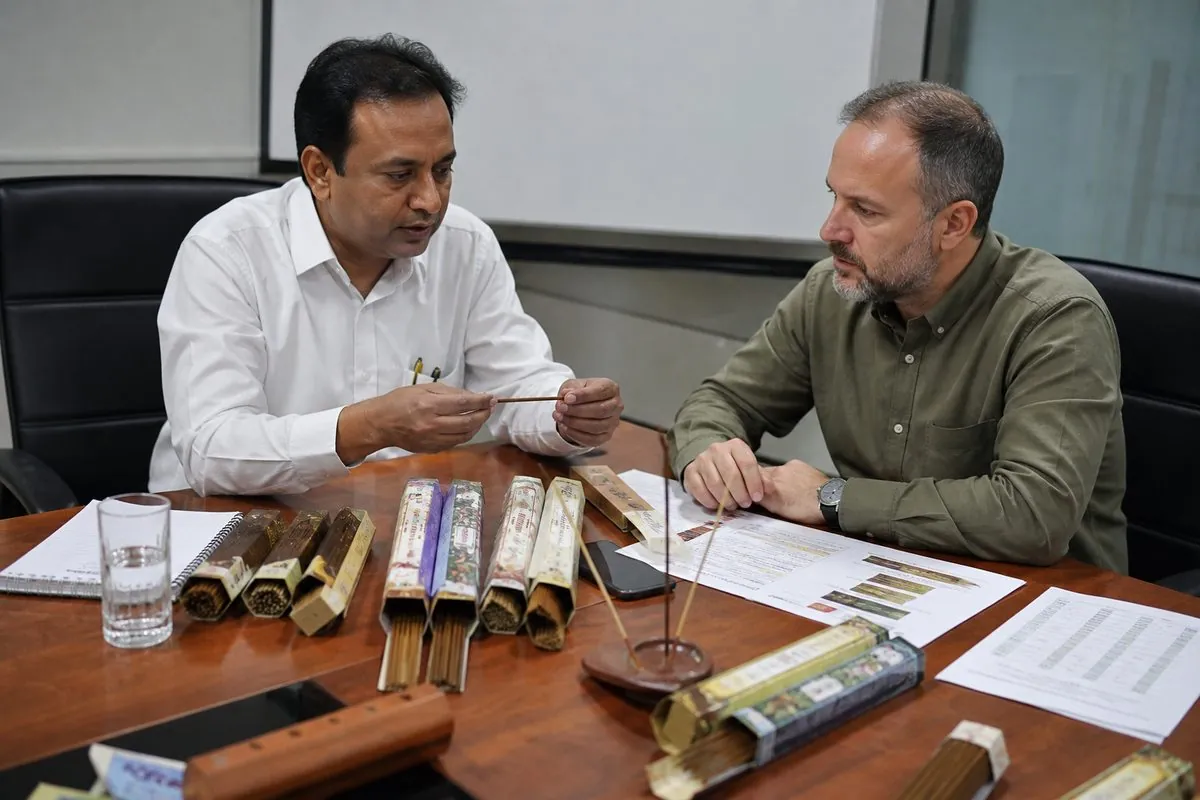
Documentation is the compliance gate that determines whether an incense stick (agarbatti) shipment clears Indian customs filing and destination broker review — or stalls while hex boxes wait at a CFS. Commercial invoice, packing list, shipping bill, bill of lading or airway bill, and certificate of origin when required must cross-reference the same order, fragrance code, carton count, lot ID, and HS 33074100 classification. Attach SDS/MSDS when the programme requires it, and include a current Chemexcil RCMC copy where buyer KYC or council SOP expects it — RCMC is council credibility, not a substitute for IEC. This incense stick export documentation checklist walks field by field through that pack.
Misaligned invoice and packing-list quantities, shipping bills filed under non-burning 33074900 for true burning sticks, SDS that describes a different fragrance compound than the shipped lot, and consignee mismatches on the bill of lading remain the most common preventable failures in agarbatti export. All are avoidable with a pre-shipment reconciliation gate before your Customs House Agent (CHA) submits the shipping bill via ICEGATE.
This post owns the document pack and broker handoff — not why Chemexcil exists (see Chemexcil Registration Benefits for Incense Stick (Agarbatti) Exporters) and not which countries to enter (see Best Countries for Indian Incense Stick (Agarbatti) Exports). For the end-to-end operating sequence documentation supports, start with How to Export Incense Sticks (Agarbatti) from India. Altus Exports maintains documentation discipline across every agarbatti shipment as part of its export products from India service.
Key Takeaways
Summary Box
Executive Summary
Summary Box
Incense stick export documentation must tell one lot story: the same HS 33074100 line, fragrance code, carton count, net weight, and commercial value across invoice, packing list, shipping bill, transport document, and certificate of origin.
SDS/MSDS and programme certificates fail audits when they describe a different fragrance compound, expired validity window, or non-burning product class than the sticks in the container.
Use this checklist as the pre-shipment and broker-handoff gate before CHA filing and destination clearance — not as a substitute for market selection or Chemexcil membership strategy.
Master document checklist for incense stick (agarbatti) export
Swipe →
Data table — swipe horizontally on small screens
| Document | Must contain | Common failure |
|---|---|---|
| Commercial invoice | Exporter, buyer, HS 33074100, stick family, fragrance code, qty, unit value, lot ID, Incoterm | Vague description or missing fragrance/lot codes |
| Packing list | Carton count, net/gross weight, fragrance lines, lot numbers, marks | Qty mismatch vs invoice; mixed fragrances without line split |
| Shipping bill | HS 33074100, FOB value, IEC, port of loading, qty matching invoice | Wrong eight-digit line (33074900 for burning sticks) |
| Bill of lading / AWB | Consignee, notify party, container/seal, package count, gross weight | Consignee mismatch vs invoice or LC |
| Certificate of origin | India origin, HS line, exporter identity, description matching invoice | Wrong template or HS mismatch with shipping bill |
| SDS / MSDS | Current GHS SDS matching shipped fragrance compounds | Expired or generic SDS for a different blend |
| Chemexcil RCMC copy | Current membership proof for exporting entity | Lapsed membership or missing from buyer KYC pack |
| IFRA / REACH / Halal (conditional) | Valid programme certificates matching claimed end use | Claim on invoice without matching certificate scope |
Commercial Invoice: Line-by-Line Controls
The commercial invoice is the legal sale record Indian customs and the buyer's accounts payable team both rely on. For agarbatti, state exporter legal name, address, IEC, and GSTIN; buyer legal name and full delivery address; invoice number and date; purchase-order reference; payment terms and Incoterm with named port (for example FOB Nhava Sheva or CIF Jebel Ali); product description that names stick family (masala, perfume-dipped, herbal, dhoop, cones), fragrance code, stick count per pack, and pack format; India HS 33074100; quantity in cartons and kilograms (net and gross where required); unit price and total value; country of origin (India); batch or lot ID matching carton marks; and authorised signature or digital approval.
Avoid vague goods descriptions such as 'incense' alone. Prefer language like 'Masala agarbatti incense sticks, fragrance code SANDAL-12, 20 sticks per hex box, burning odoriferous preparation, HS 33074100.' Vague lines invite CHA queries and destination reclassification risk on first shipments.
Packing List: Carton-Level Traceability
The packing list translates invoice totals into physical units — hex or rectangle boxes, pouches, and master cartons. List carton count per SKU, stick or hex-box count per carton, net weight, gross weight, lot or batch ID, fragrance code, and marks matching the stuffing plan. When a container mixes fragrances, give each fragrance its own packing-list line so destination warehouses can quarantine scent families independently if a claim arises.
Total net weight and carton count must equal the invoice within agreed tolerance before CHA filing. Mixed lots without line separation are a top cause of warehouse refusal even when freight arrives on time.
Shipping Bill: ICEGATE Filing Record
Your CHA files the shipping bill electronically via ICEGATE before cargo gate-in. It must mirror the commercial invoice on exporter IEC, buyer name, HS code, quantity, FOB value, and port of loading. Confirm the CHA understands burning versus non-burning Chapter 33 contrast — filing true burning sticks under 33074900 is a classification error that creates examination risk and complicates the buyer's import entry.
Review the draft shipping bill against invoice and packing list at least 48 hours before cutoff. Unit-of-measure mismatches (kilograms versus cartons versus metric tons) trigger holds even when the HS digits themselves look correct.
Bill of Lading or Airway Bill
Ocean shipments receive a bill of lading (original, telex release, or eBL per agreed terms); air sample kits receive an airway bill. Show shipper, consignee, notify party, port of loading, port of discharge, container and seal numbers for FCL, package count, gross weight, and a goods description consistent with the invoice. Consignee and notify-party mismatches versus invoice and letter of credit are frequent LC discrepancy sources on agarbatti programmes.
Review the draft B/L before issuer release. Typos in gross weight or container number propagate to customs and banks faster than post-sailing corrections can be negotiated.
Certificate of Origin and Chemexcil RCMC Copy
A certificate of origin confirms Indian manufacture for duty assessment and preferential claims where an FTA applies. Product description, HS line, and exporter identity must match the invoice; chambers reject inconsistent applications. Preferential forms must use the same 33074100 burning-stick declaration as the shipping bill — not a non-burning contrast line.
Include a current Chemexcil RCMC copy in the buyer KYC pack and make it available on request with each consignment. Some buyers archive RCMC once in the vendor master; others require a copy per BL set. Confirm the buyer's SOP during onboarding so export teams know which rule applies. For membership application depth, see the Chemexcil sibling post — this checklist only covers RCMC as a shipment attachment.
SDS/MSDS and Programme Compliance Annexes
Safety Data Sheets (SDS / MSDS) describe hazard classification, handling, storage, and emergency measures for fragrance compounds when destination warehouses or importers require them. Use a product-specific SDS that matches the shipped fragrance formulation — not a generic template from another oil blend. Version the SDS when fragrance oil composition changes.
IFRA conformity notes, REACH/SVHC statements, and Halal certificates are programme extras, not universal attachments. Attach them only when the buyer retail or destination channel requires them, and only when validity covers the sailing date. Overstating vegan, charcoal-free, or IFRA claims without matching certificates fails buyer audits even when burn quality is excellent. For natural and eco claim pathways, see Natural, Herbal & Eco-Friendly Incense Stick Export Opportunities.
Market Size & Industry Overview
Key Statistics
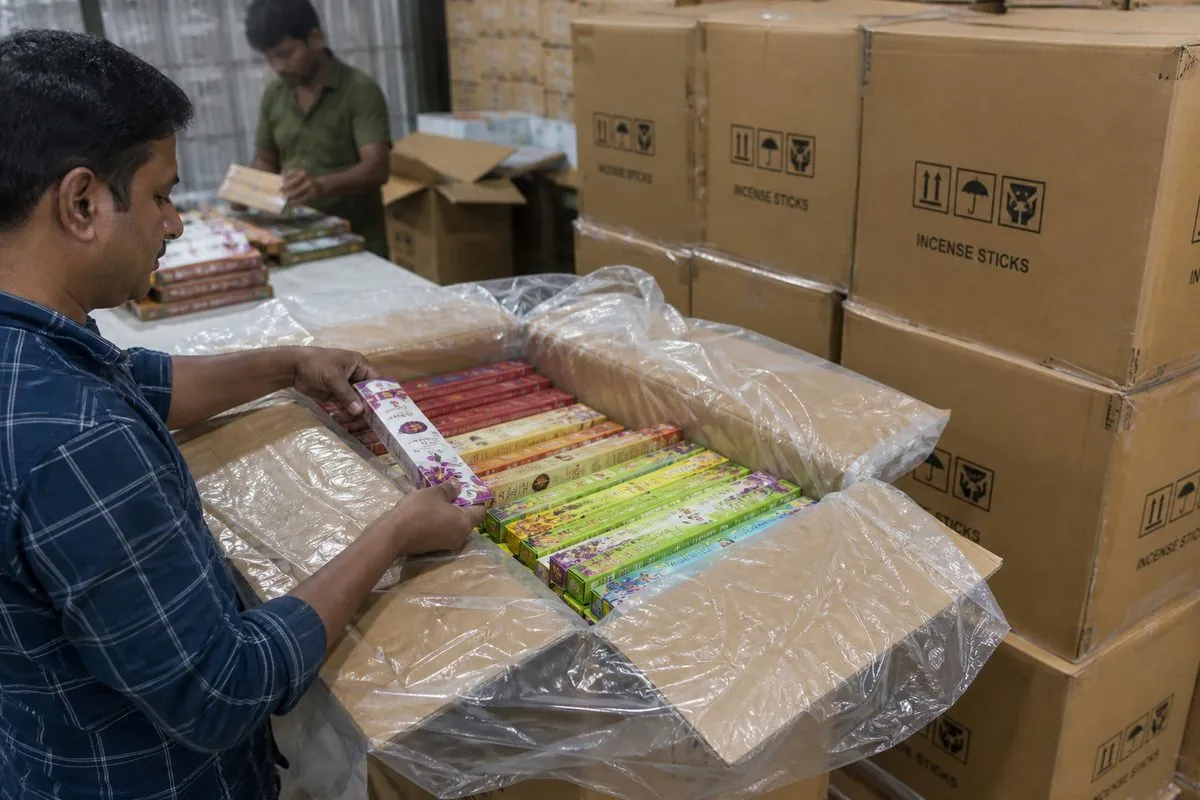
India's agarbatti export industry — masala sticks, perfume-dipped charcoal sticks, herbal and natural lines, bamboo-less dhoop, cones, and private-label retail packs — generates substantial Chapter 33 trade under HS 330741. Documentation intensity has risen with the category: ethnic wholesalers, wellness retailers, and modern-trade private-label buyers now archive lot-level PDFs the same way fragrance houses archive SDS packs.
Mysuru–Bengaluru and Tamil Nadu–Puducherry supply most burning-stick volume; Gujarat–Mumbai and Delhi-NCR consolidate private-label and merchant packs; Kannauj feeds attar inputs for premium finishes. Document packs must reflect that manufacturing reality — lot IDs originate at rolling, dipping, or packing, not at the forwarder's desk.
Exporters who treat invoice, packing list, and shipping-bill reconciliation as a production gate — not a last-hour admin task — win repeat programmes because destination brokers clear faster and finance teams release payment without LC discrepancies.
Export Statistics
Key Statistics
Start every document pack with HS-line discipline: India 33074100 covers agarbatti and other odoriferous preparations which operate by burning; 33074900 is non-burning odoriferous-preparation contrast only. Confirm with your CHA before the first shipping bill.
WITS/UN Comtrade 2024 reports India HS 330741 exports at US$147,604.26K and 40,883,600 kg (~US$147.6M / ~40,884 MT). Leading partners by value include the United States (~US$21.2M), UAE (~US$7.7M), Nigeria (~US$7.0M), Iraq (~US$5.7M), Spain (~US$5.6M), Malaysia (~US$5.5M), Chile (~US$5.4M), and the United Kingdom (~US$5.4M).
Trade statistics analysis for documentation planning asks a practical question: which corridors demand SDS and IFRA annexes on every lot, and which clear on invoice, packing list, B/L, and COO alone? High-value USA and EU retail programmes typically deepen the pack; volume wholesale corridors still require perfect quantity and HS reconciliation even when SDS is not requested. Treat all figures as directional; re-verify via DGCI&S, ITC Trade Map, or paid customs extracts before citing in contracts.
Directional export profile for documentation planning (HS 330741 / India 33074100)
Swipe →
Data table — swipe horizontally on small screens
| Metric | Directional Estimate | Documentation Implication |
|---|---|---|
| WITS 2024 export value / volume | ~US$147.6M / ~40,884 MT | Scale justifies dedicated document QC roles on FCL programmes |
| Primary HS filing | India 33074100 / WITS 330741 | Must match invoice, shipping bill, and COO |
| Contrast HS line | India 33074900 (non-burning) | Do not file burning sticks here — CHA confirmation required |
| Governing council credential | Chemexcil RCMC + IEC | RCMC copy for KYC and on-request shipment packs |
| Top partner regions | N. America, Middle East, Africa, EU, ASEAN, LatAm | SDS/IFRA/Halal extras vary by corridor — confirm buyer SOP |
| Dominant pack formats | Hex/rectangle boxes; pouches; master cartons | Packing list must show carton and fragrance-line detail |
Trade Statistics Analysis for Document QC
Average unit value implied by ~US$147.6M on ~40,884 MT sits near mid-commodity bands, but private-label hex programmes and premium sandalwood lines invoice at higher per-carton values. Document packs must quote the commercial unit the buyer ordered — kilograms, hex boxes, or cartons — and keep that UOM consistent from proforma through B/L.
Never use Comtrade averages as invoice prices. Documentation disputes often begin when proforma FOB was quoted per carton and the shipping bill later shows only kilogram totals without carton reconciliation.
Import Statistics
Key Statistics
Import statistics matter to documentation because destination volume correlates with broker sophistication. USA and EU importers typically pre-screen SDS, origin, and HS alignment before cargo arrives. UAE and GCC brokers often check Halal and bilingual labelling annexes. African and Latin American volume buyers emphasise packing-list accuracy, weight match, and payment-document consistency.
Import data analysis for this checklist focuses on document-burden profiles — not market-entry ranking. Confirm live duty schedules on USITC HTS, TARIC, and destination portals when modelling landed cost; duty notes are planning references only.
Directional import document-burden profile by destination market
Swipe →
Data table — swipe horizontally on small screens
| Market | Core docs typically required | Common extras |
|---|---|---|
| United States | Invoice, packing list, B/L, COO, HS-aligned entry | SDS; IFRA for premium retail fragrance programmes |
| UAE / GCC | Invoice, packing list, B/L, COO | Halal where claimed; Arabic/English label packs |
| Nigeria / West Africa | Invoice, packing list, B/L, COO | Strict weight/carton match; payment-doc consistency |
| Spain / EU / UK | Full core set + SDS readiness | IFRA notes; REACH/SVHC statements when buyer-mandated |
| Malaysia / ASEAN | Invoice, packing list, B/L, COO | Local fragrance labelling; FTA origin form if claimed |
| Chile / LatAm | Invoice, packing list, B/L, COO | Spanish description clarity; preferential origin where applicable |
Product Categories / Variants
Summary Box
Document descriptions must name the stick family actually shipped. Masala, perfume-dipped charcoal, herbal/natural, bamboo-less dhoop, cones, and premium sandalwood/oud private-label packs all burn and therefore plan under 33074100 — but invoice wording, packing-list lines, and SDS scope differ by fragrance load and pack format.
This section owns documentation variants by product type, not the full SKU catalogue. For stick types, fragrance families, and MOQ ladders by channel, see Top Incense Stick (Agarbatti) Products Exported from India.
Agarbatti product variants and documentation wording controls
Swipe →
Data table — swipe horizontally on small screens
| Variant | Invoice description must state | Typical doc extras | Common pack mark |
|---|---|---|---|
| Masala sticks | Masala agarbatti, fragrance code, sticks/pack, burning preparation | COO; SDS if buyer requires | Hex box + lot ID |
| Perfume-dipped charcoal | Dipped incense sticks, fragrance oil code, sticks/pack | SDS often requested for fragrance oil handling | Hex/rectangle or pouch |
| Herbal / natural | Herbal/natural sticks, botanical positioning only if substantiated | IFRA/vegan claims only with matching certificates | Retail hex + claim icons |
| Bamboo-less dhoop | Dhoop sticks without bamboo core, burning preparation | SDS if fragrance compounds trigger buyer SOP | Sleeve or box + lot |
| Incense cones | Incense cones, fragrance code, piece count | Crush-handling notes on packing list | Inner tray + master carton |
| Premium sandalwood / oud / PL | Fragrance exclusive code, pack art reference, sticks/pack | IFRA notes; Halal for selected ME/Africa programmes | Private-label hex + barcode |

Manufacturing Overview
Export Tip
Document issuance follows manufacturing flow. Rolling, dipping, fragrance finishing, and export packing assign the lot or batch ID that must flow unchanged onto carton marks, packing list, commercial invoice, shipping bill description, and any SDS annex. Factories in Mysuru–Bengaluru, Tamil Nadu–Puducherry, Gujarat–Mumbai, and Delhi-NCR that skip lot marking until the truck is loaded create the most common destination customs holds.
Merchant exporters consolidating multi-factory cartons must secure document rights — who issues SDS, who owns carton marks, whose Chemexcil RCMC appears on the exporter letterhead — before stuffing. International buyers expect one coherent pack regardless of how many upstream units touched the sticks.
Burn-test retained samples should be filed against the same lot ID printed on export cartons. When a destination claim arises, the retained sample and the document pack must reference one identity.
Pricing Analysis
Buyer Tip
Pricing on the commercial invoice must match the proforma and the stick family actually shipped. Document disputes often trace to FOB quoted on economy dipped sticks and shipping bills describing mid masala — or to per-carton private-label prices restated as per-kilogram totals without conversion notes.
Directional FOB bands for planning: economy dipped ~US$0.8–2.5/kg; mid masala ~US$2.5–6/kg; herbal/natural ~US$4–10/kg; premium sandalwood/oud and private-label retail packs often higher and frequently quoted per hex box or carton. Confirm lot-specific FOB on quote date; fragrance oil and bamboo stick costs move.
Budget document-related costs into landed-cost models: CHA filing, chamber COO fees, SDS preparation or update, courier of originals when required, and broker pre-alert labour. These fixed costs hit trial cartons harder than full FCL programmes.
Directional FOB bands and documentation cost notes for agarbatti
Swipe →
Data table — swipe horizontally on small screens
| Grade / format | Directional FOB | Doc cost note |
|---|---|---|
| Economy perfume-dipped sticks | ~US$0.8–2.5/kg | Core pack; SDS if buyer SOP requires |
| Mid masala sticks | ~US$2.5–6/kg | Core pack; fragrance-line packing list detail critical |
| Herbal / natural sticks | ~US$4–10/kg | IFRA/vegan/claim annexes only when substantiated |
| Premium sandalwood / oud / PL retail | Higher; often USD/hex or USD/carton | IFRA, Halal, art-PO references on invoice notes |
MOQ Analysis
Buyer Tip
Documentation cost is largely fixed per lot, not per kilogram. A 50-hex sample kit and a multi-MT FCL both need invoice–packing-list reconciliation and, when required, SDS and COO workflows. That makes document discipline especially important on small trials where paperwork errors erase margin.
MOQs are commercial practice, not statutory limits: samples 1–5 kg or 50–200 hex boxes; trial 200–1,000 kg or 1–5 cartons per SKU; wholesale 1–5 MT; FCL planned by pack density. Private-label art may raise unit MOQs per fragrance even when kilogram totals look modest.
Directional MOQ tiers and document-set load
Swipe →
Data table — swipe horizontally on small screens
| Stage | Typical MOQ | Document set | Notes |
|---|---|---|---|
| Courier / burn-test samples | 1–5 kg or 50–200 hex boxes | Invoice, packing list, COA/burn notes, SDS summary if required | Declare value correctly for customs |
| Trial commercial | 200–1,000 kg or 1–5 cartons/SKU | Full core export set | Pre-agree SDS/IFRA/Halal before trial sails |
| Wholesale programme | 1–5 MT | Full core + buyer extras | Fragrance-line packing list discipline |
| FCL programme | Density-planned FCL | Full core + all buyer extras + stuffing photos | Single reconciliation owner before cutoff |
Packaging Standards
Export Tip
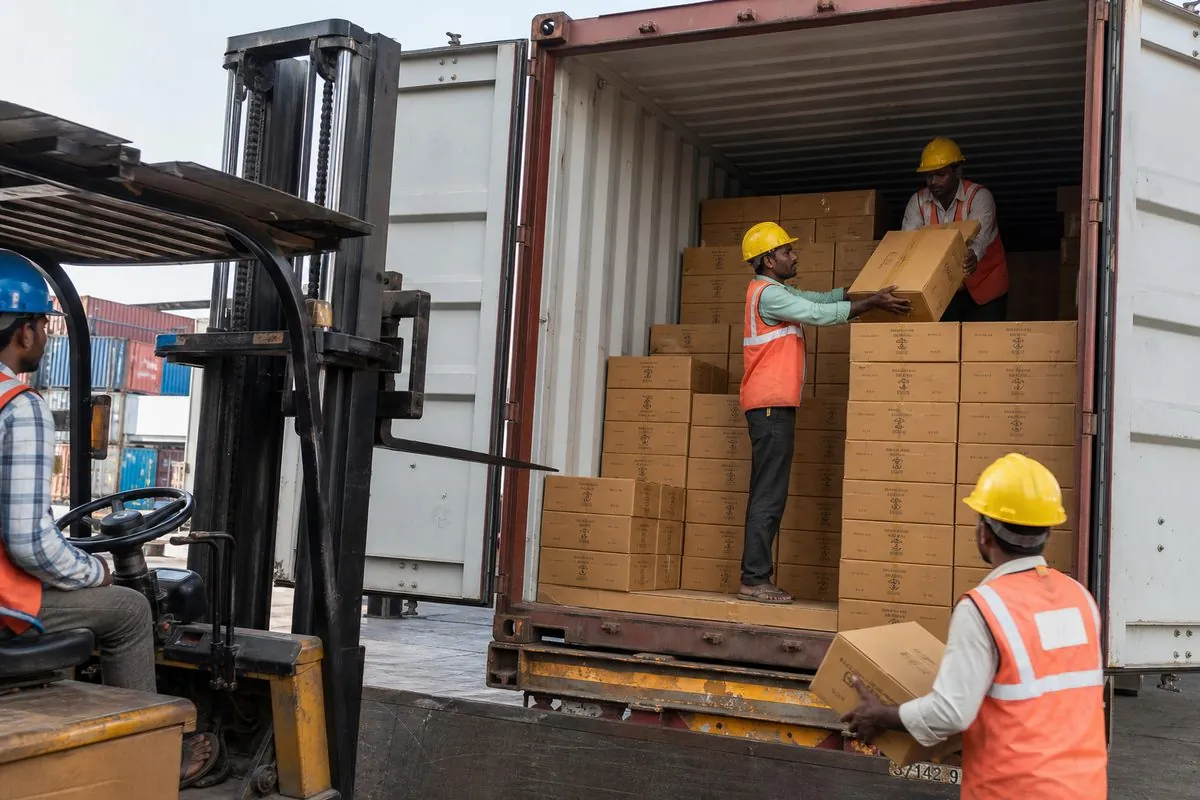
Packing-list lines must reconcile inner packs, master cartons, net/gross weight, fragrance codes, and lot marks. Packaging documentation errors — wrong stick count per hex, missing moisture-barrier notes, or fragrance mixes without line splits — are among the top shipping-bill and destination-warehouse hold triggers.
ISPM-15 fumigation certificates apply when wood pallets are used and the destination mandates treatment. Note the certificate number on the packing list and B/L goods description where applicable. Plastic pallets or slip sheets may avoid this layer; confirm destination rules before stuffing.
Packaging formats and packing-list fields for agarbatti export
Swipe →
Data table — swipe horizontally on small screens
| Format | Typical configuration | Packing-list must show | Key risk |
|---|---|---|---|
| Hex / rectangle retail boxes | Inner retail packs in master cartons | Boxes per carton, sticks per box, fragrance code, lot ID | Stick-count mismatch vs invoice |
| Pouches / sleeves | Sealed pouches in corrugated masters | Pouch count, net weight, fragrance segregation note | Scent cross-contamination claims |
| Master cartons | Moisture-barrier corrugated | Carton count, net/gross, marks/numbers | Moisture damage without barrier note |
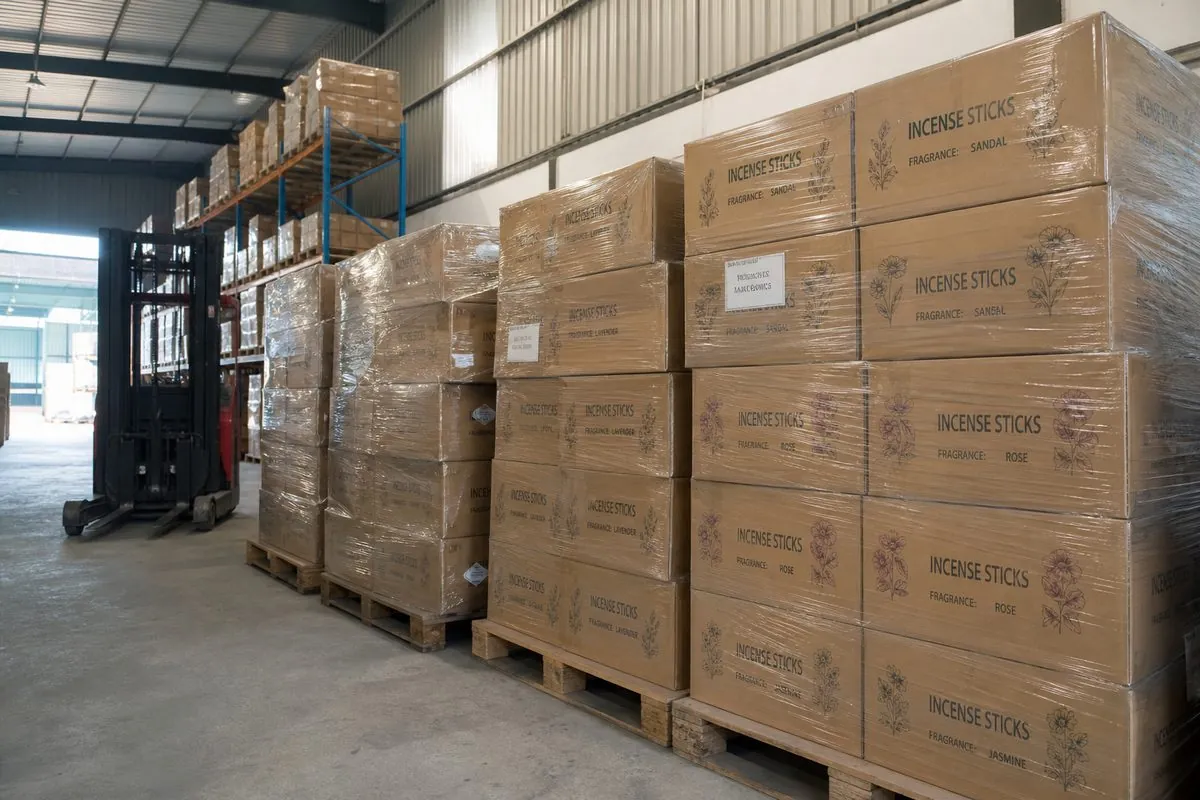
| Palletised loads | Stretch-wrap, forklift handling | Pallet count, ISPM-15 cert no. if wood | Missing fumigation reference |
Container Loading Details
Export Tip
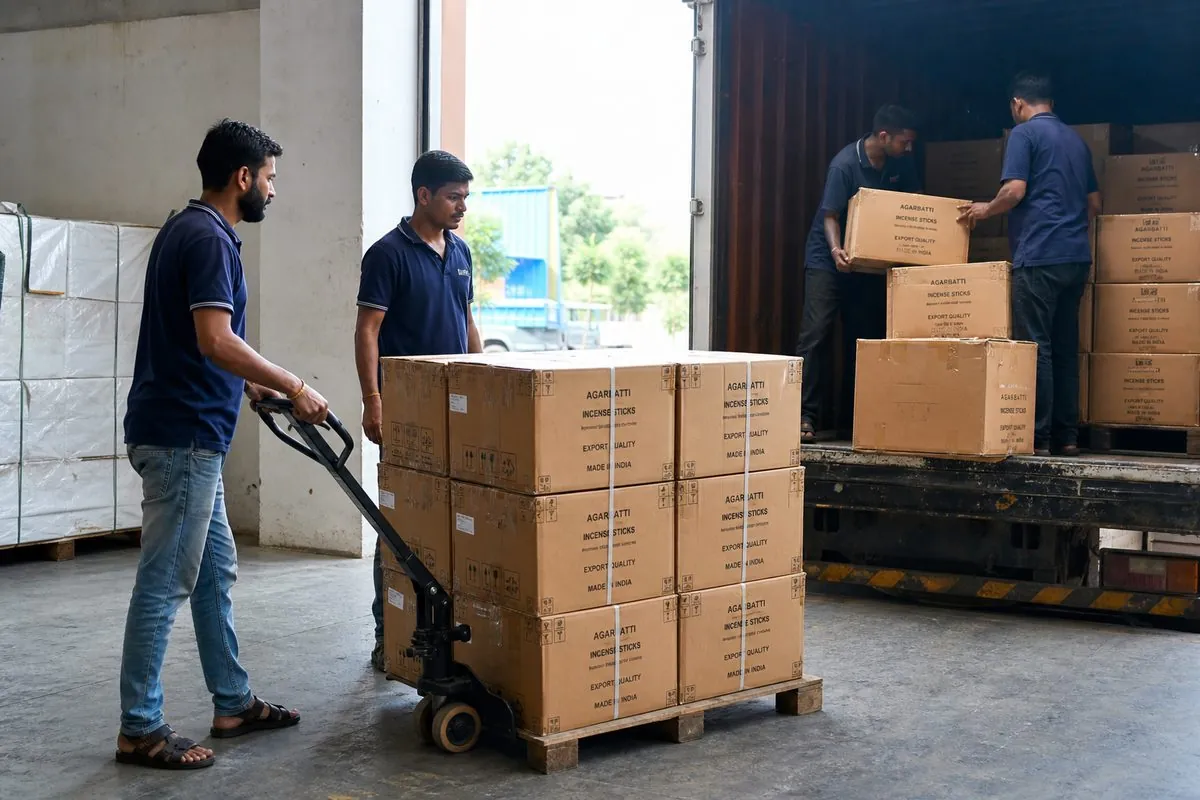
Container number and seal ID on the bill of lading must match stuffing photos and packing-list marks. Document reconciliation includes logistics identifiers, not only fragrance codes. Reject wet cartons at the yard before gate-in; photographing crushed corners after sailing does not repair a packing-list dispute.
Stuffing SOPs for agarbatti emphasise crush resistance, moisture control, and fragrance segregation. Note stack-height limits and segregation liners on the packing list or stuffing checklist attached to the broker pre-alert when buyers request evidence.
Directional container loading guidance and document ties
Swipe →
Data table — swipe horizontally on small screens
| Container type | Loading consideration | Document tie-in |
|---|---|---|
| 20-foot FCL | Density-planned hex/pouch stow; verify with forwarder | B/L package count = packing list cartons |
| 40-foot FCL / HC | Higher carton count; watch crush on lower tiers | Stuffing photos support claim defence |
| LCL | Trial lots below FCL threshold; CFS handling risk | Marks/numbers critical for CFS identification |
| Air / courier samples | Urgent burn-test kits | AWB + simplified invoice/PL/SDS summary |
Shipping Methods
Export Tip
- Samples: air/express typically 7–14 days with invoice, packing list, and SDS summary as required
- Trial cartons: LCL or partial FCL 2–4 weeks post-production with full core document set
- FCL: door-to-port timing by corridor; complete document QC 48–72 hours before cutoff
- Incoterms: EXW, FOB named Indian port, CFR/CIF; DDP selective for mature retail programmes only
Ocean FCL and LCL from Nhava Sheva, Mundra, Chennai, Tuticorin, or Bengaluru ICD consolidation carry most commercial agarbatti volume. Air freight and express courier are reserved for burn-test sample kits and urgent retail replenishment of small packs.
Incoterms shape which documents you must issue: under FOB the buyer often controls main carriage insurance; under CFR/CIF the exporter coordinates freight and, for CIF, insurance certificates. Put the agreed Incoterm and named port on the invoice and purchase order so B/L clauses do not contradict sale terms.
Certifications
Compliance Notes
Certification copies must match invoice lot lines and sailing dates. Expired Chemexcil RCMC, outdated SDS, or Halal certificates that do not cover the production premises fail buyer audit even when sticks burn correctly.
Baseline commercial shipments need IEC-linked export filing capability, invoice/packing list/B/L/COO alignment, and Chemexcil RCMC available for KYC. Programme certifications are additive — never claim them on carton art or invoice notes without a matching valid certificate.
Certifications and documents relevant to agarbatti export
Swipe →
Data table — swipe horizontally on small screens
| Certification / document | Purpose | Relevant for |
|---|---|---|
| IEC + shipping-bill capability | Legal export filing identity | All commercial shipments from India |
| Chemexcil RCMC copy | Council membership proof for Chapter 33 odoriferous goods | Buyer KYC and on-request consignment packs |
| Certificate of Origin | Origin proof for duty / FTA claims | Most international buyers; preferential corridors |
| SDS / MSDS | Fragrance compound handling and importer compliance | EU/US retail and many warehouse SOPs |
| IFRA conformity notes | Fragrance compliance for premium retail programmes | EU/US private-label and wellness retail |
| REACH / SVHC statements | Buyer-mandated EU substance declarations | When importer requires upstream disclosure |
| Halal certificate | Faith-aligned channel compliance | Selected Middle East / Africa programmes |
| Burn-test / QC report | Burn time, ash, fragrance throw on retained lot | First orders and claim defence |
Buyer Requirements
Buyer Requirements
- Written fragrance code, stick count, and pack format on PO and invoice
- HS 33074100 confirmation from exporter CHA before first shipping bill
- Chemexcil RCMC and IEC on vendor master file
- SDS/IFRA/Halal only when programme-required and lot-matched
- Pre-alert PDF pack within 24 hours of vessel departure
- Retained burn-test sample reference matching shipped lot ID
International buyers rarely reject agarbatti solely on fragrance; they reject incomplete or inconsistent document packs that their ERP, broker, or retail compliance portal cannot ingest. First-order buyers typically request IEC confirmation, Chemexcil RCMC copy, sample invoice/packing-list templates, SDS if fragrance compounds are reviewed, and written HS 33074100 confirmation.
Repeat programme buyers add stricter gates: lot-level packing lists, stuffing photos, IFRA notes for retail SKUs, Halal for designated channels, and pre-alert SLAs within 24 hours of sailing. Align these requirements in the purchase order before production so factory carton marks and SDS versions are ready at stuffing — not invented at the port.
For importer-side RFQ and burn-test sampling workflow, see Source Incense Sticks (Agarbatti) Directly from India.
Country-wise Opportunities
Market Snapshot
This section maps document-burden opportunity — where cleaner packs unlock faster clearance — not which markets to enter. Market ranking and duty-corridor strategy belong to the best-countries sibling post. Here, the opportunity is operational: exporters who standardise corridor-specific annex templates win preferred-supplier status with brokers who clear the same Indian origin weekly.
USA and EU retail programmes reward SDS and IFRA readiness. UAE and GCC programmes reward Halal and bilingual label packs when claimed. Volume African and LatAm wholesale rewards perfect carton-count and weight reconciliation even when the annex set is thinner. Build templates once per corridor and reuse them every sailing.
Country-wise documentation opportunity (burden profile, not market ranking)
Swipe →
Data table — swipe horizontally on small screens
| Corridor | Documentation opportunity | Template to standardise |
|---|---|---|
| USA | Faster retail onboarding with SDS + IFRA-ready packs | Invoice description + SDS version control |
| UAE / GCC | Fewer holds when Halal and label annexes match claims | Halal scope letter + bilingual pack notes |
| Nigeria / West Africa | Payment release tied to weight/carton match | Packing list UOM reconciliation sheet |
| EU / UK / Spain | Broker pre-clearance with REACH/IFRA readiness | SDS + SVHC statement checklist |
| Malaysia / ASEAN | FTA origin claims without HS mismatch | Preferential COO vs shipping-bill HS check |
| Chile / LatAm | Clear Spanish goods descriptions reduce queries | Bilingual invoice description block |
Export Process
Export Tip
The documentation export process for agarbatti is a sequenced gate, not a folder dump at sailing. Follow this order so CHA filing and broker handoff stay synchronised with factory lot marks.
Document assembly timeline relative to vessel cutoff
Swipe →
Data table — swipe horizontally on small screens
| Timing | Owner | Deliverable |
|---|---|---|
| At PO confirmation | Exporter + buyer | Frozen fragrance, pack, HS, Incoterm, annex list |
| At packing | Factory / merchant exporter | Lot marks on cartons + packing photos |
| T−72 to T−48 hours | Document owner + CHA | Invoice/PL reconciliation; draft shipping bill |
| Before gate-in | CHA | Filed shipping bill matching invoice |
| At sailing | Forwarder | B/L or AWB draft approval |
| Within 24 hours of departure | Exporter | Broker pre-alert PDF pack + archive index |
Step 1 — Lock PO fields that become invoice fields
Before production, freeze fragrance code, stick family, pack format, stick count, Incoterm, named port, HS 33074100, and required annexes (SDS, IFRA, Halal, preferential COO). Anything left vague becomes a shipping-bill amendment under cutoff pressure.
Step 2 — Assign lot ID at packing
Print lot or batch ID, fragrance code, and country of origin on master cartons. That ID becomes the packing-list key and the invoice lot reference. Photograph marked cartons before truck loading.
Step 3 — Draft invoice and packing list; reconcile
One owner reconciles carton counts, net/gross weights, fragrance lines, values, and HS digits. Do not file the shipping bill until this gate passes. Hold a brief mill–forwarder–CHA review 48–72 hours before cutoff.
Step 4 — CHA shipping bill and port gate-in
CHA files via ICEGATE mirroring the reconciled invoice. Confirm 33074100 for burning sticks. Attach or reference supporting documents per customs and scheme requirements applicable to your filing.
Step 5 — Transport document, COO, RCMC, annexes
Approve draft B/L or AWB against invoice consignee and weights. Apply for COO after invoice and shipping-bill drafts align. Attach Chemexcil RCMC copy per buyer SOP. Add SDS/IFRA/Halal only when required and valid.
Step 6 — Broker handoff and archive
Pre-alert the full PDF pack to the buyer and destination broker within 24 hours of departure. Archive invoice, packing list, shipping bill, B/L, COO, RCMC, SDS, stuffing photos, and email approvals indexed by buyer, lot ID, and sailing date for dispute resolution and repeat audits.
Sourcing Checklist
Checklist
Buyer Checklist
Checklist
Exporter Checklist
Checklist
Common Buyer Mistakes
Common Mistakes Box

Future Market Trends
Key Statistics
Customs digitisation and buyer audit portals increase pre-arrival document scrutiny for Chapter 33 fragrance goods. Exporters who QC invoice, packing list, and shipping-bill alignment before cutoff avoid demurrage trends seen at busy west- and south-coast ports.
Retail and wellness buyers increasingly archive SDS and IFRA copies per lot in supplier portals. Document expiry management becomes ongoing calendar work, not a one-time folder exercise at first shipment.
Electronic bills of lading and PDF pre-alerts are becoming the default broker expectation. Exporters who still courier incomplete packs after vessels sail lose preferred status to houses that deliver a clean digital pack within 24 hours.
Challenges & Solutions
- Challenge: invoice vs packing-list quantity drift — Solution: single reconciliation owner at T−72 hours
- Challenge: HS filed as 33074900 for burning sticks — Solution: CHA written confirmation of 33074100 on draft shipping bill
- Challenge: SDS describes wrong fragrance blend — Solution: version SDS to fragrance code; reject generic templates
- Challenge: consignee mismatch on B/L vs LC — Solution: draft B/L approval against invoice before issuer release
- Challenge: lapsed Chemexcil RCMC mid-season — Solution: calendar renewal; block sailing if RCMC expired
- Challenge: mixed fragrances without packing-list lines — Solution: one packing-list row per fragrance/lot
- Challenge: late broker pack — Solution: 24-hour pre-alert SLA with indexed PDF archive
Documentation challenges in agarbatti export are process problems with process solutions. The table of issues below maps the failures this checklist is designed to prevent.
Compliance Checklist
Checklist
Compliance Notes
Sources
- WITS / UN Comtrade — India exports HS 330741 by partner, 2024
- WITS / UN Comtrade — India imports HS 330741 by partner, 2024
- UN Comtrade Database (Comtrade Plus)
- ITC Trade Map
- DGFT (India) — IEC / Foreign Trade Policy portal
- ICEGATE — Indian Customs EDI
- India CBIC — Customs Tariff / notifications
- Exim Guru — ITC-HS 33074100 Agarbatti (policy Free)
- Chemexcil India — Basic Chemicals, Cosmetics & Dyes EPC (Panel III Cosmetics, Soaps, Toiletries & Essential Oils)
- IFRA — International Fragrance Association
- USITC Harmonized Tariff Schedule — search 3307.41
- USITC HTS Chapter 33 PDF archive (historical reference)
- European Commission TARIC consultation
- ECHA — REACH / SVHC guidance
- ICC Incoterms® rules
- Altus Exports — Contact
All sources accessed for factual audit 2026-08-01. Prefer primary government, council, and multilateral trade databases when citing figures in contracts or buyer presentations. Trade totals below are WITS/UN Comtrade directional figures — re-verify via DGCI&S / ITC Trade Map before contracts.
Document field requirements vary by destination — reconcile this checklist with buyer LC terms and CHA filing rules per agarbatti consignment.

Conclusion
Incense stick (agarbatti) export documentation succeeds when commercial invoice, packing list, shipping bill, bill of lading, certificate of origin, Chemexcil RCMC copy, and conditional SDS or programme certificates tell one lot story under HS 33074100 — reconciled before vessel cutoff and pre-alerted to the destination broker within 24 hours of sailing.
Work with Altus Exports as your merchant exporter and global sourcing partner for incense sticks (agarbatti) — verified Indian factory lots, burn-tested fragrance specs, Chemexcil-aligned documentation, and FCL booking from inquiry to shipment.
For document-led programmes, Altus Exports acts as merchant exporter in India, export products from India partner, and global sourcing partner — contact us to assemble your next agarbatti document pack or FCL pre-alert workflow.
Next reads: How to Export Incense Sticks (Agarbatti) from India, Chemexcil Registration Benefits for Incense Stick (Agarbatti) Exporters, Source Incense Sticks (Agarbatti) Directly from India, and Natural, Herbal & Eco-Friendly Incense Stick Export Opportunities.