
Natural, Herbal & Eco-Friendly Incense Stick Export Opportunities
By Saurabh Mittal, Founder, Altus Exports
Premium export opportunities for natural, herbal, and eco-friendly incense sticks from India — charcoal-free and bamboo-less dhoop, vegan clean-burn programmes, IFRA-aligned fragrance notes, private-label retail packs, and margin positioning beyond commodity perfume-dipped sticks.
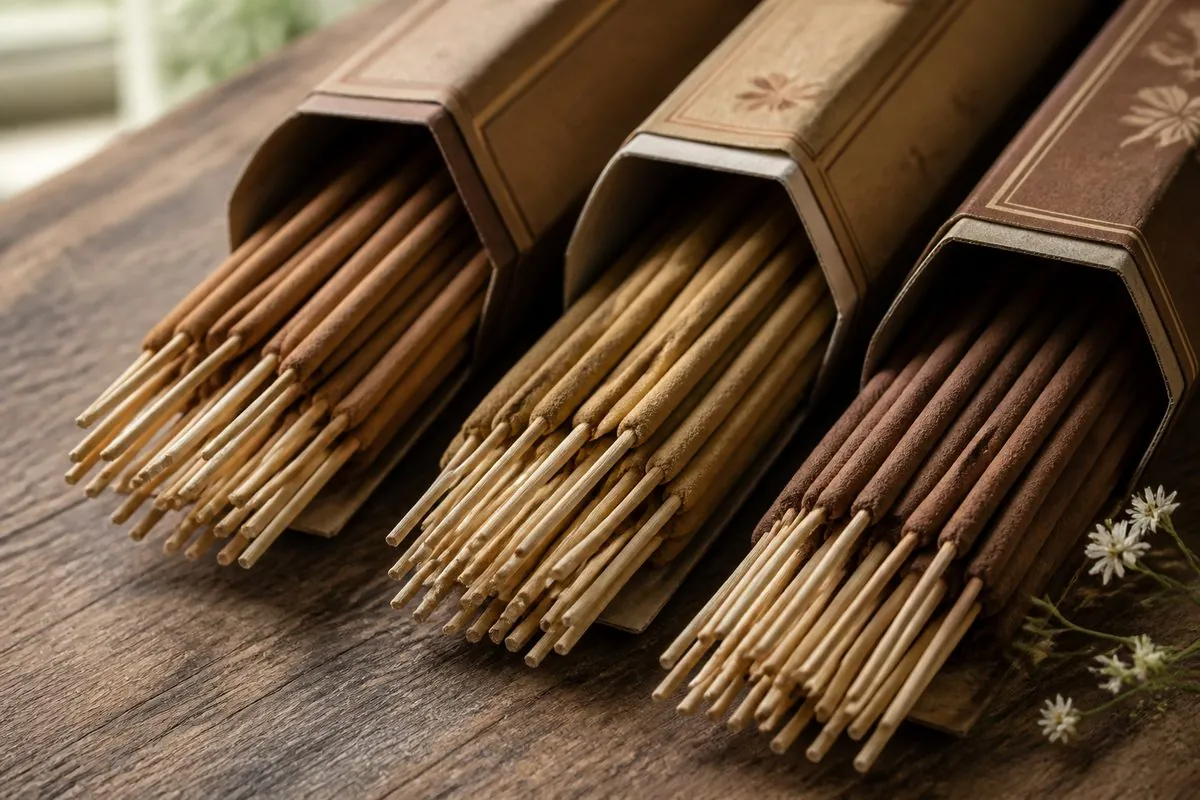
Natural herbal incense export from India is the premium tier of India's agarbatti trade — botanical pastes, charcoal-free or low-charcoal clean-burn sticks, bamboo-less dhoop, vegan claim programmes, IFRA-aligned fragrance notes, and eco-minded private-label hex packs that wellness retailers and lifestyle chains will pay above commodity dipped-stick FOB to stock. These are not economy charcoal sticks with a green sticker. They are specialty burnable fragrance programmes under HS 33074100 that require substantiated ingredient stories, burn-ash behaviour buyers can defend on shelf, and documentation stacks that procurement and compliance teams can audit.
India's Mysuru–Bengaluru and Tamil Nadu–Puducherry corridors already produce herbal and masala lines alongside volume dipped sticks, while Gujarat–Mumbai and Delhi-NCR support private-label art and merchant consolidation for clean-burn retail programmes. Kannauj attar inputs feed premium sandalwood, floral, and spice finishes when buyers specify heritage perfume profiles. WITS 2024 directional India HS 330741 exports totalled ~US$147.6M / ~40,884 MT — herbal and eco lines remain a smaller share of tonnes than charcoal dipped volume, but they contribute disproportionate margin and brand stickiness when claims are honest and burn tests hold.
For the end-to-end commodity process behind first FCL, see How to Export Incense Sticks (Agarbatti) from India. For the full SKU catalogue across masala, dipped, dhoop, and cones, see Top Incense Stick (Agarbatti) Products Exported from India. This guide focuses specifically on natural, herbal, eco-friendly, vegan, charcoal-free, IFRA-aligned premium margin playbooks — not Chemexcil membership how-to or the general process pillar. For destination selection, see Best Countries for Indian Incense Stick (Agarbatti) Exports; for paperwork fields, see Incense Stick (Agarbatti) Export Documentation Checklist.
Key Takeaways
Summary Box
Executive Summary
Summary Box
Natural, herbal, and eco-friendly incense stick exports from India target buyers who will pay above commodity dipped-stick FOB for cleaner burn behaviour, botanical ingredient stories, vegan and charcoal-free claims, IFRA-aligned fragrance notes, and private-label retail packs that fit wellness and lifestyle shelves.
Indian clusters can produce herbal and bamboo-less dhoop alongside volume charcoal programmes, but specialty lines need segregated paste recipes, honest claim language, burn-ash QC, and documentation that matches the shelf story — marketing alone does not create a premium programme.
This guide covers specialty product variants, manufacturing and claim controls, pricing and MOQ ladders for herbal programmes, eco packaging and container loading, certifications buyers actually audit, country-wise premium opportunities, and checklists that keep clean-burn exports defensible. It does not replace the process pillar, Chemexcil membership deep-dive, or document field checklist.
Market Size & Industry Overview
Key Statistics
Global home-fragrance and wellness retail continues to shift a share of incense demand toward cleaner-burn, botanical, and lower-synthetic-smoke products. Buyers in North America, Western Europe, the United Kingdom, Australia, and premium GCC lifestyle channels increasingly ask for herbal pastes, charcoal-free or reduced-charcoal sticks, bamboo-less dhoop, vegan declarations, recycled or plastic-light packs, and fragrance notes that can be discussed under IFRA guidance — not only the cheapest dipped stick that clears a warehouse rack.
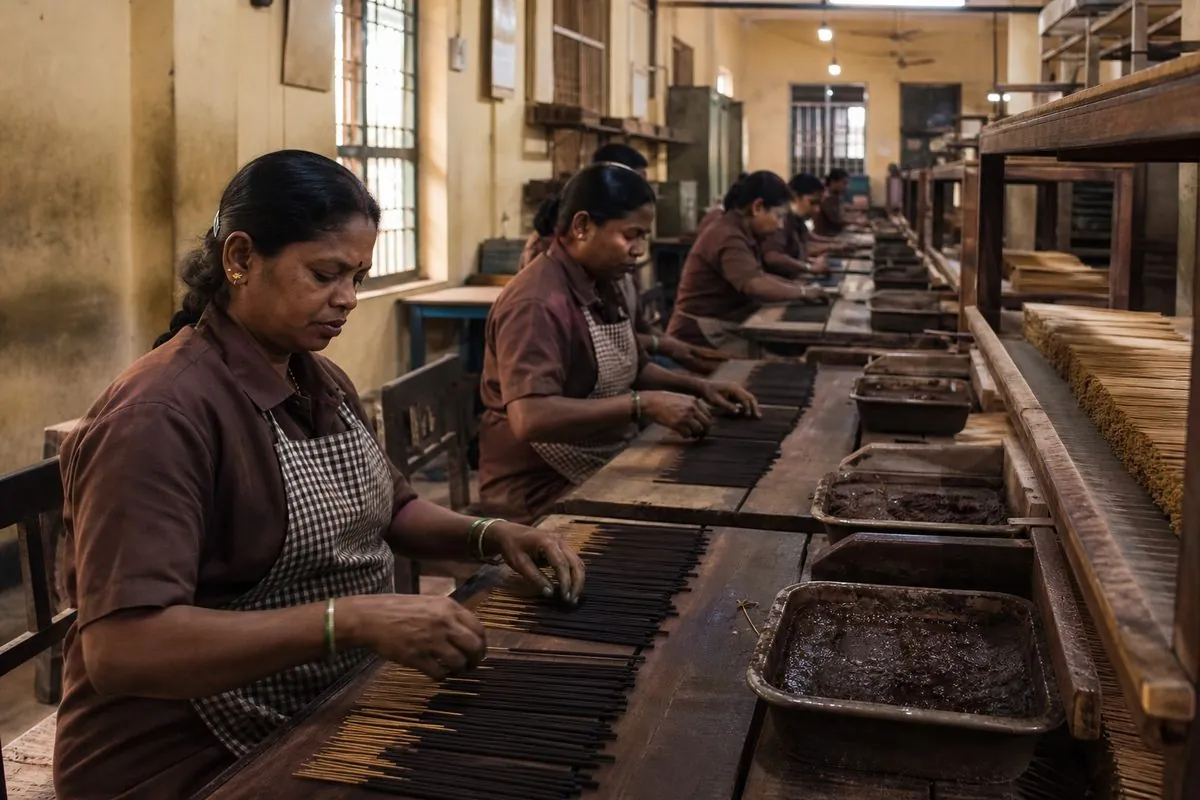
India remains a structural origin for burnable odoriferous preparations under HS 330741. Commodity charcoal-dipped and mid masala volume still dominate tonnes shipped to Africa, Middle East ethnic wholesale, and price-sensitive Latin American corridors. Specialty natural and herbal programmes sit inside the same trade corridor but compete on value density: higher FOB per kilogram or per hex box, tighter QC, longer private-label art cycles, and stickier retail relationships once burn performance is proven.
The binding constraint for credible natural herbal incense export from India is rarely raw botanical powder availability alone. It is factory discipline: separate recipes from charcoal dipped lines, fragrance oil grades suitable for IFRA-aligned retail claims, pack materials that match eco messaging, and retained-sample burn reports that survive buyer audits months after first shipment. Mysuru–Bengaluru masala capacity, Tamil Nadu export packing, Gujarat private-label consolidation, and Kannauj attar inputs each play a role when programmes move from sample kit to recurring FCL.
Exporters who treat natural and eco incense as a labelled version of economy dipped sticks usually win one sample order and lose the reorder. Exporters who treat clean-burn as its own operating system — paste, claim, pack, QC, and price — capture the specialty margin this post maps.
Why specialty incense is a different commercial product
Commodity dipped sticks optimise fragrance oil cost, bamboo throughput, and carton density. Specialty herbal and eco sticks optimise claim defensibility, ash colour and residue behaviour, smoke perception, essential-oil or botanical fragrance load, and retail-facing pack storytelling. The HS line may be identical; the buyer scorecard is not.
Private-label clean-burn programmes also change commercial rhythm: art approval, fragrance exclusivity, barcode and bilingual packs, and seasonal wellness calendars (New Year, spring reset, yoga retail peaks, Christmas gift sets) sit alongside Navratri and Diwali capacity planning for ethnic SKUs.
Export Statistics
Key Statistics
Natural and herbal incense still ship as burning odoriferous preparations under India 33074100 / WITS 330741. There is no separate Comtrade line that isolates charcoal-free dhoop from perfume-dipped charcoal sticks — specialty share must be inferred from buyer channel mix, unit values, and factory programme books rather than a dedicated green HS code.
WITS/UN Comtrade 2024 reports India HS 330741 exports at US$147,604.26K and 40,883,600 kg (~US$147.6M / ~40,884 MT). Leading partners by value include the United States (~US$21.2M), UAE (~US$7.7M), Nigeria (~US$7.0M), Iraq (~US$5.7M), Spain (~US$5.6M), Malaysia (~US$5.5M), Chile (~US$5.4M), and the United Kingdom (~US$5.4M).
For specialty planning, treat the headline corridor as the addressable market envelope, then overlay where clean-burn premiums actually clear: USA and EU/UK wellness retail, Australia lifestyle chains, premium GCC modern trade, and selective LatAm/ASEAN natural boutiques. Volume Africa and ethnic wholesale still matter for overall factory utilisation, but they are not the primary margin home for IFRA-documented herbal private label. Re-verify Comtrade, DGCI&S, and ITC Trade Map annually before citing figures in buyer presentations.
Directional profile of Indian incense trade with specialty natural/eco overlay (HS 330741 / India 33074100)
Swipe →
Data table — swipe horizontally on small screens
| Metric | Directional Estimate | Specialty Natural / Eco Note |
|---|---|---|
| WITS 2024 India HS 330741 export value / volume | ~US$147.6M / ~40,884 MT | Herbal/eco is a margin layer inside this envelope — not a separate Comtrade line |
| Primary manufacturing clusters | Mysuru–Bengaluru; Tamil Nadu–Puducherry | Herbal masala rolling and export packing capacity for clean-burn SKUs |
| Supporting clusters | Gujarat–Mumbai; Delhi-NCR; Kannauj (attar inputs) | Private-label eco packs and premium fragrance finishing |
| Applicable HS headings | 3307.41 / India 33074100 (primary); 33074900 contrast only | Vegan/eco claims do not change HS — confirm filing with CHA |
| Governing trade council | Chemexcil (Basic Chemicals, Cosmetics & Dyes EPC) | Baseline Chapter 33 credibility; specialty claims sit on product docs |
| Top partners by value (2024) | USA, UAE, Nigeria, Iraq, Spain, Malaysia, Chile, UK | Specialty premiums concentrate in USA, EU/UK, AU, premium GCC retail |
| Dominant specialty formats | Retail hex/rectangle boxes; pouches; bamboo-less dhoop sticks; cones | Moisture barrier + fragrance segregation still mandatory for ocean transit |
Trade Statistics Analysis for Specialty Margin Planning
Average unit value implied by ~US$147.6M on ~40,884 MT sits near mid-commodity bands. Herbal/natural FOB at ~US$4–10/kg and private-label retail packs pull realised value well above that average when programmes stick. Never quote a buyer the Comtrade average as a natural-programme contract price.
Use trade statistics to size corridor frequency (USA and Spain/UK as IFRA-heavy retail lanes; UAE as bilingual Halal-aware lifestyle plus ethnic; Nigeria as volume charcoal contrast, not the lead clean-burn story). Specialty exporters should track value per carton and reorder rate, not only FCL count.
Import Statistics
Key Statistics
Destination import demand for HS 330741 spans ethnic ritual wholesale, mosque and temple channels, wellness and yoga retail, spa hospitality, and modern-trade private label. Import data analysis for natural herbal programmes focuses on which buyer types pay for clean-burn claims and which only buy economy dipped sticks under the same HS umbrella.
USA importers of specialty incense often request SDS packs, IFRA conformity notes for premium fragrance programmes, Prop 65 awareness where solvent or fragrance claims apply, and clear country-of-origin and ingredient storytelling. EU and UK buyers add REACH/SVHC statements when mandated and scrutinise charcoal-free, vegan, and natural fragrance language. UAE and GCC premium retail may stack Halal documentation with bilingual packs. Confirm live duty schedules on USITC HTS, TARIC, and destination customs portals before locking landed-cost models for herbal SKUs.
Directional import demand profile for natural / herbal / eco incense programmes
Swipe →
Data table — swipe horizontally on small screens
| Market | Directional Specialty Demand Profile | Primary Buyer Type |
|---|---|---|
| United States | Highest India HS 330741 partner by value; strong wellness, yoga, and clean-home retail appetite for herbal and vegan sticks | Lifestyle distributors, natural retailers, private-label brands |
| United Kingdom & EU (Spain, Netherlands, France, Germany) | IFRA-aware retail and spa channels; charcoal-free and bamboo-less dhoop growing in modern trade | Home-fragrance importers, wellness chains, gift distributors |
| Australia & Canada | Natural lifestyle and yoga retail; eco pack expectations rising | Specialty distributors and boutique retail consolidators |
| UAE & Saudi Arabia | Premium modern trade plus ethnic ritual; Halal and bilingual labelling often required | Gulf distributors, lifestyle retailers, re-export traders |
| Malaysia & ASEAN | Ritual and retail incense with selective natural SKU overlays | Wholesalers and modern-trade importers |
| Chile, Brazil, Mexico | Volume base with emerging natural boutique niches | Ethnic wholesalers and selective natural importers |
| Nigeria & West Africa | Primarily volume charcoal/masala — specialty natural is secondary unless buyer-specified | Volume wholesalers (contrast channel for margin planning) |
Import Data Analysis Notes for Specialty Exporters
Import statistics under HS 330741 do not tag 'herbal' versus 'dipped.' Qualify every RFQ by channel: wellness retail versus ethnic volume wholesale. A USA HS 330741 importer of charcoal hex boxes is not automatically a buyer for charcoal-free bamboo-less dhoop at herbal FOB.
Build import-side models with duty, freight, and compliance cost for IFRA/SDS packs included — specialty programmes lose margin when documentation is treated as an afterthought added after FOB is locked.
Product Categories / Variants
Summary Box
- Herbal masala — botanical paste and cleaner-burn positioning for wellness shelves
- Charcoal-free — ash and smoke story for smoke-sensitive markets
- Bamboo-less dhoop — extruded core-free sticks for spa and premium ritual
- Vegan programmes — exclusion lists and claim control, not logo-only marketing
- IFRA-aligned lines — fragrance documentation for EU/US retail buyers
- Private-label eco packs — art, barcode, and substantiated on-pack claims
Specialty natural and eco incense variants sit inside India's broader agarbatti catalogue but must be specified as distinct commercial SKUs. Buyers comparing 'herbal incense' RFQs need stick construction, charcoal content, bamboo presence, fragrance source language, pack format, and claim scope in writing — not a fragrance name alone. For the wider catalogue across all stick families, see Top Incense Stick (Agarbatti) Products Exported from India.
Natural, herbal, and eco-friendly incense variants for export programmes
Swipe →
Data table — swipe horizontally on small screens
| Variant | Construction / Claim Focus | Directional FOB Band | Primary Channel |
|---|---|---|---|
| Herbal / botanical masala sticks | Wood and herb powders with gums; reduced or no charcoal paste; essential-oil or botanical fragrance blends | ~US$4–10/kg | Wellness retail, yoga, natural boutiques |
| Charcoal-free clean-burn sticks | Paste without charcoal powder; cleaner ash story for smoke-sensitive buyers | Typically inside herbal band; confirm recipe | EU/US lifestyle private label |
| Bamboo-less dhoop sticks | Extruded sticks without bamboo core; often positioned as cleaner or traditional dhoop | Quote per kg or per pack; often above economy dipped | Spa, ritual-premium, and natural retail |
| Vegan incense programmes | No animal-derived binders/fragrances; written exclusion list required | Premium over unclaimed herbal when docs hold | Vegan lifestyle and clean-home brands |
| IFRA-aligned fragrance lines | Fragrance notes and load documented for destination IFRA guidance | Retail-pack premiums common | EU/US modern trade and gift sets |
| Premium sandalwood / oud / attar herbal | Higher fragrance load; Kannauj or equivalent perfume inputs; retail hex art | Often per hex box / carton, not only per kg | Gift, luxury wellness, ethnic premium |
| Eco private-label hex / pouch programmes | Custom art, recycled board or plastic-light packs, claim-controlled copy | Programme pricing + art MOQ | Retail chains and D2C brands |
| Herbal incense cones | Cone-form botanical burnables for home and ritual wellness | Often pack-quoted | Gift sets and spa assortments |
What specialty variants are not
Specialty natural programmes are not a substitute for bulk essential-oil export under HS 3301. Cross-link oil sourcing only when a finished stick fragrance needs attar or oil input depth. They are also not brass incense-holder catalogues — holders are accessory hardware, not the stick under 33074100.
Do not position economy perfume-dipped charcoal sticks as 'natural herbal' solely because a botanical fragrance name appears on the hex box. Buyers who pay herbal bands test ash, smoke, and ingredient lists.
Manufacturing Overview
Export Tip
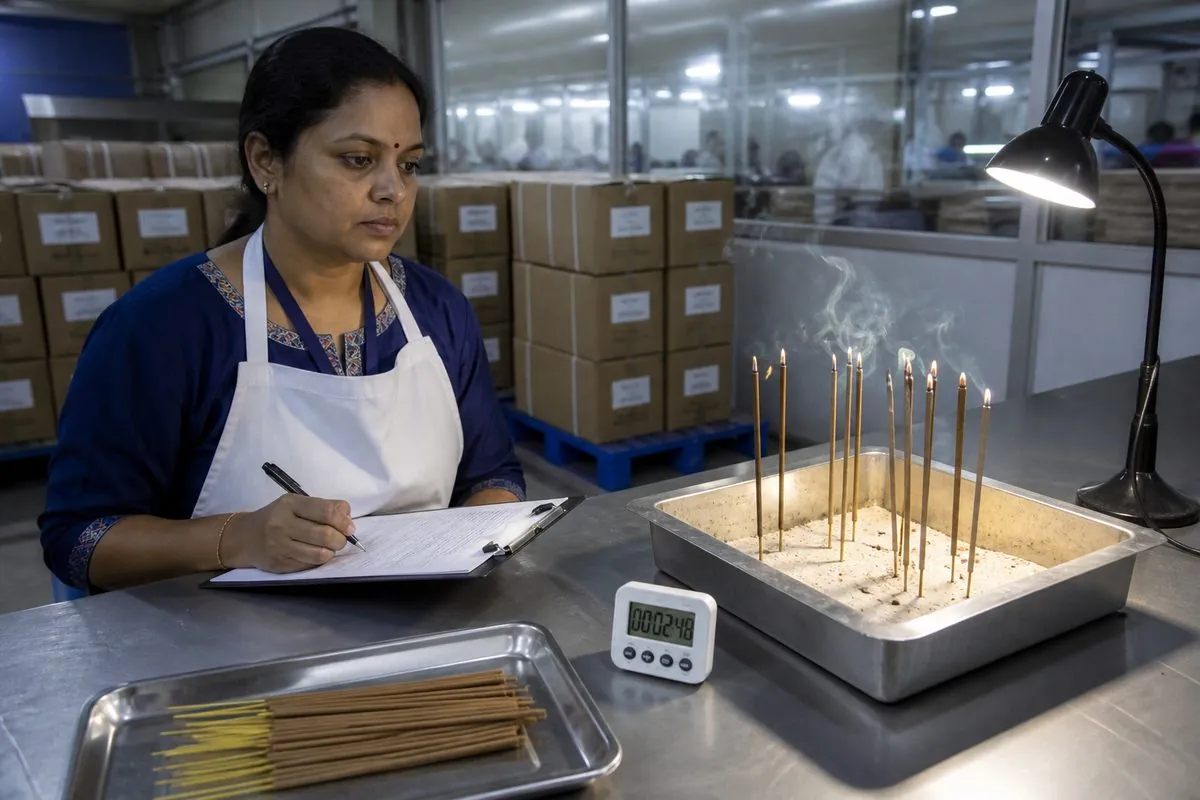
Manufacturing natural and herbal incense for export is a recipe-and-claim discipline layered onto India's established rolling, extrusion, dipping, and packing infrastructure. Mysuru–Bengaluru masala corridors can produce botanical pastes with wood powders, herbs, gums, and essential-oil blends. Tamil Nadu–Puducherry plants add export packing scale. Bamboo-less dhoop requires extrusion control without a bamboo core. Charcoal-free programmes need paste recipes that never share unmarked charcoal lots with herbal cartons.
Premium buyers audit what the factory can prove: batch sheets for botanical ratios, fragrance oil codes tied to IFRA notes, retained burn samples with timed burn and ash colour records, and packing lines that segregate strong fragrances so a sandalwood herbal SKU does not arrive smelling like jasmine dipped stock from the adjacent pallet.
Kannauj attar and perfume inputs support premium sandalwood, floral, and spice finishes when buyers specify heritage profiles — link essential-oil cluster depth only for fragrance-input pathways into a finished stick SKU, not as a bulk-oil export calendar.
Clean-Burn Process Controls That Protect Specialty Claims
- Recipe lock and change-control for botanical pastes
- Charcoal-free / bamboo-less identity marks on work orders
- Burn-time, ash, and fragrance-throw QC on retained samples
- Fragrance segregation in drying, packing, and warehousing
- Claim language review before art goes to print
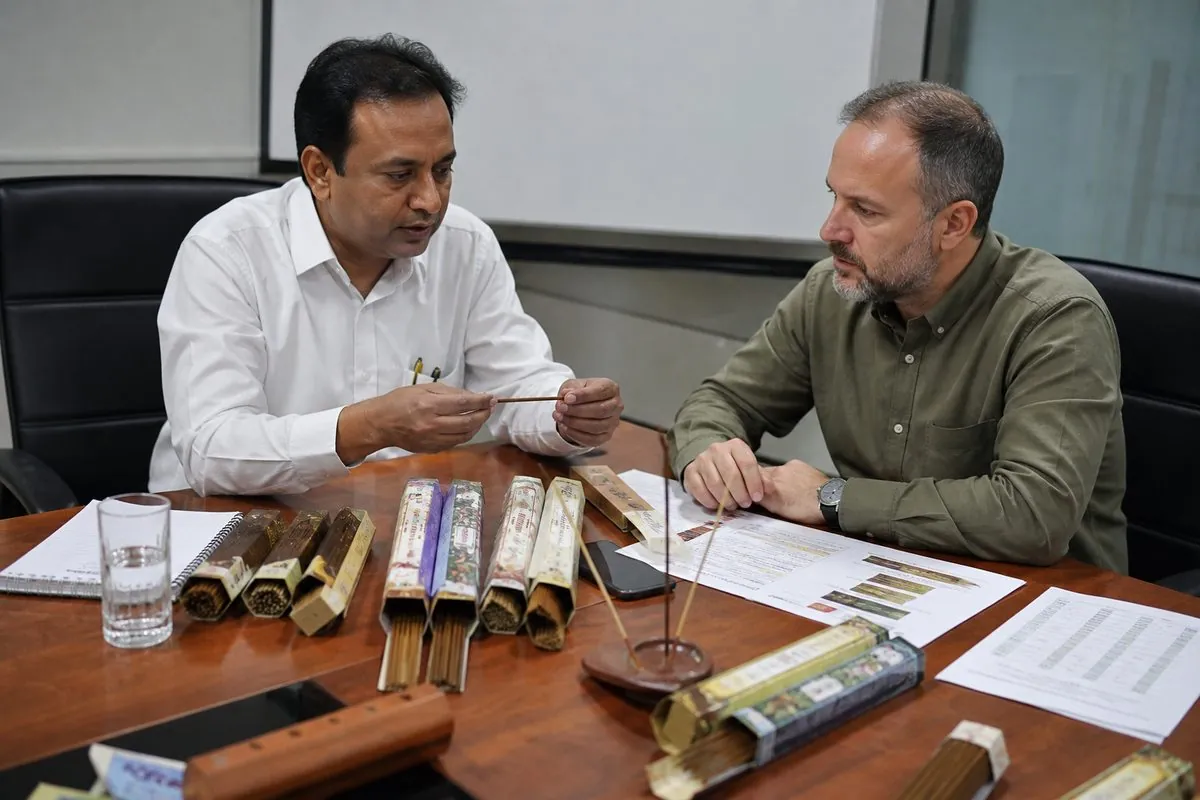
Lock a written specification before bulk: stick length and count, paste composition summary, charcoal presence or absence, bamboo presence or absence, fragrance code, burn-time target, ash colour expectation, and pack materials. Approve retained samples with photographs and burn logs before mass production.
Segregate herbal and charcoal dipped work-in-progress. Use fragrance-segregated staging for finished goods. Train packing staff that eco claim SKUs cannot borrow inner wraps or leftover fragrance oil from economy dipped runs without QC sign-off.
Private-Label Clean-Burn Production Rhythm
Custom fragrance exclusives and eco art packs typically need 4–8+ weeks after PO, art, and fragrance lock — longer than stock herbal SKUs at 2–4 weeks. Festive and wellness seasonal calendars can extend slots; book capacity early for Christmas gift sets and spring natural retail launches.
Pricing Analysis
Buyer Tip
Specialty natural herbal incense pricing must sit above economy dipped bands or the programme cannot fund IFRA notes, burn QC, botanical inputs, and private-label art. Directional planning bands below are not contract prices — confirm lot-specific FOB on quote date; fragrance oil and botanical powder costs move.
Many premium retail programmes quote per hex box, inner pack, or master carton rather than only USD/kg. Model both so buyers can compare herbal value density against charcoal dipped kilograms.
Directional FOB pricing bands — commodity vs natural / herbal specialty incense
Swipe →
Data table — swipe horizontally on small screens
| Grade / Programme | Directional FOB | Notes |
|---|---|---|
| Economy perfume-dipped charcoal sticks | ~US$0.8–2.5/kg | Volume baseline — not a specialty natural programme |
| Mid masala sticks | ~US$2.5–6/kg | Hand-rolled paste; quality spread by fragrance load |
| Herbal / natural sticks | ~US$4–10/kg | Botanical pastes and cleaner-burn positioning |
| Charcoal-free / bamboo-less dhoop specialty | Often herbal band or pack-quoted premium | Confirm construction; do not assume kg parity with dipped |
| Premium sandalwood / oud / attar herbal | Higher; often USD/hex or USD/carton | Fragrance load and retail art drive spread |
| Private-label eco / vegan retail packs | Programme pricing above bulk herbal kg | Art, exclusivity, IFRA/SDS pack, and MOQ per SKU |
Margin logic beyond commodity dipped sticks
Specialty margin comes from claim-backed differentiation and retail pack value, not from renaming dipped sticks. If a buyer wants the lowest FOB charcoal stick, do not force a herbal story — offer the economy line honestly and keep herbal capacity for buyers who will pay for it.
Stack costs transparently in internal worksheets: botanical paste premium, fragrance grade, IFRA/SDS preparation, eco board or pouch upgrade, private-label plate/print, extra QC burn tests, and longer lead-time working capital. Quote FOB that survives those costs.
MOQ Analysis
Buyer Tip
MOQs for natural herbal programmes often run higher on a per-SKU art basis than bulk poly-bundle economy sticks, because private-label print and fragrance exclusives need volume to amortise setup. Trial cartons still matter for burn approval before FCL commitment.
MOQs are commercial practice, not statutory limits. Vegan or charcoal-free exclusives with custom art may require higher unit MOQs per fragrance than stock herbal SKUs. State MOQ and artwork deposit rules in the PI before production starts.
Directional MOQ tiers for natural / herbal / eco incense programmes
Swipe →
Data table — swipe horizontally on small screens
| Stage | Typical MOQ | Purpose |
|---|---|---|
| Burn-test samples | 1–5 kg or 50–200 hex boxes | Ash, burn time, fragrance throw, and claim fit evaluation |
| Trial order | 200–1,000 kg or 1–5 cartons per SKU | Retail sell-through and pack integrity trials |
| Wholesale / programme | 1–5 MT or multi-SKU carton mix | Distributor and chain replenishment |
| Private-label art programme | Higher unit MOQ per fragrance/SKU (confirm factory) | Amortise plates, barcodes, and exclusive fragrance |
| FCL specialty | Density-planned by hex/pouch mix | Confirm stow with forwarder; fragrance segregation in container |

Packaging Standards
Export Tip
- Never print '100% organic' or 'chemical-free' unless the programme can substantiate the claim under buyer market rules
- Vegan and charcoal-free claims need matching ingredient documentation in the shipment file
- Bilingual packs for GCC and selected EU markets must be approved before print
- Master carton marks: fragrance name, stick count, net weight, batch/lot ID, country of origin, handling icons
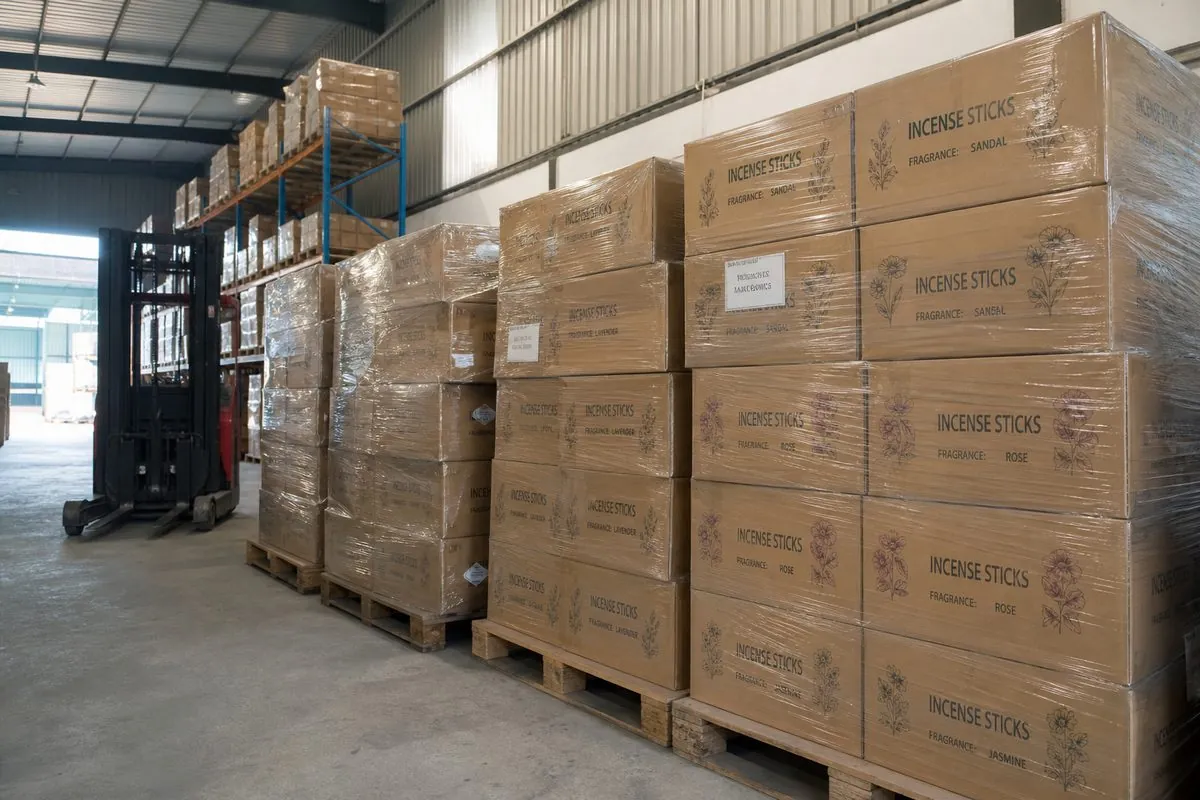
Eco and natural programmes still need moisture barriers, crush resistance, and fragrance segregation — recycled board or plastic-light pouches do not excuse crushed hex boxes or scent cross-contamination. Lot marks must match invoice, packing list, and burn-test retained samples.
Packaging formats for natural / herbal / eco incense export
Swipe →
Data table — swipe horizontally on small screens
| Format | Typical Configuration | Specialty Use Case | Key Requirement |
|---|---|---|---|
| Retail hex / rectangle boxes | Stick count labelled; optional recycled board | Wellness and gift retail | Claim-controlled copy; barcode; COO; batch ID |
| Pouches / sleeves | Moisture-aware films; plastic-light options where proven | Natural boutique and refill-style programmes | Seal integrity; fragrance retention; honest eco claims |
| Master cartons | Corrugated with moisture barrier | All ocean shipments | Crush resistance; fragrance segregation marks |
| Inner fragrance wraps | Cellophane or food-grade wrap as specified | Premium herbal and sandalwood lines | Avoid scent bleed between SKUs |
| Pallet stretch-wrap | Stable stacks; dry warehouse staging | FCL and LCL consolidation | No outdoor moisture exposure before stuffing |
Container Loading Details
Export Tip
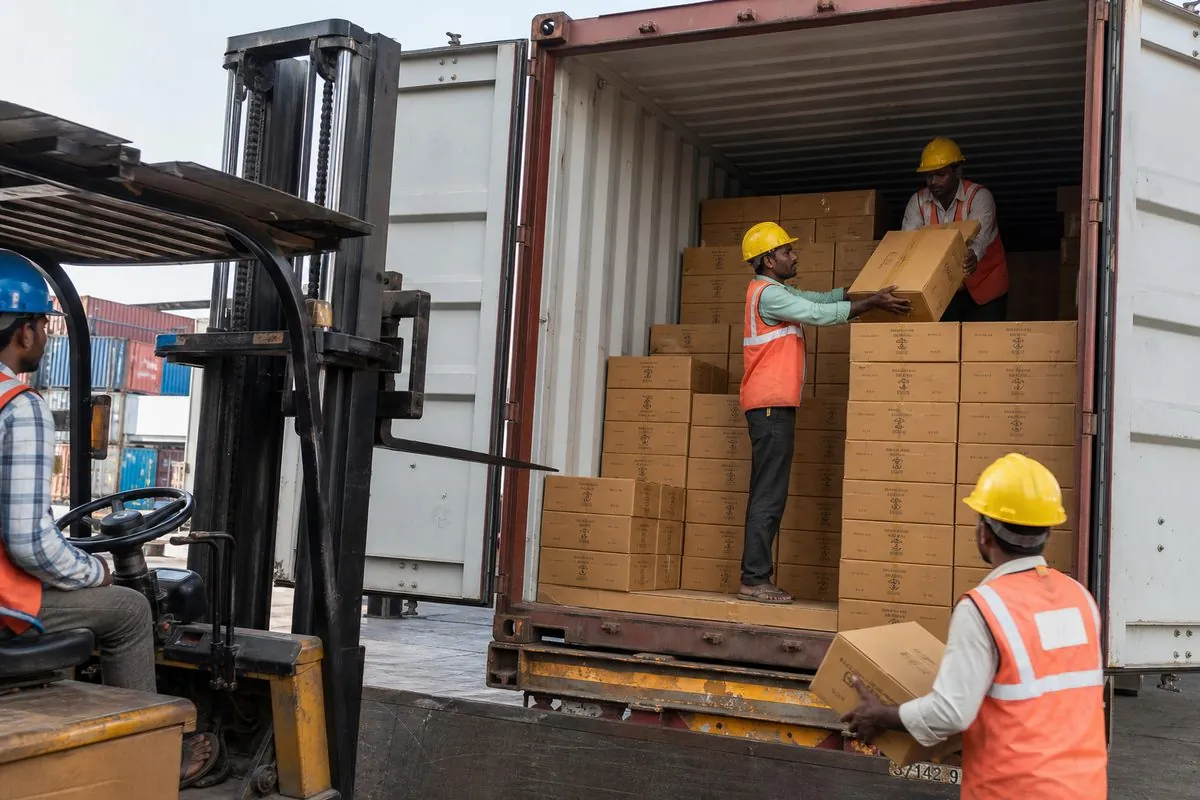
Specialty incense loads fail the same physical ways commodity loads fail — moisture, crush, and scent mixing — with higher commercial damage because retail packs and claim SKUs are harder to discount as distressed stock. Plan stow with the forwarder using actual carton dimensions for hex-heavy herbal programmes.
Container loading controls for specialty natural incense FCL / LCL
Swipe →
Data table — swipe horizontally on small screens
| Control | Practice | Why It Matters for Natural / Eco SKUs |
|---|---|---|
| Carton strength | Export-grade board; no overfill crush | Retail hex art damage kills shelf presentation |
| Moisture barrier | Liners / sealed masters; dry staging | Damp sticks lose burn quality and fragrance throw |
| Fragrance segregation | Separate pallets or sealed groups by scent family | Herbal sandalwood must not arrive smelling like economy jasmine |
| Claim SKU identity | Clear pallet labels for charcoal-free / vegan lots | Prevents warehouse mix with dipped charcoal stock |
| LCL vs FCL | LCL for trials; FCL for programme density | Specialty trials often start LCL before full container |
| Ports | Nhava Sheva, Mundra, Chennai, Tuticorin; ICD as applicable | Match factory corridor to sailing frequency |
Shipping Methods
Export Tip
Ocean freight remains the default for cartonised incense FCL and LCL. Air freight is reserved for urgent burn-test kits, art-approval samples, and emergency retail top-ups — not routine herbal wholesale tonnes. Specialty programmes should not promise DDP retail delivery unless the exporter has proven landed-cost and compliance capacity in that market.
Incoterms Selection for Natural / Eco Incense Programmes
Incoterms fit for specialty incense export
Swipe →
Data table — swipe horizontally on small screens
| Incoterm | Typical Use | Specialty Note |
|---|---|---|
| EXW | Buyer-controlled pickup | Still require claim docs and burn reports with goods |
| FOB named Indian port | Standard export default | Clear FOB includes pack and export docs, not destination duty |
| CFR / CIF | Distributor programmes | Insure fragrance-sensitive cargo appropriately under CIF |
| DDP | Selected mature retail only | Requires duty, tax, and compliance ownership — use sparingly |
EXW factory or warehouse suits buyers with their own India forwarder. FOB Nhava Sheva, Mundra, Chennai, or Tuticorin is the common export default. CFR/CIF major destination ports works for distributors who want freight bundled. DDP is selective for mature retail programmes only.
Lead Times for Specialty Programmes
Samples: 7–14 days for burn-test kits. Stock herbal fragrances: typically 2–4 weeks after PO. Custom fragrance, private-label eco art, and vegan claim programmes: typically 4–8+ weeks. Navratri, Diwali, Christmas, and Ramadan calendars can extend capacity — book early for seasonal natural gift sets.
Certifications
Compliance Notes
Specialty natural incense certifications and declarations are claim-specific. Chemexcil RCMC and IEC remain baseline export credentials for Chapter 33 agarbatti; they do not by themselves prove charcoal-free, vegan, or IFRA alignment. Pair baseline export docs with programme-specific evidence buyers can audit.
Certifications and declarations for natural / herbal / eco incense export
Swipe →
Data table — swipe horizontally on small screens
| Document / Claim | Purpose | Relevant For |
|---|---|---|
| IEC + Chemexcil RCMC | Baseline export registration and council membership | All commercial agarbatti shipments from India |
| SDS / MSDS | Fragrance compound handling and importer compliance | EU/US premium retail and many distributors |
| IFRA conformity / fragrance notes | Fragrance guidance alignment for retail programmes | EU/US modern trade and private label |
| REACH / SVHC statements | Buyer-mandated EU substance declarations | EU importers when requested |
| Vegan declaration | Animal-ingredient exclusion for the SKU recipe | Vegan lifestyle and clean-home brands |
| Charcoal-free / bamboo-less declaration | Construction claim tied to paste and stick form | Smoke-sensitive wellness buyers |
| Halal certificate | Faith-aligned supply for selected markets | Middle East / Africa programmes when required |
| ISO 9001 / GMP (producer) | Quality-system credibility | Chain and multinational private-label audits |
| Burn-test / QC report | Burn time, ash, fragrance throw on retained samples | All specialty programmes — baseline proof |
| Certificate of Origin | Origin preferential and clearance support | All commercial shipments as required |
Buyer Requirements
Buyer Requirements
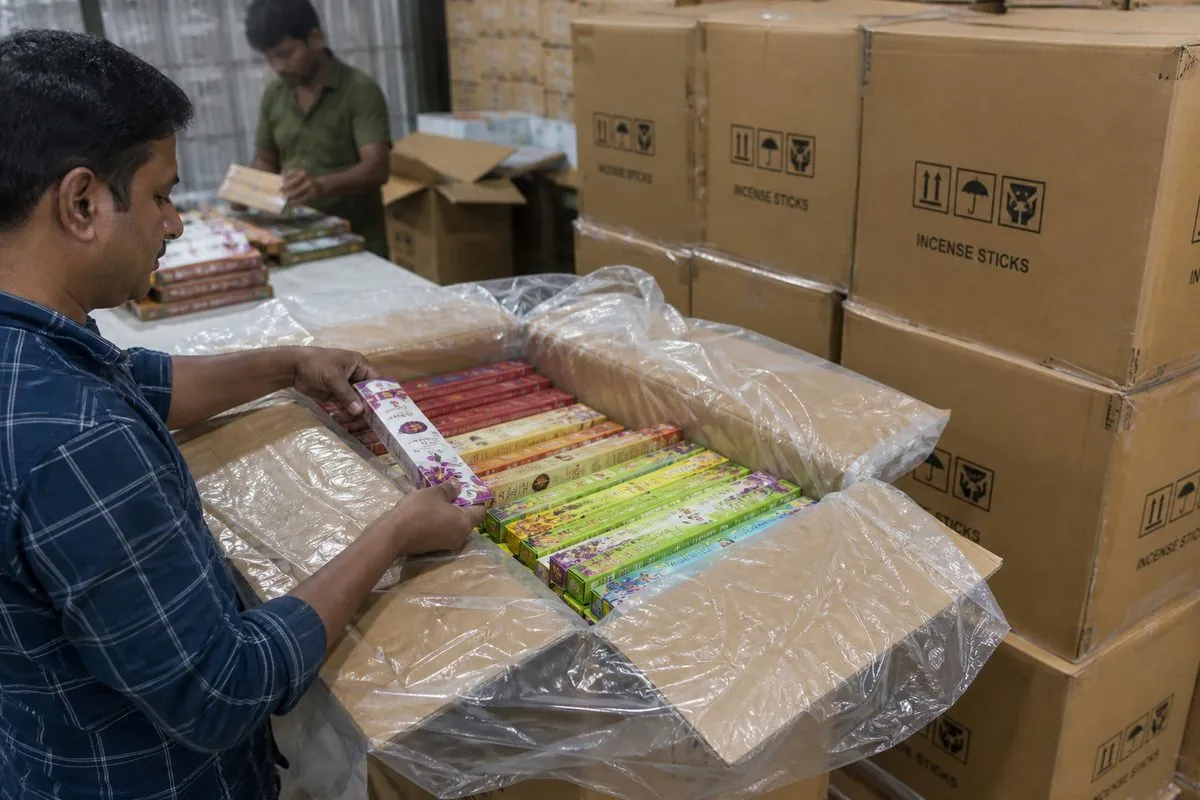
Specialty incense buyers typically request more than a fragrance list and FOB. Expect written construction specs (charcoal yes/no, bamboo yes/no), ingredient or botanical summary appropriate to claim level, IFRA/SDS packs for premium destinations, vegan exclusion letters where claimed, burn-test samples with photos or reports, retail pack dielines, and Incoterm clarity.
Wellness and Yoga Retail Requirements
Cleaner burn perception, herbal positioning, and calm fragrance families (sandalwood, lavender-adjacent florals, citrus botanicals, sacred woods) matter more than maximum oil throw. Packs must look retail-ready; crushed hex boxes fail regardless of paste quality.
EU / UK IFRA-Aware Retail Requirements
Fragrance documentation, SDS, and careful natural/organic wording are common. Charcoal-free and bamboo-less claims should match physical product. REACH/SVHC statements appear when the importer's compliance team mandates them.
Private-Label Clean-Burn Brand Requirements
Exclusive fragrance codes, art control, barcode compliance, claim legal review, and reorder colour/fragrance consistency across lots. Lead times and MOQs must be locked before marketing launch dates.
GCC Premium Retail Requirements
Halal documentation when required, bilingual labelling, and fragrance families that fit both modern wellness and traditional oud/sandalwood preferences. Confirm labelling before print plates are made.
Country-wise Opportunities
Market Snapshot
Country opportunity for natural herbal incense is not identical to volume ranking under HS 330741. Nigeria can be a large partner by value for charcoal and masala wholesale while offering limited appetite for IFRA-documented vegan dhoop. Spain, UK, USA, and Australia may take fewer tonnes than the largest volume corridors yet clear herbal and private-label premiums. Use the matrix below for specialty targeting; for macro destination ranking methodology, see Best Countries for Indian Incense Stick (Agarbatti) Exports.
Country-wise specialty opportunities for natural / herbal / eco incense from India
Swipe →
Data table — swipe horizontally on small screens
| Country / Region | Specialty Opportunity | Preferred Variants | Compliance Emphasis |
|---|---|---|---|
| United States | Highest-value corridor; wellness, yoga, natural retail private label | Herbal sticks, vegan lines, eco hex packs, cones | SDS, IFRA notes, Prop 65 awareness where applicable |
| United Kingdom | Lifestyle and gift retail; clean-burn messaging | Charcoal-free, herbal masala, private label | IFRA/SDS; careful organic wording |
| Spain & EU | Home fragrance and spa channels; growing bamboo-less interest | Bamboo-less dhoop, IFRA-aligned florals/woods | REACH/SVHC when buyer-mandated; IFRA |
| Australia & Canada | Natural lifestyle distribution | Herbal and eco pack programmes | Clear COO and claim substantiation |
| UAE / Saudi Arabia | Premium modern trade + ritual; selective natural overlays | Sandalwood/oud herbal, Halal-ready packs | Halal; bilingual labels |
| Malaysia | Ritual plus modern retail; selective natural SKUs | Masala herbal and retail hex | Local labelling rules; Halal if required |
| Chile / Brazil / Mexico | Volume base with boutique natural niches | Select herbal hex; cones in gift assortments | Spanish/Portuguese labelling expectations |
| Nigeria / West Africa | Primarily volume — specialty only if RFQ specifies | Economy dipped/masala contrast | Pack strength and lead-time honesty over eco claims |
Export Process for Specialty Natural & Eco Programmes
Export Tip
Specialty natural herbal incense export from India follows the same legal spine as other agarbatti — IEC, Chemexcil-aligned Chapter 33 credentials, HS 33074100 filing, CHA coordination, and ocean documentation — but inserts claim lock, burn-test approval, and private-label art gates before bulk. This section is a specialty pathway overlay, not a replacement for the full process pillar.
Step 1: Define the specialty claim and stick construction
Write whether the SKU is herbal masala, charcoal-free, bamboo-less dhoop, vegan, IFRA-aligned retail, or a stack of these. Construction and claim scope drive factory selection and price.
Step 2: Shortlist factories with clean-burn capability
Prioritise Mysuru–Bengaluru and Tamil Nadu plants that already run herbal or bamboo-less lines, plus Gujarat private-label packers for eco art. Verify they can segregate charcoal dipped production.
Step 3: Approve burn-test samples and claim pack
Lock burn time, ash, fragrance throw, and on-pack claim language. Do not approve bulk art that overstates organic, chemical-free, or charcoal-free status.
Step 4: Commission IFRA / SDS / vegan / Halal docs as required
Match the destination buyer checklist. Archive certificate and declaration IDs with lot numbers. For field-level document assembly, see the documentation checklist.
Step 5: Produce, pack, and fragrance-segregate
Run specialty lots with work-order identity marks. Pack into moisture-safe masters. Stage pallets by fragrance family and claim SKU.
Step 6: File HS 33074100 and ship under agreed Incoterms
Confirm eight-digit line with CHA. Book Nhava Sheva, Mundra, Chennai, or Tuticorin sailings. Keep commercial invoice descriptions accurate without stuffing marketing essays into the shipping bill goods description.
Sourcing Checklist
Checklist
Buyer Checklist
Checklist
Exporter Checklist
Checklist
Common Buyer Mistakes
Common Mistakes Box
Future Market Trends
Key Statistics
Clean-burn and botanical positioning is expanding inside home fragrance even where total incense tonnes grow more slowly. Smoke-sensitive urban buyers, yoga and mindfulness retail, and private-label natural aisles favour herbal pastes, bamboo-less dhoop, and vegan claim programmes with quieter marketing and stronger documentation.
IFRA-aware fragrance briefing is becoming table stakes for EU and US modern trade, not a niche request. Recycled board and plastic-light packs will keep rising — but only where moisture protection still works for ocean transit. Exporters who invest in claim discipline and retail-ready packs will take margin share from undifferentiated dipped catalogues.
Attar-linked premium woods and florals will continue to support gift and luxury wellness price points, while volume charcoal corridors remain a separate factory utilisation story. Specialty and commodity can coexist in one export house if lot identity and sales language stay honest.
Challenges & Solutions
Specialty natural incense programmes fail for predictable reasons: overstated claims, weak burn consistency, scent cross-contamination, underpriced FOB, and documentation that arrives after the buyer audit window. The table of challenges below pairs each risk with a practical control.
Specialty natural incense export challenges and practical solutions
Swipe →
Data table — swipe horizontally on small screens
| Challenge | Impact | Practical Solution |
|---|---|---|
| Green claims without recipe proof | Vendor delisting; returns; reputation damage | Lock claim language to verified construction; archive declarations by lot |
| Charcoal dipped mix-ups in warehouse | Failed clean-burn audits on arrival | Separate WIP and finished-goods labels; pallet identity checks |
| Fragrance cross-contamination | Retail complaints; chargebacks | Segregated packing rooms or sealed staging by scent family |
| Underquoted herbal FOB | Margin collapse after IFRA/art/QC costs | Cost stack worksheet before PI; refuse economy benchmarks |
| Private-label lead-time optimism | Missed retail launches | Publish 4–8+ week custom timelines; book capacity early |
| Moisture damage in eco packs | Weak burn and mould risk | Test plastic-light packs for ocean humidity before scaling |
| Buyer expects bulk-oil GC-MS for finished sticks | RFQ confusion across clusters | Clarify finished stick vs bulk essential oil scope; link oil posts only for inputs |
Compliance Checklist
Checklist
Compliance Notes
Sources
- WITS / UN Comtrade — India exports HS 330741 by partner, 2024
- WITS / UN Comtrade — India imports HS 330741 by partner, 2024
- UN Comtrade Database (Comtrade Plus)
- ITC Trade Map
- DGFT (India) — IEC / Foreign Trade Policy portal
- ICEGATE — Indian Customs EDI
- India CBIC — Customs Tariff / notifications
- Exim Guru — ITC-HS 33074100 Agarbatti (policy Free)
- Chemexcil India — Basic Chemicals, Cosmetics & Dyes EPC (Panel III Cosmetics, Soaps, Toiletries & Essential Oils)
- IFRA — International Fragrance Association
- USITC Harmonized Tariff Schedule — search 3307.41
- USITC HTS Chapter 33 PDF archive (historical reference)
- European Commission TARIC consultation
- ECHA — REACH / SVHC guidance
- ICC Incoterms® rules
- Altus Exports — Contact
All sources accessed for factual audit 2026-08-01. Prefer primary government, council, and multilateral trade databases when citing figures in contracts or buyer presentations. Trade totals below are WITS/UN Comtrade directional figures — re-verify via DGCI&S / ITC Trade Map before contracts.
Natural, herbal, vegan, and IFRA claims evolve — verify current buyer audit requirements before sustainability or clean-burn marketing claims.
Conclusion
Natural herbal incense export from India succeeds when clean-burn construction, honest claims, IFRA-aware fragrance documentation, and retail-ready eco packs are priced and operated as a specialty programme — not as commodity dipped sticks with greener words. Charcoal-free bamboo-less dhoop, vegan incense, herbal masala, and private-label wellness assortments can clear meaningful premiums inside the same HS 33074100 corridor that moves India's ~US$147.6M directional 2024 burning-preparations trade.
Work with Altus Exports as your merchant exporter and global sourcing partner for incense sticks (agarbatti) — verified Indian factory lots, burn-tested fragrance specs, Chemexcil-aligned documentation, and FCL booking from inquiry to shipment. Contact Altus Exports to scope natural, herbal, and eco-friendly incense stick programmes — burn-tested samples, claim-controlled private label, and FCL coordination from inquiry to shipment.
Continue with Top Incense Stick (Agarbatti) Products Exported from India for SKU breadth, Best Countries for Indian Incense Stick (Agarbatti) Exports for destination ranking, How to Export Incense Sticks (Agarbatti) from India for the operational pillar, and Incense Stick (Agarbatti) Export Documentation Checklist for the document pack. Explore export products from India when you need a wider sourcing desk beyond a single herbal SKU.