
How to Find International Buyers for Incense Sticks (Agarbatti)
By Saurabh Mittal, Founder, Altus Exports
Lead-generation playbook for Indian incense stick (agarbatti) exporters — HS 330741 trade-data prospecting, LinkedIn outreach to incense, wellness, and ethnic retail distributors, buyer verification tactics, and cold email that names stick type and fragrance so genuine importers reply.
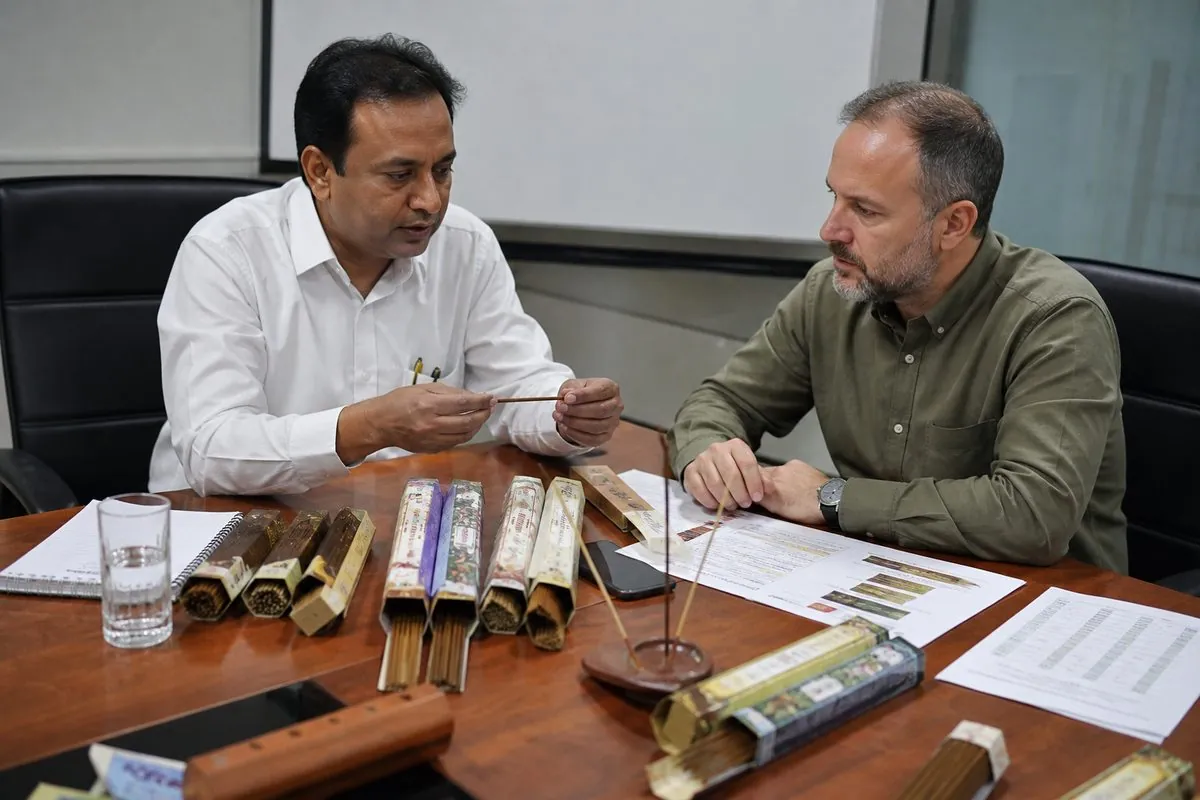
Finding international buyers for incense sticks (agarbatti) exported from India is less about blasting generic fragrance catalogues and more about identifying importers who already move volume under HS 330741 / India 33074100, then approaching them with stick-type and fragrance specificity that proves you understand their channel. Trade-data prospecting, LinkedIn outreach to incense and wellness distributors, ethnic retail buyer programmes, and verified cold email each play a role — but only when supported by buyer verification that separates genuine importers from brokers shopping lowest FOB without a warehouse or retail shelf.
This guide structures buyer development for Indian agarbatti exporters: how to use HS 330741 import history to shortlist active buyers, how to segment prospects by channel (ethnic wholesale, wellness retail, specialty incense, private-label), how to write outreach that names sandalwood masala or dipped floral hex boxes rather than vague 'incense sticks,' and how to verify that a prospect can actually import and distribute burning preparations. For end-to-end export process, see How to Export Incense Sticks (Agarbatti) from India; for fair and marketplace channels, see Trade Shows and B2B Marketplaces for Incense Stick Exporters.
WITS 2024 directional figures place India HS 330741 exports at roughly US$147.6M and 40,884 MT, with the United States, UAE, Nigeria, Iraq, Spain, Malaysia, Chile, and the United Kingdom among leading partners by value. That corridor depth rewards disciplined prospecting, not spray-and-pray RFQs. Altus Exports supports Indian manufacturers and export houses as a merchant exporter in India with buyer follow-up discipline across wellness, ethnic retail, and specialty incense programmes.
Key Takeaways
Summary Box
Executive Summary
Summary Box
- Screen Comtrade / Trade Map for HS 330741 destination imports before LinkedIn search.
- Segment prospects: ethnic retail, wellness, specialty incense, private-label programmes.
- Lead every outreach with stick type + fragrance + trial MOQ + FOB port.
- Verify registry, import history, and warehouse/retail footprint before deep quotes.
- Follow trade-show and marketplace leads within 14 days with labelled sample kits.
Finding international incense stick buyers requires HS 330741 import-data prospecting, channel-specific LinkedIn and email outreach, and verification that the prospect is a distributor, ethnic wholesale house, wellness retailer, or specialty incense importer — not an unqualified marketplace RFQ.
Conversion depends on stick-type and fragrance naming in the first message, burn-test sample speed, clear trial MOQ (200–1,000 kg), and documentation readiness after first contact.
This guide structures buyer development channels for Indian exporters building repeat wholesale and private-label programmes under India HS 33074100.
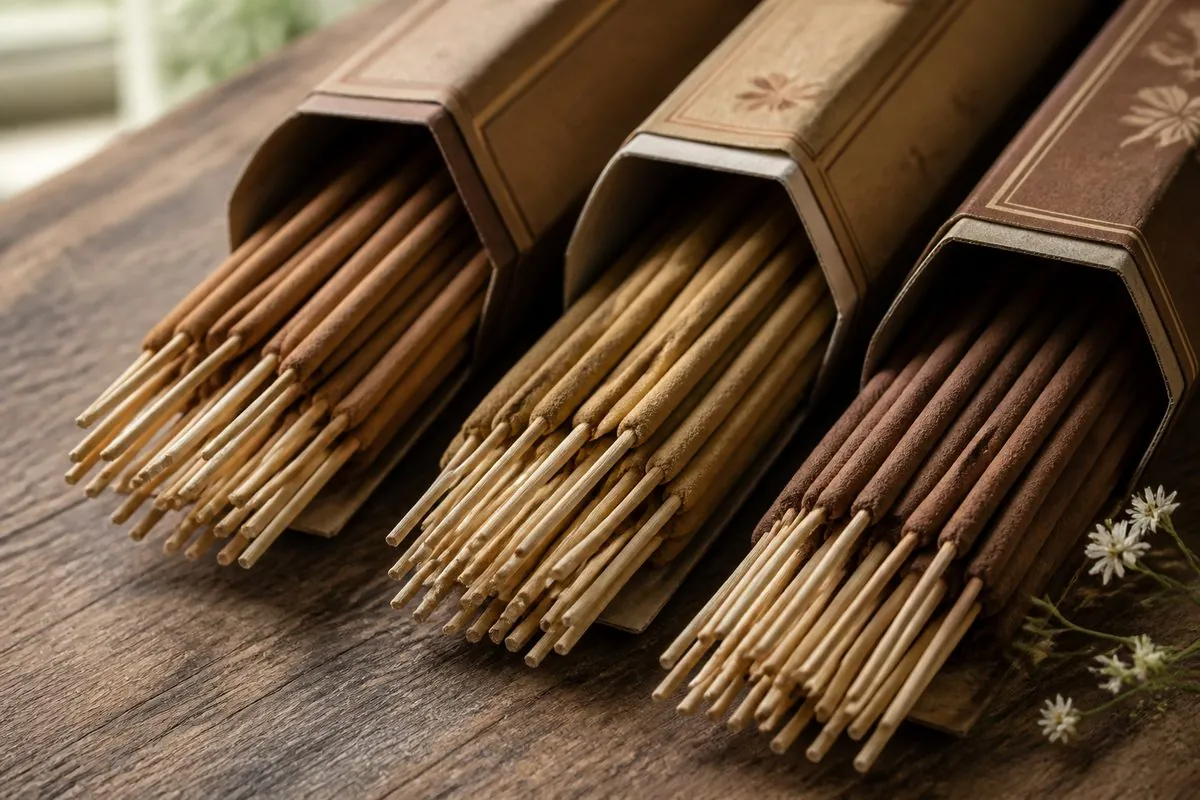
Market Size & Industry Overview
Key Statistics
- Treat HS 330741 as the prospecting backbone — not parent Chapter 33 dumps.
- Map buyer channels before writing templates: ethnic vs wellness vs specialty.
- Use cluster names (Mysuru masala, TN dipped) as credibility signals in first contact.
- Keep product-spec deep-dives and document templates in sibling cluster posts.
India's agarbatti export market is large enough — roughly US$147.6M / 40,884 MT on HS 330741 in 2024 (WITS directional) — that buyer discovery is a filtering problem, not a scarcity problem. Hundreds of importers, distributors, and ethnic wholesale houses already move burning odoriferous preparations; the exporters who win are those who identify the right channel, prove fragrance fit early, and verify payment capacity before spending sample and freight margin on time-wasters.
Buyer development sits upstream of manufacturing and documentation depth. This post owns trade-data prospecting, outreach craft, and importer verification for incense / wellness / ethnic retail channels. For stick-type catalogues and pack formats, see Top Incense Stick Products Exported from India. For destination ranking methodology, see Best Countries for Indian Incense Stick Exports.
Supply clusters in Mysuru–Bengaluru, Tamil Nadu–Puducherry, Gujarat–Mumbai, and Delhi-NCR give exporters credible capacity stories for outreach — buyers trust sellers who can name a corridor and stick programme, not only a WhatsApp price.
Why lead generation fails for many agarbatti exporters
Most failed outreach sequences share three patterns: generic subject lines ('Quality incense sticks from India'), price-first emails without stick type, and sample kits shipped to unverified free-webmail contacts. Buyers who already import under HS 330741 receive dozens of such messages monthly; they reply to the few that mirror their current SKU language — sandalwood masala hex boxes, dipped jasmine economy, herbal clean-burn cones — and ignore the rest.
A second failure mode is confusing holders, essential oils, and finished sticks in the same pitch. This cluster is burning sticks under HS 33074100. Cross-link essential-oil or brass-holder content only when a buyer explicitly needs fragrance-oil inputs or mixed-container stands — never as the core of an agarbatti prospecting email.
Who this buyer-development guide is for
This guide is written for Indian manufacturers, merchant exporters, and export houses building outbound and inbound lead systems for incense sticks. Importers seeking factory audit and RFQ playbooks should use Source Incense Sticks Directly from India. Exporters seeking Chemexcil membership mechanics should use Chemexcil Registration Benefits for Incense Stick Exporters.
Export Statistics
Key Statistics
- Use WITS / Comtrade / ITC Trade Map HS 330741 partner lists as the first shortlist.
- Prefer multi-year repeat importers over one-year spikes that often signal traders.
- Cross-check company names against LinkedIn and registry before first email.
- Re-verify figures via DGCI&S / paid customs extracts before citing in buyer decks.
Prospect buyers using HS 330741 / India 33074100 export and mirror-import history — importers filing non-burning 33074900 lines may not be agarbatti buyers even if they appear in broad odoriferous-preparation extracts. Confirm eight-digit intent with your CHA before citing HS codes in outreach collateral.
India-origin HS 330741 exports totalled roughly US$147.6M / ~40,884 MT in 2024 (WITS / UN Comtrade directional). Leading partners by value: United States (~US$21.2M), UAE (~US$7.7M), Nigeria (~US$7.0M), Iraq (~US$5.7M), Spain (~US$5.6M), Malaysia (~US$5.5M), Chile (~US$5.4M), and United Kingdom (~US$5.4M), followed by Argentina, Brazil, Netherlands, Mexico, South Africa, France, Australia, and others. Buyer development should target repeat importers in these corridors, not generic fragrance traders without burning-preparation history.
Directional profile of Indian incense stick trade for buyer prospecting (HS 330741 / India 33074100)
Swipe →
Data table — swipe horizontally on small screens
| Metric | Directional Estimate | Prospecting Note |
|---|---|---|
| Primary manufacturing clusters | Mysuru–Bengaluru; Tamil Nadu–Puducherry | Name corridor + stick type in outreach for credibility |
| Supporting clusters | Gujarat–Mumbai; Delhi-NCR; Kannauj attar inputs | Useful for private-label and premium fragrance story lines |
| Applicable HS headings | 3307.41 / India 33074100 (primary); 33074900 (non-burning contrast) | Filter trade data for burning preparations only |
| Governing trade council | Chemexcil (Basic Chemicals, Cosmetics & Dyes EPC) | RCMC proof strengthens first-contact credibility |
| WITS 2024 export value (HS 330741) | ~US$147.6M / ~40,884 MT | Directional UN Comtrade figure — refresh quarterly for prospecting |
| Leading destination partners (value) | USA, UAE, Nigeria, Iraq, Spain, Malaysia, Chile, UK | Prioritise outbound sequences by partner value and channel fit |
| Dominant export grades for outreach | Dipped charcoal + mid masala + herbal/premium retail packs | Name the grade the prospect already imports when known |
Trade statistics analysis for prospecting
Trade statistics are a lead list, not a finished CRM. Convert partner-country totals into importer-name research using paid customs extracts, bill-of-lading databases where lawful, Chemexcil fair directories, and LinkedIn company search filtered by distributor or procurement titles. A country that imports US$5M of Indian agarbatti may contain twenty relevant buyers and two hundred irrelevant fragrance traders — your job is to find the twenty.
Track which corridors buy volume dipped sticks versus premium masala hex boxes. Nigeria and parts of West Africa often absorb economy charcoal programmes; USA, UK, Spain, and Australia pull more wellness and private-label herbal lines. Matching stick type to corridor before outreach raises reply rates more than any subject-line trick alone.
Import Statistics
Key Statistics
- Pull destination HS 330741 imports from India vs world for growth signals.
- Note average unit values — high UV corridors may favour masala/herbal pitches.
- Identify whether filings cluster under retail importers or wholesale traders.
- Refresh import extracts quarterly; corridor mix shifts with festive calendars.
Active buyers often import Indian agarbatti under HS 330741 while also testing Indonesian, Chinese, or local specialty lines — Indian exporter outreach should lead with fragrance consistency, pack integrity, and trial MOQ clarity, not denial of global supply reality.
Mirror statistics (destination imports of HS 330741 from India and world) help you see which markets are growing, which are saturated with competing origins, and which buyer types dominate filings. Use import data analysis to prioritise LinkedIn geography and cold-email language — Spanish labelling cues for Chile and Spain, Halal readiness for UAE and selected Africa programmes, IFRA/SDS readiness for EU and US premium retail.
Directional import demand profile by destination market (buyer-development lens)
Swipe →
Data table — swipe horizontally on small screens
| Market | Directional Demand Profile | Primary Buyer Type to Prospect |
|---|---|---|
| United States | Largest India HS 330741 partner by value (~US$21.2M, 2024 directional) | Wellness retailers, ethnic grocery distributors, specialty incense brands |
| United Arab Emirates | Gulf hub for ritual, ethnic, and re-export programmes | Wholesale distributors, Halal-ready ethnic retail chains |
| Nigeria | High-volume charcoal and economy masala absorption | Volume importers, regional wholesalers, ethnic retail consolidators |
| Spain / United Kingdom | Retail and lifestyle incense with stronger compliance asks | Lifestyle distributors, natural/wellness importers, private-label buyers |
| Malaysia | Ritual and retail incense with ASEAN corridor logistics | Ethnic wholesale, supermarket private-label, specialty fragrance shops |
| Chile / LatAm corridor | Significant Indian volume with Spanish-pack expectations | Importers/distributors serving home fragrance and ethnic retail |
| Iraq / Middle East volume lanes | Ritual and economy stick programmes with competitive FOB focus | Wholesale traders and regional distributors with import history |
Import data analysis for outreach sequencing
Sequence outbound campaigns by import intensity and document burden. High-volume, price-sensitive corridors (selected Africa and Middle East lanes) convert on competitive FOB, reliable lead times, and clear trial MOQ. Premium US/EU wellness corridors convert on stick-type specificity, SDS/IFRA readiness, and private-label art speed. Do not run one identical email template across both — reply rates collapse when a Lagos wholesaler receives an IFRA essay or a California wellness buyer receives only a price list.
When import data shows a company already buying Indian HS 330741, your first email should acknowledge corridor fit and offer a burn-test kit matching their likely pack format (hex boxes vs bulk bundles), not a cold introduction as if they have never imported agarbatti.
Product Categories / Variants
Summary Box
For lead generation, 'product categories' means buyer-channel variants and the stick programmes they typically buy — not a full SKU catalogue. Segment prospects so each outreach sequence names the stick type and fragrance family that channel actually stocks. Deep SKU and fragrance-family tables live in the products exported guide.
Map every CRM tag to one primary channel and one default stick pitch. Ethnic wholesale often starts with economy dipped floral or sandalwood masala in hex boxes; wellness retail starts with herbal/natural or cleaner-burn claims with SDS readiness; specialty incense shops may trial cones and premium oud/sandalwood lines; private-label programmes need art and exclusivity language earlier than price.
Buyer-channel variants and default stick pitches for prospecting (not a full SKU catalogue)
Swipe →
Data table — swipe horizontally on small screens
| Buyer channel | Typical stick programmes | Outreach lead with | Verification focus |
|---|---|---|---|
| Ethnic grocery / ritual wholesale | Economy dipped + mid masala hex boxes | Sandalwood/floral masala or dipped economy + carton MOQ | Warehouse footprint and prior HS 330741 imports |
| Wellness / lifestyle retail | Herbal/natural, cleaner-burn, premium packs | Herbal stick type + SDS/IFRA readiness + trial hex kit | Retail brand or distributor licence; compliance asks |
| Specialty incense / spiritual shops | Masala, cones, premium sandalwood/oud | Named fragrance family + burn-test sample offer | Specialty catalogue fit; small but sticky reorder patterns |
| Private-label / own-brand programmes | Custom art hex boxes across masala or herbal lines | Art lead time + fragrance exclusivity + trial carton | Brand ownership, barcode readiness, exclusivity intent |
| Regional distributor (multi-country) | Mixed dipped + masala assortments | Mixed-SKU FCL capability + fragrance segregation story | Multi-market coverage and payment instrument history |
| Marketplace / trading company | Varies; often price-led economy dipped | Trial MOQ + HS 330741 history request before deep quote | Filter hard — many are brokers without shelf ownership |
How to tag prospects in your CRM
- Country + channel + stick hypothesis + verification stage.
- Never send herbal private-label emails to volume charcoal traders.
- Update stick hypothesis after first reply or website catalogue scan.
- Archive free-webmail RFQs without company name after one polite filter ask.
Use four fields at minimum: country corridor, buyer channel, stick-type hypothesis, and verification status (unverified / registry OK / import history OK / sample sent / trial PO). Do not merge 'incense interested' into one blob. Channel tags drive template selection; stick-type hypothesis drives the first sentence of every email and LinkedIn note.

Manufacturing Overview
Export Tip
Buyer development converts faster when you can explain — briefly — how Mysuru–Bengaluru masala lines differ from Tamil Nadu dipped charcoal programmes. Procurement teams trust exporters who understand rolling, dipping, drying, and fragrance finishing, not only FOB. Keep the explanation short in outreach; save plant-audit depth for the importer sourcing playbook.
Reference corridor capacity and burn-test discipline in first contact: 'Our Tamil Nadu partners run volume dipped floral lines with export hex packing' beats 'We export all types of incense.' Merchant exporters consolidate multiple factory lines when buyers need mixed fragrance FCLs with scent segregation.
Saurabh Mittal, Founder of Altus Exports, stresses that prospecting without manufacturing literacy produces empty conversations — buyers ask one stick-type question and the exporter who cannot answer loses the thread.
What manufacturing detail belongs in outreach
- One sentence on corridor + stick type.
- One sentence on pack format (hex / pouch / master carton).
- One sentence on sample kit timing and trial MOQ.
- Attach one-page burn-test summary, not a factory photo album.
Include corridor, stick type, drying/pack claim at one sentence each, plus sample lead time (7–14 days). Exclude machine lists, paste recipes, and full plant capacity essays — those belong in later RFQ replies once the buyer is verified.
What manufacturing detail to withhold until verification
Do not share exclusive private-label fragrance formulas, full customer lists, or deep FOB ladders for every SKU before the prospect clears company registry and import-history checks. Time-wasters collect price sheets; genuine distributors share destination port, monthly carton targets, and preferred stick types when asked.
Pricing Analysis
Buyer Tip
In prospecting, pricing is a qualification tool before it is a negotiation. Lead with directional FOB bands only after the buyer names stick type, pack format, and destination port. Quoting economy dipped bands against a herbal private-label RFQ destroys trust immediately.
When a prospect asks for a ballpark, cite directional ranges only after stick type is named: economy dipped often lands near ~US$0.8–2.5/kg, mid masala near ~US$2.5–6/kg, herbal/natural near ~US$4–10/kg, and premium sandalwood/oud or private-label hex packs higher (frequently quoted per carton). Always stamp quote date and named port on the follow-up proforma.
Directional FOB bands for prospecting conversations (confirm on quote date)
Swipe →
Data table — swipe horizontally on small screens
| Programme | Directional FOB | When to cite in outreach |
|---|---|---|
| Economy perfume-dipped sticks | ~US$0.8–2.5/kg | Volume ethnic wholesale and Africa/Middle East price-led RFQs |
| Mid masala sticks | ~US$2.5–6/kg | Ethnic retail and specialty shops asking for sandalwood/floral masala |
| Herbal / natural sticks | ~US$4–10/kg | Wellness and EU/US cleaner-burn programmes after SDS readiness check |
| Premium sandalwood / oud / PL retail packs | Higher; often per hex box or carton | Private-label and specialty only after art and exclusivity scope clear |
Pricing mistakes that kill leads
Sending a full multi-fragrance price list to an unverified webmail contact, quoting without stick type, and undercutting your own herbal band to 'win' a dipped RFQ are the three fastest ways to train buyers to ignore you. Hold detailed ladders for verified prospects; use bands and sample offers for cold outreach.
MOQ Analysis
Buyer Tip
State MOQ early in every prospecting thread. Buyers who refuse to discuss sample kits (1–5 kg or 50–200 hex boxes) or trial lots (200–1,000 kg) are rarely ready for wholesale programmes. Wholesale scale typically sits at 1–5 MT once fragrance and pack match after ocean transit.
MOQs are commercial practice, not statutory limits — private-label art programmes may require higher unit MOQs per fragrance. Say that clearly so wellness buyers do not expect five custom art SKUs at sample pricing.
Directional MOQ tiers to state in buyer outreach
Swipe →
Data table — swipe horizontally on small screens
| Stage | Typical MOQ | Prospecting use |
|---|---|---|
| Burn-test sample kit | 1–5 kg or 50–200 hex boxes | Offer in first or second email after basic verification |
| Commercial trial | 200–1,000 kg or 1–5 cartons/SKU | Default ask after sample approval — before FCL talk |
| Wholesale programme | 1–5 MT | Discuss only after trial burn match and payment terms clear |
| FCL programme | By pack density (hex vs bulk bundles) | For verified distributors with repeat HS 330741 history |
Packaging Standards
Export Tip
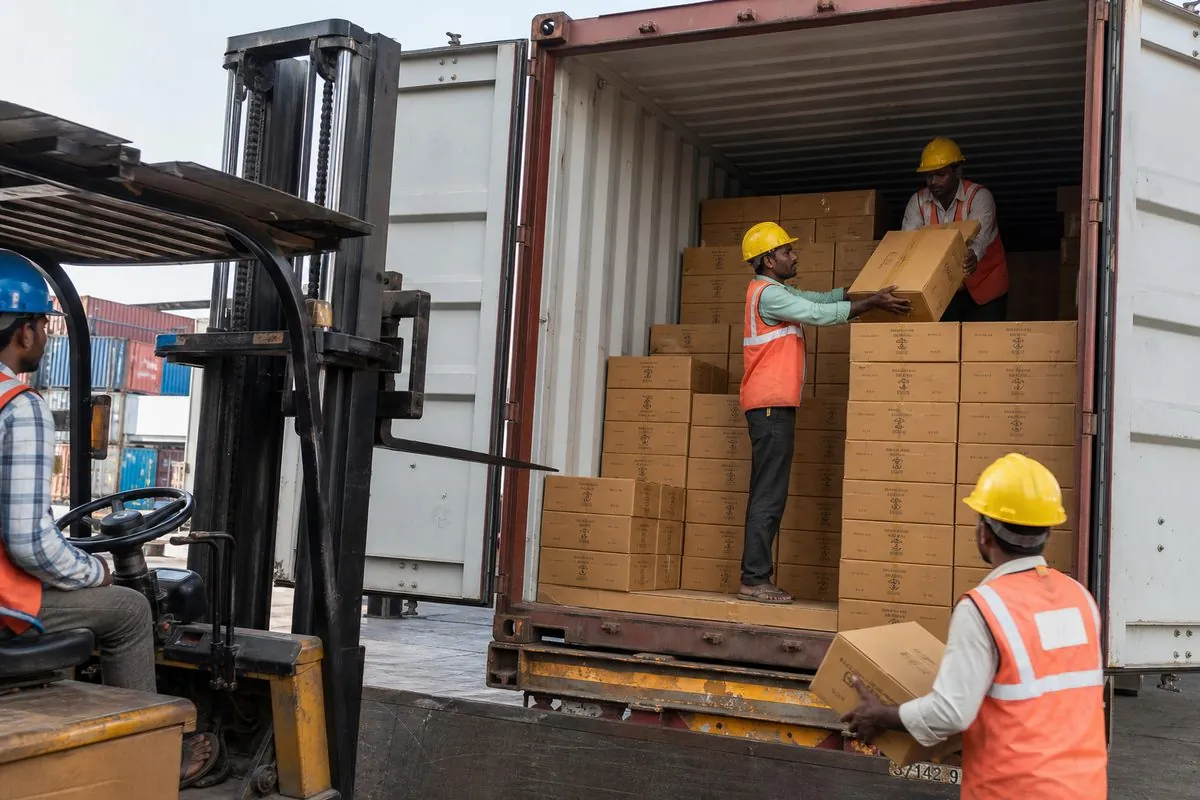
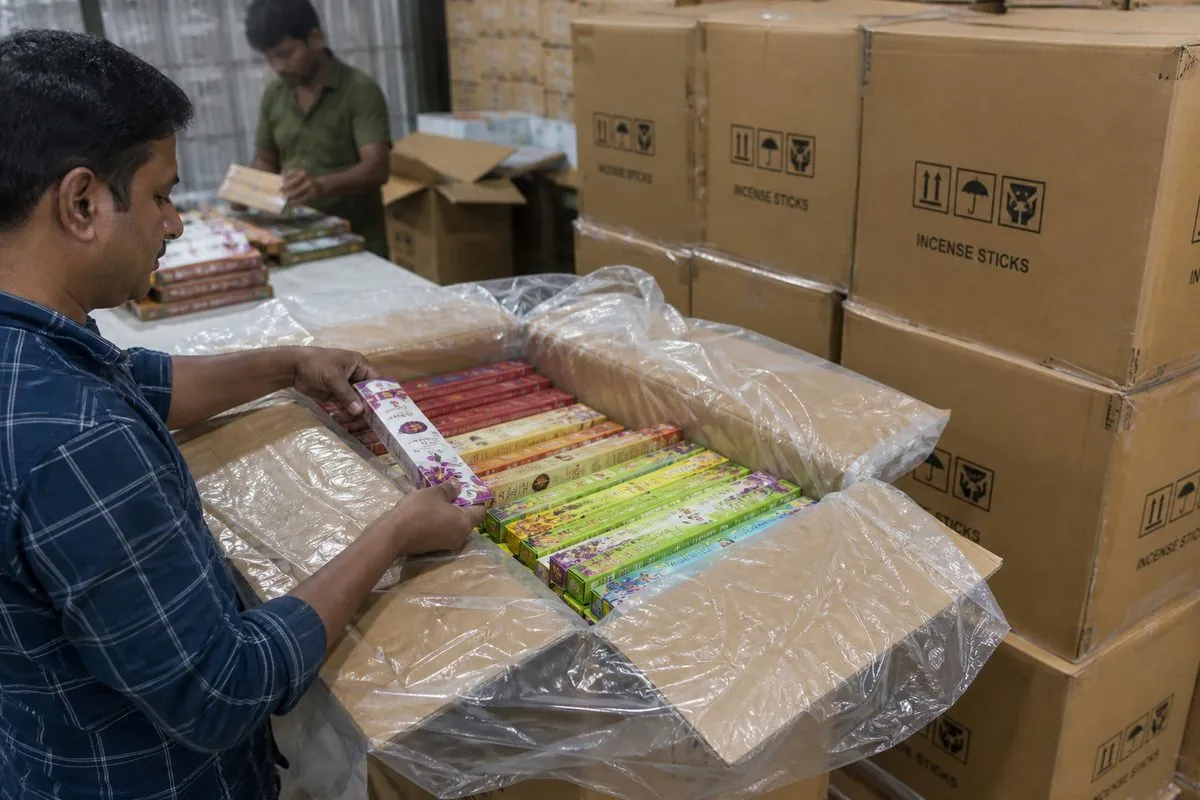
Mention packaging in outreach only to prove export readiness: hex/rectangle boxes or pouches, moisture-barrier master cartons, fragrance segregation, and crush resistance. Full packaging engineering belongs in later RFQ replies and sibling product posts — here, packaging is a credibility signal that you ship retail-ready agarbatti, not loose sticks in open poly.
Buyers in wellness and ethnic retail judge exporters by whether the first sample kit arrives in the same pack language as their shelves. Label sample hexes with fragrance name, stick count, batch ID, and country of origin.
Packaging cues to mention in prospecting (credibility, not full pack engineering)
Swipe →
Data table — swipe horizontally on small screens
| Element | Typical configuration | What to say in outreach |
|---|---|---|
| Inner pack | Hex boxes, rectangle boxes, pouches, sleeves | Name the format your trial kit will use |
| Master carton | Corrugated with moisture barrier | Confirm export carton discipline for ocean lanes |
| Marking | Fragrance, stick count, net weight, batch, origin | Promise batch IDs that match burn-test notes |
| Protection | Fragrance segregation, crush resistance, pallet wrap | State segregation when offering mixed-SKU samples |
Container Loading Details
Export Tip
Prospects ask about FCL readiness once trials succeed. Be ready with directional stow guidance without overpromising MT per container — pack density for hex boxes differs from bulk poly bundles. Confirm stow with your forwarder before stating payload numbers in writing.
For early-stage leads, emphasise LCL or trial carton programmes rather than forcing FCL language on a buyer who only wants five cartons to test a wellness assortment.
Directional container guidance for sales conversations
Swipe →
Data table — swipe horizontally on small screens
| Mode | Loading consideration | When to introduce in prospecting |
|---|---|---|
| Sample / courier | Hex kits via air/express | First verified interest — 7–14 day sample promise |
| LCL / trial cartons | 1–5 cartons or sub-FCL weight | After burn-test approval; new buyer relationships |
| 20-foot FCL | Payload by hex vs bulk density — confirm with forwarder | Verified distributors with repeat reorder intent |
| 40-foot FCL / HC | Higher payload for established programmes | Only after trial success and payment discipline proven |
Shipping Methods
Export Tip
- Samples: air/express, 7–14 days typical for burn-test kits.
- Trial cartons: LCL or partial loads after sample approval.
- FCL: book after trial burn match; name FOB port in every quote.
- Incoterms to offer: EXW, FOB named port, CFR/CIF; DDP selective for mature retail only.
- Do not promise DDP on first cold email to unverified prospects.
State shipping options early so buyers can plan calendars: samples by air/express in 7–14 days; stock fragrances typically 2–4 weeks after PO; custom/private-label 4–8 weeks; ocean from Nhava Sheva, Mundra, Chennai, or Tuticorin depending on cluster. Peak festive demand (Navratri, Diwali, Christmas, Ramadan calendars) can extend lead times — mention booking windows when prospecting seasonal buyers.
Certifications
Compliance Notes
Certifications in prospecting are proof points, not a document dump. Lead with Chemexcil RCMC and IEC availability, then match deeper asks (SDS/MSDS, IFRA notes, REACH/SVHC statements, Halal, vegan/charcoal-free claims) to the buyer channel. Full field-by-field document assembly lives in the export documentation checklist.
Certification cues by buyer channel for first-contact readiness
Swipe →
Data table — swipe horizontally on small screens
| Proof point | When buyers ask | Prospecting tip |
|---|---|---|
| IEC + Chemexcil RCMC | Almost every serious importer | Mention availability in first email signature block |
| SDS / MSDS | EU/US wellness and premium retail | Offer on herbal/premium pitches; do not lead volume charcoal emails with it |
| IFRA conformity notes | Premium fragrance retail programmes | State readiness; attach only after verification |
| REACH / SVHC statements | EU buyer-mandated programmes | Prepare before Spain/Netherlands/Germany outreach waves |
| Halal certificate | Selected Middle East / Africa programmes | Cite when prospecting UAE and related ethnic wholesale |
| Burn-test / QC report | All channels after sample interest | Include one-page summary with every sample kit offer |
| Certificate of Origin | Shipment stage | Confirm process readiness; details in docs sibling post |
Buyer Requirements
Buyer Requirements
Serious incense buyers typically ask for stick type, fragrance family, burn-time indication, pack format, sample kit, trial MOQ, FOB named port, Chemexcil/IEC proof, and lead time — wellness adds SDS/IFRA; Middle East ethnic programmes may add Halal; private-label adds art and exclusivity. If a prospect will not state destination port or stick preference after two polite asks, pause deep quoting.
Exporter-side readiness means you can answer those asks in one reply without scrambling. Keep a one-page capability sheet per stick programme (masala, dipped, herbal, cones) with sample timing and MOQ — not a fifty-page catalogue.
What qualified buyers share early
- Domain email and registered company name.
- Destination port or at least destination country.
- Stick type or fragrance preference in plain language.
- Volume hint (cartons/month or trial vs FCL).
- Compliance asks stated upfront when relevant.
Company name on a domain email, destination country, channel type, preferred stick type or fragrance family, approximate monthly carton or kg target, and whether they need private-label art. Absence of all five after a short exchange is a qualification red flag.
What unqualified leads usually demand
Lowest price for 'all incense,' free bulk samples without address verification, exclusive agency for an entire country on day one, and payment terms that skip instruments on first FCL. Decline or slow-walk these patterns; protect sample budget for verified HS 330741 prospects.
Country-wise Opportunities
Market Snapshot
Country opportunity for lead generation means where to spend LinkedIn and email capacity first — not a full duty and freight ranking. Use the matrix below to sequence outbound weeks, then validate individual importers with HS 330741 history in each corridor. For market-entry and compliance-burden comparison, see Best Countries for Indian Incense Stick Exports. For SKU demand by country, see Most Demanded Indian Incense Sticks by Country.
Directional country opportunity matrix for incense stick buyer prospecting
Swipe →
Data table — swipe horizontally on small screens
| Country / corridor | Prospecting priority | Primary outreach angle | Key requirement focus |
|---|---|---|---|
| United States | Highest (value leader) | Wellness + ethnic retail dual sequences | SDS/IFRA readiness; Prop 65 awareness where claims apply |
| United Arab Emirates | High | Ethnic wholesale + Halal-ready packs | Arabic/English labelling cues; re-export awareness |
| Nigeria | High (volume) | Economy dipped / masala volume MOQ | Payment discipline; competitive FOB; durable packing |
| Spain / United Kingdom | High | Lifestyle/natural distributors | REACH/IFRA where retail; retail hex presentation |
| Malaysia | Medium–high | Ritual + supermarket private-label | ASEAN logistics story; fragrance mix clarity |
| Chile / LatAm | Medium–high | Spanish-pack importer outreach | Labelling language; ocean transit pack strength |
| Iraq / broader Middle East | Medium–high | Volume wholesale programmes | Price-led but still verify import history |
| Australia / Canada / Germany | Medium (selective) | Premium herbal and specialty | Compliance depth; smaller but cleaner programmes |
Americas prospecting lens
Run separate US sequences for ethnic grocery distributors and wellness/lifestyle buyers — the stick pitch and compliance needs differ. Chile, Mexico, Brazil, and Argentina appear in partner lists; Spanish or Portuguese pack language in the first email raises reply probability. Canada often follows US wellness patterns at smaller MOQ.
Middle East and Africa prospecting lens
UAE works as both local demand and re-export hub — ask whether the buyer shelves locally or consolidates onward. Nigeria and South Africa reward volume clarity and payment-term discipline. Halal documentation belongs in Middle East/Africa ethnic programmes when the buyer channel requires it; do not paste Halal essays into every US wellness email.
Europe and Asia-Pacific prospecting lens
Spain, UK, Netherlands, France, and Germany pull stronger documentation asks — lead with stick type and SDS readiness. Malaysia and Australia respond to clear fragrance naming and pack photos. Keep REACH/SVHC language ready for EU distributor outreach without turning the first message into a legal memo.
Buyer Prospecting & Outreach Process
Treat buyer development as a four-phase process: trade-data shortlist, channel tagging and verification, stick-type outreach, then sample-to-trial conversion. Skipping verification to 'move faster' usually wastes sample kits. Pair this process with fair and marketplace inbound from the trade shows guide.
Buyer development channel comparison for incense stick exporters
Swipe →
Data table — swipe horizontally on small screens
| Channel | Best for | Conversion timeline | Key success factor |
|---|---|---|---|
| HS 330741 trade-data prospecting | Identifying active importers | 2–6 weeks to first meetings | Burning-preparation history match + company verification |
| LinkedIn (ethnic / wellness / specialty) | Named-buyer outreach | 2–8 weeks | Stick-type + fragrance specificity in first note |
| Cold email sequences | Scaled outbound to verified lists | 3–10 weeks | Subject line naming stick type and trial MOQ |
| Trade shows | First meetings and sample approval | 1–3 months post-event | 14-day sample follow-up with labelled kits |
| B2B marketplaces | Inbound enquiries | Ongoing | Filter for company name, port, stick preference before deep quote |
Phase 1 — HS 330741 trade-data shortlist
- Refresh Comtrade / Trade Map extracts quarterly.
- Prefer multi-year repeat importers.
- Log source URL or extract ID on every CRM record.
- Cap each weekly shortlist so outreach quality stays high.
Pull India export partners and destination import records for HS 330741. Build a country-week calendar (for example: week 1 USA ethnic, week 2 USA wellness, week 3 UAE, week 4 Nigeria). Extract importer names from lawful customs/BL databases, Chemexcil directories, and fair catalogues. Discard filings that clearly sit on non-burning 330749 lines.
Phase 2 — LinkedIn and registry verification
- Match LinkedIn company to trade-data importer name where possible.
- Prefer domain emails over free webmail for first quote depth.
- Note channel tag before writing the message.
- Skip profiles that only broker unspecified 'commodities.'
Search LinkedIn for procurement, category, or founder titles at ethnic retail distributors, wellness brands, incense specialty shops, and home-fragrance importers in the shortlisted countries. Confirm company registry, website, warehouse or store footprint, and whether the firm already sells incense or adjacent ritual/wellness goods. Do not pitch random 'import-export' profiles with no shelf category.
Phase 3 — Cold email and LinkedIn notes that name stick type
Subject line pattern: stick type + fragrance family + India origin + trial MOQ. Body: one sentence on who you are (manufacturer or merchant exporter), one sentence on corridor capacity, one sentence offering a burn-test kit, one sentence on Chemexcil/IEC readiness, clear call to action. LinkedIn notes should be even shorter — fragrance + trial MOQ + ask for the right procurement contact.
Phase 4 — Sample, trial, and CRM hygiene
After positive reply, re-verify address and company, then dispatch labelled sample kits with burn-test summary. Follow up three times in 21 days (dispatch notice, burn-test questions, trial MOQ quote), then pause if silence. Convert approved samples to 200–1,000 kg trials before FCL language. For importer-side trial discipline, point serious buyers to the source playbook.
Sourcing Checklist
Checklist
Buyer Checklist
Checklist
Exporter Checklist
Checklist
Common Buyer Mistakes
Common Mistakes Box
Future Market Trends
Key Statistics
- Expect more SDS/IFRA asks earlier in wellness prospecting cycles.
- Ethnic retail dual-track with wellness will stay necessary in the USA.
- Paid customs data and lawful BL tools will keep raising shortlist quality.
- Fair ROI will depend on 14-day sample follow-up more than booth size.
- Private-label art speed becomes a prospecting differentiator, not a back-office chore.
B2B marketplaces and LinkedIn shorten first-contact time but increase unqualified RFQ noise — buyer development trends favour exporters who name stick type and fragrance on first touch and who filter hard before sample spend.
Wellness and cleaner-burn herbal programmes continue to grow in US and EU retail outreach, while Africa, Middle East, and LatAm corridors still reward volume dipped and economy masala sequences when pack integrity and payment discipline hold.
Repeat wholesale programmes consolidate around suppliers with sample-to-bulk fragrance match and document consistency, not lowest initial FOB alone. Exporters who treat CRM hygiene as part of manufacturing excellence will out-convert brochure-heavy competitors.
Challenges & Solutions
Lead-generation challenges for agarbatti exporters cluster around unqualified RFQs, slow follow-up, wrong-channel pitches, and payment risk on new names. Each has a practical process fix.
Unqualified marketplace and webmail RFQs
Challenge: inbox flooded with lowest-price asks and no company detail. Solution: require company name, destination port, and stick preference before issuing detailed FOB ladders; offer a short capability sheet only until verification clears.
Low reply rates on LinkedIn and email
Challenge: silence after dozens of messages. Solution: rebuild templates around stick type + fragrance + trial MOQ; segment ethnic vs wellness; personalise one line from the prospect's website category page; stop sending twenty-fragrance attachments on first touch.
Sample budget waste
Challenge: free kits shipped to brokers who never reply. Solution: verify registry and ship-to address; prefer domain email; start with smaller hex kits; move to larger assortments only after engagement and trial intent.
Broker middlemen without shelf ownership
Challenge: traders who cannot state warehouse, brand, or retail customer. Solution: ask for HS 330741 import history under their company name and for the end-channel type; keep working with brokers only when payment instruments and accountability are clear — prioritise distributors with shelf or warehouse proof.
Slow trade-show follow-up
Challenge: business cards go cold. Solution: log stick type discussed before leaving the booth; dispatch samples within 14 days; run the same three-touch sequence used for cold email. See the trade shows guide for booth ROI habits.
Compliance Checklist
Checklist
Compliance Notes
Sources
- WITS / UN Comtrade — India exports HS 330741 by partner, 2024
- WITS / UN Comtrade — India imports HS 330741 by partner, 2024
- UN Comtrade Database (Comtrade Plus)
- ITC Trade Map
- DGFT (India) — IEC / Foreign Trade Policy portal
- ICEGATE — Indian Customs EDI
- India CBIC — Customs Tariff / notifications
- Exim Guru — ITC-HS 33074100 Agarbatti (policy Free)
- Chemexcil India — Basic Chemicals, Cosmetics & Dyes EPC (Panel III Cosmetics, Soaps, Toiletries & Essential Oils)
- IFRA — International Fragrance Association
- USITC Harmonized Tariff Schedule — search 3307.41
- USITC HTS Chapter 33 PDF archive (historical reference)
- European Commission TARIC consultation
- ECHA — REACH / SVHC guidance
- ICC Incoterms® rules
- Altus Exports — Contact
All sources accessed for factual audit 2026-08-01. Prefer primary government, council, and multilateral trade databases when citing figures in contracts or buyer presentations. Trade totals below are WITS/UN Comtrade directional figures — re-verify via DGCI&S / ITC Trade Map before contracts.
Trade-data prospecting under HS 330741 should be refreshed quarterly — importer filing patterns shift with corridor and fragrance mix.
Conclusion
Finding international buyers for incense sticks (agarbatti) rewards HS 330741 trade-data shortlists, LinkedIn and email outreach that names stick type and fragrance, and verification that separates ethnic retail, wellness, and specialty distributors from unqualified brokers — generic catalogues convert poorly on burning-preparation programmes.
Altus Exports supports Indian exporters with buyer follow-up, burn-tested sample coordination, and shipment execution — merchant exporter in India and export products from India programmes for trial-to-wholesale growth. Contact Altus Exports to build a stick-type-specific prospecting sequence for your corridor.
Use How to Export Incense Sticks (Agarbatti) from India for process depth, Best Countries for Indian Incense Stick Exports for market prioritisation, Trade Shows and B2B Marketplaces for Incense Stick Exporters for inbound channels, and Source Incense Sticks Directly from India when buyers need importer-side verification playbooks.