
Best Countries for Indian Leather Bag Exports in 2026
By Saurabh Mittal, Founder, Altus Exports
A market-selection and destination-ranking guide for Indian leather bag exporters and international buyers — comparing the USA, UK, Germany, UAE, France, Netherlands, Italy, Japan, Australia, and Canada on duties, compliance burden, payment culture, and style fit for HS 4202 programmes.
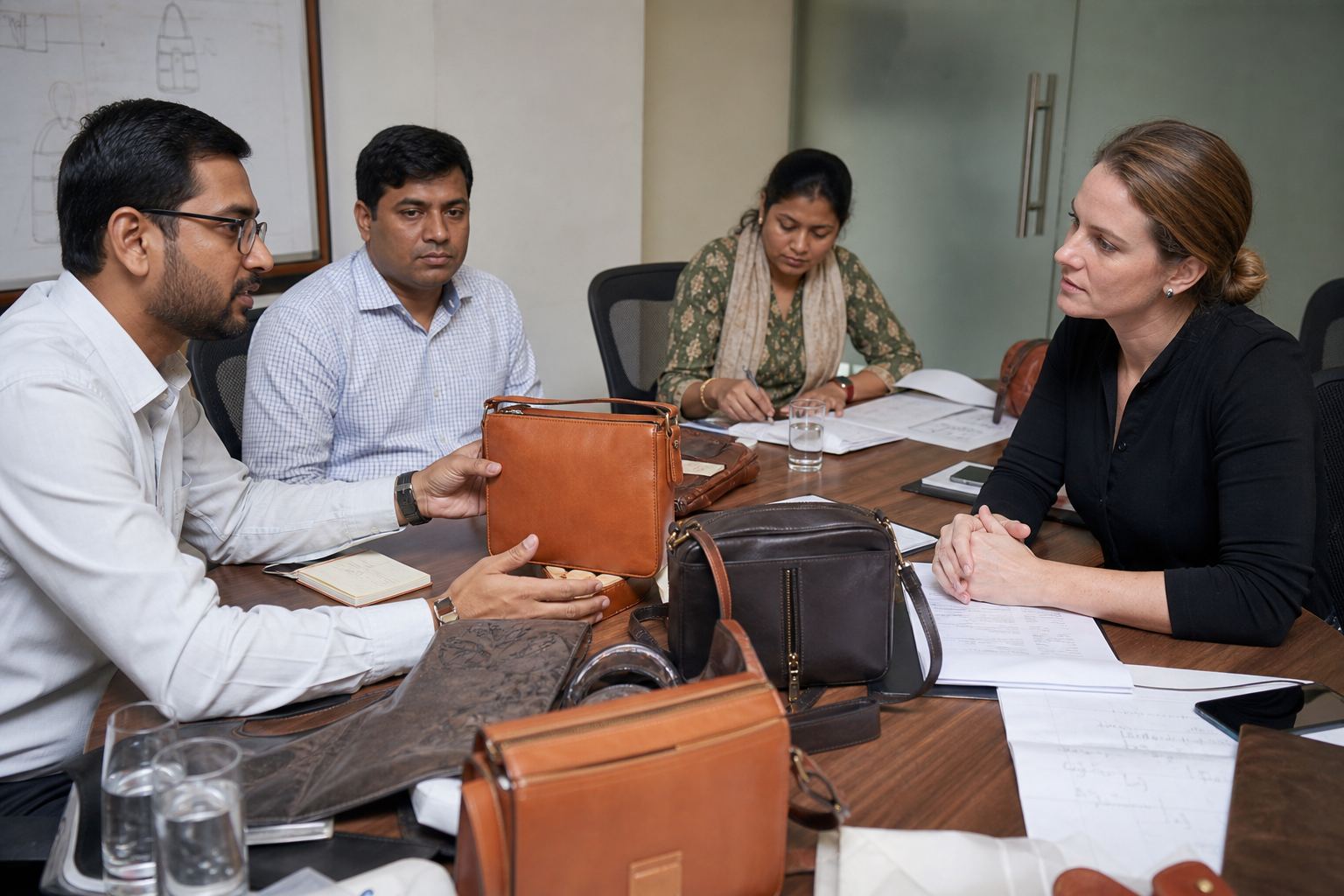
Country choice is a high-leverage decision for HS 4202 bag programmes. USA, UK, Germany, UAE, France, Netherlands, Italy, Japan, Australia, and Canada all buy Indian bags — with very different duty, compliance, payment, and style expectations.
This is a destination-ranking framework, not a product encyclopedia. Categories: Top Products. Operations: How to Export. Buying: Source Directly. Silhouette demand: Demand by Country.
Use the country tables below to rank markets before committing capacity. Altus Exports ships into these corridors as merchant exporter and global sourcing partner.
Key Takeaways
Summary Box
Executive Summary
Summary Box
- Ten markets ranked for 2026 planning: USA, UK, Germany, UAE, France, Netherlands, Italy, Japan, Australia, Canada.
- Compare on: demand strength, duty (verify live rates), compliance burden, payment norms, style fit, trial-to-repeat depth.
- Core section: Country-wise Opportunities — read your target market first, then validate with comparison tables.
- Reuse: pricing/MOQ, packaging, container, certs, and checklists after you shortlist 1–2 corridors.
One generic strategy across markets underperforms. Rank destinations by HS 4202 fit + cluster capability + compliance + payment culture, not headline import volume alone.
Market Size & Industry Overview
Key Statistics
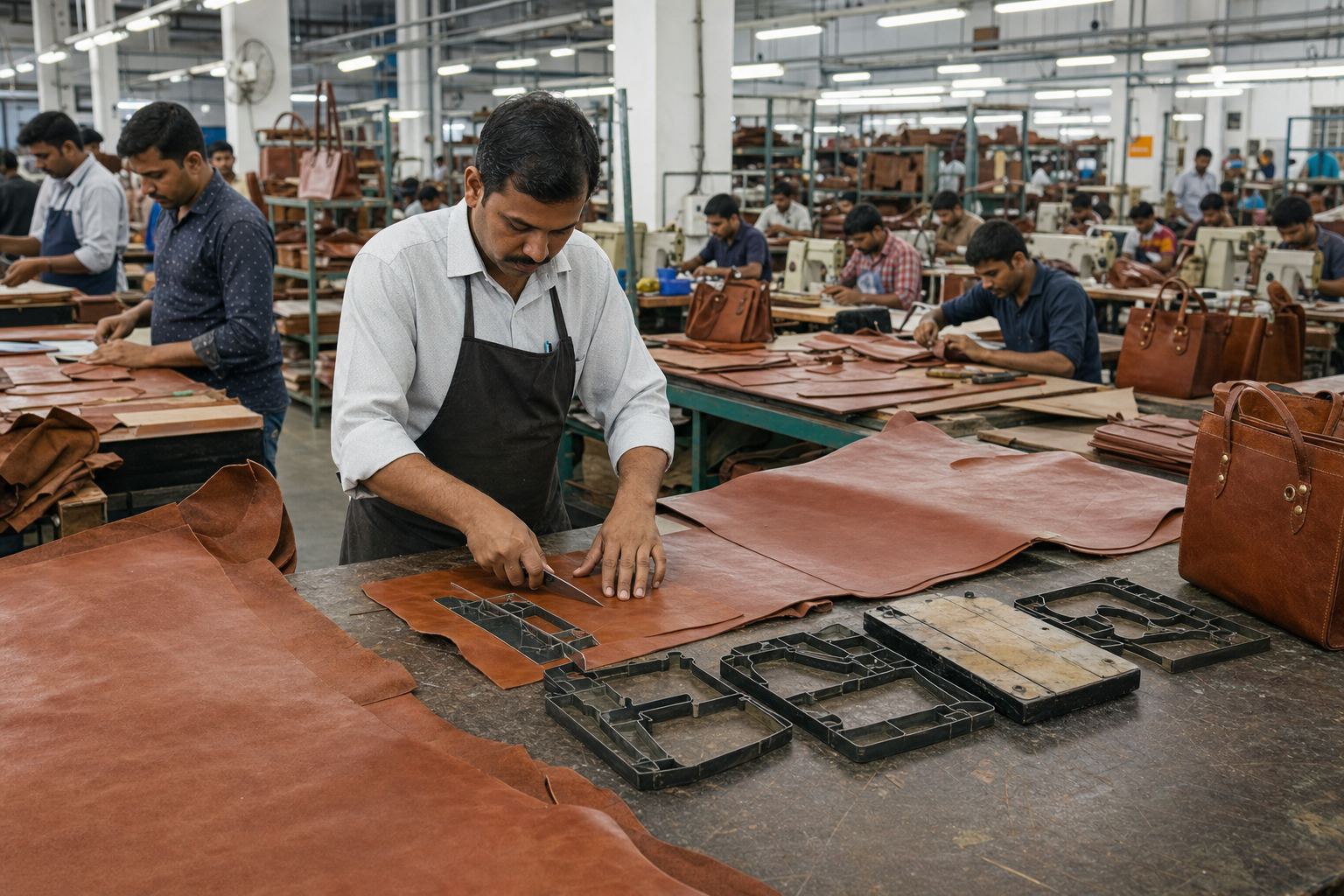
India's leather bag exports under HS 4202 reach dozens of countries, but demand concentrates in mature import markets with established retail and wholesale distribution for leather goods: North America, the European Union and United Kingdom, the Middle East, and a growing Asia-Pacific tier including Australia and Japan. Each market's import behavior is shaped by retail structure (department store versus e-commerce-led), regulatory regime (REACH in the EU/UK, CPSIA in the US for children's bag lines), and price sensitivity relative to competing origins such as China, Vietnam, and Italy.
Market selection should follow product category and compliance capability, not headline market size alone. A market with enormous overall leather goods import volume may be a poor fit if your factory cannot yet meet its specific documentation standard, while a smaller but well-matched market can deliver faster, more profitable repeat business. The Council for Leather Exports (CLE), tracked through leatherindia.org, publishes periodic country-level export statistics that new exporters should review alongside the qualitative guidance in this article.
India's competitive position in leather bags rests on integrated tanning and finished-goods production in clusters including Kanpur, Kolkata, Delhi-NCR, the Ambur–Ranipet–Chennai belt in Tamil Nadu, Agra, Jaipur, and Hyderabad; skilled stitching and edge-finishing labour at costs below European and North American production; and decades of export experience serving brand-owned and private-label handbag, briefcase, and wallet programmes in the USA, Germany, and the UK.
Destination Market Comparison Snapshot (Indicative — 2026 Planning)
Swipe →
Data table — swipe horizontally on small screens
| Market | Demand Strength | Compliance Burden | Price Sensitivity | Payment Culture | Relationship Depth |
|---|---|---|---|---|---|
| USA | Very high | Moderate (CPSIA for children's lines) | Moderate to high | Net-30 to net-60 on established accounts | Moderate |
| Germany | High | High (REACH, LWG expectations) | Moderate (premium-rewarding) | LC or staged milestones on first orders | High |
| UK | High | Moderate-high (REACH-equivalent) | Moderate to high | Net-30 to net-60; faster on wholesale | Moderate-high |
| UAE | Moderate-high | Low-moderate | High | Advance or LC common; faster on distributors | Moderate |
| France | Moderate | High (fashion quality audits) | Low (quality-rewarding) | Milestone-based; slower first PO cycle | High |
| Netherlands | Moderate (hub) | High (EU REACH for EU-bound stock) | High (trading hub) | LC or documentary terms common | Moderate |
| Italy | Moderate | High (EU REACH) | Low to moderate | Milestone-based; design-led buyers | High |
| Japan | Moderate | High (quality documentation) | Low (premium-rewarding) | Conservative; LC or escrow on first orders | Very high |
| Australia | Moderate | Moderate (biosecurity) | Moderate | Net-30 typical on retail accounts | Moderate |
| Canada | Moderate | Moderate | Moderate | Similar to USA; net-30 to net-45 | Moderate |
Export Statistics
Key Statistics
According to CLE and DGCIS data, India's leather and leather products exports — including leather goods under HS 4202 — represent a multi-billion-dollar export sector. Country shares published by CLE cover the broader leather sector basket; leather bags, handbags, travel goods, and wallets form a significant sub-segment within leather goods. The United States, Germany, the UK, Italy, the Netherlands, France, and Spain are consistently among the largest destinations by value for Indian leather sector exports.
Exporters should treat CLE country rankings as directional market-selection evidence and confirm HS 4202-specific shipment data in Trade Map or customs databases before setting volume targets for a specific destination. India's share within each market varies by category — strong in handbags and wallets at mid-tier price points, growing in travel bags and laptop bags, and increasingly competitive in premium lines where LWG tannery sourcing and REACH compliance are demonstrated upfront.
CLE / DGCI&S Indicative Destination Shares — Leather Sector Exports (HS 4202 Sub-Set Directional)
Swipe →
Data table — swipe horizontally on small screens
| Market / Region | Indicative Share of Leather Sector Exports | Leather Bag Category Strength | Trend Signal |
|---|---|---|---|
| United States | ~20%+ | Handbags, totes, wallets, backpacks | Largest single destination; e-commerce private label growing |
| Germany | ~11% | Handbags, briefcases, travel bags | Compliance-driven; REACH / LWG expectations |
| United Kingdom | ~9% | Handbags, wallets, laptop bags | Stable Anglo market; UK tariff separate post-Brexit |
| Italy | ~6% | Fashion handbags, premium wallets | Design-forward EU buyer base; competes and sources |
| Netherlands | ~6% | Mixed EU redistribution | Hub role for wider Europe via Rotterdam |
| France | ~5% | Fashion handbags, clutches | Style-led EU retail |
| UAE | ~3% | Handbags, travel bags, wallets | Direct Gulf retail plus re-export role |
| Australia | ~2% | Handbags, backpacks, travel bags | Growing Asia-Pacific demand |
Expert Insight: Market Sequencing
Expert Insight Box
We advise new exporters to sequence market entry deliberately: USA or UAE for first commercial shipments to build operational confidence and cash flow, UK or Canada as a second market to deepen compliance documentation discipline, and Germany or France as a third market once REACH compliance and LWG tannery sourcing are established. Japan and Italy remain long-term relationship investments, not first-year targets for most MSME bag exporters.
Buyers reading this guide from the import side should apply the same logic in reverse: if your market is Germany, confirm your Indian supplier already serves at least one REACH-conscious programme before you become their compliance learning curve.
Import Statistics
Key Statistics
Reading import data from the destination side — what each country imports under HS 4202, from which origins, and at what average unit value — is essential for market selection before committing production capacity. The United States imported leather handbags, travel goods, and wallets worth billions of dollars annually, with India holding a meaningful but not dominant share alongside China, Vietnam, Italy, and France as competing origins.
Germany and the wider EU import leather bags at higher average unit values than many volume-driven markets, reflecting stronger demand for structured briefcases, fashion handbags, and premium wallets. REACH regulation acts as a de facto quality filter that limits the number of origins capable of serving the market at scale — an advantage for Indian exporters who invest in chromium VI testing and LWG tannery sourcing upfront.
Import duty treatment for HS 4202 varies by market and sub-heading: the USA applies tariff rates on leather handbags and travel goods that buyers must verify current rates against USTR schedules; the EU applies combined nomenclature duty rates that differ between 4202.21 (outer surface of leather) and 4202.29 (other materials); preferential rates may apply under trade agreements such as the India-UAE CEPA for qualifying consignments. Always verify current duty rates and preferential eligibility before quoting landed prices.
Import Demand Signals by Major Market (Indicative)
Swipe →
Data table — swipe horizontally on small screens
| Import Market | HS 4202 Import Scale | India's Competitive Position | Key Import Filter |
|---|---|---|---|
| United States | Very large | Strong in mid-tier handbags and wallets | CPSIA for children's lines; verify current tariff rates |
| Germany | Large | Strong in handbags and briefcases | REACH CrVI ≤3 mg/kg; LWG preference |
| United Kingdom | Large | Strong across multiple bag categories | REACH-equivalent UK chemical compliance; verify current UKGT rates |
| France | Moderate-large | Growing in fashion handbags | Fashion quality audits; chemical compliance |
| UAE | Moderate | Strong in handbags and travel bags | Standard commercial documentation; verify current GCC duty treatment |
| Netherlands | Moderate (hub) | Re-export redistribution role | EU REACH compliance for EU-bound cargo |
| Italy | Moderate | Niche private-label and value-tier sourcing | EU REACH; competes with domestic premium origins |
| Australia | Moderate | Growing in handbags and backpacks | Biosecurity and standard customs docs |
| Japan | Moderate | Niche in briefcases and laptop bags | Strict quality documentation; packaging presentation |
| Canada | Moderate | Growing in handbags and wallets | Moderate compliance; verify current CBSA tariff rates |
Product Categories / Variants
Summary Box
Market selection and product category are inseparable decisions. The USA rewards volume handbag, tote, and wallet programmes at accessible price points; Germany rewards structured briefcases and fashion handbags with demonstrated REACH compliance; Japan rewards premium briefcases and laptop bags with meticulous quality documentation. Exporters who match first market entry to the category where their production capability is strongest build repeat business faster than those chasing the largest market regardless of category fit.
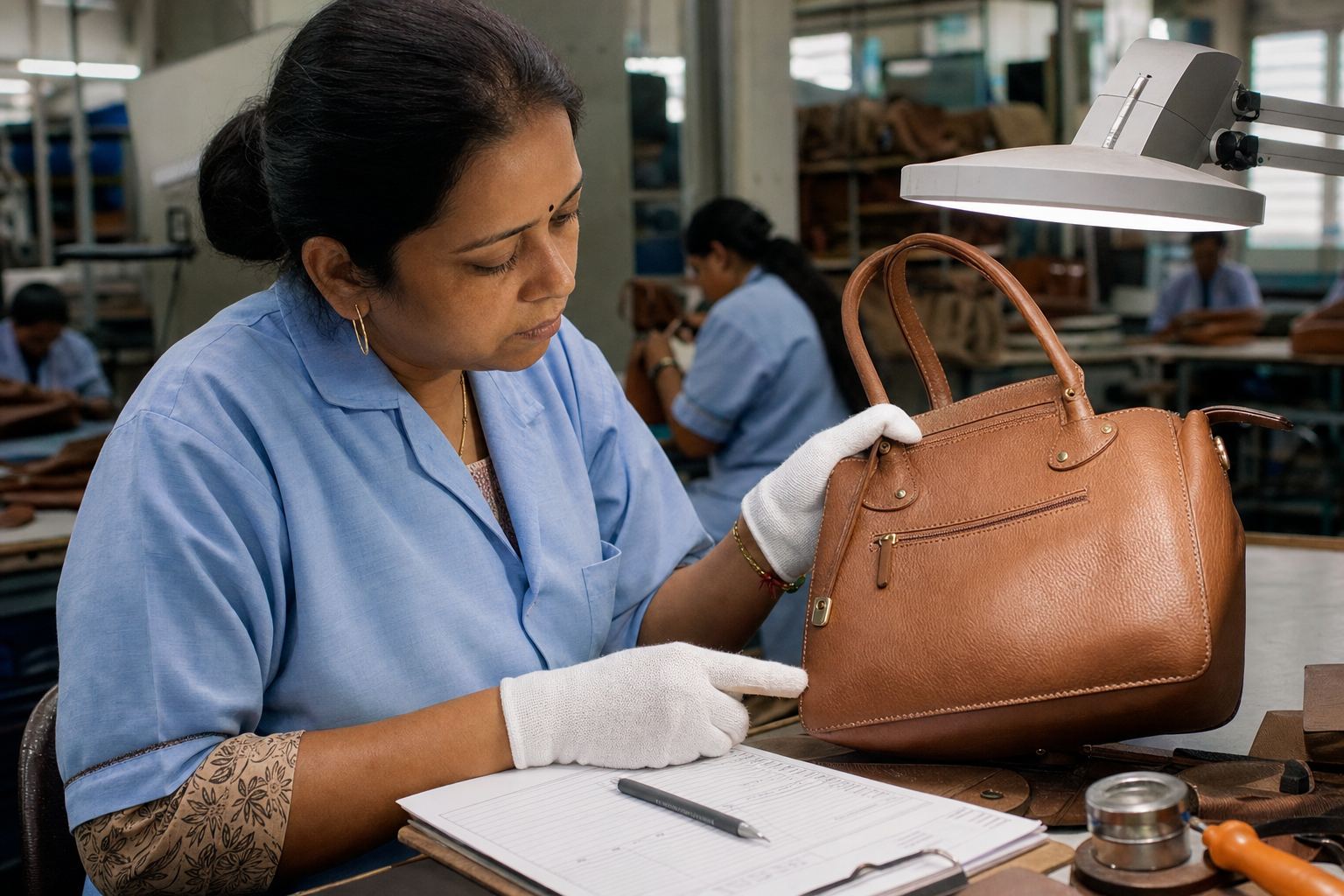
India exports the full HS 4202 bag spectrum: women's handbags, totes, crossbody and shoulder bags, messenger bags, backpacks, briefcases and document cases, travel bags and duffels, laptop bags, and wallets and clutches. For construction depth and sub-heading detail, see Top Leather Bag Products Exported from India — this section maps categories to destination fit only.
Category-Market Fit Summary (Indicative)
Swipe →
Data table — swipe horizontally on small screens
| Category | Strongest Markets | Weakest Fit Markets | Key Entry Requirement |
|---|---|---|---|
| Handbags | USA, Germany, France, UK | Japan (relationship depth) | REACH CrVI for EU/UK |
| Wallets / SLG | USA, UK, Germany, UAE | Japan (premium positioning required) | REACH CrVI for EU/UK |
| Totes | USA, UK, e-commerce global | Japan, France (quality bar) | General commercial docs |
| Briefcases | USA, UK, Japan, Germany | UAE (price sensitivity) | REACH CrVI; structure quality |
| Travel bags / duffels | USA, Germany, UAE, Australia | France (fashion focus) | Durability specification |
| Laptop bags | USA, UK, Japan, Canada | UAE (corporate gifting niche) | Padding spec; branding |
| Backpacks | USA, Germany, Australia | France (fashion focus) | Strap pull-strength testing |
| Messenger / crossbody | USA, UK, UAE, Australia | Italy (domestic competition) | Hardware torque specification |
Manufacturing Overview
Export Tip
India's leather bag manufacturing clusters align unevenly with destination markets. Kanpur combines tanning depth with high-volume handbag and wallet production — competitive for USA and UAE value-to-mid-tier programmes. The Ambur–Ranipet–Chennai belt in Tamil Nadu built export-oriented fashion handbags and briefcases for EU and North American buyers with stronger LWG tannery relationships. Delhi-NCR serves fashion accessories and corporate gifting lines. Jaipur contributes artisanal embossed and embellished handbags suited to France and premium UK boutique channels.
Market selection should consider which cluster can serve your target destination's compliance and style bar without excessive rework. A Jaipur embellished fashion handbag exporter pursuing Germany without REACH-ready tannery documentation will lose months; the same factory targeting France or the UAE may win business quickly.
Cluster-to-Destination Routing (Indicative)
Swipe →
Data table — swipe horizontally on small screens
| Cluster | Category Strength | Best-Fit Destinations | Compliance Readiness |
|---|---|---|---|
| Kanpur | Handbags, wallets, travel bags | USA, UAE, UK | Moderate; REACH capability varies by tannery |
| Tamil Nadu belt | Fashion handbags, briefcases | Germany, USA, UK, France | High; strong EU export history |
| Delhi-NCR | Handbags, laptop bags, totes | USA, UK, Canada, Australia | Moderate to high |
| Kolkata | Handbags, wallets | USA, UK, UAE | Moderate |
| Jaipur | Embellished fashion handbags | France, UK boutique, UAE | Moderate; verify REACH for EU |
| Hyderabad | Laptop bags, corporate lines | USA, Canada, Australia | Moderate |
Pricing Analysis
Buyer Tip
Destination market shapes the price point Indian leather bag exporters can command, independent of production cost. Germany and Japan reward premium specification quality with higher achievable FOB; the UAE and Netherlands trading hub reward volume consistency at tighter margins; the USA offers the broadest range across value and premium tiers depending on channel.
The table below shows indicative FOB ranges by category from leather-bags-facts planning benchmarks — not fixed quotes. Landed cost modeling must add freight, insurance, import duty (verify current rates), destination VAT or GST, and compliance testing costs separately.
Indicative FOB Price Positioning by Market (USD/piece — Planning Only)
Swipe →
Data table — swipe horizontally on small screens
| Market | Handbags | Wallets | Briefcases | Price Positioning |
|---|---|---|---|---|
| USA | $8–$35 | $2–$8 | $15–$55 | Broad range; mid-tier volume strong |
| Germany | $15–$35 | $4–$8 | $25–$55 | Premium-rewarding; compliance cost absorbed |
| UK | $12–$30 | $3–$7 | $20–$50 | Mid-tier to premium |
| France | $18–$40 | $5–$10 | $25–$55 | Premium; fashion quality rewarded |
| UAE | $8–$22 | $2–$6 | $15–$40 | Value to mid-tier; price-sensitive |
| Netherlands | $10–$28 | $3–$7 | $18–$45 | Trading hub; volume-driven |
| Italy | $15–$38 | $4–$9 | $22–$55 | Private-label and value-tier sourcing |
| Australia | $12–$30 | $3–$7 | $20–$50 | Mid-tier |
| Japan | $20–$45 | $5–$12 | $30–$60 | Premium; quality documentation required |
| Canada | $10–$28 | $3–$7 | $18–$50 | Mid-tier; growing market |
MOQ Analysis
Buyer Tip
MOQ expectations vary by destination channel as much as by manufacturer scale. E-commerce private-label buyers in the USA often accept 100–300 pieces per style on a first order; German retail chains typically require 500–1,000 pieces minimum; Japanese department stores may require 1,000+ pieces per style with extended sample approval periods before confirming production.
Indicative MSME trial MOQs run 100–300 pieces per style; standard programmes 300–1,000; retail chain programmes 1,000–3,000+ per style — always confirm against factory capacity and hardware lot minimums.
MOQ and Lead Time Expectations by Market Channel (Indicative)
Swipe →
Data table — swipe horizontally on small screens
| Market / Channel | Typical Trial MOQ | Standard Programme MOQ | Typical Bulk Lead Time |
|---|---|---|---|
| USA — e-commerce private label | 200–300 pcs/style | 500–1,000 pcs/style | 45–60 days |
| USA — retail chain | 500–1,000 pcs/style | 2,000+ pcs/style | 60–90 days |
| Germany — retail / import | 500 pcs/style | 1,000–2,000 pcs/style | 60–90 days |
| UK — wholesale / retail | 300–500 pcs/style | 1,000+ pcs/style | 45–75 days |
| UAE — distributor | 300–500 pcs/style | 1,000+ pcs/style | 45–60 days |
| France — fashion retail | 300–500 pcs/style | 800–1,500 pcs/style | 60–90 days |
| Japan — department store | 500–1,000 pcs/style | 2,000+ pcs/style | 90–120 days |
| Canada — retail / wholesale | 300–500 pcs/style | 800–1,500 pcs/style | 45–75 days |
Packaging Standards
Export Tip
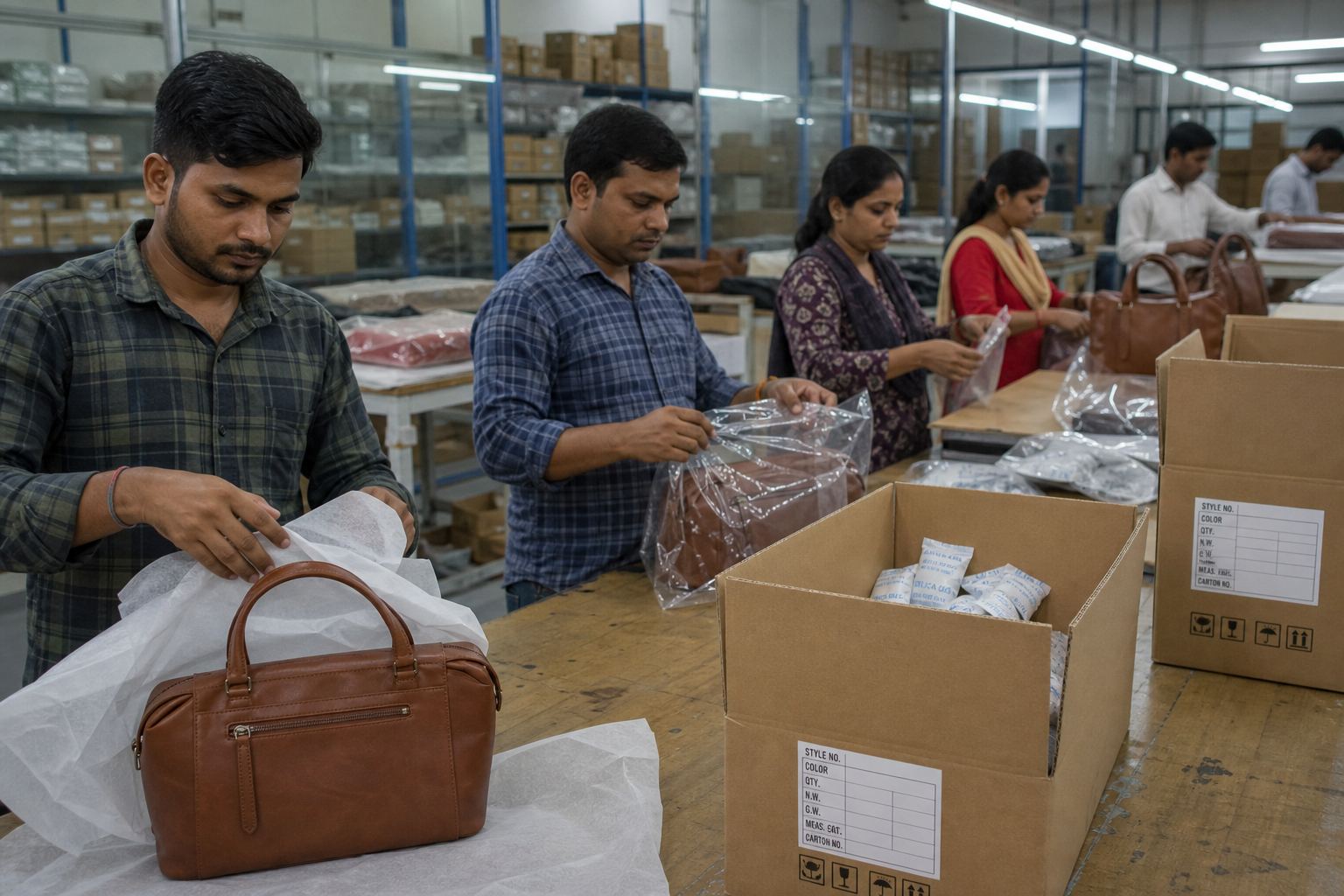
Packaging expectations differ by destination channel even when the underlying bag specification is identical. USA e-commerce private-label buyers often require retail-ready barcoded boxes; European retail chains may specify FSC-certified cartons and bilingual or multilingual insert cards; Japanese buyers expect presentation-grade inner packaging suitable for department store display; UAE distributors typically accept standard export dust-bag-and-master-carton formats with minimal retail-ready investment on first orders.
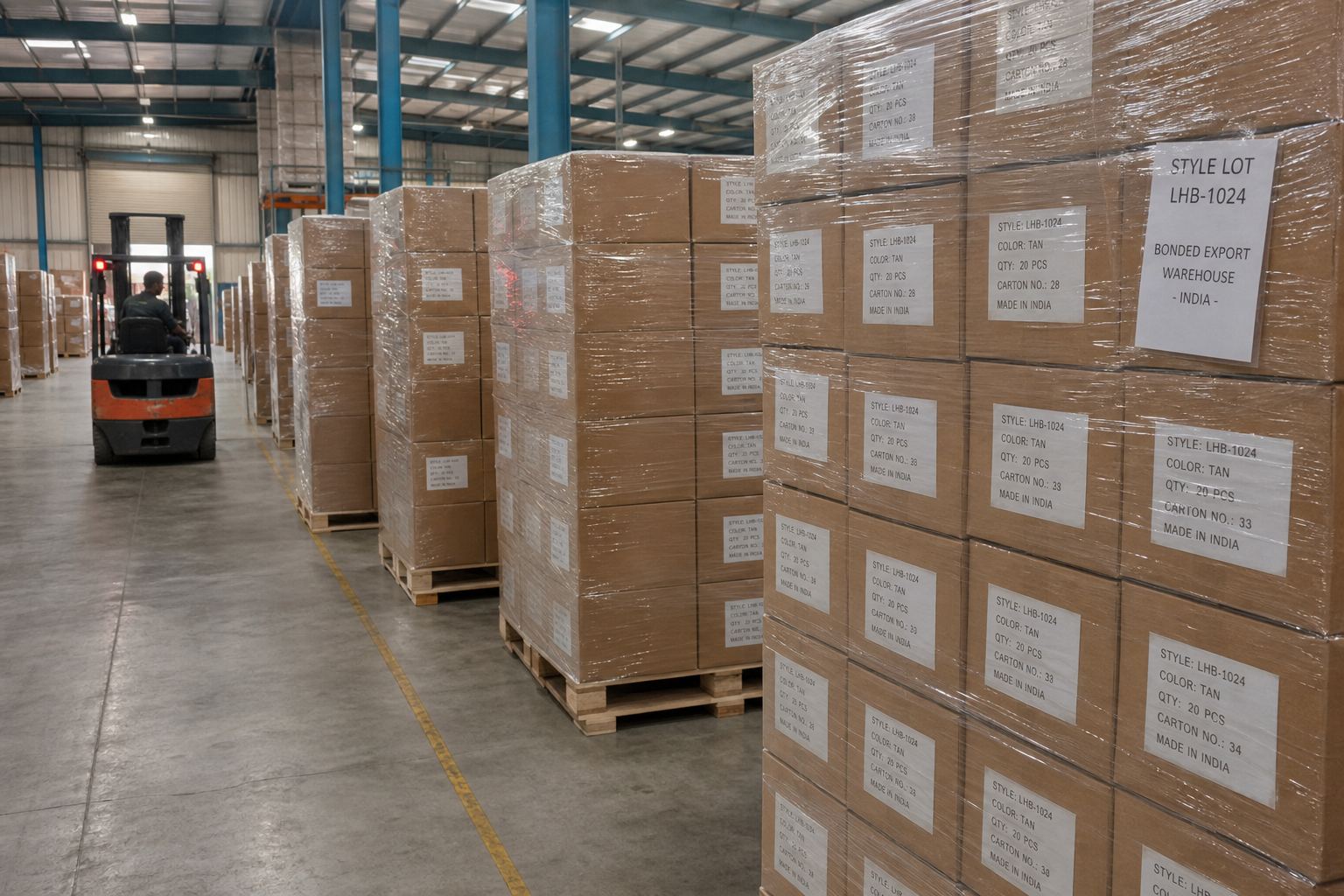
Standard export format is one bag per dust bag or polybag inside a rigid or semi-rigid box, with boxes packed into master cartons of 10, 20, or 30 units depending on bag size. Silica gel sachets are standard on ocean lanes to manage moisture during transit.
Packaging Expectations by Destination Channel
Swipe →
Data table — swipe horizontally on small screens
| Market | Typical Format | Retail-Ready Requirement | Special Note |
|---|---|---|---|
| USA | Dust bag + box + master carton | Common for e-commerce and retail chains | UPC/barcode placement on retail programmes |
| Germany / EU | Dust bag + box + master carton | Moderate; sustainability labeling growing | REACH docs must match lot identity on carton |
| UK | Same as EU-equivalent | Moderate on retail chains | Post-Brexit labeling rules — verify current |
| UAE | Dust bag + master carton | Low on distributor programmes | Re-export marks if cargo transits Gulf hubs |
| France | Presentation-grade inner pack | High on department store lines | Display-ready tissue and box finish matter |
| Japan | Presentation-grade inner pack | Very high | Packaging is part of quality evaluation |
| Australia | Standard export format | Moderate on retail | Biosecurity declaration for wood packing if used |
Container Loading Details
Export Tip
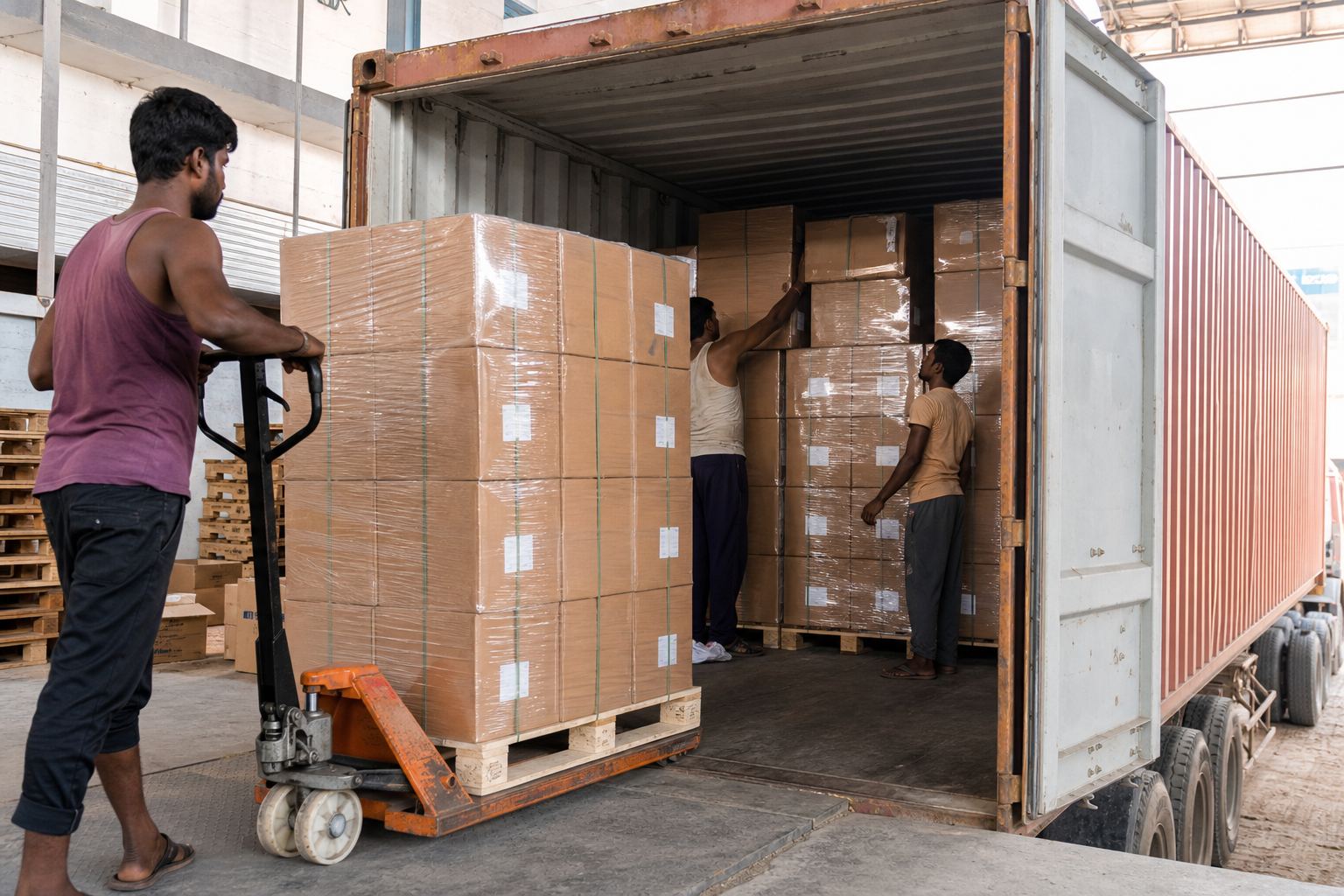
Container payload for leather bags varies by silhouette bulk more than almost any other accessories category. Wallets and small crossbody bags yield the highest pieces per container; structured briefcases and large travel duffels yield the lowest. Indicative planning ranges: 20ft FCL commonly carries roughly 1,200–3,500 pieces; 40ft HC roughly 3,000–8,000 pieces — confirm against actual carton specs for your approved styles.
Indicative Container Loading by Bag Category
Swipe →
Data table — swipe horizontally on small screens
| Category | Indicative 20ft FCL | Indicative 40ft HC | Notes |
|---|---|---|---|
| Wallets / SLG | 8,000–15,000+ pcs | 15,000–30,000+ pcs | Highest yield; strong UAE and USA economics |
| Handbags / totes | 1,500–3,500 pcs | 3,000–8,000 pcs | Varies with box rigidity and nesting |
| Messenger / crossbody | 2,000–4,000 pcs | 4,000–9,000 pcs | Moderate yield |
| Briefcases / laptop bags | 1,200–2,500 pcs | 2,500–5,500 pcs | Lower yield; Japan and Germany programmes |
| Travel bags / duffels | 800–2,000 pcs | 1,800–4,500 pcs | Bulkiest silhouette in HS 4202 mix |
Shipping Methods
Export Tip
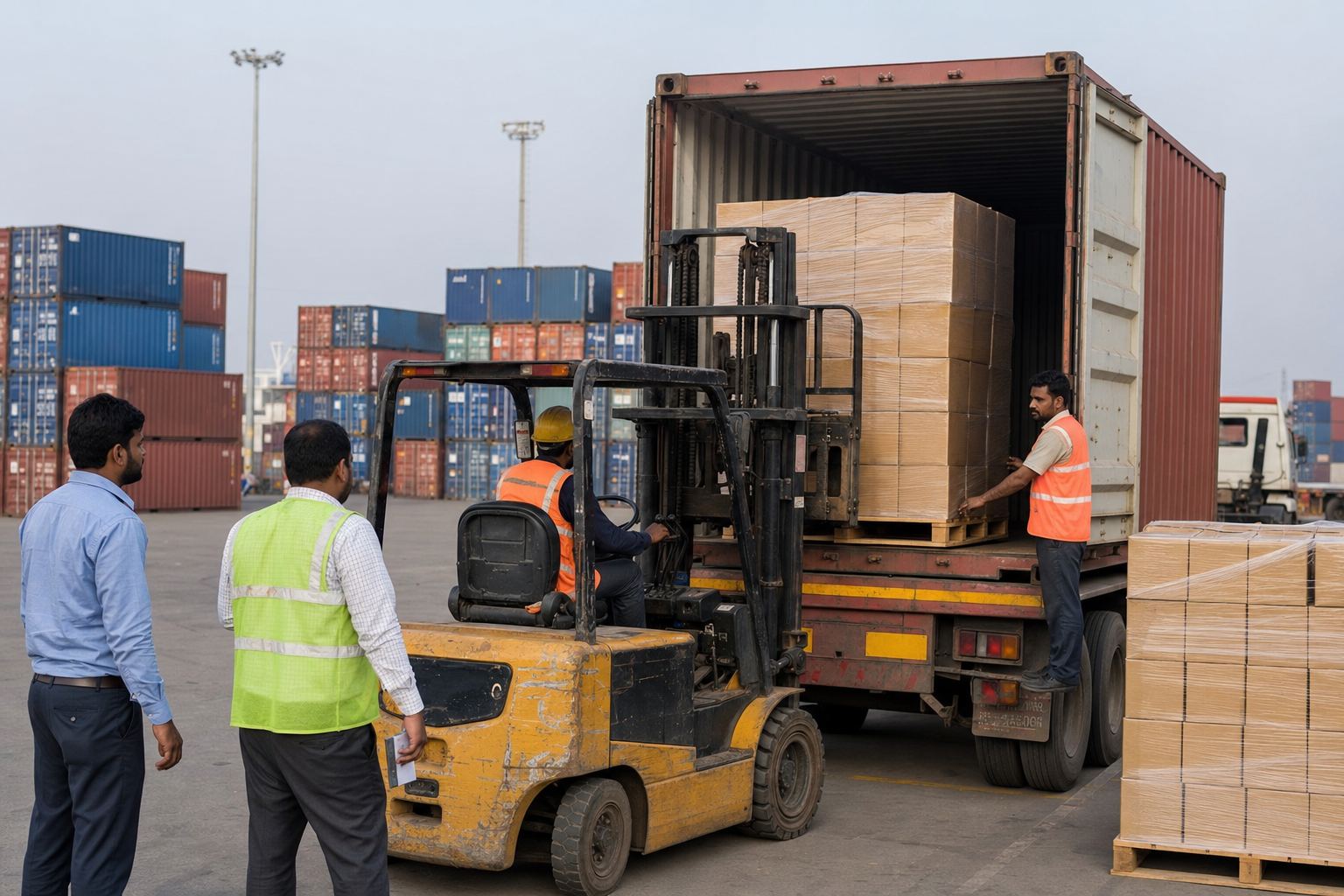
FOB at a named Indian load port — Mundra, Nhava Sheva (JNPT), Chennai, Tuticorin, or Kolkata — is the Incoterm used on the majority of Indian leather bag shipments across all destination markets. The exporter delivers to port; the buyer arranges main carriage and import clearance. CIF and CFR appear when buyers prefer a single ocean-freight-inclusive quote, particularly in UAE distributor relationships and some European trading-company arrangements.
Match load port to manufacturing cluster: Chennai for Ambur/Chennai belt factories; Mundra or Nhava Sheva for Kanpur, Delhi-NCR, and Agra inland programmes; Kolkata for East India supply. Trial orders commonly ship LCL or as a shared FCL slot; repeat programmes move to dedicated FCL once replenishment volume is predictable. Air freight is reserved for sealed samples and emergency top-ups, not first commercial volume.
Shipping Method Selection by Destination (Indicative)
Swipe →
Data table — swipe horizontally on small screens
| Destination | Typical Mode | Common Incoterm | Transit Signal (Ocean) |
|---|---|---|---|
| USA — East Coast | Ocean FCL/LCL | FOB Mundra or Nhava Sheva | ~25–35 days |
| USA — West Coast | Ocean FCL/LCL | FOB Mundra or Nhava Sheva | ~18–28 days via Suez or Panama |
| Germany / Netherlands | Ocean FCL | FOB Mundra, Nhava Sheva, or Chennai | ~18–25 days |
| UK | Ocean FCL/LCL | FOB Mundra or Nhava Sheva | ~20–28 days |
| UAE | Ocean FCL/LCL | FOB Mundra or Nhava Sheva | ~7–12 days |
| Australia | Ocean FCL | FOB Chennai or Mundra | ~18–25 days |
| Japan | Ocean FCL | FOB Chennai or Nhava Sheva | ~12–18 days |
| Canada — East | Ocean FCL/LCL | FOB Mundra or Nhava Sheva | ~22–30 days |
Certifications
Compliance Notes
Certification burden scales with destination, not with India's export regulations alone. Every legitimate exporter holds IEC and CLE RCMC; beyond that, EU and UK buyers require REACH chromium VI test reports for leather articles; US buyers require CPSIA testing for children's bag lines; sustainability-conscious buyers across Germany, France, Netherlands, and Italy increasingly request LWG-certified tannery documentation.
Certifications and Documentation by Destination
Swipe →
Data table — swipe horizontally on small screens
| Market | Mandatory / Expected Certs | Testing Notes | Buyer Verification Habit |
|---|---|---|---|
| USA | Commercial docs; CPSIA for children's lines | Lead and phthalates on children's bags | Moderate on first orders |
| Germany / EU | REACH CrVI ≤3 mg/kg; LWG increasingly expected | Batch-specific lab reports | High — checked before sample approval |
| UK | REACH-equivalent CrVI compliance | UK-specific test reports post-Brexit | Moderate-high |
| UAE | Standard commercial documentation | Basic quality expectations rising | Low to moderate |
| France | REACH CrVI; fashion quality audits | Finish and colour documentation | High on premium lines |
| Netherlands | EU REACH for EU-bound cargo | Valid through transit period | Moderate; trading companies |
| Italy | EU REACH | Private-label compliance packs | Moderate-high |
| Japan | Detailed quality specification docs | Multiple sample rounds | Very high |
| Australia | Biosecurity; standard customs | ISPM-15 if wood packing used | Moderate |
| Canada | Standard commercial documentation | Growing sustainability asks | Moderate |
Buyer Requirements
Buyer Requirements
- USA: written spec sheets, CPSIA readiness for children's lines, UPC or barcode planning on retail programmes, net-30 to net-60 payment on established accounts
- Germany: REACH CrVI test reports on the exact leather lot, LWG tannery reference where claimed, LC or milestone payment on first orders
- UK: REACH-equivalent documentation, consistent repeat-order quality, verify current UK Global Tariff rates in landed-cost models
- UAE: competitive FOB, volume consistency, distributor-friendly carton marks for re-export where applicable
- France: finish precision, colour-matching discipline, factory or process audit on premium lines
- Netherlands: volume reliability, documentation valid across EU redistribution transit
- Japan: meticulous QC records, presentation packaging, patience through extended qualification cycles
- Australia: biosecurity-compliant packing declarations, mid-tier value positioning
- Canada: moderate compliance, Indo-Canadian network introductions, bilingual retail labeling where required by province
What buyers in each destination expect before confirming a first commercial order differs predictably. US buyers prioritize specification consistency and on-time delivery over factory heritage; German buyers prioritize current REACH documentation before price negotiation; Japanese buyers prioritize packaging presentation and process documentation before volume discussion; UAE buyers prioritize FOB competitiveness and hardware finish consistency on fast payment terms once trust is established.
Exporters entering a new destination should reverse-engineer buyer requirements from import-side procurement norms rather than assuming domestic export habits transfer automatically.
Country-wise Opportunities
Market Snapshot
This section is the depth centerpiece of the guide — a market-by-market analysis covering duty notes (always verify current rates), compliance burden, payment culture, and style fit for Indian leather bag exports under HS 4202. Use it to rank destinations before committing samples, certification budget, or production capacity.
Market Entry Ranking for Typical Indian Leather Bag Exporter (Indicative)
Swipe →
Data table — swipe horizontally on small screens
| Rank | Market | Entry Difficulty | Repeat Business Potential | Best Category Fit |
|---|---|---|---|---|
| 1 | United States | Moderate | Very high | Handbags, wallets, totes |
| 2 | UAE | Low | Moderate-high | Handbags, wallets, travel bags |
| 3 | United Kingdom | Moderate | High | Handbags, wallets, laptop bags |
| 4 | Canada | Moderate | Moderate-high | Handbags, wallets, laptop bags |
| 5 | Australia | Moderate | Moderate | Handbags, backpacks, travel bags |
| 6 | Netherlands | Moderate | Moderate (trading hub) | Wallets, handbags (volume) |
| 7 | Germany | High | Very high (if compliant) | Briefcases, fashion handbags |
| 8 | France | High | High (if premium) | Fashion handbags, clutches |
| 9 | Italy | High | Moderate-high (private label) | Fashion handbags, wallets |
| 10 | Japan | Very high | Very high (if established) | Briefcases, laptop bags |
United States
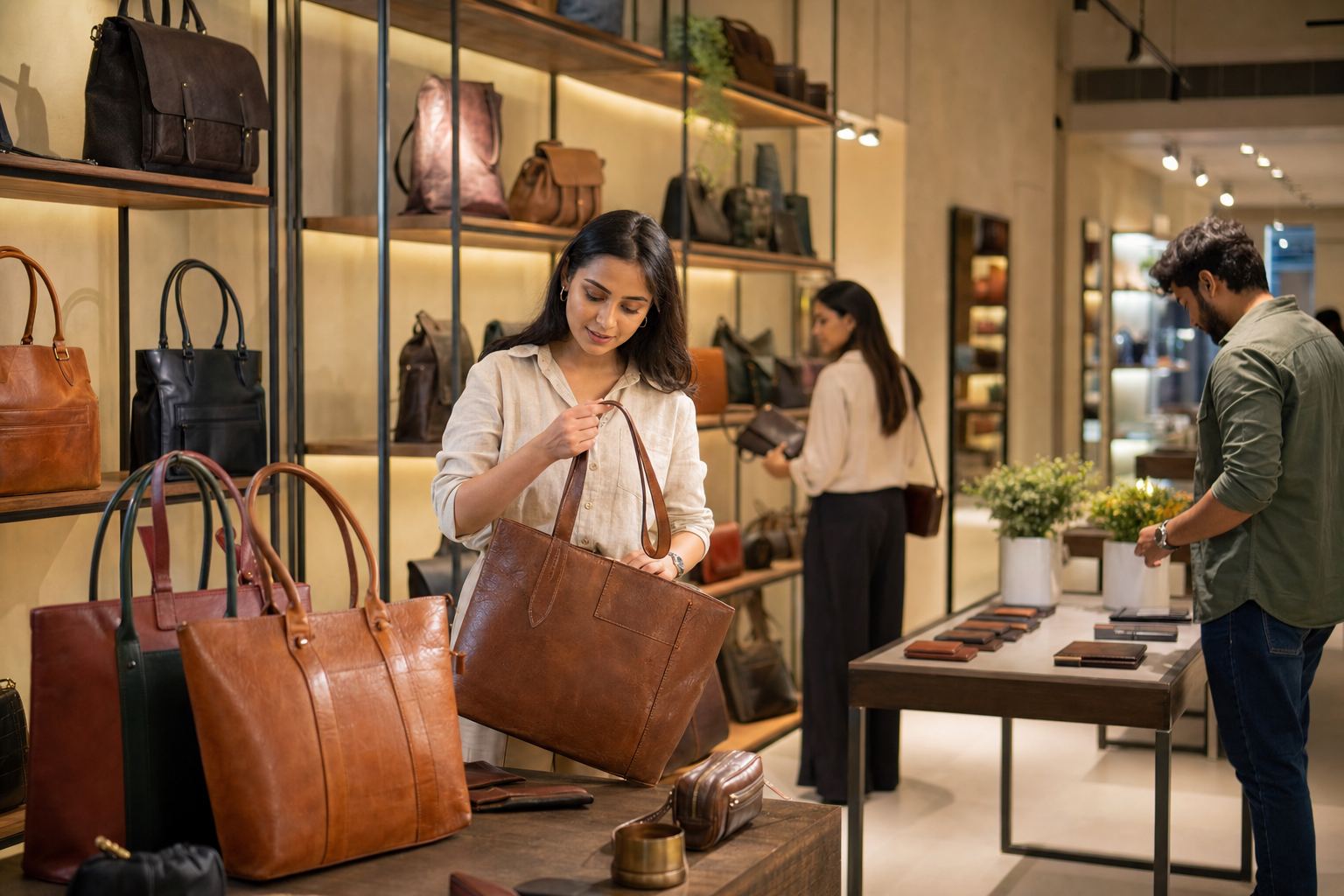
The United States is the largest single destination for Indian leather goods by export value, absorbing handbags, totes, wallets, backpacks, and travel bags across wholesale distribution, department store retail, and a rapidly growing e-commerce private-label channel.
Duty and Landed-Cost Notes
Import duty rates for HS 4202 leather handbags and travel goods vary by sub-heading and origin country. Buyers and exporters must verify current USTR tariff schedules and any preferential treatment before quoting landed prices — do not rely on outdated duty percentages in supplier quotations or retail margin models.
Compliance Burden
Standard commercial documentation applies to adult leather bags. CPSIA compliance testing is mandatory for children's product lines — including children's backpacks and school bags — covering lead content, phthalates, and general safety requirements.
Payment Culture
Wholesale distributors and established retail chains commonly operate on net-30 to net-60 terms after the first one or two successfully delivered orders. First orders typically use 30–50% advance with balance against shipping documents or pre-shipment inspection release. E-commerce private-label buyers often move faster on smaller trial MOQs but expect responsive sample turnaround.
Style Fit for Indian Supply
Mid-tier handbags ($10–$25 FOB), totes, and wallets ($3–$6 FOB) are the sweet spot. Kanpur and Tamil Nadu clusters serve volume programmes; Delhi-NCR serves fashion-adjacent private label. See Find International Buyers for Leather Bags for outreach channels.
United Kingdom
The United Kingdom sustains broad category demand for Indian leather bags across handbags, wallets, laptop bags, and travel bags through established retail chains, wholesale distributors, and a growing e-commerce channel.
Duty and Landed-Cost Notes
Post-Brexit, the UK applies its own Global Tariff schedule for HS 4202 articles. Verify current UKGT rates separately from EU combined nomenclature — landed-cost models built on EU duty assumptions will be wrong for UK-bound cargo.
Compliance Burden
The UK applies REACH-equivalent chemical compliance for leather articles, meaning chromium VI test reports are required for all UK-bound shipments. Documentation that satisfied EU buyers before Brexit may need UK-specific reissue.
Payment Culture
UK wholesale and retail buyers typically operate net-30 to net-45 on established accounts. First orders use milestone payment. UK buyers value specification consistency across repeat orders more than headline unit price.
Style Fit for Indian Supply
Structured handbags, messenger bags, and wallets at mid-tier FOB positioning. Bound-edge and piped construction for heritage-adjacent retail programmes. MOQ trials commonly 300–500 pieces per style.
Germany
Germany is the most compliance-intensive major market for Indian leather bag exports, and simultaneously one of the most rewarding for exporters who meet its standards.
Duty and Landed-Cost Notes
EU combined nomenclature duty rates for HS 4202 differ between sub-headings such as 4202.21 (outer surface of leather) and 4202.29 (other materials). Verify current EU tariff rates and any preferential treatment under applicable trade agreements before quoting landed prices to German buyers.
Compliance Burden
REACH Annex XVII limits hexavalent chromium in leather articles to 3 mg/kg or less. Test reports from an accredited laboratory are required for each production batch or leather lot. LWG-certified tannery sourcing is increasingly expected for mid-tier handbag and wallet programmes, not only premium fashion lines.
Payment Culture
German buyers commonly use letter of credit or strict milestone payment on first orders. Repeat programmes may move to open account after two to three clean shipments. Exporters without REACH documentation ready are typically eliminated before sample evaluation — payment terms never reach negotiation.
Style Fit for Indian Supply
Structured briefcases, fashion handbags, and travel bags at premium FOB. Tamil Nadu and Kanpur clusters with LWG tannery relationships are best positioned. Start with briefcases or structured handbags where construction quality advantage is clearest.
United Arab Emirates
The UAE functions as both a direct retail market for handbags, travel bags, and wallets and a re-export hub for the wider Gulf including Saudi Arabia, Kuwait, Bahrain, and Oman.
Duty and Landed-Cost Notes
GCC duty treatment for HS 4202 articles should be verified current rates before quoting landed prices. India-UAE CEPA may offer preferential rates on qualifying consignments — confirm rules of origin and documentation requirements with your customs broker.
Compliance Burden
Documentation requirements are lighter than EU markets — standard commercial documentation is typically sufficient for direct import. Quality expectations are rising as regional retail matures.
Payment Culture
Established distributors often operate on faster payment cycles than European retail — advance or LC on first orders, shorter settlement on repeat business once trust is built. Price competitiveness drives supplier selection more than sustainability documentation on value-tier lines.
Style Fit for Indian Supply
Handbags and wallets at $8–$22 FOB for handbags and $2–$6 for wallets undercut European origins while offering acceptable quality for value-to-mid-tier retail. Avoid pitching premium embellished styles at European price points.
France
France is a fashion-quality market where Indian leather bag exporters compete on finish precision, colour-matching accuracy, and construction elegance rather than commodity pricing.
Duty and Landed-Cost Notes
EU combined nomenclature rates apply — verify current EU tariff rates for the correct HS 4202 sub-heading. Premium positioning must absorb compliance testing and potential factory audit costs in landed-cost models.
Compliance Burden
REACH chromium VI compliance is mandatory. Beyond chemical compliance, French buyers frequently conduct factory audits or request detailed production process documentation before confirming a first commercial order.
Payment Culture
Milestone-based payment with extended sample approval cycles. French fashion retail buyers do not rush first orders — relationship investment is higher than UAE or USA volume channels.
Style Fit for Indian Supply
Fashion handbags and clutches at $18–$40 FOB. Jaipur embossed and embellished styles and Tamil Nadu fashion construction at premium price points. Invest in LWG tannery sourcing for sustainability-positioned programmes.
Netherlands
The Netherlands, primarily through the Port of Rotterdam, operates as a European trading and re-export hub for leather bags sourced from India and redistributed across the EU.
Duty and Landed-Cost Notes
Verify current EU duty rates for HS 4202. Dutch trading companies often optimize per-piece freight across consolidated multi-category FCL loads — landed-cost advantage comes from volume and routing, not duty preference alone.
Compliance Burden
EU REACH compliance applies to all cargo entering the Netherlands, even when intended for re-export to other EU member states. Documentation must remain valid through the transit and redistribution period.
Payment Culture
Trading companies commonly use LC or documentary collection terms. Payment discipline is commercial and transaction-focused — less relationship-intensive than French fashion retail, more documentation-intensive than UAE distributors.
Style Fit for Indian Supply
Volume handbags, wallets, and small leather goods in consolidated FCL loads. Consistent colourway accuracy across large mixed-style shipments matters more than artisanal storytelling.
Italy
Italy is both a competing origin and an import market for Indian leather bags — Italian brands and distributors source Indian production for private-label and value-tier programmes while domestic premium origins serve luxury channels.
Duty and Landed-Cost Notes
EU combined nomenclature rates apply — verify current EU tariff rates. Italian buyers comparing Indian FOB against domestic production calculate landed cost including duty, inland EU logistics, and compliance testing.
Compliance Burden
Full EU REACH compliance required. Italian fashion buyers apply aesthetic quality audits alongside chemical documentation — stitching consistency, edge finishing, and hardware placement are evaluated against brand-specific standards.
Payment Culture
Design-led buyers use milestone payment with extended sample development. Italian procurement culture expects technical fluency on leather grades and construction types — vague 'genuine leather' claims fail quickly.
Style Fit for Indian Supply
Fashion handbags, crossbody bags, and wallets for private-label programmes where India offers cost advantage without competing directly against Italian luxury heritage positioning.
Japan
Japan is the most relationship-intensive and quality-documentation-demanding major market for Indian leather bag exports.
Duty and Landed-Cost Notes
Japan's tariff schedule for HS 4202 articles should be verified current rates before quoting landed prices. Premium FOB positioning ($20–$60 for briefcases) must absorb multiple sample rounds and extended qualification time in total programme cost.
Compliance Burden
Japanese buyers require detailed quality specification documentation, production process records, and packaging presentation meeting Japanese retail display standards. Multiple sample rounds before first commercial order confirmation are normal.
Payment Culture
Conservative payment terms on first orders — LC or escrow arrangements common. Japanese department stores reward suppliers who maintain specification discipline over many seasons with stable repeat business and less price pressure.
Style Fit for Indian Supply
Premium briefcases, laptop bags, and structured handbags. Do not pursue Japan as a first market — build export credibility in the USA, UK, or Germany first, then approach with proven track record and current REACH test reports.
Australia
Australia is a growing Asia-Pacific destination for Indian leather bags, importing handbags, backpacks, and travel bags through retail chains and importer-distributors in Sydney, Melbourne, and Brisbane.
Duty and Landed-Cost Notes
Australian import duty on HS 4202 articles should be verified current rates against the Australian Harmonized Tariff. Indo-Australian trade ties facilitate supplier-buyer relationships but do not eliminate duty modeling.
Compliance Burden
Biosecurity requirements apply to all imported goods including leather bags. ISPM-15 compliance for wood packaging where used. Chemical compliance expectations are increasing as Australian retail chains adopt sustainability sourcing policies modeled on European standards.
Payment Culture
Net-30 typical on established retail accounts. English-language communication and reasonable time-zone overlap with India support responsive coordination — a practical advantage over Japan and some EU markets.
Style Fit for Indian Supply
Handbags, backpacks, and travel bags at mid-tier FOB. Australia's retail market concentrates in major cities — distributor relationships are particularly valuable for market entry.
Canada
Canada is a growing destination for Indian leather bags, importing handbags, wallets, and laptop bags through retail chains and importer-distributors in Toronto, Vancouver, and Montreal.
Duty and Landed-Cost Notes
Canadian import duty treatment for HS 4202 articles should be verified current CBSA tariff schedules. Landed-cost models should include provincial GST/HST and bilingual retail labeling costs where applicable.
Compliance Burden
Moderate relative to EU — standard commercial documentation typically sufficient, with chemical compliance expectations increasing as Canadian retail chains adopt sustainability sourcing policies.
Payment Culture
Similar to USA patterns — net-30 to net-45 on established accounts, milestone payment on first orders. Indo-Canadian business networks and CLE-organised trade missions support relationship building.
Style Fit for Indian Supply
Handbags, wallets, and laptop bags at mid-tier FOB. Corporate gifting and office retail channels favor structured briefcases and laptop bags from Hyderabad and Delhi-NCR clusters.
Sourcing Checklist
Checklist
- Confirm HS 4202 sub-heading for your bag category matches destination customs classification expectations
- Verify current import duty rates and preferential eligibility — do not use outdated tariff schedules
- Map category-market fit: does your cluster and construction type match destination style preference?
- Assess compliance readiness: REACH for EU/UK/France/Netherlands/Italy; CPSIA for US children's lines; biosecurity for Australia
- Model full landed cost including duty, freight, VAT/GST, and compliance testing — not FOB alone
- Validate payment terms against destination culture: LC for Germany/Japan first orders; net terms only after track record
- Choose load port proximate to manufacturing cluster to protect margin
- Plan market sequencing: enter moderate-compliance markets before high-compliance markets
Exporters selecting destination markets should complete this checklist before allocating sample budget or certification spend. Buyers evaluating India as an origin for a specific destination should use the same list from the import side.
Buyer Checklist
Checklist
Exporter Checklist
Checklist
Compliance Checklist
Checklist
Compliance Notes
Common Buyer Mistakes
Common Mistakes Box
Market-selection mistakes are predictable and expensive because they waste sample budget, certification spend, and months of outreach before the mismatch becomes obvious at customs or retail.
Future Market Trends
Key Statistics
Three trends will reshape leather bag destination selection through 2027 and beyond. First, EU and UK sustainability rules will tighten traceability requirements for leather origin and tanning chemistry — markets that already demand LWG certification will extend those requirements into mid-tier handbag programmes, not only premium fashion lines. Second, e-commerce private-label demand in the USA, UK, and Australia will continue pulling volume at flexible MOQs, favoring exporters who can serve 200–500 piece trials with fast sample turnaround. Third, India-UAE CEPA and evolving Indo-European trade frameworks may shift duty economics for HS 4202 — verify current preferential rates quarterly rather than annually.
Exporters who invest in compliance documentation and market sequencing now will capture repeat business as compliance barriers filter out less prepared competitors. Buyers who model landed cost with current duty rates and batch-specific test reports will avoid margin surprises as regulations tighten.
Expert Insight: Landed Cost Discipline
Expert Insight Box
Altus Exports supports international buyers and exporters with landed cost modeling as part of our global sourcing partner service — share your target market, category, and volume to receive an indicative landed cost breakdown alongside FOB pricing and compliance cost estimates before you commit to a market entry decision.
Conclusion
- Operational process: How to Export Leather Bags from India.
- Map destination shortlists to SKUs in Top Leather Bag Products Exported from India before committing capacity.
- Country-specific demand: Most Demanded Indian Leather Bags by Country.
- Buyer sourcing playbook: Source Leather Bags Directly from India.
- Buyer outreach: Find International Buyers for Leather Bags.
- Premium and sustainable: Sustainable and Premium Leather Bag Export Opportunities.
- Documentation: Leather Bag Export Documentation Checklist.
- When destination choice is locked, execute through Altus Exports as merchant exporter or global sourcing partner — with export products from India for multi-port bag programmes.
The best country for Indian leather bag exports is not a universal answer — it depends on your product category, compliance capability, price positioning, and relationship investment capacity. The United States offers the largest volume opportunity with moderate compliance burden; Germany and France reward premium quality with higher FOB but demand REACH compliance and LWG tannery sourcing upfront; the UAE offers fast entry at competitive pricing; Japan and Italy reward patience and specification perfection with the highest per-piece values for qualified suppliers.
Altus Exports supports Indian leather bag exporters and international buyers as a merchant exporter in India and global sourcing partner, coordinating market-specific documentation, compliance, and shipment under one accountable relationship.