
Sustainable and Premium Leather Bag Export Opportunities from India
By Saurabh Mittal, Founder, Altus Exports
A guide to India's sustainable and premium leather bag opportunity — Leather Working Group (LWG) certified tanneries, chrome-free and vegetable-tanned leather, REACH and ZDHC chemical compliance, OEM premium manufacturing, traceability, and documentation evidence packs, written for exporters and brand sourcing teams evaluating India for higher-margin, compliance-heavy handbag and leather goods programmes under HS 4202.
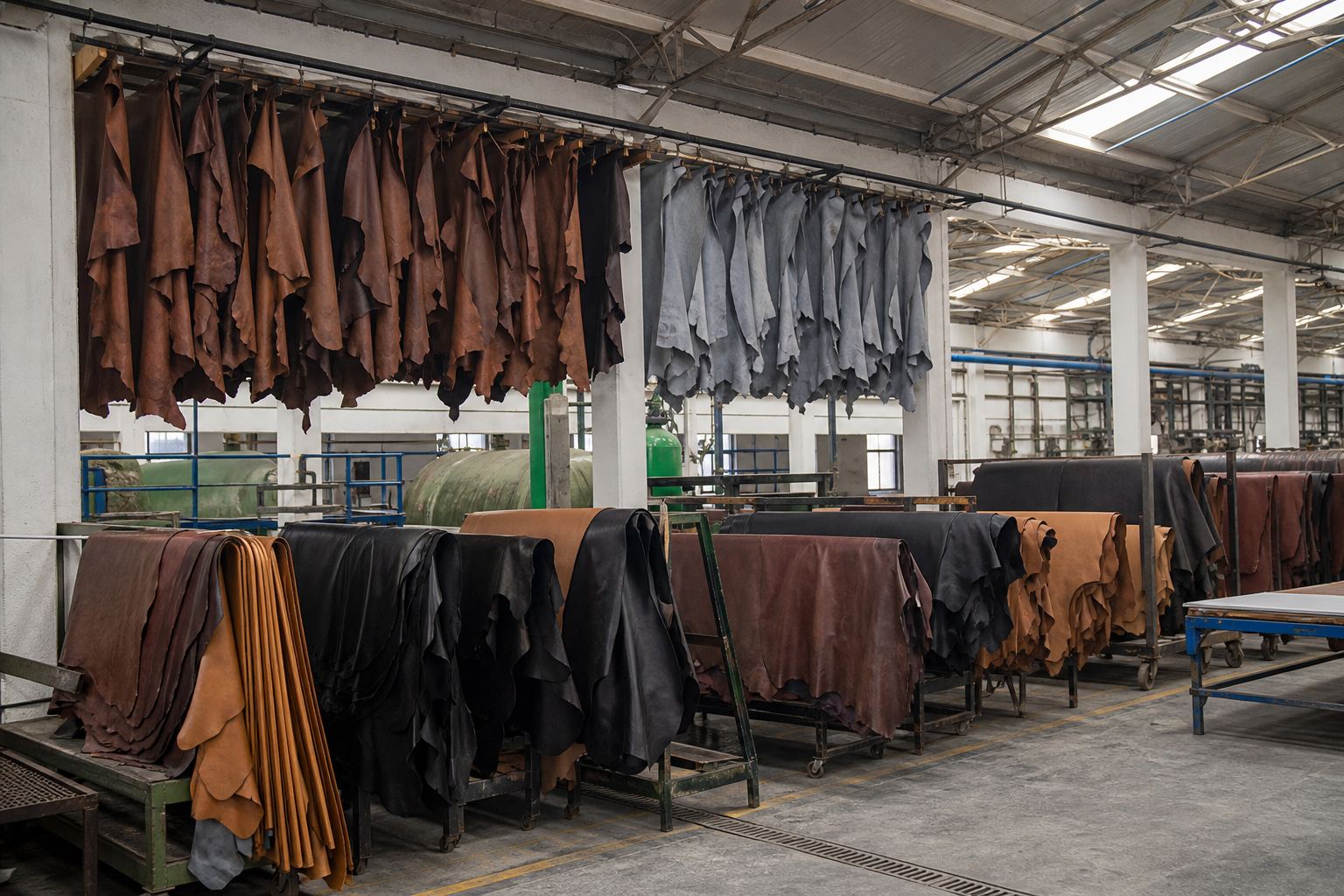
Indian exporters in Kolkata, Tamil Nadu, Kanpur, Delhi-NCR, and allied clusters now supply LWG-rated, chrome-free, and REACH-ready leather bags to EU and North American OEM brands under HS 4202 — competing on evidence, not price alone.
This guide covers the premium/sustainability track: LWG, chrome-free / veg-tan leather, REACH Cr(VI), ZDHC MRSL, OEM relationships, and lot-level traceability. Not the basic export walkthrough (How to Export) and not a fair directory (Trade Shows).
Premium ≠ sustainability, though buyers often want both. Premium pays for construction and design collaboration; sustainability pays for tannery performance and chemical evidence that survives brand audit.
Pair with CLE Benefits, Source Directly, and Best Countries. Altus Exports coordinates audited programmes as merchant exporter and global sourcing partner.
Key Takeaways
Summary Box
Executive Summary
Summary Box
- Stack: LWG + REACH Cr(VI) ≤3 mg/kg + ZDHC MRSL where brands require it.
- Commercial case: documentation depth unlocks price premium; marketing language does not.
- Basics still apply: IEC, CLE RCMC, and aligned docs (How to Export, Documentation Checklist).
- What changes: deeper pre-PO verification; lot traceability from tannery to carton.
- Category depth across price tiers: Top Leather Bag Products.
Treat premium/sustainable bag export as a separate track from commodity programmes: higher FOB and longer OEM relationships in exchange for verifiable tannery, chemical, and audit evidence — not brochure adjectives.
Market Size & Industry Overview
Key Statistics
CLE / DGCI&S report India's total leather sector exports at US$ 4.83 billion in FY 2024-25, of which leather goods reached US$ 1,319.6 million (27.33% of sector value). Leather bags classified under HS 4202 — handbags, totes, briefcases, soft travel bags, backpacks, laptop bags, and wallets — sit inside that leather-goods basket. Within HS 4202, a smaller premium and sustainability-audited sub-segment is concentrated among export-oriented factories in Kolkata, Tamil Nadu, Kanpur, and Delhi-NCR.
The premium tier is smaller in volume than commodity export but commands materially higher FOB prices and longer contract durations — brand OEM relationships often run multi-year, unlike commodity trial orders that reset every season. Leather Working Group certification and REACH compliance have moved from optional differentiators to baseline entry requirements for EU and US brand sourcing over the past several years, driven by EU corporate sustainability due-diligence rules and consumer-facing sustainability claims on leather goods.
Premium bag demand concentrates in markets with strict chemical compliance and sustainability disclosure rules — Germany, France, the wider EU, the UK, the USA, and increasingly Japan — where brand sourcing teams verify tannery identity and certification before engaging new suppliers.
India's Sustainable & Premium Leather Bag Segment (Indicative)
Swipe →
Data table — swipe horizontally on small screens
| Dimension | Approximate Figure | Relevance to Premium Positioning |
|---|---|---|
| Leading premium/export clusters | Kolkata, Ambur–Ranipet–Chennai (Tamil Nadu), Kanpur, Delhi-NCR | Deepest experience with brand-owned, compliance-heavy programmes |
| HS classification | HS 4202 — handbags (4202.21/4202.29), briefcases/suitcases (4202.11/4202.19), wallets (4202.31/4202.32), soft travel/backpacks (4202.91/4202.99) | All leather bag export categories fall within this heading |
| LWG-rated tanneries in India | A growing but still limited base, concentrated in Tamil Nadu and select units | Certification cycle takes months; early movers hold an advantage |
| Primary compliance frameworks | LWG, REACH Cr(VI), ZDHC MRSL | Baseline credentials brand sourcing teams verify before RFQ |
| Premium FOB uplift vs. commodity | Typically 25–70% higher, category-dependent | Reflects certified leather cost, hardware, audit overhead, and construction tolerance |
| Contract structure | Often multi-year OEM relationships vs. seasonal trial orders | Rewards long-term certification investment over one-off orders |
Export Statistics
Key Statistics
CLE and DGCIS export statistics show the USA, Germany, the UK, Italy, France, and the Netherlands among India's leading destinations for leather goods by value. These figures reflect the broader CLE leather sector basket; premium and sustainability-certified leather bag programmes under HS 4202 concentrate disproportionately in Germany, France, the wider EU, the UK, and the USA, where brand sourcing teams enforce LWG, REACH, and ZDHC requirements as standard qualification steps.
India's HS 4202 export mix spans handbags and totes at the largest volume share, with briefcases, laptop bags, travel bags, and wallets forming growing niches in premium positioning. Exporters pursuing sustainable premium programmes should benchmark their target categories against current CLE releases rather than assuming sector-wide growth rates apply equally to certified-leather bag lines.
Indicative HS 4202 Export Composition by Bag Category (Planning Reference)
Swipe →
Data table — swipe horizontally on small screens
| Category | Indicative Planning Mix | Typical HS Sub-Heading | Premium/Sustainable Demand Hotspots |
|---|---|---|---|
| Handbags and totes | Indicative planning mix only | 4202.21 / 4202.29 | Germany, France, USA — LWG and chrome-free programmes |
| Wallets, clutches, and SLG | Indicative planning share only | 4202.31 / 4202.32 | UK, Germany — vegetable-tanned heritage lines |
| Backpacks and messenger bags | ~15–20% | 4202.21 / 4202.29 | USA, UK — lifestyle DTC private label |
| Briefcases and laptop bags | ~10–12% | 4202.11 / 4202.21 | Germany, Japan — corporate premium retail |
| Travel bags and duffels (soft) | Indicative planning share only | 4202.91 / 4202.99 | USA, Germany — brand licensing programmes |
| Other leather containers | ~5–8% | 4202.91 / 4202.99 | Mixed destinations |
Import Statistics
Key Statistics
Import-side data under HS 4202 reveals where premium and sustainability-certified leather bag demand concentrates globally. Germany, France, the UK, the USA, Japan, and the Netherlands are among the largest importers of leather bags and leather goods, with EU markets enforcing the strictest chemical compliance documentation at import. India's share within each market varies by category — strong in handbags and wallets at mid-tier and premium price points, growing in travel bags and laptop bags where LWG tannery sourcing is demonstrated upfront.
For premium positioning, import statistics answer a different question than for commodity export: not just who imports leather bags, but who imports at unit values consistent with certified-leather, brand-hardware programmes. Filter trade data by average unit value and origin mix — buyers importing from Italy and India alongside China often sit in the premium sourcing tier worth targeting with a full evidence pack.
Top Importing Countries for Premium/Sustainable Leather Bags (Indicative)
Swipe →
Data table — swipe horizontally on small screens
| Importing Country | Import Role | Typical HS 4202 Demand | Compliance Emphasis |
|---|---|---|---|
| Germany | Retail chains and specialty leather goods importers | Handbags, briefcases, laptop bags | REACH Cr(VI), LWG tannery, ZDHC MRSL |
| France | Fashion retail and department stores | Handbags, clutches, totes | REACH, chrome-free/veg-tan certificates, circular packaging |
| United Kingdom | Retail chains and wholesale distributors | Handbags, wallets, laptop bags | UK REACH-equivalent Cr(VI) limits, standard commercial docs |
| United States | Retail, wholesale, and DTC private label | Handbags, totes, crossbody bags | CPSIA for children's lines; growing LWG demand |
| Netherlands | Trading and re-export hub (Rotterdam) | Mixed categories for EU redistribution | EU compliance documentation for onward distribution |
| Japan | Department stores and specialty retailers | Briefcases, laptop bags, premium handbags | Strict quality and packaging documentation |
Product Categories and Variants
Summary Box
Premium and sustainability-audited product ranges span the full HS 4202 category list — structured handbags, totes, crossbody bags, briefcases, laptop bags, backpacks, travel bags, duffels, and wallets — but differ in leather sourcing, construction detail, and the depth of certification buyers expect. For the full category-by-category breakdown across all price tiers, see Top Leather Bag Products Exported from India.
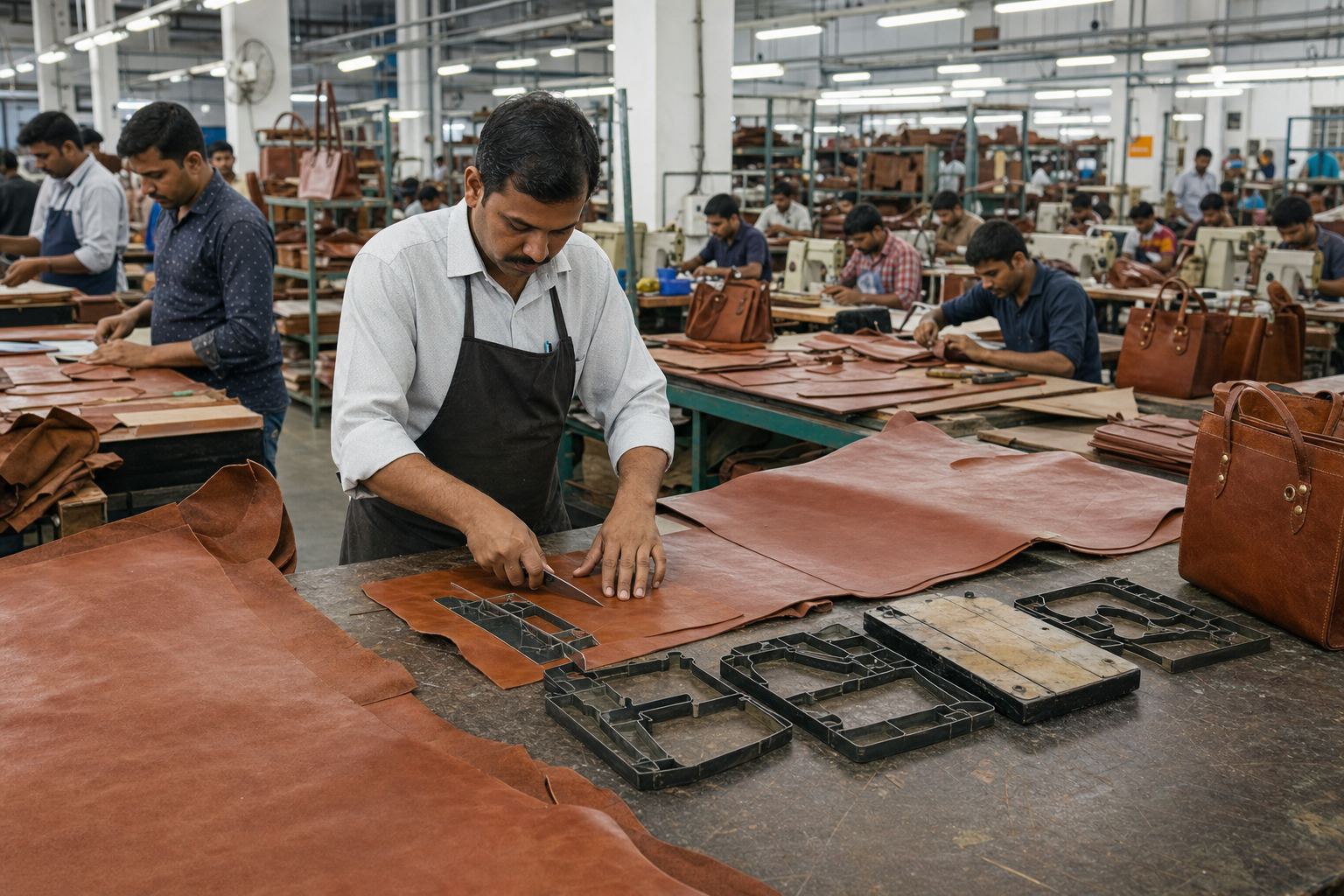
OEM premium programmes typically specify full-grain or top-grain leather from a named, audited tannery, hand-finished edge paint, brand-specified hardware, and proprietary patterns developed through a paid tooling process. Sustainability-focused programmes add chrome-free or vegetable-tanned leather requirements and circular packaging specifications on top of the construction standard.
Category-specific certification intensity varies. Structured handbags and totes for fashion retail see the strongest demand for LWG-rated leather, chrome-free options, and REACH documentation. Briefcases and laptop bags for corporate gifting programmes prioritize construction durability and leather grade, though LWG certification is increasingly requested even in this segment. Wallets and small leather goods ship in high unit volumes per consignment and see growing demand for vegetable-tanned and chrome-free leather in premium gifting and heritage brand programmes.
Premium and Sustainability-Relevant Bag Product Variants
Swipe →
Data table — swipe horizontally on small screens
| Category | Leather Variant | Typical Certification Ask | Primary Buyer Type |
|---|---|---|---|
| Structured handbags (OEM premium) | Full-grain, LWG-rated tannery source | LWG Gold/Silver, REACH Cr(VI) | Fashion brand sourcing offices, department stores |
| Totes and shoppers (sustainability line) | Chrome-free or vegetable-tanned leather | REACH, chrome-free or veg-tan certificate | Sustainability-focused lifestyle brands |
| Crossbody and shoulder bags | Top-grain, LWG-audited | LWG, ZDHC MRSL | E-commerce private-label and DTC brands |
| Briefcases and laptop bags | Corrected-grain or full-grain, LWG-rated | LWG, REACH Cr(VI) | Corporate gifting, premium office retail |
| Travel bags and duffels | Full-grain or top-grain, LWG-rated | LWG, REACH Cr(VI) | Premium travel retail, brand licensing programmes |
| Wallets and SLG (heritage line) | Vegetable-tanned preferred | REACH, veg-tan certificate, ZDHC | Heritage brands, premium gifting programmes |
| Backpacks (premium lifestyle) | Chrome-free or LWG-rated top-grain | LWG, REACH, ZDHC MRSL | Lifestyle brands, premium outdoor-adjacent retail |
Manufacturing Overview
Export Tip
Premium and sustainable leather bag manufacturing in India concentrates in clusters with established LWG-rated tannery relationships and export-oriented construction capability. The Ambur–Ranipet–Chennai belt in Tamil Nadu offers the deepest tannery infrastructure for certified leather sourcing, with export factories experienced in brand-owned pattern development, hand-finished edge paint, and compliance-heavy documentation workflows.
Kolkata's integrated tanning-and-goods corridor supplies handbags and small leather goods at scale, with growing premium capacity among units serving EU brand programmes. Kanpur combines tanning access with mid-to-large volume bag finishing. Delhi-NCR hosts design-forward export houses and merchant exporters coordinating multi-factory premium programmes. Agra and Jaipur contribute artisanal embossed and embellished styles for boutique and heritage-positioned brands.
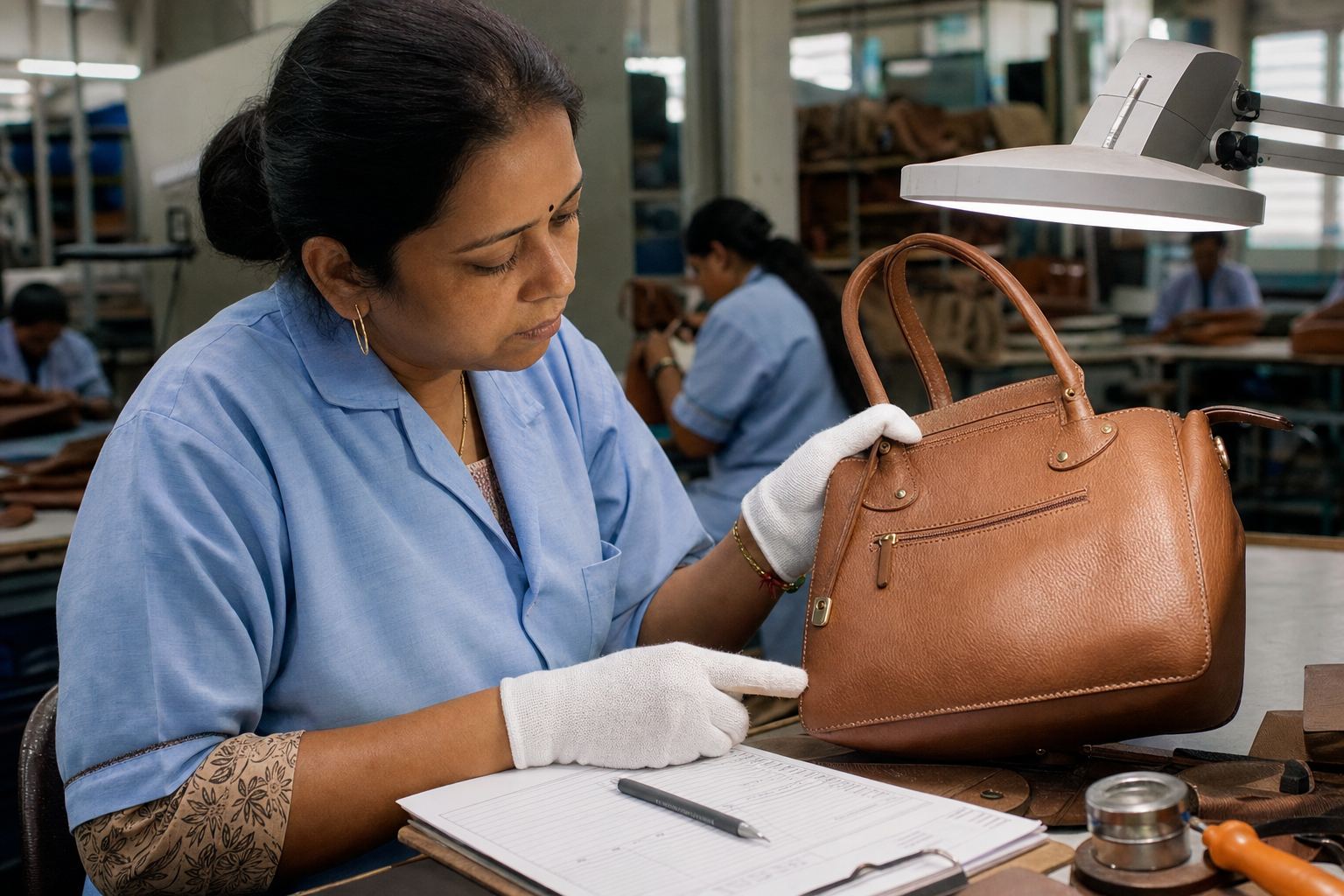
At the premium tier, manufacturing discipline extends beyond stitching quality to lot-level traceability — recording which tannery batch was used for which production order, which REACH test report covers which leather lot, and which ZDHC-conformant chemicals were applied during edge finishing and assembly. Factories that cannot link production records to tannery batches cannot produce the evidence packs brand buyers require, regardless of construction skill.
LWG Tanneries and Tanning Methods for Bag Leather
The Leather Working Group is an independent audit and rating system that assesses a tannery's environmental management — water use, effluent treatment, energy consumption, chemical management, waste handling, and traceability of raw material inputs — resulting in a Gold, Silver, Bronze, or Certified rating. LWG rates the tannery, not the finished bag. A factory assembling handbags from LWG-rated leather but unable to name the tannery, provide the current certificate, or link a specific production lot to a tannery batch does not have a verifiable LWG claim.
Chrome tanning remains the industry default for bag leather, producing consistent color fastness and tensile strength. Chrome-tanned leather from an LWG-rated tannery with verified REACH compliance is fully viable for sustainability-conscious buyers. Chrome-free leather substitutes alternative tanning agents for chromium salts, producing a softer, more matte hand-feel. Vegetable-tanned leather uses plant-derived tannins, producing firmer leather that develops a patina — a strong heritage narrative for craft-positioned brands.
The critical compliance point: chrome-free and vegetable-tanned leather must still independently satisfy REACH chromium VI limits for EU and UK shipments. Residual chromium can enter leather through cross-contamination in shared tannery equipment or finishing chemicals — which is why lot-specific test reports matter regardless of tanning method.
Chrome-Tanned vs. Chrome-Free vs. Vegetable-Tanned Leather for Bag Export
Swipe →
Data table — swipe horizontally on small screens
| Tanning Method | Hand-Feel & Finish | Sustainability Narrative | REACH Cr(VI) Testing | Typical Premium Buyer |
|---|---|---|---|---|
| Chrome-tanned (LWG-rated) | Consistent color, good strength, familiar luxury hand-feel | Strong when paired with LWG certification | Mandatory for EU/UK | Most premium and luxury brand programmes |
| Chrome-free / metal-free | Softer, more matte; color behavior differs from chrome | Strong consumer-facing sustainability claim | Mandatory for EU/UK | Sustainability-focused fashion and lifestyle brands |
| Vegetable-tanned | Firmer, develops patina; distinctive natural aroma | Very strong heritage and craft narrative | Mandatory for EU/UK | Heritage brands, craft-positioned private label |
| Combination / hybrid | Varies by tannery process | Depends on specific process documentation | Mandatory for EU/UK | Brands seeking specific performance plus sustainability messaging |
REACH, ZDHC, and Chemical Compliance for Leather Articles
REACH Annex XVII Entry 47 restricts hexavalent chromium — Cr(VI) — in leather articles coming into contact with skin to no more than 3 mg/kg of the total dry weight of the leather. The UK maintains REACH-equivalent rules post-Brexit. This is a legal requirement for EU and UK-bound leather bag shipments, not a voluntary brand standard — non-compliant lots risk rejection, recall, and supplier delisting.
Chromium VI can form through oxidation of trivalent chromium in chrome-tanned leather under certain storage conditions. Chrome-free leather can still contain residual chromium from cross-contamination. Exporters should obtain Cr(VI) test reports from an accredited laboratory for each production batch, specifying the leather component tested, the method (typically EN ISO 17075-1), and the result in mg/kg.
ZDHC maintains a Manufacturing Restricted Substances List (MRSL) screening wet-processing chemical inputs at the tannery and assembly chemicals at the bag factory — adhesives, edge paint, thread treatments, and surface coatings. MRSL conformance is verified at the input-chemical level, not on finished-product content (that is REACH's role). Brand sourcing teams increasingly request ZDHC MRSL evidence alongside LWG certification for leather articles.
REACH Cr(VI) and ZDHC MRSL Requirements for Leather Bag Export
Swipe →
Data table — swipe horizontally on small screens
| Framework | Threshold / Scope | Applies To | Evidence Required |
|---|---|---|---|
| REACH Annex XVII Entry 47 (EU) | ≤ 3 mg/kg Cr(VI) in leather | All leather components in contact with skin | Per-lot accredited test report |
| UK REACH equivalent | ≤ 3 mg/kg Cr(VI) in leather | All leather components in contact with skin | Per-lot accredited test report |
| ZDHC MRSL — tannery stage | Restricted chemical inputs in wet processing | Tanning agents, dyes, fatliquors, finishing chemicals | Gateway-listed formulations or conformance declarations |
| ZDHC MRSL — factory stage | Restricted assembly chemicals | Adhesives, edge paint, thread treatments | Factory chemical inventory audit against MRSL |
Traceability and Documentation Evidence Packs
A documentation evidence pack is the deliverable that separates premium leather bag exporters from commodity suppliers. Premium brand programmes require chain-of-custody evidence linking a finished bag lot back to a named tannery batch, hide origin, tanning method, chemical inputs, and test results — assembled before the buyer asks, not scrambled under deadline after an audit notification.
A complete evidence pack for a leather bag programme typically includes: current LWG certificate for the named tannery; tannery batch number and production date; hide origin declaration; tanning method certificate (chrome, chrome-free, or vegetable); REACH Cr(VI) test report for the specific leather lot; ZDHC MRSL conformance declarations for tannery and factory chemicals; factory production order record linking tannery batch to finished bag units; factory social compliance audit report; and shipping lot record tying production to export consignment.
The most common failure point is the gap between tannery batch records and factory production records. Building lot-tracking into standard production documentation from the first premium order is far cheaper than retrofitting traceability after a brand relationship is established.
Documentation Evidence Pack Checklist for Premium Bag Programmes
Swipe →
Data table — swipe horizontally on small screens
| Document | Source | Links To | When Required |
|---|---|---|---|
| LWG certificate (current) | Tannery | Tannery facility | At supplier qualification |
| Tannery batch number and production date | Tannery supply invoice | Specific leather lot | Before production begins |
| Hide origin declaration | Tannery | Tannery batch | At RFQ for EU due-diligence programmes |
| Tanning method certificate | Tannery | Tannery batch | When chrome-free or veg-tan claim is made |
| REACH Cr(VI) test report | Accredited laboratory | Leather lot | Before EU/UK shipment |
| ZDHC MRSL conformance declaration | Tannery and factory | Chemical inputs for the lot | At buyer request or brand audit |
| Factory production order record | Bag factory | Tannery batch → finished bag units | During production |
| Factory social compliance audit | Third-party auditor | Bag factory facility | Before first PO from OEM brand |
Pricing Analysis
Buyer Tip
Premium and sustainability-certified leather bags command a meaningful FOB premium over commodity equivalents, reflecting certified leather cost, hardware specification, pattern-development amortization, audit and certification overhead, and tighter QC tolerance on stitching, edge finishing, and lining quality. Quote premium programmes as a full package — leather certification tier, construction method, hardware specification, tooling cost, packaging specification, and audit cost allocation — rather than a bare per-unit FOB number.
Certified leather — LWG-rated, chrome-free, or vegetable-tanned — typically adds 15–30% to raw leather cost compared to standard commodity stock, before accounting for tighter yield and color-consistency requirements. Hardware costs for premium programmes can be two to four times commodity hardware costs and should be quoted as a defined line item. Figures below are indicative planning ranges.
Indicative FOB Price Ranges — Premium/Sustainable vs. Commodity (USD/unit)
Swipe →
Data table — swipe horizontally on small screens
| Category | Commodity FOB Range | Premium/Certified FOB Range | Key Premium Driver |
|---|---|---|---|
| Handbags | $8–$35 | $18–$55+ | LWG tannery source, brand hardware, hand-finished edges |
| Totes | $10–$40 | $20–$50 | Chrome-free or veg-tan leather, design collaboration |
| Messenger bags | $12–$38 | $22–$45 | Top-grain LWG-audited leather, brand-specific hardware |
| Briefcases | $15–$55 | $35–$75+ | Full-grain LWG-rated leather, premium lining, lock hardware |
| Travel bags / duffels | $18–$70 | $40–$90+ | Full-grain leather, heavy-duty hardware, reinforced construction |
| Wallets / SLG | $2–$8 | $5–$16 | Vegetable-tanned leather, hand-stitched construction |
| Backpacks | $12–$45 | $25–$55 | Chrome-free leather, branded hardware, padded construction |
MOQ Analysis
Buyer Tip
MOQs for premium and OEM bag programmes are typically higher per style than commodity trial orders, since pattern-development and tooling cost only amortizes sensibly at scale. Chrome-free and vegetable-tanned leather batch sizing can constrain minimums further — tanneries producing specialty leather often require minimum batch quantities per color that may exceed a small brand's initial needs.
Trial or development runs for premium programmes typically run 300–800 units per style to validate construction, finish, and packaging before a recurring order commitment. Brands expect the development-run cost to be quoted transparently and amortized across the recurring forecast, not absorbed silently into the per-unit FOB.
Typical MOQ for Premium/OEM Bag Programmes (Units, per Style)
Swipe →
Data table — swipe horizontally on small screens
| Programme Type | Trial/Development MOQ | Standard Recurring MOQ | Notes |
|---|---|---|---|
| OEM premium (brand-owned pattern) | 500–1,000 units | 1,500–5,000+ units, recurring | Pattern cost amortized across recurring orders |
| Sustainability-line collaboration | 300–800 units | 1,000–3,000 units | Chrome-free or veg-tan batch sizing may raise minimums |
| Corporate gifting (briefcases, laptop bags) | 200–500 units | 500–2,000 units | Lower style count, higher per-unit value |
| Wallets and SLG (premium heritage) | 500–1,500 units | 2,000–6,000 units | High unit volume per consignment offsets lower per-unit price |
| Travel bags (brand licensing) | 300–600 units | 800–2,500 units | Bulky cartons reduce container loading efficiency |
Packaging Standards
Export Tip
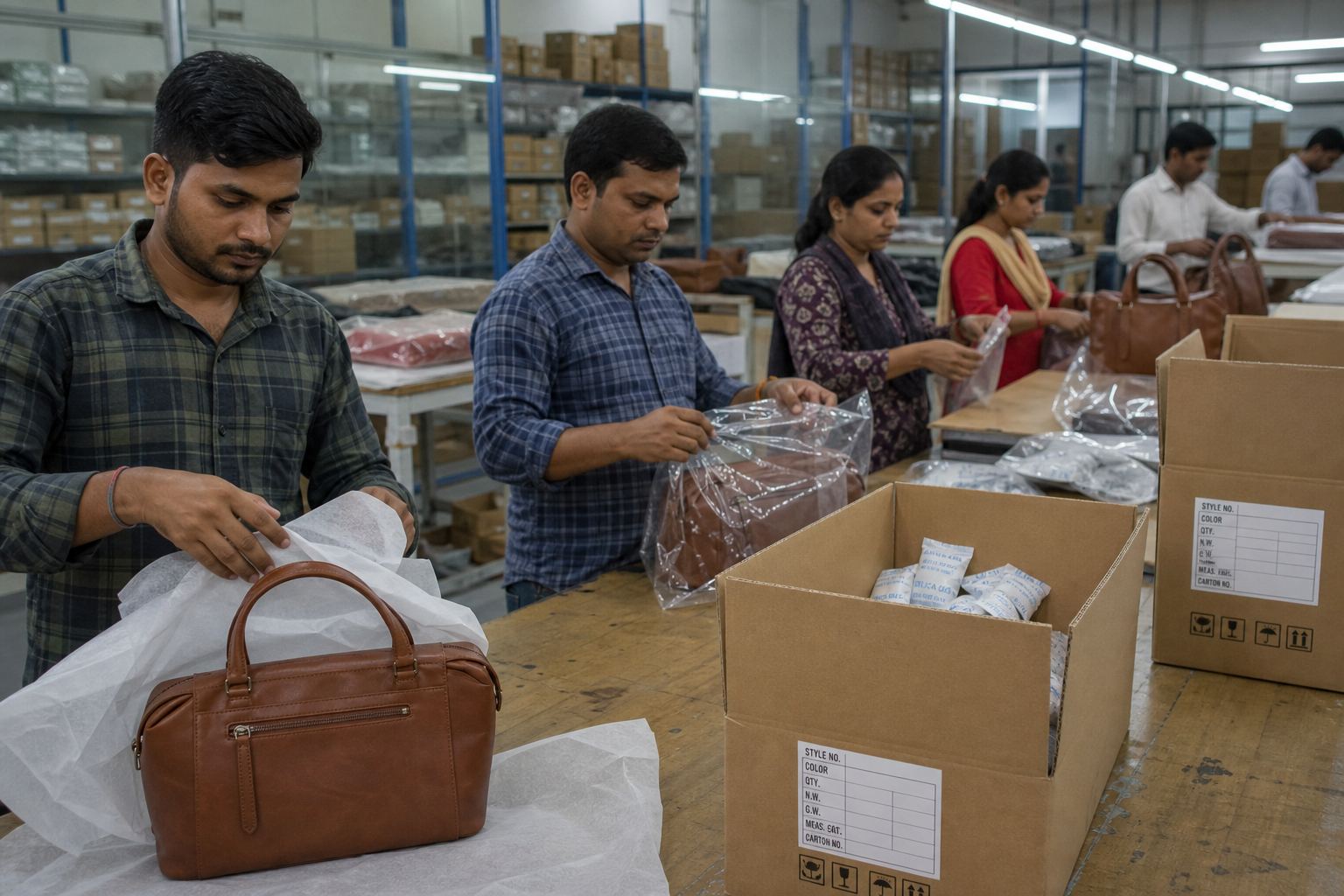
Circular packaging is a growing specification in EU brand tenders for leather goods, covering recycled-content or FSC-certified board cartons, reduced or eliminated single-use plastic dust bags, water-based printing inks, and recycled paper hang tags with sustainability traceability QR codes. Exporters pursuing premium positioning should quote circular packaging as a defined, costed line item rather than assuming a buyer will accept a standard commodity carton.
Premium bag packaging typically includes an individual dust bag, tissue wrap, a branded individual carton, hang tags with care instructions and sustainability claims, and master cartons for export shipment. Humidity control during warehousing and transit matters more for leather bags than for many other export products — premium programmes increasingly specify silica gel desiccant packs per master carton and humidity-controlled warehousing between production and shipment.
Standard vs. Circular Packaging Specifications for Leather Bags
Swipe →
Data table — swipe horizontally on small screens
| Packaging Element | Standard Commodity Spec | Circular/Premium Spec |
|---|---|---|
| Individual carton board | Standard virgin board | FSC-certified or recycled-content board |
| Dust bag | Standard poly-lined dust bag | Cotton, non-woven, or recycled-material dust bag |
| Tissue wrap | Standard plastic-lined tissue | Recycled paper tissue or plastic-free wrap |
| Carton printing | Standard ink | Water-based ink; minimal ink coverage design |
| Hang tags and inserts | Standard paper | Recycled paper; sustainability traceability QR code |
| Master carton | Standard five-ply corrugated | Recycled-content corrugated with FSC certification |
| Desiccant | Not included | Silica gel packs per master carton for humidity control |
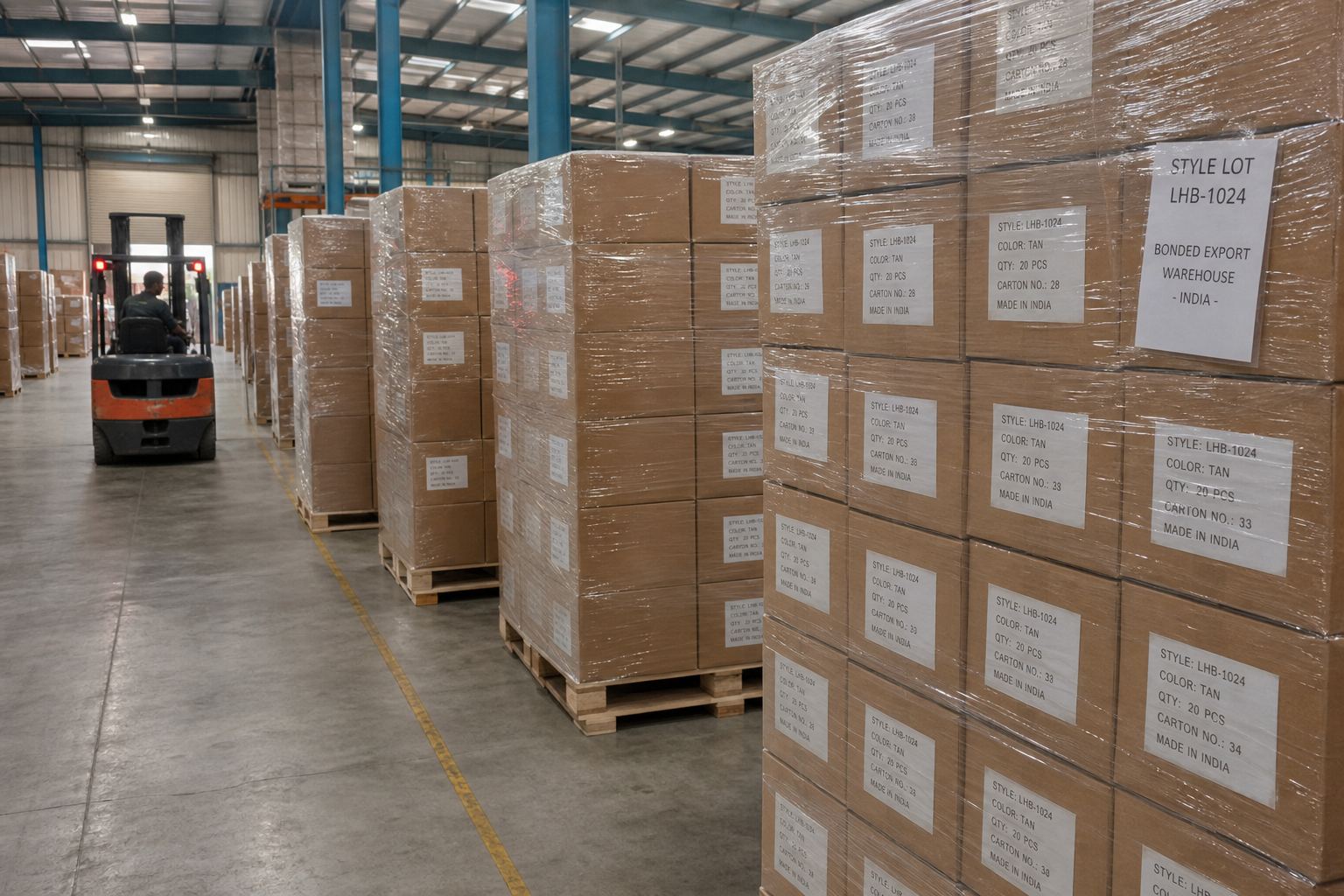
Container Loading Details
Export Tip
Premium leather bag cartons are often larger per unit than commodity packing due to individual dust bags, branded boxes, and reinforced board grades specified in circular packaging tenders. Container loading plans must be calculated against actual carton dimensions rather than commodity benchmarks. Figures below are indicative planning ranges only; confirm against actual carton specs.
Indicative Container Loading Benchmarks for Leather Bags (Pieces)
Swipe →
Data table — swipe horizontally on small screens
| Container Type | Approx. Pieces (Compact Styles) | Approx. Pieces (Bulky Styles) | Notes |
|---|---|---|---|
| 20-foot FCL | 1,200–3,500 pieces | 800–1,500 pieces | Premium retail boxing reduces count vs. bulk pack |
| 40-foot FCL | 2,500–6,000 pieces | 1,500–3,000 pieces | Confirm stacking plan with buyer's carton spec |
| 40-foot High Cube (HC) | 3,000–8,000 pieces | 2,000–4,000 pieces | Preferred for premium programmes with tall cartons |
| LCL consolidation | 100–1,500 pieces | Palletised master cartons | Common for pilot orders and development runs |
Shipping Methods
Export Tip
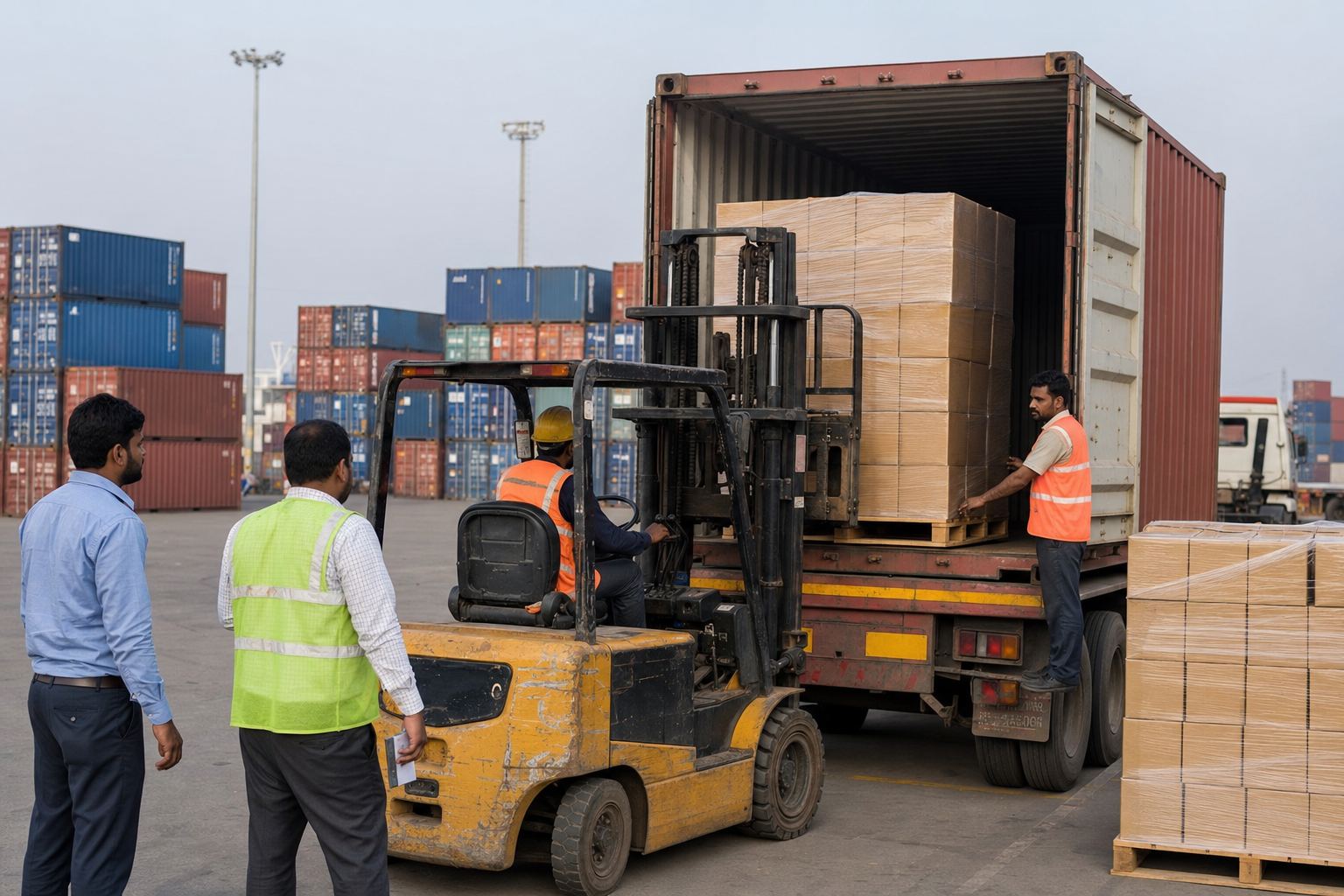
Sea freight remains the dominant shipping method for premium leather bag export from India, chosen for cost efficiency on recurring OEM programmes and wholesale distribution volumes. FOB is the Incoterm used on the majority of Indian leather goods shipments, with the exporter delivering to the named load port. Premium programmes often require pre-shipment inspection and documentation validation before goods are released to the freight forwarder — the evidence pack should be complete before container stuffing, not assembled after sailing.
Mundra, Nhava Sheva, Chennai, Tuticorin, and Kolkata are the primary load ports, chosen based on manufacturing cluster proximity and buyer routing preferences. Development samples and pilot-order quantities typically move by air courier to accelerate brand qualification timelines, while recurring programme volumes shift to FCL sea freight once the relationship is established.
Certifications
Compliance Notes
The certification stack for premium and sustainable leather bag export sits on top of mandatory IEC and CLE registration covered elsewhere in this cluster — see CLE Registration Benefits for Leather Bag Exporters for that foundation. At the premium tier, LWG tannery certification, REACH chromium VI compliance, ZDHC MRSL conformance, tanning-method certificates, and factory social audits form the core evidence pack a brand sourcing team requests before qualifying a new Indian supplier.
Certifications and Standards Relevant to Premium and Sustainable Leather Bag Positioning
Swipe →
Data table — swipe horizontally on small screens
| Certification / Standard | What It Verifies | Who Requests It |
|---|---|---|
| Leather Working Group (LWG) tannery rating | Environmental management, water/effluent treatment, traceability at the tannery | EU/US brand sourcing teams with sustainability sourcing policies |
| REACH chromium VI compliance | Hexavalent chromium below 3 mg/kg in leather components | Mandatory for all EU/UK-bound leather bags, regardless of tanning method |
| ZDHC MRSL conformance | Chemical inputs at tannery and factory stage screened against restricted substance list | Brand sourcing teams with formal chemical management programmes |
| Chrome-free / metal-free leather certificate | Confirms alternative (non-chromium) tanning process used | Sustainability-focused fashion and lifestyle brands |
| Vegetable-tanned leather certificate | Confirms plant-based tanning process and tannin source | Heritage and craft-positioned premium brands |
| CPSIA compliance | Lead, phthalates, and safety testing for children's bags | US buyers sourcing children's lines |
| FSC certification | Responsible forest sourcing for paper and board packaging | EU brands with circular packaging specifications |
| Factory social compliance audit | Labor practices, worker safety, working hours at the bag factory | OEM brand buyers as part of premium supplier qualification |
Buyer Requirements
Buyer Requirements
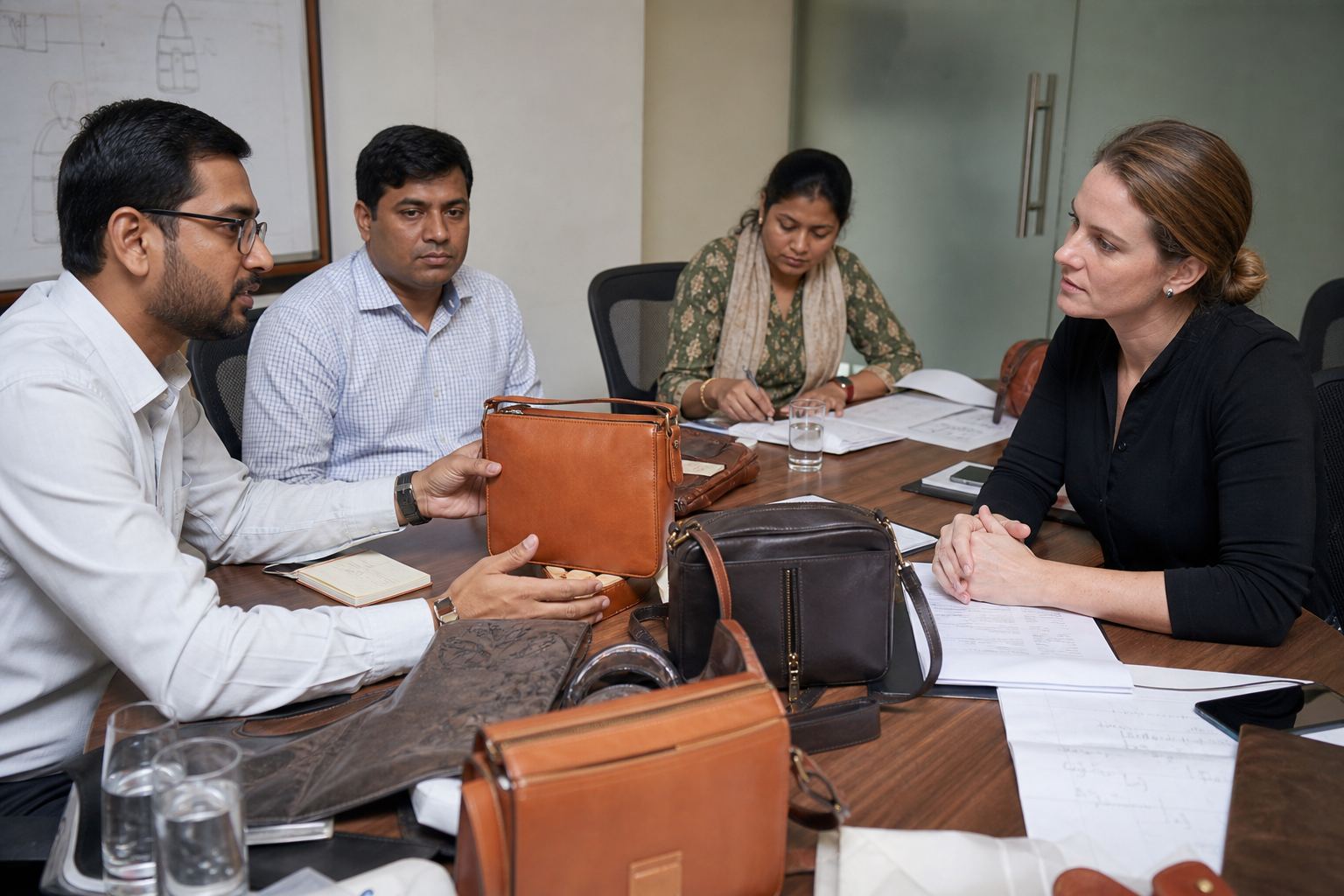
Premium brand buyers evaluate suppliers against a documentation evidence pack, not a sample alone. Before releasing a development PO, expect requests for named tannery identity and current LWG rating, REACH Cr(VI) test reports for the specific leather lot, ZDHC MRSL conformance evidence, factory social audit status, lot-traceability records, and circular packaging specification alignment.
Buyers will also verify IEC, CLE RCMC, export packaging capability, and Incoterm familiarity — the same baseline credentials commodity buyers check, but with far greater depth on chemical compliance and traceability. A supplier who cannot produce the evidence pack within 48 hours of an RFQ is typically deprioritized regardless of sample quality.
Country-wise Opportunities
Market Snapshot
Premium and sustainability-focused leather bag demand concentrates in a smaller set of markets than commodity export. For the full market-by-market entry strategy across all price tiers, see Best Countries for Indian Leather Bag Exports and Most Demanded Indian Leather Bags by Country.
Germany
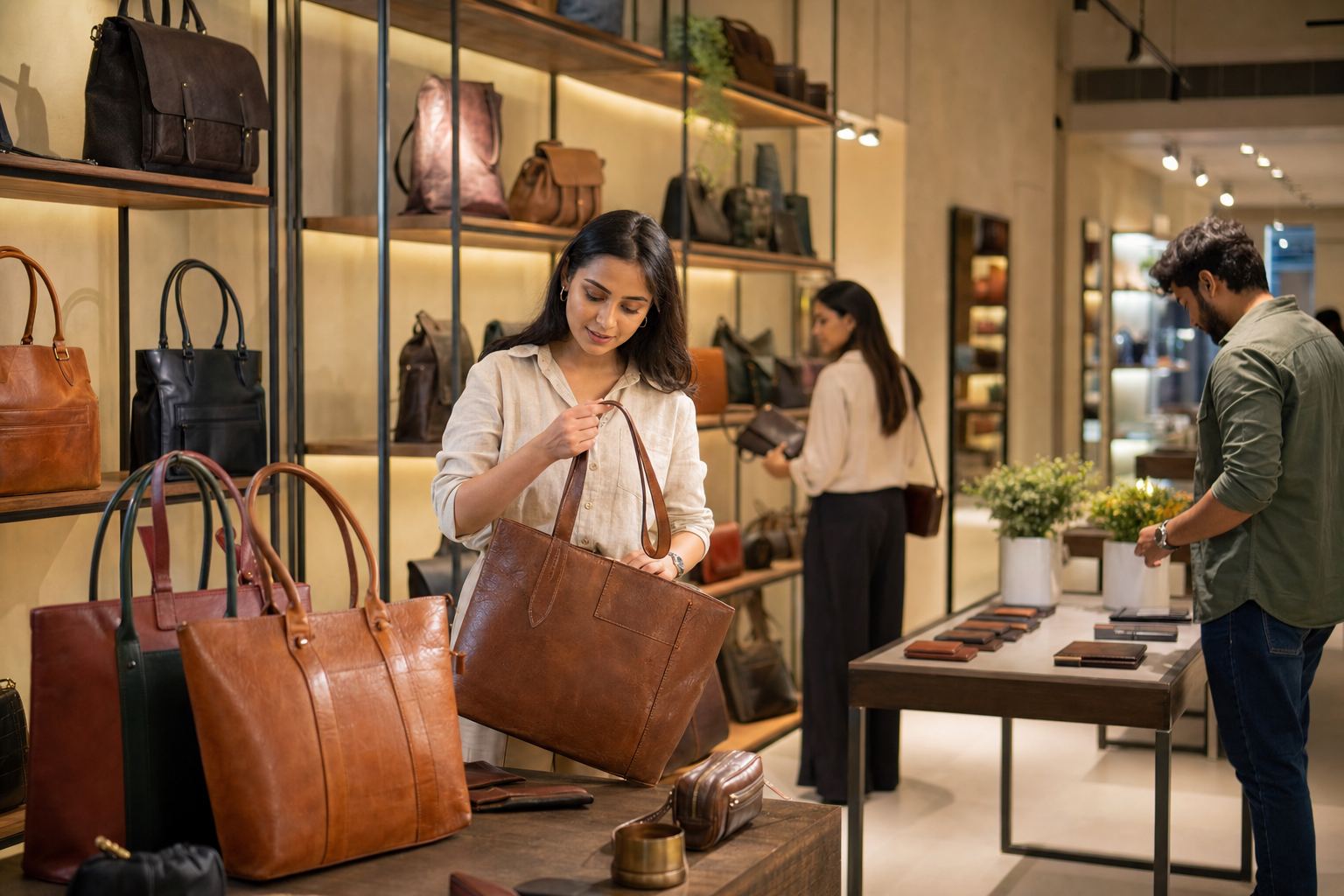
Germany is the most compliance-heavy and premium-rewarding market for Indian leather bag exports. REACH Cr(VI) documentation, LWG tannery sourcing, and ZDHC MRSL conformance are checked closely before a supplier relationship advances. Structured handbags, briefcases, and business bags see the strongest premium demand, with women's fashion totes and crossbody bags growing steadily in the sustainability-certified segment.
France
French fashion retail and department store demand for leather handbags rewards finish quality, color-matching precision, and design collaboration. Chrome-free and vegetable-tanned leather narratives resonate strongly with French buyers building sustainability product lines, and circular packaging specifications are increasingly common in French brand tenders.
USA
The USA offers scale across structured handbags, totes, briefcases, and a fast-growing e-commerce private-label channel for premium leather goods. CPSIA compliance is mandatory for children's bag lines. ESG-conscious sourcing policies among mid-size US lifestyle brands are driving growing demand for LWG-certified and chrome-free leather bags.
UK
UK retail chains and department stores sustain steady premium demand for leather handbags, briefcases, and travel bags. REACH-equivalent UK chemical compliance rules apply alongside standard commercial documentation. The UK's strong e-commerce and DTC brand ecosystem creates opportunities for Indian exporters serving smaller, sustainability-focused brands that need certified leather sourcing.
Japan
Japan is a quality-conscious market where premium positioning rewards finish consistency, hardware precision, and traceability documentation. Japanese buyers place exceptional emphasis on packaging presentation and carton quality — a well-finished individual carton with precise hang-tag placement signals production discipline that Japanese retail buyers read as a proxy for overall manufacturing quality.
Expert Insight: Certification Is an Investment, Not a Cost Line
Expert Insight Box
The commercial mistake we see most often in this segment is factories obtaining LWG or REACH certification and then continuing to pitch commodity-style, price-first outreach to the same wholesale buyer universe. Premium certification only pays off when paired with outreach specifically targeted at brand sourcing teams and OEM buyers who have a formal sustainability sourcing policy — a different audience, a different pitch, and a longer sales cycle than commodity export.
For leather bags specifically, traceability and documentation expectations from brand buyers are identical whether the article is a structured handbag, a briefcase, or a wallet under HS 4202. Exporters who build the evidence pack for bags early can extend the same tannery relationships and compliance infrastructure across their full leather goods portfolio, improving the return on certification investment.
Sourcing Checklist
Checklist
Buyer Checklist
Checklist
Exporter Checklist
Checklist
Compliance Checklist
Checklist
Compliance Notes
Common Buyer Mistakes
Common Mistakes Box
Exporters and brand buyers entering the premium and sustainability tier face predictable mistakes that structured preparation can prevent. The most common failures are documentation gaps, traceability shortfalls, and commercial misalignment between certification investment and buyer targeting.
Expert Insight: The Longer Sales Cycle Is the Point
Expert Insight Box
Patience is a strategic asset in this segment. A brand sourcing team's qualification process — factory audit, tannery verification, sample rounds, pilot order, then a recurring forecast commitment — routinely takes six to twelve months from first contact to a confirmed OEM programme. Exporters who budget for that timeline, rather than expecting premium-tier revenue on commodity-tier sales cycles, are the ones who sustain the certification investment long enough to see it pay off.
The leather bag segment rewards this patience with strong unit economics once a programme is established — repeat orders for proven styles require minimal re-qualification, pattern and tooling costs are already amortized, and the buyer's forecast visibility improves planning across leather purchasing, production scheduling, and shipment coordination.
Future Market Trends
Key Statistics
EU corporate sustainability due-diligence rules are pushing brand sourcing teams to formalize supplier certification requirements further, making LWG, REACH, and ZDHC baseline credentials rather than differentiators. Digital traceability platforms integrated with LWG protocols and ZDHC Gateway are enabling real-time supply chain verification, rewarding exporters who maintain clean, digital-ready lot records.
Chrome-free and vegetable-tanned leather demand is growing faster than LWG-rated tannery capacity in India, creating a supply bottleneck that early movers with established tannery relationships can exploit. Circular packaging specifications are expanding from EU luxury brands into mid-premium lifestyle brands, making FSC-certified and recycled-content packaging a standard RFQ line item rather than an optional upgrade.
US ESG-conscious sourcing policies are closing the compliance gap with EU standards for leather articles, particularly among DTC private-label brands sourcing crossbody bags and totes directly from Indian exporters. Exporters who build one evidence pack template and maintain it current across programmes will scale premium relationships faster than those assembling documentation ad hoc per buyer.
Conclusion
- Foundation first: How to Export Leather Bags from India and CLE Registration Benefits for Leather Bag Exporters.
- Buyer qualification: Source Leather Bags Directly from India and Find International Buyers for Leather Bags.
- Rank premium markets with Best Countries for Indian Leather Bag Exports and match LWG-ready SKUs in Most Demanded Indian Leather Bags by Country.
- Layer LWG and chrome-free claims onto the right silhouettes using Top Leather Bag Products Exported from India.
- Attach lot-level proofs using Leather Bag Export Documentation Checklist whenever LWG or REACH claims travel with the cargo.
- Structure certified bag programmes through Altus Exports — merchant exporter, product sourcing company in India, and global sourcing partner.
Sustainable and premium leather bag export from India is a distinct commercial track built on LWG tannery certification, chrome-free and vegetable-tanned leather options, REACH Cr(VI) and ZDHC chemical compliance, factory social audit readiness, traceability chain-of-custody, and circular packaging — rewarded with meaningfully higher FOB prices and multi-year OEM relationships rather than seasonal trial orders. Factories and merchant exporters who build the documentation evidence pack early hold a structural advantage over later entrants.
Altus Exports coordinates premium and sustainability-audited leather bag programmes for international brands as a merchant exporter in India and global sourcing partner, verifying tannery certification, factory audit status, and documentation before matching buyer requirements to Indian supply. Explore export products from India and find manufacturers in India for verified premium leather goods supply.