
Leather Bag Export Documentation Checklist for Indian Exporters
By Saurabh Mittal, Founder, Altus Exports
A document-by-document export checklist for Indian leather bag exporters under HS 4202 — IEC, GST, CLE RCMC, commercial invoice, packing list, shipping bill, bill of lading or air waybill, certificate of origin, REACH chromium VI reports, LWG documentation if claimed, marine or cargo insurance, and payment documents, with validity windows and common error patterns specific to handbag, tote, travel, and wallet shipments.

One mismatch across invoice, packing list, and bill of lading can hold a leather bag container for weeks — even when the product is perfect.
Document-by-document checklist for HS 4202: what each file must contain, when to prepare it, validity windows, and the error that most often triggers a hold. Not a prospecting guide (Find Buyers).
Bag-specific extras: REACH Cr(VI) for EU/UK, buyer-required chemical tests, LWG evidence when claimed, insurance + payment docs aligned to Incoterm. IEC/GST/CLE basics assumed (How to Export, CLE Benefits).
Altus Exports drafts the pack alongside production as merchant exporter so cargo and paperwork move together.
Key Takeaways
Summary Box
Executive Summary
Summary Box
This checklist is organized the way a customs officer or import broker actually reviews a leather bag shipment: foundational registrations first, then core commercial and transport documents, then category-specific certificates and test reports, then insurance and payment paperwork, then destination-market labelling detail.
Each document section below states what the document must contain, when in the production cycle to prepare it, its typical validity window, and the single most common error that causes delay for HS 4202 bag cargo specifically.
The underlying principle is simple: every document in the pack must agree with every other document, and with what a customs inspector sees when a carton is opened. Descriptions, quantities, weights, and HS codes that match across the invoice, packing list, bill of lading, shipping bill, and insurance certificate clear faster than paperwork reconciled only under sailing-week pressure.
Master Document Matrix: Leather Bag Export (HS 4202)
Swipe →
Data table — swipe horizontally on small screens
| Document | Prepared By | When Required | Typical Validity | Must Match On |
|---|---|---|---|---|
| IEC (DGFT) | Exporter | Before first shipment | Permanent; update on address/bank change | PAN, GST, shipping bill exporter field |
| GST registration + LUT | Exporter | Before first export invoice | Ongoing; LUT renewed annually | Export invoice series, shipping bill |
| CLE RCMC | Exporter via CLE | Before first commercial shipment | Annual renewal | Buyer due diligence, export benefit claims |
| Commercial invoice | Exporter | Every shipment | Per shipment | PO, HS code, lot, weights, value, Incoterm |
| Packing list | Exporter/factory | Every shipment | Per shipment | Invoice SKU, carton marks, net/gross weights |
| Shipping bill (ICEGATE) | CHA via exporter | Before port gate-in | Per shipment | Invoice HS code, qty, value, IEC |
| Bill of lading / AWB | Carrier/forwarder | At shipment | Per shipment | Package count, gross weight, consignee |
| Certificate of origin | Chamber / CLE | Most international buyers | Per shipment only | Invoice description, HS, origin |
| REACH chromium VI declaration + test report | Exporter + accredited lab | EU/UK-bound leather bags | Per lot; 6–12 months from test date | Lot on invoice, packing list, COA |
| LWG tannery certificate (if claimed) | Exporter / tannery | When certified-leather claim made | Annual; verify current rating | Invoice, hangtag, buyer spec |
| Marine / cargo insurance certificate | Exporter or buyer per Incoterm | CIF/CIP or buyer-requested cover | Shipment-specific | Invoice value, B/L, consignee |
| Payment documents (L/C, TT advice) | Bank / exporter | Per agreed payment term | Per transaction | Invoice value, buyer reference, PO |
Pre-Export Foundations: IEC, GST, and CLE RCMC
Compliance Notes
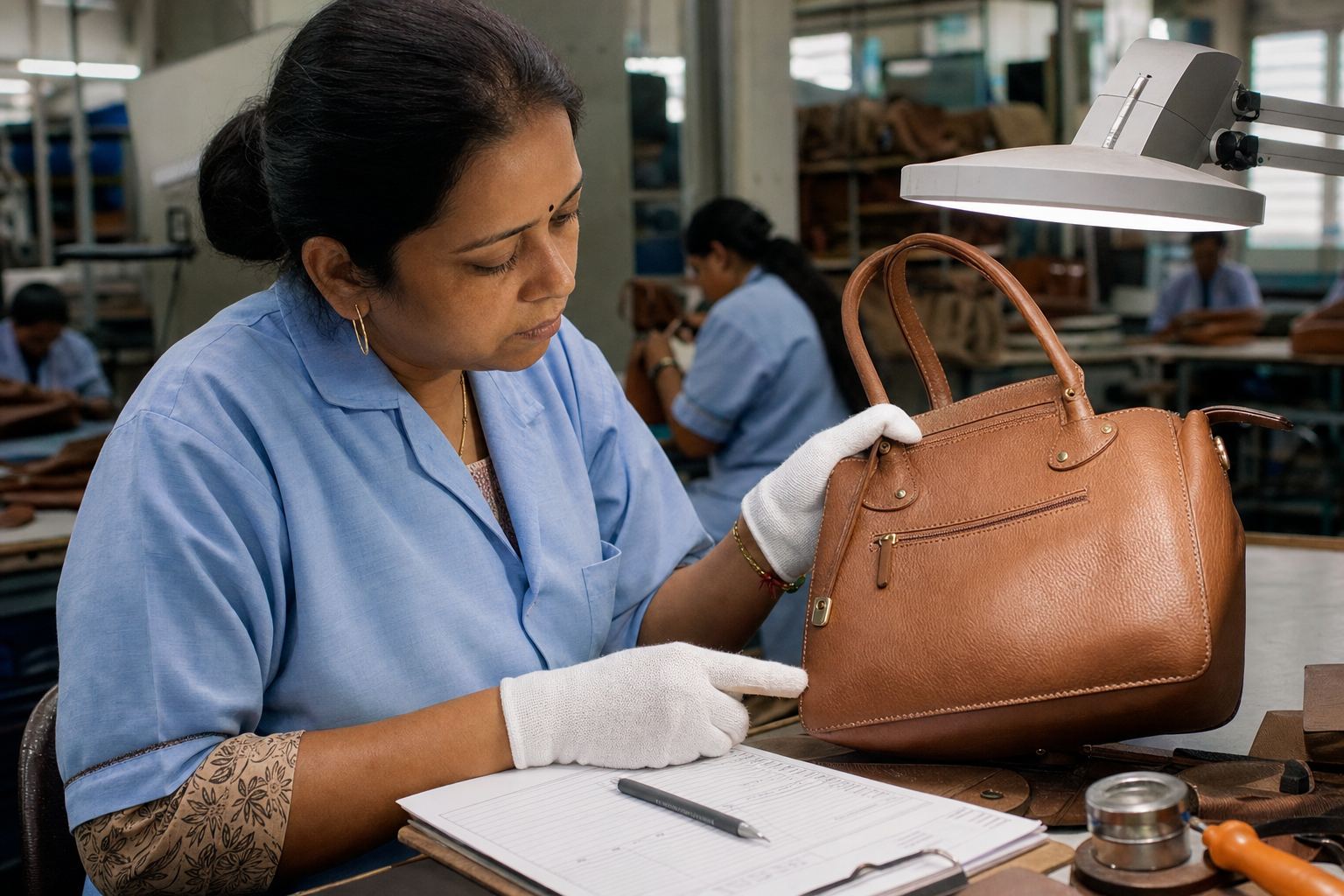
Before any shipment-specific document can be prepared correctly, three foundational registrations must be current. Skipping or half-completing any of these is the single most common reason first-time leather bag exporters cannot file a shipping bill on schedule.
Import Export Code (IEC) — DGFT
Every commercial leather bag export needs a valid Import Export Code issued by DGFT. IEC appears on the shipping bill and underpins legal standing as exporter of record. The IEC is permanent unless surrendered, but address, bank, and contact details must stay current — a mismatch between IEC records and GST records is a common and avoidable delay when a CHA files at cutoff.
Common IEC errors for HS 4202 exporters: filing under a lapsed IEC; using a manufacturer's IEC without a formal exporter-of-record arrangement; PAN name spelling inconsistent between IEC, GST, and bank AD code registration; and failing to update DGFT when the registered address moves between leather clusters.
Validity window: IEC does not expire annually, but verify status on the DGFT portal before every new buyer programme. Manufacturers without their own IEC often ship through a merchant exporter who holds a valid IEC — common in Kanpur, Chennai, and Kolkata clusters.
GST Registration and Export Invoice Series
GST registration must support zero-rated export supplies, typically through a Letter of Undertaking (LUT) where eligible. Maintain a dedicated export invoice series with correct HSN codes under Chapter 42 — principally 4202.21 (handbags with leather outer), 4202.29 (handbags with other outer surface), 4202.91/4202.99 (travel bags), and 4202.31/4202.32 (wallets).
Common GST errors: HSN code on the export invoice that does not match the shipping bill; using a domestic invoice series for export supplies; LUT not filed or expired for the financial year; and place-of-supply fields that confuse a merchant exporter's billing address with the factory dispatch location.
Validity window: LUT is filed annually for each financial year — confirm renewal before the first export invoice of April. GST registration suspension for non-filing blocks shipping bill filing entirely.
CLE Registration-cum-Membership Certificate (RCMC)
Council for Leather Exports (CLE) is the sector-specific registration body for leather bags and leather goods. CLE RCMC confirms exporter standing in the leather sector and is the credential most international bag buyers verify first. RCMC must be renewed annually; a lapsed RCMC blocks export benefit claims and triggers buyer due-diligence failures.
Common CLE RCMC errors: quoting an expired membership number on the proforma invoice; manufacturer shipping under an exporter's RCMC without a documented relationship; product category on RCMC not covering handbags when that is the actual export line.
Validity window: annual renewal — verify current status on the CLE portal before accepting a delivery commitment. See CLE Registration Benefits for Leather Bag Exporters for the full process.
Commercial Invoice: Field-by-Field Requirements
The commercial invoice is where most leather bag documentation disputes originate, because it carries material composition, construction, and value claims buyers and customs rely on most heavily.
Commercial Invoice Field Checklist for Leather Bags
Swipe →
Data table — swipe horizontally on small screens
| Field | Required Content | Common Error | Cross-Check Against |
|---|---|---|---|
| Exporter block | Legal name, IEC, GSTIN, address | IEC name ≠ GST name | Shipping bill, DGFT portal |
| Buyer block | Legal name, full address | Warehouse entity omitted | B/L consignee |
| Line description | Material, style, colour, SKU | Generic "leather bags" | Physical hangtag, packing list |
| HS code | 4202.21 / .29 / .11 / .31 | Wrong surface-material code | Shipping bill, COO |
| Lot number | Matches test report batch | Lot assigned after packing | REACH COA, packing list |
| Incoterm | FOB, CIF, etc. | Incoterm ≠ B/L freight terms | Sales contract, B/L, insurance |
| Weights | Net and gross per agreement | Estimated weights | Packing list, CFS weighbridge |
Exporter, buyer, and reference fields
Exporter legal name, registered address, IEC, GSTIN, and CLE membership number where buyers request it; buyer legal name and full delivery address; invoice number and date from the dedicated export series; purchase order reference and buyer style or SKU code; payment terms (advance, L/C, net 30) and Incoterm (FOB Nhava Sheva, CIF Hamburg); currency fixed before production.
Common error: consignee name on the invoice differs from the consignee on the bill of lading because the buyer's warehouse entity is separate from the buying company.
Product description and HS classification lines
Each line item must state product type, outer-surface material, dimensions or size category, colour, hardware finish, and construction — "women's handbag, full-grain cow leather outer, polyester lining, magnetic closure, SKU LB-4421, black" rather than "leather bags assorted." Declare the correct eight-digit HS/ITC code: 4202.21 for handbags with leather outer; 4202.29 when outer surface is plastic or textile; 4202.11 for briefcases/suitcases with leather outer; 4202.31 for wallets; 4202.91 for soft travel bags and backpacks with leather outer.
Common error: classifying a PU-coated bag as 4202.21 when the outer surface is not leather under customs definitions; using 4202.21 for a nylon backpack whose outer surface is predominantly textile.
Quantity, weight, value, and origin fields
Quantity in pieces per SKU; unit price and extended line total; invoice total matching the PO; net weight and gross weight per line or per shipment; country of origin (India); lot or batch number matching test reports and packing list carton marks; signature or digital authorization.
Common error: invoice total does not equal sum of line items because hangtag or tooling charges were added on a separate undocumented line; gross weight estimated rather than weighed.
Packing List: Carton-Level Traceability
The packing list translates invoice totals into physical units — master cartons, inner polybags, dust bags, and assortment configurations. List carton number, style/SKU, colour, quantity per carton, net and gross weight per carton, total carton count, carton dimensions if requested, and shipping marks matching physical cartons.
For assortment cartons carrying more than one SKU, break down exact quantities per SKU inside that carton rather than summarizing at pallet level. A buyer's warehouse allocating stock to different retail accounts needs to know which carton holds which style without opening every box.
Common packing list errors for HS 4202: carton count on the packing list does not match the bill of lading package count; gross weight inconsistent with unit weight multiplied by quantity; shipping marks using an old style code; mixed-SKU cartons summarized at pallet level; dust-bag weight omitted from gross weight.
Packing List Cross-Reference Fields
Swipe →
Data table — swipe horizontally on small screens
| Field | Must Match | Typical Validity | Hold Trigger If Wrong |
|---|---|---|---|
| Carton count | B/L, shipping bill | Per shipment | Port terminal tally mismatch |
| Gross/net weight | Invoice, shipping bill | Per shipment | Customs examination |
| SKU per carton | Invoice line items | Per shipment | Buyer warehouse rejection |
| Shipping marks | Physical carton print | Per shipment | Wrong stock delivered |
| Lot number | Invoice, test reports | Per lot | REACH traceability failure |
Export Shipping Bill: ICEGATE Filing
The shipping bill is filed electronically through ICEGATE by your Customs House Agent (CHA) before cargo gate-in at port. It must mirror the commercial invoice on exporter IEC, buyer name, HS code, quantity, value, and port of loading. Primary load ports for leather bag programmes include Mundra, Nhava Sheva, Chennai, Tuticorin, and Kolkata.
Common shipping bill errors: HS code inconsistent with invoice; quantity rounded differently than the invoice; value declared in a different currency; exporter IEC valid but AD code not registered for the port; scheme notification references attached to the wrong HSN line.
Validity window: per shipment and sailing — not reusable. File early enough to allow customs examination if triggered, but not so early that invoice amendments require costly correction.
Bill of Lading and Air Waybill
Ocean shipments receive a bill of lading (original, telex release, or eBL per agreed terms); air shipments for samples and urgent replenishment receive an air waybill. The transport document must show shipper, consignee, notify party, port of loading, port of discharge, container number (FCL) or consolidation reference (LCL), package count, gross weight, and goods description consistent with the invoice.
Common bill of lading errors: container number transcribed incorrectly; freight prepaid/collect terms inconsistent with Incoterm; package count reflects pallets rather than cartons; notify party missing or spelled differently from the buyer's import broker record; goods description so generic that the destination broker cannot link it to the import entry.
Validity window: per shipment. For original B/L shipments, document release follows agreed payment terms — confirm whether telex or eBL is acceptable before sailing.
Certificate of Origin
A certificate of origin confirms Indian manufacture for the buyer's duty assessment. Non-preferential COO from the local chamber of commerce or through CLE is standard for most leather bag destinations. If shipping under a trade agreement where India receives preferential treatment, verify current FTAs and rules of origin with your chamber before claiming preferential COO.
Common COO errors: product description differs from the invoice; HS code on the COO does not match the invoice eight-digit line; COO issued before the invoice is finalized; Gulf-bound shipments missing required attestation when the buyer's contract specifies it.
Validity window: per shipment only — each new shipment requires its own application. Issue close to the shipping date; certificates dated weeks before sailing with quantities that changed during final packing create reconciliation problems.
REACH Declarations and Chemical Compliance
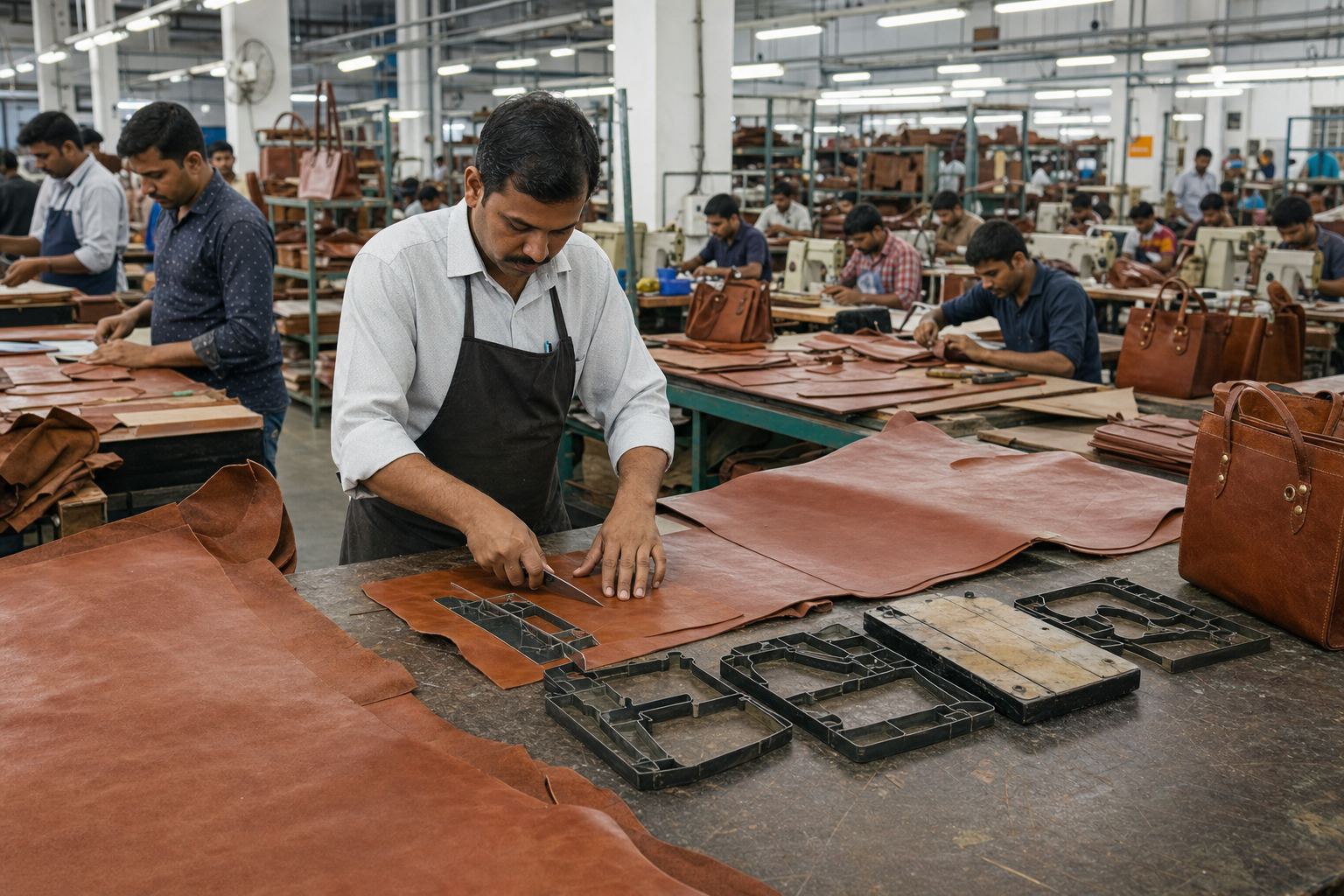
EU and UK markets regulate chromium VI in leather articles under REACH. Every leather bag with leather components entering the EU or UK needs a chromium VI test report from an accredited laboratory for each production lot, plus a written compliance declaration referencing the test result. Vegetable-tanned leather is not exempt unless a buyer explicitly accepts an alternative evidence standard in writing.
Beyond chromium VI, EU buyers frequently require AZO dye testing, formaldehyde limits for coated leather, and heavy-metal panels for bags with metal hardware, zippers, and chain straps.
Common REACH errors: test report dated more than 12 months before shipment with no buyer waiver; lot number on the test report does not match the invoice lot; laboratory not accredited to ISO 17025; declaration signed by sales staff without technical authority; test sample taken from a development swatch rather than bulk production.
REACH and Chemical Test Report Validity (Indicative)
Swipe →
Data table — swipe horizontally on small screens
| Test / Declaration | Applies To | Typical Validity Window | Most Common Error |
|---|---|---|---|
| Chromium VI (REACH) | EU/UK leather bags | 6–12 months; must cover arrival | Expired report at destination customs |
| AZO dyes / restricted amines | EU/UK; many US retail buyers | 6–12 months per lot/colour | Colour variant untested |
| Formaldehyde | Coated/finished leather bags | 6–12 months per lot | Finish changed after testing |
| Heavy metals (Pb, Cd, etc.) | Bags with metal hardware | 6–12 months per lot | Hardware supplier changed mid-lot |
| Written REACH declaration | EU/UK every shipment | References current lot test | Generic template, no lot reference |
LWG Documentation When Certified-Leather Claims Are Made
Leather Working Group (LWG) tannery certification is not mandatory for every leather bag shipment — but if an exporter, hangtag, or sales sheet claims LWG-rated or certified leather, the shipment document pack must include a current LWG certificate from the named tannery, with rating tier matching what is represented.
Common LWG errors: citing an expired LWG certificate from a prior season; claiming LWG on a hangtag while bulk production used leather from an uncertified tannery; rating tier on the certificate (bronze, silver, gold) does not match marketing language; tannery name on the certificate differs from the tannery named on the invoice or product sheet.
Validity window: LWG tannery audits are typically annual. Verify the certificate issue date and tannery identity before printing hangtags or submitting documentation to a premium buyer.
Insurance Documentation
Marine or cargo insurance documentation must align with the Incoterm on the commercial invoice. Under CIF or CIP, the exporter arranges insurance and provides a certificate or policy schedule naming the buyer or their bank as beneficiary where required. Under FOB, insurance is typically the buyer's responsibility — but many buyers still request proof of insurable interest or confirmation that goods were insured during inland transit to port.
The insurance certificate must reference the same shipment identity as the bill of lading: invoice number, vessel or flight reference, container number where applicable, insured value (usually invoice value plus agreed percentage), and coverage type (ICC A, B, or C per contract).
Common insurance errors for bag shipments: insured value on the certificate lower than the commercial invoice value, creating a claims shortfall; policy effective date after the vessel sailed; beneficiary name inconsistent with the L/C applicant; and CIF invoice stating insurance included but no certificate provided to the buyer's bank.
Insurance Documentation by Incoterm (Indicative)
Swipe →
Data table — swipe horizontally on small screens
| Incoterm | Who Arranges Cover | Document Required | Common Error |
|---|---|---|---|
| FOB | Buyer (typically) | Optional inland-transit proof from exporter | Exporter assumes buyer arranged cover; gap in transit |
| CIF / CIP | Exporter | Insurance certificate or policy schedule | Certificate value < invoice value |
| L/C under CIF | Exporter | Certificate naming bank as beneficiary | Beneficiary name ≠ L/C applicant |
| Sample AWB shipments | Exporter or buyer per agreement | Air cargo insurance note | High-value sample shipped uninsured |
Payment Documents
Payment documentation must match the commercial invoice and the agreed payment structure. For letter-of-credit shipments, the exporter prepares documents that comply with L/C terms — commercial invoice, packing list, bill of lading, certificate of origin, insurance certificate (if CIF), and any additional certificates the L/C specifies — and presents them through the negotiating bank before the expiry date.
For advance payment or open-account shipments, retain wire transfer advice, SWIFT confirmation, or buyer payment acknowledgment that references the invoice number and PO. For part-advance structures, document the advance receipt and balance due clearly on the invoice and in internal records for RBI/FEMA compliance.
Common payment document errors: L/C requires "full set of original bills of lading" but telex release was issued; invoice amount exceeds L/C tolerance without an amendment; certificate of origin dated after the L/C latest shipment date; and payment received in a different currency than the invoice without a documented exchange agreement.
Payment Document Checklist by Payment Term
Swipe →
Data table — swipe horizontally on small screens
| Payment Term | Documents to Retain | Validity / Timing | Common Error |
|---|---|---|---|
| Letter of credit | L/C copy, compliant doc set, bank negotiation receipt | Before L/C expiry and latest shipment date | B/L clause mismatch with L/C |
| Advance TT | SWIFT advice, invoice, PO | Before production release | Advance without PO reference |
| Net 30 open account | Invoice, B/L, proof of delivery | Per agreed credit terms | No credit insurance for new buyer |
| Part advance / balance on B/L | Advance SWIFT + balance invoice | Per contract schedule | Balance invoice ≠ B/L release terms |
Physical Test Reports and Quality Documentation
Chemical compliance is necessary but not sufficient — buyers also expect physical performance evidence: seam strength, tear resistance, colour fastness, flex resistance at stress points, hardware pull strength, and zip cycle testing. Premium and retail programmes add a pre-shipment inspection report (PSI) with AQL sampling against the approved golden sample.
Common physical test report errors: test report references an earlier season's style number; colour fastness tested on swatch but not finished bag; hardware pull test omitted when buyer spec requires it; PSI on pre-production sample while bulk used a different leather batch.
Validity window: per lot, aligned with the same lot number on the invoice and packing list. Physical tests typically remain valid for 6–12 months if material and construction are unchanged.
Destination-Market Labelling
Labelling is documentation rendered in physical form on hangtags, inside labels, dust bags, and retail packaging. EU rules require fibre/material composition disclosure; the USA expects country-of-origin marking under FTC rules; Japan requires Japanese-language care and material labels for retail distribution.
Common labelling errors: "Genuine leather" claim on a bag with undisclosed PU trim; country of origin on hangtag but absent from sewn-in label; care symbols that do not match actual finish; barcode linked to last season's SKU.
Labelling Compliance by Destination (Indicative)
Swipe →
Data table — swipe horizontally on small screens
| Market | Mandatory Label Elements | Review Point | Common Error |
|---|---|---|---|
| EU / UK | Material composition, origin, care | Per SKU before bulk print | Chromium claim without test backup |
| USA | Country of origin, fiber/content if textile components | Per SKU before bulk print | FTC origin mark missing on sewn label |
| Japan | Japanese-language care and material | Per SKU; buyer translation approval | English-only care label |
| UAE / Gulf | Arabic retail sticker where required | Per retailer spec | Sticker SKU ≠ invoice SKU |
| Australia | Country of origin; ISPM 15 on wood pallets | Per SKU + per shipment | Fumigation mark missing on pallets |
HS 4202 Classification for Leather Bags
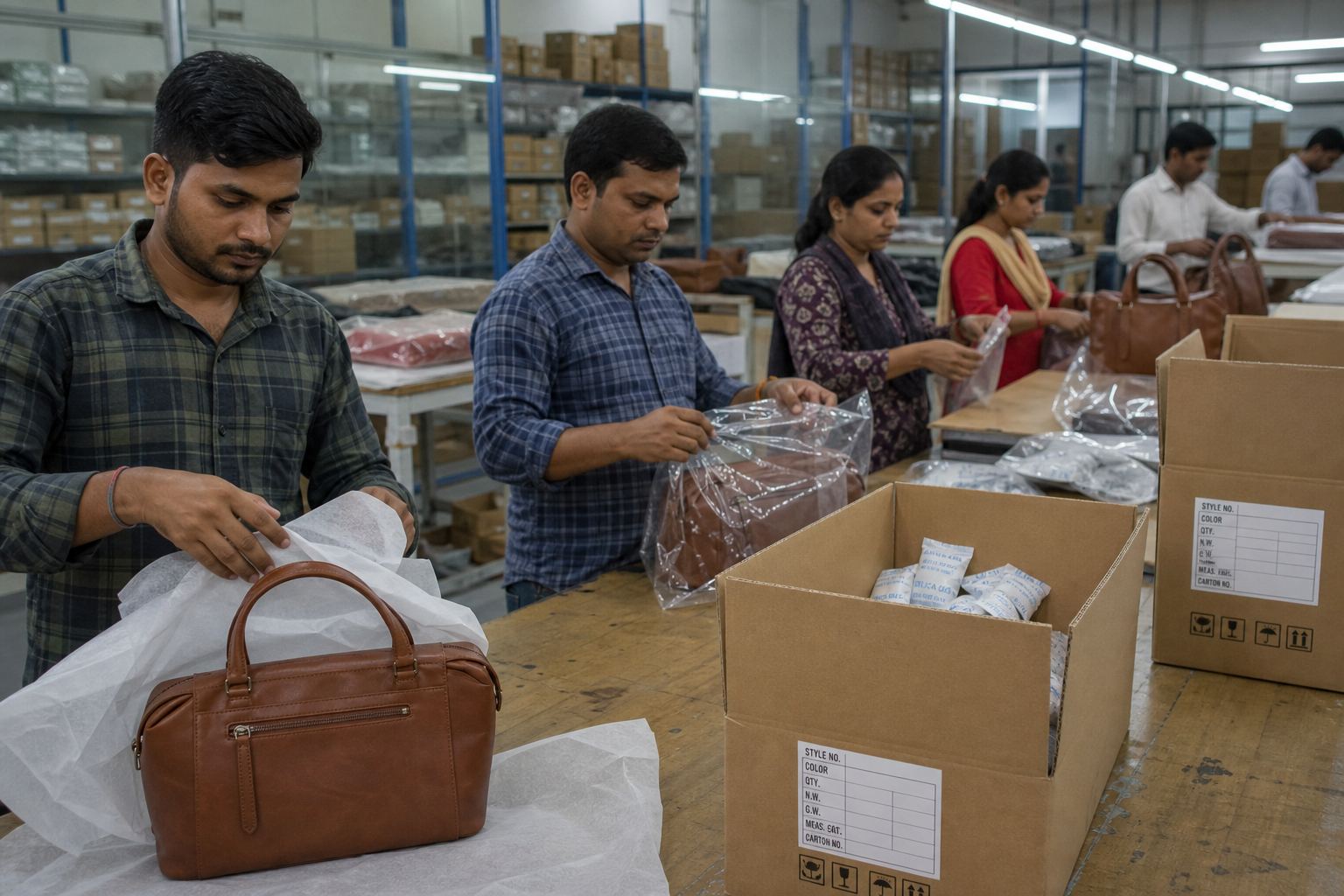
Leather bags and small leather goods export under HS heading 4202. Classification depends on product type and outer-surface material. Misclassification is one of the most common triggers for a customs query at both origin and destination.
Confirm the exact eight-digit national tariff line with your CHA and the buyer's import broker before invoicing.
HS 4202 Sub-Headings for Indian Leather Bag Exports
Swipe →
Data table — swipe horizontally on small screens
| HS Code | Description | Typical Products | Classification Note |
|---|---|---|---|
| 4202.11 | Trunks, suitcases, attaché cases, briefcases — leather outer | Structured briefcases, vanity/attaché cases | Outer surface must be leather or composition leather |
| 4202.19 | Trunks, suitcases, attaché cases, briefcases — other materials | Textile or hard-shell luggage/cases | Use when outer is not leather |
| 4202.21 | Handbags — leather or composition leather outer | Totes, satchels, crossbody, clutches | Most common Indian export handbag line |
| 4202.29 | Handbags — other outer materials | Canvas/nylon bags with leather trim | Leather trim alone does not make 4202.21 |
| 4202.31 | Articles normally carried in the pocket or handbag — leather outer | Wallets, card holders, key cases | Small leather goods (SLG) |
| 4202.32 | Pocket / handbag articles — plastics or textile outer | Fabric wallets | Confirm outer material |
| 4202.91 | Other containers — leather outer | Soft travel bags, backpacks, sports bags, many soft laptop bags | Not wallets (use 4202.31) and not briefcases (use 4202.11) |
| 4202.99 | Other containers — other materials | Textile/plastic travel and sport bags | Match outer-surface material carefully |
Document Preparation Timeline
Documentation should track the manufacturing sequence, not lag behind it. Lot discipline at cutting — assigning a traceable lot number and carrying it through stitching, finishing, and packing — allows test reports, invoice lines, and packing list carton marks to reference the same lot.
Document Preparation Timeline by Production Stage
Swipe →
Data table — swipe horizontally on small screens
| Production Stage | Documents to Initiate | Typical Lead Time | Risk If Delayed |
|---|---|---|---|
| PO confirmation | Draft invoice template, labelling spec, HS confirmation | Same week as PO | Wrong HS on first invoice revision |
| Leather inbound / cutting | Lot number assignment, leather batch record | Day 1 of production | Untraceable REACH lot |
| Assembly / stitching complete | Book REACH, AZO, physical lab tests | 5–10 working days for lab | Sailing-week test crunch |
| Pre-pack QC pass | Draft packing list, carton mark approval | 1–2 days before pack | Carton mark mismatch |
| Bulk pack complete | Final invoice, packing list, COO application | 2–5 days for COO | Missed cutoff |
| Insurance + payment docs | Insurance certificate, L/C doc presentation | 1–3 days before sailing | Bank rejection, release delay |
| Container gate-in | Shipping bill filed, B/L draft review | 1–2 days before gate-in | Examination hold |
| Vessel departure | Pre-alert full pack to buyer broker | Within 24 hours | Destination unprepared |
Common Error Patterns by Document
Most customs holds on leather bag shipments trace to repeatable documentation errors, not product quality failures.
Documentation Error Pattern Matrix (HS 4202)
Swipe →
Data table — swipe horizontally on small screens
| Document | Error Pattern | Who Catches It | Typical Resolution Cost |
|---|---|---|---|
| IEC / GST | HSN mismatch between invoice and shipping bill | CHA at filing | Amendment delay, missed sailing |
| CLE RCMC | Expired membership cited on invoice | Buyer compliance team | PO hold until renewed |
| Commercial invoice | Generic description, wrong HS sub-heading | Destination customs | Classification query, demurrage |
| Packing list | Carton count ≠ B/L package count | Port terminal | B/L amendment, storage fees |
| Shipping bill | Value/qty rounding differs from invoice | Indian customs | Examination, re-filing |
| Bill of lading | Freight terms ≠ Incoterm | Destination broker | Release delay |
| Insurance certificate | Insured value < invoice value | Buyer bank / broker | L/C discrepancy, claims risk |
| Payment / L/C docs | B/L clause mismatch with L/C | Negotiating bank | Document rejection |
| REACH test report | Expired or wrong lot at arrival | EU/UK customs / buyer | Re-test, return, or destroy |
| LWG certificate | Expired or wrong tannery vs claim | Premium buyer QC | Lot rejection, brand risk |
Market Size & Industry Overview
Key Statistics
India's leather bag exports run under HS heading 4202, with manufacturing clusters in Kanpur, Kolkata, Delhi-NCR, Ambur–Ranipet–Chennai (Tamil Nadu), Agra, Jaipur, Hyderabad. Every document in this checklist supports one of two functions: proving the transaction (invoice, packing list, bill of lading, payment docs) or proving compliance with destination rules (certificates, test reports, labelling, insurance).
For product-by-product breakdown — handbags, totes, messenger bags, backpacks, briefcases, and wallets — see Top Leather Bag Products Exported from India. This checklist focuses on documentation each category shares and the deltas each introduces.
India Leather Bag Documentation Landscape (Indicative)
Swipe →
Data table — swipe horizontally on small screens
| Dimension | Detail | Relevance to Documentation |
|---|---|---|
| HS classification | 4202.21 handbags; 4202.11 briefcases/cases; 4202.31 wallets; 4202.91 soft travel/backpacks | Determines heading on invoice and shipping bill |
| Filing system | Export shipping bill through ICEGATE | Filed by CHA before vessel departure |
| Regulatory anchor | CLE RCMC | Supplier credibility proof on documentation |
| EU/UK compliance | REACH chromium VI test report + declaration | Mandatory for EU/UK-bound shipments |
| Premium claims | LWG tannery certificate when claimed | Required only when certified-leather claim is made |
| Load ports | Mundra, Nhava Sheva (JNPT), Chennai, Tuticorin, Kolkata | Port of loading on B/L and shipping bill |
Export Statistics
Key Statistics
Documentation volume scales with export volume and destination mix — a shipment split across multiple EU countries generates more certificate cross-referencing than a single-market USA shipment of the same value. CLE and DGCIS statistics show the USA, Germany, the UK, Italy, France, and the UAE as leading destinations for leather bags; each carries distinct documentation emphasis.
Documentation Emphasis by Leading Destination
Swipe →
Data table — swipe horizontally on small screens
| Destination | Core Documents | Category-Specific Additions |
|---|---|---|
| USA | Invoice, packing list, B/L, COO | CPSIA for children's bags; FTC origin labelling |
| Germany / EU | Invoice, packing list, B/L, COO | REACH Cr VI + AZO; LWG if certified-leather claim |
| UK | Invoice, packing list, B/L, COO | UK REACH-equivalent chemical compliance |
| UAE | Invoice, packing list, B/L, COO | Attested COO for some buyers |
| Italy / France | Invoice, packing list, B/L, COO | Chemical compliance; brand quality audits |
Import Statistics
Key Statistics
A document pack that satisfies Indian customs does not automatically satisfy the destination import broker. EU and UK require REACH chromium VI evidence at a regulatory level; the USA requires CPSIA testing for children's products; Gulf and African markets may require attested certificates of origin.
For market-by-market entry strategy, see Best Countries for Indian Leather Bag Exports and Most Demanded Indian Leather Bags by Country.
Destination Import Documentation Requirements
Swipe →
Data table — swipe horizontally on small screens
| Destination | Additional Import Requirement | Typical Lead Time |
|---|---|---|
| EU / Germany / France | REACH chromium VI test report + declaration | Lab testing: 5–10 working days |
| UK | UK REACH-equivalent chemical compliance | Lab testing: 5–10 working days |
| USA (children's bags) | CPSIA-aligned test report | Lab testing: 5–10 working days |
| Gulf (attested COO) | Chamber or embassy attestation | 3–7 working days beyond standard COO |
| Australia | Biosecurity documentation; ISPM 15 on wood pallets | Per shipment packaging review |
Product Categories / Variants
Summary Box
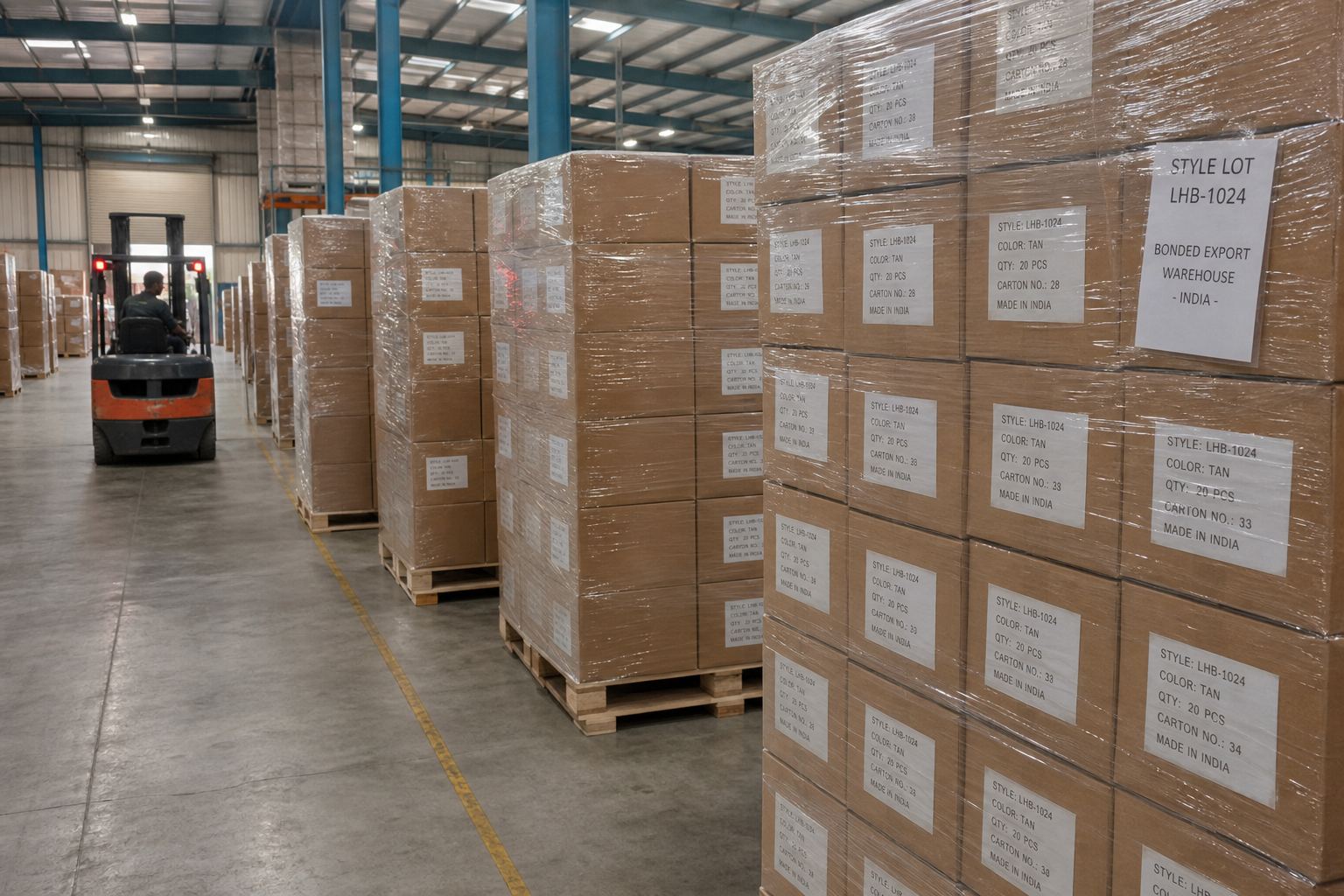
Documentation requirements differ modestly by product category. Laptop bags may need drop-test reports; wallets ship in higher piece counts per carton, making packing-list precision especially important; children's bags need CPSIA documentation for US shipments.
Category-Specific Documentation Additions
Swipe →
Data table — swipe horizontally on small screens
| Category | Typical HS Sub-Heading | Documentation Addition Beyond Core Set |
|---|---|---|
| Women's handbags / totes | 4202.21 | REACH for EU/UK; LWG if certified-leather claim |
| Men's messenger / crossbody | 4202.21 | REACH for EU/UK |
| Briefcases / laptop bags | 4202.11 / 4202.21 | Drop test for corporate buyers |
| Travel bags / duffels (soft) | 4202.91 / 4202.99 | Confirm outer material for correct sub-heading |
| Wallets / card holders | 4202.31 | Higher piece-count packing list discipline |
| Children's bags | 4202.21 / 4202.31 | CPSIA test report mandatory for US shipments |
Manufacturing Overview
Export Tip
Documentation preparation should track the manufacturing sequence. Lot discipline at cutting — assigning a traceable lot number and carrying it through stitching, edge finishing, hardware fitting, and packing — allows test reports, invoice lines, and packing list carton marks to reference the same lot.
Sample the finished lot for chemical or physical testing at the pre-pack stage, once construction is complete but before cartons are sealed — testing after palletization adds delay precisely when schedule slack is lowest before vessel cutoff.
Pricing Analysis
Buyer Tip
Documentation cost is a real, budgetable line item. Laboratory testing fees, chamber fees for certificates of origin, CHA filing fees, insurance premiums, and embassy attestation fees should be quoted into FOB pricing explicitly rather than absorbed as surprise overhead.
Indicative Documentation and Compliance Cost Components
Swipe →
Data table — swipe horizontally on small screens
| Document / Service | Typical Cost Driver | Who Typically Arranges It |
|---|---|---|
| REACH chromium VI test report | Per-lot laboratory fee | Exporter via accredited lab |
| AZO dye / heavy-metal panel | Per-lot, per-colour laboratory fee | Exporter via accredited lab |
| CPSIA-aligned test report | Per-lot laboratory fee | Exporter via accredited lab |
| Certificate of origin | Chamber processing fee | Exporter via chamber or CLE |
| Marine/cargo insurance | Percentage of insured value | Exporter (CIF) or buyer (FOB) |
| CHA / shipping bill filing | Per-shipment CHA fee | Exporter via CHA |
MOQ Analysis
Buyer Tip
Documentation cost does not scale linearly with order size: a per-lot laboratory test report costs roughly the same whether the lot is 300 bags or 3,000 bags. Trial orders at 100–300 pieces should factor documentation cost into per-unit pricing more heavily than standard programmes at 300–1,000 pieces.
Documentation Cost Sensitivity by Order Size (Indicative)
Swipe →
Data table — swipe horizontally on small screens
| Order Size (Pieces) | Documentation Cost per Unit (Relative) | Notes |
|---|---|---|
| 200–500 (trial order) | Highest per-unit documentation cost | Fixed test and certificate fees spread across small lot |
| 800–2,000 (standard programme) | Moderate per-unit documentation cost | Typical MOQ tier for export factories |
| 3,000+ (recurring/retail chain) | Lowest per-unit documentation cost | Fixed fees spread across largest lot |
Packaging Standards
Export Tip
Packaging-related documentation is easy to overlook until a destination customs officer asks for it. Master carton markings must match the packing list exactly; wood-based pallets need ISPM 15 fumigation marking for biosecurity-strict destinations.
Packaging-Related Documentation Requirements
Swipe →
Data table — swipe horizontally on small screens
| Packaging Element | Documentation Requirement | Common Error |
|---|---|---|
| Dust bag / polybag | SKU label, origin marking matching invoice | SKU on dust bag ≠ invoice line |
| Master carton | Style, colour breakdown, weight — matching packing list | Carton weight ≠ packing list figure |
| Wood pallets | ISPM 15 fumigation stamp | Missing mark rejected at biosecurity destinations |
| Hangtag / care label | Composition, care per destination rules | Generic labelling not adapted to market |
Container Loading Details
Export Tip
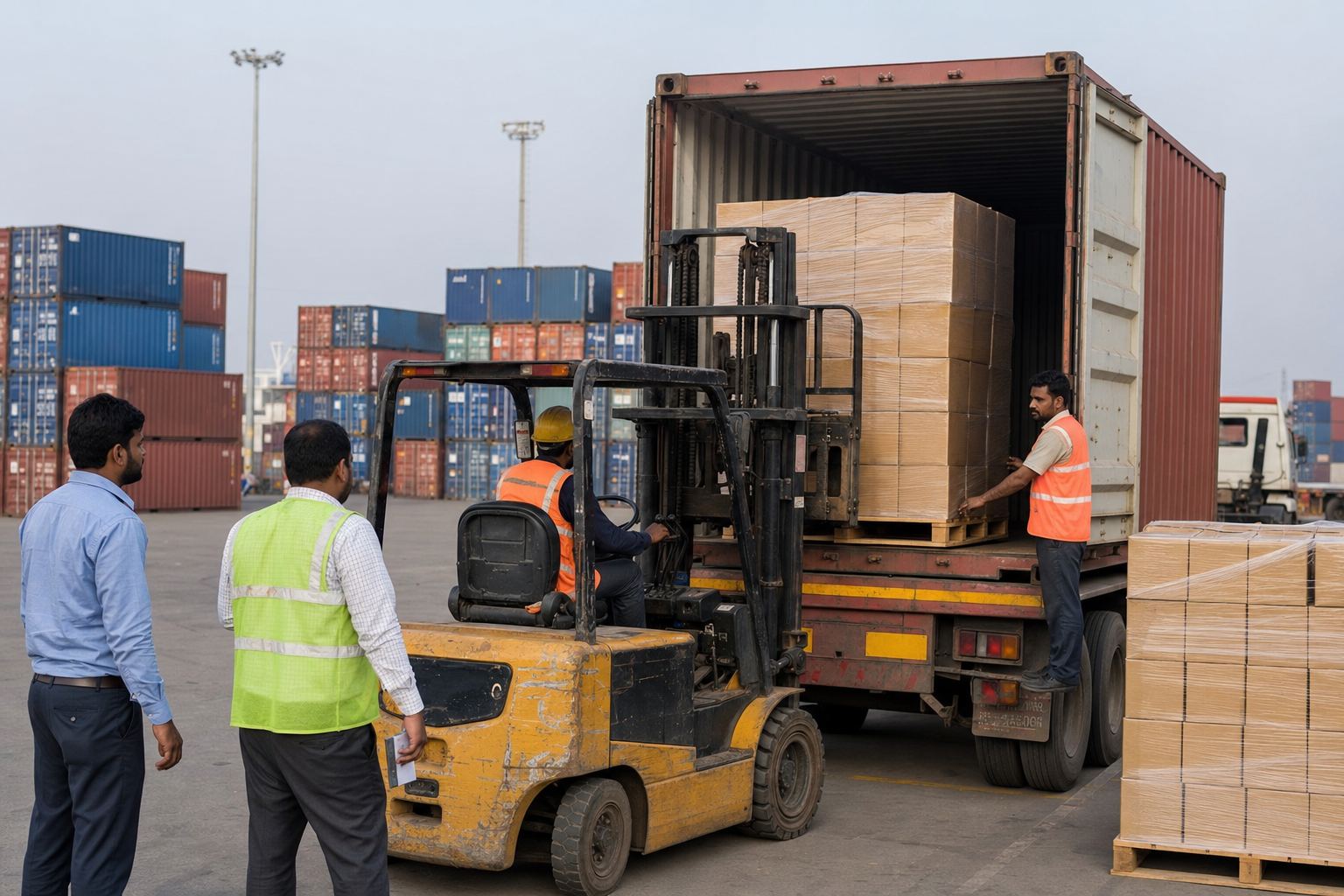
Container-level documentation ties the loading plan to paperwork: the bill of lading and shipping bill must reference correct container and seal numbers. Indicative payloads: 1,200–3,500 pieces in a 20ft container and 3,000–8,000 pieces in a 40ft HC — confirm against actual carton specs.
Container-Level Documentation Cross-Checks
Swipe →
Data table — swipe horizontally on small screens
| Document | Must Match | Common Error |
|---|---|---|
| Bill of lading | Container and seal number as loaded | Container number transcribed incorrectly |
| Shipping bill | Total carton count and weight matching packing list | Count discrepancy at port weighbridge |
| Packing list | Carton-by-carton contents matching invoice | Mixed-SKU cartons summarized at pallet level |
Shipping Methods
Export Tip
The transport document depends on shipping method: bill of lading for sea freight, air waybill for samples and urgent replenishment. FOB is standard for most Indian leather bag shipments from Mundra, Nhava Sheva, Chennai, Tuticorin, and Kolkata. Confirm freight terms on the draft transport document before final issuance — a CIF shipment with collect freight on the bill of lading creates confusion at destination.
Certifications
Compliance Notes
Beyond mandatory IEC and CLE RCMC, category-specific certificates and test reports are what destination customs or import brokers inspect shipment by shipment.
Certification and Test Report Reference Table
Swipe →
Data table — swipe horizontally on small screens
| Certificate / Report | Applies To | Typical Validity Window |
|---|---|---|
| CLE RCMC | Every shipment (exporter credential) | Annual renewal |
| Certificate of origin | Every shipment | Per shipment only |
| REACH chromium VI test report | EU/UK-bound leather bags | Per lot; 6–12 months from test date |
| CPSIA-aligned test report | US-bound children's bags | Per lot; lot-specific |
| LWG tannery certificate | When certified-leather claim made | Annual; verify current rating |
Buyer Requirements
Buyer Requirements
- Current CLE RCMC and valid IEC, verifiable on request before quotation.
- Lot-specific test report (REACH for EU/UK, CPSIA for US children's lines) dated close to shipment date.
- Draft invoice and packing list shared before cargo is packed.
- Insurance certificate matching Incoterm and invoice value for CIF/CIP shipments.
- Carton marking and labelling specification confirmed in writing before sealing.
Buyers should insist on seeing the actual document pack — not just verbal assurance — before confirming a trial order. For buyer-side sourcing workflow, see Source Leather Bags Directly from India.
Country-wise Opportunities
Market Snapshot
Documentation depth scales with destination-market compliance rigor more than order size. See Best Countries for Indian Leather Bag Exports.
USA
Core documents plus CPSIA for children's lines; FTC origin and content labelling for retail.
Germany and wider EU
Most documentation-intensive market — REACH chromium VI and AZO panels non-negotiable; LWG docs when certified-leather claims are made.
UK
UK REACH-equivalent rules alongside standard commercial documentation.
UAE / Gulf
Chamber- or embassy-attested COO with longer lead time than standard chamber certificate.
Australia and Japan
Australia enforces ISPM 15 on wood packaging; Japan expects rigorous test documentation and Japanese-language retail labelling.
Expert Insight: Documentation Is Assembled, Not Rescued
Expert Insight Box
A recurring pattern: exporters confirm a purchase order before checking whether their document pack — test reports, insurance, certificate timeline, CLE status — can support the buyer's delivery date. Confirm the full document timeline against the production calendar before accepting a delivery commitment.
Sourcing Checklist
Checklist
Buyer Checklist
Checklist
Exporter Checklist
Checklist
Compliance Checklist
Checklist
Compliance Notes
Common Buyer Mistakes
Common Mistakes Box
Expert Insight: One Document Set, Reviewed Together
Expert Insight Box
Before a container is sealed, one person should review the commercial invoice, packing list, bill of lading, certificate of origin, insurance certificate, and test reports side by side, checking that quantities, weights, descriptions, and HS codes agree exactly. This review takes under an hour and routinely saves weeks of demurrage.
Future Market Trends
Key Statistics
Digital documentation and traceability platforms are gradually replacing paper-based certificate exchange, particularly for REACH and chemical compliance evidence. EU due-diligence rules are pushing toward more granular, lot-level traceability documentation over time, extending beyond premium leather into mainstream commodity shipments.
Electronic bills of lading and digital certificate-of-origin workflows are reducing courier delays for original-document markets, but the cross-document consistency requirement — invoice matching packing list matching bill of lading — remains unchanged regardless of format.

Conclusion
- Foundation: How to Export Leather Bags from India and CLE Registration Benefits for Leather Bag Exporters.
- Product lines: Top Leather Bag Products Exported from India.
- Buyer workflow: Source Leather Bags Directly from India.
- Choose destinations with Best Countries for Indian Leather Bag Exports before locking document templates, then brief styles via Most Demanded Indian Leather Bags by Country.
- Fair leads to orders: Trade Shows for Leather Bag Exporters.
- Premium documentation: Sustainable and Premium Leather Bag Export Opportunities.
A complete leather bag export document pack — IEC and GST in order, current CLE RCMC, commercial invoice, packing list, export shipping bill, bill of lading, certificate of origin, REACH or CPSIA test reports as applicable, LWG documentation if claimed, insurance aligned to Incoterm, and payment documents matching the agreed structure — prepared alongside production is the single most reliable predictor of smooth customs clearance.
Altus Exports prepares documentation alongside production for leather bag exporters as a merchant exporter in India and global sourcing partner, coordinating certificates, test reports, insurance, and shipping documents under one accountable relationship. Explore export products from India and find manufacturers in India for verified, documentation-ready leather bag supply.