
How to Export Leather Bags from India: Complete Guide for Beginners
By Saurabh Mittal, Founder, Altus Exports
An operational export walkthrough for Indian leather bag exporters — IEC and GST setup, CLE RCMC, sample and hardware approval, bulk cutting and stitching, export documentation, customs clearance, and ocean freight, with indicative pricing, MOQ, packaging, and compliance tables.
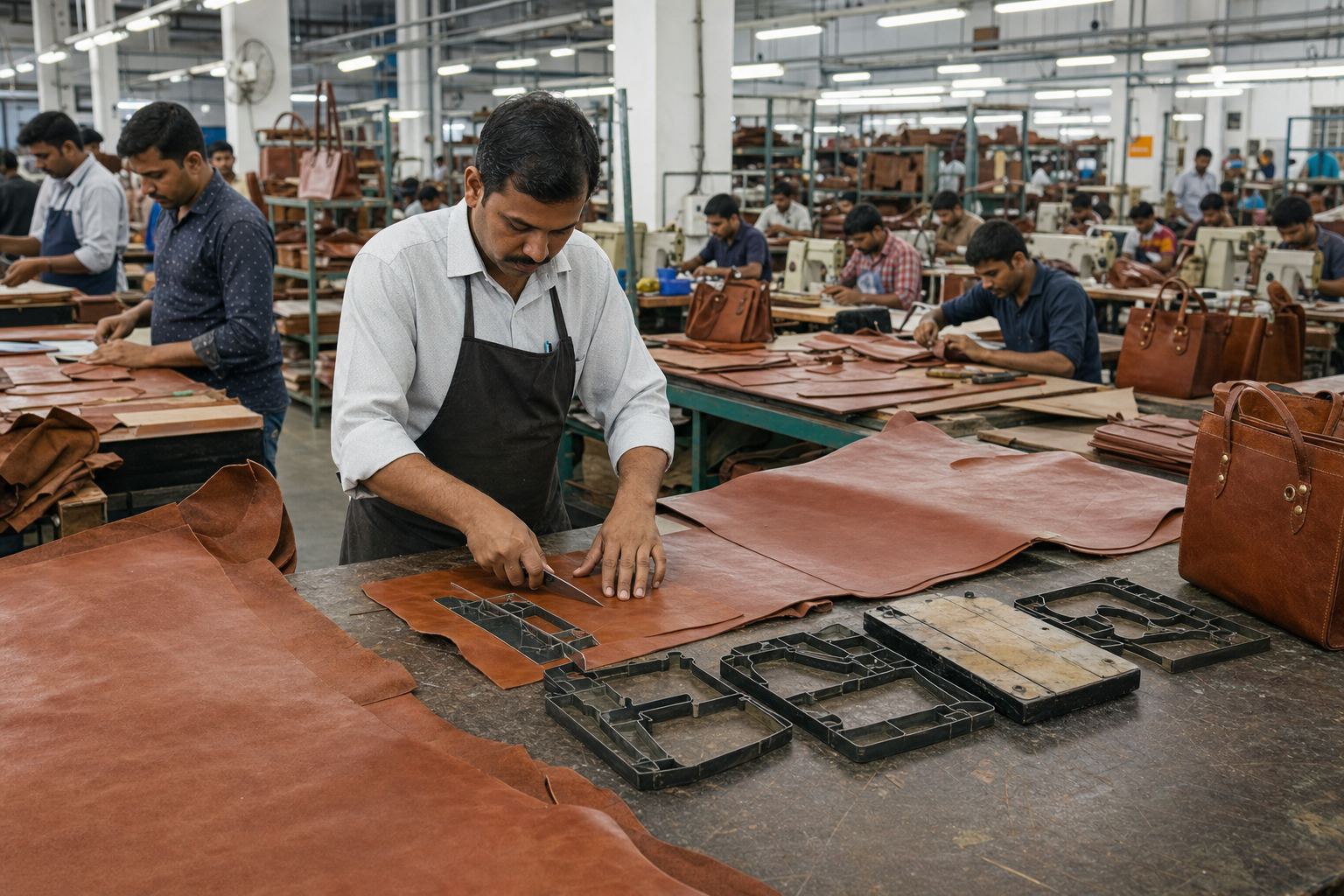
Exporting leather handbags, totes, backpacks, briefcases, travel bags, and wallets from India follows a regulated sequence under HS 4202: IEC + GST → CLE RCMC → sealed sample approval → bulk cutting → packing → documents → customs → freight.
Clusters in Kanpur, Kolkata, Delhi-NCR, Ambur–Chennai, Agra, Jaipur, and Hyderabad supply tanning and assembly at scale. Export still requires sample-matched leather lots, consistent construction, and paperwork that satisfies Indian customs and the buyer's market.
Use this guide as the factory-to-port roadmap. Assortment: Top Leather Bag Products. Markets: Best Countries and Demand by Country. Buying: Source Directly. Docs: Documentation Checklist. CLE: CLE Registration Benefits.
Altus Exports runs the sequence as a merchant exporter and global sourcing partner — including fair-driven sample cycles at Lineapelle, IILF Chennai, and Premiere Classe.
Key Takeaways
Summary Box
Executive Summary
Summary Box
- Eligibility — IEC, GST, CLE RCMC before commercial outreach.
- Product readiness — sealed sample + hardware sign-off before bulk cutting.
- Logistics — pack, inland haul, container stuffing timed to vessel cutoff.
- Documents — invoice through BL/COO and REACH reports drafted with production, not after sealing.
- Same sequence whether you manufacture in Kanpur, consolidate Chennai job-work, or enter from Delhi-NCR.
- Feed fair feedback (Lineapelle, IILF, Premiere Classe) into specs before repeat cutting — not after a failed PSI.
Leather bag export works when four pillars stay in order. Destination paperwork may change (Germany vs UAE), but the factory-to-port workflow does not.
Market Size & Industry Overview
Key Statistics
India's leather bag industry sits on a domestic value chain that runs from hide processing through component supply (zippers, buckles, D-rings, magnetic snaps, linings) to finished assembly. That integration lets exporters in Kanpur, the Tamil Nadu belt, and Delhi-NCR source leather batches, hardware, and skilled stitchers within a short radius — a structural advantage for mid-tier handbag, wallet, and travel bag programmes where material consistency across 500–2,000 piece runs matters.
Council for Leather Exports (CLE), referenced at leatherindia.org, is the sector export promotion council for leather articles including bags under Chapter 42. International buyers routinely request CLE RCMC alongside IEC before releasing trial deposits. For exporters, CLE membership also signals participation in buyer-seller meets and leather-goods fairs where handbag and SLG programmes are sourced.
Cluster selection affects operational risk: Kanpur combines tanning depth with volume handbags and wallets; Ambur–Ranipet–Chennai built export-oriented fashion bags and briefcases for EU and US buyers; Kolkata and Delhi-NCR serve accessories volume; Jaipur and Agra add artisanal embossing; Hyderabad specialises in laptop bags and corporate gifting. Match cluster to your first category before locking a factory.
For buyers reading this guide alongside factory selection, remember that export readiness is operational — a beautiful sample does not substitute for IEC, aligned document packs, or hardware booked to the approved pull and buckle specification. The sections that follow translate that principle into tables you can use for MOQ, packing, and freight planning on a first HS 4202 programme.
India Leather Bag Export Industry Snapshot (Indicative)
Swipe →
Data table — swipe horizontally on small screens
| Dimension | Indicative Signal | Operational Implication |
|---|---|---|
| HS classification | Chapter 4202 — handbags, travel bags, wallets, SLG | Sub-heading must reflect outer-surface material on every invoice line |
| Manufacturing clusters | Kanpur, Kolkata, Delhi-NCR, Ambur–Chennai, Agra, Jaipur, Hyderabad | Inland freight and port choice follow cluster location |
| Regulatory anchor | CLE RCMC + IEC + GST | Buyer due diligence and shipping bill filing depend on current status |
| Typical export ports | Mundra, Nhava Sheva, Chennai, Tuticorin, Kolkata | Gate-in timing must align with certificate validity |
| Lead times (indicative) | Samples 7–21 days; bulk 45–90 days | Hardware booking runs parallel with sample approval |
| Trade fairs (bags) | Lineapelle, IILF, Premiere Classe accessories zones | Buyer meetings and sample feedback before bulk commitment |
Export Statistics
Key Statistics
CLE and DGCIS publish periodic leather goods export statistics by value, volume, and destination. Leather bags and small leather goods under HS 4202 form a major share of India's finished leather articles export portfolio alongside wallets, travel containers, and briefcases. Handbags and SLG typically lead piece counts; travel bags and laptop bags show steady growth with e-commerce private label and corporate gifting.
Figures below are indicative planning mixes — validate against current CLE releases before setting production targets. Exporters should track destination concentration: the United States, Germany, the United Kingdom, France, the Netherlands, Italy, Japan, and Australia absorb a large share of Indian leather bag value, each with different documentation intensity.
Indicative Export Mix by Bag Category (Planning Only)
Swipe →
Data table — swipe horizontally on small screens
| Category | Indicative Share | HS Sub-Heading Examples | Top Destinations |
|---|---|---|---|
| Handbags & totes | Indicative planning mix only | 4202.21 / 4202.29 | USA, Germany, UK, France |
| Wallets & SLG | Indicative planning mix only | 4202.31 / 4202.32 | USA, UK, Germany, UAE |
| Backpacks & messengers | Indicative planning mix only | 4202.91 / 4202.21 (confirm silhouette) | USA, Germany, Australia |
| Briefcases & structured cases | Indicative planning mix only | 4202.11 | USA, UK, Japan, Germany |
| Travel & duffels (soft) | Indicative planning mix only | 4202.91 / 4202.99 | USA, Germany, UAE |
| Laptop / other containers | Indicative planning mix only | 4202.91 / 4202.99 (soft); 4202.11 if briefcase-form | Mixed |
Import Statistics
Key Statistics
Export planning improves when you read destination import data for HS 4202 — average unit value, origin mix, and category preference — not only India's outbound figures. A market importing handbags at $25+ average unit value rewards specification discipline and LWG tannery proof; a wallet-heavy wholesale market may prioritise carton efficiency and MOQ flexibility.
Major importing economies — USA, Germany, UK, France, Netherlands, Japan, Australia, UAE — each apply different duty, VAT, and chemical compliance layers on leather articles. Model landed cost with current duty schedules, REACH or UK-equivalent testing, and origin labelling rules before quoting FOB.
For operational exporters, import-side reading also clarifies document intensity: a buyer in Germany importing handbags will almost always request REACH chromium VI reports and often LWG tannery proof, while a UAE distributor on a first trial may focus on commercial invoice accuracy and carton marking discipline. Align your certificate pack to the buyer's market before you cut leather, not when the forwarder requests shipping instructions.
Destination Import Signals for Indian Leather Bags (Indicative)
Swipe →
Data table — swipe horizontally on small screens
| Market | Import Role | Typical Bag Demand | Compliance Emphasis |
|---|---|---|---|
| United States | Retail & wholesale | Handbags, totes, wallets, backpacks | CPSIA if children's SLG; standard entry docs |
| Germany | Retail & specialty | Handbags, briefcases, travel | REACH Cr(VI) ≤3 mg/kg; LWG preference |
| United Kingdom | Chains & distributors | Handbags, wallets, laptop bags | UK REACH-equivalent; origin labelling |
| France | Fashion retail | Handbags, clutches, totes | Chemical compliance; finish audits |
| UAE | Retail & re-export | Handbags, travel, wallets | Commercial docs; rising QC expectations |
| Japan | Department stores | Briefcases, laptop bags, premium handbags | Packaging presentation; strict QC docs |
| Australia | Retail distributors | Handbags, backpacks, travel | Biosecurity; standard customs |
| Netherlands | EU redistribution hub | Mixed HS 4202 assortment | Volume consistency; EU compliance pack |
Product Categories / Variants
Summary Box
Operational export steps are largely category-agnostic, but MOQ, hardware lead time, carton bulk, and HS sub-heading change by bag type. This section abbreviates assortment — full construction, leather grade, and buyer-fit detail lives in Top Leather Bag Products Exported from India.
All categories below fall under HS 4202. Confirm whether the outer surface is predominantly leather (4202.21, 4202.11, 4202.31) or other material (4202.29, 4202.19, 4202.32) before invoicing — misclassification triggers customs rework.
Bag Categories — Operational Notes (Abbreviated)
Swipe →
Data table — swipe horizontally on small screens
| Category | Typical HS | Hardware Lead-Time Risk | Export Packing Note |
|---|---|---|---|
| Handbags | 4202.21 / 4202.29 | Custom zip pulls, logo plaques | Dust bag + hangtag standard on retail lines |
| Totes | 4202.21 / 4202.29 | Moderate — handles, base studs | Larger cartons; silica gel critical |
| Messengers / crossbody | 4202.21 / 4202.29 | Strap hardware pull-strength tests | Strap folded to prevent crease marks |
| Backpacks | 4202.91 / 4202.99 | Zip brands, padded strap components | Polybag common on value lines |
| Briefcases | 4202.11 / 4202.19 | Locks, frames, stiffeners | Structure protection in master cartons |
| Travel / duffels (soft) | 4202.91 / 4202.99 | Wheels, trolley handles on wheeled styles | Lowest carton count per container |
| Laptop bags | 4202.91 / 4202.11 (confirm form) | Padding spec, sleeve dimensions | Corporate logo emboss setup on first order |
| Wallets / SLG | 4202.31 / 4202.32 | Snaps, zips on zip-arounds | Highest pieces per carton; card-slot QC |
Manufacturing Overview
Export Tip
The manufacturing overview below is an export operations sequence — not a product design guide. Each step assumes leather bags (handbags through wallets) and maps to factory reality in Kanpur, Chennai, Delhi-NCR, and peer clusters.
Step 1: Business Registration, IEC, and Banking
Register the entity (proprietorship, partnership, LLP, or private limited), obtain PAN, and open a bank account suitable for export proceeds. Apply for Import Export Code (IEC) via DGFT online — the ten-digit IEC is mandatory on every shipping bill. Register AD code with your bank for export realization. Without IEC, no legal export filing occurs regardless of factory quality.
Step 2: GST Registration and CLE RCMC
GST registration supports domestic leather, hardware, and packaging purchases and zero-rated export invoicing, typically via Letter of Undertaking (LUT) where eligible. Renew LUT each financial year before April shipments. Apply for CLE membership and RCMC — the credential buyers verify first. Process detail: CLE Registration Benefits for Leather Bag Exporters.
Step 3: Factory Qualification and Material Booking
Qualify in-house capacity or job-work partners for export-grade stitching (8–10 SPI typical on fashion lines), edge finishing, and hardware attachment. Book leather lots and hardware concurrently — custom zippers and buckles often exceed leather cutting lead time. Confirm tannery type (chrome-tanned default; chrome-free for EU sustainability programmes) and whether LWG certification is available if buyers require it.
Step 4: Sampling, Specification, and Hardware Approval
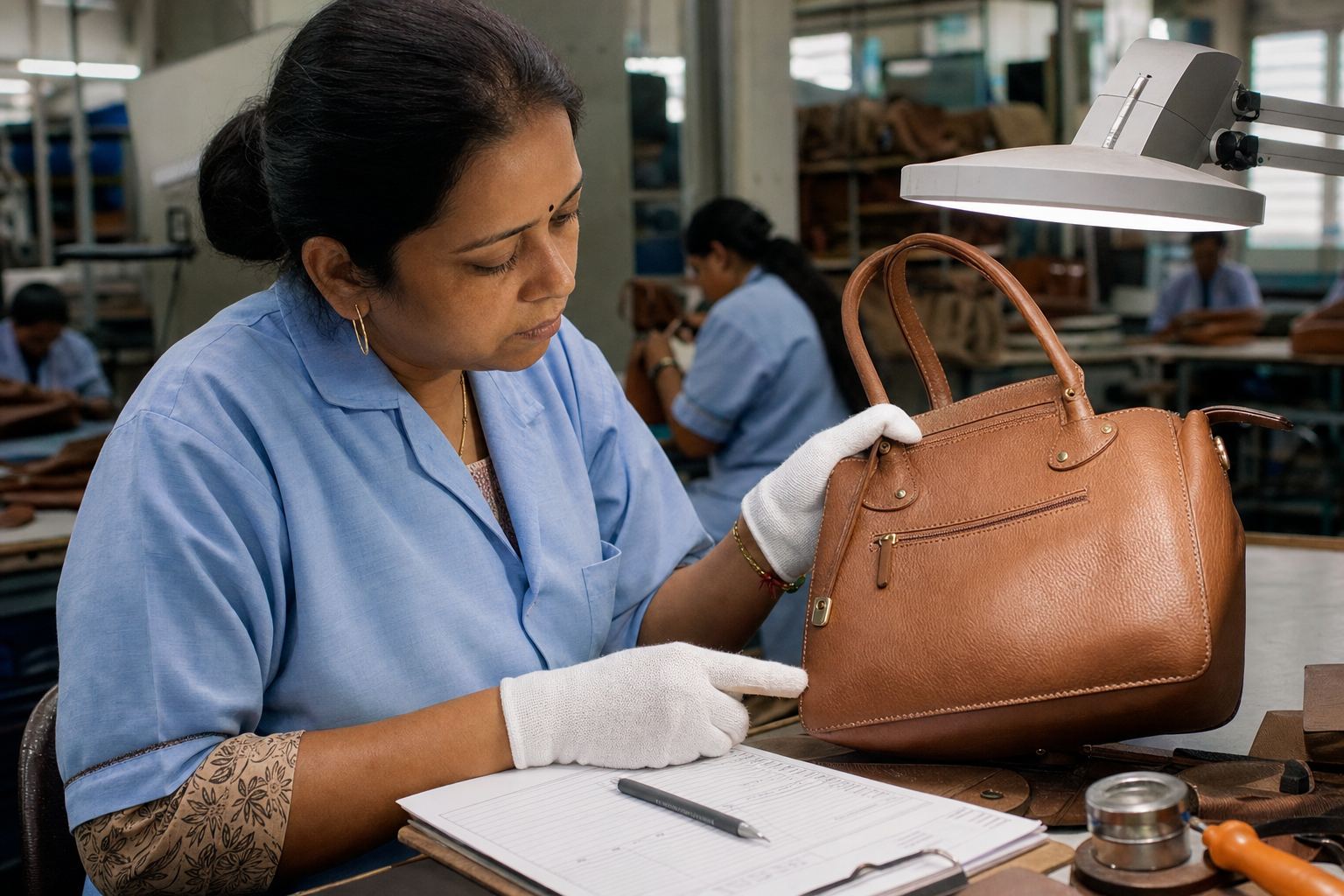
Produce physical samples per written spec: leather grade, lining, dimensions, pocket layout, hardware finish, edge paint, and colour reference swatch. Buyer sign-off must cover multi-colour approval where applicable — not only one hero sample. Retain reference leather and hardware chips for bulk intake inspection. Never schedule bulk cutting without signed approval on file.
Step 5: Bulk Cutting, Stitching, and In-Line QC
Release cutting tickets tied to approved leather lots. Monitor skiving, stitching, edge painting, lining insertion, and hardware fitting against the signed sample. Checkpoints: leather intake vs reference swatch, mid-line stitch consistency, pre-pack AQL on critical orders. Third-party inspection (SGS, Bureau Veritas, Intertek) is common on first EU or US retail programmes.
Step 6: Final Inspection, Packing, and Carton Marking
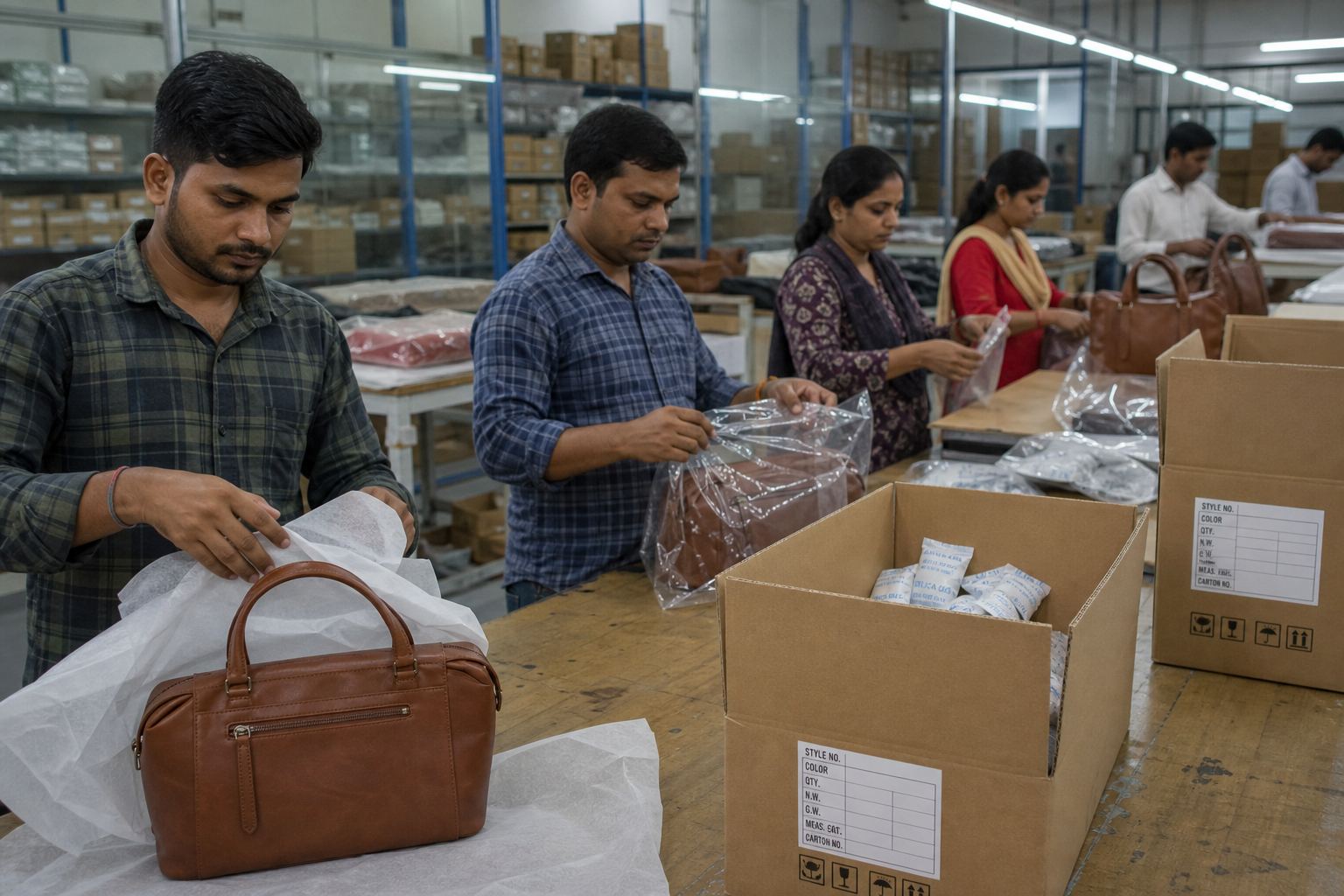
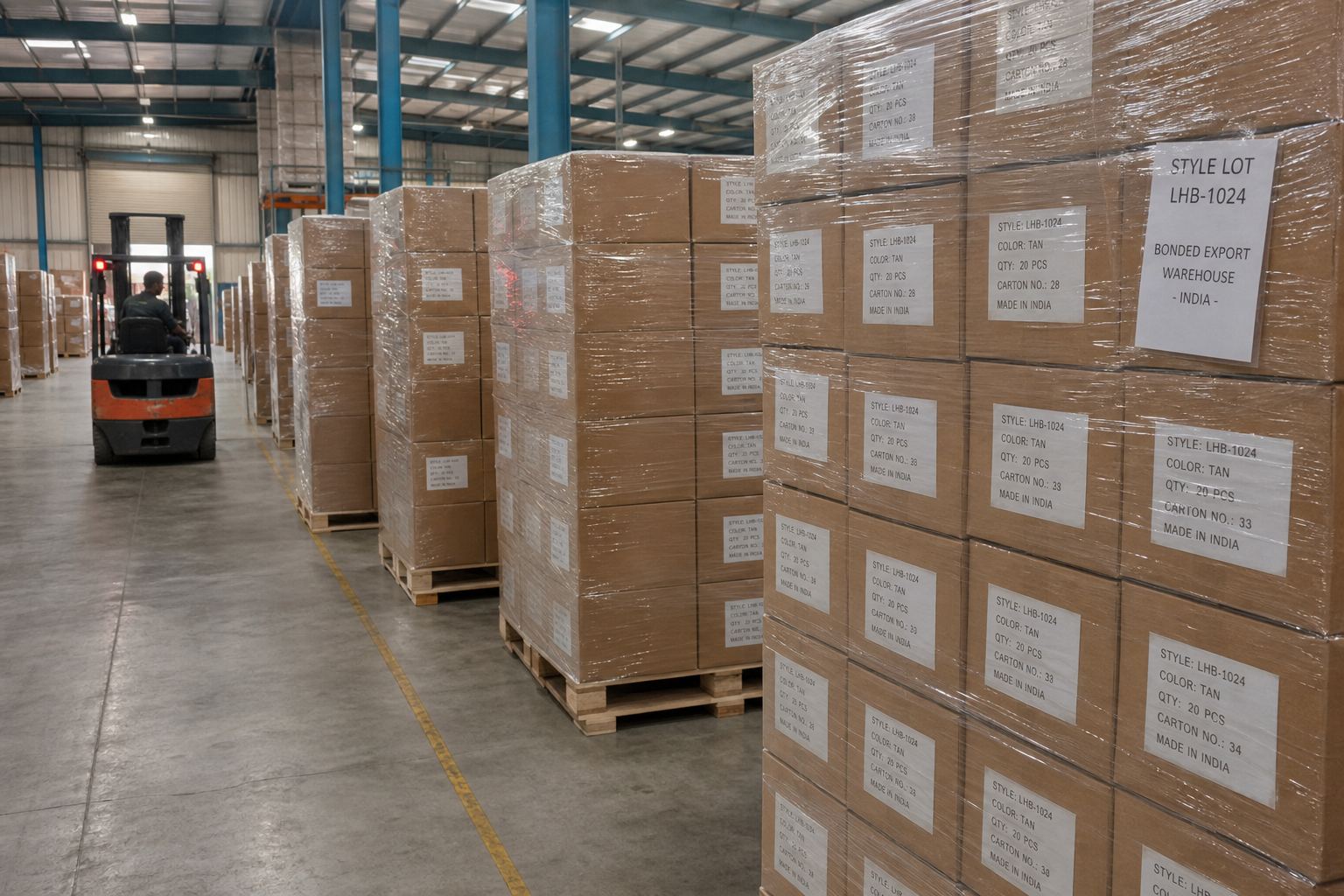
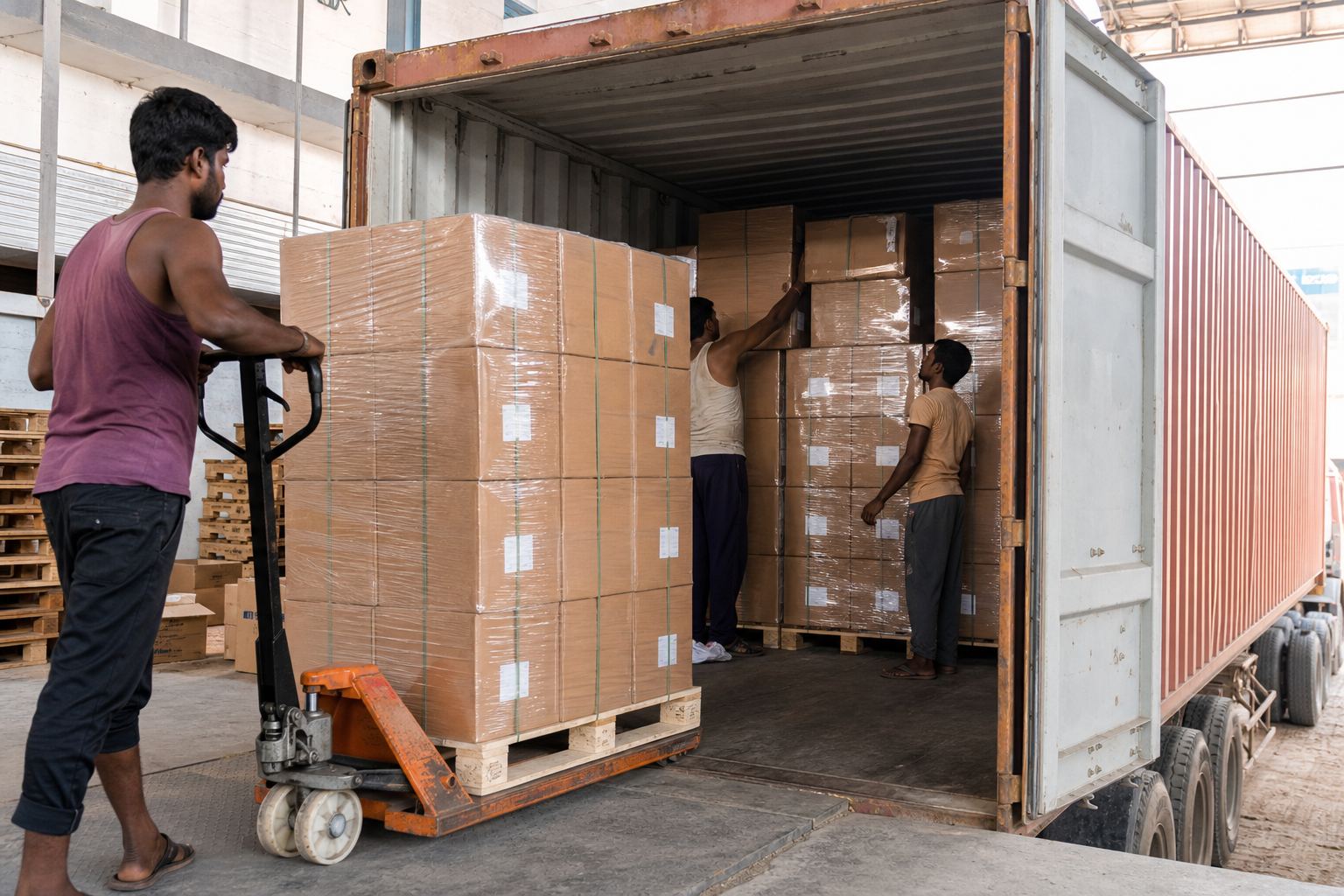
Pre-shipment inspection covers stitch defects, hardware function, colour uniformity, and odour. Pack per buyer spec — dust bag, polybag, tissue, silica gel, hangtags with correct origin labelling. Master cartons carry style, colour ratio, net/gross weight, and destination marks matching the packing list. Palletise for CFS handling where required.
Step 7: Export Documentation Parallel to Packing
Draft commercial invoice, packing list, certificate of origin, and destination test reports when bulk is confirmed — not after sealing the container. Align HS codes, lot numbers, and weights across every file. Field-level checklist: Leather Bag Export Documentation Checklist. EU/UK shipments need REACH chromium VI ≤3 mg/kg test reports per leather lot.
Step 8: Customs Clearance, Freight, and Payment Realization
File export shipping bill through ICEGATE via CHA. Book FOB ocean freight (buyer forwarder) or CIF/CFR (exporter-arranged main carriage) per contract. Gate-in at Mundra, Nhava Sheva, Chennai, Tuticorin, or Kolkata before vessel cutoff. After sailing, submit documents to bank for payment realization; retain copies for RBI/FEMA and duty drawback claims where applicable.
Expert Insight: Sample Discipline Before Bulk Cutting
Expert Insight Box
In Kanpur and Chennai programmes alike, the costliest delay is re-cutting after bulk intake inspection fails. Build reference retention — leather chip, lining swatch, hardware sample — into your standard operating procedure so intake QC takes minutes, not days of dispute.
Pricing Analysis
Buyer Tip
FOB pricing follows leather grade, construction complexity, hardware brand, and lining specification. Figures are indicative planning ranges — confirm with factory quotes and current hide costs before buyer commitment.
Indicative FOB Ranges by Bag Category (USD/piece)
Swipe →
Data table — swipe horizontally on small screens
| Category | Indicative FOB | Primary Destinations | Main Cost Driver |
|---|---|---|---|
| Wallets / SLG | $2–$8 | USA, UK, Germany, UAE | Leather grade; slot count; edge finish |
| Handbags | $8–$35 | USA, Germany, UK, France | Structure; lining; hardware |
| Totes | $10–$40 | USA, UK, e-commerce | Size; base reinforcement; leather area |
| Messengers | $12–$38 | USA, UK, corporate gifting | Strap construction; closure hardware |
| Backpacks | $12–$45 | USA, Germany, Australia | Compartments; padding; leather-textile ratio |
| Briefcases | $15–$55 | USA, UK, Japan | Frame; lock hardware; edge work |
| Laptop bags | $12–$42 | USA, UK, B2B global | Sleeve padding; branding setup |
| Travel / duffels | $18–$70 | USA, Germany, UAE | Capacity; wheels; zip systems |
MOQ Analysis
Buyer Tip
MOQ reflects cutting setup, hardware minimums, and colourway count. Quote realistic trial MOQs — too low makes setup uneconomic; too high on a first relationship strains cash flow.
Indicative MOQ by Manufacturer Scale (Per Style)
Swipe →
Data table — swipe horizontally on small screens
| Profile | Trial MOQ | Standard Programme | Notes |
|---|---|---|---|
| MSME (Kanpur, Delhi-NCR) | 100–300 pcs | 300–1,000 pcs | Scales with colourways and custom hardware |
| Mid-size export house (Tamil Nadu) | 300–500 pcs | 500–2,000 pcs | May require forward leather booking |
| Retail chain / private label | 500–1,000 pcs | 1,000–3,000+ pcs | Seasonal forecasts drive scheduling |
| Corporate gifting multi-style | 200–500 pcs/style | 1,000+ pcs combined | Logo setup amortised across styles |
Packaging Standards
Export Tip
Packaging protects leather from crush, moisture, and finish damage during ocean transit. Agree format before bulk — retail chains need barcoded dust bags; wholesalers may accept simpler cartons.
Export Packaging Standards for Leather Bags
Swipe →
Data table — swipe horizontally on small screens
| Format | Contents | Typical Channel | Critical Requirement |
|---|---|---|---|
| Dust bag + tissue | Bag, tissue, style label, hangtag | Fashion retail, wholesale | Consistent dust bag grade across colours |
| Polybag (value lines) | Bag, minimal branding | E-commerce private label | Lower cost; less shelf presentation |
| Silica gel | Per unit or per carton | All ocean programmes | Prevents mould on long lanes |
| Master carton | Style/colour consolidated | All exports | Marks match packing list exactly |
| Retail gift box | Dust bag inside branded box | Premium handbags, gifting | Box dims per buyer planogram |
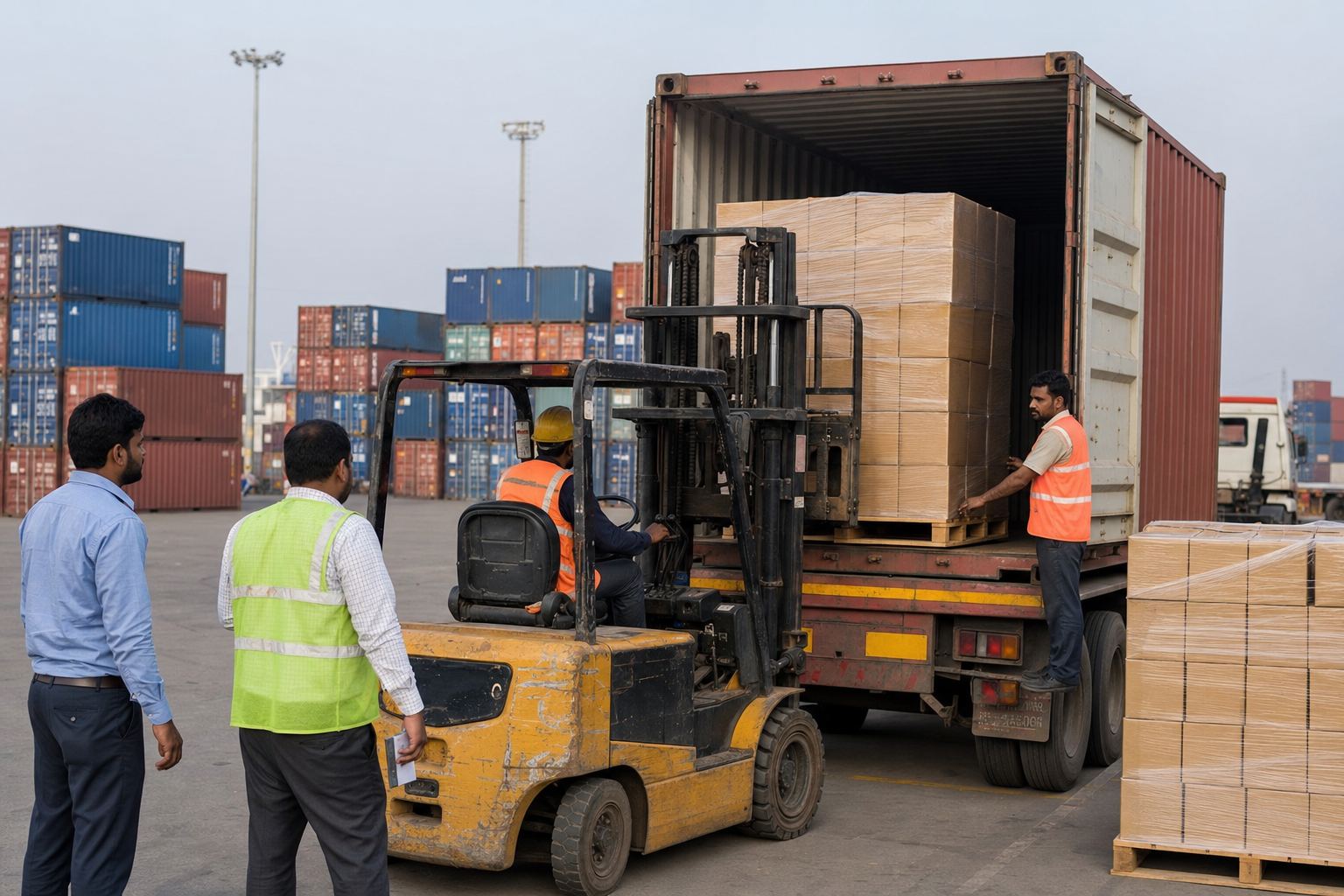
Container Loading Details
Export Tip
Leather bag shipments are usually volume-constrained before weight limits. Confirm carton dimensions before quoting freight per piece — wallet cartons differ radically from wheeled duffels.
Indicative Container Loading (Pieces)
Swipe →
Data table — swipe horizontally on small screens
| Container | Compact Styles | Bulky Styles | Notes |
|---|---|---|---|
| 20ft FCL | 1,200–3,500 | 800–1,500 | Common for trial programmes |
| 40ft FCL | 3,000–6,000 | 1,500–3,000 | Mid-size retail orders |
| 40ft HC | 3,000–8,000 | 2,000–4,000 | Preferred for most bag FCL |
| LCL pallet | 50–500 | Mixed cartons | Trial and multi-style consolidation |
Shipping Methods
Export Tip
Sea freight dominates leather bag export economics. FOB at Indian load port is the most common Incoterm — exporter delivers cleared cargo to port; buyer books main carriage. CIF/CFR appears when buyers want single freight quotes. Air freight suits urgent samples or small trial lots where speed outweighs cost.
Book ocean freight only after carton count, gross weight, and stacking plan are confirmed — forwarders price FCL on volume and weight assumptions that change when a buyer shifts from wallet-heavy to travel-bag-heavy assortments mid-programme.
Shipping Methods for Leather Bag Export
Swipe →
Data table — swipe horizontally on small screens
| Mode | Typical Use | Indicative Transit | Cost Profile |
|---|---|---|---|
| 40ft HC FCL | Established retail programmes | 25–40 days to US/EU | Lowest per-piece on volume |
| 20ft FCL | Mid-size or single-style bulk | 25–40 days | Moderate; good for compact bags |
| LCL consolidation | Trial 50–500 pcs | 28–45 days | Higher per-piece; flexible MOQ |
| Air freight | Samples, urgent replenishment | 3–7 days | Premium; rare on full programmes |
| FOB Incoterm | Majority of contracts | N/A | Exporter to port gate-in; buyer ocean leg |
| CIF / CFR | Buyer-requested landed quotes | Varies by lane | Exporter arranges main carriage + insurance (CIF) |
Certifications
Compliance Notes
Beyond IEC, GST, and CLE RCMC, market access certifications unlock buyer trust. Sequence mandatory registrations first; add LWG, chrome-free, or brand audits when a specific buyer programme justifies cost.
Certifications and Compliance for Leather Bag Export
Swipe →
Data table — swipe horizontally on small screens
| Standard | Status | Relevance |
|---|---|---|
| CLE RCMC | Sector baseline | Buyer verification; fair eligibility |
| IEC + GST | Mandatory legal | Shipping bill and export invoice |
| LWG tannery certification | Buyer-driven | EU/US sustainability programmes |
| REACH Cr(VI) ≤3 mg/kg | Mandatory EU/UK | All leather articles regardless of tanning |
| Origin labelling | Destination-driven | Hangtags and cartons must match COO |
| CPSIA | USA children's SLG only | Lead/phthalates if children's wallets or mini bags |
| Third-party PSI | Optional | SGS, BV, Intertek on critical first orders |
Buyer Requirements
Buyer Requirements
- Current IEC and CLE RCMC verifiable on request
- Signed sample approval covering leather, lining, hardware, and colour protocol
- REACH Cr(VI) test reports available before EU/UK order confirmation
- Written MOQ, lead time, and defect-rate thresholds
- Packing spec aligned to channel — dust bags, barcodes, gift boxes as required
- Lot-number discipline linking test reports to invoice and packing list
International buyers screening new Indian leather bag exporters expect verifiable registration, specification-consistent samples, documented tannery and chemical compliance, realistic MOQ and lead times, and packing that matches downstream channel (wholesale vs retail-ready).
Country-wise Opportunities
Market Snapshot
Brief market signals only — strategic depth sits in Best Countries for Indian Leather Bag Exports and Most Demanded Indian Leather Bags by Country.
United States
Largest single destination by value for Indian HS 4202 articles; handbags, totes, and wallets flow through wholesale and e-commerce private label. CPSIA applies only if children's small leather goods are in scope.
Germany
REACH Cr(VI) and LWG tannery documentation are gating items before retail onboarding. Briefcases and structured handbags reward finish consistency.
United Kingdom
Steady handbag and wallet demand through chains and distributors; UK chemical rules mirror EU expectations on chromium VI.
France
Fashion retail prioritises colour matching and hardware finish over lowest FOB on handbags and clutches.
UAE
Direct retail and Gulf re-export hub for handbags and travel bags; documentation expectations are rising on quality programmes.
Japan
Premium briefcases, laptop bags, and structured handbags; packaging presentation and QC documentation weigh heavily in approval.
Sourcing Checklist
Checklist
Buyer Checklist
Checklist
Exporter Checklist
Checklist
Compliance Checklist
Checklist
Compliance Notes
Common Buyer Mistakes
Common Mistakes Box
Future Market Trends
Key Statistics
Three operational trends shape Indian leather bag export through 2026 and beyond: buyers demand digital traceability linking lot numbers to tannery and test reports, not paper folders alone; LWG and chrome-free leather sourcing moves from premium niches into mid-tier handbag and wallet programmes; and US/UK e-commerce private label rewards fast sample turnaround with specification-stable repeat orders.
Exporters who institutionalise sample discipline, parallel documentation, and cluster-matched supply will serve both commodity wallet volume and compliance-heavy EU fashion programmes — without relearning the same port-delay lessons each season.
Hardware standardisation is a quiet trend worth tracking: more buyers specify approved zip brands, buckle alloys, and magnetic snap suppliers in tech packs to reduce substitution risk between sample and bulk. Exporters who maintain approved hardware libraries — with lead times logged per supplier — quote delivery dates buyers can actually put on retail launch calendars.
Expert Insight: Documentation Parallel to Production
Expert Insight Box
Merchant exporters add value precisely here: one team tracks factory QC, certificate validity, and CHA filing so the buyer receives a single coherent export story from sample approval through bill of lading.
Conclusion
- After the first-container sequence, deepen assortment with Top Leather Bag Products Exported from India.
- Market selection: Best Countries for Indian Leather Bag Exports.
- Documents: Leather Bag Export Documentation Checklist.
- CLE detail: CLE Registration Benefits for Leather Bag Exporters.
- Buyer sourcing: Source Leather Bags Directly from India.
- Trade fairs: Trade Shows for Leather Bag Exporters.
Exporting leather bags from India is a repeatable sequence — register IEC and GST, secure CLE RCMC, qualify supply, approve samples and hardware, cut and stitch to spec, inspect and pack, prepare documents alongside production, clear customs, book freight, realize payment. Each milestone reduces risk for the next.
Altus Exports supports exporters and buyers as a merchant exporter in India and global sourcing partner. Explore export products from India, product sourcing company, and find manufacturers in India to run your first or next HS 4202 programme with accountable execution.