
CLE Registration Benefits for Leather Bag Exporters in India
By Saurabh Mittal, Founder, Altus Exports
A deep guide to Council for Leather Exports (CLE) membership for Indian leather bag exporters — RCMC categories, step-by-step application, benefits, buyer verification, and the registration-to-first-shipment path for handbags, totes, and travel goods under HS 4202.
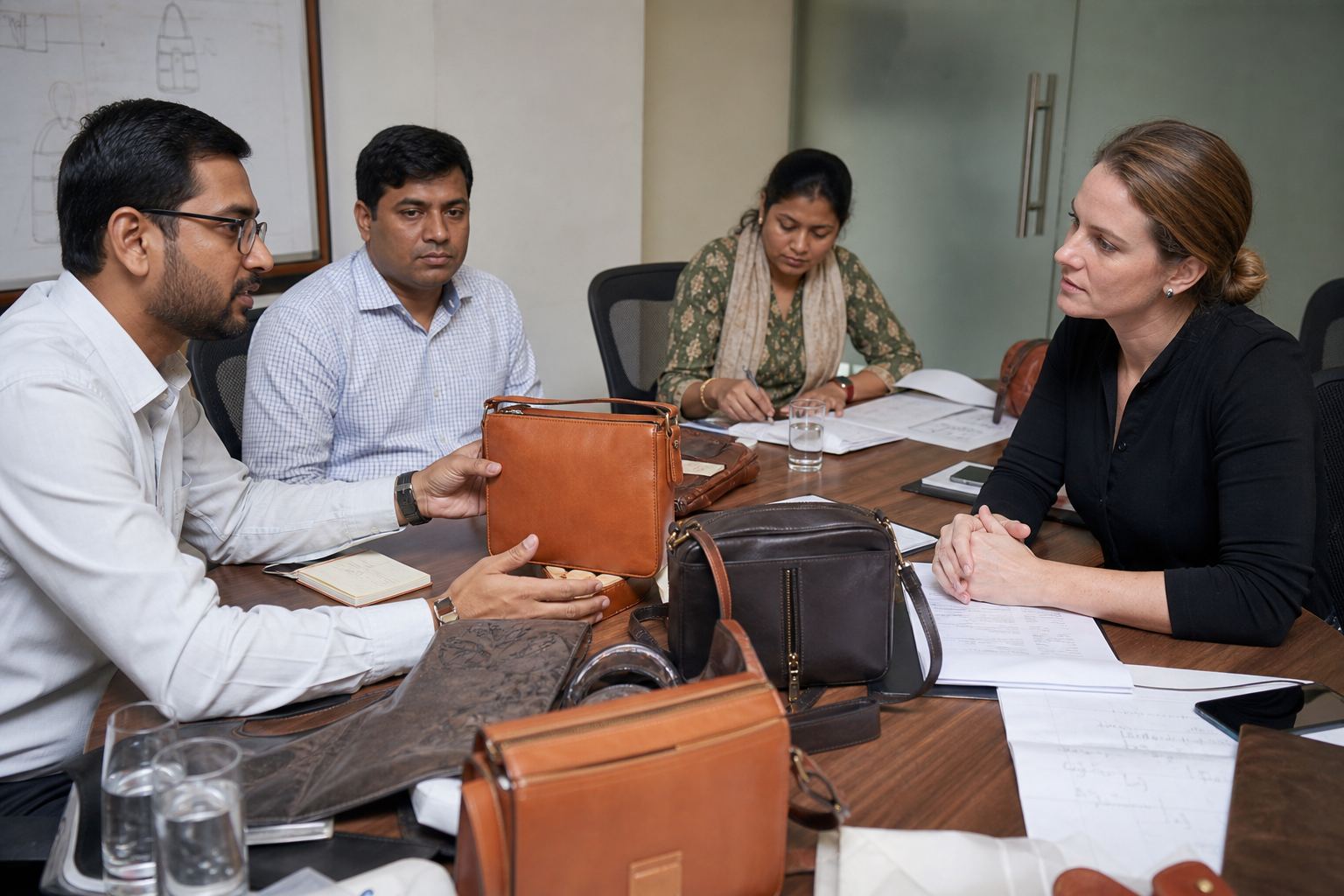
CLE registration is the gateway between an Indian leather bag factory (or merchant exporter) and serious international buyers — and DGFT scheme access — for HS 4202 goods.
Registration deep dive (RCMC, categories, steps, fees, renewal, fair access, buyer due diligence) — not destination ranking (Best Countries). Scope: finished handbags, totes, backpacks, briefcases, travel bags, wallets.
Pair with How to Export, Documentation Checklist, and Demand by Country. Confirm live fees on leatherindia.org and DGFT/NSWS before filing.
Key Takeaways
Summary Box
Executive Summary
Summary Box
- Institutional — DGFT schemes, fair access, CLE buyer-seller meets.
- Operational — product categories aligned to HS 4202 shipping-bill lines.
- Reputational — shorter trust cycle than unverified email exchanges.
- Same architecture for MSME and large houses once IEC + GST are clean — category/declaration differ, not eligibility by size.
- Treat RCMC as living infra — renew on time; update declarations when you add silhouettes.
CLE RCMC turns bag manufacturing capability into export-eligible standing buyers check early — often before approving construction samples.
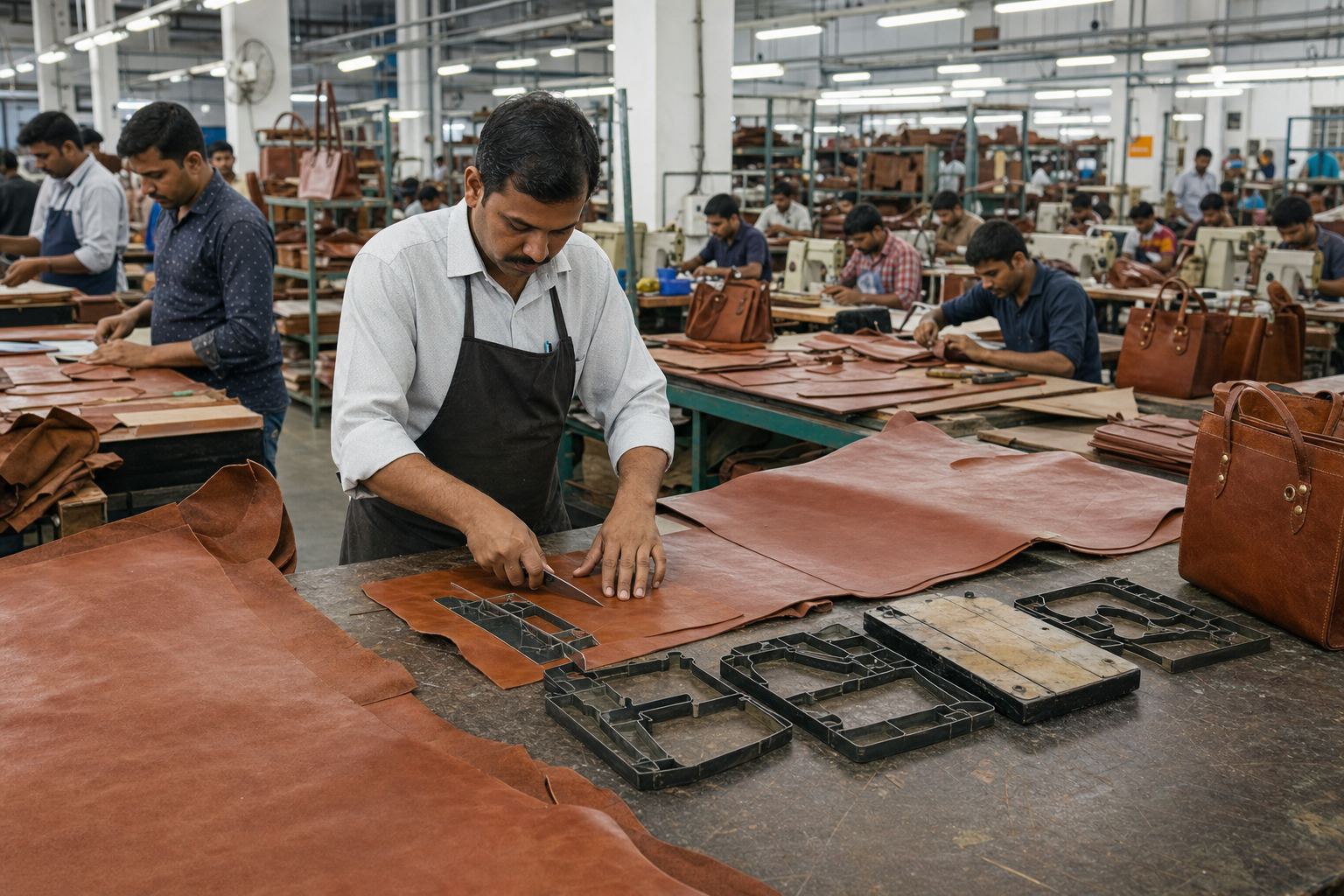
Market Size & Industry Overview
Key Statistics
India's leather goods export sector — handbags, travel goods, wallets, and related articles under HS 4202 — draws global buyer attention because integrated clusters combine tanning relationships, skilled stitching labor, and decades of private-label experience serving the USA, UK, Germany, and Gulf markets. CLE, headquartered in Chennai under the Ministry of Commerce and Industry, is the sector's export promotion and registration body.
Regional CLE offices cover Kanpur, Kolkata, Agra, Delhi, and Chennai, so most bag exporters complete registration without traveling to headquarters. The council publishes export statistics, organizes India International Leather Fair (IILF) participation, and represents exporter interests in trade policy consultations on raw material access and market entry support.
Registration scale reflects sector breadth: thousands of entities export leather goods from clusters where Kanpur leads briefcases and messenger bags, Delhi-NCR leads design-forward handbags, Ambur–Chennai combines tanning depth with structured handbag production, Jaipur serves artisanal and embossed lines, and Hyderabad covers corporate laptop bags and gifting programmes. RCMC ties each entity to declared product scope under CLE's leather goods categories.
CLE Registration Context for Indian Leather Bag Exporters (HS 4202)
Swipe →
Data table — swipe horizontally on small screens
| Dimension | Detail | Registration Relevance |
|---|---|---|
| Product scope | Handbags, totes, crossbody, messenger, backpack, briefcase, travel, wallets | Declare accurately on RCMC product list |
| HS heading | HS 4202 — leather bags and travel goods | Shipping bill sub-heading must match declaration |
| Primary clusters | Kanpur; Kolkata; Delhi-NCR; Ambur–Ranipet–Chennai (Tamil Nadu); Agra; Jaipur; Hyderabad | Regional CLE offices support local filing |
| Load ports | Mundra, Nhava Sheva (JNPT), Chennai, Tuticorin, Kolkata | First shipment routing follows cluster geography |
| Council HQ | Chennai — Council for Leather Exports | Central RCMC issuance and policy updates |
Export Statistics
Key Statistics
India's HS 4202 exports reach dozens of countries, with the USA, UK, and Germany absorbing the largest share of leather bag value, and the UAE, France, Netherlands, Australia, and Japan forming a strong secondary tier. Every commercial departure files through ICEGATE with the exporter's IEC; scheme-eligible shipments reference RCMC status where DGFT notifications require export promotion council membership.
Export volume concentration explains buyer behavior: procurement teams evaluating multiple Indian quotations use RCMC verification as an inexpensive elimination filter before investing in physical samples. An exporter who cannot produce current RCMC when price and construction already look attractive often loses the slot to a registered competitor — not because registration proves quality, but because its absence signals administrative risk.
CLE publishes periodic destination statistics for the broader leather sector. Bag exporters should cross-check HS 4202-specific Trade Map data when setting volume targets, but treat RCMC as prerequisite infrastructure regardless of which destination they prioritize first.
RCMC Product Declaration Alignment for Common Bag Lines (HS 4202)
Swipe →
Data table — swipe horizontally on small screens
| Bag Line | Typical HS Sub-Heading | RCMC Declaration Note | Common Filing Mistake |
|---|---|---|---|
| Women's handbags (leather outer) | 4202.21 | List under finished leather goods | Declaring wallets only, then exporting handbags |
| Totes and shoulder bags | 4202.29 | Include all handbag silhouettes in scope | Using an RCMC scoped to unrelated leather articles |
| Travel / duffel bags | 4202.91 | Add travel goods before first duffel PO | Shipping travel line before updating product list |
| Backpacks | 4202.99 | Confirm material composition on invoice | Generic 'leather goods' without silhouette detail |
| Wallets / SLG | 4202.91 | High unit count — declare SLG explicitly | Assuming handbag RCMC covers all small goods automatically |
Import Statistics
Key Statistics
Destination-side import statistics explain why buyers insist on RCMC early: mature HS 4202 markets — the USA, Germany, UK — import leather bags from multiple origins and use institutional credentials to narrow supplier lists before construction review. A buyer onboarding fifty Indian factories for one tender cannot physically sample every applicant; RCMC verification is cheap, fast, and standardized.
Import data also shows category concentration: structured handbags and wallets dominate US import value; German imports skew toward briefcases and compliance-documented fashion bags; UAE imports favor compact crossbody and gifting lines. Registration does not tell a buyer which silhouette to order — that is a separate demand brief — but it confirms the exporter sits inside India's recognized leather goods export channel.
For buyers, pairing destination import trends with RCMC verification separates administratively ready exporters from factories that may produce good bags but cannot yet file clean export documentation. For exporters, understanding that buyers use registration as a gate clarifies why filing before outreach beats retrofitting mid-negotiation.
How Import-Market Buyers Use RCMC During Onboarding (Not Market Ranking)
Swipe →
Data table — swipe horizontally on small screens
| Buyer Type | RCMC Check Purpose | What RCMC Does Not Prove |
|---|---|---|
| US retail chain vendor onboarding | Confirm sector-registered exporter of record | Stitching consistency or CPSIA compliance |
| UK department store supplier review | Baseline credential alongside construction spec | Bound-edge capability or packaging format |
| EU compliance-conscious importer | Layer one before REACH / LWG review | Chromium VI test results for specific leather lots |
| UAE distributor / re-exporter | Standard commercial credibility filter | Hardware finish preference for Gulf retail |
| Japan trading company | Part of longer traceability evaluation | Color-matching discipline across bulk lots |
Product Categories / Variants
Summary Box
CLE registration product declarations should mirror the bag categories you actually export under HS 4202 — handbags, totes, backpacks, briefcases, travel bags, laptop bags, and wallets — rather than a vague all leather goods claim. The categories below are the core leather bag variants CLE treats as finished leather goods for RCMC scope purposes.
CLE Leather Goods Categories vs Exporter Role
Swipe →
Data table — swipe horizontally on small screens
| CLE Category Track | Who Files | Typical Bag Scope | Buyer Due Diligence Note |
|---|---|---|---|
| Manufacturer exporter | Factory with cutting/stitching capacity | Own-production handbags, briefcases, backpacks | Traceability from leather lot to finished bag |
| Merchant exporter | Trading house / consolidator | Multi-factory handbags, totes, SLG programmes | Confirm which plant produces your PO |
| Tannery supplier | Hide-to-leather processor | Finished leather for bag factories — not finished bags | Separate from finished-goods RCMC |
| Component / hardware supplier | Zippers, buckles, linings | Inputs only — not HS 4202 finished articles | Do not accept as bag exporter credential |
Women's Handbags and Totes
Top-handle satchels, open totes, hobo silhouettes, and chain-strap shoulder bags — the highest-volume declaration category for Delhi-NCR and Ambur–Chennai manufacturer exporters serving US and EU retail programmes.
Crossbody and Messenger Bags
Flap-front messengers, compact crossbody satchels, and sling bags — strong Kanpur and Hyderabad output for corporate gifting and Gulf retail channels.
Backpacks, Briefcases, and Laptop Bags
Structured briefcases, padded laptop compartments, and leather-trim backpacks — Kanpur and Hyderabad clusters lead institutional and business-travel lines.
Travel Bags and Duffels
Weekender duffels, cabin-friendly travel totes, and garment-adjacent travel goods under HS 4202 travel sub-headings — declare before first travel PO if initial RCMC listed handbags only.
Wallets, Clutches, and SLG
Bi-fold wallets, card holders, clutches, and passport covers — high unit counts per container; Agra and Kolkata volume lines often declare SLG alongside handbags.
Manufacturing Overview
Export Tip
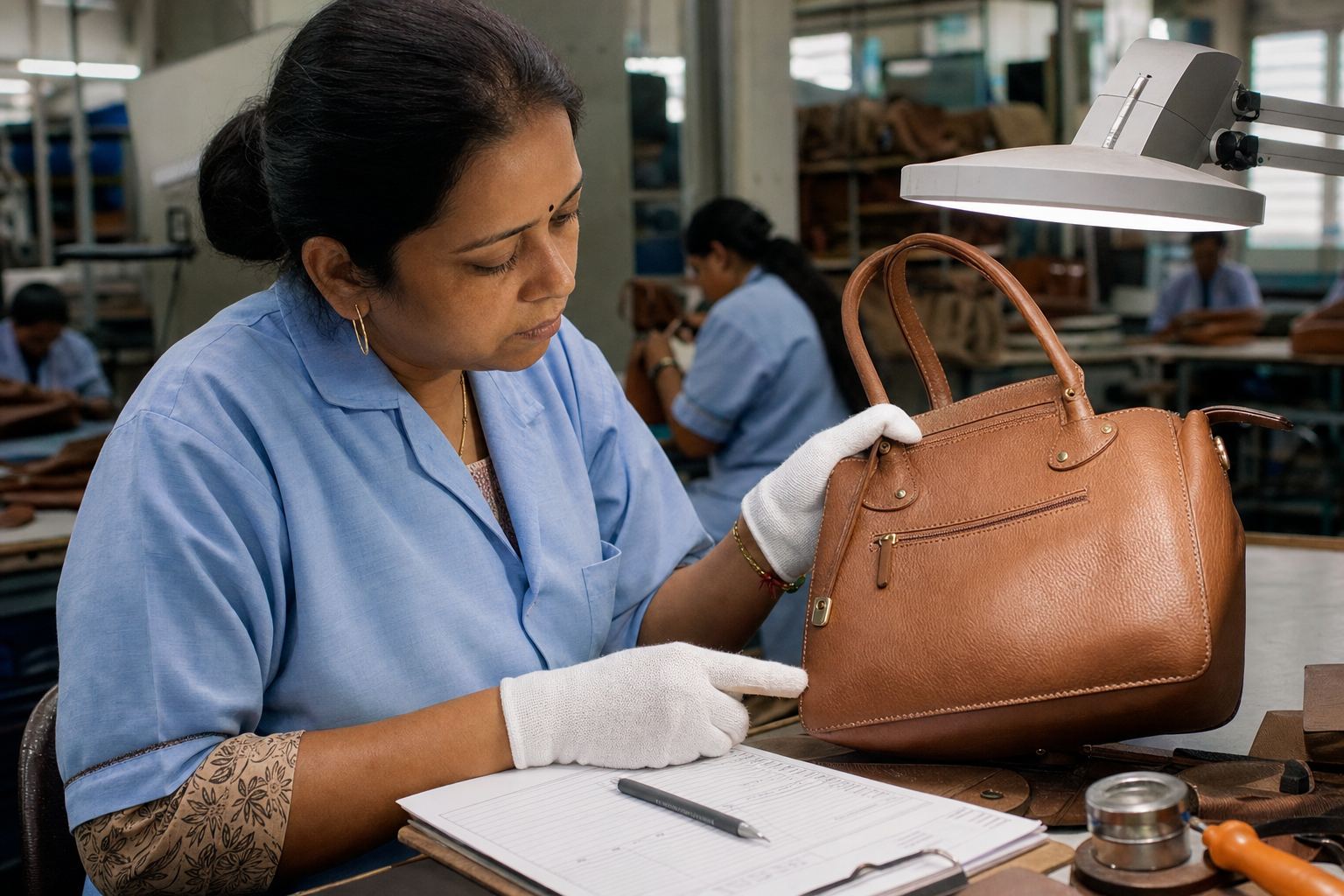
RCMC is not a manufacturing certificate — but export-ready bag production follows a predictable sequence that registration should precede, not chase. The timeline below frames registration-to-first-shipment for leather bags only, from credential completion through container departure.
Week 0–2: Obtain or verify IEC and GST; assemble PAN, constitution deed, bank certificate, and address proof; choose RCMC category; file CLE application with name-consistent documents; pay fees; receive RCMC. Week 2–4: Build credential pack (RCMC, IEC, GST); align product declaration with intended HS 4202 lines; begin buyer outreach or respond to inquiries with registration evidence ready.
Week 4–8: Prototype development — pattern, leather swatch approval, hardware spec, lining confirmation; signed sample approval tied to specification sheet. Week 8–14: Trial bulk cutting — skiving, panel stitching, edge paint or binding, lining attachment, hardware setting, inline QC; pre-shipment inspection if buyer requires; REACH or CPSIA testing initiated for applicable destinations.
Week 14–18: Export packing — dust bag, retail or bulk carton, master carton labeling matched to packing list; commercial invoice, COO, and shipping bill preparation under exporter IEC and RCMC-backed entity; inland haul to Mundra, Nhava Sheva, Chennai, Tuticorin, or Kolkata; container stuffing and vessel cutoff. Registration completed upfront keeps weeks 14–18 focused on cargo — not scrambling for lapsed credentials.
Registration-to-First-Shipment Milestone Map (Leather Bags)
Swipe →
Data table — swipe horizontally on small screens
| Phase | Duration | Key Deliverable | Registration Touchpoint |
|---|---|---|---|
| Credential stack | 2–4 weeks | IEC + GST + CLE RCMC | Complete before buyer deposit |
| Sample approval | 2–4 weeks | Signed spec + approved prototype | Share RCMC in vendor pack |
| Trial bulk | 4–6 weeks | Inline QC + inspection report | Product list covers shipped SKUs |
| Testing (if EU/US) | 2–3 weeks parallel | REACH / CPSIA batch reports | Separate from RCMC — plan early |
| Export dispatch | 1–2 weeks | Shipping bill + B/L + invoice set | IEC/RCMC entity on all docs |
Pricing Analysis
Buyer Tip
CLE registration and RCMC fees are modest fixed costs relative to sample development, hardware procurement, chemical testing, packaging tooling, and first trade fair participation — typically a small fraction of a first-container launch budget. Verify live fee schedules on leatherindia.org before remittance; fees revise periodically but remain low compared with a single failed buyer onboarding caused by missing RCMC.
Buyers should not treat registration as a price premium — it is baseline expectation. A factory quoting lower FOB without RCMC is not offering a discount; it is transferring compliance and onboarding risk to the buyer. Indicative bag FOB ranges from Indian clusters remain driven by construction tier and leather grade, not registration status.
Registration Cost vs First-Export Programme Line Items (Indicative)
Swipe →
Data table — swipe horizontally on small screens
| Cost Item | Relative Scale | Notes |
|---|---|---|
| CLE registration + RCMC | Low fixed fee (verify live schedule) | Complete before outreach |
| Prototype sampling | Moderate per style | Independent of RCMC but enabled by buyer trust |
| REACH / LWG testing | Moderate–high per EU programme | Not included in RCMC fee |
| IILF / Lineapelle fair participation | High — often subsidized for CLE members | Registration unlocks member rates |
| First FCL logistics | Largest early variable | Shipping bill requires valid IEC + RCMC entity |
MOQ Analysis
Buyer Tip
RCMC does not set MOQ — commercial negotiation does. CLE buyer-seller meets and subsidized fairs, however, expose registered exporters to buyers with established MOQ norms by channel. Manufacturer exporters should declare capacity honestly on applications; overstated throughput surfaces when trial orders exceed consistent output.
Indicative MOQ bands below reflect common leather bag programmes — always confirm against factory capacity and hardware minimums.
Indicative MOQ Context for Registered Bag Exporters
Swipe →
Data table — swipe horizontally on small screens
| Category | Trial MOQ | Programme MOQ | RCMC Note |
|---|---|---|---|
| Women's handbags | 100–300 pieces | 300–1,000 pieces | Declare handbag capacity on manufacturer RCMC |
| Messenger / crossbody | 200–500 per colorway | 800–2,000 per style | Hardware MOQ may exceed leather MOQ |
| Briefcases / laptop bags | 200–400 per colorway | 500–1,500 per style | Kanpur cluster — institutional orders vary |
| Wallets / SLG | 500–1,500 per colorway | 1,000–3,000+ pieces | High piece count — confirm cutting throughput |
Packaging Standards
Export Tip
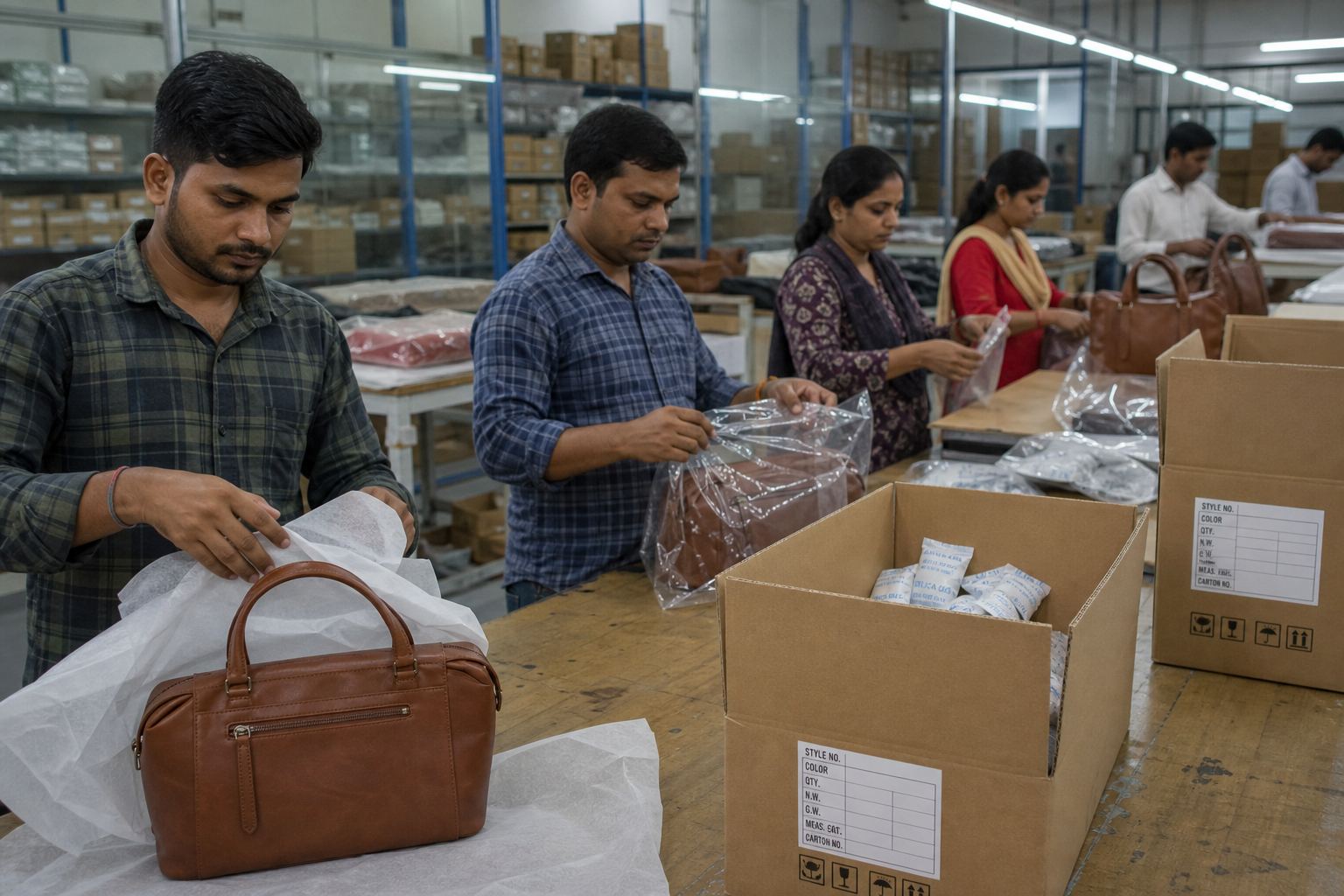
CLE does not prescribe dust-bag or carton formats, but RCMC-backed exporters must keep packing lists, invoices, and carton labels synchronized — style code, colorway, quantity, and net/gross weight consistent across documents. Mismatches trigger customs queries regardless of registration status.
Buyers should specify retail-ready versus bulk export packaging in the PO: US chains often require barcoded retail boxes; UK department stores expect branded dust bags; UAE re-export channels may accept simpler master-carton labeling with clear colorway breakdowns.
Container Loading Details
Export Tip
Shipping bill declarations under HS 4202 must reflect actual carton counts and FOB value. Container yield varies sharply by silhouette — wallets achieve far higher units per forty-foot high-cube container than structured handbags or backpacks.
Indicative Container Payload by Bag Category (Planning Reference)
Swipe →
Data table — swipe horizontally on small screens
| Category | 40ft HC Indicative Range | Source Fact | Shipping Bill Reminder |
|---|---|---|---|
| Wallets / SLG | Highest density | 3,000–8,000 pieces | Verify actual carton spec |
| Structured handbags | Mid density | 3,000–8,000 pieces | Declare correct 4202 sub-heading |
| Backpacks / duffels | Lower density | 3,000–8,000 pieces | Varies by silhouette bulk, carton size, and nesting; confirm against actual carton specs. |
Shipping Methods
Export Tip
RCMC and IEC are required whether shipment moves FOB, CIF, or ex-works. Match load port to cluster: Chennai and Tuticorin for Ambur–Chennai units; Mundra and Nhava Sheva for Kanpur, Delhi-NCR, Agra, and Jaipur inland programmes; Kolkata for East India exports.
Lead times from sample to bulk typically span 7–21 days for prototypes and 45–90 days for established programmes — registration should be complete before this clock starts, not running in parallel with buyer deposits.
Certifications
Compliance Notes
RCMC is the sector registration credential — not a product safety certificate. EU-bound chrome-tanned bags need REACH chromium VI documentation; premium programmes increasingly expect LWG tannery references; US children's lines need CPSIA compliance. Nickel-release limits apply to EU hardware.
Credential Stack for Registered Leather Bag Exporters
Swipe →
Data table — swipe horizontally on small screens
| Credential | Holder / Scope | Relationship to RCMC |
|---|---|---|
| CLE RCMC | Exporter entity | Sector membership — scheme and buyer baseline |
| IEC | Exporter entity | Mandatory prerequisite for CLE and customs |
| GST registration | Exporter entity | Mandatory prerequisite — name must match IEC |
| REACH CrVI test report | Batch / lot specific | Independent — required for EU chrome leather |
| LWG tannery certification | Tannery supplier | Buyer verifies separately from RCMC |
| CPSIA compliance | Children's bag lines to USA | Product level — not covered by RCMC |
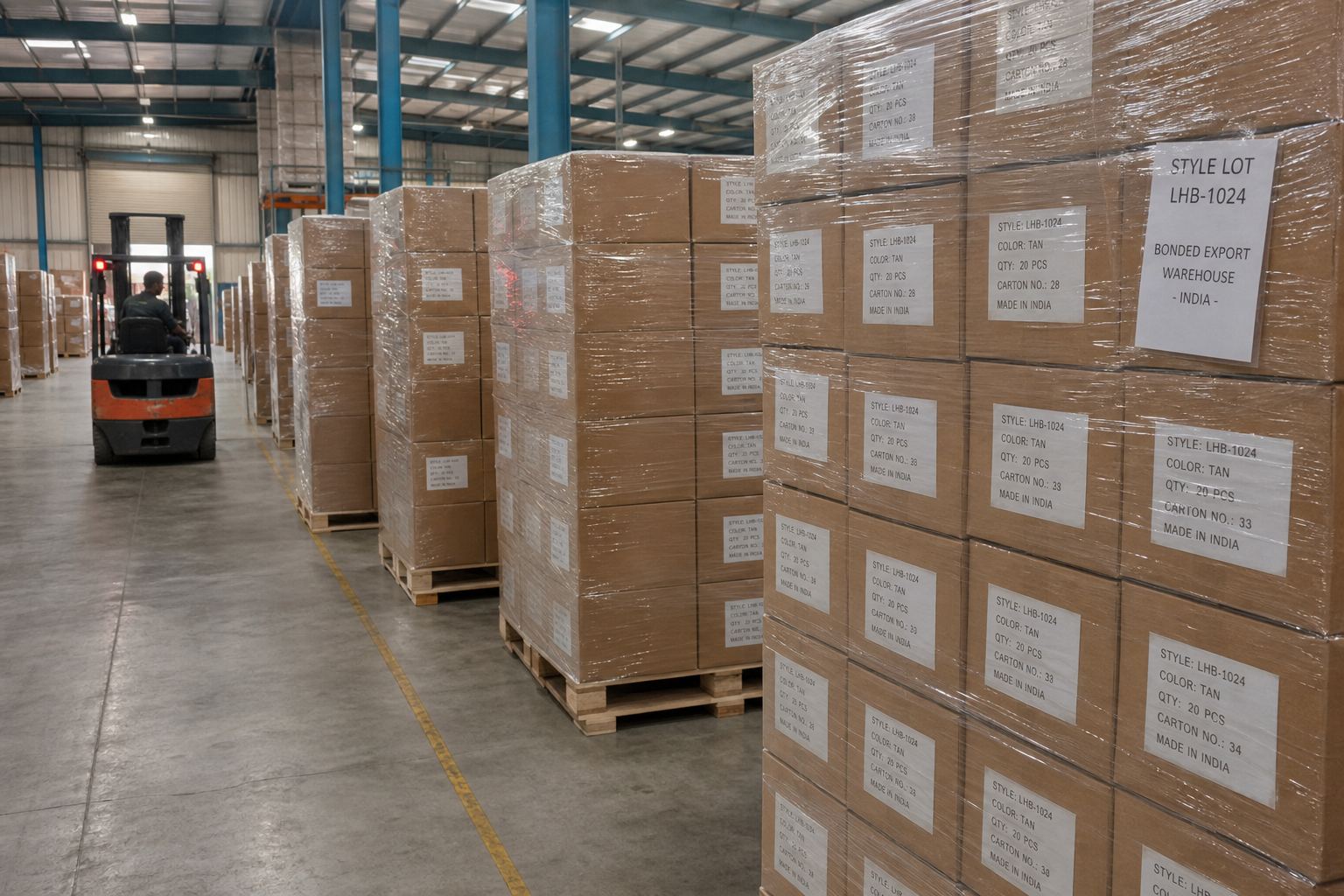
Buyer Requirements
Buyer Requirements
- Current RCMC and IEC — verify through official channels, not scanned copies alone
- Legal name consistency across RCMC, IEC, GST, invoice, and packing list
- Registration category matching fulfillment model — manufacturer vs merchant exporter
- Product declaration covering actual HS 4202 lines shipped
- Separate REACH, LWG, CPSIA, or nickel-release documentation where destination requires
- Factory traceability for merchant-exported orders — address, capacity, prior shipment references
International buyers treat RCMC as table stakes. Beyond registration, they require manufacturing evidence: signed samples, production-grade hardware, QC checkpoints, prior export references, and — where applicable — batch-specific chemical test reports. Merchant exporter buyers should also confirm which factory cuts and stitches their order.
Country-wise Opportunities
Market Snapshot
This section covers how buyers in key import markets use RCMC during onboarding — not which country to prioritize first. For market ranking, duty comparison, and entry strategy, use Best Countries for Indian Leather Bag Exports.
RCMC Verification Expectations by Destination (Onboarding Lens Only)
Swipe →
Data table — swipe horizontally on small screens
| Destination | RCMC Role in Onboarding | Typical Next Documentation Layer |
|---|---|---|
| USA | Baseline vendor filter | CPSIA for children's lines; retail packaging spec |
| UK | Standard credential check | UK REACH-equivalent chemical compliance |
| Germany | Gate before deep compliance review | REACH CrVI + LWG + nickel hardware |
| UAE | Standard commercial onboarding | Re-export EU docs only if onward routing |
| Australia | Credential plus packaging review | ISPM-15 for wood dunnage |
| Japan | One layer in extended qualification | Color-matching and consistency records |
United States
US retail and importer onboarding typically requests RCMC before sample funding. Pair with CPSIA documentation for children's bag lines and prior US shipment references where available.
United Kingdom and European Union
UK and EU buyers layer RCMC with REACH chromium VI reports and LWG tannery references for premium handbag programmes. Post-Brexit UK rules should be confirmed separately from EU requirements.
UAE and Gulf
Gulf distributors expect RCMC alongside standard commercial documents. Clean registration evidence accelerates fast-moving procurement cycles common in re-export and retail gifting channels.
Expert Insight: Registration Before Outreach, Not After
Expert Insight Box
We see exporters treat RCMC as a task to squeeze in once a buyer asks for a quote — backward sequencing. Complete IEC, GST, and CLE registration first, build the credential pack, then use CLE fair access and market intelligence to sharpen positioning before quoting.
Buyers should treat RCMC verification as a five-minute diligence step that prevents months of downstream risk. A supplier who produces RCMC, IEC, and prior export references without hesitation on first inquiry signals how they will behave when a color-matching dispute or shipping delay tests the relationship.
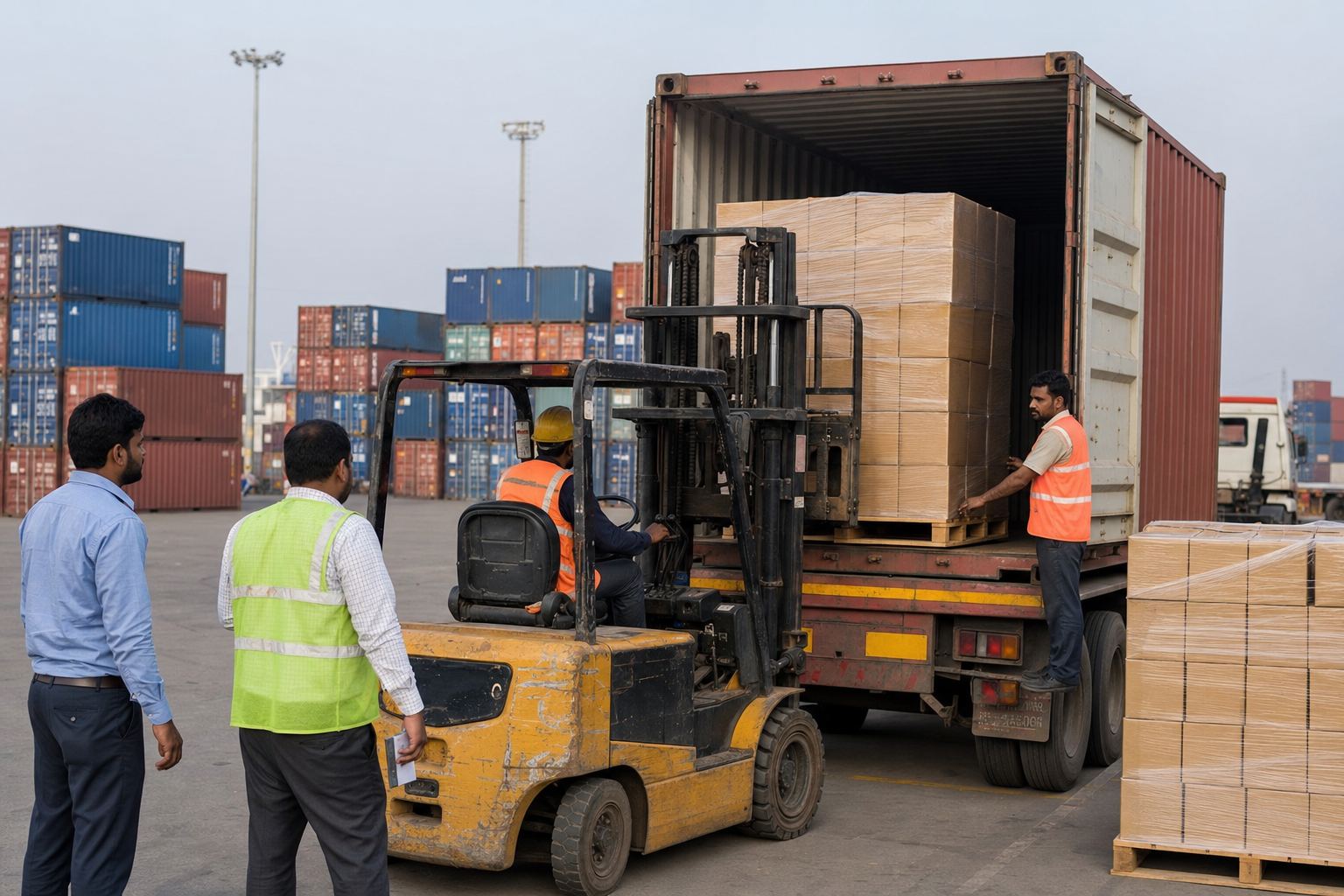
Sourcing Checklist
Checklist
- Verify IEC is active on the DGFT portal before starting CLE filing.
- Confirm GST registration with legal name identical to IEC and PAN.
- Select RCMC category — manufacturer exporter, merchant exporter, or tannery/component — matching actual operations.
- Prepare constitution documents, bank certificate, address proof, and product category list for HS 4202 bag lines.
- File through CLE regional office nearest your cluster — Kanpur, Kolkata, Delhi, Chennai, or Agra.
- Pay current registration fee per live leatherindia.org schedule; retain payment acknowledgment.
- Diary RCMC renewal date; assign a named team member responsible for membership continuity.
- Build consolidated credential PDF — RCMC, IEC, GST — ready for first buyer inquiry.
- Update product declaration before adding backpacks, travel bags, or SLG not on original list.
- Register for next CLE buyer-seller meet or IILF cycle once RCMC is issued.
Buyer Checklist
Checklist
Exporter Checklist
Checklist
Compliance Checklist
Checklist
Compliance Notes

Common Buyer Mistakes
Common Mistakes Box
Expert Insight: Fair Access and Renewal Discipline
Expert Insight Box
MSME exporters sometimes assume CLE is only for large houses — incorrect. Fair access breaks down only when document packs are incomplete or names mismatch across filings. Fix documentation once; renew on schedule; engage with council programmes consistently.
The failure pattern we see repeatedly: first buyers secured, renewal reminders ignored, new buyer inquiry arrives, RCMC lapsed — container timeline stops for an administrative fix that costs less than a single day's demurrage if handled proactively.
Future Market Trends
Key Statistics
Through 2030, expect continued digitization of CLE registration aligned with DGFT NSWS integration, stronger traceability expectations from EU buyers linking leather origin to registration-backed exporter identity, and expanded premium-market fair support for bag exporters demonstrating LWG and REACH-aligned documentation alongside RCMC.
Exporters who maintain current RCMC, update product declarations as assortments expand, and pair registration with construction consistency will capture disproportionate share of premium HS 4202 growth versus competitors who filed once and disengaged from council programmes.

Conclusion
- Next: confirm CLE fees and file RCMC with name-consistent IEC and GST documents.
- Read How to Export Leather Bags from India and Leather Bag Export Documentation Checklist.
- Buyers: Source Leather Bags Directly from India for verification workflows.
- Demand briefs: Most Demanded Indian Leather Bags by Country and Top Leather Bag Products Exported from India.
- Market selection (separate guide): Best Countries for Indian Leather Bag Exports.
- Growth channels: Find International Buyers for Leather Bags and Trade Shows for Leather Bag Exporters.
- Premium positioning: Sustainable & Premium Leather Bag Export Opportunities.
- Partner models: merchant exporter, export products from India, global sourcing partner.
CLE registration and RCMC are foundational infrastructure for commercial leather bag export under HS 4202 — unlocking scheme eligibility, trade fair access, and the buyer credibility that shortens path from inquiry to first container. Sequence matters: IEC and GST first, CLE filing with clean documents second, credential pack ready third, then outreach and sampling.
Verify live fees on leatherindia.org this week, assemble the document checklist from this guide, and complete registration before your next buyer cycle. Altus Exports supports bag factories and merchant exporters aligning CLE registration with product readiness, buyer credential packs, and first-shipment execution across Kanpur, Delhi-NCR, Ambur–Chennai, Kolkata, Agra, Jaipur, and Hyderabad clusters.