
How to Find Genuine International Buyers for Indian Honey
By Saurabh Mittal, Founder, Altus Exports
A practical, channel-by-channel playbook to find international buyers for Indian honey — inbound discovery through website SEO, LinkedIn, and APEDA-linked food fairs, outbound prospecting through HS 0409 trade data and structured technical email, and a verification protocol that separates genuine food importers from sample tourists and scam inquiries. Built for honey processors, beekeeping cooperatives, and merchant exporters.
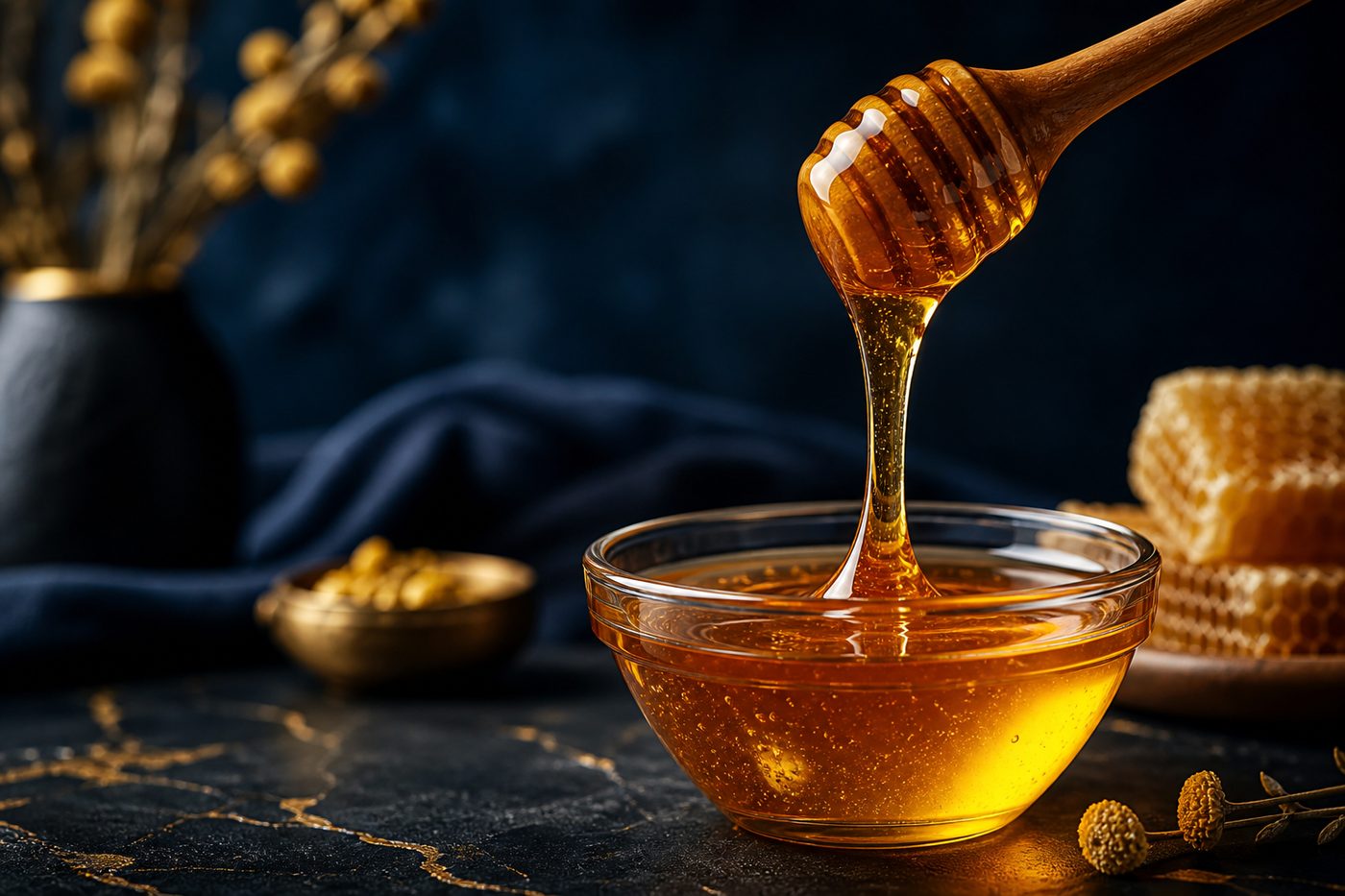
Finding international buyers for Indian honey is a discovery-and-verification problem before it is a selling problem. India's honey export base — Himalayan multifloral, Rajasthan and Punjab mustard, Bihar–West Bengal lychee, Uttarakhand acacia, Sundarban mangrove, wild forest honeys, and NPOP/USDA Organic programmes — reaches importers across USA, Germany, Netherlands, UK, UAE, Japan, Saudi Arabia, Canada, Australia, France every season. Very little of that flow starts with a walk-in customer. It starts with a trade-data screen under HS 0409, a LinkedIn message to a natural-foods procurement manager, an APEDA-linked fair meeting, or a cold email that named the correct floral variant, moisture/HMF band, and test-report availability on the first try.
This guide is a buyer discovery and outreach playbook specifically for honey — not a full export-process tutorial, not a varietal catalogue, and not a documentation template library. The HS reference you will use across every channel: 0409.00 (natural honey, whether or not canned). Confirm the exact 8-digit ITC-HS line with your CHA per packing format.
For the full varietal catalogue, see Top Honey Products Exported from India. For the end-to-end export process, read How to Export Honey from India. For documentation checklists, see Honey Export Documentation Checklist. For destination ranking, see Best Countries for Indian Honey Exports. For organic positioning, read Sustainable Organic Honey Export Opportunities. For fair-by-fair strategy, see Trade Shows for Honey Exporters.
Altus Exports operates as a merchant exporter in India and global sourcing partner, running structured buyer discovery programmes for honey processors and cooperatives. This guide is written for exporters allocating outreach bandwidth and for buyers who want to understand how credible Indian honey suppliers actually get found.
Key Takeaways
Summary Box
Executive Summary
Summary Box
Honey buyer discovery breaks into two structural halves: inbound channels that let buyers find you (a discoverable website with SEO-optimised pages for mustard, multifloral, lychee, acacia, and organic honey; an active LinkedIn presence aimed at food-ingredient and natural-foods buyers; and visible APEDA / Anuga / Biofach credibility) and outbound channels that let you find buyers first (trade-data mining under HS 0409, and structured, variant-specific cold email that references authenticity testing). Neither half works alone. Inbound builds a pipeline of buyers who are already motivated; outbound builds a pipeline of buyers who do not yet know you exist but already import natural honey.
The buyer universe for Indian honey is not homogeneous. A USA bulk ingredient buyer negotiating on moisture ≤18.5%, C4 pass, and drum packing has a completely different qualification bar than a German organic retailer requiring NPOP/EU Organic equivalence, NMR readiness, and pollen-profile documentation — or a UAE gifting buyer seeking retail jars for Ramadan programmes. Matching outreach language, sample format, and FOB framing to the correct buyer archetype — and to the correct floral variant — is what separates a low single-digit cold-email reply rate from a conversion-ready conversation.
This guide walks through market context, product-to-persona matching, inbound discovery in depth, outbound prospecting in depth, channel qualification (ingredient, organic retail, private label, Gulf gifting), buyer verification, pricing and MOQ framing for first contact, destination-specific discovery priorities, and checklists for both sides — closing with the Rajasthan–Germany case study that shows the system working end to end.

Market Size & Industry Overview
Key Statistics
India ranks among the world's top-ten honey producers, with a large managed-colony base across Uttar Pradesh, Rajasthan, Punjab, Haryana, Bihar, West Bengal, Himachal Pradesh, Uttarakhand, Maharashtra, and the Northeast. Export facilitation runs through APEDA (scheduled product), with food-safety and inspection coordination involving FSSAI, EIC, and NABL-accredited laboratories. That institutional layer matters for buyer discovery because serious importers now treat APEDA registration, lot-linked COAs, and residue panels as first-contact filters — not paperwork to request after a price is agreed.
Honey export value rewards differentiation: certified organic, monofloral, and well-documented origin programmes outperform undifferentiated multifloral bulk when authenticity scrutiny rises in the USA and EU. Commodity bulk still moves — especially into Gulf food-service and industrial ingredient channels — but discovery messaging that only says "we export honey" without variant, moisture/HMF band, and test availability reads as interchangeable and price-shoppable.
Honey Buyer Archetype Map
Swipe →
Data table — swipe horizontally on small screens
| Buyer Archetype | Typical Volume Pattern | Best Discovery Channel |
|---|---|---|
| Bulk food importer / wholesaler | Trial 1–5 MT, then seasonal FCL | HS 0409 trade data, LinkedIn, Anuga/SIAL |
| Ingredient / food-manufacturer buyer | Repeat drum/IBC programmes | Trade data, LinkedIn procurement titles |
| Organic specialty retailer / distributor | 1–10 MT certified lots | Biofach, LinkedIn, inbound SEO |
| Private-label natural-food brand | Retail-jar launch then reorder | Website inbound, LinkedIn, trade data |
| Gulf food-service & gifting buyer | Seasonal bulk + Ramadan jar programmes | Gulfood, referral, trade data |
| Health-food / nutraceutical buyer | Smaller MOQ, high documentation | LinkedIn, inbound content, Biofach |
Export Statistics: What India Ships and Where
Key Statistics
Trade-data screens are the single highest-leverage tool for honey buyer discovery. Filtering Indian export shipping-bill data and destination import data under HS 0409 by country surfaces consignees who already import natural honey — not prospects who "might be interested," but companies with a documented import habit. Read export statistics for discovery prioritisation, not only for price benchmarking: shipment frequency separates a one-off opportunistic importer from a quarterly reorder account, and competing-origin mix (China, Argentina, Ukraine, Vietnam, Mexico) reveals switch opportunities when authenticity or residue problems hit incumbents.
APEDA export statistics, DGCI&S/TradeStat HS 0409 flows, and ITC Trade Map destination trends should set your outreach priority stack. Cross-reference with a paid shipment database (ImportGenius, Panjiva, ExportGenius, or equivalent) for consignee names. Always re-verify the latest official releases before quoting absolute export values in buyer-facing material — use directional ranking for planning, not invented precision.
Destination Priority Signals for Honey Outreach (Directional)
Swipe →
Data table — swipe horizontally on small screens
| Destination | Demand Character | Honey Outreach Signal |
|---|---|---|
| USA | Bulk ingredient + organic private label | Primary — lead with C4, antibiotics ND, USDA Organic where held |
| Germany | Organic / varietal specialty gateway | High — NMR, pollen, EU Organic / NPOP readiness |
| Netherlands | EU redistribution & bulk packing hub | High — drum programmes, residue panel discipline |
| UK | Retail + specialty + private label | High — labelling accuracy, residue, origin story |
| UAE | Food-service bulk + Ramadan gifting | High — Halal-compatible process, jar programmes |
| Japan | Premium, ultra-strict residue | Selective — Japanese Positive List panel readiness |
| Saudi Arabia / Gulf | Institutional + premium retail | High — seasonal planning, presentation packs |
| Canada / Australia | Natural / organic retail growth | Medium-high — organic + authenticity docs |
| France | Premium varietal / artisan retail | Selective — taste profile + authenticity |
Import Statistics: Reading Destination-Side HS 0409 Data
Key Statistics
Destination-side import data adds the confirmation layer origin data alone cannot give you: landed-cost patterns, competing origins, and whether a buyer is growing or shrinking their honey category. Top markets worth building dedicated HS 0409 import-data watchlists for: USA, Germany, Netherlands, UK, UAE, Japan, Saudi Arabia, Canada, Australia, France.
A buyer showing rising quarter-over-quarter natural-honey import volume from any origin is a stronger discovery target than one with a single historical shipment — rising volume signals active category investment. Watch also for buyers switching origin after import alerts or authenticity scandals; those often represent supplier-dissatisfaction opportunities if your C4/NMR, residue panel, and chain-of-custody posture are clearer than the incumbent's.
Import Statistics — Honey Buyer Prioritisation Signals
Swipe →
Data table — swipe horizontally on small screens
| Signal | Buyer Prioritisation Action |
|---|---|
| Repeat quarterly imports under HS 0409 | High priority — steady honey demand |
| Rising volume trend across 2–3 quarters | High priority — growth / switch opportunity |
| Multi-origin honey sourcing (India + Argentina/China/etc.) | High priority — open to adding a documented Indian supplier |
| Seasonal spike (Q1 Ramadan prep / Q3–Q4 retail fill) | Medium priority — time outreach ahead of season |
| Single historical shipment only | Low priority — verify intent before paid lab samples |
| Falling volume or import-alert history on prior origins | Investigate; pursue only if your authenticity pack is ready |
Product Categories / Variants for Outreach Targeting
Summary Box
This section maps buyer type to honey product family for outreach targeting — it is not the full SKU catalogue (see Top Honey Products Exported from India for that). The point is to match your outreach message and sample kit to what a specific buyer archetype actually procures, rather than sending one generic "we export honey" message to every contact on a list.
Buyer Targeting by Indian Honey Product Family
Swipe →
Data table — swipe horizontally on small screens
| Product Family | HS Reference | Primary Buyer Type |
|---|---|---|
| Multifloral / wildflower (filtered bulk) | 0409 | Bulk importer, ingredient buyer, Gulf food-service |
| Mustard monofloral (Rajasthan / Punjab) | 0409 | Ingredient buyer, EU bulk redistributor |
| Lychee monofloral (Bihar / West Bengal) | 0409 | Specialty / organic retail (EU, Japan) |
| Acacia / Himalayan premium | 0409 | Premium specialty importers (Germany, Japan, France) |
| Organic certified (NPOP / USDA / EU path) | 0409 | Organic distributors, private-label natural brands |
| Raw / minimally processed retail jars | 0409 | Health-food retail, e-commerce, Gulf gifting |
Manufacturing & Quality Overview Buyers Expect You to Know
Buyer conversion for honey depends heavily on processing and testing credibility signals you can show, not just claim. Buyers who have been burned by adulteration or residue failures will ask — directly or through a verification step — whether you control apiary sourcing, filtration/processing temperature (HMF risk), drum hygiene, and lot-linked lab testing, or whether you are a trading intermediary reselling undocumented honey.
Be ready to demonstrate cluster-specific capability relevant to the buyer's variant interest: Rajasthan/Punjab mustard programmes; UP/Haryana multifloral aggregation; Bihar lychee season windows; Uttarakhand/Himachal premium forest and acacia; Northeast and Madhya Pradesh wild forest. A short packing-line or lab-dispatch photo set, a named quality contact, and a recent NABL COA summary do more for buyer confidence in the first message than a lengthy company history.
Exporter Credibility Package for First Contact
- 2–4 page company profile with apiary/processor geography and packing photos
- Variant catalogue extract (3–5 hero SKUs) with moisture/HMF targets and FOB bands
- Registration copies: IEC, APEDA RCMC, FSSAI licence
- Recent NABL COA summary showing C4, HMF, moisture, antibiotic panel availability
- Organic certificates where claimed (NPOP / USDA NOP / EU path) — never claim without evidence
- Named commercial contact with a stated 24-hour response SLA for technical inquiries
Buyer Discovery & Outreach Playbook
Export Tip
This section is the operational core of the guide — inbound discovery, outbound prospecting under HS 0409, channel qualification by buyer type, and the verification protocol that sits between first contact and a paid lab-certified sample.
Inbound vs Outbound — Honey Channel Comparison
Swipe →
Data table — swipe horizontally on small screens
| Channel | Pros | Cons |
|---|---|---|
| Website / SEO inbound | Pre-motivated buyers; lower price sensitivity | Slow to build; needs technical content |
| LinkedIn inbound + outreach | Named decision-makers in food import | Needs strong profile and patient nurture |
| APEDA fairs / Anuga / Biofach / Gulfood | High-intent face-to-face; cert discussions | Costly; needs 72-hour follow-up discipline |
| HS 0409 trade-data outbound | Evidence of real importers; switch signals | Subscription cost; still needs outreach craft |
| Structured cold email outbound | Scalable when variant-specific | Low reply rate if generic or spammy |
| B2B portals (IndiaMART etc.) | Fast discovery, low entry cost | High noise; price racing common |
| Referrals | Highest trust, warm introduction | Limited unless asked systematically |
Inbound Buyer Discovery Channels
Inbound channels attract buyers who are already searching for an Indian honey supplier. They take longer to build than outbound campaigns but produce buyers with lower price sensitivity, because they arrived motivated and pre-educated on authenticity risk rather than cold-contacted mid-quarter.
Website & SEO-Optimised Honey Category Pages
A discoverable website with category pages built around actual buyer search terms — "wholesale mustard honey India exporter," "organic multifloral honey APEDA," "lychee honey supplier India," "bulk honey drums FOB India," "NPOP organic honey manufacturer" — captures buyers already at the research stage of a sourcing decision. Each variant page should show indicative FOB bands, MOQ, lead time, pack formats (200/210 L drum, IBC, retail jar), and authenticity posture (C4/NMR available, antibiotic panel, NABL lab) up front; serious buyers filter suppliers on these details before sending an inquiry.
Publish specific, technical content rather than generic marketing copy. A page explaining HMF control and harvest-to-drum moisture discipline converts better with food importers than a page listing adjectives like "pure" and "natural" without lab evidence. Link downloadable one-page tech sheets (not 20 MB catalogues) so inbound leads can self-qualify.
LinkedIn Presence & Natural-Foods Buyer Outreach
LinkedIn works two ways for honey discovery: passive presence (company and personal profiles posting harvest updates, drum packing, COA milestones, and organic certification renewals that buyers find when they search) and active outreach (Sales Navigator filtered to procurement, import, category, and quality titles at honey importers, natural-food distributors, ingredient buyers, and organic retailers in target markets).
For active outreach, reference something specific — a buyer's public honey range, a recent HS 0409 import shipment, or a Biofach/Anuga exhibitor listing — rather than opening with "Dear Sir we are a leading honey exporter." Specific, short messages that name the floral variant, moisture/HMF band, and test-report availability outperform generic introductions by a wide margin. Cadence: 30 highly targeted food-industry connections per week beats 300 generic trading contacts.
APEDA-Linked Fairs & Food Exhibition Visibility
APEDA-supported participation at Anuga (Cologne), SIAL, Biofach (Nuremberg — organics), Gulfood (Dubai), and APEDA buyer-seller meets remains a high-signal inbound venue — buyers walk booths already understanding honey quality questions. Treat shows as list-building events: capture buyer cards, note which variants drew handling time, and follow up within 72 hours with a trade-data-informed technical message rather than a generic "nice to meet you" note. Arrive with labelled sample jars, COAs, organic certificates where held, and a simple FOB framework. For the full fair calendar and booth checklist, see Trade Shows for Honey Exporters.
Directories, Associations & Content-Led Inbound
APEDA portals, FIEO pathways, destination food-importer registries, and natural-product association ecosystems (USA NPA networks, EU organic associations, UK Soil Association-adjacent networks, Australia ACO networks) create discoverability — but treat them as research and listing hygiene tools, not automatic order machines. Pair directory presence with inbound content: harvest calendars, residue-panel explainers, and variant comparison sheets that rank in buyer searches and nurture leads who are not yet ready to RFQ.
Outbound Buyer Discovery Channels
Outbound channels let you reach honey buyers before they start searching — useful because many importers renew supplier relationships reactively (when an incumbent fails a residue or authenticity test, misses a harvest window, or drifts on moisture/HMF) rather than proactively, and a well-timed outbound message with lab readiness can be the trigger that starts a switch.
Trade Data Mining Under HS 0409
Build a named target list from export shipping-bill data and destination import data under HS 0409. Prioritise consignees showing repeat or rising-volume import patterns over one-off shipments. Enrich with website, LinkedIn procurement contacts, organic/food-licence signals, and notes on competing origins.
Segment the list by buyer channel and variant before writing outreach, so a German organic retailer receives lychee/organic messaging with NMR availability, while a UAE food-service buyer receives multifloral/mustard drum messaging with Halal-compatible process notes. Trade data also reveals which competing origins a target currently sources from — useful context for framing authenticity documentation against a real incumbent.
Structured Cold Email Programmes
Cold email for honey converts when it is anchored to a trade-data signal and a technical credibility line — not a generic "leading exporter" pitch. The anatomy that works: line one names the buyer's own import record under HS 0409 or their public honey category; line two states the floral variant and key spec band (e.g. moisture ≤18.5%, HMF within market limit); line three states C4/NMR and antibiotic-panel availability from a NABL lab; line four states MOQ and lead time; line five is a single ask (15-minute call or paid lab-certified sample). Five lines, not five paragraphs.
Cadence discipline matters more than message polish: initial email → LinkedIn connection note at day 3–5 → second email around day 10 with a harvest update or fresh COA summary → final follow-up at day 20–25. Stop after four touches without response and revisit in three to six months (ideally ahead of the next relevant harvest window) rather than escalating frequency into spam.
Referral & CHA / Peer Exporter Networks
Warm introductions from other agri-food exporters, CHAs, freight forwarders, and APEDA meet alumni convert at higher rates than cold email — but only if you ask systematically. Keep a monthly referral ask list: three contacts asked for one warm intro each. Reciprocate with clean documentation behaviour so your name stays referable. Referrals are outbound in discipline even when the first touch feels inbound in warmth.
Channel Qualification by Buyer Type
Not every verified HS 0409 importer is the right first account for your current certification and capacity. Qualify channel fit before spending on NMR-level sampling.
Ingredient & Bulk Food-Manufacturer Buyers
- Confirm Brix/moisture/HMF and colour (Pfund) tolerance bands in writing before quoting
- Ask whether honey is an input for bakery, confectionery, beverage, or retail packing — specs differ
- Lead with drum/IBC MOQ, lot COA discipline, and repeatable seasonal supply — not jar storytelling
- Red flag: huge first-order tonnage with zero authenticity questions
Organic Specialty & Health-Food Buyers
- Confirm which organic scheme they need (NPOP/EU path, USDA NOP, JAS) before claiming readiness
- Offer NMR/C4 and full residue panels proactively — this channel treats authenticity as table stakes
- Match monofloral story to documented apiary geography; do not invent floral claims
- Expect slower onboarding and higher documentation burden; price the programme accordingly
Private-Label Retail & Gulf Gifting Buyers
- Clarify jar sizes, label language, and shelf-life claims before costing
- For Gulf: map Ramadan procurement windows 8–12 weeks ahead of the month
- Ask for a written brief or previous vendor pack spec — real PL buyers usually have one
- Prefer paid sample + artwork approval path over free unlimited jar requests
Buyer Verification Protocol
Honey transactions carry specific verification risks: fake importers fishing for free certified samples, identity theft using real company names with altered email domains, brokers without disclosed principals, and "buyers" quoting 500–1,000 MT first orders with no quality questions. Verification protects both sides — buyers should verify exporters, and exporters should verify buyers before committing lab and drum costs.
Verifying Genuine Honey Importers
- Confirm the buyer's shipment history under HS 0409 through trade data — a genuine importer has a repeatable pattern, not a single opportunistic entry
- Confirm food-importer registration / legal existence and a coherent food or natural-products website
- Prefer corporate-domain email and consistent named contacts over personal Gmail threads
- Red flag: refusal to video call before high-value sample dispatch; pressure to bypass banking or food-import docs
- Red flag: only cares about cheapest price with zero moisture/HMF/C4 discussion
- Start with paid lab-certified samples before committing trial-container costs
What Verified Buyers Expect From You
- Lot-linked COA with moisture, HMF, and authenticity tests — not a generic "pure honey" certificate
- Antibiotic residue panel offered proactively for USA/EU/Japan-bound lots
- APEDA RCMC and FSSAI details shareable on first serious inquiry
- Honest organic claims only — with certificates attached when claimed
- Clear Incoterms, pack format, MOQ, and payment terms on the first formal quote
- A named responsive contact rather than a rotating inbox
How to Find International Buyers for Indian Honey: Step-by-Step Process
Export Tip
Use this eight-step operating system every quarter. It turns random outreach into a repeatable food-export sales process that balances inbound assets and outbound prospecting.
Step 1: Identify Target Markets
Pick one primary and one backup export market using demand fit from Best Countries for Indian Honey Exports. USA for bulk ingredient and private-label volume, Germany/Netherlands for certified organic and EU redistribution, UAE for natural and gifting segments, Japan for premium monofloral — choose based on variant readiness, certification status, and lab capability, not market size alone.
Step 2: Define Your Product Range
Commercialise 3–5 product variants you can reproduce with consistent specifications: Brix, moisture %, HMF, colour grade, origin, and certifications held. Match variants to known demand from Top Honey Products Exported from India.
Step 3: Build a Buyer Profile
Write a one-page ideal customer profile: country, channel type (importer/distributor/private-label/ingredient), volume range, certification requirement, Incoterm preference, and decision-maker titles (procurement manager, quality director, category buyer, import operations).
Step 4: Research Potential Buyers (Outbound + Inbound Assets)
Use HS 0409 trade data, APEDA fair attendee lists, LinkedIn, association directories, and referrals to build 50–100 named accounts. Capture website, contact, HS 0409 evidence, certification held, and research notes. In parallel, keep website tech sheets and LinkedIn profiles current so inbound replies have somewhere credible to land.
Step 5: Verify Buyer Credentials
Run the verification checklist before heavy technical sampling. Disqualify fake urgency and payment anomalies early. Confirm food-import standing in the buyer's home country.
Step 6: Reach Out Professionally
Send short, variant-specific messages with origin, key spec ranges, MOQ, APEDA code, and a one-page tech sheet. No 20 MB PDF on first touch.
Step 7: Follow Up Consistently
Plan 4–6 touches over 3–4 weeks across email and LinkedIn. Follow up with new value: harvest-season update (Mustard Feb–Mar · multifloral May–Jun · forest Sep–Nov), new test report, fair meeting slot, or lab-certified sample dispatch notice.
Step 8: Convert Inquiry to Order
Respond within 24 hours, quote with Brix/moisture/HMF parameters, offer a paid lab-certified sample, lock specs on proforma, agree payment and Incoterms, and plan a trial shipment in drums or IBC. Document every commitment to prevent quality-claim disputes later.
Pricing Analysis for Outreach
Buyer Tip
Outreach that leads with a variant-specific FOB indication converts faster than outreach that leads with a company introduction. Indicative bands to reference (always re-validate against harvest, testing, and freight): conventional bulk $1.80–3.20 / kg FOB (directional, drum); monofloral premium $3.50–7.50 / kg FOB (directional); organic certified $4.50–9.00+ / kg FOB (directional, cert-dependent); retail jars $2.50–12.00 / unit FOB (SKU and pack dependent). Frame the band alongside pack format and load port so the buyer can sanity-check landed cost quickly.
Buyers who respond to a specific FOB band typically ask for a paid sample and a formal quote against written quality parameters — not an immediate discount negotiation. Treat that as the expected next step. Organic and NMR-tested programmes sit at documented premiums; see Sustainable Organic Honey Export Opportunities rather than inventing premiums in first contact.
Outreach FOB Framing by Honey Family
Swipe →
Data table — swipe horizontally on small screens
| Product Family | Indicative FOB (USD) | Typical Packing Reference |
|---|---|---|
| Conventional multifloral / mustard bulk | $1.80–3.20 / kg FOB (directional, drum) | 200/210 L food-grade steel drums |
| Monofloral premium (lychee, acacia, Himalayan) | $3.50–7.50 / kg FOB (directional) | Drums or smaller export packs |
| Organic certified programmes | $4.50–9.00+ / kg FOB (directional, cert-dependent) | Certified-handling drums / retail jars |
| Retail / gifting jars | $2.50–12.00 / unit FOB (SKU and pack dependent) | Glass jars, labelled cartons |
MOQ Analysis for First Orders
Buyer Tip
In cold outreach and fair follow-up, open with sample and trial MOQs — not only FCL floors. Outreach that quotes only container minimums filters out serious testers who would have become reorder accounts. Full operational staging lives in How to Export Honey from India.
MOQ Positioning by Stage
Swipe →
Data table — swipe horizontally on small screens
| Stage | Typical Quantity | Purpose |
|---|---|---|
| Sample | 250 g–2 kg lab-certified sample + COA | Authenticity, sensory, and lab confirmation |
| Trial order | 1–5 MT per variant (drums / IBC) | Packing, logistics, and claim-procedure validation |
| Programme scale | 10–40+ MT seasonal programmes | Seasonal repeat drum / FCL cadence |
Packaging Standards Referenced in Outreach
Export Tip
Mentioning honey-specific packaging capability in first-contact outreach signals operational maturity. Bulk programmes typically move in food-grade epoxy-lined steel drums (commonly ~200–300 kg net depending on fill) or IBCs; premium and private-label programmes use glass jars with destination-compliant labels. Buyers evaluating multiple suppliers often use packing detail and lot labelling discipline as a tie-breaker when FOB quotes are similar.
Packaging Detail Worth Referencing Early
Swipe →
Data table — swipe horizontally on small screens
| Packing Element | Buyer Signal |
|---|---|
| Food-grade drum / IBC with lot stencil | Traceability and industrial readiness |
| Heat/HMF-aware processing note | Shelf-life and EU premium readiness |
| Tamper-evident jar + multilingual label capability | Retail / Gulf gifting readiness |
| COA packed with shipping docs per lot | Food-safety maturity |
| Organic segregated handling (when claimed) | Certification integrity |
Container Loading, Shipping & Lead Times for Buyer Conversations
Export Tip
Buyers test operational readiness in the first two or three exchanges — before they lock price. Have clear answers for load planning and transit so the conversation moves forward.
Lead Time Reference for Outreach
Swipe →
Data table — swipe horizontally on small screens
| Stage | Typical Lead Time |
|---|---|
| Lab-certified sample dispatch | 5–10 days (lab-certified jar/drum sample) |
| Trial shipment post-PO | 3–5 weeks post-PO |
| Programme / repeat lot | 4–8 weeks post-PO (lot testing + packing) |
| Harvest-aligned outreach windows | Mustard Feb–Mar · multifloral May–Jun · forest Sep–Nov |
Container Loading
Drum programmes are planned by drum count and weight, not vague "one container of honey." State whether you ship mixed variants in one container, how you segregate organic lots, and whether LCL trials are available for first orders. LCL is viable for 1–5 MT trials but raises per-kg freight versus FCL.
Shipping & Lead Times
Typical sample dispatch 5–10 days (lab-certified jar/drum sample); trial production and testing 3–5 weeks post-PO; full programme lots 4–8 weeks post-PO (lot testing + packing). Ocean transit varies by lane (Gulf faster; USA/Japan longer). Quote FOB Indian port as default for new buyers; CFR/CIF once relationship and volume justify a landed-price conversation. Honey is relatively shelf-stable, but summer heat exposure without sensible packing and storage can degrade colour and raise HMF — do not overpromise "any climate, any speed" delivery.
Certifications That Support Buyer Trust
Compliance Notes
Certification and compliance signals accelerate buyer trust at the discovery stage. Lead with APEDA RCMC and FSSAI as baseline. For USA buyers, mention antibiotic-panel and C4 readiness (and USDA Organic only when held). For EU buyers, mention HMF discipline, residue panels, and NPOP/EU Organic path when applicable. For Japan, do not claim readiness unless you can support a Japanese-relevant residue panel.
Certification Signal by Buyer Type
Swipe →
Data table — swipe horizontally on small screens
| Buyer Type | Signal to Lead With |
|---|---|
| USA bulk / private label | APEDA + FSSAI + C4 + antibiotics ND (+ USDA Organic if held) |
| EU organic / specialty | APEDA + NPOP/EU Organic path + NMR/C4 + HMF discipline |
| Gulf food-service / gifting | APEDA + FSSAI + Halal-compatible process + jar capability |
| Japan premium | APEDA + strict residue panel readiness + monofloral evidence |
| Ingredient manufacturer | APEDA + lot COA + moisture/HMF/Brix consistency |
Country-wise Opportunities for Buyer Discovery
Export Tip
Market Snapshot
Discovery channel priority shifts by destination. Matching the right inbound/outbound mix to the right market saves outreach hours.
Discovery Channel Priority by Destination
Swipe →
Data table — swipe horizontally on small screens
| Destination | Primary Discovery Channels |
|---|---|
| USA | HS 0409 trade data + LinkedIn; authenticity-first email |
| Germany / Netherlands / France | Biofach/Anuga + trade data + organic inbound SEO |
| UK | Trade data + LinkedIn private-label / specialty |
| UAE / Saudi Arabia | Gulfood + referral + seasonal outbound |
| Japan | Selective trade data + ultra-complete lab pack |
| Canada / Australia | LinkedIn + inbound organic/natural content |
United States
Responds well to HS 0409 trade-data outbound plus LinkedIn to ingredient and natural-food buyers. Lead early with C4, antibiotic non-detect posture, and USDA Organic only when certified. Inbound SEO around organic and private-label honey terms performs strongly.
Germany, Netherlands & France
Western European discovery favours Biofach/Anuga visibility, organic-ready inbound content, and trade-data targeting of redistributors (Netherlands) and specialty importers (Germany/France). NMR and pollen-profile readiness belong in first serious conversations.
United Kingdom
Blend trade-data targeting with LinkedIn to specialty and private-label buyers. Labelling accuracy and residue documentation are early filters post-Brexit regulatory divergence from the EU.
UAE & Saudi Arabia
Gulfood presence, referral networks, and seasonal outbound timed to Ramadan procurement outperform purely cold directory blasting. Dual-track messaging: drum bulk for food-service and jar programmes for gifting/retail.
Japan, Canada & Australia
Japan is selective and documentation-heavy — pursue only with residue-panel readiness. Canada and Australia respond to LinkedIn and inbound organic/natural content with authenticity packs attached.
How to Build a Honey Buyer Database & Pipeline
A usable honey buyers database is a living CRM — not a purchased PDF of unverified emails. Minimum fields: company, country, website, buyer channel type, HS 0409 evidence, contact name and role, email and LinkedIn, source (inbound vs outbound), last contact date, status, next action date, variant interest, certification requirement, MOQ range, and current supply origin if known.
Build weekly: 10 new verified accounts from trade data, 10 from LinkedIn, fair leads in season, plus inbound form leads tagged by landing page. Clean quarterly. Measure qualified technical conversations, sample-to-order conversion, and repeat-order rate — not emails sent. Stages: research → contacted → sampling → quotation → negotiation → first shipment → repeat order.
Common Scams Targeting Honey Exporters — and How to Avoid Them
Honey export attracts specific scam patterns: fake importers requesting free certified samples, advance-fee schemes dressed as "import licence clearance," identity theft with altered email domains, document fraud on organic certificates, overpayment cheque scams, and freight-forwarder impersonation. Category-specific red flag: enormous first-order tonnage (500–1,000 MT) with zero quality questions.
Prevention: verify first, never pay to receive an order, use normal banking, confirm freight parties independently, and keep written trails. Train every team member who handles export email. Losing a fake order is less painful than dispatching unrecovered product.
Case Study: Rajasthan Honey Processor Securing a German Organic Buyer
Challenge: A Rajasthan-based honey processor with APEDA registration and Indian Organic certification had no international buyer pipeline. Occasional B2B inquiries were price shoppers or unverified brokers. Lab testing capability was strong but unpublicised.
Research process (outbound): Mapped mustard and multifloral honey to HS 0409. Pulled German and Dutch importer data. Enriched 55 accounts with website and LinkedIn contacts. Scored on legitimacy, organic requirement, and import recency.
Inbound readiness: Published a one-page tech sheet with COA summary and NMR/C4 availability so replies had a credible asset to open.
Buyer identification: Shortlisted 14 organic food importers with verified natural-honey purchase history and EU Organic import authorisation. Removed four leads with mismatched domains or no verifiable food-import standing.
Outreach: LinkedIn + email with two-variant tech sheet, full COA summary, C4/NMR availability, MOQ 1 MT, 30-day lead time. Four follow-ups over four weeks with harvest update and sample dispatch confirmation.
Negotiation: 50% advance, 50% against B/L scan for trial; CIF Hamburg; agreed pesticide-residue and heavy-metals schedule; EU Organic import certificate coordination via existing NPOP cert.
Order acquisition: Trial of 3 MT mustard monofloral in 200 L drums within 10 weeks of first reply. Quality accepted; repeat discussion for next mustard season; second order added mixed wildflower.
Lessons learned: Trade data created the list; technical credibility opened the conversation; APEDA and NPOP readiness closed the trial. Proactive adulteration documentation was the single biggest conversion factor. Generic B2B blasting had produced no qualified orders in the prior two years.
Sourcing Checklist — Buyer and Exporter
Checklist
Buyer discovery works when both sides run a checklist: identity verification, payment terms, quality parameters, and packing proof — not open-ended WhatsApp haggling.
Buyer Checklist
- Verify APEDA RCMC and IEC before deep specification discussion
- Request a recent NABL COA covering moisture, HMF, C4/NMR, and antibiotics
- Insist on a paid lab-certified sample before any trial order
- Confirm floral claim, organic certificates (if any), and pack format in writing
- Agree quality-claim procedure and payment terms before production
Exporter Checklist
- Complete credibility package before outreach (profile, tech sheet, registrations, COA summary)
- Segment target lists by HS 0409 and destination before writing messages
- Run inbound assets (website pages, LinkedIn) in parallel with outbound sprints
- Verify buyer legitimacy before committing lab and drum costs
- Track every touch in CRM; max four touches per unresponsive lead per cycle
Compliance Checklist for Buyer-Facing Outreach
Checklist
Compliance Notes
10 Mistakes Honey Exporters Make When Finding Buyers
- Mass-emailing generic introductions — Solution: named, variant-specific outreach with specs.
- Building only outbound or only inbound — Solution: run both in parallel every quarter.
- Claiming all honey types with no core programme — Solution: 3–5 hero variants with full technical readiness.
- Skipping buyer verification — Solution: checklist before sample dispatch.
- Slow replies to technical inquiries — Solution: 24-hour SLA.
- Quoting without Incoterms or moisture/Brix/HMF — Solution: structured proforma.
- Free unlimited certified samples — Solution: paid sample policy with COA.
- No follow-up cadence — Solution: 4–6 planned touches with new technical value.
- Ignoring adulteration questions — Solution: share test reports upfront.
- No CRM tracking — Solution: next action, last contact, inbound/outbound source tags.
Challenges & Solutions
Buyer Discovery Challenges and Solutions
Swipe →
Data table — swipe horizontally on small screens
| Challenge | Practical Solution |
|---|---|
| India authenticity reputation concerns | Lead with NABL C4/NMR and residue panels in first message |
| Trade-data lists mix honey with unrelated food importers | Segment strictly by HS 0409 and catalogue fit before writing |
| Cold email response rates are low | Reference buyer-specific import signal + variant + test availability |
| Fair leads go cold in two weeks | 72-hour follow-up + CRM + LinkedIn nurture |
| Organic buyers demand certs you do not hold | Qualify channel fit first; do not overclaim — build cert path intentionally |
| Sample tourists consume lab budget | Paid sample policy + verification score ≥12 before dispatch |
Future of International Honey Buyer Discovery
Export Tip
Through 2030, AI-assisted food-import intelligence, NMR authentication databases, digital traceability, and buyer-intent signals from compliance systems will compress discovery time and raise documentation expectations simultaneously. Exporters with clean digital catalogues, current APEDA and organic certifications, consistent test histories, and traceable beekeeping-to-drum chains will be easier for procurement teams and algorithms to shortlist.
Human trust — samples, calls, food-fair meetings — will still close contracts. Build data hygiene now: consistent company names, HS 0409 export records, clear specifications, and response SLAs. Discovery becomes faster; authentication standards become stricter.
Buyer Discovery Trend Signals
Swipe →
Data table — swipe horizontally on small screens
| Trend | Exporter Response |
|---|---|
| Digital-first verification | Publish APEDA status, tech sheets, and COA samples on your site |
| AI-assisted HS 0409 lead scoring | Adopt for list building; keep messaging human and variant-specific |
| Authenticity framing earlier in the funnel | Lead outreach with C4/NMR honesty for USA/EU |
| Rising private-label organic demand | Prepare jar specs and dual-cert pathways before outreach spikes |
Expert Insights
Expert Insight Box
Altus Exports supports overseas honey buyers and Indian processors with merchant-export coordination, verified supply shortlists, and outreach packages that lead with lab evidence instead of catalogue spam. Explore organic honey sourcing and the honey & natural products industry page.
Conclusion
- Do this week: Write your buyer profile, define 3 hero honey variants with specifications, prepare a one-page tech sheet, and shortlist 25 HS 0409 accounts in one primary market.
- Read Trade Shows for Honey Exporters, Source Honey Directly from India, Honey Export Documentation Checklist, APEDA Registration Benefits, Most Demanded Indian Honey by Country, and Sustainable Organic Honey Export Opportunities.
- Also explore Top Honey Products Exported from India, Best Countries for Indian Honey Exports, and How to Export Honey from India.
- Explore merchant exporter, export products from India, and honey & natural products.
- View our organic honey sourcing programme for buyer and exporter enquiries.
Finding international buyers for Indian honey is a discovery-and-verification discipline, not a single marketplace or a lucky email. Inbound channels (SEO-ready variant pages, LinkedIn presence aimed at food and organic buyers, APEDA-linked fair visibility) build a pipeline of buyers who arrive already motivated. Outbound channels (HS 0409 trade-data mining, structured technical cold email, systematic referrals) reach buyers who have not started searching yet. Channel qualification and genuine-importer verification protect the relationship once contact turns commercial.
Use HS 0409 when building trade-data target lists. Frame outreach around sample MOQs of 250 g–2 kg lab-certified sample + COA and trial MOQs of 1–5 MT per variant (drums / IBC), with realistic lead times of 5–10 days (lab-certified jar/drum sample) for samples and 3–5 weeks post-PO for trials. Proactive sharing of authenticity and residue documentation remains the most effective trust-builder in a category where adulteration concerns shape buyer decisions.
Altus Exports helps honey processors and merchant exporters connect with verified international demand — paired with documentation and shipment execution, not leads without follow-through. Share your variant, certifications, capacity, and target markets via /contact/ to begin a practical pipeline plan.