
Honey Export Documentation Checklist: Every Paper You Need
By Saurabh Mittal, Founder, Altus Exports
A complete honey export documentation checklist for Indian honey producers, processors, merchant exporters, and organic honey suppliers. Cover IEC, GST, FSSAI licence, APEDA registration, commercial invoice, packing list, shipping bill, bill of lading, certificate of origin, health certificate, phytosanitary certificate where applicable, C4 adulteration test, HMF level reports, moisture content certificates, antibiotic residue reports, and organic transaction certificates for EU NOP and India Organic programmes. Learn how documentation errors trigger shipment holds, rejections at destination, and payment disputes — and how to build a process that prevents them. Includes country notes for the USA, EU, UK, UAE, and Australia, a printable pre-shipment checklist, common mistakes with fixes, and compliance guidance aligned with APEDA, FSSAI, DGFT, and CBIC practice — from Altus Exports.

Honey export documentation is where shipments succeed or stall — often at destination, after the vessel has sailed and the buyer has scheduled warehouse receipt. A drum of Indian multifloral honey can pass internal quality checks, meet moisture specs, and be packed to export standards, and still be detained at US or EU borders because a health certificate was missing, an antibiotic residue report was issued by a non-approved laboratory, or the organic transaction certificate did not cover the specific lot shipped. In food trade, paperwork is not admin overhead — it is part of the product the buyer receives.
Documentation failures in honey exports are expensive. Detention charges, fumigation or destruction orders, buyer penalties, payment holds, and market access bans all stem from preventable paperwork gaps. India is among the world's largest honey-producing and exporting countries, yet documentation errors are a persistent reason Indian honey loses ground with premium international buyers who have experienced a single shipment hold. Compliance with APEDA, FSSAI, DGFT, and CBIC frameworks, plus destination import rules, protects margin as much as quality management does.
This honey export documentation checklist walks Indian honey exporters — producers, processors, co-operatives, and merchant exporters — through every registration, core document, lab report, certification, and shipping paper required for international trade. You will also find country-specific notes, a printable pre-shipment gate checklist, common mistakes with process fixes, and a case study on recovering from documentation-driven rejections. Pair this with how to export honey from India, APEDA registration benefits for honey exporters, and the broader export compliance guides on altusexports.com. Always verify current portal steps and lab approval lists with APEDA, FSSAI, and your CHA — procedures evolve.
Key Takeaways
Summary Box
- A honey export documentation checklist must be completed before cargo cutoff — testing delays and certificate applications are far harder to fix after the vessel sails.
- IEC and GST are foundational; FSSAI licence and APEDA registration are mandatory for commercial honey exports from India.
- Lab reports — C4 adulteration, HMF, moisture, and antibiotic residue — must come from APEDA-approved or destination-accepted laboratories.
- Organic honey shipments require organic transaction certificates aligned to the specific certification standard: EU, NOP, India Organic, or others as applicable.
- Invoice, packing list, and shipping bill must use identical product descriptions, lot numbers, net weights, and drum counts.
- Altus Exports helps honey and natural products export programmes align documentation discipline with shipment execution.
Why Honey Export Documentation Matters
Honey is a regulated food product in every major import market. Customs clearance, food safety authority approval, and payment collection all depend on aligned, complete, and laboratory-verified commercial sets. The EU, USA, UK, and Gulf countries operate active border inspection programmes for honey imports, with particular scrutiny for adulteration, antibiotic residue, and origin fraud — a history that has made buyers in these markets demanding on documentation quality before orders are placed, not only at clearance.
Practical example: a Rajasthan honey exporter shipped a container of multifloral honey to Germany with a health certificate listing the processor's old FSSAI registration number after a renewal. The updated certificate arrived by email, but the original accompanying the shipment was flagged as inconsistent. Fourteen days of detention, a phytosanitary re-inspection, and a corrective action request from the importer followed. Another case: a Punjab exporter of organic honey to the US sent an organic transaction certificate covering the annual volume but not the specific lot numbers in the shipment. The US organic certifier required a lot-specific TC; the cargo sat in a bonded warehouse for three weeks while a corrected document was issued from India.
APEDA, FSSAI, and DGFT frameworks set the Indian export architecture for honey. CBIC customs systems enforce declaration accuracy at the border. Destination food safety and customs authorities enforce import conditions that may exceed Indian requirements — especially on pesticide residues, antibiotic levels, and adulteration markers. Documentation quality is therefore a competitive advantage and a market access prerequisite, not only a compliance chore.

Overview of the Honey Export Process
Export Tip
Use this flowchart-style sequence to see where each document sits in a honey export programme. Documentation failures most often occur between stages 3 and 5 — after processing is complete but before sailing — because procurement, laboratory, certification, and logistics teams work from separate trackers without a shared document master.
Comparison table
Swipe →
Data table — swipe horizontally on small screens
| Stage | What happens | Key documents |
|---|---|---|
| 1. Order confirmation | PO accepted; specs locked | PO, proforma invoice, sales contract, spec sheet |
| 2. Procurement & processing | Honey sourced, filtered, blended to spec | Internal lot records, moisture readings, QC logs |
| 3. Lab testing | Samples submitted to approved labs | C4 report, HMF report, moisture certificate, antibiotic residue report, pesticide report |
| 4. Documentation prep | Commercial set drafted; certificates applied for | Commercial invoice, packing list, COO application, health certificate application, organic TC if applicable |
| 5. APEDA filing | APEDA certification/export permit processed | APEDA registration, relevant APEDA documents per category |
| 6. Shipping / customs filing | Shipping bill filed; cargo handed over | Shipping bill/export declaration, freight invoice |
| 7. Transport document | Carrier issues B/L or AWB | Bill of Lading or Airway Bill |
| 8. Insurance (if CIF/CIP) | Cover arranged | Insurance certificate/policy |
| 9. Destination clearance | Buyer/broker clears with health/food safety authority | Full document pack + local import filings + any destination lab tests |
| 10. Payment collection | Documents presented/settled | Negotiable set per payment terms |
Essential Registrations Required Before Exporting Honey
Import Export Code (IEC)
Purpose: The Import Export Code issued through DGFT is the mandatory identifier for commercial exports from India. Without a valid IEC, shipping bills for commercial consignments generally cannot be filed. Benefits: Establishes organised trade identity, enables ICEGATE filings, and signals professional standing to banks and buyers. Application process: Apply on dgft.gov.in with PAN, bank details, and address proofs consistent with your GST and company registration. Common mistakes for honey exporters: Legal-name mismatches with FSSAI and GST records; outdated IEC address after processing unit relocation; IEC not updated when proprietorship converts to a private limited; assuming IEC alone qualifies a food exporter without APEDA and FSSAI.
GST Registration
Purpose: GST registration is the tax identity for zero-rated export supplies under LUT/bond mechanisms where eligible. Benefits: Clean commercial invoicing, GST refund or LUT workflows, and alignment between tax and customs data. Application process: Register on the GST portal; map HSN codes to your honey SKUs — HSN 0409 covers natural honey; organic or speciality lines may need careful HSN and description alignment. Common mistakes: Wrong HSN on commercial invoice; issuing zero-rated invoices before LUT is active; GST details that differ from IEC or FSSAI particulars; failing to file GSTR-1 and GSTR-3B on time which creates compliance friction in export refund workflows.
FSSAI Licence
Purpose: FSSAI (Food Safety and Standards Authority of India) licensing is mandatory for food businesses involved in manufacturing, processing, storage, and export of food products including honey. Benefits: Confirms food safety compliance, underpins health certificate issuance, and is required by most international buyers as a vendor onboarding document. Application process: Obtain the relevant FSSAI licence category (State or Central based on turnover and operations) on the FSSAI portal. Maintain valid licence with correct manufacturing and product scope. Common mistakes: Exporting with an expired FSSAI licence; licence scope not covering honey export; old FSSAI number on health certificates after renewal; processor unit not separately licensed when different from the registered entity.
APEDA Registration
Purpose: APEDA (Agricultural and Processed Food Products Export Development Authority) registration is mandatory for exporting scheduled products — honey is a scheduled product under the APEDA Act. Commercial honey exports without APEDA registration are not compliant with Indian export regulations. Benefits: APEDA registration enables issuance of export permits, access to APEDA quality programmes, market development and financial assistance schemes, and laboratory empanelment benefits. APEDA also operates approved laboratory lists that many destination countries require for honey test reports. Application process: Register on APEDA's portal with company documents, IEC, FSSAI licence, and bank details. Obtain APEDA registration number and keep it current. Common mistakes: Treating APEDA as optional because buyers have not asked about it; APEDA registration name not matching IEC; not updating APEDA records after company constitution changes; missing APEDA-approved lab requirement for destination country health certificates. See APEDA registration benefits for honey exporters for full process detail.
Organic Certification (where applicable)
Purpose: Exporters of organic honey must hold valid organic certification from an APEDA-accredited certification body. Standards may include National Programme for Organic Production (NPOP) for India Organic, NOP for US organic claims, and EU organic regulation compliance. Benefits: Enables organic labelling and transaction certificate issuance, commands premium pricing, and meets growing buyer mandates. Application process: Engage an accredited certifier; maintain farm-to-processing traceability; comply with prohibited substance rules; receive annual certification and inspection. Common mistakes: Exporting honey labelled organic without valid certification; using expired certificates; mixing certified and non-certified lots; failing to issue lot-specific transaction certificates (TCs) for each consignment; NOP and EU certifications not both maintained when exporting to both markets.
Honey Export Documentation Checklist: Complete Document Table
Checklist
Compliance Notes
Use this master table as your pre-shipment gate. Confirm with your APEDA-recognised CHA and certifier for shipment-specific requirements. Destination requirements for honey are more demanding than most other agricultural categories — never assume a document is optional without checking.
Comparison table
Swipe →
Data table — swipe horizontally on small screens
| Document | Purpose | Issued/Prepared by | When required | Status | Common errors |
|---|---|---|---|---|---|
| Proforma Invoice | Quote and terms before PO | Exporter | Pre-order | Commercial | Vague specs; no moisture or HMF spec declared |
| Purchase Order | Buyer commitment with quality spec | Buyer | Order stage | Commercial | Specs differ from proforma; no lot reference |
| Commercial Invoice | Value and description for customs and payment | Exporter | Every shipment | Mandatory | Description mismatch with packing list; wrong HS code |
| Packing List | Drum count, net/gross weights, lot numbers | Exporter | Every shipment | Mandatory | Drum qty ≠ invoice; missing lot numbers; tare weight errors |
| Shipping Bill / Export Declaration | Indian customs export filing via ICEGATE | Exporter via CHA | Pre-export | Mandatory | HS errors; IEC/GSTIN mismatches; APEDA reg. missing |
| Bill of Lading | Sea transport contract and receipt | Carrier/forwarder | Sea freight | Mandatory (sea) | Wrong consignee; drum count error; shipper name mismatch |
| Airway Bill | Air transport document | Airline/forwarder | Air freight | Mandatory (air) | Shipper/consignee errors; commodity description errors |
| Health Certificate | Food safety clearance from competent authority | APEDA / EIC | Most markets (EU, USA, UK, Gulf) | Often mandatory | Expired FSSAI on certificate; wrong APEDA number; lab not approved |
| Certificate of Origin | Origin proof and preferential duty where applicable | Chamber or authorised agency | Buyer/duty requirements | Often required | Product description ≠ invoice; wrong origin declaration |
| Phytosanitary Certificate | Pest/disease declaration where required | Plant Quarantine authority | Certain destinations where required | Destination-specific | Not obtained when destination requires it |
| C4 Adulteration Test Report | Confirms no C4 sugar (corn syrup/cane sugar) adulteration | APEDA-approved lab | Most markets including EU, USA, UK | Often mandatory | Non-approved lab; old report reused for different lot |
| HMF (Hydroxymethylfurfural) Report | Confirms HMF within acceptable limits | Approved lab | EU and many other markets | Often mandatory | Report date too old; HMF spec not met; wrong lot tested |
| Moisture Content Certificate | Confirms moisture ≤20% (or buyer spec) | Lab or in-house calibrated instrument | Every shipment | Mandatory / standard practice | Moisture higher than invoice spec; no measurement date |
| Antibiotic Residue Report | Confirms absence of chloramphenicol, tetracyclines, sulfonamides, etc. | APEDA-approved or destination-accredited lab | USA, EU, UK, and most markets | Often mandatory | Non-approved lab; wrong panel of antibiotics tested; old report |
| Pesticide Residue Report | Confirms MRL compliance for destination market | Approved lab | EU MRL compliance and other markets | Often mandatory for EU | EU MRLs not used; wrong pesticides screened |
| Organic Transaction Certificate | Certifies organic status of specific shipment lot | Accredited certifier | Every organic honey shipment | Mandatory (organic) | Annual TC used instead of lot-specific TC; certifier not accredited for destination standard |
| EU Organic Certificate / NOP Certificate | Operator organic certification proof | Accredited certifier | EU and US organic markets | Mandatory (organic) | Expired certificate; wrong standard certificate |
| Insurance Certificate | Cargo cover | Insurer/exporter | CIF/CIP or buyer request | Situational | Under-declared value; drum breakage not covered |
| Letter of Credit documents | LC compliance set | Exporter/bank chain | If LC used | Situational | Late presentation; data inconsistency across documents |
| APEDA Registration proof | Confirms APEDA-registered exporter status | APEDA | Buyer onboarding; health cert issuance | Recommended | Expired registration; name mismatch with invoice |
Which Documents Are Mandatory and Which Are Optional?
Typically mandatory for all commercial honey exports from India: IEC-backed shipping bill, commercial invoice, packing list, and transport document (B/L or AWB). FSSAI licence and APEDA registration are mandatory regulatory pre-conditions. Lab reports — C4, HMF, moisture, and antibiotic residue — are effectively mandatory for shipments to the EU, USA, UK, and most Gulf markets even when individual destinations do not list every report in a formal checklist.
Often required by buyer or destination authority: Health certificate from APEDA/EIC, certificate of origin, insurance under CIF/CIP, and pesticide residue reports. Organic-specific mandatory: Organic transaction certificate and operator certification proof for any consignment sold as organic. Optional or situational: Phytosanitary certificate (check destination-specific requirements; some markets require it for honey), inspection certificates from third-party pre-shipment inspection agencies (common with certain buyers), and detailed process SOPs for retail onboarding. Never confuse "buyer has not asked" with "not required" — health and food safety certificates for honey in the EU are legally required at import, regardless of whether the buyer sends a reminder.
Lab Testing Requirements: C4, HMF, Moisture, and Antibiotics
Lab testing is the backbone of honey export compliance. Unlike most agricultural products, honey has multiple globally-recognised adulteration and quality markers that importing authorities test independently at destination — meaning your documentation must be consistent with destination test results, not only pass your own lab's analysis.
C4 sugar adulteration (AOAC 998.12 or equivalent): The C4 test uses stable carbon isotope ratio analysis (SCIRA) to detect adulteration with cane sugar, corn syrup, or other C4-plant-derived sugars. It is mandatory or expected for EU, US, UK, and most regulated markets. Results must come from APEDA-empanelled laboratories or labs accepted by the destination authority. Using a non-approved lab — even one with ISO/IEC 17025 accreditation in a different scope — may cause certificate rejection. C4 test results must reference the specific lot or drum serial numbers in the consignment.
HMF (Hydroxymethylfurfural): HMF is a degradation product that forms when honey is overheated or stored improperly. EU standards require HMF ≤40 mg/kg (≤80 mg/kg for tropical honeys under certain exemptions). US buyers often specify ≤40 mg/kg. Buyers of organic or premium honey commonly require ≤20 mg/kg. HMF reports must reference the specific lot tested and must be recent — most buyers and authorities accept reports no older than 30–60 days from the test date.
Moisture content: Moisture above 20% risks fermentation, spoilage, and contract breach. Most commercial buyers specify ≤18–20% moisture, and some premium buyers require ≤18%. Moisture readings should be taken at the point of drum-filling, using a calibrated refractometer, and documented with instrument calibration records. Moisture values on lab reports must match what the commercial invoice declares.
Antibiotic residue: Chloramphenicol, tetracyclines (oxytetracycline, tetracycline, chlortetracycline, doxycycline), sulfonamides (sulfadiazine and others), streptomycin, and tylosin are among the antibiotics screened by EU, US, UK, and other importing authorities. The EU has zero-tolerance (MRL = 0) for chloramphenicol in honey — any detectable level triggers rejection. Test panels must match destination regulatory requirements, not just an exporter's internal standard. Use APEDA-approved laboratories and ensure the test scope matches the destination market's requirement list.
Pesticide residue: EU Maximum Residue Levels (MRLs) for honey are set in Regulation (EC) No 396/2005 and subsequent amendments. Testing for the EU must screen the relevant pesticide list — not a simplified panel. Other markets have their own MRL frameworks. Ensure the lab tests to the correct regulatory pesticide list for your destination.
Organic Honey Documentation: Transaction Certificates and Standards
Organic honey exports require a documentation layer that conventional honey does not. Every organic honey consignment — regardless of whether it is a trial order or a programme container — must be accompanied by documents that prove the organic chain of custody from apiary to export drum.
Operator certification: The processing and export entity must hold a valid organic certification from an APEDA-accredited certification body. For EU market access, the certifier must operate under an EU-recognised third-country equivalence framework or the exporter must comply with the EU Organic Regulation (2018/848 and implementing acts). For US NOP, the certifier must be USDA-accredited. Certifications expire annually — exporters must renew and share updated certificates with buyers at the start of each certification year.
Transaction Certificates (TCs): Most organic standards — including EU organic, India Organic (NPOP), and the US NOP equivalents — require a transaction certificate for each consignment. A TC is a lot-specific document issued by the certifier that references the specific drums, net weight, and lot numbers shipped. Annual or blanket TCs covering all sales for a year do not satisfy consignment-specific requirements in the EU or for most premium organic buyers. Plan TC issuance timelines into your pre-shipment workflow — certifiers may need 3–10 working days to issue a TC after receiving the consignment details.
Traceability records: Organic certification audits require farm-to-drum traceability — which apiaries, which harvest season, which batch numbers, and which processing run went into which drums. This internal traceability must be documented and available for audit. Buyers and certifiers performing supply chain audits increasingly request traceability records before confirming repeat organic programmes.
Parallel organic standards: Many exporters must maintain dual or triple certifications (e.g., NPOP + NOP + EU) for different buyers. Each standard has its own documentation set, and certificates, TCs, and audit records must be maintained separately. Mixing EU and US TCs, or issuing a single TC that references two standards without certifier authorisation, creates compliance risk in both markets.
APEDA vs FSSAI vs IEC: Understanding the Difference
Think of IEC as the legal key to export, FSSAI as the food safety credential, APEDA registration as the honey-specific export authority, and organic certification as the premium market access layer. You generally need IEC and FSSAI first; APEDA registration is a mandatory parallel step for commercial honey exports; organic certification applies only when exporting certified organic product. None of these instruments fix a mismatched commercial invoice or an antibiotic result from a non-approved lab.
Comparison table
Swipe →
Data table — swipe horizontally on small screens
| Instrument | What it is | Who needs it | What it does not do |
|---|---|---|---|
| IEC | DGFT import-export code | Every commercial honey exporter/importer | Does not prove food safety compliance or honey quality |
| FSSAI Licence | Food safety licence for manufacturing/processing/export | All food business operators including honey exporters | Does not replace APEDA registration or IEC |
| APEDA Registration | APEDA-registered exporter status for scheduled products including honey | Mandatory for commercial honey exports | Does not replace IEC, FSSAI, or lab reports |
| Organic Certification | Third-party certification of organic production and processing | Exporters of organic honey to certified markets | Does not replace IEC, FSSAI, APEDA, or lab reports |
Understanding Shipping Documents for Honey
Bill of Lading (B/L): The sea freight transport document evidencing the contract of carriage and receipt of goods. For honey exports in bulk drums or IBC containers, the B/L drum count and net weight must exactly match the packing list. Many honey LC negotiations require the B/L as a negotiable document — errors here delay payment collection. Consolidation shipments (LCL) must have clear marks identifying each lot in the packing list.
Airway Bill (AWB): The air freight equivalent for sample consignments, small retail orders, or urgent trial shipments. AWBs are non-negotiable but cargo descriptions must still match the commercial invoice and any accompanying lab reports. Shipping retail honey jars as "natural food product" on the AWB when the invoice lists certified organic multifloral honey creates description mismatches.
Shipping Bill / Export Declaration: The Indian customs export filing via ICEGATE — the backbone of Indian export compliance for honey. HS code 0409 for natural honey and related sub-headings must be accurate; value declarations must be consistent with invoice; APEDA registration number and FSSAI details must be correctly entered. IEC and GSTIN must be live and matching. Errors on the shipping bill trigger CBIC queries, re-examination risks, and delays that can miss vessel sailing.
Health Certificate: For most honey export markets, the health certificate — issued by APEDA-recognised Export Inspection Council (EIC) or directly under APEDA frameworks — is a legally required sanitary measure confirming that the honey meets food safety requirements of the exporting country and has been manufactured under appropriate conditions. Health certificates reference the specific consignment, lot numbers, FSSAI registration, APEDA number, and often the lab report findings. Inconsistency between the health certificate and the commercial invoice is a common rejection trigger.
Freight invoice: Evidence of freight charges for cost allocation and buyer reimbursement under certain Incoterms. Insurance documents: Prove cover under CIF/CIP. Honey is vulnerable to temperature fluctuations and drum leakage during sea transit — under-declared values weaken insurance claims. Delivery order: Required at destination for cargo release in some port workflows.
Practical discipline: share draft invoice, packing list, proposed HS codes, and lab report summaries with your CHA and the buyer's broker before cargo cutoff. Most painful amendments — especially health certificate re-issuances — happen after the vessel sails and are far more expensive than catching mismatches on a draft.
Export Compliance Requirements for Honey Exporters
DGFT / IEC: Valid IEC, APEDA registration active, scheme rules if claiming MEIS/RoDTEP benefits, awareness of restricted items (not generally applicable to honey but stay updated). GST: Correct invoicing with HSN 0409, LUT/bond where applicable for zero-rated export supplies. CBIC/ICEGATE: Accurate shipping bill, defensible valuation, and examination readiness — honey shipments may be subject to random CBIC examination. APEDA: Current registration, APEDA-approved labs for health certificate backing, compliance with APEDA quality norms.
FSSAI: Valid licence, applicable for manufacturing/processing operations at the facility. Health certificate issuance depends on FSSAI compliance records. Destination-specific: EU Entry rules under Regulation (EU) 2017/625 require health certificates and often TRACES.NT registration. US FDA rules under FSMA Prior Notice requirements apply. UK import conditions post-Brexit now mirror EU requirements in most honey parameters. Gulf markets operate their own halal and food safety import frameworks. Australia has biosecurity requirements including documentation from a recognised competent authority.
Honey is a food product subject to stricter compliance than most non-food goods. The intersection of food safety law, organic certification, anti-adulteration measures, and phytosanitary rules creates a multi-layer compliance environment. Exporters who map each destination's specific document checklist — rather than sending a generic pack — have significantly fewer rejection events.
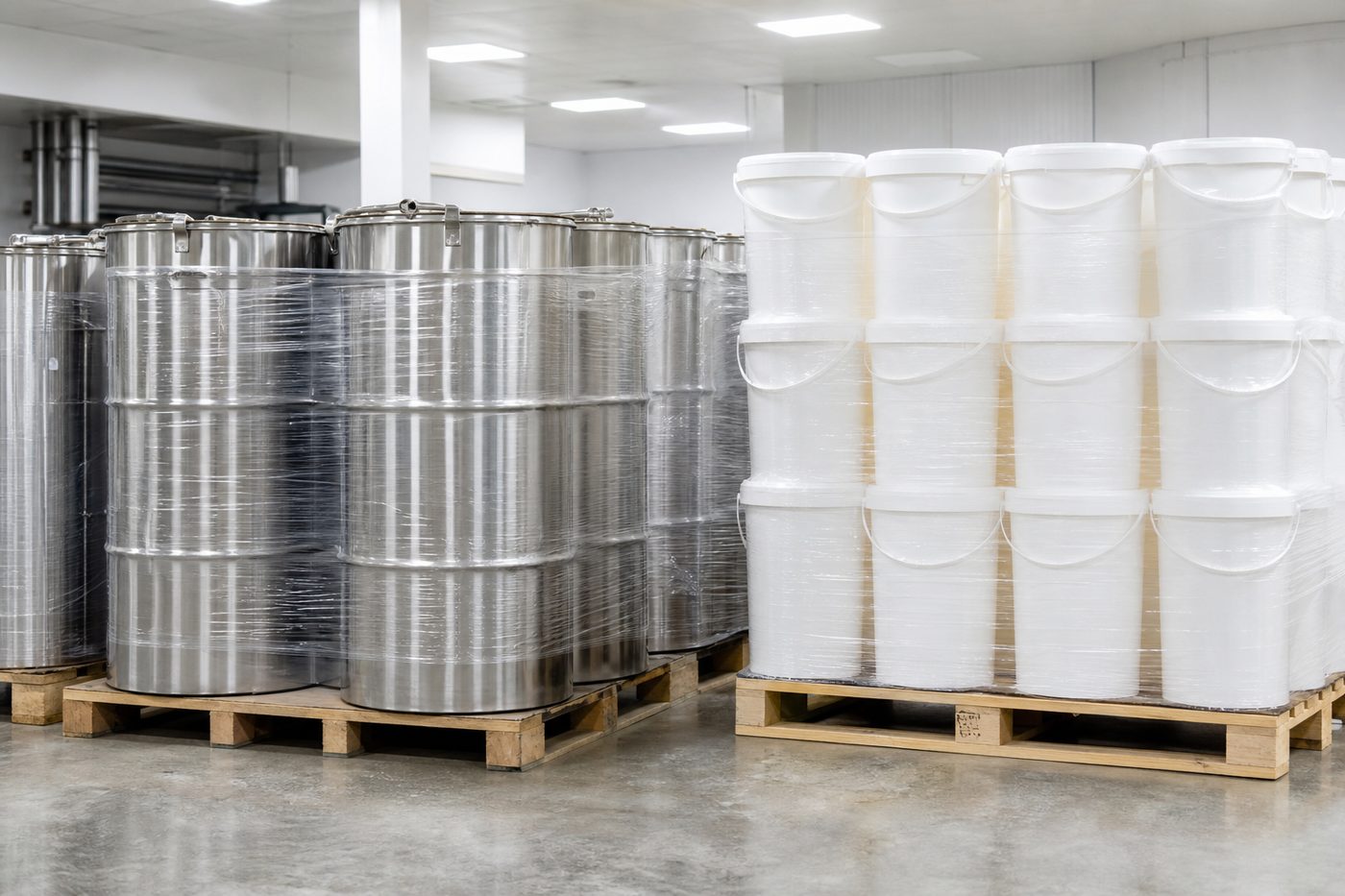
Common Documentation Mistakes Honey Exporters Make
- Non-approved lab reports — Using a lab that is not on APEDA's approved list or not accepted by the destination. Solution: Maintain a current approved-lab list and update it annually.
- Old test reports reused for different lots — C4 or antibiotic reports from a previous batch submitted for a new shipment. Solution: Require lot-number references on every report; date-check before shipping.
- Expired FSSAI number on health certificate — Renewed FSSAI number not updated with the health certificate issuing body. Solution: Update records immediately after every renewal.
- Annual TC submitted instead of lot-specific TC — Organic certifier issued one annual TC; buyer's customs authority requires a per-consignment TC. Solution: Plan lot-specific TC applications into pre-shipment timeline.
- Invoice description vs packing list mismatch — Invoice says 'organic multifloral honey'; packing list says 'honey drums' without organic designation. Solution: Identical language across all commercial documents.
- Drum weight errors — Tare weight/net weight miscalculation on packing list. Solution: Weigh each drum after filling; reconcile with batch records.
- Moisture value discrepancy — Invoice declares 18% moisture; lab report shows 19.2%. Solution: Declare actual lab-certified value; don't round down.
- Wrong HMF test method or limit — Lab tests to a different HMF standard than destination requires. Solution: Specify EU-standard HMF method (Winkler or HPLC) for EU consignments explicitly.
- Missing APEDA registration number on shipping bill — CHA forgets to enter APEDA number. Solution: Add to shipping bill checklist as a mandatory field.
- Inconsistent lot numbering across documents — Different lot number formats on lab report, packing list, and health certificate. Solution: Assign lot numbers before lab sampling; use same format everywhere.
- Late health certificate application — Applied for health certificate after booking sailing, leaving no buffer. Solution: Apply for health certificate concurrently with lab submission.
- Phytosanitary certificate missed for qualifying destinations — Not checked whether destination requires phytosanitary certificate for honey. Solution: Verify destination phytosanitary requirements at order stage.
- LC document discrepancies — Typo in FSSAI number on health certificate differs from invoice. Solution: Line-by-line LC clause review before document preparation.
- Organic certification not covering export entity — Processing unit certified but export entity (different legal name) not on the certificate scope. Solution: Ensure export entity name matches organic certificate.
- Draft pack not shared with buyer broker — Destination broker learns of health certificate format only at arrival. Solution: Share full draft pack including health certificate template with broker before sailing.
- Antibiotic panel not matching destination requirement — Exporter tested for some antibiotics but missed specific residues required by EU or US. Solution: Map destination-specific antibiotic lists annually; update lab brief accordingly.
- Different HS codes on invoice vs shipping bill — Sales team uses 0409.00 while CHA files under a different subheading. Solution: Agree HS codes at order stage; document in SKU master.
Prevention requires a single source of truth. Most honey documentation failures are process gaps — not exotic regulatory surprises. Assign one document controller per shipment, require lot number references on every document, and run a dual review before CHA filing. When an error recurs twice, add it as a permanent checklist item.
How to Prepare Honey Export Documents Without Errors
Build a honey export master that contains: lot number, drum serial numbers, net weight per drum, moisture reading, lab report reference numbers, certifier batch reference (for organic), FSSAI number, APEDA number, and buyer-agreed HS code. Generate commercial invoice and packing list from this master — never from a separate sales spreadsheet.
Run a five-way match: PO ↔ invoice ↔ packing list ↔ lab reports ↔ health certificate application. Assign a second reviewer for consignee, notify party, and Incoterm fields before CHA filing. Freeze documents after CHA confirmation and mark FINAL. Photograph packed drums with drum serial numbers visible and store images with the shipment folder for claims and examination queries.
Plan lab turnaround times into your production and shipping calendar: C4 and antibiotic tests from approved labs commonly take 5–15 business days. Health certificate issuance takes additional working days. Organic TC applications take 3–10 working days. Missing these timelines means missing sailing dates or shipping without documents — both expensive outcomes. Build a 21-day pre-sailing document calendar that assigns submission deadlines for each document type.
Country-Specific Documentation Considerations
European Union
The EU operates one of the strictest honey import frameworks. Health certificates must be issued by an Indian competent authority recognised by the European Commission — APEDA and EIC are involved in this chain. Shipments are registered in TRACES.NT. EU MRLs for pesticides and zero-tolerance for chloramphenicol mean the full antibiotic and pesticide panel must be tested to EU-specific methods. HMF ≤40 mg/kg is standard (with limited exceptions). C4 test is expected. Organic honey for EU requires EU-equivalent organic certification and lot-specific TCs. EU buyers often request drafts of all certificates before order placement — prepare a documentation summary pack as part of your buyer onboarding materials.
United States of America
US FDA requires Prior Notice of food shipments before arrival. US importers are responsible for import entry filings, but your documentation accuracy determines whether their entry proceeds smoothly. C4 test results are scrutinised heavily given the history of honey adulteration fraud. USDA NOP certification is required for organic honey sold as certified organic in the US market. Antibiotic residue panels must include the specific compounds that FDA monitors — chloramphenicol, nitrofuran metabolites, and fluoroquinolones are among the highest-risk categories. Share the full lab report package with your US importer before sailing so they can flag any interpretation issues with their customs broker.
United Kingdom
Post-Brexit, the UK operates its own import framework for honey that mirrors many EU requirements. UK FSA (Food Standards Agency) guidelines apply. Health certificates may be required from Indian competent authorities. Organic honey sold as organic in the UK requires certification to the UK Organic Regulation. C4, HMF, moisture, and antibiotic tests are standard buyer expectations. Verify current UK Border Target Operating Model requirements with your UK broker — the UK's import control regime has been evolving and documentation requirements may have changed since the last programme review.
UAE and Gulf Markets
Gulf markets require a certificate of origin, halal certificate where applicable, and often a health certificate from the Indian competent authority. UAE food import rules under the Ministry of Climate Change and Environment may require product registration or approval for food imports. Expiry dating on retail honey must comply with local labelling regulations. Bulk drum exports for industrial or repackaging use may have different documentation tracks than retail-packaged imports. Gulf buyers often move faster on price negotiations but equally fast on rejections if health certificate or COO details are inconsistent — pre-alert brokers with the full draft pack.
Australia
Australia's biosecurity framework, administered by the Department of Agriculture, Fisheries and Forestry, applies strict import conditions to honey. A permit may be required; irradiation treatment is required for honey imported into Australia in many cases. Biosecurity requirements must be confirmed with your freight forwarder and the Australian importer before order placement. Do not assume honey documentation packs used for EU or US will satisfy Australian biosecurity requirements — the frameworks are substantively different. Errors in biosecurity documentation lead to destruction orders or re-export requirements at the importer's cost.
Honey Export Documentation Checklist: Printable Pre-Shipment Gate
Checklist
Compliance Notes
- □ IEC valid; GSTIN and LUT/bond status confirmed
- □ FSSAI licence current; scope covers honey export
- □ APEDA registration current; registration number confirmed
- □ Organic certifications current (if applicable); certifier has been informed of upcoming lot
- □ Lab samples submitted to APEDA-approved laboratory on time
- □ C4 adulteration test report received; lot numbers match
- □ HMF report received; value within buyer/destination spec
- □ Moisture content documented; value matches invoice declaration
- □ Antibiotic residue report received; correct panel for destination; lab approved
- □ Pesticide residue report received for EU/destination (if required)
- □ Organic transaction certificate applied for; lot-specific TC confirmed
- □ Health certificate application submitted to APEDA/EIC with correct lot data
- □ Commercial invoice: HS code, description, lot numbers, net weight, Incoterm, payment terms
- □ Packing list: drum count, drum serials, net/gross, dimensions; qty matches invoice
- □ Shipping bill data matches invoice/packing list; APEDA reg. entered
- □ B/L or AWB draft checked (shipper, consignee, notify, drum count, weight)
- □ COO applied/issued if required; wording matches invoice
- □ Phytosanitary certificate obtained if destination requires
- □ Insurance arranged if CIF/CIP
- □ Prior Notice filed (US FDA) where applicable
- □ Draft full document pack emailed to buyer and destination broker
- □ Drum photos with serial numbers saved in shipment folder
- □ Payment instrument (LC) conditions reviewed line by line
Use this section as your printable honey export documentation checklist before every shipment. Assign a checkmark owner; document completion date beside each item.
How Technology Is Simplifying Honey Export Documentation
Digital APEDA portals, ICEGATE e-filing, and the FoSCoS (Food Safety Compliance System) for FSSAI are reducing physical paper submission requirements — when master data is clean and consistent. TRACES.NT for EU shipments is a digital registration system that requires accurate company and product data to function smoothly. Electronic health certificates are expanding in some bilateral frameworks, reducing postal transit risk for originals.
Lab management systems that generate structured test reports with lot-number embedding reduce the risk of manual transcription errors between the lab report and the commercial set. Document management platforms that maintain shipment folders — invoice, packing list, every lab report, TCs, and correspondence — with version control prevent the common problem of a forwarder or buyer receiving an outdated draft. AI-assisted review tools can flag description mismatches between invoice and packing list or HMF values that exceed declared specifications, but they cannot own regulatory compliance judgement.
Future developments include broader electronic health certificate exchange between India and importing country authorities, deeper APEDA digitisation, and AI-powered pre-shipment compliance checks. Technology amplifies discipline; it does not replace a named document controller, a pre-sailing review gate, or a competent CHA who knows honey-specific export requirements.
Case Study: Recovering from Honey Export Documentation Failures
Background: A mid-size honey exporter in Rajasthan exporting multifloral and sidr honey to German and UK importers experienced two consecutive shipment holds in an eighteen-month period — one at Hamburg and one at Felixstowe — despite having what the management team believed were "standard" documentation practices.
Challenges: The company used a single antibiotic test panel that met their previous experience but did not cover the full EU-required list. Lab reports referenced only the batch number, not individual drum serial numbers. The organic TC for the sidr honey consignment was the annual certification document, not a lot-specific TC as required by the EU importer's certifier. Health certificate applications were submitted after the vessel was booked, leaving no buffer for corrections.
Documentation issues: Hamburg hold: chloramphenicol result from a non-EU-recognised secondary test invalidated the primary APEDA-backed health certificate. The approved lab result was available but was not the document attached to the health certificate. Felixstowe hold: organic TC did not match the drum serials in the packing list; the certifier had issued the TC against different lot references.
Corrective actions: Engaged an APEDA-certified export consultant. Built a honey export document master with drum serial tracking. Mapped full EU antibiotic panel requirements to the approved lab brief. Changed lab to one with explicit EU health certificate backing. Established a TC workflow where drum serials are submitted to the certifier before drum-filling, and lot-specific TCs are received before the health certificate application is submitted. Created a 21-day pre-sailing document calendar.
Results: The next six shipments to EU and UK cleared on first presentation. One shipment to a new US organic buyer was approved on first entry. Buyer trust recovered; the German importer placed a larger seasonal programme. The company reduced document-related costs by approximately 60% in the twelve months following process change.
Lessons learned: Documentation is a production system, not a shipping department task. The approved-lab list and antibiotic panel must be reviewed annually — regulatory lists change. Organic TCs require lot-specific precision that annual certificates cannot provide. The printable honey export documentation checklist became the gate that the dispatch team could not bypass.
Export Documentation Best Practices for Honey Exporters
- One document master per shipment — invoice, packing list, and all reports in a named folder
- Lot number assigned before lab sampling — used on every document from that point forward
- APEDA-approved lab brief reviewed annually against updated destination requirements
- Antibiotic and pesticide panels mapped to destination-specific regulatory lists
- TC applications submitted concurrently with health certificate applications
- Draft full pack shared with buyer broker at least 7–10 days before sailing
- Dual review on consignee, FSSAI number, APEDA number, and drum quantities before CHA filing
- Retain full shipment folders — lab reports, TCs, health certificates — for statutory periods
- Quarterly internal audit of three random shipment files for recurring error patterns
- Train procurement and logistics teams separately — lab submission and document preparation have different owners
Future of Honey Export Compliance and Documentation Through 2030
Through 2030 expect deepening digitisation of health certificate workflows between India and major importing authorities, broader TRACES.NT integration for EU shipments, electronic exchange of organic TCs in certified organic supply chains, and AI-assisted compliance pre-checks that flag panel gaps or lot-number inconsistencies before document submission. Indian honey exporters will interact with denser automated customs environments where mismatched fields between health certificates and commercial invoices are rejected programmatically — not after a human officer manually reviews them days after arrival.
EU and UK honey import controls are expected to tighten further on pesticide MRLs and adulteration markers as analytical methods improve. US FDA will continue intensifying honey adulteration scrutiny. Sustainable and organic honey premiums will grow — but only for exporters who can provide unbroken organic chain-of-custody documentation, not just a certification seal on a label. Exporters who invest in clean lot tracking, approved-lab relationships, and digital document management now will be significantly better positioned than those relying on last-minute paper corrections. The honey export documentation checklist is a permanent operating system — not a one-time exercise.

Conclusion
- Do next: Run the printable checklist on your current open honey order before the next lab submission.
- Read APEDA registration benefits for honey exporters and how to export honey from India.
- Continue with find international buyers for honey, trade shows for honey exporters, top honey products exported from India, best countries for Indian honey exports, source honey directly from India, most demanded Indian honey by country, and sustainable organic honey export opportunities.
- Explore the organic honey product page and merchant exporter support for end-to-end coordination.
A reliable honey export documentation checklist covers foundational registrations (IEC, GST, FSSAI, APEDA, and organic certification where applicable), lab-verified quality reports (C4, HMF, moisture, antibiotics, pesticides), organic transaction certificates, commercial documents (invoice, packing list), shipping and transport papers (shipping bill, B/L or AWB), health certificates, and destination-specific requirements — all tied together by consistent lot numbering and identical nomenclature across every page of the pack.
Compliance recommendations: build a honey lot master, plan lab submissions 21 days before sailing, apply for health certificates and organic TCs as soon as drum-filling is confirmed, and run the printable checklist as a mandatory pre-release gate. Actionable next steps: confirm current APEDA-approved lab list for your destination's requirements, update the antibiotic test panel brief, verify FSSAI renewal date, and align organic certification scope with your export entity name. Altus Exports supports honey and natural product exporters and international buyers who need documentation discipline paired with real shipment execution across honey and natural products and agriculture and food products programmes.