Sustainable and Organic Honey Export Opportunities from India
By Saurabh Mittal, Founder, Altus Exports
A practical export guide to sustainable and organic honey from India — why global demand for certified honey is accelerating, which Indian varieties command premium pricing in the USA, EU, UK, Japan, and Australia, what certifications buyers require (NPOP, USDA Organic, EU Organic, True Source), how fair-trade beekeeping adds commercial value, how to price certification costs into margins, and what the 2030 outlook looks like for exporters who invest in authenticity. Includes category breakdowns, country demand mapping, challenge and solution tables, a Himalayan organic programme case study, and guidance from Altus Exports.
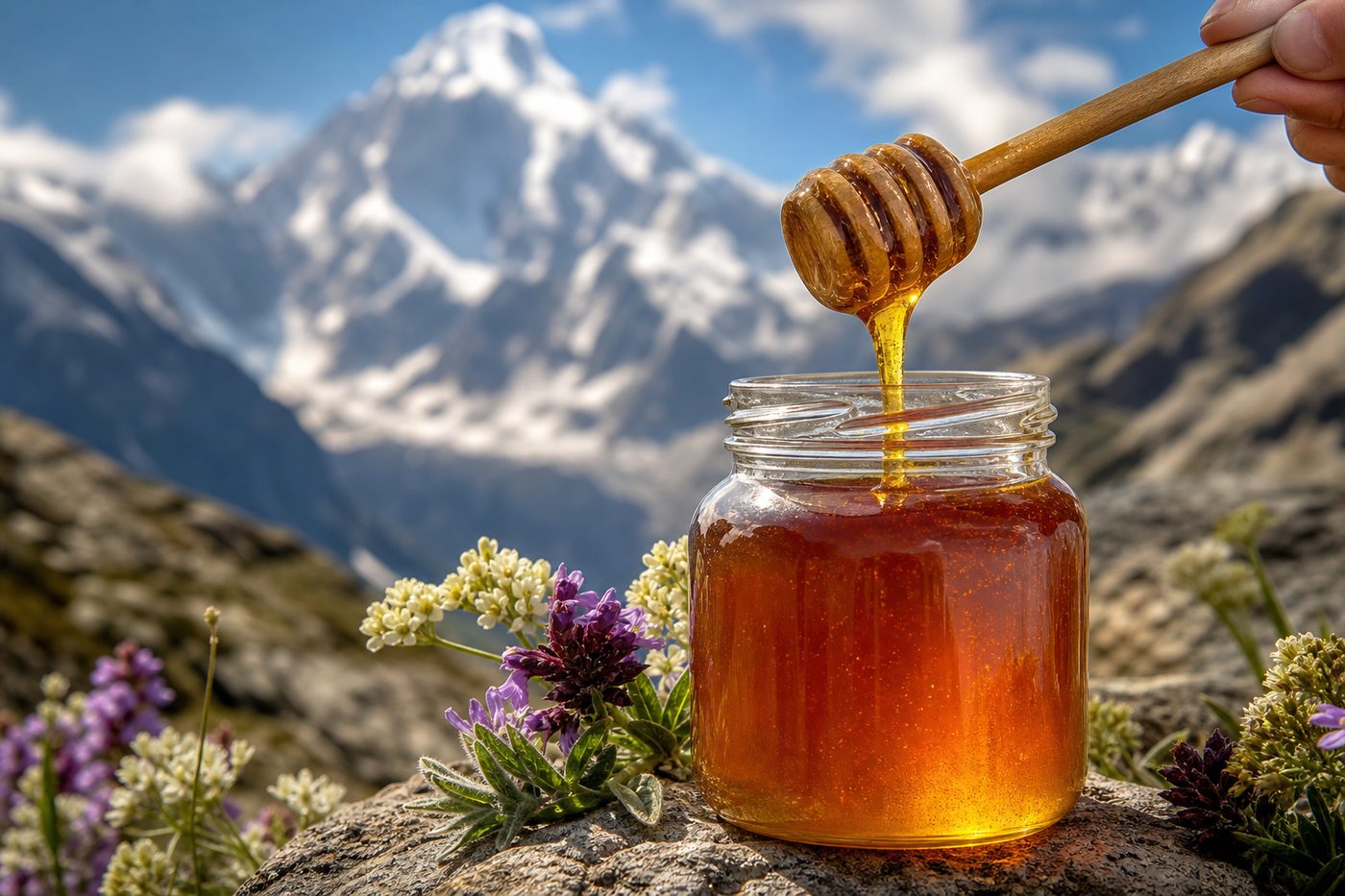
Global buyers are rewriting natural-food assortments around authenticity, origin transparency, and certified organic credentials — and honey is at the centre of that shift. Consumer demand for traceable, genuinely organic honey is rising sharply in the USA, Germany, UK, Japan, Australia, and the UAE. Retailer ESG commitments, tighter food-import regulations, and NMR-based authenticity testing are simultaneously raising the floor for what counts as a credible supply claim. For Indian exporters, this is not a constraint — it is a commercial opening. Sustainable and organic honey from India sits at the intersection of remarkable biodiversity, ancient beekeeping tradition, and the sourcing criteria that now determine vendor shortlists in premium food channels worldwide.
India produces honey from an extraordinary range of floral sources that few origins can match: Himalayan multifloral from Uttarakhand and Himachal Pradesh, mangrove honey from the Sundarbans, white clover from Kashmir, mustard monofloral from Rajasthan and Punjab, litchi from Bihar, eucalyptus from the south, and wild forest honeys from tribal beekeeping communities across Chhattisgarh, Jharkhand, and the Northeast. Pair that biodiversity with growing NPOP-certified organic beekeeping cooperatives and the fair-trade narratives that resonate strongly in premium European and North American retail, and the export opportunity becomes both real and defensible.
This guide covers what organic and sustainable honey means in commercial export context, India's structural advantages and biodiversity, which certification pathways matter by destination market, country-level demand, the fair-trade beekeeping dimension, how to price sustainability into margins, challenges and solutions, and the 2030 outlook. Pair it with find international buyers for honey, top honey products exported from India, and how to export honey from India. Reference APEDA, NPOP, FSSAI, NMR testing bodies, and accredited certifiers when building your evidence programme — and verify current scheme requirements before making claims to buyers.
Key Takeaways
Summary Box
- Sustainable and organic honey from India is a growing premium export category driven by consumer authenticity demand, retailer ESG commitments, and stricter global authentication standards.
- India's biodiversity — Himalayan, Sundarban mangrove, Kashmir clover, wild forest, mustard, litchi — creates origin stories few competing countries can replicate at comparable price points.
- NPOP, USDA Organic, and EU Organic are the three core certification pathways; True Source addresses authenticity concerns in the USA; fair-trade beekeeping certification adds livelihood narrative value.
- NMR testing and C4 sugar analysis are no longer optional for serious premium export programmes — buyers in the EU, USA, and Japan increasingly require them as a baseline, not a differentiator.
- Margins in certified organic honey can be substantially higher than conventional bulk export when certification, testing, and packaging costs are priced correctly into FOB.
- Altus Exports supports Indian honey exporters and international buyers building certified organic programmes through honey & natural products sourcing. Explore organic honey.
What Is Organic and Sustainable Honey in Export Terms?
Organic honey in commercial export context is honey produced from bees foraging in areas certified free from prohibited pesticides, herbicides, and synthetic inputs, with beekeeping practices that exclude synthetic veterinary treatments and follow certified organic management standards. Certification is issued by an accredited body against a recognised standard: India's NPOP (National Programme for Organic Production) for domestic-standard recognition, USDA National Organic Program for USA market claims, EU Regulation (EC) 834/2007 and successor frameworks for EU market claims. The certification scope must cover both the forage area and the hive management — not just the honey processing stage.
Sustainable honey goes further, encompassing beekeeping practices that support pollinator health and habitat, responsible sourcing from indigenous beekeeping communities, supply chain traceability from hive to drum, packaging that minimises plastic content, and carbon-footprint awareness in processing and logistics. Sustainable programmes that include fair-trade beekeeping elements add livelihood transparency — the narrative that the premium price reaches the beekeeper community, not only the consolidator — which is increasingly important in premium retail storytelling and corporate gifting programmes with ESG mandates.
The critical distinction for exporters is the difference between claiming organic and proving it. An unverified claim in the EU or USA can trigger customs holds, import alerts, and regulatory action. A documented, certified, tested claim that withstands NMR and pesticide-residue scrutiny is a durable commercial asset. Build the proof system before the sales narrative.
India's Structural Advantages for Organic and Sustainable Honey Export
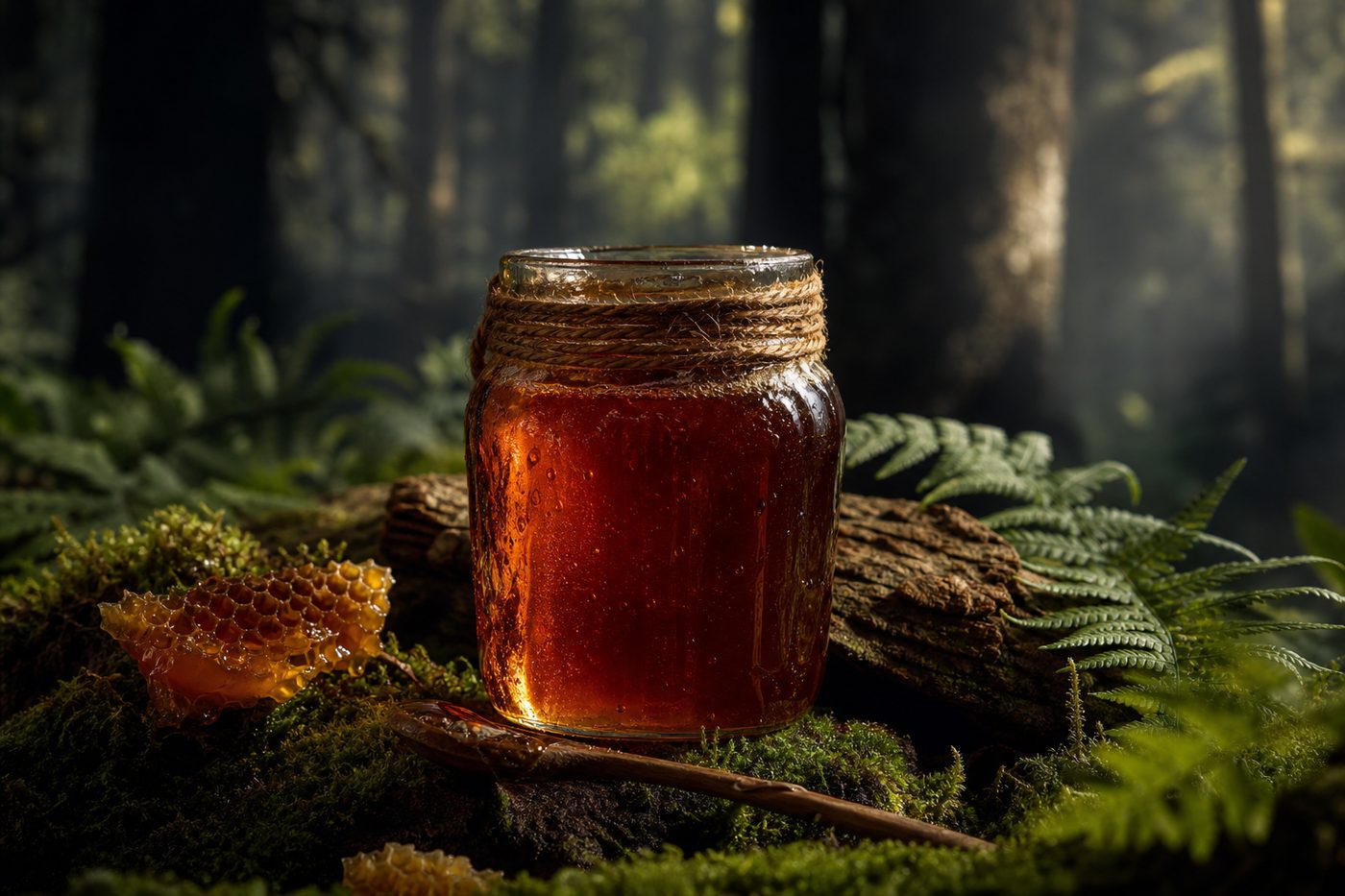
India's biodiversity creates a structural moat for authentic organic honey that few competing export origins — Argentina, Vietnam, Mexico, Ukraine — can replicate with comparable variety at comparable price. The Himalayan forage zones of Uttarakhand, Himachal Pradesh, and the Northeast provide vast pesticide-light forest areas naturally suited to organic certification because synthetic agricultural inputs are minimal in remote high-altitude regions. Sundarban mangrove forests in West Bengal provide a globally unique honey origin with distinctive flavour profile and inherent near-organic production conditions.
Traditional beekeeping by tribal and rural communities in Jharkhand, Chhattisgarh, Odisha, Madhya Pradesh, and the Northeast provides wild forest honeys collected from rock-bee and wild-bee populations — raw, unheated, and with pollen profiles that authenticate origin under microscopic analysis. These communities increasingly connect to fair-trade and cooperative export programmes, adding the livelihood narrative that premium buyers value. Bihar's litchi honey and Rajasthan's mustard monofloral provide recognisable single-origin stories in the monofloral segment that both retail and food-service buyers understand and market easily.
APEDA statistics consistently place India among the top global honey exporters by volume, but the premium organic segment represents a small share of that volume — creating a wide opportunity gap for exporters who make the certification and documentation investment. FSSAI standards alignment, EIC compliance, and APEDA registration form the regulatory infrastructure; NPOP certification activates the organic premium channel. See the full export process in how to export honey from India.
India's Biodiversity: Key Honey Origins and Their Export Potential
Understanding which origins carry the strongest commercial narratives for which markets is essential before investing in certification. The table below maps India's major honey origins to their export-potential profile.
Comparison table
Swipe →
Data table — swipe horizontally on small screens
| Origin / Variety | Region | Key Characteristics | Primary Export Markets | Organic Potential |
|---|---|---|---|---|
| Himalayan multifloral | Uttarakhand, Himachal Pradesh, Northeast | Complex floral profile, amber colour, high antioxidant signals | Germany, UK, Japan, Australia, USA | Very high — large pesticide-light forage zones |
| Sundarban mangrove | West Bengal | Unique dark amber, smoky undertone, UNESCO ecosystem origin | EU, UK, Japan, premium USA | High — mangrove forage naturally near-organic |
| Kashmir white clover | Jammu & Kashmir | Light colour, mild flavour, premium monofloral profile | Germany, UAE, USA, Japan | High — limited synthetic inputs in valley agriculture |
| Mustard monofloral | Rajasthan, Punjab, UP | Pale yellow, crystallises quickly, volume availability | USA (ingredient), EU, Middle East | Moderate — agriculture zone requires buffer certification |
| Litchi monofloral | Bihar | Light, fruity, recognisable flavour, spring harvest | EU, UK, Japan | Moderate — litchi orchard management varies |
| Wild forest honey | Jharkhand, Chhattisgarh, Odisha, Northeast | Raw, unheated, tribal-sourced, diverse pollen | EU, UK, Japan, premium USA | Very high — naturally wild, non-agricultural forage |
| Eucalyptus monofloral | Andhra Pradesh, Karnataka | Medium amber, menthol undertones, volume availability | Middle East, North Africa, EU ingredient | Moderate — plantation management audit required |
| Ajwain monofloral | Rajasthan, Gujarat | Distinctive aromatic profile, specialist category | Germany, UK, specialty USA | Moderate — crop-area certification required |
Organic Honey Certification Pathways for Indian Exporters
Certification choice must be driven by target export market. The wrong certification for the destination market creates compliance rejections that damage buyer relationships. Understand what each standard requires, which accredited certifier can issue it in India, and how long the conversion and audit cycle takes before making promises to buyers.
NPOP — National Programme for Organic Production
NPOP is India's national organic standard, administered by APEDA and recognised by the EU and Switzerland for equivalence (most organic products). NPOP certification covers forage area mapping, hive management practices, prohibition of synthetic treatments, processing-facility standards, and a chain-of-custody system from producer to exporter. Accredited certifiers (INDOCERT, LACON, IMO, OneCert Asia, and others) conduct annual inspections and issue the organic certificate. NPOP certification is the foundation for all export claims — without it, no other organic claim is supportable for Indian origin honey. Full list of accredited certifiers is available on the APEDA NPOP portal.
USDA National Organic Program (NOP)
USDA NOP certification is required for organic claims on honey sold in the USA retail market. India does not have a full bilateral equivalence agreement with the USA NOP for honey (unlike for certain other agricultural products), so exporters targeting the USA organic channel typically need NOP-accredited certification in addition to NPOP. NOP-accredited certifiers operating in India include OCIA, CCOF, ECOCERT, and others. Annual inspection cycles and organic system plan documentation are required. For US import buyers, seeing NOP on the certificate removes a significant compliance risk they would otherwise carry.
EU Organic Regulation
For EU market organic claims, NPOP equivalence recognition means an NPOP certificate issued by an APEDA-recognised certifier is generally accepted for import — but exporters should verify the current equivalence status and any product-specific restrictions with their EU importer, as regulations evolve. EU Organic certification through an EU-accredited body (ECOCERT, LACON, IMO) operating in India provides the strongest compliance confidence for German, Dutch, French, and Scandinavian retail programmes. EU buyers increasingly require the EU Organic logo on product, which requires the import chain to maintain certification integrity throughout.
True Source Certified
True Source is a USA-focused third-party certification programme that addresses honey authenticity and supply chain traceability — not only organic status. It requires country-of-origin documentation, supply chain mapping from beekeeper to packer to importer, and annual audits. True Source does not certify organic production, but it addresses the transshipment fraud concern (honey relabelled to falsely claim a lower-tariff or unrestricted origin) that has created significant compliance risk for US honey importers sourcing from Asia. For Indian exporters targeting the US premium or food-service market, True Source certification alongside NOP organic is a powerful combination. US buyers who require True Source are usually large, serious, and repeat buyers.
Fair Trade and Related Livelihood Certifications
Fairtrade International, Fair for Life, and SPP (Small Producers Symbol) frameworks certify ethical purchasing conditions for honey from small-scale beekeeping communities. Fair-trade certification requires minimum price guarantees, premium payments for community investment, and audited buyer-seller contract standards. For Indian honey from tribal and rural beekeeping cooperatives, fair-trade certification adds a documented livelihood narrative that resonates strongly with European and North American premium-retail buyers, corporate ESG gifting programmes, and mission-driven specialty food brands. Cost and admin burden require cooperative-level organisation — not suitable for individual small processors without a cooperative structure.
Organic and Sustainable Honey Certification Comparison
Comparison table
Swipe →
Data table — swipe horizontally on small screens
| Certification | Primary Market | What It Covers | Typical Timeline | Approximate Annual Cost Range |
|---|---|---|---|---|
| NPOP | India base + EU equivalence + general organic claims | Forage, hive management, processing, chain of custody | 6–18 months conversion + annual audit | ₹50,000–₹2,50,000 depending on certifier and scope |
| USDA NOP | USA organic retail and food-service | Forage, hive, processing, NOP system plan | 6–18 months + annual audit | $2,000–$8,000 USD approximate |
| EU Organic | EU retail and private label | Same principles, EU accredited certifier required | 6–18 months + annual audit | €1,500–€6,000 EUR approximate |
| True Source | USA authenticity and anti-transshipment | Supply chain map, traceability, origin documentation | 3–6 months + annual audit | $2,500–$7,500 USD approximate |
| Fair Trade / Fair for Life | EU, USA, Canada premium retail and gifting | Purchasing conditions, beekeeper premium, community | 6–12 months setup + annual audit | Varies by programme and scale |
| NMR testing (per lot) | EU, USA, Japan — required by buyers, not certifier | Honey authenticity and adulteration screening | Per shipment — results in 2–4 weeks | ₹15,000–₹40,000 per sample depending on lab |
Why Global Demand for Organic and Sustainable Honey Is Rising
Consumer awareness of pesticide residues in food, pollinator health concerns, and climate-conscious purchasing decisions has driven organic food from niche specialty into mainstream retail behaviour. Honey is one of the most emotionally resonant food categories for these concerns — stories of colony collapse disorder, pesticide drift into forage areas, and adulteration scandals have made conscious consumers more willing to pay premium prices for credibly certified organic honey than for almost any other food category. In Germany, the UK, and the USA, organic honey commands consistent retail premiums of 40–150% over conventional counterparts.
Corporate ESG and gifting programmes amplify this dynamic. Sustainability teams at multinationals now vet honey suppliers with the same rigour as other food-supply programmes. Retailer private-label eco collections increasingly require organic and ethical-sourcing documentation for honey as standard. Government policies in the EU are pushing toward higher organic-farming targets under the Farm to Fork strategy, increasing import demand for third-country organic honey. For Indian exporters, this is not a passing trend — it is structural demand growth with regulatory momentum behind it.
India's honey-adulteration reputation in some export markets has created a paradox: genuine certified organic Indian honey is penalised by association with fraudulent commodity supply. Exporters who solve the authenticity problem with NMR testing, chain-of-custody documentation, and third-party certification simultaneously address buyer distrust and create a premium positioning narrative. The compliance cost is the admission price for the premium tier.
Country-by-Country Demand for Organic Indian Honey
Demand intensity and certification requirements differ significantly by destination. Match your programme investment to the requirements and premiums of your primary target market.
USA
The USA is the world's largest honey import market and has a growing premium organic and natural-honey segment. True Source certification addresses the transshipment concern that has made some US importers cautious about Indian supply. USDA NOP certification is required for organic label claims. Key buyer personas include specialty food importers, organic food distributors (UNFI, KeHE networks), private-label natural-food retailers, and health-supplement manufacturers sourcing raw honey. NMR testing is increasingly standard for serious US buyers. The USA market rewards consistency and documentation depth alongside competitive FOB pricing. See best countries for Indian honey exports.
Germany and EU
Germany is the EU's largest natural-food retail market and among the most stringent for honey quality and organic certification. NPOP-EU equivalence eases import documentation, but EU Organic logo requirements mean the full certification chain must be maintained. German buyers conduct thorough due diligence — NMR test reports, pesticide panels, and heavy-metals analysis are standard requirements before approval. The Netherlands functions as an EU distribution hub for bulk honey imports. France has a strong premium artisanal honey culture with high willingness to pay for documented origin stories. Biofach (Nuremberg) is the flagship sourcing event for certified organic food buyers across the EU.
UK
Post-Brexit, UK food-import regulations operate independently of EU frameworks, though organic standards remain aligned in substance. UK organic certification from Soil Association-approved certifiers or equivalent is recognised. The UK has a vibrant specialty food retail sector — independent fine-food stores, premium supermarket organic ranges, and online direct-to-consumer channels — all receptive to documented Indian origin honey with organic credentials. Packaging quality and labelling accuracy are scrutinised carefully by UK border food safety officers.
Japan
Japan is a high-value honey import market with sophisticated buyer expectations on purity, monofloral authenticity, and chemical residue profiles. Japanese food regulations on pesticide residues are among the most stringent globally — maximum residue limits that comply in the EU may still fail Japanese inspection standards. Exporters targeting Japan should conduct Japan-specific pesticide residue testing before first shipment. Himalayan multifloral and Kashmir white clover honey have premium market positioning in Japan's health-food and specialty retail channels. Long relationship-building cycles are normal; quality consistency across multiple shipments is the conversion factor.
Australia
Australia's honey import regulations are strict — the country's strong domestic honey industry and biosecurity concerns create rigorous import standards. AQIS-compliant documentation and strict biosecurity declarations are required. However, specialty organic Indian honey with robust certification and authenticity testing can reach premium natural-food and health-food channels. Freight distance increases packaging and quality-preservation requirements. Australian organic food consumers have high brand loyalty — once a supply relationship is established with proper credentials, retention rates are good.
UAE and Middle East
The UAE has growing demand for premium natural honey in both retail and gifting formats. Halal certification is a baseline requirement for most buyers. The premium gifting segment — where branded, packaged Indian honey is given as corporate and occasion gifts — is particularly strong in Dubai and Abu Dhabi. Organic certification is valued in the UAE's growing health-conscious consumer segment. Middle East buyers in Saudi Arabia and Kuwait also source honey at volume for food-service and hospitality channels. See most demanded Indian honey by country for Gulf-specific demand intelligence.
The Fair-Trade Beekeeping Advantage in Export Markets
Fair-trade beekeeping connects two commercial outcomes: a livelihood narrative that premium buyers want and a supply-chain traceability system that buyers need. India has a large informal tribal and rural beekeeping sector across Jharkhand, Chhattisgarh, the Northeast, and pockets of Maharashtra and Tamil Nadu. When these communities organise into cooperatives with documented management and fair procurement practices, they become certification-eligible and story-rich supply partners for premium export programmes.
The commercial case for fair-trade honey is clearest in the EU and UK, where fair-trade labelled products command consistent premiums in specialty retail and in corporate and institutional procurement channels. Germany's GEPA network, UK's Traidcraft and Co-operative sourcing, and North American fair-trade retailers actively seek new origin-story products with verifiable producer impact data. Indian tribal honey cooperatives — where the collection tradition is centuries old and the environmental footprint is naturally low — are exceptionally well positioned for this channel if organisational capacity and documentation support are provided.
For an exporter, building a fair-trade honey programme means: (1) identifying or supporting a cooperative structure among beekeeping communities, (2) securing fair-trade certification from an accredited certifier, (3) documenting the livelihood-impact chain in buyer communications, and (4) packaging the story accurately without romanticisation that cannot be verified. When done honestly, this is the highest-value positioning available in honey export.
Pricing Organic Certification Costs into Honey Export Margins
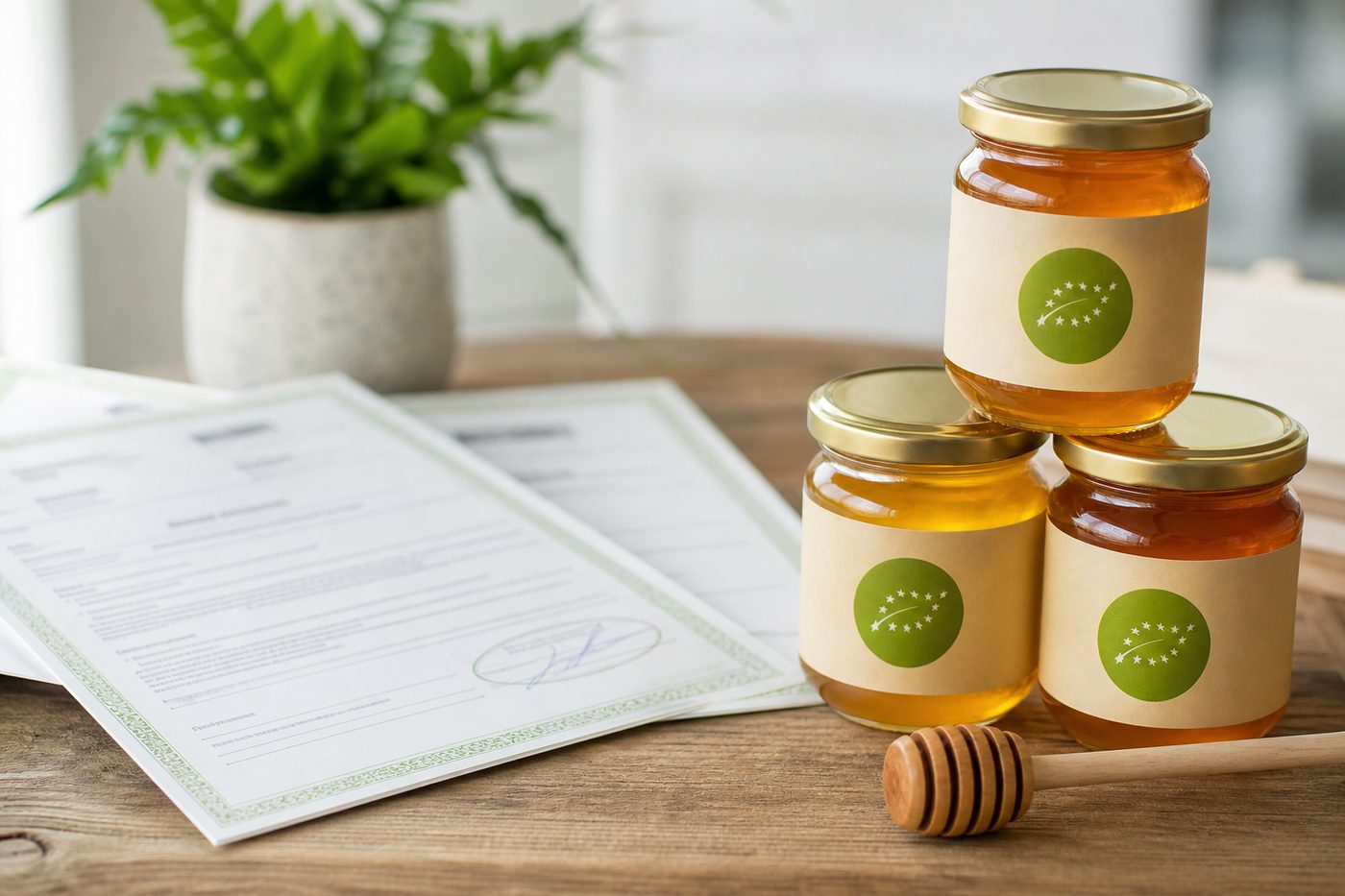
A common mistake is building an organic honey export programme, absorbing all certification and testing costs, and then quoting buyers at conventional honey prices because sales teams fear losing the deal on price. This destroys the commercial rationale for the organic investment. Organic honey export margins should reflect the full cost structure: NPOP/NOP/EU Organic annual certification, NMR and pesticide-residue testing per lot, heavy-metals panel per season, premium packaging if retail-format, fair-trade premium if applicable, and the commercial premium the market supports.
Run internal dual costing for every programme: conventional commodity FOB cost versus organic certified FOB cost. The difference should be priced into buyer quotations transparently, not absorbed silently. In practice, buyers in the EU and USA organic channels expect higher FOB for certified product and build it into their margin models. A German organic retailer paying €5–7 per kg retail for premium Indian honey can support an FOB considerably above the commodity bulk rate — but only if the exporter presents a certified, tested product, not a vague "organic" claim.
Practical guidance: add a certification and testing line item to every proforma invoice for organic programmes, covering your proportionate annual certification cost, per-lot NMR testing, and pesticide panel. For fair-trade programmes, add the fair-trade premium per kg as a separate line. This transparency helps buyers understand your cost structure and actually strengthens trust in premium channels — it signals that you understand the programme economics, not just the product.
Comparison table
Swipe →
Data table — swipe horizontally on small screens
| Cost Component | Impact on FOB | Notes |
|---|---|---|
| NPOP annual certification | Amortised across certified lots — typically ₹5–15/kg on small programmes | Decreases per kg as volume grows |
| NMR authenticity test | ₹2–5/kg on typical lot sizes | Required by serious EU/USA buyers; buyer may share cost on large programmes |
| Pesticide residue panel | ₹1–3/kg amortised on per-season testing | Japan may require more tests than EU/USA baseline |
| Heavy metals analysis | ₹0.50–2/kg amortised | Per-origin season, not per lot in most programmes |
| Fair-trade premium | Fixed per-kg premium paid to producer — typically $0.25–0.50/kg as minimum | Separate from exporter margin; passed through to cooperative |
| Premium organic packaging | ₹8–25/kg depending on retail format vs bulk drum | Retail jar programmes significantly higher than drum export |
| Organic label compliance | ₹1–3/kg for label design, import-country compliance review | One-time per label revision cycle |
NMR Testing and Authenticity: The New Baseline for Export Credibility
Nuclear Magnetic Resonance (NMR) profiling has become the authentication standard that separates genuine certified organic honey from adulterated supply in European and increasingly North American trade. NMR honey profiling, pioneered by German-based QACS/Bruker systems and now available through certified laboratories in India and internationally, can detect sugar adulteration (including high-fructose corn syrup, rice syrup, and C4 sugars), geographic origin consistency, and floral profile claims with greater precision than earlier C4 carbon isotope tests alone.
For Indian honey exporters, the practical implication is clear: if you are targeting the EU, UK, USA premium, or Japanese market with organic or premium claims, NMR test results per production lot are increasingly required documentation rather than an optional premium add-on. Buyers in Germany and the Netherlands who have been burned by adulteration incidents now specify NMR results in RFQs. NABL-accredited laboratories in India (including NABL-certified private food labs and government facilities) and international labs can provide certified NMR profiles. Invest in this before launching an organic programme outreach — sharing proactive NMR results is the single most effective trust-building action for a premium honey buyer conversation.
Beyond NMR, pollen analysis provides botanical and geographic origin verification. Colour measurement on the Pfund scale documents consistency across lots. Combined, these analytical outputs form the technical evidence pack that converts an organic certification into a commercially robust claim rather than a paper assertion.
Challenges in Organic Honey Export — and Solutions
Comparison table
Swipe →
Data table — swipe horizontally on small screens
| Challenge | Impact | Solution |
|---|---|---|
| Adulteration reputation | EU/USA buyers add extra scrutiny to all Indian honey | Proactive NMR + C4 reports per lot; True Source certification for USA |
| NPOP-NOP equivalence gap | USA organic claims require NOP certification separately | Budget for dual certification if USA market is a priority |
| Forage buffer mapping | Mustard zone honey harder to certify due to adjacent agriculture | Focus initial organic certification on Himalayan/forest zones |
| Testing cost per lot | Adds to FOB and can squeeze margin on small programmes | Pool testing across lots, grow to larger programmes, price testing into FOB |
| Cooperative organisation capacity | Fair-trade requires collective structure small processors lack | Work with established tribal beekeeping cooperatives; provide documentation support |
| EU Organic logo chain of custody | Entire chain from hive to retail must be certified | Map every handler and certify all links before making retail organic label claims |
| Japan residue limits | Stricter than EU/USA; some pesticides legal elsewhere fail Japan MRL | Run Japan-specific panels before first shipment; communicate test results proactively |
| Seasonal supply variability | Organic harvest quantity varies with season and climate | Build buffer stock strategy; communicate forecast windows to buyers early |
| Packaging compliance by country | USA/EU/Japan have different organic logo and labelling rules | Commission destination-specific label reviews before first retail-format shipment |
How to Build an Organic Honey Export Programme: Step-by-Step
Export Tip
Building an organic honey export programme is a 12–24 month investment before commercial-scale revenue, but the competitive position it creates is durable. Follow a sequenced approach rather than attempting all certifications simultaneously.
Phase 1: Foundation (Months 1–6)
Select your primary origin zone based on natural certification suitability — Himalayan, forest, or mangrove zones offer strongest organic defensibility. Engage an APEDA-recognised NPOP-accredited certifier. Begin forage area mapping and farmer/beekeeper documentation. Commission baseline testing: pesticide residue, heavy metals, and Brix/moisture/HMF. Confirm FSSAI licence and APEDA registration are current. Map beekeeping cooperative or procurement structure.
Phase 2: Certification and Testing (Months 6–18)
Complete NPOP inspection and conversion documentation. Commission NMR profiling and pollen-analysis baseline for your primary origin. Identify NABL-accredited laboratory for ongoing per-lot testing. If USA market is priority, begin NOP certification in parallel. Design your evidence pack: origin map, forage area certificate, COA template, test-report format, and chain-of-custody statement. Develop packaging specifications for export-format bulk and retail-format products.
Phase 3: Market and Buyer Development (Months 12–24)
Begin targeted buyer outreach using the pipeline-building process in find international buyers for honey. Lead with your evidence pack, not a price list. Attend Biofach or equivalent organic food fair with certified samples and full documentation. Target organic food importers, specialty distributors, and private-label brands in your primary market. Dispatch paid lab-certified samples with proactive NMR results to shortlisted buyers. Convert first trial orders at correctly priced FOB.
Sustainable Honey vs Conventional Honey Export: Commercial Comparison
Comparison table
Swipe →
Data table — swipe horizontally on small screens
| Factor | Organic / Sustainable Certified | Conventional Bulk Honey |
|---|---|---|
| FOB price range | Significant premium — typically 40–120% above conventional on comparable grade | More competitive, narrower range |
| Buyer expectations | Certificates, NMR/C4 tests, COA, supply chain map, origin documentation | COA, APEDA, EIC health certificate |
| Buyer type | Organic importers, health food distributors, premium private label, fair-trade retail | Commodity importers, confectionery, food manufacturers, bulk distributors |
| Market growth | Strong and structural through 2030 — driven by regulation and consumer demand | Stable volume but ongoing price competition from Vietnam, Argentina, Ukraine |
| Certification cost | Real investment — NPOP + NOP + testing can be ₹3–8/kg on small programmes | Minimal — standard food-export documentation only |
| Margin potential | Higher when certification costs priced correctly; lower if absorbed silently | Volume-driven, thin on undifferentiated supply |
| Risk profile | Lower claim risk when fully certified; higher setup risk if certification fails | Lower setup risk; higher commodity price volatility |
| Brand defensibility | Strong — certification, NMR, and origin documentation create verifiable moat | Weak — easily substituted on price |
| Long-term opportunity | Strategic — ESG and regulatory trends strengthen premium organic position | Volume remains, but premium access narrows for undocumented supply |
Case Study: Uttarakhand Organic Honey Cooperative Securing a German Programme
Background: An Uttarakhand-based beekeeping cooperative representing small-scale mountain beekeepers held NPOP organic certification and produced Himalayan multifloral and buckwheat monofloral honey. Significant testing infrastructure had been built — NMR profiling per season, full pesticide panel, and pollen analysis — but international buyer access was limited to one irregular broker relationship.
Market opportunity identification: ITC Trade Map analysis showed Germany as the strongest growth market for premium organic honey imports. Biofach fair buyer list identified 20 German and Dutch organic food importers with active honey categories. LinkedIn prospecting found procurement managers at five of these importers.
Programme positioning: One-page organic programme summary: NPOP certificate details, EU equivalence status, NMR profile availability per batch, pollen analysis confirming Himalayan origin, moisture and Brix consistency data, packaging options (200-L drum and 5-kg retail glass jar), and fair-trade-in-progress note for the cooperative livelihood dimension.
Buyer outreach: Biofach stand registration through APEDA group support. Pre-fair email to 12 shortlisted organic importers with programme summary and meeting request. LinkedIn connection to four procurement managers with tailored notes. Three pre-booked Biofach meetings confirmed.
Sampling and due diligence: Dispatched paid certified sample kits (three variants, 250g each with full COA, NMR report, pollen report, and NPOP certificate copy) to six buyers. Two buyers requested additional pesticide panels for Germany-specific MRL compliance — results provided within two weeks.
Trial order: First 3-MT shipment in 200-L food-grade drums to Hamburg. EU Organic import certificate coordinated with buyer's EU importer of record. Pre-shipment NMR result shared before Bill of Lading issuance. Quality accepted without dispute.
Results: Repeat order for following mustard-wildflower mixed season; second EU buyer onboarded using the same evidence pack with minimal additional documentation. FOB achieved was 85% above the cooperative's prior broker-mediated conventional honey pricing. Fair-trade certification formally initiated after first repeat order.
Lessons learned: NMR proactivity was the decisive trust factor — the German buyer had previously rejected Indian honey suppliers who could not provide NMR results. Biofach combined with digital pre-prospecting created meeting density that cold email alone could not have generated. Certification-first investment before sales outreach was the correct sequencing. See trade shows for honey exporters.
Future Outlook for Organic and Sustainable Honey Exports Through 2030
Through 2030, several structural forces will continue accelerating demand for certified, traceable, and sustainably sourced honey. The EU's Farm to Fork strategy targets 25% organic agriculture by 2030, increasing demand for organic imports into the world's largest organic food market. The USA's organic food market is projected to continue double-digit growth in premium segments. NMR testing databases and authentication technology are expanding — within 3–5 years, buyers at multiple market tiers will routinely specify NMR compliance as standard, not exceptional. Carbon-footprint questions will begin appearing in serious honey-export RFQs as food-supply ESG audits deepen.
India-specific dynamics through 2030 include: growing NPOP certification coverage in tribal beekeeping regions as government-supported cooperative programmes expand; increasing APEDA investment in honey-export promotion specifically targeting organic segments; rising awareness among Indian honey processors of the premium gap between certified and uncertified supply; and growing NMR and pollen-analysis laboratory capacity making testing more accessible and affordable.
The opportunity is real and the timing is advantageous for early movers. Organic and sustainable honey from India is not in peak supply relative to global certified-honey demand — meaning new well-documented entrants are welcomed by buyers who need supply diversity beyond established programmes from New Zealand, Australia, and Eastern Europe. Indian exporters who commit to the certification infrastructure now will find the commercial return improving with each passing season as documentation standards harden and their position strengthens by comparison.
Conclusion
- Next step: Identify your primary origin zone and begin NPOP certifier engagement; commission NMR baseline testing this season.
- Read find international buyers for honey, source honey directly from India, honey export documentation checklist, APEDA registration benefits for honey exporters, and trade shows for honey exporters.
- Also explore top honey products exported from India, best countries for Indian honey exports, most demanded Indian honey by country, and how to export honey from India.
- Explore merchant exporter, export products from India, global sourcing partner India, and honey & natural products industry.
- View our organic honey sourcing programme for buyer and exporter enquiries.
Sustainable and organic honey from India represents one of the most defensible premium export opportunities in natural food — when the certification, testing, and documentation infrastructure matches the quality of the product itself. India's biodiversity advantage — Himalayan multifloral, Sundarban mangrove, Kashmir clover, wild forest tribal honey — gives exporters origin stories that are genuinely rare at global scale. The fair-trade beekeeping dimension adds livelihood narrative value that premium European and North American buyers seek and are willing to pay for. Margins in certified organic programmes substantially exceed conventional bulk honey economics when certification costs are priced correctly into FOB.
Actionable recommendations: select your primary organic origin zone, engage an NPOP-accredited certifier immediately, commission baseline NMR and pesticide testing this season, build your evidence pack before buyer outreach, and target the EU organic or USA premium channel with full documentation readiness. Altus Exports supports international buyers and Indian honey exporters building sustainable and certified organic programmes that deliver on every claim from hive to shipment.