
How to Export Honey from India: Complete Guide for Beginners
By Saurabh Mittal, Founder, Altus Exports
A complete beginner's guide on how to export honey from India — covering why Indian multifloral, acacia, mustard, lychee, Himalayan, and wild forest honey varieties are in global demand, APEDA and IEC registrations, FSSAI compliance, mandatory NABL laboratory testing for HMF, moisture, antibiotic residues, and C4 sugar adulteration, bulk drum and retail jar packaging, export pricing, finding international buyers in the USA, Germany, UK, Japan, UAE, France, and Australia, and documentation that clears destination customs. Includes a step-by-step export process, documentation checklist, a German importer case study, and expert insights from Altus Exports.
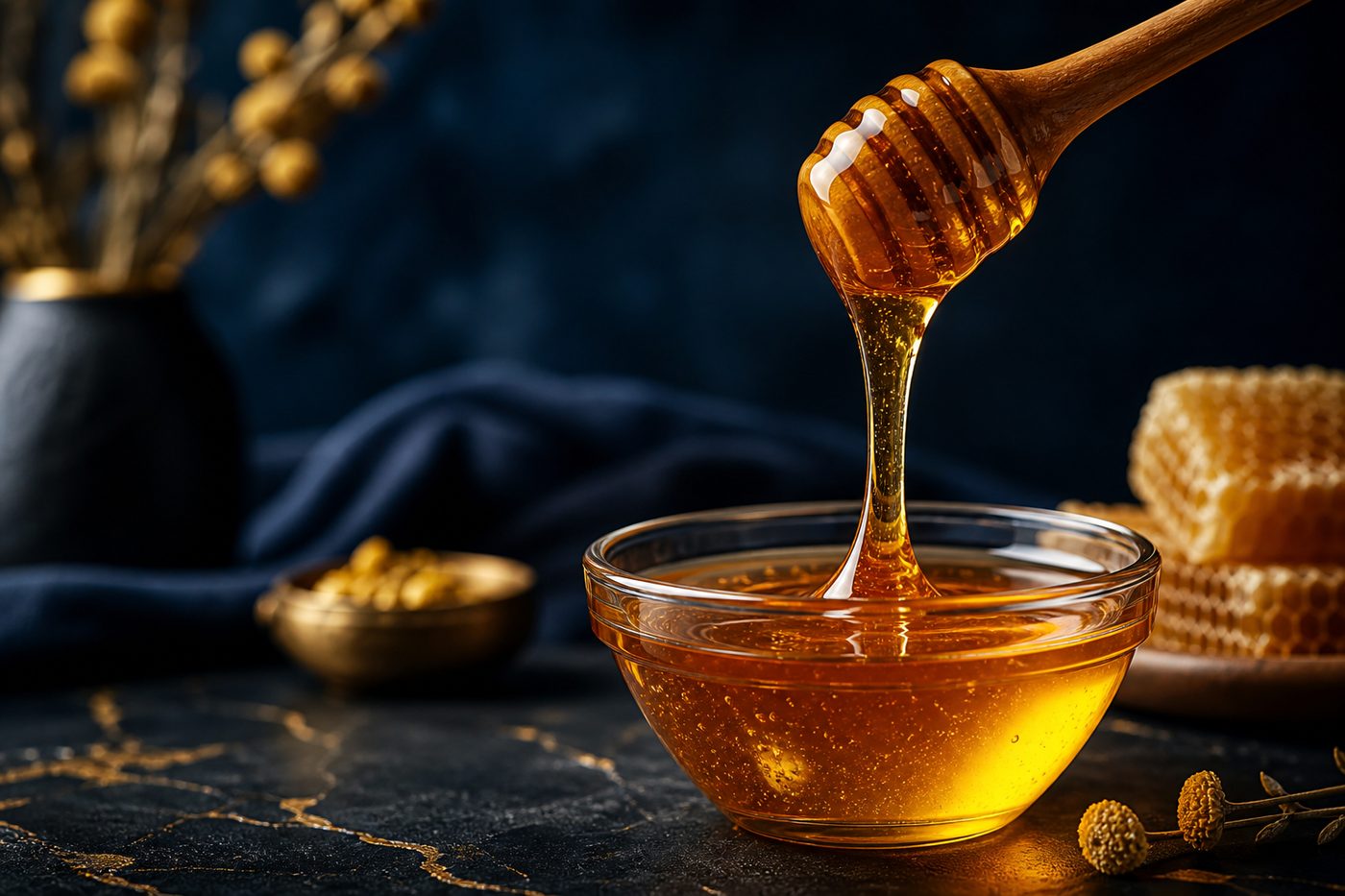
Global demand for natural honey has intensified as consumers and food brands in the USA, Germany, UK, Japan, UAE, France, Netherlands, Canada, and Australia seek authentic, traceable, and clean-label sweeteners and wellness ingredients. India, with its exceptional floral biodiversity spanning Punjab and Haryana mustard fields, Bihar and UP litchi orchards, Uttarakhand and Himachal Himalayan forests, Rajasthan's desert flora, and the Northeast's wildflower ecosystems, is one of the world's most important honey-producing and exporting nations. If you are learning how to export honey from India, the opportunity is substantial — but the quality bar is high and the regulatory path must be followed precisely.
Indian honey export is governed by APEDA (Agricultural and Processed Food Products Export Development Authority) under the Ministry of Commerce, not by a lifestyle council. Every commercial shipment must clear FSSAI food safety standards, pass NABL-accredited laboratory testing for HMF (Hydroxymethylfurfural), moisture content, antibiotic residues, heavy metals, and the critical C4 sugar adulteration test, and meet destination-market standards. USDA Organic or EU Organic certification through NPOP-accredited bodies unlocks premium price segments in North American and European retail. Buyers in Japan, Germany, and the Netherlands apply especially rigorous residue and adulteration scrutiny. Understanding these quality gates before your first shipment is not optional — it is the difference between a successful first container and a rejected consignment.
For beginners, the challenge is rarely finding honey. India produces hundreds of thousands of metric tonnes annually from over ten million bee colonies managed by beekeepers from small family operations to organised commercial apiaries. The challenge is process: IEC registration, APEDA enrolment, FSSAI-compliant processing, mandatory pre-export NABL lab testing, correct packaging in bulk food-grade drums of 280–300 kg or branded retail jars, freight-forwarder coordination, and finding international buyers who trust verified Indian honey quality. This guide walks through every step in the sequence that successful honey exporters follow — from product and market selection to first shipment documentation and beyond.
Key Takeaways
Summary Box
- How to export honey from India starts with IEC, APEDA registration, and FSSAI-compliant processing — not with cold emails to buyers.
- India's honey regions (Punjab, Haryana, Bihar, UP, Uttarakhand, Himachal, Rajasthan, MP, Northeast) produce distinct variety profiles — multifloral, acacia, mustard, lychee, eucalyptus, Himalayan, wild forest, and jamun — each with different buyer appeal.
- Mandatory pre-export NABL laboratory testing for HMF, moisture (under 20%), antibiotic residues, heavy metals, and C4 sugar adulteration is non-negotiable for every commercial honey shipment from India.
- Top import markets for Indian honey include the USA, Germany, UK, Japan, UAE, France, Netherlands, Canada, and Australia — with different certification, labelling, and residue requirements across each.
- NPOP, USDA Organic, and EU Organic certifications are achievable through accredited Indian bodies and significantly improve honey export value for premium buyer segments.
- Most honey moves in bulk food-grade drums (280–300 kg); premium and organic varieties increasingly move in retail-ready jars for direct retail and health-food channels.
- A merchant exporter in India with honey export experience can compress the compliance and buyer-access learning curve significantly for manufacturers and beekeepers entering export for the first time.
Why India Is a Leading Global Honey Exporter
India's structural advantages in honey export rest on four pillars: exceptional floral diversity, a large and growing beekeeper network, increasingly modern processing and testing infrastructure, and government export promotion through APEDA, NHB, and Ministry of Commerce programmes. No other major honey-exporting nation matches India's combination of distinct varietal honey — from the delicately floral acacia of Uttarakhand and Himachal Pradesh to the bold mustard honey of Punjab and the citrus-toned lychee honey of Bihar — under one sovereign origin.
India's honey production base spans more than ten million managed bee colonies operated by small-scale family beekeepers, cooperative producers, and organised commercial apiaries. This diversity creates a supply ecosystem where small artisanal producers can access export channels through organised processing and merchant-export partners. APEDA's export facilitation frameworks, along with state-level Khadi and Village Industries Commission (KVIC) support for small beekeepers, have helped formalise what was once a fragmented supply chain into increasingly traceable and certifiable production.
Competing origins — China, Argentina, Mexico, and New Zealand — each have honey export strengths, but India's varietal range and growing organic certified supply create differentiation that pure commodity origins cannot offer. New Zealand Manuka commands premium prices through unique MGO (Methylglyoxal) positioning, but India's Himalayan wild honey and Northeast multi-flora varieties offer authenticity stories that premium food retail buyers in Japan, Germany, and Australia find compelling at substantially lower landed cost.
Comparison table
Swipe →
Data table — swipe horizontally on small screens
| Honey Variety | Primary Production Region | Key Export Markets | Export Positioning |
|---|---|---|---|
| Multifloral / Wildflower | Punjab, Haryana, Rajasthan, UP | USA, UAE, UK, Germany | Volume commodity; competitive pricing |
| Mustard Honey | Punjab, Haryana, UP | Middle East, UK, Europe | Seasonal; strong crystallisation; commodity + specialty |
| Lychee (Litchi) Honey | Bihar, UP, West Bengal | Germany, Japan, USA, Netherlands | Premium floral; organic-cert potential |
| Acacia Honey | Uttarakhand, Himachal Pradesh | Germany, UK, Japan, France | Premium clear honey; high buyer demand |
| Eucalyptus Honey | UP, MP, parts of South India | Middle East, UK, EU | Herbal notes; industrial and retail |
| Himalayan Wild Honey | Uttarakhand, Himachal, Sikkim | Japan, Germany, USA, Australia | Ultra-premium organic; wild-harvested story |
| Wild Forest Honey | Northeast India, MP, Odisha | Germany, Netherlands, Japan | Dark, rich; specialty and organic channels |
| Jamun Honey | Bihar, UP, MP | USA, UK, Germany, UAE | Medicinal positioning; health-food retail |
Understanding the Global Honey Import Market
The global honey market is broadly divided into two streams: commodity bulk honey purchased by industrial food manufacturers, bakers, and large-scale retail packers; and specialty or mono-floral honey targeting health-food retail, organic stores, foodservice, and direct-to-consumer channels. Indian exporters can compete in both — but the compliance and certification investment required differs significantly. Commodity bulk buyers in the USA and Middle East prioritise price, food safety documentation, and consistent laboratory results. Specialty buyers in Germany, Japan, and Australia are willing to pay significant premiums for traceable origin, NPOP or EU Organic certification, low HMF, and authentic varietal flavour profiles.
The USA is consistently among the world's largest honey importers by volume and value. Germany is the gateway to European premium markets and has strict residue and adulteration testing policies following pan-EU import controls. Japan demands meticulous documentation and extremely low antibiotic residue levels — among the world's tightest. The UAE provides a strong intermediate distribution market for Gulf region buyers. France, Netherlands, and Canada represent important premium and organic channels. Australia is a smaller but high-value market with strict biosecurity standards for imported food.
China, which produces by far the largest global honey volume, has faced persistent buyer scrutiny around antibiotic residues and adulteration. Argentina is the strongest South American exporter with clean honey credentials. Mexico and Ukraine supply European markets. This competitive context means Indian honey exporters who invest in verified quality, NABL testing, and transparent supply chains hold a structural advantage — especially for buyers seeking China alternatives or premium varietal differentiation that Argentina's largely unifloral production cannot match.
Comparison table
Swipe →
Data table — swipe horizontally on small screens
| Market | Demand Profile | Key Requirements | Opportunity for Indian Exporters |
|---|---|---|---|
| USA | Largest volume; industrial + retail + organic | FDA food safety, pesticide residues, correct labelling | Strong for bulk commodity and USDA Organic premium |
| Germany | Premium quality-focused; gateway to EU | EU MRL limits, antibiotic-free, strict HMF | Excellent for lychee, acacia, organic varieties |
| UK | Health-food + retail + food service | FSA compliance, residue testing, clear labelling | Strong for organic and Himalayan specialty |
| Japan | Extremely selective; highest residue standards | Ultra-low antibiotic levels, HMF < 20 mg/kg often | Premium wild/organic honey with clean test certificates |
| UAE | Wholesale distribution; industrial + gift | Halal compliance, food safety docs | Good volume for multifloral and mustard |
| Germany / Netherlands | Wholesale import and EU distribution | EU Regulation, organic cert if claimed | Strong gateway role for EU retail |
| Australia | Premium niche; biosecurity-strict | FSANZ compliance, pesticide MRL | Himalayan and organic lines at higher price points |
| Canada | Health-food + retail programmes | CFIA, bilingual labelling, organic if claimed | Good for organic and specialty honeys |
How to Export Honey from India: Step-by-Step Guide
Export Tip
The following twelve steps represent the complete operational sequence used by successful Indian honey exporters. Follow them in order. Skipping registrations, laboratory testing, or packaging validation to save time typically results in shipment rejections, customs holds, or destroyed buyer trust that is far more costly than the saved effort.
Step 1: Choose Your Honey Variety and Export Grade
- Map your supply source to a specific HS code (India exports honey under HS 0409)
- Confirm moisture content can reliably reach below 20% — ideally below 18% for premium buyers
- Establish minimum viable supply volume per season before quoting buyers
- Photograph and document variety characteristics — colour, crystallisation behaviour, aroma — for buyer catalogues
Start by identifying which honey variety or varieties you can supply consistently and at export grade. Multifloral honey from Punjab or Haryana is easiest to source at volume but faces the most price competition. Lychee honey from Bihar, acacia from Uttarakhand, Himalayan wild honey, or jamun honey from UP/MP carry premium potential but require reliable supply chains with controlled harvesting windows.
Step 2: Identify Your Target Export Markets
Choose one or two primary markets before diversifying. USA and UAE suit volume commodity bulk exporters. Germany, Japan, and UK suit specialty and organic premium exporters. Japan requires the most rigorous antibiotic residue standards and is not suitable for a first market unless your supply chain is thoroughly audited. Map your freight economics from your nearest load port — Nhava Sheva, Mundra, or Kolkata for most honey-producing regions — to the destination.
Step 3: Obtain Import Export Code (IEC) from DGFT
An Import Export Code is mandatory for filing shipping bills and claiming export benefits. Apply online at the DGFT portal (dgft.gov.in) with PAN, current bank details, and address documents consistent with your GST registration. Most clean applications complete within 2–5 working days. The IEC must be kept updated; an inactive or mismatched IEC can prevent shipping bill filing entirely.
Step 4: Register with APEDA
APEDA (Agricultural and Processed Food Products Export Development Authority) registration is mandatory for honey export from India. APEDA's RCMC (Registration Cum Membership Certificate) is required for filing shipping bills under honey HS codes and for claiming relevant export incentives. APEDA also publishes market intelligence, organises buyer-seller meets, and provides inspection certification services relevant to honey export. Registration is online at the APEDA portal (apeda.gov.in) and requires IEC, FSSAI licence, GST registration, and bank details.
Step 5: Obtain FSSAI Licence and Ensure Food Safety Compliance
Every honey processor and exporter operating in India requires a valid FSSAI licence. Central FSSAI licensing applies to units with turnover above the state threshold or engaged in export. FSSAI's Food Safety and Standards (Food Products Standards and Food Additives) Regulations prescribe quality parameters for honey including moisture content, ash, HMF, reducing sugars, and absence of specific additives. Align your processing unit's HACCP and hygiene systems to FSSAI standards before accepting purchase orders. Processing equipment — stainless steel tanks, dehumidifiers, filtration systems — must be food-grade and documented.
Step 6: Source from Verified Apiaries and Processing Partners
Honey quality begins at the hive, not at the processing facility. Trace your supply to specific beekeeping zones and establish written supplier agreements covering antibiotic non-use, pesticide avoidance, harvest timing, and container hygiene. Antibiotic residues — particularly chloramphenicol, nitrofurans, and oxytetracycline — remain the primary cause of Indian honey rejections in European and Japanese markets. Only source from apiaries with documented antibiotic non-use periods. If pursuing organic certification, sourcing zones must meet NPOP standards for organic apiculture including buffer distances from industrial agriculture.
Step 7: Complete Mandatory NABL Laboratory Testing
- HMF (Hydroxymethylfurfural): must be below 40 mg/kg for most markets; below 20 mg/kg for Japan and premium EU buyers
- Moisture: below 20% to prevent fermentation in transit; premium buyers prefer below 18%
- Antibiotic residues: chloramphenicol, nitrofurans, oxytetracycline, streptomycin — must be non-detectable for EU and Japan
- C4 sugar adulteration (SCIRA test): proves honey is not adulterated with corn or cane sugar syrups
- Heavy metals (lead, cadmium, arsenic): within FSSAI and destination-market limits
- Pesticide residues: tested against EU MRL or destination-specific residue limits
Pre-export laboratory testing at NABL-accredited labs is the critical quality gate for every honey shipment. EIC (Export Inspection Council) notified laboratories and APEDA-approved testing facilities conduct the mandatory parameter testing required for customs clearance and export documentation. Do not book freight until clean test reports are in hand — failed tests discovered at destination cost far more than the testing investment at origin.
Step 8: Select Export Packaging — Bulk Drums or Retail Jars
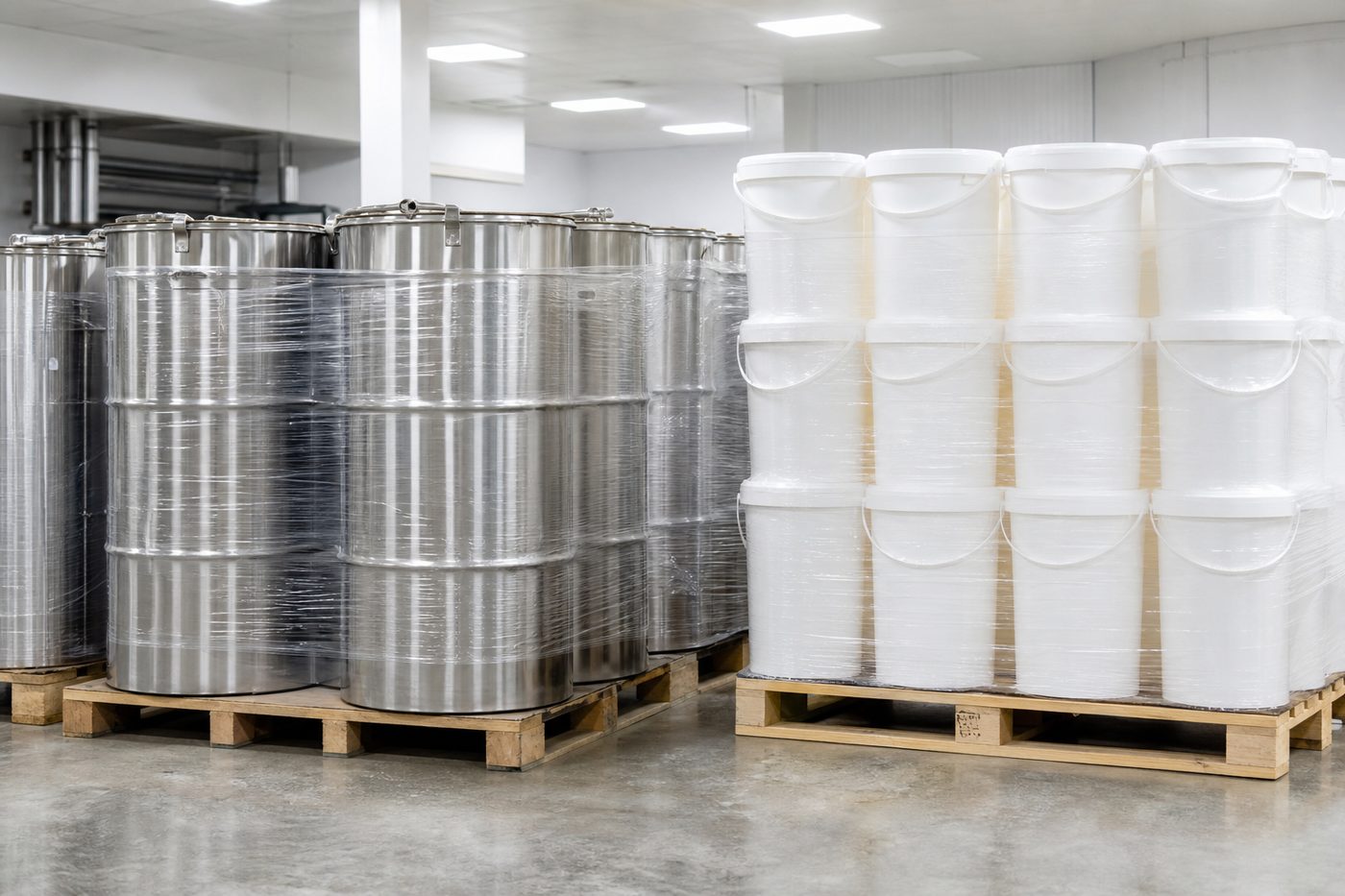
Most commercial honey export from India moves in food-grade stainless-steel or high-density polyethylene (HDPE) drums weighing 280–300 kg net, lined with food-grade poly liners where specified. These bulk drums are suitable for industrial buyers who repack at destination. For organic, specialty, or premium retail honey, retail-grade glass jars (250 g, 375 g, 500 g, 1 kg) with tamper-evident lids, printed labels meeting destination-market requirements (country of origin, net weight, best-before date, allergen statements), and shelf-ready cartons are increasingly the required format. Plastic containers must be food-grade and BPA-free. Label claims such as 'organic', 'raw', or 'monofloral' must be substantiated by certification or testing evidence.
Step 9: Develop Your Export Pricing Strategy
Export price is not farm-gate cost plus freight. Build your FOB price from raw honey procurement cost plus processing, filtration, dehumidification, lab testing, APEDA inspection if applicable, export-grade packaging (drums or jars), documentation, inland haulage to port, and an appropriate exporter margin. For organic honey, add NPOP or EU Organic certification costs. Benchmark against competing origins: for commodity multifloral, Argentina and China set the floor; India typically competes on quality differentiation, not lowest price. For specialty and organic varieties, New Zealand Manuka sets the ceiling — Indian Himalayan and wild forest honey can achieve significant premiums well above commodity but below Manuka price points.
Step 10: Find International Buyers for Indian Honey
Buyer discovery for honey works best as a combination of APEDA buyer-seller meets, import trade data prospecting, food industry trade fairs (Anuga in Germany, Natural Products Expo in the USA, Gulfood in UAE, Foodex Japan), B2B portal listings, and LinkedIn outreach to category buyers and procurement managers at food manufacturers, retail chains, and health-food distributors. For a structured approach, see how to find international buyers for honey.
Step 11: Prepare Export Documentation
Honey export documentation includes commercial invoice, packing list, shipping bill, bill of lading or airway bill, APEDA inspection certificate (for notified honey categories), certificate of origin (non-preferential or preferential under applicable agreements), FSSAI health certificate for food products, and laboratory test reports for the specific consignment lot. For organic honey, include NPOP or EU Organic transaction certificate from the certifying body. Align all documents to the same lot-specific lab report numbers, drum serial numbers, and weight declarations. Mismatches between documents are a leading cause of customs holds in Germany and Japan.
Step 12: Shipping and Logistics
Honey is a dense food commodity — a 280 kg drum per unit weight loads well in full containers (FCL). LCL is viable for mixed food programmes and trial shipments. Choose reefer (refrigerated) containers for raw or minimally processed honey travelling to heat-sensitive markets in summer months, as high temperatures accelerate HMF development during transit. Appoint a freight forwarder experienced in APEDA-regulated food exports. Confirm Incoterms (FOB for most beginner exporters) and align with your honey export documentation checklist before booking cargo space.
Quality Testing and Compliance Standards for Honey Export
Quality testing is the most technically demanding aspect of honey export from India. The C4 sugar adulteration test (also known as SCIRA — Stable Carbon Isotope Ratio Analysis) is designed specifically to detect adulteration of honey with cane sugar or corn syrup syrups. Because honey bees produce C3 carbon isotope signatures and cane/corn syrups produce C4 signatures, even small adulterant additions are detectable. This test is mandatory for EU-bound and Japan-bound honey and is increasingly demanded by USA and other destination buyers.
HMF (Hydroxymethylfurfural) is a degradation product that forms when honey is heated or stored improperly. Fresh honey typically shows very low HMF — below 10 mg/kg from well-managed apiaries. HMF rises during processing, storage at elevated temperatures, and over time. EU regulations cap imported honey at 40 mg/kg HMF; Japan often requires below 20 mg/kg; premium buyers may specify below 15 mg/kg. Controlling processing temperatures (avoiding overheating during dehumidification or filtration) and minimising storage duration before shipment are the main HMF management tools.
Antibiotic residues remain the most common cause of Indian honey consignment rejections in European markets. Chloramphenicol is carcinogenic and banned in food at any detectable level in the EU; nitrofuran metabolites are similarly treated. Streptomycin and oxytetracycline are less uniformly banned but subject to MRL limits in various markets. The only reliable way to produce antibiotic-free honey is to source exclusively from apiaries that document and verify antibiotic non-use — there is no approved processing method to remove antibiotic residues from contaminated honey.
Comparison table
Swipe →
Data table — swipe horizontally on small screens
| Quality Parameter | Standard / Limit | Test Method | Key Markets with Strictest Limits |
|---|---|---|---|
| Moisture content | < 20% (premium: < 18%) | Refractometer / Karl Fischer | All markets; Japan and Germany most strict |
| HMF (Hydroxymethylfurfural) | < 40 mg/kg EU; < 20 mg/kg Japan | HPLC or photometric | Japan, Germany, Netherlands, UK |
| C4 sugar adulteration (SCIRA) | Authentic honey only; no adulteration | Stable Carbon Isotope Ratio Analysis | EU, Japan, USA, Australia |
| Chloramphenicol | Non-detectable (EU < 0.1 µg/kg) | LC-MS/MS (NABL lab) | EU, Japan, Canada, Australia |
| Nitrofuran metabolites | Non-detectable (strict zero tolerance) | LC-MS/MS | EU, Japan |
| Oxytetracycline / Streptomycin | Within applicable MRL or ND | HPLC / LC-MS | EU, Japan, USA |
| Pesticide residues | Within EU MRL or destination MRL | GC-MS, LC-MS/MS panels | EU, Germany, Netherlands, Japan |
| Heavy metals (Pb, Cd, As) | Within FSSAI and EU/destination limits | ICP-MS or AAS | EU, Japan, Australia |
| Electrical conductivity | Category-dependent (blossom vs honeydew) | Conductivity meter | Germany, Netherlands, EU technical buyers |
| Pollen analysis | Varietal authentication | Melissopalynology | Specialty buyers: Japan, Germany, France |
Packaging for Honey Export: Bulk Drums vs Retail Jars
Packaging choice for honey export determines both logistics economics and buyer channel. Most honey exported from India — estimated well over 90% by volume — moves in bulk food-grade drums. These are typically 280–300 kg net weight, constructed from food-grade stainless steel with food-grade inner poly liners (for HDPE drums) or from food-grade HDPE with appropriate wall thickness. Drums must be clean, odour-free, and sealed with food-grade lids and tamper-evident closures. Drum labelling must include lot number, net weight, honey variety, country of origin, FSSAI licence number, and APEDA certificate reference for customs alignment.
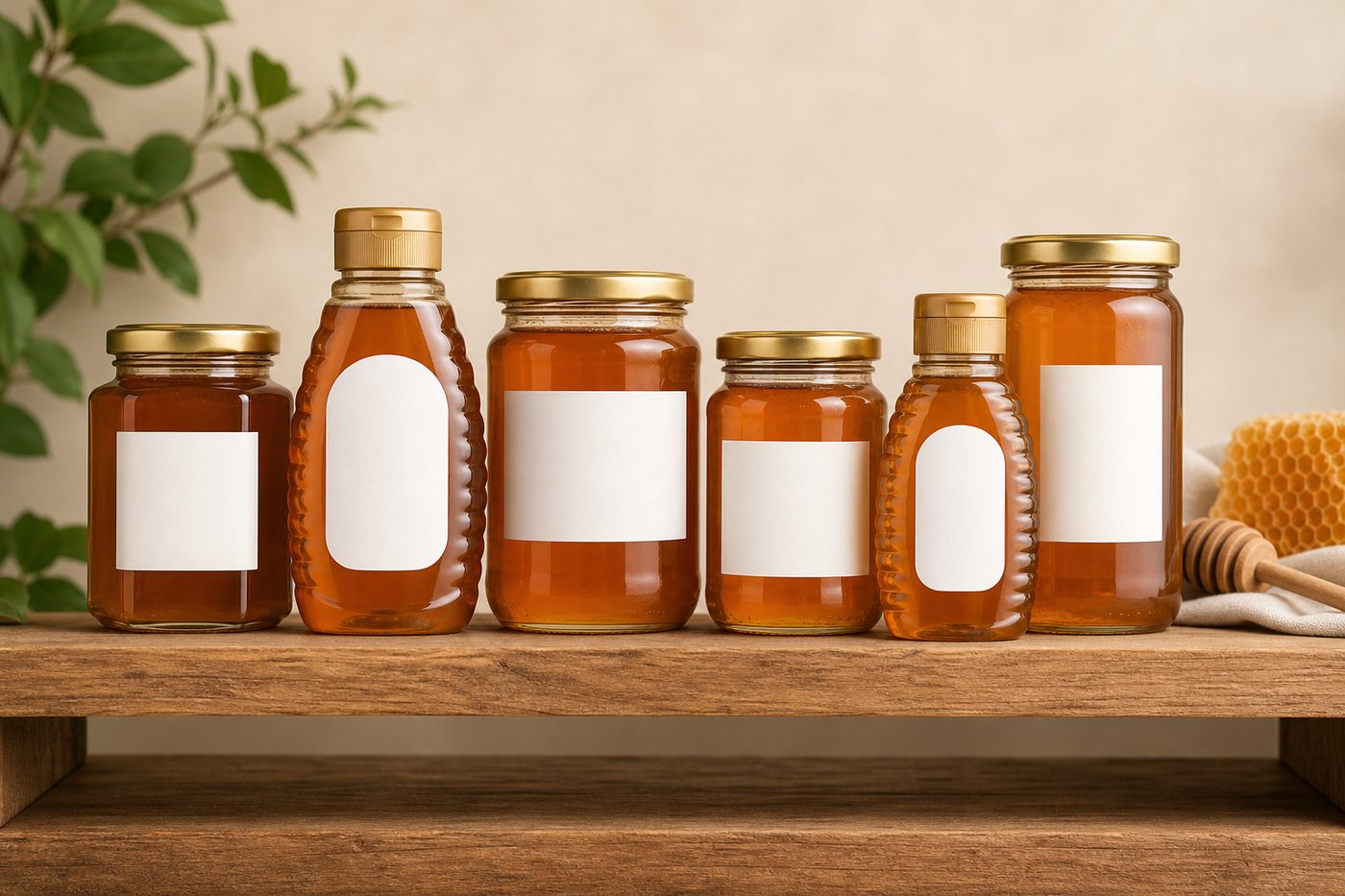
Retail-format honey export — in glass jars of 250 g, 375 g, 500 g, or 1 kg, or in PET/food-grade plastic jars — is growing for premium, organic, and direct-to-retail buyers in Japan, Germany, UK, and Australia. Retail labels must comply with destination food labelling regulations: EU Regulation 1169/2011 for European buyers, USDA labelling guidelines for the USA, FSANZ standards for Australia. All claims on retail labels — 'organic', 'raw', 'monofloral', 'Himalayan', or health claims — must be substantiated by appropriate certifications and, where required by destination law, comply with permitted claim frameworks.
Temperature management during packing and storage matters: honey packed hot (above 45°C for filtration purposes) needs to cool to near ambient before drum or jar sealing to prevent condensation inside the container, which raises moisture content and fermentation risk. Retail jars travelling to Japan must survive inspection scrutiny — any signs of crystallisation, air bubbles, or label defects can trigger rejection at port-of-entry inspection.
Comparison table
Swipe →
Data table — swipe horizontally on small screens
| Format | Typical Weight | Target Buyers | Key Packaging Requirements |
|---|---|---|---|
| Food-grade steel / HDPE drums | 280–300 kg net | Industrial packers, large retailers, food manufacturers | Lined, sealed, lot-labelled, APEDA cert reference |
| Retail glass jars | 250 g, 375 g, 500 g, 1 kg | Premium retail, health food, organic specialty | Destination-compliant label, tamper-evident, claim substantiation |
| Retail PET / food-grade plastic jars | 250 g–1 kg | Mass retail, e-commerce | BPA-free, food-grade, label compliance |
| Squeeze / squeezy bottles | 250 g–500 g | Foodservice, convenience retail | Nozzle hygiene, food-grade, label compliance |
| Institutional tins (5 kg) | 5 kg net | Foodservice, hotel, bakery | Sealed, food-grade, lot-coded for traceability |
Export Documentation Checklist for Honey
Checklist
Compliance Notes
Honey export documentation is more rigorous than most agricultural categories because of mandatory laboratory testing, APEDA certification, food safety requirements, and the specific documentation demands of importing countries like Germany and Japan. Use this checklist as a pre-shipment gate — do not book cargo cutoff until all documents are reviewed by your CHA, your APEDA inspection is completed, and lab reports covering the specific lot are in hand.
Every document must describe the same consignment consistently: lot numbers on the lab report must match lot numbers on the invoice; drum serial numbers on the packing list must match the APEDA inspection certificate. Customs authorities in Germany, Japan, and the USA cross-reference documents, and inconsistencies invite examination holds that can run to weeks and significant demurrage charges.
Comparison table
Swipe →
Data table — swipe horizontally on small screens
| Document | Purpose | Who Issues | Honey-Specific Note |
|---|---|---|---|
| IEC | Export authority | DGFT | Must be active and match APEDA enrolment details |
| APEDA RCMC | Mandatory for honey HS code filing | APEDA | Renew annually; check expiry before each shipment |
| FSSAI Licence | Food safety compliance | FSSAI portal | Ensure central licence if turnover/export threshold applies |
| Commercial Invoice | Transaction value and description | Exporter | State variety, grade, processing, lot reference |
| Packing List | Drum count, serial numbers, net/gross weights | Exporter | Drum serial numbers must match APEDA inspection cert |
| APEDA Inspection Certificate | Government quality inspection | EIC / APEDA-authorised agency | Cover lot-specific; issued before loading |
| NABL Lab Test Report | HMF, moisture, antibiotics, C4 adulteration | NABL-accredited lab | Lot-specific; issued before shipment booking |
| Health Certificate / EIC Certificate | Food product health compliance | EIC or competent authority | Required for EU, Japan, many other markets |
| Certificate of Origin | Origin proof for duty preference | Chamber / authorised agency | Confirm preferential vs non-preferential for destination |
| Bill of Lading / AWB | Carriage contract and title | Carrier / forwarder | Check consignee, notify party, and cargo description |
| Organic Transaction Certificate | Certifies organic claim per lot | NPOP/EU Organic certifying body | Required if any organic claim is made on invoice or label |
| Phytosanitary Certificate | Plant product compliance where required | NPPO India | Check if destination requires for honey specifically |
| Insurance Documents | Cargo risk cover under CIF/CIP | Insurer | Drums photograph before sealing for any potential claims |

How to Find International Buyers for Indian Honey
Buyer discovery for honey export requires a combination of trade-data intelligence, exhibition presence, and digital outreach — with quality documentation as the foundation of every buyer conversation. Honey buyers who have experienced adulteration or antibiotic rejection from any origin are cautious; the first question they ask is not about price but about testing protocols and supply chain traceability.
APEDA buyer-seller meets and international food exhibitions
APEDA organises periodic buyer-seller meets specifically for honey and agricultural food products, providing organised introductions to verified importers. International food trade exhibitions such as Anuga (Cologne, Germany, biennial), SIAL (Paris), Gulfood (Dubai), Natural Products Expo West (USA), and Foodex Japan (Tokyo) are the highest-intent buyer platforms for honey exporters. Prepare a focused sample kit of two to four varieties with lab reports, a clear product sheet listing variety, region, certifications, processing method, and test parameters, and competitive FOB pricing. Follow up within 72 hours of any buyer meeting — fair-lead conversion requires speed.
Import trade data, B2B portals, and LinkedIn outreach
Use import shipment data to identify active importers of Indian honey into target markets under HS code 0409. Importers who already buy Indian honey are lower-hanging fruit than those buying from competing origins — switching cost is lower if your quality and pricing are competitive. B2B portals provide listing visibility but should be complemented by active LinkedIn outreach to procurement managers, category buyers at food distributors, and private-label managers at health food retail chains. Messages must be product-specific — variety, region, certifications, and testing records — not generic 'we are exporters' introductions.
Organic certification as a buyer magnet
- NPOP-certified honey qualifies for EU Organic equivalence — a significant market access advantage
- Maintain three-year organic transition records; beekeeping zone buffer distances must meet NPOP standards
- USDA NOP certification opens US health-food and natural grocery retail channels
- Third-party organic certificate transaction certificates must accompany every shipment that carries organic claims
- Organic certification is a buyer attraction tool — but clean antibiotic test results remain the minimum barrier to entry regardless of certification
NPOP (National Programme for Organic Production) certification through APEDA-accredited inspection bodies is the Indian organic standard. Honey bearing NPOP certification can be sold in the EU under the EU-India organic equivalence arrangement, making it EU Organic equivalently recognised. For the USA, National Organic Program (NOP/USDA Organic) certification through an accredited US certifier is required for USDA Organic claims. These certifications attract a category of buyer — health food distributors, premium supermarkets, D2C wellness brands — who actively search for organic honey origins and are willing to pay 30–80% premiums over commodity multifloral prices.
Common Mistakes New Honey Exporters Make
Common Mistakes Box
- Not testing for C4 adulteration before shipment — Solution: Mandatory SCIRA/NABL testing on every lot before booking cargo.
- Sourcing from apiaries without documented antibiotic non-use — Solution: Written beekeeper agreements, apiary audit records, and lot-specific sourcing traceability.
- HMF rising during overheated processing or prolonged storage — Solution: Process at controlled temperatures; minimise storage before shipment; retest after storage periods.
- Moisture above 20% leading to fermentation in transit — Solution: Measure moisture at packaging stage; use dehumidification equipment; do not pack honey above acceptable moisture limits.
- APEDA registration lapsed or RCMC not renewed — Solution: Check APEDA portal expiry dates months before peak shipment season.
- Lab reports covering a different lot or date than the shipped consignment — Solution: Issue lot-specific test reports for every shipment lot; never reuse old reports.
- Label claims (organic, raw, monofloral) without supporting certification — Solution: Substantiate every label claim with a valid certificate or approved test method before printing labels.
- Drum serial numbers not matching across packing list, inspection certificate, and invoice — Solution: Allocate drum serial numbers before packing and carry them consistently across all documents.
- Quoting buyers before knowing your landed cost model — Solution: Build FOB from procurement, processing, testing, packaging, documentation, inland haulage, and exporter margin before any quote.
- Targeting Japan before your antibiotic controls are airtight — Solution: Start with USA or UAE commodity markets and build antibiotic-free track record before attempting Japan.
- No cold-chain or reefer planning for summer shipments — Solution: Assess HMF development risk for summer lanes; use reefer containers or plan shipments in cooler months.
- Relying on one beekeeper source without backup supply — Solution: Map two or more sourcing zones per variety; honey production is weather-dependent and a single-source programme fails in drought years.
Most first-shipment failures in honey export are avoidable process failures. The twelve patterns below account for the majority of rejected consignments, lost buyer relationships, and failed first-year export programmes:
Case Study: Exporting Lychee Honey from Bihar to German Retail
Challenge: A Bihar-based honey processor had been supplying local and domestic wholesale markets with lychee honey from the litchi orchards of Muzaffarpur district. A German specialty food importer enquired about 10 metric tonnes of lychee honey — first shipment in drums for repacking, with a view to retail-format jars in subsequent orders — citing customer demand for authentic varietal honey beyond German domestic rape (canola) and domestic flower honey.
Approach: The processor partnered with an export coordination partner to complete APEDA RCMC renewal, FSSAI central licence verification, and a full supply chain audit tracing honey from twelve documented beekeepers in the litchi zone. Written antibiotic non-use agreements were signed with each beekeeper before the season. Processing was conducted at controlled temperature, and HMF measured at packing was 8 mg/kg — well within German requirements.
Testing and documentation: NABL-accredited laboratory testing covered HMF, moisture (17.4%), C4 adulteration (authentic), chloramphenicol (non-detectable), nitrofuran metabolites (non-detectable), full pesticide panel (all within EU MRL), and pollen analysis confirming lychee (Litchi chinensis) dominant pollen at 45%. The German buyer requested the pollen analysis specifically to authenticate the monofloral claim — this is standard practice for specialty buyers.
Logistics: The 10 MT moved in 34 food-grade HDPE drums (295 kg net each) via a 20-foot container from Nhava Sheva. All documents were cross-referenced lot by lot. An EIC health certificate and non-preferential certificate of origin were issued. The EU import broker received draft documents five days before vessel departure and confirmed pre-clearance readiness.
Results: The consignment cleared German customs without examination. HMF at destination testing by the buyer's lab confirmed 11 mg/kg — within the expected marginal increase from transit. The buyer placed a follow-up order for 15 MT including 2 MT in retail-format 500 g jars labelled in German as 'Litschihonig aus Indien'. Retail pricing at German health-food chains allowed the buyer a 40% margin improvement over commodity multifloral.
Lessons learned: Monofloral authentication through pollen analysis was the differentiator that converted this buyer from commodity to premium sourcing. Lab report alignment across all documents and drum-level traceability removed every reason for buyer hesitation. For documentation alignment in honey and other food exports, see the honey export documentation checklist and the broader export documentation checklist for India.
Future Outlook for Indian Honey Exports
Through 2030, the Indian honey export sector will be shaped by three primary forces: rising global demand for authentic and certified organic honey, tightening quality standards in key import markets (especially EU and Japan), and increasing supply chain transparency expectations from buyers and retailers. India's position as one of the world's most biodiverse honey origins — with distinct varietal profiles unavailable from major competing origins — is a structural advantage that will compound as consumer education about varietal honey grows in premium retail channels.
APEDA and NHB (National Bee Board) initiatives to modernise Indian apiculture, improve beekeeper training in antibiotic-free practices, and expand NABL testing infrastructure will reduce the quality compliance burden for well-organised exporters. Organic certification adoption is growing, with an increasing number of Bihar, Uttarakhand, and Northeast India apiculture zones achieving NPOP status — opening EU Organic equivalence and USDA Organic channels that currently represent a fraction of India's potential organic honey export volume.
The risk factors through 2030 are supply chain adulteration by informal actors, climate variability affecting floral yields in key production zones, and geopolitical shifts in trade arrangements. Exporters who invest in verifiable traceability systems — electronic lot records, geotagged apiary registration, blockchain-linked supply chains in the medium term — will be better positioned as destination-market buyers demand increasing evidence alongside certifications. The premium honey market globally is growing faster than commodity honey consumption, and India is uniquely positioned to capture that premium share if quality systems match the country's exceptional raw-material diversity.
Conclusion
- Next step for processors: Complete IEC, APEDA RCMC, and FSSAI licence before approaching any international buyer.
- Next step for buyers: Share your variety requirements, destination market, certification needs, and volume — Altus Exports matches verified Indian honey exporters and coordinates documentation and shipment.
- Explore export products from India and merchant exporter services to choose the right partnership model for honey and other agricultural exports.
- Review Top 15 Honey Products Exported from India for variety demand maps, regional profiles, and buyer-market fit.
- Compare destinations in Best Countries for Indian Honey Exports before locking your first market plan.
- Complete APEDA readiness with APEDA Registration Benefits for Honey Exporters.
- Use the Honey Export Documentation Checklist as your pre-shipment gate for every consignment.
- Build international buyer pipeline with How to Find International Buyers for Honey and Trade Shows for Honey Exporters.
- Match product and demand with Most Demanded Indian Honey by Country and Sustainable Organic Honey Export Opportunities.
- International buyers should read How to Source Honey Directly from India for structured procurement steps.
- Browse global sourcing partner services and product sourcing company India for multi-category food export support.
Learning how to export honey from India is fundamentally about building a quality-first export operating system: clean apiary sourcing, FSSAI-compliant processing, mandatory NABL laboratory testing for HMF, moisture, antibiotic residues, and C4 adulteration, APEDA registration, destination-appropriate packaging, and documentation that clears customs in Germany, Japan, or the USA without amendment or hold. India's floral diversity from Punjab to Bihar to the Himalayas to the Northeast is genuinely world-class raw material — the export challenge is proving that quality to buyers through systems, not just storytelling.
Registrations are clear: IEC, APEDA RCMC, and FSSAI central licence. Quality gates are defined: NABL testing per lot before shipment. Packaging formats are understood: bulk drums 280–300 kg for industrial buyers, retail jars for premium channels. Documentation must be lot-consistent across every certificate. If you are an Indian honey processor, apiculture company, or MSME ready to export, complete your registrations, audit your supply chain for antibiotic compliance, commission your first NABL test package, and approach target markets with clean data. International buyers sourcing verified organic honey from India and similar verified natural products can work with Altus Exports for coordinated export under one accountable relationship. For the honey-natural-products industry overview, product categories, and sourcing intelligence, visit our dedicated industry page.