How to Find International Buyers for Zinc Ingots
By Saurabh Mittal, Founder, Altus Exports
A lead-generation playbook for Indian zinc ingot exporters — HS 790111 trade-data prospecting, galvanizer and trader lists, LinkedIn metals outreach, and a verification protocol that separates genuine unwrought-zinc buyers from time-wasters.
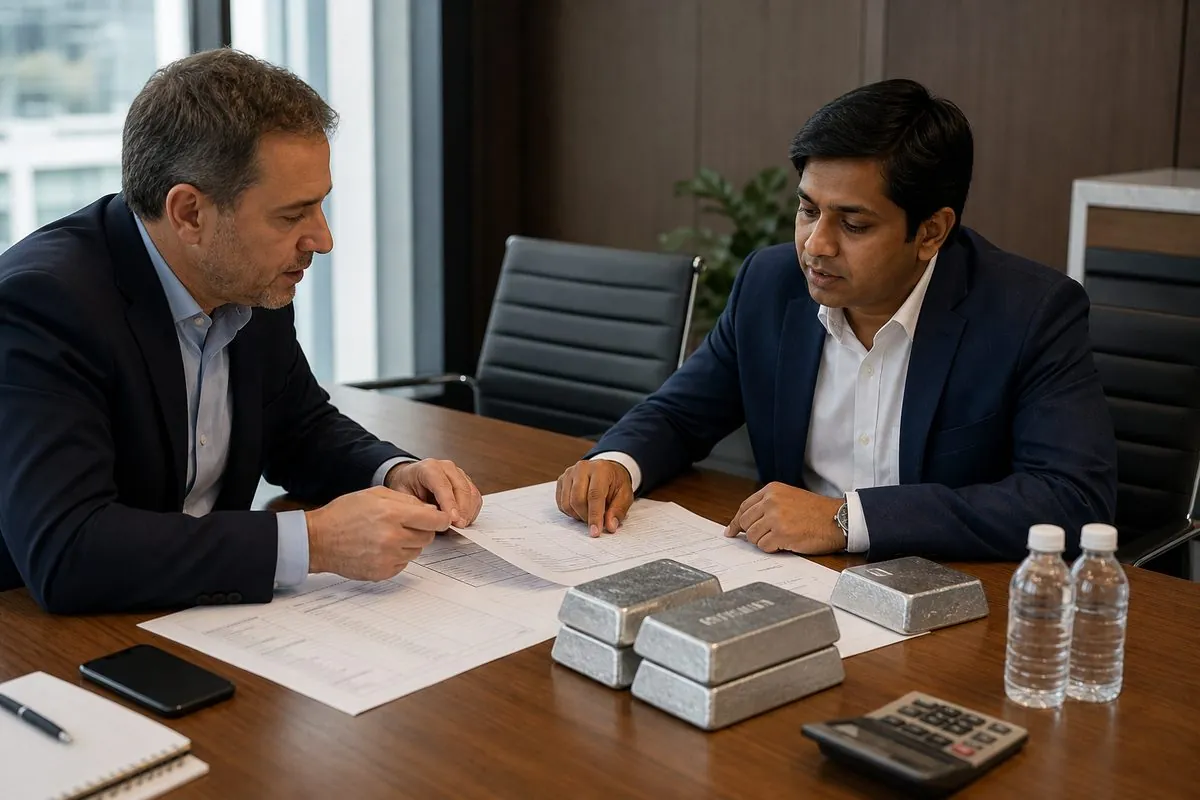
Finding international buyers for zinc ingots is a discovery-and-verification problem, not a catalogue problem. The exporters who fill pipelines fastest treat HS 79011100 (unwrought zinc ≥99.99% Zn — SHG primary line), 79011200 (unwrought zinc <99.99% Zn — HG), and 79012010 / 79012090 (zinc alloys, unwrought) as prospecting filters — not as afterthoughts on a shipping bill. India's refined zinc moves from the Rajasthan integrated belt (Chanderiya (Rajasthan) — Hindustan Zinc smelter belt, Debari (Rajasthan), Dariba (Rajasthan)) through merchant-exporter consolidation programmes to importers in Singapore, Thailand, Taiwan, United Arab Emirates, Saudi Arabia, Indonesia, Malaysia, Vietnam, but the shipments that become repeat MT contracts are the ones where the first outreach named the right HS line, LME-versus-commodity posture, and assay expectation.
India HS 790111 exports in 2024 totalled US$610,648.91K and 214,979,000 kg (~US$610.6M / ~215.0 kt) per WITS/UN Comtrade. Leading partners by value: Singapore, Thailand, Other Asia nes (commonly reported as Taiwan), UAE, Saudi Arabia, Indonesia, Malaysia, Nepal, Vietnam, and Korea. Treat as directional planning context — confirm with DGCI&S / ITC Trade Map / paid customs extracts before citing in contracts. This guide is a buyer discovery and outreach playbook built exclusively for unwrought zinc metal — not a product-spec deep-dive, not a documentation-template pack, not a zinc-oxide chemical essay, and not a galvanized-steel coil primer. Confirm every 8-digit ITC-HS line with your CHA before filing; confusing primary refined ingots with scrap under 79020010 / 79020090 is the fastest way to lose a metals-literate galvanizer or trader.
For the end-to-end export process, read How to Export Zinc Ingots from India. For destination ranking, see Best Countries for Indian Zinc Ingot Exports. For buyer-side sourcing mechanics, see Source Zinc Ingots Directly from India. For LME-registered SHG and CGG premium pathways, see LME-Registered SHG and Galvanizing-Grade Zinc Export Opportunities. For booth and marketplace ROI, that lives in Trade Shows and B2B Marketplaces for Zinc Ingot Exporters, not here.
Altus Exports operates as a merchant exporter in India and global sourcing partner, running structured buyer-discovery programmes for zinc metal exporters consolidating mill parcels toward Mundra, Kandla / Deendayal, Nhava Sheva (JNPT), Pipavav. This guide is written for exporters allocating outreach bandwidth — and for procurement teams who want to understand how credible Indian zinc suppliers actually get found.
Key Takeaways
Summary Box
Executive Summary
Summary Box
Zinc ingot buyer discovery breaks into two halves that must run in parallel. Inbound channels — a discoverable website with HS-accurate category pages for SHG, HG, CGG, and alloy ingots; LinkedIn presence aimed at metals traders and galvanizing procurement managers; and visible mill-parcel / merchant-exporter credibility tied to Rajasthan origin narratives — pull buyers who already decided they want Indian unwrought zinc. Outbound channels — HS 790111 trade-data mining, galvanizer plant lists, structured cold email that names the buyer's own shipment history, and targeted follow-up on qualified prospects — reach buyers who are rotating suppliers or expanding capacity and have not started an active search.
The buyer universe is not homogeneous. A continuous galvanizing line specifying LME-registered SHG with third-party assay has almost nothing in common with a regional metals trader buying HG for re-export, or a die-casting foundry sourcing alloy chemistry under HS 790120. Matching outreach language, MTC depth, inspection protocol, and LME±premium framing to the correct archetype is what separates a low reply rate from a conversation that reaches a written RFQ within two weeks.
This guide walks through market context anchored on directional HS 790111 trade scale, trade-data-led prospecting, LinkedIn metals outreach, galvanizer list qualification, buyer verification, and destination-specific opportunity — closing with sourcing and compliance checklists. Process depth lives in the pillar guide; premium LME pathways live in the specialty companion.
Market Size & Industry Overview
Key Statistics
India HS 790111 exports in 2024 totalled US$610,648.91K and 214,979,000 kg (~US$610.6M / ~215.0 kt) per WITS/UN Comtrade. Leading partners by value: Singapore, Thailand, Other Asia nes (commonly reported as Taiwan), UAE, Saudi Arabia, Indonesia, Malaysia, Nepal, Vietnam, and Korea. Treat as directional planning context — confirm with DGCI&S / ITC Trade Map / paid customs extracts before citing in contracts. Use DGCI&S / TradeStat / ITC Trade Map / WITS screens on HS 79011100, 79011200, and 79012010 / 79012090 as the unwrought-zinc proxy. Do not invent a blended “Chapter 79 total” that mixes primary refined metal with scrap under 79020010 / 79020090, and do not present zinc-oxide or galvanized-steel figures as zinc-ingot demand.
India's refined zinc base is concentrated in Rajasthan's integrated complex — Hindustan Zinc (Vedanta) at Chanderiya, Debari, and Dariba — with Merchant-exporter consolidation programmes (west-coast ports) moving mill parcels to west-coast load ports. For a buyer, that geography means asking whether “Indian SHG” claims are backed by mill allocation visibility, MTC heat/cast identity, and honest merchant-exporter disclosure when the exporter is not the smelter.
Zinc Ingot Buyer Archetype Map for Outreach
Swipe →
Data table — swipe horizontally on small screens
| Buyer Archetype | Typical Volume Pattern | Best Discovery Channel |
|---|---|---|
| Continuous galvanizing line (CGG / SHG) | Monthly MT contracts; assay-tight | Trade data (79011100), plant directories, LinkedIn |
| General / batch galvanizer | Repeat FCL / parcel cadence | Trade data (79011100/79011200), galvanizer lists |
| Metals trader / re-exporter | Opportunistic + programme parcels | Trade data (79011100), LME Week follow-up, LinkedIn |
| Die-casting / alloy buyer | Chemistry-specified MT lots | Trade data (79012010 / 79012090), foundry directories |
| Chemical / specialty feedstock buyer | Spec-tight smaller parcels | Referral + trade data + direct RFQ |
| Warehouse / LME-adjacent trader | Brand- and warrant-sensitive parcels | Metals forums, brand evidence, trade data |
Export Statistics
Key Statistics
Trade-data screens are the highest-leverage tool for zinc buyer discovery. Filtering Indian export shipping-bill data under HS 79011100 by destination surfaces consignees already importing SHG-class metal — companies with documented, repeatable import habit under the correct unwrought-zinc line, not prospects who “might need galvanizing zinc someday.” When a buyer's history shows repeat entries under 790111 with rising tonnage, that is a live signal for a programme pitch; when the same buyer spikes under 790112, frame HG honestly rather than forcing an LME-brand story.
Read directional aggregates as floors for planning, not ceilings for contracts. When you write a first-contact email, quote the correct HS line for the grade you are pitching, name the buyer's own shipment history under that line, and never lump your offer into scrap or zinc chemicals. A metals-literate importer will read the wrong HS as a signal you have never shipped the category.
Trade-Data Screens for Zinc Ingot Buyer Discovery
Swipe →
Data table — swipe horizontally on small screens
| Screen | Discovery Use |
|---|---|
| HS 79011100 filter | Isolate SHG / ≥99.99% Zn primary refined parcels |
| HS 79011200 filter | Isolate HG / <99.99% Zn commodity programmes |
| HS 79012010 / 79012090 filter | Isolate die-casting and specialty alloy ingot buyers |
| HS 79020010 / 79020090 contrast | Exclude scrap buyers unless you intentionally sell scrap |
| Destination country filter | Focus outreach on priority ASEAN / Middle East corridors |
| Consignee / importer name analysis | Build a named target list |
| Shipment frequency (12-month view) | Separate programme buyers from one-off traders |
| Port-of-discharge pattern | Map regional distribution and re-export hubs |
| Origin mix analysis | Spot buyers switching from other refined-zinc origins |
| Value / tonnage band | Segment LME-brand programmes from commodity HG |
Import Statistics
Key Statistics
Destination-side import data adds the confirmation layer origin data alone cannot provide: competing origins, landed-cost patterns, and which buyers are growing SHG intake versus shrinking it. Priority watchlist markets: Singapore, Thailand, Taiwan, United Arab Emirates, Saudi Arabia, Indonesia, Malaysia, Vietnam. Many ASEAN destinations apply preferential or low MFN rates on unwrought zinc under FTA corridors — verify live tariff for HS 7901.11 / 7901.12 before quoting landed cost. UAE and Saudi Arabia commonly import SHG for galvanizing and re-export; confirm GCC duty schedules and destination assay preferences per programme.
A buyer showing rising month-over-month unwrought-zinc import volume from any origin is a stronger discovery target than one with a single historical shipment. Watch for origin switches — those often represent supplier-dissatisfaction or brand/assay failures you can solve with tighter MTC and inspection discipline. Watch also for traders whose records show Singapore or UAE discharge with onward ASEAN/GCC distribution — those hubs often mask end-user galvanizers you can approach later with mill-brand evidence.
Import Statistics — Zinc Buyer Prioritisation Signals
Swipe →
Data table — swipe horizontally on small screens
| Signal | Buyer Prioritisation Action |
|---|---|
| Repeat quarterly imports under HS 7901.11 | High priority — steady SHG / galvanizing demand |
| Rising tonnage under HS 7901.11 | High priority — capacity expansion or supplier rotation |
| Repeat imports under HS 7901.12 | Medium–high — commodity HG trader or galvanizer; pitch honestly |
| Alloy imports under HS 7901.20 | High for specialty — chemistry and MTC depth required |
| Origin switching from other refined-zinc suppliers | High priority — dissatisfaction or premium opportunity |
| Single historical shipment only | Low priority — verify intent before assay/sample cost |
| Falling volume with no origin switch | Low priority — category may be contracting |
Product Categories / Variants
Summary Box
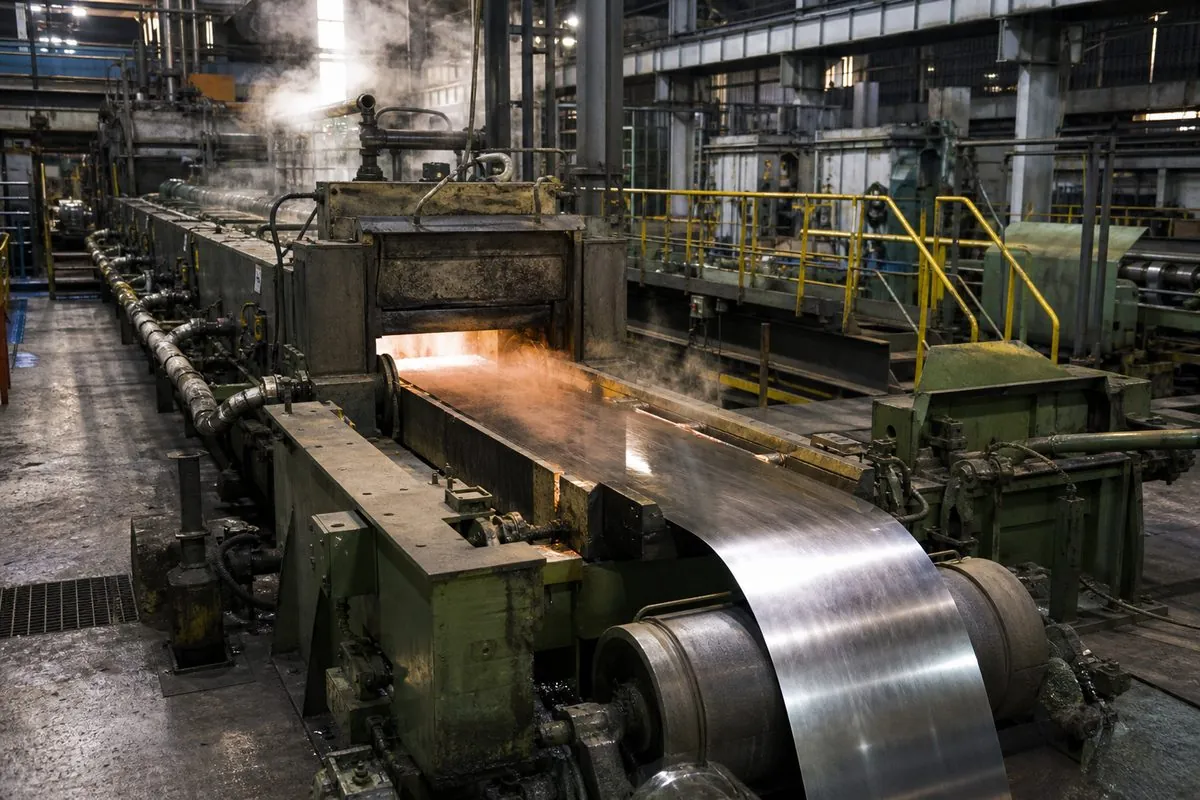
This section maps buyer archetype to grade family for outreach targeting; it is not the full chemistry catalogue (see the dedicated products post for that). Match your first message, MTC sample pack, and LME±premium framing to what the archetype actually procures — so a continuous galvanizer does not receive a scrap-adjacent pitch and a die-casting buyer is not asked to start on generic HG.
Buyer Targeting by Zinc Ingot Grade Family
Swipe →
Data table — swipe horizontally on small screens
| Grade / Variant | HS Reference | Primary Buyer Archetype |
|---|---|---|
| SHG — Special High Grade (India HS 79011100: ≥99.99% Zn; LME SHG contract: min 99.995% Zn + approved brand — HS alone ≠ LME deliverability) | 79011100 | Continuous galvanizers, LME-adjacent traders |
| HG — High Grade (~99.95% Zn; typically HS 79011200 when <99.99%) | 79011200 | General galvanizers, commodity traders |
| CGG — Continuous Galvanizing Grade (process-fit chemistry; map HS from assay) | 79011100 | Continuous galvanizing lines (chemistry-specified) |
| Jumbo / standard cast forms (~25 kg and mill-specific jumbo) | 79011100 / 79011200 | Industrial end-users, warehouse programmes |
| Zinc alloy ingots (die-casting / specialty — India 79012010 / 79012090) | 79012010 / 79012090 | Die-casting foundries, specialty alloy buyers |
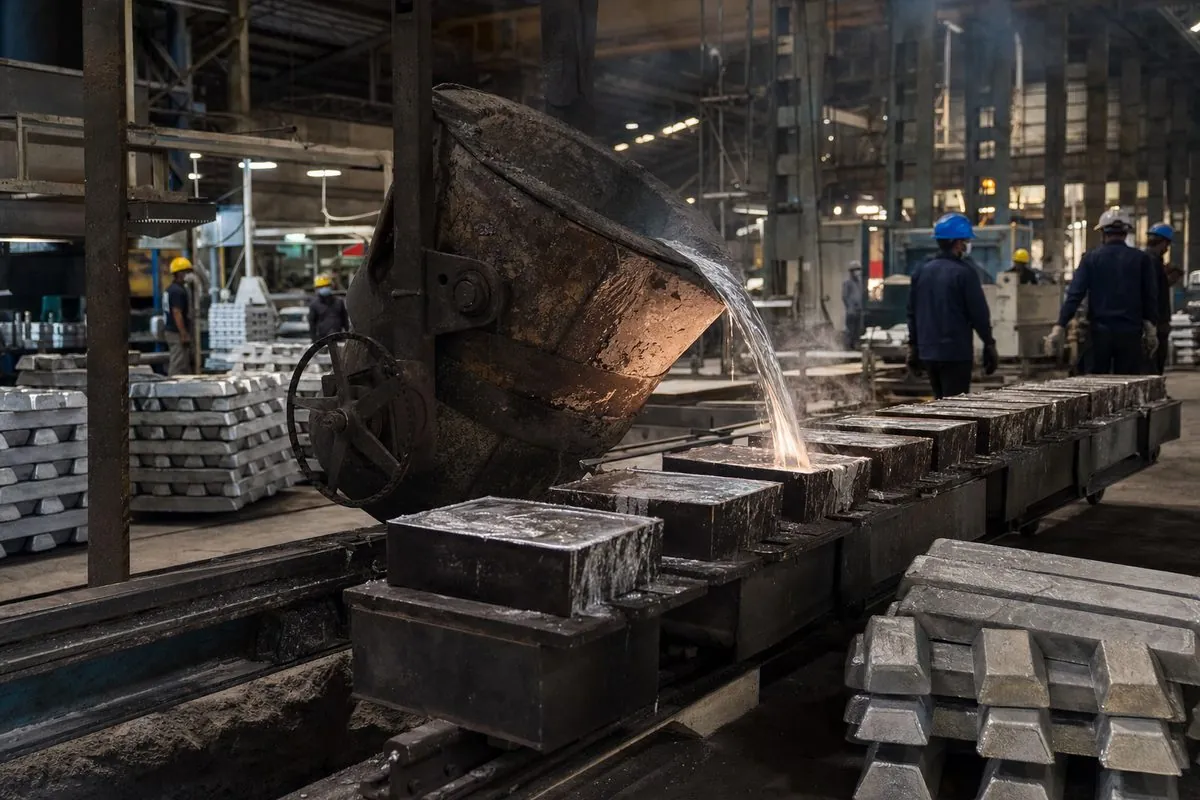
Manufacturing Overview
Export Tip
Buyer conversion depends on manufacturing and allocation credibility you can demonstrate — not just claim. Buyers who have imported Indian zinc before will ask whether you control mill-parcel allocation visibility from the Rajasthan belt (Chanderiya (Rajasthan) — Hindustan Zinc smelter belt; Debari (Rajasthan); Dariba (Rajasthan)), or whether you are a port-city trader with a photo library and no line-of-sight to heat/cast identity. Merchant-exporter programmes are legitimate when disclosed honestly; pretending to be the smelter when you are consolidating parcels destroys trust at the first mill reference check.
Be ready to demonstrate: mill brand / LME registration status (where claimed), typical cast form (~25 kg), bundle practice, MTC fields you can release, third-party inspection willingness, and west-coast stuffing ports. A short warehouse video showing bundle tagging, weather protection, and lot identity does more for first-contact confidence than two paragraphs of company history.
Exporter Credibility Package for First Contact
- 2–4 page company profile with named origin narrative (Chanderiya (Rajasthan) — Hindustan Zinc smelter belt) and merchant-exporter role disclosure
- Grade catalogue extract with LME±premium framing — not stale absolute USD/MT
- Registration copies: IEC, EEPC India RCMC
- Sample MTC format showing Zn purity and impurity limits
- LME brand evidence only when the parcel is actually brand-eligible
- Prior shipment references — redacted bills under HS 79011100 preferred
- Named commercial contact with metals-literate response commitment
Buyer Discovery & Outreach Playbook
Export Tip
This is the operational core — inbound discovery, outbound HS 79011100 prospecting, galvanizer-list qualification, LinkedIn metals outreach, and verification between first contact and a signed parcel contract.
Inbound Buyer Discovery Channels
- HS-accurate landing pages for SHG, HG, CGG, and alloy programmes
- Visible EEPC / IEC credentials and merchant-exporter disclosure
- Downloadable or on-request MTC specimen (redacted chemistry layout)
- Named ports: Mundra, Kandla, JNPT, Pipavav
- Response SLA stated in Indian business hours
Build a website and LinkedIn presence that a galvanizing procurement manager can trust in under two minutes: correct HS lines, grade definitions, port list, MTC sample, and a clear path to RFQ. Publish FOB named-port language and inspection options. Inbound works when metals buyers searching for Indian SHG find assay literacy, not generic ‘engineering goods exporter’ copy.
HS 790111 Trade-Data Prospecting
Pull destination import or India export extracts under HS 790111 / 790112 / 790120. Rank consignees by frequency and tonnage. Prioritise buyers with three or more shipments in twelve months. In the first email line, reference the destination, approximate cadence, and the grade family you can supply — never a vague ‘zinc products’ opener.
Galvanizer Lists and Industrial End-Users
Trade data finds importers; galvanizer directories find melt shops. Cross-check plant names in Thailand, Vietnam, Indonesia, Malaysia, UAE, and Saudi Arabia against import records. Continuous lines care about CGG chemistry and consistent brand; batch galvanizers often accept well-documented SHG/HG with clear Pb/Cd limits. Lead with assay and delivery reliability, not a discount race against a trader already on the dock.
LinkedIn Metals Trader Outreach
Target titles: zinc trader, non-ferrous trader, galvanizing procurement, raw materials manager, metals category manager. Sales Navigator filters by destination country plus keywords ‘zinc’, ‘galvanizing’, ‘SHG’, ‘LME’. First messages should cite a trade-data signal or a public plant capacity note, then offer LME±premium FOB structure and MOQ staging (5–25 MT trial → 20–25 MT FCL).
Buyer Verification Protocol
- Match legal name to trade-data consignee where possible
- Confirm VAT / tax / trade licence where destination requires it
- Require written assay and weight protocol before stuffing
- Use LC or advance structures consistent with metals practice for new accounts
- Never release brand claims you cannot evidence
Between interest and allocation, verify: company registration, prior zinc import history, willingness to pay for third-party assay on first lots, and banking coordinates that match the legal entity. Prefer staged parcels over sudden multi-FCL commitments with novel payment terms. Red flags include refusal of assay, pressure to mis-declare HS, or requests to ship without MTC heat identity.
Pricing Analysis
Buyer Tip
Outreach that leads with a live LME cash or 3M ± regional premium, FOB named Indian port converts faster than outreach that leads with a company introduction. SHG / LME-brand programmes typically command tighter premiums than non-brand HG; CGG and alloy chemistry add separate premium layers Indicative planning structure only; confirm lot-specific FOB (LME reference + premium + packing + inspection) on quote date
Buyers who respond to a structured LME-linked quote typically ask for MTC specimen, inspection protocol, and a formal offer against written chemistry — not a blind discount on a stale print. Treat that as the expected next step. Any premium claim tied to LME registration must be defensible; do not invent brand premiums in first contact you cannot evidence in the second email.
Outreach Pricing Framing for Zinc Ingots
Swipe →
Data table — swipe horizontally on small screens
| Programme | Pricing Frame | What to State in First Contact |
|---|---|---|
| LME-registered SHG | LME cash/3M + brand premium, FOB named port | Brand status + assay protocol + MOQ |
| Commodity SHG (non-brand) | LME + regional premium, FOB | Honest non-brand disclosure + MTC fields |
| HG galvanizing metal | LME + HG premium (usually wider) | Purity band + impurity limits |
| CGG continuous line | LME + CGG chemistry premium | Specified impurity / alloying notes |
| Zinc alloy ingots | Chemistry-linked formula or fixed FOB | Alloy grade + HS 790120 confirmation |
MOQ Analysis
Buyer Tip
Position MOQ as staged commitment. Trial parcels often run 5–25 MT; standard wholesale targets 20–25 MT (20ft) — verify bundle stow and payload; industrial end-users prefer Monthly MT contracts for galvanizers and traders. Container targets depend on ~25 kg ingot / ~1–1.125 MT bundle dimensions and max payload; treat as indicative commercial practice, not a statutory limit. Buyers willing to start at trial tonnage with paid assay are usually better long-term accounts than buyers demanding multi-FCL commitment before any MTC exchange.
MOQ Positioning by Stage for Zinc Programmes
Swipe →
Data table — swipe horizontally on small screens
| Stage | Typical Quantity | Purpose |
|---|---|---|
| Sample / assay lot | As offered (often within trial band) | Chemistry and surface confirmation |
| Trial parcel | 5–25 MT | Logistics, packing, assay handoff validation |
| Standard FCL | 20–25 MT (20ft) — verify bundle stow and payload | Repeat wholesale cadence |
| Industrial contract | Monthly MT contracts for galvanizers and traders | Galvanizer monthly planning |
Packaging Standards
Export Tip
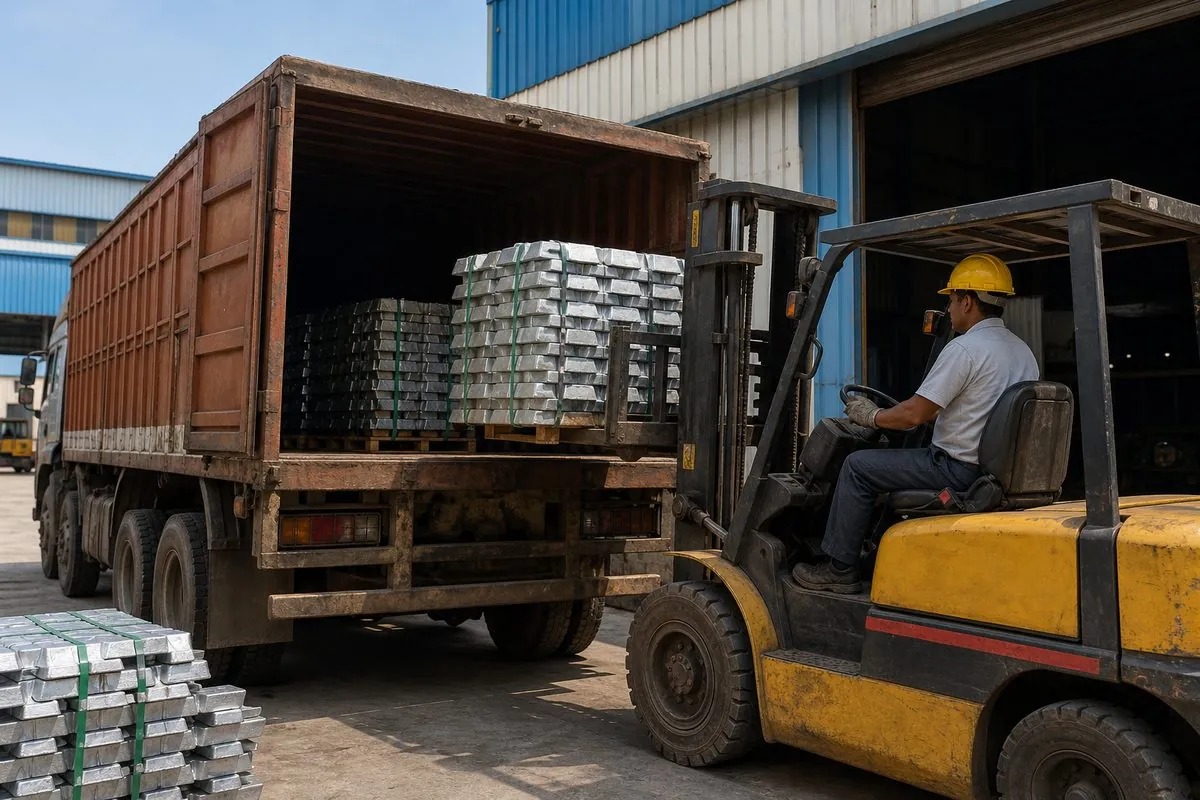
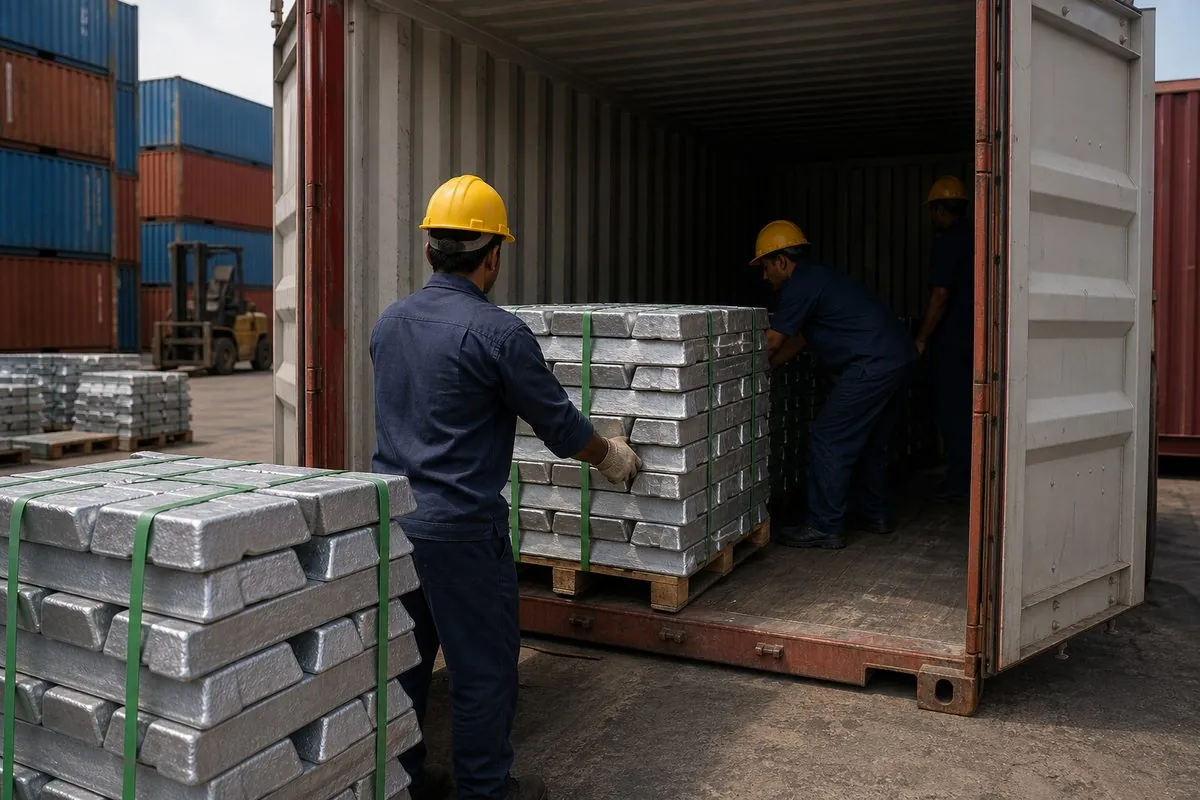
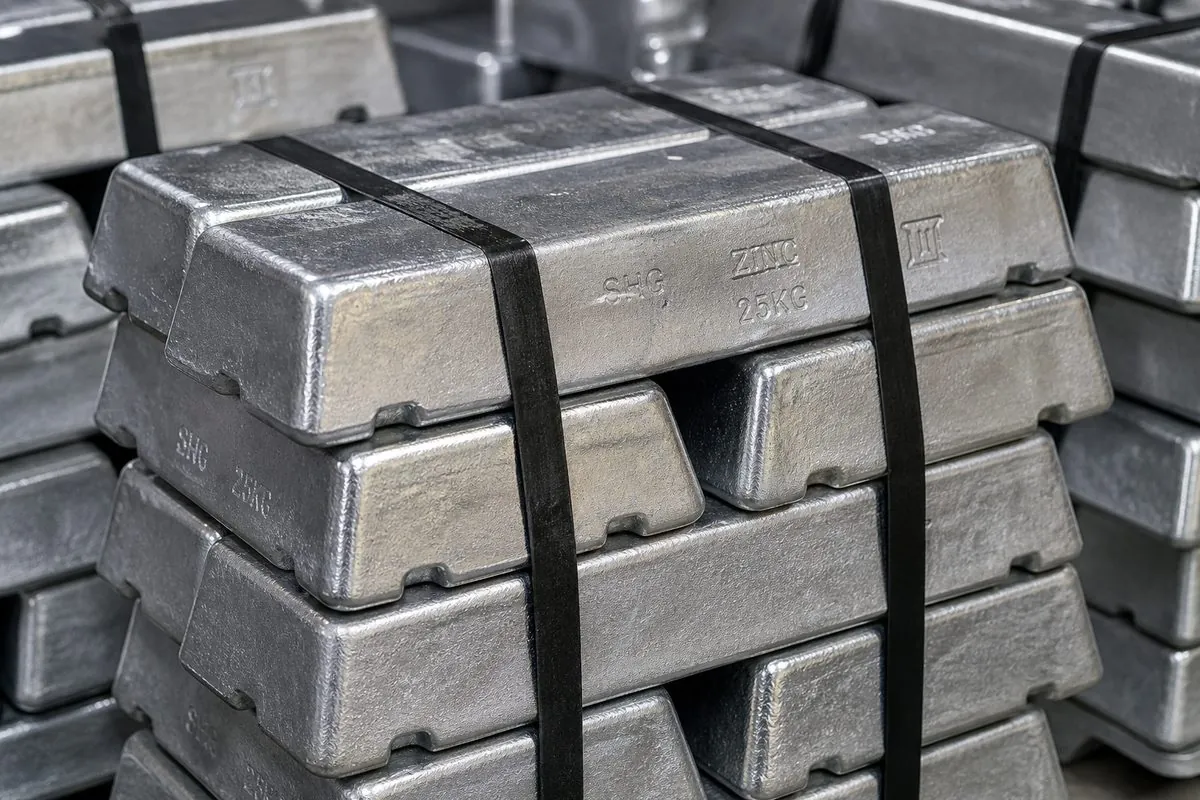
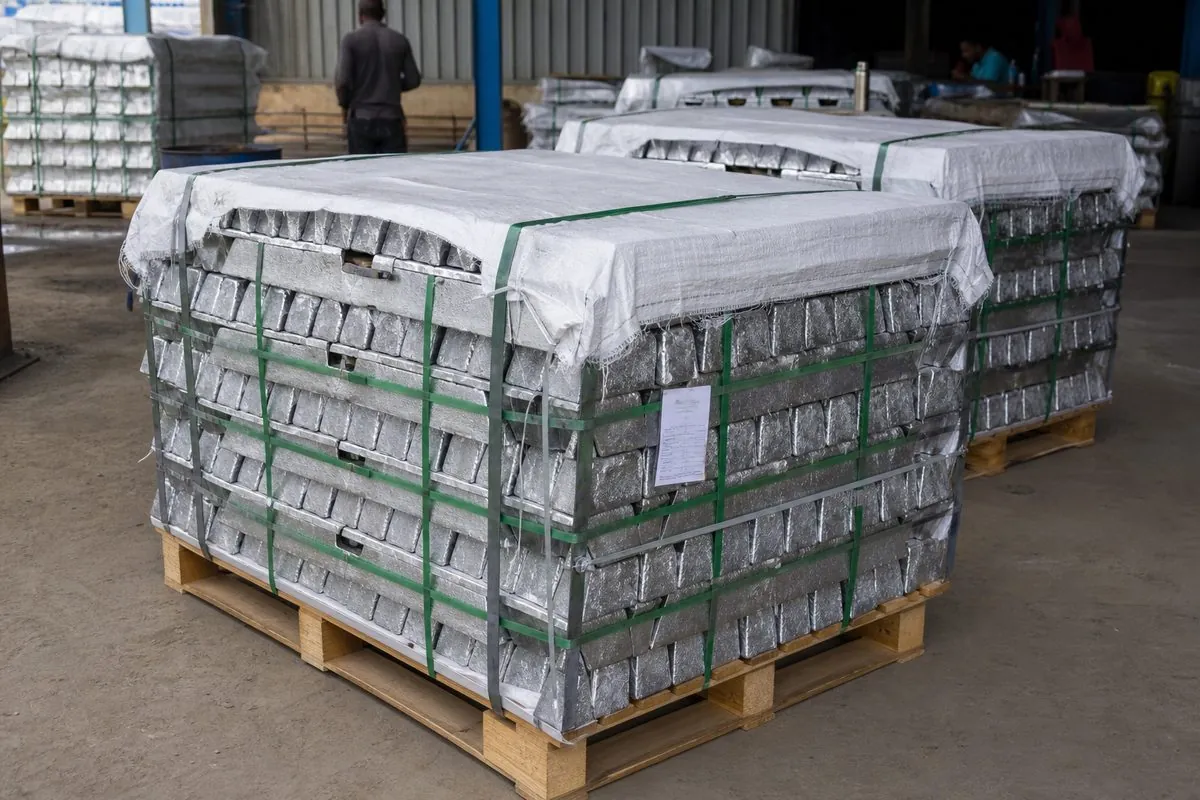
Mentioning zinc-specific packaging in outreach signals operational maturity. Standard practice: ~25 kg standard cast ingots (confirm mill cast form; LME SHG rules: ingots not more than 30 kg); Strapped bundles often ~1–1.125 MT (~45 ingots) on wooden pallets or mill bundling — within LME SHG warrant max of 1.5 tonnes per bundle where LME programmes apply; Lot / heat / cast tagging; brand marks for LME-registered programmes; Weather protection against white rust / oxidation during ocean transit. Buyers comparing similar premiums often use packing and white-rust discipline as a tie-breaker.
Packing Detail Worth Referencing Early
Swipe →
Data table — swipe horizontally on small screens
| Packing Element | Buyer Signal |
|---|---|
| ~25 kg cast ingots | Mill-standard familiarity |
| ~1–1.125 MT strapped bundles | Stow and payload planning maturity |
| Heat / cast / lot tagging | Traceability discipline |
| LME brand marks (when applicable) | Brand-programme readiness |
| Weather / white-rust protection | Ocean-transit surface awareness |
| Wooden pallets or mill bundling | Stuffing compatibility |
Container Loading Details
Export Tip
Reference realistic stuffing when a buyer signals FCL interest. Zinc is weight-driven: plan around bundle dimensions and max payload, typically targeting about 20–25 MT in a 20ft subject to verification. Load ports commonly used: Mundra; Kandla / Deendayal; Nhava Sheva (JNPT); Pipavav, with inland movement from Rajasthan by road/rail depending on allocation and vessel string.
Loading Planning Reference for Zinc Ingot FCL
Swipe →
Data table — swipe horizontally on small screens
| Container | Typical Load Pattern | Buyer Interpretation |
|---|---|---|
| 20ft dry | ~20–25 MT bundle stow (verify payload) | Standard trial / wholesale FCL |
| 40ft dry | Payload often binds before cube; confirm plan | Larger programme or mixed lots |
| Breakbulk / parcel | Mill / charter programmes for industrial volume | Serious monthly MT contracts |
| LCL / shared | Rare for primary zinc; trial exceptions only | Usually not preferred for SHG programmes |
Shipping Methods
Export Tip
Common commercial Incoterms: EXW mill / warehouse; FOB Mundra / Kandla / Nhava Sheva / Pipavav; CFR / CIF major destination ports; DDP (selected industrial programmes only). Lead times to reference: sample/assay lots 7–14 days for sample / assay lots where offered; stock SHG/HG 1–3 weeks typical for stock SHG/HG parcels after allocation; custom alloy / heavy inspection 3–6+ weeks for custom alloy chemistry and third-party inspection programmes. Buyers prefer realistic allocation windows over optimistic ETDs that slip past their galvanizing schedule.
Lead Time Reference for Zinc Outreach
Swipe →
Data table — swipe horizontally on small screens
| Stage | Typical Lead Time |
|---|---|
| Sample / assay lot | 7–14 days for sample / assay lots where offered |
| Stock SHG / HG parcel | 1–3 weeks typical for stock SHG/HG parcels after allocation |
| Custom alloy / inspection programme | 3–6+ weeks for custom alloy chemistry and third-party inspection programmes |
Certifications
Compliance Notes
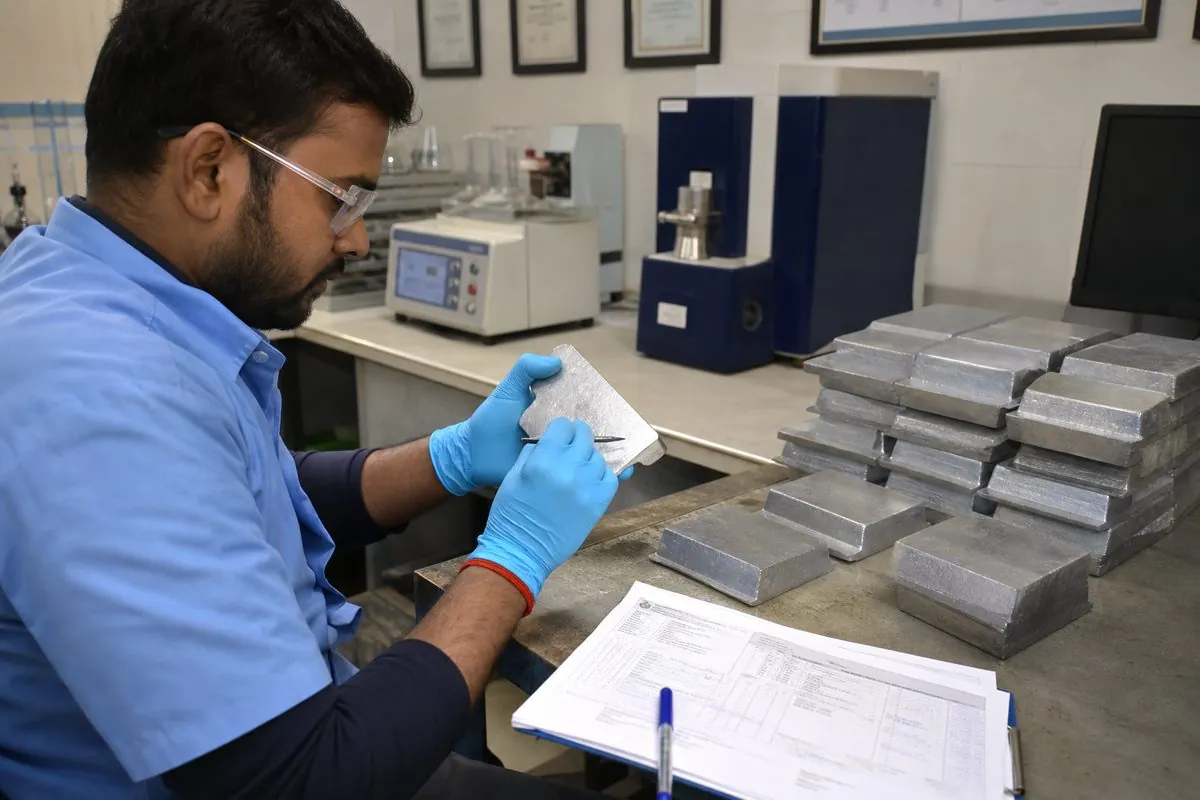
Certification signals accelerate trust at discovery without requiring a full LME specialty deep-dive. Lead with EEPC RCMC as sector credibility. Reference MTC chemistry, third-party assay willingness, ISO plant systems where applicable, and Certificate of Origin readiness. Mention LME brand registration only with evidence. EEPC RCMC is an export-promotion credential — not a metal purity certificate.
Credibility Signals to Reference in Outreach
Swipe →
Data table — swipe horizontally on small screens
| Signal | Buyer Interpretation |
|---|---|
| Mill Test Certificate (MTC) with chemistry and heat/cast identity | Chemistry and lot identity |
| LME brand registration evidence for SHG programmes | Brand-programme eligibility |
| Third-party assay and weight (SGS / Bureau Veritas / Intertek as specified) | Independent assay / weight |
| ISO 9001 (producer / exporter quality system) | Systems / council credibility |
| Certificate of Origin | Shipment and customs readiness |
| Commercial invoice, packing list, bill of lading / sea waybill | Shipment and customs readiness |
| Destination metal standard declarations where buyer specifies | Shipment and customs readiness |
Buyer Requirements
Buyer Requirements
At discovery stage, serious zinc buyers typically require: written grade and HS confirmation; MTC fields; inspection protocol; Incoterm and named port; LME reference date language; MOQ and allocation window; and payment security consistent with metals trade. Galvanizers add continuous-line chemistry notes; traders add brand and warrant language; alloy buyers add composition tables.
What Verified Buyers Expect From You
- Honest SHG vs HG vs CGG framing on first quote
- LME brand status disclosed only when true
- MTC heat/cast identity offered proactively
- White-rust / weather packing discipline stated
- Named commercial contact with metals literacy
- Willingness to run third-party assay on early lots
- Consistent LME±premium quoting across conversations
Country-wise Opportunities
Market Snapshot
Prioritise outreach where Indian HS 790111 already moves: Singapore, Thailand, Taiwan, United Arab Emirates, Saudi Arabia, Indonesia, Malaysia, Vietnam. Channel mix differs — Singapore and UAE often combine trader and re-export logic; Thailand, Vietnam, Indonesia, and Malaysia skew industrial galvanizing; Taiwan mixes industrial and trading demand; Saudi Arabia emphasises infrastructure galvanizing intake. Always re-verify country tonnage on ITC Trade Map before locking annual outreach budgets.
Country Outreach Priority Matrix (Directional)
Swipe →
Data table — swipe horizontally on small screens
| Market | Primary Channel | Message Emphasis |
|---|---|---|
| Singapore | Trade data + LinkedIn traders | LME±premium, allocation speed |
| Thailand | Galvanizer lists + trade data | Assay, CGG, sailing reliability |
| Taiwan | Trade data + industrial RFQ | Impurity limits, MTC depth |
| UAE | Traders + re-export hubs | FOB clarity, brand honesty |
| Saudi Arabia | Industrial + large traders | Monthly MT, inspection |
| Indonesia | Plant lists + HS screens | Trial-to-FCL staging |
| Malaysia | Trade data + galvanizers | HS accuracy, packing |
| Vietnam | Galvanizer growth lists | Assay + lead-time realism |
Singapore
Hub for metals traders and regional redistribution. Lead with HS 790111 trade-data references, LME-literate pricing, and fast document turnaround. Many Singapore consignees are not end-users — qualify whether you are pitching a trader book or an onward galvanizer.
Thailand
Strong galvanizing and industrial demand. Combine trade-data consignees with galvanizer plant lists. Emphasise assay consistency, CGG readiness where relevant, and Mundra/Pipavav sailing strings into Thai ports.
Taiwan
Industrial and trading mix. Buyers often scrutinise impurity limits and documentation discipline. Reference MTC depth early; avoid overselling brand status without evidence.
United Arab Emirates
Import and re-export hub for Gulf galvanizing metal. Traders respond to allocation reliability and FOB clarity; industrial buyers respond to assay and delivery windows. ${ZINC_INGOTS_DUTY_NOTES.middleEast}
Saudi Arabia
Infrastructure-linked galvanizing demand. Prioritise end-user and large trader accounts with monthly MT language. Lead times and inspection protocols matter more than micro-premiums on first contact.
Indonesia, Malaysia, Vietnam
ASEAN galvanizing growth corridors. Use HS 790111 import screens plus plant directories. ${ZINC_INGOTS_DUTY_NOTES.asean} Frame trial MOQs honestly and escalate to FCL once assay clears.
Sourcing Checklist
Checklist
Buyer discovery works when both sides follow a checklist. Zinc makes this discipline critical because purity, brand status, and white-rust failures surface at the receiving dock — after freight is spent.
Buyer Checklist
- Verify EEPC RCMC and IEC before deep negotiation
- Request redacted history under HS 79011100 or 79011200
- Insist on MTC + optional third-party assay before scaling tonnage
- Confirm LME brand vs non-brand status in writing
- Lock Incoterm, named port, and LME reference language on quote date
- Confirm weather protection and bundle tagging standards
Exporter Checklist
- Complete metals-aware credibility package before outreach
- Segment lists by HS line and destination before writing messages
- Verify buyer legitimacy before committing scarce mill allocation
- Track touches in CRM; review ASEAN/Middle East seasonality quarterly
- Never overstate LME registration or mill affiliation
Common Buyer Mistakes
Common Mistakes Box
The most common mistakes in zinc buyer discovery are structural: sending generic ‘metals exporter’ messages to consignees who import specifically under HS 79011100; pitching LME-registered SHG without brand evidence; ignoring galvanizer lists in favour of endless trader spam; and accepting multi-FCL commitments before assay protocols are written.
Future Market Trends
Key Statistics
Buyer discovery for zinc ingots will keep shifting toward digital-first verification: buyers expect to see EEPC status, MTC specimens, and honest LME brand language online before a first call. AI-assisted lead scoring on trade-data platforms speeds HS 790111 segmentation but does not replace grade-specific messaging that names assay and premium structure.
Infrastructure galvanizing demand across ASEAN and the Middle East continues to support SHG intake, while traders in Singapore and UAE remain critical redistributors. Exporters who lead with substantiated brand and inspection claims will convert faster than those who wait to be audited. For premium LME pathways, see the specialty companion.
Buyer Discovery Trend Signals
Swipe →
Data table — swipe horizontally on small screens
| Trend | Exporter Response |
|---|---|
| Digital-first verification | Publish MTC layout, ports, and LME honesty on site |
| AI trade-data scoring | Use for HS filters; keep messages metals-literate |
| Assay earlier in the funnel | Offer inspection protocol in second line of outreach |
| Brand scrutiny rising | Separate LME-brand from commodity SHG offers |
| Monthly MT galvanizer contracts | Build allocation calendars, not one-off FCL chasing |
| Origin switching after failed lots | Lead with heat identity and white-rust packing |
Conclusion
Finding international buyers for zinc ingots is a discovery-and-verification discipline built on metals literacy. Inbound channels (HS-accurate web presence, LinkedIn aimed at traders and galvanizing procurement, Rajasthan-origin credibility) build a pipeline of motivated buyers. Outbound channels (HS 79011100 trade-data mining, galvanizer lists, structured cold email, disciplined follow-up) reach importers who already buy under those lines but have not started searching. Verification protects allocation once contact turns commercial.
Anchor outreach on directional HS 790111 context (~US$610M / ~215 kt) and live destination screens — not invented Chapter 79 blends. Frame MOQs as 5–25 MT trials escalating to 20–25 MT (20ft) — verify bundle stow and payload, with pricing as LME cash or 3M ± regional premium, FOB named Indian port.
Work with Altus Exports as your merchant exporter and global sourcing partner for zinc ingots — verified Indian mill parcels, MTC-backed lots, LME/SHG programme coordination, export documentation, and FCL booking from inquiry to shipment. Contact us via /contact/ to structure your zinc buyer-discovery programme, or continue with Best Countries for Indian Zinc Ingot Exports, Source Zinc Ingots Directly from India, and Trade Shows and B2B Marketplaces for Zinc Ingot Exporters. Related industry context: Engineering Goods.
Sources
- WITS / UN Comtrade — India exports HS 790111 by partner, 2024
- UN Comtrade Database
- ITC Trade Map
- DGFT (India) — IEC / trade portal
- ICEGATE — Indian Customs EDI
- India CBIC / Customs Tariff — Chapter 79 Zinc
- EEPC India
- London Metal Exchange — Zinc
- LME Special Contract Rules — SHG Zinc chemical composition
- USITC Harmonized Tariff Schedule (search 7901.11.00)
- European Commission TARIC
- Hindustan Zinc — Zinc products
- HZL Integrated Report FY2024-25 — Zinc operational performance
- Vedanta FY25 Segment Review — Zinc India
- ISO 9001 overview
- Altus Exports — Engineering Goods
All sources accessed 2026-07-26. Prefer primary government, exchange, and multilateral trade databases when citing figures in contracts or buyer presentations.