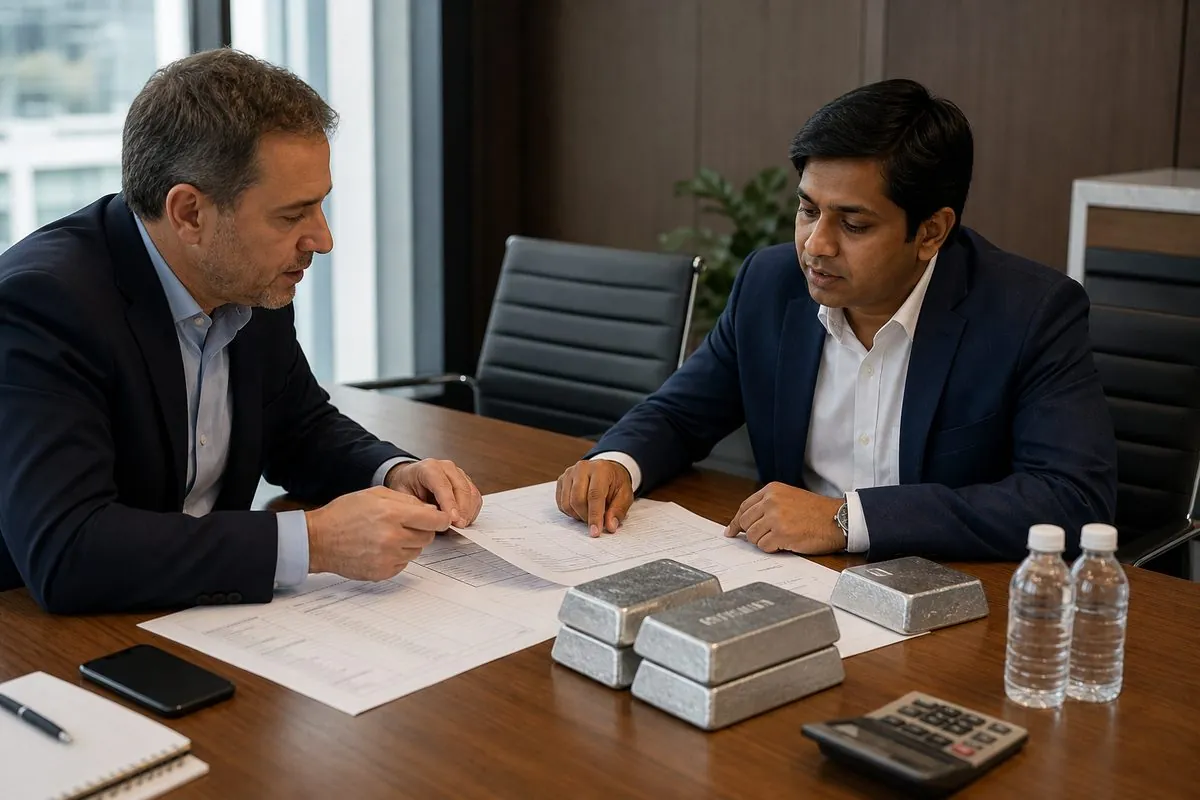
Top Zinc Ingot Products Exported from India: SHG, HG, CGG & Alloy Catalog
By Saurabh Mittal, Founder, Altus Exports
The definitive product and grade catalog for zinc ingots exported from India — Special High Grade (SHG), High Grade (HG), Continuous Galvanizing Grade (CGG), standard ~25 kg and jumbo cast forms, and zinc alloy ingots under HS 790120 — with HS mapping, impurity ceilings, premium layers, cast-form logistics, and end-use fit for galvanizers, traders, and alloy producers, from Altus Exports.
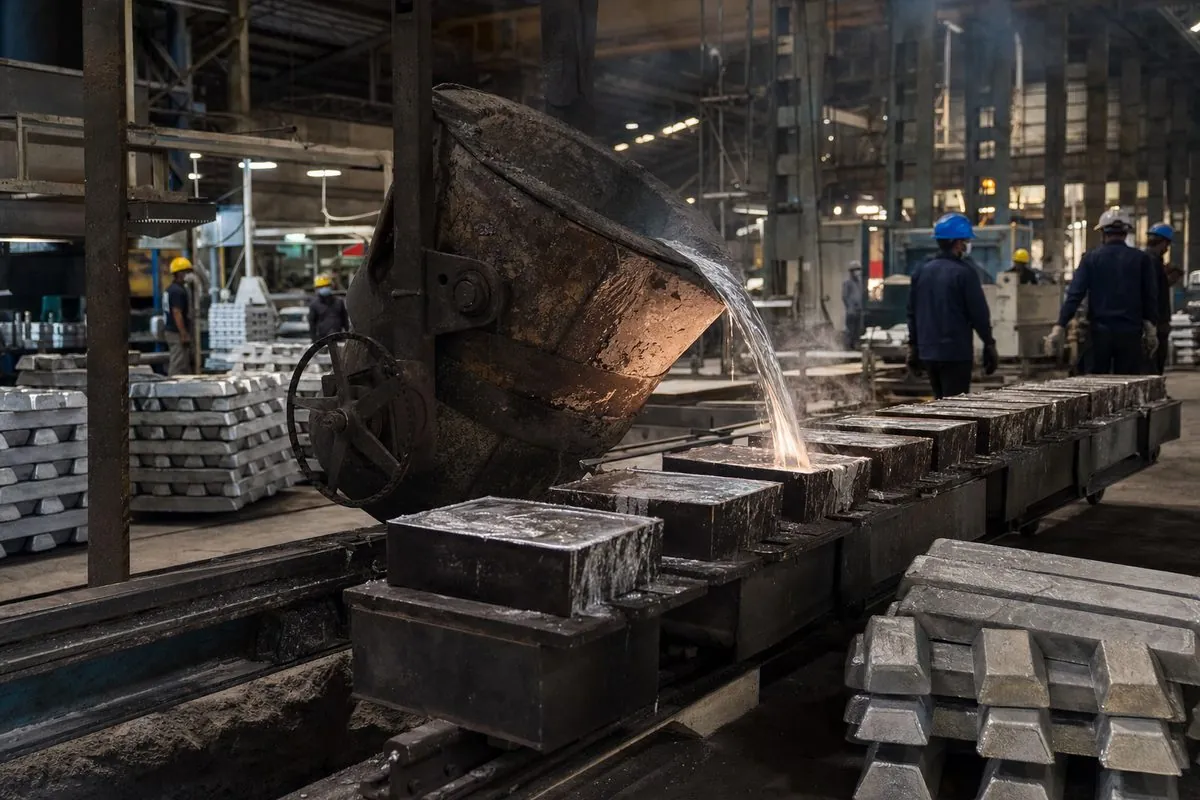
India exports unwrought zinc ingots across a structured grade and form catalog — Special High Grade (SHG) under HS 79011100, High Grade (HG) under 79011200, Continuous Galvanizing Grade (CGG) chemistry windows that often map to the same tariff lines by assay, standard ~25 kg cast ingots and mill-specific jumbo forms, and selected zinc alloy ingots under 79012010 / 79012090. Production is anchored in Rajasthan's integrated zinc complex (Hindustan Zinc / Vedanta belts at Chanderiya, Debari, and Dariba) with merchant-exporter consolidation feeding west-coast load ports at Mundra, Kandla / Deendayal, Nhava Sheva (JNPT), Pipavav. India HS 790111 exports in 2024 totalled US$610,648.91K and 214,979,000 kg (~US$610.6M / ~215.0 kt) per WITS/UN Comtrade. Leading partners by value: Singapore, Thailand, Other Asia nes (commonly reported as Taiwan), UAE, Saudi Arabia, Indonesia, Malaysia, Nepal, Vietnam, and Korea. Treat as directional planning context — confirm with DGCI&S / ITC Trade Map / paid customs extracts before citing in contracts.
Buyers do not purchase "zinc ingots from India" as a single SKU. They purchase a purity band, an impurity ceiling package (Pb, Cd, Fe, Cu and related limits), a cast form, a brand or non-brand status, and a delivery reliability story against LME-linked pricing. Exporters who treat SHG, HG, CGG, jumbo, and alloy lines as interchangeable catalogue names — rather than distinct commercial products with different HS paths, premium layers, and end-use fit — lose repeat business even when average Zn percentage looks fine on a one-page brochure.
This guide owns the product and grade catalog pillar for Indian zinc ingot exports: chemistry bands, HS mapping, impurity ceilings, premium structure by grade, cast-form logistics, and end-use fit for galvanizers, metal traders, and alloy producers. Process steps live in How to Export Zinc Ingots from India; destination ranking in Best Countries for Indian Zinc Ingot Exports; country × grade demand in Most Demanded Indian Zinc Ingot Grades by Country; the importer playbook in Source Zinc Ingots Directly from India; LME-brand depth in LME-Registered SHG and Galvanizing-Grade Zinc Export Opportunities; and document fields in Zinc Ingot Export Documentation Checklist.
Commercial reality is LME cash or three-month reference plus regional premium, FOB named Indian port, with packing, inspection, and brand-programme premiums layered on top. The product catalog determines which premium band you belong in — and whether your Mill Test Certificate will survive a galvanizer's bath specification or a Singapore trader's brand audit.
Altus Exports operates as a merchant exporter from India and global sourcing partner for zinc metal programmes — coordinating mill parcels by grade, MTC-backed lots, third-party assay where specified, and west-coast FCL booking. If you need grade-matched allocation rather than a vague "SHG available" email, start here and use the linked cluster guides for corridors and process.
Key Takeaways
Summary Box
Executive Summary
Summary Box
India's exportable zinc ingot catalog is structurally concentrated in Rajasthan integrated smelting (Chanderiya (Rajasthan) — Hindustan Zinc smelter belt; Debari (Rajasthan); Dariba (Rajasthan)) but commercially fragmented across grade bands, cast forms, and brand programmes. The product pillar answers: which SKU am I quoting, which HS line does it file under, which impurity package does the buyer's end use require, and which premium layer applies.
This guide maps the full product stack — SHG — Special High Grade (India HS 79011100: ≥99.99% Zn; LME SHG contract: min 99.995% Zn + approved brand — HS alone ≠ LME deliverability); HG — High Grade (~99.95% Zn; typically HS 79011200 when <99.99%); CGG — Continuous Galvanizing Grade (process-fit chemistry; map HS from assay); Jumbo / standard cast forms (~25 kg and mill-specific jumbo); Zinc alloy ingots (die-casting / specialty — India 79012010 / 79012090) — with HS mapping, indicative impurity ceilings, premium logic, cast-form logistics, and end-use fit. Destination sequencing lives in Best Countries for Indian Zinc Ingot Exports; per-country grade demand in Most Demanded Indian Zinc Ingot Grades by Country; export process in How to Export Zinc Ingots from India.
The practical rule for exporters and buyers alike: lock grade chemistry and cast form in writing before discussing premium. A galvanizer asking for CGG process-fit metal and a Singapore trader asking for LME-brand SHG are both buying "zinc ingots from India" — but they are not buying the same product, and treating them as one catalogue line is how claims and repeat orders die.
Market Size & Industry Overview
Key Statistics
This catalog sits inside Chapter 79 unwrought zinc. Treat each grade as a separate commercial SKU: SHG under HS 79011100 (≥99.99% Zn), HG under 79011200 (<99.99% Zn), and alloys under 79012010 / 79012090. Scrap under 79020010 / 79020090 is contrast only — never sell scrap language as primary refined metal. India HS 790111 exports in 2024 totalled US$610,648.91K and 214,979,000 kg (~US$610.6M / ~215.0 kt) per WITS/UN Comtrade. Leading partners by value: Singapore, Thailand, Other Asia nes (commonly reported as Taiwan), UAE, Saudi Arabia, Indonesia, Malaysia, Nepal, Vietnam, and Korea. Treat as directional planning context — confirm with DGCI&S / ITC Trade Map / paid customs extracts before citing in contracts.
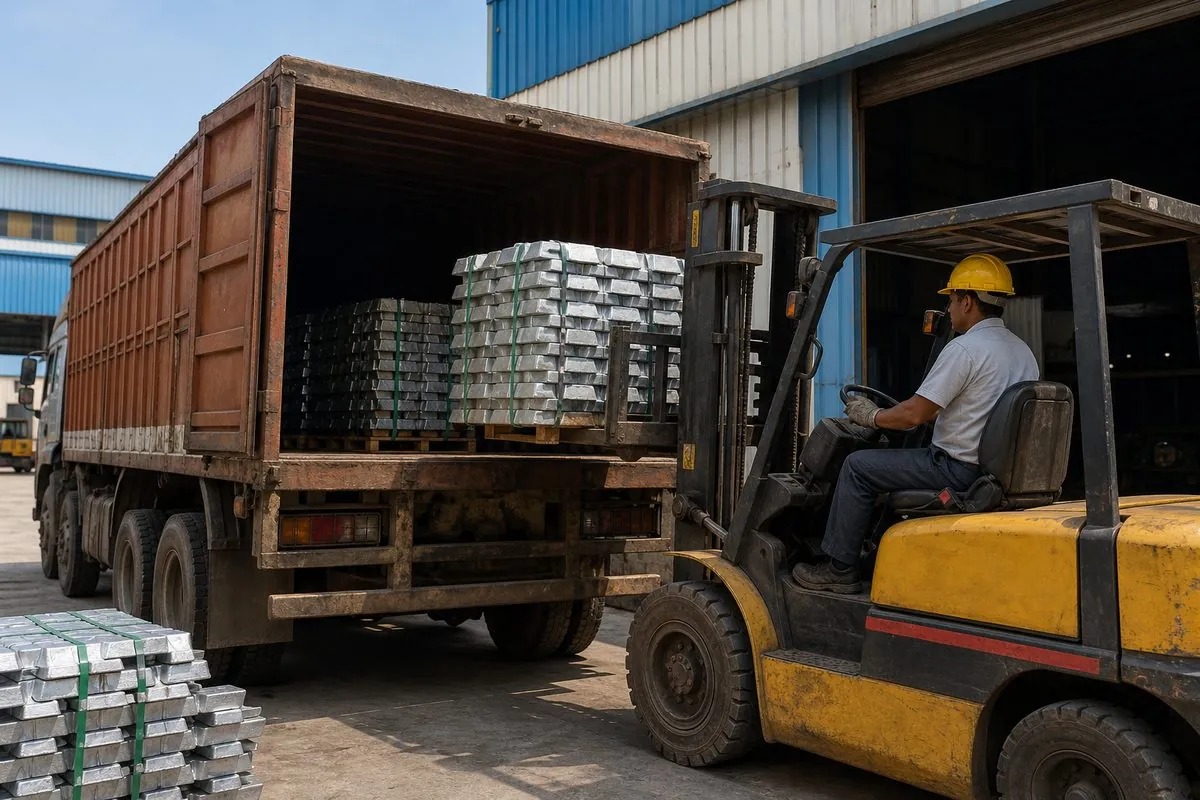
Most exportable SHG, HG, CGG, and jumbo cast forms originate from Hindustan Zinc's Rajasthan casting complex (Chanderiya, Debari, Dariba). Merchant exporters consolidate mill parcels so overseas buyers can order grade-matched lots without owning mill allocation. West-coast stuffing at Mundra, Kandla / Deendayal, Nhava Sheva (JNPT), Pipavav is the logistics layer — product identity still starts with the cast-house chemistry card.
EEPC India RCMC supports exporter KYC for Chapter 79 metal programmes, but it does not define SHG vs HG vs alloy. Grade truth lives on the Mill Test Certificate and, for LME programmes, on brand registration evidence. Broader metal-industry context: engineering goods.
India zinc ingot product catalog at a glance
Swipe →
Data table — swipe horizontally on small screens
| Dimension | 2026 Snapshot | Product-Selection Implication |
|---|---|---|
| Directional 2024 HS 790111 scale | ~US$610M / ~215 kt | SHG-led headline trade — HG and alloys sit alongside in mixed programmes |
| Core origin | Rajasthan HZL / Vedanta belts (Chanderiya, Debari, Dariba) | Brand and CGG programmes trace to integrated casting |
| Primary HS lines | 79011100 / 79011200 / 79012010 / 79012090 | MTC chemistry must match 8-digit code — not marketing nicknames |
| Grade families | SHG, HG, CGG, jumbo, alloys | Separate quote templates and premium bands per family |
| Pricing structure | LME cash or 3M ± regional premium, FOB named Indian port | Premium varies by grade and brand status — never one flat adder |
| Standard cast form | ~25 kg standard cast ingots (confirm mill cast form; LME SHG rules: ingots not more than 30 kg) | Jumbo forms require separate stow and handling specs |
| Trial / FCL MOQ | 5–25 MT trial; 20–25 MT (20ft) — verify bundle stow and payload | Alloy and CGG programmes may need longer lead times |
| Load ports | Mundra, Kandla / Deendayal, Nhava Sheva (JNPT), Pipavav | Same grade ships from same origin — port choice is logistics, not chemistry |
Export Statistics
Key Statistics
Public trade extracts for India's unwrought zinc exports under HS 79011100 have been reported near ~US$610 million and ~215 kilotonnes in 2024-style aggregates. Those figures are directional planning inputs for market sequencing — not contractual guarantees and not a substitute for paid customs extracts when you are sizing a multi-month galvanizer contract.
Within that basket, ASEAN industrial offtake and Middle East galvanizing / re-export corridors dominate first-wave Indian programmes. Singapore frequently appears both as a destination and as a regional liquidity hub; Thailand and Taiwan contribute industrial and trading depth; UAE and Saudi Arabia anchor Gulf demand; Indonesia, Malaysia, and Vietnam extend ASEAN galvanizing coverage.
Directional Indian zinc ingot export profile (planning view)
Swipe →
Data table — swipe horizontally on small screens
| Metric | Directional Estimate | Notes |
|---|---|---|
| HS 790111 2024 value | ~US$610M | WITS/Comtrade-style aggregates — re-verify before citing in contracts |
| HS 790111 2024 volume | ~215 kt | Directional tonnage; lot chemistry mix varies SHG vs HG |
| Primary product forms | SHG, HG, CGG, ~25 kg cast, selected alloys | See products guide for SKU depth |
| Origin concentration | Rajasthan integrated zinc complex | Merchant exporters consolidate mill parcels |
| Council / promotion | EEPC India | https://www.eepcindia.org/ |
| Leading partner cluster | Singapore, Thailand, Taiwan, UAE, Saudi | Directional partner set from trade extracts |
| ASEAN follow-on set | Indonesia, Malaysia, Vietnam | Strong galvanizing / industrial pull |
| Pricing basis | LME ± regional premium FOB India | Indicative planning structure only; confirm lot-specific FOB (LME reference + premium + packing + inspection) on quote date |
Import Statistics
Key Statistics
Destination importers do not buy a generic zinc SKU — they buy a grade role. Continuous lines pull CGG or process-fit SHG; general galvanizers may accept HG with disclosed impurities; die-casters need alloy chemistry under 79012010/79012090; traders warehouse LME-literate SHG for re-sale. Map every RFQ to one of those roles before you open a price conversation, then confirm destination HS/HTS Chapter 79 breakouts with the buyer's broker.
Duty notes are planning references only. Always verify live schedules (USITC HTS, TARIC, GCC, ASEAN FTA texts) before commercial quotes. ASEAN preferential planning: Many ASEAN destinations apply preferential or low MFN rates on unwrought zinc under FTA corridors — verify live tariff for HS 7901.11 / 7901.12 before quoting landed cost. Middle East planning: UAE and Saudi Arabia commonly import SHG for galvanizing and re-export; confirm GCC duty schedules and destination assay preferences per programme.
Directional destination roles for Indian zinc ingot programmes
Swipe →
Data table — swipe horizontally on small screens
| Market | Primary Buyer Type | Corridor Role | Duty Planning Note |
|---|---|---|---|
| Singapore | Traders, warehouses, industrial offtake | LME Asia liquidity / re-export node | Confirm MFN vs preferential on live schedule |
| Thailand | Galvanizers, industrial buyers | ASEAN industrial offtake | Many ASEAN destinations apply preferential or low MFN rates on unwrought zinc under FTA corridors — verify live tariff for HS 7901.11 / 7901.12 before quoting landed cost. |
| Taiwan | Industrial / trading desks | Assay- and MTC-sensitive programmes | Confirm local Chapter 79 duty live |
| UAE | Galvanizers, Gulf traders, re-export | West-coast India → Gulf fast cycle | UAE and Saudi Arabia commonly import SHG for galvanizing and re-export; confirm GCC duty schedules and destination assay preferences per programme. |
| Saudi Arabia | Galvanizing and industrial projects | Gulf industrial demand | Confirm GCC schedule per programme |
| Indonesia | Galvanizers, construction metal chain | ASEAN volume growth corridor | FTA / MFN verification mandatory |
| Malaysia | Industrial / trading offtake | ASEAN mid-haul from west India | Preferential corridor check |
| Vietnam | Galvanizing and manufacturing growth | ASEAN growth destination | Confirm HS 7901.11 / 7901.12 rates |
Product Categories / Variants
Summary Box
This section is the core of the guide — the full product and grade catalog for Indian zinc ingot exports. Each variant below carries distinct chemistry expectations, HS mapping rules, premium layers, cast-form constraints, and end-use fit. Do not collapse them into a single "SHG available" offer sheet.
Continuous Galvanizing Grade (CGG) is not a separate HS nickname in most filing contexts — it is a chemistry and process-qualification window that may map to 79011100 or 79011200 depending on assay. Zinc alloy ingots file under India 79012010 or 79012090 and require segregated documentation from primary SHG/HG parcels.
Master product map — grade, HS, chemistry band, end-use fit
Swipe →
Data table — swipe horizontally on small screens
| Product | India HS | Typical Zn / chemistry band | Primary end-use | Premium layer |
|---|---|---|---|---|
| SHG — Special High Grade | 79011100 | ≥99.99% Zn; LME-brand programmes often 99.995% with tight impurities | LME desks, premium galvanizers, brand industrial contracts | Tightest — brand registration evidence adds trust premium |
| HG — High Grade | 79011200 | ~99.95% Zn; wider Pb/Cd/Fe/Cu vs SHG | General galvanizing, price-sensitive industrial, opportunistic traders | Wider — commodity industrial band |
| CGG — Continuous Galvanizing Grade | 79011100 / 79011200 by assay | Process-fit impurity window for CGL pots — buyer sheet governs | Continuous galvanizing lines in Thailand, Vietnam, Indonesia, UAE | Chemistry adder — not interchangeable with generic SHG |
| Standard ~25 kg cast ingots | Same HS as chemistry | ~25 kg standard cast ingots (confirm mill cast form; LME SHG rules: ingots not more than 30 kg) | Default export form — all markets | Baseline — bundled ~1–1.125 MT for FCL stow |
| Jumbo / mill-specific cast forms | Same HS as chemistry | Mill-defined mass per piece — confirm fork/payload limits | Industrial melt shops with jumbo handling capacity | Logistics adder if non-standard stow |
| Zinc alloy ingots | 79012010 / 79012090 | Alloy family chemistry (e.g. Zamak-style) — not primary Zn bands | Die-casting, specialty foundries — Taiwan, selective ASEAN | Separate alloy premium — longer lead times common |
SHG — Special High Grade (≥99.99% Zn)
Indicative SHG impurity planning ceilings (verify per MTC / buyer spec)
Swipe →
Data table — swipe horizontally on small screens
| Element | Typical SHG planning ceiling | Why buyers care |
|---|---|---|
| Zn | ≥99.99% (brand specs often ≥99.995%) | Tariff line and bath chemistry baseline |
| Pb | Very low ppm bands on brand specs | Galvanizing pot and coating quality |
| Cd | Very low ppm bands | Environmental and process sensitivity |
| Fe | Controlled low levels | Dross and surface defects in galvanizing |
| Cu | Controlled low levels | Alloy contamination in strict baths |
| Al / Sn / others | Per buyer metallurgical sheet | Line-specific qualification |
SHG is the headline export line under India 79011100 — unwrought zinc, not alloyed, at or above 99.99% Zn. LME-brand programmes typically tighten further toward 99.995% brand specifications with explicit ceilings on lead, cadmium, iron, copper, and related elements on the Mill Test Certificate. Buyers in Singapore, Taiwan, and premium Gulf industrial programmes often require brand registration evidence when "LME SHG" language appears on the offer — not a verbal claim.
Non-brand SHG (honest commodity SHG at ≥99.99% without LME brand status) is a valid product for galvanizers who need purity without brand premiums. Exporters must not market HG chemistry as SHG to win a tighter premium — HS misclassification and buyer rejection follow quickly.
HG — High Grade (~99.95% Zn)
HG parcels file under India 79011200 — unwrought zinc below 99.99% Zn. Commercially this is the industrial commodity band: general galvanizers, infrastructure projects, and price-sensitive traders who accept wider impurity tolerances in exchange for a wider premium band. HG is not "bad zinc" — it is a different product contract with different HS, MTC, and buyer acceptance rules.
Exporters who blend HG and SHG narratives on one invoice destroy trust. If the MTC shows 99.96% Zn, you are in HG territory for classification purposes until a broker confirms otherwise — do not file 79011100 on marketing optimism alone.
CGG — Continuous Galvanizing Grade
- Map CGG RFQs to explicit Pb/Cd/Fe/Cu maxima — not the word "CGG" alone
- Expect sample/assay lots (7–14 days where offered) before monthly MT
- Separate CGG premium from LME-brand premium — they solve different buyer problems
- Cross-read LME-Registered SHG and Galvanizing-Grade Zinc Export Opportunities for specialty pathways
CGG describes a process-fit chemistry window for continuous galvanizing lines (CGL), not a universal Indian tariff subheading. Buyers specify impurity limits that protect pot chemistry, coating adhesion, and line uptime. Indian SHG or near-SHG metal may qualify as CGG for a given line — but qualification is buyer-side, often through sample/assay lots and line trials, not exporter-side labelling alone.
Premium structure for CGG adds a chemistry-and-reliability layer on top of base SHG/HG pricing. Exporters should quote CGG only when they can hold the impurity band heat-to-heat and supply MTC evidence that matches the buyer's metallurgical specification sheet.
Jumbo and Standard Cast Forms
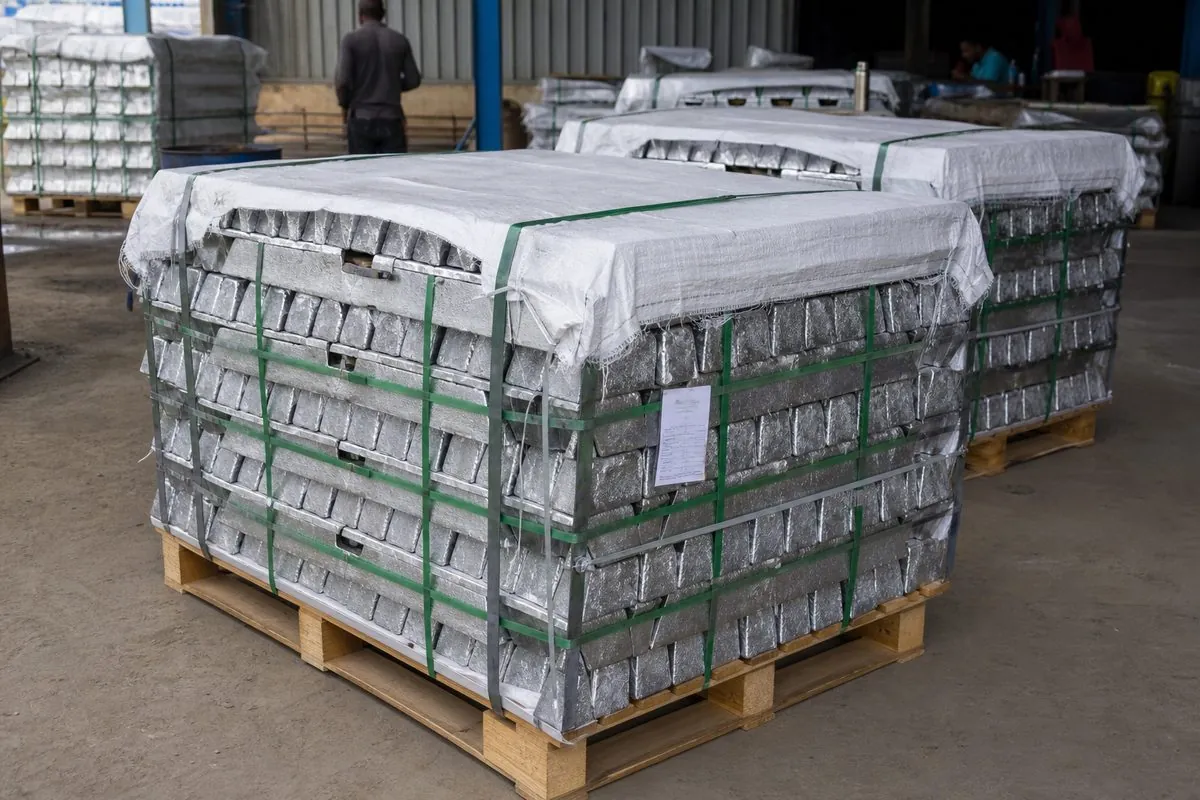
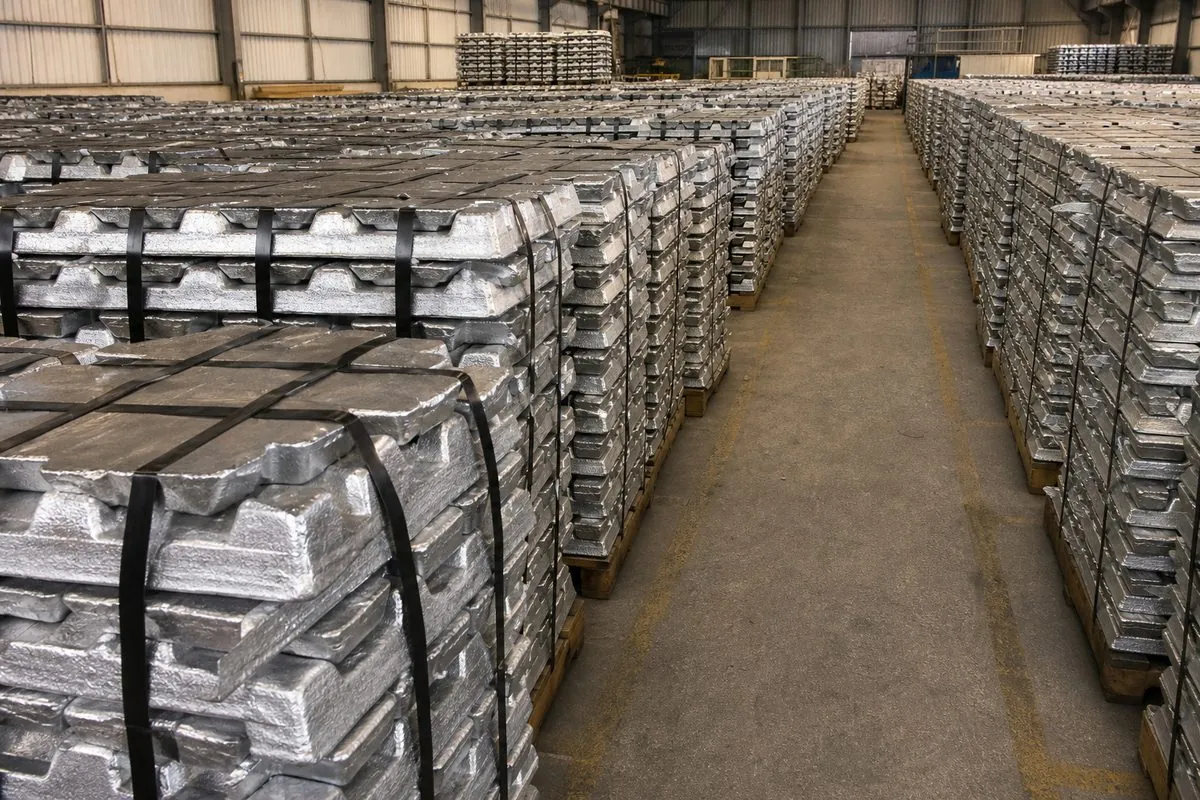
Standard export form is ~25 kg standard cast ingots (confirm mill cast form; LME SHG rules: ingots not more than 30 kg), unitised into Strapped bundles often ~1–1.125 MT (~45 ingots) on wooden pallets or mill bundling — within LME SHG warrant max of 1.5 tonnes per bundle where LME programmes apply. Jumbo or mill-specific cast shapes target buyers with melt-shop handling built for larger pieces — they are not automatically "better" zinc, and they change container stow math. Always confirm forklift, crane, and bundle-break policies at destination before quoting jumbo.
Cast form does not change HS if chemistry is unchanged — but it changes logistics premiums, damage risk, and whether a 20ft FCL can hit ~20–25 MT payload targets safely.
Zinc Alloy Ingots (HS 79012010 / 79012090)
Zinc alloy ingots export under India 79012010 / 79012090 — unwrought zinc alloys. Chemistry is alloy-family specific (die-casting grades, specialty formulations). Lead times often extend to 3–6+ weeks for custom alloy chemistry and third-party inspection programmes when custom chemistry or heavy inspection applies. Never stuff alloy bundles in the same documentary narrative as SHG primary metal — segregate packing lists, MTCs, and shipping bills.
Taiwan and selective ASEAN foundries are the primary alloy pull markets in India's export orbit. Alloy RFQs need alloy chemistry sheets, not SHG impurity tables copied from a galvanizer template.
Premium layer stack by product family
Premium layer stack by product family (indicative — quote lot-specific)
Swipe →
Data table — swipe horizontally on small screens
| Layer | SHG / LME-brand | HG industrial | CGG process-fit | Alloy |
|---|---|---|---|---|
| LME reference | Cash or 3M — agreed date | Same | Same | Same |
| Regional premium | Tightest band | Wider band | Chemistry adder | Alloy chemistry adder |
| Brand evidence | Often required | Usually N/A | Rarely the primary gate | N/A |
| Inspection | MTC + optional SGS/BV | MTC baseline | Assay trials common | Alloy assay depth |
| Packing / form | Standard ~25 kg bundles | Same | Same + process notes | Segregated alloy packs |
| Lead time | 1–3 weeks typical for stock SHG/HG parcels after allocation | Often similar | Trial then MT | 3–6+ weeks for custom alloy chemistry and third-party inspection programmes |
Manufacturing Overview
Export Tip
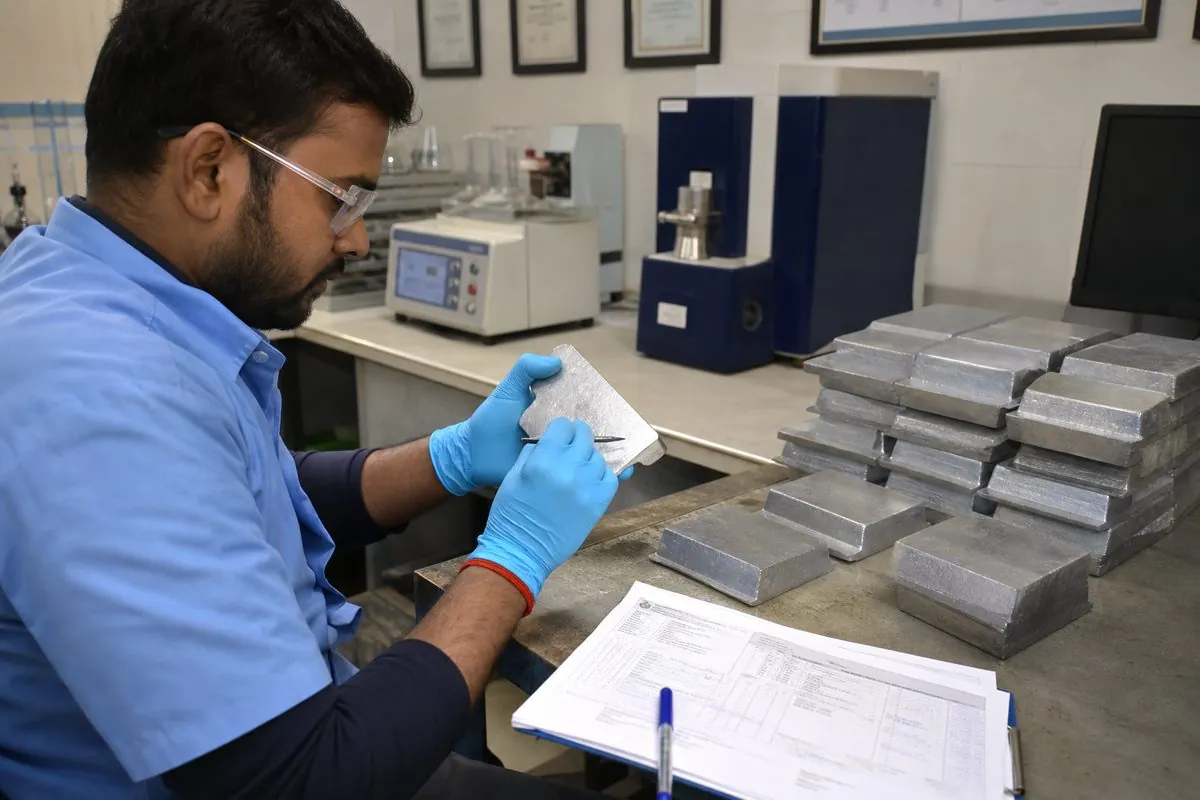
Refined zinc for export is produced in integrated Rajasthan complexes — Chanderiya (Rajasthan) — Hindustan Zinc smelter belt, Debari (Rajasthan), Dariba (Rajasthan) — then cast into mill forms (~25 kg standard cast ingots (confirm mill cast form; LME SHG rules: ingots not more than 30 kg) standard; jumbo where offered), bundled (Strapped bundles often ~1–1.125 MT (~45 ingots) on wooden pallets or mill bundling — within LME SHG warrant max of 1.5 tonnes per bundle where LME programmes apply), tagged by heat/cast, and staged under weather discipline before west-coast stuffing at Mundra, Kandla / Deendayal, Nhava Sheva (JNPT), Pipavav.
From a product perspective, manufacturing is where grade identity is born: the same smelter may cast SHG, HG, and alloy streams on different schedules with different MTC templates. Merchant exporters (${ZINC_INGOTS_CLUSTERS[3]}) consolidate parcels while preserving heat identity — critical when third-party assay must reconcile bulk lot to certificate.
Lead-time bands by product: sample/assay lots 7–14 days for sample / assay lots where offered; stock SHG/HG 1–3 weeks typical for stock SHG/HG parcels after allocation; custom alloy and heavy inspection 3–6+ weeks for custom alloy chemistry and third-party inspection programmes. CGG qualification programmes often sit between stock SHG and custom alloy in calendar length because of trial heats and buyer sign-off.
Cast-house to export bundle — product identity gates
Swipe →
Data table — swipe horizontally on small screens
| Manufacturing gate | Product control | Failure mode if weak |
|---|---|---|
| Smelter casting schedule | Grade stream separation SHG/HG/alloy | Cross-contamination and wrong MTC band |
| Heat / cast tagging | Lot / heat / cast tagging; brand marks for LME-registered programmes | Survey cannot reconcile bundles to assay |
| Bundle unitisation | ~1–1.125 MT strapped units | FCL payload miss or unsafe stow |
| Brand mark control | LME-registered programmes only when eligible | Brand claim disputes at destination |
| Weather protection | Weather protection against white rust / oxidation during ocean transit | White-rust claims despite in-spec chemistry |
| MTC release | Chemistry matches physical heat | Commercial rejection with "good" average Zn% |
Pricing Analysis
Buyer Tip
Zinc is not a static catalogue commodity. Commercial quotes follow LME cash or 3M ± regional premium, FOB named Indian port. SHG / LME-brand programmes typically command tighter premiums than non-brand HG; CGG and alloy chemistry add separate premium layers Indicative planning structure only; confirm lot-specific FOB (LME reference + premium + packing + inspection) on quote date
Premium spreads between SHG/LME-brand, non-brand SHG, HG, CGG process-fit, and alloy chemistry are often wider than buyers expect — because they encode trust, inspection burden, and allocation scarcity, not just average Zn percentage. Publish separate quote templates per grade family; never blend HG and brand SHG premiums into one "India zinc" line item.
When comparing offers, normalize LME reference date and Incoterm first, then compare premium by grade. A cheaper HG quote is not a substitute for a CGG specification even if headline Zn% looks similar on a one-line brochure.
Premium layer stack by grade family (indicative structure)
Swipe →
Data table — swipe horizontally on small screens
| Grade / product | Premium band character | Typical adders | Quote discipline |
|---|---|---|---|
| LME-brand SHG | Tightest regional premium | Brand evidence, inspection, packing | Separate template — evidence or remove brand language |
| Non-brand SHG | Tight industrial SHG band | MTC depth, assay optional | Do not imply LME brand status |
| HG industrial | Wider commodity band | Packing, basic MTC | File HS 79011200 honestly |
| CGG process-fit | Chemistry adder on SHG/HG base | Trial heats, assay protocol | Buyer metallurgical sheet governs |
| Jumbo cast form | Logistics adder if non-standard | Stow engineering, handling risk | Confirm destination equipment |
| Zinc alloys | Alloy-specific premium | Custom chemistry, longer lead time | Separate HS 790120 quote path |
MOQ Analysis
Buyer Tip
MOQ follows grade difficulty, not a single global number. Stock SHG/HG trials often sit at 5–25 MT; FCL planning targets 20–25 MT (20ft) — verify bundle stow and payload. CGG and custom alloy programmes may keep trials small but extend lead time for chemistry sign-off. Monthly MT contracts for galvanizers and traders Container targets depend on ~25 kg ingot / ~1–1.125 MT bundle dimensions and max payload; treat as indicative commercial practice, not a statutory limit.
Brand-SHG traders may accept smaller exploratory parcels when MTC and brand evidence are complete. Continuous galvanizers usually want FCL-scale continuity after the first approved heat. Alloy buyers rarely scale until a sample chemistry sheet matches their die-cast family — do not force alloy MOQs into primary SHG FCL maths.
MOQ posture by destination channel (directional)
Swipe →
Data table — swipe horizontally on small screens
| Market Channel | Typical First Parcel | Scale Path | Note |
|---|---|---|---|
| Singapore trader / warehouse | 5–25 MT trial | Repeat FCL / multi-parcel month | Liquidity favors flexible sizing |
| Thailand galvanizer | 1×20ft ~20–25 MT | Monthly MT contract | Chemistry window lock first |
| Taiwan industrial desk | Trial with assay protocol | Programme parcels | Inspection scope drives MOQ timing |
| UAE galvanizer / trader | Trial or FCL | Gulf repeat sailings | Fast Mundra/Kandla cycle helps |
| Saudi industrial | Trial then monthly MT | Project / plant offtake | Documentation depth critical |
| Indonesia / Malaysia / Vietnam galvanizers | FCL preferred after sample | ASEAN continuity contracts | FTA paperwork readiness |
Packaging Standards
Export Tip
Pack format is part of the product SKU. Standard SHG/HG programmes ship as ~25 kg standard cast ingots (confirm mill cast form; LME SHG rules: ingots not more than 30 kg), unitised as Strapped bundles often ~1–1.125 MT (~45 ingots) on wooden pallets or mill bundling — within LME SHG warrant max of 1.5 tonnes per bundle where LME programmes apply. Lot / heat / cast tagging; brand marks for LME-registered programmes Jumbo cast forms and alloy ingots need separate marking rules so receiving teams never confuse die-cast chemistry with Special High Grade primary metal.
White-rust protection intensity should match grade value: brand-SHG and CGG parcels deserve stricter weather covering and photo evidence at stuffing; opportunistic HG can still fail arrival claims if straps and tags are sloppy. Write pack standards into the grade card, not only the logistics appendix.
Packaging controls that affect destination acceptance
Swipe →
Data table — swipe horizontally on small screens
| Control | Standard Expectation | Markets Most Sensitive |
|---|---|---|
| Ingot mass | ~25 kg standard cast (confirm mill form) | All markets — stow planning |
| Bundle mass | ~1–1.125 MT strapped | FCL programmes ASEAN & Gulf |
| Heat / cast tags | Readable lot identity on bundle | Taiwan, Singapore brand desks |
| Brand marks | LME-registered programmes where claimed | Singapore, selected UAE/Taiwan |
| Weather protection | Against white rust / oxidation | Longer ASEAN / Taiwan legs |
| Pallet / mill bundling | Stable for forklift and stuffing | All west-coast load ports |
Container Loading Details
Export Tip
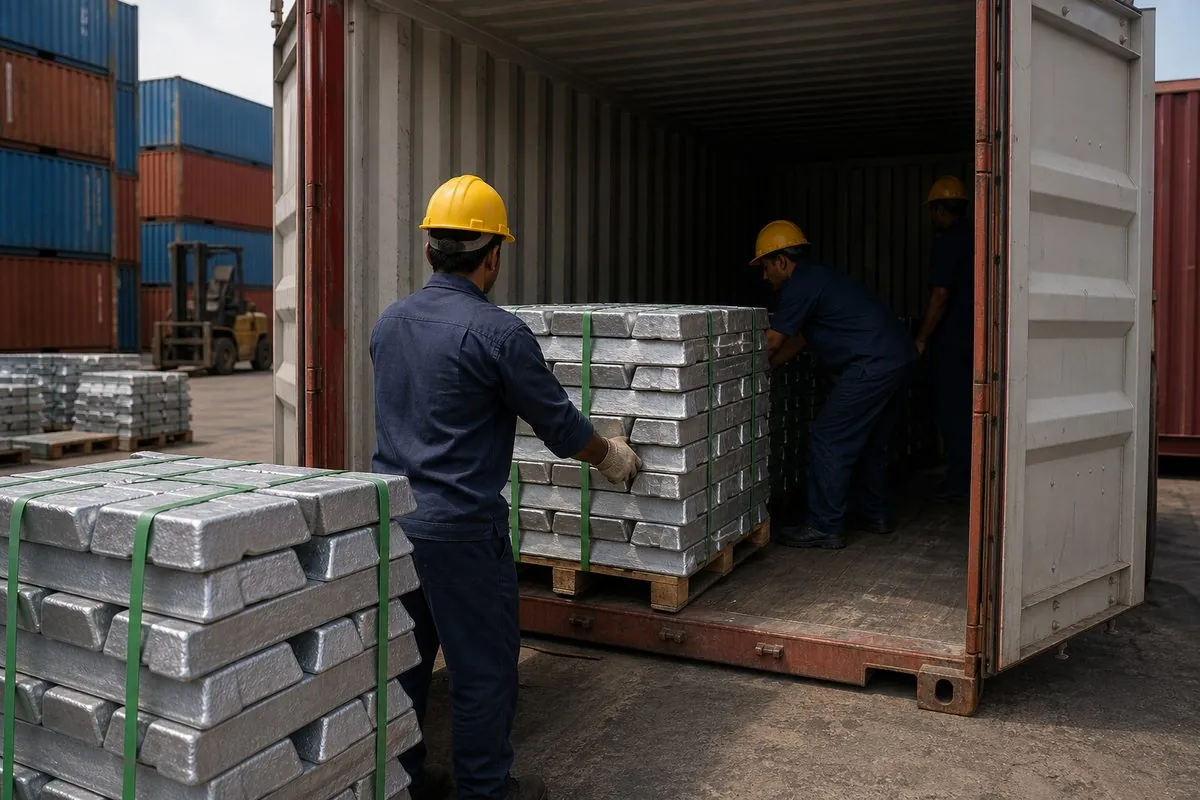
Stow planning is grade-aware: about 20–25 MT in a 20ft for standard ~25 kg / ~1–1.125 MT bundle SHG or HG. Container targets depend on ~25 kg ingot / ~1–1.125 MT bundle dimensions and max payload; treat as indicative commercial practice, not a statutory limit. Never mix alloy heats with primary SHG on one packing-list line inside the same container narrative.
Jumbo cast forms can change payload maths and forklift assumptions — confirm mill cast dimensions before promising a 20ft target. CGG trial lots may ship under-filled on purpose when assay release gates stuffing; document that choice so the buyer does not treat it as a shortage.
Indicative stuffing planning by corridor
Swipe →
Data table — swipe horizontally on small screens
| Shipment Mode | Typical Use | Corridor Fit | Risk If Mishandled |
|---|---|---|---|
| 20ft FCL ~20–25 MT | Standard wholesale trial / repeat | All eight priority markets | Payload vs bundle geometry miscalc |
| Multi-FCL monthly | Galvanizer continuity | Thailand, Indonesia, Vietnam, Saudi | Allocation slippage vs vessel window |
| Trader hub split lots | Singapore / UAE warehouse programmes | Re-export liquidity markets | Heat identity loss after discharge |
| Inspection-held stuffing | Assay before vessel cut-off | Taiwan, LME-sensitive Singapore | Missed sailing → demurrage / storage |
Shipping Methods
Export Tip
Incoterms for grade programmes commonly include EXW mill / warehouse; FOB Mundra / Kandla / Nhava Sheva / Pipavav; CFR / CIF major destination ports; DDP (selected industrial programmes only). Quote FOB named west-coast port until the grade, brand status, and assay protocol are locked — then add CFR/CIF only when freight can be booked against that exact SKU.
Port choice follows allocation and vessel strings, not a fixed brand rule: Mundra and Kandla often serve Gulf industrial SHG/HG; ASEAN CGG programmes may use Mundra, Pipavav, or Nhava Sheva. Name the port on the grade sheet so premium conversations stay comparable across SHG, HG, and alloy offers.
West-coast India freight corridor snapshot (planning)
Swipe →
Data table — swipe horizontally on small screens
| Load Port | Strong Destination Fit | Planning Note |
|---|---|---|
| Mundra | UAE, Saudi, selected ASEAN | High sailing frequency for Gulf; confirm ASEAN loops |
| Kandla / Deendayal | Gulf industrial / trader programmes | Competitive for Middle East short-haul |
| Nhava Sheva (JNPT) | ASEAN, Taiwan, mixed strings | Useful when allocation or carrier favors JNPT |
| Pipavav | Selected west-coast programmes | Verify carrier acceptance for zinc metal |
Certifications
Compliance Notes
Evidence intensity scales with the SKU. LME-brand SHG needs brand registration proof plus heat-identified MTC chemistry; CGG needs process-fit metallurgical sheets and often third-party assay on trial heats; HG needs honest impurity disclosure under HS 79011200; alloys need segregated chemistry certificates under 79012010/79012090. EEPC RCMC supports exporter KYC — it never substitutes for grade evidence.
Certification and evidence expectations by corridor (directional)
Swipe →
Data table — swipe horizontally on small screens
| Evidence | Typical Requirement | Markets Emphasizing It |
|---|---|---|
| Mill Test Certificate | Mill Test Certificate (MTC) with chemistry and heat/cast identity | Singapore, Taiwan, UAE brand desks |
| LME brand evidence | LME brand registration evidence for SHG programmes | Singapore, selected Taiwan / UAE programmes |
| Third-party assay / weight | Third-party assay and weight (SGS / Bureau Veritas / Intertek as specified) | Taiwan, LME-sensitive Singapore, large industrial POs |
| ISO 9001 systems | ISO 9001 (producer / exporter quality system) | All industrial programmes (KYC support) |
| Certificate of Origin | Certificate of Origin | ASEAN FTA corridors especially |
| Commercial set (invoice / PL / B/L) | Commercial invoice, packing list, bill of lading / sea waybill | All export markets |
| EEPC RCMC | EEPC India membership / RCMC | Buyer KYC across corridors |
Buyer Requirements
Buyer Requirements
Product buyers converge on a short non-negotiable list tied to the SKU: named HS intent for the grade, written Zn and impurity limits, heat/cast identity on the MTC, cast-form and bundle specs, and a clear rule for LME reference plus premium. Brand language is allowed only when brand evidence will travel with the lot.
Where product RFQs diverge is chemistry depth: traders may accept standard SHG impurity tables; continuous galvanizers attach process sheets; alloy foundries reject any primary-SHG narrative on die-cast metal. Keep separate requirement checklists per grade family instead of one Asia-wide zinc RFQ template.
Cross-market buyer requirements checklist
Swipe →
Data table — swipe horizontally on small screens
| Requirement | Why It Matters | Failure Mode |
|---|---|---|
| HS line confirmation | 790111 vs 790112 vs 790120 duty and docs | Customs hold / duty surprise |
| MTC heat/cast match | Assay disputes and re-sale identity | Rejection or price claim |
| LME reference + premium rule | Price transparency | Settlement argument after loading |
| Inspection scope in PO | Assay/weight before or at stuffing | Missed cut-off or unusable certificate |
| Incoterm named place | Risk transfer clarity | Freight and insurance gaps |
| Weather protection spec | White-rust control | Arrival quality claim |
Country-wise Opportunities
Market Snapshot
Country demand is owned in depth by the markets and grades-by-country guides. This catalog only maps which product families typically win where — so you do not send CGG chemistry to a trader desk that only wants brand SHG, or alloy packs to a general galvanizer.
For destination ranking, duty, and freight sequencing, use Best Countries for Indian Zinc Ingot Exports. For impurity and pack expectations by corridor, use Most Demanded Indian Zinc Ingot Grades by Country.
Product-to-market fit snapshot (directional)
Swipe →
Data table — swipe horizontally on small screens
| Market | Primary product pull | Secondary pull | Evidence intensity |
|---|---|---|---|
| Singapore | LME-literate SHG | Selected HG | High MTC / brand |
| Thailand | CGG / process-fit SHG | HG industrial | Chemistry window |
| Taiwan | Assay-deep SHG | Zinc alloys | Very high assay |
| UAE | SHG / HG industrial | Re-export trader lots | Medium–High |
| Saudi Arabia | SHG monthly programmes | CGG where specified | High docs |
| Indonesia | SHG / HG continuity | Selected CGG | Medium |
| Malaysia | SHG / HG | Trader parcels | Medium |
| Vietnam | SHG / HG growth | CGG plant-specific | Medium |
Singapore — Brand SHG & trader liquidity
Product fit: LME-literate SHG with deep MTC impurity tables; selected HG only when disclosed honestly. Alloy pull is secondary to primary metal trading liquidity.
Thailand — CGG / galvanizing feedstock
Product fit: Continuous Galvanizing Grade and process-fit SHG/HG with chemistry windows locked before FCL. Premium language should follow the metallurgical sheet, not a generic SHG brochure.
Taiwan — Assay-deep SHG + alloys
Product fit: high-purity primary metal with third-party assay readiness, plus meaningful zinc alloy demand under HS 79012010/79012090 for die-casting. Keep alloy and SHG documentation segregated.
UAE — Industrial SHG/HG + re-export
Product fit: clean SHG and HG parcels that survive warehouse splitting after Gulf discharge; brand evidence helps when traders on-sell to industrial users. Jumbo forms only when destination handling is confirmed.
Saudi Arabia — Monthly industrial SHG
Product fit: SHG/CGG continuity for infrastructure galvanizing after a successful trial. Documentation depth and monthly MT language matter more than opportunistic mixed-grade offers.
Indonesia & Malaysia — Galvanizer continuity
Product fit: industrial SHG/HG and selected CGG once chemistry is approved. Scale on FCL continuity rather than one-off odd lots; FTA-aware landed cost still depends on correct HS for the grade.
Vietnam — Growth galvanizing grades
Product fit: competitive LME±premium SHG/HG with clear HS filing and predictable lead times. Confirm CGG needs plant-by-plant instead of assuming one regional chemistry card.
Sourcing Checklist
Checklist
Use this dual checklist when converting a grade decision into an executable first parcel. Buyers fail by underspecifying chemistry; exporters fail by quoting one premium across SHG, HG, CGG, and alloys.
Exporter Checklist
Compliance Checklist
Common Buyer Mistakes
Common Mistakes Box
Most zinc product failures are grade-confusion errors, not smelter mysteries. Buyers and new exporters repeatedly treat SHG as a synonym for "good zinc," conflate CGG with SHG without impurity sheets, mix alloy and primary metal on one PO, and pay brand premiums for non-brand HG chemistry.
Use the table below as a pre-PO grade review. If any row is unresolved, fix the product specification before negotiating premium — otherwise every LME move becomes an argument instead of a formula.
Common product-grade mistakes and corrections
Swipe →
Data table — swipe horizontally on small screens
| Mistake | Why it hurts | Better approach |
|---|---|---|
| Ordering "SHG" without impurity limits | Acceptance test undefined | Attach Pb/Cd/Fe/Cu maxima and Zn minimum |
| Paying LME-brand premium without evidence | Overpay for HG or non-brand metal | Require registration evidence or buy non-brand SHG honestly |
| Using CGG label without process spec | Line rejection despite high Zn% | Buyer metallurgical sheet + trial heats |
| Mixing alloy and SHG on one invoice | HS and MTC chaos at customs | Segregate 790120 programmes completely |
| Assuming jumbo = premium grade | Handling failures at destination | Confirm cast form and equipment fit |
| Filing 79011100 on 99.96% Zn MTC | Customs and buyer disputes | Match HS to MTC with CHA |
| Ignoring cast-form stow impact | Missed FCL payload targets | Engineer bundles before promising 25 MT |
| Copying trader SHG spec to CGL line | Wrong acceptance test | Use country×grade matrix in linked demand guide |
Future Market Trends
Key Statistics
Product trends in Indian zinc exports point toward tighter brand-claim scrutiny on SHG, growing CGG process-fit specification in ASEAN galvanizing growth markets, and alloy programmes that require segregated HS 790120 workflows rather than SHG catalogue clones.
Expect more buyers to request digital MTC packs with heat-to-bundle photos, explicit impurity tables on first RFQ, and honest non-brand SHG pathways for galvanizers who need purity without LME brand premiums. Exporters with clear grade templates will outperform those competing on undifferentiated "SHG available" emails.
Forward-looking product trends for Indian zinc exports
Swipe →
Data table — swipe horizontally on small screens
| Trend | Grades affected | Exporter response |
|---|---|---|
| Brand evidence gatekeeping | LME-brand SHG | Evidence packs or remove brand language |
| CGG specification depth | CGG / process-fit SHG | Buyer metallurgical sheets in every CGL RFQ |
| Alloy programme separation | HS 790120 families | Dedicated alloy quote and document templates |
| Non-brand SHG honesty | Commodity SHG ≥99.99% | Separate premium band from brand SHG |
| Cast-form diversity | Jumbo vs ~25 kg standard | Stow engineering before FCL promises |
| Digital MTC discipline | All grades | Single data room per heat/lot |
Conclusion
India's top zinc ingot export products are distinct commercial SKUs — SHG (≥99.99% Zn under 79011100), HG (~99.95% under 79011200), CGG process-fit chemistry, standard ~25 kg and jumbo cast forms, and zinc alloy ingots under 79012010 / 79012090. Each carries its own HS path, impurity package, premium layer, and end-use fit.
Work with Altus Exports as your merchant exporter and global sourcing partner for zinc ingots — verified Indian mill parcels, MTC-backed lots, LME/SHG programme coordination, export documentation, and FCL booking from inquiry to shipment.
Next reads: How to Export Zinc Ingots from India for process, Most Demanded Indian Zinc Ingot Grades by Country for destination matrices, Source Zinc Ingots Directly from India for buyer playbook, and LME-Registered SHG and Galvanizing-Grade Zinc Export Opportunities for brand programmes. Ready to allocate grade-matched parcels? Merchant exporter, global sourcing partner, export products from India, or contact Altus Exports.
Sources
- WITS / UN Comtrade — India exports HS 790111 by partner, 2024
- UN Comtrade Database
- ITC Trade Map
- DGFT (India) — IEC / trade portal
- ICEGATE — Indian Customs EDI
- India CBIC / Customs Tariff — Chapter 79 Zinc
- EEPC India
- London Metal Exchange — Zinc
- LME Special Contract Rules — SHG Zinc chemical composition
- USITC Harmonized Tariff Schedule (search 7901.11.00)
- European Commission TARIC
- Hindustan Zinc — Zinc products
- HZL Integrated Report FY2024-25 — Zinc operational performance
- Vedanta FY25 Segment Review — Zinc India
- ISO 9001 overview
- Altus Exports — Engineering Goods
All sources accessed 2026-07-26. Prefer primary government, exchange, and multilateral trade databases when citing figures in contracts or buyer presentations.