
AYUSH & FSSAI Registration Benefits for Herbal Oil Exporters
By Saurabh Mittal, Founder, Altus Exports
A credentials-focused guide to AYUSH manufacturing licensing and FSSAI registration for Indian herbal oil exporters — castor, sesame, coconut, neem, almond, flaxseed and Ayurvedic medicated Taila. Covers Schedule T GMP, edible-oil FSSAI licensing, Certificate of Pharmaceutical Product (COPP), Chemexcil RCMC for castor, and how the right credential unlocks buyer trust in the USA, EU, and GCC.
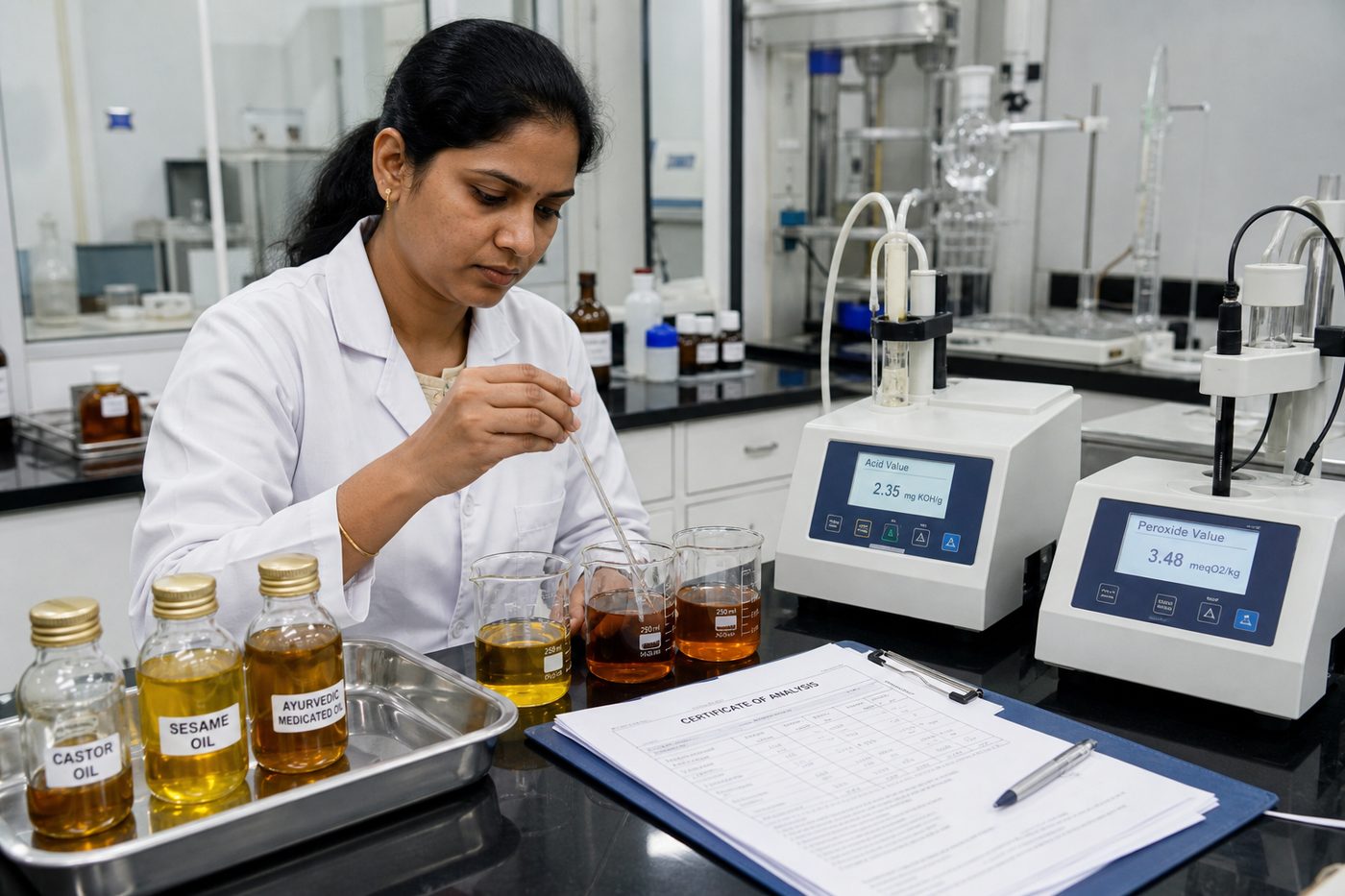
India's herbal oil trade covers two product families that look similar on a packing list but answer to entirely different regulators. A drum of cold-pressed sesame oil bound for a German food distributor and a case of Bhringraj-infused Ayurvedic hair oil bound for a Dubai wellness retailer are both 'herbal oils' in casual conversation, but one is a food product and the other is — in Indian law — a licensed Ayurvedic medicine, even when it is marketed abroad as a cosmetic hair treatment. Fixed vegetable oils such as castor, sesame (til), coconut, neem, sweet almond, flaxseed, and kalonji (black seed) move under India's edible-and-industrial-oil framework. Medicated Ayurvedic Taila — Bhringraj oil, Amla oil, Mahanarayan Taila, Ksheerabala Taila, and comparable formulations infused with herbs under classical Ayurvedic process — move under India's drug-manufacturing framework for Ayurvedic, Siddha, and Unani (ASU) medicines.
That split matters commercially because international buyers use it to separate credible, export-ready Indian suppliers from generic bulk traders. A buyer sourcing edible cold-pressed sesame oil for a European retail brand checks for FSSAI licensing and food-safety documentation. A buyer sourcing a medicated Bhringraj Taila for a wellness brand checks for AYUSH manufacturing credentials and Schedule T good manufacturing practice (GMP) evidence — because that credential is the closest thing India's regulatory system offers to independent verification that the product is a genuine, correctly formulated Ayurvedic oil rather than a cosmetic-grade blend marketed with borrowed Ayurvedic terminology.
This guide is a credentials deep-dive, not a shipping-documentation checklist. It explains what an AYUSH manufacturing licence is and is not, how it differs from — and complements — FSSAI registration, what Schedule T GMP plants are expected to demonstrate, where a Certificate of Pharmaceutical Product (COPP) and Chemexcil RCMC fit around those two core credentials, and how each credential converts into buyer trust in the USA, EU, and GCC specifically. For the full operational export sequence, see How to Export Herbal Oils from India; for the complete shipping-document checklist, see Herbal Oil Export Documentation Checklist. Readers who have already selected a target market should pair this guide with Most Demanded Indian Herbal Oils by Country for the SKU-level demand matrix referenced throughout.
Always verify current licensing procedures, fee schedules, and portal workflows directly with the Ministry of AYUSH, the relevant State Licensing Authority (Ayurveda), and FSSAI before filing an application — administrative processes are updated periodically and this guide should be read as a planning framework, not a substitute for live regulatory confirmation.
Key Takeaways
Summary Box
Executive Summary
Summary Box
India's herbal oil export base runs on two supply clusters with different regulatory centers of gravity. Gujarat's Kutch–Mehsana–Deesa belt anchors castor oil, where India supplies the large majority of the world's traded castor oil, alongside a significant sesame (til) oil processing base in Gujarat, Rajasthan, and Madhya Pradesh. Kerala's Kollam–Alappuzha–Thrissur corridor anchors coconut oil and — separately — a dense concentration of licensed Ayurvedic drug manufacturing units producing medicated Taila for both domestic and export wellness channels. Tamil Nadu and Andhra Pradesh contribute neem oil and additional sesame processing capacity, while Rajasthan and Madhya Pradesh supply flaxseed (linseed) and kalonji (black seed) oil.
Buyer qualification for this catalog runs on two parallel credential rails rather than one universal certificate. Fixed oils sold into food, culinary, and industrial channels are qualified against FSSAI licensing, standard food-safety documentation, and — for organic or premium retail programs — NPOP or destination-equivalent organic certification. Medicated Ayurvedic Taila sold into wellness, hair-care, and personal-care channels is qualified against AYUSH manufacturing credentials, Schedule T GMP evidence, and — for several destination markets — a Certificate of Pharmaceutical Product. Exporters who understand which rail applies to which SKU, and who hold the right credential before outreach rather than after a stalled inquiry, move buyers from first sample to repeat container measurably faster than exporters who present one generic 'export-certified' claim across an entire mixed catalog.
This guide focuses specifically on that credentialing logic — what AYUSH and FSSAI registration each deliver, how Schedule T GMP plants are expected to operate, and how the two credentials convert into buyer trust across the USA, EU, and GCC. Read it alongside Most Demanded Indian Herbal Oils by Country for the SKU-level country demand matrix and How to Export Herbal Oils from India for the full operational sequence.

Market Size & Industry Overview
Key Statistics
India's herbal oil production geography splits cleanly between fixed-oil processing belts and Ayurvedic medicated-oil manufacturing hubs, with some overlap in Gujarat and Kerala. Gujarat's Kutch, Mehsana, and Deesa districts form the world's dominant castor cultivation and crushing base, feeding both domestic castor-derivative industries and direct export of crude and refined castor oil under HS 1515.30. The same state's Saurashtra and North Gujarat belts support sesame (til) oil pressing, alongside Rajasthan's Nagaur–Merta corridor and Madhya Pradesh's Malwa region.
Kerala carries a dual identity in this cluster: it is India's leading coconut oil processing base (Kollam, Alappuzha, Thrissur, Kozhikode) and, separately, home to a dense concentration of licensed Ayurvedic drug manufacturers producing medicated Taila under Kerala's long-standing Ayurvedic pharmaceutical tradition — many of these units hold both an AYUSH manufacturing licence for their Taila lines and FSSAI registration for any co-located edible-oil or food-adjacent production. Tamil Nadu and Andhra Pradesh add neem oil (from Neem, Tamil Nadu's Erode–Salem belt in particular) and secondary sesame capacity, while Rajasthan and Madhya Pradesh supply flaxseed and kalonji oil, typically through smaller cold-press units serving the wellness and health-food export segment.
Herbal Oil Production Clusters and Primary Regulatory Track
Swipe →
Data table — swipe horizontally on small screens
| Cluster | State | Primary Oils | Dominant Credential Track |
|---|---|---|---|
| Kutch–Mehsana–Deesa | Gujarat | Castor oil (crude and refined) | FSSAI (edible/industrial) + Chemexcil RCMC |
| Saurashtra / North Gujarat | Gujarat | Sesame (til) oil | FSSAI (edible-oil track) |
| Nagaur–Merta corridor | Rajasthan | Sesame, flaxseed, kalonji oil | FSSAI (edible-oil track) |
| Malwa region | Madhya Pradesh | Flaxseed (linseed), sesame oil | FSSAI (edible-oil track) |
| Kollam–Alappuzha–Thrissur | Kerala | Coconut oil, Ayurvedic Taila | FSSAI (coconut oil) + AYUSH (medicated Taila) |
| Erode–Salem belt | Tamil Nadu | Neem oil | FSSAI/BIS depending on end use |
Export Statistics
Key Statistics
Castor oil is the standout figure in India's herbal oil export basket: India supplies the large majority of globally traded castor oil under HS 1515.30, with Gujarat's crushing and refining capacity underpinning that position. Edible fixed oils — sesame, coconut, neem, and smaller volumes of flaxseed and kalonji — move in more modest but steadily growing volumes into food-ingredient, cosmetic-carrier, and wellness-retail channels. Medicated Ayurvedic Taila exports are smaller in tonnage than the bulk fixed-oil trade but carry materially higher per-unit value once packaged as retail-ready or private-label wellness products. Treat every figure below as directional; reconfirm current-year statistics against DGFT/DGCI&S export data and ITC Trade Map before finalizing sourcing or investment decisions.
Indicative India Herbal Oil Export Position by Category
Swipe →
Data table — swipe horizontally on small screens
| Category | Primary HS Reference | Indicative Export Position | Notes |
|---|---|---|---|
| Castor oil (crude/refined) | HS 1515.30 | India supplies the large majority of world trade | Gujarat-origin; industrial, pharma, and cosmetic grades |
| Sesame (til) oil | HS 1515.50 | Steady, growing food and wellness-channel demand | Cold-pressed and organic-certified lines command premiums |
| Coconut oil (edible/virgin) | HS 1513.11 / 1513.19 | Established Kerala export base | RBD for bulk food; virgin/cold-pressed for premium retail |
| Neem oil (cosmetic/agri grade) | HS 1515.90 | Niche but consistent demand | Agri-input and cosmetic-carrier channels distinct |
| Sweet almond oil | HS 1515.90 | Growing premium cosmetic-carrier demand | Often India-processed from imported kernel stock |
| Flaxseed / kalonji oil | HS 1515.11 / 1515.19 / 1515.90 | Small but expanding wellness-export niche | Cold-pressed, food/wellness dual positioning |
| Medicated Ayurvedic Taila (Bhringraj, Amla, Mahanarayan, etc.) | HS 3305.90 (cosmetic hair oil) or HS 3004.90 (licensed ASU drug) | Growing wellness and diaspora retail demand | HS line depends on destination positioning as cosmetic vs. medicine |
Import Statistics
Key Statistics
On the demand side, herbal oil importers cluster into food-ingredient buyers (sesame, coconut, flaxseed for bakery, confectionery, and functional-food use), personal-care and cosmetic manufacturers (castor derivatives, almond, coconut, neem as carrier oils), and wellness/Ayurvedic retail distributors (medicated Taila, Amla and Bhringraj hair oils). The table below is directional — confirm against destination customs data or ITC Trade Map before capacity planning.
Comparison table
Swipe →
Data table — swipe horizontally on small screens
| Country / Region | Import Intensity | Primary Use Case |
|---|---|---|
| USA | High | Castor derivatives (industrial/pharma), coconut and almond carrier oil, wellness Taila retail |
| Germany / EU | High | Organic sesame, flaxseed, and almond oil for food and cosmetic-carrier use |
| UK | Medium–High | Coconut and almond oil for food/cosmetic; diaspora Ayurvedic hair-oil retail |
| UAE / GCC | High | Amla, Bhringraj, and massage Taila; coconut oil; Ayurvedic wellness retail |
| Japan | Medium | Premium sesame and cold-pressed oils for cosmetic and gourmet food channels |
| Southeast Asia (ASEAN) | Medium–High | Coconut and neem oil; growing herbal wellness retail demand |
| Australia / New Zealand | Medium | Coconut, almond, and Ayurvedic wellness retail oils |
Product Categories / Variants
Summary Box
The commercially useful way to segment this catalog is by regulatory track, because that determines which credential — FSSAI, AYUSH, or both — actually moves a buyer inquiry forward. Fixed oils positioned for food or industrial use sit on the FSSAI/industrial track; medicated formulations infused with herbs under a classical or proprietary Ayurvedic process sit on the AYUSH track; and a handful of SKUs, particularly coconut and sesame oil sold in both culinary and cosmetic-carrier formats, can sit on either track depending on how the specific shipment is positioned and labeled for the buyer's market.
Herbal Oil Product Categories Mapped to Credential Track
Swipe →
Data table — swipe horizontally on small screens
| Product | Typical Form | Primary Credential Track | Buyer Channel |
|---|---|---|---|
| Castor oil | Crude, refined, first-pressing (FP), pharmaceutical/cosmetic grade | FSSAI (industrial/edible) + Chemexcil RCMC | Industrial, pharma feedstock, cosmetic-carrier |
| Sesame (til) oil | Refined, cold-pressed, organic-certified | FSSAI (edible-oil track) | Food ingredient, cooking oil, cosmetic-carrier |
| Coconut oil | RBD, virgin, cold-pressed | FSSAI (edible) — AYUSH if herb-infused Taila base | Food, cosmetic-carrier, hair-care base oil |
| Neem oil | Cold-pressed, cosmetic/agri grade | FSSAI or BIS depending on end use | Cosmetic-carrier, agri-input, skincare |
| Sweet almond oil | Cold-pressed, refined | FSSAI (edible/cosmetic-carrier) | Cosmetic-carrier, premium food, baby-care base oil |
| Flaxseed (linseed) oil | Cold-pressed, food-grade | FSSAI (edible-oil track) | Functional food, wellness supplement-adjacent |
| Kalonji (black seed) oil | Cold-pressed | FSSAI (edible-oil track) | Wellness, food-adjacent retail |
| Medicated Ayurvedic Taila (Bhringraj, Amla, Mahanarayan, Ksheerabala, etc.) | Herb-infused, classical or proprietary formulation | AYUSH manufacturing licence (Schedule T) | Wellness retail, hair-care, Ayurvedic pharmacy channel |
Manufacturing Overview
Export Tip
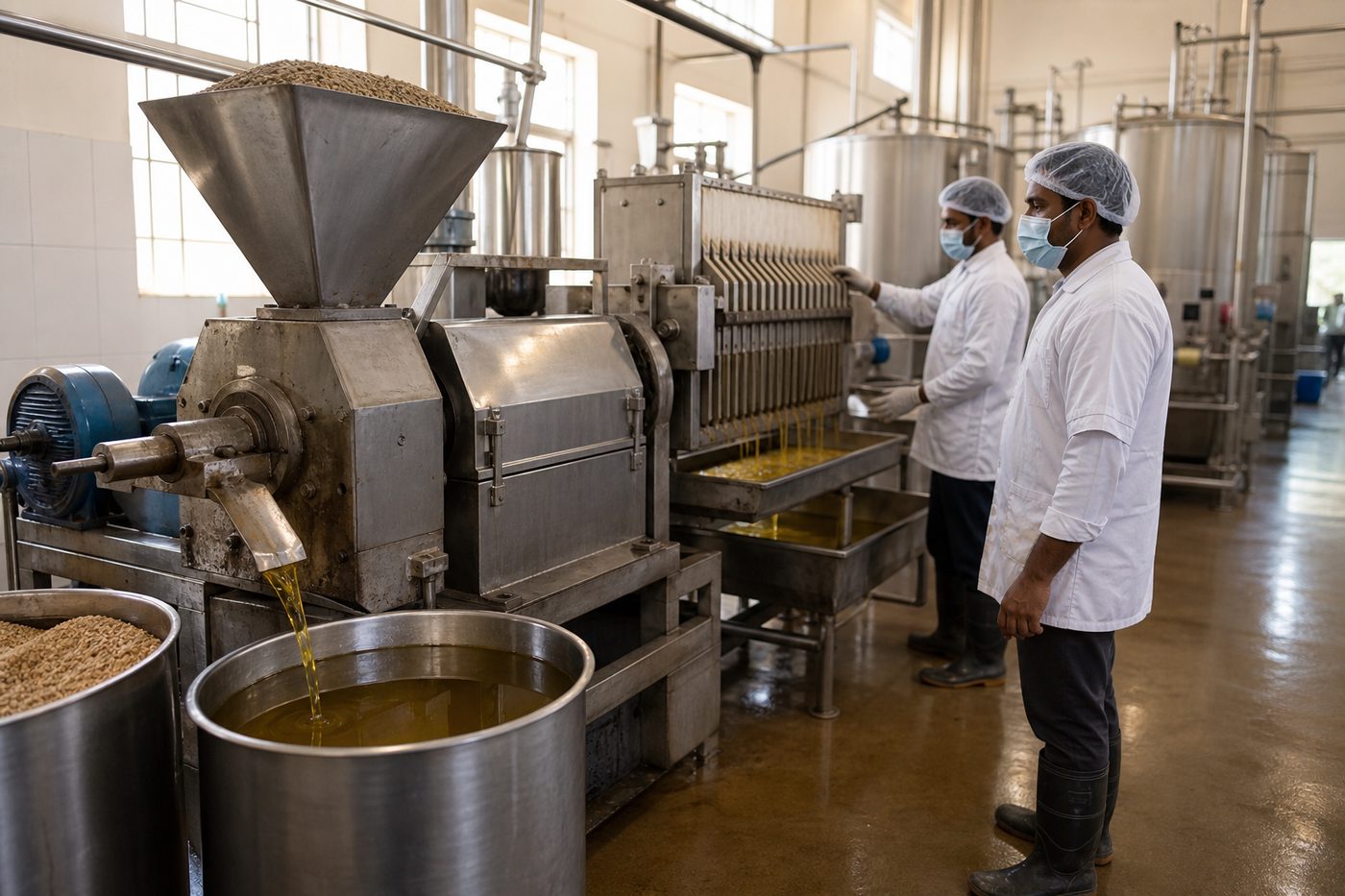
Fixed-oil processing — castor, sesame, coconut, neem, almond, flaxseed, kalonji — follows a broadly consistent sequence: seed or kernel cleaning, cold pressing or expeller/solvent extraction depending on target grade, filtration, and either bulk drum/flexitank packing for industrial and food-ingredient buyers or bottling for retail. FSSAI-registered units maintain batch records, moisture and free-fatty-acid testing, and hygiene documentation consistent with food-safety expectations; units serving cosmetic-carrier buyers additionally track peroxide value and color/odor consistency, since carrier-oil buyers are sensitive to oxidation and rancidity that food-grade specifications alone do not fully capture.
Medicated Ayurvedic Taila manufacturing is a materially different process. Classical Taila preparation involves infusing a base oil (commonly sesame or coconut) with herbal decoctions and pastes through a defined heating and reduction process — Sneha Kalpana — governed by formulations described in classical Ayurvedic texts or by validated proprietary processes for newer formulations. Schedule T of the Drugs and Cosmetics Rules, 1945 prescribes the GMP framework specifically for ASU (Ayurvedic, Siddha, Unani) drug manufacturing: defined manufacturing and testing areas, raw-material identification and authentication procedures, in-process quality checks at each Sneha Kalpana stage, finished-product testing against pharmacopoeial or approved standards, and documented batch records retained for regulatory inspection.
Plants seeking AYUSH manufacturing licensing must demonstrate Schedule T compliance to their State Licensing Authority before a licence is issued — this is not a paper formality but a facility inspection covering premises layout, raw-material storage and identification systems, testing equipment, and qualified technical staff (including, typically, a person with a recognized qualification in Ayurveda overseeing production). Many export-focused Kerala and Gujarat units layer voluntary WHO-GMP certification on top of Schedule T compliance specifically because international wellness buyers — particularly in the GCC and EU — recognize WHO-GMP as an additional, internationally legible quality signal that Schedule T alone does not automatically convey to a buyer unfamiliar with Indian drug law.
Expert Insight: Two Credentials, Two Different Buyer Questions
Expert Insight Box
AYUSH licensing and FSSAI registration are frequently treated as interchangeable proof of 'being a legitimate herbal oil exporter.' They are not — each answers a distinct question that a specific buyer type actually asks during supplier qualification, and conflating them slows down both conversations.
Pricing Analysis
Buyer Tip
Herbal oil FOB pricing is driven by raw-material cost, extraction method (cold-pressed commands a premium over solvent-extracted or standard expeller-pressed oil), organic or wild-harvest sourcing, and — for medicated Taila — herb content, formulation complexity, and whether the product is sold in bulk or retail-ready packaging. The ranges below are indicative planning benchmarks; always request a live FOB quotation for your specific grade and packaging requirement.
Comparison table
Swipe →
Data table — swipe horizontally on small screens
| Oil / Product | Indicative FOB Range (USD/kg) | Key Price Driver |
|---|---|---|
| Castor oil (industrial grade) | 1.20 – 1.70 | Seed cost, crop year, crushing yield |
| Castor oil (pharma/cosmetic grade, first-pressing) | 1.70 – 2.40 | Refining precision, low acid value, cosmetic-carrier specification |
| Sesame oil (refined, food-grade) | 2.50 – 4.00 | Seed cost; standard filtration and refining |
| Sesame oil (cold-pressed, organic-certified) | 4.50 – 7.00 | NPOP/organic certification, segregated cold-press processing |
| Coconut oil (RBD, edible) | 1.60 – 2.30 | Copra cost, refining yield |
| Coconut oil (virgin / cold-pressed) | 2.60 – 4.20 | Wet-process or cold-press method; premium retail positioning |
| Neem oil (cosmetic/agri grade) | 2.00 – 3.50 | Seed availability, azadirachtin content for agri-grade lots |
| Sweet almond oil | 8.00 – 14.00 | Kernel cost; premium cosmetic-carrier demand |
| Flaxseed / kalonji oil (cold-pressed) | 3.50 – 8.50 | Seed cost, cold-press yield, food/wellness positioning |
| Medicated Ayurvedic Taila (bulk, per kg equivalent) | 4.00 – 9.00 | Herb content, formulation complexity, AYUSH/Schedule T compliance overhead |
| Medicated Taila (retail-ready, branded bottle equivalent) | +40–90% over bulk equivalent | Packaging, labeling, private-label branding, smaller pack economics |
MOQ Analysis
Buyer Tip
Minimum order quantities vary sharply between bulk fixed oils and formulated Ayurvedic Taila. Bulk castor, sesame, and coconut oil programs scale quickly to full container volumes once documentation is confirmed; medicated Taila and premium cold-pressed niche oils typically start smaller because buyers want to validate formulation consistency, aroma, and packaging before committing to programme volume.
Comparison table
Swipe →
Data table — swipe horizontally on small screens
| Product Category | Typical Starting MOQ | Full Programme Volume |
|---|---|---|
| Castor oil (bulk industrial/pharma) | 1 – 5 metric tonnes (drums or part-flexitank) | 18–20 MT (20ft flexitank/drums); 36–40 MT (40ft) |
| Sesame / coconut oil (bulk food-grade) | 500 kg – 2 metric tonnes | 18–20 MT (20ft FCL, HDPE drums) |
| Cold-pressed / organic niche oils (flax, kalonji, neem) | 100 – 500 kg | 1–5 MT per programme cycle; scales gradually |
| Medicated Ayurvedic Taila (bulk) | 25 – 100 kg | 500 kg – 2 MT per programme once formulation is approved |
| Medicated Taila (private-label retail-ready) | 500 – 2,000 units (bottles) | 5,000+ units per repeat cycle for established wellness brands |
Packaging Standards
Export Tip
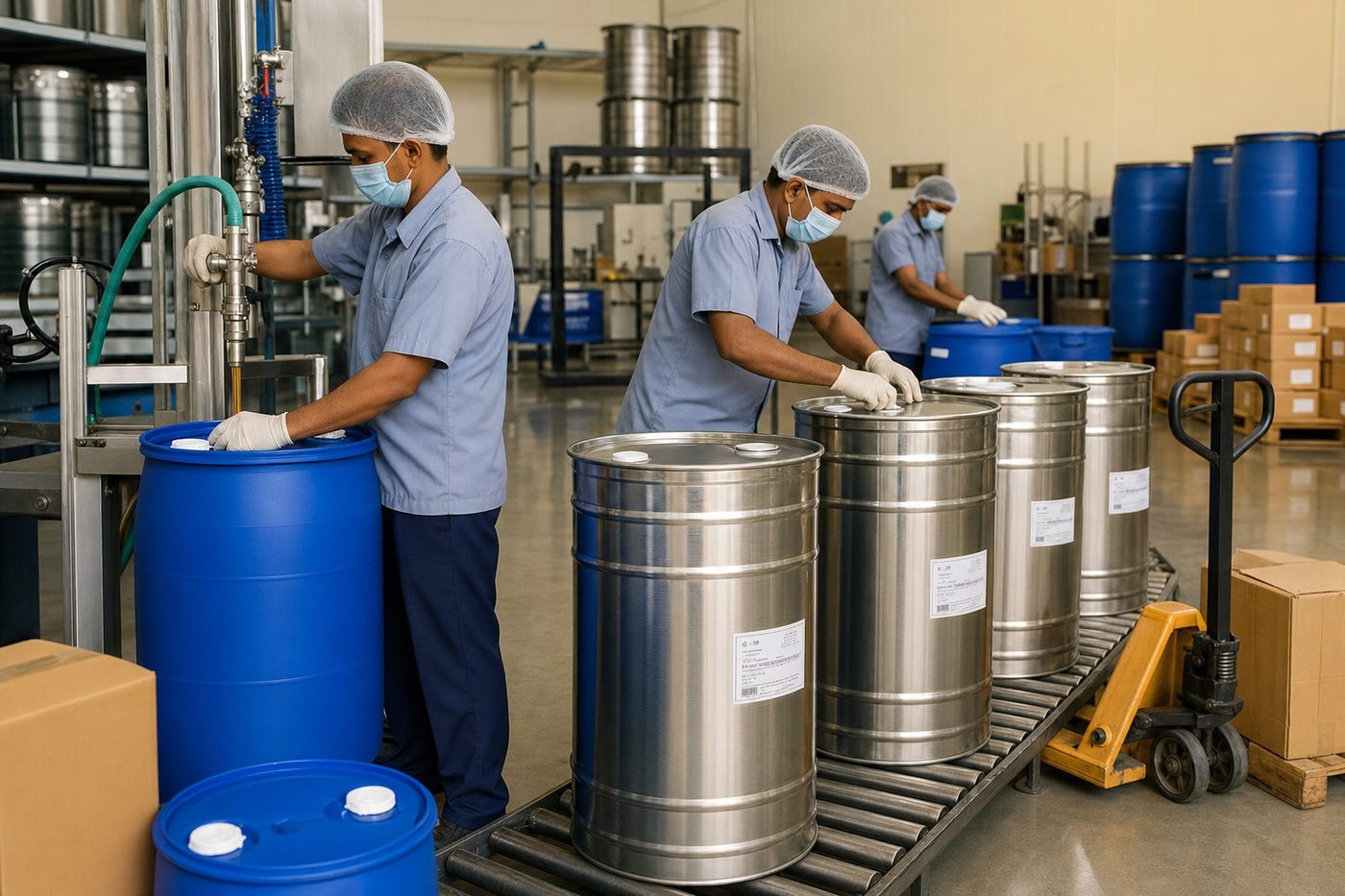
Bulk fixed oils move predominantly in HDPE drums (180–200 kg) or, for high-volume castor and sesame oil programs, in food/industrial-grade flexitanks that carry an entire container's liquid payload without individual drum handling. Medicated Ayurvedic Taila and premium cold-pressed retail oils move in far smaller formats — glass or PET bottles for branded retail, and 25–50 kg jerry cans or drums for bulk private-label supply to a wellness brand's own bottling line.
Comparison table
Swipe →
Data table — swipe horizontally on small screens
| Packaging Format | Typical Fill | Best Suited For |
|---|---|---|
| HDPE drum | 180–200 kg net | Bulk castor, sesame, coconut, neem oil — standard commercial export |
| Flexitank (1x20ft container) | ~18–21 MT net liquid | High-volume castor and sesame oil FCL programs; avoids individual drum handling |
| Jerry can / small drum | 25–50 kg net | Private-label bulk supply for Ayurvedic Taila and premium cold-pressed niche oils |
| Glass bottle (retail) | 50 ml – 1 litre | Branded Ayurvedic hair/massage Taila and premium cosmetic-carrier retail |
| PET bottle (retail) | 100 ml – 1 litre | Cost-efficient retail packaging for coconut, sesame, and blended wellness oils |
| Tin container | 1–15 litres | Traditional retail and mid-bulk packaging for coconut and sesame oil in South Asian and GCC retail channels |
Container Loading Details
Export Tip
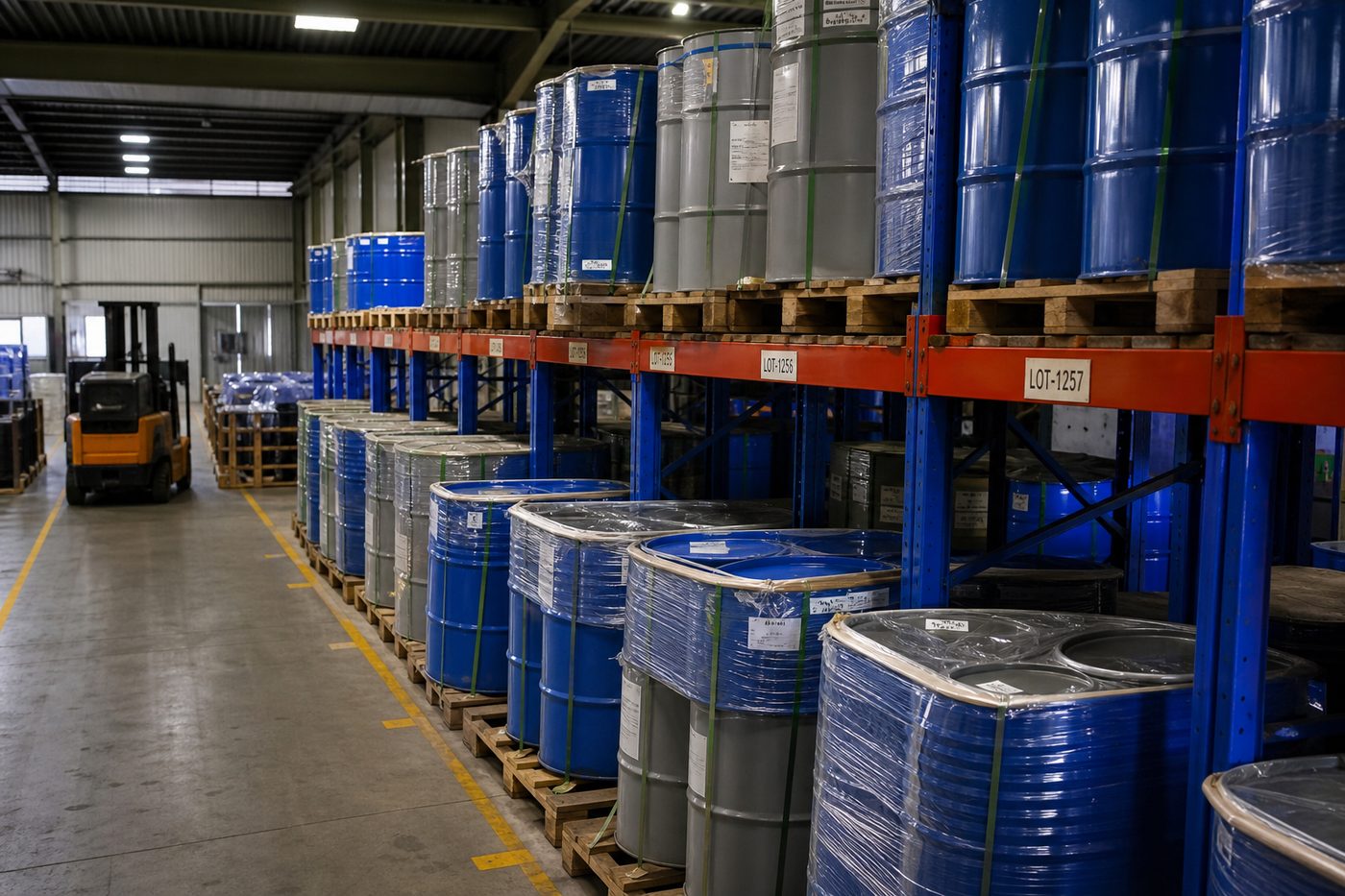
Container loading economics differ sharply between drummed bulk oil and flexitank-based liquid bulk. Flexitanks are widely used for high-volume castor and sesame oil programs because they eliminate individual drum tare weight and handling time, though they require careful compatibility checks (chemical resistance, temperature tolerance) against the specific oil being shipped.
Comparison table
Swipe →
Data table — swipe horizontally on small screens
| Loading Method | Indicative Payload | Note |
|---|---|---|
| 20ft FCL — HDPE drums | Approximately 16–18 metric tonnes | 180–200 kg drums; palletized where feasible |
| 20ft FCL — flexitank | Approximately 18–21 metric tonnes | Preferred for castor and sesame oil bulk programs; confirm flexitank-oil compatibility |
| 40ft FCL — HDPE drums | Approximately 32–36 metric tonnes | Standard programme volume for mixed-buyer drum orders |
| 40ft FCL — flexitank (two units) | Approximately 36–42 metric tonnes | High-volume castor oil programmes to price-sensitive industrial buyers |
| LCL / part-container | By pallet or drum count | Trial shipments and mixed-SKU herbal oil orders (Taila plus fixed oils) |
Shipping Methods
Export Tip
Mundra and Kandla in Gujarat serve as the primary gateways for castor and sesame oil, given proximity to the Kutch–Mehsana–Deesa and Saurashtra processing belts. Cochin and Tuticorin serve Kerala- and Tamil Nadu-origin coconut, neem, and Ayurvedic Taila shipments. Sea freight LCL suits Taila and niche cold-pressed oil trials; FCL and flexitank shipments suit bulk castor and sesame programmes. Air freight is generally reserved for premium, low-volume Taila samples and urgent replenishment.
Comparison table
Swipe →
Data table — swipe horizontally on small screens
| Route | Load Port | Approx. Transit Time |
|---|---|---|
| India to Netherlands / Germany (Rotterdam/Hamburg) | Mundra / Kandla | 18–24 days |
| India to USA East Coast (New York/Baltimore) | Mundra / Nhava Sheva | 28–36 days |
| India to USA Gulf Coast (Houston) | Mundra / Nhava Sheva | 30–38 days |
| India to UAE (Jebel Ali) | Mundra / Kandla / Cochin | 6–10 days |
| India to UK (Felixstowe/Southampton) | Mundra / Nhava Sheva | 20–27 days |
| India to Japan (Yokohama/Kobe) | Mundra / Nhava Sheva / Cochin | 20–28 days |
| India to Southeast Asia (Singapore/Port Klang) | Cochin / Tuticorin / Nhava Sheva | 10–16 days |
Certifications
Compliance Notes
Certification stacking for herbal oils depends on regulatory track (edible/industrial versus medicated Ayurvedic) and destination-market channel. FSSAI and AYUSH are the two baseline institutional credentials, but the specific combination a buyer expects varies by SKU and destination market.
Comparison table
Swipe →
Data table — swipe horizontally on small screens
| Certification | Issuing Body / Framework | Typical Requirement Trigger |
|---|---|---|
| FSSAI licence (Central/State) | Food Safety and Standards Authority of India | Mandatory for edible/food-positioned fixed oils; Central Licence expected for export-oriented units |
| AYUSH manufacturing licence (Schedule T) | State Licensing Authority (Ayurveda), under Drugs & Cosmetics Rules | Mandatory for medicated Ayurvedic Taila manufacturing |
| WHO-GMP certification | Accredited certifying bodies (voluntary) | Requested by GCC and EU wellness/pharmacy-channel buyers alongside Schedule T evidence |
| Certificate of Pharmaceutical Product (COPP) | State Licensing Authority (Ayurveda) | Requested during Ayurvedic product registration in GCC and Southeast Asian markets |
| Chemexcil RCMC (Panel IV) | Basic Chemicals, Cosmetics & Dyes Export Promotion Council | Relevant for castor oil and derivative exporters seeking FTP incentive access |
| NPOP / USDA NOP / EU Organic | APEDA-accredited / destination-country pathways | Required for organic-labelled sesame, coconut, flaxseed, or almond oil |
| Halal | UAE/Gulf/Indonesia/Malaysia-recognised certifiers | Required for Gulf and ASEAN wellness and hair-oil retail channels |
| ISO 22000 / HACCP | Accredited certification bodies | Requested by larger food-ingredient buyers for edible fixed-oil programmes |
Buyer Requirements
Buyer Requirements
- For edible/industrial fixed oils: FSSAI licence copy, batch-specific Certificate of Analysis (moisture, free fatty acid, peroxide value, microbiology as relevant), and organic transaction certificate where applicable
- For medicated Ayurvedic Taila: AYUSH manufacturing licence copy, Schedule T GMP evidence, formulation/ingredient declaration, and — where requested — a Certificate of Pharmaceutical Product
- Product specification sheet confirming extraction method (cold-pressed, expeller, solvent-extracted), grade, and packaging format
- Halal certificate from a market-recognised body for GCC and ASEAN-bound wellness and hair-oil shipments
- WHO-GMP evidence where the buyer's channel (pharmacy, premium wellness retail) expects an internationally legible quality mark beyond Schedule T alone
- Prior export shipment references to the buyer's target destination market and channel
International buyers evaluating a new Indian herbal oil supplier request a document pack that matches the specific SKU's regulatory track. The completeness and specificity of that pack — not a generic 'export certified' claim — is what converts a sample request into a repeat programme.
Country-wise Opportunities
Market Snapshot
AYUSH and FSSAI credentials unlock different doors in different markets, and neither credential is a substitute for destination-market compliance — it is a supplier-side quality signal that speeds up, but does not replace, the buyer's own regulatory process. For SKU-level demand detail by country, see Most Demanded Indian Herbal Oils by Country.
Comparison table
Swipe →
Data table — swipe horizontally on small screens
| Country / Region | How AYUSH/FSSAI Credentials Help | Additional Requirement Beyond AYUSH/FSSAI |
|---|---|---|
| USA | FSSAI signals food-safety discipline; AYUSH signals Ayurvedic authenticity for wellness retail | US food facility registration for edible oils; medicated Taila typically sold as cosmetic, not drug — FDA drug approval is a separate, rarely pursued path |
| Germany / EU | FSSAI supports food-safety credibility; AYUSH supports Ayurvedic authenticity claims | EU Cosmetics Regulation compliance (CPNP notification) for hair/massage Taila sold as cosmetics; EU food-import compliance for edible oils |
| UAE / GCC | AYUSH + COPP frequently requested for Ayurvedic product registration; FSSAI for edible-oil retail | Halal certification; MOHAP/Dubai Municipality product registration for wellness retail |
| Japan | FSSAI and lab COAs support premium sesame/cold-pressed oil qualification | Japan-specific import documentation and residue/quality panel expectations |
| Southeast Asia (ASEAN) | AYUSH supports herbal wellness authenticity; FSSAI supports coconut/neem oil food and cosmetic-carrier positioning | Halal certification (Indonesia/Malaysia); local cosmetic/wellness product registration |
Sourcing Checklist
Checklist
Use the three checklists below to align buyer, exporter, and compliance expectations before a first herbal oil sample is sent.
Common Buyer Mistakes
Common Mistakes Box
Future Market Trends
Key Statistics
Through 2030, herbal oil credentialing is likely to tighten along two lines: growing international buyer sophistication in distinguishing genuine AYUSH-licensed Ayurvedic Taila from cosmetic-grade blends marketed with Ayurvedic terminology, and expanding organic and clean-label demand for fixed oils (sesame, flaxseed, coconut, almond) in EU and North American retail channels. GCC markets are expected to continue formalizing Ayurvedic product registration requirements, making COPP and AYUSH documentation increasingly load-bearing for that region's wellness retail channel rather than a nice-to-have.
Exporters who treat AYUSH and FSSAI as living infrastructure — maintaining current licensing, investing in Schedule T documentation discipline, and layering voluntary WHO-GMP certification where the buyer channel rewards it — will be positioned to capture premium wellness and food-ingredient demand disproportionately as buyers consolidate around suppliers who can produce the correct credential for the correct SKU on the first inquiry.
Expert Insights from Saurabh Mittal, Founder of Altus Exports
Expert Insight Box
A second perspective from Altus Exports on how AYUSH and FSSAI registration function in practice across a mixed herbal oil catalog.
Schedule T Discipline Beats a Generic Ayurvedic Claim
Buyers in the GCC and EU wellness channel increasingly ask pointed follow-up questions after a first Ayurvedic Taila inquiry — which State Licensing Authority issued the manufacturing licence, whether Schedule T raw-material identification records are maintained, and whether a Certificate of Pharmaceutical Product is available. Exporters who answer with documentation rather than reassurance move faster through qualification because the buyer's own regulatory or retail compliance team needs that paper trail regardless of how the initial sales conversation goes.
How Altus Exports Supports Herbal Oil Exporters
Altus Exports is a merchant exporter and global sourcing partner based in New Delhi. For herbal oil programmes spanning fixed oils and medicated Ayurvedic Taila, we appear as exporter of record on shipping documentation, verify supplier credentials before any buyer introduction, and coordinate document packs aligned to each SKU's correct regulatory track.
Our sourcing network includes FSSAI-licensed fixed-oil processors across Gujarat, Rajasthan, Madhya Pradesh, Kerala, and Tamil Nadu, alongside AYUSH-licensed Ayurvedic manufacturing units in Kerala and Gujarat with Schedule T GMP compliance and, where relevant, WHO-GMP certification and Certificate of Pharmaceutical Product access. Supplier qualification includes licence verification, batch-record review, and prior export document sampling before any buyer introduction.

Conclusion
- Next step for processors and manufacturers: Confirm your SKU's regulatory track and complete AYUSH and/or FSSAI licensing before active buyer outreach.
- Next step for buyers: Share your target oil or Taila formulation, destination market, and required certifications — Altus Exports matches verified Indian herbal oil suppliers and coordinates documentation.
- Explore How to Export Herbal Oils from India for the full operational export sequence.
- Explore Top Herbal Oil Products Exported from India for product and grade detail.
- Compare destinations in Best Countries for Indian Herbal Oil Exports.
- Map SKU-level demand in Most Demanded Indian Herbal Oils by Country.
- International buyers should read Source Herbal Oils Directly from India.
- Build your buyer pipeline with Find International Buyers for Herbal Oils.
- Explore the premium organic and Ayurvedic lane in Organic & Ayurvedic Herbal Oil Export Opportunities.
- Use the Herbal Oil Export Documentation Checklist as your pre-shipment gate.
- Plan buyer outreach around Trade Shows for Herbal Oil Exporters.
- Browse export products from India and product sourcing company India for multi-category herbal export support.
AYUSH manufacturing licensing and FSSAI registration solve different problems for Indian herbal oil exporters, and the exporters who treat them as separate, precisely-applied credentials — rather than as one generic export certificate — win faster buyer qualification across the USA, EU, and GCC. FSSAI is the baseline credential for edible and industrial fixed oils such as castor, sesame, coconut, neem, almond, flaxseed, and kalonji. AYUSH manufacturing licensing under Schedule T is the credential specifically for medicated Ayurvedic Taila, complemented where relevant by a Certificate of Pharmaceutical Product and voluntary WHO-GMP certification. Castor oil exporters add Chemexcil RCMC to that stack for Foreign Trade Policy incentive access.
If you are a Gujarat, Kerala, Rajasthan, or Tamil Nadu-linked herbal oil processor or Ayurvedic manufacturer ready to export, confirm which regulatory track each SKU sits on and complete the matching licensing before approaching international buyers. International buyers sourcing verified Indian herbal oils can work with Altus Exports as a global sourcing partner for coordinated sourcing, credential verification, and shipment under one accountable relationship.