
Source Herbal Oils Directly from India: Buyer's Playbook
By Saurabh Mittal, Founder, Altus Exports
A practical buyer-side playbook for sourcing herbal oils directly from India — from writing a precise RFQ and auditing AYUSH/FSSAI/IEC credentials, through sample protocol and third-party lab verification, to trial orders, payment terms, and Incoterms negotiation. Written for importers, distributors, and wellness-brand procurement teams, not as an exporter registration tutorial.

International buyers source herbal oils from India for three structural reasons: an oilseed and processing base broad enough to cover castor, sesame, coconut, neem, almond, kalonji, flaxseed, and karanja at competitive FOB pricing; a dense network of AYUSH-licensed Ayurvedic pharmacies capable of producing classical medicated Taila — Bhringraj, Amla, Brahmi, Mahanarayan, Dhanwantharam, Ksheerabala, and Ashwagandha oil — at genuine pharmacopoeial standard; and product diversity that lets a single sourcing relationship cover commodity fixed oils, cosmetic-grade specialty oils, and Ayurvedic wellness products under one geography. Natural personal-care brands in the USA, Germany, and the UK rely on Gujarat castor and neem oil; wellness and spa brands in the UAE, USA, and Singapore/ASEAN depend on Kerala's classical Ayurvedic Taila manufacturing cluster; and nutraceutical buyers seek out cold-pressed sesame, coconut, and flaxseed oil for their fatty-acid profiles.
This is strictly a herbal oils sourcing guide: fixed vegetable oils (neem, castor, sesame, coconut, almond, kalonji, flaxseed, karanja) and Ayurvedic medicated Taila prepared by infusion into a fixed-oil base. Quality proof centres on fatty-acid profiles, peroxide value, and microbial limits for medicated lots. For buyers who need volume, category breadth, and AYUSH-documented Ayurvedic authenticity under one sourcing geography, India is a rational primary or co-primary origin.
Yet buyers who attempt to source herbal oils directly from India without a structured procurement process encounter predictable failures: samples that do not match bulk-lot purity, exporters who cannot produce a valid IEC or AYUSH GMP/FSSAI licence, adulterated or diluted oil passed off as pure, a fatty acid profile that reveals a different or blended oil than quoted, or medicated Taila prepared outside a genuine AYUSH GMP facility with no real Sneha Kalpana process behind it. India's herbal oil export sector includes highly professional AYUSH-licensed manufacturers and merchant exporters alongside operators who cannot sustain international purity and documentation discipline.
The difference between a successful India sourcing programme and a rejected shipment is buyer-side due diligence — not luck. This guide is written for herbal oil importers, wholesale distributors, natural personal-care and wellness-brand procurement teams, spa and Ayurvedic wellness chains, and private-label brands sourcing from India. It explains how to define specifications, write RFQs, audit suppliers, run a sample protocol with third-party lab verification, negotiate payment terms and Incoterms, spot red flags, and scale to full container loads — from the buyer's side. It is not an exporter registration how-to. For market selection intelligence, see Best Countries for Indian Herbal Oil Exports.
For product depth, see Top Herbal Oil Products Exported from India. Altus Exports operates as a global sourcing partner in India and merchant exporter for buyers who want one accountable counterparty across multiple herbal oil categories and origins.
Key Takeaways
Summary Box
Executive Summary
Summary Box
This importer playbook is for overseas buyers, distributors, and brand procurement teams sourcing castor, sesame, coconut, neem, almond, kalonji, flaxseed, karanja, or Ayurvedic medicated Taila directly from India. Use the supplier-audit and sample-protocol sections before you negotiate FOB pricing or scale beyond a trial lot.
India remains one of the world's most complete herbal oil origins, anchored by dominant castor oil supply and a genuinely unique AYUSH-licensed Ayurvedic Taila manufacturing base. Buyers who specify botanical name, extraction or infusion method, and Certificate of Analysis discipline capture that supply base with far fewer purity disputes than catalogue-only sourcing based on price alone.
The sections that follow walk through India's herbal oil trade position, the buyer-side procurement sequence from RFQ to FCL scale-up, pricing and logistics benchmarks, compliance requirements by destination, and the mistakes that cost buyers the most money on first shipments.
Market Size & Industry Overview
Key Statistics
India produces herbal oils across a wide botanical and processing range, but three production geographies matter most to buyers. Gujarat and Rajasthan supply the overwhelming majority of India's castor and sesame oil volume and give India global price-setting influence on castor in particular. Kerala supplies coconut oil at scale alongside one of India's most credible classical Ayurvedic medicated Taila manufacturing clusters, built on generations of Sneha Kalpana processing expertise. A pan-India network of AYUSH-licensed Ayurvedic pharmacies, concentrated in Kerala but present across most states, supplies medicated Taila such as Dhanwantharam, Ksheerabala, Mahanarayan, Bhringraj, Amla, and Brahmi oil to export-focused buyers.
Buyers source from India when they need: (1) volume fixed oils — castor, sesame, coconut — at competitive FOB prices for cosmetic, food, or industrial-chemical manufacturing; (2) cosmetic-grade specialty oils such as neem, kalonji, almond, and flaxseed for natural personal-care and nutraceutical formulations; (3) genuinely AYUSH GMP-documented Ayurvedic medicated Taila for wellness, spa, and diaspora-retail programmes; (4) Certificate-of-Analysis-documented supply for regulated cosmetic and food-adjacent applications; or (5) origin diversification away from single-country dependency during price spikes or supply disruptions elsewhere.
India's institutional export framework — IEC issuance through DGFT, AYUSH GMP (Schedule T) certification for medicated Taila manufacture, and FSSAI licensing for edible-grade oils — provides a credible foundation. The buyer's task is identifying which manufacturers and merchant exporters within that ecosystem actually meet your specific purity, documentation, and volume requirements, rather than assuming every supplier with a website is equally credentialed.
Buyer Type to Priority Origin Mapping
Swipe →
Data table — swipe horizontally on small screens
| Buyer Type | Typical Indian Products | Priority Origins | Key Procurement Focus |
|---|---|---|---|
| Natural personal-care / cosmetics brand | Neem, castor, sesame, kalonji, cosmetic-grade coconut | Gujarat, Rajasthan, Kerala, Tamil Nadu | Cosmetic-grade purity; fatty acid profile; cosmetic-notification-ready documentation |
| Nutraceutical / edible-oil brand | Sesame, flaxseed, coconut, almond | Gujarat, Rajasthan, Kerala, Jammu & Kashmir | FSSAI documentation; acid/peroxide value discipline; food-grade packaging |
| Ayurvedic wellness / spa brand | Bhringraj, Amla, Brahmi, Mahanarayan, Dhanwantharam, Ksheerabala, Ashwagandha oil | Kerala, pan-India AYUSH-licensed pharmacies | AYUSH GMP verification; Sneha Kalpana process authenticity; microbial testing |
| Diaspora / Ayurvedic retail distributor | Ayurvedic hair/massage oils, medicated Taila | Kerala, Gujarat | Brand-recognisable formulations; retail-ready packaging; consistent supply |
| Private-label / wellness retail brand | Category depends on positioning | Varies by product | Packaging specs; certification; programme pricing |
| Industrial / chemical buyer | Castor oil (crude, refined) | Gujarat, Rajasthan | Large-tender pricing; consistent fatty acid specification |
Export Statistics
Key Statistics
India's Ministry of Commerce and DGFT publish export statistics touching herbal oils across HS 1515, 1513, 3004, and 3304/3305, though figures are frequently blended with broader vegetable-oil and Ayurvedic-formulation statistics rather than reported as a standalone line. Buyers benchmark these figures to understand which destinations already absorb meaningful Indian supply and which product categories move in largest volume — castor oil consistently anchors export value given India's dominant global supply position, with sesame, coconut, and medicated Taila contributing smaller volume but often disproportionate per-kilogram value.
India Herbal Oil Export Snapshot for Buyer Benchmarking (Indicative)
Swipe →
Data table — swipe horizontally on small screens
| Dimension | Indicative Figure | Buyer Implication |
|---|---|---|
| HS classification | 1515.30 (castor), 1515.50 (sesame), 1515.90 (neem/karanja/kalonji), 1515.11/19 (flaxseed), 1513 (coconut), 3004.90 (Ayurvedic medicaments), 3304/3305 (cosmetic/hair preparations) | Confirm exact heading matches your product form and destination customs rules |
| Largest export category | Castor oil and its fractions | Global price-setting influence; large-tender pricing dynamics for bulk castor |
| Regulatory foundation | IEC via DGFT; AYUSH GMP (Schedule T) for medicated Taila; FSSAI for edible-grade oils | Verify which credential applies to your specific product before payment |
| Load ports | Mundra, Kandla, Nhava Sheva, Chennai, Kochi | Port affects transit time and AYUSH/FSSAI certificate timing |
| Typical destinations | USA, Germany/EU, UK, UAE, Japan, Singapore/ASEAN, Australia, Canada | Cross-reference with your own country's import data for realistic pricing |
Import Statistics
Key Statistics
Buyers who analyse import data from their own side — not only Indian export statistics — negotiate from strength. Import data reveals total market size, competitor origin share, and average unit values that signal whether a herbal oil is a commodity volume opportunity or a specialty/wellness niche. Use national customs statistics, cosmetic-notification registers, or subscription trade-data platforms to answer: how much of this product does my country import annually? What is India's share versus Sri Lanka, the Philippines, or China? Is India's share growing or declining?
Comparison table
Swipe →
Data table — swipe horizontally on small screens
| Data Source | What It Tells Buyers | How to Use It |
|---|---|---|
| DGFT/Ministry of Commerce export statistics | India-side volumes by country and category | Validate supplier claims about export experience |
| National customs import records (HS 1515/1513/3004/3304-3305) | Destination import volumes and origin shares | Size your market opportunity; benchmark India's position against competing origins |
| Import shipment records | Named importers and their Indian suppliers | Identify competitors' supply chains; find active exporters |
| Fatty acid profile reference libraries | Expected chemical profile for a given oil/origin | Evaluate whether supplier Certificate of Analysis results are plausible |
| AYUSH GMP licence register | Confirms whether a manufacturer actually holds a current Schedule T licence | Cross-check supplier claims before sampling medicated Taila |
Product Categories / Variants
Summary Box
The most common buyer-side failure in Indian herbal oil sourcing is an incomplete specification. Indian suppliers receive hundreds of vague enquiries — 'need pure herbal oil, best price' — and respond with whatever is in stock, sometimes blended or diluted without disclosure. Precision in your RFQ attracts professional manufacturers and filters out brokers who cannot meet defined purity or process standards.
Specification Fields for Your Herbal Oil RFQ
Swipe →
Data table — swipe horizontally on small screens
| Specification Field | What to Define | Example |
|---|---|---|
| Botanical name | Latin name, not just common name | Azadirachta indica (neem), not just 'neem oil' |
| Extraction/infusion method | Cold-pressed, expeller-pressed, solvent-extracted, or Sneha Kalpana-infused | Cold-pressed; Sneha Kalpana infusion for medicated Taila |
| HS code | For customs and contract | 1515.30 (castor); 1513 (coconut); 3004.90 (medicated Taila with therapeutic labelling) |
| Purity parameters | Key chemical markers and acceptable ranges | Acid value below X; peroxide value below Y; specific fatty acid profile range |
| Certificate of Analysis requirement | Documentation per lot | Fatty acid profile, acid/peroxide/iodine/saponification value; microbial testing for medicated Taila |
| Packaging | Drum, bottle, or tin format | 180–200 kg HDPE drum; 500 ml PET bottle for retail-path medicated Taila |
| Volume | Trial and programme quantity | Trial 200 kg; programme 2 MT/quarter |
| Certification | If required | AYUSH GMP (Schedule T), FSSAI, cosmetic-notification-ready documentation |
| Incoterms | Risk and cost allocation | FOB Mundra/Nhava Sheva/Kochi or CIF destination port |
Fixed Oils Buyers Should Know
- Castor oil (Ricinus communis) — the base commodity form; cosmetic, industrial-chemical, and pharma excipient uses.
- Sesame (til) oil — food, nutraceutical, and cosmetic carrier-oil applications, priced separately by grade.
- Coconut oil — virgin and refined grades differ sharply in price and formulation use; confirm which grade your RFQ needs.
- Neem, karanja, kalonji, flaxseed, and almond oils — cosmetic-grade (cold-pressed, low solvent residue) versus agricultural or bulk-grade pricing differ significantly.
Ayurvedic Medicated Taila Buyers Should Know
- Bhringraj oil — Eclipta alba-infused hair-care Taila, one of the most exported Ayurvedic hair oils.
- Amla oil — Indian gooseberry-infused, marketed for hair-care wellness positioning.
- Brahmi oil — Bacopa monnieri-infused, marketed for scalp and wellness applications.
- Mahanarayan, Dhanwantharam, and Ksheerabala Taila — classical multi-herb formulations, typically positioned for massage and therapeutic wellness use; therapeutic-claim wording should be reviewed against destination rules before labelling.
- Ashwagandha oil — Withania somnifera-infused, marketed for general wellness and massage use.
Cosmetic and Restricted-Documentation Categories
Herbal massage and hair oils formulated as finished cosmetic products require destination-market cosmetic-notification documentation (CPNP/Responsible Person in the EU, SCPN in the UK, Cosmetic Notification Form in Canada, AICIS in Australia) once they cross from bulk oil into retail-ready personal-care product. Buyers should confirm early which side of that line their SKU sits on, since it changes both the supplier qualification bar and the destination compliance workload.
Manufacturing Overview
Export Tip
Buyers who understand how their target oil is produced negotiate specification and price more credibly, and can spot a supplier's capability gaps before committing to a trial order.
Cold-Pressing and Expelling of Fixed Oils
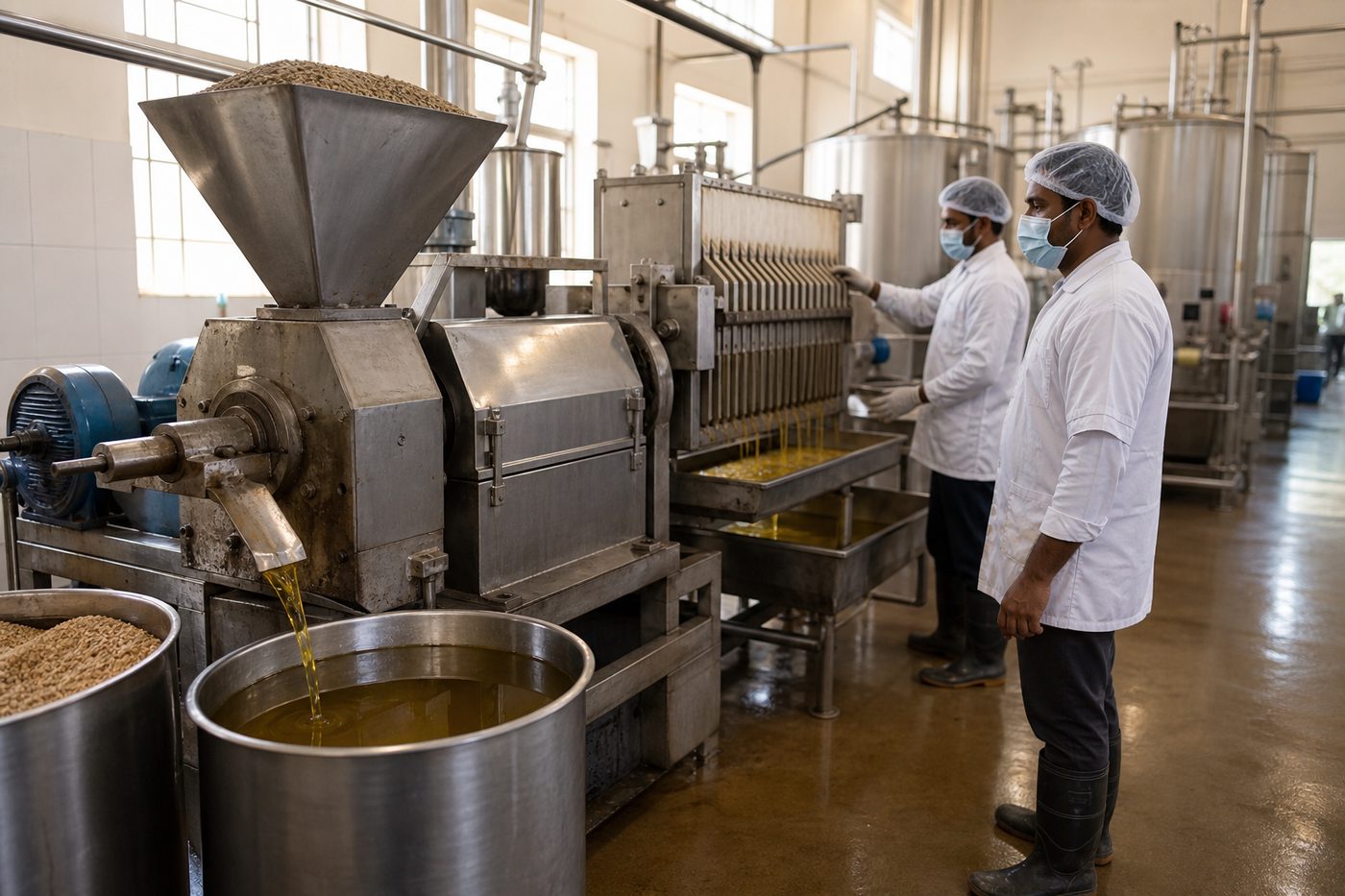
Castor, sesame, and coconut oils are cold-pressed or mechanically expelled from cleaned, graded seed or kernel across Gujarat, Rajasthan, and Kerala, then filtered and, for cosmetic-grade buyers, further refined for colour and odour. Buyers sourcing fixed oils should ask whether the supplier operates or contracts pressing directly, or purchases already-pressed bulk oil from smaller units — the latter carries higher batch-to-batch variability risk.
Neem, Karanja, and Kalonji Grade Differentiation
Neem, karanja, and kalonji oils exist in both cold-pressed cosmetic-grade and solvent-extracted agricultural-grade forms. Buyers requiring cosmetic-grade material should confirm extraction method explicitly and request residual-solvent testing where solvent extraction is used, since the two grades carry meaningfully different price points and cannot be substituted for each other in a formulated product.
Sneha Kalpana: How Genuine Medicated Taila Is Made
Classical Ayurvedic medicated Taila is prepared through Sneha Kalpana — a multi-stage process infusing a fixed-oil base (typically sesame or coconut) with herbal decoctions (Kashaya) and pastes (Kalka) through repeated, defined heating cycles until the herbal principles transfer into the oil matrix. This process takes real time and a real AYUSH GMP (Schedule T)-licensed facility; buyers should be skeptical of suppliers who can produce large medicated Taila volumes on very short lead times, since genuine Sneha Kalpana batches do not scale instantly.
Understanding the Supply Chain: Who You Are Actually Buying From
Comparison table
Swipe →
Data table — swipe horizontally on small screens
| Supply Chain Node | Role | Buyer Implication |
|---|---|---|
| Oilseed processors / cold-press units | Press and filter their own seed/kernel supply, especially castor, sesame, coconut | Best for traceable volume; verify IEC and FSSAI directly |
| AYUSH-licensed Ayurvedic pharmacies | Prepare medicated Taila through documented Sneha Kalpana process | Verify AYUSH GMP (Schedule T) licence directly; request batch manufacturing record |
| Bought-oil traders | Purchase pressed oil from multiple small units and blend/resell | Quality varies; require lot-specific Certificate of Analysis, not a generic sample |
| Merchant exporters | Source from multiple manufacturers/regions; manage export documentation | Best for multi-category programmes; single accountable counterparty |
| Broker agents | Connect buyers and sellers; may not hold export licence or manufacturing facility | Verify who holds IEC/AYUSH GMP/FSSAI and receives payment |
The Buyer's Sourcing Sequence: RFQ to FCL
Export Tip
The following procurement sequence is the workflow Altus Exports recommends for international buyers entering or restructuring Indian herbal oil supply. Adapt step durations to your category — Ayurvedic medicated Taila moves slower and in smaller quantities than commodity castor, sesame, or coconut oil.
Step 1: Define Your Specification Document
Create a one-page specification sheet covering botanical name, extraction or infusion method, purity parameters, packaging, volume, certifications, and Incoterms — using the fields in the Product Categories / Variants table above. Attach your intended end-use (cosmetic, food/nutraceutical, or Ayurvedic wellness) so suppliers understand which compliance lane and documentation standard applies.
Step 2: Build a Supplier Long List
Identify 8–15 potential suppliers through AYUSH- and FSSAI-registered manufacturer listings, trade show contacts (see Trade Shows for Herbal Oil Exporters), import shipment data under HS 1515/1513/3004/3304-3305, industry referrals, B2B platforms, and global sourcing partners like Altus Exports. For fixed-oil buyers, include Gujarat, Rajasthan, and Kerala processors and established merchant exporters. For medicated Taila buyers, include Kerala and other AYUSH GMP-licensed pharmacies with direct export experience.
Step 3: Write a Structured RFQ
- Request FOB price in USD per kg at stated packaging specification.
- Request CIF price only if you want supplier-arranged freight — compare against your own forwarder rates.
- Ask for IEC number and, where applicable, AYUSH GMP (Schedule T) licence number or FSSAI licence number in the RFQ response.
- Ask for three reference buyers in your region or adjacent markets with contact permission.
- Specify sample quantity needed (50–200 g for medicated Taila; 250 g–1 kg for bulk fixed oils) and who pays courier cost.
Send your specification document to the long list with a standard RFQ template requesting: unit price (FOB and/or CIF), MOQ, lead time, sample availability, certifications held, export history to your market, payment terms, and IEC/AYUSH GMP/FSSAI numbers as applicable. Set a response deadline of 10–14 business days. RFQs that specify Certificate of Analysis requirements — 'sample must include fatty acid profile, acid value, peroxide value, iodine value, and saponification value matched against a stated reference range' — filter unqualified responders quickly.
Step 4: Audit the Supplier Before Any Payment
- Verify IEC status via DGFT records, not just a supplier-provided certificate scan.
- Verify AYUSH GMP (Schedule T) licence status for any medicated Taila supplier, matching the declared manufacturing facility address — do not accept a certificate for a different unit than the one actually producing your order.
- Verify FSSAI licence status where the product is food or nutraceutical-grade, matching the declared processing facility address.
- Request last three shipping bills or bill of lading copies for shipments to your region or a comparable market.
- Check reference buyers — one phone call reveals more than ten email exchanges.
- For medicated Taila: ask for the batch manufacturing record showing Sneha Kalpana process steps and cycle duration, not just a finished-product certificate.
- For organic or wild-harvest claims: verify certification body, scope, and validity period independently.
- Cross-check exporter name against import shipment data — do they actually ship, or only quote?
This is the single highest-leverage verification step in Indian herbal oil sourcing. Before sampling, audit the top five RFQ responders through documentary and reference checks — this eliminates operators who quote attractively but cannot execute or export legitimately.
Step 5: Sample and Require Third-Party Lab Verification
- Confirm the fatty acid profile identifies the correct botanical source, not a cheaper substitute or dilution blend.
- Check key chemical markers against known reference ranges (acid value, peroxide value, iodine value, saponification value for fixed oils; microbial limits for medicated Taila).
- Screen for synthetic adulterants, mineral-oil dilution, or cheaper base-oil substitution that would not appear in a genuinely pure herbal oil.
- For medicated Taila: request microbial testing (total plate count, yeast/mould, pathogen screening) alongside the standard Certificate of Analysis panel.
- Evaluate colour, aroma, and texture side-by-side across at least three suppliers — relative ranking matters more than a single absolute score.
- Retain the approved sample as your reference standard for every future bulk-lot comparison.
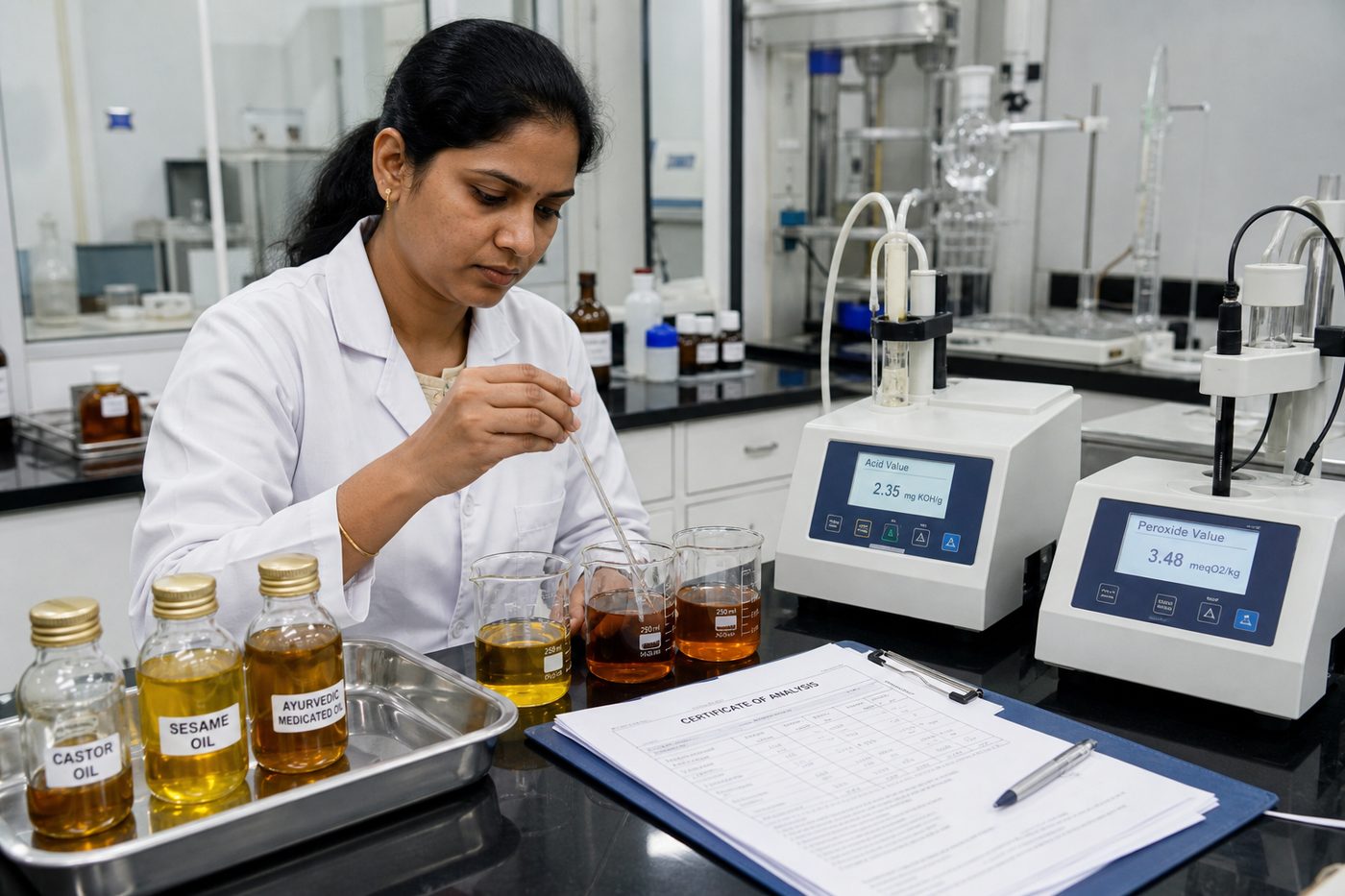
Request pre-shipment samples from your shortlisted suppliers, not retain samples from a prior season or crop year. Every sample should arrive with a Certificate of Analysis, and buyers should independently verify critical samples through a third-party laboratory rather than relying solely on the supplier's in-house report, particularly for oils with a history of adulteration risk such as castor, sesame, and premium-priced medicated Taila.
Step 6: Place a Trial Order
Place a trial order with your top one or two lab-verified suppliers. Trial size: 200 kg–1 MT for commodity castor, sesame, or coconut oil; 50–200 kg for cosmetic-grade specialty oils and Ayurvedic medicated Taila given their higher per-kilogram value and batch-cycle constraints. Trial orders should specify that the bulk lot must test within agreed tolerance of the approved reference sample, with a quality claim clause covering replacement or refund at supplier cost if bulk testing falls outside tolerance.
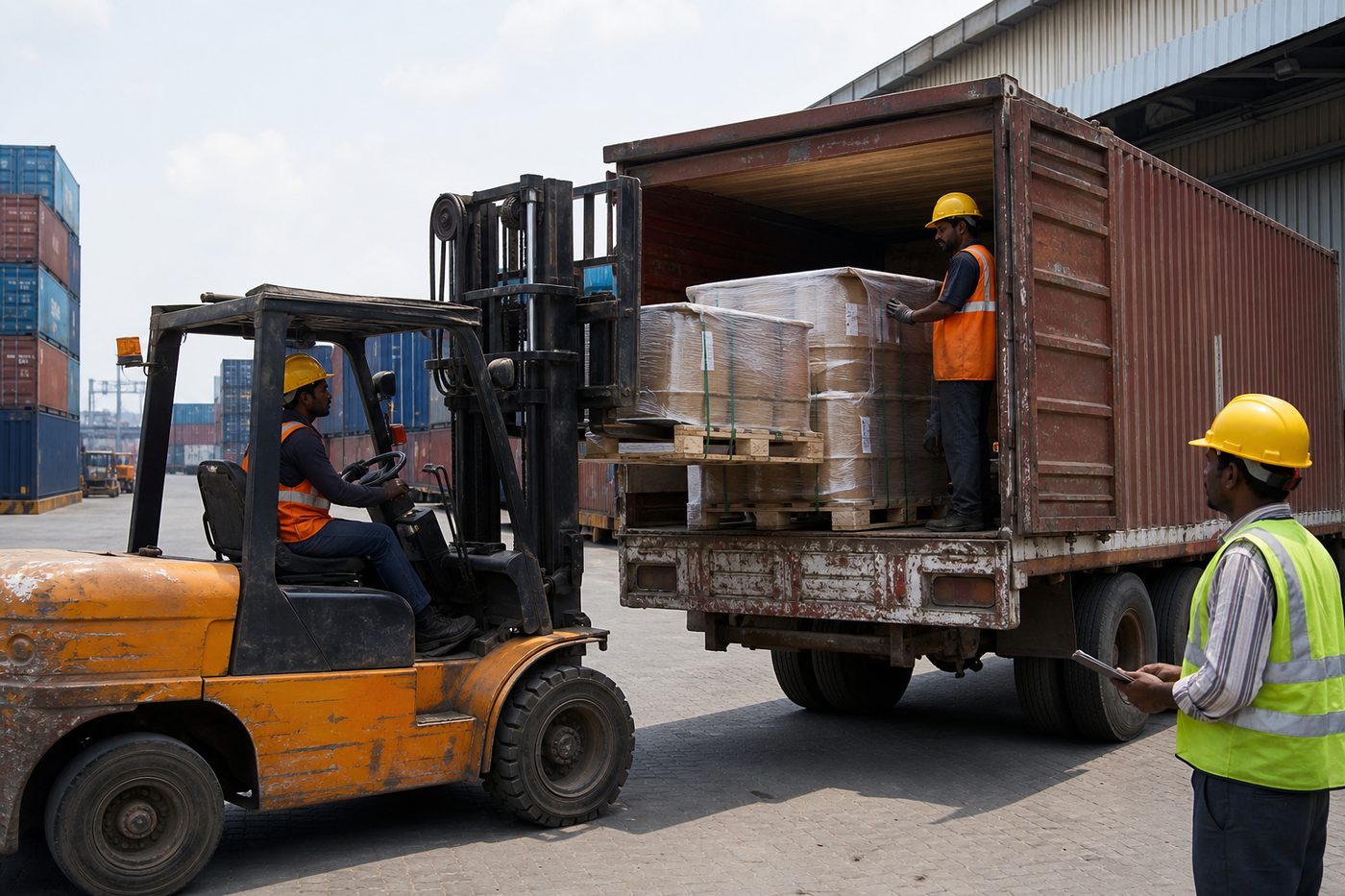
Step 7: Pre-Shipment Quality Control
- Request a pre-shipment sample from the actual bulk lot — not a fresh sample from a different batch.
- Verify packaging integrity and correct HS classification before booking freight.
- Inspect drum, bottle, or tin sealing integrity, especially for retail-path medicated Taila.
- Verify lot numbers on invoice, packing list, and Certificate of Analysis match exactly.
- For cosmetic or food-grade oils bound for the EU, UK, USA, or Canada: confirm any required cosmetic-notification or food-safety documentation is complete before sailing.
For trial and programme orders, implement pre-shipment QC before cargo sails. Options range from supplier-provided Certificate of Analysis as a minimum, to independent third-party laboratory testing and inspection for regulated end-uses (cosmetic-notification-bound, food-grade, or therapeutic-claim shipments).
Step 8: Shipping, Customs, and Receipt
Coordinate with your customs broker before cargo sails. Confirm HS heading classification (1515/1513/3004.90/3304-3305), certificate of origin, and any cosmetic-notification, food-safety, or Ayurvedic-registration documentation your destination requires. On receipt, test a representative sample from the landed shipment before accepting into inventory — document any deviation from trial quality immediately.
Step 9: Scale to Full Container Load (FCL) Programmes
Convert successful trial suppliers into quarterly or annual programme contracts with defined volume, pricing mechanism (fixed or crop-cycle-indexed for castor and sesame), quality tolerances, and payment terms. Review supplier performance every six months on: Certificate of Analysis consistency, documentation accuracy, lead time reliability, and communication responsiveness. Maintain a backup supplier for every programme category, particularly castor given its crop-cycle price sensitivity.
Pricing Analysis
Buyer Tip
Indian herbal oil FOB pricing follows crop-year seed/kernel yield (especially for castor and sesame), currency movement, packaging-input costs, and destination-specific willingness to pay for AYUSH documentation and cosmetic-grade purity. Buyers who benchmark against Gujarat/Rajasthan crop bulletins and competing-origin pricing avoid overpaying — and avoid underpaying to the point where suppliers cut purity or dilute product to protect margin.
Indicative FOB Price Benchmarks for Buyer Negotiation
Swipe →
Data table — swipe horizontally on small screens
| Category | Indicative FOB (USD/kg) | Price Drivers | Negotiation Leverage |
|---|---|---|---|
| Castor oil, crude/first-pressed | $1.20–$2.00 | Gujarat crop yield; global industrial-chemical demand | Crop-cycle timing; large-tender volume commitment |
| Castor oil, refined/cosmetic-grade | $1.80–$2.80 | Refining and colour/odour specification | Multi-year programme offer; consistent volume |
| Sesame oil, cold-pressed | $2.50–$4.50 | Seed procurement cost; extraction yield | Annual contract; multi-season commitment |
| Coconut oil, virgin | $3.00–$4.50 | Kernel cost; virgin-grade processing premium | Pre-season booking; exclusive-region relationship |
| Neem, kalonji, almond oils (cosmetic-grade) | $4.00–$25.00 | Raw material scarcity; niche cultivation area; extraction method | Pre-season commitment; multi-year exclusivity |
| Ayurvedic medicated Taila (Dhanwantharam, Ksheerabala, Mahanarayan, Brahmi, Bhringraj, Amla) | $8.00–$40.00 | Herb complexity; AYUSH GMP overhead; batch-cycle duration | Long-term allocation agreement; multi-quarter forecast sharing |
Incoterms from the Buyer's Side
FOB (Free on Board): Buyer arranges and pays ocean freight, insurance, and destination charges. Best when you have established freight forwarder relationships and want cost transparency. Standard for US, German, and UK specialty and cosmetic-grade buyers.
CIF (Cost, Insurance, Freight): Supplier quotes all-in landed price to your port. Best for UAE, Singapore/ASEAN, and some diaspora-retail buyers who prefer single-price quotes. Always compare CIF against your own FOB plus freight calculation — suppliers sometimes embed freight margins of 5–15%.
EXW (Ex Works): Buyer collects from Indian oil mill, pressing unit, or AYUSH-licensed pharmacy. Rare in herbal oil trade; only for buyers with India logistics capability.
DDP (Delivered Duty Paid): Supplier delivers to your door including import duties. Avoid for first relationships — import duty complexity across cosmetic, food, and Ayurvedic-medicament headings makes this risky for both parties until trust is established.
Payment Terms: Buyer Risk Management
- First order: 30–50% advance, balance against bill of lading copy — or LC at sight.
- Trial order: LC at sight preferred over advance for unknown suppliers.
- Programme orders (established relationship): 20–30% advance, balance Net 30 against BL.
- Never pay 100% advance to an unaudited supplier — the most common first-time buyer mistake.
- LC at sight through a recognised bank is the standard risk-balanced instrument for herbal oil trade.
MOQ Analysis
Buyer Tip
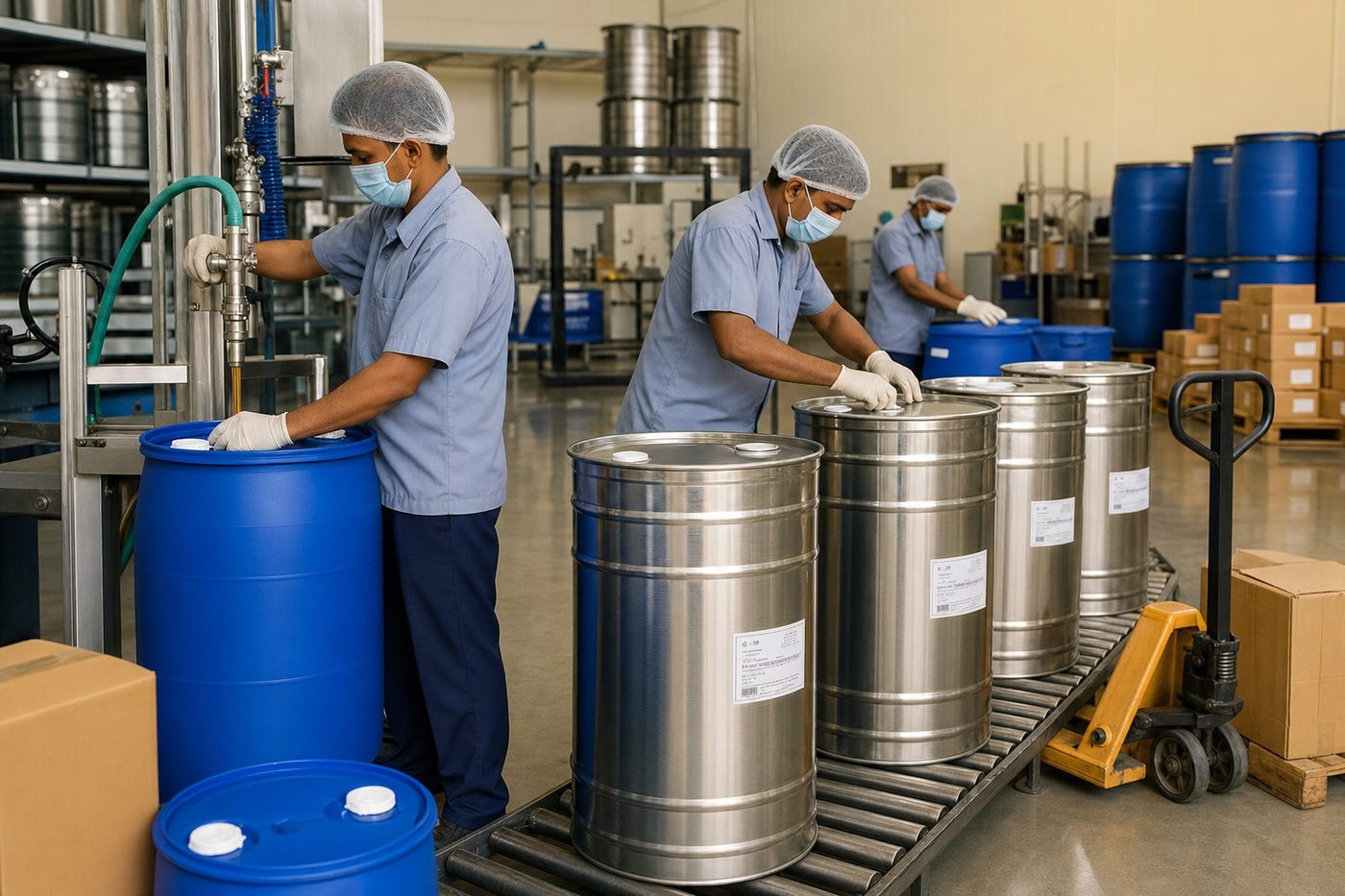
Buyers should specify packaging requirements in the RFQ, not discover drum or bottle specifications after production. Standard Indian export packaging (drums palletised with stretch wrap) is acceptable for most commodity buyers. Cosmetic and Ayurvedic wellness-path buyers may require food-grade or cosmetic-grade certified packaging materials, and diaspora-retail or spa-programme buyers should plan for retail-ready bottles with tamper-evident sealing.
MOQ Guidance by Category and Programme Stage
Swipe →
Data table — swipe horizontally on small screens
| Parameter | Commodity Fixed Oils | Cosmetic-Grade Specialty / Medicated Taila |
|---|---|---|
| Trial MOQ | 200 kg–1 MT | 50–200 kg |
| Programme MOQ | 20-foot FCL (drums) | 500 kg–5 MT per season |
| Packaging | 25/50/180–200 kg drums, HDPE or lined | PET/glass bottles or lined tins, 100 ml–5 kg |
| Lead time (order to sail) | 3–6 weeks | 6–10 weeks (AYUSH batch-cycle dependent for medicated Taila) |
Packaging Standards
Export Tip
Packaging Standards for Buyer Specification
Swipe →
Data table — swipe horizontally on small screens
| Market Tier | Standard Packaging | Unit Size | Key Requirement |
|---|---|---|---|
| Commodity fixed oils | HDPE, GI, or epoxy-lined drums | 25 kg / 50 kg / 180–200 kg | Leak-proof sealing; correct HS classification |
| Cosmetic-grade specialty oils | PET/HDPE jerry cans or lined drums with lot coding | 5–50 kg | Fatty acid profile and Certificate of Analysis per lot |
| Ayurvedic medicated Taila / retail-path buyers | PET/glass retail bottles or small lined tins, tamper-evident sealing | 100 ml–5 kg | AYUSH GMP batch documentation; lot-level traceability labelling |
| Re-export / blending programmes | Drums with consistent net weight for onward distribution | 25 kg / 50 kg | Consistent fill weight and batch documentation |
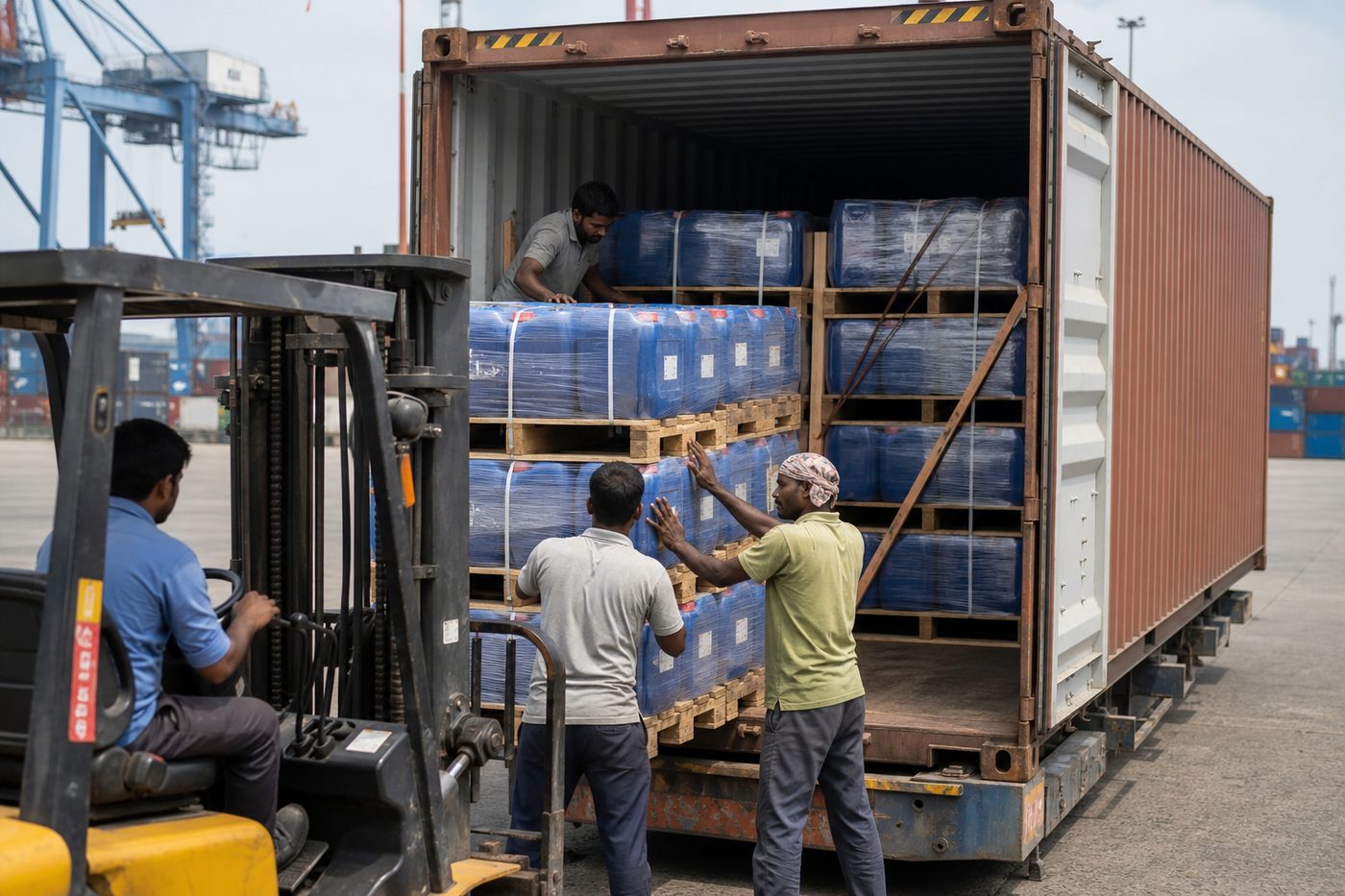
Container Loading Details
Export Tip
Container Loading Benchmarks for Buyer Planning
Swipe →
Data table — swipe horizontally on small screens
| Container Type | Approx. Net Weight | Approx. Drum/Unit Count | Buyer Notes |
|---|---|---|---|
| 20-foot FCL (180–200 kg drums) | ~14–17 MT | ~75–90 drums | Standard for commodity castor/sesame/coconut programme orders |
| 20-foot FCL (50 kg drums) | about 12–16 MT (indicative) | ~250–320 drums | Common for bulk fixed-oil and blending-oriented orders |
| LCL consolidation (25 kg drums) | 500 kg–5 MT | Palletised drums | Recommended for first-time trial and cosmetic-grade specialty buyers |
| Retail-packed cartons (medicated Taila) | 1–10 MT depending on bottle size | Cartoned and palletised retail units | Standard for diaspora-retail and wellness-brand trial and programme lots |
Shipping Methods
Export Tip
Coordinate shipping method with your customs broker before cargo sails. Confirm HS heading classification, certificate of origin, and cosmetic-notification or food-safety documentation for the destination — a frequent oversight that strands cargo at port when overlooked until sailing week.
Comparison table
Swipe →
Data table — swipe horizontally on small screens
| Route | Primary Indian Load Port | Typical Transit | Buyer Action |
|---|---|---|---|
| India to USA | Nhava Sheva / Mundra | 25–40 days | Confirm MoCRA cosmetic facility registration or FDA food facility registration lead time with broker |
| India to Germany/EU | Nhava Sheva / Mundra | 26–35 days | Confirm EU Responsible Person coverage and CPNP notification are filed before vessel departure |
| India to UAE | Mundra / Kandla / Nhava Sheva | 10–15 days | Shortest major lane; useful for re-export or diaspora-retail trial programmes |
| India to Singapore/ASEAN | Chennai / Kochi / Nhava Sheva | 14–22 days | Common for regional trading and re-export consolidation |
| India to Japan/Australia/Canada | Chennai / Nhava Sheva / Mundra | 20–38 days | Plan for strict purity documentation review and, for Australia, biosecurity clearance |
Certifications
Compliance Notes
Compliance requirements vary sharply by destination and end-use. Buyers must specify certification needs in RFQs and verify certificates independently, not rely on supplier claims.
Comparison table
Swipe →
Data table — swipe horizontally on small screens
| Destination / Use Case | Key Compliance Requirements | Buyer Action |
|---|---|---|
| USA (cosmetic, food, nutraceutical) | MoCRA facility registration for cosmetic-labelled products; FDA food facility registration for edible-grade oils | Confirm supplier facility documentation status where relevant; request Certificate of Analysis discipline |
| Germany / EU (cosmetic) | CPNP notification via an EU Responsible Person; safety assessment for cosmetic-labelled oils | Verify Responsible Person coverage for the specific product before shipment |
| UK (cosmetic) | UK SCPN notification, distinct from EU CPNP | Request full Certificate of Analysis plus UK-specific notification documentation |
| UAE / Singapore/ASEAN (re-export, diaspora retail) | Standard import documentation; growing expectation of AYUSH GMP proof for Ayurvedic-labelled products | Confirm AYUSH GMP licence and batch record for medicated Taila before scaling volume |
| Japan | Strictest purity and consistency expectations for cosmetic raw materials | Only source from suppliers with documented repeat-lot Certificate of Analysis consistency |
| Australia / Canada | Biosecurity import permits (Australia); Cosmetic Notification Form (Canada) for cosmetic-labelled imports | Confirm import permit or notification filing lead time before committing to a sailing date |
Import Duties: General Guidance
Herbal oil import duties vary by country, trade agreement, and specific HS heading. Many destinations apply low or nil MFN tariffs on bulk fixed vegetable oils under HS 1515/1513, but finished cosmetic preparations (3304/3305) and medicaments (3004.90) can carry materially different tariff treatment, and VAT/GST applies at different stages regardless of tariff rate. Buyers should confirm current duty rates with their customs broker rather than relying on generalised figures, and request certificate of origin in the appropriate format if a bilateral or preferential agreement applies to their country.
Buyer Requirements
Buyer Requirements
- Botanical name and extraction/infusion method stated on every quote (species, cold-pressed/expeller-pressed/Sneha Kalpana-infused).
- Certificate of Analysis approval recorded against a sealed reference sample retained by both parties.
- Destination compliance notes (cosmetic notification, food-safety registration, AYUSH GMP proof) agreed before production.
- Payment terms and inspection windows written into the proforma before shipment.
- Microbial testing results confirmed for any medicated Taila before bulk-lot approval.
Before you fund a trial shipment, require IEC and, as applicable, AYUSH GMP or FSSAI licence copies, lab-tested reference samples retained by both sides, lot Certificate of Analysis, cosmetic-notification or food-safety documentation as applicable, and an Incoterm sheet with MOQ and lead time.
Country-wise Opportunities
Market Snapshot
- USA buyers: Split sourcing — castor and sesame for cosmetic/industrial volume; neem, kalonji, and Ayurvedic Taila for wellness-brand retail; confirm MoCRA-ready documentation for cosmetic resale.
- Germany/EU buyers: Prioritise CPNP-ready cosmetic documentation; adulterant and dilution screening is non-negotiable; plan for EU-language retail packaging in later programme phases.
- UK buyers: Source neem, castor, coconut, and almond with organic certification for wellness retail; confirm UK SCPN cosmetic notification separately from EU CPNP.
- UAE/Singapore-ASEAN buyers: Source Ayurvedic hair/massage oils and medicated Taila for diaspora-retail and re-export; benchmark against regional trading-hub pricing; build relationships with 2–3 exporters for supply security.
- Japan/Australia/Canada buyers: Japan buyers should demand repeat-lot Certificate of Analysis consistency before scaling; Australia buyers should confirm biosecurity import permit lead time; Canada buyers should file the Cosmetic Notification Form ahead of first shipment.
Your sourcing strategy should align with your market's compliance lane and product expectations. The following notes complement Best Countries for Indian Herbal Oil Exports from the buyer's perspective.
Expert Insight: Procurement Principles from Altus Exports
Expert Insight Box
Sourcing Checklist
Checklist
Buyer Checklist
Checklist
Exporter Checklist
Checklist

Compliance Checklist
Checklist
Compliance Notes
Common Buyer Mistakes
Common Mistakes Box
- Vague RFQ without botanical name or purity specification — Solution: Use the specification template in this guide for every enquiry.
- Paying 100% advance to an unaudited supplier — Solution: LC at sight or maximum 30% advance with balance against BL.
- Accepting a supplier's in-house Certificate of Analysis without independent verification on critical lots — Solution: Commission third-party lab testing on trial and first programme shipments.
- Skipping IEC and AYUSH GMP/FSSAI verification — Solution: Documentary check before sampling, not after trial failure.
- Accepting retain samples instead of harvest-linked or lot-specific pre-shipment samples — Solution: Contract clause requiring bulk-lot sample approval before sailing.
- Trusting an AYUSH GMP claim without checking the batch manufacturing record — Solution: Request Sneha Kalpana process documentation, not just a finished-product label claim.
- Labelling medicated Taila with therapeutic claims in a market with no traditional-medicine registration pathway — Solution: Reposition marketing language to a wellness/cosmetic frame appropriate to the destination.
- Choosing supplier on lowest FOB alone — Solution: Weight Certificate of Analysis consistency, documentation reliability, and price equally.
- No trial order before container commitment — Solution: 200 kg–1 MT trial for commodity fixed oils; 50–200 kg for medicated Taila and cosmetic specialty oils.
- Managing multi-category supply without coordination — Solution: Use a merchant exporter or product sourcing company for multi-category programmes.
- Not specifying Incoterms clearly — Solution: State FOB port or CIF destination port explicitly in RFQ and contract.
- Failing to plan for crop-cycle price volatility on castor and sesame — Solution: Discuss indexed or crop-cycle-linked pricing mechanisms upfront.
Expert Insight: The Cost of Skipping Independent Verification
Expert Insight Box
The buyer who loses money on Indian herbal oils almost never lost it on price. They lost it on verification — paying before checking AYUSH GMP or FSSAI credentials, scaling before third-party lab testing, or trusting a supplier's in-house purity claim on a category with known adulteration or dilution risk. Procurement discipline, particularly independent lab verification on castor, sesame, and premium medicated Taila, is cheaper than a rejected or reworked shipment. We recommend budgeting for third-party lab confirmation on every new supplier relationship's first two shipments, even when the supplier's own documentation looks complete.
Future Market Trends
Key Statistics
Through 2030, buyer-side sourcing from India will be shaped by rising Certificate of Analysis and traceability expectations across cosmetic, nutraceutical, and Ayurvedic wellness supply chains, growing cosmetic-notification and food-safety documentation demands from EU, US, UK, and Canadian brand-side compliance teams, sustained Gulf and ASEAN diaspora-retail demand for genuinely AYUSH GMP-documented medicated Taila, and expanding organic and cold-pressed positioning rewarding buyers who invest in certified, traceable Indian supply relationships.
Buyers who build direct verification competency — IEC/AYUSH GMP/FSSAI checks, independent lab testing, and crop-cycle pricing literacy — will source more reliably and at better terms than buyers who rely purely on supplier marketing claims. Multi-category programmes spanning fixed oils, cosmetic specialty oils, and medicated Taila will increasingly favour a single accountable merchant exporter relationship over fragmented direct-manufacturer management as documentation and compliance complexity rises.
Conclusion
- Importers: Start with the specification template and RFQ process in this guide before contacting suppliers.
- Review Best Countries for Indian Herbal Oil Exports for market-grade alignment and Top Herbal Oil Products Exported from India for product depth.
- Use Herbal Oil Export Documentation Checklist to understand what documents your supplier must provide.
- Explore Find International Buyers for Herbal Oils if you are building a two-way trade relationship.
- For organic and Ayurvedic-grade positioning, see Organic & Ayurvedic Herbal Oil Export Opportunities.
- For registration credentials your supplier should hold, see AYUSH/FSSAI Registration Benefits for Herbal Oil Exporters.
- Contact Altus via export products from India to initiate a structured sourcing engagement.
Sourcing herbal oils directly from India is one of the highest-opportunity procurement decisions an importer, distributor, or wellness-brand procurement team can make — if the process is structured. Define specifications precisely. Issue RFQs to AYUSH/FSSAI-verified manufacturers. Require Certificate of Analysis testing against a sealed reference sample, plus microbial testing and batch-record verification for medicated Taila. Execute trial orders with quality claim clauses. Implement pre-shipment QC and correct HS classification checks. Negotiate Incoterms and payment terms that balance risk. Scale to full container loads through programmes, not spot deals.
India's herbal oil supply — from Gujarat castor oil powering global cosmetic and industrial-chemical manufacturing to Kerala's classical Ayurvedic Taila gracing wellness-brand shelves worldwide — rewards buyers who engage as verification-minded partners. Altus Exports supports international buyers through global sourcing partner, merchant exporter, and product sourcing company services across the herbal & ayurvedic products category. Share your botanical requirements, volume, destination market, and certification needs — we match verified Indian supply and coordinate the procurement workflow end to end.