
How to Export Herbal Oils from India: Complete Guide for Importers & Exporters
By Saurabh Mittal, Founder, Altus Exports
A complete operational guide on how to export herbal oils from India — registration through IEC, AYUSH licensing for medicated Taila, and FSSAI for edible-grade oils, HS 1515/1513/3004.90 classification, fatty acid profile and physicochemical quality documentation, HDPE and epoxy-lined drum packaging, FCL/LCL logistics from Mundra, Kandla, Nhava Sheva, Chennai, and Kochi, and the ten-step process that gets a first container of neem, castor, sesame, coconut, or Ayurvedic medicated oil from an Indian cluster to a buyer's warehouse without customs delay. Includes pricing, MOQ, and expert insight from Altus Exports.
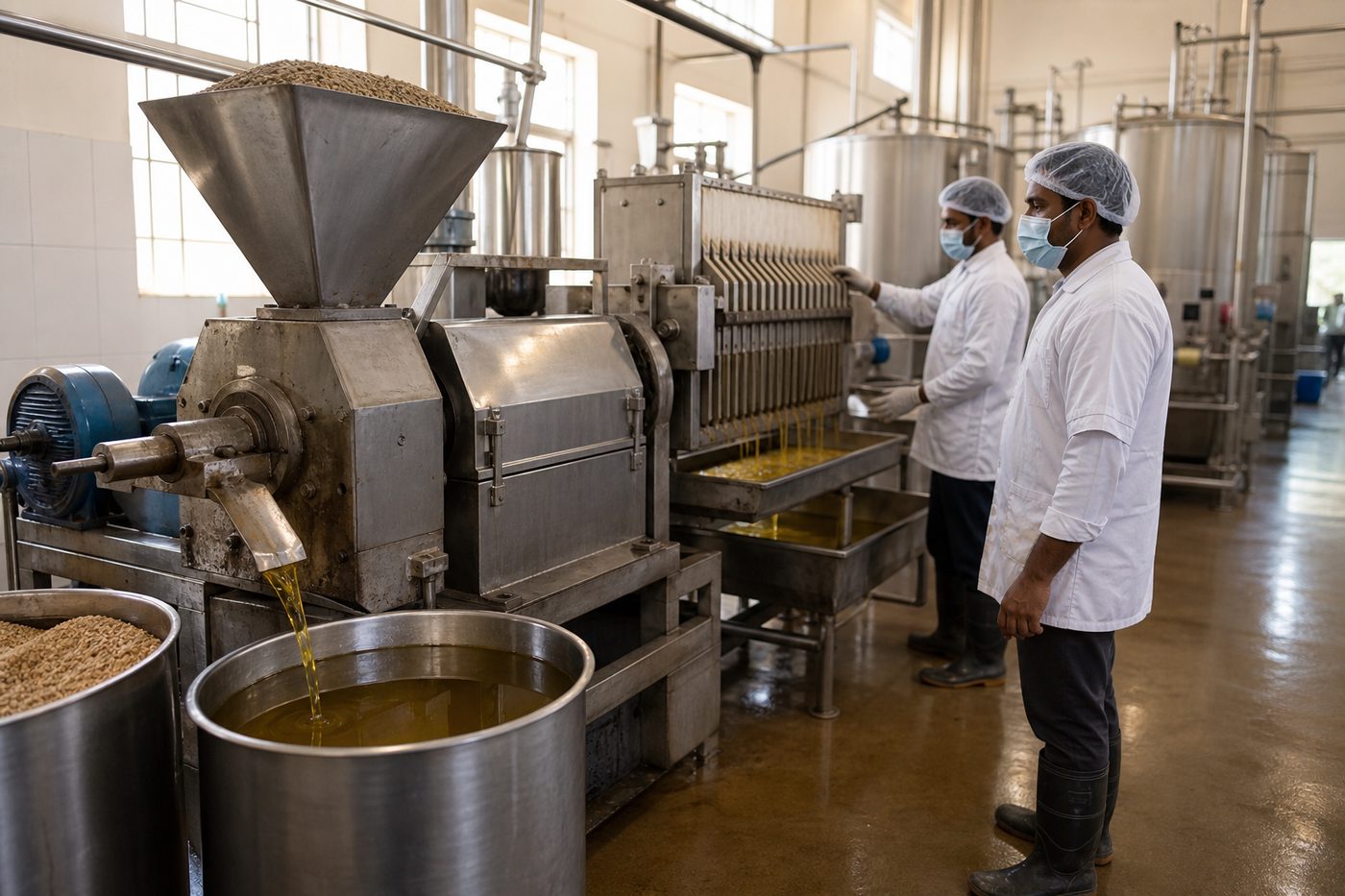
India is one of the world's most diverse origins for herbal oils, spanning two distinct but related product families: fixed vegetable oils pressed or solvent-extracted from seeds — neem, castor, sesame, coconut, sweet almond, kalonji (black seed), flaxseed/linseed, and karanja — and Ayurvedic medicated or infused oils known as Taila, produced by simmering herbs and botanicals in a carrier oil base under classical formulation methods. Bhringraj, Amla, Brahmi, Mahanarayan, Dhanwantharam, Ksheerabala, and Ashwagandha oil are among the most widely exported medicated oils, alongside a broad category of herbal massage oils blended for wellness and spa use. Together these two families form a herbal oils export cluster with genuinely different regulatory paths, quality documents, and buyer bases, even though both are frequently marketed to the same wellness, personal-care, and Ayurvedic retail channels abroad.
This guide is built around the export PROCESS: how a first-time or scaling exporter sequences registration, sourcing, quality testing, packaging, and shipment so that a first consignment clears customs cleanly and a repeat buyer relationship follows. It intentionally does not attempt to rank every herbal oil SKU or every destination country in exhaustive depth — those angles are covered in dedicated companion guides, including top herbal oil products exported from India for oil-by-oil specifications and pricing, and best countries for Indian herbal oil exports for market selection, both linked throughout this article and in the conclusion.
Altus Exports operates as a merchant exporter and global sourcing partner for herbal and Ayurvedic oils from India, connecting international buyers, distributors, and procurement teams with verified pressing units, Ayurvedic Taila manufacturers, and packers while managing documentation, testing, and logistics end to end. This guide reflects the sequence we use with clients bringing their first neem, castor, sesame, coconut, or medicated Taila container to market, and it applies equally whether you are an importer evaluating India as a sourcing origin or an Indian producer considering the merchant-exporter route.
Key Takeaways
Summary Box
Executive Summary
Summary Box
Exporting herbal oils from India is a regulated, specification-driven process built on four pillars: legal registration that correctly matches the oil type (IEC for every exporter, AYUSH licensing for medicated Taila, FSSAI licensing for edible-grade fixed oils), verified sourcing from pressing units, oil mills, or Ayurvedic manufacturers with consistent quality-testing capability, export-grade packaging that protects light-, heat-, and oxygen-sensitive oils in transit, and documentation that satisfies both Indian customs and destination-market compliance expectations for wellness, personal-care, or pharmaceutical-adjacent end use.
This guide serves international buyers, importers, distributors, wholesalers, retail chains, and procurement teams evaluating India as a sourcing origin for herbal oils, as well as Indian producers and traders considering a merchant-exporter route to market. Companion articles cover product-by-product SKU depth, country-wise demand ranking, direct sourcing, AYUSH/FSSAI registration benefits, and a full documentation checklist — each is linked at the relevant step below and in the conclusion.

Market Size & Industry Overview
Key Statistics
The global herbal oils market spans wellness and spa product manufacturers, hair-care and personal-care brands, dietary and nutraceutical carrier-oil buyers, Ayurvedic and traditional-medicine distributors, and industrial or agrochemical-adjacent buyers of oils like neem and karanja. Published market-size figures for this category vary widely by methodology, and by whether a given estimate bundles fixed vegetable oils with medicated Ayurvedic Taila, cosmetic-finished hair oils, or industrial neem/castor derivatives — treat any single headline number as directional rather than an audited trade statistic, and always confirm scope before quoting a figure to a buyer or investor.
India's structural role in this market rests on genuine agro-climatic and manufacturing advantages: Gujarat's semi-arid tracts support the world's largest castor cultivation base; the Rajasthan-Madhya Pradesh-Uttar Pradesh belt grows sesame at scale for both edible and cosmetic-grade oil; Kerala's coconut groves feed a mature coconut oil milling industry that sits alongside a centuries-old Ayurvedic Taila manufacturing tradition; Andhra Pradesh and Telangana supply neem seed for cold-pressed neem oil; and Haridwar has emerged as a modern Ayurvedic pharmaceutical manufacturing hub working alongside Kerala's classical Ayurveda houses. This combination lets a single sourcing relationship span commodity fixed oils and specialty medicated oils.
Global Herbal Oils Market: Segment Overview (directional)
Swipe →
Data table — swipe horizontally on small screens
| Segment | Demand Driver | India's Export Role | Typical Buyer Type |
|---|---|---|---|
| Hair & Scalp Care | Traditional and clinical hair-oil formulations | Coconut, sesame, Bhringraj, Amla oil supply | Personal-care brands, private-label formulators |
| Ayurvedic Wellness & Massage | Panchakarma, spa, and home-massage use | Mahanarayan, Dhanwantharam, Ksheerabala, herbal massage oils | Ayurvedic distributors, spa and wellness chains |
| Skin & Topical Care | Moisturizing, carrier-oil, and topical-relief use | Sweet almond, sesame, coconut, castor oil | Cosmetics manufacturers, natural skincare brands |
| Agri-Input & Botanical Pesticide | Neem-based biopesticide and agri-input formulation | Neem oil, karanja oil | Agrochemical formulators, biopesticide manufacturers |
| Nutraceutical Carrier & Functional Oils | Omega-3/ALA supplementation, functional food use | Flaxseed/linseed oil, kalonji oil | Nutraceutical brands, functional-food manufacturers |
| Industrial & Specialty Chemical | Lubricants, coatings, surfactant feedstock | Castor oil (industrial fixed-oil grade) | Chemical processors, specialty industrial buyers |
Export Statistics
Key Statistics
India's herbal oils export basket is genuinely bifurcated in trade data terms: fixed vegetable oils clear under HS Chapter 15 (1515.30 castor, 1515.50 sesame, 1515.90 neem and other fixed oils, and Chapter 1513 for coconut oil), while medicated Ayurvedic Taila preparations typically clear under HS 3004.90 as Ayurvedic medicaments, and finished cosmetic-packed hair or massage oils may fall under HS 3304 or 3305 depending on labeling and marketed use. Reconfirm the exact eight-digit ITC-HS line for your specific SKU with a licensed CHA before filing a shipping bill — the same botanical oil can sit under two or three different headings depending on processing stage and packaging format.
Castor oil is India's largest single fixed-oil export line by value within this cluster, underpinned by Gujarat's dominant position in global castor seed cultivation, and it moves through both cosmetic/pharma-grade and larger industrial-grade channels. Sesame oil exports combine edible-grade demand from Middle Eastern and Asian buyers with cosmetic-grade demand from personal-care manufacturers. Coconut oil exports from Kerala and neighboring coastal states serve both edible and cosmetic buyers, while neem oil exports from the Andhra-Telangana belt serve agri-input and personal-care formulators. Medicated Ayurvedic Taila exports, though smaller in absolute tonnage, carry higher unit value and are growing on the back of expanding international interest in Ayurveda-branded wellness products.
Verified trade anchors (reconfirm against DGCI&S / WITS before RFQs): under HS 151530, India exported about USD 1,041.6 million / 701,614 MT of castor oil in CY2024 (China ~USD 504M; Netherlands ~USD 118M; USA ~USD 105M). Under HS 151550, India exported about USD 39.0 million / 11,255 MT of sesame oil in CY2024 (USA ~USD 10.1M). HS 151590 "other fixed vegetable fats and oils" totaled about USD 108.9 million in CY2024 but mixes herbal and non-herbal specialty oils — do not cite it as a pure herbal-oils total. Growth in the broader plant-oil and Ayurvedic wellness lanes is driven by natural personal-care reformulation, Gulf/ASEAN wellness retail, and agri-input demand for neem-based formulations. Exact year-on-year figures also fluctuate with monsoon-linked seed yield for castor, sesame, and neem.
India Herbal Oil Export Overview by Category (Indicative, 2025–2026)
Swipe →
Data table — swipe horizontally on small screens
| Category | Key Oils | Primary Production Belt | Primary Ports | Key Destination Markets |
|---|---|---|---|---|
| Fixed oils — castor | Castor oil (industrial and cosmetic/pharma grade) | Gujarat (Kalol, Mehsana, Deesa) | Mundra, Kandla | USA, EU, China, Southeast Asia |
| Fixed oils — sesame | Sesame (til) oil, cold-pressed and refined | Rajasthan, Madhya Pradesh, Uttar Pradesh | Mundra, Nhava Sheva | Middle East, EU, Japan, USA |
| Fixed oils — coconut | Coconut oil, virgin and refined grades | Kerala, Tamil Nadu | Kochi, Chennai | Middle East, USA, EU |
| Fixed oils — neem & other | Neem, kalonji, flaxseed, karanja, sweet almond | Andhra Pradesh, Telangana, MP, Rajasthan | Chennai, Nhava Sheva | USA, EU, agri-input buyers globally |
| Medicated Ayurvedic oils (Taila) | Bhringraj, Amla, Brahmi, Mahanarayan, Dhanwantharam, Ksheerabala, Ashwagandha | Kerala, Haridwar (Uttarakhand) | Kochi, Nhava Sheva | USA, EU, Gulf, Southeast Asia |
Import Statistics
Key Statistics
The United States is a significant importer of Indian fixed oils for personal-care manufacturing (castor, sesame, sweet almond) and a growing importer of Ayurvedic medicated oils through natural-products retail and direct-to-consumer wellness channels. FSSAI health certification and, where applicable, AYUSH licensing documentation are increasingly requested by US importers even though the primary US regulatory hooks are FDA cosmetic and dietary-supplement labeling rules rather than Indian domestic credentials, and buyers typically want fatty acid profile and physicochemical COAs before committing to a program.
The European Union — led by Germany, France, and the UK — imports fixed oils for cosmetics manufacturing under EU cosmetics regulation, with particular attention to pesticide residue data and, for edible-grade oils, aflatoxin and food-safety documentation. Gulf markets (UAE, Saudi Arabia) import sesame and coconut oil for edible use and a substantial volume of Ayurvedic medicated oils for wellness retail, generally with lighter documentation friction than the EU but increasing interest in halal-adjacent assurance for cosmetic-use oils. Southeast Asian markets import coconut and sesame oil at scale for both food and personal-care use, while Japan represents a smaller-volume, higher-price opportunity for well-documented specialty and medicated oils.
Top Import Markets for Indian Herbal Oils: Demand Profiles
Swipe →
Data table — swipe horizontally on small screens
| Market | Primary Oil Categories | Key Regulatory Framework | Certification Priority | Price Tier |
|---|---|---|---|---|
| USA | Castor, sesame, sweet almond, medicated Taila | FDA cosmetic/dietary-supplement labeling rules | Fatty acid profile COA; FSSAI health certificate; AYUSH documentation for medicated oils | Mid to high; premium for branded Ayurvedic oils |
| Germany / EU | Castor, sesame, coconut, neem | EU cosmetics regulation; pesticide residue limits | Fatty acid profile COA; pesticide residue report; REACH-style safety data | High; strictest documentation expectations |
| UAE / Gulf | Sesame, coconut, medicated Ayurvedic oils | Local ministry standards; halal-adjacent expectations | Fatty acid profile COA; AYUSH/FSSAI documentation; halal certification increasingly requested | Mid to high |
| Southeast Asia | Coconut, sesame oil | Local food-safety and cosmetics standards | Fatty acid profile COA; aflatoxin data for edible-grade oils | Mid; volume-driven |
| Japan | Medicated Ayurvedic oils, sesame, castor | Strict quality and consistency expectations | Fatty acid profile COA; precise lot documentation | Premium; highest unit prices for specialty medicated oils |
Product Categories / Variants
Summary Box
Herbal oils exported from India fall into two broad functional families with different buyers, price points, and MOQ economics. This guide covers the process that applies across both; for a botanical-by-botanical ranking with detailed specifications and FOB pricing by SKU, see our companion guide, top herbal oil products exported from India.
Fixed vegetable oils (neem, castor, sesame, coconut, sweet almond, kalonji, flaxseed/linseed, karanja) are pressed or solvent-extracted directly from seed and trade closer to a commodity, with pricing driven by seed cost, oil yield, and fatty acid profile. Ayurvedic medicated oils (Taila) — Bhringraj, Amla, Brahmi, Mahanarayan, Dhanwantharam, Ksheerabala, Ashwagandha oil, and general herbal massage oil blends — are prepared by infusing or simmering herbs in a carrier oil base under classical formulation ratios, and sit in a higher-value, lower-volume, specification-and-tradition-driven tier aimed at Ayurvedic and wellness retail buyers rather than industrial or generic cosmetic-ingredient buyers.
Herbal Oil Product Categories Exported from India (Overview)
Swipe →
Data table — swipe horizontally on small screens
| Category | Representative Oils | Typical Buyer | Relative Price Tier | HS Reference |
|---|---|---|---|---|
| Fixed oils — castor | Castor oil (cosmetic/pharma and industrial grade) | Chemical processors, cosmetics manufacturers | Commodity to mid, grade-dependent | 1515.30 |
| Fixed oils — sesame | Sesame (til) oil | Edible-oil importers, cosmetics manufacturers | Commodity / lower to mid | 1515.50 |
| Fixed oils — coconut | Virgin and refined coconut oil | Food importers, personal-care brands | Commodity / lower to mid | 1513 |
| Fixed oils — neem and other | Neem, kalonji, karanja, sweet almond | Agri-input formulators, nutraceutical and cosmetics brands | Mid | 1515.90 |
| Fixed oils — flaxseed/linseed | Flaxseed (linseed) oil | Nutraceutical and industrial buyers | Mid | 1515.11 / 1515.19 |
| Ayurvedic medicated oils (Taila) | Bhringraj, Amla, Brahmi, Mahanarayan, Dhanwantharam, Ksheerabala, Ashwagandha, herbal massage oils | Ayurvedic distributors, wellness retail brands | Mid to premium | 3004.90 (3304/3305 if cosmetic-packed) |
Manufacturing Overview
Export Tip
Herbal oil production in India runs from village-level cold-pressing (ghani) units to large integrated oil mills with in-house physicochemical laboratories, and — for medicated Taila — licensed Ayurvedic pharmaceutical manufacturing facilities operating under Good Manufacturing Practice principles specific to classical formulation. Understanding which cluster and which scale of producer matches your target oil and volume is a core sourcing decision, not a detail to leave to a trading intermediary without verification.
Gujarat: Castor Oil Heartland
Gujarat accounts for the overwhelming majority of India's castor seed cultivation, concentrated around Kalol, Mehsana, and Deesa, feeding a dense network of crushing units and refineries that produce both industrial-grade castor oil for chemical and lubricant applications and higher-purity cosmetic/pharma-grade castor oil for personal-care and Ayurvedic formulation. This scale gives Indian exporters structural cost and supply-continuity advantages in castor oil that few competing origins can match, though buyers should confirm which grade — industrial versus cosmetic/pharma — a given supplier is quoting, since the two serve entirely different end markets and price tiers.
Rajasthan, Madhya Pradesh, and Uttar Pradesh: Sesame Oil Belt
The sesame (til) growing and pressing belt spanning Rajasthan, Madhya Pradesh, and parts of Uttar Pradesh supplies both edible-grade and cosmetic-grade sesame oil, extracted through traditional cold-pressing (ghani) methods as well as modern expeller and solvent-extraction lines. Cold-pressed sesame oil retains a premium in Ayurvedic and natural-cosmetics channels, where buyers specifically request ghani-extracted, unrefined product with documented fatty acid profile rather than commodity-refined oil.
Kerala: Coconut Oil and Ayurvedic Taila Heritage
Kerala combines two distinct but complementary industries: a mature coconut oil milling sector supplying both edible and cosmetic-grade coconut oil from the state's dense coconut groves, and a centuries-old Ayurvedic Taila manufacturing tradition rooted in Kerala's classical Ayurveda hospitals and pharmacies. Kerala-manufactured medicated oils — Ksheerabala, Dhanwantharam, and various herbal massage oil blends — carry particular credibility with international buyers because of this heritage, and Kerala coconut oil often serves as the base carrier oil for Taila production in the same region.
Andhra Pradesh and Telangana: Neem Oil Cluster
Andhra Pradesh and Telangana anchor India's neem seed collection and cold-pressing infrastructure, supplying neem oil for both agri-input formulators producing botanical biopesticides and personal-care manufacturers using neem oil for its traditional skin and scalp applications. Neem oil is notably light- and heat-sensitive — its active bitter principles degrade with prolonged UV and heat exposure — making dark, cool storage and correctly matched packaging a genuine quality-preservation issue rather than a cosmetic packaging preference.
Haridwar and Kerala: Ayurvedic Pharmaceutical Manufacturing Base
Haridwar in Uttarakhand has grown into a major modern Ayurvedic pharmaceutical manufacturing hub, hosting large-scale licensed facilities producing medicated Taila — Bhringraj, Amla, Brahmi, Mahanarayan, and Ashwagandha oil among them — under AYUSH-regulated Good Manufacturing Practice, working alongside Kerala's classical Ayurveda manufacturing houses. Buyers sourcing medicated oils should confirm a manufacturer's specific AYUSH drug manufacturing licence and product-level formulation registration, since medicated oil claims and formulations are regulated products, not generically labeled herbal blends.
Step-by-Step Export Process for Herbal Oils from India
Export Tip
The following ten steps represent the operational sequence Altus Exports uses with first-time and scaling herbal oil exporters. Skipping or reordering steps — particularly registration and quality-testing setup — is the single most common cause of delayed first shipments in this trade.
Step 1: Obtain Import Export Code (IEC) from DGFT
An IEC is mandatory for filing any export shipping bill. Apply online through the DGFT portal with PAN, bank details, and address proof consistent with GST registration. Most clean applications process within a few working days. Keep the IEC record current — mismatched details block shipping bill filing later.
Step 2: Determine Whether AYUSH or FSSAI Licensing Applies
Any medicated Ayurvedic Taila oil — Bhringraj, Amla, Brahmi, Mahanarayan, Dhanwantharam, Ksheerabala, Ashwagandha, and similar formulated products — requires an AYUSH-regulated Ayurvedic drug manufacturing licence issued by the relevant State Licensing Authority, alongside product-specific formulation approval. Fixed vegetable oils sold for edible use (sesame, coconut, and in some cases sweet almond and flaxseed marketed as food-grade) require FSSAI licensing for the manufacturing or packing premises. Confirm which category your target oil and its intended end use fall into before assuming either registration is optional.
Step 3: Register with the Relevant Export Promotion Body
Depending on the specific oil, a relevant export promotion council registration (RCMC) can support export benefits and buyer credibility — Chemexcil is the traditional reference point specifically for castor oil when handled as an industrial fixed-oil chemical export, while most herbal and Ayurvedic-oriented herbal oil exporters lean primarily on their AYUSH and FSSAI credentials as the credibility signal buyers actually ask for. Confirm with your CHA or trade advisor which registration, if any, is expected for your specific oil and buyer profile.
Step 4: Identify and Verify Sourcing Partners
Match your target oil to the correct production cluster — Gujarat for castor, Rajasthan/MP/UP for sesame, Kerala for coconut and Ayurvedic Taila, Andhra Pradesh/Telangana for neem, and Haridwar or Kerala for AYUSH-licensed medicated oil manufacturing. Verify AYUSH licence (for medicated oils), FSSAI licence (for edible-grade oils), in-house or accredited third-party physicochemical testing capability, and prior export document history before committing to a supplier relationship.
Step 5: Develop Specification Sheets and COA Templates
Define each oil's specification before quoting: botanical name, extraction method (cold-pressed, expeller, solvent-extracted, or classical Taila infusion), key physicochemical parameters and acceptable ranges (acid value, peroxide value, iodine value, saponification value, refractive index, and fatty acid profile), and packaging format. A standardized COA template prevents ambiguity that surfaces as disputes after bulk shipment.
Step 6: Commission Lab Testing on Every Commercial Lot
Set up testing relationships with NABL-accredited or equivalent laboratories for fatty acid profile, acid value, peroxide value, iodine value, saponification value, and refractive index testing on fixed oils, plus microbial limit testing for medicated Taila and pesticide residue or aflatoxin testing for edible-grade oils bound for the EU or USA. Serious buyers will not proceed past sample stage without a lot-specific Certificate of Analysis — this is the document that substitutes for the trust a buyer cannot otherwise place in an unfamiliar overseas supplier.
Step 7: Manage Sample Requests and Buyer Evaluation
Send samples in small amber glass bottles (typically 50–200 ml) by courier, accompanied by the specification sheet, Certificate of Analysis, and a cover note describing intended application. Respond to buyer evaluation feedback quickly — the sample stage is where price, packaging, and documentation expectations get finalized before any trial order is placed.
Step 8: Prepare Export Documentation for Commercial Shipments
Commercial shipment documentation includes: commercial invoice with correct HS classification (1515.30/1515.50/1515.90/1513 for fixed oils, 3004.90 for medicated oils, 3304/3305 if cosmetic-packed); packing list with drum serial numbers and net/gross weights; shipping bill filed via ICEGATE; bill of lading or airway bill; Certificate of Origin; lot-specific fatty acid profile COA; FSSAI health certificate for edible-grade oils; and AYUSH-linked documentation for medicated Taila where the buyer's market requires it. For the full checklist, see herbal oil export documentation checklist.
Step 9: Confirm Incoterms, Packaging, and Container Loading
Agree the Incoterm (commonly FOB or CIF from Mundra, Kandla, Nhava Sheva, Chennai, or Kochi) with the buyer in writing, confirm drum packaging format (25 kg, 50 kg, or 180–200 kg HDPE, GI, or epoxy-lined drums) matched to the oil's chemical sensitivity, arrange nitrogen flushing for oxidation-prone oils such as flaxseed and neem, and brief your freight forwarder and CHA on load port and any upright-stowage or cool-storage instructions at least 48 hours before container gate-in.
Step 10: Coordinate Payment Terms and Post-Shipment Follow-Up
Confirm payment structure — advance against balance on documents, letter of credit, or open account for established relationships — before production begins, and share pre-alert documentation (invoice, packing list, COA, bill of lading copy, Certificate of Origin) with the buyer within 24 hours of vessel departure. Follow up after delivery to confirm oil condition and gather feedback for the next lot, and retain lot records for a minimum of three years to support any future quality inquiry.
Pricing Analysis
Buyer Tip
Herbal oil pricing in India is driven primarily by seed or raw-material cost, extraction method (cold-pressed versus expeller versus solvent-extracted, or classical Taila infusion ratio for medicated oils), fatty acid profile and purity grade, seasonal yield, and packaging and certification stack. Fixed oils like coconut and sesame trade closer to a commodity, with prices moving in step with seed harvest and edible-oil market cycles; castor sits in a distinct band between industrial and cosmetic/pharma grade; and Ayurvedic medicated Taila oils command the highest per-kilogram prices in this cluster, reflecting formulation complexity, herb sourcing, and brand-adjacent positioning.
FOB pricing quoted by Indian producers reflects cost at the load port; buyers must add ocean or air freight, insurance, destination duties, and any local re-testing costs to reach landed cost. The ranges below are indicative for commercial planning — actual quotes depend on specification, lot size, and market conditions at the time of order, and fixed oils in particular can move meaningfully between seasons depending on acreage and rainfall.
Indicative FOB Price Ranges for Indian Herbal Oils (2025–2026)
Swipe →
Data table — swipe horizontally on small screens
| Oil | Typical Specification Marker | Indicative FOB Range (USD/kg) | Key Price Driver |
|---|---|---|---|
| Castor Oil (industrial grade) | Acid value, viscosity, color | USD 1.4–2.2/kg | Global castor seed harvest; chemical-industry demand |
| Castor Oil (cosmetic/pharma grade) | Fatty acid profile, refractive index, color | USD 2.5–4.5/kg | Purity grade; cosmetic/pharma buyer demand |
| Sesame Oil (cold-pressed) | Fatty acid profile; unrefined vs. refined | USD 3.5–7/kg | Extraction method; edible vs. cosmetic grade |
| Coconut Oil (virgin) | Fatty acid profile; moisture content | USD 2.5–5/kg | Coconut harvest cycle; virgin vs. refined grade |
| Neem Oil (cold-pressed) | Fatty acid profile; bitter-principle retention | USD 3–6/kg | Seed yield; agri-input vs. cosmetic demand |
| Sweet Almond Oil | Fatty acid profile; refined vs. unrefined | USD 12–22/kg | Import-dependent raw almond cost; purity grade |
| Kalonji (Black Seed) Oil | Fatty acid profile; cold-pressed grade | USD 8–16/kg | Seed sourcing; extraction consistency |
| Flaxseed / Linseed Oil | Fatty acid profile; oxidation stability | USD 4–9/kg | Freshness; nitrogen-flush packaging premium |
| Karanja Oil | Fatty acid profile; industrial vs. cosmetic grade | USD 1.8–3/kg | Biodiesel/agri-input demand; seed availability |
| Ayurvedic Medicated Oils (Taila, e.g., Bhringraj, Amla, Brahmi) | Formulation ratio; herb sourcing; AYUSH batch documentation | USD 6–20+/kg | Formulation complexity; brand-adjacent positioning |
Expert Insight: Why the Acid Value Number Matters More Than the Botanical Name
Expert Insight Box
Saurabh Mittal, Founder of Altus Exports, treats a herbal oil price quote as incomplete unless it is paired with the physicochemical parameters that justify it. He advises new buyers to request the acid value, peroxide value, and fatty acid profile behind any FOB number before comparing quotes across suppliers, because two quotes at the same price per kilogram can represent very different oil quality and shelf stability once the Certificate of Analysis is reviewed.
He also flags seasonal timing as a pricing lever many first-time buyers ignore: castor, sesame, coconut, and neem oil prices move with the Gujarat, Rajasthan-MP-UP, Kerala, and Andhra-Telangana harvest calendars respectively, and buyers who lock indicative pricing and volume commitments ahead of the main pressing season generally secure better terms than those who negotiate only after the seed crop is already in.
MOQ Analysis
Buyer Tip
Minimum order quantities for herbal oils scale directly with category and processing complexity. High-volume fixed oils such as coconut, sesame, and castor can move in commercial quantities of 500 kg to several metric tonnes per lot, reflecting continuous milling capacity across their respective clusters. Mid-tier fixed oils such as neem, kalonji, and flaxseed typically see trial MOQs of 100–200 kg before buyers commit to larger repeat orders. Ayurvedic medicated Taila oils are frequently transacted in smaller drum quantities — often 25–100 kg per SKU — given formulation cost and typically lower per-order retail-channel demand relative to bulk fixed oils.
Sample evaluation almost always precedes any commercial commitment: 1–5 kg samples in sealed containers or amber glass are standard for buyer evaluation across all oil categories, regardless of eventual commercial lot size. Buyers should expect suppliers to require a signed specification and Certificate of Analysis review before releasing pricing for larger trial or commercial lots, particularly for medicated oils with formulation-dependent batch variability.
MOQ Guidelines for Indian Herbal Oil Programs
Swipe →
Data table — swipe horizontally on small screens
| Order Type | Typical MOQ | Applicable Oil Types | Shipment Mode |
|---|---|---|---|
| Evaluation sample | 1–5 kg | All categories | Air courier (sealed containers or amber glass) |
| Trial lot — fixed oils | 100–200 kg | Neem, kalonji, flaxseed, karanja, sweet almond | Air freight or LCL sea |
| Trial lot — medicated Taila | 25–100 kg per SKU | Bhringraj, Amla, Brahmi, Mahanarayan, Dhanwantharam, Ksheerabala, Ashwagandha | LCL sea or air for smaller lots |
| Commercial order — coconut/sesame/castor | 500 kg–5 MT+ | Coconut, sesame, castor oil | LCL or FCL sea |
| Commercial order — medicated oils | 200–500 kg blended across SKUs | Ayurvedic medicated Taila range | LCL sea |
| FCL program | 8–18 MT depending on drum density | High-volume fixed oils | 20ft or 40ft FCL from Mundra, Kandla, Nhava Sheva, or Kochi |
Packaging Standards
Export Tip
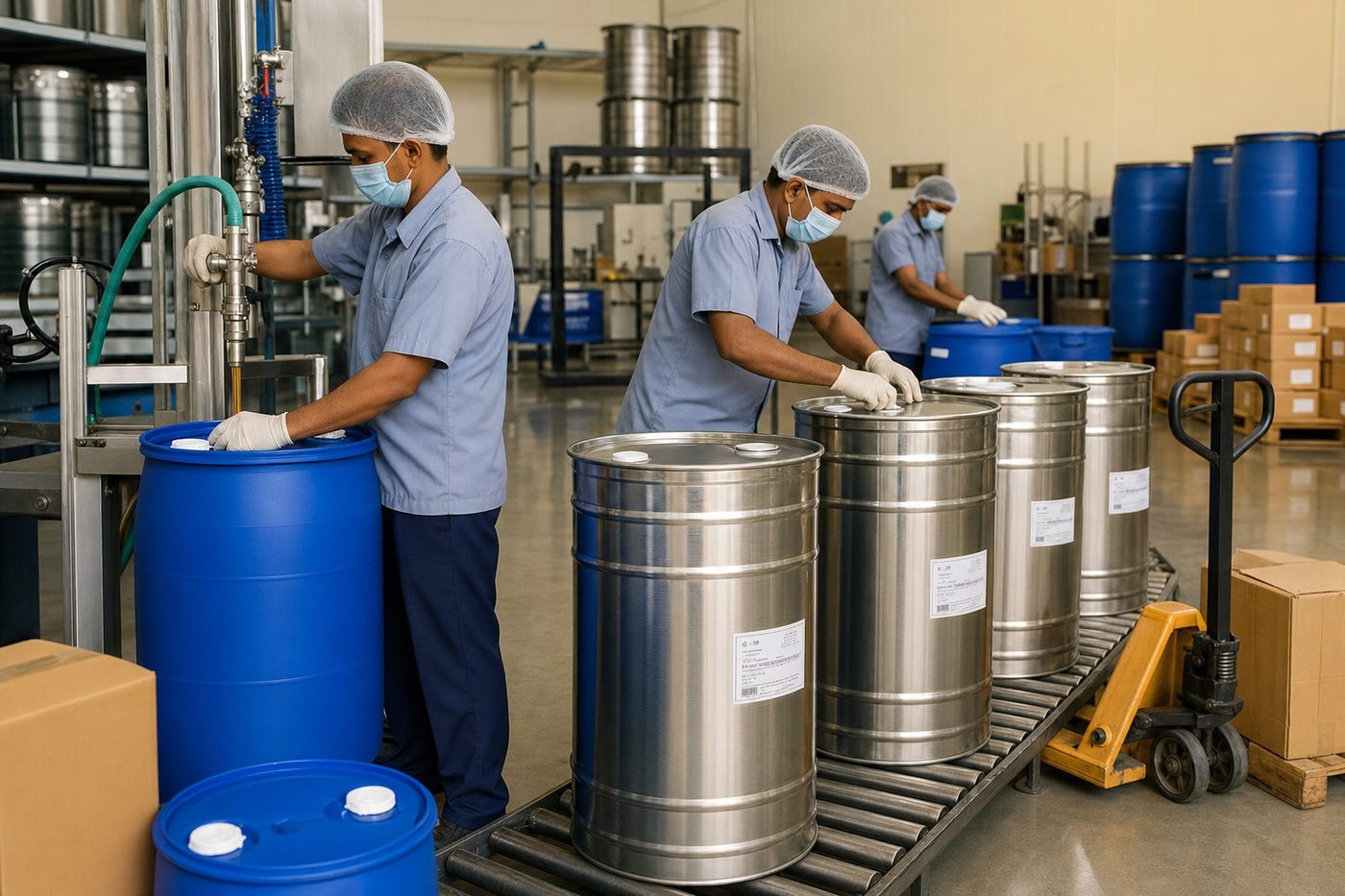
Herbal oil packaging must protect against oxidation, light degradation, and — for medicated Taila — microbial contamination, all of which affect the buyer's Certificate of Analysis validity and, ultimately, product acceptance at destination. The industry standard for commercial export is HDPE, galvanized iron (GI), or epoxy-lined mild-steel drums in 25 kg, 50 kg, or 180–200 kg formats, chosen based on the oil's chemical compatibility with the container material.
Amber glass bottles are the standard for samples and very small commercial quantities, protecting oxidation- and light-sensitive oils during evaluation. Nitrogen flushing — displacing headspace air with inert nitrogen before sealing — is used for oils particularly prone to oxidation, most notably flaxseed/linseed oil given its high polyunsaturated fatty acid content, and to a lesser extent neem oil, extending shelf life and preserving the physicochemical profile that the buyer's COA was based on. All drums must be labeled with product name (botanical and common), batch number, pressing or manufacturing date, net weight, and country of origin.
Packaging Formats for Herbal Oil Export
Swipe →
Data table — swipe horizontally on small screens
| Format | Typical Net Weight | Best For | Key Requirement |
|---|---|---|---|
| HDPE drum | 25 kg, 50 kg, 180–200 kg | Most fixed oils; general-purpose export | Food-grade HDPE for edible-grade oils; UV-resistant |
| GI (galvanized iron) drum | 25 kg, 50 kg, 180–200 kg | Bulk commodity oils; castor, coconut | Cost-effective; check chemical compatibility |
| Epoxy-lined mild-steel drum | 180–200 kg (standard export barrel) | Corrosive-prone or high-acid-value oils | Verify lining integrity before filling |
| Amber glass bottle | 50 ml–5 kg | Samples; small medicated-oil commercial lots | Light-blocking; tight-sealing closure |
| Nitrogen-flushed drum | 25 kg–200 kg (any format above) | Flaxseed, neem, and other oxidation-sensitive oils | Inert gas purge before sealing; verify at destination |
| Retail-ready bottle/pack | 50 ml–1 liter | Private-label and branded Ayurvedic finished-goods programs | Tamper-evident seal; destination-market labeling compliance |
Container Loading Details
Export Tip
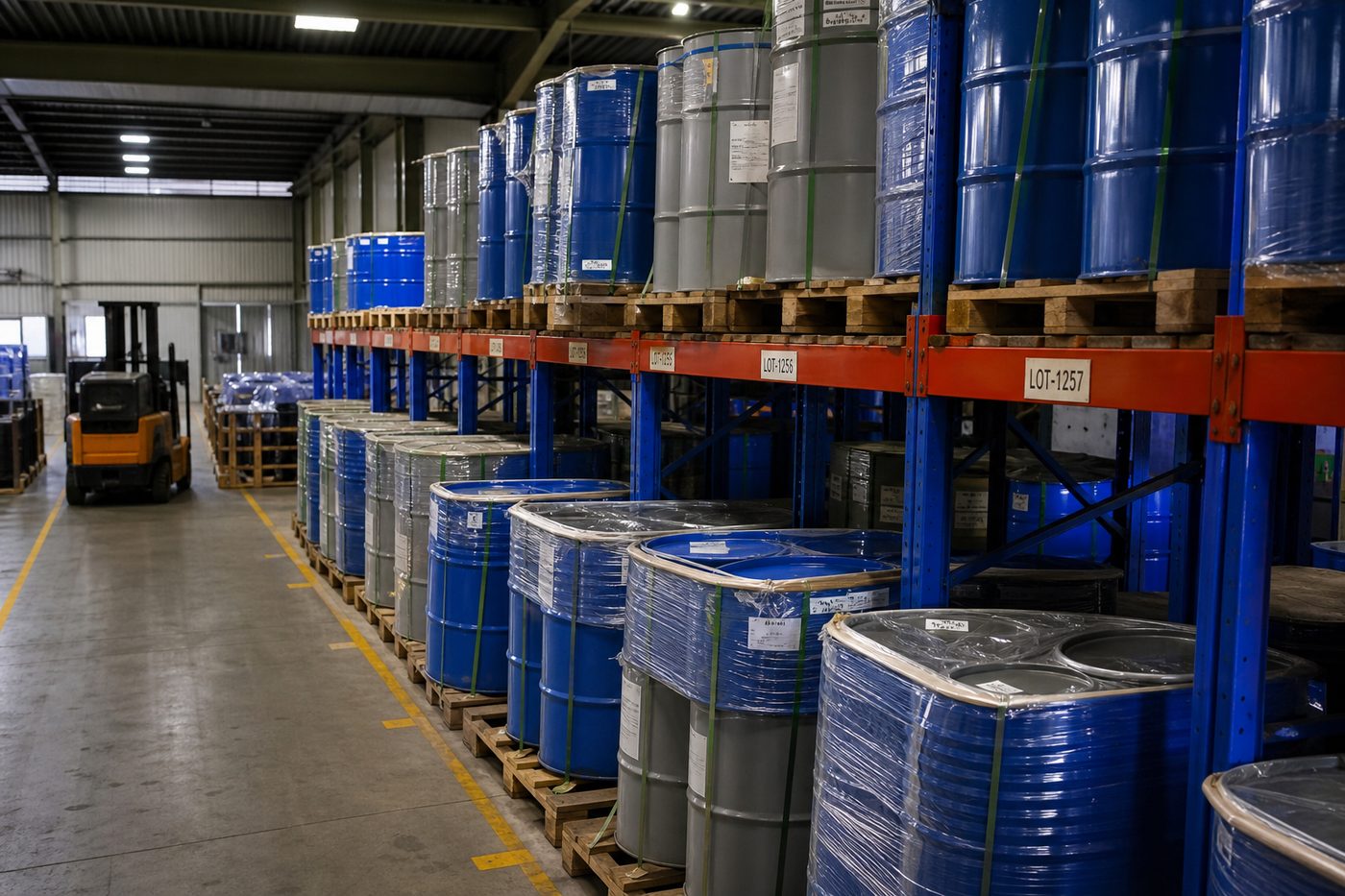
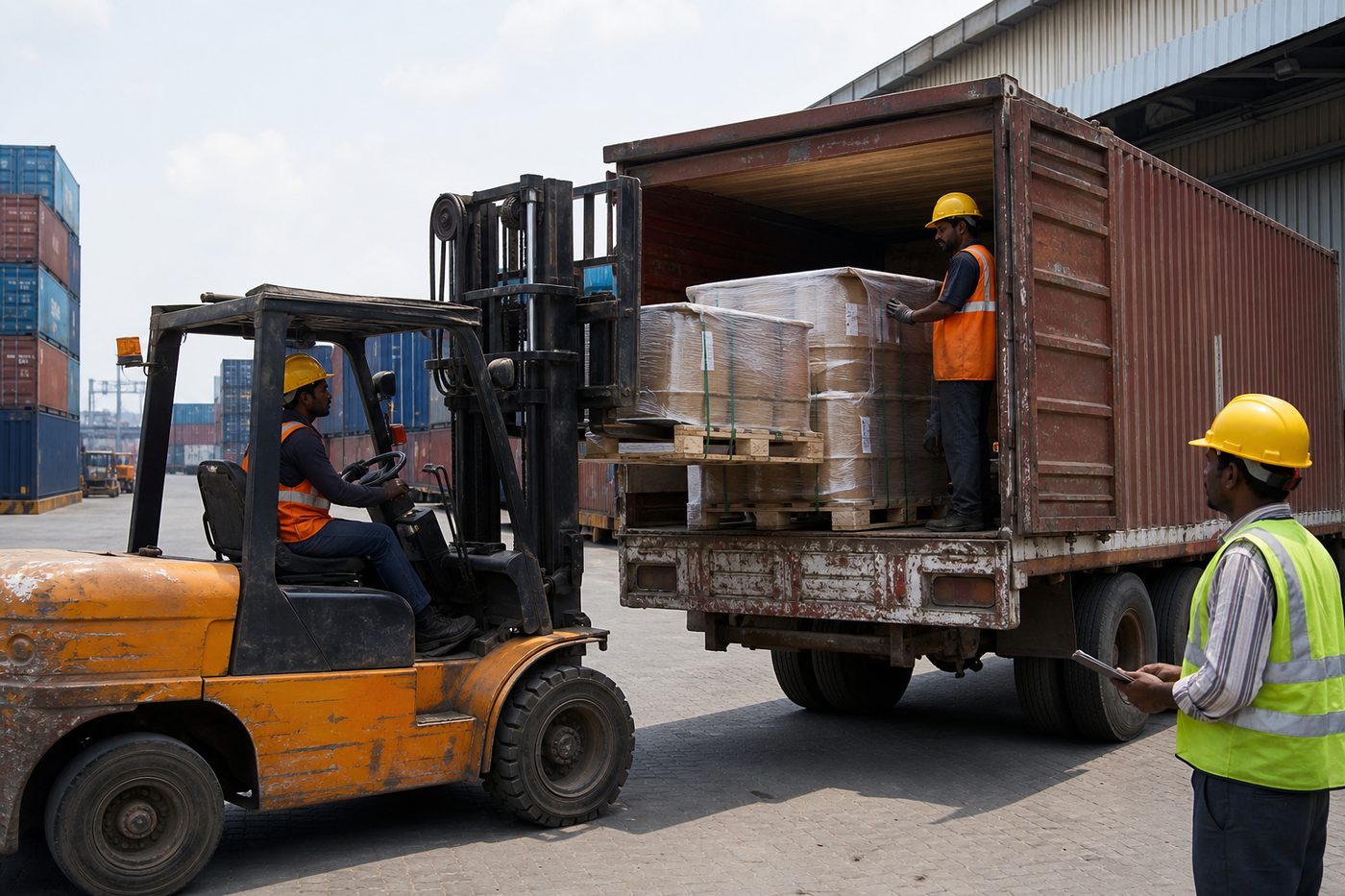
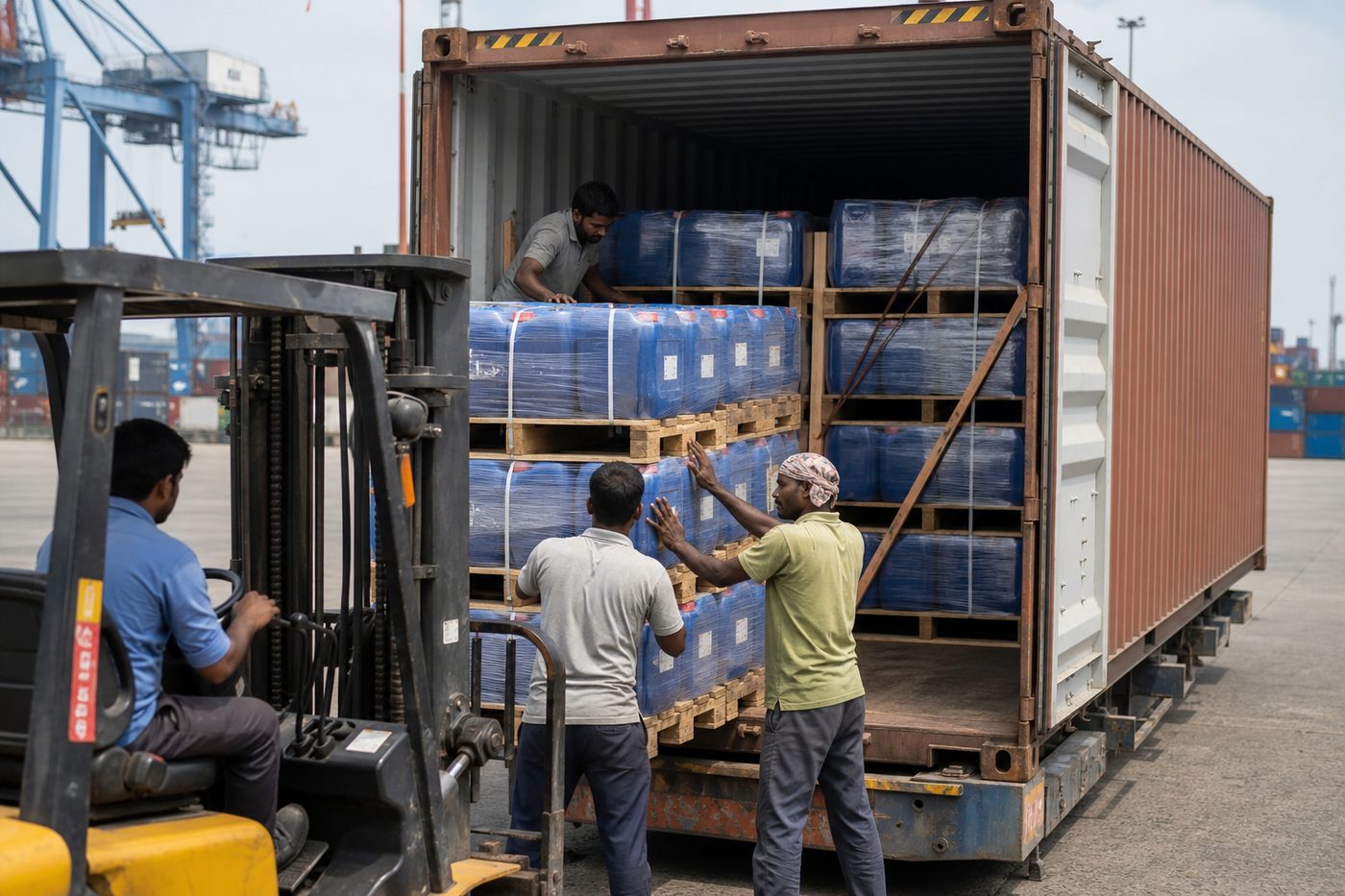
Herbal oil drums are palletized for FCL and LCL shipment to protect against handling damage and to maximize container utilization within weight limits set by drum density. A 20-foot FCL typically accommodates a payload constrained more by weight limits than by cube for liquid-filled HDPE or steel drums — always confirm actual stow with the freight forwarder rather than assuming a standard drum count.
Drums are commonly palletized on standard pallets with stretch-wrap securing, and upright orientation must be maintained throughout — herbal oil drums should never be stacked on their side, as this increases the risk of seal failure and oxidation exposure. Buyers and forwarders should confirm cool, dark storage during any transit hold and avoid routing that exposes containers to prolonged direct sun on the deck of a vessel or at a transshipment yard.
Container Loading Reference: Herbal Oil FCL/LCL Programs
Swipe →
Data table — swipe horizontally on small screens
| Container Type | Approx. Payload | Pallet Configuration | Key Handling Note |
|---|---|---|---|
| 20-foot standard dry container | Weight-limited; typically 10–16 MT of drummed oil | Palletized, upright, stretch-wrapped | Confirm weight limit before assuming cube fill |
| 40-foot standard dry container | Weight-limited; roughly 1.6–2x a well-stowed 20ft | Palletized, upright, secured | Engineer exact MT with forwarder; do not assume simple doubling |
| LCL consolidation | 1 drum to part-pallet quantities | Single or part pallet, upright | Cost-effective for trial and small medicated-oil lots |
| Air freight ULD/pallet | Small commercial and sample lots | Secured cartons or crated drums, upright | Used for medicated Taila samples, urgent orders |
Shipping Methods
Export Tip
Sea freight in FCL or LCL containers is the standard mode for commercial herbal oil shipments, particularly for higher-volume fixed oils. Mundra and Kandla (Gujarat) serve the castor and sesame belts well given regional proximity, Nhava Sheva (Mumbai) is a major all-purpose load port for west-coast production, Kochi and Chennai serve Kerala's coconut and Ayurvedic Taila producers along with the southern neem cluster, shipping to the Middle East, Southeast Asia, and beyond.
Air freight is reserved for samples, urgent orders, and select high-value medicated Taila programs where transit-time sensitivity or launch timelines justify the cost premium over sea freight. Regardless of mode, herbal oils should be kept cool, dark, upright, and sealed throughout transit — heat exposure and prolonged light exposure both degrade the physicochemical profile that the buyer approved at sample stage.
Shipping Method Comparison for Indian Herbal Oil Export
Swipe →
Data table — swipe horizontally on small screens
| Mode | Typical Use | Transit Consideration | Key Handling Instruction |
|---|---|---|---|
| Sea FCL (Mundra, Kandla, Nhava Sheva, Chennai, Kochi) | Commercial fixed-oil and medicated-oil programs | 18–35 days depending on destination | Keep upright, cool, dark; avoid deck stow in direct sun |
| Sea LCL | Trial and mid-size commercial lots | Similar transit plus consolidation handling | Confirm CFS storage conditions before booking |
| Air freight | Medicated Taila samples, urgent or launch-timed orders | 3–7 days globally | Secure crating; insurance for high-value cargo |
| Courier (samples) | 1–5 kg evaluation samples | 2–5 business days | Sealed containers or amber glass, cushioned packing, correct customs paperwork |
Certifications
Compliance Notes
Certifications and registrations for herbal oil export are not optional paperwork — they are the credibility infrastructure that allows Indian oils into personal-care manufacturers, Ayurvedic distributors, and regulated wellness supply chains. IEC from DGFT is the baseline legal requirement for any exporter. AYUSH licensing — an Ayurvedic drug manufacturing licence issued by the relevant State Licensing Authority, with product-specific formulation approval — is required for any medicated Taila oil claiming Ayurvedic therapeutic use. FSSAI licensing is required for any fixed oil destined for edible or food-grade use.
A lot-specific fatty acid profile Certificate of Analysis — covering acid value, peroxide value, iodine value, saponification value, and refractive index — functions as the de facto quality passport that every serious fixed-oil buyer requires before committing to a purchase order. Medicated oils additionally need microbial limit testing, and edible-grade oils bound for the EU or USA typically need pesticide residue and, for oilseed-derived edible oils, aflatoxin testing. For castor oil specifically handled as an industrial chemical export, Chemexcil RCMC can support export-promotion access, though most herbal and Ayurvedic-oriented buyers weight AYUSH and FSSAI credentials more heavily than any single export-council registration.
Certification and Registration Requirements for Indian Herbal Oil Export
Swipe →
Data table — swipe horizontally on small screens
| Certification/Registration | Issuing Body | Required For | Key Value |
|---|---|---|---|
| IEC (Import Export Code) | DGFT, Government of India | All exporters — mandatory for shipping bill | Enables legal export filing |
| AYUSH Drug Manufacturing Licence | State Licensing Authority under Ministry of AYUSH | Medicated Ayurvedic Taila oils (Bhringraj, Amla, Brahmi, Mahanarayan, etc.) | Legal authority to manufacture and export medicated formulations |
| FSSAI Licence | Food Safety and Standards Authority of India | Edible-grade fixed oils (sesame, coconut, and similar) | Mandatory for food-chain export; enables health certificate |
| Fatty Acid Profile Certificate of Analysis | In-house or NABL-accredited laboratory | Every commercial lot of fixed oils — de facto industry standard | Verifies acid value, peroxide value, iodine value, saponification value, refractive index |
| Microbial Limit Test Report | NABL-accredited or equivalent laboratory | Medicated Taila oils | Confirms product safety for topical/therapeutic use claims |
| Pesticide Residue / Aflatoxin Report | Accredited laboratory | Edible-grade oils bound for EU, USA, and similar regulated markets | Confirms compliance with destination food-safety limits |
| Certificate of Origin | Chamber of Commerce or FIEO | Most international shipments | Confirms India origin for duty and customs purposes |
Buyer Requirements
Buyer Requirements
Buyer expectations for Indian herbal oils vary meaningfully by market and application, and matching your documentation investment to your target buyer profile avoids both under-preparation that blocks sales and over-investment in certifications a given buyer will never ask for.
USA Personal-Care and Wellness Buyers
USA buyers in personal-care and wellness applications expect a lot-specific fatty acid profile COA, consistent supply against an agreed specification, and — for edible-grade oils — confirmation of FSSAI health certification. Ayurvedic wellness brands increasingly ask for AYUSH documentation and formulation transparency for medicated Taila oils entering natural-products retail.
EU Buyer Requirements
EU buyers — particularly in Germany and France — require pesticide residue data and detailed physicochemical documentation as a baseline for cosmetics-grade fixed oils, alongside fatty acid profile COAs. EU cosmetics regulation places additional labeling and safety-data expectations on any oil entering a finished cosmetic formulation, which buyers typically manage on their side but expect the raw-material supplier to support with complete technical data.
Middle East and Gulf Buyer Requirements
Gulf buyers purchasing edible-grade sesame and coconut oil or Ayurvedic medicated oils generally require fatty acid profile COA and increasingly request halal-adjacent assurance for cosmetic-use oils, alongside standard commercial documentation. Documentation friction is typically lighter than the EU, but buyers still expect consistent quality and reliable supply continuity for repeat programs.
Southeast Asia and Japan Buyer Requirements
Southeast Asian buyers of coconut and sesame oil expect competitive commodity pricing alongside standard COA documentation. Japanese buyers, particularly for premium medicated Taila oils, expect precise and consistent documentation, tight lot-to-lot consistency, and clear, professional communication, with lower price sensitivity but correspondingly lower tolerance for documentation gaps.
Country-wise Opportunities
Market Snapshot
Each major destination market for Indian herbal oils rewards a different combination of oil category, certification investment, and market entry approach. The USA and EU represent the largest overall value opportunities for both fixed oils and medicated Ayurvedic oils but carry the highest documentation bar; Gulf markets offer relatively accessible entry for both edible-grade fixed oils and Ayurvedic wellness products; and Southeast Asia represents a high-volume, competitively priced opportunity concentrated in coconut and sesame oil. For a country-by-country demand breakdown by specific oil SKU, see most demanded Indian herbal oils by country and best countries for Indian herbal oil exports.
Country-wise Herbal Oil Export Opportunities from India (Summary)
Swipe →
Data table — swipe horizontally on small screens
| Country/Region | Top Oils in Demand | Entry Certification | Price Opportunity | Key Entry Strategy |
|---|---|---|---|---|
| USA | Castor, sesame, sweet almond, medicated Taila | Fatty acid profile COA; FSSAI; AYUSH documentation for medicated oils | Mid to high; premium for branded Ayurvedic oils | Natural-products trade shows; direct-to-consumer wellness partnerships |
| Germany / France (EU) | Castor, sesame, coconut, neem | Pesticide residue data; fatty acid profile COA | High; strictest documentation but best pricing for compliant supply | Cosmetics-industry buyer relationships; long qualification cycle |
| UAE / Saudi Arabia | Sesame, coconut, medicated Ayurvedic oils | Fatty acid profile COA; halal-adjacent assurance | Mid to high | Wellness retail and edible-oil distributor partnerships |
| Southeast Asia | Coconut, sesame oil | Fatty acid profile COA; aflatoxin data for edible use | Mid; volume-driven | Direct trade relationships with edible-oil importers |
| Japan | Medicated Taila, sesame, castor | Fatty acid profile COA; precise lot documentation | Premium pricing achievable | Specialist importer relationships; long-term trust building |
Sourcing Checklist
Checklist
Before placing your first herbal oil order from India, confirm each of the following with your supplier or merchant exporter.
Buyer, Exporter, and Compliance Checklists
Checklist
Compliance Notes

Common Buyer Mistakes
Common Mistakes Box
Herbal oil sourcing has a distinct set of recurring buyer mistakes, most of which trace back to treating the oil as a commodity rather than a specification-driven product with real batch-to-batch variability, or to confusing the regulatory path for fixed oils with the path for medicated Ayurvedic oils.
Common Buyer Mistakes When Importing Herbal Oils from India
Swipe →
Data table — swipe horizontally on small screens
| Mistake | Consequence | How to Avoid |
|---|---|---|
| Ordering by botanical name only, no physicochemical specification | Receiving oil that meets the name but not the required quality profile for the intended use | Always specify acid value, peroxide value, and fatty acid profile before quoting |
| Assuming AYUSH and FSSAI are interchangeable | Sourcing a medicated Taila oil from a supplier without AYUSH licensing, or vice versa | Confirm which registration applies to the specific oil and its intended claim before ordering |
| Skipping COA review before ordering | Discovering a mismatched fatty acid profile only after bulk shipment arrives | Require lot-specific COA and review before commercial commitment |
| Assuming flat pricing year-round for seed-based fixed oils | Being surprised by price movement tied to harvest timing | Understand the relevant harvest calendar and plan orders accordingly |
| Ignoring packaging-material compatibility with the specific oil | Container corrosion or oil oxidation affecting quality | Match drum material to oil chemistry; ask the supplier for guidance |
| Paying 100% upfront to an unverified supplier | No recourse if quality or shipment fails | Use partial advance and balance against documents; verify supplier independently |
| Treating medicated Taila like a bulk commodity fixed oil | Unrealistic MOQ and price expectations for a formulation-driven, licensed product | Understand formulation-based pricing and AYUSH documentation before negotiating |
Future Market Trends
Key Statistics
Demand for natural and plant-derived personal-care ingredients continues to grow as brands in the USA and EU move away from synthetic alternatives, benefiting India's castor, sesame, coconut, and almond oil exports. Expanding Ayurvedic and traditional-medicine retail distribution in North America, Europe, and the Gulf is growing demand for medicated Taila oils beyond traditional Ayurvedic-community buyers into mainstream wellness retail.
Sustainability and traceability expectations are rising, particularly for neem and castor oil, where agri-input and cosmetics buyers increasingly want documented evidence of sustainable seed sourcing rather than relying on origin reputation alone. Growing clinical and consumer interest in specific physicochemical parameters — fatty acid profile, oxidative stability — is pushing buyers toward tighter specification and away from generic botanical-name purchasing, a shift that rewards Indian exporters who have already invested in rigorous lot-level testing.
Future Trends in Indian Herbal Oil Export (2026–2034)
Swipe →
Data table — swipe horizontally on small screens
| Trend | Impact on Indian Exporters | Preparation Strategy |
|---|---|---|
| Natural personal-care ingredient substitution for synthetics | Growing demand for castor, sesame, coconut, and almond oil across cosmetics | Invest in consistent fatty acid profile documentation and supply continuity |
| Mainstream Ayurvedic wellness retail growth | New demand for medicated Taila oils beyond traditional Ayurvedic-community buyers | Develop retail-ready packaging and formulation transparency documentation |
| Sustainability and traceability scrutiny | Neem and castor oil face increasing seed-sourcing documentation requests | Build farm-to-drum traceability documentation for key seed-based oils |
| Tighter physicochemical specification by buyers | Generic botanical-name purchasing declining in favor of COA-led sourcing | Strengthen in-house or partner physicochemical testing infrastructure |
| Rising pesticide residue and aflatoxin scrutiny for edible-grade oils | Documentation burden increasing for EU- and USA-bound edible oils | Pre-clear residue and aflatoxin testing before aggressive market entry |
Expert Insight: The First Container Test We Apply Before Scaling a Herbal Oil Program
Expert Insight Box
Saurabh Mittal has observed a consistent pattern across years of herbal oil export programs: buyers who invest time upfront in specification writing and physicochemical review become repeat customers within one or two orders, while buyers who lead with a price-only inquiry frequently churn through several suppliers before finding one who can actually deliver a consistent Certificate of Analysis.
He advises international buyers to treat the first trial lot as a systems test of the whole relationship — not just the oil. A supplier who provides a clean fatty acid profile report, ships in correctly matched drum packaging, and documents the shipment completely on the first trial is a supplier worth scaling with. A supplier who cannot manage those basics on a small trial lot will not manage them any better on a full container, and this is doubly true when a medicated Taila SKU's AYUSH documentation must travel with every subsequent shipment.

Conclusion
- Explore top herbal oil products exported from India for oil-by-oil specifications, use cases, and FOB pricing.
- Find the right destination for your oil with best countries for Indian herbal oil exports.
- Source directly with how to source herbal oils directly from India.
- Complete your certification knowledge with AYUSH and FSSAI registration benefits for herbal oil exporters.
- See country-specific demand in most demanded Indian herbal oils by country and find buyers with find international buyers for herbal oils.
- Explore premium positioning in organic and Ayurvedic herbal oil export opportunities.
- Get the full documentation checklist at herbal oil export documentation checklist and plan your buyer outreach with trade shows for herbal oil exporters.
- Explore related categories on the herbal and Ayurvedic products industry overview when your programme spans oils plus extracts or finished wellness goods.
- Contact Altus Exports merchant exporter services or global sourcing partner services — or reach our team directly at Contact Altus Exports — to begin a verified herbal oil sourcing conversation for your next program.
How to export herbal oils from India — done correctly — follows a clear sequence that begins with legal registration matched to the correct oil category and quality-testing infrastructure, not buyer outreach. India's structural advantages in this cluster are real: world-leading castor supply from Gujarat, deep sesame cultivation across Rajasthan, Madhya Pradesh, and Uttar Pradesh, coconut and Ayurvedic Taila capability rooted in Kerala's heritage, neem oil infrastructure across Andhra Pradesh and Telangana, and a growing AYUSH-regulated pharmaceutical manufacturing base in Haridwar that no competing origin can fully replicate.
Exporters who build on these foundations with rigorous physicochemical testing, correctly matched packaging, and complete documentation for AYUSH, FSSAI, and destination-market requirements are positioned to serve personal-care manufacturers, Ayurvedic distributors, and wellness brands at sustainable, often premium, price points. International buyers benefit most from working with verified producers or through a merchant exporter who has already conducted supplier qualification and document alignment checks.
Altus Exports operates as a merchant exporter and global sourcing partner for herbal and Ayurvedic oils from India, connecting international buyers with verified producers across the Gujarat castor cluster, Rajasthan-MP-UP sesame belt, Kerala coconut-and-Ayurvedic-Taila cluster, Andhra-Telangana neem belt, and Haridwar/Kerala Ayurvedic pharmaceutical manufacturers — managing specification alignment, COA verification, sample coordination, and end-to-end export logistics from Indian ports to international destinations.