
Trade Shows and B2B Marketplaces for Herbal Oil Exporters
By Saurabh Mittal, Founder, Altus Exports
A fair-by-fair and marketplace playbook for Indian herbal oil exporters — Vitafoods Europe, In-Cosmetics Global, Gulfood, Biofach, the Arogya World Ayurveda Expo and other AYUSH-linked events, Beautyworld Middle East, and Alibaba/IndiaMART B2B marketplaces — plus booth and sample strategy, fatty acid profile COA and AYUSH/FSSAI readiness, 72-hour post-fair CRM follow-up, and year-round lead conversion. This is not a full export-process guide.
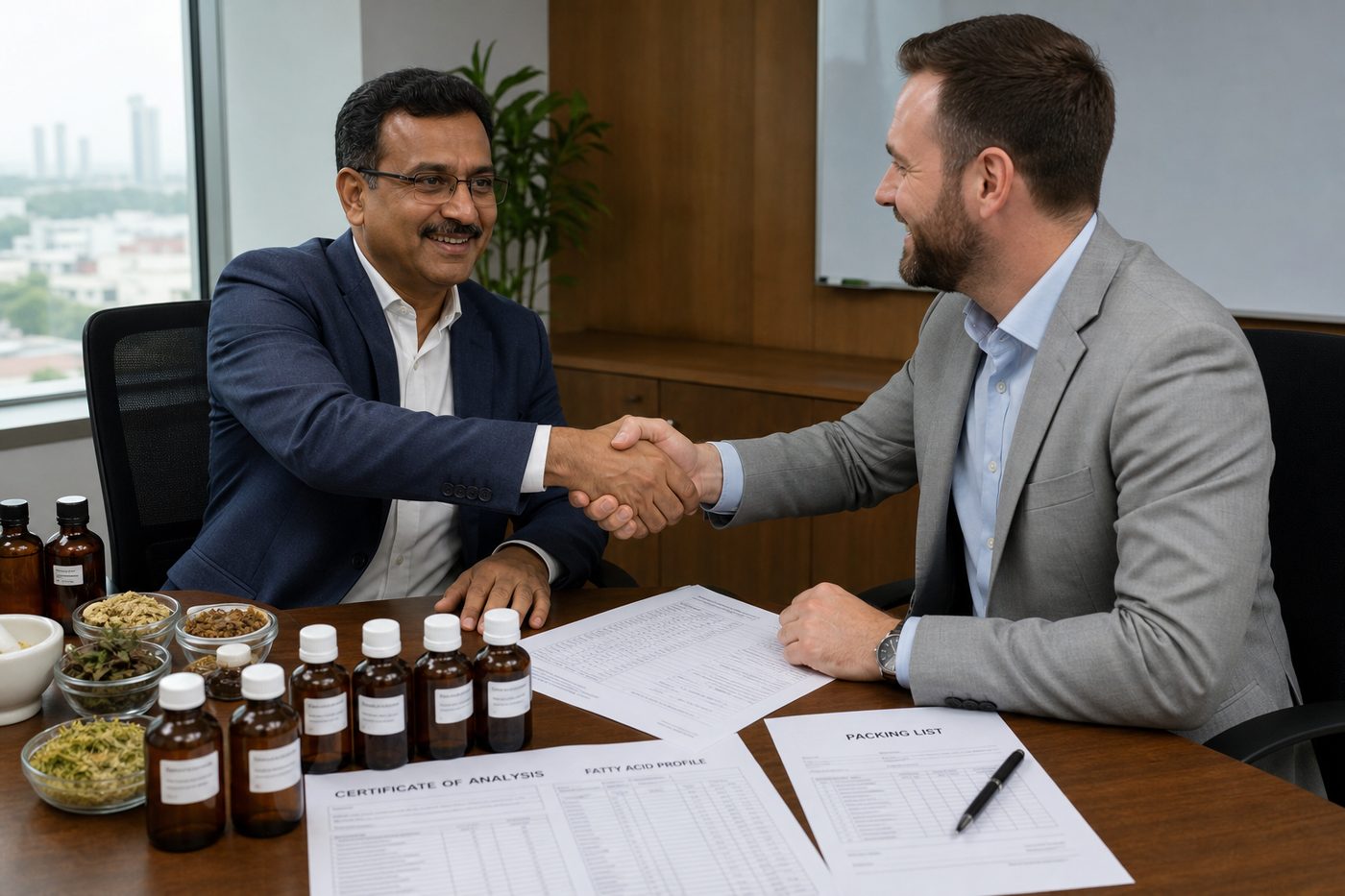
Fairs and B2B marketplaces are the fastest route to a specification-level buyer conversation for herbal oils — if an exporter arrives prepared and treats each channel as one part of a year-round pipeline rather than the entire sales plan. Neem, castor, sesame, coconut, sweet almond, kalonji, flaxseed, and karanja fixed oils, alongside Ayurvedic medicated Taila such as Bhringraj, Amla, Brahmi, Mahanarayan, Dhanwantharam, Ksheerabala, and Ashwagandha oil, sell to genuinely different buyer types across a handful of recurring channels: nutraceutical and cosmetic-ingredient fairs in Europe, food and wellness fairs in the Gulf, Ayurveda-specific expos supported by India's AYUSH Ministry, and always-on B2B marketplaces that generate volume between fair cycles.
This guide is a fair-by-fair and marketplace playbook, not a full export-process walkthrough and not a documentation checklist. For the ten-step registration-to-shipment sequence, see How to Export Herbal Oils from India; for the full document pack a serious buyer will expect after a promising fair conversation, see Herbal Oil Export Documentation Checklist; for structured lead generation between fairs, see Find International Buyers for Herbal Oils.
The channels covered here are Vitafoods Europe, In-Cosmetics Global, Gulfood, Biofach, the Arogya World Ayurveda Expo and comparable AYUSH-supported events, Beautyworld Middle East, and Alibaba/IndiaMART as B2B marketplaces — each reaching a distinct buyer profile for fixed oils or medicated Taila. A booth-to-order playbook with a defined 72-hour follow-up cadence follows the fair-by-fair breakdown, because preparation and follow-up discipline consistently outperform booth size or fair reputation alone in converting a floor conversation into a shipped container.
Altus Exports helps herbal oil exporters convert fair and marketplace leads into documented, shipped orders as a merchant exporter in India and global sourcing partner, reflecting buyer conversations and shipment patterns we see across the USA, EU, GCC, and Southeast Asia.
Key Takeaways
Summary Box
Executive Summary
Summary Box
- Pre-fair: production-ready samples, lot-matched fatty acid profile COA, AYUSH/FSSAI credentials visible on the product sheet.
- On-floor: qualify serious buyers against browsers within the first two minutes of conversation.
- 72-hour CRM: most fair ROI is lost in week one without a defined follow-up cadence.
- Year-round: one CRM pipeline spanning fairs, AYUSH-linked expos, and B2B marketplaces.
This guide sequences herbal oil trade-show and marketplace strategy end to end: market context and buyer-profile mapping first, then a fair-by-fair operational playbook, then the post-fair conversion mechanics that determine whether a booth investment actually produces a shipped container.
Exporters who match booth samples and documentation to each fair's actual buyer profile, and who run a disciplined 72-hour follow-up cadence, consistently convert a higher share of leads to purchase orders than exporters treating every fair the same way or relying on marketplace listings alone.
The guide treats fixed oils and Ayurvedic medicated Taila as distinct tracks throughout, because the two rarely share the same booth pitch, the same buyer titles, or the same certification story. Readers running a mixed portfolio should expect to prepare two versions of their product sheet and, where budget allows, prioritize the fair or expo that matches each product family rather than a single generalist event.

Market Size & Industry Overview
Key Statistics
India's herbal oil export base spans fixed vegetable oils pressed or solvent-extracted from seed — castor, sesame, coconut, neem, sweet almond, kalonji, flaxseed, and karanja — and Ayurvedic medicated Taila manufactured by AYUSH-licensed units under classical formulation. Fair and marketplace strategy differs meaningfully between the two: fixed oils are sold on fatty acid profile, physicochemical consistency, and price, while medicated Taila is sold on formulation credibility, AYUSH licensing, and wellness-brand positioning.
Gujarat anchors castor oil production, the Rajasthan-Madhya Pradesh-Uttar Pradesh belt anchors sesame, kalonji, and flaxseed, Kerala combines coconut oil milling with Ayurvedic Taila manufacturing heritage, Andhra Pradesh and Telangana anchor neem, and Haridwar alongside Kerala forms the country's core AYUSH-regulated pharmaceutical manufacturing base. Fair selection should track which of these clusters and which product family an exporter is representing, since a single booth rarely serves both a commodity fixed-oil buyer and an Ayurvedic wellness-brand buyer equally well.
Exhibition budgets for herbal oils are best planned around this same fixed-oil-versus-Taila split rather than treated as one undifferentiated marketing line item. A fixed-oil exporter's booth spend should weight heavily toward laboratory-verified fatty acid profile documentation and cosmetic- or food-grade positioning, since that is what In-Cosmetics, Vitafoods, and Biofach attendees actually evaluate. A Taila exporter's spend should weight toward formulation storytelling, AYUSH licence visibility, and retail-ready packaging, since that is what Ayurveda-linked expo and Beautyworld attendees actually evaluate. Exporters who blend both product families into one undifferentiated booth pitch routinely underperform those who pick a lane and prepare for it deliberately.
Table 1 — Herbal Oil Fair and Marketplace Landscape (Indicative)
Swipe →
Data table — swipe horizontally on small screens
| Channel | Location / Type | Primary Value to Herbal Oil Exporters |
|---|---|---|
| Vitafoods Europe | Geneva, Switzerland — annual | Nutraceutical and wellness buyer access; kalonji, flaxseed, Ayurvedic-adjacent positioning |
| In-Cosmetics Global | Rotating European city — annual | Cosmetic-ingredient formulators; castor, coconut, neem, almond as carrier oils |
| Gulfood / Gulfood Manufacturing | Dubai, UAE — annual | GCC distributor and wellness retail relationships; coconut, sesame, medicated Taila |
| Biofach | Nuremberg, Germany — annual | Global organic and natural-products buyers; organic-certified fixed oils and food-grade oils |
| Arogya World Ayurveda Expo and AYUSH-linked events | Various, India-based, AYUSH Ministry-supported | Direct connection between AYUSH-licensed Taila manufacturers and international Ayurvedic distributors |
| Beautyworld Middle East | Dubai, UAE — annual | GCC and North African personal-care and wellness retail buyers |
| Alibaba / IndiaMART | Online B2B marketplaces | Year-round inbound inquiries for fixed oils and Ayurvedic products |
Export Statistics
Key Statistics
India's herbal oil export basket clears predominantly under HS Chapter 15 for fixed oils (1515.30 castor, 1515.50 sesame, 1515.90 neem/almond/kalonji/karanja, and 1513 for coconut) and HS 3004.90 for medicated Ayurvedic Taila, with cosmetic-packed finished oils sometimes falling under 3304 or 3305. Fair selection should follow export destination priority — the USA, Germany, France, and the UK represent the largest overall value opportunity for both fixed oils and medicated Taila, while GCC markets offer comparatively accessible entry for both edible-grade fixed oils and Ayurvedic wellness products.
Buyer nationalities at Vitafoods, In-Cosmetics, Biofach, Gulfood, and Beautyworld concentrate around exactly these destination priorities, which is what makes fair attendance a genuinely efficient channel for herbal oil exporters rather than a scattershot networking exercise.
Exporters tracking their own fair ROI over multiple cycles typically find that documentation readiness, not booth size, is the strongest predictor of which conversations eventually turn into a purchase order. A modest booth staffed by someone who can produce a lot-matched fatty acid profile COA or an AYUSH licence reference on request converts better, on average, than a larger booth without that readiness — a pattern worth remembering when allocating next year's fair budget between booth size and documentation preparation time.
Table 2 — Fair Relevance by Target Export Destination
Swipe →
Data table — swipe horizontally on small screens
| Target Destination | Most Relevant Fair(s) | Buyer Profile at That Fair |
|---|---|---|
| Germany / France / wider EU | In-Cosmetics Global, Vitafoods Europe, Biofach | Cosmetics formulators, nutraceutical brands, organic-certified importers |
| USA | Vitafoods Europe delegations, Alibaba/IndiaMART outreach | Natural personal-care brands, wellness distributors, D2C buyers |
| UAE / GCC | Gulfood, Beautyworld Middle East | Distributors, pharmacy and wellness retail chains |
| India + international Ayurveda buyers | Arogya World Ayurveda Expo and AYUSH-linked events | Ayurvedic distributors and wellness brand founders sourcing medicated Taila |
| All destinations (year-round) | Alibaba, IndiaMART | Mixed inbound RFQ volume across all oil categories |
Import Statistics
Key Statistics
Fair organizers publish attendee profiles revealing buyer company type and country mix, and reviewing this data before committing booth budget is more reliable than assuming a fair's general reputation guarantees relevant herbal oil buyer traffic. Cross-checking a fair's attendee list against fixed-oil and Ayurvedic-preparation import activity helps confirm whether listed buyers have documented import history relevant to the specific SKU an exporter is bringing to the booth.
GCC buyers at Gulfood and Beautyworld Middle East for medicated Taila and coconut oil are frequently distributors re-exporting into pharmacy and wellness retail chains rather than end-brand formulators, which changes the qualification questions worth asking on the floor — volume commitment and re-order cadence matter more than formulation detail for this buyer type.
Table 3 — Pre-Fair Attendee Research Checklist
Swipe →
Data table — swipe horizontally on small screens
| Research Step | What It Reveals | When to Do This |
|---|---|---|
| Review published exhibitor/attendee list | Buyer company type and country mix | 6–8 weeks before the fair |
| Cross-check against fixed-oil/Ayurvedic import activity | Documented import history relevant to your specific SKU | 4–6 weeks before the fair |
| Pre-book meetings where the fair or expo allows | Scheduled, higher-intent conversations | 2–4 weeks before the fair |
| Segment booth samples to the fair's dominant buyer type | Whether hero SKUs match likely buyer priorities | 4–6 weeks before the fair |
Product Categories / Variants
Summary Box
Booth sample selection should mirror each fair's dominant buyer profile, not an exporter's full catalogue. Vitafoods rewards kalonji, flaxseed, and Ayurvedic wellness-adjacent positioning; In-Cosmetics rewards castor, coconut, neem, and almond oil presented as cosmetic carrier oils with a clean fatty acid profile COA; the Arogya World Ayurveda Expo and comparable events reward medicated Taila with visible AYUSH documentation; and Gulfood and Beautyworld Middle East reward a mixed range with clear certification signposting for GCC distributors. For full product-level depth, see Top Herbal Oil Products Exported from India.
Table 4 — Matching Booth Samples to Fair Buyer Profile
Swipe →
Data table — swipe horizontally on small screens
| Fair / Channel | Recommended Hero Categories | Buyer Priority |
|---|---|---|
| Vitafoods Europe | Kalonji, flaxseed, nutraceutical-positioned fixed oils | Marker-compound data, cold-pressed positioning, food-grade documentation |
| In-Cosmetics Global | Castor, coconut, neem, sweet almond as carrier oils | Fatty acid profile COA, colour, odour, viscosity consistency |
| Gulfood / Gulfood Manufacturing | Coconut, sesame, Ayurvedic medicated Taila | Volume reliability, AYUSH/FSSAI documentation, halal-adjacent assurance |
| Biofach | Organic-certified fixed oils; food-grade sesame and coconut | NPOP/organic-equivalence documentation, traceability |
| Arogya World Ayurveda Expo | Bhringraj, Amla, Brahmi, Mahanarayan, Ashwagandha oil | AYUSH licence visibility, formulation authenticity, heritage positioning |
| Beautyworld Middle East | Coconut, sesame, medicated Taila, retail-ready packs | Retail packaging quality, halal-adjacent assurance, brand shelf presentation |
| Alibaba / IndiaMART | 8–12 hero listings across fixed oils and Taila | Specification clarity, accurate MOQ, and HS classification before price discussion |
Manufacturing Overview
Export Tip
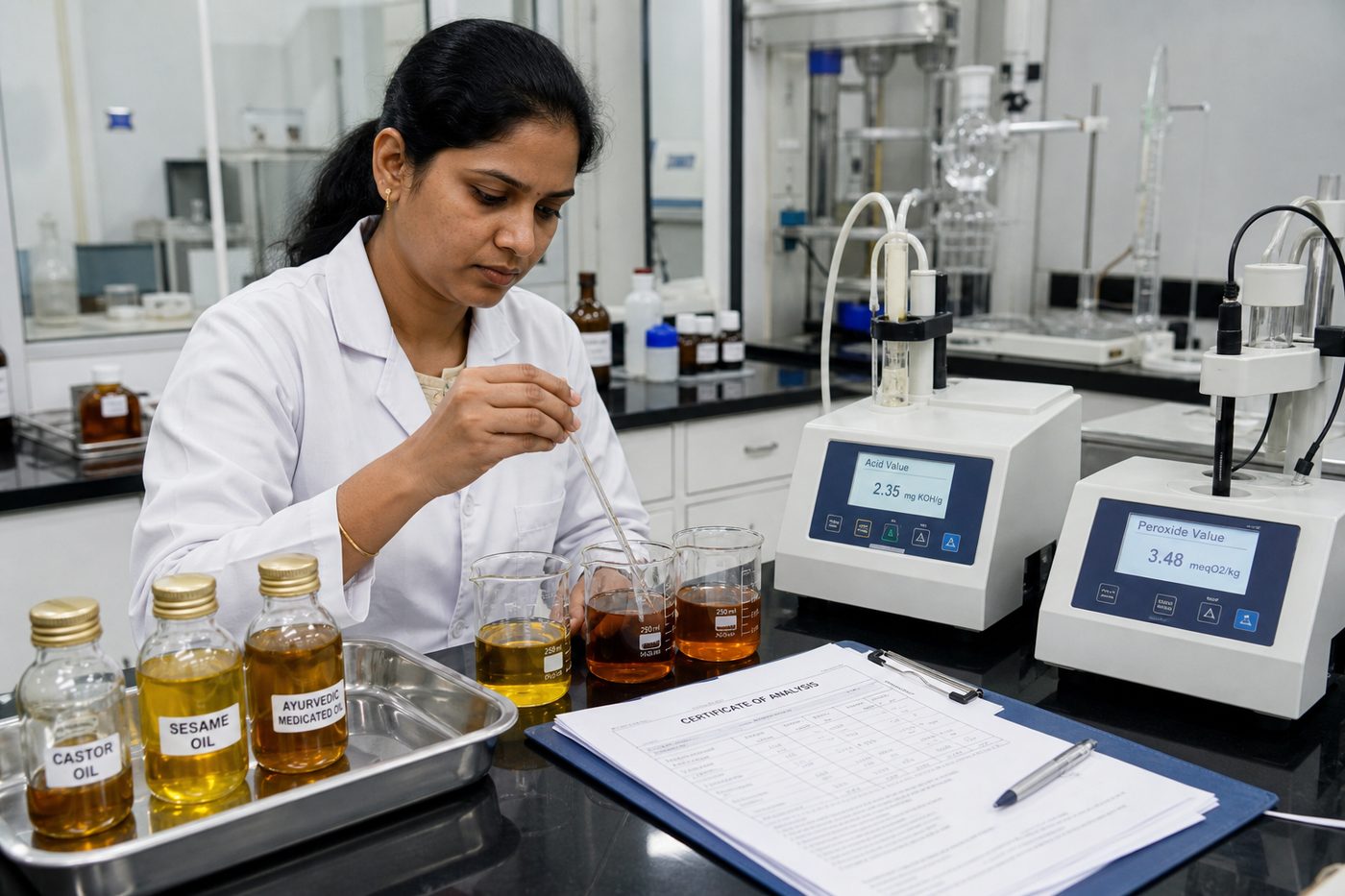
Fair samples must reflect real bulk-production capability. A hand-selected, unusually clean booth sample of neem or castor oil that cannot be replicated consistently at the pressing unit's actual scale is a credibility risk once a buyer requests a bulk-matching pre-production sample after the fair. Confirm with your pressing unit or Ayurvedic manufacturer, before committing a SKU to the booth, that the fatty acid profile shown at the fair is exactly what bulk production can deliver at the MOQ being quoted.
For medicated Taila specifically, exhibiting a formulation without a manufacturer's current AYUSH licence and product-level formulation approval in hand is a serious credibility risk at any AYUSH-linked event — attendees at these expos are typically sophisticated enough to ask for the licence reference on the spot.
Exporters representing more than one cluster at a single fair — for example, a castor oil line from Gujarat alongside a coconut and Ayurvedic Taila line from Kerala — should brief booth staff on the manufacturing origin and certification profile of each SKU individually, since a buyer asking a detailed question about one oil's production process will quickly notice if the answer is generic rather than specific to that cluster's actual pressing or infusion method.
Pricing Analysis
Buyer Tip
Fair budgets should be planned as a full campaign cost — booth space, travel, sample development, laboratory testing for a current fatty acid profile COA, and follow-up staff time — set against a realistic conversion estimate, not just the headline booth rental fee.
First-time exhibitors frequently underestimate the laboratory testing line specifically. A fatty acid profile COA or a microbial limit test for a medicated Taila batch needs five to ten working days once a sample is submitted, so this cost and lead time should be locked into the campaign budget and calendar well before the fair opens — not treated as an incidental expense discovered only once a buyer asks for the report at the booth.
Table 5 — Indicative Fair Campaign Cost Components
Swipe →
Data table — swipe horizontally on small screens
| Cost Component | Typical Share of Budget | Notes |
|---|---|---|
| Booth space and construction | 30–45% | Varies significantly by fair and booth size |
| Travel and accommodation | 20–30% | Multiply by staff count attending |
| Sample development, COA testing, and freight | 10–20% | Underbudgeted by many first-time exhibitors |
| 72-hour follow-up and sample dispatch | 10–15% | Often skipped — erases the value of the other spend |
MOQ Analysis
Buyer Tip
MOQ conversations at a fair should be handled honestly and specifically. State realistic MOQ per oil on the product sheet — sample quantities of 1–5 kg, trial lots of 25–200 kg depending on category, and commercial programme volumes running into hundreds of kilograms or several tonnes for high-volume fixed oils — so post-fair internal buyer discussions anchor to accurate numbers rather than an optimistic verbal estimate given on the show floor.
Table 6 — Typical MOQ Expectations to Communicate at a Fair
Swipe →
Data table — swipe horizontally on small screens
| Category | Trial Order MOQ | Standard Programme MOQ | Fair Conversation Note |
|---|---|---|---|
| Coconut, sesame, castor (fixed oils) | 100–200 kg | 500 kg–5 MT+ | State clearly on product sheet, not only verbally |
| Neem, kalonji, flaxseed, karanja, almond | 100–200 kg | 200 kg–2 MT | Confirm seasonal seed availability before quoting fast lead time |
| Ayurvedic medicated Taila | 25–100 kg per SKU | 200–500 kg blended across SKUs | Confirm AYUSH formulation lead time before promising a delivery date |
| Evaluation samples (all categories) | 1–5 kg | N/A | Standard across every fair and marketplace channel |
Packaging Standards
Export Tip
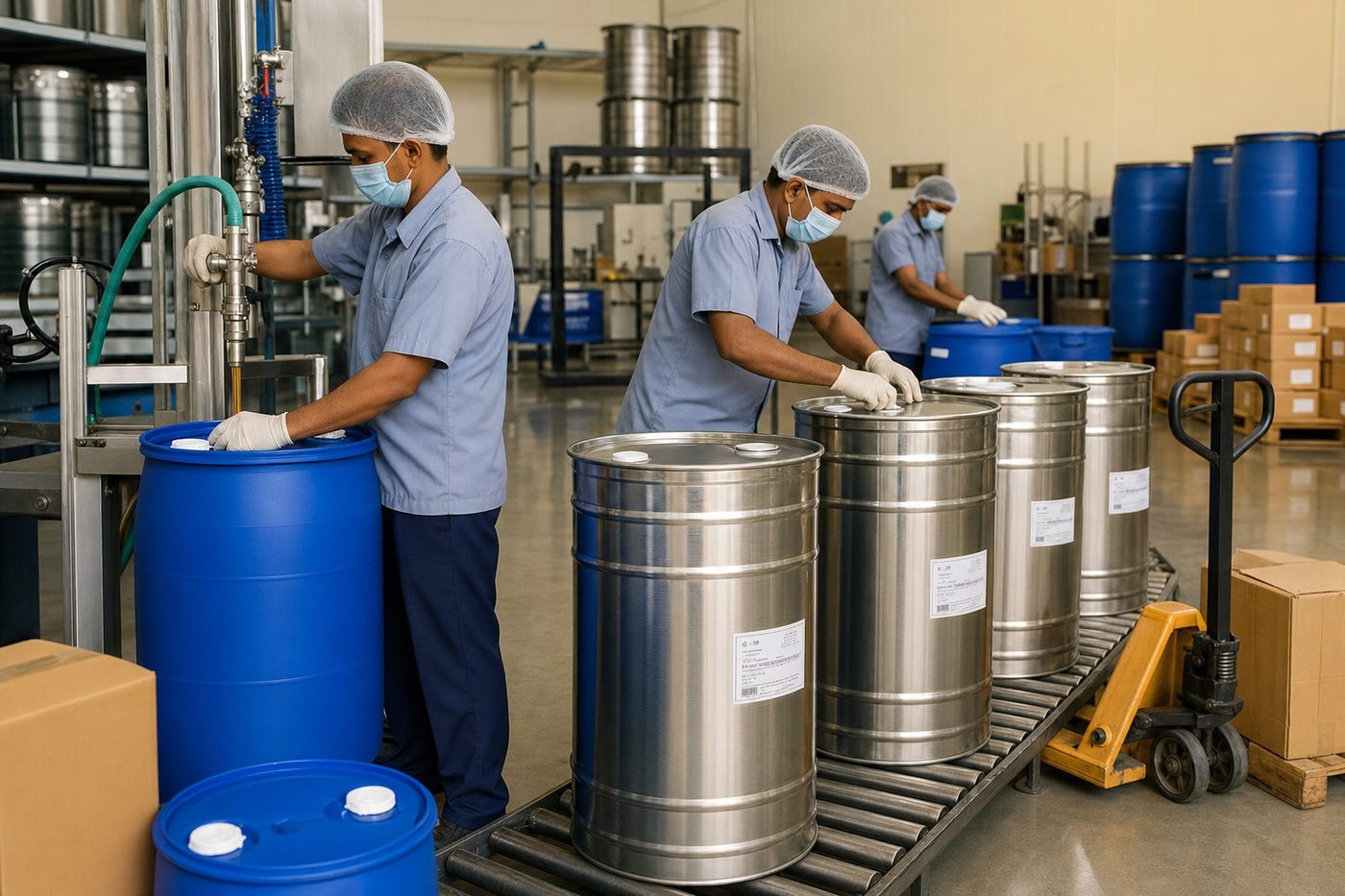
Packaging samples at a booth should match what a real bulk shipment carries — sealed amber glass or small HDPE containers for evaluation, plus a drum mock-up with correct botanical-name and batch labelling if booth space allows. For medicated Taila, retail-ready bottles displayed at Ayurveda-linked expos should carry AYUSH-compliant labelling exactly as registered.
Table 7 — Fair Booth Packaging Display Checklist
Swipe →
Data table — swipe horizontally on small screens
| Element | Recommended Booth Display | Why It Matters |
|---|---|---|
| Sealed evaluation sample (amber glass/HDPE) | One fully labelled unit per hero oil | Signals correct light- and oxidation-protective packaging awareness |
| Drum mock-up (fixed oils) | Botanical name, batch, and lot markings visible | Demonstrates export packaging discipline to buyers who ask |
| Retail-ready bottle (medicated Taila) | AYUSH-compliant label matching registered formulation | Non-negotiable at Ayurveda-linked expos and Beautyworld |
| Product sheet with packaging spec | Hand out with every qualified conversation | Buyers reference this after the fair when comparing suppliers |
Container Loading Details
Export Tip
Serious buyers at Gulfood and In-Cosmetics ask about container loading economics early, particularly for high-volume fixed oils. Be ready with indicative drum counts for a 20-foot or 40-foot FCL rather than a vague answer that signals underpreparation — a well-prepared exporter can state, for example, that a 20-foot container typically carries 10–16 MT of drummed oil depending on drum size and pallet plan, and confirm the exact figure with a forwarder before committing to a delivery date.
Shipping Methods
Export Tip
Buyers at international fairs routinely ask about lead time from PO to shipment and which Incoterm the exporter quotes. FOB from Mundra, Kandla, Nhava Sheva, Chennai, or Kochi remains standard for commercial herbal oil programmes. Sample shipments dispatched after a fair typically move by air courier in sealed containers or amber glass so the buyer can evaluate the oil's condition while the fair conversation is still fresh, rather than waiting weeks for a sea-freight sample.
Certifications
Compliance Notes
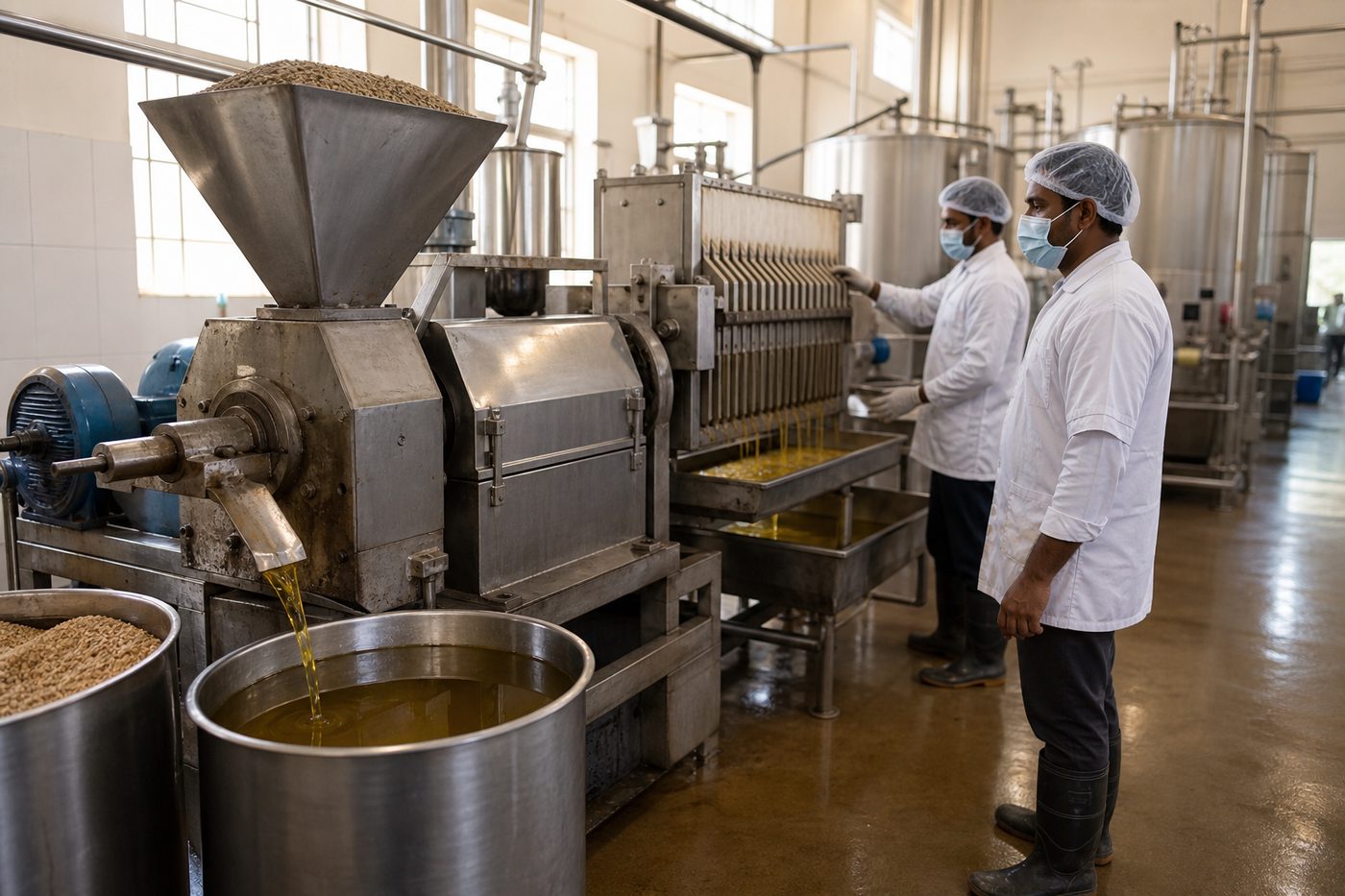
AYUSH licence reference for medicated Taila and FSSAI licence reference for edible-grade fixed oils should be visible on the booth — on the product sheet, signage, and pitch — rather than something a buyer has to ask for explicitly. A current fatty acid profile Certificate of Analysis summary should be ready on request without a multi-day delay, since serious buyers at In-Cosmetics and Vitafoods expect this responsiveness as a baseline signal of preparedness.
Table 8 — Certifications to Have Visible or Ready at a Fair Booth
Swipe →
Data table — swipe horizontally on small screens
| Certification / Credential | Where to Display | Buyer Expectation |
|---|---|---|
| IEC (Import Export Code) | Available on request in outreach materials | Confirms legal export eligibility |
| AYUSH Drug Manufacturing Licence reference | Product sheet, booth signage (medicated Taila) | Non-negotiable at Ayurveda-linked expos and for wellness distributors |
| FSSAI licence reference | Product sheet (edible-grade fixed oils) | First-level legitimacy check for food-channel buyers |
| Fatty acid profile COA summary | Stated on request with recent lot data | Expected without delay at In-Cosmetics and Vitafoods |
| Organic/NPOP certification (where applicable) | Product sheet with certifying body named | Relevant at Biofach for organic-positioned oils |
Buyer Requirements
Buyer Requirements
- One-page product sheet with botanical name, extraction or formulation method, fatty acid profile COA summary, HS reference, and MOQ per oil.
- AYUSH or FSSAI licence reference visible in signage and outreach materials, matched to the specific SKU on display.
- Confident, specific answers on lead time, MOQ, packaging format, and Incoterm.
- Sample dispatch policy stated at the booth — paid vs. free, courier cost owner, turnaround time.
- A defined 72-hour follow-up commitment stated explicitly: a formal quotation within three business days of the fair closing.
Buyers approaching a booth screen quickly for legitimacy: a clear product sheet, visible AYUSH or FSSAI credentials as applicable, confident MOQ and lead-time answers, and samples that look production-ready rather than a hand-picked outlier.
What counts as a satisfying answer differs by fair and buyer type. A cosmetics formulator at In-Cosmetics wants a specific fatty acid profile figure on request, not a vague assurance that the oil is 'high quality.' A distributor at Gulfood wants a confident volume-capacity number and a repeat-order lead time, not a one-off sample price. An Ayurvedic wellness founder at an AYUSH-linked expo wants to hear the formulation's classical basis and the manufacturer's licence number stated without hesitation. Booth staff who can switch between these three registers within the same afternoon convert noticeably more conversations than staff reciting one generic pitch regardless of who is standing in front of them.
Fair-by-Fair and Marketplace Playbook
Each fair, expo, and marketplace below reaches a distinct buyer profile for herbal oils. Treat this section as an operational playbook — buyer profile, prep checklist, booth strategy, and ROI guidance — not a calendar listing.
Vitafoods Europe — Geneva, Switzerland
- Buyer profile: nutraceutical brand procurement, formulation scientists, and functional-food ingredient buyers evaluating kalonji, flaxseed, and other wellness-positioned fixed oils.
- Prep checklist (4–6 weeks out): confirm a current fatty acid profile COA for every hero SKU; prepare a two-page technical data sheet per oil; package 50–100 g/ml trial quantities in sealed containers; book meetings through the exhibitor portal.
- Booth strategy: lead with marker-compound data and cold-pressed extraction credibility; target eight to twelve scheduled meetings per exhibition day rather than relying on walk-in booth traffic alone.
- ROI benchmark: well-prepared exhibitors generate 20–40 genuine conversations over the fair's duration; with 72-hour follow-up, expect 8–15% to progress to a sample request within thirty days.
Vitafoods draws nutraceutical and wellness brand procurement teams, making it the strongest European channel for kalonji, flaxseed, and Ayurvedic-adjacent wellness positioning among fixed oils. It reaches buyers who evaluate ingredients on marker-compound data and clean-label credibility rather than volume pricing alone.
In-Cosmetics Global — Rotating European City
- Buyer profile: cosmetic formulators, ingredient sourcing managers, and contract manufacturers evaluating fixed oils as carrier or active ingredients.
- Prep checklist: bring lot-matched fatty acid profile COAs (colour, odour, viscosity, free fatty acid) for each hero oil; prepare INCI-compliant naming on the product sheet; confirm organic or Non-GMO documentation where applicable.
- Booth strategy: lead with COA parameters relevant to formulation rather than a generic marketing pitch; be ready to discuss cosmetic-grade versus industrial-grade distinctions for castor oil specifically.
- ROI benchmark: 15–30 serious discussions over the fair's duration; sample-request conversion often 10–20% with disciplined follow-up. Best for German, French, and broader EU cosmetics buyers.
In-Cosmetics reaches formulation scientists and ingredient sourcing managers at cosmetic brands and contract manufacturers — the direct buyer profile for castor, coconut, neem, and almond oil as cosmetic carrier oils. Attendees are typically more technically literate on ingredient specification than general wellness-retail buyers.
Gulfood / Gulfood Manufacturing — Dubai, UAE
- Buyer profile: GCC distributors, wholesale importers, and pharmacy/wellness retail chain buyers for coconut, sesame, and medicated Taila.
- Prep checklist: confirm FSSAI documentation for edible-grade oils and AYUSH licence reference for any Taila SKU; prepare halal-adjacent assurance documentation where available for cosmetic-use oils.
- Booth strategy: lead with supply reliability and documentation completeness; GCC buyers respond well to clear, direct answers on volume capacity and repeat-order terms.
- ROI benchmark: 20–40 conversations over the fair's duration; sample-request conversion 8–15% with structured follow-up. Strong secondary channel alongside Beautyworld Middle East for the same GCC buyer base.
Gulfood and its manufacturing-focused counterpart are strong channels for GCC coconut oil, sesame oil, and Ayurvedic medicated Taila distributor relationships, reaching buyers who prioritize volume reliability and documentation over deep formulation detail.
Biofach — Nuremberg, Germany
- Buyer profile: organic-food retail buyers, natural-products distributors, and importers requiring NPOP/organic-equivalence documentation.
- Prep checklist: bring current organic certification documentation alongside the fatty acid profile COA; prepare traceability materials showing seed-to-drum sourcing where available.
- Booth strategy: lead with certification and traceability credibility rather than price; Biofach buyers are typically willing to pay a premium for verified organic sourcing.
- ROI benchmark: 15–25 serious conversations over the fair's duration; sample-request conversion 8–12%, skewed toward buyers already running an organic sourcing programme.
Biofach is the world's leading organic and natural-products fair, relevant to Indian herbal oil exporters positioning organic-certified fixed oils or food-grade sesame and coconut oil for European and global organic-retail buyers.
Arogya World Ayurveda Expo and AYUSH-Linked Events
- Buyer profile: Ayurvedic wellness brand founders, pharmacy-chain category buyers from GCC and Southeast Asia, and Western wellness retailers building an Ayurvedic product line.
- Prep checklist: bring AYUSH licence documentation and product-specific formulation approval on hand for every Taila SKU discussed; prepare a formulation-story product sheet distinct from a generic cosmetic-oil sheet.
- Booth strategy: lead with formulation heritage and AYUSH compliance; buyers here ask about classical process and herb sourcing more than at any other fair in this guide.
- ROI benchmark: 10–20 meetings over the event's duration; sample-request conversion 15–25%, among the highest in this guide given pre-qualified buyer intent.
The Arogya World Ayurveda Expo and comparable AYUSH Ministry-supported events connect AYUSH-licensed medicated Taila manufacturers directly with international Ayurvedic distributors and wellness retailers seeking classical formulations. These events reward formulation authenticity and licence transparency over volume pricing.
Beautyworld Middle East — Dubai, UAE
- Buyer profile: personal-care retail buyers, wellness distributors, and private-label brand founders across the GCC and North Africa.
- Prep checklist: bring retail-ready packaging samples with compliant labelling; confirm halal-adjacent assurance documentation; prepare a private-label capability sheet if offering that service.
- Booth strategy: lead with retail shelf presentation and packaging quality alongside standard documentation; private-label capability is a strong differentiator at this fair specifically.
- ROI benchmark: 15–30 conversations over the fair's duration; sample-request conversion 8–15%, higher for exporters offering private-label or retail-ready packaging.
Beautyworld Middle East reaches GCC and North African personal-care and wellness retail buyers, relevant for coconut oil, sesame oil, and retail-ready medicated Taila positioned for shelf sale rather than bulk industrial supply.
Alibaba and IndiaMART — B2B Marketplaces
- Buyer profile: mixed — genuine wholesale and retail buyers, sourcing agents, trading companies, and price shoppers; Alibaba skews international, IndiaMART skews domestic and South Asian.
- Prep checklist: verified supplier profile with IEC, AYUSH/FSSAI reference, and 8–12 hero product listings with accurate MOQ and HS classification; respond to RFQs within 24 hours with qualification questions before quoting price.
- Platform strategy: treat every RFQ as a qualification exercise — ask destination, volume, and intended end use before dispatching a sample or quoting bulk pricing.
- ROI benchmark: 20–100+ inquiries per month for active listings; sample-request conversion 1–3% from raw inquiries without qualification, versus 5–8% with structured verification. Best as a year-round top-of-funnel feeding the same CRM pipeline as fair leads.
Alibaba and IndiaMART are the two most relevant B2B marketplaces for Indian herbal oil exporters seeking inbound inquiry volume year-round. These platforms generate more inbound leads than any single fair, but average lead quality is lower and requires the same qualification discipline used on the fair floor.
Comparing Fairs and B2B Channels
Use this comparison to decide which channel to prioritize with a limited budget. The right answer for most herbal oil exporters is a combination — one European fixed-oil fair, one AYUSH-linked event if the range includes medicated Taila, one GCC channel if that market is a priority, and marketplace listings running year-round.
Exporters new to fair attendance often ask whether to start with a European fair or a domestic AYUSH-linked event. For most first-time herbal oil exhibitors, the domestic event is the lower-risk starting point: campaign cost is a fraction of a European fair, travel logistics are simpler, and the lessons learned about booth qualification, sample dispatch discipline, and CRM follow-up transfer directly to a subsequent Vitafoods or In-Cosmetics appearance once the exporter has one successful domestic cycle behind them.
Table 9 — Fair and Marketplace Comparison for Herbal Oil Exporters
Swipe →
Data table — swipe horizontally on small screens
| Channel | Typical Campaign Cost | Buyer Volume | Best For | Sample Conversion (with 72hr follow-up) |
|---|---|---|---|---|
| Vitafoods Europe | Medium–high | Medium (20–40 conversations) | Kalonji, flaxseed, nutraceutical positioning | 8–15% |
| In-Cosmetics Global | Medium–high | Medium (15–30 conversations) | Castor, coconut, neem, almond as carrier oils | 10–20% |
| Gulfood / Gulfood Manufacturing | Medium | High (20–40 conversations) | GCC coconut, sesame, Taila distributor relationships | 8–15% |
| Biofach | Medium | Medium (15–25 conversations) | Organic-certified fixed and food-grade oils | 8–12% |
| Arogya World Ayurveda Expo | Low–medium | Low–medium (10–20 meetings) | Pre-qualified Ayurvedic Taila buyers | 15–25% |
| Beautyworld Middle East | Medium | Medium (15–30 conversations) | Retail-ready GCC personal-care and wellness buyers | 8–15% |
| Alibaba / IndiaMART | Low (subscription) | Very high (20–100+ RFQs/month) | Year-round top-of-funnel | 1–8% (depends on qualification) |
72-Hour Post-Fair CRM Follow-Up
Export Tip
- Set up CRM pipeline stages before the fair opens: Lead → Qualified → Sample Requested → Quoted → Trial Order.
- Assign one person accountable for 72-hour follow-up — not a vague commitment that the team will handle it once back from the fair.
- Never send a generic thank-you email; reference the specific oil, formulation, or MOQ discussed at the booth.
- Dispatch samples within the turnaround promised at the booth, with tracking communicated proactively.
Post-fair follow-up is where most exporters lose their fair investment. The first 72 hours after an event closes are the highest-intent window — buyers are still comparing suppliers they met on the floor, and the exporter who follows up first with an accurate quotation and sample dispatch plan wins a disproportionate share of attention.
This is a CRM discipline, not a networking habit. Every qualified conversation should enter a pipeline the same day with buyer name, company, destination, oils discussed, MOQ discussed, and a scheduled follow-up date.
The same discipline applies whether the lead came from a fair booth, an AYUSH-linked expo meeting, or a marketplace RFQ — the channel a lead arrives through should change how it was sourced, not how quickly and thoroughly it gets followed up. Exporters who maintain one CRM pipeline across all channels, rather than a separate spreadsheet per fair, consistently spot which channel is actually converting and reallocate next year's budget accordingly instead of repeating the same fair calendar out of habit.
Table 10 — 72-Hour Post-Fair CRM Cadence
Swipe →
Data table — swipe horizontally on small screens
| Timing | Action | CRM Stage | Purpose |
|---|---|---|---|
| Same day (hour 0–8) | Log conversation in CRM with oils, MOQ, buyer details | Lead captured | Capture details while fresh |
| Hour 8–24 | Personalized follow-up email referencing the booth conversation | Lead contacted | Re-establish contact while the fair is top of mind |
| Hour 24–48 | Send formal quotation with fatty acid profile COA summary to qualified leads | Quoted | Anchor discussion to written terms |
| Hour 48–72 | Confirm sample dispatch plan or schedule a call | Sample requested / dispatched | Move to physical evaluation |
| Day 4–14 | 4–6 follow-up touches per qualified lead | Active pipeline | Maintain momentum through the buyer's decision cycle |
| Day 60–90 | Fair ROI review — leads, samples, orders | Closed / inactive | Inform the next fair budget decision |
Country-wise Opportunities
Market Snapshot
Fair and marketplace selection should follow country priority. See Best Countries for Indian Herbal Oil Exports and Most Demanded Indian Herbal Oils by Country for the underlying demand data.
A useful planning habit is to map each target country to the fair or marketplace most likely to reach its buyers before allocating any booth budget, rather than working backward from a fair an exporter has simply heard of. A team targeting Germany and France for cosmetic-grade castor and coconut oil gets more from a single well-prepared In-Cosmetics appearance than from spreading the same budget across three lower-fit events. A team targeting GCC pharmacy and wellness retail for medicated Taila gets more from Gulfood or Beautyworld Middle East, paired with an AYUSH-linked domestic expo to build the underlying documentation story, than from a European fair with limited GCC buyer attendance.
USA
US buyers are less concentrated at a single herbal oil fair; Vitafoods delegations and targeted Alibaba outreach are typically more efficient than a US-specific show for most Indian herbal oil exporters.
Germany, France, and wider EU
In-Cosmetics Global, Vitafoods Europe, and Biofach together reach the full range of EU buyer types — cosmetics formulators, nutraceutical brands, and organic-retail importers — worth prioritizing based on which oil category leads an exporter's range.
UAE and GCC
Gulfood and Beautyworld Middle East reach GCC distributors and wellness retail chains for coconut, sesame, and Ayurvedic medicated Taila with comparatively accessible documentation expectations.
India and international Ayurveda buyers
The Arogya World Ayurveda Expo and comparable AYUSH-supported events are the most cost-efficient channel for medicated Taila exporters, combining domestic networking with international Ayurvedic distributor access.
Southeast Asia and Japan
These markets are often better served through targeted B2B marketplace outreach and direct relationship-building than through a dedicated regional herbal oil fair, though Japanese buyers reward the same documentation discipline shown at any major fair.
Sourcing Checklist
Checklist
Before committing budget to a fair, both buyers evaluating a herbal oil exporter's booth and exporters preparing for one benefit from a structured checklist — verified independently rather than taken on trust from either side.
Common Buyer Mistakes
Common Mistakes Box
Expert Insight: The Booth Is Only Half the Investment
Expert Insight Box
Saurabh Mittal, Founder of Altus Exports, has observed the same pattern across years of herbal oil fair campaigns: exporters spend most of their budget on the booth and almost none on the 72-hour follow-up plan, then wonder why the fair did not produce orders. The follow-up plan is not optional — it is the half of the investment that actually converts a floor conversation into a shipped container of neem, castor, sesame, or medicated Taila.
He also advises matching the booth pitch to production reality before the fair opens. A buyer who receives a confident, accurate answer on fatty acid profile and AYUSH or FSSAI status at the booth, followed by a matching written quotation within 72 hours, converts at a far higher rate than one who receives an optimistic verbal promise followed by silence.
Future Market Trends
Key Statistics
Hybrid fair formats — combining in-person booths with digital buyer-matching platforms — are reducing the cost of pre-fair buyer research and making qualified one-on-one meetings easier to schedule before events open, a trend visible at Vitafoods, In-Cosmetics, and Gulfood alike.
AYUSH-linked expos are growing in international relevance as mainstream Western wellness retail expands its interest in Ayurvedic medicated oils beyond traditional South Asian diaspora markets, rewarding exporters who present formulation transparency and licence documentation clearly rather than relying on heritage positioning alone.
B2B marketplaces are investing in supplier verification tools, gradually reducing low-quality inquiry volume, but structured 72-hour follow-up and sample-first qualification remain the exporter's responsibility regardless of platform improvements.
Expert Insight: Marketplaces Feed the Same Pipeline
Expert Insight Box
Looking beyond individual fairs, Saurabh Mittal advises herbal oil exporters to treat fairs, AYUSH-linked expos, and B2B marketplaces as three inputs into one CRM pipeline rather than three separate places to broadcast the same generic price list. Alibaba and IndiaMART generate more inbound volume than any single fair, but the conversion discipline is identical across every channel — verify before you sample, sample before you quote a bulk price, and run every lead through the same 72-hour follow-up cadence whether it came from Vitafoods or an online RFQ.
Conclusion
- Between fairs: Find International Buyers for Herbal Oils.
- Documentation readiness for after the fair: Herbal Oil Export Documentation Checklist.
- Before the fair: lock process and credentials via How to Export Herbal Oils from India and AYUSH & FSSAI Registration Benefits for Herbal Oil Exporters.
- Product-level depth: Top Herbal Oil Products Exported from India.
- Choose which booth conversations to prioritise using Best Countries for Indian Herbal Oil Exports and Most Demanded Indian Herbal Oils by Country.
- Premium positioning: Organic & Ayurvedic Herbal Oil Export Opportunities and sourcing directly via Source Herbal Oils Directly from India.
- Contact Altus Exports or explore merchant exporter, global sourcing partner, and product sourcing company services to turn your next fair or marketplace lead into a shipped container.
Trade fairs and B2B marketplaces are effective lead-generation channels for Indian herbal oil exporters when paired with real preparation and disciplined 72-hour CRM follow-up — Vitafoods Europe, In-Cosmetics Global, Gulfood, Biofach, the Arogya World Ayurveda Expo and comparable AYUSH-linked events, and Beautyworld Middle East each reach a distinct buyer profile worth targeting deliberately, while Alibaba and IndiaMART extend reach year-round with their own qualification requirements.
Altus Exports helps herbal oil exporters convert fair and marketplace leads into documented, shipped orders as a merchant exporter in India and global sourcing partner. Explore export products from India and find manufacturers in India for verified herbal oil supply, or browse the herbal-ayurvedic-products industry overview for adjacent botanical export context.