
How to Find International Buyers for Leather Wallets and Belts from India
By Saurabh Mittal, Founder, Altus Exports
How Indian SLG and belt factories turn HS 420231 / 420330 shipment records into a named-account list, qualify accessory importers before RFID bifold or formal-belt samples ship, and keep LinkedIn plus CLE meets inside one weekly CRM cadence — card-slot counts, 30–35 mm widths, and buckle QC written into every first touch.
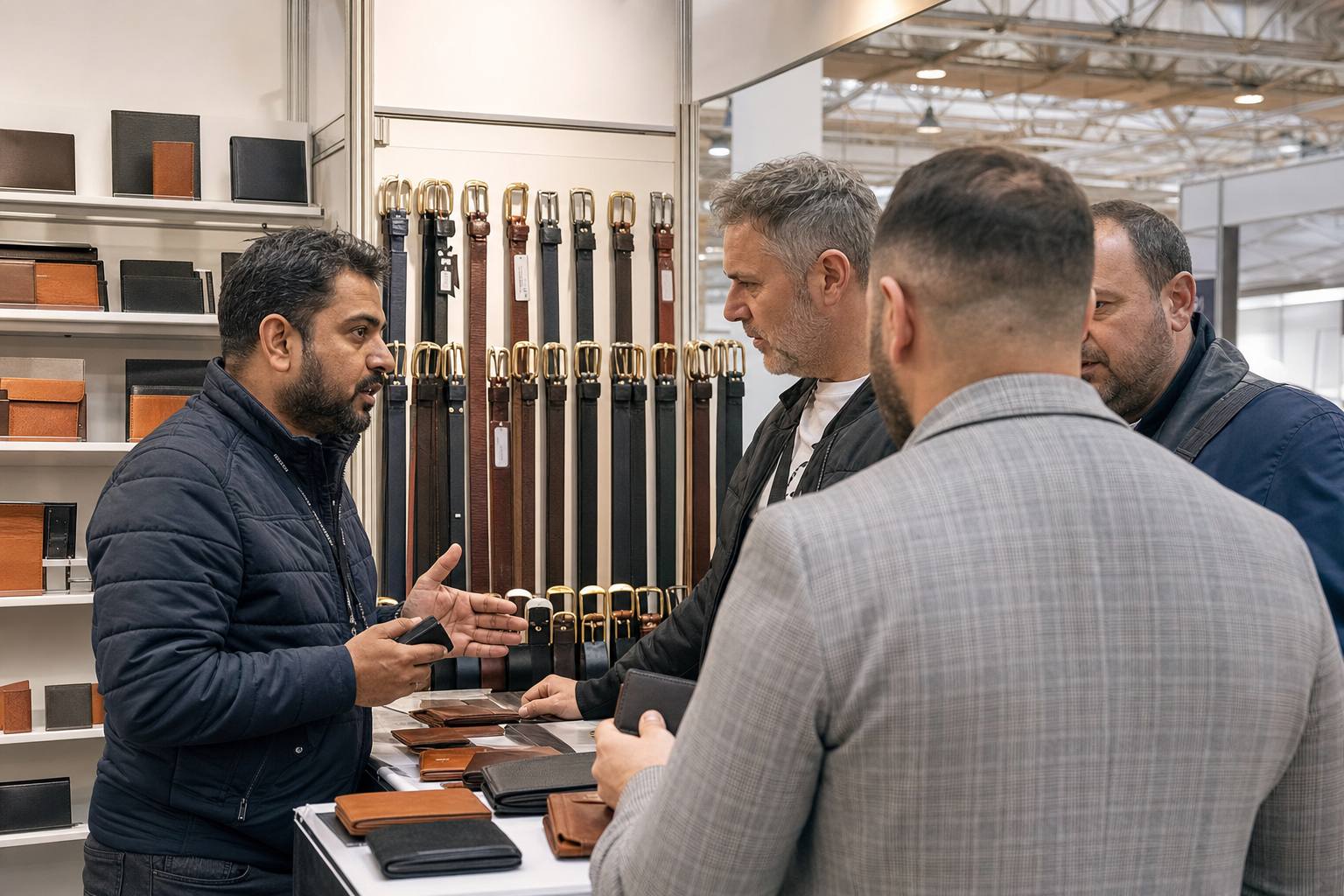
Finding genuine international buyers is usually harder than stitching a bifold or finishing a belt edge. India ships leather wallets under HS 4202.31 and leather belts under HS 4203.30 from clusters in Kanpur, Kolkata (Bantala), Delhi-NCR, Ambur–Ranipet–Chennai, Agra, Jaipur — but purchase orders do not arrive because a catalogue exists online.
This guide is a prospecting and buyer-qualification playbook. It focuses on HS 420231 / 420330 import-data mining, LinkedIn outreach to named procurement leads, CLE buyer-seller meets as one channel among several, and a scoring model that filters brokers before they burn sample and buckle-tooling budgets.
It is deliberately narrow: this is not a product catalogue (see Top Leather Wallet and Belt Products Exported from India) and not a CLE registration deep-dive (see CLE Registration Benefits for Wallet and Belt Exporters). Pair it with Most Demanded Indian Leather Wallets and Belts by Country, Trade Shows and B2B Marketplaces for Leather Wallet and Belt Exporters, and Sustainable and Premium Leather Wallet and Belt Export Opportunities.
Altus Exports works as a merchant exporter in India and global sourcing partner connecting verified Indian wallet and belt suppliers with qualified international demand.
Key Takeaways
Summary Box
Executive Summary
Summary Box
Buyer discovery in leather wallets and belts fails for a predictable reason: exporters run one channel at a time, chase inquiry volume instead of qualification, and dispatch free samples before verifying that a lead can import and pay. This guide reframes lead generation as a data-plus-verification discipline for small leather goods (SLG) and belt programmes.
Trade data under HS 4202.31 and HS 4203.30 tells you who already imports; LinkedIn extends that list to named decision-makers; CLE meets and fairs compress cold outreach into higher-intent conversations; and a scoring model separates buyers worth a paid sample from brokers who will never convert.
The commercial payoff is process discipline, not a guaranteed conversion formula: exporters who combine HS-filtered trade data, LinkedIn enrichment, and CLE fair follow-up usually build a working shortlist of verified accounts within one quarter and can progress a subset to paid samples and trial shipments within roughly 90–150 days — results vary by category fit, price tier, and sample quality. None of this replaces export readiness — CLE registration, a valid IEC, and grade-consistent samples must exist before outreach begins.
This guide walks through market context, product framing, pricing, MOQ, packaging, and certifications only as far as a prospecting exporter needs them to sound credible in a first exchange. Deeper operational detail lives in How to Export Leather Wallets and Belts from India and Leather Wallet and Belt Export Documentation Checklist.
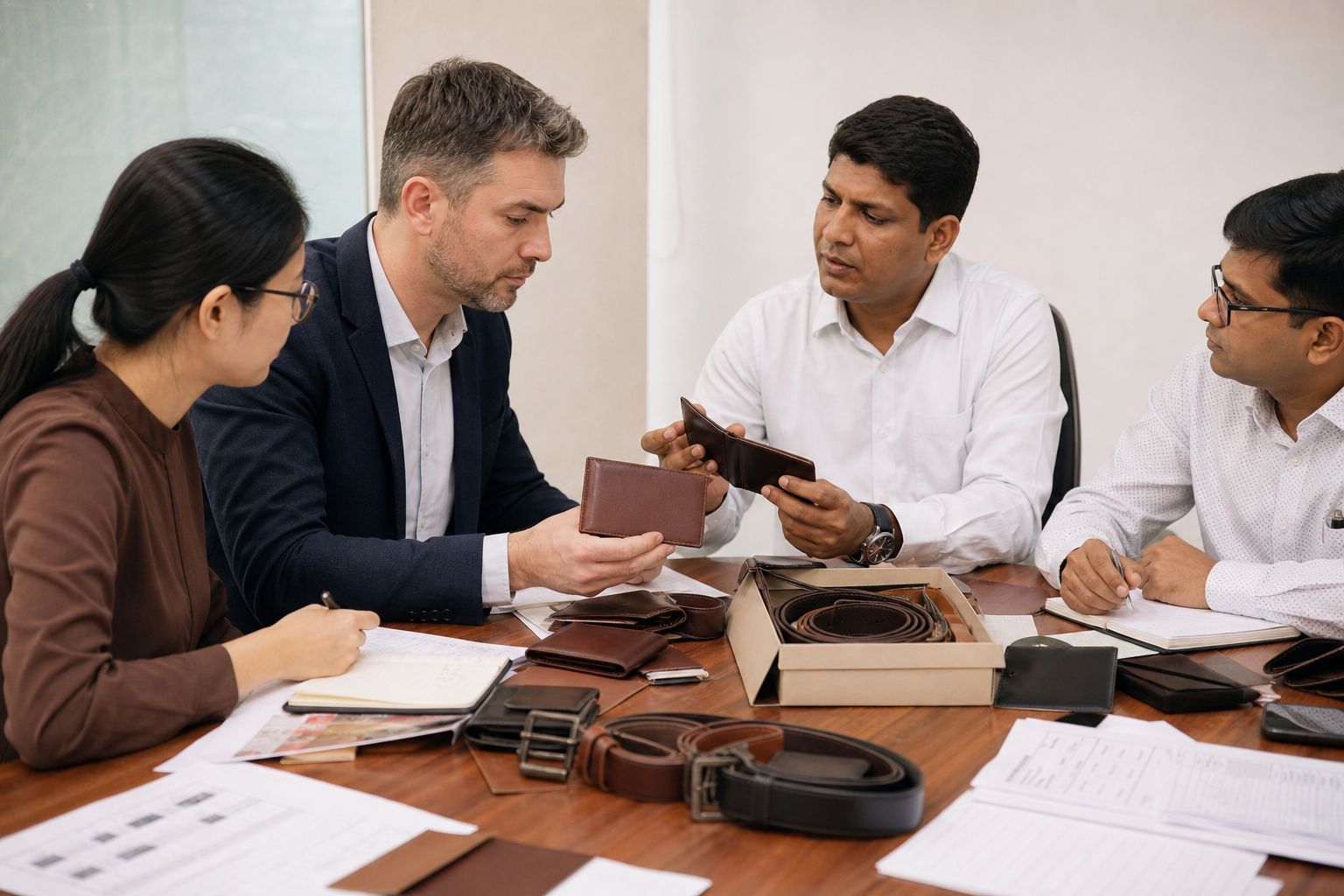
Market Size & Industry Overview
Key Statistics
India's leather and leather products export base includes a substantial small leather goods and belt segment shipped from Kanpur, Kolkata (Bantala), Delhi-NCR, Ambur–Ranipet–Chennai, Agra, Jaipur. Unlike footwear or large bags, wallets and belts sell through accessory retail, department-store private label, corporate gifting, e-commerce brands, and wholesale distributors — often at lower unit value but higher piece counts and faster reorder cycles.
Council for Leather Exports (CLE) remains the sector's promotional and RCMC anchor. Understanding where your factory sits relative to buyer type shapes which leads are worth prospecting first: a Kanpur bifold specialist pitching a Japanese RFID-slim programme is a weaker fit than the same unit pitching a US men's accessory wholesaler, while a Delhi-NCR reversible-belt line is a stronger match for Gulf retail than for a German formal-wear chain seeking vegetable-tanned dress belts.
India Leather Wallet & Belt Industry Snapshot (Indicative)
Swipe →
Data table — swipe horizontally on small screens
| Dimension | Approximate Figure / Fact | Relevance to Buyer Prospecting |
|---|---|---|
| HS wallets (leather outer) | 4202.31 / India 42023120 | Correct HS mapping is the first filter when reading import trade data |
| HS leather belts | 4203.30 / India 42033000 | Separate belt searches from wallet searches — many buyers import only one |
| Primary clusters | Kanpur, Kolkata (Bantala), Delhi-NCR, Ambur–Ranipet–Chennai, Agra, Jaipur | Cluster reputation shapes buyer risk assessment in the first call |
| Major export ports | Mundra, Nhava Sheva, Chennai, Tuticorin, Kolkata | Port choice affects lead-time claims made in outreach |
| Regulatory body | Council for Leather Exports (CLE) — leatherindia.org | First credential most buyers verify before a serious conversation |
| Leading destinations | USA, UK, Germany, UAE, France, Netherlands, Australia, Japan, Canada, Saudi Arabia | Where trade-data prospecting yields the deepest named-buyer lists |
Export Statistics
Key Statistics
CLE and DGCIS statistics for leather products show wallets and belts moving within the broader leather goods basket rather than as a single headline line item. For lead generation, export statistics answer one practical question: where does India already have trading relationships and reputation for small leather goods and belts? A buyer in a market that already imports Indian SLG and belts at scale is far more responsive than one in a market where Indian-origin accessories still require category education alongside supplier qualification.
Destination concentration for Indian leather wallets and belts typically tracks the USA, UK, Germany, UAE, France, and the Netherlands, with Australia, Japan, Canada, and Saudi Arabia as meaningful secondary lanes. Use destination share as a filter for which market to prospect first if you have no prior export history — not as a substitute for named-importer research.
Indicative Destination Priority for Wallet & Belt Prospecting
Swipe →
Data table — swipe horizontally on small screens
| Destination | Dominant Category Demand | Lead-Gen Priority Signal |
|---|---|---|
| USA | Bifolds, card holders, RFID wallets, casual belts | HS 420231/420330 importers with multi-origin sourcing (India + China/Vietnam) |
| UK | Slim wallets, formal belts, gift sets | Department store and multi-brand accessory buyers |
| Germany | Formal belts, full-grain wallets, REACH-ready lines | Retail buyers and wholesalers with EU compliance history |
| UAE / Saudi Arabia | Formal and casual belts, gift wallet–belt sets | Gulf wholesalers and re-export distributors |
| France / Netherlands | Fashion wallets, reversible belts, private label | Design-forward importers and EU redistribution hubs |
| Australia / Japan / Canada | RFID, slim wallets, quality casual belts | Specification-aware buyers who value consistency over price alone |
Import Statistics
Key Statistics
Export statistics tell you what India ships; import statistics tell you who is receiving it — and that distinction is the foundation of trade-data prospecting. Import records under HS 4202.31 reveal which named companies already import leather-outer wallets into your target country, at what volumes, and from which competing origins such as China, Vietnam, Italy, or Pakistan. Parallel searches under HS 4203.30 surface belt-specific importers who may never appear in a wallet-only query.
The single most useful qualification question is: has this company imported leather wallets or belts from India or a competing origin in the last 12–24 months? If yes, they are far warmer than a random directory listing. A second filter — multi-origin sourcing — often flags buyers willing to add a well-documented Indian supplier alongside existing China or Vietnam relationships. Volume thresholds matter: a buyer regularly clearing container programmes sits in a different pipeline tier than a boutique retailer testing 200 card holders.
Top Importing Countries — Demand Signals for Prospecting
Swipe →
Data table — swipe horizontally on small screens
| Importing Country | Import Role | Typical Category Demand | What to Check in Trade Data |
|---|---|---|---|
| USA | Direct retail and wholesale distribution | Bifolds, RFID, casual belts | Consolidator vs. direct retail buyer; multi-origin pattern |
| Germany | Retail chains and specialty accessory importers | Formal belts, full-grain wallets | REACH-compliant supplier history; LWG preference in RFQs |
| UK | Retail chains and wholesale distributors | Slim wallets, formal belts, gift sets | Department-store private-label sourcing offices |
| UAE | Re-export hub and regional retail | Belts, gift sets, men's wallets | Gulf wholesalers reselling into Saudi Arabia and wider region |
| France / Netherlands | Fashion retail and EU redistribution | Fashion wallets, reversible belts | Concurrent India + Italy + China sourcing signals |
| Japan / Australia | Specialty and quality-focused retail | RFID, slim wallets, consistent belts | Low supplier count and high reorder frequency |
Product Categories / Variants
Summary Box
Before prospecting, commercialise a defined product range — not a vague "we export all leather accessories" claim. Successful exporters lead with three to five hero styles they can reproduce with consistent leather grade, lining, stitching density, hardware finish, and (for belts) buckle system and width. Buyers ignore vague listings and reply to precise ones with tech packs already attached. For full category depth, see Top Leather Wallet and Belt Products Exported from India.
Naming the correct HS heading in a first message — 4202.31 for leather-outer wallets versus 4203.30 for leather belts — signals classification literacy, which is itself a mild but real trust signal in a category where misclassified invoices are common.
Product Categories and Typical Buyer Type
Swipe →
Data table — swipe horizontally on small screens
| Category | Typical HS | Indicative Trial MOQ | Primary Buyer Type |
|---|---|---|---|
| Men's bifold wallets | 4202.31 | 100–300 pcs / style (wallets); 150–400 pcs / style (belts) | Accessory wholesalers, department stores |
| Trifold / zip-around wallets | 4202.31 | 100–300 pcs / style (wallets); 150–400 pcs / style (belts) | Fashion retail, e-commerce private label |
| Card holders / slim wallets | 4202.31 | 100–300 pcs / style (wallets); 150–400 pcs / style (belts) | Lifestyle brands, travel accessory buyers |
| RFID / passport holders | 4202.31 | 100–300 pcs / style (wallets); 150–400 pcs / style (belts) | Travel retail, airport and e-commerce brands |
| Formal dress belts | 4203.30 | 100–300 pcs / style (wallets); 150–400 pcs / style (belts) | Menswear chains, formalwear distributors |
| Casual / jeans / reversible belts | 4203.30 | 100–300 pcs / style (wallets); 150–400 pcs / style (belts) | Denim retail, lifestyle wholesale |
| Corporate gift wallet–belt sets | Mixed 420231 + 420330 | 200–800 sets / assortment | Corporate gifting houses, promotional distributors |
Manufacturing Overview
Export Tip
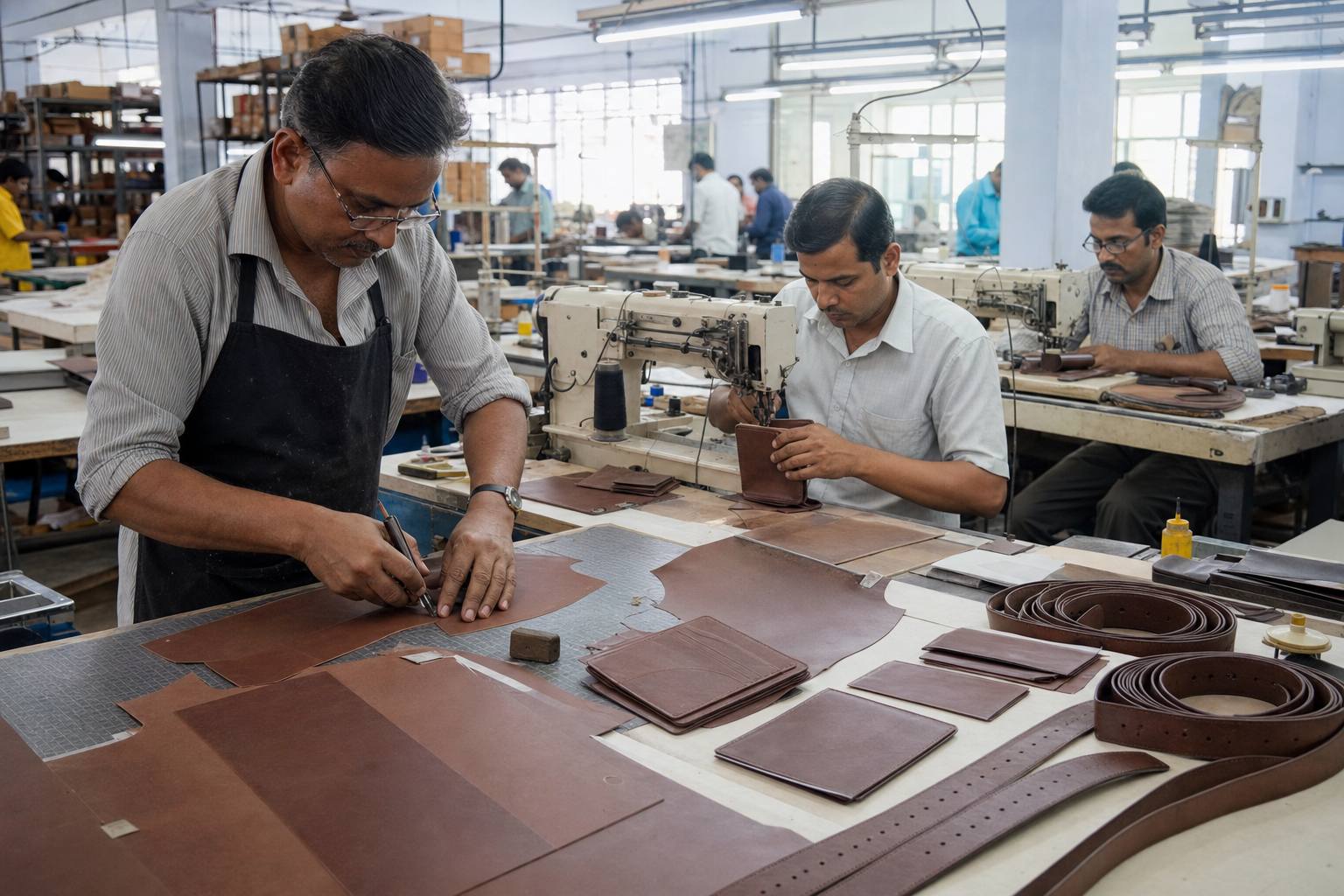
Knowing where and how a style is made matters to prospecting because buyers ask about it early. Kanpur and Kolkata (Bantala) combine tannery proximity with SLG finishing depth. Delhi-NCR and Agra support fast sampling for private-label accessory programmes. Ambur–Ranipet–Chennai carries strong export-oriented process discipline inherited from broader leather goods programmes. Jaipur often fits fashion and colourway-led belt and wallet assortments.
State construction plainly in outreach: wallet stitching density and edge paint, RFID lining type, belt width (typically 30–35 mm formal or 35–40 mm casual), buckle material, and whether the buckle is branded or blank. Vague answers signal an underdeveloped tech pack. Sample lead times of 7–18 days after locked tech pack and trial orders of 25–45 days ex-factory after sample sign-off should be quoted only when hardware and leather booking realities support them.
Pricing Analysis
Buyer Tip
Export price is not domestic wholesale plus freight. Build FOB from leather procurement, lining and RFID inserts where applicable, cutting and stitching labour, buckle and hardware cost, finishing, packaging, CLE compliance overhead, inland haulage to the load port, documentation, and exporter margin. Benchmark against China and Vietnam for volume card holders and casual belts, and against Italy and Spain for premium full-grain programmes — India's price advantage is strongest in mid-volume private-label wallets, formal belts, and gift sets.
In negotiations, quote the full package — leather grade, construction, colourways, packaging format, Incoterm, payment terms, MOQ, and lead time — rather than a bare per-piece number. Buyers who negotiate only unit price without specification lock-in generate quality disputes later.
Indicative FOB Price Ranges (Planning Figures)
Swipe →
Data table — swipe horizontally on small screens
| Category | Indicative FOB | Primary Destinations | Key Price Driver |
|---|---|---|---|
| Bifold wallet | US$4–12 / pc FOB | USA, UK, UAE | Leather grade; lining; stitch density |
| Trifold wallet | US$5–14 / pc FOB | USA, Europe | Panel count; zip quality |
| Card holder / slim | US$2.50–8 / pc FOB | Japan, USA, UK | Minimalist construction; edge finish |
| Passport / travel wallet | US$6–16 / pc FOB | Travel retail, EU | RFID insert; multi-pocket complexity |
| RFID wallet | US$6–18 / pc FOB | USA, UK, Australia | Shielding layer; claim substantiation |
| Formal belt | US$3.50–12 / pc FOB | Germany, UK, USA | Leather thickness; buckle quality |
| Casual belt | US$3–10 / pc FOB | USA, UAE, Australia | Width; hardware finish |
| Reversible belt | US$5–15 / pc FOB | Europe, USA | Dual-face leather; buckle system |
| Premium full-grain set | US$18–45 / set FOB | EU, Japan, USA | Matched leather lot; gift packaging |
MOQ Analysis
Buyer Tip
MOQ honesty accelerates conversion far more than aggressive pricing. If a factory can reliably supply a few thousand wallets per style per quarter, say so plainly. If a reversible belt style is limited by buckle tooling or leather availability, communicate allocation windows early — serious buyers respect supply realism and abandon exporters who overpromise then deliver inconsistent grading on bulk.
Typical MOQ by Programme Stage
Swipe →
Data table — swipe horizontally on small screens
| Programme Stage | Indicative MOQ | Notes |
|---|---|---|
| MSME trial / first order | 100–300 pcs / style (wallets); 150–400 pcs / style (belts) | Colourway count drives true minimums |
| Standard programme | 300–1,000 pcs / style | Forward leather booking often required |
| Retail chain / private label | 1,000–5,000+ pcs / style / colourway | Seasonal calendars and forecasts agreed in advance |
| Gift-set assortment | 200–800 sets / assortment | Matched wallet–belt leather lots add complexity |
Packaging Standards
Export Tip
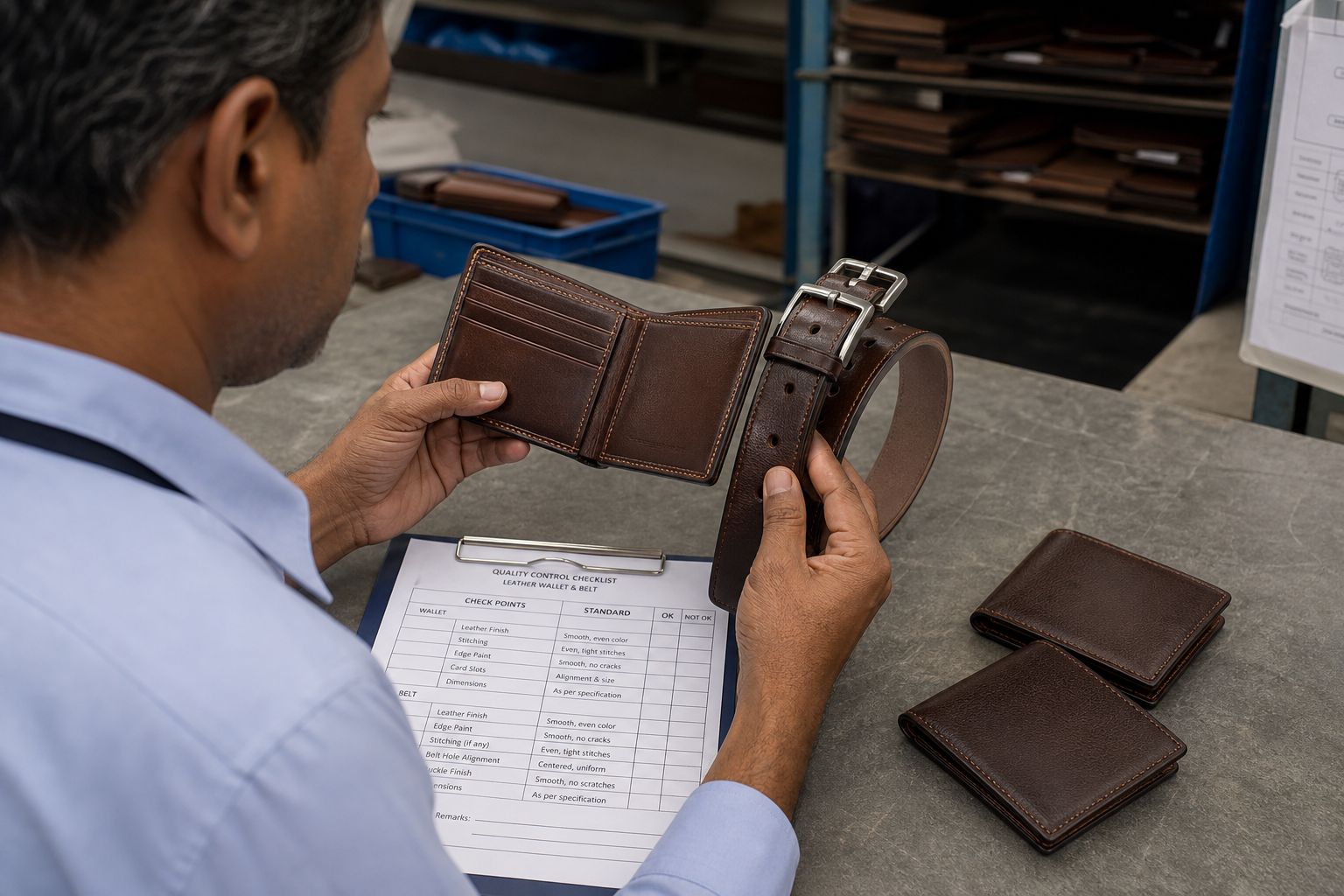
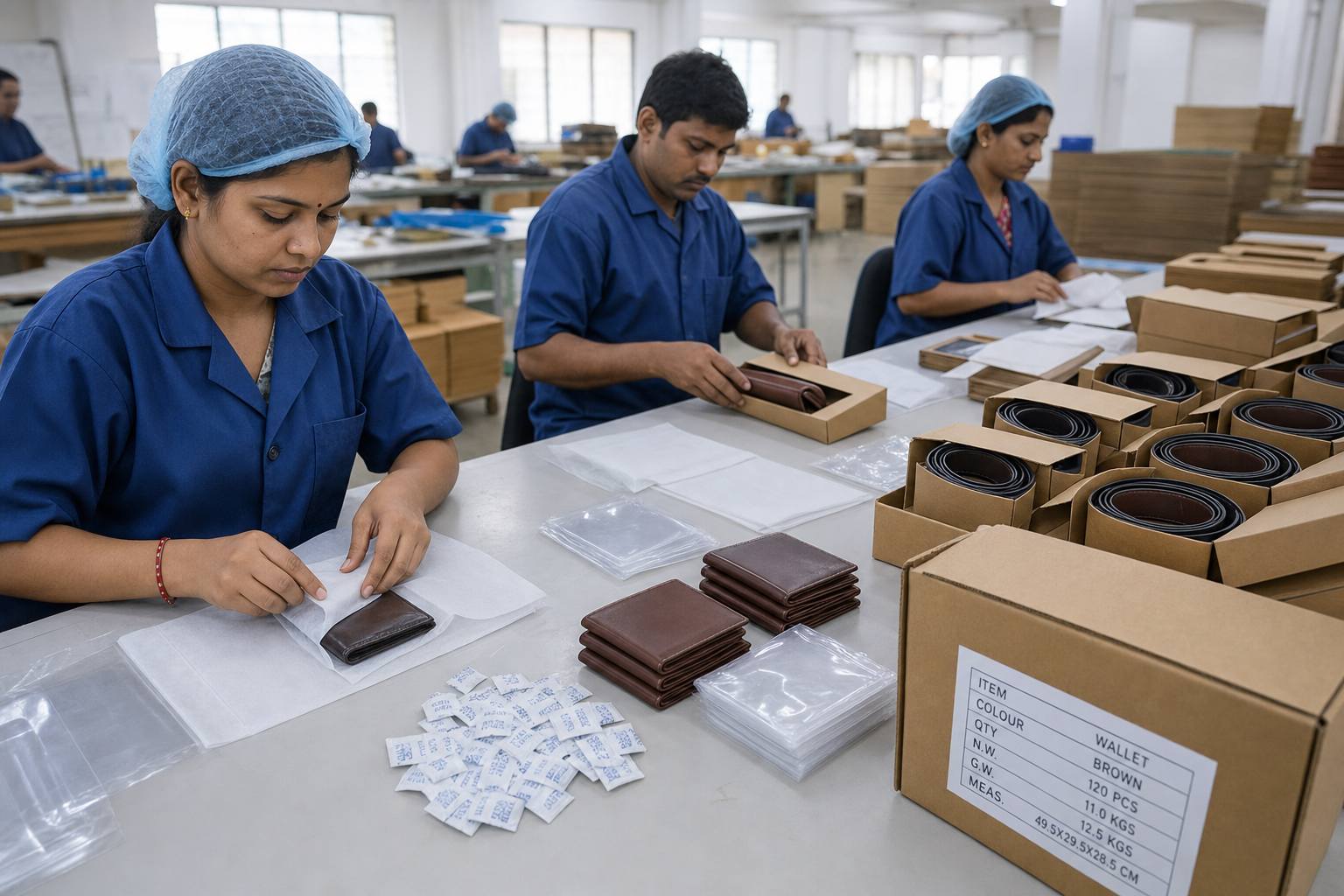
Packaging questions surface early in a serious buyer conversation because packaging format signals whether a supplier is set up for retail-ready programmes or bulk wholesale only. Standard export packing places each wallet in a soft pouch or individual box with tissue and silica gel where specified, and each belt coiled or flat-packed with buckle protection, then consolidates into master cartons by style and colourway.
Standard Export Packaging Formats
Swipe →
Data table — swipe horizontally on small screens
| Packaging Format | Typical Contents | Common Use Case | Key Requirement |
|---|---|---|---|
| Soft pouch + tissue | 1 wallet | Wholesale and e-commerce replenishment | Dust and scratch protection |
| Individual gift box | 1 wallet or 1 belt | Retail-ready and corporate gift programmes | Barcode and label compliance |
| Belt coil / flat pack with buckle guard | 1 belt | Formal and casual belt programmes | Prevent buckle scratch and leather crease |
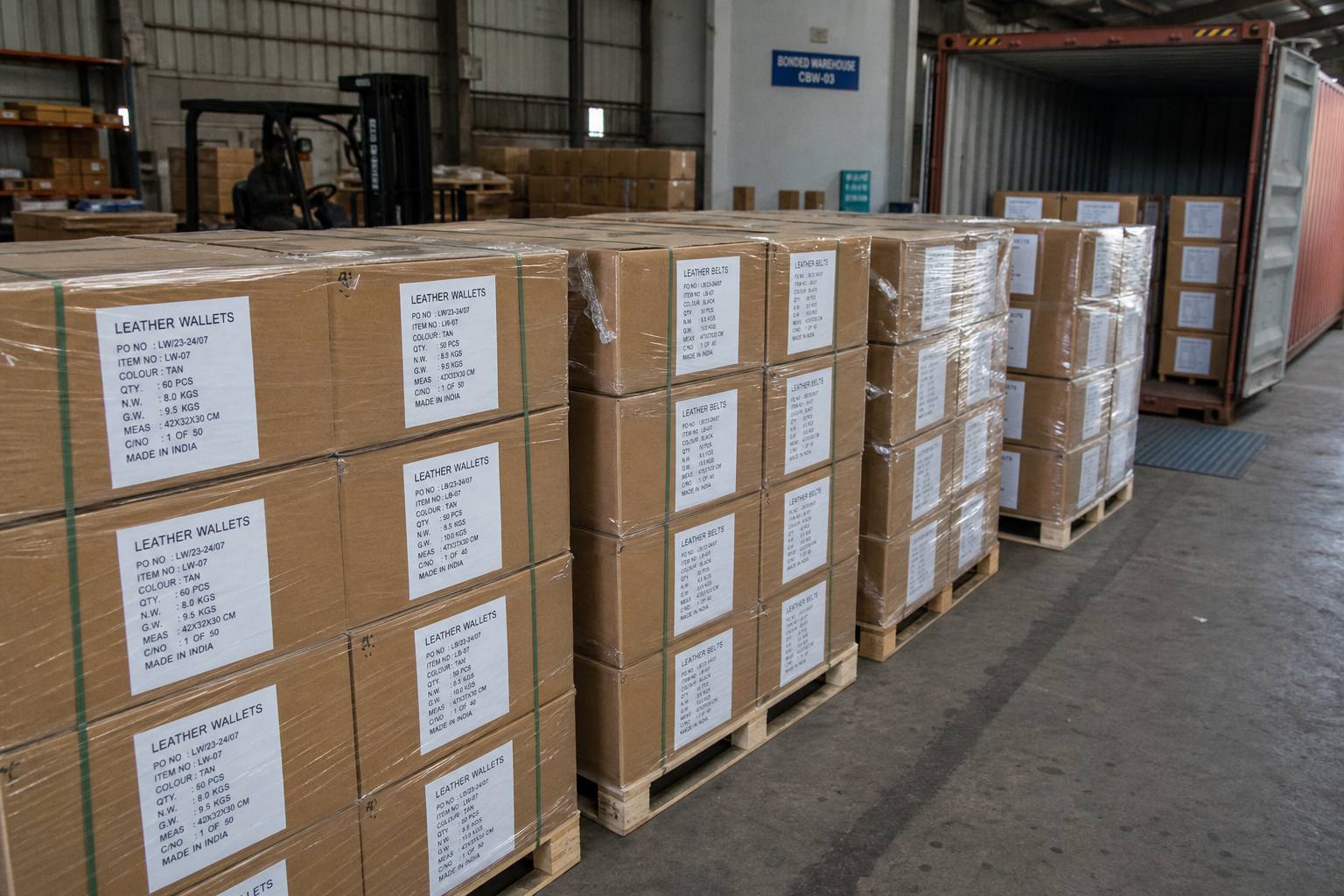
| Master carton (style consolidated) | Multiple units | Standard bulk export | Clear markings: style, colour, qty, weight |
| Gift-set presentation box | Wallet + belt matched set | Corporate and festive assortments | Matched leather lot and set SKU labelling |
Container Loading Details
Export Tip
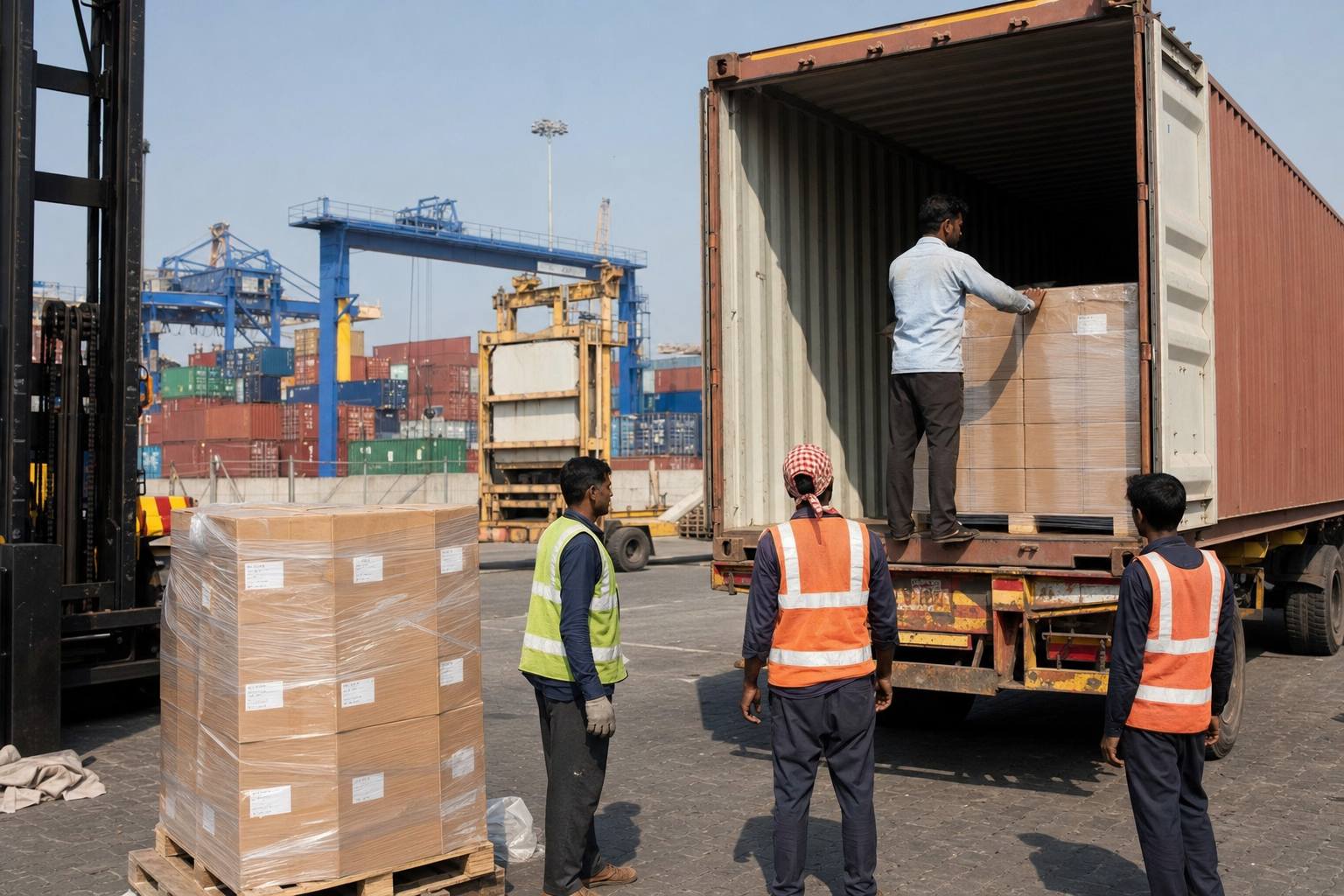
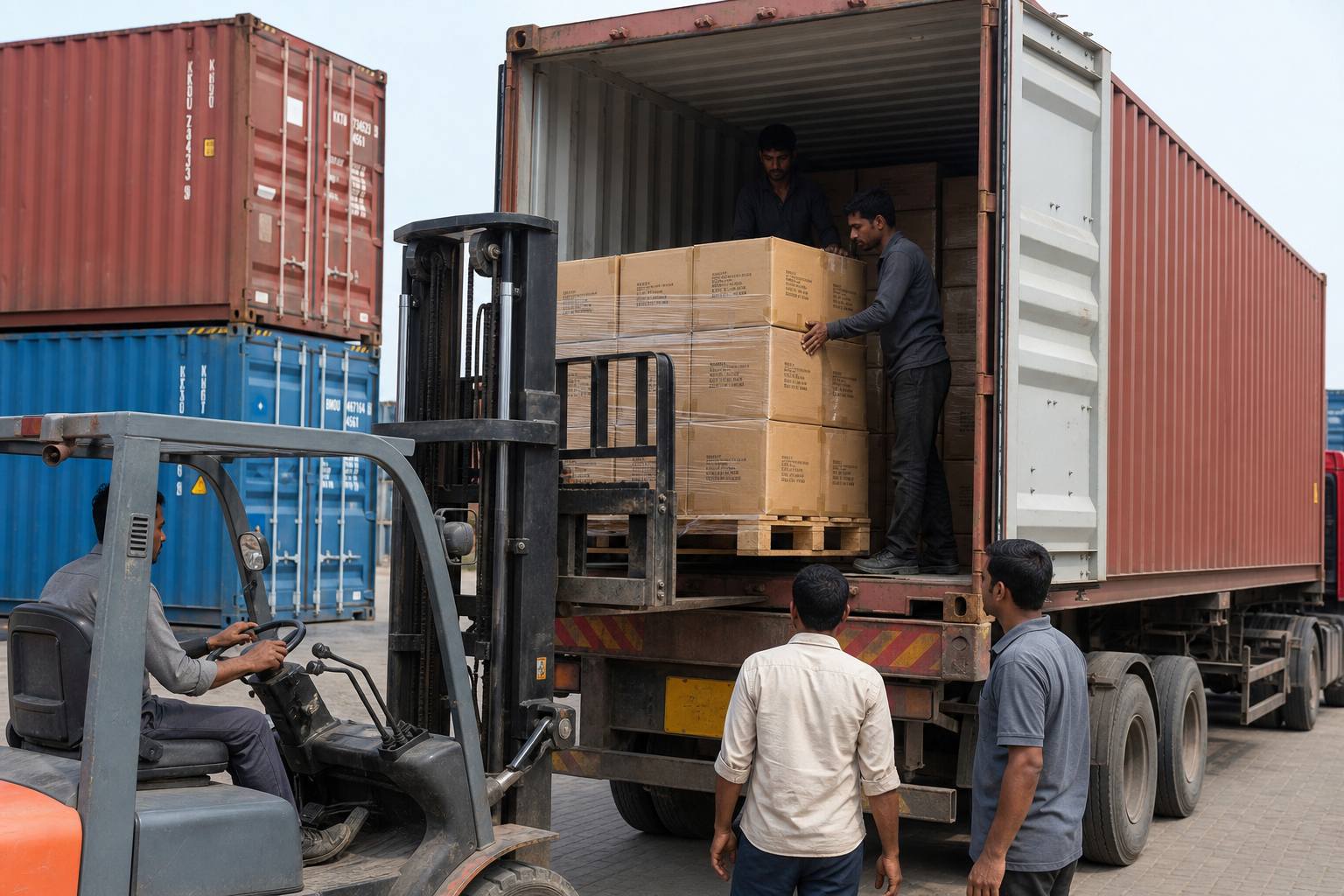
A buyer asking about container loading is usually estimating freight cost per piece before committing to a trial order. Wallet cartons nest denser than belt cartons with buckles; stuffing from actual carton dimensions beats brochure estimates. Indicative planning figures: 20ft — 8,000–18,000 wallets or 6,000–14,000 belts (carton-dependent); 40ft HC — 18,000–40,000 wallets or 14,000–32,000 belts (carton-dependent). Belt cartons with buckles weigh more per cube; wallet SLG nests denser. Always stuff from actual carton dims.
Indicative Container Loading Benchmarks
Swipe →
Data table — swipe horizontally on small screens
| Container Type | Approx. Wallets | Approx. Belts | Notes |
|---|---|---|---|
| 20-foot FCL | 8,000–18,000 pcs | 6,000–14,000 pcs | Common for mid-size programmes |
| 40-foot HC | 18,000–40,000 pcs | 14,000–32,000 pcs | Preferred for retail-chain replenishment |
| LCL consolidation | 200–3,000 pcs | 150–2,000 pcs | Typical for trial orders and multi-style mixes |
Shipping Methods
Export Tip
Sea freight is the dominant method for wallet and belt export from India on cost grounds once trial volumes grow past air-sample economics. FOB is the Incoterm used on most Indian accessory shipments, with CIF/CFR common when buyers want a single landed-cost quote. Mundra and Nhava Sheva serve northern and western clusters; Chennai and Tuticorin serve southern export belts; Kolkata serves eastern cluster shipments. Sample and small trial shipments typically move by air because speed to a buyer's decision matters more than freight cost at the qualification stage. Bulk programme lead times of 45–75 days to vessel (hardware/buckle lead time parallel) should be stated with buckle and hardware lead time called out in parallel.
Certifications
Compliance Notes
Buyers evaluating an unfamiliar Indian supplier check certifications as a proxy for operational discipline before they check design or price. CLE membership and RCMC come first; REACH chromium VI compliance is non-negotiable for EU and UK-bound leather; and LWG tannery sourcing or chrome-free / vegetable-tanned claims matter to premium and sustainability-focused buyers — covered in depth in Sustainable and Premium Leather Wallet and Belt Export Opportunities.
Certifications Buyers Check Before a Serious Conversation
Swipe →
Data table — swipe horizontally on small screens
| Certification / Registration | Mandatory or Optional | Relevance to Prospecting |
|---|---|---|
| CLE membership and RCMC | Effectively mandatory | First credential most buyers verify before a deposit |
| Valid IEC (DGFT) | Mandatory | Confirms legal export eligibility on every shipping bill |
| REACH chromium VI compliance | Mandatory for EU/UK | Non-negotiable for EU and UK buyer conversations |
| RFID performance claim evidence | Optional but expected if claimed | Buyers ask for test method, not marketing language |
| LWG / chrome-free / veg-tan claims | Optional | Relevant to premium and sustainability-focused segments |
Buyer Requirements
Buyer Requirements
Buyers will ask whether you can execute export operationally before they engage seriously on price. Be ready to confirm an active IEC, a current CLE RCMC, a recent inspection or leather test report, standard export packaging, and familiarity with FOB or CIF terms. Quoting "best price" without Incoterm definition is a red flag from both sides.
Buyer Verification Signals — Legitimate vs. Red Flag
Swipe →
Data table — swipe horizontally on small screens
| Verification Signal | What Good Looks Like | Red Flag |
|---|---|---|
| Business legitimacy | Registered importer, VAT/EIN traces, accessory trade footprint | Only a personal Gmail address, no entity trail |
| Purchasing history | HS 420231 or 420330 shipments visible in trade data | Claims a 20,000-pc first order with zero import footprint |
| Specification awareness | Asks about leather grade, stitch density, belt width, buckle type | Only asks for cheapest price with no quality discussion |
| Payment reliability | Normal advance / LC / SBLC terms discussion | Unusual payment platforms or third-party transfers |
| Communication pattern | Named buyer, consistent company domain email | Changing identities mid-thread |
Country-wise Opportunities
Market Snapshot
Rank destination markets before you open a CRM sheet: RFID card holders and bifolds do not share the same importer pool as 30–35 mm formal belts, so keep wallet and belt pipelines separate by country tier. Deeper entry notes live in Best Countries for Indian Leather Wallet and Belt Exports and Most Demanded Indian Leather Wallets and Belts by Country.
USA
The deepest named-importer pool for bifolds, card holders, RFID wallets, and casual belts. Verify whether the consignee is a consolidator or a direct retail buyer before investing in a large free sample kit.
Germany and the UK
Strong formal-belt and full-grain wallet demand with early REACH questions. Prospect wholesale distributors and multi-brand accessory buyers with documented multi-origin sourcing.
France and the Netherlands
Fashion-forward wallet silhouettes and reversible belts; Rotterdam often redistributes into wider EU. Concurrent Italy + India import activity signals active multi-origin fashion buyers.
UAE and Saudi Arabia
Direct Gulf retail plus re-export into the wider region. Gift wallet–belt sets and formal belts convert well; faster transit from India makes this a strong first-export corridor for smaller factories.
Australia, Japan, and Canada
Smaller volume but high specification discipline. RFID and slim wallets perform in Japan and Australia; Canada often follows US assortment logic with tighter QC expectations on edge finish and hardware colour match.
Expert Insight: Lead with Card Slots and Belt Specs, Not PDFs
Expert Insight Box
Accessory inquiries convert when the first reply names construction: card-slot count and stitch density for bifolds, RFID liner type for slim wallets, 30–35 mm width plus buckle finish for dress belts, edge-paint standard, MOQ, post-PO lead time, Incoterm, and packaging. Attach a one-page SKU sheet with CLE reference and test-report availability, then offer timed paid samples — not open free kits — once the account clears verification.
Sourcing Checklist
Checklist
Common Buyer Mistakes
Common Mistakes Box
Wallet and belt prospecting fails in familiar ways: free RFID kits to unverified inboxes, FOB quotes before buckle or card-slot specs lock, and fair calendars treated as the only pipeline. The callouts below flag those traps before sample and tooling budgets burn.
Future Market Trends
Key Statistics
Trade-data access is becoming more granular and affordable, letting mid-size SLG and belt exporters run shipment-level prospecting that used to require expensive subscriptions. CLE and industry bodies continue expanding digital buyer-seller matching alongside physical meets. On the buyer side, retail and OEM importers ask for traceability evidence earlier — tannery identity, REACH documentation, and RFID claim substantiation now surface in the first or second exchange rather than at contract stage, rewarding exporters who prepare that evidence pack in advance.
Private-label accessory programmes and corporate gift sets are growing as distinct buyer segments with different MOQ and packaging logic from pure wholesale. Exporters who can quote matched wallet–belt sets with lot-level leather consistency will capture a larger share of those programmes than factories selling only loose styles.
Buyer Checklist
Checklist
Exporter Checklist
Checklist
Compliance Checklist
Checklist
Compliance Notes
Expert Insight: SKU Sheets and a Weekly Belt–Wallet Cadence
Expert Insight Box
Factories that keep reorders treat the CRM like the stitching line — staged and reviewed weekly. Park every named account in research → contacted → sampling → quotation → negotiation → first shipment → reorder, and open the board every Monday. Track three SLG metrics monthly: technical conversations that name construction, sample-to-trial conversion, and reorder rate on bifolds versus belts.
Conclusion
- Next: match style to market with Most Demanded Indian Leather Wallets and Belts by Country.
- Registration detail: CLE Registration Benefits for Wallet and Belt Exporters.
- Documentation deep dive: Leather Wallet and Belt Export Documentation Checklist.
- Fair-by-fair playbook: Trade Shows and B2B Marketplaces for Leather Wallet and Belt Exporters.
- Premium angle: Sustainable and Premium Leather Wallet and Belt Export Opportunities and the full process in How to Export Leather Wallets and Belts from India.
- Buyer playbook: Source Leather Wallets and Belts from India.
- Explore merchant exporter, export products from India, and global sourcing partner partnership models.
Finding international buyers for leather wallets and belts from India comes down to combining the strongest channels — HS 420231/420330 trade data, LinkedIn prospecting, and selective CLE fair attendance — with strict buyer verification, specification-specific documentation readiness, and a CRM-managed pipeline that respects buyer time and quality standards.
Altus Exports pairs Kanpur, Kolkata Bantala, Delhi-NCR, and Ambur–Ranipet–Chennai wallet and belt capacity with verified accessory importers, then carries the same programmes through CLE paperwork and FCL execution. Start with our merchant exporter or global sourcing partner desks, or request introductions via find manufacturers in India and product sourcing company in India.