
Leather Wallet and Belt Export Documentation Checklist for Indian Exporters
By Saurabh Mittal, Founder, Altus Exports
A document-by-document export checklist for Indian leather wallet and belt exporters — commercial invoice with separate HS lines for wallets (420231) versus belts (420330), packing list, shipping bill, bill of lading, certificate of origin, REACH chromium VI reports, buckle and metal declarations where needed, insurance, and payment documents, with validity windows and common filing errors specific to SLG and belt shipments.

One mismatched HS line between wallets and belts can hold an entire mixed carton shipment — even when every piece is export-ready.
Document-by-document checklist for SLG and belts: commercial invoice, packing list, shipping bill, bill of lading, certificate of origin, REACH Cr(VI), and buckle or metal declarations where needed — with validity windows and filing errors specific to wallets versus belts. Not a prospecting guide (Find Buyers).
Keep HS lines separate: wallets under 4202.31 / 42023120; belts under 4203.30 / 42033000. Foundations assumed via How to Export and CLE Benefits.
Altus builds the wallet and belt document set in parallel with cutting and buckle fitting as merchant exporter, so REACH panels and packing lists land when cartons do — not in a sailing-week scramble.
Key Takeaways
Summary Box
Executive Summary
Summary Box
This checklist is organized the way a customs officer or import broker reviews a mixed small-leather-goods (SLG) and belt shipment: foundational registrations first, then core commercial and transport documents, then category-specific chemical and metal declarations, then insurance and payment paperwork, then destination labelling detail.
Each section states what the document must contain, when in the production cycle to prepare it, its typical validity window, and the error that most often triggers a hold for wallets under 4202.31 or belts under 4203.30.
The underlying rule is simple: every document must agree with every other document, and with what an inspector sees when a carton is opened. Mixed programs that put wallets and belts on one vague HS line invite examination even when the leather quality is excellent.
Master Document Matrix: Leather Wallet and Belt Export
Swipe →
Data table — swipe horizontally on small screens
| Document | Prepared By | When Required | Typical Validity | Must Match On |
|---|---|---|---|---|
| IEC (DGFT) | Exporter | Before first shipment | Permanent; update on address/bank change | PAN, GST, shipping bill exporter field |
| GST registration + LUT | Exporter | Before first export invoice | Ongoing; LUT renewed annually | Export invoice series, shipping bill |
| CLE RCMC | Exporter via CLE | Before first commercial shipment | Annual renewal | Buyer due diligence, export benefit claims |
| Commercial invoice | Exporter | Every shipment | Per shipment | PO, separate wallet/belt HS lines, lot, weights, value, Incoterm |
| Packing list | Exporter/factory | Every shipment | Per shipment | Invoice SKU, carton marks, net/gross weights, piece counts |
| Shipping bill (ICEGATE) | CHA via exporter | Before port gate-in | Per shipment | Invoice HS codes, qty, value, IEC |
| Bill of lading / AWB | Carrier/forwarder | At shipment | Per shipment | Package count, gross weight, consignee |
| Certificate of origin | Chamber / CLE | Most international buyers | Per shipment only | Invoice description, HS, origin |
| REACH Cr(VI) declaration + test report | Exporter + accredited lab | EU/UK-bound leather wallets and belts | Per lot; 6–12 months from test date | Lot on invoice, packing list, COA |
| Buckle / metal declaration | Exporter / hardware supplier | Belts with metal buckles; EU nickel rules; US lead/CPSIA where applicable | Per hardware lot or buyer program | Buckle SKU, plating, belt style on invoice |
| Marine / cargo insurance | Exporter or buyer per Incoterm | CIF/CIP or buyer-requested cover | Shipment-specific | Invoice value, B/L, consignee |
| Payment documents (L/C, TT advice) | Bank / exporter | Per agreed payment term | Per transaction | Invoice value, buyer reference, PO |
Market Size & Industry Overview
Key Statistics
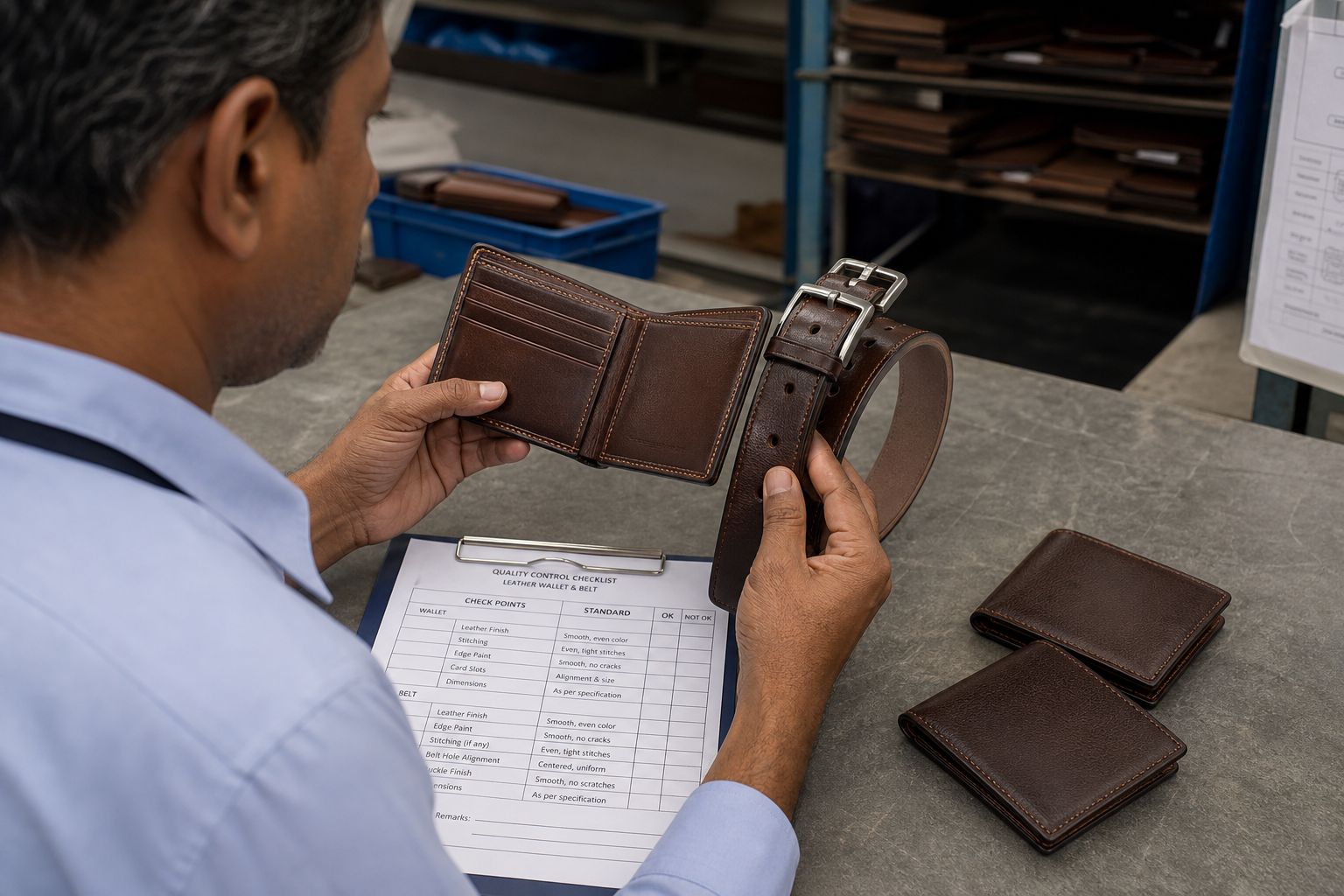
India's leather wallet and belt export industry is anchored by Council for Leather Exports (CLE) registration and manufacturing clusters in Kanpur, Kolkata (Bantala), Delhi-NCR, Ambur–Ranipet–Chennai, Agra, Jaipur. Every document in this checklist supports one of two functions: proving the transaction (invoice, packing list, bill of lading, payment docs) or proving compliance with destination rules (REACH, metal declarations, labelling, insurance).
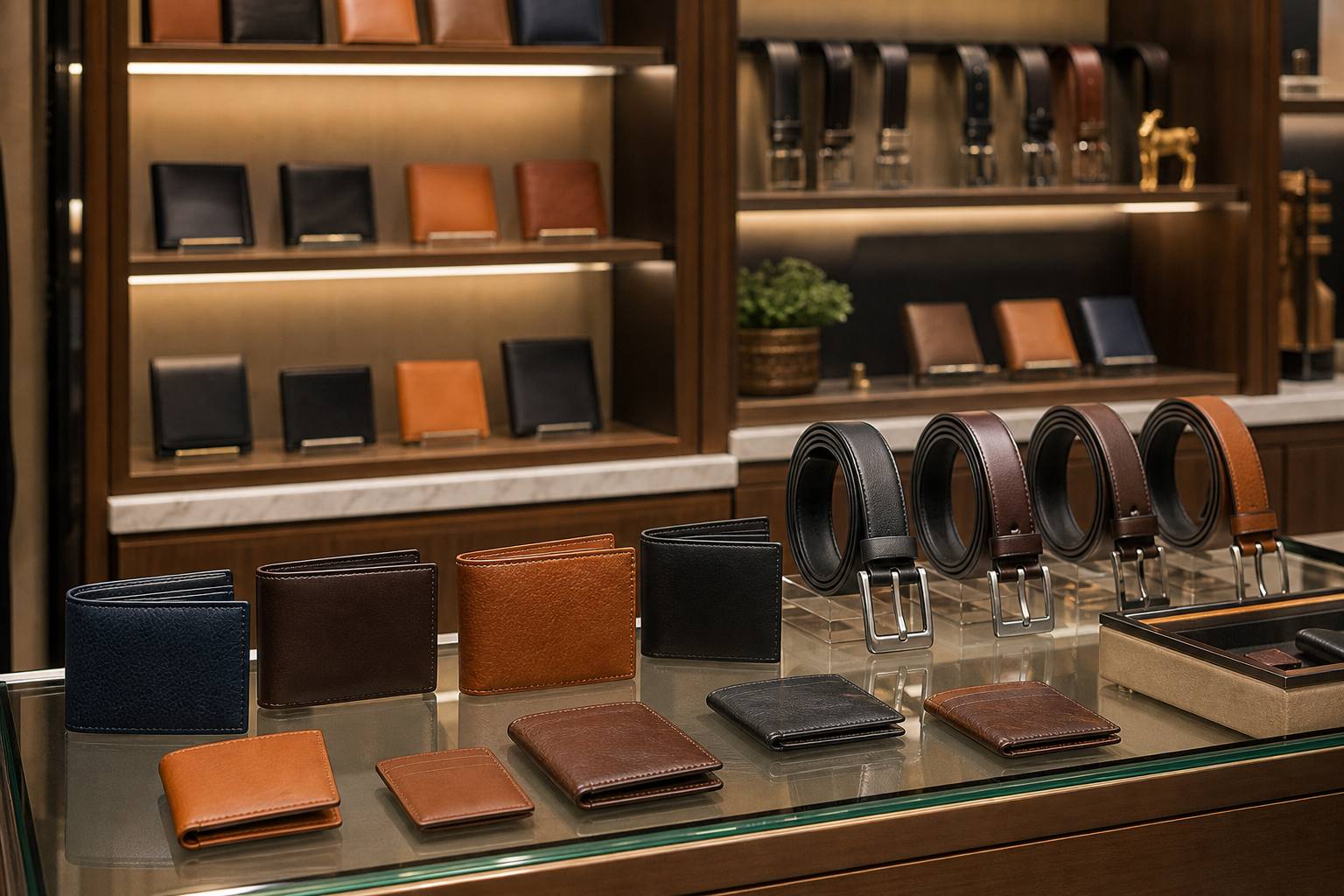
Wallets sit under Chapter 42 as articles normally carried in the pocket or handbag (4202.31 leather outer; 4202.32 plastics or textile outer). Belts of leather or composition leather sit under 4203.30 (42033000 at eight digits). Treating both as “bags” or “accessories” on one shipping-bill line is the signature SLG filing error.
For product-by-product depth — bifolds, card holders, RFID wallets, formal and reversible belts — see Top Leather Wallet and Belt Products Exported from India. This guide focuses on documentation each category shares and the deltas wallets versus belts introduce.
India Wallet and Belt Documentation Landscape (Indicative)
Swipe →
Data table — swipe horizontally on small screens
| Dimension | Detail | Relevance to Documentation |
|---|---|---|
| Wallet HS | 4202.31 / 42023120 | Separate invoice and shipping-bill lines from belts |
| Belt HS | 4203.30 / 42033000 | Never merge with wallet Chapter 42 lines |
| Filing system | Export shipping bill through ICEGATE | Filed by CHA before vessel departure |
| Regulatory anchor | CLE RCMC | Supplier credibility proof on documentation |
| EU/UK compliance | REACH chromium VI + metal/nickel declarations for buckles | Mandatory for leather SLG and belts entering EU/UK |
| Load ports | Mundra, Nhava Sheva, Chennai, Tuticorin, Kolkata | Port of loading on B/L and shipping bill |
Export Statistics
Key Statistics
Documentation volume scales with destination mix more than piece count. A mixed wallet-and-belt program split across Germany, France, and the Netherlands generates more certificate cross-referencing than a single-market USA shipment of the same FOB value. CLE and DGCIS leather-goods statistics consistently place the United States, United Kingdom, Germany, UAE, France, Netherlands, Australia, Japan, Canada, and Saudi Arabia among high-relevance destinations for Indian SLG and belts.
Fair and program buyers increasingly ask for HS clarity at quotation stage because wallet and belt duty treatment can differ at destination. Exporters who ship both categories should maintain two document templates from the first trial order rather than forcing belts into a wallet invoice format mid-season.
Documentation Emphasis by Leading Destination
Swipe →
Data table — swipe horizontally on small screens
| Destination | Core Documents | Category-Specific Additions |
|---|---|---|
| USA | Invoice, packing list, B/L, COO | CPSIA for children's SLG; FTC origin/content labelling; buckle lead rules where applicable |
| Germany / wider EU | Invoice, packing list, B/L, COO | REACH Cr(VI); nickel release for metal buckles; LWG if certified-leather claim |
| UK | Invoice, packing list, B/L, COO | UK REACH-equivalent chemical compliance; metal hardware declarations |
| UAE / Saudi Arabia | Invoice, packing list, B/L, COO | Attested COO for some buyers; longer attestation lead time |
| Australia / Japan | Invoice, packing list, B/L, COO | ISPM 15 on wood packaging (AU); rigorous test docs and retail labelling (JP) |
Import Statistics
Key Statistics
A document pack that clears Indian customs does not automatically clear the destination broker. EU and UK buyers treat REACH chromium VI as non-negotiable for leather wallets and belts. Several Gulf buyers require chamber- or embassy-attested certificates of origin that take three to seven working days beyond a standard chamber certificate. US programs add CPSIA panels for children's wallets or novelty belts and may request metal content evidence for buckles.
Reading destination import rules before locking a delivery date is part of documentation planning. For market prioritisation, see Best Countries for Indian Leather Wallet and Belt Exports and Most Demanded Indian Leather Wallets and Belts by Country.
Destination Import Documentation Requirements
Swipe →
Data table — swipe horizontally on small screens
| Destination | Additional Import Requirement | Typical Lead Time |
|---|---|---|
| EU / Germany / France | REACH Cr(VI) + buckle nickel/metal declaration | Lab testing: 5–10 working days |
| UK | UK REACH-equivalent chemical compliance | Lab testing: 5–10 working days |
| USA (children's SLG) | CPSIA-aligned test report | Lab testing: 5–10 working days |
| Gulf (attested COO) | Chamber or embassy attestation | 3–7 working days beyond standard COO |
| Australia | Biosecurity docs; ISPM 15 on wood pallets | Per shipment packaging review |
Product Categories / Variants
Summary Box
Documentation deltas track construction more than brand story. RFID-blocking wallets need the shielding claim stated consistently on invoice, hangtag, and packing list. Reversible belts need both leather faces and buckle type described so classification and metal declarations stay aligned. Corporate gift sets that combine a wallet and a belt on one commercial invoice still need two HS lines and two packing-list categories.
For assortment strategy, see Top Leather Wallet and Belt Products Exported from India. Indicative FOB anchors include bifold wallets at US$4–12 / pc FOB, RFID wallets at US$6–18 / pc FOB, formal belts at US$3.50–12 / pc FOB, and premium full-grain sets at US$18–45 / set FOB.
Category-Specific Documentation Additions
Swipe →
Data table — swipe horizontally on small screens
| Category | Typical HS | Documentation Addition Beyond Core Set |
|---|---|---|
| Men's bifold / trifold wallets | 4202.31 | REACH for EU/UK; high piece-count packing-list discipline |
| Card holders / slim wallets | 4202.31 | REACH for EU/UK; SKU density per carton |
| RFID-blocking wallets | 4202.31 | RFID claim wording consistent across invoice and hangtag |
| Passport / travel wallets | 4202.31 | REACH for EU/UK; dimensions on invoice for broker clarity |
| Formal / casual leather belts | 4203.30 | Buckle metal declaration; size-run breakdown on packing list |
| Reversible / fashion buckle belts | 4203.30 | Both faces + buckle finish described; metal panel if required |
| Wallet–belt gift sets | Separate wallet + belt lines | Two HS codes on one invoice; set count vs piece count clarity |
Manufacturing Overview
Export Tip
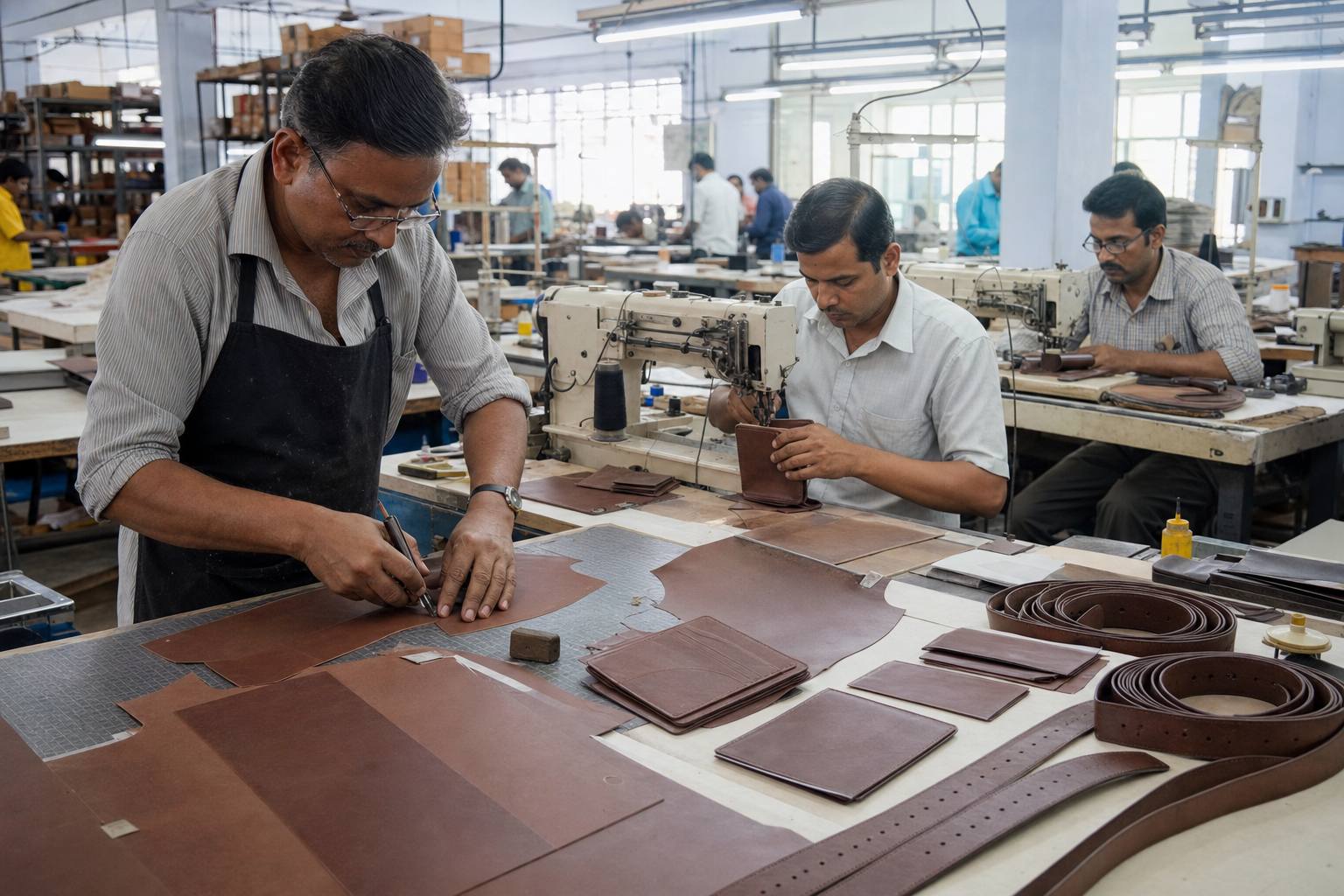
Documentation preparation should track manufacturing, not lag behind packing. Assign a traceable lot number at cutting for wallets and at strap cutting for belts, then carry that lot through stitching, edge finishing, RFID insert fitting, buckle attachment, and packing. Sample chemical testing at the pre-pack stage — once construction is complete but before cartons seal — keeps REACH and metal panels aligned with the lot that actually ships.
Lead-time planning must include document lead time. Typical factory cycles run 7–18 days after locked tech pack for samples, 25–45 days ex-factory after sample sign-off for trial orders, and 45–75 days to vessel (hardware/buckle lead time parallel) for bulk programs. Buckle and hardware procurement often runs parallel; if hardware lots change mid-program, metal declarations must be refreshed before sailing.
Clusters in Kanpur, Kolkata (Bantala), Delhi-NCR, Ambur–Ranipet–Chennai, Agra, Jaipur differ in specialty — Kanpur and Kolkata for volume SLG, Delhi-NCR and Jaipur for fashion accessories, Ambur–Ranipet–Chennai for export-oriented leather goods — but the document discipline is identical across clusters.
Pricing Analysis
Buyer Tip
Documentation cost is a budgetable line item. Laboratory testing fees, chamber COO fees, CHA filing fees, buckle metal panels, insurance premiums, and attestation fees should be quoted into FOB explicitly rather than absorbed as surprise overhead on the first EU trial.
Indicative FOB ranges for planning — card holders US$2.50–8 / pc FOB, passport holders US$6–16 / pc FOB, casual belts US$3–10 / pc FOB, reversible belts US$5–15 / pc FOB — do not include destination duty or buyer-side brokerage. Mixed wallet–belt containers should allocate documentation cost across both HS lines so neither category appears artificially cheap.
Indicative Documentation and Compliance Cost Components
Swipe →
Data table — swipe horizontally on small screens
| Document / Service | Typical Cost Driver | Who Typically Arranges It |
|---|---|---|
| REACH chromium VI test report | Per-lot laboratory fee | Exporter via accredited lab |
| Buckle / nickel / metal panel | Per hardware lot or colorway | Exporter via lab / hardware supplier COA |
| AZO / heavy-metal leather panel | Per-lot, per-color laboratory fee | Exporter via accredited lab |
| Certificate of origin | Chamber or CLE processing fee | Exporter via chamber / CLE |
| Marine / cargo insurance | Percentage of insured value | Exporter (CIF) or buyer (FOB) |
| CHA / shipping bill filing | Per-shipment CHA fee | Exporter via CHA |
MOQ Analysis
Buyer Tip
Fixed REACH and buckle-metal fees hit trial SLG lots harder than volume programmes: the same lab panel roughly covers 100–300 pcs / style (wallets); 150–400 pcs / style (belts) or several thousand pieces. Price documentation into unit FOB on MSME trials more aggressively than on 300–1,000 pcs / style standards or 1,000–5,000+ pcs / style / colourway chain runs.
Gift-set assortments at 200–800 sets / assortment need extra packing-list discipline because set counts and piece counts diverge. Never let a set MOQ collapse two HS codes into one invoice line to “simplify” paperwork.
Documentation Cost Sensitivity by Order Size (Indicative)
Swipe →
Data table — swipe horizontally on small screens
| Order Size | Documentation Cost per Unit (Relative) | Notes |
|---|---|---|
| 100–300 wallets / 150–400 belts (trial) | Highest per-unit documentation cost | Fixed test and certificate fees on small lots |
| 300–1,000 pcs / style (standard) | Moderate per-unit documentation cost | Typical export factory MOQ tier |
| 1,000–5,000+ pcs / style (retail chain) | Lowest per-unit documentation cost | Fixed fees spread across largest lot |
| 200–800 gift sets | High if dual HS testing required | Wallet + belt lines may need separate panels |
Packaging Standards
Export Tip
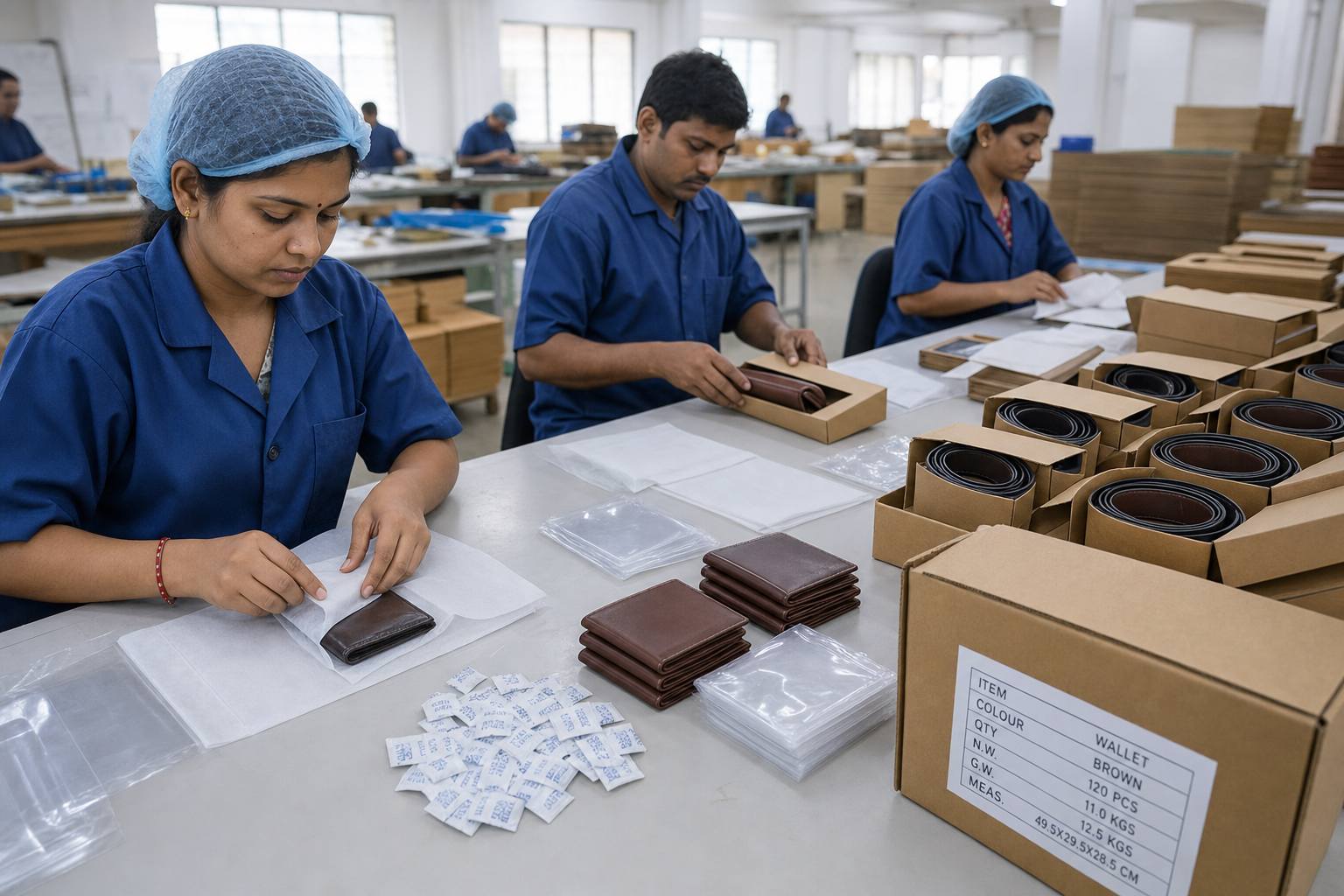
Packaging-related documentation is easy to overlook until a destination officer asks for it. Wallet polybags and belt hang cards must carry SKUs that match the packing list. Master carton markings — style, color or size run, piece count, net and gross weight — must reconcile exactly. Wood pallets need ISPM 15 marking for biosecurity-strict destinations such as Australia.
Belt cartons with buckles weigh more per cube than nested wallet cartons. Estimating belt gross weight from a wallet program template is a common SLG error that surfaces at the port weighbridge or destination broker desk.
Packaging-Related Documentation Requirements
Swipe →
Data table — swipe horizontally on small screens
| Packaging Element | Documentation Requirement | Common Error |
|---|---|---|
| Wallet polybag / box | SKU, origin marking matching invoice | RFID claim on hangtag missing from invoice |
| Belt hang card / size sticker | Size run matching packing list | Size breakdown omitted on mixed cartons |
| Master carton | Style, qty, net/gross weight matching packing list | Wallet piece counts rounded incorrectly |
| Wood pallets | ISPM 15 fumigation stamp | Missing mark rejected at biosecurity destinations |
Container Loading Details
Export Tip
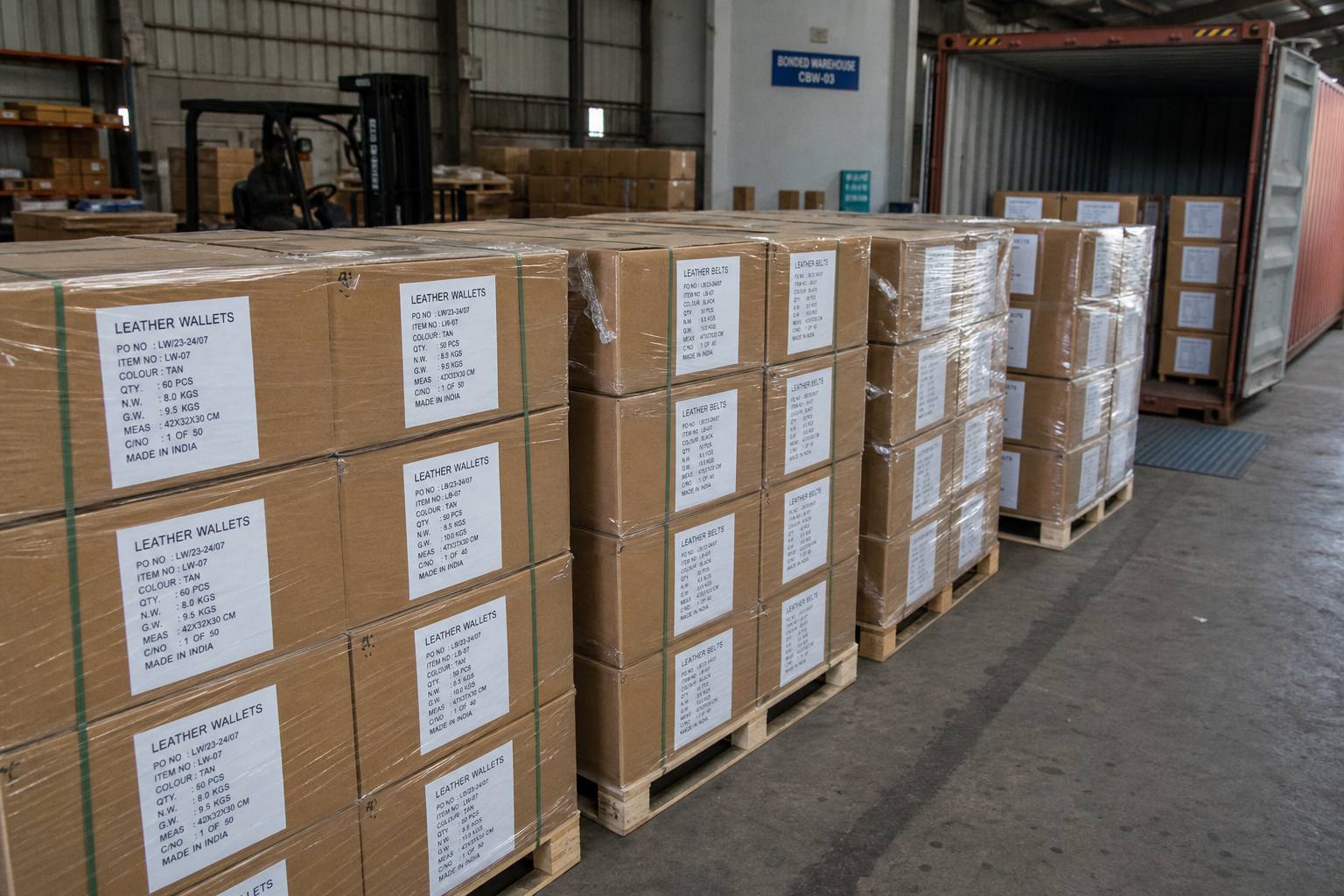
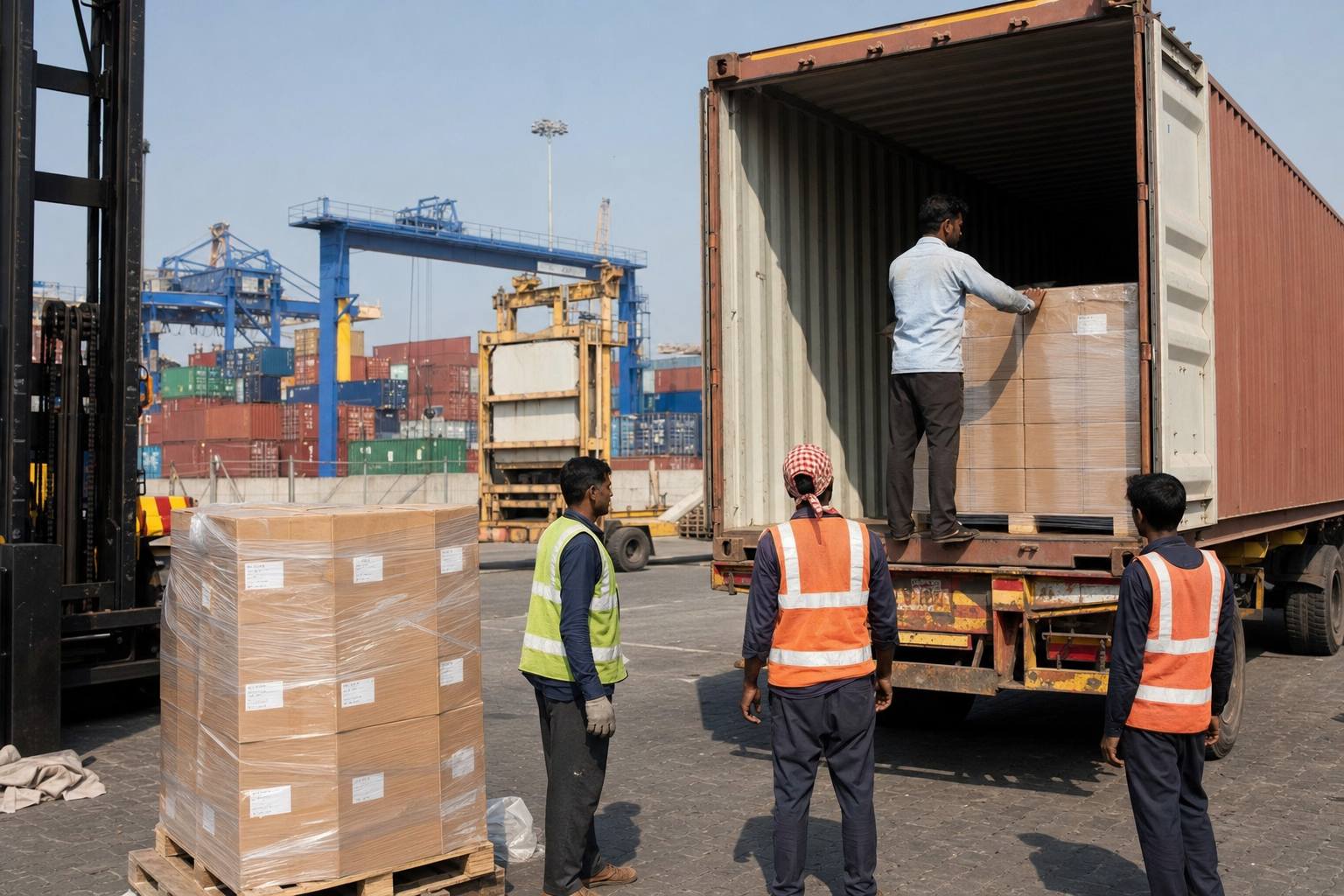
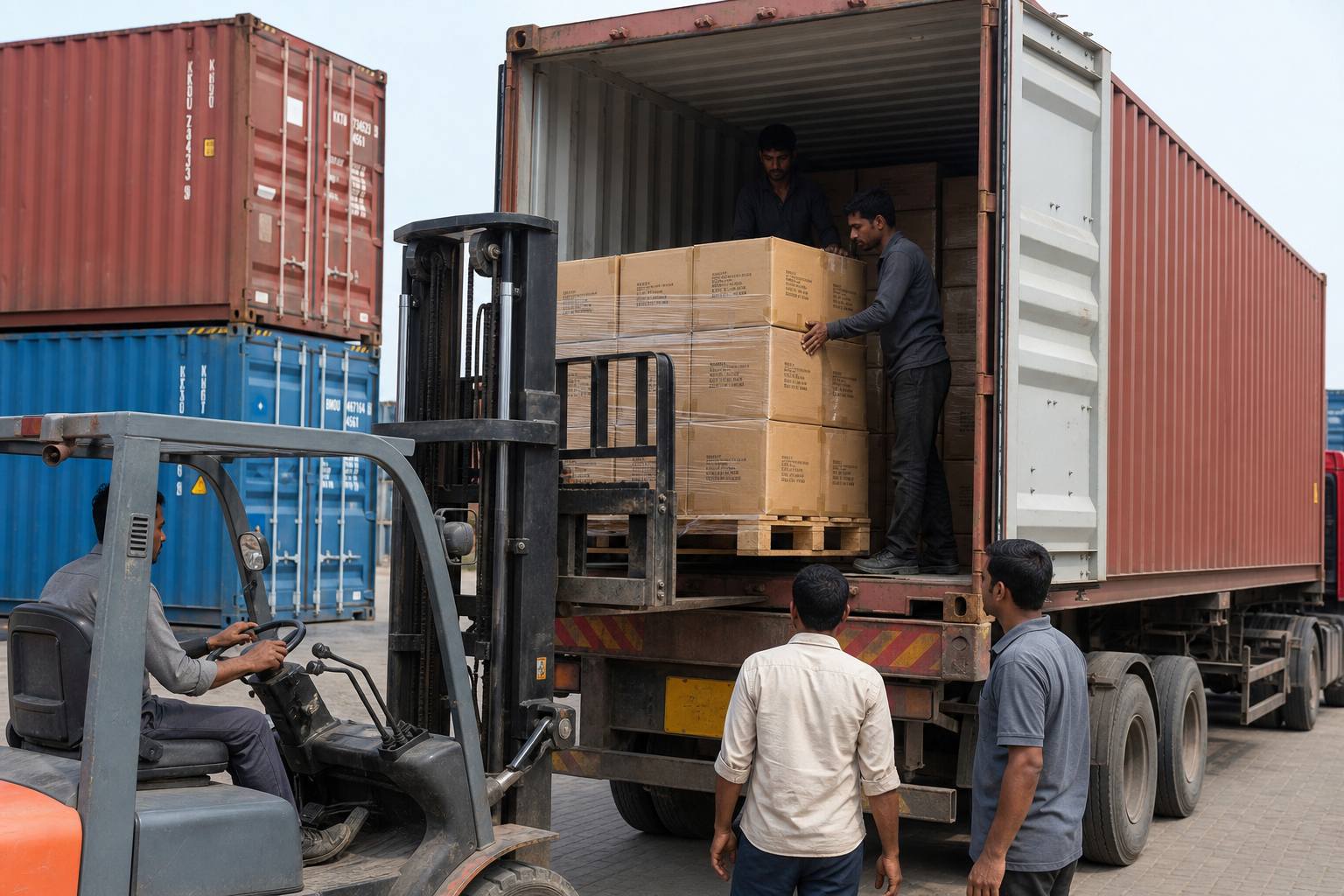
Stuffing paperwork must mirror the load plan: B/L and shipping-bill container and seal fields have to match what left the CFS. Planning densities often land near 8,000–18,000 wallets or 6,000–14,000 belts (carton-dependent) in a 20ft and 18,000–40,000 wallets or 14,000–32,000 belts (carton-dependent) in a 40ft HC. Belt cartons with buckles weigh more per cube; wallet SLG nests denser. Always stuff from actual carton dims.
Common SLG load ports include Mundra, Nhava Sheva, Chennai, Tuticorin, Kolkata. When wallets and belts share an FCL, keep carton blocks segregated so an exam can pull either HS line without collapsing the packing-list map.
Container-Level Documentation Cross-Checks
Swipe →
Data table — swipe horizontally on small screens
| Document | Must Match | Common Error |
|---|---|---|
| Bill of lading | Container and seal number as loaded | Container number transcribed incorrectly |
| Shipping bill | Total carton count and weight matching packing list | Belt buckle weight underestimated |
| Packing list | Carton-by-carton wallet vs belt contents | Mixed-SKU cartons summarized only at pallet level |
Shipping Methods
Export Tip
Sea freight with a bill of lading is standard for bulk wallet and belt programs. Air waybills cover samples, replenishment, and urgent gift-set launches. FOB from Indian load ports is the default Incoterm for most first programs; CIF or CIP requires a matching insurance certificate before sailing.
Confirm freight terms on the draft transport document before final issuance. A CIF shipment with “freight collect” on the bill of lading, or a wallet sample AWB that still carries commercial-invoice values mismatched to the courier commercial invoice, creates destination confusion that has nothing to do with leather quality.
Certifications
Compliance Notes
Beyond mandatory IEC and CLE RCMC, shipment-level certificates and test reports are what destination brokers inspect. LWG tannery evidence is required only when a certified-leather claim appears on hangtags or sales sheets. REACH applies to leather content regardless of LWG status.
Certification and Test Report Reference Table
Swipe →
Data table — swipe horizontally on small screens
| Certificate / Report | Applies To | Typical Validity Window |
|---|---|---|
| CLE RCMC | Every shipment (exporter credential) | Annual renewal |
| Certificate of origin | Every shipment | Per shipment only |
| REACH chromium VI test report | EU/UK-bound leather wallets and belts | Per lot; 6–12 months from test date |
| Buckle / metal declaration | Belts with metal buckles; destination metal rules | Per hardware lot / program |
| CPSIA-aligned test report | US-bound children's SLG | Per lot; lot-specific |
| LWG tannery certificate | When certified-leather claim made | Annual; verify current rating |
Buyer Requirements
Buyer Requirements
- Current CLE RCMC and valid IEC, verifiable before quotation.
- Separate HS lines for wallets and belts on every draft invoice.
- Lot-specific REACH report for EU/UK leather programs, dated close to shipment.
- Buckle or metal declaration for belt styles with metal hardware when the destination requires it.
- Draft invoice and packing list shared before cartons are sealed.
- Insurance certificate matching Incoterm and invoice value for CIF/CIP shipments.
Before a trial bifold or dress-belt PO, ask for the draft invoice, packing list, REACH status, and any buckle-metal annex — screenshots of certificates are not a substitute. Buyer-side gates are mapped in Source Leather Wallets and Belts from India.
Country-wise Opportunities
Market Snapshot
EU REACH and US duty paperwork for wallets (HS 4202.31) and belts (HS 4203.30) usually outweigh carton count when sizing the document set. Align depth with Best Countries for Indian Leather Wallet and Belt Exports.
USA
Core commercial documents plus CPSIA for children's wallets or novelty belts; FTC origin and content labelling for retail. Buckle lead content may be requested on private-label programs. Mixed SLG containers clear faster when wallet and belt lines are already split on the commercial invoice.
Germany and wider EU
Most documentation-intensive market — REACH chromium VI and often AZO panels for leather, plus nickel-release evidence for metal buckles. LWG documentation applies only when certified-leather claims are made. Validity must cover expected arrival, not only sailing week.
UK
UK REACH-equivalent chemical rules alongside standard commercial documentation. Treat belt hardware declarations with the same seriousness as leather Cr(VI) panels when metal buckles are part of the style.
UAE / Gulf
Chamber- or embassy-attested COO is common and adds lead time. Build attestation into the production calendar before promising a retail delivery window for wallet–belt gift programs.
Australia and Japan
Australian wallet and belt cartons on wood pallets need ISPM 15 marks visible at biosecurity. Japanese organised retail expects Japanese care and material labels plus tight chemical dossiers for bifolds, card holders, and formal belts — English-only hangtags stall clearance.
Expert Insight: Separate HS Lines From Cutting Day
Expert Insight Box
A recurring pattern: factories confirm a mixed wallet-and-belt purchase order before checking whether REACH panels, buckle metal reports, attested COO timelines, and CLE status can support the buyer's delivery date. Confirm the full document timeline against the production calendar before accepting a firm date.
Sourcing Checklist
Checklist
Common Buyer Mistakes
Common Mistakes Box
Future Market Trends
Key Statistics
Digital documentation and traceability platforms are gradually replacing paper-only certificate exchange for REACH and chemical evidence. EU due-diligence rules continue to push toward lot-level leather traceability, which will affect mainstream wallet and belt programs — not only premium LWG lines.
Electronic bills of lading and digital certificate-of-origin workflows reduce courier delays for original-document markets, but the cross-document consistency rule — invoice matching packing list matching bill of lading, with wallets and belts on separate HS lines — remains unchanged regardless of format. Buyers increasingly request buckle metal declarations as standard annexes, not optional extras.
Buyer Checklist
Checklist
Exporter Checklist
Checklist
Compliance Checklist
Checklist
Compliance Notes
Expert Insight: Cross-Check Dense Wallet Counts Before Seal
Expert Insight Box
Before sealing, one person should review the commercial invoice, packing list, bill of lading, certificate of origin, REACH reports, buckle declarations, and insurance side by side. The review takes under an hour and routinely saves weeks of demurrage on SLG and belt cargo.
Conclusion
- Foundation: How to Export Leather Wallets and Belts from India and CLE Registration Benefits for Wallet and Belt Exporters.
- Product lines: Top Leather Wallet and Belt Products Exported from India.
- Buyer workflow: Source Leather Wallets and Belts from India.
- Destinations: Best Countries for Indian Leather Wallet and Belt Exports and Most Demanded Indian Leather Wallets and Belts by Country.
- Fair leads to orders: Trade Shows and B2B Marketplaces for Leather Wallet and Belt Exporters.
- Premium programs: Sustainable Premium Leather Wallet and Belt Export Opportunities.
A complete leather wallet and belt export document pack — IEC and GST in order, current CLE RCMC, commercial invoice with separate 4202.31 and 4203.30 lines, packing list, shipping bill, bill of lading, certificate of origin, REACH chromium VI reports for EU/UK leather, buckle or metal declarations where needed, insurance aligned to Incoterm, and payment documents matching the agreed structure — prepared alongside production is the most reliable predictor of smooth customs clearance.
Altus runs SLG and belt paperwork with the same accountability as production — as a merchant exporter in India and global sourcing partner — aligning separate wallet/belt HS lines, REACH lots, buckle annexes, and sailing files. Use export products from India and find manufacturers in India when you need documentation-ready bifold and belt capacity.