
Sustainable and Premium Leather Wallet and Belt Export Opportunities from India
By Saurabh Mittal, Founder, Altus Exports
A guide to India's sustainable and premium leather wallet and belt opportunity — Leather Working Group (LWG) certified tanneries, vegetable-tanned and chrome-free leather, REACH chemical compliance, lot-level traceability, and higher-margin OEM / private-label programmes for exporters and brand sourcing teams.
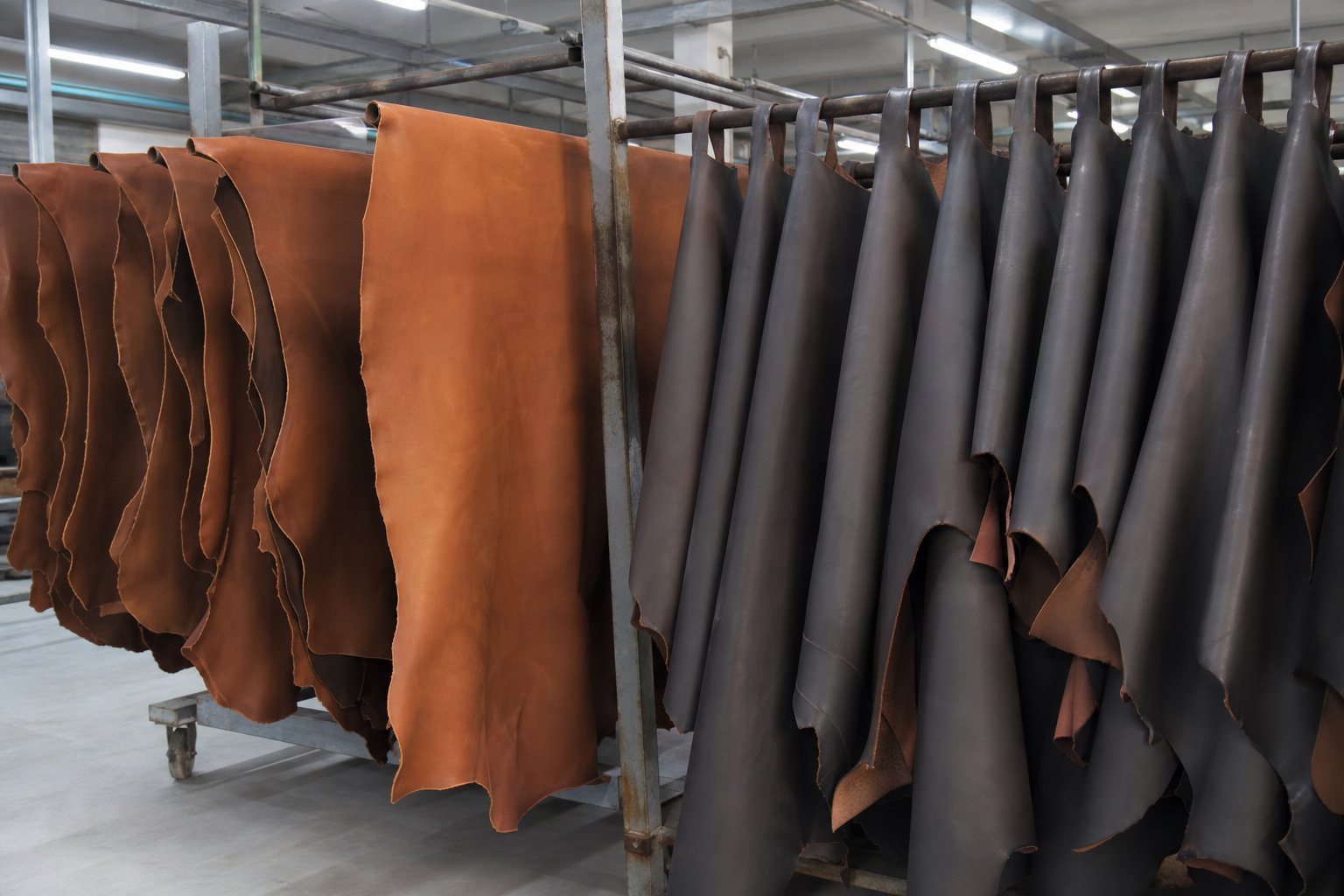
India's leather wallet and belt exporters are no longer competing on unit price alone. A growing segment — concentrated across Kanpur, Kolkata (Bantala), Delhi-NCR, Ambur–Ranipet–Chennai, Agra, Jaipur — now supplies LWG-linked, vegetable-tanned, chrome-free, and REACH-ready small leather goods and belts to European and North American brands running OEM and private-label programmes under HS 4202.31 and HS 4203.30.
This guide is about that higher-margin, compliance-heavy track: LWG tannery certification, vegetable-tanned and chrome-free leather, REACH and ZDHC chemical compliance, traceability chain-of-custody, and premium OEM / private-label wallet and belt programmes — not the basic how-to-export sequence covered in How to Export Leather Wallets and Belts from India, and not a prospecting directory (see Find International Buyers for Leather Wallets and Belts).
Sustainability and premium positioning overlap but are not identical. A premium programme pays for construction quality, design collaboration, matched leather lots, and brand-specific hardware. A sustainability claim pays for verifiable tannery-level environmental performance and chemical traceability. Buyers increasingly want both in the same supplier relationship.
Pair this guide with CLE Registration Benefits for Wallet and Belt Exporters, Source Leather Wallets and Belts from India, Best Countries for Indian Leather Wallet and Belt Exports, and Leather Wallet and Belt Export Documentation Checklist. Altus Exports coordinates audited programmes as a merchant exporter and global sourcing partner.
Key Takeaways
Summary Box
Executive Summary
Summary Box
This guide frames sustainable and premium leather wallet and belt export as a distinct commercial track from commodity accessory export — one built on verifiable tannery certification, chemical compliance documentation, and factory audit readiness, rewarded with higher FOB prices and longer-term OEM / private-label relationships rather than one-off trial orders.
It covers the certification stack (LWG, REACH, ZDHC), vegetable-tanned and chrome-free leather options, the market and pricing case for premium positioning, and the operational checklist a factory needs before approaching a brand sourcing team for wallets under HS 4202.31 or belts under HS 4203.30.
None of this replaces the operational basics — IEC, CLE registration, and export documentation still apply exactly as covered in How to Export Leather Wallets and Belts from India and Leather Wallet and Belt Export Documentation Checklist. What changes at the premium tier is the depth of verification a buyer requires before placing a first order, and the price premium available to factories that can substantiate sustainability and quality claims with real certificates rather than marketing language.
Market Size & Industry Overview
Key Statistics
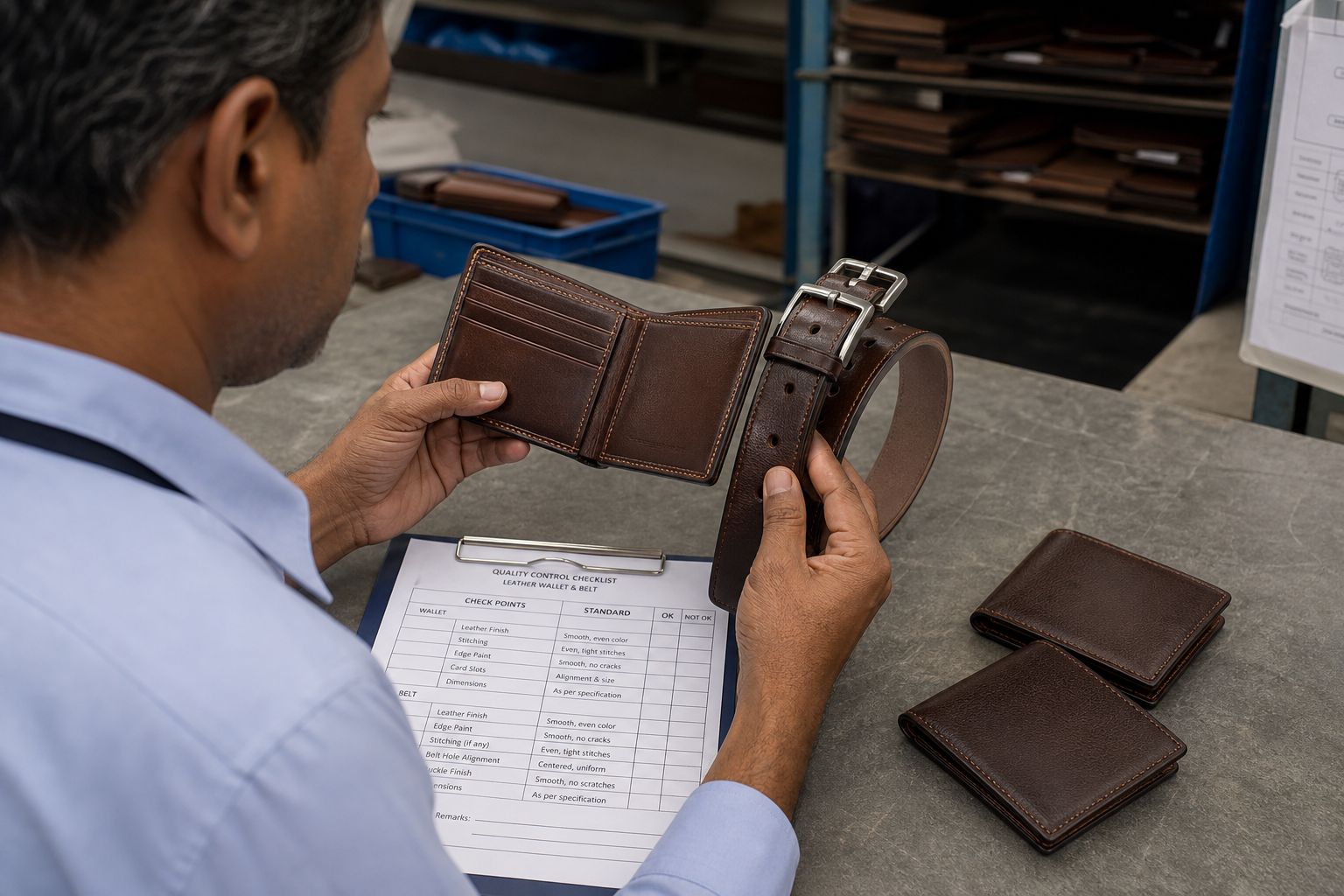
Within India's leather goods export basket, wallets and belts form a high-piece-count, moderate-unit-value segment that is unusually well suited to premium private-label programmes: smaller physical size means lower freight per piece, faster sampling cycles (7–18 days after locked tech pack), and easier gift-set merchandising than larger leather categories. The premium and sustainability-audited sub-segment is smaller in volume than commodity SLG export but commands materially higher FOB prices and longer contract durations.
LWG certification and REACH compliance have moved from optional differentiators to baseline entry requirements for many EU and US brand sourcing teams, driven by corporate sustainability due-diligence rules and consumer-facing claims. Factories that invested early in LWG-rated tannery relationships and REACH documentation now hold a structural advantage that newer entrants cannot close quickly, because tannery audits and certification cycles take months, not weeks.
India's Sustainable & Premium Wallet / Belt Segment (Indicative)
Swipe →
Data table — swipe horizontally on small screens
| Dimension | Approximate Figure / Fact | Relevance to Premium Positioning |
|---|---|---|
| Leading clusters | Kanpur, Kolkata (Bantala), Delhi-NCR, Ambur–Ranipet–Chennai, Agra, Jaipur | Export-oriented units with brand-programme experience win audits faster |
| HS wallets / belts | 4202.31 / 4203.30 | Correct classification for invoices, shipping bills, and import-data targeting |
| Primary compliance frameworks | LWG, REACH (EU/UK), ZDHC MRSL, social audits | Baseline credentials brand sourcing teams verify before RFQ |
| Premium FOB uplift vs. commodity | Typically 25–70% higher, style-dependent | Reflects leather grade, audit cost, and construction tolerance |
| Contract structure | Often multi-season OEM / private-label vs. spot trial orders | Rewards long-term certification investment |
| Load ports | Mundra, Nhava Sheva, Chennai, Tuticorin, Kolkata | Documentation and vessel planning for EU/US brand calendars |
Export Statistics
Key Statistics
Separate, product-level export statistics for the sustainability-certified sub-segment of Indian wallets and belts are not published as a standalone CLE or DGCIS category — certified and premium pieces ship within the same HS 4202.31 and HS 4203.30 statistics as commodity goods. What is observable is destination concentration: Germany, the wider EU, the UK, and the USA — markets with the strictest chemical compliance and sustainability disclosure rules — account for a disproportionate share of India's higher-value wallet and belt exports relative to piece counts alone.
Indicative Premium / Sustainability-Relevant Export Destinations
Swipe →
Data table — swipe horizontally on small screens
| Destination | Compliance Emphasis | Typical Premium Category Demand | Buyer Type |
|---|---|---|---|
| Germany | REACH Cr(VI), LWG, ZDHC | Formal belts, full-grain wallets | Retail chains, brand sourcing offices |
| Wider EU (France, Netherlands) | REACH, due-diligence disclosure | Fashion wallets, reversible belts, gift sets | Department stores, private-label brands |
| UK | REACH-equivalent UK chemical rules | Slim wallets, formal belts, RFID | Retail chains, multi-brand distributors |
| USA | Growing ESG sourcing policies; CPSIA if mixed assortments with kids' lines | RFID wallets, premium bifolds, casual belts | Brand sourcing teams, department stores |
| Japan / Australia | High finish consistency; chemical evidence on request | Slim / RFID wallets, quality belts | Specialty and lifestyle retailers |
Import Statistics
Key Statistics
Premium and sustainability-focused buyers in Germany, the UK, France, and the USA increasingly request supplier certification data as part of import compliance and ESG disclosure programmes. Reading import-side signals for this segment means looking past raw HS volume and identifying which importers are OEM / brand sourcing offices rather than wholesale distributors — OEM offices typically show fewer, larger, longer-running purchase relationships with a small number of certified suppliers rather than broad multi-origin spot buying.
Reading Import-Side Signals for Premium Positioning
Swipe →
Data table — swipe horizontally on small screens
| Signal | What It Suggests | Relevance |
|---|---|---|
| Long-running, low-supplier-count import relationship | OEM / brand sourcing office rather than spot wholesaler | Higher-value opportunity worth premium-tier investment |
| RFQ documents referencing LWG, ZDHC, or REACH explicitly | Buyer has a formal sustainability sourcing policy | Certification investment converts directly to qualification |
| Frequent, smaller multi-origin purchases | Price-sensitive wholesale or distributor buyer | Better fit for commodity-tier export than premium OEM |
| Requests for tannery batch IDs on packing lists | Traceability already operationalised in buyer's QC | Factories without lot mapping will fail pre-PO audit |
Product Categories / Variants
Summary Box
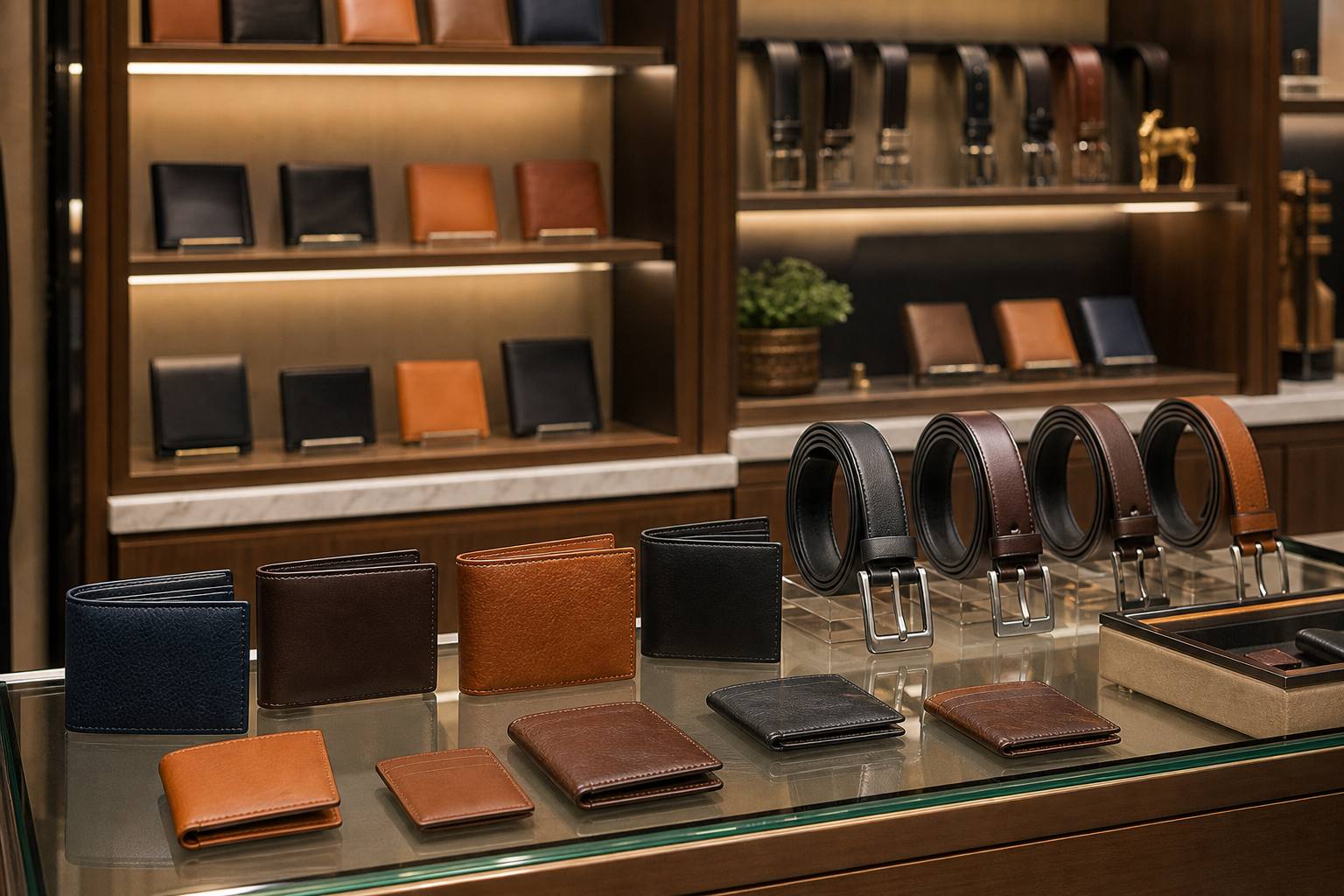
Premium and sustainability-audited ranges overlap with the standard wallet and belt category list — bifolds, trifolds, card holders, RFID wallets, passport holders, formal belts, casual belts, reversible belts, and gift sets — but differ in leather sourcing and construction detail. OEM premium programmes typically specify full-grain or high-grade corrected-grain leather from a named, audited tannery, tighter edge-paint and stitch tolerances, and brand-specific buckles or hardware developed through a paid tooling process. For the full category-by-category breakdown across all price tiers, see Top Leather Wallet and Belt Products Exported from India.
Vegetable-tanned and chrome-free leather variants apply across most wallet and belt categories but are most commonly requested for premium casual wallets, fashion belts, and consumer-facing sustainability lines. Formal dress belts and high-volume commodity bifolds more often remain on standard chrome-tanned leather for cost and performance reasons, even within otherwise sustainability-committed buyer programmes — provided REACH chromium VI limits are met.
Premium and Sustainability-Relevant Product Variants
Swipe →
Data table — swipe horizontally on small screens
| Category | Leather Variant | Typical Certification Ask | Primary Buyer Type |
|---|---|---|---|
| Men's bifold (OEM premium) | Full-grain, LWG-rated tannery | LWG Gold/Silver, REACH | Brand sourcing offices, premium retail |
| Slim / card holder (sustainability line) | Vegetable-tanned or chrome-free | REACH, veg-tan / chrome-free certificate | Lifestyle and e-commerce brands |
| RFID / passport wallet | LWG-audited + shielding insert | LWG, REACH, RFID claim evidence | Travel retail, airport brands |
| Formal dress belt | Full-grain, consistent thickness | REACH, LWG preferred | Menswear chains, formalwear OEM |
| Reversible / fashion belt | Dual-face; chrome-free option | REACH, hardware nickel limits | Fashion private-label brands |
| Corporate gift wallet–belt set | Matched leather lot, LWG source | LWG, REACH, social audit | Corporate gifting and premium retail |
Manufacturing Overview
Export Tip
Premium manufacturing begins at the tannery, not the cutting table. Leather Working Group audits assess a tannery's environmental management system, water and effluent treatment, energy use, chemical management, and traceability against a defined protocol, resulting in a Gold, Silver, Bronze, or Certified rating. Factories sourcing from a Gold- or Silver-rated tannery carry meaningfully more credibility with brand sourcing teams than those unable to name their tannery at all.
Vegetable tanning uses plant-based tannins and produces a distinctive hand-feel and ageing profile prized in heritage and premium casual wallets and belts. Chrome-free and metal-free systems substitute alternative tanning agents for chromium salts. Both approaches change cutting behaviour, edge finishing, and moisture sensitivity — tech packs must be rebuilt, not copied from chrome-tanned commodity styles. Clusters such as Kanpur, Kolkata (Bantala), and Ambur–Ranipet–Chennai have the densest access to audited tannery supply for SLG and belt programmes.
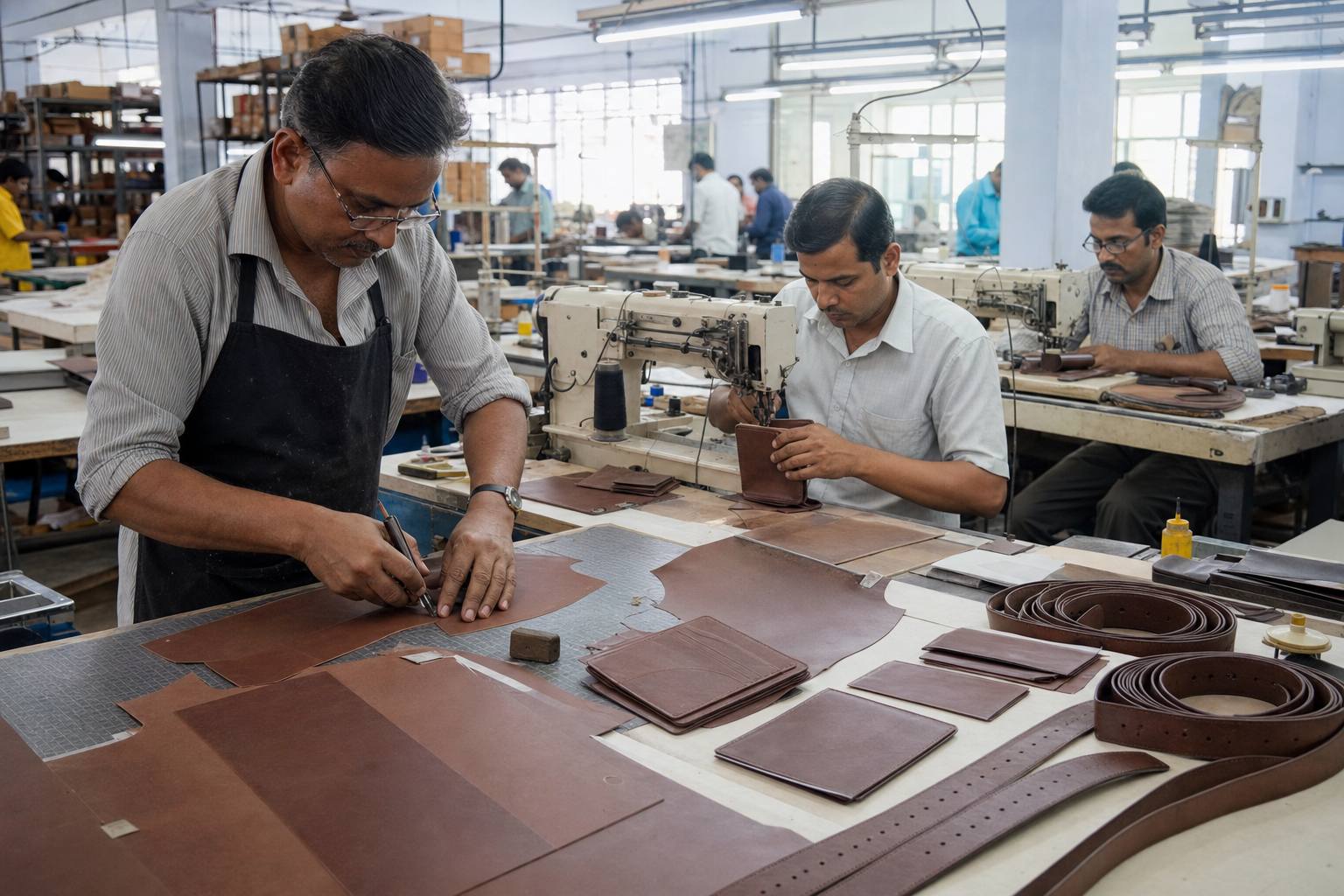
At the factory, premium programmes add social compliance audits, chemical inventory control for adhesives and edge paints, and lot segregation so a finished wallet or belt can be traced back to a tannery batch ID. Sample lead times of 7–18 days after locked tech pack and bulk programmes of 45–75 days to vessel (hardware/buckle lead time parallel) should assume parallel buckle tooling and certified-leather booking — not afterthought procurement.
Pricing Analysis
Buyer Tip
Premium and sustainable wallet and belt pricing must recover tannery premiums, audit overhead, tighter reject rates, specialised packaging, and longer sampling cycles. Indicative commodity ranges still matter as a floor reference — bifolds at US$4–12 / pc FOB, formal belts at US$3.50–12 / pc FOB — but LWG-linked full-grain and vegetable-tanned programmes commonly sit 25–70% above those floors, with matched gift sets at US$18–45 / set FOB.
Quote certification and packaging as explicit line items or clearly itemised FOB inclusions. Buyers who expect LWG leather, REACH test reports, FSC gift boxes, and social-audit readiness inside a commodity FOB number will erode your margin permanently. Protect tooling amortisation for branded buckles across the agreed programme volume, not a single trial colourway.
Indicative FOB Ranges — Commodity vs. Premium Positioning
Swipe →
Data table — swipe horizontally on small screens
| Category | Indicative FOB | Premium / Sustainable Uplift Drivers |
|---|---|---|
| Bifold wallet | US$4–12 / pc FOB | Full-grain LWG leather; tighter stitch/edge specs |
| Card holder / slim | US$2.50–8 / pc FOB | Veg-tan hand-feel; minimal hardware nickel compliance |
| RFID wallet | US$6–18 / pc FOB | Shielding evidence + LWG leather lot |
| Passport holder | US$6–16 / pc FOB | Travel-retail packaging + chemical dossier |
| Formal belt | US$3.50–12 / pc FOB | Consistent thickness; premium buckle; REACH |
| Casual / reversible belt | US$3–10 / pc FOB / US$5–15 / pc FOB | Dual-face leather; chrome-free options |
| Premium full-grain set | US$18–45 / set FOB | Matched lots; gift packaging; audit-ready docs |
MOQ Analysis
Buyer Tip
Premium programmes often accept slightly lower piece MOQs than commodity wholesale because unit margins are higher — but they impose stricter leather-lot continuity and colourway discipline. A brand may approve 100–300 pcs / style (wallets); 150–400 pcs / style (belts) for a first OEM trial, then move to 300–1,000 pcs / style or 1,000–5,000+ pcs / style / colourway once tannery booking and social audits clear. Gift-set assortments at 200–800 sets / assortment require matched wallet and belt leather from the same tannery batch whenever the brand claims a set aesthetic.
MOQ Implications for Premium Programmes
Swipe →
Data table — swipe horizontally on small screens
| Programme Type | Indicative MOQ | Premium-Specific Constraint |
|---|---|---|
| OEM / private-label trial | 100–300 pcs / style (wallets); 150–400 pcs / style (belts) | Certified leather booking before cutting |
| Standard premium programme | 300–1,000 pcs / style | Lot continuity across colourways |
| Retail chain replenishment | 1,000–5,000+ pcs / style / colourway | Seasonal forecasts + audit calendar |
| Gift-set assortment | 200–800 sets / assortment | Matched wallet–belt leather lots |
Packaging Standards
Export Tip
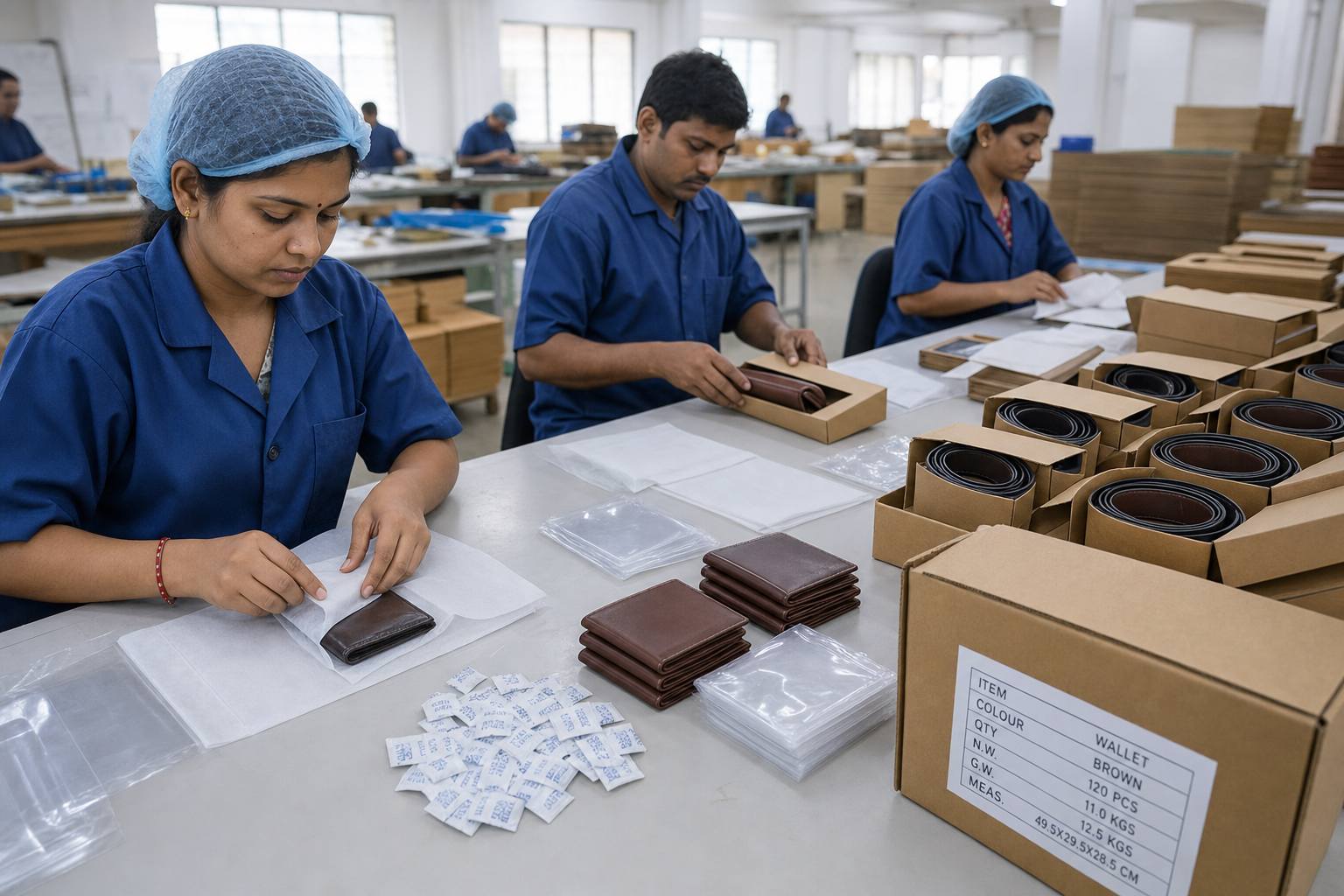
Premium packaging is part of the sustainability claim, not an afterthought. EU brand tenders increasingly specify recycled-content master cartons, FSC-certified gift boxes, soy-based inks, and reduced plastic dust pouches. Quote these as defined options. Standard soft pouches may remain acceptable for wholesale replenishment, but private-label gift sets almost always require presentation packaging that survives retail unboxing photography.
Packaging Options for Premium Wallet & Belt Programmes
Swipe →
Data table — swipe horizontally on small screens
| Format | Sustainability Angle | Typical Use | Quote Tip |
|---|---|---|---|
| Recycled-content soft pouch | Reduced virgin plastic | E-commerce replenishment | State recycled % if claimed |
| FSC gift box + tissue | Certified fibre sourcing | Retail-ready and gifting | Line-item vs. included FOB |
| Belt buckle guard (paperboard) | Plastic reduction | Formal and fashion belts | Avoid foam if brand bans it |
| Matched set presentation box | Unboxing experience + claim space | Corporate / festive sets | Print claim language only if substantiated |
| Master carton (recycled board) | Scope 3 packaging KPIs | All FCL programmes | Print tannery lot refs if required |
Container Loading Details
Export Tip
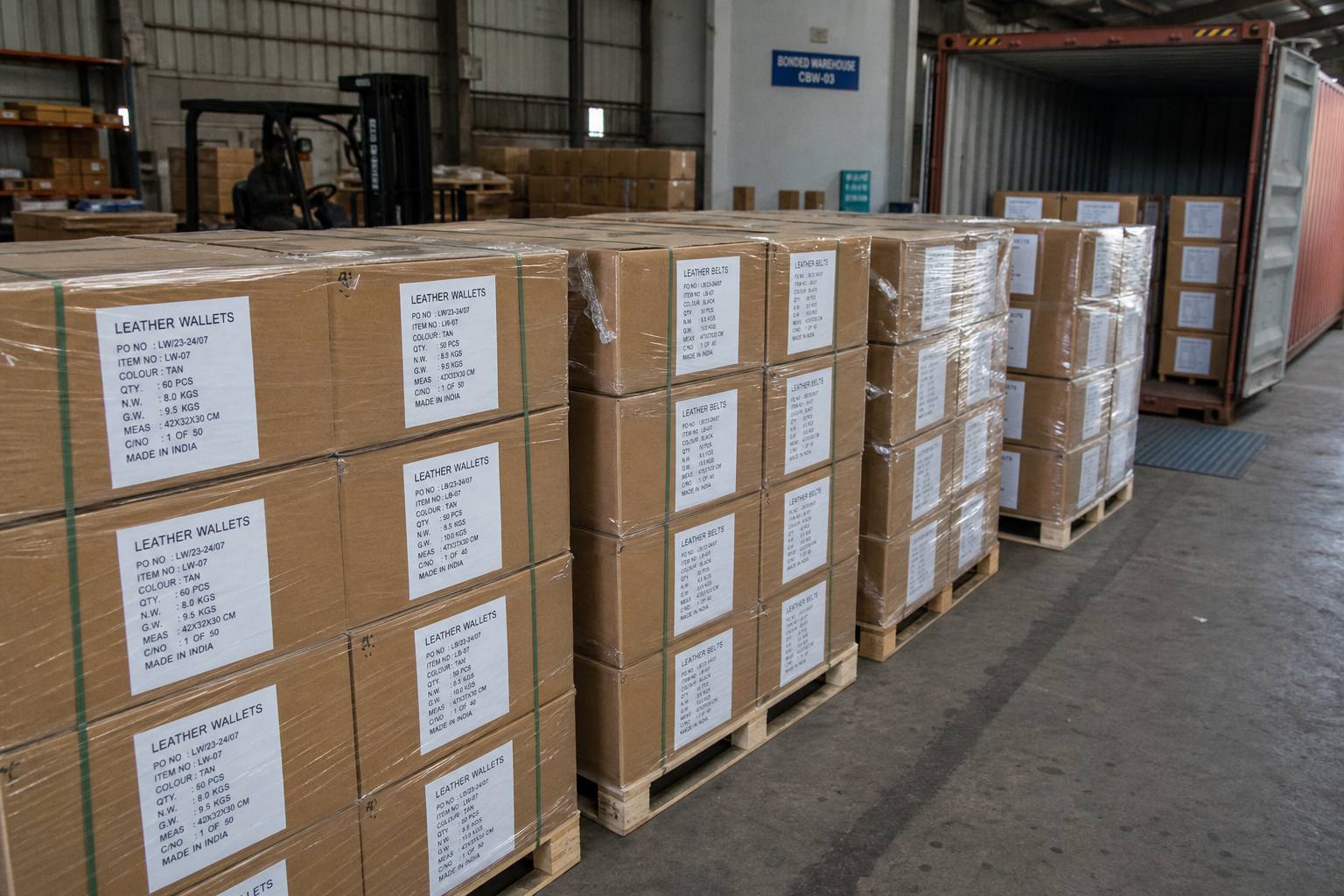
Premium programmes rarely change the physics of stuffing, but gift boxes and presentation packs reduce piece counts per carton versus soft-pouch wholesale packing. Plan from actual carton dims. Indicative commodity nesting: 20ft — 8,000–18,000 wallets or 6,000–14,000 belts (carton-dependent); 40ft HC — 18,000–40,000 wallets or 14,000–32,000 belts (carton-dependent). Belt cartons with buckles weigh more per cube; wallet SLG nests denser. Always stuff from actual carton dims. Brand buyers also care about carton labelling that carries style, colour, and tannery-lot references for warehouse traceability.
Container Planning Notes for Premium Assortments
Swipe →
Data table — swipe horizontally on small screens
| Container | Commodity Nesting (Indicative) | Premium Gift-Box Impact | Planning Note |
|---|---|---|---|
| 20ft FCL | 8,000–18,000 wallets or 6,000–14,000 belts (carton-dependent) | Often 15–30% fewer pcs | Confirm gift-box cube early |
| 40ft HC | 18,000–40,000 wallets or 14,000–32,000 belts (carton-dependent) | Often 15–30% fewer pcs | Prefer HC for mixed wallet–belt sets |
| LCL | Trial and multi-style mixes | Common for first OEM drops | Air for sealed samples still typical |
Shipping Methods
Export Tip
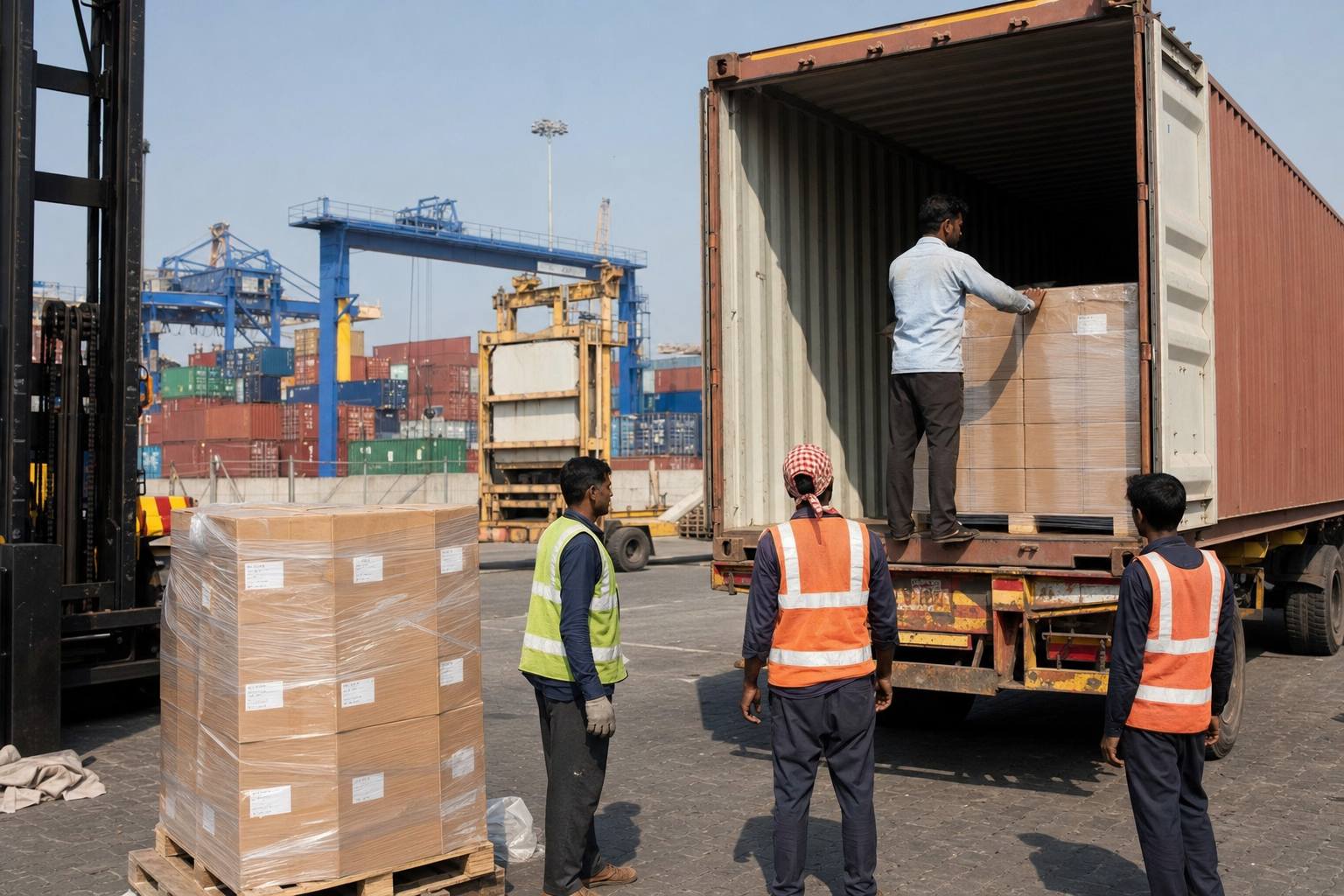
Sea freight under FOB remains the workhorse for premium wallet and belt programmes once volumes exceed air economics. CIF is more common when brand logistics teams want a single landed-cost quote for multiple EU destinations. Route choice among Mundra, Nhava Sheva, Chennai, Tuticorin, Kolkata should follow cluster location and buyer delivery calendar, not habit. Air freight stays essential for sealed approval samples and urgent colourway replacements — premium buyers will pay for speed when a retail launch date is fixed. Align vessel cutoffs with document packs that already include REACH test reports and tannery certificates, not promises to courier them after sailing.
Certifications
Compliance Notes
The premium certification stack for wallets and belts is tannery-led and claim-led. LWG rates the tannery; REACH limits hexavalent chromium and other restricted substances on leather and finishes entering the EU and UK; ZDHC MRSL addresses hazardous chemical inputs; social audits (BSCI, SMETA, or brand-owned protocols) rate the assembling factory. CLE RCMC and IEC remain mandatory export credentials underneath all of the above.
Certification Stack for Premium Wallet & Belt Export
Swipe →
Data table — swipe horizontally on small screens
| Credential | What It Covers | Where Buyers Expect It | Exporter Action |
|---|---|---|---|
| CLE RCMC + IEC | Export legitimacy | All markets | Keep current; print on outreach |
| LWG tannery rating | Tannery EMS, water, chemicals, traceability | EU/US premium brands | Name tannery; hold certificate copy |
| REACH Cr(VI) test report | Chemical safety of leather lot | EU/UK mandatory | Lot-specific reports, not generic PDFs |
| Chrome-free / veg-tan certificate | Tanning system claim | Sustainability lines | Align marketing language to certificate |
| ZDHC MRSL conformance | Chemical input control | Brand wet-process policies | Map adhesives and edge paints too |
| Social audit (SMETA/BSCI/brand) | Factory labour and H&S | OEM private label | Schedule before RFQ deadlines |
Buyer Requirements
Buyer Requirements
Premium buyers evaluate evidence packs before they evaluate price. Expect requests for tannery certificates, recent REACH reports on the exact leather article, factory social-audit summaries, material declarations for linings and buckles, and a written traceability procedure. RFID or "eco" claims without test methods are rejected early. Incoterms, MOQ, and packaging must be written into the tech pack before cutting begins.
Premium Buyer Requirements vs. Commodity Expectations
Swipe →
Data table — swipe horizontally on small screens
| Requirement | Commodity Buyer | Premium / Sustainable Buyer |
|---|---|---|
| Leather source | Grade and price | Named LWG tannery + batch ID |
| Chemical evidence | Sometimes after PO | Before PO / with sealed sample |
| Social audit | Optional | Often mandatory for OEM |
| Packaging | Soft pouch OK | FSC / recycled specs common |
| Traceability | Rarely enforced | Lot mapping on packing list |
| Price negotiation | Unit-led | Total landed + compliance cost |
Country-wise Opportunities
Market Snapshot
Premium demand concentrates where regulation and brand ESG policies are strongest. Use Best Countries for Indian Leather Wallet and Belt Exports for broad market ranking, then overlay certification readiness before pitching. For style-level demand by destination, see Most Demanded Indian Leather Wallets and Belts by Country.
Germany and Wider EU
Highest intensity of REACH, LWG, and due-diligence expectations. Formal belts and full-grain wallets convert when the evidence pack is complete before the first meeting. Netherlands hubs redistribute certified goods across the EU when carton labelling supports warehouse lot tracking.
United Kingdom
REACH-equivalent chemical expectations remain after Brexit for serious retail chains. Slim wallets, formal belts, and RFID lines with clean documentation outperform commodity price plays.
United States
ESG policies vary by brand, but department-store and DTC accessory brands increasingly request tannery transparency and restricted-substance testing. RFID and premium bifolds with consistent edge finish win reorders.
Japan and Australia
Lower absolute volume, higher finish and consistency standards. Vegetable-tanned slim wallets and carefully finished belts perform when colour and thickness stay within tight tolerances across replenishment lots.
UAE and Gulf Premium Retail
Gift wallet–belt sets and formal belts for premium retail and hospitality gifting. Certification may be lighter than EU, but presentation packaging and leather consistency still decide who wins the programme.
Expert Insight: Evidence Beats Adjectives
Expert Insight Box
Build the evidence folder before outreach: CLE RCMC, IEC, LWG tannery certificate, recent REACH reports, social-audit summary, material declarations, and a one-page traceability map from tannery batch to finished SKU. That folder shortens OEM sales cycles more than another round of free samples.
Sourcing Checklist
Checklist
Common Buyer Mistakes
Common Mistakes Box
Exporters and buyers both mis-handle the premium track when they treat sustainability as a brochure theme rather than an operational system.
Future Market Trends
Key Statistics
EU corporate sustainability due-diligence rules will keep pushing tannery transparency and chemical evidence earlier in the RFQ cycle. Digital product passports and QR-linked lot data are appearing in brand pilots for accessories, which favours factories already capturing tannery batch IDs on packing lists. Vegetable-tanned and chrome-free wallets remain a niche by volume but a visible merchandising story for DTC brands.
Private-label accessory programmes and corporate gift sets will continue to blend premium construction with sustainability claims, creating demand for matched wallet–belt sets with single-lot leather continuity. Exporters who invest in audited tannery relationships now will be positioned for multi-season OEM work while commodity-only factories compete on ever-thinner margins.
Buyer Checklist
Checklist
Exporter Checklist
Checklist
Compliance Checklist
Checklist
Compliance Notes

Conclusion
- Prospecting companion: Find International Buyers for Leather Wallets and Belts.
- Buyer playbook: Source Leather Wallets and Belts from India.
- Registration: CLE Registration Benefits for Wallet and Belt Exporters.
- Documentation: Leather Wallet and Belt Export Documentation Checklist.
- Markets: Best Countries for Indian Leather Wallet and Belt Exports and Most Demanded Indian Leather Wallets and Belts by Country.
- Fairs: Trade Shows and B2B Marketplaces for Leather Wallet and Belt Exporters.
- Operations baseline: How to Export Leather Wallets and Belts from India.
Sustainable and premium leather wallet and belt export from India is a higher-margin path for factories willing to invest in LWG tannery relationships, REACH and ZDHC evidence, vegetable-tanned or chrome-free options where merchandising requires them, and lot-level traceability that survives brand due diligence. It is not a shortcut around CLE registration, IEC, or basic export documentation — it sits on top of those foundations.
Altus Exports supports manufacturers and international brands building compliance-heavy OEM and private-label wallet and belt programmes through supplier verification, documentation coordination, and shipment execution. Explore our merchant exporter, global sourcing partner, product sourcing company in India, find manufacturers in India, and export products from India services to structure the next programme.