
Most Demanded Indian Leather Wallets and Belts by Country (2026)
By Saurabh Mittal, Founder, Altus Exports
A per-market construction demand matrix for Indian leather wallets and belts — which wallet constructions and belt widths/buckles buyers in the USA, UK, Germany, UAE, France, Netherlands, Australia, Japan, Canada, and Saudi Arabia actually order under HS 420231 and 420330.
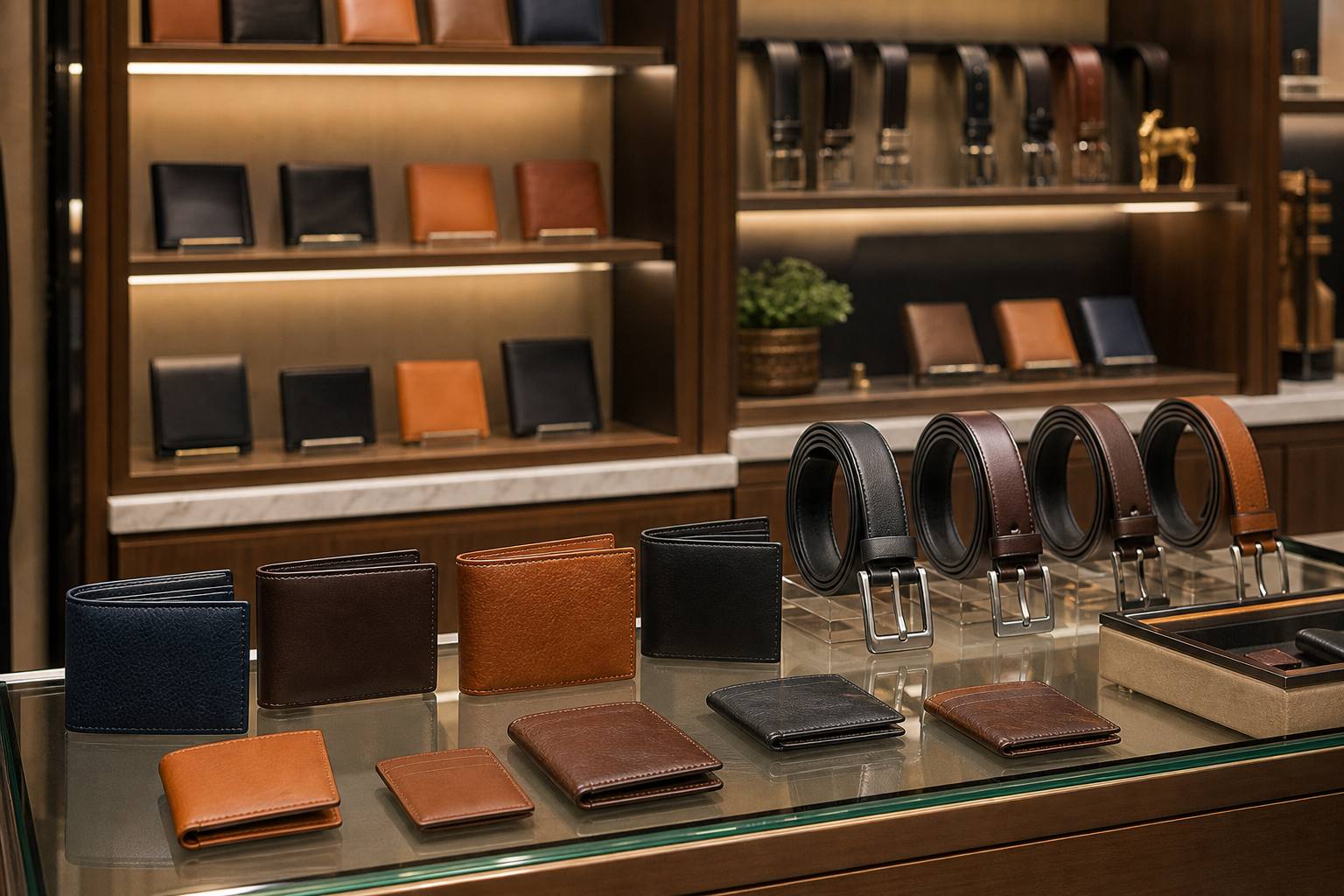
International buyers do not order “Indian leather accessories” as a single SKU. They order specific wallet constructions and specific belt widths with buckle finishes — and those preferences differ sharply by destination market.
This article is a per-market construction demand matrix for 2026 — not a ranked list of “best countries.” For market selection frameworks, use Best Countries for Indian Leather Wallet and Belt Exports. For council credentials, see CLE Registration Benefits for Wallet and Belt Exporters.
Focus lines: leather-outer wallets HS 4202.31 (42023120) and leather belts HS 4203.30 (42033000). Clusters: Kanpur, Kolkata (Bantala), Delhi-NCR, Ambur–Ranipet–Chennai, Agra, Jaipur. Indicative FOB, MOQ, and container figures are planning anchors — validate against current CLE notes, DGCIS releases, and buyer tech packs.
Key Takeaways
Summary Box
Executive Summary
Summary Box
Demand for Indian leather wallets and belts is healthy across North America, Europe, the Gulf, and Asia-Pacific — but the winning construction mix is market-specific. A bifold that sells in Dallas may be too bulky for Tokyo travel retail; a 38 mm casual belt that works for Australian jeans programmes can look wrong in German formal menswear; a gold-tone buckle that photographs well for Gulf gift sets may fail EU nickel expectations if plating chemistry is unmanaged.
This guide maps constructions — not just countries — so importers, private-label teams, and Indian exporters brief the right tech packs. It covers market context, indicative export/import planning statistics, product variants, manufacturing clusters, pricing and MOQ, packaging, containers, shipping, certifications, buyer requirements, country-wise construction matrices, checklists, mistakes, and trends.
Pair with Top Leather Wallet and Belt Products Exported from India, Source Leather Wallets and Belts from India, and How to Export Leather Wallets and Belts from India. Altus Exports acts as merchant exporter and sourcing partner to convert these matrices into sampled, inspected, document-ready shipments.
Market Size & Industry Overview
Key Statistics
Wallet and belt demand sits inside the broader leather goods trade but behaves like a precision accessories category: small unit size, high SKU count, colourway proliferation, and hardware-critical failure modes. Retail channels include department stores, specialty leather shops, e-commerce marketplaces, corporate gifting houses, travel retail, and fashion private label.
India supplies competitive full-grain and corrected-grain programmes from Kanpur, Kolkata (Bantala), Delhi-NCR, Ambur–Ranipet–Chennai, with Agra and Jaipur contributing finishing and accessory capacity. Buyers who treat India as a single homogeneous factory miss construction specialisation — RFID laminate insertion, edge-painted bifolds, and reversible belt mechanisms are different production cells.
Council and trade infrastructure runs through CLE (leatherindia.org). Destination demand intelligence should still come from buyer sell-through, trade data samples, and fair conversations — not from a single national export total.
Demand drivers by channel (wallet and belt)
Swipe →
Data table — swipe horizontally on small screens
| Channel | Wallet constructions often ordered | Belt constructions often ordered |
|---|---|---|
| US e-commerce / private label | Bifold, slim RFID, card holder | 38 mm casual, roller buckle |
| UK / EU specialty retail | Refined bifold, zip-around | 30–35 mm formal, brushed nickel |
| Gulf gift / department | Full-grain bifold, passport | Polished formal, statement buckle |
| Japan travel / specialty | Slim card, precise stitch bifold | Narrow formal, matte buckle |
| Corporate gifting | Matched set wallets | Matched formal belts |
| Australia casual retail | Travel wallet, bifold | Casual stitched belt |
Export Statistics
Key Statistics
Treat national leather goods aggregates as directional. For operational planning, track shipments by construction and destination. Indicative FOB and lead-time anchors help MSMEs size trials before they cut leather for five colourways.
Indicative export planning anchors for wallets and belts
Swipe →
Data table — swipe horizontally on small screens
| Metric | Indicative value | Use in demand planning |
|---|---|---|
| Bifold FOB | US$4–12 / pc FOB | Core USA/UK volume SKU |
| RFID wallet FOB | US$6–18 / pc FOB | US/EU e-commerce upsell |
| Formal belt FOB | US$3.50–12 / pc FOB | UK/EU/Gulf formal |
| Reversible belt FOB | US$5–15 / pc FOB | Travel and dual-use |
| Trial MOQ | 100–300 pcs / style (wallets); 150–400 pcs / style (belts) | First destination test |
| Retail MOQ | 1,000–5,000+ pcs / style / colourway | Chain rollout |
| Sample lead | 7–18 days after locked tech pack | Before fair follow-up |
| Bulk to vessel | 45–75 days to vessel (hardware/buckle lead time parallel) | Seasonal inbound |
Import Statistics
Key Statistics
Importing markets filter Indian offers through construction fit first, price second. A correctly classified HS 420231 bifold with the wrong card capacity still fails sell-through; a HS 420330 belt with excellent leather but out-of-tolerance width fails retail size runs.
Top destination interest for Indian wallet and belt programmes includes the United States, United Kingdom, Germany, United Arab Emirates, France, Netherlands, Australia, Japan, Canada, and Saudi Arabia — each with distinct construction briefs summarised in Country-wise Opportunities.
Import-market construction filters
Swipe →
Data table — swipe horizontally on small screens
| Market | Wallet filter | Belt filter |
|---|---|---|
| United States | RFID optional; card count clarity | Casual width + durable holes |
| United Kingdom | Slim profile; neat edge paint | Formal width; discreet buckle |
| Germany | Stitch regularity; lining durability | Nickel-aware buckle; exact mm |
| UAE | Full-grain look; gift presentation | Polished formal; gift box |
| France | Design proportion; colour story | Fashion buckle programmes |
| Japan | Millimetre precision; slimness | Narrow formal; matte hardware |
| Australia | Travel utility; robust stitch | Casual belt for denim |
| Canada | Cold-climate packing; bifold | Formal + casual split |
| Saudi Arabia | Premium presentation | Formal gift belt |
Product Categories / Variants
Summary Box
Demand matrices only work when SKUs are named the way factories cut them. Use these variant definitions in RFQs and CLE product lists.
Construction-to-HS quick map
Swipe →
Data table — swipe horizontally on small screens
| Construction | HS anchor | Demand note |
|---|---|---|
| Leather-outer bifold / SLG | 4202.31 | Core global volume |
| India wallet tariff line | 42023120 | Invoice alignment |
| Leather belts | 4203.30 | Width + buckle define SKU |
| India belt tariff line | 42033000 | Hardware notes help QC |
| Non-leather outer wallets | 4202.32 | Separate demand track |
Men's bifold and trifold wallets
Bifolds dominate US and Canadian volume briefs; trifolds appear in specific heritage or high-capacity briefs. Specify leather grade, lining, stitch SPI, edge paint, and card slots.
Card holders and slim wallets
Strong in Japan, urban EU, and US minimalist e-commerce. Tolerance on pocket opening is critical — cards must insert without stretch failure after cyclic tests.
RFID-blocking wallets
Demand concentrated in US and EU digital-security narratives. Require laminate specification and avoid unverifiable marketing claims on swing tickets.
Passport holders and travel wallets
Travel retail and Gulf gift channels. Dimension to regional passport booklet standards; include boarding-pass sleeves only when briefed.
Women's zip-around wallets and small SLG
Zip quality and puller finish drive returns in EU and UK. Coin pouches and key fobs often ride as assortment fillers, not hero SKUs.
Formal, casual, reversible, and statement buckle belts
Formal: commonly 30–35 mm with brushed or polished buckles. Casual: often 38 mm with stitched edges for denim. Reversible: dual-face leather with secure mechanism. Statement buckles: design-led EU/Gulf capsules — plate chemical compliance early.
Manufacturing Overview
Export Tip
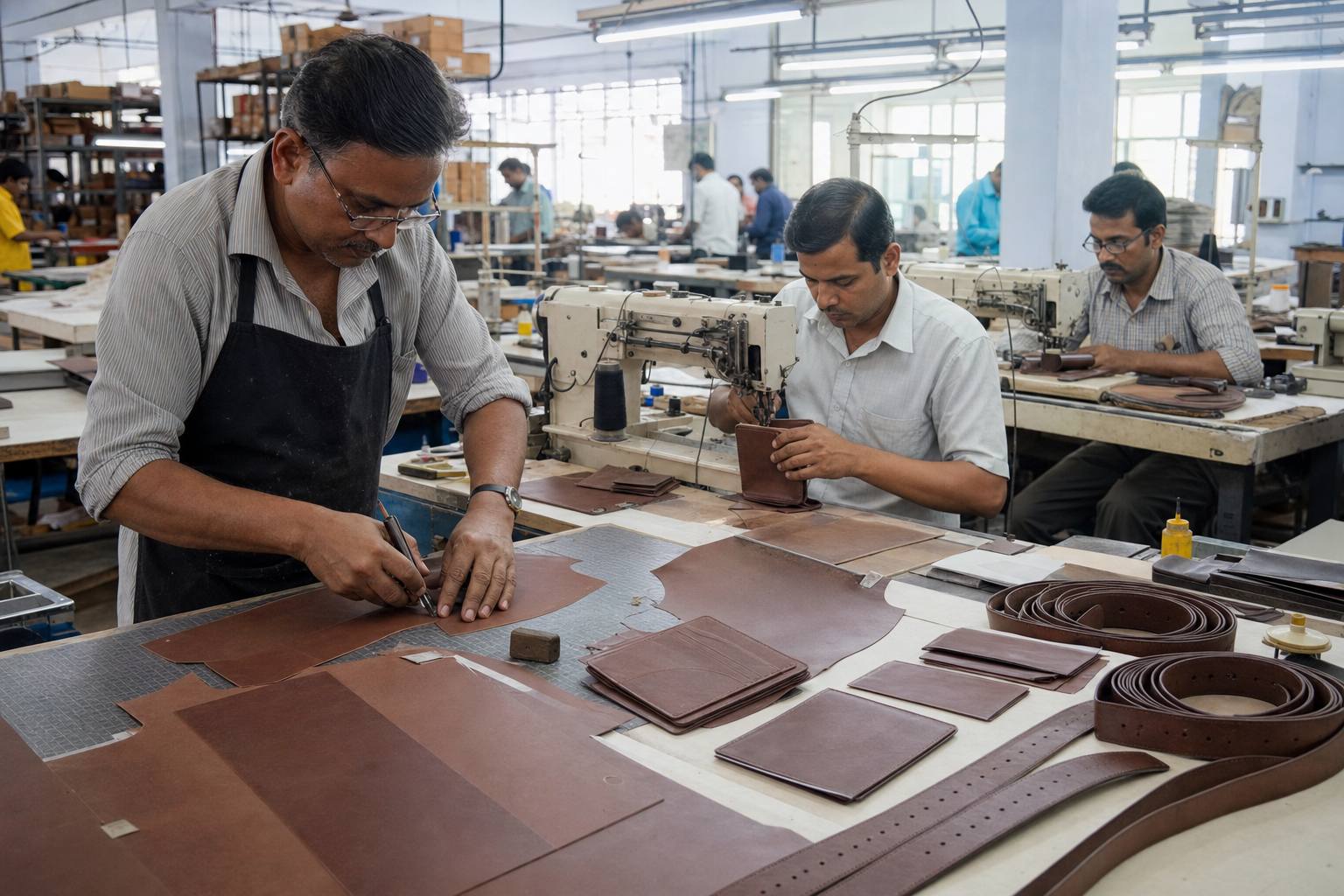
Construction demand only converts when the right cluster owns the critical path. Kanpur and Kolkata (Bantala) support volume cutting and stitching for bifolds and formal belts; Delhi-NCR accelerates design sampling and buyer meetings; Ambur–Ranipet–Chennai links southern tannery and leather networks; Agra and Jaipur support finishing and accessory specialisation.
Belt demand is hardware-constrained: buckle tooling, plating queues, and hole-punch jigs determine whether a Germany 33 mm formal programme can ship with a USA 38 mm casual programme in the same month. Wallet demand is edge-and-slot constrained: RFID insertion and edge paint capacity often bottleneck before stitching does.
Cluster fit for high-demand constructions
Swipe →
Data table — swipe horizontally on small screens
| Cluster | Best-fit demand constructions | Watch-out |
|---|---|---|
| Kanpur | Volume bifold, formal belt | Lock buckle lead times early |
| Kolkata (Bantala) | Leather depth, tannery-linked lots | Map LWG lots to SKUs |
| Delhi-NCR | Slim RFID, design samples | Confirm bulk factory map |
| Ambur–Ranipet–Chennai | Southern leather programmes | Port timing Chennai/Tuticorin |
| Agra / Jaipur | Finishing, specialty hardware | Define subcontract QC owner |
Pricing Analysis
Buyer Tip
Destination demand shifts price architecture. US private label may accept corrected-grain bifolds in the lower half of US$4–12 / pc FOB while Gulf gift programmes push full-grain sets toward US$18–45 / set FOB. EU formal belts price hardware and chemical documentation into the offer — a cheap buckle that fails nickel testing is not a saving.
Indicative FOB by construction (planning)
Swipe →
Data table — swipe horizontally on small screens
| Construction | Indicative FOB | Markets often paying for this build |
|---|---|---|
| Bifold | US$4–12 / pc FOB | USA, UK, Canada |
| Trifold | US$5–14 / pc FOB | Select heritage briefs |
| Card holder | US$2.50–8 / pc FOB | Japan, urban EU, US slim |
| Passport holder | US$6–16 / pc FOB | Travel retail, Gulf |
| RFID wallet | US$6–18 / pc FOB | USA, EU e-commerce |
| Formal belt | US$3.50–12 / pc FOB | UK, EU, Gulf, Japan |
| Casual belt | US$3–10 / pc FOB | USA, Australia |
| Reversible belt | US$5–15 / pc FOB | Travel, dual-wardrobe |
| Premium set | US$18–45 / set FOB | UAE, Saudi gift |
MOQ Analysis
Buyer Tip
Match MOQ to construction risk and market test size. Indicative bands: 100–300 pcs / style (wallets); 150–400 pcs / style (belts); standard programmes 300–1,000 pcs / style; retail chains 1,000–5,000+ pcs / style / colourway; gift-set assortments 200–800 sets / assortment.
Japan and Germany trials often stay at the low end with tighter QC; US marketplace launches may jump colourways faster. Belt buckle tooling can force higher MOQs than wallet stitching alone — declare that in the RFQ response.
MOQ posture by market risk profile
Swipe →
Data table — swipe horizontally on small screens
| Market posture | Typical trial approach | Construction note |
|---|---|---|
| US private label | 300–1,000 / style | Multiple colourways early |
| UK specialty | 200–600 / style | Fewer colours, better edge |
| Germany / Japan | 150–400 / style | Tolerance cards mandatory |
| UAE gift | 200–800 sets | Assortment over single SKU |
| Australia casual | 300–800 / style | 38 mm belt often hero |
Packaging Standards
Export Tip
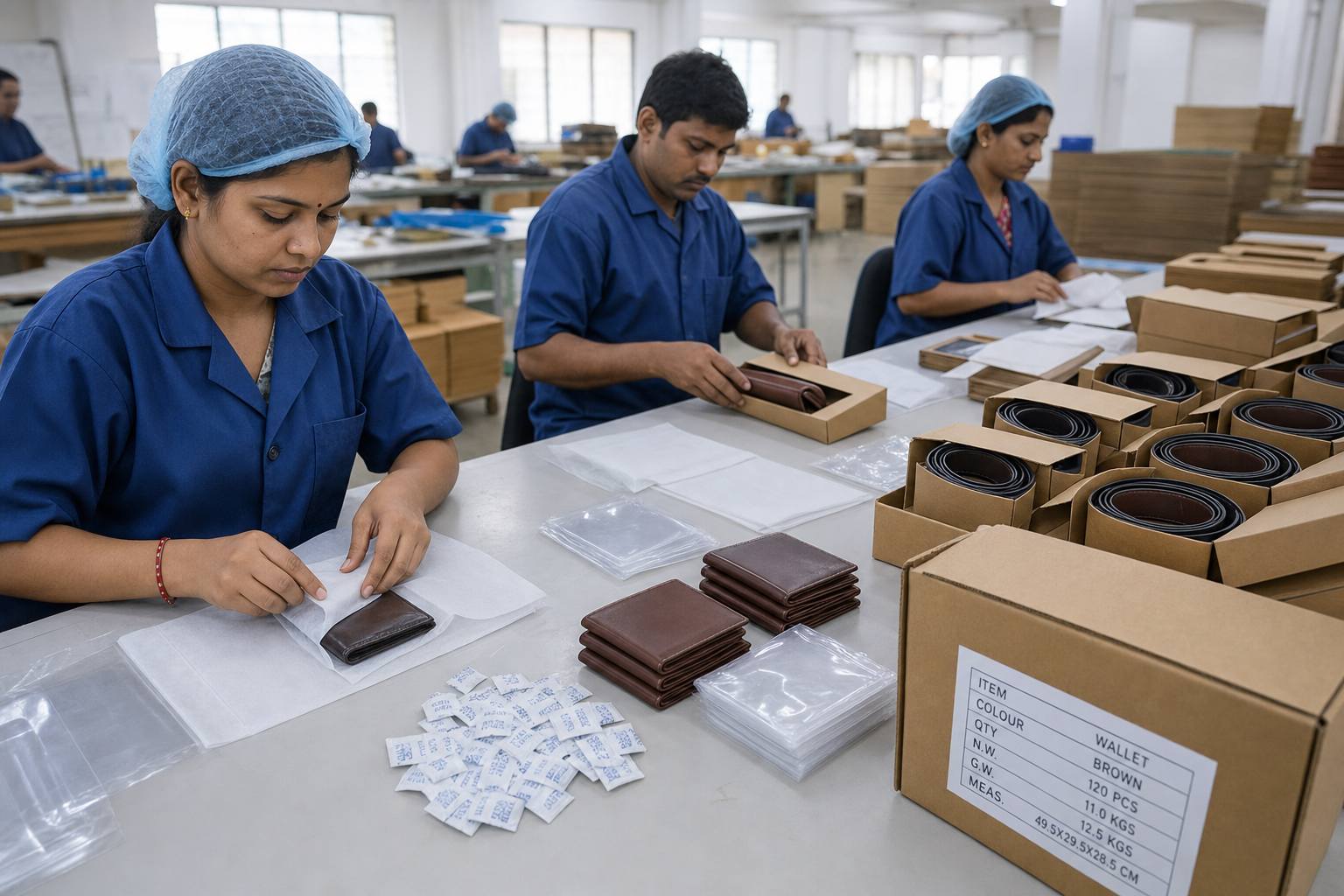
Packaging is part of demanded construction. Gulf gift belts need presentation boxes; Japanese slim wallets need immaculate pouch presentation; US e-commerce wants barcode accuracy and polybag sufficiency for parcel hubs; EU specialty wants discreet branding and clear fibre/care content.
Always separate buckle contact points from leather faces in belt cartons. Wallet programmes nesting denser must still protect RFID edges from crush when mixed with heavier belt cartons in the same container.
Packaging expectations tied to demand markets
Swipe →
Data table — swipe horizontally on small screens
| Market | Wallet pack cue | Belt pack cue |
|---|---|---|
| USA | Barcode + poly sufficiency | Buckle guard + size sticker |
| UK / EU | Care fibre content clarity | Discreet box / loop |
| UAE / KSA | Gift-ready presentation | Matched set gift carton |
| Japan | Neat pouch, no scuff | Matte buckle protected |
| Australia | Travel-robust pouch | Casual belt hangtag |
Container Loading Details
Export Tip
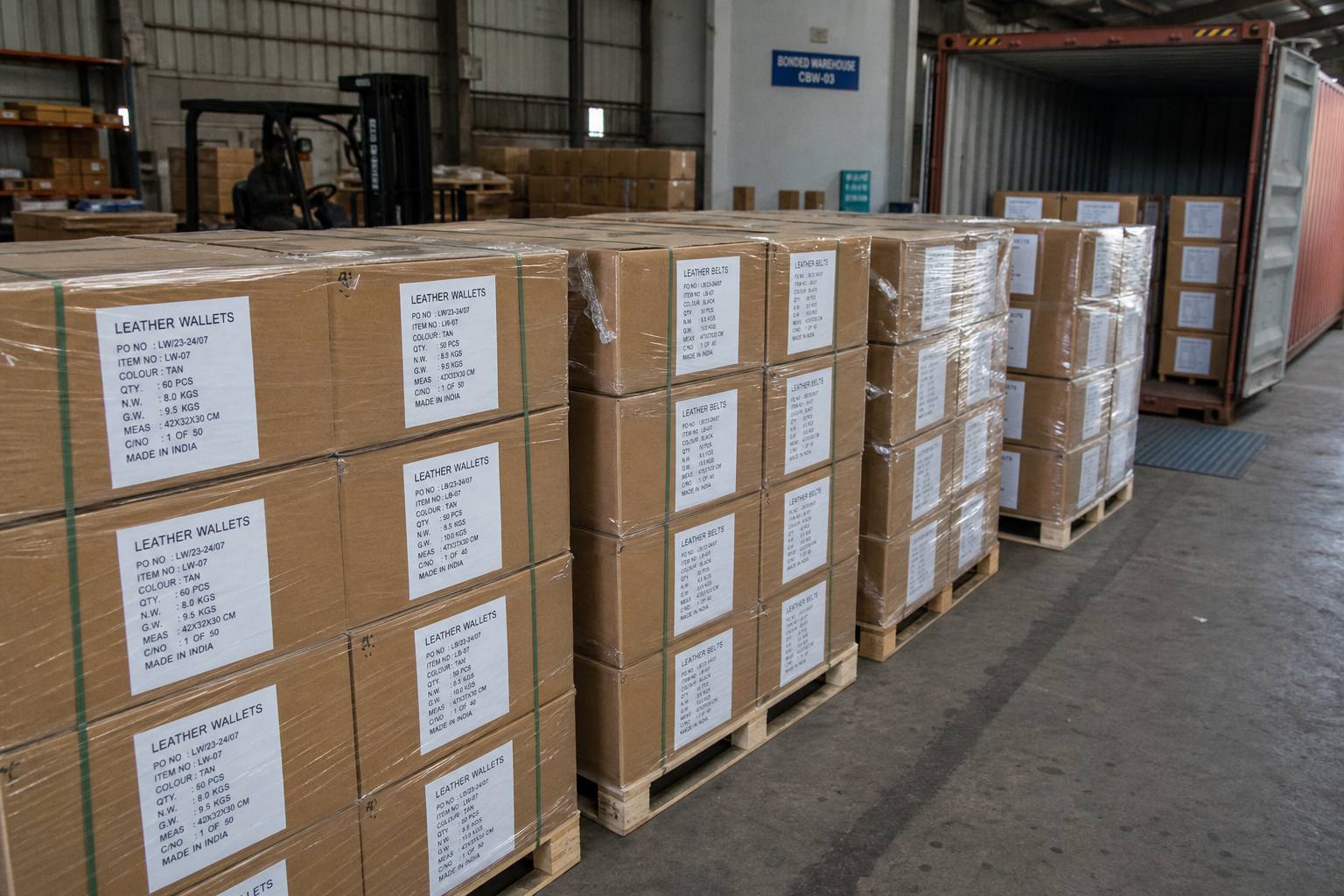
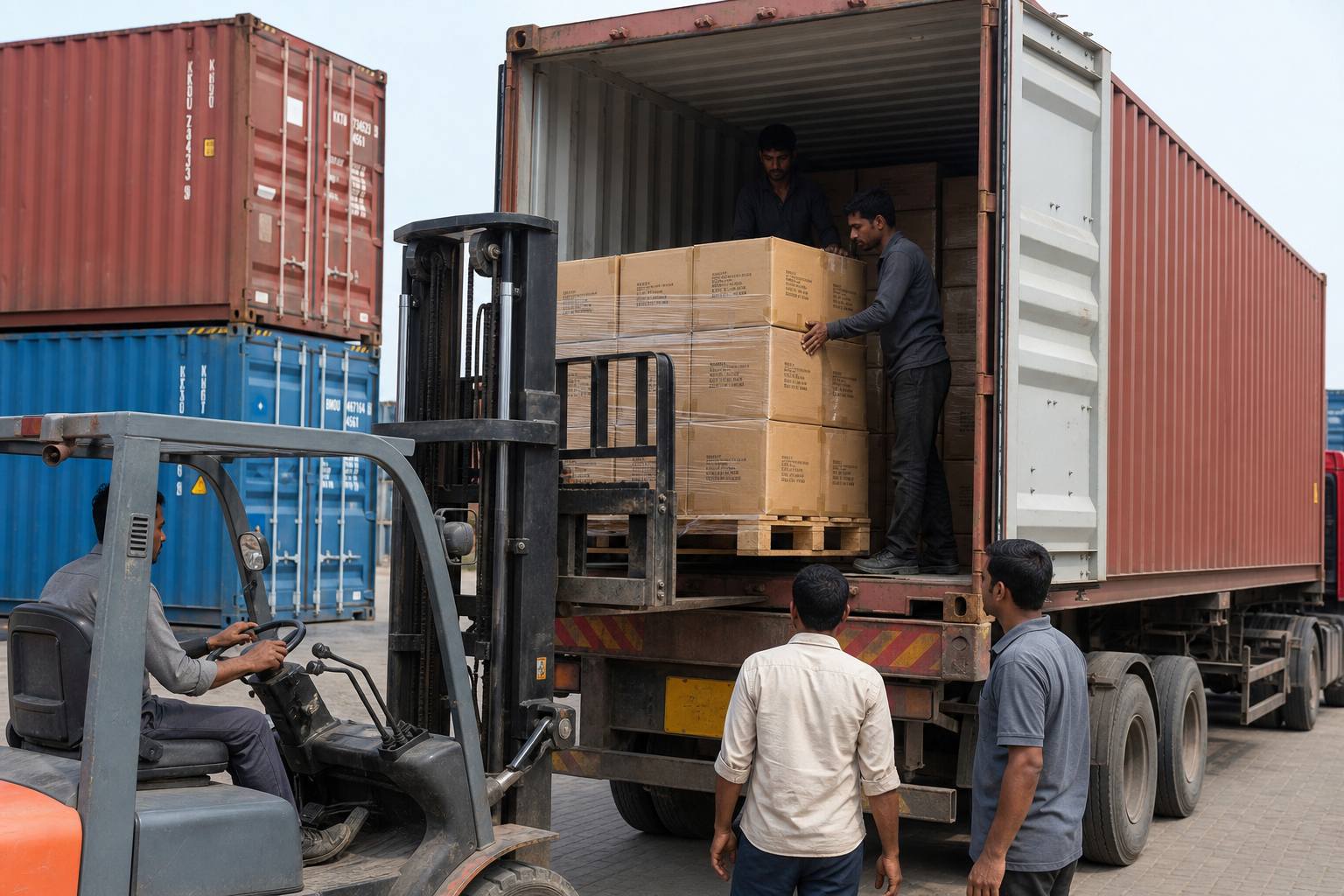
Indicative stuffing: 20ft — 8,000–18,000 wallets or 6,000–14,000 belts (carton-dependent); 40ft HC — 18,000–40,000 wallets or 14,000–32,000 belts (carton-dependent). Belt cartons with buckles weigh more per cube; wallet SLG nests denser. Always stuff from actual carton dims.
Mixed wallet–belt containers for multi-market programmes need segregated carton plans so Gulf gift boxes are not crushed by dense SLG stacks. Stuff from measured cartons after the first bulk lot — never from catalogue estimates alone.
Shipping Methods
Export Tip
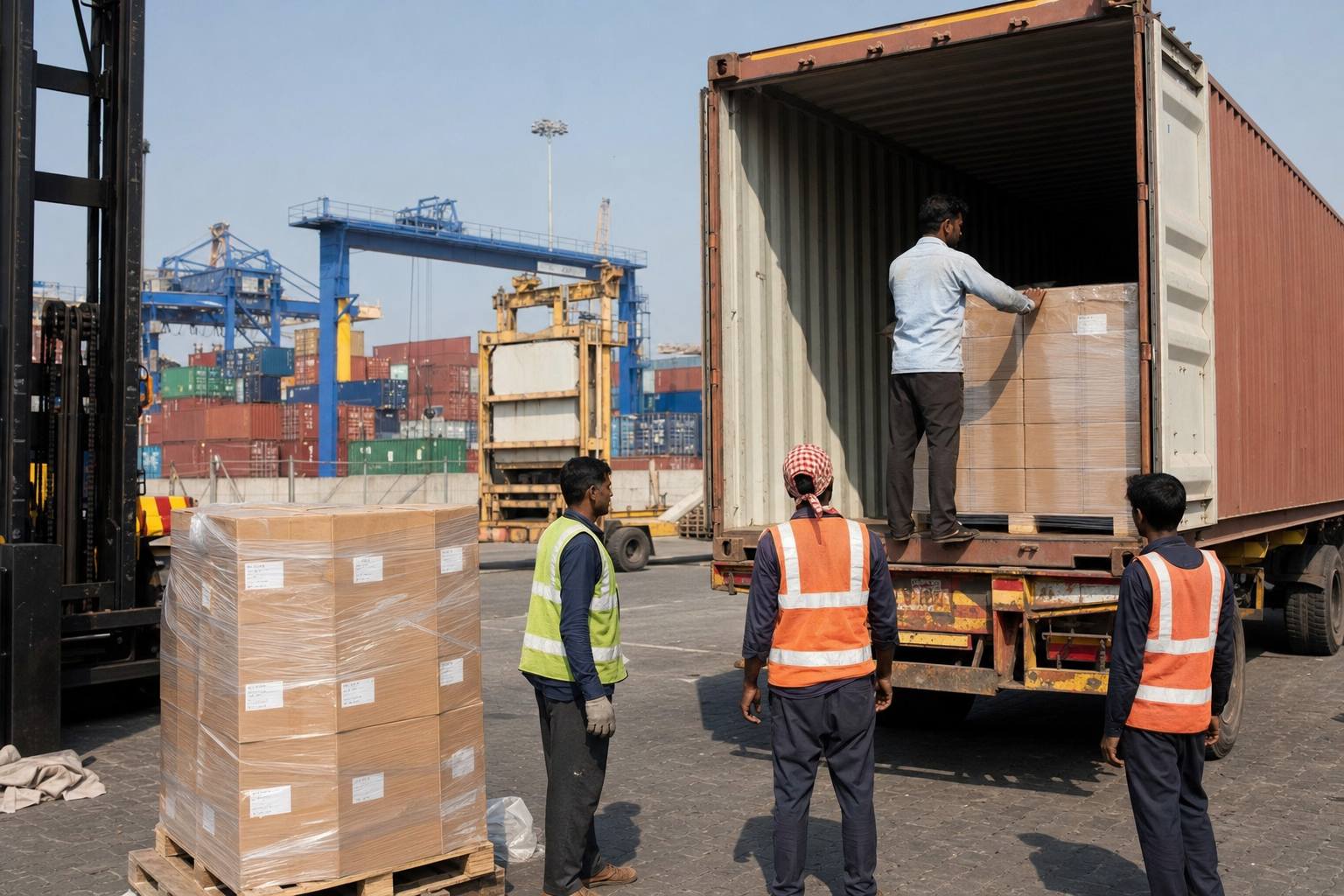
Samples and launch RFID lots often fly; bulk moves LCL/FCL via Mundra, Nhava Sheva, Chennai, Tuticorin, Kolkata. Lead times: samples 7–18 days after locked tech pack; trials 25–45 days ex-factory after sample sign-off; bulk 45–75 days to vessel (hardware/buckle lead time parallel).
Market calendars differ: US holiday inbound peaks earlier than Gulf gift peaks around major festive windows; EU spring formal belts need buckle plating booked mid-prior season. Build destination calendars into the construction brief.
Certifications
Compliance Notes
Demand markets attach different certificate weights. EU/UK: REACH and nickel awareness on buckles. US: CPSIA-oriented heavy-metal awareness when gift channels skew younger, plus truthful RFID claims. Japan: consistency and sometimes factory social documentation for premium specialty. Gulf: presentation and origin clarity often outweigh exotic eco labels — unless the brief is European brand-owned.
CLE RCMC remains a baseline vendor credential across markets. Layer LWG tannery evidence for premium EU and sustainable programmes — see Sustainable Premium Leather Wallet and Belt Export Opportunities.
Certification emphasis by demand market
Swipe →
Data table — swipe horizontally on small screens
| Market | Emphasise | Still verify |
|---|---|---|
| USA | Claim truthfulness, vendor pack | Hardware metals if youth gift |
| UK / EU | REACH, nickel, LWG pathway | Labelling language |
| Germany | Exact chemical + tolerance | Social audit if retail code |
| UAE | Origin + gift presentation | Any brand eco claim used |
| Japan | QC system evidence | Chemical statements as asked |
| Australia | Care + chemical statements | Origin labelling |
Buyer Requirements
Buyer Requirements
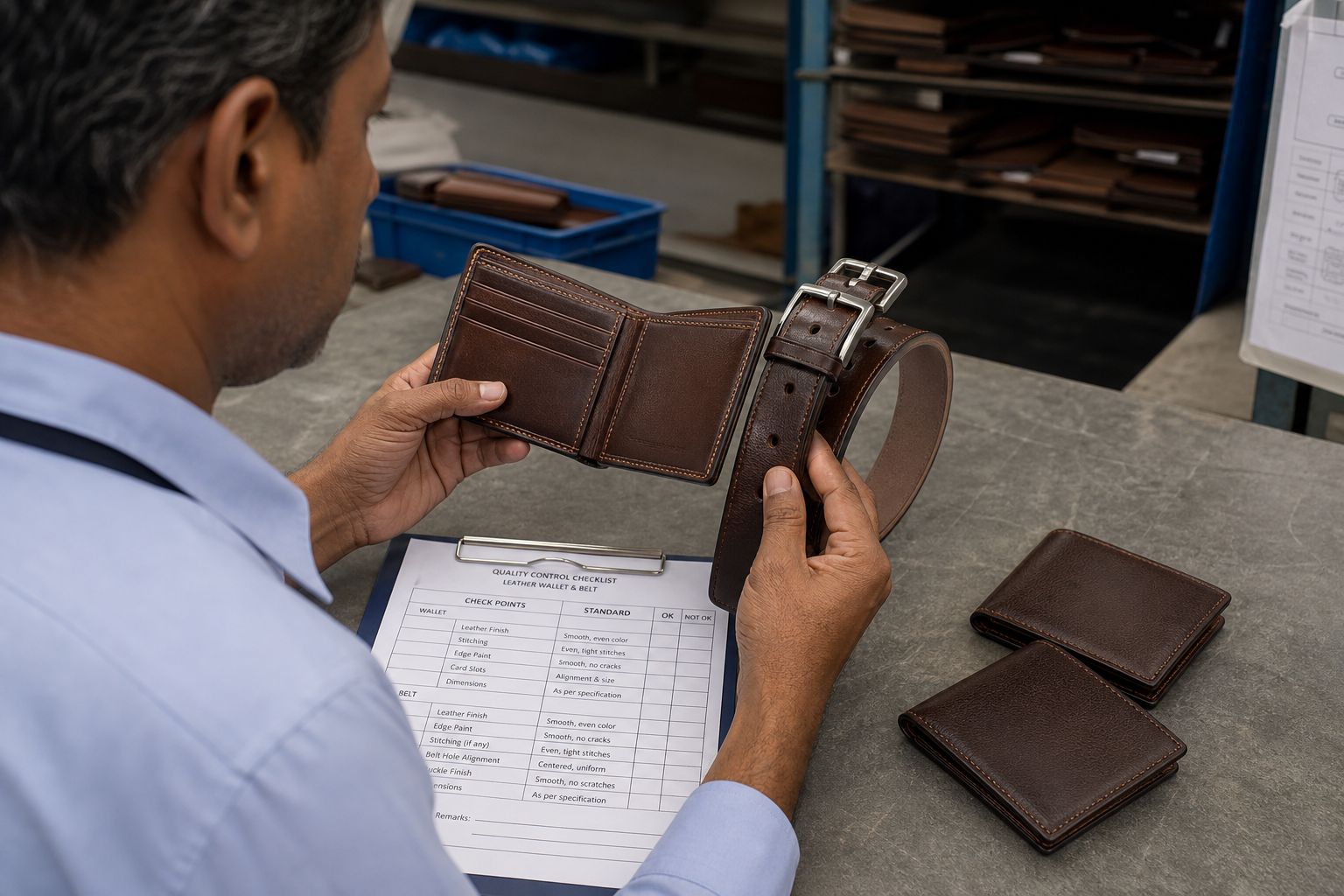
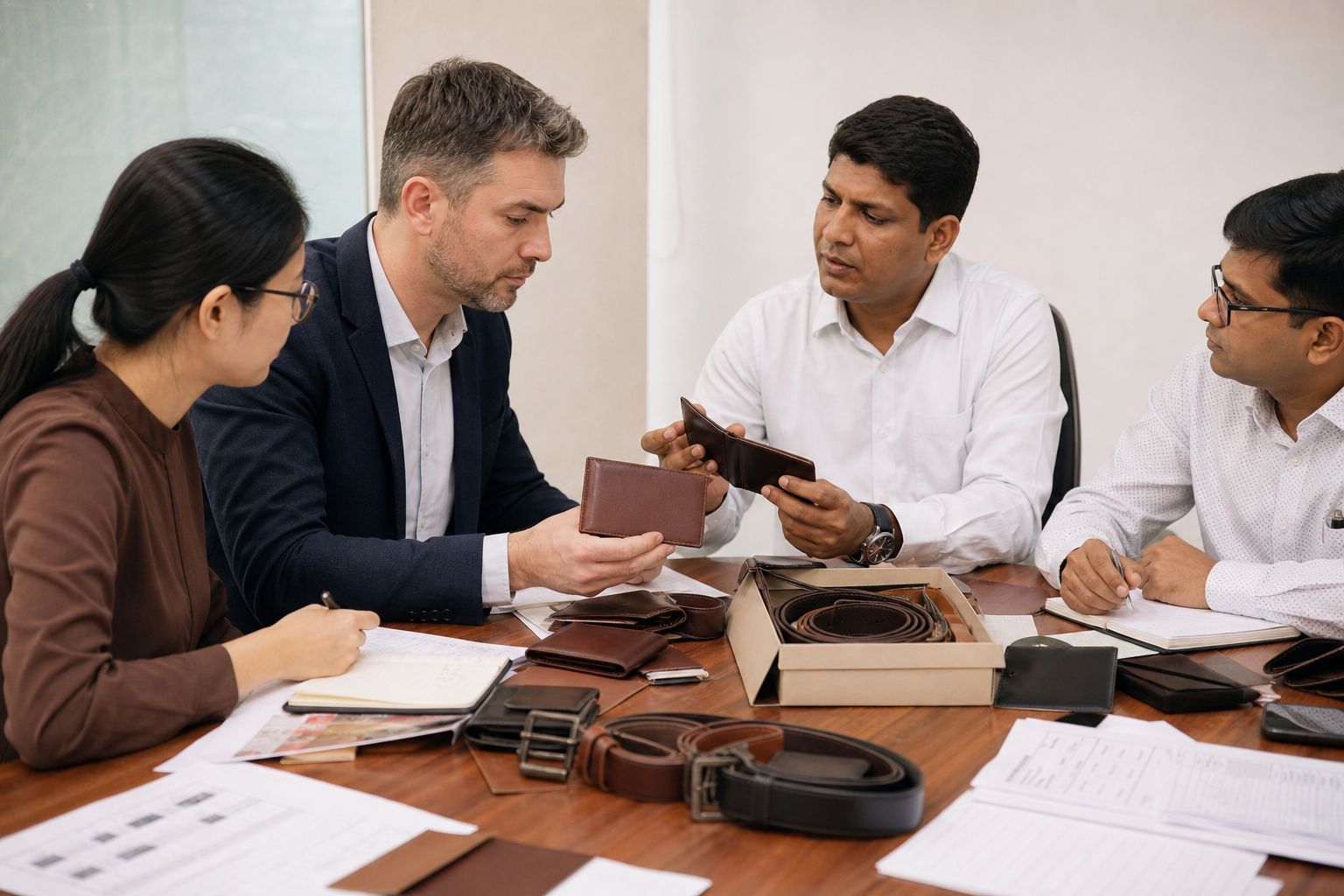
Construction-led buyers typically require: locked tech pack (dimensions, leather, lining, SPI, edge, RFID laminate, belt width mm, hole pitch, buckle drawing), sealed samples, FOB by colourway, MOQ, lead time including hardware, packaging standard, inspection AQL, and destination compliance annex.
Merchant exporters must show which cluster builds which construction. Altus Exports structures destination briefs so Kanpur volume bifolds and Delhi-NCR slim RFID samples are not confused into one vague “wallet line.”
Country-wise Opportunities
Market Snapshot
The matrices below state what markets actually order — constructions, widths, and buckle languages — rather than ranking countries by total import size.
Master construction demand matrix (2026 planning)
Swipe →
Data table — swipe horizontally on small screens
| Market | Top wallet constructions | Top belt specs | Buckle language |
|---|---|---|---|
| USA | Bifold, slim RFID, card holder | 38 mm casual; 35 mm dress | Antique brass / gun-metal / polish |
| UK | Refined bifold, zip-around | 30–35 mm formal | Brushed nickel / discreet polish |
| Germany | Precise bifold, durable lining | Exact 30–35 mm formal | Nickel-aware matte/brush |
| UAE | Full-grain bifold, passport, sets | Polished formal + gift sets | High-shine / statement |
| France | Design-led bifold / zip | Fashion + formal mix | Design buckle capsules |
| Netherlands | Bifold volume + slim | Formal staple widths | EU-compliant finishes |
| Australia | Travel wallet, bifold | 38 mm casual stitched | Casual prong / roller |
| Japan | Slim card, precise bifold | Narrow formal | Matte / low glare |
| Canada | Bifold volume | Dress + casual split | US-similar finishes |
| Saudi Arabia | Premium bifold + sets | Formal gift belts | Polished gift hardware |
United States — Construction Demand Matrix
Wallets: men's bifold remains the volume hero; slim RFID and card holders grow in e-commerce; trifolds are niche. Belts: 38 mm casual with roller or standard prong buckles for denim; formal 35 mm for dress programmes. Colourways: black, brown, tan; seasonal navy. Hardware: antique brass and gun-metal popular in casual; polished for dress. Brief factories with barcode and polybag parcel realities.
United Kingdom — Construction Demand Matrix
Wallets: refined bifolds with neat edge paint; slim profiles for urban retail; zip-around for women's assortments. Belts: 30–35 mm formal with brushed nickel or polished buckles; discreet branding. Avoid loud statement buckles unless a fashion capsule briefs them. REACH and labelling discipline expected even on trial lots.
Germany — Construction Demand Matrix
Wallets: stitch regularity and lining durability outweigh decorative features; card-slot cyclic strength tested mentally by buyers even when not lab-tested every lot. Belts: exact millimetre widths (commonly 30–35 mm formal); nickel-aware buckle finishes; conservative colours. Tolerance cards and chemical annexes convert better than lifestyle photography alone.
United Arab Emirates — Construction Demand Matrix
Wallets: full-grain bifolds, passport holders, and gift-ready presentation. Belts: polished formal widths with higher-shine buckles; statement buckles for fashion floors; matched wallet–belt sets for department and corporate gift. Packaging is part of the product — budget gift cartons into FOB architecture.
France, Netherlands, Australia, Japan, Canada, and Saudi Arabia
France: design proportion, colour story, fashion buckles for capsules — still REACH-aware. Netherlands: EU compliance with pragmatic assortment depth; bifolds and formal belts for specialty and wholesale. Australia: casual 38 mm belts and travel wallets; robust stitch. Japan: slim card holders, precise bifolds, narrow formal belts, matte hardware, immaculate packaging. Canada: US-like bifold volume with colder-chain packing awareness. Saudi Arabia: premium gift presentation akin to UAE formal sets.
Expert Insight: Brief the Destination, Not the Catalog
Expert Insight Box
Exporters lose programmes when they send the same twelve-wallet catalogue to Tokyo, Hamburg, and Dubai.
Sourcing Checklist
Checklist
- Name destination market and channel before selecting constructions.
- Lock wallet construction (bifold / slim / RFID / zip-around) with dimensions.
- Lock belt width mm, hole pitch, and buckle drawing with finish callout.
- Assign cluster and subcontract map for edge paint and hardware.
- Set MOQ by colourway to market trial posture.
- Attach compliance annex for REACH/CPSIA/RFID claims as relevant.
- Approve packaging as part of sealed sample sign-off.
- Plan container mix if wallets and belts ship together.
Use this checklist to turn country demand into a factory brief. Cross-link Find International Buyers for Leather Wallets and Belts and Trade Shows and B2B Marketplaces for Leather Wallet and Belt Exporters.
Common Buyer Mistakes
Common Mistakes Box
Ordering a generic bestseller without a destination construction brief
A “bestselling bifold” without card count, edge, and size targets fails sell-through differently in each market.
Budgeting US casual belt widths for German formal programmes
38 mm denim belts are not drop-in replacements for 30–35 mm European formal rails.
Specifying gold or high-shine buckles for nickel-sensitive EU lines without chemistry
Finish aesthetics must survive REACH and nickel-release expectations — brief plating early.
Using wallet container yields to budget belt-heavy freight
Buckle cartons change weight and cube; freight surprises erase FOB savings.
Copying a competitor assortment without validating local SKU demand
Competitor photography is not sell-through data. Validate constructions with your channel buyer or agent.
Future Market Trends
Key Statistics
Expect continued growth in slim RFID wallets for digitally anxious shoppers, tighter EU chemical documentation on belt hardware, more chrome-free and vegetable-tanned stories in premium European briefs, and gift-set engineering for Gulf retail calendars. Traceability from tannery lot to finished bifold or belt will move from premium differentiator to baseline in brand-owned programmes.
Construction modularity — shared leather lots across bifold and belt colourways — will help Indian exporters serve multi-country programmes without exploding hide waste. Pair trend watching with CLE fair intelligence and documentation discipline from Leather Wallet and Belt Export Documentation Checklist.
Buyer Checklist
Checklist
Exporter Checklist
Checklist
Compliance Checklist
Checklist
Compliance Notes
Expert Insight: Size the Trial to the Construction Risk
Expert Insight Box
High-shine Gulf gift sets and nickel-aware German formal belts are not the same trial risk as a standard US bifold colourway test.
Conclusion
Most demanded Indian leather wallets and belts in 2026 are best understood as a construction matrix across markets — bifolds and RFID slims for the United States, refined formal belts for the UK and Germany, gift-ready full-grain sets for the Gulf, precision slim SLG for Japan, and casual widths for Australia — under HS 420231 and 420330.
Exporters and buyers who brief destination constructions, widths, and buckle finishes outperform those who chase a single global bestseller. Pair this matrix with CLE credentials, documentation discipline, and cluster-aware manufacturing.
Altus Exports helps international buyers and Indian MSMEs turn these demand patterns into sampled, inspected, and shippable programmes through our merchant exporter in India and product sourcing company in India services. Continue with Source Leather Wallets and Belts from India or Best Countries for Indian Leather Wallet and Belt Exports.