
Top Leather Wallet and Belt Products Exported from India (2026 Guide)
By Saurabh Mittal, Founder, Altus Exports
A product-catalog guide to leather wallets and belts India exports — bifolds, trifolds, card holders, RFID and passport wallets, formal, casual, and reversible belts, and gift sets — with HS codes, construction details, indicative FOB and MOQ, and buyer-fit notes for importers and retailers.
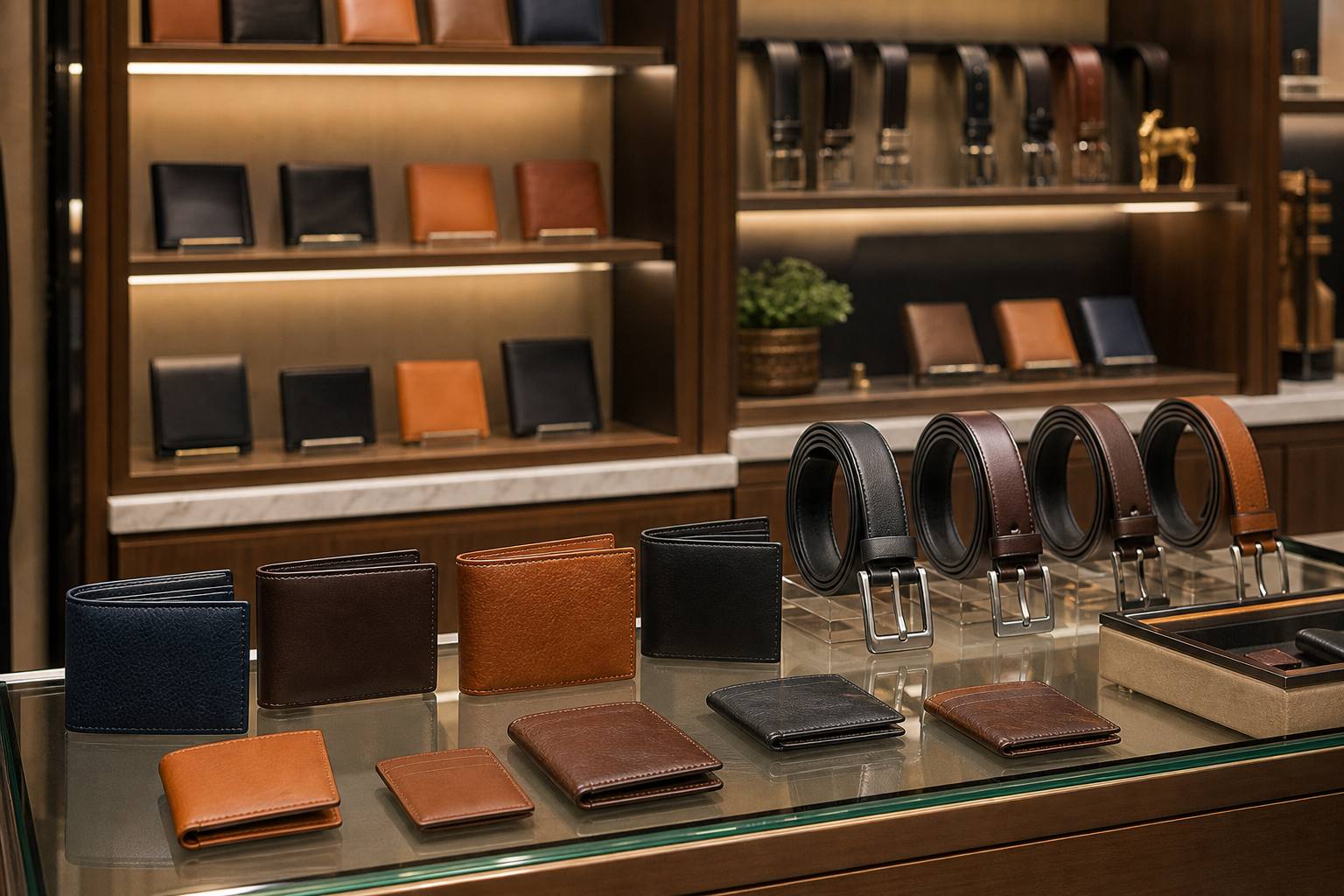
India exports a genuinely wide range of leather wallets and leather belts — not a single commodity accessory, but distinct SKU families with different construction methods, hardware, target buyers, and price points. Wallets typically move under HS 4202.31 (ITC-HS 42023120); leather belts under HS 4203.30 (ITC-HS 42033000).
Core export categories include Men's bifold wallets, Trifold wallets, Card holders / slim wallets, RFID-blocking wallets, Passport holders / travel wallets, Women's zip-around wallets, and related gift-set programmes. Each draws on different strengths across Kanpur, Kolkata (Bantala), Delhi-NCR, Ambur–Ranipet–Chennai, Agra, Jaipur, which means the right sourcing decision depends heavily on which SKU you are buying.
This guide is a product catalog — deep SKU differentiation across bifolds, trifolds, card holders, RFID wallets, passport holders, formal/casual/reversible belts, and gift sets — not an export-process walkthrough. For registration-to-shipment operations, see How to Export Leather Wallets and Belts from India.
Markets: Best Countries for Indian Leather Wallet and Belt Exports and Most Demanded Indian Leather Wallets and Belts by Country. Buying: Source Leather Wallets and Belts from India. Premium sustainability: Sustainable Premium Leather Wallet and Belt Export Opportunities.
Altus Exports works as a merchant exporter in India and global sourcing partner across wallet and belt categories — this guide distills category-level sourcing experience for international buyers, distributors, wholesalers, retail chains, and procurement teams.
Key Takeaways
Summary Box
Executive Summary
Summary Box
Buyers approaching Indian leather wallets and belts as a single homogeneous accessory category consistently misjudge lead time, MOQ, hardware risk, and compliance requirements. A slim RFID card holder, a full-grain bifold, a reversible jeans belt, and a boxed wallet–belt gift set behave like four different product businesses even though they may ship in the same container.
Each SKU draws on a different combination of manufacturing cluster, leather grade, lining or RFID film, buckle alloy, and destination-market compliance expectation. Treating them interchangeably is the most common sourcing mistake international buyers make when entering India for small leather goods and belts.
This guide breaks the assortment down SKU family by SKU family: what it is, what it is made of, what it costs on an indicative FOB basis, what MOQ to expect, and which buyer profile it serves best. It also covers market size and trade context, packaging and container density differences between wallets and belts, and the certifications each programme commonly carries.
Whether you are a wholesale distributor building a multi-SKU accessory range, a retail chain sourcing a private-label bifold and dress-belt line, or a procurement team buying corporate gift sets, read selectively — jump to the SKU relevant to your programme, then use the pricing, MOQ, and certification tables to plan your first order with realistic expectations.
Top import markets for planning purposes include United States, United Kingdom, Germany, United Arab Emirates, France, Netherlands, among others. Pair this catalog with the operational pillar How to Export Leather Wallets and Belts from India before locking production calendars.
Market Size & Industry Overview
Key Statistics
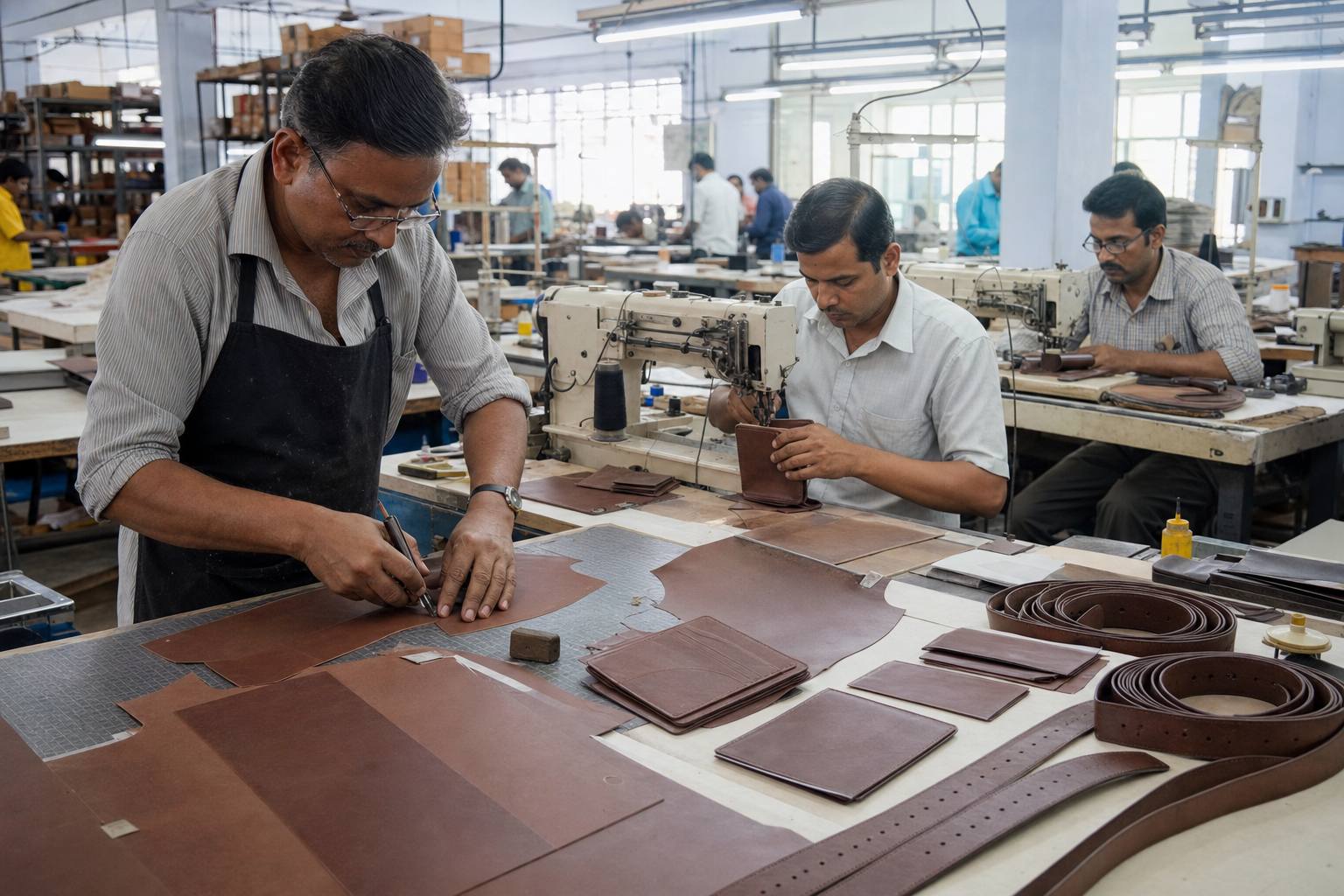
India's leather wallet and belt export base is built on SKU depth as much as piece volume. Rather than a single dominant product line, manufacturing clusters have developed specialisations that map closely to buyer type: Kanpur's integrated tanning-to-finishing chain supports high-volume bifolds and formal belts at competitive pricing; Delhi-NCR's accessory ecosystem supports fashion SLG, RFID programmes, and corporate gift sets with faster sampling; the Ambur–Ranipet–Chennai belt built decades of experience serving brand-owned and private-label programmes in Europe and North America; Kolkata Bantala anchors eastern wallet stitching capacity; Agra and Jaipur contribute casual belts and lifestyle finishes.
The Council for Leather Exports (CLE), tracked through leatherindia.org, is the sector's export promotion and regulatory reference body across every wallet and belt category in this guide. Buyers evaluating a new Indian supplier for any SLG or belt SKU should confirm CLE membership and an active RCMC as a baseline credibility check before deeper category-specific evaluation.
Category choice should follow buyer channel, not manufacturer convenience. A distributor building a value bifold range and a department-store buyer sourcing reversible belts with gift packaging are solving different problems — even when both source from Indian leather goods exporters shipping through the same ports.
India Leather Wallet & Belt Category Landscape (Indicative)
Swipe →
Data table — swipe horizontally on small screens
| Category | Leading Cluster(s) | Typical Buyer Profile | Compliance Emphasis |
|---|---|---|---|
| Men's bifolds | Kanpur, Bantala, Ambur–Ranipet–Chennai | Wholesale distributors, men's accessory retail | Cr(VI) for EU/UK; colour-match discipline |
| Card holders / slim | Delhi-NCR, Ambur–Ranipet–Chennai | Lifestyle retail, e-commerce private label | RFID function; slim profile QC |
| RFID / passport wallets | Delhi-NCR, Ambur–Ranipet–Chennai, Kanpur | Travel retail, premium accessory buyers | Shielding film QC; Cr(VI); LWG preference |
| Formal dress belts | Kanpur, Ambur–Ranipet–Chennai, Agra | Formalwear retail, corporate gifting | Buckle plating; size grading; Cr(VI) |
| Casual / reversible belts | Agra, Jaipur, Delhi-NCR | Denim retail, department stores | Strap consistency; reversible mechanism QC |
| Gift sets (wallet + belt) | Delhi-NCR, Kanpur, UAE-bound packers | Corporate gifting, holiday retail | Matched grain; retail gift packaging |
Export Statistics
Key Statistics
Export composition across wallet and belt SKUs has shifted gradually: RFID and slim card holders are growing faster in value than pure commodity bifolds in several Western markets, while formal dress belts remain a stable volume backbone alongside rising reversible and gift-set programmes. CLE and DGCIS publish periodic leather goods statistics that buyers and exporters should reference before setting SKU-level volume targets — figures below are indicative planning mixes, not published CLE category shares.
Indicative Export Share by Wallet & Belt SKU Family
Swipe →
Data table — swipe horizontally on small screens
| SKU Family | Indicative Planning Mix | Growth Trend | Primary Destinations |
|---|---|---|---|
| Men's bifold wallets | Planning mix only — not CLE-published | Stable mature volume | USA, UK, UAE, Germany |
| Card holders / slim wallets | Planning mix only — not CLE-published | Growing with e-commerce private label | USA, UK, Japan, Australia |
| RFID and passport / travel | Planning mix only — not CLE-published | Fast value growth | USA, Germany, UK, Netherlands |
| Trifolds / women's zip-around | Planning mix only — not CLE-published | Steady, seasonal colourway demand | USA, UAE, UK, France |
| Formal dress belts | Planning mix only — not CLE-published | Stable volume backbone | USA, Germany, UK, UAE, Saudi Arabia |
| Casual / jeans / reversible belts | Planning mix only — not CLE-published | Growing with lifestyle retail | USA, UK, Australia, Canada |
Import Statistics
Key Statistics
Reading destination import demand by SKU — not just by overall leather goods volume — reveals which markets favour which wallet and belt lines. Top planning markets include United States, United Kingdom, Germany, United Arab Emirates, France, Netherlands, Australia, Japan, Canada, Saudi Arabia. A market that imports heavily in RFID travel wallets but lightly in commodity trifolds is telling you something different about buyer profile than a market with the reverse pattern.
SKU Demand Signals by Top Importing Country (Indicative)
Swipe →
Data table — swipe horizontally on small screens
| Importing Country | Strongest SKU Demand | Secondary SKU Demand | Documentation Note |
|---|---|---|---|
| United States | Bifolds, RFID, casual belts | Card holders, gift sets | Standard commercial docs; CPSIA if kids' SLG |
| United Kingdom | Bifolds, card holders, formal belts | RFID, reversible belts | UK chemical compliance aligned to REACH |
| Germany | Full-grain bifolds, RFID, formal belts | Passport wallets | Cr(VI) reports; LWG tannery preference |
| United Arab Emirates | Gift sets, formal belts, bifolds | Trifolds, fashion belts | Quality documentation expectations rising |
| France | Slim wallets, fashion belts | Women's zip-around | Brand-level finish audits common |
| Australia | Casual belts, bifolds, RFID | Card holders | Biosecurity plus standard customs docs |
| Japan | Slim card holders, compact bifolds | Formal belts | Tight dimensional and finish tolerances |
| Saudi Arabia | Formal belts, gift sets | Bifolds | Standard commercial docs; gift packaging focus |
Product Categories / Variants
Summary Box
This section is the core of the guide — a breakdown of each major wallet and belt SKU family India exports in meaningful volume, covering construction, leather type, target buyer, and sourcing considerations specific to that SKU. Use it alongside the pricing and MOQ tables later in this guide to plan an assortment that fits your distribution channel and target market.
SKU Snapshot — Construction and Buyer Channel
Swipe →
Data table — swipe horizontally on small screens
| SKU | Typical Construction Focus | HS Anchor | Primary Channel |
|---|---|---|---|
| Bifold | Card slots, billfold, edge paint | 4202.31 | Wholesale / men's retail |
| Card holder | Slim profile, optional RFID | 4202.31 | Lifestyle / e-commerce |
| RFID wallet | Shielding film + classic silhouette | 4202.31 | Premium accessory retail |
| Passport / travel | Passport sleeve, zip coin, ticket pocket | 4202.31 | Travel retail / gifting |
| Formal belt | Width consistency, dress buckle, size run | 4203.30 | Formalwear / corporate |
| Reversible belt | Dual face + reversible buckle | 4203.30 | Department stores / gifts |
| Gift set | Matched grain + retail gift box | 4202.31 + 4203.30 | Corporate / holiday retail |
Men's Bifold Wallets
- Typical HS
- 4202.31
- Indicative FOB
- US$4–12 / pc FOB
- Cluster strength
- Kanpur, Kolkata Bantala, Ambur–Ranipet–Chennai
Men's bifolds remain the volume backbone of Indian leather wallet exports: typically 8–12 card slots, a central billfold, optional ID window, and edge-painted or burnished edges. Full-grain and corrected-grain cow leather dominate; lining may be leather, microfiber, or textile depending on price band.
Buyers source bifolds for wholesale distribution into department stores, men's accessory chains, and e-commerce private-label programmes. Colour ranges usually centre on black, brown, tan, and cognac, with buyers expecting grain and edge-paint matching across a production batch — not just on the sealed sample.
Trifold Wallets
- Indicative FOB
- US$5–14 / pc FOB
- Buyer fit
- US wholesale, UAE retail, gift channels
Trifolds add a third panel for extra card capacity and are popular in US and Gulf programmes where buyers prefer more pockets without moving to a travel wallet silhouette. Construction complexity and stitch count are higher than bifolds, so MOQ and sampling discipline matter more when colourways multiply.
Export programmes should lock pocket layout diagrams in the tech pack — trifold returns often stem from card-slot depth or window placement mismatches rather than leather grade disputes.
Card Holders and Slim Wallets
- Indicative FOB
- US$2.50–8 / pc FOB
- Cluster strength
- Delhi-NCR, Ambur–Ranipet–Chennai
Slim card holders and minimal wallets are among the fastest-growing Indian SLG exports into lifestyle retail and e-commerce private label. Typical construction is 4–8 card slots, optional cash strap or money clip, and frequent RFID lining. Thickness and edge finish are scrutinised more than on classic bifolds.
Japanese and UK buyers often specify tighter dimensional tolerances. Confirm RFID film brand or performance standard in writing if shielding is part of the marketing claim — a liner that looks metallic but fails a simple card-read test creates chargeback risk after launch.
RFID-Blocking Wallets
- Indicative FOB
- US$6–18 / pc FOB
- Primary destinations
- USA, Germany, UK, Netherlands
RFID-blocking wallets combine classic bifold or slim silhouettes with shielding film in card pockets. They command a premium over non-RFID equivalents when the liner is specified and spot-checked, and they underperform when RFID is treated as a hangtag claim without production controls.
EU and US premium programmes increasingly ask for lot-level evidence that sampled units block proximity reads. Pair RFID SKUs with clear leather Cr(VI) documentation for Europe — chemical compliance and electronic claims are separate buyer conversations that both need answers before PO release.
Passport Holders and Travel Wallets
- Indicative FOB
- US$6–16 / pc FOB
- Buyer fit
- Travel retail, gift programmes, department stores
Passport holders and travel wallets add passport sleeves, ticket pockets, zip coin sections, and sometimes SIM or pen slots. They skew toward travel retail, airport-adjacent gift programmes, and holiday merchandising. Zipper brand and slider quality matter as much as leather grade because zipper failure dominates return reasons in this SKU.
Export packing for travel wallets often uses gift boxes rather than simple polybags. Align box artwork and barcode early — packaging lead time can exceed leather cutting lead time on branded programmes.
Women's Zip-Around Wallets and Coin Accessories
Women's zip-around wallets, coin pouches, key fobs, and money clips broaden SLG assortments for fashion retail. Zip-around construction requires more precise pattern grading and zipper length control than bifolds. Colourway turnover is higher, so leather batch planning and edge-paint recipes must be locked per season.
These SKUs often ship alongside men's bifolds in mixed containers for multi-category accessory buyers. Keep invoice descriptions precise so customs can distinguish article types without delaying the whole consignment.
Formal Dress Belts
- Typical HS
- 4203.30
- Indicative FOB
- US$3.50–12 / pc FOB
- Cluster strength
- Kanpur, Ambur–Ranipet–Chennai, Agra
Formal dress belts — typically 30–35 mm strap widths, polished or brushed buckles, and precise hole grading — are a core Indian belt export. Strap thickness consistency and buckle plating adhesion separate export-grade belts from domestic market stock. Size runs (commonly 30–42 or local equivalents) add planning complexity wallets do not have.
Buyers include formalwear retail, corporate uniform programmes, and gift channels. Confirm whether the programme needs removable buckles, logo etching, or nickel-free plating before sampling, because hardware changes mid-bulk are expensive.
Casual and Jeans Belts
- Indicative FOB
- US$3–10 / pc FOB
Casual and jeans belts use thicker straps, pull-up or distressed finishes, and more expressive buckle shapes. They serve denim retail, lifestyle chains, and e-commerce private label. Abrasion and finish variation are part of the aesthetic — but buyers still expect controlled variation within an agreed range, not uncontrolled batch drift.
Export programmes should define acceptable pull-up character with sealed references for light, medium, and dark units in the same colourway name. Without that discipline, 'vintage brown' becomes an argument at destination.
Reversible Belts
Reversible belts offer two strap faces and a rotating or reversible buckle mechanism, popular in department stores and gift sets because one SKU covers two colour looks. Mechanism durability and tip finishing are the usual failure points — sample abuse tests (repeated flips) before bulk.
Indicative FOB often lands around US$5–15 / pc FOB, reflecting dual-face leather and hardware complexity versus single-face casual belts.
Fashion Statement-Buckle Belts
Fashion belts with oversized or decorative buckles serve seasonal fashion retail. Hardware MOQ and plating lead times often gate the programme more than leather cutting. Align buckle tooling and leather colour approval on the same calendar so neither waits idle for the other.
Corporate Gift Wallet–Belt Sets
Matched wallet–belt sets in full-grain leather with retail gift boxes are a high-ASP export niche, especially into UAE, US, and UK corporate and holiday channels. Indicative FOB for premium full-grain sets often falls in the US$18–45 / set FOB band. Grain matching across both articles is non-negotiable — buyers reject sets where the wallet and belt look like different leather lots.
Gift set MOQs commonly run 200–800 sets / assortment. Packaging artwork, foam inserts, and outer shipper cartons should be sampled with the product, not after leather bulk is already complete.
Manufacturing Overview
Export Tip
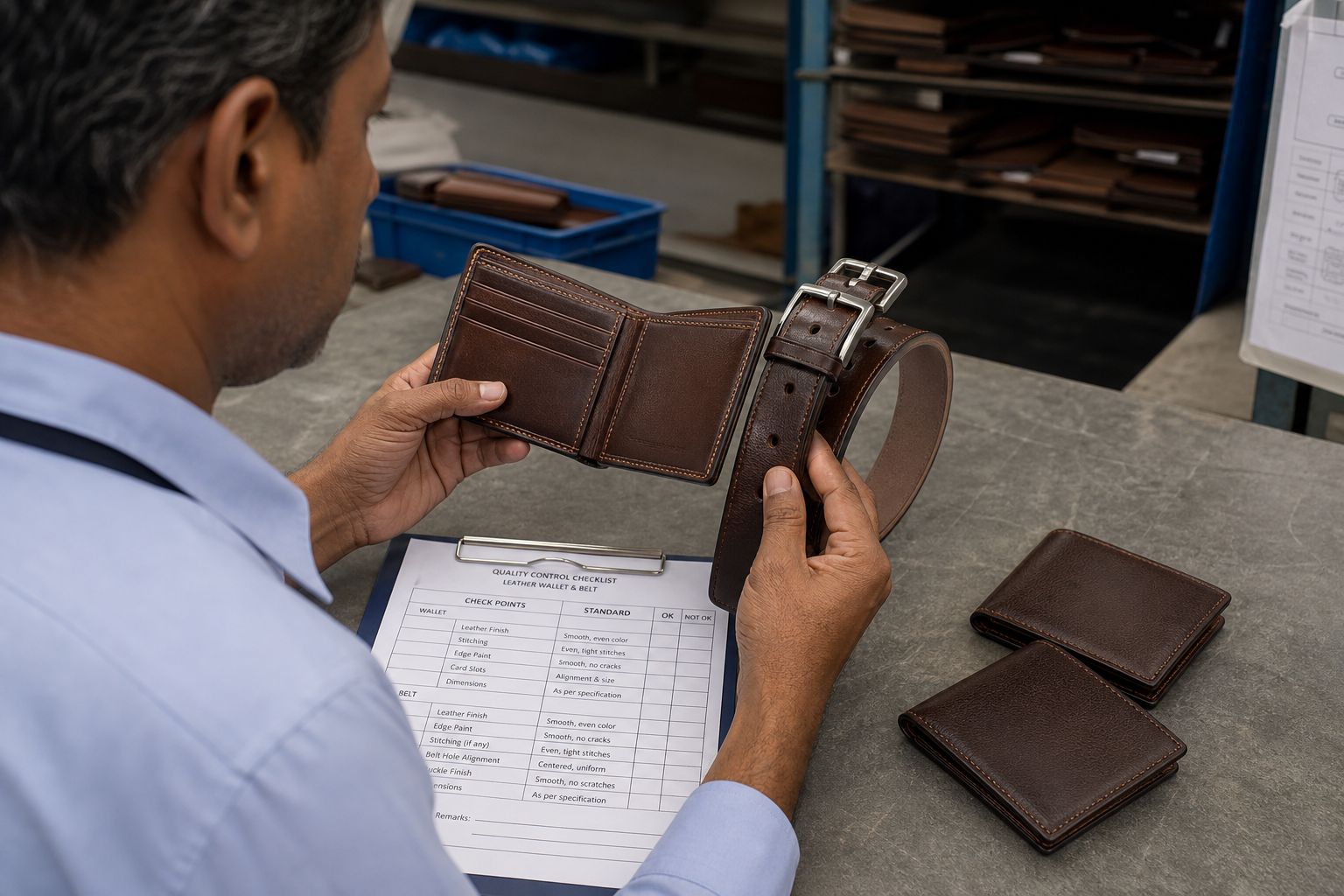
Wallet manufacturing sequences cutting, skiving, pocket assembly, stitching, edge painting, and optional RFID liner insertion. Belt manufacturing sequences strap cutting, edge finishing, hole punching, tip shaping, and buckle assembly. Both depend on leather lot consistency and hardware supply; belts add size-run planning wallets largely avoid.
Export-oriented factories in Kanpur, Kolkata (Bantala), Delhi-NCR, Ambur–Ranipet–Chennai, Agra, Jaipur differ in automation and compliance maturity. Ambur–Ranipet–Chennai and selected Delhi-NCR units often have deeper private-label experience; Kanpur and Bantala offer scale for bifolds and dress belts. Merchant exporters consolidate across clusters when a buyer needs both volume bifolds and fashion RFID cards under one shipment plan.
Typical sample lead time is 7–18 days after locked tech pack. Trial orders often require 25–45 days ex-factory after sample sign-off. Bulk programmes commonly need 45–75 days to vessel (hardware/buckle lead time parallel), with buckle tooling running in parallel. For the full registration-to-freight sequence, use How to Export Leather Wallets and Belts from India.
Manufacturing Focus by Cluster (Wallets & Belts)
Swipe →
Data table — swipe horizontally on small screens
| Cluster | Wallet Strength | Belt Strength | Buyer Fit |
|---|---|---|---|
| Kanpur | Volume bifolds, corrected-grain programmes | Formal dress belts at scale | Wholesale volume programmes |
| Kolkata (Bantala) | Stitching and finishing depth | Selected formal belts | Eastern logistics + mid-volume SLG |
| Delhi-NCR | Fashion SLG, RFID, gift sets | Fashion and reversible belts | Private label and gifting |
| Ambur–Ranipet–Chennai | EU/US private-label wallets | Compliance-heavy dress belts | Brand and retail chain programmes |
| Agra | Casual SLG pockets | Casual / jeans belts | Lifestyle and denim channels |
| Jaipur | Artisanal finishes, lifestyle SLG | Fashion statement belts | Boutique and gift assortments |
Expert Insight: SKU Discipline Beats Catalogue Sprawl
Expert Insight Box
We routinely see importers approve a beautiful assortment board, then discover that buckle plating lead times and RFID film MOQs cannot support every SKU in the same sailing week. Sequence your assortment: validate construction on a short list, then add colourways and gift sets once the factory has demonstrated batch matching.
Pricing Analysis
Buyer Tip
Indicative FOB bands below are planning anchors from shared wallet and belt facts — not quotations. Leather grade, RFID liners, buckle alloy, gift packaging, and order volume move prices inside each band. Validate against current factory quotes before locking retail margins.
Indicative FOB by Wallet & Belt SKU
Swipe →
Data table — swipe horizontally on small screens
| SKU | Indicative FOB | Primary Destinations | Key Price Driver |
|---|---|---|---|
| Bifold wallet | US$4–12 / pc FOB | USA, UK, UAE, Germany | Leather grade; edge finish; RFID option |
| Trifold wallet | US$5–14 / pc FOB | USA, UAE, UK | Pocket complexity; lining |
| Card holder | US$2.50–8 / pc FOB | USA, UK, Japan, Australia | Slim profile; RFID; branding hardware |
| Passport holder | US$6–16 / pc FOB | USA, UK, Germany, UAE | Travel features; zip quality |
| RFID wallet | US$6–18 / pc FOB | USA, Germany, UK, Netherlands | Shielding film; construction |
| Formal belt | US$3.50–12 / pc FOB | USA, Germany, UK, UAE, KSA | Buckle plating; strap consistency |
| Casual belt | US$3–10 / pc FOB | USA, UK, Australia, Canada | Strap thickness; finish character |
| Reversible belt | US$5–15 / pc FOB | USA, UK, department stores | Mechanism; dual-face leather |
| Premium gift set | US$18–45 / set FOB | UAE, USA, UK corporate | Matched grain; gift packaging |
MOQ Analysis
Buyer Tip
MOQs differ for wallets versus belts because belt programmes carry size-run complexity and buckle SKUs. Gift sets add packaging MOQs that can exceed leather MOQs on branded boxes.
Indicative MOQ by Programme Stage
Swipe →
Data table — swipe horizontally on small screens
| Programme Stage | Indicative MOQ | Notes |
|---|---|---|
| MSME trial per style | 100–300 pcs / style (wallets); 150–400 pcs / style (belts) | Colourway count multiplies effective volume |
| Standard programme per style | 300–1,000 pcs / style | Forward leather booking for colour match |
| Retail chain per style / colourway | 1,000–5,000+ pcs / style / colourway | Forecast and seasonal calendar required |
| Gift set assortment | 200–800 sets / assortment | Matched sets; packaging lead time parallel |
Packaging Standards
Export Tip
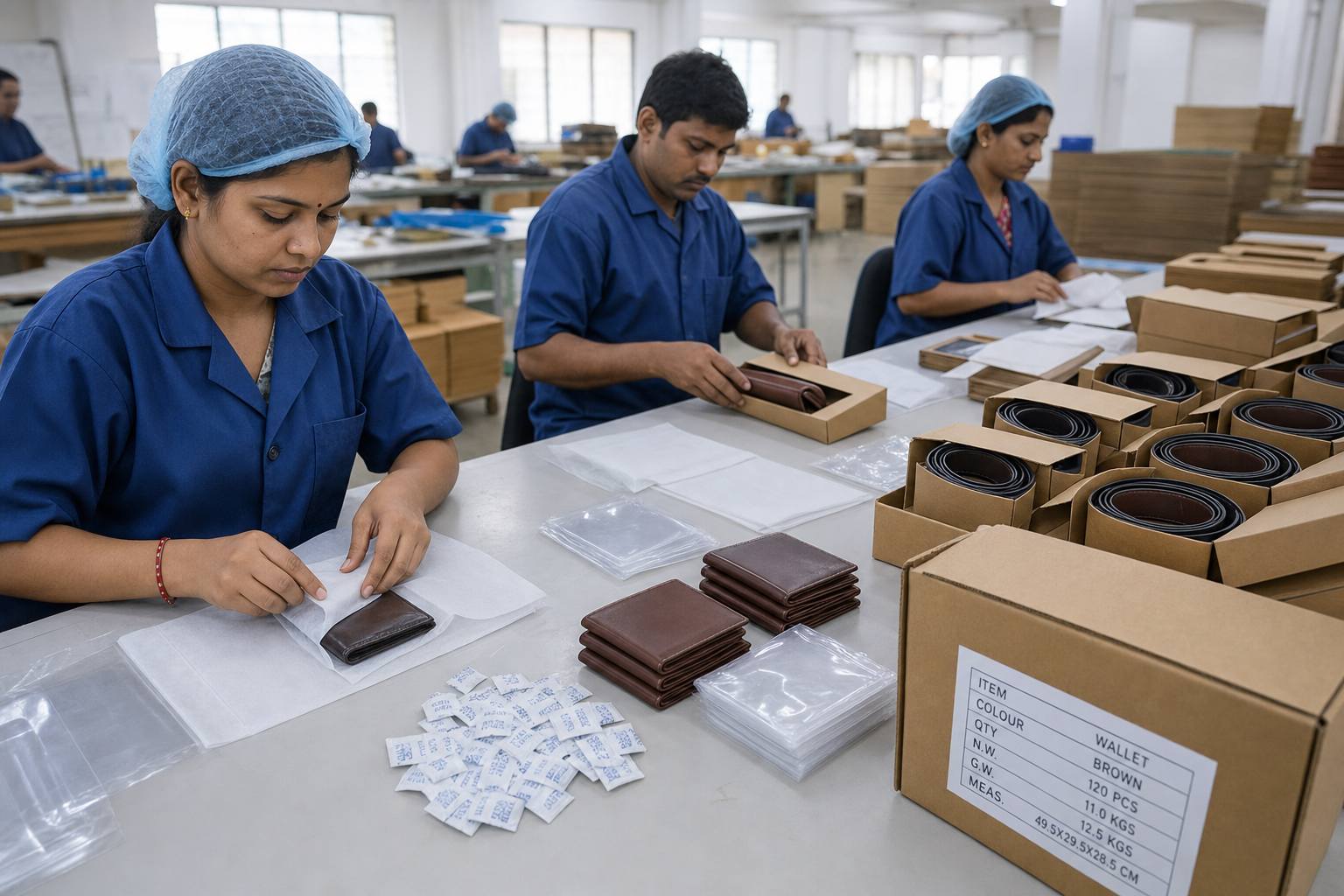
Wallet packaging skews to polybags or branded gift boxes; belt packaging emphasises buckle protection and size labelling; gift sets require matched presentation boxes that survive ocean humidity. Retail-ready programmes should lock dielines before bulk leather cutting.
Packaging by SKU Type
Swipe →
Data table — swipe horizontally on small screens
| SKU Type | Inner Pack | Outer Pack | Critical Control |
|---|---|---|---|
| Bifolds / card holders | Polybag or slim gift box | Master carton by colourway | No ink transfer; hangtag accuracy |
| RFID / passport wallets | Gift box common | Master carton + silica gel | Box crush resistance; barcode lock |
| Formal / casual belts | Sleeve or coil with buckle guard | Master carton by size run | Plating scratch prevention |
| Reversible belts | Individual box recommended | Size-sorted master cartons | Mechanism protected in transit |
| Gift sets | Matched retail gift box | Shipper carton with set count | Grain match wallet + belt visible on open |
Container Loading Details
Export Tip
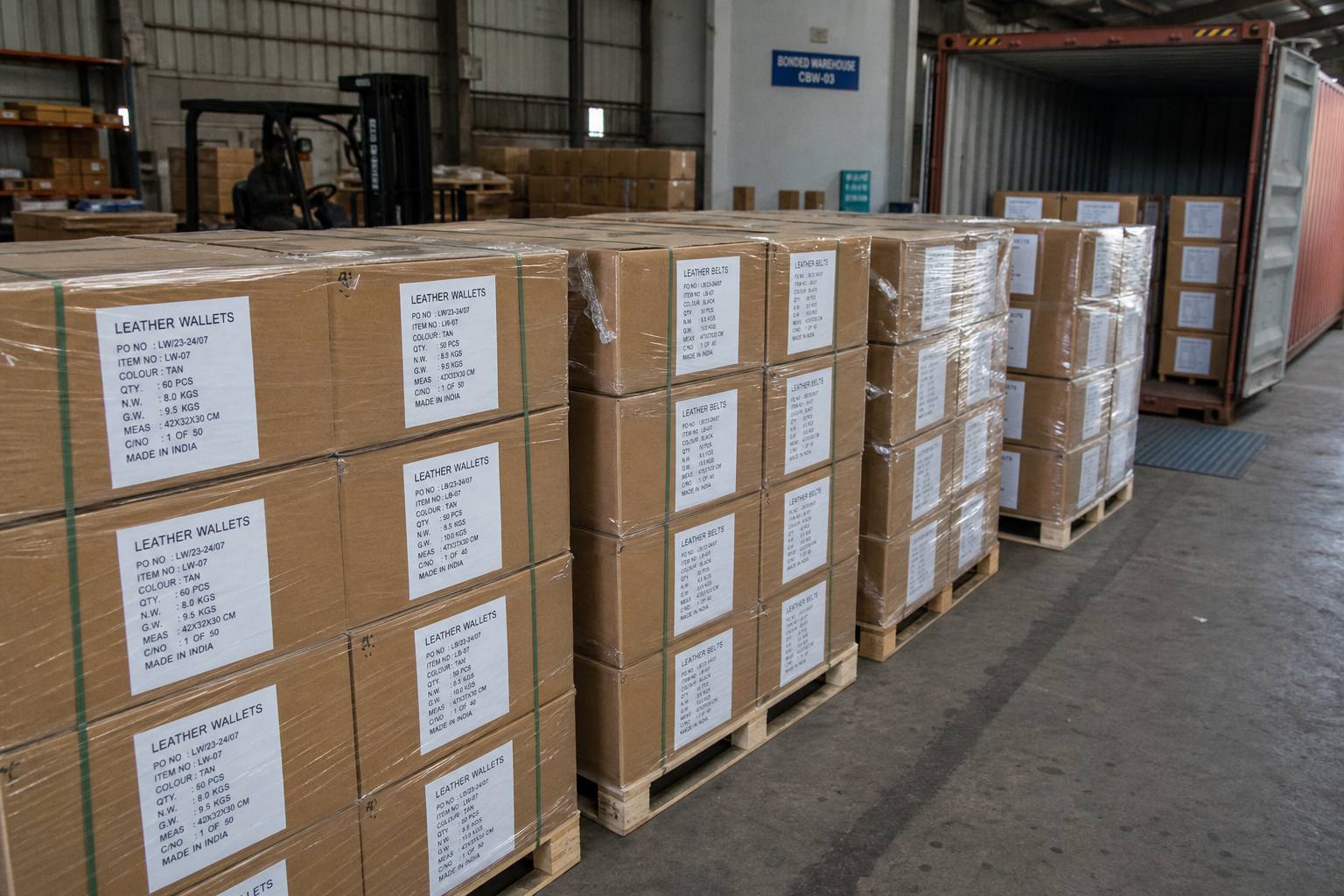
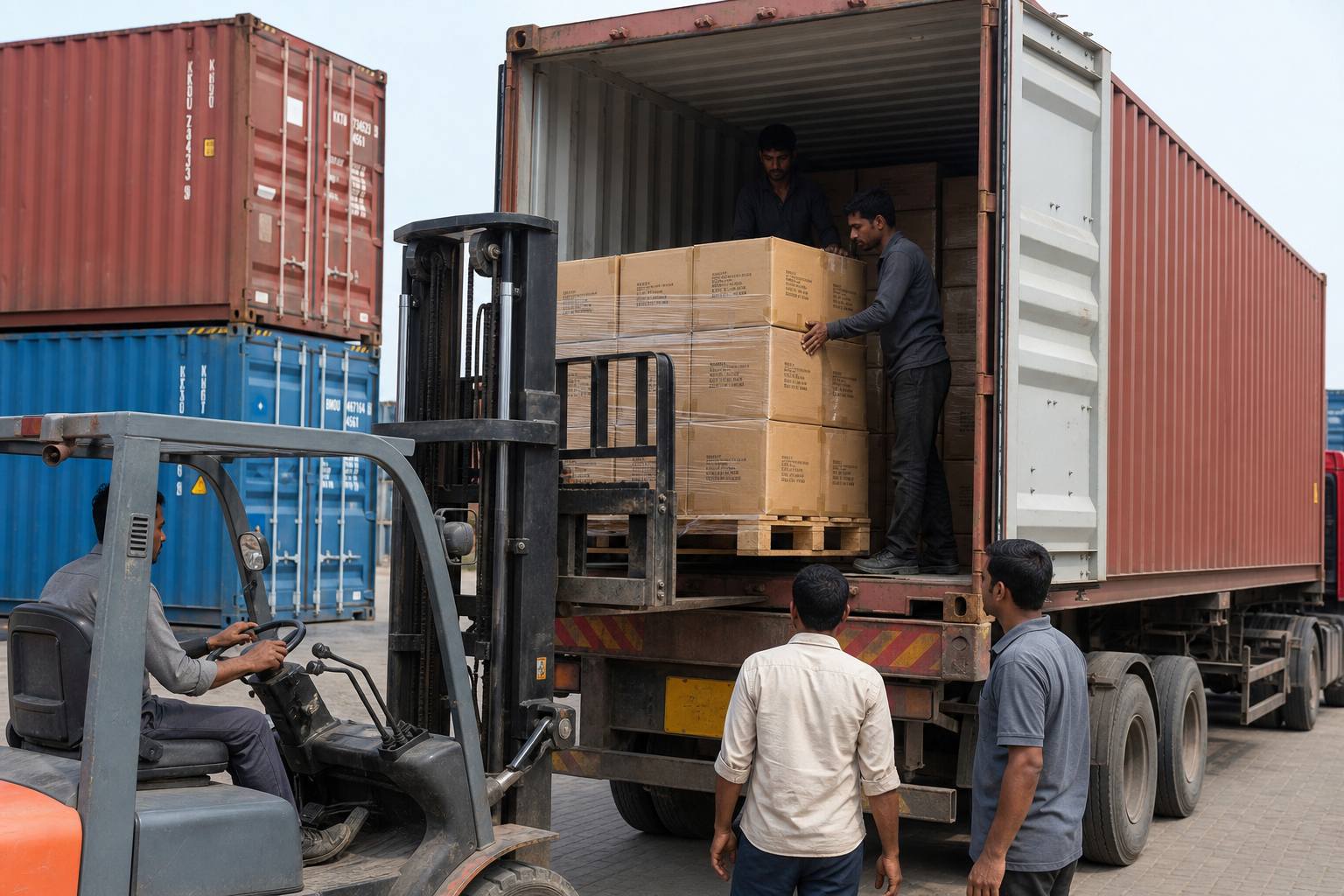
Belt cartons with buckles weigh more per cube; wallet SLG nests denser. Always stuff from actual carton dims. Mixed wallet-and-belt containers are common for accessory programmes — model cube carefully so belt hardware weight and wallet nesting density do not surprise your freight quote.
Indicative Container Loads
Swipe →
Data table — swipe horizontally on small screens
| Container | Indicative Load | Planning Note |
|---|---|---|
| 20ft FCL | 8,000–18,000 wallets or 6,000–14,000 belts (carton-dependent) | Good for trial and mid-size programmes |
| 40ft HC | 18,000–40,000 wallets or 14,000–32,000 belts (carton-dependent) | Preferred for retail chain replenishment |
| LCL | Palletised mixed styles | Trial assortments and multi-SKU launches |
Shipping Methods
Export Tip
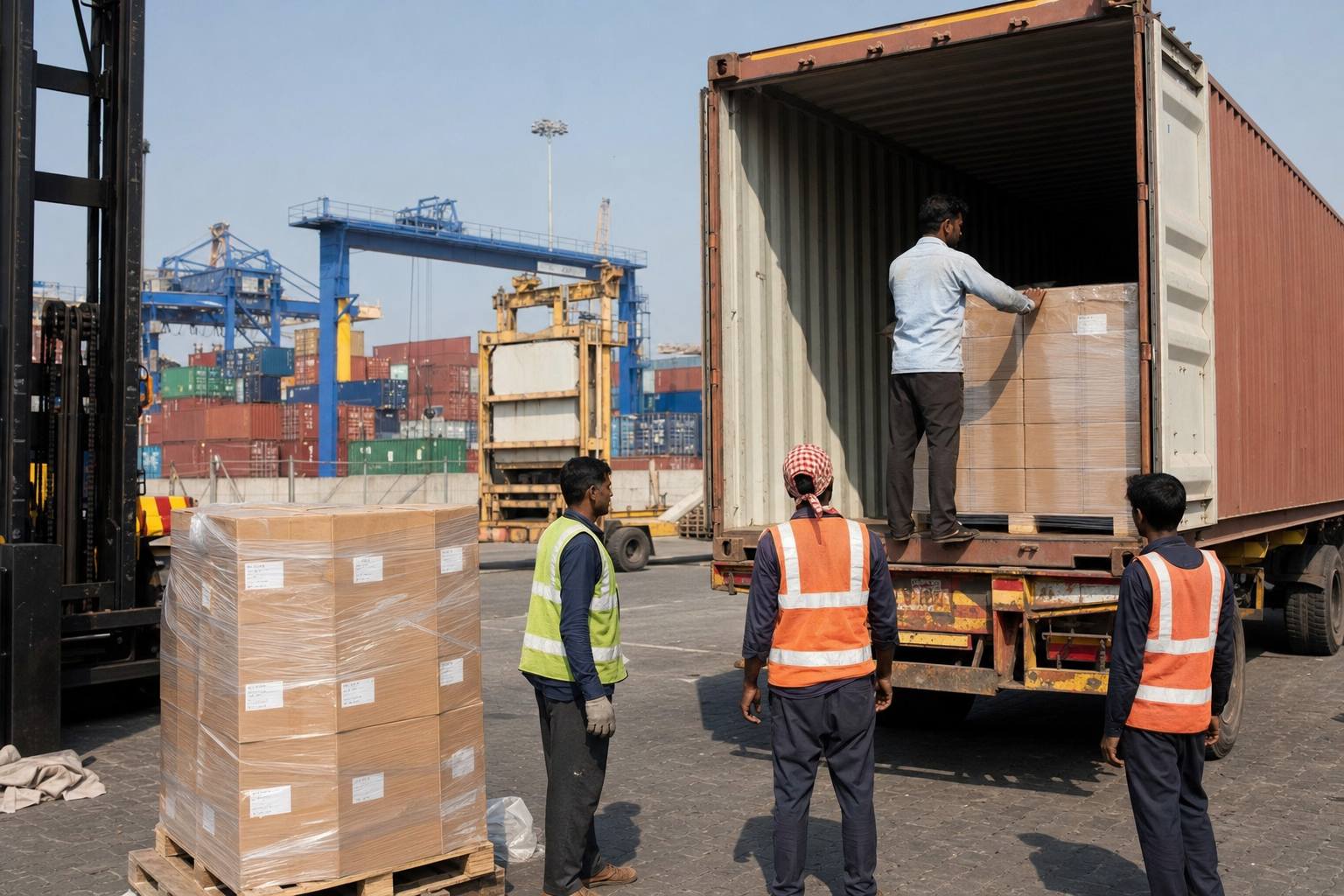
Sea freight FCL dominates established wallet and belt programmes; LCL suits trials; air freight covers samples and urgent RFID or gift-set replenishment. Primary ports: Mundra, Nhava Sheva, Chennai, Tuticorin, Kolkata. FOB remains the default Incoterm; CIF/CFR appear when buyers want a single landed-cost quote.
Build calendars around 7–18 days after locked tech pack for samples, 25–45 days ex-factory after sample sign-off for trials, and 45–75 days to vessel (hardware/buckle lead time parallel) for bulk to vessel. Hardware delays — not leather cutting — are the most common reason belt programmes miss the first sailing.
Certifications
Compliance Notes
CLE RCMC is the sector credibility baseline. REACH Cr(VI) is mandatory for EU/UK leather wallets and belts. LWG tannery certification and chrome-free leather unlock premium programmes. RFID SKUs may need performance spot-check evidence separate from chemical tests.
Certification Relevance by SKU Family
Swipe →
Data table — swipe horizontally on small screens
| Requirement | Wallets | Belts | Notes |
|---|---|---|---|
| CLE RCMC | Expected | Expected | Buyer credibility baseline |
| REACH Cr(VI) | Mandatory EU/UK | Mandatory EU/UK | ≤3 mg/kg in leather components |
| LWG tannery | Premium programmes | Premium programmes | Rising on EU/US brand lines |
| RFID function check | RFID SKUs | N/A | Lot spot-checks recommended |
| Nickel-free / buckle specs | Occasional hardware | Common on EU dress belts | Specify plating standard in tech pack |
Buyer Requirements
Buyer Requirements
- Tech pack with dimensions, pocket layout or strap width, hardware callouts, and Pantone/leather references
- Signed samples retained at origin and destination
- Cr(VI) reports for EU/UK-bound leather lots
- Packaging dielines and barcode proofs before bulk print
- Agreed AQL and pre-shipment inspection rights on first programmes
Serious buyers of Indian wallets and belts typically require verifiable CLE/IEC status, sealed samples per colourway, clear tech packs, realistic MOQs, and evidence that RFID or buckle claims are production-controlled. First orders should include written acceptance criteria for edge paint, stitch density, strap width tolerance, and size grading.
Country-wise Opportunities
Market Snapshot
SKU fit varies by market. For ranked destination strategy, see Best Countries for Indian Leather Wallet and Belt Exports and Most Demanded Indian Leather Wallets and Belts by Country.
United States
Strong demand for bifolds, RFID wallets, card holders, and casual belts through wholesale and private-label e-commerce; barcode-ready packing and consistent colour lots win reorder business.
Germany and wider EU
Premium full-grain bifolds, RFID travel wallets, and formal belts perform when Cr(VI) and LWG expectations are met upfront; finish audits are common.
United Kingdom
Balanced demand across bifolds, slim wallets, and dress belts; UK chemical compliance and repeat-order consistency outweigh chasing the lowest FOB.
United Arab Emirates and Saudi Arabia
Gift sets, formal belts, and bifolds move through retail and re-export; presentation packaging is a purchase criterion, not an afterthought.
Japan and Australia
Japan favours slim, precise card holders and compact bifolds; Australia pulls casual belts, bifolds, and RFID for lifestyle retail — both reward dimensional discipline.
Sourcing Checklist
Checklist
Common Buyer Mistakes
Common Mistakes Box
Assortment mistakes are as costly as process mistakes when buying wallets and belts from India.
Future Market Trends
Key Statistics
Slim RFID card holders and travel wallets continue to take share from oversized trifolds in several Western markets. Reversible belts and boxed gift sets are growing in department-store and Gulf gifting channels. Sustainability preferences — LWG tanneries, chrome-free leather, and clearer traceability — are moving from niche EU fashion into broader US and UK private-label briefs.
Exporters and buyers who invest in SKU discipline, hardware QC, and chemical documentation will capture both stable bifold/dress-belt volume and higher-ASP RFID and gift programmes. Explore Sustainable Premium Leather Wallet and Belt Export Opportunities and buyer-discovery channels via Trade Shows & B2B Marketplaces for Leather Wallet and Belt Exporters.
Buyer Checklist
Checklist
Exporter Checklist
Checklist
Compliance Checklist
Checklist
Compliance Notes
Expert Insight: Match the SKU to the Cluster
Expert Insight Box
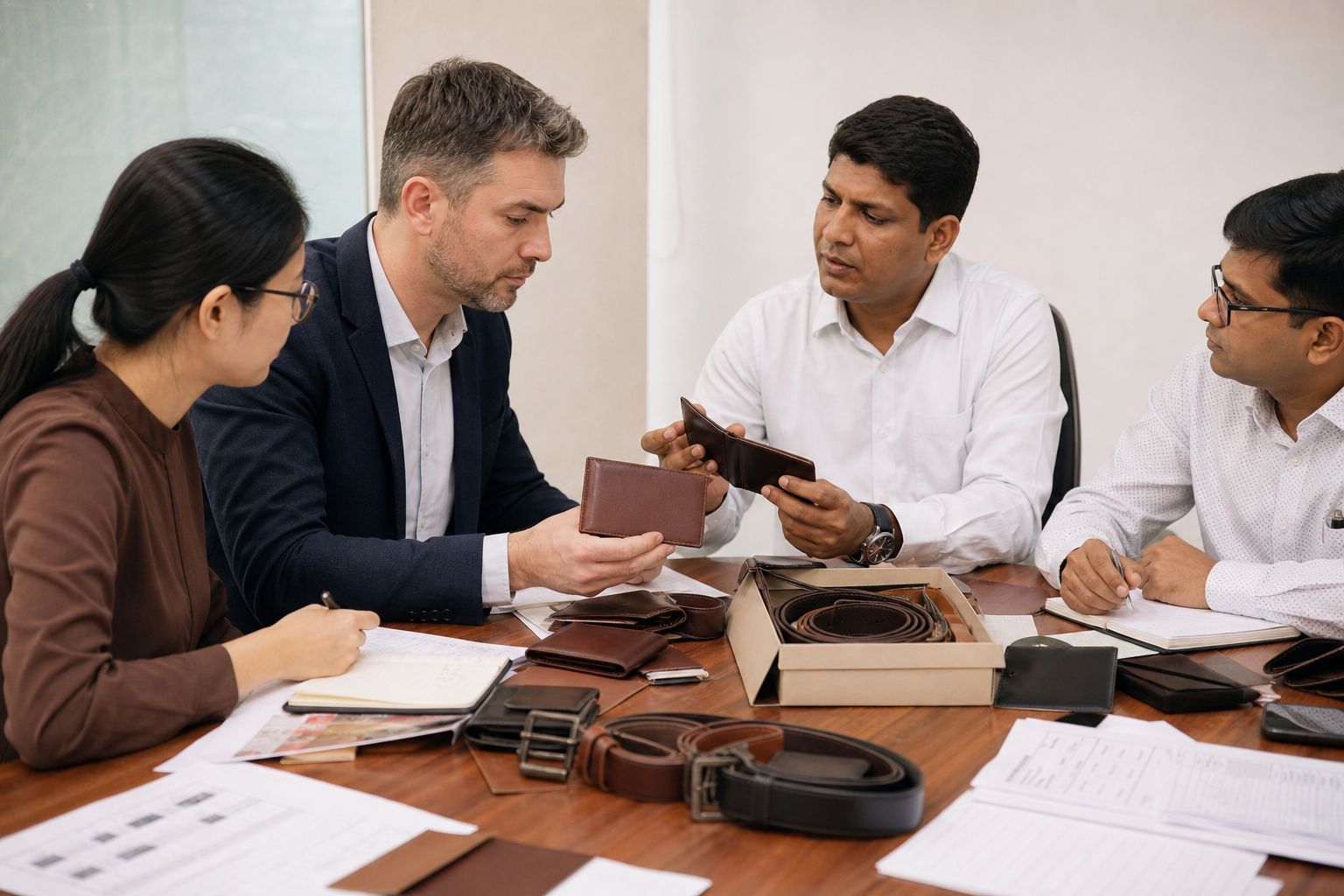
Altus Exports builds multi-SKU programmes by placing each wallet and belt line where the manufacturing ecosystem already excels, then consolidating documentation and freight under one accountable export relationship. That approach costs less than forcing a single factory to improvise unfamiliar hardware or RFID constructions under sailing pressure.
Conclusion
- Operations: How to Export Leather Wallets and Belts from India.
- Markets: Best Countries · Demand by Country.
- Buying: Source from India · Find International Buyers.
- CLE & docs: CLE Registration Benefits · Documentation Checklist.
- Growth: Sustainable Premium Opportunities · Trade Shows & B2B Marketplaces.
India's leather wallet and belt export strength is assortment depth: bifolds, trifolds, card holders, RFID and passport wallets, formal, casual, and reversible belts, and matched gift sets — each with distinct construction, pricing, MOQ, and buyer fit under HS 4202.31 and 4203.30. Buyers who select SKUs deliberately, seal samples honestly, and model wallets and belts as different articles ship cleaner and reorder faster.
Altus Exports supports international buyers and Indian exporters as a merchant exporter in India and global sourcing partner across this assortment. Explore export products from India, product sourcing company, and find manufacturers in India, or visit https://altusexports.com/ to brief your wallet and belt programme.