How to Find Suppliers When Procuring from India
By Saurabh Mittal, Founder, Altus Exports
Find suppliers for buying products from India inside the cluster that already makes your item, then verify identity, capacity, and export papers. Keep three to five factories for the RFQ.
Supplier discovery is where buying products from India either becomes a shortlist or becomes a pile of brochures. A directory listing shows that someone wants the inquiry. It does not show that they can make your specification, export it, or still be solvent when the deposit is due.
Run this step only after product selection. The output is a shortlist you can send one RFQ to, which is the next gate in how to procure products from India.
Build a longlist from places that already make the product
Start with the cluster, trade bodies for that category, buyer referrals, and factories you have seen at a show. Open directories are a supplement. Search terms should include the product and the process, not only “exporter.” A trader with a catalogue of fifty categories can be useful later for consolidation. They are a weak first source if you still need to learn who manufactures.
Ask each lead four questions before you invest in a call: Do you make this item or trade it? What monthly capacity is realistic for this specification? Which countries have you shipped it to in the last year? Who would be the exporter of record? Vague answers stay on the longlist. Specific answers move forward.
Separate factories, traders, and merchant exporters
A factory controls the process and should be able to show machines, a quality check, and batch or job records appropriate to the product. A trader buys and resells. A merchant exporter can be the commercial seller and the exporter of record while production stays at audited factories. All three can be legitimate. The risk is a trader describing themselves as the manufacturer, then disappearing when a defect needs rework.
If you want one India-side contract across several factories, say so. That is a merchant exporter or sourcing partner scope, and it should be contracted. It is not something to discover after you have paid a deposit to a trading name.
Verify identity and export readiness
- Legal name, address, and the person who can sign a proforma
- GST identity consistent with that name
- IEC when they will be exporter of record
- Category licence or a written reason it does not apply
- Bank account in the same legal name, confirmed later on a known channel
Ask for the legal name that will appear on the invoice, GST details, and the IEC if that party will export. IEC records sit with DGFT. The point is not to collect stamps. The point is that the name on the proforma, the bank account, and the shipping bill will be the same party.
Category registrations matter when the product needs them: FSSAI for many foods, board registrations for some agricultural lines, BIS where the standard applies. A missing registration is not always fatal on day one. It is fatal if your destination or the export process requires it and nobody owns the gap.
For a deeper credential checklist, use supplier verification in India and how to find reliable suppliers in India. This article stays on the procurement shortlist, not the full audit.
Check capability with evidence, not a tour script
Capability is process plus capacity. Ask what they will not accept in your brief. A useful supplier pushes back on an unrealistic tolerance or an impossible lead time. A weak one agrees to everything.
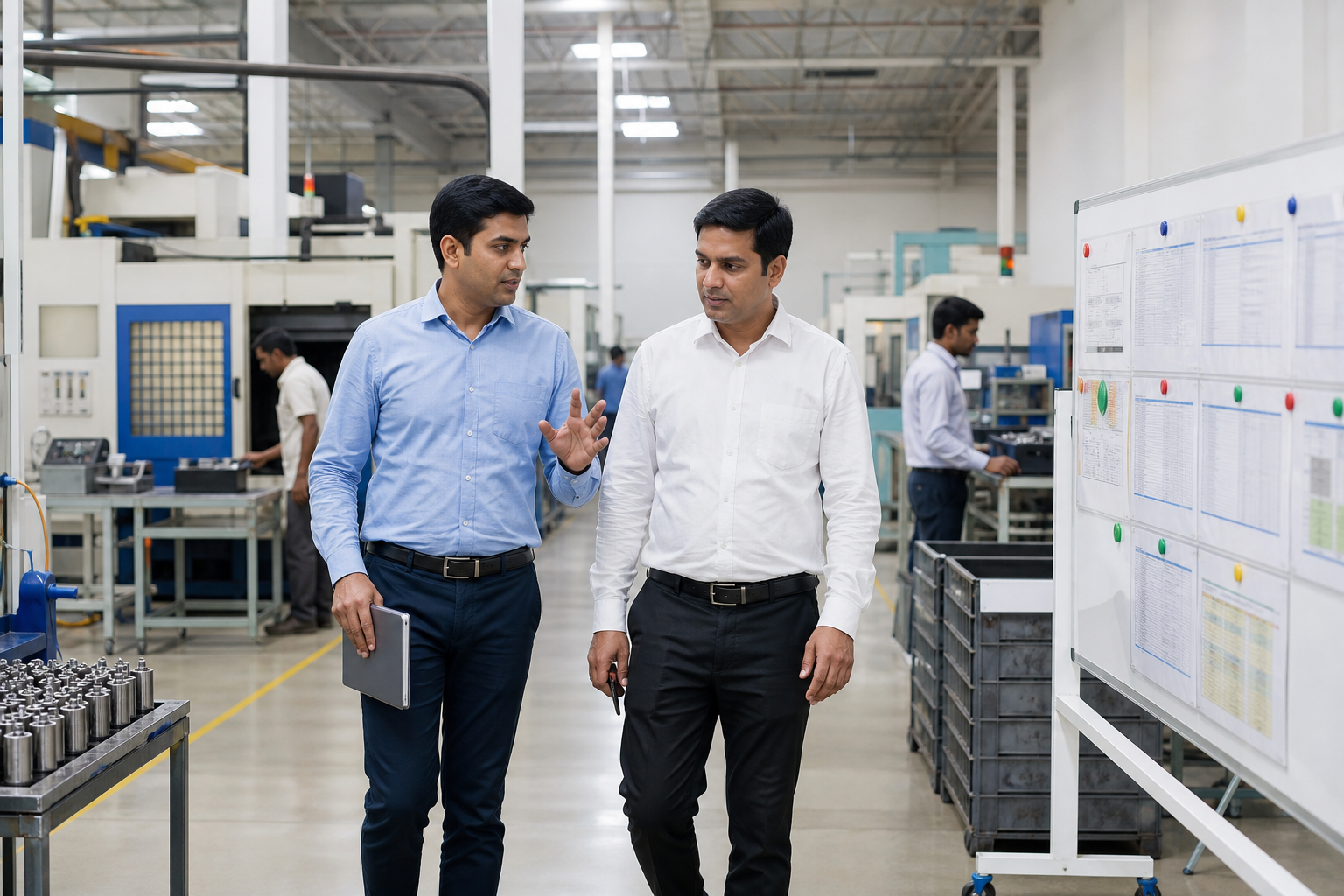
Request a redacted prior invoice and packing list for a similar product, or a visit report if you or your partner are on the ground. Photos of a gate and a reception do not show process control. You want to see where the product is made, how a nonconforming piece is separated, and whether the capacity story survives a full order book.
Comparison table
Swipe →
Data table — swipe horizontally on small screens
| Check | Enough to shortlist | Not enough |
|---|---|---|
| Identity | Legal name, GST, IEC if exporting | Website name only |
| Role | Factory, trader, or merchant exporter stated | “We are manufacturers” with no process |
| Capacity | Monthly output versus your quantity, with constraints | “No problem” with no numbers |
| Export proof | Redacted invoice or shipping set for a similar item | A claim of exporting worldwide |
| Fit | Questions about your specification | Immediate discount before reading the brief |
Freeze three to five names, then stop searching
More names feel safer and make the RFQ worse. Three qualified factories are enough to see a price range. Five is plenty if the product is new to you. Park everyone else. If the shortlist collapses during sampling, reopen discovery rather than quoting ten unqualified leads at once.
Hand the shortlist to how to compare quotations when buying from India. Send the brief you already wrote. Do not let each supplier pull you into a different specification.