
How to Procure Products from India: A Complete Guide for International Buyers
By Saurabh Mittal, Founder, Altus Exports
Procure products from India by locking the specification first, then verifying suppliers, comparing like-for-like quotations, approving a golden sample, inspecting before you pay the balance, and shipping only when the documents match the order.

International buyers who procure products from India successfully treat the country as a production system, not a catalogue. A low unit price is useful only after the specification, the factory, the sample, and the documents can survive a real shipment. Buyers who skip those gates usually meet the cost later, as a failed inspection, a customs hold, or a reorder that no longer matches the first lot.
Sourcing from India works across food ingredients, textiles, engineering parts, handicrafts, and herbal products because clusters are deep. Buying products from India still fails when the purchase order is vague, the quotation hides packing, or the deposit is paid before anyone has seen the factory’s export papers. This guide is the operating sequence. Each later article in the series takes one gate in full.
The procurement sequence that keeps an India order controllable
Use eight gates in order. Do not open the next gate because a supplier is impatient. Each gate produces a record the next one can use: a specification, a shortlist, a comparable quotation, an approved sample, an inspection report, a payment release, a document pack, and a cargo-ready date.
Altus Exports coordinates this work in India as a product sourcing company and merchant exporter. The buyer still approves the specification, the supplier, the sample, and the shipment. That split matters. A coordinator who can also override your quality standard is not a procurement partner.
Comparison table
Swipe →
Data table — swipe horizontally on small screens
| Gate | What “done” looks like | Guide |
|---|---|---|
| 1. Product selection | Spec, compliance notes, MOQ, and cost ceiling are written | Select products |
| 2. Supplier discovery | Three to five verified factories, not a directory dump | Find suppliers |
| 3. Quotations | Same spec, quantity, packing, and Incoterm | Compare quotations |
| 4. Samples | Sealed golden sample and written approval | Approve samples |
| 5. Inspections | AQL, report, and a named person who can hold cargo | Quality inspections |
| 6. Payment | Deposit, production release, and balance tied to evidence | Payment terms |
| 7. Documents | Invoice, packing list, and certificates match the order | Export documentation |
| 8. Shipping | Incoterm, port, and cargo-ready date are evidenced | Shipping |

1. Select the product before you select a factory
Start with what you will actually sell. Write grade or material, dimensions or composition, packing, labelling, destination market, and the defects you will not accept. If you cannot describe the product in one page, quotations will not be comparable and samples will be argued later.
India’s advantage is cluster depth: spices and ingredients with processing depth, textiles with trim and dye houses nearby, engineering shops that already export, and craft clusters that can still meet a packing spec. The wrong product for a first order is one whose compliance, tooling, or MOQ you have not priced. Read how to select products to procure from India before outreach.
2. Discover suppliers you can verify
Directories create a longlist. They do not create a supplier. For buying products from India, look in the cluster that already makes your item, then check legal identity, an IEC where the party will export, capacity against your quantity, and at least one redacted prior export document set.
Keep three to five factories that can make the specification. A twenty-name spreadsheet slows the RFQ and hides who is a trader. The method is in how to find suppliers when procuring from India.
3. Compare quotations on one RFQ
Export Tip
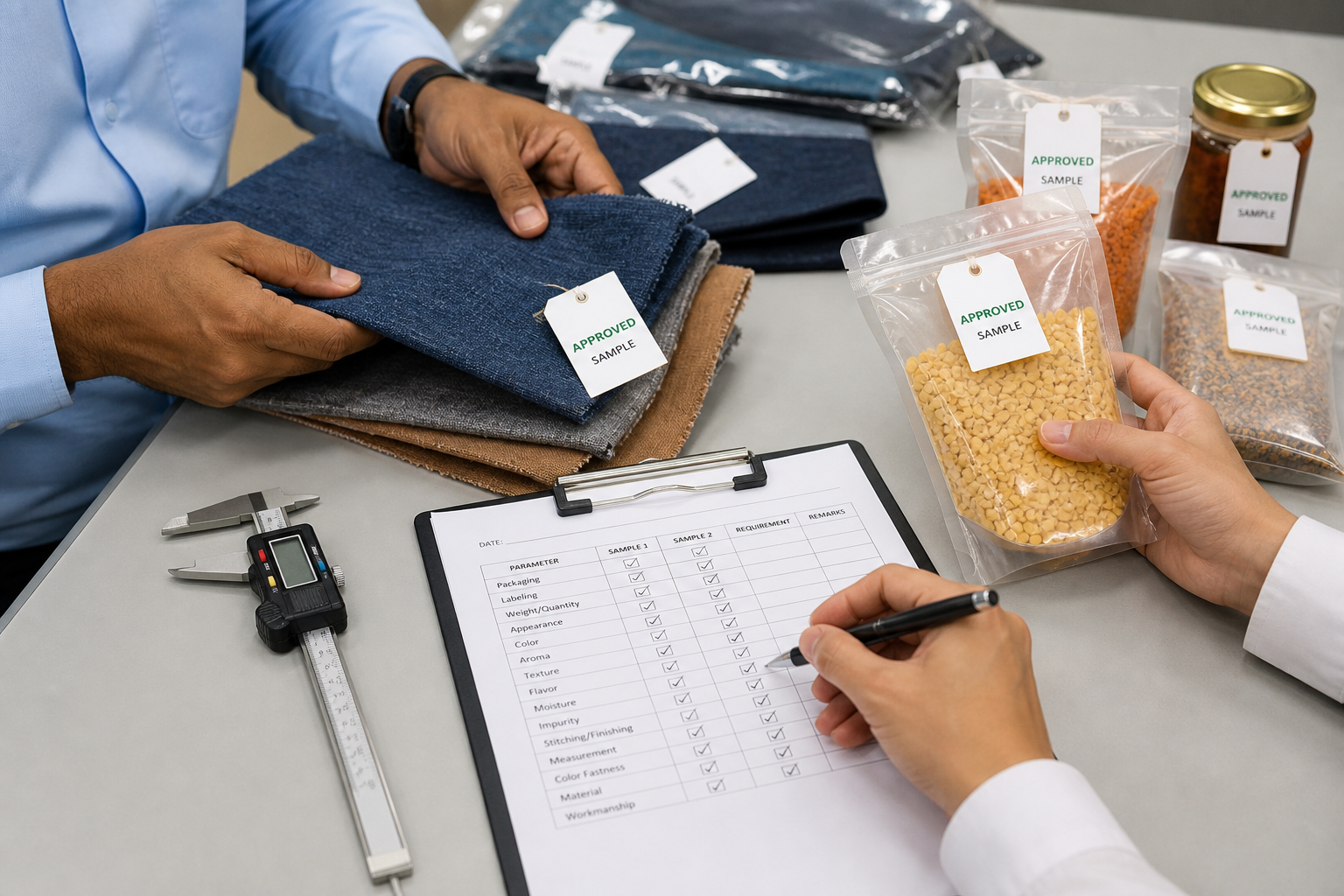
Send the same specification, quantity, packing, and Incoterm to every shortlisted supplier. An EXW price and an FOB price are not a ranking. Neither is a quote that excludes export cartons, testing, or a certificate your destination requires.
Score unit price with MOQ, lead time, validity, and exclusions. The cheapest incomplete quote is not the winner. Use how to compare quotations when buying from India.
4. Approve a sample that production must match
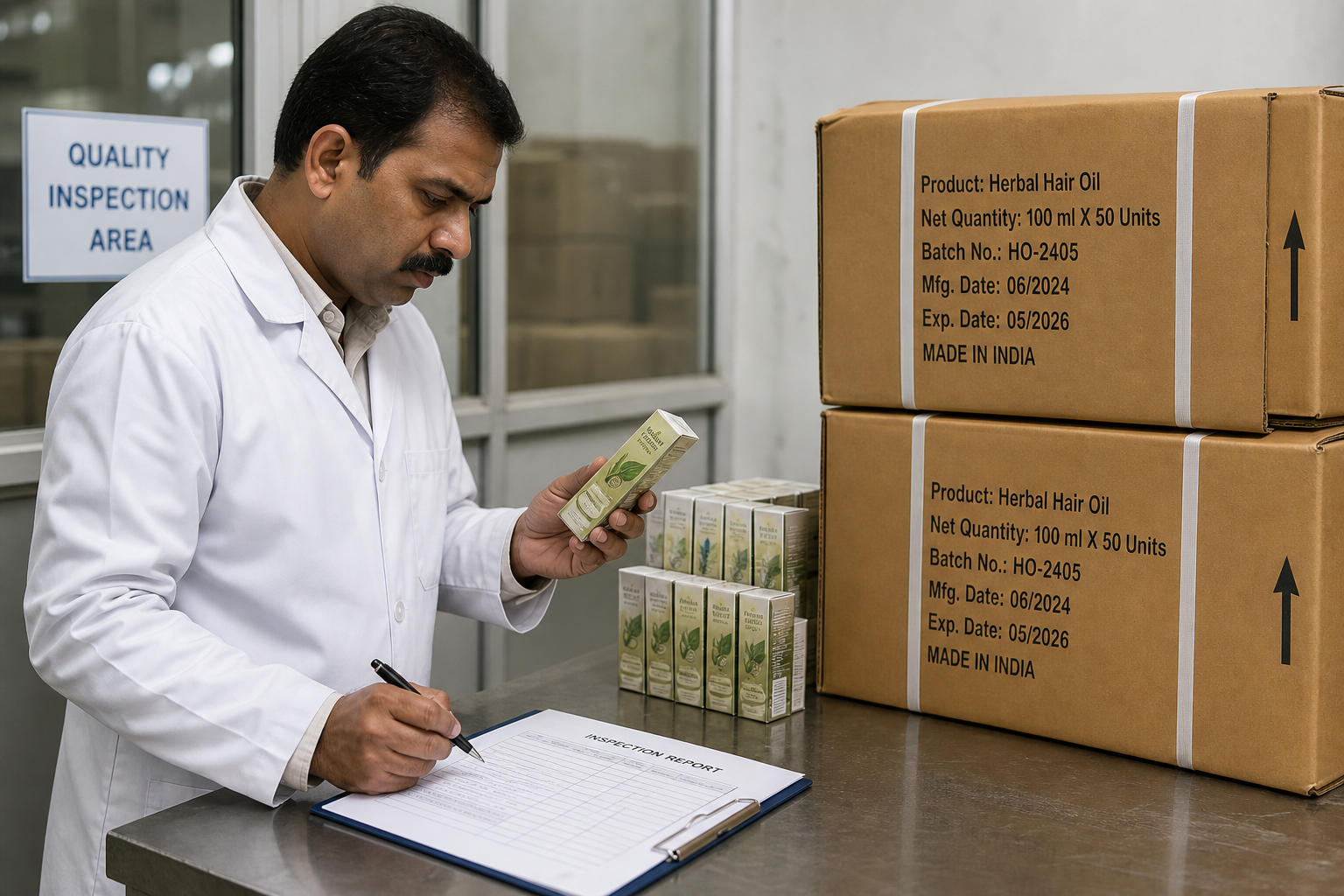
A catalogue photo is not approval. Ask for a pre-production sample made with the materials and packing you will pay for. Seal a golden sample, record deviations in writing, and stop bulk production until that record exists.
Where the destination needs residue, mechanical, or chemical tests, commission them on the sample lot rather than discovering the gap at your port. See how to approve samples when sourcing from India.
5. Inspect before the balance and before the vessel
New suppliers and new SKUs need an in-process look, not only a final glance. The pre-shipment inspection should happen when goods are finished and packed, against the golden sample and an agreed AQL. Someone on the buyer side, or a coordinator with written authority, must be able to hold the shipment.
A pass report is a release. A fail report is a decision: rework, sort, concession, or reject. Do not leave that decision to the forwarder. Detail is in quality inspections when procuring products from India.

6. Pay against gates, not against optimism
A modest deposit after verification is normal. One hundred percent in advance to a new supplier is not. Release production funds after sample approval. Release the balance after inspection and a draft document check. Verify bank details on a channel you already trust.
Letters of credit help when you need the document set to control payment. They do not replace a sample or an inspection. Read payment terms when buying products from India.
7. Make the export documents match the order
Commercial invoice, packing list, and transport document should use the same names, quantities, weights, HS description, and Incoterm as the purchase order. Name the exporter of record before production ends. Category certificates — origin, health, fumigation, test reports — take longer than a printout, so request them with the production plan.
Indian customs export declarations are filed on ICEGATE as a shipping bill by the exporter of record. Your broker still needs a clean pack. Use export documentation when procuring products from India.

8. Ship only cargo that is actually ready
Name the Incoterm and load port in the order. Nhava Sheva, Mundra, and Chennai cover most container programmes; the right port is the one your factory can reach without a hopeful inland date. Choose FCL or LCL from measured volume. Book against a cargo-ready date that follows packing and inspection, not a sales promise.
The forwarder moves the box. Procurement still owns whether the inspected goods are the goods in the box. See shipping when procuring products from India.
What the buyer keeps, and what a partner can run
- Do not pay a large deposit before identity and a sample path exist.
- Do not compare quotations that use different Incoterms or packing.
- Do not ship on a failed or missing inspection.
- Do not let invoice wording drift from the purchase order.
- Do not scale a second order until the first shipment’s defects and document gaps are written down.
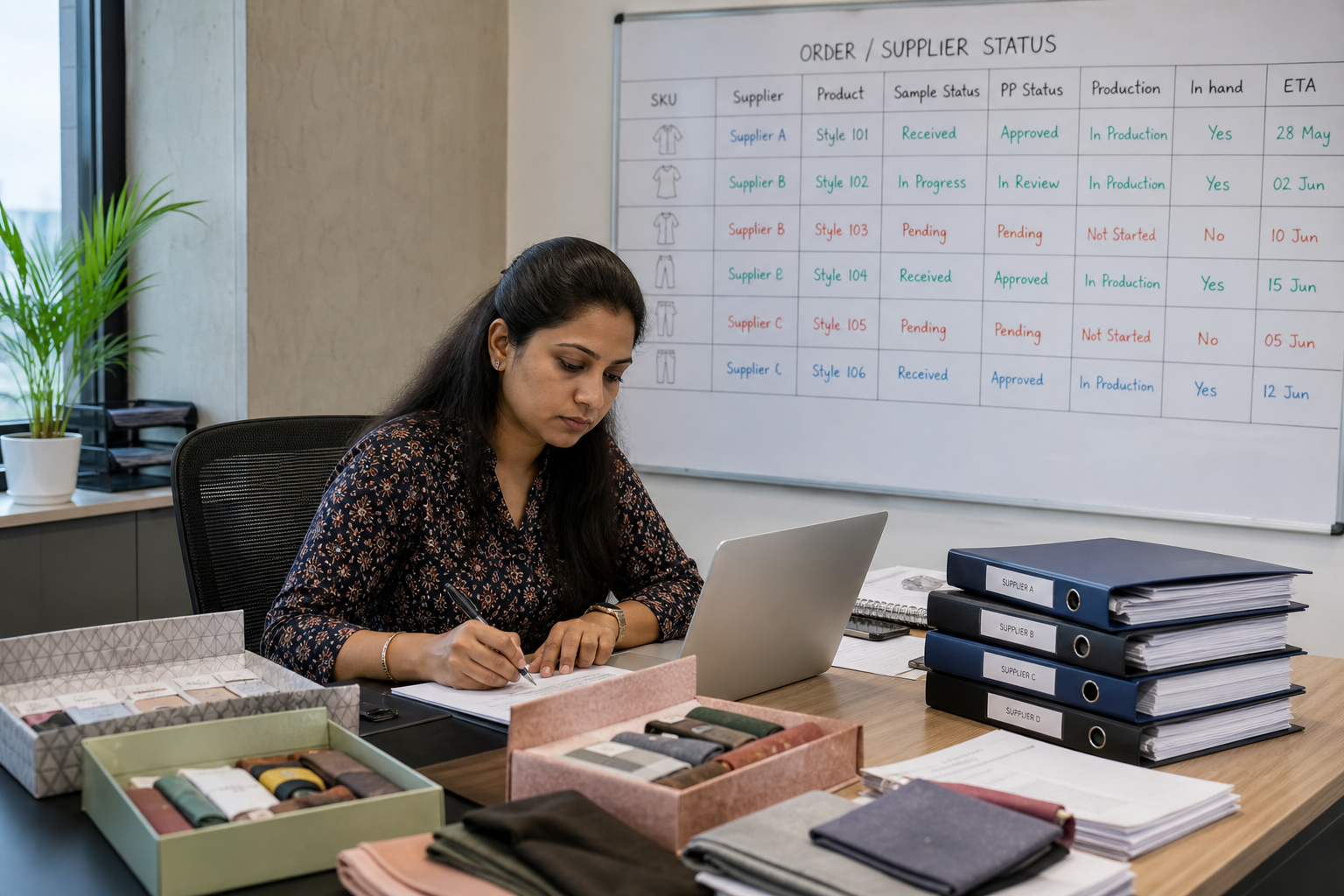
You should keep specification approval, supplier appointment, sample sign-off, commercial price, and shipment release. A sourcing partner can run factory visits, RFQ chase, sample logistics, inspection booking, and document comparison. That is the model behind global sourcing partner support and the companion India Sourcing Partner Guides.
If you want the wider import math after the goods sail — duty, clearance, and landed cost — use the importing cluster, starting with how to import products from India. This series stops at the point the cargo is ready to leave India under an agreed term.
A first-order calendar you can actually run
For a straightforward repeatable product, plan roughly like this. Weeks 1–2: specification and compliance notes. Weeks 2–4: supplier discovery and verification. Week 4: RFQ and quote scoring. Weeks 5–7: samples and any lab tests. Week 8: purchase order, deposit within the cap you set, and production start. During production: one in-process check if the supplier is new. At completion: pre-shipment inspection, document draft, balance payment, booking. Add time for food testing, custom packaging, or tooling. The calendar is a control, not a slogan.