
Organic Cotton Towel Exporter India: Certified, Traceable and Lower-Impact Sourcing
By Altus Exports
A procurement guide to certified organic, recycled, traceable, and lower-impact terry towel programs from India, covering GOTS, OCS, GRS, RCS, transaction certificates, measured impacts, claims, pricing, MOQ, packaging, and shipping.
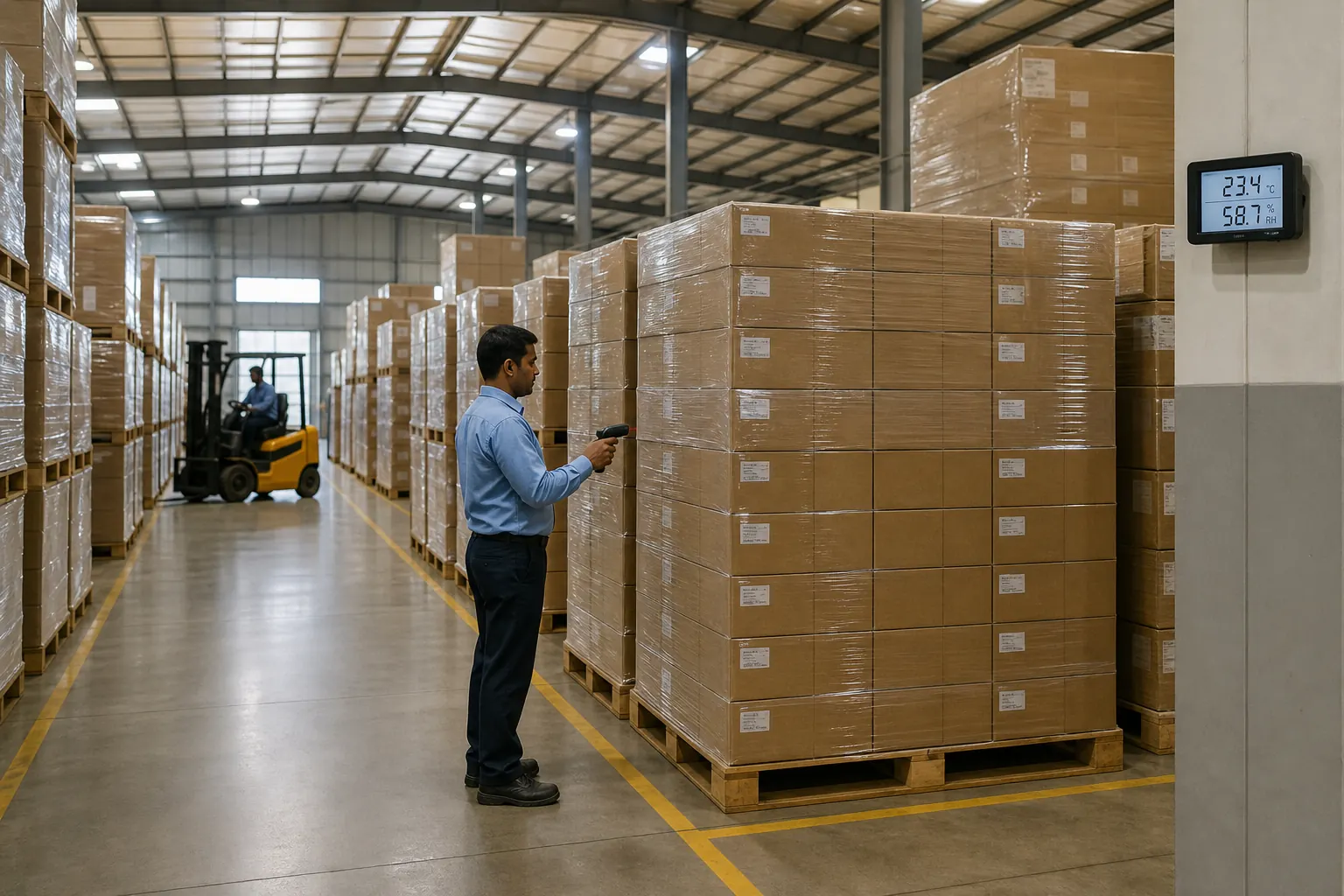
Choosing an organic cotton towel exporter in India requires more than finding soft towels and a certificate PDF. International procurement teams need to know which entity is certified, whether the product is listed in scope, how certified material moved through spinning, weaving, wet processing, making-up and trading, whether a transaction certificate will support the shipment, and exactly what an environmental claim means.
Altus Exports positions itself as an Indian merchant exporter, global sourcing partner, and export consulting expert. We help buyers identify suitable manufacturing routes, translate sustainability objectives into measurable specifications, coordinate certification evidence and traceability, and align quality, packaging, documentation, and logistics. Certification bodies—not Altus—issue certificates; buyers and their legal advisers remain responsible for market claims and destination compliance.
Executive Summary
Summary Box
Organic and sustainable are not synonyms. “Organic cotton” describes an agricultural fiber claim that must be substantiated; it does not automatically prove low-impact dyeing, renewable energy, good labor conditions, recyclability, or a lower product carbon footprint. GOTS is a processing standard covering certified organic fibers plus environmental and social criteria across certified operations. Textile Exchange’s OCS verifies organic material and chain of custody. GRS and RCS address recycled materials and chain of custody, with GRS adding processing requirements.
Credible sourcing starts with claim architecture: choose the intended consumer or B2B statement, map the standard and label grade, identify every custody point, verify scope certificates, order shipment transaction certificates where required, and reconcile certified weights against invoices and transport records. Water, energy, wastewater, dyes, packaging, and circularity should be managed with facility-specific baselines and comparable metrics, not broad promises.
Key Takeaways
Summary Box
- Start with the claim the buyer intends to make, then design the certified supply route.
- Distinguish product-content assurance from chemical testing, factory management systems, social audits, and impact measurement.
- Confirm chain of custody through traders and merchant exporters; certification cannot be assumed to pass through an uncertified seller.
- Match transaction certificate quantities to purchase orders, invoices, packing lists, and shipping records.
- Measure wet-processing performance by facility and period instead of importing global cotton statistics into product claims.
- Use “lower impact” only with a named comparison and evidence.
- Circularity requires technical and commercial pathways, not just recycled packaging.
Market Size and Industry Overview
Key Statistics
There is no official customs code exclusively for certified organic terry towels. Trade data therefore describes the wider cotton terry category, not organic-certified value. WITS, using UN Comtrade data, reports India as the second-largest 2024 exporter of HS 630260—cotton toilet and kitchen linen of terry toweling or similar terry fabrics—at US$1.151 billion and 201.385 million kg.
This established towel ecosystem gives India yarn, weaving, wet processing, making-up, testing, certification, and port access. It does not mean every facility is certified or that all Indian cotton is organic. Buyers must verify the specific farm-recognized input, chain, sites, processes, and shipment.
Comparison table
Swipe →
Data table — swipe horizontally on small screens
| 2024 HS 630260 exporter | Export value | Quantity | Category note |
|---|---|---|---|
| China | US$1.920B | 238.528M kg | All qualifying cotton terry linen, not organic-only |
| India | US$1.151B | 201.385M kg | Strong scale for sourcing and processing |
| Pakistan | US$1.085B | 228.597M kg | Major competing supply base |
| Turkey | US$567.950M | 61.899M kg | Regional European proximity |
| Portugal | US$223.933M | 18.377M kg | Higher unit-value positioning |
Export Statistics
Key Statistics
India’s HS 630260 export value rose from US$1.079 billion in 2023 to US$1.151 billion in 2024 in the WITS series, while reported quantity increased from 179.084 million to 201.385 million kg. The value increase is about 6.7%, but this is nominal trade data and does not isolate organic towels, inflation, mix, or re-exports.
Comparison table
Swipe →
Data table — swipe horizontally on small screens
| India destination, 2024 | Reported export value | Reported quantity |
|---|---|---|
| United States | US$709.201M | 120.270M kg |
| United Kingdom | US$57.408M | 9.197M kg |
| Australia | US$47.059M | 8.433M kg |
| Netherlands | US$28.654M | 6.619M kg |
| Mexico | US$28.299M | 4.359M kg |
Import Statistics
Key Statistics
EU aggregate and member-state figures overlap and must not be added as if independent. Customs values are not retail market size. Organic demand is a subset that customs records do not identify.
Comparison table
Swipe →
Data table — swipe horizontally on small screens
| 2024 importer | HS 630260 imports from world | Quantity | Opportunity lens |
|---|---|---|---|
| United States | US$2.122B | 275.251M kg | Large retail and institutional programs |
| European Union | US$1.043B | 159.967M kg | Strong claims and traceability scrutiny |
| Japan | US$537.671M | 62.020M kg | Quality and packaging discipline |
| Germany | US$324.256M | 42.753M kg | Certification-aware distribution |
| France | US$233.352M | 32.685M kg | Brand, hospitality, and circularity interest |
What “Organic,” “Recycled” and “Sustainable” Mean
Standards answer different questions — Match each claim to its assurance tool
Comparison table
Swipe →
Data table — swipe horizontally on small screens
| Standard/assurance | Standard owner | What it primarily verifies | What it does not automatically prove |
|---|---|---|---|
| GOTS | Global Standard gGmbH | Organic fiber processing chain plus environmental/social criteria | Lowest carbon footprint or universal legal compliance |
| OCS | Textile Exchange | Certified organic material and chain of custody | Wet-processing environmental performance |
| GRS | Textile Exchange | Recycled content/custody plus processing criteria | Product quality or all legal compliance |
| RCS | Textile Exchange | Recycled material and chain of custody | Chemical/social processing criteria of GRS |
| OEKO-TEX® STANDARD 100 | OEKO-TEX® Association | Finished article/components tested for harmful substances | Organic origin or a full factory sustainability score |
| ISO 14001 | ISO; certification by accredited bodies | Environmental management system | A certified product impact result |
GOTS Version 8.0 was released in March 2026 and becomes effective for all certified entities and approved chemical inputs on March 1, 2027, after its transition period. Buyers placing 2026 orders should identify which version governs each audit and shipment rather than advertising Version 8 compliance prematurely.
The OCS is a voluntary standard that verifies organic material from recognized farm standards through chain of custody. GRS is intended as a B2B certification tool for products containing at least 20% recycled material, while product-specific consumer-facing GRS labeling requires at least 50% recycled content under Textile Exchange’s stated framework. Buyers must check current claims rules and upcoming Materials Matter transition details.
Chain of Custody and Material Traceability
A robust traceability map follows certified cotton from recognized farm-level certification or accepted input through ginning, spinning, yarn trading, weaving, wet processing, cut-and-sew/making-up, packing, merchant export, and buyer delivery. Not every supply chain uses the same integrated route. Each certified stage must be validated under the applicable standard and custody model.
Comparison table
Swipe →
Data table — swipe horizontally on small screens
| Traceability record | Key fields to verify | Red flag |
|---|---|---|
| Scope certificate | Holder, address, standard, process, products, validity | PDF not found in owner/CB system |
| Transaction certificate | Seller, buyer, goods, certified weight, shipment | Quantity or party mismatch |
| Purchase/invoice | Article, claim, quantity, lot, seller/buyer | Generic “organic towel” description |
| Production record | Input lot, output lot, yield, waste | Impossible conversion ratio |
| Stock ledger | Opening, receipt, issue, output, closing | Negative or unreconciled balance |
| Packing/shipping record | Cartons, pieces, net weight, B/L/AWB | Shipment exceeds certified quantity |
| Label approval | Artwork, logo authorization, claim text | Logo copied from internet |
Scope certificates versus transaction certificates
A scope certificate indicates that an entity and listed activities/products are certified within a validity period. It is not shipment proof and is not a blanket guarantee for every SKU. A transaction certificate is issued by an approved certification body after verification for specified certified goods moving in the chain. GOTS describes TCs as key enablers of traceability; its 2026 Version 8 also emphasizes volume reconciliation.
Textile Exchange’s certificate policy and Trackit direction centralize scope and transaction data. Buyers should verify current issuance and authentication procedures with the standard owner and certification body. A pro forma invoice or supplier declaration is not a transaction certificate.
Product Variants
Product design should preserve fitness for use and durability because premature failure can increase replacement impact even when input fiber is certified. Use the terry towel quality testing and inspection guide for test methods, acceptance criteria, AQL, laboratory evidence, and product QA rather than treating certification as proof of performance.
Comparison table
Swipe →
Data table — swipe horizontally on small screens
| Towel program | Typical specification path | Sustainability decision |
|---|---|---|
| 100% organic cotton bath towel | Ring-spun/combed, 450–700 GSM | GOTS or OCS claim route |
| Organic hotel towel | White, durable hems, institutional laundering | Durability, bleach/wash chemistry, replacement rate |
| Low-twist organic towel | Soft/high loft | Energy in drying and snag performance |
| Organic/recycled blend | Exact fiber percentages | Separate organic and recycled claim architecture |
| Recycled cotton blend towel | Cotton blend engineered for strength | RCS/GRS content and quality verification |
| Undyed natural towel | Natural shade variation | Avoid claiming “chemical-free” |
| Dope-dyed synthetic blend towel | Man-made component | Fiber shedding, content, classification |
| Lightweight quick-dry towel | Lower GSM, construction optimized | Laundering energy and user performance |
Manufacturing and Lower-Impact Levers
From yarn to finished towel
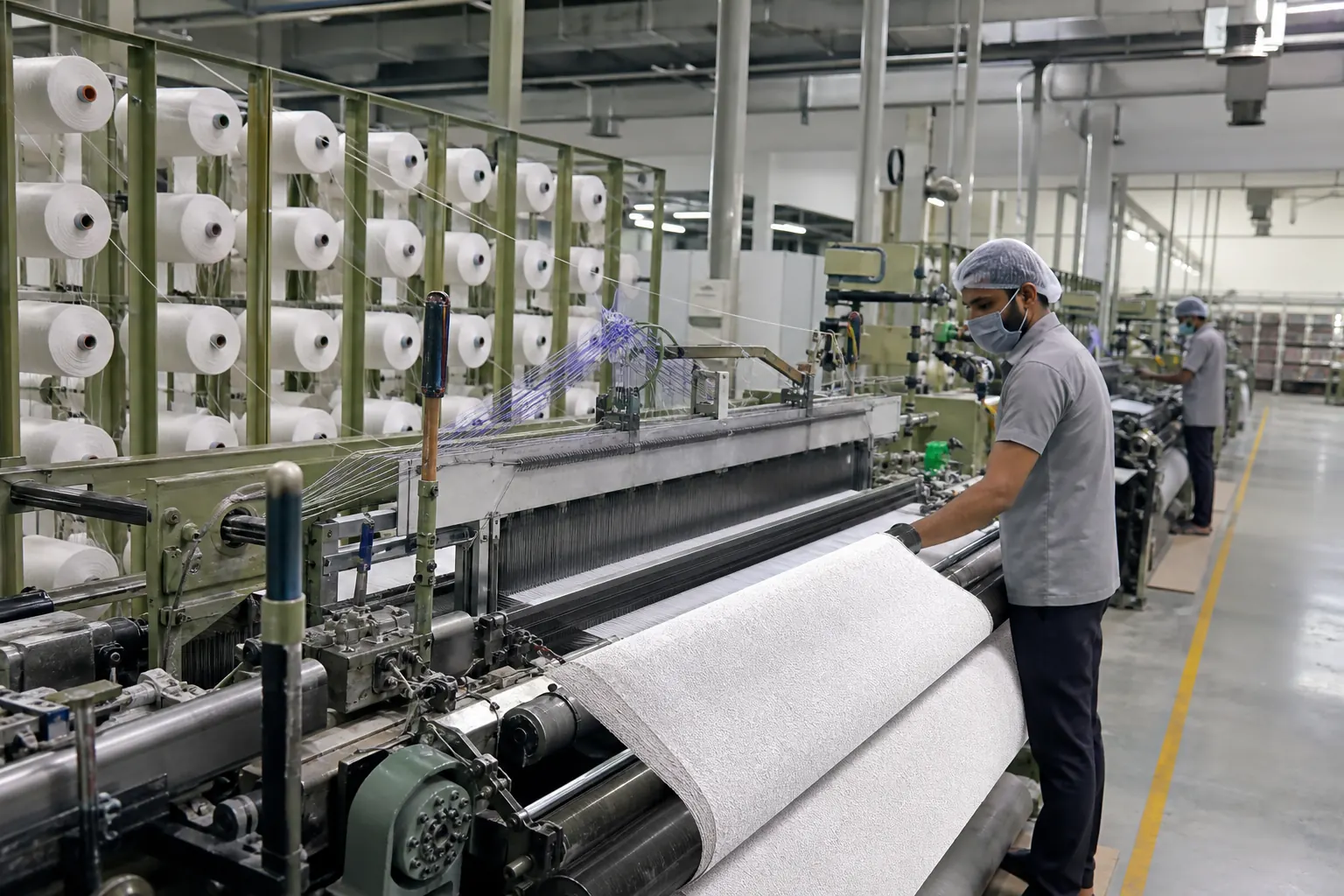
Manufacturing usually includes yarn preparation, warping, terry weaving, greige inspection, desizing/scouring, bleaching where required, dyeing, washing, hydro extraction, drying, soft finishing, cutting, hemming, label application, inspection, and packing. Integrated and distributed chains have different custody and data risks.
Water, energy and wastewater
Comparison table
Swipe →
Data table — swipe horizontally on small screens
| KPI | Example calculation | Evidence expected |
|---|---|---|
| Water withdrawal intensity | Total metered m³ ÷ kg processed | Calibrated meters, production ledger |
| Freshwater consumption | Withdrawal minus qualifying return, defined method | Water balance and boundary |
| Thermal energy intensity | Fuel/steam converted to MJ ÷ kg | Boiler/fuel/steam records |
| Electricity intensity | kWh ÷ kg processed | Utility/submeter data |
| Reprocess rate | Reprocessed kg ÷ total kg | Batch and quality records |
| Wastewater compliance | Tested result versus permit limit | Accredited lab and ETP logs |
| Renewable electricity share | Eligible renewable kWh ÷ total kWh | Contracts, certificates, methodology |
Wet processing can be a major operational hotspot, but one universal “liters per towel” figure is misleading. Establish a facility baseline using metered water withdrawal and consumption, production kilograms, process route, color depth, reprocessing, wastewater volume, treatment performance, and period. Report boundaries clearly.
Improvement options include low-liquor-ratio equipment, countercurrent washing, automatic dosing, heat recovery, condensate return, optimized recipes, right-first-time shade control, water reuse appropriate to quality and law, efficient motors, renewable electricity, and boiler efficiency. Do not turn a facility initiative into a product claim without allocation rules and evidence.
Dyes and chemicals
Request a chemical inventory, restricted-substance and manufacturing-restricted-substance controls where applicable, approved-input evidence under the chosen standard, safety data sheets, dosing records, wastewater/sludge controls, and finished-product tests. “Azo-free” is often too vague; specify the regulated amines, method, limit, market, and report. “Non-toxic” and “chemical-free” are inappropriate absolutes for processed textiles.
Pricing
Organic or certified towel pricing reflects fiber availability and quality, certification and custody costs, segregation, transaction-certificate administration, spinning and weaving route, GSM, size, color depth, dye chemistry, process efficiency, testing, labels, packaging, order scale, and payment/Incoterm terms. A premium should be decomposed, not accepted as proof of authenticity.
Request EXW/FCA/FOB or other clearly named Incoterm pricing with a specification revision number. Compare total landed cost and replacement life, not only FOB per piece.
Any price, premium, cost allocation, or volume used in a worksheet must be labeled as a dated hypothetical model input until replaced by a live, specification-specific supplier or carrier quotation. It is not an Altus price, market benchmark, or offer.
Comparison table
Swipe →
Data table — swipe horizontally on small screens
| Price driver | Potential effect | Buyer question |
|---|---|---|
| Certified fiber | Market-dependent premium and availability | Which input standard and lot? |
| GOTS versus OCS route | Different processing and custody requirements | Which claim is commercially needed? |
| GSM/size | Direct material consumption | What finished tolerance applies? |
| Color/finish | Dye, water, energy, risk | Is undyed/white feasible? |
| Transaction certificate | Administrative cost and timing | Included per shipment/order? |
| Testing | Lab and sample costs | Which markets and methods? |
| Custom packaging | Development, print MOQ, packing labor | Can common components be used? |
| Freight | Volume, weight, routing, surcharges | Which Incoterm and validity? |
MOQ
MOQ can be driven by certified-yarn availability, spinning lot, weaving beam, dye lot, color, custom border, label and packaging print, transaction-certificate economics, and production segregation. A manufacturer may offer a total-order MOQ while enforcing a higher minimum per color. Stock yarn can lower development minimums but must still connect to valid certified inventory.
Altus can coordinate mixed product programs, but cannot responsibly promise that certification, shade, or technical manufacturing minimums disappear through consolidation.
Any MOQ inserted into a planning model is a hypothetical input only until a named supplier confirms it for the exact fiber route, certification scope, SKU mix, color, packaging, timing, and order. It is not a statement of Altus or factory capacity.
Comparison table
Swipe →
Data table — swipe horizontally on small screens
| MOQ layer | Typical constraint | Negotiation lever |
|---|---|---|
| Fiber/yarn | Certified lot availability | Use approved stock yarn |
| Weaving | Beam/loom efficiency | Share ground construction across sizes |
| Dyeing | Minimum batch/liquor efficiency | Reduce colors or use natural/white |
| Labels | Woven/printed production minimum | Standardize legal label base |
| Cartons/inserts | Printer MOQ | Use neutral carton plus controlled label |
| Certification admin | TC and segregation overhead | Consolidate compatible certified shipments |
Packaging
Sustainable packaging should protect the towel first. A damaged or damp certified towel is not an environmental success. Reduce unnecessary material, right-size cartons, verify recycled-content claims for packaging separately, choose recyclable mono-material solutions where destination systems actually accept them, avoid problematic coatings, and document inks, adhesives, and supplier declarations.
Container Loading
Export Tip
Certified status does not change geometry. Assume a packed carton measures 58 × 38 × 42 cm, contains 20 towels, and has external cube of:
`0.58 × 0.38 × 0.42 = 0.092568 m³`
Using nominal equipment cubes of 33 m³, 67 m³, and 76 m³ plus an arbitrary 84% math input solely to demonstrate hypothetical arithmetic:
These are math-only hypothetical outputs, not operational capacities, supplier capabilities, forecasts, or promises. Final counts require carton orientation, actual equipment dimensions, door opening, payload, floor loading versus pallets, ventilation/moisture plan, and SKU sequence. Record certified and noncertified goods separately in loading records when segregation rules require it.
Comparison table
Swipe →
Data table — swipe horizontally on small screens
| Equipment scenario | Planning cube | Math-only cartons | Math-only towels |
|---|---|---|---|
| 20-ft standard | 27.72 m³ | 299 | 5,980 |
| 40-ft standard | 56.28 m³ | 608 | 12,160 |
| 40-ft high cube | 63.84 m³ | 689 | 13,780 |

Shipping and Export Documents
The shipment file normally includes purchase order, commercial invoice, packing list, Indian Shipping Bill, bill of lading or air waybill, and required origin or insurance documents. Certified programs add current scope certificates, applicable transaction certificates, approved claim/logo records, product test reports, and lot reconciliation.
Sea, air, and courier decisions follow urgency, quantity, cube, cost, and risk. Certification documents may be issued after shipment under the owner’s procedures, so contract the application responsibility, evidence deadline, correction process, and payment holdback if a TC is essential.
Comparison table
Swipe →
Data table — swipe horizontally on small screens
| Shipment control | Commercial document | Certification link |
|---|---|---|
| Seller/buyer identity | Invoice and B/L/AWB | Must match TC roles as applicable |
| Product/article | PO, invoice, packing list | Match certified product detail |
| Quantity/weight | Packing list, shipping record | Reconcile certified weight |
| Origin | COO and customs record | Do not confuse customs and organic origin |
| Lot | Packing/inspection records | Link production and certified inputs |
| Dates | Invoice, shipment, TC application | Meet policy windows/process |
Certifications and Verification Protocol
Compliance Notes
GOTS
GOTS covers textile processing of certified organic fibers and includes environmental and social criteria. Verify certification body approval, scope certificate, certified entity, site, operations, product category, label grade, validity, and TC path. GOTS “organic” label grade generally requires at least 95% certified organic fibers, while “made with (x%) organic materials” generally starts at 70%, subject to current standard details and permitted remaining fibers.
OCS
OCS verifies organically grown material and chain of custody through Textile Exchange’s Content Claim Standard foundation. It does not impose the broader wet-processing criteria of GOTS. Use it when the commercial objective is content verification, then add separate chemical, wastewater, social, and quality requirements.
GRS and RCS
Use GRS/RCS for recycled content, not organic content. Confirm pre-consumer versus post-consumer inputs, composition, certified weight, and claims threshold. GRS includes additional processing requirements; neither standard is a general warranty of product quality or legal compliance.
OEKO-TEX® STANDARD 100
STANDARD 100 addresses harmful-substance testing rather than organic or recycled chain of custody. Its updated 2026 criteria became binding June 1, 2026 after transition. For article coverage, test evidence, certificate checks, and product QA, use the quality and certifications guide; this article retains ownership of GOTS/OCS and GRS/RCS custody, transaction certificates, traceability, and claim substantiation.
Buyer Requirements
Buyer Requirements
Create a sustainability annex alongside the technical specification. State accepted standards and versions, claim text, minimum content, certification route, certificate-delivery timeline, approved certification bodies, subcontracting rules, transaction-certificate responsibility, logo approval, chemical restrictions, testing, KPI boundaries, audit access, data retention, corrective action, and remedies for unsupported claims.
Sustainability never replaces fitness for use. Put product test methods, tolerances, AQL, laboratory evidence, and inspection release criteria in a separate QA specification maintained through the product QA and testing guide.
Country Opportunities and Claim Risks
Market Snapshot
The EU Empowering Consumers Directive entered into force in 2024, had a March 27, 2026 transposition deadline, and applies from September 27, 2026. It strengthens controls on generic environmental claims and sustainability labels. ESPR creates the framework for product requirements and Digital Product Passports; textile-specific delegated requirements and timing were still developing as of the access date. Buyers should build structured product data now without claiming that every towel already has a legally required DPP.
In the United States, raw agricultural cotton may be certified under USDA organic production rules, but processed textile labeling needs careful treatment. GOTS-certified products may support organic textile claims under applicable policy, but the USDA seal cannot simply be applied to a GOTS towel. FTC requirements for truthful, nonmisleading advertising and textile labeling remain relevant. Obtain market-specific legal review.
Comparison table
Swipe →
Data table — swipe horizontally on small screens
| Market | Opportunity | Compliance/claim focus as of 2026-07-17 |
|---|---|---|
| United States | Largest HS 630260 importer | FTC truth-in-advertising/textile labeling; USDA organic context |
| European Union | Large, policy-driven market | Fiber labeling, chemical/product rules, substantiated claims, ESPR preparation |
| United Kingdom | Established India route | UK labeling, consumer protection, green-claims guidance |
| Japan | Premium quality and gifting | Exact labeling, quality, importer instructions |
| Australia | Retail/hospitality and conscious consumer segments | Australian Consumer Law environmental claims |
| Canada | Retail and institutional programs | Competition/consumer claims, textile labeling, bilingual needs |
| UAE/GCC | Hospitality and premium retail | Importer/label requirements and project specifications |
Sustainable Procurement Scorecard
Weights are a governance example, not a universal method. Define minimum gates so a low price cannot compensate for an invalid certificate, illegal discharge, or failed product.
Comparison table
Swipe →
Data table — swipe horizontally on small screens
| Dimension | Weight example | Evidence | Gate or score? |
|---|---|---|---|
| Product quality/durability | 25% | Wash and physical test results | Gate plus score |
| Certified material/custody | 20% | SC, TC, reconciliation | Gate |
| Chemicals/wastewater | 15% | Inventory, permits, tests | Gate plus score |
| Water/energy data | 10% | Metered normalized KPIs | Score |
| Social compliance | 10% | Current audit/corrective actions | Gate |
| Traceability/data maturity | 10% | Lot records and response test | Score |
| Packaging/circularity | 5% | Weight, design, destination route | Score |
| Commercial/logistics | 5% | Price, MOQ, lead time, service | Score |
Sourcing Checklist
Checklist
- [ ] Define towel construction, size, GSM, performance, color, and durability.
- [ ] Select GOTS, OCS, GRS, RCS, or other evidence based on the intended claim.
- [ ] Map physical and invoice custody from input to buyer.
- [ ] Verify each scope certificate in an official owner/CB channel.
- [ ] Confirm product/process scope and transaction-certificate route.
- [ ] Sample, test, inspect, and approve final packed product.
Buyer Checklist
Checklist
- [ ] Preapprove exact consumer and B2B claim language.
- [ ] Assign owners for certificate verification, TC receipt, and logo approval.
- [ ] Request comparable water, energy, wastewater, and chemical evidence.
- [ ] Confirm destination labeling, advertising, customs, and product law.
- [ ] Model total landed cost, MOQ, lead time, and replacement life.
- [ ] Keep a claim substantiation file after sale.
Exporter Checklist
Checklist
- [ ] Confirm merchant/trader certification status where required.
- [ ] Purchase only against verified certified inventory and documents.
- [ ] Preserve segregation, identification, mass balance, and lot records.
- [ ] Reconcile invoice, packing list, Shipping Bill, B/L/AWB, and TC.
- [ ] Control subcontractors, logos, artwork, packaging, and claim text.
- [ ] Escalate certificate expiry, scope gaps, or quantity mismatch before shipment.
Compliance Checklist
Checklist
Compliance Notes
- [ ] Separate legal requirements from voluntary certification.
- [ ] Screen claims for ambiguity, implied whole-product benefits, and missing baselines.
- [ ] Validate fiber percentages and destination label language.
- [ ] Review chemical restrictions, wastewater permits, and finished-product tests.
- [ ] Confirm origin, tariff classification, sanctions, and due-diligence obligations.
- [ ] Date-qualify duties, policy transitions, and standards versions.
Green-Claim Risk Controls
Avoid claims such as “eco-friendly towel,” “100% sustainable,” “zero impact,” “uses no chemicals,” “waterless,” “carbon neutral,” “biodegradable,” or “fully circular” unless precise scope, evidence, and market rules support them. Better statements are specific: “towel contains X% certified organic cotton under [standard/label grade], certificate verified on [date]” or “facility freshwater withdrawal intensity decreased X% versus defined baseline,” when substantiated.
Comparison table
Swipe →
Data table — swipe horizontally on small screens
| Risky claim | Core problem | Safer evidence-led direction |
|---|---|---|
| Eco-friendly | Unqualified general benefit | Name certified content or measured improvement |
| Chemical-free | Factually unrealistic | Name tested/restricted substances and method |
| Uses less water | No baseline/boundary | State facility KPI, comparison, period, method |
| Recycled towel | Percentage/type unclear | State certified recycled percentage and standard |
| Biodegradable | Conditions and whole product unclear | Provide applicable test, components, disposal context |
| Carbon neutral | Boundary, reductions, credits unclear | Publish inventory, reduction plan, residual treatment |
Circularity and End-of-Life
Circular design begins before weaving. Consider mono-material composition where performance permits, separable labels/trims, durable hems, repairability for institutional use, shade strategies that tolerate reuse, recycled-content quality, product identification, and collection partners. Assess whether the destination actually has textile reuse or recycling infrastructure.
Hospitality buyers can measure washes to failure, stain retirement, repair rates, kilograms purchased per occupied room, donation/reuse outcomes, and recycler acceptance. Fiber-to-fiber recycling may face challenges from blends, dyes, finishes, contamination, shortened recycled fibers, and collection economics. Do not call a towel circular merely because it could theoretically be recycled.

Common Buyer Mistakes
Common Mistakes Box
- Treating “organic,” “natural,” and “sustainable” as interchangeable.
- Checking one factory certificate but ignoring spinner, processor, trader, or exporter custody.
- Assuming a scope certificate proves a particular shipment.
- Requesting a transaction certificate after commercial and invoice flows have bypassed certification.
- Using a certification logo without owner approval.
- Claiming lower water or carbon impact from generic industry averages.
- Comparing suppliers with different KPI boundaries and time periods.
- Selecting low GSM solely as “more sustainable” without durability testing.
- Calling recycled packaging a circular towel strategy.
- Failing to contract certificate timing and remedies.
Future Trends
Product-level data will become more structured. Buyers will ask for material origin, certified weight, facility identity, chemical information, durability, repair, recycled content, packaging composition, and end-of-life instructions in interoperable formats. Textile Exchange’s Materials Matter system is scheduled to become effective December 31, 2026 and mandatory from December 31, 2027, with transition pathways requiring active monitoring.
GOTS Version 8 becomes effective March 1, 2027. OEKO-TEX® criteria update annually. EU product and consumer-claim frameworks are tightening, while Digital Product Passport details for textiles continue to develop. Procurement teams should use version-controlled evidence registers and avoid hard-coding draft regulatory data into long-life packaging.
Digital transaction systems, forensic fiber testing, geospatial risk analysis, and supplier data platforms will complement—not replace—site verification and mass balance. Durability and laundering performance will gain weight as buyers connect procurement to use-phase costs and emissions.
How Altus Exports Supports Sustainable Towel Programs
- claim-to-standard mapping and supplier-route selection;
- verified scope and transaction-document workflows;
- sample development, testing, and inspection;
- lot, weight, invoice, and shipping reconciliation;
- measured packaging and container-loading scenarios;
- water, energy, chemical, and wastewater evidence requests;
- country-specific buyer data packs and claim review inputs.
Altus can coordinate:
Use the complete India towel sourcing workflow, verify product QA and certificate scope, build defensible private-label claims, and qualify certified supply-chain partners.
Conclusion
The right organic cotton towel exporter is not merely a company that can email a certificate. It is a supply partner capable of connecting the buyer’s claim to certified inputs, valid custody, controlled processing, tested performance, accurate shipment records, and appropriately qualified environmental evidence.
Altus Exports coordinates that connection as an Indian merchant exporter, sourcing partner, and export consulting expert. We help international buyers convert sustainability ambitions into specifications, verification gates, commercial terms, and shipment deliverables. Contact Altus to develop a traceable towel program for your destination and channel.
Sources and Methodology
- WITS/UN Comtrade, India HS 630260 exports, 2024: https://wits.worldbank.org/trade/comtrade/en/country/IND/year/2024/tradeflow/Exports/partner/ALL/product/630260
- WITS/UN Comtrade, India HS 630260 exports, 2023: https://wits.worldbank.org/trade/comtrade/en/country/IND/year/2023/tradeflow/Exports/partner/ALL/product/630260
- WITS/UN Comtrade, world HS 630260 imports, 2024: https://wits.worldbank.org/trade/comtrade/en/country/ALL/year/2024/tradeflow/Imports/partner/WLD/product/630260
- GOTS Version 8.0 (2026): https://gotslive.global-standard.org/images/resource-library/documents/standard-and-manual/GOTS_v8.0_signed.pdf
- GOTS traceability: https://global-standard.org/the-standard/gots-key-features/traceability
- Textile Exchange, Organic Content Standard: https://textileexchange.org/organic-content-standard/
- Textile Exchange, RCS and GRS: https://textileexchange.org/recycled-claim-global-recycled-standard/
- Textile Exchange, GRS 20%/50% clarification: https://textileexchange.org/faq/in-the-grs-it-mentions-that-the-minimum-content-percentage-is-20-but-in-the-standards-claims-policy-it-says-the-minimum-is-50-what-does-this-mean/
- Textile Exchange, 2026 scope/transaction certificate policy: https://textileexchange.org/app/uploads/2026/03/TE-TXL-POL-203-V4.0-Policy-for-Scope-and-Transaction-Certificates.pdf
- OEKO-TEX® STANDARD 100: https://www.oeko-tex.com/en/our-standards/oeko-tex-standard-100
- OEKO-TEX® 2026 regulations: https://www.oeko-tex.com/en/news/infocenter/oeko-tex-new-regulations-2026
- USDA, labeling textiles containing organic ingredients: https://www.ams.usda.gov/sites/default/files/media/LabelingofTextilesNOPPolicyMemo.pdf
- U.S. FTC Green Guides: https://www.ftc.gov/business-guidance/resources/green-guides
- EU Regulation 2024/1781, ESPR: https://eur-lex.europa.eu/eli/reg/2024/1781/oj
- EU Directive 2024/825, empowering consumers: https://eur-lex.europa.eu/eli/dir/2024/825/oj
All URLs and time-sensitive statements were reviewed on 2026-07-17. Certification requirements should be rechecked against the owner’s current standard, claims policy, certificate database, and transition guidance before contracting or printing claims.
Keyword and Entity Map
Comparison table
Swipe →
Data table — swipe horizontally on small screens
| Search/entity cluster | Entities and related terms | Primary section |
|---|---|---|
| Organic cotton towel exporter India | Altus Exports, merchant exporter, sourcing partner | Introduction/CTA |
| Organic standards | GOTS, OCS, Global Standard, Textile Exchange | Standards |
| Recycled towels | GRS, RCS, recycled cotton, 20%, 50% | Certifications |
| Chain of custody | Scope certificate, transaction certificate, Trackit | Traceability |
| Lower-impact manufacturing | Water, energy, wastewater, dyes, chemicals | Manufacturing |
| Green claims | FTC, EU Directive 2024/825, qualification | Claim risk |
| Circular towels | Durability, reuse, recycling, end-of-life | Circularity |
| Commercial sourcing | Pricing, MOQ, packaging, container loading | Procurement |
| Market opportunities | HS 630260, WITS, UN Comtrade | Statistics/countries |