
Terry Towel Import Markets: 2024 Trade Data, Duties and Market-Entry Strategy
By Altus Exports
A data-led B2B guide to HS 630260 import markets, reporter values, duties, channels, compliance, landed cost and market-entry strategy.

Choosing among terry towel import markets requires more than ranking countries by import value. A large market can carry intense price competition, complex retailer protocols or unfavorable duty. A smaller market can provide better margins if an exporter matches channel, specification and service expectations. This data-led guide helps Indian manufacturers, international buyers, importers, distributors and procurement teams compare demand, competition, compliance, logistics and entry economics.
Altus Exports operates as an Indian merchant exporter, global sourcing partner and export consulting expert. We connect market requirements with verified manufacturing capability, coordinate compliance and shipment controls, and help buyers build practical India supply programs.
Executive Summary
Summary Box

Keyword and Entity Map
Comparison table
Swipe →
Data table — swipe horizontally on small screens
| Search role | Keywords and entities | Content application |
|---|---|---|
| Primary | terry towel import markets | Market ranking and selection |
| Trade data | HS 630260 imports, WITS, UN Comtrade, OEC | Statistics and methodology |
| Commercial | towel importers, distributors, private label, hospitality | Channel planning |
| Tariff | MFN duty, national tariff line, VAT, customs value | Landed cost |
| Geographic | United States, EU, Japan, Germany, France, Gulf | Country opportunities |
| Supply | India towel exports, merchant exporter, cotton terry | Origin strategy |
| Compliance | FTC, CPSIA, REACH, GPSR, OEKO-TEX, GOTS | Entry controls |
Market Size & Industry Overview
Key Statistics
Global trade data measures reported customs value, not retail sales or consumption. The supplied WITS pages are individual reporter views and do not establish a 2024 global-import total. OEC publishes a separately reconciled product view, but its methodology must not become a denominator for shares calculated from these WITS rows. Choose one defined dataset before aggregation, ranking or trend analysis.
Cotton terry demand spans mass retail, department stores, e-commerce, hospitality, healthcare, gyms, spas, promotional distribution and institutional laundries. Each channel buys a different economic result. Retailers optimize price points, shelf appearance and claims. Hotels optimize cost per use, replacement rates and laundry performance. Importers need reliable replenishment, documentation and manageable working capital.
Trade Data Methodology and HS Scope
Trade statistics identify customs flows, not consumption. Re-exports, free zones, regional distribution centers, valuation practices and timing matter. Before investment, inspect multi-year trends, supplier shares, unit values, buyer concentration and shipment seasonality.
Comparison table
Swipe →
Data table — swipe horizontally on small screens
| Decision | Correct treatment | Common analytical error |
|---|---|---|
| Product scope | Use HS 630260 for cotton terry toilet/kitchen linen | Mixing microfiber under HS 630293 |
| EU reporting | Use aggregate or members for the same comparison | Adding both together |
| Valuation | Imports commonly CIF; exports commonly FOB | Comparing values as identical |
| Time | Use calendar year and revision/access date | Mixing rolling 12 months |
| Partner | Use world total for market size | Adding partner values with duplicates |
| Mirror data | Label reporter versus partner-reported data | Treating mirrors as exact replacements |
| Currency | Current US dollars unless normalized | Calling nominal growth real growth |
2024 Import Statistics and Country Ranking
These are non-additive reporter values, not a complete ranking or a global denominator. Germany and France may be compared as national entry options, but neither can be added to the EU aggregate. Re-download a complete, consistent reporter set before calculating rank, concentration or share.
Comparison table
Swipe →
Data table — swipe horizontally on small screens
| Reporter view | 2024 HS 630260 value | Analytical treatment |
|---|---|---|
| United States | $2.1215B | National reporter row |
| European Union aggregate | $1.0433B | Regional row overlapping EU members |
| Japan | $537.7M | National reporter row |
| Germany | $324.3M | EU-member row; already within aggregate |
| France | $233.4M | EU-member row; already within aggregate |
Export Statistics: India’s Position
Key Statistics
India combines cotton access, spinning, terry weaving, processing, sewing and export infrastructure. The requested WITS series records $1.151 billion and 201.385 million kg of Indian HS 630260 exports in 2024. Dividing value by quantity suggests an average near $5.72/kg on that dataset, but this is not a product quote: it blends sizes, qualities, terms, destinations and reporting values.
Altus Exports can support supplier verification through its product sourcing service and category-specific textiles and home furnishings practice.
Comparison table
Swipe →
Data table — swipe horizontally on small screens
| Indian export advantage | Market value | Due-diligence question |
|---|---|---|
| Integrated textile ecosystem | Scale and development flexibility | Is each process in-house or subcontracted? |
| Broad product capability | Value through premium segments | Does supplier have relevant references? |
| English-language export support | Easier coordination | Who owns technical decisions? |
| Major-port access | FCL routing options | What is actual factory-to-port time? |
| Certification availability | Supports buyer programs | Does scope cover product and facility? |
Product Categories and Variants by Market
Summary Box
For technical ownership of GSM, yarn, weave and testing, use Terry Towel Types and Specifications. Market selection should follow product-market fit, not a generic “export quality” assortment.
Comparison table
Swipe →
Data table — swipe horizontally on small screens
| Segment | Product-market hypothesis | Channel to validate | Commercial risk |
|---|---|---|---|
| Value bath towels | 350–500 GSM, core colors | Discount and mass retail | Price pressure |
| Premium collections | 500–700 GSM, refined finish | Department and specialty retail | High presentation standards |
| Hospitality white | Durable wash program | Hotels and linen suppliers | Replacement economics |
| Spa/salon towels | Compact sizes, dark or bleach routes | Professional distributors | Chemical/wash validation |
| Beach towels | Printed, velour or jacquard | Seasonal and resort retail | Forecast and design risk |
| Kitchen terry | Absorbency and lint control | Grocery, home and promo | Classification/specification |
| Organic-certified | Verified chain of custody | Sustainability-led retailers | Claim and certificate integrity |
| Private-label sets | Retail-ready packs | Chains and e-commerce | Packaging complexity |
Country-wise Opportunities
Market Snapshot
United States
Validation hypothesis: the large national reporter value may support testing importer-distributor, private-label retail, hospitality or institutional routes. It does not prove accessible demand in any channel. Validate buyer concentration, India-origin competition, target price and protocol requirements through customer interviews and current retailer documentation; independently confirm fiber, care and origin labeling obligations.
The US HTS line 6302.60.00 showed a 9.1% general rate in the 2026 HTS revision viewed for this article. That is a dated planning reference, not a landed-duty guarantee. Importers must check ten-digit reporting line, origin, Chapter 99 measures, preference eligibility and current CBP/USITC status at entry.
European Union
Validation hypothesis: Germany may warrant testing for functional or evidence-led programs, while France may warrant testing for design-led retail or hospitality. Reporter values alone do not support those characterizations. Validate them with buyer and assortment research. Separately map applicable REACH restrictions, General Product Safety Regulation duties, textile fiber naming, packaging rules and buyer protocols; VAT is not customs duty.
Use the EU Common Customs Tariff national/TARIC line in Access2Markets on the planned import date. Preferential treatment, when available, requires origin qualification and evidence; shipment from India alone does not create preference.
Japan
Japan’s supplied 2024 reporter value is approximately $537.7 million. Validation hypothesis: specialized buyers may prioritize dimensional consistency, finishing, sewing, odor control, packaging precision and delivery reliability, but those preferences require direct buyer evidence. Check Japan Customs’ national line; a public 2026 view indicated 9% general and 7.4% WTO rates, subject to current line, origin and broker confirmation.
United Kingdom
Validation hypothesis: department, grocery, e-commerce, hotel or specialist importers may offer reachable routes, subject to customer discovery and assortment evidence. The UK has its own tariff and regulatory system, so EU duty or labeling treatment cannot be assumed. Check its tariff, textile labeling, product safety, packaging and importer obligations before modeling entry.
Canada
Validation hypothesis: mass retail, independent home, hospitality or institutional buyers may justify a focused test. Validate channel size, buyer access, price points and India-origin lead-time tolerance before selection. Confirm the tariff line, GST/HST treatment, labeling, chemical rules and any applicable bilingual consumer-information requirements.
Australia and New Zealand
Validation hypothesis: beach, bath, resort or hospitality collections may provide focused opportunities, while shipping distance may favor concentrated assortments. Validate each proposition with importer interviews, competing assortments, target prices and replenishment economics. Verify Australian and New Zealand tariffs, consumer law, care and fiber labeling, and packaging obligations separately.
Gulf Cooperation Council markets
Validation hypothesis: UAE or Saudi hotel supply, spa, household retail or project channels may justify buyer discovery, and UAE distributors may serve additional destinations. Confirm those routes through importer and project evidence. Each country has distinct tariffs, VAT, conformity procedures, Arabic-label expectations and importer registration; “GCC market” is not one clearance regime.
Market Attractiveness Scorecard
Use weighted criteria based on strategy. Every score below is a hypothetical model input for validation, not evidence or investment advice.
Hypothetical screening inputs
Comparison table
Swipe →
Data table — swipe horizontally on small screens
| Market | Scale input | India-supply-fit input |
|---|---|---|
| United States | 5 | 5 |
| Germany | 4 | 4 |
| France | 4 | 4 |
| Japan | 4 | 3 |
| United Kingdom | 3 | 4 |
| UAE | 3 | 4 |
| Canada | 3 | 4 |
| Australia | 3 | 3 |
Hypothetical execution inputs
Comparison table
Swipe →
Data table — swipe horizontally on small screens
| Market | Compliance ease | Logistics | Premium potential | Route to validate |
|---|---|---|---|---|
| United States | 3 | 4 | 4 | Importer/private label |
| Germany | 2 | 3 | 4 | Distributor/retailer agent |
| France | 2 | 3 | 4 | Design-led importer |
| Japan | 2 | 3 | 5 | Specialized trading company |
| United Kingdom | 3 | 3 | 4 | Importer/e-commerce |
| UAE | 3 | 4 | 4 | Hotel/retail distributor |
| Canada | 3 | 3 | 3 | National importer |
| Australia | 3 | 2 | 4 | Retail/hospitality importer |
Duty and Tax Analysis
Do not advertise “duty free” based on an agreement name. Preferential duty requires that the agreement be in force for the origin, the good satisfy its product-specific rule, direct transport requirements be met where applicable and valid origin evidence accompany the claim.
Comparison table
Swipe →
Data table — swipe horizontally on small screens
| Market | Official verification source | Dated planning observation | Required action |
|---|---|---|---|
| United States | USITC HTS/CBP | 9.1% general at 6302.60.00 in July 2026 schedule view | Check 10-digit line and Chapter 99 |
| European Union | TARIC/Access2Markets | Rate depends on tariff line and origin | Verify TARIC on import date |
| Japan | Japan Customs | Public view: 9% general, 7.4% WTO | Confirm line and origin preference |
| United Kingdom | UK Trade Tariff | Independent of EU | Verify commodity code and date |
| Canada | CBSA Customs Tariff | National line applies | Obtain importer/broker ruling if needed |
| Australia | Australian Border Force tariff | National line applies | Check duty and GST treatment |
Pricing Analysis and Landed Cost
Buyer Tip
Export price is only one part of market viability.
Hypothetical landed-cost model inputs only: FOB value + origin charges outside quoted scope + freight + insurance + customs duty + import fees + destination handling + inland delivery + inspection/testing allocation + financing + returns/markdown allowance. These are not observed prices. Replace every input with dated supplier, forwarder, broker, laboratory and channel evidence; VAT/GST treatment depends on jurisdiction and importer status.
The FOB range is a hypothetical model input only, not observed pricing or a market offer. Compare margins at the SKU level using actual packed dimensions and terms. A low factory price can become expensive after high defect rates, stockouts or compliance failure.
Comparison table
Swipe →
Data table — swipe horizontally on small screens
| Cost driver | Hypothetical low input | Hypothetical high input | Required validation |
|---|---|---|---|
| FOB towel value | $2.50/kg | $8.50/kg | Specification-linked quote |
| Ocean freight | Route/season dependent | Route/season dependent | Forwarder quote |
| Duty | Preferential/low | MFN plus measures | Broker and official tariff |
| Testing | Shared across program | Per style/color/lot | Lab proposal |
| Warehousing | Cross-dock | Long seasonal hold | 3PL tariff |
| Markdown/returns | Stable replenishment | Fashion/seasonal exposure | Channel history |
MOQ Analysis and Entry-Order Design
Buyer Tip
Market pilots should be commercially meaningful while limiting inventory risk. Any MOQ here is a hypothetical model input only, not an industry norm or supplier commitment. A model may test 500–2,000 pieces per color/style for standard constructions and 2,000–8,000 or more for custom programs, but qualified mills must validate every component minimum.
Comparison table
Swipe →
Data table — swipe horizontally on small screens
| Entry model | Hypothetical order design | Benefit | Risk |
|---|---|---|---|
| Distributor pilot | 3 sizes × 3 colors | Focused feedback | Small MOQ tension |
| Hotel trial | One property/linen room | Cost-per-use evidence | Wash protocol mismatch |
| E-commerce launch | Core bath/hand sets | Fast demand signals | Returns and reviews |
| Retail chain test | Selected stores/region | Real shelf data | Packaging setup cost |
| Promotional project | One defined event | Clear delivery window | Deadline and price pressure |
Buyer Requirements by Channel
Buyer Requirements
Comparison table
Swipe →
Data table — swipe horizontally on small screens
| Channel | Primary buyer requirement | Proof expected |
|---|---|---|
| Mass retail | Price, volume, on-time delivery | Capacity plan and inspection |
| Premium retail | Hand feel, design, presentation | Sealed sample and packaging mock-up |
| Hospitality | Wash durability, availability | Laundry trial and repeat plan |
| Healthcare/institutional | Fit-for-use and procurement rules | Technical and compliance dossier |
| E-commerce | Consistent color, reviews, compact packs | Content samples and dimensional data |
| Distributor | Assortment and replenishment | Stock/production schedule |
Manufacturing Overview for Market Entry
Export Tip
Summary Box
Market selection should produce a capability brief, not duplicate specification architecture. Convert validated buyer needs into evidence gates, then use Terry Towel Types and Specifications to define construction and performance. Country-specific capability assumptions remain hypotheses until buyer protocols and representative samples confirm them.
Packaging Standards
Export Tip
At screening stage, test whether a target channel’s label, language, barcode, warning, recycling and EPR requirements are achievable. Plan the full import workflow and check destination labeling and certification on the owning pages.
Container Loading Details
Export Tip
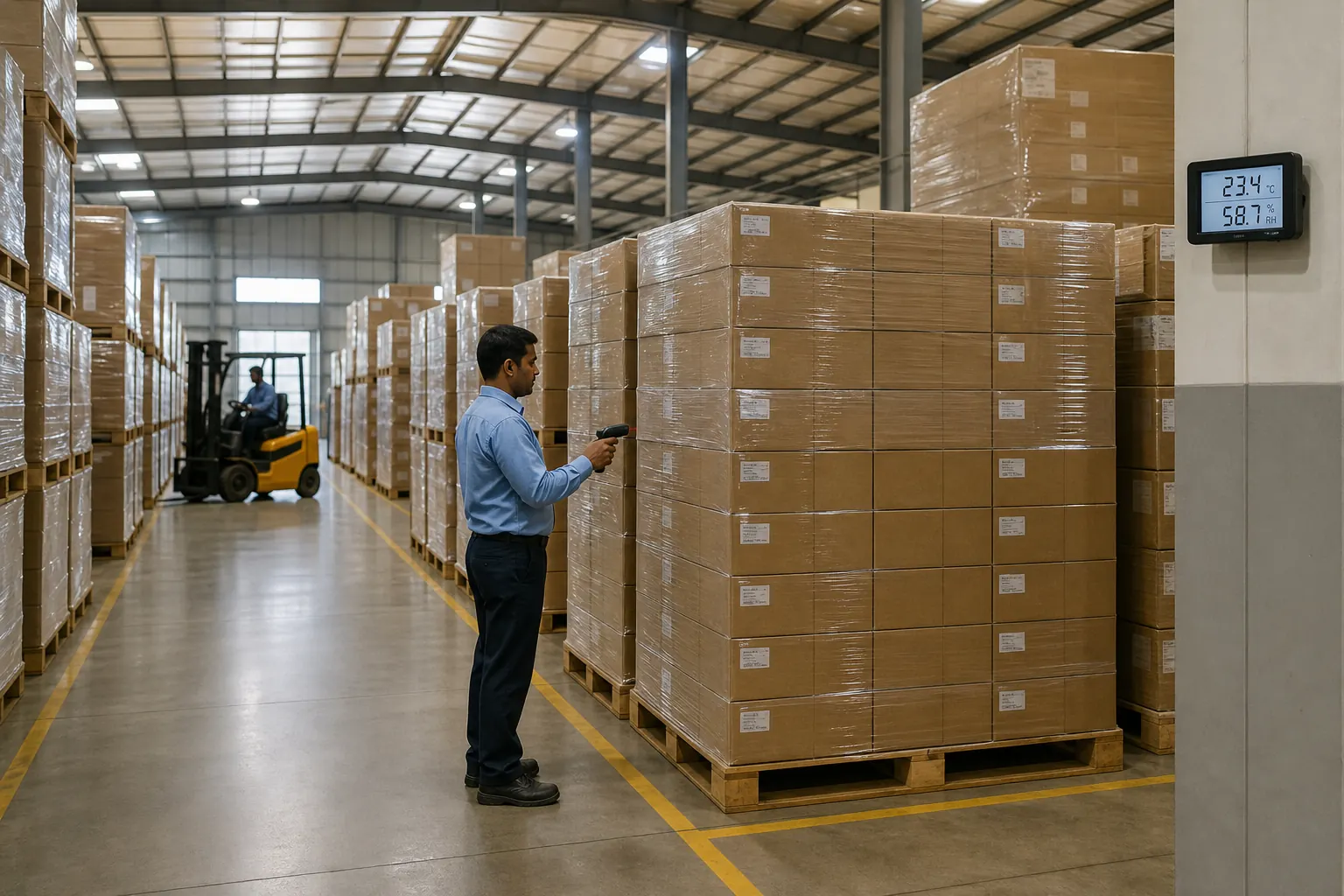
Equipment volumes, payloads and carton quantities are hypothetical model inputs only at screening stage. Use Terry Towel Export Documentation and Logistics to replace them with approved pack dimensions, verified gross weight, selected equipment data, legal limits, carrier acceptance and a carton-level plan.
Shipping Methods and Route Strategy
Export Tip
Compare route availability, handling exposure, working capital and replenishment risk; do not prescribe FCL, LCL or air before actual order data exist. Mode, transit time and container quantity remain hypotheses until a forwarder quotes the packed shipment and route.

Certifications and Market Access Evidence
Compliance Notes
OEKO-TEX STANDARD 100 can support harmful-substance assurance when the certificate covers the towel and components. GOTS supports certified organic claims through a controlled chain. ISO management-system certificates describe systems, not product compliance. Social audit acceptance varies by buyer. Retailers may impose their own restricted-substance list even when a voluntary certificate exists.
Verify every certificate with the issuing body. Record holder, facility, scope, product class, standard version and expiry. Claims such as organic, recycled, antimicrobial or low-impact require specific evidence and may trigger advertising rules.
Sourcing Checklist
Checklist
- Select HS scope and download a complete, consistent three-to-five-year reporter dataset.
- Keep regional aggregates separate from overlapping members before calculating ranks, growth, concentration or shares.
- Interview importers to confirm unmet demand and target prices.
- Map national tariff, tax, labeling, safety and packaging duties.
- Model landed margin and working-capital cycle.
- Match manufacturing and certification capability.
- Pilot limited SKUs through one channel.
- Measure sell-through, claims, defects and replenishment.
- Refine assortment before scaling.
Buyer Checklist
Checklist
- [ ] Supplier understands destination regulations and channel protocols.
- [ ] Quote and lead time are tied to an approved specification.
- [ ] Certificates are valid and independently verified.
- [ ] Duties and taxes are confirmed by broker.
- [ ] Carton and container assumptions use actual samples.
- [ ] Inspection and corrective-action rights are contractual.
Exporter Checklist
Checklist
- [ ] Market statistics use a named source and access date.
- [ ] Buyer credit and payment terms are assessed.
- [ ] Product claims are documented.
- [ ] Labels and packaging are approved before printing.
- [ ] Production capacity includes peak-season contingency.
- [ ] Documents match goods, PO and destination entry.
Compliance Checklist
Checklist
Compliance Notes
- [ ] Correct national tariff line and origin determination.
- [ ] Fiber, care and country-of-origin labeling.
- [ ] Chemical restrictions and buyer RSL.
- [ ] General product-safety and traceability duties.
- [ ] Packaging, waste and EPR data.
- [ ] Wood packaging ISPM 15 where applicable.
- [ ] Sanctions, denied-party and payment screening.
- [ ] Test reports linked to production lot.
Common Buyer Mistakes
Common Mistakes Box
Buyers also underestimate inventory cost. A lower-priced high-MOQ order can destroy margin if the assortment sells unevenly. Market entry should optimize contribution and cash conversion, not only purchase price.
Future Market Trends
Key Statistics
Trade-data availability may improve, while buyers may request more granular product and supply-chain evidence. Treat tighter environmental-claim review, packaging reporting, cost-per-wash analysis, richer e-commerce data and nearshoring effects as trends to validate in each target channel. India’s future competitiveness for scaled cotton programs is also a validation hypothesis, not a conclusion from the supplied reporter rows.
Digital traceability, verified organic/recycled claims, water and chemical management, lower-plastic packaging and durable quick-dry constructions will shape sourcing briefs. Tariff volatility and trade-policy changes make scenario modeling essential. Exporters should maintain several route, customer and product options instead of relying on one large market.
Conclusion
The leading terry towel import markets offer substantial opportunity, but rankings are only the first filter. The strongest entry case combines verified demand, a reachable buyer, suitable product, current tariff treatment, complete compliance evidence, reliable logistics and positive landed margin. Use a complete, consistent HS 630260 reporter dataset, keep EU aggregates separate from overlapping members and refresh every duty before entry.
For sustainability-led hypotheses, assess certified-organic positioning with buyer-appropriate evidence. Altus Exports helps international buyers and Indian suppliers turn that analysis into an executable sourcing and export program. Explore our India sourcing capabilities or contact Altus Exports with your target countries, channel, expected volume, price tier and compliance requirements.
Sources
- WITS/UN Comtrade, HS 630260 data portal and Japan 2024 page: https://wits.worldbank.org/trade/comtrade/en/country/JPN/year/2024/tradeflow/Imports/partner/ALL/product/630260
- OEC, HS 630260 product profile: https://oec.world/en/profile/hs/toilet-or-kitchen-linen-of-cotton-terry-towelling
- USITC, Harmonized Tariff Schedule: https://hts.usitc.gov/
- US Customs and Border Protection, trade resources: https://www.cbp.gov/trade
- European Commission Access2Markets: https://trade.ec.europa.eu/access-to-markets/en/home
- European Commission TARIC: https://taxation-customs.ec.europa.eu/customs-4/calculation-customs-duties/customs-tariff/eu-customs-tariff-taric_en
- Japan Customs tariff schedules: https://www.customs.go.jp/english/tariff/
- UK Trade Tariff: https://www.gov.uk/trade-tariff
- Canada Border Services Agency customs tariff: https://www.cbsa-asfc.gc.ca/trade-commerce/tariff-tarif/
- Australian Border Force tariff classification: https://www.abf.gov.au/importing-exporting-and-manufacturing/tariff-classification
- US FTC textile guidance: https://www.ftc.gov/business-guidance/industry/textiles
- European Chemicals Agency REACH: https://echa.europa.eu/regulations/reach/understanding-reach
- OEKO-TEX STANDARD 100: https://www.oeko-tex.com/en/our-standards/oeko-tex-standard-100
- Global Organic Textile Standard: https://global-standard.org/the-standard
Accessed July 17, 2026.