
Corrugated Box Manufacturers India: 2026 Supplier Evaluation Guide
By Saurabh Mittal, Founder, Altus Exports
A commercial buyer framework for finding, auditing, comparing, and managing Indian corrugated-box manufacturers.
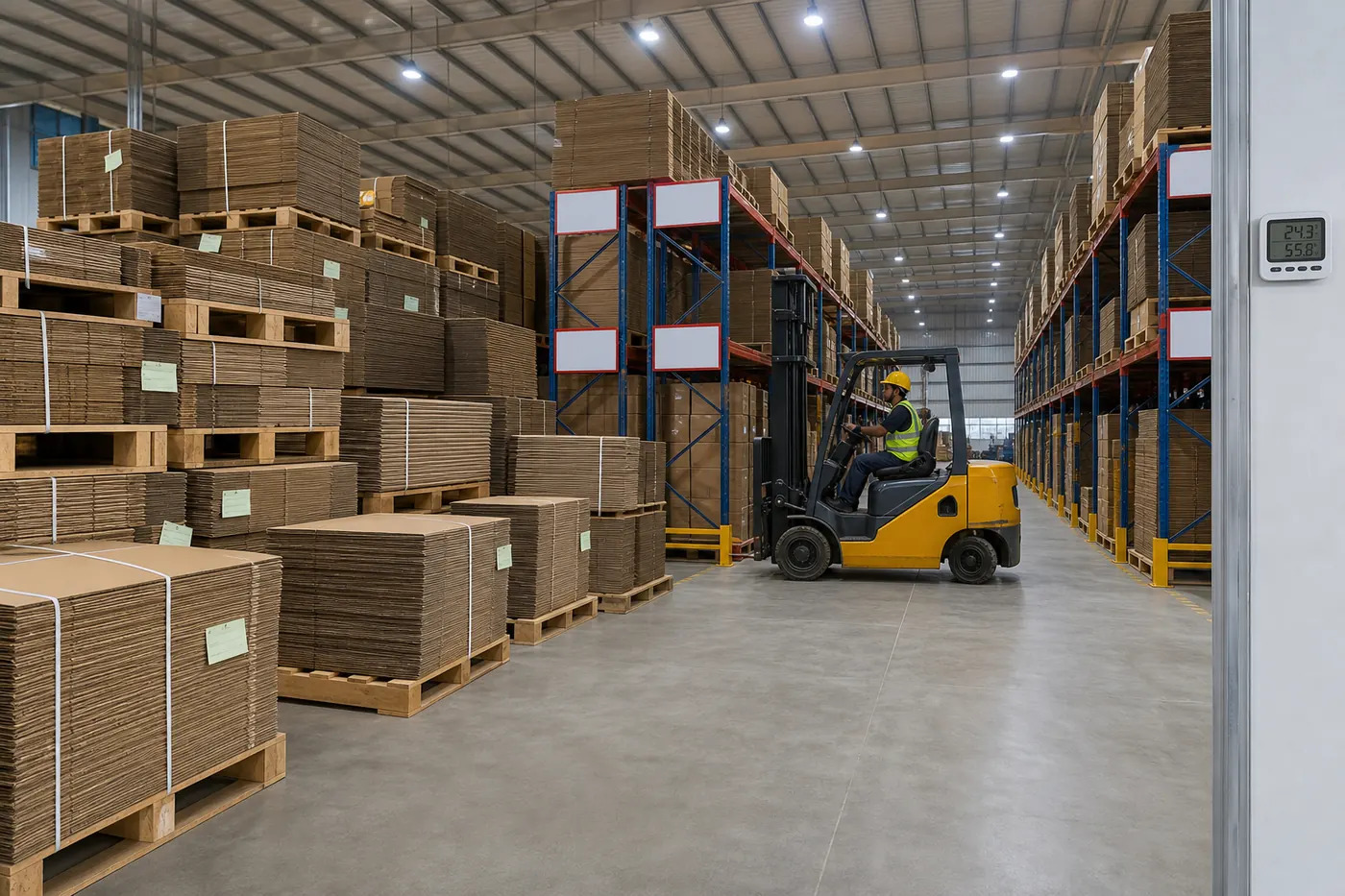
Searching for corrugated box manufacturers India returns converters with very different paper access, corrugator widths, flute combinations, print systems, die-cutting capacity, testing disciplines, order sizes, and export readiness. A directory entry or attractive sample cannot establish repeatable production. Commercial supplier evaluation must connect the buyer's packed product and route to the actual plant, equipment, materials, process controls, available capacity, quality evidence, commercial scope, and corrective-action behavior.
Introduction
This guide is intentionally a supplier-evaluation playbook, not a repeat of the end-to-end corrugated box import guide. It shows international procurement teams how to build a longlist, issue one comparable RFQ, verify sites, audit production, approve trial orders, score performance, and decide whether a converter is suitable for a specific corrugated-box program.
Altus Exports can work as a merchant exporter in India, global sourcing partner, and export consulting expert. Its value is independent coordination: translating requirements, mapping candidate capabilities, comparing quotations, organizing samples and inspections, and controlling export handoffs. No factory ownership, exclusive relationship, certification, or client outcome is implied.
Executive Summary
Summary Box
The best corrugated-box manufacturer is not the largest or cheapest; it is the supplier whose verified process fits the required structure, print, run length, tolerances, performance, destination evidence, schedule, and logistics model. Evaluate the plant that will make the order, including disclosed subcontractors. Review evidence from comparable production rather than relying on a company profile.
Use gated qualification. First reject candidates that cannot meet mandatory structure, equipment, compliance, location, or MOQ conditions. Then compare samples, test results, audit findings, capacity, quotation scope, and service.
Place a controlled trial with predefined acceptance and remedies. Approve repeat production only after reviewing actual quality, delivery, document accuracy, and corrective action.
Market Size & Industry Overview
Key Statistics
India's corrugated converting industry serves a large and diverse domestic manufacturing economy. Food and beverage, agriculture, pharmaceuticals, personal care, appliances, automotive components, engineering, e-commerce, and export packing create demand for simple slotted cases, printed shippers, die-cut formats, heavy-duty boxes, trays, partitions, and retail-ready packaging. That demand supports integrated paper-and-packaging groups as well as regional independent converters.
Public descriptions of India's industry size vary because sources may combine corrugated board, cartons, flexible packaging, paper packaging, or domestic and export sales. This article therefore does not present an unverified market-size forecast. For internationally comparable evidence, WITS/UN Comtrade reports India exported US$55.790 million and 38.399 million kg under HS 481910 in 2024. The figure proves cross-border activity, not the number of qualified factories or domestic industry revenue.
Supplier location should support both production and logistics. Western industrial corridors can provide access to Gujarat and Maharashtra customers and ports such as Mundra and Nhava Sheva; southern converters can align with Tamil Nadu, Karnataka, Telangana, and Chennai-region supply chains; northern and eastern plants serve their own manufacturing clusters and land routes. A distant low quote may lose its advantage through board transport, empty-box cube, humidity exposure, and slower response.
Indian corrugated-box manufacturer profiles and qualification risks
Swipe →
Data table — swipe horizontally on small screens
| Manufacturer profile | Potential strength | Qualification risk |
|---|---|---|
| Integrated paper and corrugated group | Paper access, scale, multi-plant service | Plant-specific capability may differ; smaller orders may receive less attention |
| Independent automatic corrugator | Conversion focus, regional responsiveness | Paper sourcing and peak capacity require verification |
| Sheet plant/converter | Flexible printing and die cutting | Corrugated sheets may come from an undisclosed external source |
| Specialty print/lamination converter | High graphics and retail-ready formats | Board and lamination interfaces need testing |
| Small semi-automatic unit | Local flexibility and simple work | Consistency, testing, export systems, and scale may be limited |
Export Statistics
Key Statistics
WITS, based on UN Comtrade, lists India's 2024 exports of HS 481910 cartons, boxes, and cases of corrugated paper or paperboard at US$55,789,994.973 and 38,399,014.872 kg; WITS identifies the world net weight as estimated. This was below several large exporter reporters, so buyers should evaluate India's fit without overstating scale.
The WITS India destination page for 2024 reports US$11.2871 million to the United States, US$6.8296 million to the UAE, US$3.3456 million to the United Kingdom, US$2.6661 million to Nepal, US$2.2474 million to the Netherlands, and US$1.9146 million to Australia. These six-digit customs data do not identify manufacturer revenue, capacity, box count, construction, print method, buyer, or end use.
India's reported HS 481910 export indicators
Swipe →
Data table — swipe horizontally on small screens
| India HS 481910 measure | Reported result | Supplier-evaluation meaning |
|---|---|---|
| 2024 exports to world | US$55.790 million | Confirms an export base; does not qualify a candidate |
| 2024 quantity | 38.399 million kg | Weight spans many constructions and uses |
| 2024 world net weight status | Estimated by WITS | Not directly a box count or capacity measure |
| 2024 leading destinations shown | US, UAE, UK, Nepal, Netherlands | Useful for lane questions, not supplier ranking |
| 2024 Australia destination | US$1.9146 million | Long-haul precedent, not proof of competitiveness |
Import Statistics
Key Statistics
Global import data help buyers question a supplier's market familiarity. In 2024, WITS listed the Netherlands at US$856.101 million, Mexico at US$788.089 million, the United States at US$747.204 million, the EU aggregate at US$601.675 million, Canada at US$597.954 million, France at US$578.183 million, Germany at US$568.272 million, the United Kingdom at US$331.145 million, and Australia at US$91.782 million under HS 481910. The EU aggregate overlaps member reporters and must not be added to them.
These values should not become sales forecasts. Corrugated trade is often regional because empty boxes are cube-intensive; flows may be linked to border manufacturing, distribution hubs, or packaging supplied within a larger industrial chain. During qualification, ask for anonymized evidence of comparable destination execution—document templates, packaging labels, bundle controls, test methods, and corrective-action examples—without demanding confidential client identities.
Major 2024 HS 481910 importer reporters and supplier questions
Swipe →
Data table — swipe horizontally on small screens
| 2024 importing reporter | Value | Question for candidate manufacturers |
|---|---|---|
| Netherlands | US$856.101 million | Can the supplier handle EU data, EPR, material, and hub-delivery requirements? |
| Mexico | US$788.089 million | Can landed economics survive the lane and regional competition? |
| United States | US$747.204 million | Can it execute retailer, state packaging, barcode, and customs requirements? |
| EU aggregate | US$601.675 million | Does it distinguish EU-wide rules from national obligations? |
| Canada | US$597.954 million | Can it support bilingual or channel-specific artwork when required? |
| France | US$578.183 million | Can it control French/EU labels, reporting data, and print versions? |
| Germany | US$568.272 million | Can it distinguish EU-wide duties from national EPR execution? |
| United Kingdom | US$331.145 million | Can it execute separate UK tariff and packaging obligations? |
| Australia | US$91.782 million | Can the program survive long-haul cube and local competition? |
Product Categories / Variants
Summary Box
A manufacturer should be shortlisted by product-process fit. Regular slotted containers and half-slotted cases favor efficient flexo-folder-gluer production. Full-overlap cases, five-panel folders, telescope boxes, trays, mailers, and retail-ready designs may require flatbed or rotary die cutting and controlled folding. Heavy-duty double- or triple-wall cases require different corrugating and joint capability than fine-flute e-commerce mailers.
Print capability creates another dividing line. Direct flexography is efficient for many transport and branded shippers. Preprint and litho-lamination can deliver higher graphics but introduce lamination, registration, warp, and recyclability considerations.
Digital printing may suit prototypes and versioned short runs. Review custom printed corrugated boxes from India and box types and specifications before mapping suppliers.
Corrugated-box categories mapped to manufacturing evidence
Swipe →
Data table — swipe horizontally on small screens
| Box family | Required capability evidence | Trial focus |
|---|---|---|
| RSC/HSC transport cases | Slotting, folding, gluing, dimensional control | Squareness, joint, flap gap, line performance |
| Die-cut mailers/trays | Die design, stripping, crease control | Tab integrity, fold, locking, tear behavior |
| Double/triple-wall cases | Multiwall corrugation, heavy conversion, stitch/glue | Compression, joint, handling, bundle weight |
| High-graphics litho-laminated | Print partner, lamination, die cutting, warp control | Color, registration, adhesion, rub, recyclability |
| Produce/ventilated boxes | Moisture strategy, vent and stacking design | Compression after conditioning, vent tear, pallet stability |
| Partitions and fitments | Precision slots, assembly, material compatibility | Fit, product separation, packing-line speed |
Manufacturing Overview
Export Tip
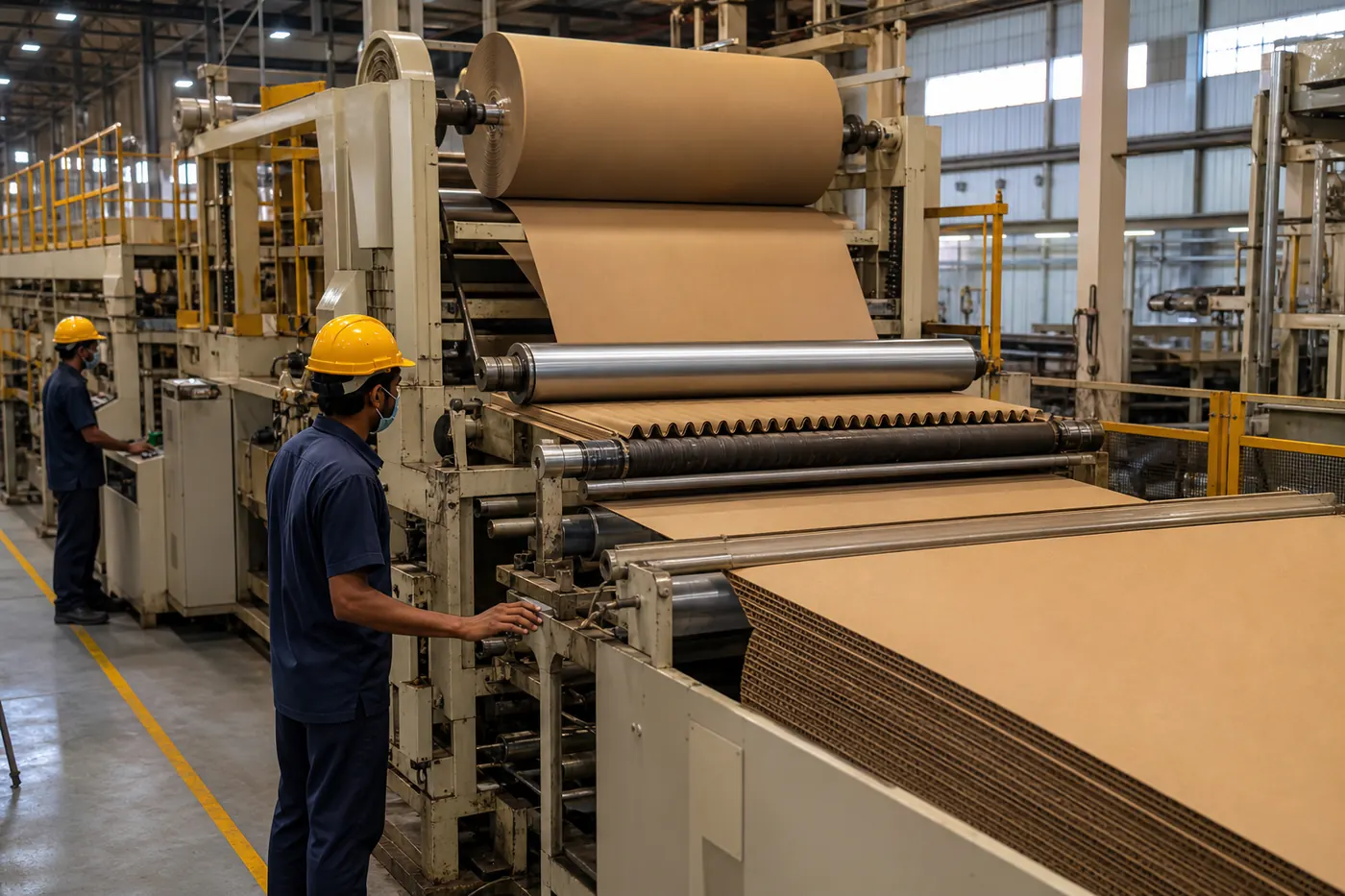
An integrated corrugated plant receives liner and medium rolls, conditions and splices paper, forms flutes under heat, meters starch adhesive, bonds liners, slits and scores board, then converts blanks by printing, slotting, die cutting, folding, gluing, or stitching. Inspection, counting, bundling, labeling, and dry storage complete the normal flow. Plant design and automation affect consistency, but disciplined controls matter more than equipment age alone.
The audit should follow material rather than presentation slides. Observe paper identification and storage, roll traceability, adhesive preparation, corrugator settings, warp controls, board stacking, ink management, plate storage, die condition, first-off approval, in-process checks, rejected-material segregation, test laboratory practice, bundle counting, and finished-goods protection. Interview operators to confirm that written procedures are actually used.
Corrugating capability
Record working width, design speed versus demonstrated speed, flute sets, single- and multiwall combinations, paper-weight range, splice system, cut-off and scoring controls, adhesive kitchen, steam and heat controls, warp management, planned maintenance, and board output by shift. Ask for recent internal records from a comparable board rather than a maximum brochure claim.
Material and bond controls
Verify paper supplier approval, incoming grammage or moisture checks, roll identification, substitutions, starch formula control, viscosity or gel-point checks where used, bond testing, and quarantine. Unauthorized liner or medium changes can alter ECT, burst, print, score cracking, and compression even when nominal ply count remains unchanged.
Warp and dimensional controls
Review how the plant measures board warp, score-to-score dimensions, caliper, moisture, and cut accuracy. Ask what triggers a machine adjustment and how nonconforming sheets are segregated. Flatness affects printing, die cutting, gluing, case erection, stacking, and container cube.
Converting and final inspection
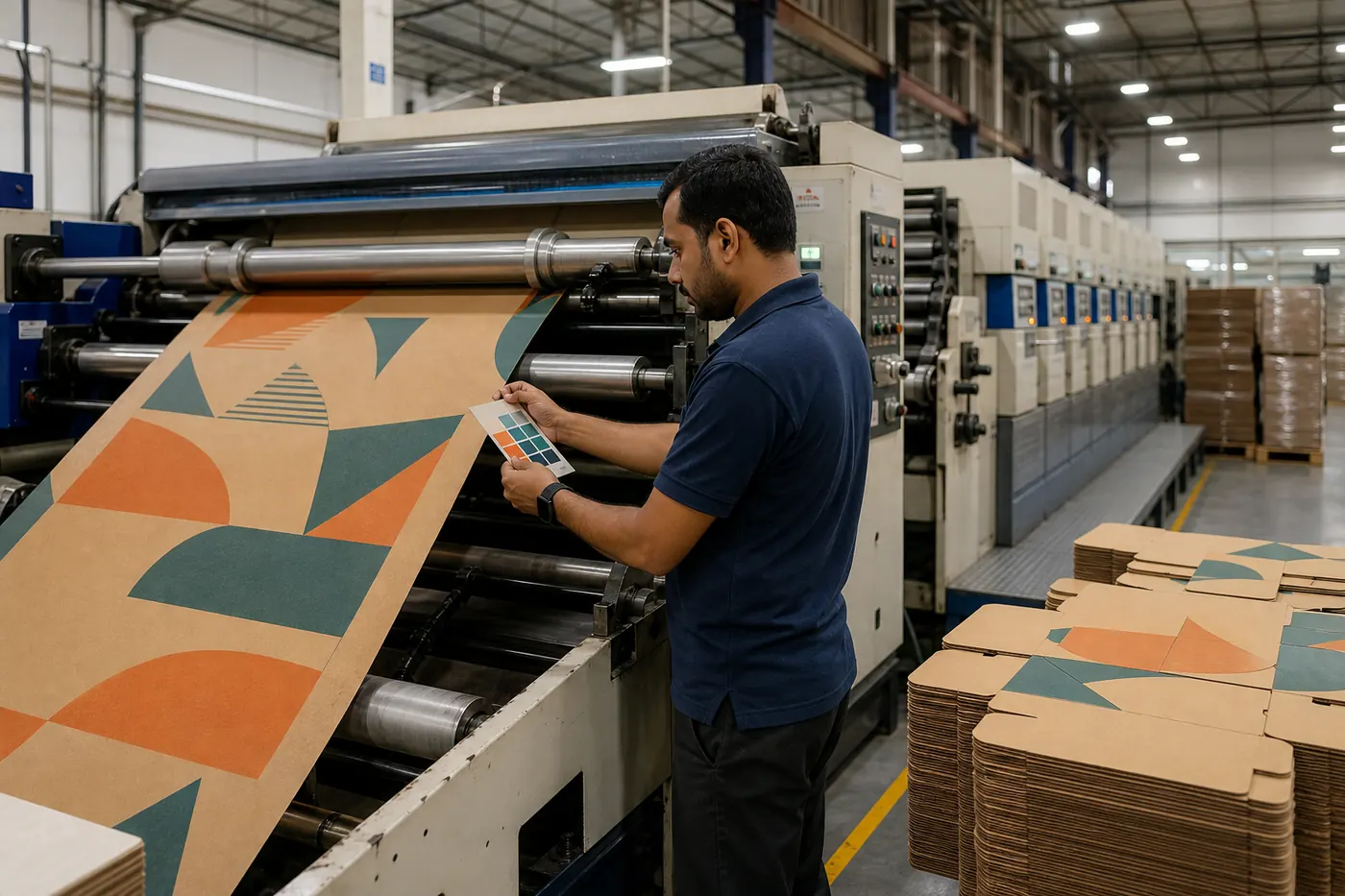
Match printer colors, line screen, registration capability, slotter size, rotary or flatbed die cutter, folder-gluer, stitcher, and offline finishing to the SKU. Final inspection should use controlled drawings, defect definitions, sample size, tests, and lot identity. A tidy display sample does not demonstrate statistical production control.
Supplier Discovery and Prequalification
Build a longlist through industry associations, trade fairs, referrals, paper suppliers, verified directories, and local sourcing support. Do not rank candidates by website quality. Send a short prequalification form that requests legal name, addresses, tax and export registrations, ownership disclosure, actual sites, major equipment, flute and board range, print methods, test equipment, shift pattern, current utilization, minimum runs, certifications, subcontractors, and export ports.
Reject candidates only against predetermined mandatory requirements. For example, a buyer needing double-wall flexographic cases with conditioned compression evidence should not spend audit resources on a plant that buys all board externally and has no traceable test program. Conversely, a sheet plant may be suitable when its upstream source is disclosed, qualified, and stable. Use Altus's find manufacturers in India service for structured mapping rather than an unfiltered contact list.
Prequalification evidence and warning signs for Indian converters
Swipe →
Data table — swipe horizontally on small screens
| Prequalification field | Acceptable evidence | Red flag |
|---|---|---|
| Legal and site identity | Registration records and verifiable address | Quotation entity differs without explanation |
| Process map | Named in-house and outsourced operations | Claims everything is internal but tour contradicts it |
| Equipment | Machine list plus observed production | Brochure maximums without demonstrated fit |
| Capacity | Shift data, utilization, maintenance, allocation plan | Annual capacity presented without order-specific availability |
| Quality system | Specifications, records, calibration, CAPA examples | Certificate shown but no operational records |
| Export readiness | IEC, document controls, packing and route process | Cannot reconcile sample invoice and packing data |
Factory Audit and Evidence Review
Use a risk-weighted audit rather than a generic social-compliance tour. Technical sections should cover paper approval, roll storage, corrugator and converting capability, drawings, artwork, tooling, process parameters, inspection, testing, calibration, nonconformance, traceability, change control, maintenance, moisture management, packing, and load release. Legal, labor, fire, environmental, and ethical requirements should follow the buyer's current policy and local obligations.
Ask the factory to trace one finished bundle backward to its production order, board batch, paper rolls, test records, artwork, die, shift, and inspection. Then trace a complaint forward through containment, root-cause analysis, corrective action, effectiveness review, and affected-lot assessment. This reveals more than a shelf of manuals.
Expert Insight — Saurabh Mittal, Founder, Altus Exports

Export Process
Export Tip
Export readiness should be evaluated as a manufacturer capability, even when a merchant exporter manages the transaction. The production plant must preserve lot identity, meet the approved bundle plan, provide accurate quantity and weight data, release goods against inspection status, and communicate cargo readiness. The exporter then converts those facts into customs, transport, origin, insurance, and buyer documents without changing the commercial description.
Step 1: Confirm the contracting route
Identify the manufacturer, seller, exporter of record, payment recipient, and document issuer. If these are different entities, document the relationship and responsibilities. Verify Indian IEC and applicable tax and banking registrations for the exporting entity, while retaining traceability to the actual production site and shipment lot.
Step 2: Release production and packing
Tie bulk release to signed drawings, artwork, approved samples, paper route, tests, inspection, bundle configuration, marks, and cargo-ready date. Record deviations through formal change control. The manufacturer should not substitute board, split production across sites, or change packing simply to meet a booking without buyer approval.
Step 3: Reconcile shipment evidence
Check commercial invoice, packing list, shipping bill data, certificate of origin or preference evidence where applicable, inspection documents, and bill of lading or air waybill instructions against the physical tally. The corrugated box export documentation guide provides the detailed control list. Classification under HS 4819.10 and destination suffixes remains subject to broker review.
Pricing Analysis
Buyer Tip
A quote should identify internal dimensions, style, board composition, flute, total board GSM or component grammages, performance targets, print, joint, quantity, tooling, samples, tests, bundle and pallet configuration, lead time, payment, quote validity, Incoterms® 2020 rule, and named place. Without these fields, procurement cannot determine whether two manufacturers priced the same box.
For rough screening only, a simple custom export carton might be modeled at a broad US$0.35–US$2.50 per piece EXW. Large, high-strength, multiwall, heavily printed, coated, die-cut, or low-volume boxes may be below or far above that span. It is not a supplier quote, Indian market average, or Altus offer. Paper prices, dimensions, board area, waste, run speed, currency, and tooling materially change results.
Use the corrugated box wholesale pricing guide to normalize per-piece and per-square-meter economics. Separate one-time plates, dies, proofs, and development from recurring conversion. Then add inspection, inland haulage, export charges, freight, insurance, duty, destination fees, delivery, and expected nonconformance cost.
Quote variables that must be normalized across manufacturers
Swipe →
Data table — swipe horizontally on small screens
| Quote variable | Normalization rule | Supplier question |
|---|---|---|
| Dimensions and style | One signed internal-dimension drawing | Are allowances and manufacturer's joint included? |
| Board | Same component papers/flute or same approved performance route | May paper be substituted without approval? |
| Print/tooling | Same colors, coverage, plates, die, proofs | Who owns and stores tooling; what is its life? |
| Quantity | Same good pieces by SKU and release | What are over/under-run limits? |
| Testing/inspection | Same methods, frequency, and third-party scope | Which charges are included? |
| Packing/Incoterm | Same bundle/pallet and named-place rule | Which origin charges are excluded? |
MOQ Analysis
Buyer Tip
Manufacturer MOQ may be expressed as pieces, board square meters, machine time, paper consumption, order value, or minimum per artwork. Drivers include paper-roll availability, corrugator setup, flute change, ink and wash-up, plate or die cost, converting setup, bundle labels, and production scheduling. A low printed-box MOQ may still hide a higher minimum for special paper or each design.
A planning inquiry might begin around 1,000–5,000 pieces per conventional custom SKU, but this is not a verified Indian norm. Digital prototypes can be lower; efficient flexographic and multiwall runs can be much higher. Ask for prototype, trial, first-commercial, repeat-order, and annual blanket-order options. Compare the cost of a small learning order with the inventory and quality risk of an unnecessarily large first run.
MOQ layers and practical negotiation levers
Swipe →
Data table — swipe horizontally on small screens
| MOQ layer | What to request | Negotiation lever |
|---|---|---|
| Structure | Minimum by drawing and board combination | Share board construction across SKUs |
| Minimum by artwork/color set | Limit versions or use digital for launch | |
| Paper | Minimum for nonstock liner/medium | Choose available approved papers |
| Tooling | Cost and minimum tied to die/plates | Amortize transparently over forecast |
| Delivery | Production minimum versus release quantity | Blanket order with scheduled call-offs |
| Trial | One controlled production run | Accept setup allocation without weakening controls |
Packaging Standards
Export Tip
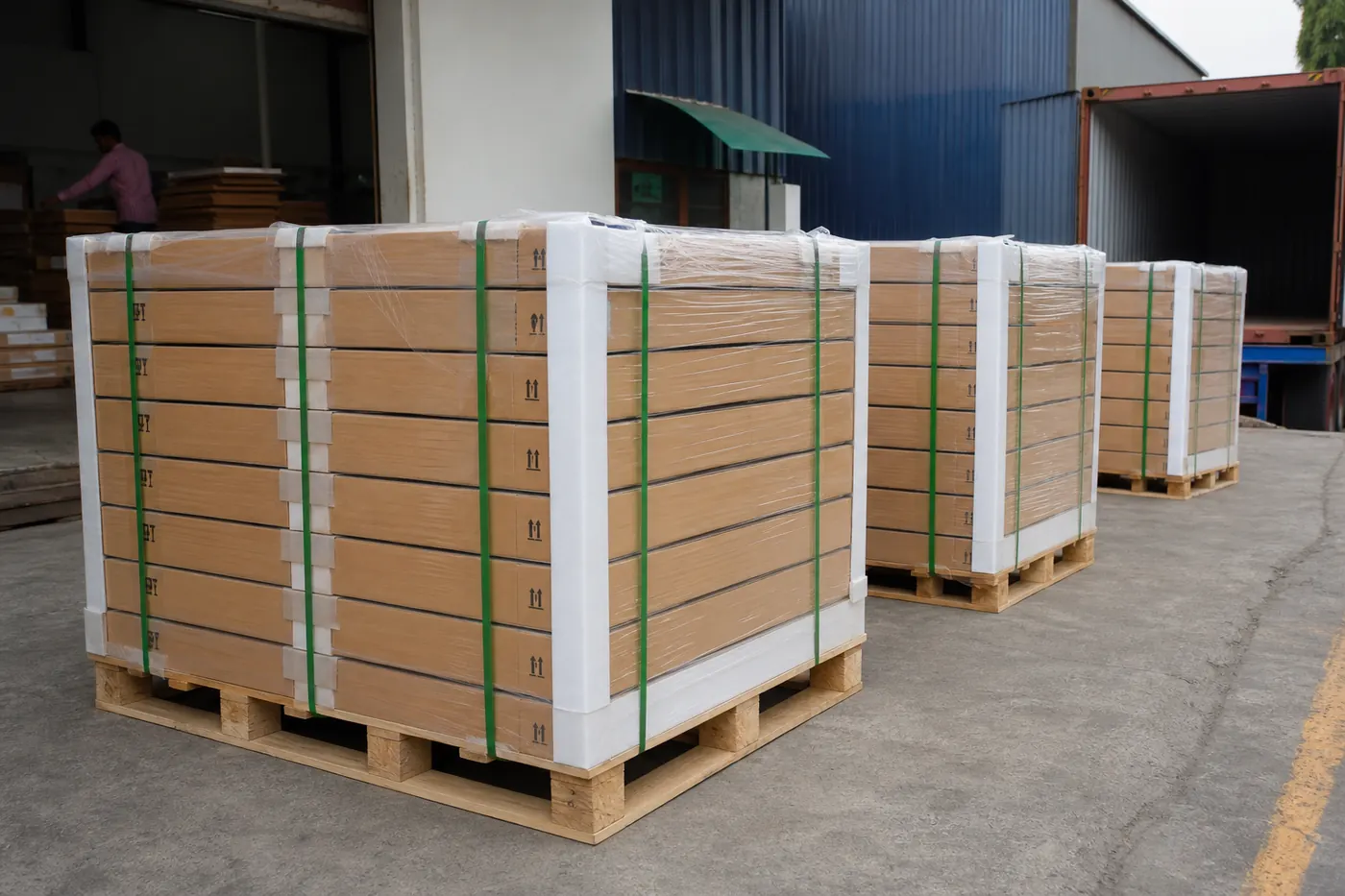
The product being purchased is itself packaging, but it still needs export packing. Approve flat orientation, bundle count, compression, edge protection, straps, wrap, labels, gross-weight limit, pallet pattern, and moisture protection. Straps must not crush flute edges or damage print. Bundle labels should identify buyer SKU, drawing and artwork revision where practical, quantity, lot, production date, and handling information.
Finished goods should be held on clean, dry supports away from walls, floors, leaks, and odor sources. Pallets must avoid overhang and remain stable through handling. If solid-wood packaging is used internationally, confirm ISPM 15 applicability and destination rules. Environmental claims about wrap reduction, recycled straps, or recyclable bundles require substantiation and must not compromise box condition.
Container Loading Details
Export Tip
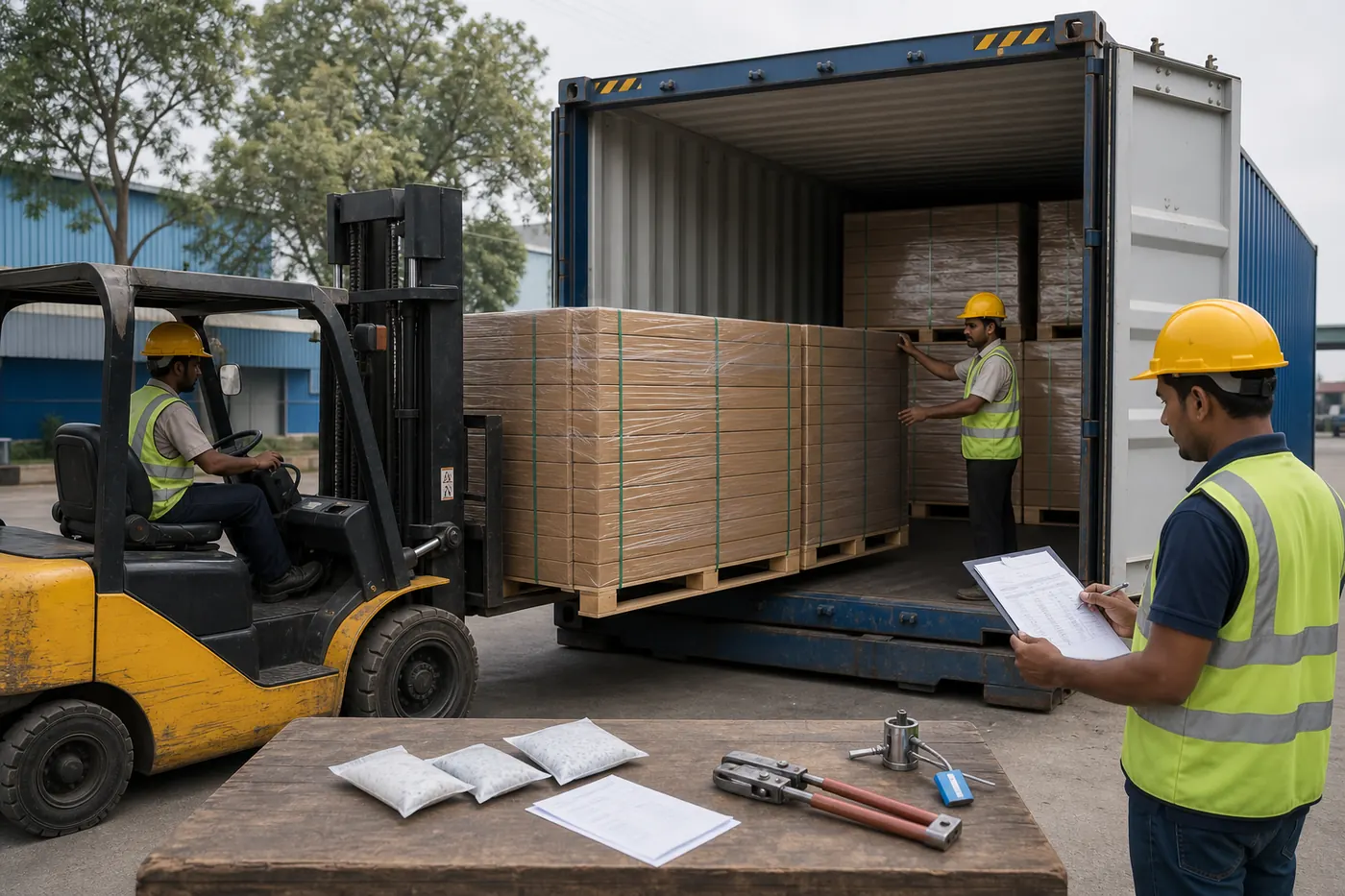
Corrugated boxes usually ship flat and are often cube-limited. Require a load proposal based on measured production bundles, not nominal board dimensions. The plan should state container type, floor or pallet loading, row and tier arrangement, total bundles, pieces, gross and net weight, occupied cube, dunnage, door clearance, unloading sequence, and contingencies for bundle variation.
Before stuffing, inspect container roof, sides, doors, seals, floor, odor, dryness, daylight penetration, protrusions, and prior-cargo contamination. Keep bundles dry during staging, avoid excessive localized compression, photograph representative rows, reconcile tally, and record the carrier seal. The specialized corrugated box container loading and shipping guide covers calculations and receiving controls.
Container-loading evidence required from the manufacturer
Swipe →
Data table — swipe horizontally on small screens
| Load decision | Manufacturer evidence | Buyer acceptance point |
|---|---|---|
| Bundle size/count | Measured production bundle sheet | Count and dimensions within approved tolerance |
| Pallet or floor load | Handling and cube comparison | Destination unloading and damage risk accepted |
| Container condition | Preload checklist and photographs | Dry, clean, sound, odor-free unit |
| Stow pattern | Row/tier drawing and restraint method | No damaging pressure or unsafe void |
| Final tally | Bundle/SKU reconciliation and seal record | Packing list, physical load, and seal agree |
Shipping Methods
Export Tip
FCL ocean freight generally gives commercial volumes fewer handling events and more load control. LCL can support trials but introduces extra warehouse handling, consolidation, and moisture exposure. Air and courier are normally reserved for prototypes, printed approvals, or urgent small quantities because empty boxes have poor value-to-volume economics. Where practical, source boxes near the Indian product-filling plant or consolidate them with related production.
Compare EXW, FCA, FOB, CFR, CIF, DAP, and DDP only with named places and Incoterms 2020 responsibilities. DDP is not automatically buyer-friendly: the seller may lack lawful importer, tax, EPR, or customs capability. A supplier score should include its ability to provide accurate cargo-ready dates, measurements, verified gross mass inputs, booking communication, documents, and loading evidence—not just factory dispatch.
Certifications
Compliance Notes
Certification needs depend on destination, channel, use, and claims. ISO 9001 can support a quality-management system for a named site and scope, while BRCGS Packaging Materials may be requested in hygiene-sensitive packaging supply chains. FSC or PEFC chain of custody can support eligible certified-fiber claims when the certificate, product group, transaction, invoice claim, and trademark use align. FEFCO codes and methods are design/test references, not a FEFCO product certification. None proves box compression or replaces lot testing.
Food-contact declarations or tests must match actual liner, recycled-fiber barriers where relevant, inks, coatings, adhesives, food type, contact condition, temperature, and destination rules. ISO 14001, social audits, recycled-content evidence, and laboratory accreditation can add scoped information but should be verified individually. Use the corrugated-box quality and certification guide for a deeper evidence matrix.
Certification scope and limitations for corrugated-box suppliers
Swipe →
Data table — swipe horizontally on small screens
| Certificate/evidence | What it can show | What it cannot show alone |
|---|---|---|
| ISO 9001 | Defined site quality-management scope | That a shipment meets ECT, BCT, dimensions, or print |
| BRCGS Packaging Materials | Site controls against a packaging standard | Automatic legal compliance in every destination |
| FSC/PEFC chain of custody | Controlled eligible fiber claims | Performance or universal recyclability |
| Food-contact evidence | Defined materials and use conditions | Suitability for unlisted foods, temperatures, or markets |
| Accredited lab report | Named samples tested by stated methods | That every production lot is identical |
| Social/environmental audit | Conditions observed against a protocol/date | Product quality or permanent compliance |
Buyer Requirements
Buyer Requirements
Issue a requirement pack before commercial ranking. Include importing entity, destination, intended use, packed-product facts, forecast, launch quantity, drawing, paper and flute route, performance criteria, artwork, barcode, tolerances, test methods, bundle configuration, pallet rules, certificates, declarations, inspection plan, Incoterm, payment, timeline, and required documents. Candidate exceptions must be explicit.
The buyer should also declare filling-line limitations, erection method, closure tape or glue, pallet pattern, warehouse climate, stack height, and distribution cycle. Supplier engineering cannot compensate for hidden operating conditions. Destination counsel and the importer's broker should approve classification, duties, EPR, packaging labels, substances, food-contact conditions, and any sector-specific obligations.
As of 17 July 2026, published base tariffs for the relevant national line are generally Free in the United States, EU, United Kingdom, Canada, and Australia; VAT/GST is separate. The U.S. nevertheless applies a temporary additional 10% Section 122 surcharge to qualifying entries through 12:01 a.m. EDT on 24 July 2026 unless excluded. Rates and chapter 99 measures must be checked on the entry date. EU PPWR Regulation 2025/40 generally applies from 12 August 2026, with provision-specific dates.
Expert Insight — Saurabh Mittal, Founder, Altus Exports
Country-wise Opportunities
Market Snapshot
A manufacturer's export fit should be evaluated by lane and obligation rather than by a generic list of countries served. The markets below are qualification directions, not forecasts. Review corrugated box import markets for broader demand analysis and obtain current legal, customs, and freight advice.
Country-specific capability questions for Indian manufacturers
Swipe →
Data table — swipe horizontally on small screens
| Market | Potential supplier fit | Capability to verify |
|---|---|---|
| United States | Specialty, printed, industrial, coordinated packaging | State EPR/toxics rules, retailer protocols, customs, dimensional freight |
| UAE/Gulf | Shorter lanes, retail, food, industrial and re-export use | Heat/humidity design, food-contact scope, artwork and delivery terms |
| United Kingdom | Private-label, e-commerce, industrial and retail-ready | UK EPR data, material evidence, barcode and print control |
| EU/Netherlands | Specialty formats and hub distribution | PPWR transition, EPR, substances, claims, language and traceability |
| Nepal/nearby markets | Regional consumer and industrial programs | Land-route handling, border documents, moisture protection |
| Australia | Specialty and coordinated product-packaging orders | Long-lane economics, pallet biosecurity, recycling/retailer marks |
| African markets | Country-specific industrial, produce and consumer uses | Humidity, route, payment, local competition and receiving capability |
Sourcing Checklist
Checklist
- Define mandatory product, process, destination, MOQ, timing, and certification criteria before discovery.
- Build a longlist from multiple channels and verify each legal entity and manufacturing address.
- Map in-house and outsourced corrugating, printing, lamination, die cutting, gluing, stitching, and testing.
- Issue one revision-controlled RFQ and require suppliers to list exceptions.
- Review comparable samples, test records, complaint CAPA, calibration, maintenance, and lot traceability.
- Audit the actual plant and follow one order backward through materials and records.
- Approve production-equivalent structural and printed samples using the packed product.
- Normalize product, tooling, testing, packing, Incoterm, payment, freight, and destination cost.
- Place a controlled trial with inspection, document, loading, claim-window, and remedy terms.
- Score actual quality, delivery, communication, documentation, and corrective action before scaling.
Buyer Checklist
Checklist
- [ ] Legal buying entity, importer, and broker assigned
- [ ] Packed-product and route hazards documented
- [ ] Drawing, artwork, methods, tolerances, and claims approved
- [ ] Candidate sites and subcontractors independently verified
- [ ] Technical and responsible-sourcing audits completed as required
- [ ] Quote scope and landed cost normalized
- [ ] Trial-order acceptance and remedies contracted
- [ ] Golden sample, defect catalogue, and inspection plan controlled
- [ ] Destination compliance and documents approved
- [ ] Repeat award based on scorecard evidence
Exporter Checklist
Checklist
- [ ] Quoting and exporting entity matches disclosed arrangement
- [ ] IEC and relevant Indian registrations are current
- [ ] Manufacturing route and subcontractors recorded
- [ ] Paper, ink, adhesive, coating, and tooling approvals controlled
- [ ] Production and test records trace to shipment lot
- [ ] Final bundle count, marks, dimensions, and weights verified
- [ ] Commercial invoice, packing list, shipping bill, and transport instructions reconcile
- [ ] Certificate and origin claims match transaction scope
- [ ] Container condition, load tally, and seal recorded
- [ ] Complaint ownership and record retention assigned
Compliance Checklist
Checklist
Compliance Notes
- [ ] HS 4819.10 applicability and destination tariff suffix reviewed
- [ ] Duty, tax, valuation, origin, and preference assumptions confirmed
- [ ] Packaging EPR, reporting, labeling, and material rules mapped
- [ ] Food-contact, dangerous-goods, or sector requirements assessed
- [ ] Inks, coatings, adhesives, and restricted substances addressed
- [ ] FSC, PEFC, recycled, recyclable, and environmental claims verified
- [ ] Certificate site, scope, issuer, number, and validity checked
- [ ] ISPM 15 reviewed for solid-wood pallets or dunnage
- [ ] Barcode, marks, language, and traceability data approved
- [ ] Change control prevents unapproved paper or process substitution
Common Buyer Mistakes
Common Mistakes Box
- Choosing the lowest quote before candidates acknowledge the same drawing and performance criteria.
- Auditing a sales office while assuming the named machinery exists at the production site.
- Accepting “three-ply” or “five-ply” as a complete board specification.
- Treating maximum machine speed as available order capacity.
- Ignoring external sheet suppliers, printers, laminators, die cutters, or laboratories.
- Approving plotter-cut samples as evidence of production corrugation, print, and die cutting.
- Accepting certificates without checking site, scope, product, validity, and transaction claim.
- Negotiating MOQ without separating paper, structure, print, tooling, and release minimums.
- Scoring factory dispatch as on-time delivery while ignoring documents and destination arrival.
- Scaling volume before reviewing trial quality, CAPA behavior, loading, and landed cost.
Challenges & Solutions
Most supplier failures are not solved by changing factories immediately. First contain the affected lot, establish facts, identify whether specification, material, process, inspection, packing, or communication failed, and verify corrective action. Repeated concealment, unauthorized substitution, falsified evidence, or ineffective action is different: it should trigger escalation, reduced allocation, requalification, or exit according to risk.
Supplier performance challenges and corrective-action paths
Swipe →
Data table — swipe horizontally on small screens
| Supplier challenge | Evidence to examine | Corrective path |
|---|---|---|
| Variable compression | Paper lots, moisture, ECT/BCT, adhesive, warp, conditioning | Control material route and process; retest conditioned production |
| Late orders | Capacity plan, approvals, paper, maintenance, booking milestones | Use realistic critical path and reserved allocation |
| Print inconsistency | Ink batches, viscosity, plates, anilox, first-off records | Set measurable color/registration controls and approval limits |
| Hidden subcontracting | Process records, addresses, transport, invoices, lot trail | Disclose, audit, qualify, and contract change approval |
| Weak corrective action | Containment, root cause, action owner, effectiveness data | Reject symptom-only CAPA; verify on subsequent lots |
| Document mismatch | Order, tally, invoice, packing list, shipping data | Assign reconciliation owner before customs filing |
Supplier Scorecard and Repeat-Order Governance
A scorecard should reflect business risk. A sample weighting might allocate technical capability 20%, quality system and results 20%, commercial competitiveness 15%, delivery and capacity 15%, compliance and claims 10%, service and change communication 10%, and export/logistics execution 10%. These are illustrative weights, not a universal standard. Set minimum gates so a severe legal, safety, traceability, or capability failure cannot be averaged away.
After each order, score incoming acceptance, defects, test conformance, quantity, delivery against the agreed milestone, document accuracy, packaging and loading condition, response time, root-cause quality, and corrective-action effectiveness. Review trends by site and SKU. Improvement matters, but repeated unauthorized substitutions or concealed subcontracting should trigger escalation regardless of average score.
Illustrative weighted scorecard for repeat-order decisions
Swipe →
Data table — swipe horizontally on small screens
| Score area | Illustrative weight | Evidence source |
|---|---|---|
| Technical capability | 20% | Audit, trials, machine/process records |
| Quality system/results | 20% | Tests, inspections, defects, CAPA |
| Commercial competitiveness | 15% | Normalized total-cost comparison |
| Delivery/capacity | 15% | Milestones, allocation, actual receipts |
| Compliance/claims | 10% | Verified certificates and transaction evidence |
| Service/change control | 10% | Response, escalation, approval discipline |
| Export/logistics | 10% | Packing, loading, documents, handoffs |
Future Market Trends
Key Statistics
Supplier evaluation is likely to place more weight on right-sizing, measured performance per gram of board, fiber traceability, recycled-content evidence, destination recyclability, material reporting, and documented EPR inputs. India's converters may also expand digital print, automated inspection, scheduling integration, barcode verification, and data exchange. These are directional hypotheses, not guaranteed market forecasts.
Buyers should test whether technology changes improve repeatability or merely add marketing language. Lighter board is valuable only when it survives the actual distribution cycle; certified fiber claims matter only when transaction controls are correct; digital print is useful only when color, rub, barcode, cost, and throughput meet the program. The sustainable corrugated packaging guide provides a claim-control framework.
How Altus Exports Supports Supplier Evaluation
Altus Exports can create the candidate brief, map manufacturers, screen legal and operational evidence, coordinate audits, issue comparable RFQs, manage structural and printed sampling, normalize landed cost, arrange independent testing or inspection, and coordinate export documents and shipment communication. Explore the packaging materials industry page, product sourcing company service, and import products from India service.
For execution, contact Altus Exports with destination, packed product, annual forecast, first order, box drawing, board or performance target, print files, test and certification needs, packing method, and requested delivery date. Altus will structure the manufacturer search around evidence and fit rather than presenting an unsupported “best suppliers” list.
Conclusion
Evaluating corrugated box manufacturers in India is a controlled evidence exercise. The buyer must connect one defined box and distribution route to a verified legal entity, plant, paper route, equipment set, process control, capacity allocation, test program, quotation, and export workflow. A certificate, sample, factory tour, or low price is useful evidence only within that larger system.
Use mandatory gates, a production-equivalent trial, objective inspection, normalized landed cost, and a weighted performance scorecard. Preserve the approved drawing, artwork, golden sample, methods, lot records, and change controls through repeat orders. This approach gives procurement teams a defensible supplier decision while allowing Indian manufacturers to compete on documented capability rather than claims.
References
- WITS/UN Comtrade — HS 481910 exporters, 2024
- WITS/UN Comtrade — HS 481910 importers, 2024
- WITS/UN Comtrade — India HS 481910 destinations, 2024
- World Customs Organization — Harmonized System
- Federation of Corrugated Box Manufacturers of India
- International Corrugated Case Association
- Forest Stewardship Council — certificate search
- PEFC — find certified organizations
- BRCGS — Packaging Materials standard
- International Chamber of Commerce — Incoterms®
- IPPC — ISPM 15
- USITC — HTSUS 4819.10
- White House — temporary Section 122 import surcharge
- UK Integrated Online Tariff — heading 4819
- Canada 2026 Customs Tariff — chapter 48
- Australian Border Force — chapter 48 tariff
- EUR-Lex — Regulation (EU) 2025/40
- India Directorate General of Foreign Trade
Sources were accessed 2026-07-17. WITS reports gross customs trade in thousands of U.S. dollars; values here are converted to millions.
Export and import data do not prove supplier capability, market revenue, or box prices. MOQ, price, weighting, and lead-time examples are illustrative and must be replaced by current program evidence.