Corrugated Box Wholesale Price India: 2026 RFQ and Landed-Cost Guide
By Saurabh Mittal, Founder, Altus Exports
A buyer-first framework for normalizing corrugated box quotations and modeling EXW, FOB, CIF and landed cost without false price comparisons.
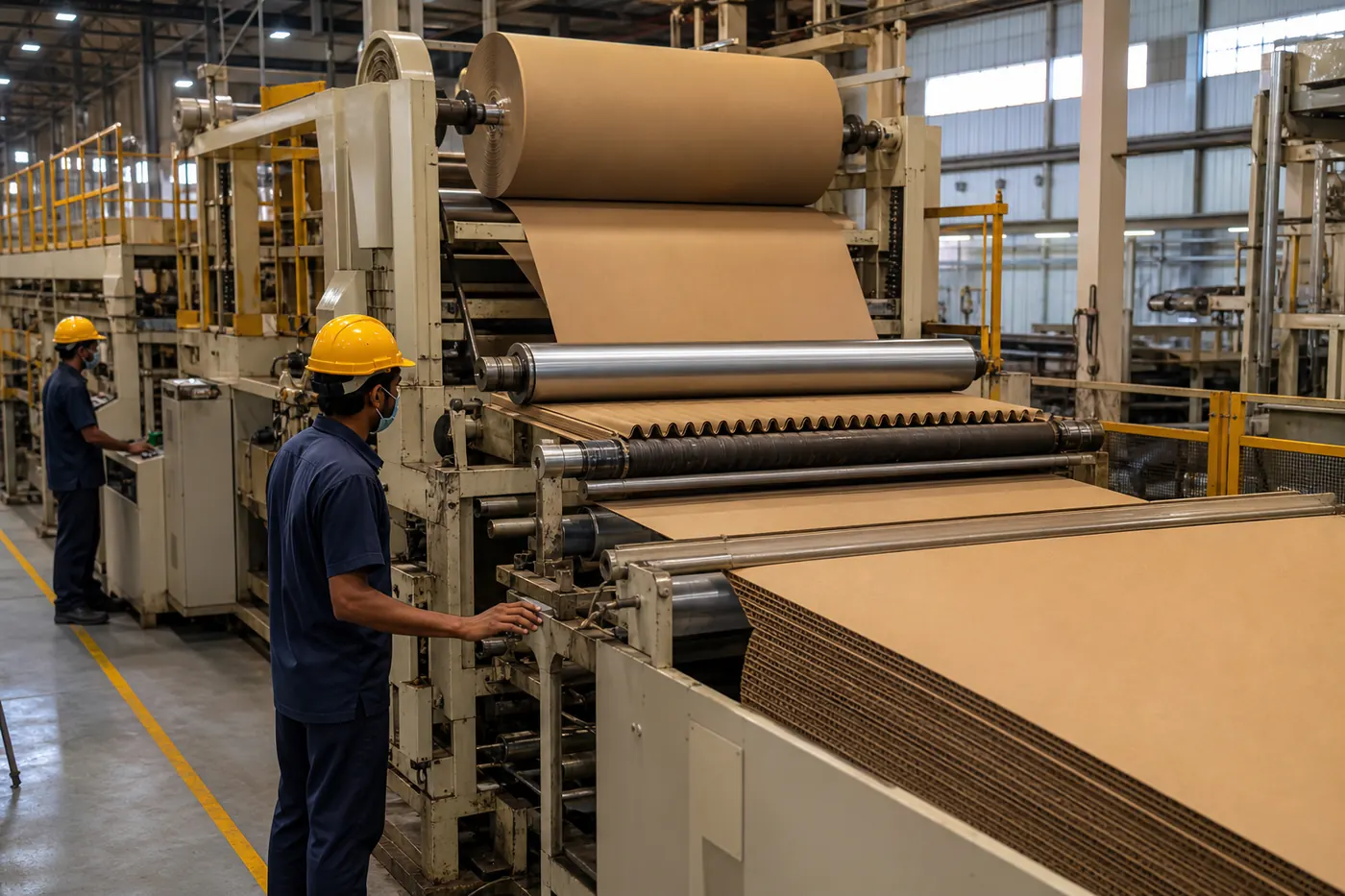
A search for corrugated box wholesale price India rarely produces a number that an international buyer can safely use. Box price changes with internal dimensions, style, flute, liner and medium, board performance, sheet yield, print, converting, quantity, packing, payment terms and Incoterm. Even two boxes described as “five-ply” can have different paper combinations, strength and usable volume.
This guide owns the commercial work: preparing a comparable RFQ, understanding board/yield/printing/conversion costs, evaluating MOQ price breaks, and moving from EXW through FOB, CIF and landed cost. Every price is an indicative planning scenario with stated assumptions—not a quotation, benchmark or Altus Exports offer. Replace it with dated supplier, forwarder, broker and tax inputs for the actual transaction.
Introduction
The phrase “corrugated box wholesale price” is commercially incomplete until it is attached to one drawing, board requirement, quantity, pack and delivery term. This article gives international buyers a repeatable way to turn those inputs into comparable Indian supplier offers and a decision-ready delivered-cost model.
Pricing ownership also means documenting uncertainty. Paper, exchange rates, freight and destination fees can move on different timelines. A reliable sourcing process records the date, source, validity and owner of every input, then refreshes expired items before the purchase order is released.
Executive Summary
Summary Box
Wholesale corrugated-box procurement is a normalization exercise. First freeze the box specification and annual demand profile. Next require suppliers to disclose the same price basis, tooling, packing, waste, taxes, payment terms and quote validity.
Model the order through origin handling, freight, insurance, duty, destination fees and delivery. A low EXW figure can become the highest landed cost when board is under-specified, packing cube is poor or exclusions are discovered later.
WITS/UN Comtrade reports India's 2023 HS 481910 exports at US$57.641 million and 37.486 million kg. This confirms export activity but cannot produce a per-box price: the category includes many corrugated cartons, boxes and cases, dimensions and specifications. The most defensible budget is built from box-level inputs and current route quotations.
Market Size & Industry Overview
Key Statistics
Corrugated boxes are locally intensive because empty converted cartons consume considerable cube relative to value. International sourcing is commercially strongest where India offers specialized board, printing or converting; where boxes travel with an India-origin product program; where a buyer consolidates multiple packaging components; or where route proximity supports the delivered economics. Price analysis must therefore include logistics at the start, not after supplier selection.
TrendEconomy's compilation of reporting-country statistics put 2023 world imports under HS 481910 above US$9.18 billion among 141 reporters. The Netherlands, Mexico, United States, Germany and France were the five largest importer reporters by value. These are customs flows, not a measure of all boxes consumed: most corrugated production never crosses a border, and re-exports or regional production networks influence rankings.
Corrugated-box market characteristics and their effect on wholesale buying decisions.
Swipe →
Data table — swipe horizontally on small screens
| Market characteristic | Pricing consequence | Buyer response |
|---|---|---|
| High cube-to-value ratio | Freight can overwhelm ex-factory savings | Model CBM before supplier award |
| Paper price exposure | Quote validity may be limited | Record paper basis and escalation formula |
| Specification flexibility | Silent downgrades can reduce price | Contract construction and performance |
| Capital-intensive conversion | Setup allocation falls with volume | Request quantity breaks |
| Regional trade pattern | Route economics vary sharply | Compare local and Indian landed cost |
Export Statistics
Key Statistics
WITS, using UN Comtrade data, reports India exported US$57.641 million and 37.486 million kg of HS 481910 corrugated cartons, boxes and cases in 2023. The five largest listed destinations by value were the United States at US$10.873 million, UAE at US$6.881 million, United Kingdom at US$3.092 million, Netherlands at US$2.616 million and Nepal at US$2.443 million. Values were reported in thousands of dollars and converted to millions.
The implied India-world customs value is about US$1.54 per kg, obtained by dividing reported value by quantity. It is not an EXW board price or box quotation. Product mix, printing, box size, assembly state, special converting, invoice valuation and freight treatment differ. Use it only as a broad data-quality and mix indicator.
India-reported HS 481910 export value, quantity and implied customs value in 2023.
Swipe →
Data table — swipe horizontally on small screens
| India destination, 2023 | Value US$ million | Quantity million kg | Implied value/kg* |
|---|---|---|---|
| World | 57.641 | 37.486 | $1.54 |
| United States | 10.873 | 5.240 | $2.07 |
| United Arab Emirates | 6.881 | 5.231 | $1.32 |
| United Kingdom | 3.092 | 1.604 | $1.93 |
| Netherlands | 2.616 | 1.130 | $2.31 |
| Nepal | 2.443 | 1.040 | $2.35 |
Import Statistics
Key Statistics
TrendEconomy reported more than US$9.18 billion of 2023 HS 481910 imports among 141 countries, led by Netherlands at US$838 million, Mexico US$775 million, United States US$686 million, Germany US$638 million and France US$583 million. These reporter values are useful for market screening but not for setting an Indian target price. Mexico's regional manufacturing integration and Netherlands' distribution role, for example, affect flows.
An importer table cannot reveal dimensions, board composition, printing or delivery distance. It also excludes domestic production. Use corrugated box import market analysis to screen lanes, then ask a broker for current bilateral tariff treatment and a forwarder for the exact origin-destination route.
Product Categories / Variants
Summary Box
Price requests should identify the box style and performance requirement, not only ply count. A regular slotted container generally converts efficiently; a full-overlap case consumes more sheet; a die-cut mailer adds tooling and slower conversion; a double-wall case uses more paper; a retail-ready format adds perforations and presentation controls. See corrugated box types and specifications before issuing the RFQ.
Corrugated-box variants, principal cost drivers and common quote-comparison traps.
Swipe →
Data table — swipe horizontally on small screens
| Variant | Primary cost driver | Pricing trap |
|---|---|---|
| Regular slotted container | Blank area, board and joint | Comparing outside and inside dimensions |
| Full-overlap case | Higher sheet consumption | Ignoring improved protection value |
| Die-cut mailer | Die, stripping and conversion speed | Omitting one-time tooling |
| Double-wall shipper | Two mediums and three liners | Using “five-ply” without paper details |
| Retail-ready case | Perforation, print and opening control | Pricing transport case only |
| Oversized carton | Corrugator width/yield and manual handling | Assuming linear area pricing |
Manufacturing Overview
Export Tip
Paper, corrugation and sheet yield
Liners and fluting medium are conditioned, heated and bonded on a corrugator to produce single-wall or double-wall board. Paper grammage, recycled/virgin mix, ring-crush properties, moisture and adhesive affect performance and cost. Corrugator trim and deckle utilization matter: a small dimensional change can permit an additional blank across the web and reduce waste, while an awkward width can increase cost despite similar box area.
Yield questions for the RFQ
- What finished blank size and trim allowance are priced?
- How many blanks are imposed across the selected corrugator width?
- What process waste percentage is included?
- Can dimensions change without compromising packed-product clearance?
Printing and conversion
Sheets are printed, slotted, scored, die-cut, folded and glued or stitched. Flexographic setup includes plates, ink, anilox and press changeover. Die-cut work adds die cost, makeready, stripping and slower throughput.
Stitching, hand holes, tear tape, perforation, coating and special joints each add material or time. The custom-print guide owns artwork, proofing and print-process decisions.
RFQ Normalization: Make Every Supplier Price the Same Box
Export Tip
Issue one locked RFQ workbook with a unique SKU, internal dimensions in millimeters, style code/drawing, flute, board construction or performance, print scope, joint, tolerances, quantity per order, annual forecast, bundle/pallet specification, testing, delivery term, named place and currency. Require every deviation in a separate column. A supplier that cannot meet a requirement should propose a clearly labeled alternative rather than silently repricing the product.
Ask for unit price at several order quantities; plate and die charges; sample and test charges; packing; domestic tax treatment; inland freight; export clearance; payment terms; production lead time; quote validity; paper-price adjustment mechanism; and ownership/storage of tooling. Normalize currency on one dated exchange-rate assumption and compare the same payment timing.
Minimum RFQ fields required to normalize Indian corrugated-box quotations.
Swipe →
Data table — swipe horizontally on small screens
| RFQ field | Required entry | Why it matters |
|---|---|---|
| Dimensions | Internal L × W × D and tolerance | Controls blank area and product fit |
| Board | Flute plus paper combination or performance | Prevents hidden material downgrade |
| Quantity | Per SKU/order and annual forecast | Allocates setup and paper procurement |
| Print/conversion | Colors, coverage, die cuts, joint | Defines press and machine time |
| Packing | Pieces/bundle, pallet and protection | Determines export cube |
| Commercial | Currency, Incoterm, named place, validity | Makes offers comparable |
Export Process
Export Tip
After the normalized RFQ is issued, clarify deviations and shortlist suppliers on technical capability and total commercial scope. Approve a production-equivalent sample, freeze the bill of materials and agree quantity, tooling, tests, packing, payment, Incoterm and cargo-ready date. During production, monitor paper inputs, dimensions, conversion and bundle formation; release shipment only after inspection and document reconciliation.
The exporter should align commercial invoice, packing list, shipping bill, origin evidence where required and transport instructions. The importer and broker should confirm tariff classification, valuation, duty and destination entries before arrival. The dedicated export documentation guide provides the shipment-control sequence; this article remains focused on costing each step.
Pricing Analysis
Buyer Tip
A useful cost model separates material, conversion and commercial layers. Material begins with liner and medium consumption adjusted for corrugation take-up, blank area, trim and process waste. Conversion includes corrugator time, printing, slotting or die cutting, folding, gluing/stitching and quality control. Commercial layers include tooling allocation, packing, testing, overhead, margin, finance, inland logistics and export activity.
For a hypothetical quotation sensitivity only, assume a 300 × 200 × 150 mm internal-dimension RSC, single-wall kraft board, glued joint, one-color print, 5,000 identical pieces and flat EXW India supply: US$0.25–$0.80 per box is an invented test band. A hypothetical 500 × 350 × 300 mm heavier single-wall, two-color case at 5,000 pieces can be tested at US$0.60–$1.80; a 500 × 400 × 350 mm double-wall die-cut case at 2,000 pieces at US$1.20–$4.50. These are not observed prices, offers or market averages. Exact papers, strength targets, print coverage and tolerances remain RFQ inputs; tooling, proofs, tests, certification claims, tax, pallets, inland/export charges and freight are excluded.
A unit price is meaningful only with an assumed box. Consider a hypothetical RSC with internal dimensions 400 × 300 × 250 mm, single-wall kraft board, one-color print, glued joint, 5,000 pieces, flat bundles and EXW India. An invented US$0.70 unit input gives US$3,500 product value; ECT/BCT target and paper combination remain RFQ inputs, while tooling, tests, tax, pallets, inland/export charges and freight are excluded. Change any specification or commercial term and the result no longer applies.
Corrugated-box cost layers and the evidence needed to validate each layer.
Swipe →
Data table — swipe horizontally on small screens
| Cost component | Illustrative share logic | Validation evidence |
|---|---|---|
| Paper/board | Largest variable layer in conventional cases | Paper combination, weight and purchase basis |
| Yield/waste | Blank imposition and process loss | Blank drawing and corrugator utilization |
| Setup, plates, colors and coverage | Artwork scope and separate tooling | |
| Conversion | Machine speed and operations | Routing and production sample |
| Packing/QC | Bundles, pallets, inspection and tests | Approved pack and quality plan |
| Overhead/margin | Supplier-specific | Total quote and commercial evaluation |
MOQ Analysis
Buyer Tip
MOQ is an economic consequence of paper purchase, corrugator setup, ink and plate preparation, die makeready, SKU segregation and packing. There is no universal corrugated-box MOQ in India. For an invented RFQ sensitivity—not an expected minimum—a buyer could ask one supplier to price 1,000 and 3,000 identical stock-board RSCs, 2,000 and 5,000 identical printed repeat cases, and 3,000 and 10,000 identical die-cut or double-wall cases. Only dated quotations tied to dimensions, board, print, tooling, packing, tax and delivery establish the commercial minimum and price.
For a hypothetical 400 × 300 × 250 mm one-color single-wall RSC RFQ, ask for total-order MOQ, paper-run minimum, tooling conditions and prices at 1,000, 2,500, 5,000 and 10,000 identical pieces, with board, pack, tax and delivery basis fixed. These are requested quote points, not market minimums. Compare dated supplier responses, inventory carrying cost and obsolescence; a validated pilot can cost less overall than obsolete stock.
MOQ strategies, potential benefits and inventory or logistics costs.
Swipe →
Data table — swipe horizontally on small screens
| Quantity decision | Possible benefit | Cost/risk to add |
|---|---|---|
| Pilot order | Limits fit and performance risk | Higher setup allocation and LCL cost |
| Repeat batch | Stable run and replenishment | Forecast and paper-price exposure |
| Multi-SKU consolidation | Combines export handling | Per-SKU setup remains |
| FCL-scale order | Lower freight per usable unit | Inventory, cash and warehouse |
Packaging Standards
Export Tip
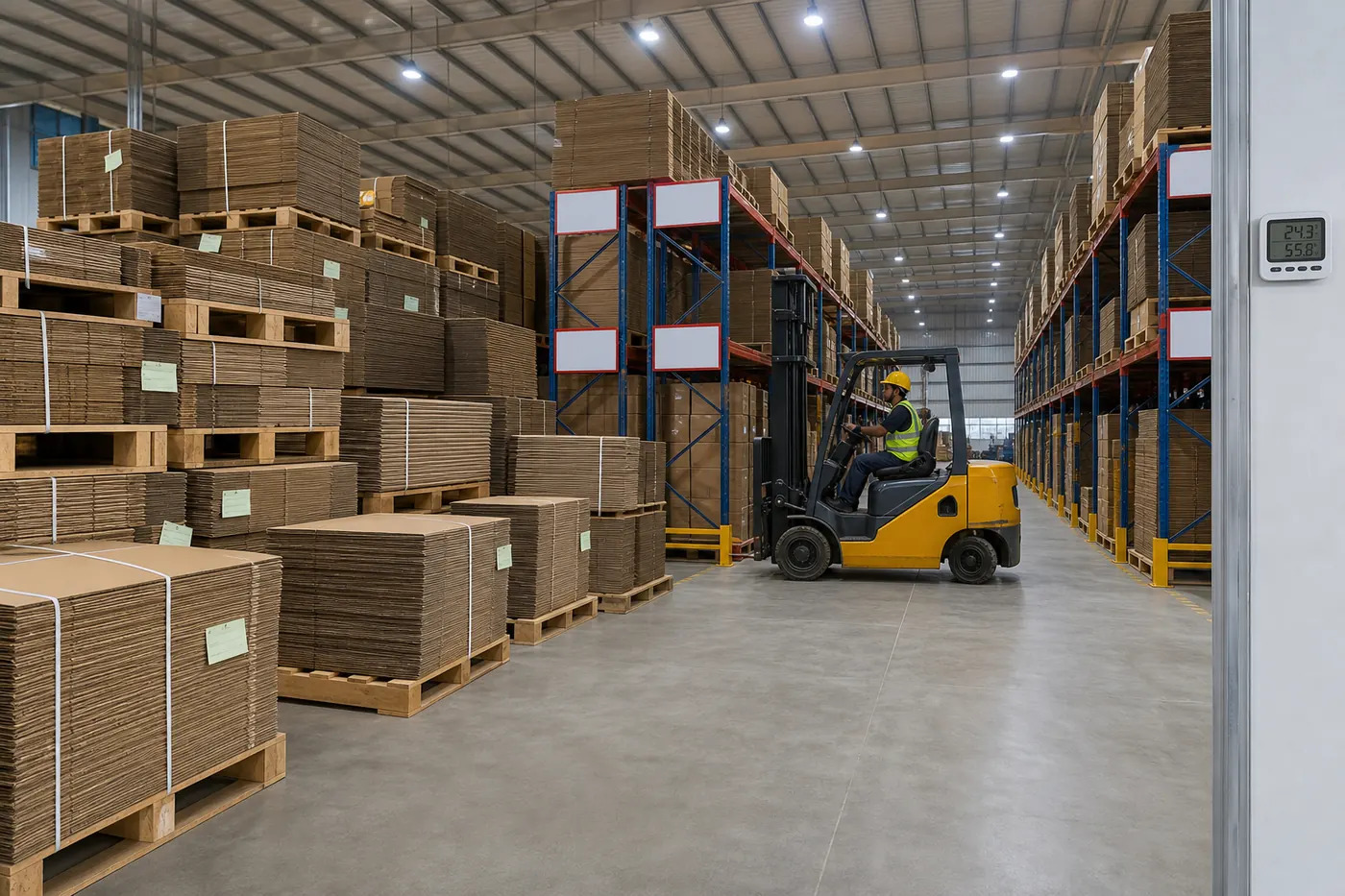
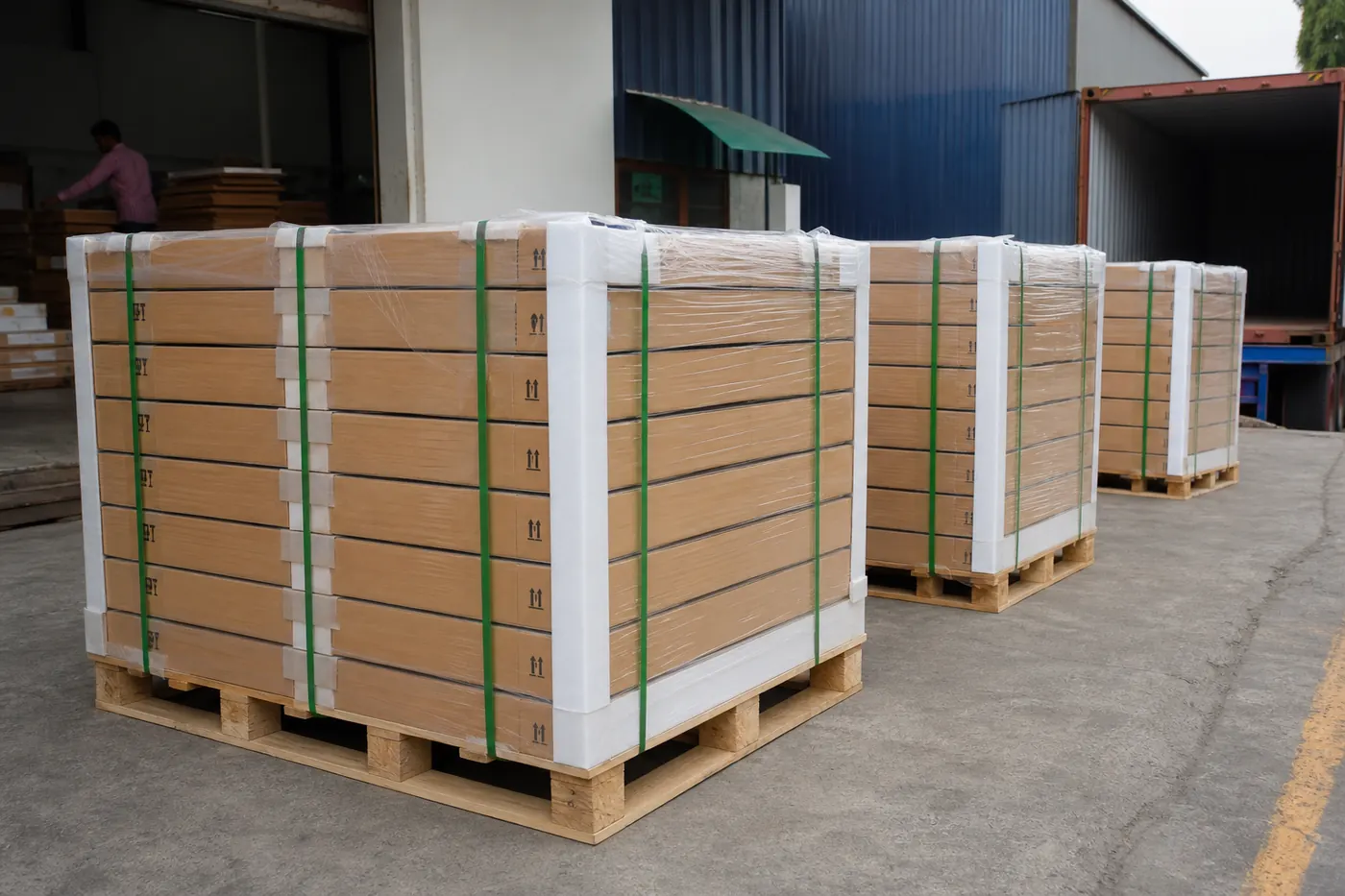
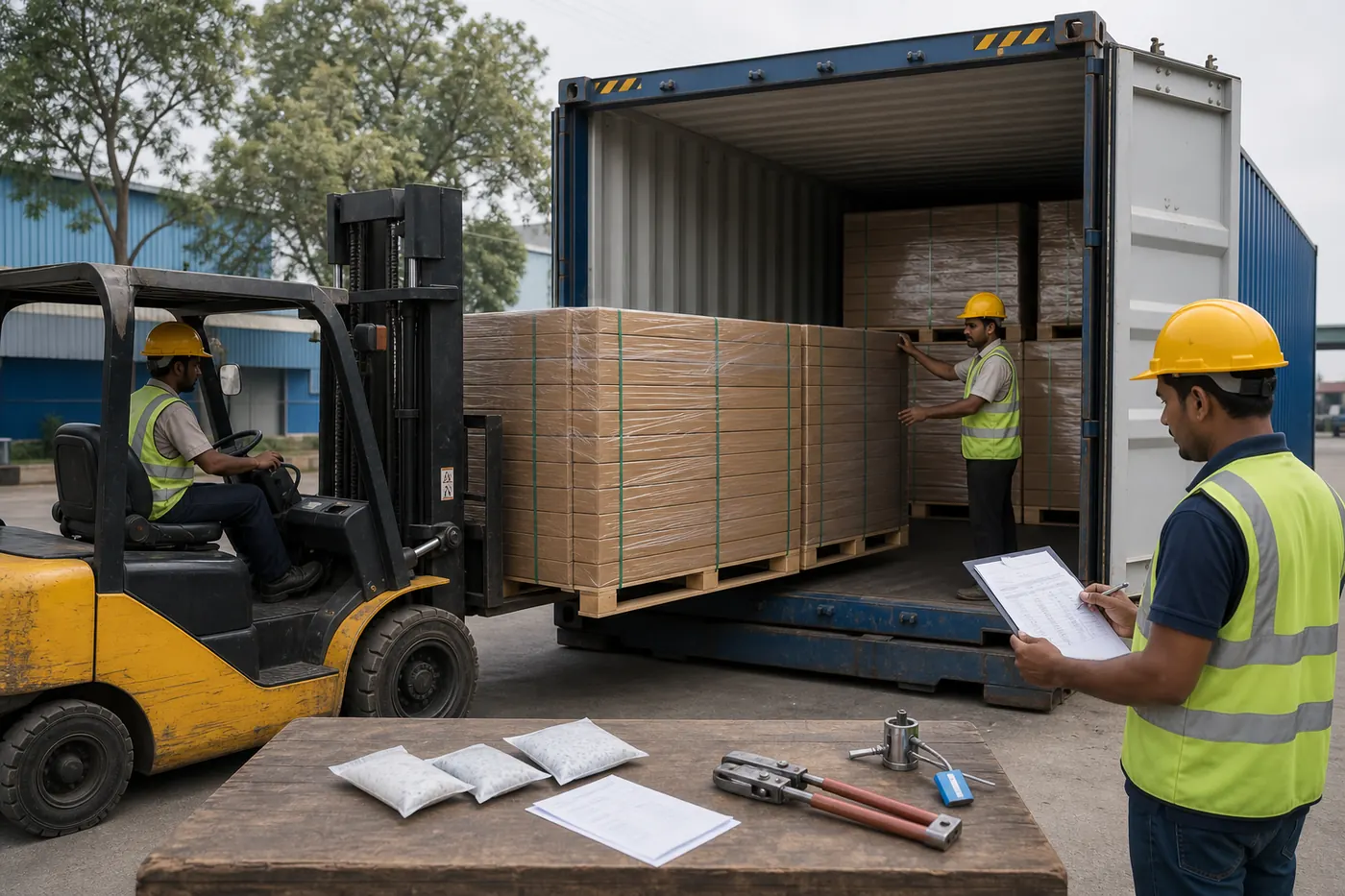
Converted boxes are generally supplied flat in counted, aligned bundles. The RFQ should define pieces per bundle, bundle dimensions and maximum weight, protective top/bottom sheets, straps or wrapping, pallet footprint, height, edge protection, moisture strategy and shipping marks. Packing changes landed cost because it changes both material expense and chargeable cube.
Do not allow strapping to crush flute edges. If pallets are used, specify stack pattern, overhang prohibition, compression protection and stretch-wrap requirements. ISPM 15 covers regulated raw or solid-wood packaging such as many pallets and dunnage; it does not apply to corrugated board and exempts qualifying processed-wood material. Confirm destination implementation for the wood packaging used. Corrugated pallet sheets or other non-wood solutions must still be validated for load and route.
Container Loading Details
Export Tip
Calculate loading from the approved bundle or pallet—not box dimensions. In a hypothetical floor-loaded plan, 250 bundles at 0.105 m³ consume 26.25 m³ before operational clearance. If each bundle contains 20 boxes, that equals 5,000 boxes.
This is a transparent arithmetic example, not a typical container capacity. Real capacity depends on external bundle dimensions, orientation, container condition, payload, door, bracing and stowage loss.
For a 40-foot high-cube scenario, do not simply double a 20-foot count. Pallet footprint, internal height, weight distribution and route limits can change utilization. Require a scale drawing or loading software output, final tally, container condition photos and seal record. Use the detailed container loading guide.
Illustrative loading inputs that must be replaced by measured production data.
Swipe →
Data table — swipe horizontally on small screens
| Loading input | Hypothetical value | Must be replaced by |
|---|---|---|
| Bundle cube | 0.105 m³ | Measured approved production bundle |
| Bundles | 250 | Final stowage plan and tally |
| Boxes/bundle | 20 | Approved packing specification |
| Total boxes | 5,000 | Packing list reconciliation |
| Planning cube | 26.25 m³ | Assigned container's usable cube |
Shipping Methods
Export Tip
FCL ocean shipping usually gives better control for commercial volumes. LCL may support pilots but adds handling, consolidation and humidity exposure. Air freight can be rational for structural samples, urgent trial lots or avoiding a larger launch delay, but empty-box cube often makes bulk air uneconomic. Request dated freight quotations with origin, destination, equipment, free time and surcharges.
Under EXW, the buyer bears extensive origin responsibility from the named seller location. FOB includes seller performance to loading aboard at the named Indian port under Incoterms 2020. CIF includes seller-arranged cost, freight and minimum cargo insurance to the named destination port, while risk transfers under the rule and destination charges remain to be understood. A landed-cost model extends beyond every Incoterm to duty, tax, port, broker and delivery.
EXW, FOB, CIF and Landed-Cost Scenarios
Use one quantity and specification across scenarios. The model below assumes 5,000 hypothetical 400 × 300 × 250 mm single-wall kraft, one-color RSCs at US$0.70 EXW, packed in 250 bundles. All additions are invented teaching inputs—not current market quotations.
Board performance and exact papers remain RFQ inputs. Tooling, proofs and tests are excluded; taxes are excluded because recoverability varies, and freight and duty are invented user-replaceable assumptions. Never use this table to approve a purchase order.
Illustrative cost bridge from an EXW product price to delivered landed cost.
Swipe →
Data table — swipe horizontally on small screens
| Scenario | Illustrative subtotal | Included at this stage | Still excluded |
|---|---|---|---|
| EXW | $3,500 | 5,000 boxes at $0.70 | Origin, freight and destination |
| FOB | $4,150 | EXW plus $650 origin/export | Freight, insurance and destination |
| CIF | $5,700 | FOB plus $1,550 freight/insurance | Duty and destination |
| Landed | $7,085 | CIF plus $285 modeled duty and $1,100 destination | Recoverable tax, if any |
| Delivered unit | $1.417/box | $7,085 divided by 5,000 | Replace every modeled input |
Certifications
Compliance Notes
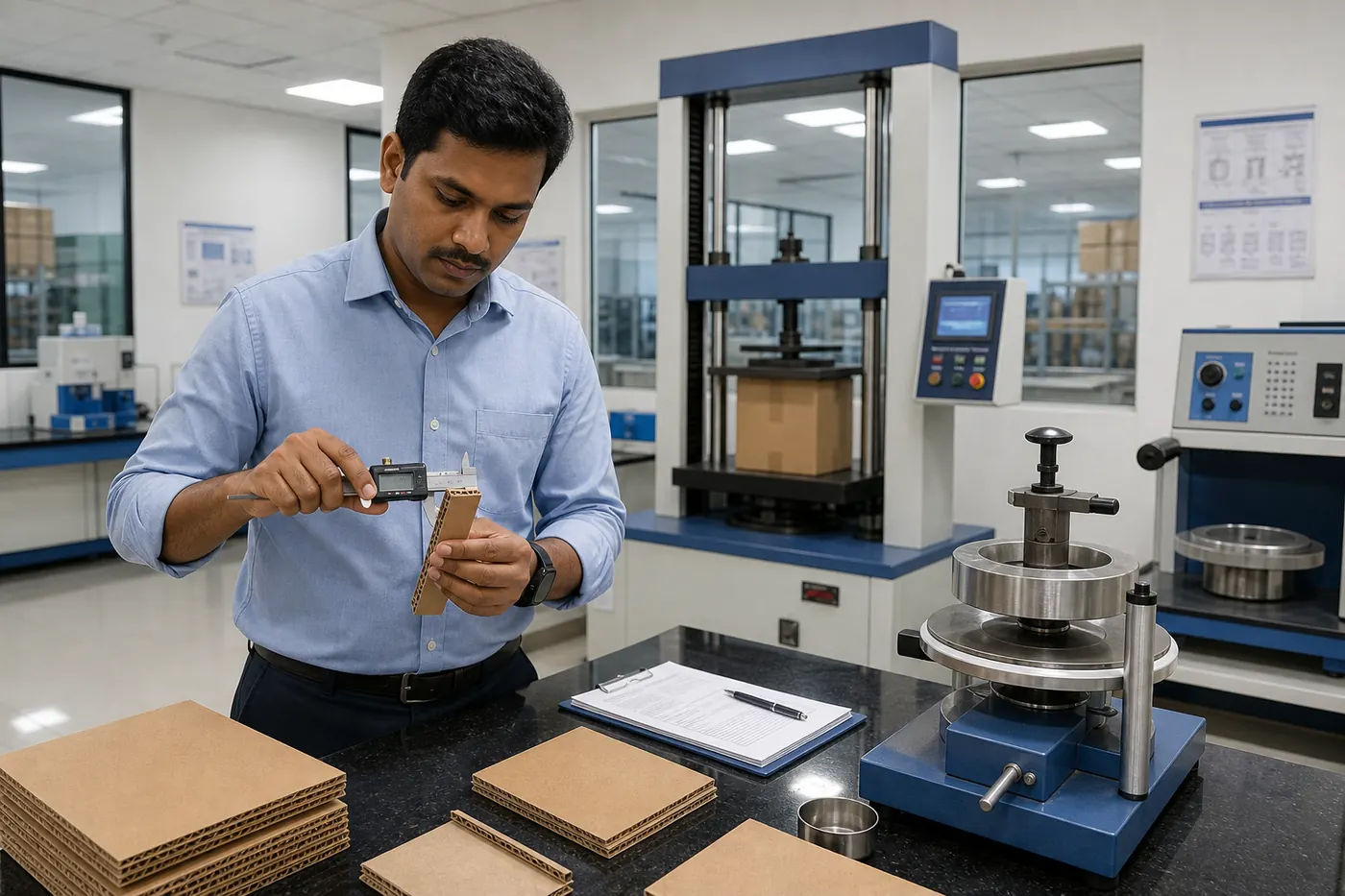
Certification cost belongs in the RFQ only when relevant. FEFCO codes describe box styles and FEFCO publishes methods; FEFCO is not certification. FSC or PEFC chain-of-custody claims require the contracted entity, product scope, transaction claim and logo use to align. FSC Mix is not 100% certified fibre, and FSC Recycled paper may include pre-consumer reclaimed fibre. ISO 9001 is voluntary management-system certification limited to its entity, site and scope—not product certification. BRCGS Packaging Materials Issue 7 audits started 28 April 2025; this voluntary site/process certification is neither a box-performance certificate nor food-contact approval.
ECT, burst, Cobb and BCT measure different properties and are not substitutes. Current cited ISO editions are ISO 3037:2022 for ECT, ISO 535:2023 for Cobb, ISO 2759:2014 for corrugated-board burst, ISO 12048:1994 for compression/stacking of complete filled transport packages, and ISO 187:2022 for conditioning. Require method, sample identity, conditioning, laboratory and acceptance limit. There is no universal food-grade box certificate: EU and U.S. food-contact assessments are component-, construction- and use-specific. RoHS does not generally regulate packaging as such; REACH duties are constituent- and article-specific.
Buyer Requirements
Buyer Requirements
The buyer should provide product weight and dimensions, packing pattern, stacking height, warehouse conditions, transport route, handling, target failure mode, internal dimensions, box style, board performance, print, closure, annual demand, order cadence, required evidence and destination. Supplier-designed alternatives should state effect on strength, cube, unit price and tooling.
Buyer requirement package and evidence needed before supplier award.
Swipe →
Data table — swipe horizontally on small screens
| Requirement package | Approval evidence |
|---|---|
| Commercial brief | Forecast, order cadence, currency and target delivery |
| Technical specification | Drawing, construction/performance and tolerances |
| Golden sample | Signed production-equivalent box and packed-product trial |
| Quality plan | Tests, sampling, defects and remedies |
| Logistics | Pack, load plan, Incoterm and named place |
| Compliance | Classification, claims, destination obligations and records |
Country-wise Opportunities
Market Snapshot
The table gives procurement hypotheses, not demand forecasts. A large importer may still be unsuitable for Indian boxes once freight is added. Validate bilateral flows, local competition, route, duty and buyer channel.
Country-level commercial signals and pricing priorities for Indian corrugated boxes.
Swipe →
Data table — swipe horizontally on small screens
| Market | Commercial signal | Pricing priority |
|---|---|---|
| United States | India's largest 2023 destination by value | Compare against local supply and long-route cube |
| United Arab Emirates | Second-largest listed India destination | Jebel Ali routing, heat/humidity and re-export |
| United Kingdom | Established India trade lane | Destination charges and packaging obligations |
| Netherlands/EU | Large importer reporter and distribution role | EU rules, port costs and onward delivery |
| Nepal | Near-market India advantage | Road freight, border process and moisture |
| Australia | Potential niche/consolidated programs | Long freight route and biosecurity for pallets |
Challenges & Solutions
- Paper prices move during quote validity: define validity, base paper assumptions and a transparent adjustment trigger.
- Suppliers quote different board: issue a common specification and list every deviation.
- A cheaper size performs poorly: approve internal dimensions with the packed product and required strength.
- Freight erases savings: obtain bundle cube and route quote before award.
- Tooling is charged twice: record ownership, life, storage, remake and repeat-order treatment.
- Duty is assumed incorrectly: confirm national tariff line, valuation, preference and current rate with the broker.
Expert Insights from Saurabh Mittal — Quote Discipline
Expert Insight Box
Sourcing Checklist
Checklist
- Define internal dimensions, style, flute, construction/performance and tolerances.
- State packed-product load, stacking, handling and route conditions.
- Issue one RFQ with quantity breaks, annual demand and SKU split.
- Evaluate the actual Indian manufacturer and subcontracted operations.
- Separate unit price, tooling, samples, tests, packing and logistics.
- Approve a production-equivalent sample and packed-product trial.
- Confirm bundle/pallet dimensions and prepare a load plan.
- Obtain dated forwarder, broker, duty, tax and destination-charge inputs.
- Contract quality evidence, inspection, remedies and documents.
- Reconcile final invoice, packing list, tally and transport document.
Buyer Checklist
Checklist
- [ ] Specification and drawing use one revision
- [ ] Quotes normalized to the same board and quantity
- [ ] Tooling ownership and repeat charges agreed
- [ ] Payment timing included in comparison
- [ ] Final bundle cube measured
- [ ] Duty and tax checked by destination broker
- [ ] Freight and destination fees dated
- [ ] Inspection and claims window contracted
Exporter Checklist
Checklist
- [ ] Indian IEC and applicable registrations active
- [ ] Factory route and paper sources disclosed
- [ ] Quote deviations and validity stated
- [ ] Golden sample and test plan controlled
- [ ] Commercial invoice and packing list reconcile
- [ ] Shipping bill classification reviewed
- [ ] Origin evidence prepared where required
- [ ] Container condition, tally and seal recorded
Compliance Checklist
Checklist
Compliance Notes
- [ ] HS 481910 suitability and national line confirmed
- [ ] Duty, valuation and preference reviewed
- [ ] Fiber/certification claims traceable
- [ ] Printing and chemical requirements assessed for intended use
- [ ] Packaging EPR and recycling obligations mapped
- [ ] Wood packaging meets ISPM 15 where applicable
- [ ] Records support declared origin and value
- [ ] Importer of record approves destination requirements
Common Buyer Mistakes
Common Mistakes Box
- Requesting a price with only length, width and “three-ply.”
- Comparing internal dimensions with another supplier's external dimensions.
- Treating paper grammage, ECT, burst and BCT as interchangeable.
- Ignoring blank yield and accepting a costly dimension without review.
- Mixing EXW, FOB and CIF offers in one price ranking.
- Omitting tooling, samples, testing, packing and bank cost.
- Using customs value per kilogram as a box quotation.
- Ordering a container quantity before validating performance.
- Assuming CIF includes destination clearance and delivery.
- Failing to update freight, duty and exchange rate before order release.
Expert Insights from Saurabh Mittal — Landed Value
Expert Insight Box
Future Market Trends
Key Statistics
Buyers are likely to demand more transparent paper assumptions, right-sized blank optimization, measured packaging cube, certified-fiber traceability and transaction-level carbon data. Digital quotation workflows can connect drawings, bill of materials, approval revisions, load plans and landed-cost updates. These are commercial directions to validate, not quantified forecasts.
Regulatory attention to packaging waste, recyclability claims and producer responsibility will make cost models broader. A lower material price can be offset by destination fees, poor recyclability design or reporting work. Regulation (EU) 2025/40 on packaging and packaging waste entered into force on 11 February 2025 and generally applies from 12 August 2026, with provision-specific later dates. Buyers should track PPWR implementation, national EPR schemes and claim rules with qualified local advisers.
Explore the Complete Corrugated Box Buyer Series
- Import corrugated boxes from India
- Evaluate corrugated box manufacturers
- Corrugated box types and specifications
- Corrugated box import markets
- Custom-printed corrugated boxes
- Corrugated box wholesale pricing
- Quality standards and certifications
- Sustainable corrugated packaging
- Export documentation
- Container loading and shipping
FAQs
The questions below summarize the RFQ, cost, MOQ, Incoterm and landed-cost decisions international buyers most often need to resolve. Each numerical example remains an indicative planning assumption and must be replaced by dated evidence for the specified corrugated box, Indian origin point and destination route.
Conclusion
A reliable India wholesale price comes from a controlled box definition, transparent quantity economics and a complete delivered-cost model. Normalize board, dimensions, yield, print, conversion, packing and terms; separate recurring and non-recurring costs; then update freight, duty, tax and destination charges immediately before award.
Send Altus Exports your drawing, internal dimensions, packed load, board/performance target, print, annual forecast, order cadence, destination and desired Incoterm. We can structure a comparable RFQ, coordinate qualified Indian supply, measure packing cube and build current EXW, FOB, CIF and landed scenarios. Request a corrugated-box pricing review.
References
- WITS/UN Comtrade — India HS 481910 exports by destination, 2023
- TrendEconomy — HS 481910 world imports and exports, 2023
- World Customs Organization — Harmonized System overview
- ICC — Incoterms rules
- IPPC — ISPM 15
- FSC — Chain of custody certification
- PEFC — Chain of custody
- European Commission — Packaging waste
- ISO — standards catalogue
- BRCGS — Packaging Materials Issue 7 launch and audit transition
- EUR-Lex — Regulation (EU) 2025/40
- ECHA — Candidate List substances in articles
Accessed July 17, 2026. Customs data are gross HS 481910 trade and not price quotations. All price, MOQ, lead-time, cost and loading scenarios are explicitly hypothetical and must be replaced with order-specific evidence.