
A Guide to EPCH Registration and Benefits for Handicraft Exporters
By Saurabh Mittal, Founder, Altus Exports
A complete guide to EPCH registration for handicraft exporters — what the Export Promotion Council for Handicrafts is, who should join, documents, DGFT application steps, membership fees, RCMC, IHGF Delhi Fair access, and how membership builds buyer trust. Written for manufacturers, MSMEs, merchant exporters, and export startups preparing to export handicrafts from India. Includes fee benchmarks, mistake checklists, council comparisons, and a Rajasthan case study with Altus Exports advisory context.
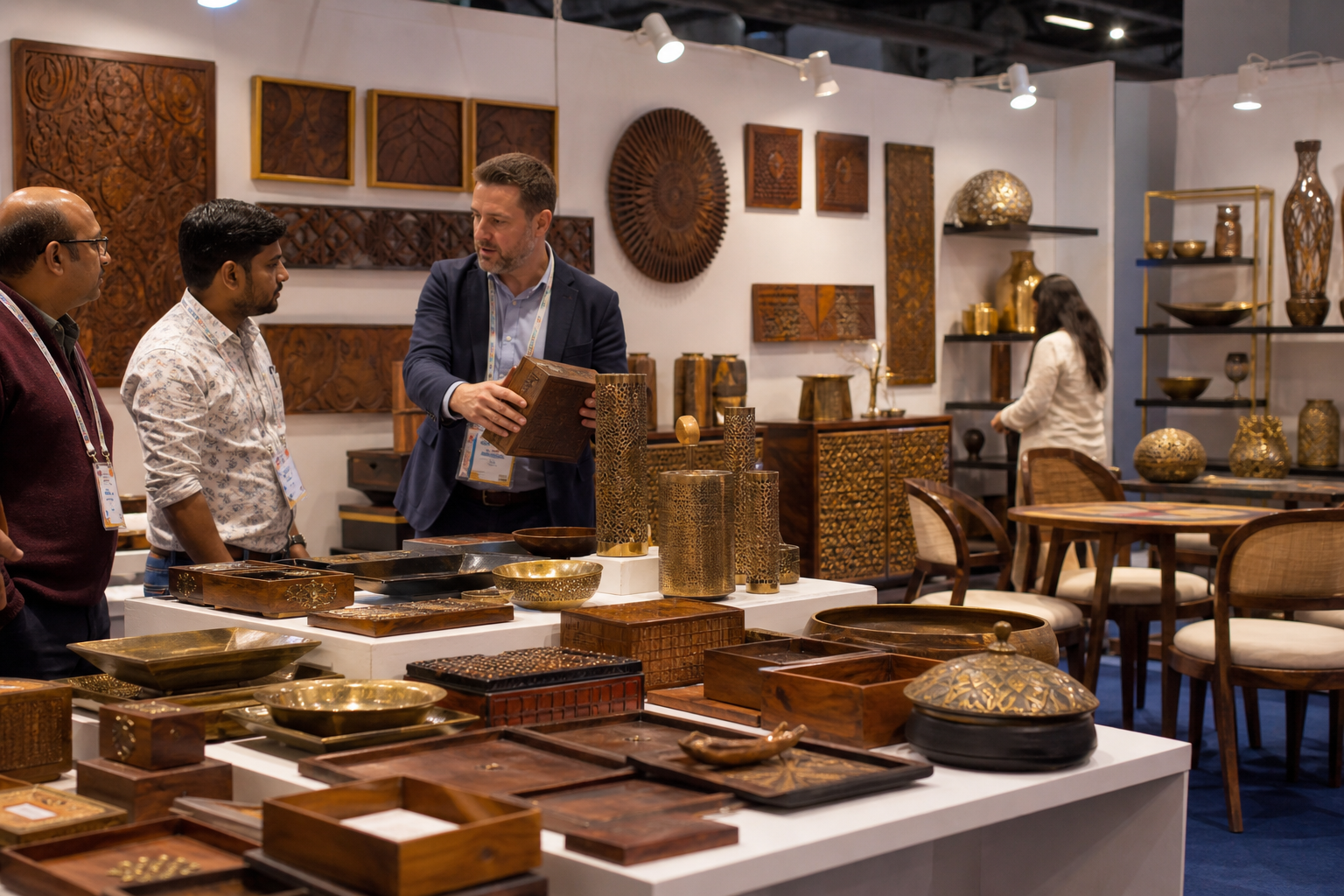
India's handicraft export industry depends on more than artisan skill. International buyers, trade fairs, and organised export channels expect exporters to operate inside recognised institutional frameworks. Export Promotion Councils sit at the centre of that system — linking manufacturers and merchant exporters to market intelligence, exhibitions, and Registration Cum Membership Certificate (RCMC) pathways under India's foreign trade architecture overseen by DGFT and the Ministry of Commerce.
For handicraft businesses, the Export Promotion Council for Handicrafts (EPCH) is the primary council. EPCH registration for handicraft exporters is one of the strongest credibility signals you can present during buyer onboarding, fair participation, and export documentation workflows. It does not replace IEC, GST, quality systems, or packaging discipline — but it multiplies the value of those foundations.
This guide explains what EPCH is, why membership matters, who should register, the step-by-step application process, documents, fees, buyer-access benefits, common mistakes, and how new exporters can use EPCH to accelerate growth. Pair it with How to Export Handicrafts from India and export certifications required from India for the full compliance stack. Always verify current fees and portal steps on epch.in and dgft.gov.in, because administrative workflows evolve.
Key Takeaways
Summary Box
- EPCH registration for handicraft exporters builds credibility, unlocks council exhibitions, and supports RCMC-linked export workflows.
- Obtain IEC first; new EPCH membership applications are commonly processed through the DGFT portal pathway linked to RCMC/membership filing.
- Enrollment-year fees are typically ₹7,500 + 18% GST (about ₹8,850); annual renewal is lower — confirm current figures on EPCH/DGFT portals.
- RCMC validity is commonly multi-year subject to timely annual membership renewal.
- The commercial ROI of EPCH comes from fair access, buyer meetings, and learning networks — not from the certificate alone.
- Altus Exports helps handicraft manufacturers and merchant exporters align registrations with buyer-ready export programmes for handicrafts & lifestyle products.
What Is EPCH?
EPCH stands for the Export Promotion Council for Handicrafts. It is the apex export promotion body for India's handicraft sector, working to expand overseas demand for handmade and craft-based products and to support exporters with market access tools. EPCH is recognised within India's export promotion ecosystem linked to the Ministry of Commerce framework and works alongside DGFT processes that exporters use for IEC and related registrations.
Historically and operationally, EPCH's purpose is practical: organise trade fairs such as IHGF Delhi Fair, facilitate buyer-seller interaction, publish market information, maintain exporter membership networks, and issue membership/RCMC documentation that buyers and institutions recognise. Services typically include membership support, exhibition participation frameworks, policy communication, and networking platforms that connect Indian handicraft exporters with international buyers.
For exporters, EPCH is both a credibility institution and a commercial channel. For buyers, an EPCH-linked exporter is easier to diligence than an unverified workshop with no council footprint. That dual role is why serious handicraft export programmes treat EPCH membership as early infrastructure — not a decorative certificate collected after the first inquiry arrives.

Why EPCH Registration Matters for Handicraft Exporters
Industry credibility is the first benefit. Membership signals that you operate inside the organised handicraft export community rather than as an anonymous domestic trader. Buyer trust improves when onboarding packs include IEC, GST, and EPCH/RCMC evidence together. Export support and market intelligence help MSMEs understand destination trends without building a full research desk.
Trade fair access is often the highest-ROI benefit — especially IHGF and related EPCH platforms where international buyers actively source. Government scheme awareness, networking with experienced exporters, and structured export growth support compound over years. Membership does not guarantee orders; it improves the probability that serious buyers will take your first conversation seriously.
Who Should Register with EPCH?
- Handicraft manufacturers with export ambition
- Merchant exporters consolidating artisan supply
- Export houses with handicraft lines
- MSMEs and startups with IEC + GST readiness
- Organised artisan groups/cooperatives meeting entity rules
- Home décor and gift exporters shipping handmade assortments
EPCH membership is relevant for handicraft manufacturers, merchant exporters, export houses, MSMEs, startups entering handmade exports, artisan producer groups organised as eligible business entities, home décor exporters, and gift product exporters whose product range falls under handicrafts. Eligibility generally requires engagement in the business of exporting handicrafts and a valid IEC, with entity documents matching the business structure (proprietorship, partnership, company, society/trust, etc.).
You can typically seek registration categories such as Merchant Exporter, Manufacturer Exporter, or Merchant-cum-Manufacturer Exporter depending on documents submitted. Manufacturer-exporter status usually requires MSME Udyam evidence plus a self-declaration linking NIC codes/products to handicraft manufacturing. If category preference is unclear, councils often default RCMC issuance toward merchant-exporter classification — so state your intended category clearly during application.
Benefits of EPCH Membership
Treat benefits as a commercial toolkit. The certificate opens doors; your samples, packaging, and response discipline close orders.
Comparison table
Swipe →
Data table — swipe horizontally on small screens
| Benefit | What You Gain | How to Use It |
|---|---|---|
| Access to international buyers | Buyer-seller meets and fair footfall | Prepare SKU sheets and MOQs before events |
| Trade fair participation | IHGF and related exhibition frameworks | Budget booth + samples + follow-up CRM |
| Export guidance | Process and market orientation | Pair with IEC/GST/document readiness |
| Market intelligence | Destination and category signals | Prioritise 1–2 markets, not ten |
| Policy updates | Scheme and procedural awareness | Assign one owner to track renewals/notices |
| Export promotion | Visibility inside council channels | Keep profile and product categories updated |
| Networking | Peer learning from active exporters | Ask process questions, not only buyer leads |
| Training programmes | Capability building for MSMEs | Send operations staff, not only owners |
| International exposure | Delegations and overseas platforms | Enter after sample and packing maturity |
| Brand credibility | Stronger buyer diligence outcomes | Attach membership/RCMC in onboarding packs |
EPCH Registration for Handicraft Exporters: Step-by-Step Process
Export Tip
The exact portal screens change over time, but the operating sequence below reflects the current organised pathway: IEC first, then membership/RCMC filing through the DGFT-linked process used for EPCH enrollment, with document sets matching your entity type. Confirm live instructions on EPCH and DGFT portals before payment.
Step 1: Obtain IEC
Apply for an Import Export Code on the DGFT portal if you do not already hold one. IEC is mandatory for commercial export and for serious council membership workflows. Keep PAN, bank, and address details consistent with GST records.
Step 2: Prepare Documentation
Assemble entity-specific documents: IEC copy, GST certificate, code of conduct on stamp paper, bank financial soundness certificate where required, partnership deed or incorporation papers, board resolution/authorised signatory proofs for companies, and MSME Udyam plus handicraft self-declaration for manufacturer-exporter category. Incomplete packs cause the majority of delays.
Step 3: Complete Membership Application
New member registrations are commonly filed through the DGFT portal using the applicant's DGFT login credentials, following the mandatory e-filing workflow for RCMC/membership related applications. Select the correct exporter category and product focus carefully.
Step 4: Submit Documents
Upload clear self-attested scans. Names, addresses, and signatory details must match IEC and GST. Mismatched spellings between deed, IEC, and application are a frequent rejection trigger.
Step 5: Pay Membership Fees
Pay the prescribed enrollment amount online as directed on the portal. Enrollment-year totals are typically published as entrance fee + annual membership + GST. Retain payment acknowledgements with your compliance file.
Step 6: Verification Process
Council/portal verification checks document completeness and eligibility. Respond quickly to deficiency queries. Quiet applications with unanswered queries age into avoidable delays.
Step 7: Membership Approval
On approval, retain membership/RCMC records digitally and in print. Diary annual renewal dates. RCMC is commonly issued for a multi-year validity window subject to yearly membership renewal — missing renewal can interrupt continuity even if the underlying certificate period has not fully expired.
Documents Required for EPCH Registration
Use this checklist as a preparation gate. Exact requirements vary by proprietorship, partnership, company, or society/trust — and by merchant vs manufacturer category.
Comparison table
Swipe →
Data table — swipe horizontally on small screens
| Document | Why it matters | Practical tip |
|---|---|---|
| IEC certificate | Proves export authority under DGFT | Self-attest; match legal name exactly |
| GST registration | Tax identity for commercial operations | Ensure address consistency with IEC |
| PAN | Entity tax identity | Must align with IEC applicant |
| Bank financial soundness certificate | Confirms banking relationship for the firm | Use the bank account reflected in IEC where required |
| Business registration proofs | Deed / incorporation / MoA-AoA as applicable | Notarise partnership deeds when required |
| Address proof | Establishes business location | Keep identical across GST and IEC |
| Cancelled cheque / bank proofs | Banking validation | Name must match entity |
| Photographs / signatory KYC | Identity of authorised persons | Use current authorised signatory only |
| Code of conduct on stamp paper | Mandatory membership undertaking | Print on minimum ₹10 stamp paper; sign correctly |
| MSME Udyam + handicraft self-declaration | Required for manufacturer-exporter category | Specify handicraft product categories clearly |
| Board resolution / director list / DIN (companies) | Authorises application and signatory | Keep resolutions dated and signed |
| Export House certificate (if applicable) | Status evidence for eligible applicants | Attach only if currently valid |
EPCH Membership Fees and Costs
As published by EPCH for membership cycles (April–March), enrollment-year fees are commonly structured as an entrance fee of ₹2,500 plus annual membership of ₹5,000, totalling ₹7,500 + 18% GST ≈ ₹8,850 payable during the year of enrollment. Annual renewal is commonly around ₹5,000 + 18% GST ≈ ₹5,900, with renewal windows typically tied to the financial-year calendar (due early in the year with a stated payment deadline). RCMC is commonly described as valid for five years subject to yearly membership renewal.
These figures are membership costs only. Trade-fair participation, booth design, sample production, travel, and logistics are separate investments and usually dwarf membership fees. ROI should be measured in qualified buyer meetings and repeat programmes, not in certificate possession. Always reconfirm live fee schedules on EPCH's membership pages before remitting payment.
Comparison table
Swipe →
Data table — swipe horizontally on small screens
| Cost item | Typical nature | Planning note |
|---|---|---|
| Enrollment (year 1) | Entrance + annual + GST | Budget ~₹8,850 unless portal shows updated amount |
| Annual renewal | Membership + GST | Diary April–June renewal discipline |
| Fair participation | Booth + deposits + extras | Often the largest annual market-access cost |
| Samples & catalogue | Product + photography | Required to convert fair leads |
| Travel/logistics | Domestic/international | Plan before peak fair seasons |
How EPCH Helps Exporters Find International Buyers
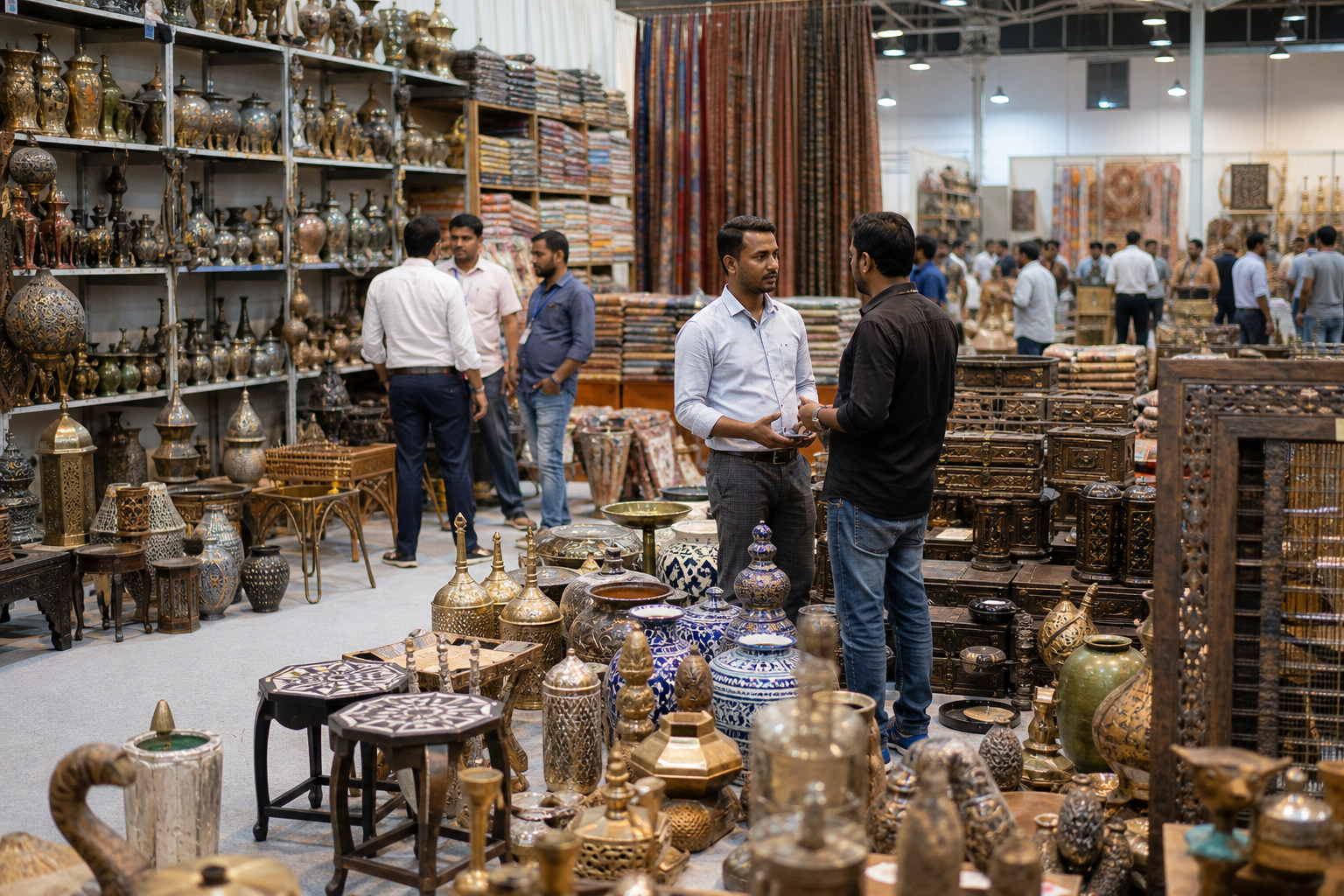
EPCH's buyer-access value is concentrated in structured platforms: buyer-seller meets, trade exhibitions, IHGF Delhi Fair, international delegations, market intelligence notes, exporter directories, and peer networking. A Jaipur metal décor MSME that joins EPCH but never attends a fair captures little value. The same MSME that prepares a focused assortment, trains booth staff, and follows up within 72 hours often converts membership into a pipeline.
Example pattern: a Saharanpur wood exporter uses IHGF to meet US and UAE importers, collects leads, then nurtures them with sample kits and landed-cost sheets. Directory listing and council visibility support inbound discovery, but outbound follow-up still decides outcomes. For non-fair channels that complement EPCH, see finding international buyers without trade shows and trade data for export buyers.
Is EPCH Registration Mandatory for Handicraft Exports?
Commercial export of goods from India requires IEC and customs-compliant documentation; EPCH membership is not a substitute for IEC. In practical handicraft trade, however, EPCH registration is often treated as near-essential for organised market access: fair participation frameworks, buyer confidence, and RCMC-linked processes in the handicraft category. Many serious international buyers ask for council membership evidence during vendor onboarding even when a shipment could technically move without it.
So the accurate answer is nuanced: not every legal shipment is impossible without EPCH, but building a durable handicraft export business without EPCH usually means slower buyer trust, weaker fair access, and missing category networks. For MSMEs targeting USA, UK, EU, UAE, and other major markets, registering early is the lower-risk path.
How EPCH Membership Improves International Buyer Confidence
Buyers diligence origin partners under time pressure. An onboarding pack that includes IEC, GSTIN, EPCH membership/RCMC, sample policy, and prior document specimens reduces perceived risk. Membership does not prove product quality — samples and inspections do — but it proves institutional presence. That distinction matters in email outreach where unknown suppliers are filtered quickly.
Confidence also rises when exporters speak the language of organised trade: lead times, Incoterms, packing standards, and certificate timelines. EPCH networks accelerate that learning curve. Pair membership with the operational habits in source handicrafts directly from India so credibility claims match shipment reality.
How New Exporters Can Use EPCH to Accelerate Growth
New exporters should sequence EPCH as part of a 90-day readiness plan: complete IEC/GST, register with EPCH, commercialise 5–10 hero SKUs, engineer export packaging, then book a fair or structured buyer outreach sprint. Use council training and peer conversations to avoid first-order documentation mistakes. Do not confuse membership approval with market readiness.
Acceleration comes from focused use: one primary destination market, one fair cycle, disciplined follow-up, and replenishment offers after the first trial. Merchant exporters and manufacturers can both benefit — manufacturers for credibility and fairs; merchant exporters for category positioning and consolidation narratives. See first 10 steps before starting exports and first export order in 90 days.
EPCH vs Other Export Promotion Councils
Choose councils by product category. Handicrafts map to EPCH; food/agri may involve APEDA; textiles may involve TEXPROCIL or other textile councils; engineering goods often map to EEPC; FIEO provides broader exporter federation support across sectors. Multi-category businesses may hold more than one relevant membership.
Comparison table
Swipe →
Data table — swipe horizontally on small screens
| Body | Primary focus | Typical user |
|---|---|---|
| EPCH | Handicrafts export promotion & fairs | Handmade décor, gifts, craft exporters |
| FIEO | Broad exporter federation/support | Cross-sector exporters seeking wider networks |
| APEDA | Agricultural & processed food products | Food/agri exporters (not handicraft core) |
| TEXPROCIL | Cotton textiles promotion | Textile exporters in relevant segments |
| EEPC India | Engineering export promotion | Engineering goods exporters |
Common Mistakes Exporters Make During EPCH Registration
Common Mistakes Box
- Applying without IEC — Solution: finish DGFT IEC before membership filing.
- Name mismatches across IEC, GST, and deed — Solution: harmonise legal names first.
- Wrong exporter category selected — Solution: choose merchant/manufacturer deliberately with evidence.
- Missing code of conduct stamp paper — Solution: execute on required stamp paper with correct signatory.
- Weak manufacturer proof for manufacturer-exporter RCMC — Solution: Udyam + explicit handicraft self-declaration.
- Blurry/incomplete uploads — Solution: clear PDFs; check every page.
- Ignoring deficiency emails — Solution: 24–48h response ownership.
- Treating membership as the entire export plan — Solution: parallel sample and packaging readiness.
- Skipping annual renewal — Solution: calendar reminders before due dates.
- Paying fair fees with no follow-up system — Solution: CRM + 72-hour lead cadence.
- Listing every product under the sun — Solution: focus categories you can actually supply.
- Assuming fees never change — Solution: verify live EPCH/DGFT fee schedule each cycle.
Case Study: Rajasthan Handicraft Manufacturer Using EPCH for Buyer Access
Background: A Jaipur-based metal and textile handicraft MSME sold domestically and wanted export inquiries without hiring an overseas sales team.
Registration process: Completed IEC and GST alignment, filed EPCH membership through the DGFT-linked pathway, submitted manufacturer evidence with Udyam and handicraft declaration, and paid enrollment fees.
Challenges: First application returned for a signatory mismatch between board authorisation and IEC; corrected in one week.
Trade fair participation: Booked an IHGF-linked participation cycle with a narrow lantern and brass décor assortment, trained two staff on MOQ and lead-time scripts, and prepared bilingual capability sheets.
Results: 38 qualified buyer conversations; 6 sample requests; 2 trial orders (UAE and UK) within four months; EPCH membership cited by buyers during onboarding.
Lessons learned: Registration unlocked the room; preparation converted the room into orders. Membership without sample discipline would have produced only visiting cards.
Future Role of EPCH in Indian Handicraft Exports
Through 2030, EPCH's relevance will increasingly include digital membership services, virtual or hybrid buyer engagement, data-assisted market selection, and sustainability-linked promotion as global retailers demand evidence-based craft supply chains. AI-powered buyer discovery will complement — not replace — fair-based trust building. Export market diversification beyond traditional destinations will need council intelligence and exhibitor readiness.
Exporters who treat EPCH as a living growth channel — renewing on time, updating profiles, and participating with professional assortments — will outperform those who file once and forget. Digital transformation rewards members who can present clean catalogues, compliance packs, and responsive commercial processes.

Conclusion
- Do next: Confirm live fees/process on EPCH and DGFT portals, then file with a complete pack.
- Read how to export handicrafts from India, the handicraft export documentation checklist, trade shows for handicraft exporters, find international buyers, top handicraft products, most demanded by country, sustainable handicraft exports, and best countries for Indian handicraft exports.
- Explore merchant exporter and export products from India partnership models.
EPCH registration for handicraft exporters is foundational market-access infrastructure: credibility, fair pathways, RCMC continuity, and a learning network that shortens the path from first inquiry to repeat shipment. The key takeaways are simple — secure IEC first, file complete documents, budget membership plus fair participation, and use buyer platforms with sales discipline.
Actionable next steps: verify your IEC/GST consistency this week, assemble the document checklist, complete EPCH membership filing, diary renewal dates, and plan one fair or buyer-meet cycle with a hero assortment. Altus Exports supports handicraft manufacturers and merchant exporters who need registrations aligned to real export execution — not certificates without shipments.