
Indian Handicrafts Buyers Want in the USA, UK, UAE and Europe
By Saurabh Mittal, Founder, Altus Exports
A market intelligence guide to the Indian handicrafts buyers want across the USA, UK, UAE, and Europe — including Germany, France, and the Netherlands. Compare product demand, price sensitivity, sustainability expectations, and buyer types so manufacturers and exporters can prioritise SKUs, adapt design and packaging, and win repeat programmes. Includes category outlooks, retail-chain criteria, 2026 preference shifts, and a USA–UAE adaptation case study from Altus Exports.

Global demand for handmade products continues to rise as retailers, e-commerce brands, and hospitality buyers look for differentiation that mass-produced décor cannot deliver. Indian handicrafts remain popular because they combine artisan techniques with competitive landed cost and deep category range — wood, brass, metal artware, textiles, jute, bamboo, marble, and gift assortments. Yet the products that convert in Texas wholesale do not automatically convert in Berlin eco-retail or Dubai hospitality procurement.
Buyer preferences vary by country because channels, taste, compliance, and price sensitivity differ. That is why market-specific export strategies outperform one-catalogue-for-all shipping. This guide maps what Indian handicrafts buyers want in the USA, UK, UAE, and key European markets, then translates those preferences into product, packaging, and go-to-market actions for manufacturers, MSMEs, and merchant exporters.
Use it alongside best countries for Indian handicraft exports, top handicraft products exported from India, and how to export handicrafts from India. Demand signals should be validated with EPCH market platforms, DGFT trade context, FIEO networks, Ministry of Commerce updates, and ITC Trade Map HS-code trends for your exact SKUs.
Key Takeaways
Summary Box
- Indian handicrafts buyers want different mixes by market: USA volume décor and seasonal gifts; UK design and ethical stories; EU sustainability evidence; UAE statement hospitality and gifting.
- Exporters win by adapting finish, scale, packaging, and MOQ — not by cloning one assortment worldwide.
- Highest near-term potential often sits in wood, brass/metal artware, handmade textiles, jute/bamboo eco lines, and curated gifts.
- Sustainability is now a purchase filter in Germany, Nordics-adjacent EU retail, UK private label, and premium Australia/Canada niches.
- Retail chains evaluate suppliers on consistency, documentation, and replenishment — craftsmanship alone is not enough.
- Altus Exports helps align handicrafts & lifestyle assortments to destination demand for buyers and Indian exporters.
Why Indian Handicrafts Continue to Gain Global Popularity
Authenticity and artisan craftsmanship remain the core demand drivers. Buyers want products with origin stories that photograph well and justify shelf differentiation. Customization lets private-label brands lock exclusive finishes. Sustainability narratives around jute, bamboo, natural textiles, and responsible wood resonate when evidence exists. Unique cultural appeal — block prints, brass casting, wood carving, inlay — creates assortment depth few origins match under one sourcing geography.
Handmade product markets are growing not because buyers reject scale, but because they reject sameness. The exporters who gain share are those who preserve craft character while meeting commercial tolerances on dimensions, colour lots, and carton integrity. World Bank logistics realities and freight costs still matter; beautiful goods that arrive damaged do not build categories.
Understanding International Buyer Behavior
Not all "buyers" purchase the same way. Retail buyers prioritise planogram fit, barcode readiness, and sell-through. Importers and wholesalers prioritise landed cost, mixed-container flexibility, and replenishment reliability. E-commerce brands prioritise imagery, low return rates, and compact packaging. Interior designers and hospitality buyers prioritise statement scale, finish durability, and project timelines. Gift companies prioritise seasonal calendars and ready-to-gift presentation. Corporate buyers prioritise branding, packaging, and delivery windows.
Purchasing decisions are influenced by trend cycles, compliance rules, payment terms, MOQ practicality, and supplier communication speed. A supplier who answers with specs in 24 hours often beats a cheaper supplier who responds in two weeks. Behaviour also differs by market culture: US buyers may move faster on trials; German buyers may demand deeper documentation before sampling; UAE buyers may prioritise visual impact and speed.
What Indian Handicrafts Buyers Want in the USA
- Hot categories: wooden trays/décor, metal artware, wall accents, seasonal gifts, private-label textiles
- Watch-outs: colour variation, weak cartons, slow sample revisions, missing replenishment plans
- Channel tip: design for both wholesale cube efficiency and e-comm return risk
- Commercial tip: offer 2–3 finish families max per form factor to protect QC bandwidth
US demand concentrates on home décor, wooden handicrafts, farmhouse and transitional looks, wall art, seasonal gifts, and increasingly eco-friendly SKUs that still meet retail consistency. Private-label opportunities are strong for mid-size retailers and online brands seeking exclusive finishes. Pricing expectations are competitive but not always lowest-cost — buyers will pay for reliability and packaging that survives parcel and ocean handling. Chargebacks and return rates quietly decide whether a first container becomes a programme.
Distribution channels include importers, big wholesale, specialty retail, Amazon-adjacent brands, and hospitality programmes. Buyer preferences favour clear MOQs, replenishment calendars, and SKU rationalisation after the first season. Colour stories and seasonal drops matter more than in many EU channels. Exporters should lead with hero wood and metal assortments, then expand textiles and gifts once sell-through is proven. Document barcode placement, carton markings, and inner packing early — US retail operations treat these as product features, not afterthoughts. For process detail, see source handicrafts directly from India.
What Handicraft Buyers in the UK Want
UK buyers lean toward handmade gifts, sustainable and ethically positioned products, decorative accessories, craft-led home décor, and curated collections with coherent design language. Consumer trends reward provenance stories and responsible materials when claims are credible. Private label is active among indie retail and online home brands that need exclusivity without building Indian buying offices.
Expectations include accurate labelling, tidy packaging presentation, and suppliers who understand post-Brexit documentation realities. Price sensitivity is real, but design quality can defend margin when samples match bulk. Lead with textiles, refined wood accents, and gift-ready sets rather than oversized statement metal alone. UK buyers often ask earlier about ethical sourcing narratives and packaging waste than volume-first Gulf wholesale. A clean capability sheet with materials, MOQs, and lead times outperforms a 200-SKU PDF dump.
What Buyers Across Europe Want
Europe is not one market. Quality standards and sustainability expectations are generally higher than volume-first wholesale channels, but taste and category mix shift by country. Exporters who treat "Europe" as a single RFQ usually under-specify labelling and over-promise eco claims. Use country briefs, then consolidate shipping through distributors where it improves landed economics — especially via Netherlands-based partners.
Germany
Strong demand for eco materials (jute, bamboo, natural textiles), durable finishes, and precise specifications. Price sensitivity is moderate when quality is proven; greenwashing is punished. Buyers expect punctuality and clean documentation.
France
Design-sensitive demand for decorative accessories, artisan gifts, and stylish home accents. Presentation and finish aesthetics matter. Collections outperform random SKU lists.
Netherlands
Gateway distributor market for mixed décor and eco lines serving wider EU networks. Buyers value logistical reliability and clean design. Good partner market for exporters seeking EU reach through importers.
Italy and Spain
Italy rewards design craftsmanship and refined décor accents; Spain offers opportunities in decorative gifts and lifestyle accessories with style-led assortments. Both markets expect finish quality and coherent collections more than pure commodity pricing.
What Handicraft Buyers in the UAE Want
UAE demand is strong in luxury and premium gifting, hospitality décor, corporate gifts, statement home décor, and seasonal programmes around Ramadan and festive calendars. Traditional–modern fusion pieces perform when finishes feel premium and scale suits lobbies, villas, and gift retail. Custom branding opportunities are meaningful for corporate and hospitality buyers who need logo packaging and delivery windows tied to events.
Buyers often move faster than EU retail but remain intolerant of poor packing on metal and glass-adjacent décor. Visual impact, speed, and flexible mixed assortments matter. Negotiation can be sharp on unit price, so protect margin with clear inclusions — packing, inspection, and documentation should not be silent assumptions. Saudi Arabia shares hospitality and gifting patterns with rising project demand — useful as a paired Gulf strategy. See country sequencing in our best export markets guide.
Indian Handicrafts Buyers Want: Most Demanded Products by Market
Market Snapshot
Use this directional comparison to prioritise development. Validate with your HS codes, EPCH fair feedback, and current buyer briefs. Demand level here reflects commercial intensity for typical Indian handicraft exporters — not a promise that every SKU will sell.
Comparison table
Swipe →
Data table — swipe horizontally on small screens
| Country | Top Product Categories | Demand | Price Sensitivity | Growth | Buyer Type |
|---|---|---|---|---|---|
| USA | Wood, metal artware, wall décor, seasonal gifts, textiles | Very High | Medium | High | Importers, wholesale, e-comm, retail |
| UK | Handmade gifts, textiles, sustainable décor accents | High | Medium | High | Indie retail, private label, importers |
| Germany | Jute, bamboo, eco textiles, quality wood | High | Low–Medium | High | Eco retail, importers |
| France | Decorative accessories, artisan gifts, décor | Medium–High | Medium | Medium–High | Design buyers, importers |
| Netherlands | Mixed décor, eco lines, textiles | High | Medium | High | EU distributors/importers |
| UAE | Metal décor, lanterns, premium gifts, hospitality | High | Medium–High | High | Wholesale, hospitality, retail |
| Saudi Arabia | Gifts, metalware, hospitality décor | Medium–High | Medium–High | High | Importers, projects |
| Australia | Eco wood/textile/jute/bamboo | Medium | Low–Medium | Medium–High | Premium indie + importers |
| Canada | Wood, textiles, gifts | Medium–High | Medium | Medium–High | Importers, retail |
Top Indian Handicraft Categories with Strong Export Demand
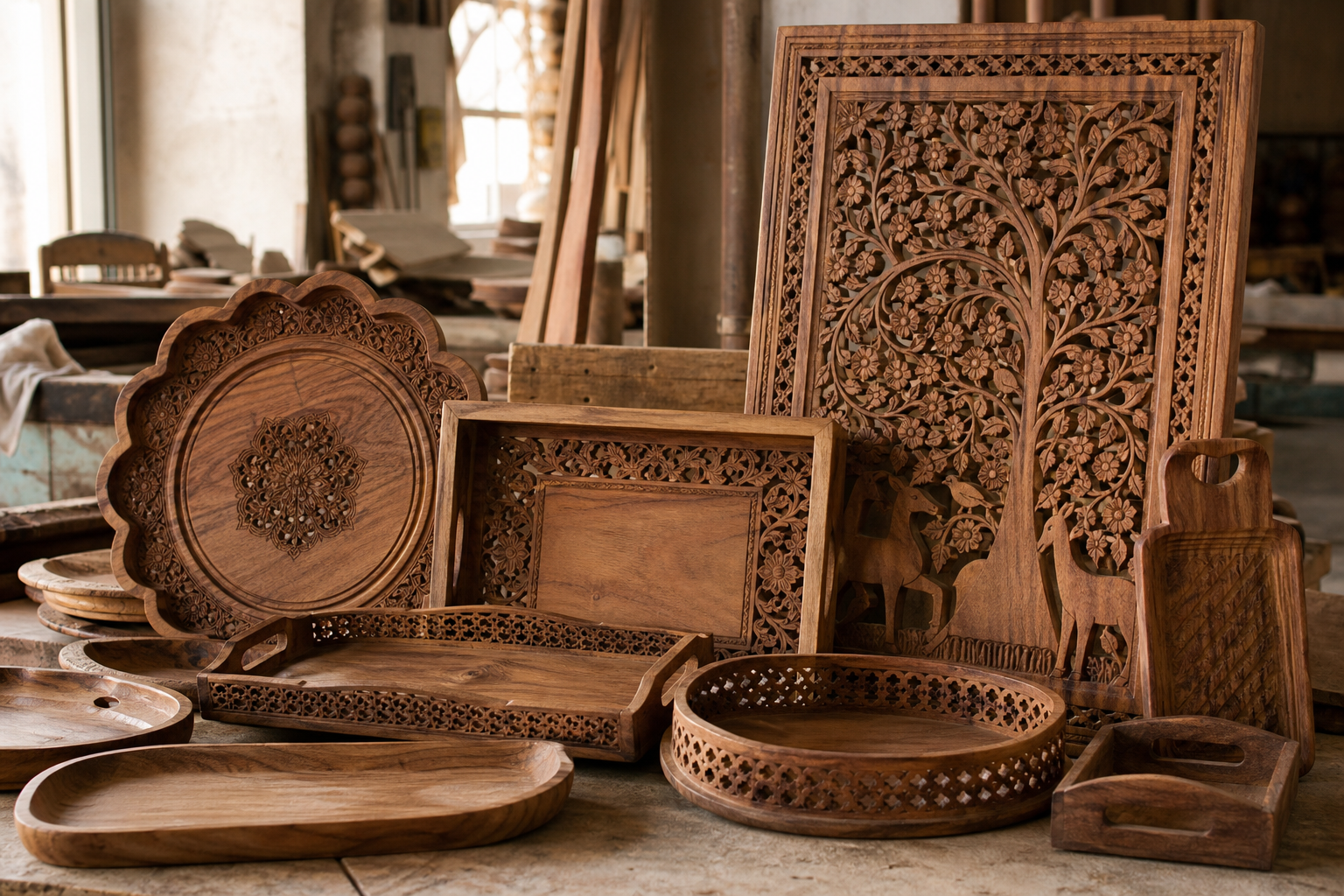
Wooden handicrafts
Demand: High in USA, UK, Australia, Canada. Buyers: home décor retail and e-comm. Potential: Strong if moisture and packing controlled. Outlook: Stable–rising for retail-ready accents.
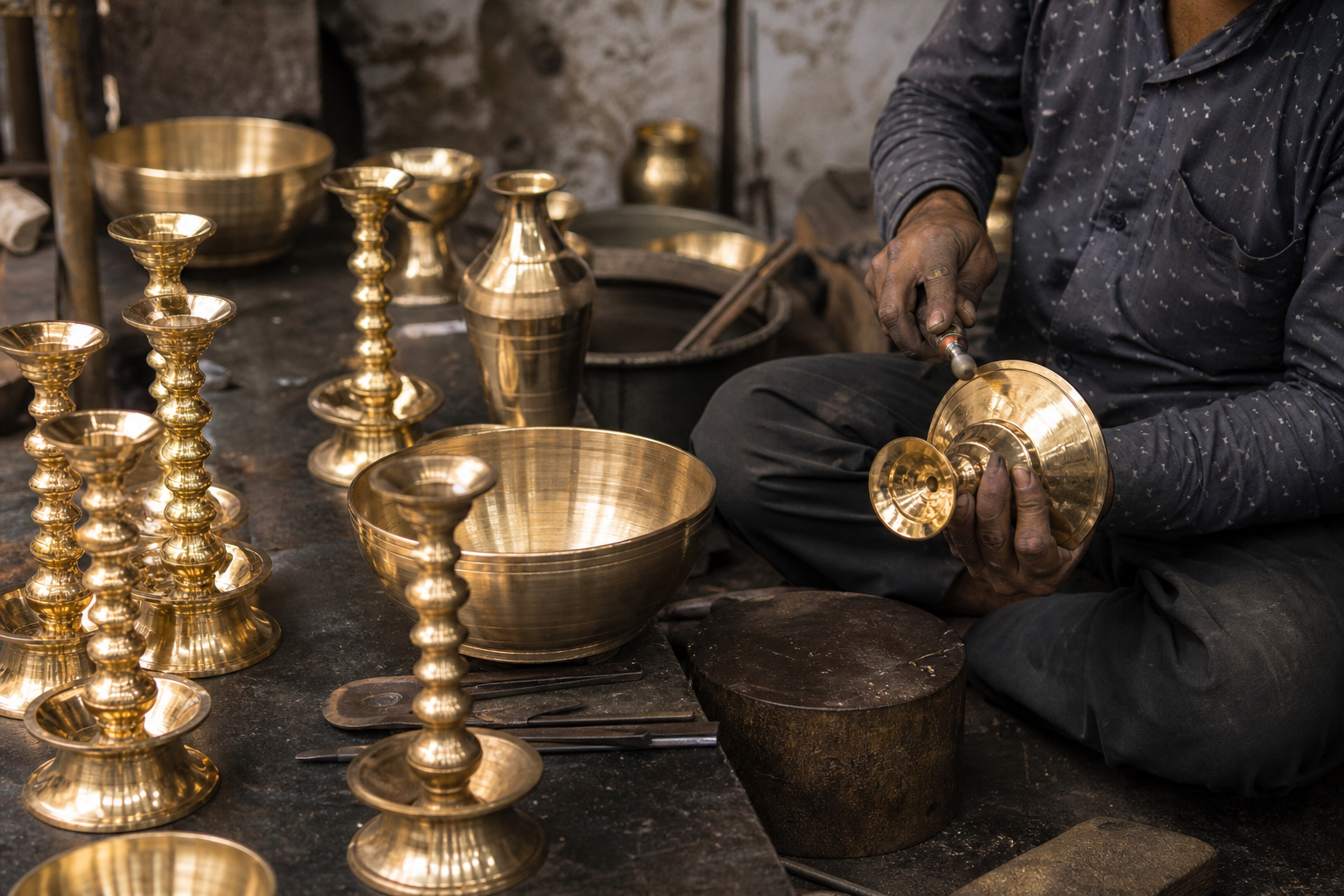
Metal artware and brass products
Demand: High in USA and Gulf; solid in UK/EU design niches. Buyers: wholesale, hospitality, gift. Potential: Excellent for statement and seasonal lines. Outlook: Strong with finish consistency.
Marble crafts
Demand: Premium niche in USA, Middle East, Europe. Buyers: gift and luxury décor. Potential: High margin, freight-sensitive. Outlook: Steady for contemporary inlay.
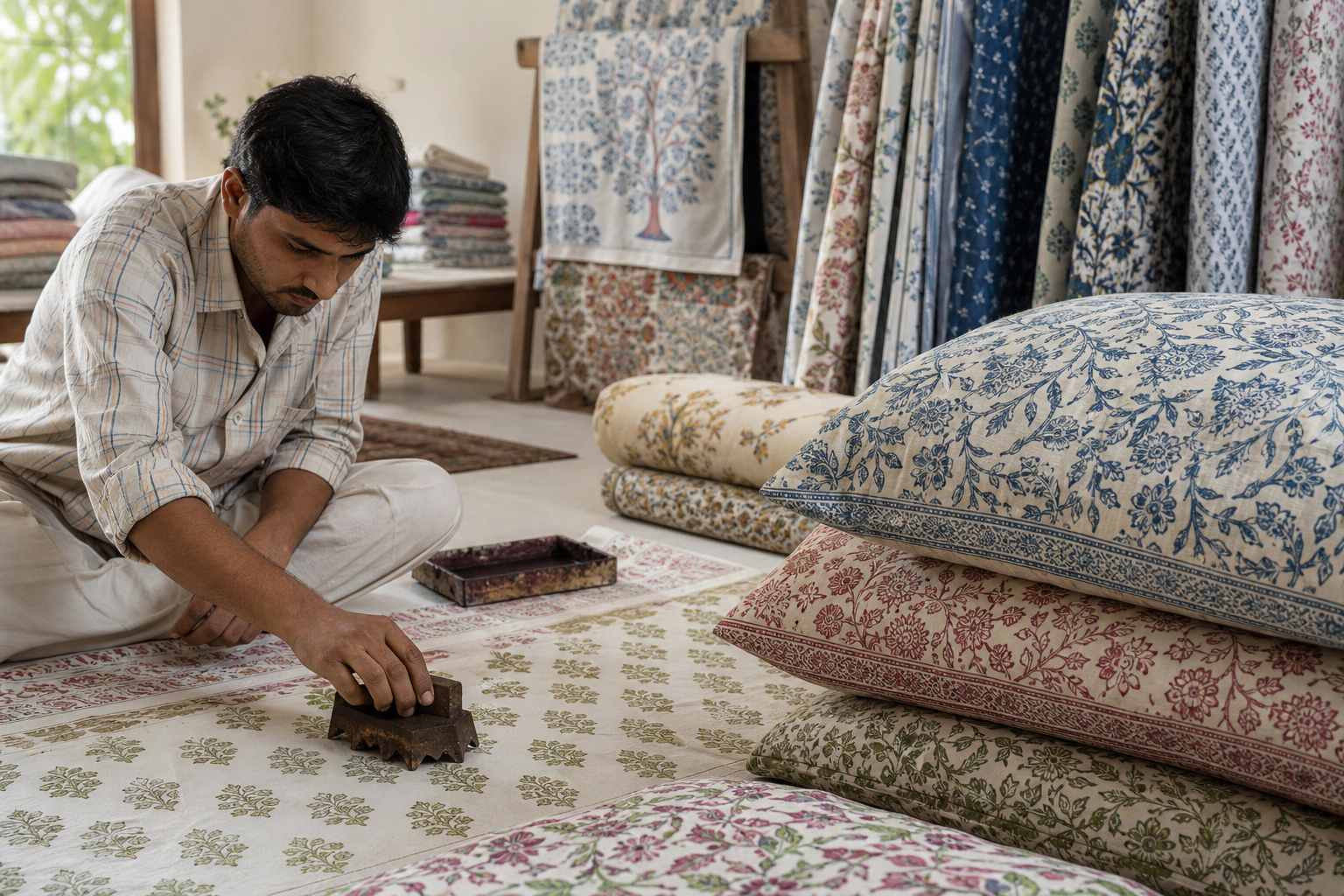
Handwoven textiles
Demand: High in UK/EU/USA soft furnishings. Buyers: private label and retail. Potential: Strong with colour-lot control. Outlook: Rising for ethical/natural stories.
Jute and bamboo products
Demand: High in Germany and broader EU; growing in USA/Australia. Buyers: eco retail. Potential: Among strongest sustainability plays. Outlook: High through 2030.
Terracotta, decorative gifts, sustainable handicrafts
Demand: Terracotta moderate with packing risk; gifts high seasonally in USA/Gulf; sustainable cross-category rising everywhere developed retail operates. Outlook: Best when positioned as programmes, not one-off souvenirs.
Which Indian Handicrafts Have the Highest Export Potential?
Highest export potential in 2026 clusters around retail-ready wooden décor, brass/metal artware, handmade textiles for private label, jute and bamboo eco organisers, and curated gift sets for USA and Gulf calendars. Potential is not the same as ease: rugs and marble can be high value but slower and more technical. Exporters should score potential by (1) cluster capability, (2) packaging maturity, (3) destination compliance fit, and (4) repeat-programme likelihood.
If you can only commercialise three hero lines this year, choose one wood, one metal, and one textile or eco-fibre SKU family matched to a primary market. Breadth without depth creates fair interest and zero replenishment.
What International Retail Chains Look for in Indian Suppliers
Retail chains evaluate more than craft beauty. They look for consistent quality systems, scalable capacity, ethical and social compliance questionnaires, on-time shipment history, barcode/labelling discipline, packaging that survives DC handling, and responsive issue resolution. Documentation packs — invoice accuracy, packing lists, certificates — are part of supplier scorecards.
Chains also test communication: can you lock a tech pack, run a revision cycle, and hold the approved sample in bulk? Exporters who prepare factory profiles, EPCH membership evidence, and inspection willingness clear vendor onboarding faster. See what buyers look for in an Indian supplier and supplier verification.
How Buyer Preferences Are Changing in 2026
In 2026, buyers are narrowing assortments, demanding faster sample cycles, and asking harder questions about materials and packaging waste. Private label exclusivity is rising. AI-assisted supplier discovery rewards exporters with clear digital catalogues and verifiable credentials. Hospitality recovery and Gulf project demand support statement metal and décor. EU buyers continue shifting toward evidenced sustainability rather than vague "eco handmade" claims.
Price pressure remains, but total cost of poor quality is more visible in retail dashboards. Suppliers who reduce claims and returns win renewals even at slightly higher FOB.
Why Sustainability Is Influencing Buyer Decisions
Eco-friendly materials, ethical sourcing narratives, artisan livelihood stories, recyclable packaging, and carbon-conscious procurement policies increasingly shape RFQs in developed markets. Germany, UK private label, Netherlands distributors, and premium Australian buyers are especially strict about claim substantiation. USA demand for eco SKUs is growing but still shares shelf space with trend-led farmhouse and seasonal décor.
Exporters should treat sustainability as a specification: material declarations, dye/finish disclosures, packaging composition, and traceable workshop practices. EPCH and Ministry of Commerce promotion channels help visibility; evidence wins the PO.
How Exporters Can Adapt Products for Different Markets
Adaptation spans design (scale, colour, motif intensity), packaging (retail vs hospitality vs e-comm), labelling (fibre, origin, warnings), compliance (destination rules), customisation and private labeling, MOQ strategy (trial vs programme), and pricing (landed-cost logic by duty and freight). A UAE lantern may need larger scale and premium antique finish; a German jute organiser needs clean construction and plastic-light packing; a US wooden tray needs farmhouse-friendly stain and barcode-ready cartons.
Build a market matrix for your top 10 SKUs before the next fair. Columns should include primary channel, finish standard, carton spec, label set, MOQ, and target FOB/landed band. If a SKU cannot be adapted without destroying margin or quality, do not force it into that market. Shared base forms with market-specific finishing lines usually beat fully separate product development. For registration and buyer-access infrastructure, complete EPCH registration early so fair cycles are not blocked by paperwork.
Case Study: Adapting One Assortment for USA and UAE Buyers
Business goal: A Moradabad–Jaipur linked exporter wanted to grow metal and wood décor without running identical catalogues in every market.
Market research: Compared US wholesale sell-through patterns (compact wood/metal sets, seasonal colourways) with UAE hospitality briefs (larger lanterns, statement brass, gift packaging). Used fair notes, importer calls, and ITC-oriented category checks to confirm direction before tooling new finishes.
Product changes: Created two finish families from shared base forms — matte farmhouse for USA; antique premium for UAE — plus market-specific carton inserts and MOQs. Separated packing SOPs so nested metal scratch standards matched each channel's claim tolerance.
Buyer acquisition: US importer via trade data + LinkedIn; UAE wholesaler via EPCH fair follow-up within 72 hours of first meeting.
Export process: Separate sample approvals, shared production calendar, distinct packing lines, LCL trials then FCL replenishment with pre-shipment photo packs.
Results: Combined repeat revenue up within two seasons; claim rate fell after market-specific packing; dead inventory declined because SKUs were no longer forced into mismatched channels.
Lessons learned: One factory can serve two markets if product architecture and packaging are intentionally split. Identical catalogues waste both opportunities. Market adaptation is a system, not a one-time redesign.
Future Demand Trends Through 2030
Through 2030 expect continued growth in sustainable and personalized/private-label handicrafts, AI-driven sourcing shortlists, online wholesale discovery, and selective D2C export for niche brands. USA will remain volume-critical; EU will remain evidence-critical; Gulf will remain project- and gift-critical. Exporters who invest in packaging engineering, digital catalogues, and destination compliance will capture disproportionate share as buyers consolidate vendor lists.
FIEO and Ministry of Commerce promotion ecosystems, EPCH fair calendars, and DGFT process digitisation will keep lowering administrative friction — but commercial winners will still be defined by sample discipline and market-fit assortments. Build capacity for evidence-based eco lines and private-label workflows now if you want to be shortlisted when 2028–2030 retail programmes lock suppliers earlier in the calendar.
Conclusion
- Action: Share your current assortment and target countries for a demand-fit review.
- Explore handicrafts & lifestyle products and export products from India.
- Continue with top handicraft products, best countries, find buyers, trade shows, documentation checklist, EPCH registration, source from India, and sustainable handicraft exports.
What Indian handicrafts buyers want depends on where they sell: USA buyers want retail-ready décor and seasonal gifts at programme scale; UK buyers want design-led, ethically positioned handmade goods; European buyers want quality and proven sustainability; UAE buyers want premium visual impact for hospitality and gifting. The best product opportunities sit where your cluster strength meets those preferences — typically wood, metal/brass, textiles, jute/bamboo, and curated gifts.
Market-specific recommendations: adapt finishes and packaging, lock samples per destination, and sequence markets deliberately. Next steps: pick one primary market, shortlist 5–10 hero SKUs, validate demand, and run a trial shipment with inspection discipline. Altus Exports can help exporters and international buyers translate this demand map into sourced, shipped programmes.